
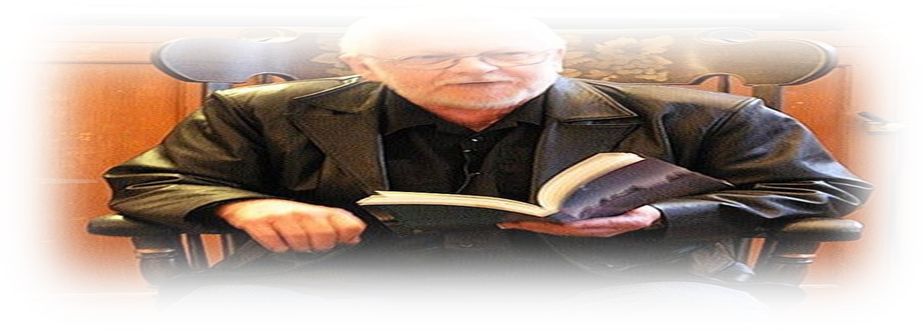
Sam Hamill
It came to me as I read indigenous reflections written in 1976, almost half a century ago, by Arthur Amiotte, then an artist and teacher who lived among the Teton Sioux in South Dakota, that I have never understood the nature or functions of prayer. Not strange given how few if any priests or pastors or rabbis have ever grasped them. Prayer had always seemed superficial to me, ritual repetition of sounds directed at one or more beings to whom we seemed little more than insects, inferior objects to be scorned and disdained, albeit in a strange and twisted, masochistic way, loved as well.
An observation attributed to a gentle Nazarene whom the Hebrews and perhaps the Romans may have tortured and perhaps hung or crucified has always made a great deal of sense to me: his suggestion that direct communion with the divine, without ritual or intervention, without prayer, was really the only legitimate and effective means of touching divinity but, reviewing Arthur Amiotte’s indigenous reflections, something I’ve been doing while concurrently reading the probably fictitious writing of Carlos Castaneda (fictitious not being synonymous with useless), another alternative occurred to me. Ironically occurred to me who, if not an atheist am at best a panentheist. It came to me in the form of an epiphany: Prayer may well have a positive purpose but it is unrelated to the ritual repetition of sounds the meaning of which few really consider as they utter them, and fewer still understand.
In that instant of epiphany, it came to me that ritual prayer does have a role and a meaning and a use and a purpose but that it is very different from the meaningless collective rote exercise that takes place on designated days at designated hours in designated places under the leadership of designated men and sometimes, although rarely, designated women. It is, or perhaps, better stated, it should be, an isolated, personal reflective instrument that properly tuned and used can lead to introspection, contemplation, meditation and self-examination, all in a quest for insight, perhaps totally novel insight, and through such insight, to both elucidation and pragmatic solutions.
That makes sense, or made sense to me; finally. Prayers, correctly used, can be catalysts for internal communication in which, perhaps, a spark of the divine (if a spark of the divine exists within each of us, as some among the Gnostics tend to believe), may, at times, be present.
“Poetry” Sam Hammill (a great friend, a great poet and a great translator) once told me “is meant to be spoken and heard”. As much as I admired him and still do (though he is long gone), I did not agree. For me, reading poetry rather than listening to it permitted me to transcend the music of the words in order to wrestle with the layers of meaning involved, not all of them layers the author intended. In that sense, it seems that poems are “written on mirrors”, i.e., they have different meanings for everyone who really delves into their depths based on the reader’s personal experiences, context and perceptions. I’ve shared my observation with another poet I admire but who is as different from Sam, in many but not all ways, as two poets can be. Sam was a big man, a former United States marine, with a booming voice, an adventurer in every sense, while the second poet, Carlos Mario Uribe Alvarez, is a fairly diminutive and soft spoken Colombian, but one who annually gathers poets from all over the world to declaim and share perspectives in the sky-high Andean city where I’ve now lived for almost two decades. Despite their differences, as is the case with many poets, they both share a taste for variety in women, each of whom they love in their own way, and for strong intoxicants, whether drunk or inhaled.
As it was for Sam, poetry for Carlos, at the numerous events he organizes, is an oral exercise. I dutifully attend the readings performed by earnest and talented artists who have profound truths to share but I get little out of the readings. Indeed, I’ve urged that each reading be preceded by contextualization and a sharing of the motives and reflections and introspection that gave birth to each poem presented. Sam would have argued with me. Carlos agrees, but seemingly superficially.
I now feel the same way about prayer after my epiphany. But perhaps that’s just me. Writing and reading call to me much more than does listening to prayers or poetic expositions. Reading permits me to dive and delve and reflect while writing seems a means of communicating with my inner self, with the me who’s been and the me that may someday be, and perhaps, at times, with echoes and shadows of divinity that have made their way, if not to me, at least towards me.
Interesting. But perhaps not novel except for those of us who have been long misled by Abrahamic delusions. Perhaps my epiphany is an echo of something lost by those of us who have misplaced things that our ancestors understood well and perhaps used and perhaps some among us may still understand and practice it, albeit alone and in personal places in a manner such as that of which that gentle Nazarene once spoke.
Thoughts on a pleasant autumn day high in the central range of the Colombian Andes.
_____
© Guillermo Calvo Mahé; Manizales, 2025; all rights reserved. Please feel free to share with appropriate attribution.
Guillermo (“Bill”) Calvo Mahé (a sometime poet and aspiring empirical philosopher) is a writer, political commentator and academic currently residing in the Republic of Colombia (although he has primarily lived in the United States of America of which he is also a citizen). Until 2017 he chaired the political science, government and international relations programs at the Universidad Autónoma de Manizales. Previously, he chaired the social studies and foreign language departments at the Eastern Military Academy in Huntington, New York. He is currently the publisher of the Inannite Review available at Substack.com; an intermittent commentator on radio and television; and, an occasional contributor to diverse periodicals and publications. He has academic degrees in political science (BA, The Citadel, the Military College of South Carolina), law (JD, St. John’s University, School of Law), international legal studies (LL.M, the Graduate Division of the New York University School of Law) and translation and linguistic studies (GCTS, the University of Florida’s Center for Latin American Studies). However, he is also fascinated by mythology, religion, physics, astronomy and mathematics, especially with matters related to quanta, cosmology and cosmogony. He can be contacted at guillermo.calvo.mahe@gmail.com and much of his writing is available through his blog at https://guillermocalvo.com/.
 Guillermo Calvo Mahé
Spoken poetry is largely opaque to me.
My understanding has been that the original purpose was as a memory aid to preserve the integrity of a long recitation in pre-literate cultures. It was, I am told, a major feature in the training of Druids back in the day. It was likely the original form of the genealogies in the Old Testament in what is now the Bible. In a class I once took on Wolfram von Eschenbach’s medieval lay, Parzival, the instructor noted that the poetic structure was a way of keeping the story straight during a roughly week-long evening oral delivery of the long story. It’s an inner structure: a scaffolding that supports a dramatic performance, essential to the speaker, and perceptible to the listener but not the main point.
Reading the tale in an English translation destroyed that scaffolding entirely, of course. The instructor read a paragraph or two in Old German, and there was, indeed, a dramatic pulse to the telling that was probably hypnotic for the original listeners. Like a drumbeat.
But it was the tale that people paid to hear. A Medieval version of Indiana Jones and the Adventures of Gawaine and Parzival.
The very few modern poetry recitations I’ve endured have never worked for me at all. I think I have a very narrow “goldilocks zone” for the spoken word, with a broad “too cold” region that I perceive as trite, and a “too hot” region in which I am hopelessly buried in metaphor and stop processing.
Prayer, on the other hand, seems fairly straightforward to me. It’s intended to engender a hypnogogic state that bypasses the logical mind and shapes the unconscious mind. When you do it for yourself, it’s one thing. When it is done unto you, as part of a group, it’s another thing entirely. I’m quite allergic to the expression “Let us pray.” When it is announced, I find that I immediately withdraw and fortify.
Perhaps that is why my goldilocks zone for spoken poetry is so small.
LikeLiked by 2 people
Thanks for your well thought out and expressed observations!!!
LikeLike