
The American Alcibiades
Alcibiades may have been the greatest Athenian of his times, certainly the greatest military and naval strategist and the greatest military and naval hero, and probably the one most unfairly treated by his compatriots, so much so that he became one of Athens’ greatest traitors as well. But whether that speaks ill of Alcibiades or of Athens may be subject to debate, and if I were an arbiter, I’d have no doubt that I’d decide in favor of Alcibiades.
Slandered, defamed and robbed by the Athenian state while he was in the midst of battles protecting her interests, I could not blame him for repudiating her. If reincarnation is real and if history repeats herself, Americans have their own Alcibiades, their own most brilliant strategist and courageous military and naval hero whom they also felt compelled to betray, continuously, and then to be amazed that he abandoned them.
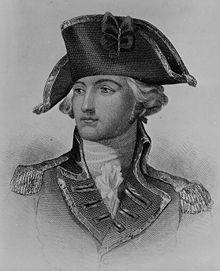
After several decades on my bookshelf, I have finally finished Willard Sterne Randall’s excellent and surprisingly objective biography of Benedict Arnold subtitled Traitor and Patriot. Other sobriquets seem more appropriate, among them, “the American Eagle” and the “American Alcibiades”. He was a brilliant and courageous man, perhaps even idealistic but as complex as he was talented, and cast in a time when petty minded purported patriots much like those in today’s United States Congress and all too many occupants of the Oval Office, made his eventual decision to resume his allegiance to King George in violation of his oaths to George Washington and the Continental Congress all too predictable. Indeed, the prior reference to the Athenian strategos, admiral and civic leader Alcibiades all too appropriate. Like Alcibiades, he was the person most responsible for his country’s military success only to be denigrated and despised, even before his change of loyalties, by those jealous of his talents and his courage and all too ready to appropriate his victories as their own, and to refuse to acknowledge their obligations to him, both financial and moral. The history we are taught refuses to inform us that he had spent his large fortune to finance expenditures required for his victories during the Revolutionary War on behalf of the colonies in rebellion against the English Crown and that a penurious Continental Congress had refused to repay the debts owed to him, or that politicians at all levels of the Confederal government (the term for the government of the colonies in rebellion prior to the Constitution of 1789) and especially, the Commonwealth of Pennsylvania, took every opportunity to belittle and humiliate him so that, in the end, it may well be more accurate to relate that they betrayed and led him to return the favor.
Perhaps, except for Alcibiades, no noble hero was more unfairly treated by those for whom he sacrificed and by those to whom he assured victory than was the American Eagle: Benedict Arnold, the hero of Quebec and Montreal, of Lake Champlain and Ticonderoga, and most important of all, the hero of Saratoga which turned the tide of the American Revolutionary War, and did so by insubordinate violation of his commanding officer’s orders to retreat.
The Continental Congress of Arnold’s time was not all that different from today’s Congress, it too was comprised of self-serving and self-aggrandizing politicians who did little if nothing to help Arnold in his successes and instead, awarded laurels to undeserving others, passing him up for promotion and, instead, court martialing him. That seems the nature of politics, whether 2,400 years ago, 237 years ago or today.
To those who know only the elementary and high school propaganda we refer to as history, I recommend William Sterne Randall’s Benedict Arnold: Patriot and Traitor. Read it and then reflect on just how duplicitous our political leaders tend to be. And ask yourself, just who are the real heroes and who are the real villains and, had you the talent and the courage, who you would have been.
_______
© Guillermo Calvo Mahé; Manizales, 2017; all rights reserved
 Guillermo Calvo Mahé