A Very Brief Observation Concerning the Concept of Treason in a Pluralistic Democracy

The concept that rejecting the political posture of an individual or political movement or party can constitute “treason” in a pluralistic democracy is oxymoronic.  

The allegiance of a citizen in a democracy is to the corporate concept of the “People”, not to any person or political party, and certainly not to any serving government.  Perhaps not even to the “State”.

The principal political duty of individuals in a democracy is to maintain their civic responsibilities by informing and educating themselves, exercising their reason and common sense, and sharing their opinions with other citizens without fear of reprisals, calumnies or ridicule. 

The foregoing is something almost entirely absent from current discourse in purported Western democracies.  Perhaps the “adjective “Western” now changes the nature of the noun modified making it synonymous instead with oligarchical autocracy and dictatorship.
_____

© Guillermo Calvo Mahé; Manizales, 2026; all rights reserved.  Please feel free to share with appropriate attribution.

Guillermo (“Bill”) Calvo Mahé (a sometime poet and aspiring empirical philosopher) is a writer, political commentator and academic currently residing in the Republic of Colombia (although he has primarily lived in the United States of America of which he is also a citizen). Until 2017 he chaired the political science, government and international relations programs at the Universidad Autónoma de Manizales. Previously, he chaired the social studies and foreign language departments at the Eastern Military Academy in Huntington, New York. He is currently the publisher of the Inannite Review available at Substack.com; an intermittent commentator on radio and television; and, an occasional contributor to diverse periodicals and publications. He has academic degrees in political science (BA, The Citadel, the Military College of South Carolina), law (JD, St. John’s University, School of Law), international legal studies (LL.M, the Graduate Division of the New York University School of Law) and translation and linguistic studies (GCTS, the University of Florida’s Center for Latin American Studies). However, he is also fascinated by mythology, religion, physics, astronomy and mathematics, especially with matters related to quanta, cosmology and cosmogony. He can be contacted at guillermo.calvo.mahe@gmail.com and much of his writing is available through his blog at https://guillermocalvo.com/.

On Palestinian Religious Evolution during the Past Two Millennia

The following is a short primer on Palestinian religious evolution during the past two millennia dedicated to my unfortunately uneducated Christian Zionist friends who buy into the myth that God gave Palestine to Zionists.  All of this material was obtained in a quick, AI assisted search on the Internet and thus is easily verifiable.

Contrary to the claims of Zionists that “they” were promised Palestine, Jewish groups over a millennia following the purported time of Abraham and Moses, at the beginning of the Common Era, were highly varied and fragmented, lacking any single centralized religious authority. Instead, much like modern Christian sects, of which thousands of competing variants exist, many condemning their competitors as heretics, the “Jewish” population was divided into competing sects, political factions, and diaspora communities.

The primary ideological and social groups in first-century Judea included:

  • Pharisees: A group of scholars and laymen who emphasized rigorous adherence to both the written Torah and an extensive oral tradition. They believed in the resurrection of the dead and angels, and their teachings laid the groundwork for modern Rabbinic Judaism.
  • Sadducees: The wealthy, conservative elite, largely comprised of priests, who controlled the Jerusalem Temple and the Sanhedrin. They rejected the oral law, believed only in the literal written Torah, and did not believe in an afterlife or resurrection.
  • Essenes: Ascetic, separatist communities (such as those associated with the Dead Sea Scrolls at Qumran) who withdrew from mainstream society. They practiced strict purity rituals and communal ownership, believing the Temple establishment in Jerusalem had become corrupt.
  • Zealots and Revolutionaries: Militant, nationalistic factions that fiercely opposed Roman taxation and rule. Groups like the Sicarii (daggermen) resorted to violence and guerrilla warfare against both the Romans and Jewish elites they viewed as collaborators.
  • Herodians: A small, politically motivated group of Jews who supported the royal dynasty of Herod the Great and, by extension, Roman authority.
  • The “Common” Jews: The vast majority of the population who did not officially belong to any sect. They sought to maintain basic Jewish practices like observing Shabbat, keeping kosher, and practicing circumcision while living their daily lives.
  • Diaspora Jews: Communities living outside the Land of Israel in major Hellenistic centers like Alexandria (Egypt) and Rome. These groups adapted significantly to Greco-Roman culture while maintaining their religious and ethnic identity.

Beyond the major factions, the beginning of the Common Era featured numerous minor, highly specialized, and localized Jewish groups. Historians like Josephus and early textual records identify several smaller groups that emerged from specific theological, geographical, or political pressures:

1. Ascetic and Mystical Offshoots

  • Therapeutae: Based in Egypt (especially near Alexandria), this was a communal group of Jewish ascetics described by the Jewish philosopher Philo. Similar to the Essenes, they abandoned their property, lived in isolation, and dedicated their lives to intense prayer, fasting, and the allegorical study of scripture. Notably, unlike the Qumran Essenes, their community included women.
  • Bana’im (The Builders): Mentioned briefly in rabbinic literature, they were an Essene-like group in Palestine. They were obsessively preoccupied with ritual purity, particularly ensuring their clothes remained entirely free of mud stains or contaminants.
  • Hemerobaptists: A minor group whose defining characteristic was daily morning baptism. They believed that immersing themselves in water every single morning was necessary to wash away sins and maintain absolute ritual purity before prayer.

2. Radical and Political Factions

  • The Fourth Philosophy: This is the term Josephus used to describe an ideological movement started by Judas the Galilean. While they agreed with the Pharisees on religious matters, their defining political belief was a radical refusal to call any human “lord” or king, viewing Roman taxation as direct blasphemy against God. This philosophy birthed the later Zealot and Sicarii movements.
  • The Sicarii (Daggermen): A radical, covert splinter group of revolutionaries. They hid small daggers (sicae) under their cloaks to assassinate high-ranking Jewish elites and priests whom they accused of collaborating with the Roman occupiers.

3. Early Messianic and Borderline Groups

  • The Nazarenes / Early Christ-Followers: In the first decades of the Common Era, the followers of Jesus of Nazareth existed strictly as a minor sect within the broader Jewish framework. They continued to worship at the Temple, keep kosher, and follow the Torah, but they held the distinct conviction that the Messiah had already arrived.
  • The Samaritans: Though distinct from mainstream Jews, they shared a common Israelite heritage. They rejected the Jerusalem Temple entirely, holding that Mount Gerizim was the only divinely chosen place of worship, and accepted only their own version of the Torah (the Samaritan Pentateuch).

The reality is that Christianity also emerged as a Jewish group, expanded by Saul of Tarsus to include non-inhabitants of the Levant, and later, Islam emerged as a fusion of Judaism and Christianity with the remnants of inhabitants of the Levant, the ancient “Jews”, converting to Christianity or Islam, or, in some cases, coalescing into an evolving form of orthodox Judaism, albeit unlike modern Reform Liberal or Conservative Judaism and certainly unlike Zionism, founded by European converts to Judaism who rejected its religious aspects in favor of atheism with cultural Jewish trappings.

Modern “Judaism”

Modern Judaism evolved from Rabbinic Judaism which coalesced out of catastrophic historical crises. Practically all major forms of Judaism practiced today, including Orthodox, Conservative, and Reform, share a similar foundational lineage.  The transition from a fractured, temple-based religion to the diverse structures of non-monolithic modern Judaism occurred across two monumental phases:

Phase 1: The Cataclysm and the Blueprint (70 CE – 600 CE)

Before 70 CE, most but not all of Jewish life revolved around the Jerusalem Temple, animal sacrifices, and the priesthood. A major division had already occurred when Samaritan Jews had rejected the centralization of Judaism in Jerusalem with the Temple there as the purported focal point of Judaism.  When the Roman Empire destroyed the Temple in 70 CE, the economic and spiritual heart of Jerusalem centered Judaism was obliterated.  But Judaism survived and coalesced due to a series of radical transformations:

  • The Shift to Yavneh: According to tradition, a Pharisaic leader named Rabbi Yochanan ben Zakkai was smuggled out of the Roman siege of Jerusalem. He negotiated a deal with the Roman general Vespasian to establish an academy in the coastal town of Yavneh.
  • Ritual Substitution: At Yavneh, the surviving sages detached Judaism from a physical building. They decreed that communal prayer would replace animal sacrifice, the synagogue would replace the Temple, and rabbis (teachers) would replace priests.
  • The Compilation of the Talmud: Over the next several centuries, Jewish scholars debated and codified these laws into written texts: the Mishnah (c. 200 CE) and the Talmud (c. 600 CE). This created a portable, text-centered religion that could survive in the global diaspora.

Phase 2: The Enlightenment and the Modern Denominations (1700s – 1800s)

For over a thousand years, the rabbinic system was the undisputed norm. However, the European Enlightenment and Jewish Emancipation in the 18th and 19th centuries granted Jews civil rights, shattering the walls of the traditional Jewish ghetto and forcing a new question: How do you remain Jewish while integrating into modern Western society? This crisis split Rabbinic Judaism into the modern movements we recognize today:

  • Reform Judaism: Emerging in Germany, this movement aimed to modernize the religion. They translated prayers into local languages, introduced organs into synagogues, and viewed Jewish law (Halakha) as an evolving ethical guide rather than a binding set of divine mandates.
  • Orthodox Judaism: This arose as a direct counter-reaction to Reform Judaism. Leaders like Samson Raphael Hirsch argued that traditional Jewish law was immutable and fully divine. “Modern Orthodoxy” emerged to show that one could strictly observe the Torah while engaging with secular culture and education.
  • Conservative Judaism: Formed as a middle ground, this movement argued that Jewish law is dynamic and must adapt to the times, but its core traditions and historical practices must be conserved and respected.

None of the foregoing have direct links to any form of primitive Judaism with direct interaction with Moses, or Abram or YHWH, any more than do any Christian or Islamic sects, nor, of course, does Zionism.

_____

© Guillermo Calvo Mahé; Manizales, 2026; all rights reserved.  Please feel free to share with appropriate attribution.

Guillermo (“Bill”) Calvo Mahé (a sometime poet and aspiring empirical philosopher) is a writer, political commentator and academic currently residing in the Republic of Colombia (although he has primarily lived in the United States of America of which he is also a citizen). Until 2017 he chaired the political science, government and international relations programs at the Universidad Autónoma de Manizales. Previously, he chaired the social studies and foreign language departments at the Eastern Military Academy in Huntington, New York. He is currently the publisher of the Inannite Review available at Substack.com; an intermittent commentator on radio and television; and, an occasional contributor to diverse periodicals and publications. He has academic degrees in political science (BA, The Citadel, the Military College of South Carolina), law (JD, St. John’s University, School of Law), international legal studies (LL.M, the Graduate Division of the New York University School of Law) and translation and linguistic studies (GCTS, the University of Florida’s Center for Latin American Studies). However, he is also fascinated by mythology, religion, physics, astronomy and mathematics, especially with matters related to quanta, cosmology and cosmogony. He can be contacted at guillermo.calvo.mahe@gmail.com and much of his writing is available through his blog at https://guillermocalvo.com/.

On the Nature of Patriotism

Patriotism is a complex concept almost always presented in simplistic terms, usually erroneous.  

One aspect of course is a willingness to risk your life, health and wealth in protection of what patriotism requires us to defend.  Many of my Citadel classmates have done so.  And anyone involved in the death and destruction of other human beings risks not only his or now her life, health and wealth but also, to the extent they believe in religion, almost any religion, their immortal souls. 

I believe the focus on such willingness or on the observance of national symbols or the taking of oaths or the parroting of official narratives and echoing of a current administration’s policies misses the point.  I believe the point is succinctly, albeit perhaps hypocritically, embodied in the United States’ Declaration of Independence, and in the Preamble to the current Constitution, and in the Bill of Rights and, in other countries, in similar foundational instruments. 

In essence, patriotism is a citizen’s duty not only to protect his or her country, but to hold it to its foundational value’s against all enemies, foreign yes, but more importantly, domestic.  And domestic enemies are not those with whom we disagree, or who criticize our countries’ policies and actions, but those who blindly and unquestionably follow an administration’s policies and actions that contravene foundational values. 

Given the massive peer pressure to conform, especially with respect to what ought to be indefensible policies and actions, that is often more difficult than the willingness to risk life, health and wealth.  Something too many decent and brave people cannot grasp. 

Were it not so, then “We the People” should be pledging our lives and our sacred honor to British King Charles the III as we sing God Save the King.
_____

© Guillermo Calvo Mahé; Manizales, 2026; all rights reserved.  Please feel free to share with appropriate attribution.  This article is dedicated to those of my Citadel classmates who I love and respect but who disdain my criticism of the country we all love.

Guillermo (“Bill”) Calvo Mahé (a sometime poet and aspiring empirical philosopher) is a writer, political commentator and academic currently residing in the Republic of Colombia (although he has primarily lived in the United States of America of which he is also a citizen). Until 2017 he chaired the political science, government and international relations programs at the Universidad Autónoma de Manizales. Previously, he chaired the social studies and foreign language departments at the Eastern Military Academy in Huntington, New York. He is currently the publisher of the Inannite Review available at Substack.com; an intermittent commentator on radio and television; and, an occasional contributor to diverse periodicals and publications. He has academic degrees in political science (BA, The Citadel, the Military College of South Carolina), law (JD, St. John’s University, School of Law), international legal studies (LL.M, the Graduate Division of the New York University School of Law) and translation and linguistic studies (GCTS, the University of Florida’s Center for Latin American Studies). However, he is also fascinated by mythology, religion, physics, astronomy and mathematics, especially with matters related to quanta, cosmology and cosmogony. He can be contacted at guillermo.calvo.mahe@gmail.com and much of his writing is available through his blog at https://guillermocalvo.com/.

Un “Duce” para Colombia

Dos errores fundamentales cometió Gustavo Francisco Petro Urrego en su presidencia y fueron graves y muy costoso.  Primero, aunque con buenas intenciones, se rodeó de personas equivocadas: ineptas en algunos casos, desleales en otros y corruptos en otros.  Y segundo, no pudo controlar sus instintos pugnaces lo cual les permitió a quienes le querían causar daño manipularlo en forma constante, primero insultando o calumniándolo y luego criticando su reacción cuando en forma agresiva se defendía; obvia hipocresía pero efectiva. 

En lo último necesitaba algo más de sabiduría y disciplina.  Las políticas que propuso fueron brillantes y nobles (como es el), y son esenciales, pero no se lograron en un sistema tan profundamente corrupto como es el colombiano, y eso en el legislativo, la judicatura y la burocracia.  Es probable que si el presidente hubiese sido perfecto en todo aspecto esa corrupción coordinada para mantener el poder en las manos de los peores entre nosotros aun habría logrado evitar que se lograra un gobierno justo, equitativo y sostenible y la culpa por eso no es del señor Petro sino de un electorado tan inepto y manipulable que imposibilita lo que a ellos más les beneficiaría. 

Esa es la maldición de la democracia y no solo en Colombia, no solo en la América Latina, pero también en Norte América y en Europa y en el mundo Anglosajón.  El que controla la información controla el electorado y el electorado es más fácil engañar y manipular hoy que en cualquier tiempo de la historia.  Y el control de la información se ha vuelto un arte y una ciencia malévola con los nuevos medios y las nuevas tecnologías, un arte y una ciencia controlada por una clase de billonarios hipócritas y depravados, dedicados a una acumulación de poder y riqueza total, creando una enorme clase esclavizada, pero sin que sus miembros se den cuenta. 

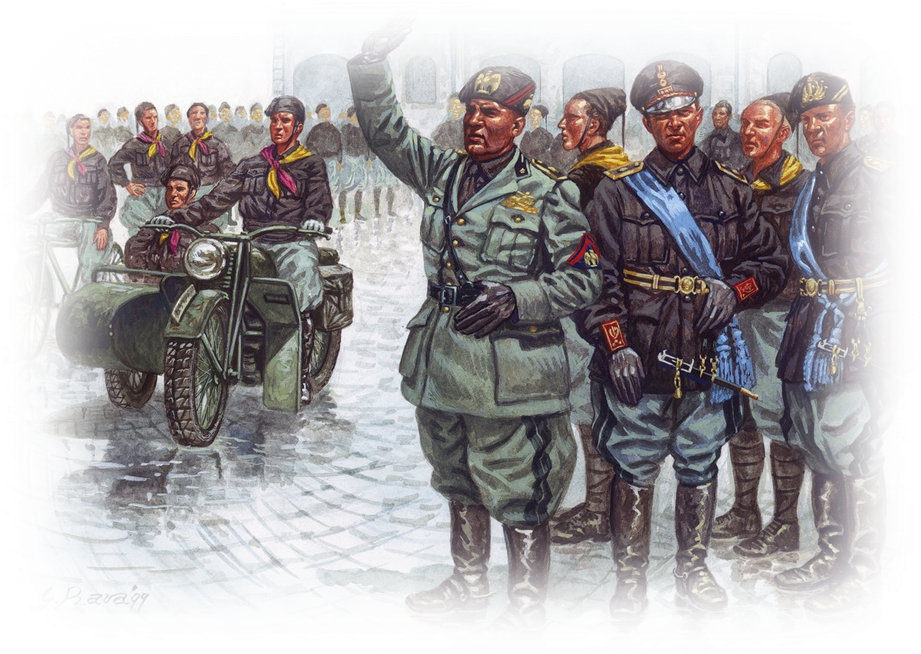
Creo que es muy posible que por lo menos en la América Latina, quizás con la excepción del Brasil, ese estatus ya sea permanente, o por lo menos, de largo plazo, y que las ultimas elecciones honestas ya están en el pasado, y eso en casi todas partes del mundo, un cáncer social y cívico metatizado.  Obviamente en Colombia, por ejemplo, ha asumido el poder, irónicamente con ayuda masiva sionista, un aspirante a copiar il Duce, el de Italia hace un siglo pero sin su experiencia o patriotismo (pero si con todos sus aspectos malévolos).  Y esos tipos no rinden el poder, acusando a sus oponentes de todos los pecados y las aspiraciones que ellos mismos poseen.  Un perfecto ejemplo es que el que siempre ha defendido a los más corruptos y de ellos ha acumulado su fortuna y su fama denomine su empalme “empalme anticorrupción.  O que acuse al presidente Pero ante el Congreso de “traición a la patria” cuando el mismo señor de la Espriella juró, hace solo tres años, poner los intereses de los Estados Unidos por encima de los de Colombia y el diciembre pasado prometió poner los de Israel por encima de todo. 

El progresismo colombiano creía hace cuatro años que había, “cesado la horrible noche”. 

Estábamos equivocados.

_______

© Guillermo Calvo Mahé; Manizales, 2026; todos derechos reservados.  Permiso para compartir con atribución.

Guillermo Calvo Mahé es escritor, comentarista, analista político y académico residente en la República de Colombia. Aspira ser poeta y filósofo empírico y a veces se lo cree.  Hasta el 2017 coordinaba los programas de Ciencia Política, Gobierno y Relaciones Internacionales de la Universidad Autónoma de Manizales. En la actualidad, participa en entrevistas radiales y televisadas, foros, seminarios y congresos cívicos y edita y publica la revista virtual, The Inannite Review disponible en Substack.com/.  Tiene títulos académicos en ciencias políticas (del Citadel, la universidad militar de la Carolina del Sur), derecho (de la St. John’s University en la ciudad de Nueva York), estudios jurídicos internacionales (de la facultad posgrado de derecho de la New York University) y estudios posgrado de lingüística y traducción (del Centro de Estudios Latinoamericanos de la Universidad de la Florida).  Sin embargo, también es fascinado por la mitología, la religión, la física, la astronomía y las matemáticas, especialmente en lo relacionado con lo cuántico y la cosmogonía.  Puede ser contactado en guillermo.calvo.mahe@gmail.com y gran parte de su escritura está disponible a través de su blog en https://guillermocalvo.com/.

Reflexiones sobre el progresismo colombiano en el amanecer después del solsticio de verano, 2026

No obstante la gran probabilidad (para mí, realidad) de que intervención extranjera por parte de los EE.UU., Israel y sus colonias latinoamericanas (Argentina, Bolivia, Ecuador, Paraguay, etc.) impactó nuestra elección presidencial en forma importante, la realidad es que el progresismo colombiano, en temas electorales cometió grandes errores durante los últimos cuatro años y no con respecto a las políticas que se propusieron como grandes reformas en el Congreso sino en la manera que se buscó implementarlas, y en las relaciones públicas.  Aún más, peleamos entre nosotros a todo nivel en forma constante y publica y es más fácil organizar gatos que organizarnos a nosotros.  Decisiones importantes sobre candidaturas no se hicieron en forma estratégica sino en forma exageradamente idealista e ideológica ignorando la meritocracia y la percepción pública.  Escoger una mujer noble pero sin experiencia como vicepresidente fue un error mortal.  Y escoger a Iván cepeda como nuestro candidato presidencial sin considerar su impacto unificador con respecto a la derecha, en vez de alguien como Clara López, fue otro.

Si en los escrutinios triunfa de la Espriella, lo cual es probable dado el control sobre la judicatura, el Consejo Nacional Electoral, la Registraduría y la Procuraduría  por la derecha, entonces es probable que la derecha gobernara no por cuatro sino por lo menos por ocho años, teniendo un vicepresidente muy preparado y ambicioso listo para las contiendas del 2028.  Tenemos que mirarnos en un espejo real y pensar bien cómo vamos a seguir.  ¿Existe una figura capaz de liderar una oposición efectiva en el Congreso durante los proximo cuatro años cuando somos minoría aunque con el partido más grande?  ¿Existe alguien con el carisma, la sabiduría y la experiencia para ser serio candidato presidencial serio en el 2028? 

Lamentablemente no lo veo.  Lo que veo es que como en Argentina, volveremos a ser colonia no solo de los EE.UU., pero de Israel, con sionistas comprando valiosas partes de nuestro país.  Y la culpa es nuestra por haber desperdiciado una oportunidad casa única.  Quizas, algún día tendremos otra oportunidad de crear un país progresista justo, equitativo, económicamente y ambientalmente sostenible, meritocratico y en paz pero, por ahora, solo nos queda aprender como funcionar en forma unida sin peleas internas constantes y como triunfar sin dividirnos y sin ser soberbios con respecto a nuestro éxito.

Ojala el señor Abelardo de la Espriella no sea quien parece ser y que su lealtad sea hacia Colombia pero muy posiblemente volvió la horrible noche que por tantos años ha oscurecido la tierra más bella de mundo.

_______

© Guillermo Calvo Mahé; Manizales, 2026; todos derechos reservados.  Permiso para compartir con atribución.

Guillermo Calvo Mahé es escritor, comentarista, analista político y académico residente en la República de Colombia. Aspira ser poeta y filósofo empírico y a veces se lo cree.  Hasta el 2017 coordinaba los programas de Ciencia Política, Gobierno y Relaciones Internacionales de la Universidad Autónoma de Manizales. En la actualidad, participa en entrevistas radiales y televisadas, foros, seminarios y congresos cívicos y edita y publica la revista virtual, The Inannite Review disponible en Substack.com/.  Tiene títulos académicos en ciencias políticas (del Citadel, la universidad militar de la Carolina del Sur), derecho (de la St. John’s University en la ciudad de Nueva York), estudios jurídicos internacionales (de la facultad posgrado de derecho de la New York University) y estudios posgrado de lingüística y traducción (del Centro de Estudios Latinoamericanos de la Universidad de la Florida).  Sin embargo, también es fascinado por la mitología, la religión, la física, la astronomía y las matemáticas, especialmente en lo relacionado con lo cuántico y la cosmogonía.  Puede ser contactado en guillermo.calvo.mahe@gmail.com y gran parte de su escritura está disponible a través de su blog en https://guillermocalvo.com/.

A Reflection on D Day, Eighty-Two Years Later

June 6, 2026

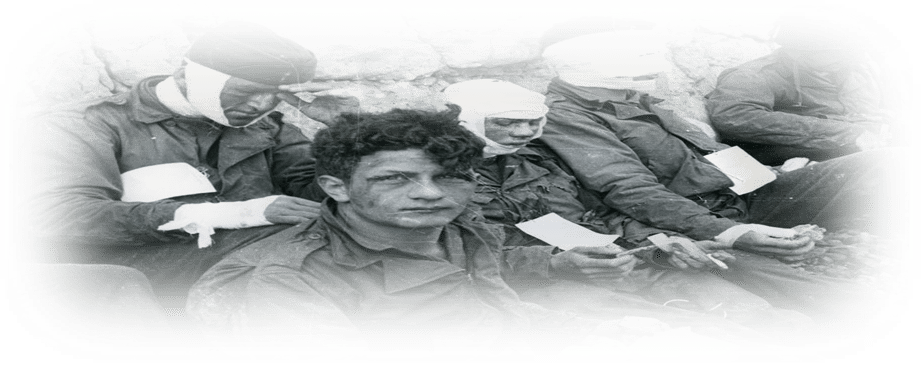
Today’s anniversary of the invasion of Normandy on June 6, 1944, primarily by United States and British troops is a bitter day for me because the things we were taught our ancestors fought for and that so many died to attain seem to have been illusory, mere propaganda.  “Never again” has become, “Look away and move on, nothing here to see”.  Genocide and ethnic cleansing have become, if not acceptable, at least easy to ignore while lawyers quibble of their meaning.

Those who died and were maimed and fought on that day expected better from us but we’ve let them down, we’ve let them down completely, and that’s a travesty not worthy of celebration.

Democracy is and perhaps has always been at best dysfunctional, everywhere.  And the United States now has its own Führer, an uber-leader who can do no wrong in the eyes of his followers.  And European countries have coalesced into a sort of Fascist Italy, each country ignoring the will of the vast majority of its population under weak, corrupt and inept leaders, all (perhaps with the exception of Russia and Spain) terrified to abide by the purported signature accomplishment of the Second World War, the decisions of the Nuremburg tribunals and the Charter of the United Nations, lest the Zionist media and financiers (rather than Nazis) destroy them, one by one. 

An image of the see-no-evil-hear-no-evil-criticize-no evil simian caricature comes to mind (my apologies to simians everywhere). 

So many lives lost on and after June 6, 1944, so many promises made and never kept.

That’s what I’ll remember today, a day of mourning rather than celebration.
_____

© Guillermo Calvo Mahé; Manizales, 2026; all rights reserved.  Please feel free to share with appropriate attribution.

Guillermo (“Bill”) Calvo Mahé (a sometime poet and aspiring empirical philosopher) is a writer, political commentator and academic currently residing in the Republic of Colombia (although he has primarily lived in the United States of America of which he is also a citizen). Until 2017 he chaired the political science, government and international relations programs at the Universidad Autónoma de Manizales. Previously, he chaired the social studies and foreign language departments at the Eastern Military Academy in Huntington, New York. He is currently the publisher of the Inannite Review available at Substack.com; an intermittent commentator on radio and television; and, an occasional contributor to diverse periodicals and publications. He has academic degrees in political science (BA, The Citadel, the Military College of South Carolina), law (JD, St. John’s University, School of Law), international legal studies (LL.M, the Graduate Division of the New York University School of Law) and translation and linguistic studies (GCTS, the University of Florida’s Center for Latin American Studies). However, he is also fascinated by mythology, religion, physics, astronomy and mathematics, especially with matters related to quanta, cosmology and cosmogony. He can be contacted at guillermo.calvo.mahe@gmail.com and much of his writing is available through his blog at https://guillermocalvo.com/.

Reflexiones sobre un desastre inminente

Acabo de pasar un rato charlando con un colega mío.  Fue mi colega durante el tiempo que yo ejercía como docente universitario en Manizales.  Trabajábamos en el mismo departamento y ambos coordinamos, en diferentes tiempos, el mismo programa.  Él es un excelente y muy admirado profesor, un hombre inteligente, destacado y muy bien educado (con doctorado), y él es un hombre honrado.  Un hombre bueno.  Durante nuestra charla él me hizo saber que detesta a Gustavo Petro y, entre otras cosas que me sorprendieron, que él ahora entiende y comparte la postura del sionismo en Palestina.  Eso me decepcionó muchísimo pero él es alguien que respeto y admiro mucho y, entonces, me debo preguntar, ¿cómo llegó a pensar así? 

Entiendo que por Iván Cepeda probablemente mi apreciado y admirado amigo no votara y que por Abelardo de la Espriella, aunque lo considera vulgar, … pues no sé.  Creo que en eso el comportamiento de la Colombia Humana y del Pacto Histórico tuvo impacto pero también el comportamiento de nuestro presidente.  Ambos partidos, ya unificados, han sido incoherentes con duras peleas internas, peleas groseras compartidas públicamente, y eso ha costado muchos votos.  Por ejemplo, la incoherencia, en plena campaña electoral, de buscar una pelea con la Alianza Verde y con Santiago Osorio Marín me fue incomprensible, a no ser que fue sabotaje intencional.  Por cosas como esas, parte del pueblo colombiano no confía que desde la izquierda se pueda gobernar.  Quizás no votaron por De la Espriella o por Paloma Valencia, quizás votaron por Claudia López o por Sergio Fajardo o por Mauricio Lizcano, quien sabe.  Pero no tenemos su confianza.  Ni, dado nuestro comportamiento, la merecemos.  Y, por eso, hay seria posibilidad que un fascismo verdadero gobernará nuestra patria por los próximos cuatro años, y del fascismo no es fácil liberar un país.

En lo personal, conozco y quiero mucho a Gustavo Petro pero sus constantes peleas en nada nos ayudan.  Y, sus enemigos, nuestros opositores, sabiendo eso, buscan atormentarlo en forma constante para que reaccione en forma exagerada.  Y así demasiadas veces lo hace.  Y eso nos cuesta mucho y, más importante, le cuesta mucho a Colombia.  En especial porque, aunque Iván Cepeda en eso es muy diferente, los medios de comunicación y la derecha política lo tratan como si fuera una copia idéntica del presidente Petro.

¿Entonces, qué hacer? 

Desesperarnos y rendirnos en nada nos servirá.  No nos servirá ni a nosotros ni a nuestras familias ni al pueblo colombiano que tanto amamos.  Creo que, uno por uno, tenemos que admitir que no somos perfectos y que acertadamente, colectivamente no fuimos perfectos durante los últimos tres años y medio.  Que, aunque creemos profundamente en las políticas de la administración de Gustavo Petro, del “Gobierno del Cambio”, tenemos que admitir que no fueron ni implementadas ni defendidas en forma adecuada.  Pero también, debemos acertar que de nuestros errores hemos aprendido.  Que reconocemos que la humildad es una virtud y que la arrogancia, aunque sea merecida, de nada positivo sirve.  Y desde esa postura, debemos defender las políticas del petrismo, las diversas reformas que tan necesarias son.  Y que solo Iván Cepeda luchara para implementarlas mientras que el Señor de la Espriella las acabara.

Defendiendo sin reservas al presidente que tanto queremos, pero quien es lejos de ser perfecto, nos cuesta, no nos suma votos.  Y sumar votos es esencial.

_______

© Guillermo Calvo Mahé; Manizales, 2026; todos derechos reservados.  Permiso para compartir con atribución.

Guillermo Calvo Mahé es escritor, comentarista, analista político y académico residente en la República de Colombia. Aspira ser poeta y filósofo empírico y a veces se lo cree.  Hasta el 2017 coordinaba los programas de Ciencia Política, Gobierno y Relaciones Internacionales de la Universidad Autónoma de Manizales. En la actualidad, participa en entrevistas radiales y televisadas, foros, seminarios y congresos cívicos y edita y publica la revista virtual, The Inannite Review disponible en Substack.com/.  Tiene títulos académicos en ciencias políticas (del Citadel, la universidad militar de la Carolina del Sur), derecho (de la St. John’s University en la ciudad de Nueva York), estudios jurídicos internacionales (de la facultad posgrado de derecho de la New York University) y estudios posgrado de lingüística y traducción (del Centro de Estudios Latinoamericanos de la Universidad de la Florida).  Sin embargo, también es fascinado por la mitología, la religión, la física, la astronomía y las matemáticas, especialmente en lo relacionado con lo cuántico y la cosmogonía.  Puede ser contactado en guillermo.calvo.mahe@gmail.com y gran parte de su escritura está disponible a través de su blog en https://guillermocalvo.com/.

Análisis sobre los resultados de la primera vuelta de elecciones presidenciales en Colombia, 2026

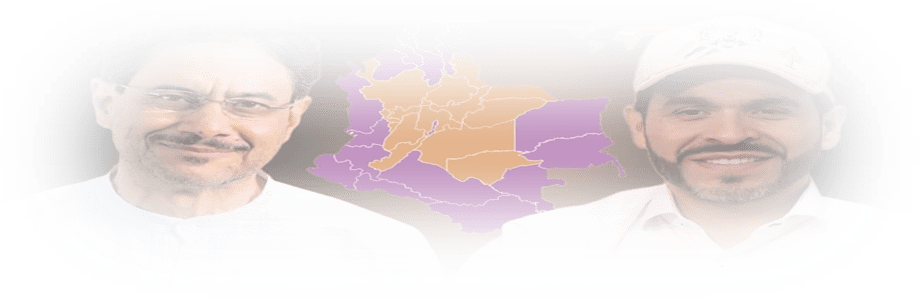
Como era predecible, Colombia va a segunda vuelta con Abelardo de la Espriella e Iván Cepeda y, con el dinero disponible para de la Espriella desde sus propias fuentes y fuentes con origen en países como los EE.UU., Israel, Argentina, etc., tiene buena posibilidad, quizás probabilidad de ganar en segunda vuelta, en especial si hay reconciliación con Paloma Valencia, Álvaro Uribe y el Centro Democrático. 

Paloma Valencia cometió muchos errores y le costó.  Más que todo en su decisión sobre su fórmula vicepresidencial, Juan Daniel Oviedo Arango, quien, por ser gay, le restó muchos más votos de los que le agregó.  Los votos que le resto se fueron con de la Espriella y los votos que le agrego se los cobro a Iván Cepeda.  Esa es nuestra Colombia.  Ademas, por buscar aproximarse al casi inexistente centro político colombiano, perdió muchos votos de derecha, todos los cuales, con mucho placer, los acepto Abelardo de la Espriella.

En el caso de Iván Cepeda, también creo le costó mucho su selección de formula vicepresidencial, Aida Marina Quilcue Vivas, una mujer noble y admirable, pero comparada con José Manuel Restrepo Abondano, la formula vicepresidencial de Abelardo de La Espriella, sufrió mucho.  José Manuel Restrepo Abondano le sumo mucho a de la Espriella en temas de educación,  trayectoria académica y gubernamental, importantes debilidades de Abelardo de la Espriella.  Y la masiva diferencia en los gastos de dinero hizo el resto.  También, creo que los jóvenes no salieron en forma masiva para apoyar al senador Cepeda como lo hicieron con Gustavo Petro.  Eso siempre ha sido el problema con contar con el apoyo de las generaciones más jóvenes.

Abelardo de la Espriella recaudo y gastó más que el doble las sumas que les eran disponibles a Paloma Valencia e Iván Cepeda y eso, sin contar la masiva cantidad de dinero adicional gastado “indirectamente” por interventores internacionales.  Ese dinero dominó a los medios sociales, en especial TikTok e Instagram.  Los dominó, no solo con apoyadores, sino con “bots”, falsas noticias, espectáculo, etc., manejados con la enorme experiencia y dinero del sionismo.  Y el apoyo casi total por los medios de comunicación que les pertenecían en algunos casos a antiguos clientes, no sobró.

No sé si en segunda vuelta Iván Cepeda se pueda recuperar a no ser que, por el constante y exagerado triunfalismo del liderazgo del Pacto Histórico, muchos de sus adherentes se encontraron perezosos este domingo.  Y ahora se encuentran totalmente despiertos.  Lo dudo.  Entonces, esperemos que la carne de mula, como ahora se come en Argentina, nos guste.  Por suerte, soy más que todo vegetariano.

Pronto veremos.

_______

© Guillermo Calvo Mahé; Manizales, 2026; todos derechos reservados.  Permiso para compartir con atribución.

Guillermo Calvo Mahé es escritor, comentarista, analista político y académico residente en la República de Colombia. Aspira ser poeta y filósofo empírico y a veces se lo cree.  Hasta el 2017 coordinaba los programas de Ciencia Política, Gobierno y Relaciones Internacionales de la Universidad Autónoma de Manizales. En la actualidad, participa en entrevistas radiales y televisadas, foros, seminarios y congresos cívicos y edita y publica la revista virtual, The Inannite Review disponible en Substack.com/.  Tiene títulos académicos en ciencias políticas (del Citadel, la universidad militar de la Carolina del Sur), derecho (de la St. John’s University en la ciudad de Nueva York), estudios jurídicos internacionales (de la facultad posgrado de derecho de la New York University) y estudios posgrado de lingüística y traducción (del Centro de Estudios Latinoamericanos de la Universidad de la Florida).  Sin embargo, también es fascinado por la mitología, la religión, la física, la astronomía y las matemáticas, especialmente en lo relacionado con lo cuántico y la cosmogonía.  Puede ser contactado en guillermo.calvo.mahe@gmail.com y gran parte de su escritura está disponible a través de su blog en https://guillermocalvo.com/.

A Brief Reflection on Gerrymandering and How to Minimize It

Gerrymandering is now completely out of control thanks to the GOP, the Democrats and the politicized judiciary.  The only practical solution is one adopted by most countries in the world and that is multi-legislator districts, preferably on a state wide basis, with proportional representation.  How would that work?  Or better yet, how does it work successfully in so many places. 

Well, take California with, I believe, 55 representatives elected to the House of Representatives.  Each California voter would have 55 votes which he or she could allocate to a single candidate (55) or divide among a number of candidates.  As an illustration, if a voter wanted to allocate his or her votes equally among eleven candidates, each would receive five votes, or the 55 votes could be distributed among the eleven candidates in any manner the voter deemed appropriate.  Or the voter could provide one vote each to 55 candidates.  California, with the largest representation in the House is the most complex example, states with less representation would be inversely simpler.  It is, in essence, what happens in the states that only elect one member to the House, it is a statewide contest with no gerrymandering possible. 

To make things easier, California and other states with large House membership could be divided into smaller voting districts.  In the California case for example, it could be divided into five voting districts, each electing eleven legislators,  While that would still permit efforts to distort the vote through gerrymandering, it would be more difficult to do so and less efficient, but in any case, much better that the single member system we have now.  And it can be implemented on a state by state basis through local legislation rather than on a federal level which would, in my opinion, require a constitutional amendment.  The latter might be the best solution for the long term but harder to implement. 

Something to consider for those who really care about electoral integrity rather than merely about maximizing the power of the political party to which they have become subservient.
_____

© Guillermo Calvo Mahé; Manizales, 2026; all rights reserved.  Please feel free to share with appropriate attribution.

Guillermo (“Bill”) Calvo Mahé (a sometime poet and aspiring empirical philosopher) is a writer, political commentator and academic currently residing in the Republic of Colombia (although he has primarily lived in the United States of America of which he is also a citizen). Until 2017 he chaired the political science, government and international relations programs at the Universidad Autónoma de Manizales. Previously, he chaired the social studies and foreign language departments at the Eastern Military Academy in Huntington, New York. He is currently the publisher of the Inannite Review available at Substack.com; an intermittent commentator on radio and television; and, an occasional contributor to diverse periodicals and publications. He has academic degrees in political science (BA, The Citadel, the Military College of South Carolina), law (JD, St. John’s University, School of Law), international legal studies (LL.M, the Graduate Division of the New York University School of Law) and translation and linguistic studies (GCTS, the University of Florida’s Center for Latin American Studies). However, he is also fascinated by mythology, religion, physics, astronomy and mathematics, especially with matters related to quanta, cosmology and cosmogony. He can be contacted at guillermo.calvo.mahe@gmail.com and much of his writing is available through his blog at https://guillermocalvo.com/.

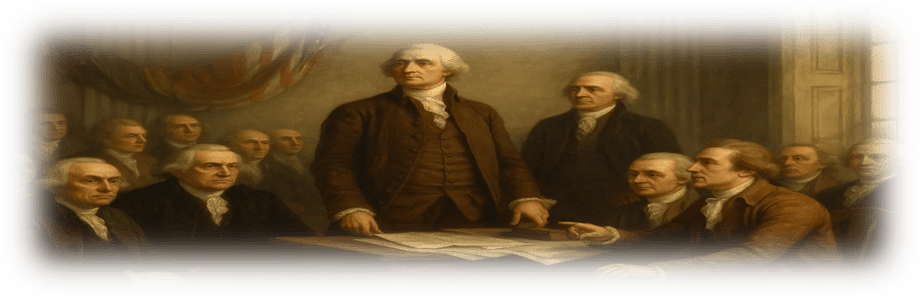
“We the People” on the Concept of Oaths

In the United States there are sacrosanct symbols, especially the Constitution and the Flag, perhaps also the armed forces.  All public officers are required to take a solemn oath to protect and defend the Constitution; the citizenry at large is, at one time or another, required to do so in the form of the “Pledge of Allegiance” but I believe all of the foregoing are a mistake.  I believe it is a mistake because oaths are, or should be, not only solemn but sacred with consequences, serious consequences for their violation[1].  And the reality is that, as in the case of “sacred scriptures”, most people honor their oaths superficially, very visibly and audibly, but not profoundly.  Exceptions are the rule.

Take the Constitution.  The version promulgated in 1787 has been officially amended twenty-seven times, although amendments have sometimes cancelled each other out, for example, the 21st amendment repealed the 18th, and the 20th, 22nd, 23rd, and 25th amendments all redefined the election and succession processes.  However, unofficially, via purported “interpretation”, the Constitution has been amended thousands of times and each of the latter involves a violation of related sacred oaths.  The decision by John Marshall in the case of Marbury versus Madison where the concept of constitutional review was usurped by the Supreme Court[2] is a prime example but so was the Civil War (more accurately perhaps, the War Between the States).  The 16th and 17th amendments fundamentally altered the federal nature of the republic created by the Constitution as did, in a sense, the 13th, 14th, 15th, 18th and 19th each of which, in one sense or another, shifted power from the states to the federal government[3].

That violations of the sacred oaths involved may have been morally justified only emphasizes that the oaths to defend, preserve and uphold the Constitution should never have been required in the first place, especially given that the United States of America was founded on the principle of the propriety of oath breaking when circumstances deemed such violations of sacred honor justified.  All of the “Founding Father” broke their sacred oaths of allegiance to the British Crown.  In that respect, the case of Benedict Arnold is particularly meaningful raising the issue of which was worse, his initial violation of his oath to King George III or his violation of his subsequent oath to the Continental Congress?  And what of Robert E. Lee, placed in the impossible situation of either violating his oath to the federal government (which had, in effect, suspended the Constitution to which the oath had been made) or his oath to the State of Virginia?  Or what about Abraham Lincoln who clearly violated his oath to the Constitution in existence at the time he first took his oath of office and, of course, his pervious oaths as a Congressman and military officer which have been justified, properly perhaps, as required in order to fulfill his aspirations for a more just and powerful Union?

In my opinion, the only oath we should take is not to intangible symbols, usually too complex to comprehend and usually contradictory as well, but to “We the People”, a noble sociological and civic complex of interrelationships to which the symbols we revere should be inextricably bound.  But “We the People” is also a complex and frequently incoherent concept that seeks to meld contradictory beliefs such as “democracy” (the will of the majority), “liberty” (the autonomy of the individual, no matter what a majority believes) and pluralism (the protection of minorities in a quest for equality and equity) as well as to the amorphous, frequently contradictory concepts of legality versus justice; to due process and equal protection, to freedom of conscience, of expression and of assembly.  And what of the human tendency towards evolution?  Not only biologically but morally and ethically.  That which a society in one instant seeks to crystalize soon becomes calcified and obsolete.  Should a society be entitled to bind a future society through oaths to values that may become anachronistic?

Some of the concepts referenced above are reflected in the United States Constitution and, before that, in the Declaration of Independence, and many are embodied in the Charter of the United Nations[4].  But none of them encompass the totality of “We the People” although perhaps some guidance is provided in the Preamble[5] to the Constitution of the United States as to the role for which the concept of “We the People” was created; i.e., “We the People of the United States, in order to form a more perfect Union, establish justice, insure domestic tranquility, provide for the common defense, promote the general welfare, and secure the blessings of liberty to ourselves and our posterity, do ordain and establish this Constitution for the United States of America.”

Based on the foregoing, perhaps, at least in the United States of America, the Preamble to the Constitution should be the crux of the only oath we should be asked to take.  One to the effect that, on our sacred honor we would each swear that we would  do all we can to “establish justice, insure domestic tranquility, provide for the common defense, promote the general welfare, and secure the blessings of liberty to ourselves and our posterity”, understanding that “We the People” are not only those of us alive today but our ancestors and our descendants and that our actions and decisions need to take into account our traditions, our current needs and aspirations and the welfare and aspirations of our progeny.

Wouldn’t it be great if that was an oath not limited to citizens of the United States of America but to everyone, everywhere?  If we took such an oath seriously, as all oaths should be taken, then perhaps justice and equity and equality and the common welfare might indeed someday prevail in a world at peace.

Something that at least deserves our consideration.
_____

© Guillermo Calvo Mahé; Manizales, 2026; all rights reserved.  Please feel free to share with appropriate attribution.

Guillermo (“Bill”) Calvo Mahé (a sometime poet and aspiring empirical philosopher) is a writer, political commentator and academic currently residing in the Republic of Colombia (although he has primarily lived in the United States of America of which he is also a citizen). Until 2017 he chaired the political science, government and international relations programs at the Universidad Autónoma de Manizales. Previously, he chaired the social studies and foreign language departments at the Eastern Military Academy in Huntington, New York. He is currently the publisher of the Inannite Review available at Substack.com; an intermittent commentator on radio and television; and, an occasional contributor to diverse periodicals and publications. He has academic degrees in political science (BA, The Citadel, the Military College of South Carolina), law (JD, St. John’s University, School of Law), international legal studies (LL.M, the Graduate Division of the New York University School of Law) and translation and linguistic studies (GCTS, the University of Florida’s Center for Latin American Studies). However, he is also fascinated by mythology, religion, physics, astronomy and mathematics, especially with matters related to quanta, cosmology and cosmogony. He can be contacted at guillermo.calvo.mahe@gmail.com and much of his writing is available through his blog at https://guillermocalvo.com/.



[1] In this regard, perhaps the 3rd commandment of the Decalogue should be taken into account: “You shall not take the name of the Lord your God in vain, for the Lord will not hold him guiltless who takes his name in vain”, which refers to oaths using the “Lord’s” name as an enforcement mechanism.  Formal oaths in the United States are normally taken on the Christian Bible and in the name of the Abrahamic divinity (“So help me God”), notwithstanding the 1st Amendment to the Constitution’s secular requirements.

[2] See, e.g., Calvo Mahé, Guillermo et. al. (Jiménez Ramírez, Milton Cesar, editor, 2020): “Capítulo I. Evolución del control de constitucionalidad en los estados unidos.”; El control de la constitucionalidad en episodios: acerca del control constitucional como límite al poder; Universidad de Caldas, Facultad de ciencias jurídicas y sociales; Bogotá.

[3] See, e.g., Calvo Mahé (2023): “Motley Constitutionalism: a labyrinthine aphorism”; The Medium; July 30, 2023 available at https://guillermo-calvo-mahe.medium.com/motley-constitutionalism-a-labyrinthine-aphorism-9270c689f12d.

[4] Some aspects are also reflected in the Preamble to the Charter of the United Nations, i.e.:

We the peoples of the united nations, determined to save succeeding generations from the scourge of war, which twice in our lifetime has brought untold sorrow to mankind, and to reaffirm faith in fundamental human rights, in the dignity and worth of the human person, in the equal rights of men and women and of nations large and small, and to establish conditions under which justice and respect for the obligations arising from treaties and other sources of international law can be maintained, and to promote social progress and better standards of life in larger freedom, … to practice tolerance and live together in peace with one another as good neighbors, and to unite our strength to maintain international peace and security, and to ensure, by the acceptance of principles and the institution of methods, that armed force shall not be used, save in the common interest, and to employ international machinery for the promotion of the economic and social advancement of all peoples, have resolved to combine our efforts to accomplish these aims ….

[5] There are two very different perspectives with respect to preambles.  One is that they are merely aspirational without any binding effect.  The other, the one to which I ascribe, is that they embody the fundamental premises on which the promises and agreements which follow are based and to which they must conform, in the absence of which, the covenants embodied will have been extinguished.  In a constitutional sense, that would mean that no amendments could impact the concepts embodied in a preamble without destroying the constitution, and perhaps, at best, replacing it.  Something which occurred when the United States Constitution of 1787 unconstitutionally extinguished the Articles of Confederation, or, in the Republic of Colombia, when the Constitution of 1991 unconstitutionally replaced the Constitution of 1886.