
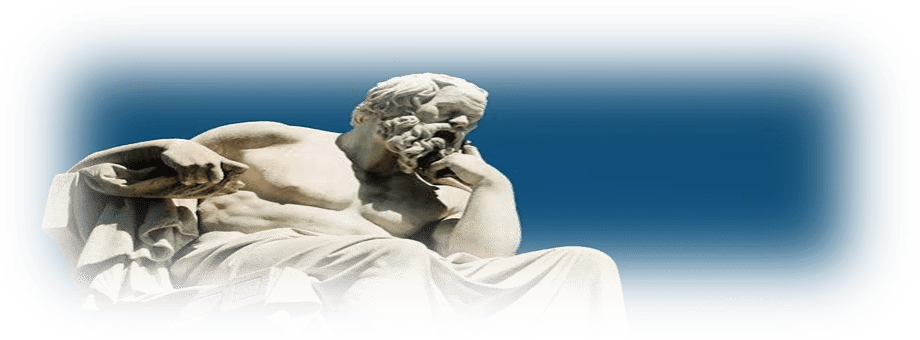
“I neither know nor think that I know”[1]
The last part of my education, long after I’d attained degrees in political science, law and international legal studies, involved, in part, linguistics and, to my surprise, it vastly enhanced my grasp of the other disciplines I’d studied, as well as of communication in general, as though I’d previously been intellectually two dimensional but after grasping essential aspects of linguistics, I’d attained the ability to perceive and to express myself in three or four. That led me to understand how Noam Chomsky had managed to attain such profound wisdom concerning both society and human nature although, perhaps, not with respect to all of his associates.
Something similar had occurred to me many decades earlier when, towards the end of my initial degree in law, I’d taken an elective course in jurisprudence, a course which should really have been a mandatory first semester course. Especially meaningful in that course was the section on Hohfeldian Terminology, a system of eight fundamental legal concepts created by American jurist Wesley Newcomb Hohfeld in 1913 to clarify ambiguous legal language, obviously an aspect of linguistics applied to law[2]. It is probably not very familiar to practicing attorneys today, although it should be.
Earlier in life I’d regretted not having studied higher mathematics as the little exposure I’d had in college to the field had led me to believe that most of us were largely blind, deaf and dumb with respect to the reality surrounding us. For some reason, however, philosophy did not impacted me in the same manner, probably because it is so premise driven; i.e., given a premise accepted as accurate, logic leads to conclusions that seem brilliant but which usually have little to do with reality. Indeed, the most important thing I learned of practical value while studying philosophy was that when predicted conclusions did not reflect reality, the premises were usually at fault.
I am now the sum of diverse currents having made many, many mistakes and learned from some of them, perhaps having gained at least a trace of wisdom in the process, especially, a willingness to accept that there is a great deal I don’t know and the ability to sometimes discern what it is that I don’t know. Perhaps the most important thing I’ve learned is that an open mind is a wonderful thing but ought never to be confused with an absence of opinions and beliefs, all of which should be continuously put to the test; perhaps the test I learned from philosophy: if the expected results prove inaccurate, the drawing board needs to be revisited rather than ignored through a plethora of excuses.
Interestingly, the latter concept seems anathema in politics were an open mind is considered an indicia of the absence of principles, a trait popularly referred to as “waffling”. Hence, a politician willing to reconsider his or her positions in light of experience is looked down upon as untrustworthy, something which does a lot to explain where we find ourselves: easily manipulated and unwilling to accept reality, even when it smacks us in the face.
As opposed to politicians, great mathematicians and physicists are constantly testing their premises, something that seems a corollary to David Hume’s belief that absolute truth may be impossible to prove but that what he referred to as “conventions”, tools we use in lieu of truth for practical purposes, i.e., because they seem to work (until they cease to be reliable, at which point they are discarded), were good enough in the short term[3].
Socrates taught by feigning ignorance and pretending to seek knowledge from those he taught, among them Aristocles, who we know by his nickname, Plato. Or perhaps, Socrates really did have an open mind and was misinterpreted, kind of like the character Chauncey Gardiner so well played by the late, great, Peter Sellers in the film, Being There.

_____
© Guillermo Calvo Mahé; Manizales, 2026; all rights reserved. Please feel free to share with appropriate attribution.
Guillermo (“Bill”) Calvo Mahé (a sometime poet and aspiring empirical philosopher) is a writer, political commentator and academic currently residing in the Republic of Colombia (although he has primarily lived in the United States of America of which he is also a citizen). Until 2017 he chaired the political science, government and international relations programs at the Universidad Autónoma de Manizales. Previously, he chaired the social studies and foreign language departments at the Eastern Military Academy in Huntington, New York. He is currently the publisher of the Inannite Review available at Substack.com; an intermittent commentator on radio and television; and, an occasional contributor to diverse periodicals and publications. He has academic degrees in political science (BA, The Citadel, the Military College of South Carolina), law (JD, St. John’s University, School of Law), international legal studies (LL.M, the Graduate Division of the New York University School of Law) and translation and linguistic studies (GCTS, the University of Florida’s Center for Latin American Studies). However, he is also fascinated by mythology, religion, physics, astronomy and mathematics, especially with matters related to quanta, cosmology and cosmogony. He can be contacted at guillermo.calvo.mahe@gmail.com and much of his writing is available through his blog at https://guillermocalvo.com/.
[1] Plato. (1997): Apology (H. Tarrant, Trans.) in J. M. Cooper (Ed.), Plato: Complete Works (Stephanus p. 21d). Hackett Publishing.
[2] Cullison, Alan D.: (1967): “A Review of Hohfeld’s Fundamental Legal Concepts”, 16 Clev.-Marshall L. Rev. 559; Cleveland, available at https://engagedscholarship.csuohio.edu/cgi/viewcontent.cgi?article=2997&context=clevstlrev.
[3] Hume, David (1739–40; 2009 publication): A Treatise of Human Nature; Edited by P. H. Nidditch. Oxford: Clarendon Press.

