Memories and Reflections after a Strange Dream in Early August of 2026

I started my eighth decade recently and, on reflection, I’m sometimes a bit surprised that I’ve somehow survived.  Like many others, perhaps most, as I mature (I like that term better than age) I engage in quite a bit of reflection and introspection, sifting through a past that has always been too transient, seeking for nuggets somehow worth salvaging, if only in memory.  The streams of time are unforgiving.

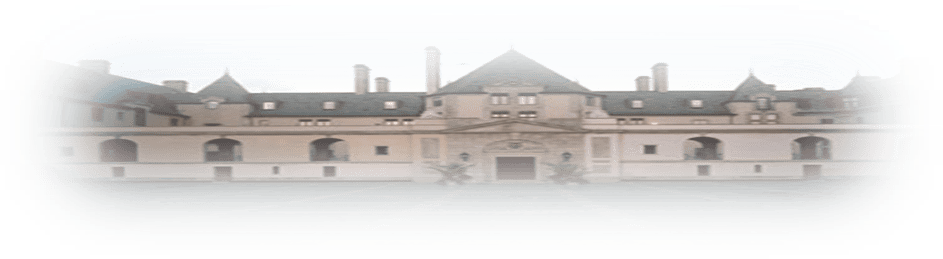
Last night I had a strange sort of dream but one not uncommon for me.  I have an active and very strange dream life.  In the dream it was the penultimate day of classes for me in a boarding school somewhere, but not one I ever really attended although I did attend boarding academic institutions through most of high school and during my college undergraduate years (but in military institutions, the Eastern Military Academy in Huntington, New York and the Citadel in Charleston South Carolina).  In this dream it was a civilian facility and coeducational.  It was not a very fancy place, indeed, it seemed drab, old and somewhat run down; really sort of dank and dark and dreary.  Not at all like Eastern (a palace, literally, now called OHEKA Castle) or the Citadel (magnificently beautiful).

In the dream, my roommate and I had not yet packed our things which were carelessly strewn about and I needed to contact my mother to verify how I was to get home.  She’d called and left a message asking what I wanted to eat and I had responded to the message somehow, asking for something too expensive for our budget, not realizing that it was a tangible question about the meal she wanted to prepare for me when I got home. Instead, I’d assumed that is was a sort of generic question into what I liked most, regardless of how unlikely it was that I’d get it.  It was a dream thus normal logic was not involved.  In the dream, the girl who’d conveyed our messages had not asked my mother for a phone number to which I could respond.  Well, that was logical, it was my mother after all.  The girl had no reason to know how frequently my family moved and in doing so, changed everything, telephone numbers included.  And I had no way of knowing how I was going to get home.  The latter was frequently true and frequently, it was not home I’d be heading to but a friend’s house.  Luckily for me, there were always friends with decent houses around, houses nicer than my family’s, and I gravitated to them.  It was a sort of desertion I now realize.  I was abandoning my family for some reason.  In reality.  Not in the dream.  That’s something I’ve long regretted. 

In my boarding school career there were seven end-of-the-academic-year departures and seven more Christmas vacation departures and for many of them, perhaps most, home was not my destination.  An unfortunate consequence was that my younger siblings, a sister and a half-brother, did not get any benefit from guidance I might have shared with them, or protection I might have given them, or love we might have shared.  My family lived in New York during that period, in numerous different places, but all in Queens.  First, in Ozone Park, then in Hollis, then in Queens Village and finally, in several different places in Flushing.  We’d moved to New York from Miami Beach when I was twelve, with detours, first for about eighteen months in Charlotte, and then for about six months at my grandmother’s home in South America, in the Republic of Colombia; in the City of Manizales, an oasis of stability we would visit for short periods from time to time. 

In Colombia we were seemingly well off; well, my grandmother was well off, relatively.  She owned a hotel, several taverns, a flower shop and a beautiful country home high on a hill surrounded by hundreds of thousands of carnations and roses, and fruit trees, with a pool by the side of a gazeebo and an artificial cement lake with swans and ducks, and a flowing stream at the foot of the property.  In the United States we seemed to get by but faced continuous financial problems I knew nothing about; problems from which my mother sheltered me completely, … somehow.  I had a stepfather, my father having vanished from our lives when I was three or four, although, according to him (many decades later, when we briefly reunited), it was we who had vanished, had been taken and hidden from him by my grandmother.  My mother had immigrated to the United States when my father vanished as so many Latin Americans did then and do now, but it was easier back then, back then as the 1940s turned into the 1950s and she remarried when I was six. 

My stepfather was a complex person whose complexities were not perceived by me until much later.  He was very loving but sometimes violent with me.  Back then corporal punishment was the norm.  The major problem with my stepfather though was that he was a compulsive gambler, cards I think, in Greek clubs, he was of Greek descent, a first generation “American” (United States citizen).  The consequences of his gambling “problems” were something my mother lived through for about nine years after which they separated, something I criticized at the time, at least to myself.  I’d been kept ignorant of the problems he caused her and us. She had never spoken ill of my birth father nor did she with respect to my stepfather which made them seem heroes, when the real hero, well heroine, had been her. During our time with my stepfather we had to move almost every year and unknown to me, creditors hounded my mother and stepfather, and not the commercial kind.  Still, while he was with us, I loved him very much and perceived of him as a protector rather than as a problem.

Anyway, while I was boarding at Eastern, weekends home were a possibility but one of which I rarely took advantage.  I generally stayed at the school, which was largely vacated on weekends, in part because I always had a problem with foreign languages (first Latin and then French) and didn’t meet the academic requirements for weekend passes which required an 80% average in every subject, cumulative average not being enough.  Ironic because I scored in the top three percentile in foreign languages on my college boards and I earned a graduate certificate in translation studies and linguistics relatively late in life; after I’d earned degrees in political science from the Citadel, and in law and then in international legal studies from universities in New York City. 

When I did get to leave the school for weekends or on vacations, I would frequently stay with a friend’s family either in Huntington, on Caledonia Road, the Chamberlins, or the Rothchilds in Little Neck.  Both families were very kind to me.  I should have been with my own family although, by then, we had joined the ranks of the dysfunctional, at least more obviously so.  When I was close to turning sixteen, my mother and stepfather separated and my siblings were also sent to boarding schools for which my mother miraculously managed to pay.  She’d studied cosmetology during the latter part of her marriage to my stepfather, apparently aware that she would soon need to be financially independent.  But I was the only one of my siblings who stuck it out and graduated.  Perhaps that was more because that’s all my mother could afford than because of any failings on the parts of my siblings.  I never knew which but strongly suspect the former.

At the Citadel, things were not that much different.  Of the three summers between its four year academic program, I spent two away, the first, attending summer classes but also vacation time with Rob Shelnutt and his wonderful family in Tarpon Springs.  Rob was to become my future Citadel roommate for several years.  Then, the final summer, I again spent attending summer classes at the Citadel while living with three of my classmates in an apartment we rented collectively in Charleston.  I did spend the intervening summer close to home but mainly living with my young aunt Carola.  I had a summer job with A.G. Becker & Sons on Wall Street helping to support my family because my mother had to have gall bladder surgery.  For once, I got to be productive and responsible and spend some time with my siblings.  Oddly, I can’t remember what they were doing at the time, my sister was not going to school but my younger brother should have been in high school.  Strange that I can’t remember anything to do with them that summer.

Actually, for some reason, there are way too many things about my immediate family that I never knew and rather than clarify things, my siblings confused them, sharing almost totally different versions of important events to which I was not privy.  It seems that my mother was determined to protect me from anything that might derail my path towards a better future, something she accomplished, but only for me.  My siblings were left behind in a sense.  Something which, as I came to realize it, generated strong feelings of guilt, feelings accentuated by the last words I recall my stepfather saying to me shortly before he passed away from his third heart attack.  That was at a time when he’d briefly reconciled with my mother and I had become a faculty member at Eastern (to which, like a homing pigeon, I’d returned after graduating from the Citadel).  I’d just started or been accepted to law school and he was very proud of me and told me that he “believed in me more than he believed in God”.  And he’d asked me to always look out for my sister and brother.  The former rather than the latter was a heavy burden, especially when my stepfather died shortly thereafter.  The latter was a duty I tried to meet but usually not all that successfully.  Much later I served as by brother’s legal guardian for a while and I think I helped him overcome serious issues, but my sister has always been extremely independent and distant and has always rejected any efforts on my part to help her.  We talk on the phone several times a year, on holidays and on her birthday, or if there is a local climactic disaster, and we care for each other a great deal, but that’s it.  And my brother?  He passed away last September but he sometimes seems to visit me in my dreams, seemingly now a link to my mother who passed away in early June of 1990.

On two occasions when I was returning home from the Citadel I hitchhiked, my two great hitchhiking adventures, both positive.  Once was with my roommate at the time, Jeff Ronald, who was driving to his home in Springfield Massachusetts and dropped me off, … somewhere, from which I somehow got to New York City, but the second time was more memorable.  It was right after graduation and I was set to go home with Jeff again but at the last minute I decided to go as far as Maryland with my friend Toby Griffen, a somewhat proudly eccentric intellectual who I intuited I’d rarely see again.  That was a long hitchhike in several stages.  Apparently offended however, Jeff kept a number of my things which he’d promised to take back for me, a typewriter and portable radio and probably some clothes.  I don’t recall how, but I made it back to New York, to Flushing where my mother, sister and brother were living at the time in a somewhat run down rented house, one in which I’d never stayed.  There are quite a few gaps in my memory of instances like that.  Looking back on that “trip” I’m amazed that I had the reckless courage to undertake it and the surety (a double entendre of sorts) that it would turn out all right, but those were different times and people were seemingly different then.  And it did turn out all right, except for my “misplaced” belongings.

When I delve into my past, which I frequently do, I tend to focus on things I would change and in fact, I would seemingly change many things.  I would have loved people who slipped by and let slip by some of those with whom I had failed relationships (more for their sake than for mine), and I’d have studied mathematics and physics rather than political science and history.  But then, I’d probably not have had my three sons, now 40, 38 and about to turn 36.  I’d change most of the important decisions in my life but, then again, reflecting on how that new life would probably have turned out, I might well be wishing I could change that one as well.  Seemingly, as the saying goes: “the more things change, the more they stay the same”.  Of course, the ultimate related daydream involves returning to a very young version of myself having retained knowledge of the future and having become a zillionaire philanthropist and peace activist.  I’m pretty sure I’d stick with that.

In a related sense, I’ve actually had to start my life over again, and too frequently it seems.  From scratch.  But, of course, without any prescience.  Still, I’ve survived and at times thrived.  I guess it’s a good thing that I was blissfully unaware when they occurred of many of the serious issues and deficiencies in my life, things that I’ve discovered in my reflections and introspection, things which consequently did not impact me as negatively as they might have had I focused on them at the time they occurred instead of from the relative safety of the future (when they’ve already been somewhat successfully resolved).  I’ve been at least as fortunate as I’ve been unlucky and, as in the case of my hero, the Chilean Nobel laureate, communist civic activist and Latin American nationalist, Pablo Neruda, my biography might be titled, “I Can Confess that I’ve Lived”.

 I’ve lived quite a bit, seemingly a dozen lifetimes in one.  I’ve helped some people a lot, mainly my students, and hurt others much more than they deserved, mainly my relationships with women, and I’ve been seriously betrayed on several occasions while I think that I’ve not betrayed others, other than in some cases romantically.  But during the past several decades, after I returned to where I started, back in Manizales, I’ve seemingly found a semblance of stability and the time to remember.  And, as I’m doing now, to record and share my memories.

Dreams tend to fade quickly, perhaps leaving behind traces that are sometimes reassembled later but others can be fascinating catalysts, as the one last night has been, triggering a flood of memories, reflections, introspections and speculation.  Last night’s dream is unlikely to fade at all.

Now, as to the future? 

Perhaps my adventures, or misadventures, are just beginning.
_____

© Guillermo Calvo Mahé; Manizales, 2026; all rights reserved.  Please feel free to share with appropriate attribution.

Guillermo (“Bill”) Calvo Mahé (a sometime poet and aspiring empirical philosopher) is a writer, political commentator and academic currently residing in the Republic of Colombia (although he has primarily lived in the United States of America of which he is also a citizen). Until 2017 he chaired the political science, government and international relations programs at the Universidad Autónoma de Manizales. Previously, he chaired the social studies and foreign language departments at the Eastern Military Academy in Huntington, New York. He is currently the publisher of the Inannite Review available at Substack.com; an intermittent commentator on radio and television; and, an occasional contributor to diverse periodicals and publications. He has academic degrees in political science (BA, The Citadel, the Military College of South Carolina), law (JD, St. John’s University, School of Law), international legal studies (LL.M, the Graduate Division of the New York University School of Law) and translation and linguistic studies (GCTS, the University of Florida’s Center for Latin American Studies). However, he is also fascinated by mythology, religion, physics, astronomy and mathematics, especially with matters related to quanta, cosmology and cosmogony. He can be contacted at guillermo.calvo.mahe@gmail.com and much of his writing is available through his blog at https://guillermocalvo.com/.

Introspective, Self-Deprecating Quote of the Day, July 30, 2026

“Even the most foolish among us may be capable, deliberately or inadvertently, of transcendental wisdom thus, there may be hope for me yet.”  Guillermo Calvo Mahé, July 30, 2026.

A quote inspired by recollections of one phrase uttered by Howard Dean, a failed Democratic Party candidate, decades ago: “…we have to change minds and change hearts—one heart at a time.” 

Something that has always remained with me and inspires me to keep writing and publishing during times such as ours.  Times such as those that Sigmund Freud must have been thinking of while in Vienna during 1938 when, in his preface to Moses and Monotheism, he wrote: “in darker times there lived a man who thought as you do”. 

We all know what followed: the Second World War, the Holocaust, the atomic bombing of Hiroshima and Nagasaki, the colonization of Palestine by Zionist invaders and the ensuing Nakba, and then, ….  well things have become even worse.
_____

© Guillermo Calvo Mahé; Manizales, 2026; all rights reserved.  Please feel free to share with appropriate attribution.

Guillermo (“Bill”) Calvo Mahé (a sometime poet and aspiring empirical philosopher) is a writer, political commentator and academic currently residing in the Republic of Colombia (although he has primarily lived in the United States of America of which he is also a citizen). Until 2017 he chaired the political science, government and international relations programs at the Universidad Autónoma de Manizales. Previously, he chaired the social studies and foreign language departments at the Eastern Military Academy in Huntington, New York. He is currently the publisher of the Inannite Review available at Substack.com; an intermittent commentator on radio and television; and, an occasional contributor to diverse periodicals and publications. He has academic degrees in political science (BA, The Citadel, the Military College of South Carolina), law (JD, St. John’s University, School of Law), international legal studies (LL.M, the Graduate Division of the New York University School of Law) and translation and linguistic studies (GCTS, the University of Florida’s Center for Latin American Studies). However, he is also fascinated by mythology, religion, physics, astronomy and mathematics, especially with matters related to quanta, cosmology and cosmogony. He can be contacted at guillermo.calvo.mahe@gmail.com and much of his writing is available through his blog at https://guillermocalvo.com/.

Chapter 223 in a Book of Revelations

I was kind of bitten by a sort of zombie a bit before noon.  A complex metaphorical zombie, not the horrendous sort.  It’s the day before her 83rd birthday.  We lived together for a decade when we were both young and I was very immature.

It confused me for a bit.  For many reasons; it always does.

I thought zombies couldn’t tolerate the light then remembered that that was vampires, but that was before 100% sun screen. I’m a fan of Christopher Moore but zombiepinups.com does not turn me on, not even a little, so, I’m a bit disconcerted.

OK, … I’m speaking figuratively but a surprise revelation about the perceptions of someone in my past, someone important I’d long treasured, felt like the bite of a zombie, … cold and unclean and perverted.  And it made me reflect and wonder how accurate my own perceptions are, recalling what a young partner once taught me: that we all seek self-justification and that to expect otherwise leads only to surprise, and not the good kind.  I’m surprised, … and not the good kind.  More the fool I.

Of course, that virtual zombie bite did clear up important mysteries and it may be shedding light on others, things I’d somehow suspected.  Sad and bitter experiences that nonetheless molded me in positive directions, making the real world clear to me, lifting the veil of delusions that I and too many of my generation lived by.

I feel as though I’m shrouded in cold damp mists, the kind that in the predawn twilight terrify in dirty city allies but bring hope in the crags and crevices that dot the crests of mountains in the evergreen Andes.  As though I’m waking from a restless slumber and looking for the perfect lover whose kiss may or may not have finally found me (for the record, I think it has).

Or perhaps I’m just dreaming that I’ve woken.  Or as I sometimes suspect, perhaps we are all the dreams of the primal lifeform, probably a prokaryote, nightmares of what may be should it survive.

_______

© Guillermo Calvo Mahé; Manizales, 2014; all rights reserved.  Revisited and revised on July 30, 2026, in an anticipation of a birthday about to arrive.

Guillermo (“Bill”) Calvo Mahé (a sometime poet and aspiring empirical philosopher) is a writer, political commentator and academic currently residing in the Republic of Colombia (although he has primarily lived in the United States of America of which he is also a citizen). Until 2017 he chaired the political science, government and international relations programs at the Universidad Autónoma de Manizales. Previously, he chaired the social studies and foreign language departments at the Eastern Military Academy in Huntington, New York. He is currently the publisher of the Inannite Review available at Substack.com; an intermittent commentator on radio and television; and, an occasional contributor to diverse periodicals and publications. He has academic degrees in political science (BA, The Citadel, the Military College of South Carolina), law (JD, St. John’s University, School of Law), international legal studies (LL.M, the Graduate Division of the New York University School of Law) and translation and linguistic studies (GCTS, the University of Florida’s Center for Latin American Studies). However, he is also fascinated by mythology, religion, physics, astronomy and mathematics, especially with matters related to quanta, cosmology and cosmogony. He can be contacted at guillermo.calvo.mahe@gmail.com and much of his writing is available through his blog at https://guillermocalvo.com/.

Once Upon a Time there Was a Girl Named Sue

It was 1960 and I lived in Queens Village, in Queens, in New York City, in a small apartment in a small apartment complex with my family on 215th street.  There was a slender young blond girl with short hair named Sue that I knew then, one who I’ve never forgotten.  I’m not quite sure where she lived but it was nearby.  And I don’t think I ever knew her last name. 

I don’t recall how we met, only that we did. 

We were just friends but I wish we’d been more, much more.  It wasn’t just that I found her beautiful but, as young as I was, I was fourteen and turned fifteen that summer, I sensed something profound in her, an intelligence but more, a sensibility and a sense of curiosity.  And the attraction was very strong.  But at fourteen I had no idea how to approach her so that our friendship could evolve into something else, although at fourteen, how much evolving could it have done. 

Still, I think about her frequently and have for sixty-six years now.

I wonder how her life turned out and hope she found happiness and fulfillment, and that she attained all of her potential.  The potential I sensed.  I wonder if she remembers me; if she ever wonders what my life has been like. 

If she shared something of what I felt.
_____

© Guillermo Calvo Mahé; Manizales, 2026; all rights reserved.  Please feel free to share with appropriate attribution.

Guillermo (“Bill”) Calvo Mahé (a sometime poet and aspiring empirical philosopher) is a writer, political commentator and academic currently residing in the Republic of Colombia (although he has primarily lived in the United States of America of which he is also a citizen). Until 2017 he chaired the political science, government and international relations programs at the Universidad Autónoma de Manizales. Previously, he chaired the social studies and foreign language departments at the Eastern Military Academy in Huntington, New York. He is currently the publisher of the Inannite Review available at Substack.com; an intermittent commentator on radio and television; and, an occasional contributor to diverse periodicals and publications. He has academic degrees in political science (BA, The Citadel, the Military College of South Carolina), law (JD, St. John’s University, School of Law), international legal studies (LL.M, the Graduate Division of the New York University School of Law) and translation and linguistic studies (GCTS, the University of Florida’s Center for Latin American Studies). However, he is also fascinated by mythology, religion, physics, astronomy and mathematics, especially with matters related to quanta, cosmology and cosmogony. He can be contacted at guillermo.calvo.mahe@gmail.com and much of his writing is available through his blog at https://guillermocalvo.com/.

Reflections on Fathers and Fathers’ Day – June 21, 2026

Fathers’ Day, the underappreciated holiday, one where I frequently reflect on its sadder aspects but, this time, a bit of introspection seems in order. 

I didn’t get to really know my father until very late in life; he and my mother separated when I was three and for many years, until I was fourteen, I was told that he’d died.  During most of those years the paternal role in my life was filled by my step father, Leon Kokkins, a New Yorker of Greek descent, one with a great deal of love to give but not terribly responsible (as a result of which he and my mother separated when I was fifteen).  By then however, I was a boarding student at the Eastern Military Academy in Huntington, New York, and father figures abounded there.  Memorable among them was Leopold Hedbavny, Jr., then the dean of faculty but eventually, the headmaster (my mentor and eventually my boss), and there was George Chamberlin, the father of one of my classmates who took a special interest in me, and Abe Rothchild, the father of another of my classmates.  After Eastern there was the Citadel and at the Citadel, perhaps the greatest father figure of them all, and not just with respect to me but with respect to thousands of cadets: Thomas Nugent Courvoisier, the Boo, the Citadel’s Lord of Discipline but with a heart big enough to care for us all, especially for those, like me, who needed him most.  So today, I salute them all although none of them are here among us anymore, at least not physically.  But across the veil I think they sometimes gather to see how I’m doing which keeps me on my toes.

And now two of my three sons are fathers and I’m a grandfather.  My third son, the youngest, is a world class uncle, or so I understand.  And I have many, many former students, starting with the 1969-70 academic year, many of them seemed like sons and much later, daughters to me, and they, in their turn, are now parents.

All of them are meaningful to me and provide me with many reasons to dwell on the links between parents and their children and children and their parents, repositories of great joys and great sorrow, of wonderful memories but also, reflections on opportunities missed.  And opportunities just around the corner.

A complex but beautiful tapestry.
_____

© Guillermo Calvo Mahé; Manizales, 2026; all rights reserved.  Please feel free to share with appropriate attribution.

Guillermo (“Bill”) Calvo Mahé (a sometime poet and aspiring empirical philosopher) is a writer, political commentator and academic currently residing in the Republic of Colombia (although he has primarily lived in the United States of America of which he is also a citizen). Until 2017 he chaired the political science, government and international relations programs at the Universidad Autónoma de Manizales. Previously, he chaired the social studies and foreign language departments at the Eastern Military Academy in Huntington, New York. He is currently the publisher of the Inannite Review available at Substack.com; an intermittent commentator on radio and television; and, an occasional contributor to diverse periodicals and publications. He has academic degrees in political science (BA, The Citadel, the Military College of South Carolina), law (JD, St. John’s University, School of Law), international legal studies (LL.M, the Graduate Division of the New York University School of Law) and translation and linguistic studies (GCTS, the University of Florida’s Center for Latin American Studies). However, he is also fascinated by mythology, religion, physics, astronomy and mathematics, especially with matters related to quanta, cosmology and cosmogony. He can be contacted at guillermo.calvo.mahe@gmail.com and much of his writing is available through his blog at https://guillermocalvo.com/.

Introspective Ramblings

I started this piece in late November of 2025.  It is now mid-January of 2026.  The Ides of January in fact.  I started with a specific focus but all too quickly what I was writing mutated into a ramble.  Ramblings seem incoherent and they frequently are, but not always.  Sometimes, as in the case of poetry, there are verities to be gleaned in their tangled depths.  At the very least, within a rambling’s shadows, within its hues and tints, there may be clues as to the nature of the person rambling.  Clues that may or may not be meaningful to others but may well be introspectively important to the one who’s opened up his or her streams of consciousness which, for some reason, he or she felt compelled to share,

The following certainly shares the odor of a rambling.  Hopefully though, a benign rambling albeit perhaps a bit too long, for which I apologize.

I’m an expatriate, an expatriate squared or perhaps an expatriate unraveled.  I was born in the Republic of Colombia but soon after I turned six I “was emigrated” with my sister to join my mother and new step father in Miami Beach.  I use the phrase “was emigrated” because leaving Colombia was not my idea, I loved Manizales, the city where I was born and today recognized as one of the best places to live in the world, but I admitted that the idea of moving to the United States was exciting.

I’ve lived in diverse parts of the United States during most of my life; however, since the Ides of October in 2007 I’ve again become a resident of north central Colombia.  Now, as it was before I was six, I live closer to the Pacific than to the Caribbean.  I now, once again, live in the summit of the central range of the Colombian Andes, again in Manizales, a city blessed by perpetual spring and surrounded by snow clad peaks whilst overlooking valleys where summer always dwells, all within a ninety minute radius. 

So, … since I was six I was a Colombian expatriate in the United States, a Colombian expatriate for over half a century and, as tends to occur, in the process I acquired important links to the United States but I never lost my spiritual links to Colombia.  Now that I’m back though, and I’ve been back for almost two decades, I’m a sort of United States expatriate in Colombia. 

That’s not all that unusual.  As is the case with the Irish as well, many who leave their homes for perceived opportunities in foreign shores long to return and the lucky ones eventually do, but changed.  We tend to be twice torn, happy to have returned but longing for the many places we’ve lived while abroad.  In my case, pining for Miami Beach and Charlotte and New York and the Carolina mountains and Central Florida, but especially for Manhattan, and for Charleston.

My apartment in Manizales, one I bought within a month of my return in order to make it difficult for me to change my mind (I knew I’d miss my family and friends a great deal), occupies the entire tenth floor in a condominium set where one starts to enter the city center.  It sits across the street from a beautiful little park centered on a fountain gifted to the city by the Fourth French Republic about a century ago.  On the other side of the park is the city’s large cultural complex which features a large theater and auditorium.  There, the departmental (a mix between a state and a county) symphony frequently performs as do theater groups from diverse parts of the world.  It also features a number of event rooms and an art museum.  My apartment is a block away from the principal hub of a recently installed cable car complex that drops down to the regional bus terminal and then to a nearby city.  From the regional bus terminal, one can take bus transport to all parts of the country and, in a different direction, by cable car again, to an uptown commercial, civic and educational hub.  Because the condominium is designed with a single large apartment per floor and because I’m on the tenth floor, I enjoy unobstructed three hundred and sixty degree views of the entire city and of the surrounding mountains and of the valleys far below. 

To the west, just before twilight, I can see sunsets in brilliant scarlet fading to purple, with gold and green highlights reflected off of clouds over the distant Pacific Ocean and sometimes, during the evenings, lightning flashes over the Pacific covering that part of the sky.  Also to the west, the spires of one of the world’s tallest cathedrals, one with a very long name: “La Catedral Basílica de Nuestra Señora Del Rosario”, climb towards heaven.  On top of the tallest spire a gentle crucified Nazarene seems to be casting himself to those below, apparently having finally accepted the challenge mistakenly attributed to Lucifer (the tempter’s real name was Hêlêl).  Rippling beyond the cathedral flow what the Chilean Nobel Laureate, Pablo Neruda (my favorite poet), once described as “a sea of mountains”.

To the south, very far to the south, many departments distant, lies the planetary equator which crosses the southern regions of Colombia.  Picture windows in my den and bedroom overlook that southern view which also involves a sea of mountains but, in that direction, dormant volcanoes lie resting as well (well, sort of dormant).  Ironically, the tallest four peaks are crested in white reflecting snow covered glaciers (rather than sea foam); a “sea” like the one to the west, both mountainous seas dressed in myriad shades of green morphing to blues and purples in the distance.  Similar sights, but for the volcanoes and the crested white peaks, also dress the north and west.

All the windows in my apartment are wide, tall picture windows which capture entrancing scenery and a great deal of light as well.  One would have thought that having returned from the United States to the north, the north would have been the direction on which I focused and, initially, I did, always with melancholy and nostalgia.  But it was the windows that faced south, those in my bedroom and in my den, which for some reason, enchanted me.  “Enchanted” in the mystical sense as well as the aesthetic.

From the southern windows, when I first returned to Colombia I almost immediately began to engage in a ritual of sorts.  During the evenings, as the sun set just before twilight, I would “call” one of the four cardinal quarters, the one meant to open the spiritual gates to the south.  That was sort of strange as, in my case, while I’ve always been fascinated by the concepts of divinity and deities, I’ve rejected organized religion and find organized mass prayer, prayer where ritual words are repeated without reflection and introspection as to their meaning and their context, troublesome rather than inspiring, and hypocritical as well[1].  I was thus engaging in actions that seemed indistinguishable from those I found objectionable and drawing comfort therefrom, apparently drawn to a primordial need for solace when faced with profound changes for which I was not totally prepared but couldn’t avoid.  I didn’t actually believe that the ritual really had any real validity but it brought me solace nonetheless.

Anyway, … when I left what had been my life for well over half a century behind, which I did in the fall of 2007, I for, some reason, adapted as my own, aspects of rituals employed by non-traditionalist, non-Abrahamic, purportedly primordial religions; rituals used when seeking to both open and close hallowed spaces, usually in the form of sacred circles, spaces in which to commune with that which, to some, seemed hallowed.  I did so as an individual rather than as part of a group and I limited the ritual, which is normally quadridirectional, north-east-south and west, solely to the south.  The ritual I designed for myself involved opening a gate to the southern quadrant, engaging in nostalgic and melancholic reflection and introspection, and then closing it.

After I would metaphorically “open” the gate I’d reflect on my life and on what I’d left behind, most importantly, on my three sons, Billy, Alex and Edward.  And I’d think about many of the acquaintances and friends with whom I could no longer interact, at least not physically.  I’d reminisce concerning my former students, classmates, mentors and colleagues at the old Eastern Military Academy in New York and about my classmates and the stream of special people that somehow consistently flow from the Citadel, the Military College of South Carolina, my alma mater (my son Billy’s alma mater as well).  And I’d grieve for those graduates from both institutions whose lives had been so cavalierly wasted in useless wars where all the victims on both sides were mothers and fathers and sisters and brothers and sons and daughters of others, but rarely the relatives of those politicians and entrepreneurs who had insisted on the conflict and were made wealthy thereby.  My return to Colombia coincided with a large popular movement to end armed conflicts which had plagued the country and its people for centuries and, in part, my return was motivated by a compulsion to participate in a positive manner in efforts to see such efforts succeed.

During the ritual, I would also recall my classmates and teachers at the St. John’s University School of Law and at the graduate division of the New York University School of Law, my alma maters as well.  And I’d recall my classmates and teachers at the University of Florida’s Center for Latin American Studies where I’d attended classes in the graduate program in linguistics and translation studies in 2005 and 2006.  I also frequently recalled Debra Allen Vazquez, a wonderful professor I’d had at a creative writing course I’d taken at a community college in Ocala in the late 1990’s, a wonderful woman who was murdered in front of the Ocala police station with her infant granddaughter in her arms by an estranged, xenophobic husband.  Xenophobia, racism and misogyny, the triple pillars that have always haunted the so called “American Dream”.

I initially focused my reflections on academic acquaintances and experiences because I’d returned to Colombia to work as a member of the faculty of the Universidad Autónoma de Manizales, first, briefly in the Language Institute but then in the Department of Juridical and Political Studies which I briefly chaired, and then in the university’s political science government and international relations programs which I chaired for a significant period.  That, of course, does not mean that I didn’t reminisce and reflect on many other people: on acquaintances, friends, colleagues and lovers.  Too many of the latter, unfortunately; I’ve emotionally hurt too many women who’ve loved me, although I never meant to.  I’ve seemingly been engaged in a quest for a perfect soulmate and perfection is not only hard to find but leaves behind too much disenchantment in its wake, on both sides.

I’d also reflect on the many places where I’d lived and worked while in the United States.  I’d reflect on Miami Beach where I’d first lived with my new family, and on Fort Lauderdale where I’d had two of my three sons much later on, and on Charleston in South Carolina and on Charlotte in the north, and of course, on New York.  And with respect to New York City, I’d recall my life in Ozone Park and Hollis and Jamaica and Queens Village and in Manhattan which I loved, and in Whitestone and, in Long Island.  And with respect to Long Island, the part of it which lies outside of New York City, I’d reminisce about Glen Cove but most of all, on the castle where I lived for so long, the castle that topped the highest point of Long Island in Cold Spring Hills in Huntington. Today the castle is called OHEKA but back then it was the Eastern Military Academy.  I loved those places and left pieces of my soul in each.

At any rate, after I was through with my reflections, reflections which too often involved a dash of self-pity (of which I’d quickly repent, or at least attempt to repent), I’d usually find the motivation I needed to restructure my life, hopefully in a better manner than I had in the past.  And then it would be time to close the gate to the southern quadrant.

I’d open and close the gate with the following ritual phrases uttered while facing the south and looking out through the large picture window in my den.  Opening the figurative gate to that quarter, I’d softly declaim (after all, I was alone):  “Spirits of the South, of fire, of heat and passion, of energy and creativity, I invite you to join with me in this space and ask that you grant me your peace, your wisdom and your protection.  Be with me now. Blessed Be.

And later, when I was done, I’d close the gate to the southern quarter by softly declaiming:  “Spirits of the South, of fire, of heat and passion, of energy and creativity, I thank you for attending my rites and guarding this space, and now, I invite you to stay if you please or depart if you must, in either case, with my peace and blessings.  Blessed Be.

I didn’t do anything similar with respect to the other cardinal points, the East, the West and the North, I’m not sure why.  Perhaps because the South represented the present and the future and that’s where I most needed help.

Despite my lack of belief in an anthropomorphic divinity, I’m not an atheist.  I am perhaps more of a curious agnostic but I do seem to sometimes need a bit of magic in my life, a bit of something still unexplained albeit not inexplicable, a bit of something supernatural, of forces beyond my ken.  In fact, I believe that questing to understand “whatever gods may be” (a quote I love from the poem “Invictus” by William Ernest Henley) is a duty and not just a curiosity.  One I’ve always taken seriously based on a pact I made with “whatever gods may be” when I was seven.  Apparently I was somewhat bold as a child, … and perhaps irreverent.  I was bathing, looking at the ceiling and trying unsuccessfully to reconcile what I was being taught in catechism classes when it occurred to me to strike a deal with the god I was being taught to worship but in whom, even then, I couldn’t quite believe but feared to disbelieve.  I couldn’t accept that an omnipotent, omnibenevolent, omniscient entity would be so insecure as to insist that he, she or it be worshipped based on fear and faith rather than on real love, real love earned, and on real knowledge, gnosis some had called it but I hadn’t yet heard of Gnostics.  And so I promised to explore and research until I attained sufficient knowledge to worship the deity based on evident realities but to behave morally and ethically as if it existed, even if that existence seemed improbable.

At any rate, the foregoing is now relatively long ago. 

We tend to change and I am not the inchoate man I was as a child, or the one I was before … et seriatum, etc.  It’s been a full life so far hopefully with a good deal more yet to live although, with the world in the horrible state in which it finds itself, the future is no certain thing and the longer I live the more I learn that most of what we’ve been taught, most of what I once believed, has been false; most of what I myself taught was false, especially the history I taught when I was in my twenties.  I really believed what I’d been taught and what I in turn taught as so many still do; however, I eventually woke to the reality that most history is only propaganda and that discerning truth involves not only hard work and objectivity but also a great deal of luck.  Since my late twenties, now many decades ago, I’ve done my best to find truth, and to share it.  To share it all too often with people for whom I care but who have no interest in having their illusions shattered.  And the truth is that objective certainty concerning history is never certain.  It’s something that we can perhaps approach but never attain.  There are too many variables and too many contexts and too little time.  We can’t even successfully discern the accuracy of the news concerning current events that we’re fed daily; something many of us have come to realize as we lose faith in the media and even in the entertainment industry, both institutions used successfully to control us. 

Notwithstanding the foregoing, despair concerning the absence of verity does nothing positive.  We need to keep plugging along doing the best we can, especially those of us in academia, whether as instructors or researchers.  But we need to inform those to whom we seek to impart knowledge that we can be as wrong as those who sought to do the same with us.  That means we have a great deal of constant research in which to engage if truth matters.  And it does to me.  And a great deal of listening to do as well as pontificating.[2]

It’s long since I’ve engaged in the rituals I’ve described but such rituals seem to have worked.  I arrived in Colombia knowing virtually no one and today, almost two decades later, I have many local acquaintances, some among them friends and most of them special people.  And I’ve been very active, active in academic circles as well as in cultural, civic and political circles.  The current president of Colombia, Gustavo Francisco Petro Urrego, visited me in my apartment on several occasions, albeit prior to his ascension.  In fact, seven years ago he sat granting televised interviews from the desk where I now sit and write these introspections.  Yes; I’ve been very fortunate.  Surprisingly so.  Inexplicably so.  Probably undeservedly so, especially with respect to the wonderful women with whom I’ve been involved, especially with respect to the one who’s become my wife.

For some reason I recently recalled the rituals I’ve described and after a search through my computer archives I found the specific phrases I used to evoke and invoke them, the ones I shared above.  And I decided that they deserved to be honored and that they deserved to be thanked.  The rituals were not entirely unfocused, they were directed at the evolving monist, panentheistic divinity I think may exist, one about which I frequently write and on which I frequently speculate, not always in a manner which it would find pleasing were it both sentient (possible) and anthropomorphic (unlikely).  But what I write reflects my honest opinions, always represented as such, and are never, or perhaps better said, rarely, undertaken in a quest for favor but rather, frequently, perhaps usually, to either give thanks or to attempt to attain introspective understanding.  After all, it’s what I promised a certain purported divinity many decades ago.

Anyway, … having written this ramble in the form of an elegy of sorts to rituals in which I may not really believe, an elegy written in a spirit of thanksgiving, a real spirit of thanksgiving unrelated to the celebration on the last Thursday in November involving a celebration of genocide and ethnic “cleansing”, one undertaken in the country I love but left, I’ll close, by first, acknowledging that the rituals seem to have been at least helpful in assisting me to better know the person who stares back at me from my mirrors and, secondly, as I did when I closed the gate to the southern quarter, by sincerely saying to one and all, friend or foe:

Blessed be!”

This ramble, or perhaps rant, is too long, I know, but that is often the nature of rambles and rants.
_____

© Guillermo Calvo Mahé; Manizales, 2025; all rights reserved.  Please feel free to share with appropriate attribution.

Guillermo (“Bill”) Calvo Mahé (a sometime poet and aspiring empirical philosopher) is a writer, political commentator and academic currently residing in the Republic of Colombia (although he has primarily lived in the United States of America of which he is also a citizen). Until 2017 he chaired the political science, government and international relations programs at the Universidad Autónoma de Manizales. Previously, he chaired the social studies and foreign language departments at the Eastern Military Academy in Huntington, New York. He is currently the publisher of the Inannite Review available at Substack.com; an intermittent commentator on radio and television; and, an occasional contributor to diverse periodicals and publications. He has academic degrees in political science (BA, The Citadel, the Military College of South Carolina), law (JD, St. John’s University, School of Law), international legal studies (LL.M, the Graduate Division of the New York University School of Law) and translation and linguistic studies (GCTS, the University of Florida’s Center for Latin American Studies). However, he is also fascinated by mythology, religion, physics, astronomy and mathematics, especially with matters related to quanta, cosmology and cosmogony. He can be contacted at guillermo.calvo.mahe@gmail.com and much of his writing is available through his blog at https://guillermocalvo.com/.


[1] However, there is no denying that others find such rituals not only meaningful but essential and I strongly believe that that whatever the objective validity of our respective positions, attacking the “faith” that makes another’s life tolerable is unjustifiable.

[2] On the other hand, an ex-wife of mine used to insist that she’d rather be happy than right and that truth was relative anyway.  Most people today, it would seems agree with her.

Reflections on a Chilly Morning in Late November

It’s cold in Manizales, a city in the sky set high in the central range of the Colombian Andes, although it dawned hot and sunny.  Well, relatively hot.  It’s about nine o’clock in the morning on the last day of November in a year that has seen the very worst of humanity triumph all over a sad and abused planet.

In Manizales it never really gets too hot or, truth be told, too cold.  Just different ranges of spring although the humidity varies, frequently by the hour.  Still, it’s chilly right now.  Today I’ve layered up: tee shirt under shirt under sweater.  That’s all I need here to escape the chill.  The morning has turned foggy, visibility outside is nil, but it involves low lying clouds more than fog, as occurs when you’re in a city higher than the seven thousand foot mark, an interesting albeit common phenomenon in this city in the sky set amidst mountains usually dressed in myriad shades of green.  The sight is eerily beautiful.  It’s as though the city repented of having woken early and pulled its ethereally fluffy white blankets back up over its head. 

It’s a good day for a fireplace.  For several fireplaces.  We have a small one set high on a wall in the living room but it’s not wood burning, it’s powered by a relatively small propane gas cylinder, not a fireplace Santa would appreciate but very pretty when it’s lit.  Something we seldom do.  If I were to build the perfect house it would be set amidst waterfalls and deep caverns and lakes but near the ocean, and would have fireplaces all over the place, and large rooms with balconies, and the roof would be a park-like terrace full of plants but with a Jacuzzi and would feature wrought iron outdoor living room furniture of sorts, and a wrought iron desk with a glass top so I could work outside, and an outdoor fire pit nearby. 

But, for now, no such luck. 

Still, I can’t complain, I have a large tenth floor apartment that occupies the entire floor giving us a three hundred and sixty degree view of the city and of the surrounding mountains, many clad in snow, and of the neighboring city set below, far below with a tall cathedral set not very far away, and a small park set outside of the front door.  And with a used-book store set aside our lobby.  The city’s cultural center with its large performing arts center is across the street and a block away we have the city’s initial aerial cable transport station, gondolas taking us to the nearby bus terminal and then to the neighboring municipality.  And, two blocks from our front door, a small modern shopping mall.

What I don’t have is my three sons, now all grown; two with children of their own.  They live a continent away in the Global North and I never see them now; well, except every once in a while in a video call.  We’ve lived apart for a very long time now, decades.  I’ve remarried to a wonderful woman, not just attractive but spiritual and intelligent and eclectic, and she fills a lot of the void I’ve created for myself after leaving most of my past behind, as do the wonderfully kind, talented and artistic people of Manizales, and as do my few expatriate friends, traces of my old life, but nothing can replace my sons.  I think of them daily.  And I think of the many, many people I’ve known, some of whom I’ve loved.  Most of them have long vanished from my life but not from my memory.

It’s been a full life, one full of blessing and of challenges, most of which (the challenges) have been overcome.  It frequently feels as though it’s been too full but today, for some reason, it seems hollow.  Perhaps it’s the weather but, although the low lying clouds still have everything covered so that it seems as though the world outside my windows has been erased, a bright spot in the white, a brighter white, seems to be trying to break through.  Of course, eventually it will.  It always does.

So, why does today still feel so gloomy?

It must be missing my sons and the grandchildren I’ve never really gotten to know which sculpts the day in hollow tones.  And the echoes of old relationships turned acrid which, at least from time to time, still cast long and somber shadows.

_____

© Guillermo Calvo Mahé; Manizales, 2025; all rights reserved.  Please feel free to share with appropriate attribution.

Guillermo (“Bill”) Calvo Mahé (a sometime poet and aspiring empirical philosopher) is a writer, political commentator and academic currently residing in the Republic of Colombia (although he has primarily lived in the United States of America of which he is also a citizen). Until 2017 he chaired the political science, government and international relations programs at the Universidad Autónoma de Manizales. Previously, he chaired the social studies and foreign language departments at the Eastern Military Academy in Huntington, New York. He is currently the publisher of the Inannite Review available at Substack.com; an intermittent commentator on radio and television; and, an occasional contributor to diverse periodicals and publications. He has academic degrees in political science (BA, The Citadel, the Military College of South Carolina), law (JD, St. John’s University, School of Law), international legal studies (LL.M, the Graduate Division of the New York University School of Law) and translation and linguistic studies (GCTS, the University of Florida’s Center for Latin American Studies). However, he is also fascinated by mythology, religion, physics, astronomy and mathematics, especially with matters related to quanta, cosmology and cosmogony. He can be contacted at guillermo.calvo.mahe@gmail.com and much of his writing is available through his blog at https://guillermocalvo.com/.

Reflections on Thanksgiving Day 2025

I am drawn to the concept of giving thanks rather than asking for boons from the divine.  It was something I felt strongly at times of spiritual longing while I was still more of a traditional believer, times long gone.  I am still drawn to the concept, albeit in a more generic form while concurrently more specifically.  While reflecting on towards what and towards whom my thanks should be directed.

A deity is evoked by most for purposes of giving thanks on this holiday, at least in the parts of the world where I’ve lived, in Europe and in the Americas.  It is an Abrahamic deity worshipped by three antagonistic branches, Judaism, Christianity and Islam, and that deity is purported to possess five principle unique attributes.  He (the deity is identified as masculine for the most part) is eternal, he has always existed and will always exist; he is omnipresent, i.e., he is ubiquitous, concurrently everywhere; he is omniscient, knows absolutely everything not only with respect to the past and the present, but also the future; he is omnipotent, all powerful, capable of anything and everything without reservation; and, he is omnibenevolent, all good without a trace of evil or negativity. 

I guess, if we humans did not exist, if our world did not exist, the concurrence of such attributes might conceivably be possible.  But we do exist, our world exists, and evil certainly exists and, on this Thanksgiving Day, evil seems to predominate, especially in the so called Western World.  And that evil seems to emanate directly from the purported Abrahamic Holy Land in the Middle East.

Today and for many years, decades really, It has been difficult, actually, impossible for me to be thankful to that incoherent complex of attributes that purportedly constitute “our” deity.  Or to believe that such an entity exists.  The three attributes most impossible for me to reconcile are the “omnis”: omnipotence, omniscience and omnibenevolence.  When effective, logic, a premise based form of analysis that purports to lead to accurate conclusions, could accept an evil or amoral omniscient, omnipresent omnipotence; or, it could accept an omnibenevolent, omnipresent and omniscient but impotent reality.  But not the confluence of all three attributes.  In general, the logical exercise in which we claim to believe and which we use, or more accurately, misuse and abuse, rarely works because, when its conclusions are put to the test and fail, rather that reexamine the premises and the analysis which led to the deficient conclusions (as tested against reality), we rationalize and make excuses.  We do so with respect to our Abrahamic concept of divinity by introducing the concept of purported “free will”, an oxymoronic absurdity when its exercise is subject to horrific and perpetual punishment.

The Abrahamic faiths are, not surprisingly given the forgoing, fratricidal, albeit usually sequentially so.  And hypocrisy reigns among at least two of them, Christianity and Judaism, the polar aspects of Abrahamic religion with Islam, strangely, being the bridge between them but, frequently, the most despised, belittled and calumnied by the other two. 

Take Christianity for example.  It was purportedly founded by followers of a gentle and loving Hebraic Palestinian from the small town of Nazareth during its Roman era but in reality, the religion as it has almost always existed was the creation of a misogynistic Hellenized Jew, Saul of Tarsus who eventually used a more politically convenient Roman name, Paulus.  The original Nazarene variant was centered in a small communist community in Jerusalem led by a certain James, cognamed “the Just” and comprised of the original disciples and apostles of his brother, a certain Yešu (today Latinized to its Hellenic variant, Jesus). The bastard Pauline variant quickly deformed into a traditionalist hierarchical control mechanism used to accumulate wealth and power, so much so that it eventually became the official religion of the Roman Empire.  Today, “evangelical and other so called Christians have completely rejected the communist economic premises of the original followers of Yešu, in part, because of the distortion of a statement by the founder of modern communism, an atheistic Jew, Karl Marx, to the effect that “religion was the opiate of the masses”, a statement contextually related to Marxian dialectic theory concerning economic evolution rather than to criticism of religion by which he meant that, at a certain point in economic history, religion was essential to survival making terrible conditions tolerable in the way that modern medications and medical treatments aid in our survival.  Through distortion and manipulation, modern Christianity, at least in the United States, has become the opposite of what Yešu espoused.  It has become a selfishly capitalistic, xenophobic philosophy apparently enamored of mass murder under the guise of capital punishment and perpetual war.  Judaism has also undergone drastic devolution with a significant component splitting off into an atheistic political Zionist variant espousing genocide, ethnic cleansing and even rape as a legitimate control mechanism for dealing with non-Zionist dissidence.  To those Abrahamic variants, Thanksgiving Day has become a de facto celebration of injustice, inequality and inequity, but that is something the original celebrants of the holiday in New England, the religiously intolerant Puritans would likely have ascribed.

That version of the Thanksgiving Day holiday, the one celebrated today, Thursday, November 27, 2025, is not one I can subscribe to, although I do enjoy some of its incidentals, like football games designed to draw our attention and energy away from our quotidian problems.  Thus, while in my moments of most intensely positive feelings towards divinity during a time long ago when I accepted the traditional Abrahamic version of divinity as possible, back when I gave thanks to “whatever gods may be” (a phrase from the poem “Invictus” by William Ernest Henley), today, my attitude is profoundly different.  Today, my thanks are limited to more tangible subjects.  To people I’ve known and to people I’ve never met but admire.  To those among the subjected and abused and downtrodden and tortured and maimed and killed who struggle to protect those they love and to stand for principles of equity and justice and compassion and generosity and peace, today something that applies most clearly to the Palestinian victims of Zionist genocide as it once stood for the Jewish victims of Nazi genocide, or to the Armenian victims of Turkish genocide, or to the indigenous victims everywhere of European genocide.  To all the economically deprived parents who work constantly to provide for their families as best they can.  To the Quixotic who struggle for “the right” against invincible odds, knowing that they themselves will never see the fruits of their labors.  But also to those who, for whatever reason, earned or not, I just love.  Those special people who were my classmates at the Citadel, and those fellow Citadel graduates who preceded and followed me, the same being true with respect to the now long departed Eastern Military Academy.  But also to my former students and colleagues everywhere. 

Today I give thanks to and for my family, especially my late mother Rosario and my late grandmother Juanita and my late aunt Carola.  To the many fellow travelers in the quest for a more equitable, more just, more peaceful, more compassionate, more peaceful and more loving world; those I know and who I can call friends as well as those with whom I am only acquainted and those who I’ve never met but who I know exist, have existed or will exist.

That seems a great deal for which to be thankful, even in these truly terrible times where orchestrated polarization for fun and profit regardless of the cost is the rule.  When the United States I love, indeed most of the Global North, is ruled from abroad by an ethics free elite.  Perhaps it always been this way.  But perhaps, the wonderful has always coexisted with the horrendous among the strange life forms who now refer to ourselves as humans.

So, … about the poem “Invictus”, one of my favorites.  It seems appropriate to close out these reflections by sharing it, albeit reformatted into a more narrative, rather than verse format:

Out of the night that covers me, black as the Pit from pole to pole, I thank whatever gods may be for my unconquerable soul.   In the fell clutch of circumstance I have not winced nor cried aloud.   Under the bludgeonings of chance my head is bloody, but unbowed.   Beyond this place of wrath and tears looms but the Horror of the shade, and yet, the menace of the years finds, and shall find, me unafraid.

It matters not how strait the gate, how charged with punishments the scroll, I am the master of my fate: I am the captain of my soul.

 
Thank you William Ernest Henley (1849 – 1903).

_____

© Guillermo Calvo Mahé; Manizales, 2025; all rights reserved.  Please feel free to share with appropriate attribution.

Guillermo (“Bill”) Calvo Mahé (a sometime poet and aspiring empirical philosopher) is a writer, political commentator and academic currently residing in the Republic of Colombia (although he has primarily lived in the United States of America of which he is also a citizen). Until 2017 he chaired the political science, government and international relations programs at the Universidad Autónoma de Manizales. Previously, he chaired the social studies and foreign language departments at the Eastern Military Academy in Huntington, New York. He is currently the publisher of the Inannite Review available at Substack.com; an intermittent commentator on radio and television; and, an occasional contributor to diverse periodicals and publications. He has academic degrees in political science (BA, The Citadel, the Military College of South Carolina), law (JD, St. John’s University, School of Law), international legal studies (LL.M, the Graduate Division of the New York University School of Law) and translation and linguistic studies (GCTS, the University of Florida’s Center for Latin American Studies). However, he is also fascinated by mythology, religion, physics, astronomy and mathematics, especially with matters related to quanta, cosmology and cosmogony. He can be contacted at guillermo.calvo.mahe@gmail.com and much of his writing is available through his blog at https://guillermocalvo.com/.

An Interlocking Spherical Introspection

It seems interesting and perhaps even meaningful in some way that I am so much more drawn to interlocking identical serial spheres which share a common center at their edges than I am to concentric circles which seem less interesting to me, perhaps even boring; the former sacred and magical while the latter merely organizationally utilitarian, a means of describing concentrating priorities.  I’m not sure why I feel as I do, indeed, the reality is that I haven’t a clue.  But I do.

Perhaps there is an egalitarian element in interlocking serial spheres which share a common center at their edges, something wholly lacking in concentric circles, and perhaps in the shared centers of the former there exists a focused form of synergy.  Not a dominant focus but rather, a sort of distillation which, for some reason puts me in mind of the brandy that one can make from the liquid residue of frozen mead.  A strange sort of simile but perhaps one that, with reflection and introspection, might yield a primordial sort of sacred meaning.  Perhaps a sort of key to something we should know but which has, for some reason, perhaps a very good reason, been withheld.

For some reason, I sense that my preference discloses something important about me, something that I should know and perhaps even more, something those who, for some reason or other, rely on me or care for me or fear me, with or without cause, should know.  Perhaps it’s a clue to a secret pathway towards my soul or even, an echo hidden in shadows cast by a source of distant wisdom that enjoys teasing me with hints of who I am or who I should be, or perhaps of who I once was.

Or perhaps, at their shared core, there’s a hint of what divinity might be.  Or of what divinity is not.

Or perhaps it’s just a silly, meaningless predilection.

But I rather think not.
_____

© Guillermo Calvo Mahé; Manizales, 2025; all rights reserved.  Please feel free to share with appropriate attribution.

Guillermo (“Bill”) Calvo Mahé (a sometime poet and aspiring empirical philosopher) is a writer, political commentator and academic currently residing in the Republic of Colombia (although he has primarily lived in the United States of America of which he is also a citizen). Until 2017 he chaired the political science, government and international relations programs at the Universidad Autónoma de Manizales. Previously, he chaired the social studies and foreign language departments at the Eastern Military Academy in Huntington, New York. He is currently the publisher of the Inannite Review available at Substack.com; an intermittent commentator on radio and television; and, an occasional contributor to diverse periodicals and publications. He has academic degrees in political science (BA, The Citadel, The Military College of South Carolina), law (JD, St. John’s University, School of Law), international legal studies (LL.M, the Graduate Division of the New York University School of Law) and translation and linguistic studies (GCTS, the University of Florida’s Center for Latin American Studies). However, he is also fascinated by mythology, religion, physics, astronomy and mathematics, especially with matters related to quanta, cosmology and cosmogony. He can be contacted at guillermo.calvo.mahe@gmail.com and much of his writing is available through his blog at https://guillermocalvo.com/.

Cinnamon, Synonyms, Arsenic and Old Lace

She couldn’t explain, even to herself why she did it, only that perhaps, it had something to do with the fact that it was really his fault for enabling her, for confiding in her and trusting her and believing in her and for his incoherent faith in human decency.  She knew that it was possible, perhaps even probable that at some point he’d discover what she’d been doing.  No one could be so gullible, so naïve and so blind as to remain forever in the dark unless he volitionally chose to do so, perhaps to protect her from the consequences of her betrayals but also to protect himself.  Life is strange and has its own rhythms, its own purposes, its own unfathomable reasons.

He almost subliminally suspected something was not as it should be but, then again, the world was so screwed up, evil loudly proclaiming itself to be virtuous as murder and mayhem and corruption continued their millennial reign.  For some inexplicable reason he somehow felt that it was his responsibility to fight against the whirlwind and do something, however slight and ineffective, to at least try to stem the awful tide.  So he continued in that relationship which superficially seemed so positive to others and to her as well, but from his heart, not in the night but during odd times during the day, unpleasant echoes seemed to seek out shadows into which they whispered Cassandric warnings.

Odd how the personal and the global seemed to resonate while the universe looked on, or perhaps just infrequently shared a glance, disinterested, concerned only with the gravity of maintaining its own harmonics.  Life was a pest, an invader, a virus that squeaked and squealed unheard amidst the music of the spheres and if it continuously harmed itself, the universe, or perhaps the multiverse or maybe even the omniverse really couldn’t care less.  Not that it was totally indifferent, it just had an infinite number of higher priorities.

And divinity?  Well, divinity mainly slept and dreamt, tossing and turning in nightmares that too often became reality, or perhaps which merely mirrored and reflected possible realities, blissfully unaware of truth or justice or equity or other intangible dragon flies flitting among the hummingbirds and lightning tangled in the monads of its nonexistent soul.
_____

© Guillermo Calvo Mahé; Manizales, 2025; all rights reserved.  Please feel free to share with appropriate attribution. Guillermo (“Bill”) Calvo Mahé (a sometime poet) is a writer, political commentator and academic currently residing in the Republic of Colombia (although he has primarily lived in the United States of America of which he is also a citizen). Until 2017 he chaired the political science, government and international relations programs at the Universidad Autónoma de Manizales. Previously, he chaired the social studies and foreign language departments at the Eastern Military Academy in Huntington, New York. He is currently the publisher of the Inannite Review available at Substack.com; an intermittent commentator on radio and television; and, an occasional contributor to diverse periodicals and publications. He has academic degrees in political science (BA, The Citadel, The Military College of South Carolina), law (JD, St. John’s University, School of Law), international legal studies (LL.M, the Graduate Division of the New York University School of Law) and translation and linguistic studies (GCTS, the University of Florida’s Center for Latin American Studies). However, he is also fascinated by mythology, religion, physics, astronomy and mathematics, especially with matters related to quanta, cosmology and cosmogony. He can be contacted at guillermo.calvo.mahe@gmail.com and much of his writing is available through his blog at https://guillermocalvo.com/.