Rantings on Volition

At some point, perhaps, somewhere, some-when before time, the primal singularity acted out, perhaps speculating on an eventual battle between determinism (the concept that everything will be determined in the first instant of existence and all that follows will involve mere predictable reaction), and volition (the concept that choice will prove a reality that will impact consequences).  Perhaps that primal singularity wondered if choice would be an option.  Perhaps, the primal singularity speculated on the relevance of right versus wrong.

Perhaps it engaged in the following soliloquy:

It may be that volition will be an attribute isolated only to biological entities broadly defined, starting with the tiniest and most primordial microorganisms.  Perhaps it will involve an experiment challenging otherwise predictable determinism, a sort of experimental determinist deviation which may set determinism somewhat askew, creating a tension between that phenomenon and its former perfection, where determinism will seek to erase the consequences of volition in the long term, while volition will mess with determinism in the short”.

In that sense, all our human idiocies would eventually come to naught, right versus wrong an irrelevancy, a mere artificial construct, and life will prove but a transitory anomaly, a sort of practical joke on the multiverse.  Unless, of course, life unexpectedly survives and in some volitional form or other, prevails, at least until entropy has the final word.

Or, perhaps not.

Perhaps the foregoing are only the rantings of an anarchic empirical philosopher.
_______

© Guillermo Calvo Mahé; Manizales, 2023; all rights reserved.  Please feel free to share with appropriate attribution.

Guillermo (“Bill”) Calvo Mahé (a sometime poet) is a writer, political commentator and academic currently residing in the Republic of Colombia (although he has primarily lived in the United States of America of which he is also a citizen).  Until 2017 he chaired the political science, government and international relations programs at the Universidad Autónoma de Manizales.  He is currently the publisher of the Inannite Review, available at Substack.com, a commentator on Radio Guasca FM, and an occasional contributor to the regional magazine, el Observador.  He has academic degrees in political science (the Citadel), law (St. John’s University), international legal studies (New York University) and translation and linguistic studies (the University of Florida’s Center for Latin American Studies).  However, he is also fascinated by mythology, religion, physics, astronomy and mathematics, especially with matters related to quanta and cosmogony.  He can be contacted at guillermo.calvo.mahe@gmail.com and much of his writing is available through his blog at https://guillermocalvo.com/.

With a Paradoxical Whimper of Sorts

Looking at cosmogony logically, at least from my perspective, it seems that the end of our universe, … as we know it, is fathomable.  The how at least, if not the when, and it would involve everything everywhere being swallowed into an ultimate universal black hole which had swallowed all other black holes, which had swallowed everything before them, regardless of expansion, so, in a sense, the oscillating universe theorists of yore would unexpectedly be proven right, in their instincts if not in their conclusions.

Of course, that is not a complete end, not the entropic end once envisioned, but a variant thereof, one where black holes form, eat each other in involuntary mergers, or perhaps, happy marriages, and like our own merger mad neoliberal moguls who want to own and control everything, regardless of the cost or danger of nuclear annihilation involved, eventually leave no remnants, except, perhaps, the residue of their own infinitely bloated singularity.

Then again, we don’t know what ultimately happens to black holes, or whether their opposite compliments, theoretically possible at least according to mathematics, “white holes”, would merely start everything over again, or what the consequence of Stephen Hawking’s concepts of information and radiation leakage from black holes might entail.  Which brings us to possible postulates by other physicists such as Planck and DeBroglie and Schwarzschild, i.e., that as black holes “radiate” information, their mass decreases, and, as their mass decreases, they emit greater and greater quantities of informational radiation, causing more and more and faster and faster evaporation, eventually causing them to shrinks to around the Planck mass (the smallest mass possible) where their DeBroglie wavelengths become equal to the Schwarzschild radius.  An infinitely great yet tiny amount of radiation free of information and at that point, perhaps gravity free as well.

Well, in our universe, at any rate.  The rest of the multiverse probably poses other quandaries and promises.

I wonder how AI (artificial intelligence) will fare in the foregoing information-free scenario.
_______

© Guillermo Calvo Mahé; Manizales, 2023; all rights reserved.  Please feel free to share with appropriate attribution.

Guillermo (“Bill”) Calvo Mahé (a sometime poet) is a writer, political commentator and academic currently residing in the Republic of Colombia (although he has primarily lived in the United States of America of which he is also a citizen).  Until 2017 he chaired the political science, government and international relations programs at the Universidad Autónoma de Manizales.  He is currently the publisher of the Inannite Review, available at Substack.com, a commentator on Radio Guasca FM, and an occasional contributor to the regional magazine, el Observador.  He has academic degrees in political science (the Citadel), law (St. John’s University), international legal studies (New York University) and translation and linguistic studies (the University of Florida’s Center for Latin American Studies).  However, he is also fascinated by mythology, religion, physics, astronomy and mathematics, especially with matters related to quanta and cosmogony.  He can be contacted at guillermo.calvo.mahe@gmail.com and much of his writing is available through his blog at https://guillermocalvo.com/.

Ledatic Eht

A vale behind the veil, another side of somewhere
a place
where all who’ve come before us eventually venture.

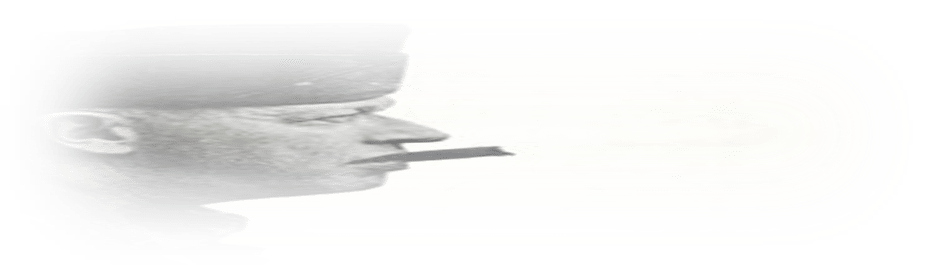
Where the Boo, another face of God, sits in genteel judgment,
an unlit cigar
clenched firmly in his jaw,

… welcoming home his lambs.
_______

© Guillermo Calvo Mahé; Manizales, 2023; all rights reserved.  Please feel free to share with appropriate attribution.

Guillermo (“Bill”) Calvo Mahé (a sometime poet) is a writer, political commentator and academic currently residing in the Republic of Colombia (although he has primarily lived in the United States of America of which he is also a citizen).  Until 2017 he chaired the political science, government and international relations programs at the Universidad Autónoma de Manizales.  He is currently the publisher of the Inannite Review, available at Substack.com, a commentator on Radio Guasca FM, and an occasional contributor to the regional magazine, el Observador.  He has academic degrees in political science (the Citadel), law (St. John’s University), international legal studies (New York University) and translation and linguistic studies (the University of Florida’s Center for Latin American Studies).  However, he is also fascinated by mythology, religion, physics, astronomy and mathematics, especially with matters related to quanta and cosmogony.  He can be contacted at guillermo.calvo.mahe@gmail.com and much of his writing is available through his blog at https://guillermocalvo.com/.

Musings on a Midsummer’s Eve

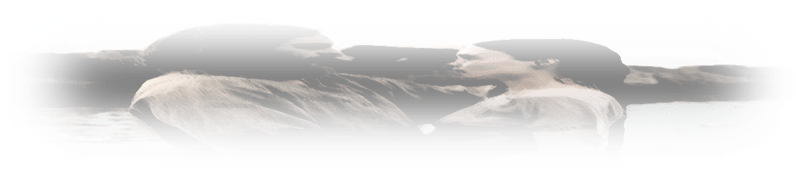
Did the Magdalene and the Nazarene, either together or alone, ever touch the waters that bathe Northern Africa, Southern Europe and Southwestern Asia, the sea purportedly in the middle of the world, at least as perceived by them?  Perhaps on a soft and balmy midsummer’s eve?

Probably not, but given the millennia that separate us from them, who can tell. 

Immersion in that central sea would have been both pleasant and mystically sacred.  Especially on such a day.  At least it would seem so to me, notwithstanding that so many millions have been so privileged. 

A wandering thought on a midsummer’s morning.
_______

© Guillermo Calvo Mahé; Manizales, 2023; all rights reserved.  Please feel free to share with appropriate attribution.

Guillermo (“Bill”) Calvo Mahé (a sometime poet) is a writer, political commentator and academic currently residing in the Republic of Colombia (although he has primarily lived in the United States of America of which he is also a citizen).  Until 2017 he chaired the political science, government and international relations programs at the Universidad Autónoma de Manizales.  He is currently the publisher of the Inannite Review, available at Substack.com, a commentator on Radio Guasca FM, and an occasional contributor to the regional magazine, el Observador.  He has academic degrees in political science (the Citadel), law (St. John’s University), international legal studies (New York University) and translation and linguistic studies (the University of Florida’s Center for Latin American Studies).  However, he is also fascinated by mythology, religion, physics, astronomy and mathematics, especially with matters related to quanta and cosmogony.  He can be contacted at guillermo.calvo.mahe@gmail.com and much of his writing is available through his blog at https://guillermocalvo.com/.
The Evening of the Day Before

Midsummer’s eve was probably yesterday, but it could have been “the evening of the day before”, a good title for a book perhaps.  Perhaps a book by Umberto Eco or a play by Will-o’-the-wisp Shakespeare.

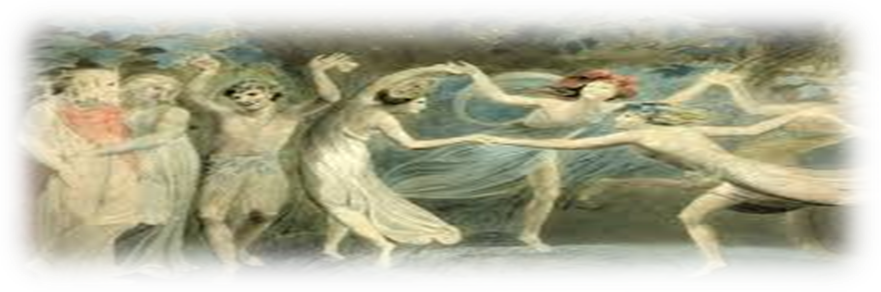
I wonder if Titania and Oberon and Puck were out cavorting.  I certainly hope so, but, if so, “wherefore were they and why”?

Wandering thoughts on an early summer’s day in a sort of late Juniper’s June.
_______

© Guillermo Calvo Mahé; Manizales, 2023; all rights reserved.  Please feel free to share with appropriate attribution.

Guillermo (“Bill”) Calvo Mahé (a sometime poet) is a writer, political commentator and academic currently residing in the Republic of Colombia (although he has primarily lived in the United States of America of which he is also a citizen).  Until 2017 he chaired the political science, government and international relations programs at the Universidad Autónoma de Manizales.  He is currently the publisher of the Inannite Review, available at Substack.com, a commentator on Radio Guasca FM, and an occasional contributor to the regional magazine, el Observador.  He has academic degrees in political science (the Citadel), law (St. John’s University), international legal studies (New York University) and translation and linguistic studies (the University of Florida’s Center for Latin American Studies).  However, he is also fascinated by mythology, religion, physics, astronomy and mathematics, especially with matters related to quanta and cosmogony.  He can be contacted at guillermo.calvo.mahe@gmail.com and much of his writing is available through his blog at https://guillermocalvo.com/.
The True Meaning of Life and all that Rot (Literally; or is it “figuratively”?)

Philosophy is an interesting human concept, our very own innovation designed to concurrently enlighten and befuddle us.  It both opens our minds and channels them into narrow calcified tunnels with light so distant as to become virtually invisible, and hence, rendering real knowledge ungraspable.  At least that’s frequently the case.  But not always.  Take the “meaning of life as an example.  Is it really as complicated and unfathomable as we´ve made it?  Or, is it rather simple and basic?  Based on the following hypothesis, you be the judge.

Sooo, about the “meaning of life” about which we[1] humans spend so much time wondering and, with regards to which, we spend so much time bemoaning the absence of answers.  At least some of us.  At least during certain stages of our lives (for example, during the onset of puberty at adolescence, then as we approach midlife crises, then as we approach what we refer to as our third or golden years, and finally, as we face transition beyond the veil). 

I think I may have found it (it being “the” answer), at least as far as “we” humans are concerned, but, notwithstanding the conclusions of Douglas Adams (wherever he is now that he’s passed beyond the veil), it has nothing to do with the number forty-two.

I would warn readers that the answer’s a bit humbling and hardly grandiose.  Rather, it’s quite utilitarian, although still rather important.  And it applies narrowly and specifically to only one of life’s realms, thus other forms of life have other primal purposes since, when we ask what the purpose of life is, we are referring to the purpose of life and its meaning among we humans.  Accordingly, the answer lies there. 

But what are our premises?  After all, every well thought out answer starts with premises.

Well, interestingly enough, there seem to be just three.  First[2] we have to acknowledge that we humans are part of the animal kingdom, or at least evolved therefrom[3]; second, that the animal and plant kingdoms are both an innovation of our joint forefathers eukaryotes; and third, that those animals possessed of alimentary canals which process ingested nourishment into waste, are our direct ancestors.  There!  We’re set.  Sort of.

Based on the foregoing, the reality with respect to the meaning of life, or perhaps, more accurately, our lives, is that the primary and perhaps sole purpose and function of the denizens of the branch of the animal kingdom of which we’re a part was supposed to be, according to nature (our progenitor), the proliferation of vegetable species, most importantly fruit, beyond their normal range.  That was to be accomplished through the combination of our innovative freedom of movement, compared to the plants we were digesting, and our excretionary functions.  Consequently, we were not “forbidden” to eat the fruit of life, but, as Eve would in no uncertain terms conform, impelled to do so, and to digest it, and having digested it into a compost that included seeds and the fertilizing agents necessary for propagation, excrete the residue to spread vegetable life far and wide.

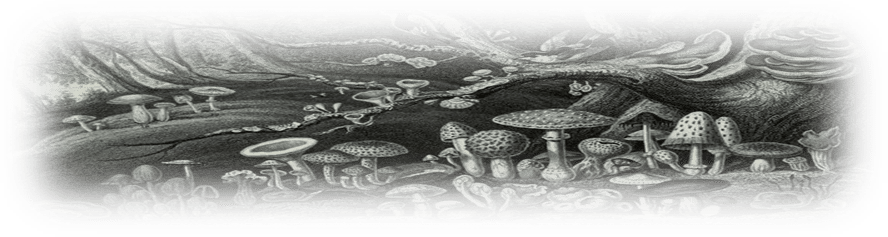
The plant and animal kingdoms (all multicellular animals), of course, constitute only two of the five currently recognized living realms, the others being fungi (moulds, mushrooms and yeast), protists (amoeba, chlorella and plasmodium) and prokaryotes (bacteria and blue-green algae) but in the context of our foundational inquiry, we are only concerned with the first two, and with respect to those, original purposes soon became complicated and convoluted, perhaps resulting in our current confusion and despair.

While our original purpose for existing as part of the living realms was clear, the animal kingdom duchy (sort to speak, or perhaps principality) of which we are part soon deviated as carnivores insisted on intruding onto the alimentary premises which the vegetable kingdom found imperative, and rather than consuming plants and fruit, especially fruit, they insisted on a form of primordial cannibalism and expanding on that, we humans evolved into omnivores, consuming anything and everything that did not consume us first.  But that was not enough for us, we then degraded the importance of our excretions.  Indeed, we disdained and contained them through nonproductive (at least from the vegetable kingdom’s perspective) purportedly salutary practices, such deviation from our primary purpose having been erroneously premised on cultural misinterpretation of our role, our “prime directive” as Gene Roddenberry might have put it, and then, of course, misdirection.  Since then, we’ve invented myriads of fields of reflection and introspection trying to rediscover the purpose we ourselves rendered, if not obsolete, at least anachronistic.

Following the hypothesis that no good deed goes unpunished, at least for long, the animal kingdom, duchy of which we are a part, through the intervention and innovations of we humans, has and continues to conquer and devastate our creators in the vegetable kingdom, indeed, in all five of life’s realms, which may be the source of the rumor spread by Friedrich Nietzsche to the effect that “God”, whoever or whatever that was (hint, it’s obviously nature) is dead, although Nietzsche was merely projecting nature’s future.

Interestingly, the foregoing also implies another epiphany, one that involves the identity of the “adversary, to whom some humans unfairly refer in their purportedly sacred writings as Lucifer, or Satan, or Shaitan, but which more accurately, was a certain Hêl él[4].  In fact, if the foregoing is accurate, the adversary was in fat not some deviant archangel but rather, a certain Robert Thom, the Scott[5] who initiated sewage treatment in the city of Paisley[6]; the clearest and most expansive example of the law of unintended consequences. 

If only plants could speak what stories they could tell. 

Sooo, … about artificial intelligence …!
_______

© Guillermo Calvo Mahé; Manizales, 2023; all rights reserved.  Please feel free to share with appropriate attribution.

Guillermo (“Bill”) Calvo Mahé (a sometime poet) is a writer, political commentator and academic currently residing in the Republic of Colombia (although he has primarily lived in the United States of America of which he is also a citizen).  Until 2017 he chaired the political science, government and international relations programs at the Universidad Autónoma de Manizales.  He is currently the publisher of the Inannite Review, available at Substack.com, a commentator on Radio Guasca FM, and an occasional contributor to the regional magazine, el Observador.  He has academic degrees in political science (the Citadel), law (St. John’s University), international legal studies (New York University) and translation and linguistic studies (the University of Florida’s Center for Latin American Studies).  However, he is also fascinated by mythology, religion, physics, astronomy and mathematics, especially with matters related to quanta and cosmogony.  He can be contacted at guillermo.calvo.mahe@gmail.com and much of his writing is available through his blog at https://guillermocalvo.com/.

[1] I know, I know, it should be “us”, but I don’t really like the way “us” sounds in this context, and, … I am the author, with all rights to “poetic license”, sooo, “we” it is.

[2] I know, I know, … again.  “Premises, premises”, but what can we do without them.

[3] The “derived therefrom” phrase preemptively addresses arguments insisting that we are qualitatively different than animals.

[4] Look him up, it’s worth it.

[5] I hate to admit that the English may have been correct when some postulated that the devil was most certainly a Scott.  But evidently, at least in this one instance, it appears they were on to something.  I guess the axiom that no one is always wrong may, in fact, be somewhat correct.

[6] Although the Minoan civilization of Crete and the Roman Empire used underground clay pipes for “sanitation” purposes.  So perhaps the identity of the “adversary” is all too securely hidden.

Serendipity:

The Saga of a Gal Sort of Named Sue, and … well, … Company

This is a story about consonance, not assonance, but certainly contains more than a trace of dissonance.  It’s a sort of fractured and sad love story.  The characters are, well characters, and no effort has been made, with respect to the nature of their names, to protect the innocent, so we are neither admitting nor denying that they involve real people or real situations, at least deliberately.  But nature being what it is, …who knows?

Well, … maybe the Shadow, … but who else?

Anyway ….

Sue was a lucky girl.  At least for a while.  Good things fell in her pretty lap without her ever having to do anything to earn them, anything at all.  Some said “serendipitous” was her middle name.  It wasn’t.  “Serendipity” was her first name but, for some reason, she preferred to use Sue, which was, in point of fact, her middle name.  Interesting.

Everything about Sue was pretty too.  Not beautiful, not cute, just pretty.  But so much prettiness tended to dazzle, and it wasn’t as threatening as beautiful, although perhaps not as perky as cute.  Being perfectly pretty helped, well, let’s call her “Sue” (since she prefers that name), it helped Sue with everything: with her grades, with her roles in all kinds of organizations, with her teachers (none of whom ever even considered hitting on her), with her family and relatives, with whatever job she decided she wanted, although, to be fair, she never sought anything beyond her capabilities, and she gave every job she ever had her all.  That was Sue.

At least until she inadvertently met “Melancholy Mike” during her senior year in college.  Sometimes destiny sucks.  Or is that fate.  Or perhaps, karma.

Mike wasn’t really melancholy at all, he just had terrible luck at everything he tried despite seemingly having all the physical and mental assets for which any male could hope.  Although he was fast and had great hand and eye coordination, he somehow always had “bad luck” accidents, and, truth be told, he was easily distracted, which is probably why it seemed so hard for him to keep his “eye on the ball”, in every sense.  So, … rather than being a first string varsity sports star, he tended to be a junior varsity backup, but not with awesome promise, without awesome potential .  Same was true with academics, and work, and, as we’ll see, with personal relationships.

Initially, everyone Melancholy Mike met wanted to be his friend and, if it involved a female, and well, some males too, a bit more than just a friend.  To say that Melancholy Mike was not empathic was a massive understatement, so he didn’t pick up on how others felt about him and, all too soon, those who’d initially been drawn to him became, at best, cross with him.  Too many stupid little things just seemed to go wrong around him.  He tended to trip quite a lot, and to spill things, and to blurt things out he’d have been better off keeping to himself.  And all too soon, those who’d initially found him fascinating but had then become being cross saw their feelings devolve towards disdain, and quickly thereafter, to avoidance, and then to generation of nasty, untruthful rumors (which is how he acquired the moniker “melancholy”).  That was especially true among those who’d originally found him irresistible but, with respect to whom, he’d “failed to catch the pass”, if you get the drift.  They’d be embarrassed at first, feeling foolish, then his lack of any reaction towards their obviously miffed feelings, made them feel belittled and ignored, even though he was just being oblivious and, had he caught on, might frequently have reacted in a very positive manner.  Thus, over time, by his senior year in college, Melancholy Mike had become singularly unpopular.

While Melancholy Mike was “usually” oblivious, that was not the case when he met Sue.  They bumped into each other, literally, in a park by a pretty flowing river, where flowers of diverse species bloomed and shade trees abounded.  Sue had gone there to study and Melancholy Mike, well, frankly, he’d not been paying attention where he was going and had gotten lost.  They’d really bumped into each other, as I indicated, literally, but figuratively and physically as well.  Melancholy Mike had tripped over Sue and hit his nose on a large rock and was bleeding profusely.  Sue, who was always nice, sought to stem the bleeding and, of course, succeeded in doing so.  But in the midst of that endeavor, she glanced into his eyes, and became lost there, and when Melancholy Mike, who was in a bit of a daze, looked at her face, he figured perhaps he’d been hurt worse than he’d thought, worse than usual, and …. 

Well, as somewhat polar opposites, the attraction had been as intense as it was immediate, but then, all too soon, perhaps a few weeks later, it seemed as if a thick glob of sticky and sickly sweet molasses had engulfed them, sort of like amber sometimes engulfs insects.  The figurative ambient mess kept making them keep figuratively colliding, first to one side and then to the other, but still clinging.  Yuck, what an awful metaphor, or was that a simile, but anyway, it was unfortunately all too accurate.

Having never learned to cope with failure, Sue refused to admit its possibility,  She stuck by Melancholy Mike, literally, figuratively, physically and every which way, and he rubbed off on her (given that her attention was focused on him).  It had to be, to avoid constant disasters, and people started to avoid her as well but, she was so entranced with Melancholy Mike that she didn’t notice, at least not until it was too late to do anything about it, and thus, she was not only stuck to Melancholy Mike, but also stuck with him.

During a tumultuous courtship, as Sue too became ostracized from her old friends and acquaintances, and even her family, their relationship became stronger instead of weaker.  A phenomenon common when parents disapprove of a child’s choice in romantic partner.  Thus they married on a spontaneous whim, without her family’s approval (his was ecstatic) and started on a life somewhat lacking in the bliss they’d expected.  As might be expected, after turmoil overwhelmed ecstasy, they first separated, to sort of sort things out, give each other a bit of space, and then, at Sue’s insistence and to her family’s profound joy, they got divorced, but then, inexplicably, got back together, got engaged, which they hadn’t done before they were initially married (purportedly the second marriage would involve a long engagement), but then, impulsively, they eloped again (they had no one to invite to their weddings anyway, neither the first, nor the second, nor the ….; but that’s another story).  Well, maybe it’s really part of the same story but the repetitive nature of the telling becomes tedious, soooo ….

After their second wedding, hoping it would help them bond, they quickly had two kids, the first, a cute daughter with an amazing voice whom they named “Melony” (but her nickname, among her friends, friends she never dared bring home, was “Melody”); and then, eighteen months later, a son whom they named Anthony but called Tony.  Tony was, from the very first, even as an infant, pretty much a loner, a kid who preferred comic books, Anime and video games to interaction with other humans.  Tony also refrained from bringing friends home (but that was because he hadn’t any).  In a futile quest to build unity, the family tried acquiring pets, but they tended to run away all too soon, or to die, although Melony suspected that they may have committed suicide. 

Their house was not awful, in fact, if you liked oddities, you might have found it fascinating, in a sort of poor couple’s Adams’ Family, well, not mansion, but a hell of a nice triple wide mobile home, with an aboveground pool outside, and next to it, a third-hand Jacuzzi that worked intermittently, on and off (but off involved squirting tepid water full of rust).  And their home was set on a quarter acre, but next to a junk yard.  Melancholy Mike liked the spot because he loved the junk, and Sue hated the spot because she hated the junk, but she loved Melancholy Mike, at least then, sooo.  Well, perhaps geography explained why they had such a hard time staying together, even for the kids’ sake, although the kids would have been happier, had they stayed apart, especially the times when Melony could live with Sue, and Tony with Melancholy Mike.

As soon as Melony turned eighteen, she left home and joined a travelling troupe of purported actors, and at one of their gigs, in Rye, New York, an inebriated talent scout spotted her singing, and, sobering up quickly, he introduced himself and eventually, talked her into leaving the group.  He fell in love with her and financed music lessons and introduced her to the right people, and got her a contract with a decent recording label, and she climbed the stairway to success, but dropped Joe off on the first rung (Joe, well Joseph H. Riddle II, it should just have been Junior, was the talent scout’s name).

Joe became so despondent when he was so suddenly and completely dumped that he sought out Melony’s parents, and, after interacting with them briefly, for about a week, he realized why Melony was as she was, and decided he was better off without her, and returned to his own family from whom he’d been estranged while he explored his artistic roots.  And his family, a very wealthy and prominent family, took their prodigal son back, but he had to accompany them to religious services at least three times a week.  They were thrice born fundamentalists, who are much more stringent in their puritanical traditions than the merely born-again (whom they disdained even more than they disdained the heathen and the heretic).  But anyway, once again, that’s another story.  Suffice it to say that their family strictures explain why Joe had left in the first place, to pursue a career indirectly involving the arts.  Until, of course, he crashed into the Melony hurricane.

So, to wrap things up.  Melony became hugely successful as a heavy metal singer with Goth overtones set in a hodgepodge of sort of country music styles.  Sue finally divorced Melancholy Mike, permanently, and became a nun in a European religious order where, to the extent possible under the circumstances, she regained a good bit of her serendipitous nature (a lot of good that did in a convent though).  Melancholy Mike kept screwing things up but Tony’s jobs at the local Burger King, where he became a deputy assistant manager and counter boy, but with a night gig as a stock man (boy was too insulting for forty year old man) in a videogame warehouse, his dream job, kept them in stale burgers and hot dogs and pork and beans and cheap beer, which was fine with them. 

And, they all lived, if not happily, well … at least ever after.
_______

© Guillermo Calvo Mahé; Manizales, 2023; all rights reserved.  Please feel free to share with appropriate attribution. Guillermo (“Bill”) Calvo Mahé (a sometime poet) is a writer, political commentator and academic currently residing in the Republic of Colombia (although he has primarily lived in the United States of America of which he is also a citizen).  Until 2017 he chaired the political science, government and international relations programs at the Universidad Autónoma de Manizales.  He is currently the publisher of the Inannite Review, available at Substack.com, a commentator on Radio Guasca FM, and an occasional contributor to the regional magazine, el Observador.  He has academic degrees in political science (the Citadel), law (St. John’s University), international legal studies (New York University) and translation and linguistic studies (the University of Florida’s Center for Latin American Studies).  However, he is also fascinated by mythology, religion, physics, astronomy and mathematics, especially with matters related to quanta and cosmogony.  He can be contacted at guillermo.calvo.mahe@gmail.com and much of his writing is available through his blog at https://guillermocalvo.com/.
What’s in a Name, … Anyway?

Sucleforth Winslow hated his name.  Where the hell did his parents come up with the name Sucleforth anyway?  He’d googled it and had come up with absolutely nothing, which, apparently, had been his parents’ goal.  His nickname, of course … sucked!!!!  And it had gotten him into quite a few physical altercations.  If that’s what his parents had hoped for, that he’d grow up tough, why hadn’t they at least named him “Sue”?  But he guessed that, in today’s “trans is awesome” world, that wouldn’t have worked.  Apparently his parents had foreseen the writing on the wall and acted accordingly.

He’d tried reversing his name, Winslow Sucleforth forth was not great, but it was quite a bit better.  And he’d run with it for a while, several times, but then his parents would introduce themselves as Albert and Agnes Winslow and questions would arise and answers would be given and things would be worse than ever.

Sucleforth refused to ever do any drugs as he firmly believed, and his parents did not deign to deny, that drugs of some sort, or perhaps many sorts, had quite a bit to do with their decision to gift him with a name so utterly unique.  And worse, they expected him to pass it on to his descendants, so that, eventually, there might be a Sucleforth VIII, who put away wives willy nilly, assuming, that with his name, he’d ever be able to acquire any.

His parents were first generation “woke”.  That meant that they engaged in number of somewhat uncomfortable practices, at least to Sucleforth, but obviously, not to them.  They’d both agreed, prior to starting their lives together (they refused to marry, making Sucleforth a bastard), that his father would be a cuckold, but not just any cuckold, as variety was imperative in everything.  So his mother engaged in serial coupling and group coupling with a huge variety of partners, in both gender, orientation, and race, always in front of her submissive husband, who was required to clean any resulting messes.  Notwithstanding her very active sexual life, his mother did not procreate, except in his case, abortion being very, very important to her.  So, she always tried her best to become pregnant, their being no other way to constantly demonstrate her dedication to abortion as a guiding life principle.

His father, on the other hand, having been born a Caucasian male of the protestant variant pejoratively referred to as a Wasp, had to be perpetually punished for sins perpetrated on other races, genders, sexual orientations, religions, nationalities, species, plants, etc., and thus could not engage in any activities that provided fulfillment or satisfaction, not even masochism, which made his wife’s duties a bit complex with respect to assuring that his punishment, on behalf of his race and his religion, etc., was adequate.  But she’d proved up to the task, regardless of the effort required.

The Winslows were well off, having sued their parents for permanent and perpetual support, but has arranged things so that Sucleforth was financially completely dependant on them, without any possibility of ever getting access to their wealth, not even on their demise, their fortune having been pledged in trust to a gazillion unusual causes, many political (to assure the election of woke candidates), but also designed to assure the ever increasing variety of woke entertainment, woke education, woke anything.  They really were very, very woke.  And Sucleforth pitiful periodic stipend would only continue if he procreated with someone from a different race, a different nationality, a different religion, well, someone totally different, and provided a new “Sucleforth”.  Unfortunately, based on his experience with his parents’ “lifestyle”, the idea of a relationship terrified him. 

He really did not need much of a stipend as his parents insisted that he live at home, in his room, which was supplied with every videogame console and every videogame possible that being planned as his access to education.  Athletics were absolutely forbidden but he was expected to attend woke rallies and protests and riots regularly, that was a given, no exceptions tolerated.  And he was also expected to become a connoisseur of drugs at a very early age, the only area where he’d successfully rebelled.  But then again, notwithstanding the irony, his parents expected that he’d turn out rebellious.  As had they.  But not in a way that in any manner threatened their lifestyle.

Sooo, Sucleforth, for some reason, blamed his odd life on his name, for some reason believing that, if he could just somehow discard it, everything would be a bit more, well, bland and normal.  He knew he had a legal right to change his name, but unfortunately, all the lawyers and judges and social workers and bureaucrats he’s ever been able to contact shared his parents’ perspectives, so he was stuck, at least so far.

But he wasn’t getting any younger, and the world, at least the world to which he was allowed access, was not as comforting as a young boy of thirty-seven might hope it would be.

If only he’d had a name like “Schicklgruber”!!!
_______

© Guillermo Calvo Mahé; Manizales, 2023; all rights reserved.  Please feel free to share with appropriate attribution.

Guillermo (“Bill”) Calvo Mahé (a sometime poet) is a writer, political commentator and academic currently residing in the Republic of Colombia (although he has primarily lived in the United States of America of which he is also a citizen).  Until 2017 he chaired the political science, government and international relations programs at the Universidad Autónoma de Manizales.  He is currently the publisher of the Inannite Review, available at Substack.com, a commentator on Radio Guasca FM, and an occasional contributor to the regional magazine, el Observador.  He has academic degrees in political science (the Citadel), law (St. John’s University), international legal studies (New York University) and translation and linguistic studies (the University of Florida’s Center for Latin American Studies).  However, he is also fascinated by mythology, religion, physics, astronomy and mathematics, especially with matters related to quanta and cosmogony.  He can be contacted at guillermo.calvo.mahe@gmail.com and much of his writing is available through his blog at https://guillermocalvo.com/.

What Was a Schmuck Anyway?

“Peter the Pretty Good”, as a sobriquet, had not really altogether worked out well.  It didn’t help that his Jewish subjects, an important minority, referred to him as a “nebbish”, whatever that was.  But he couldn’t really get angry with them.  He found Jewish women irascibly irresistible.  It was well known that they were the most talented in the amatory arts, the most flexible, in every sense.  And recognizing that, Jewish men were unusually understanding.  And “pretty good” was not the worst possible suffix.  It could have been “Peter the Petty”, or “Peter the Petulant”, or any other in a long series of adjectives that for some reason, needed to start with a “P”.  That was a family tradition.  Of course, “Peter the Pithy” might have had a bit of flair.

His cousin, “Peter the Great” had it made, made in the shade it was said, whatever that meant.  And he ruled a whole empire, not merely a county.

But Peter’s county was as prosperous as it was peaceful (not very in either case), and he fancied that someday, if it became prosperous enough, perhaps he could be promoted by the Patriarch to Grand Count, instead of merely Count Peter.  That was pretty much the height of Peter’s aspirations, except of course, with respect to Jewish women.  Unfortunately, those with whom he sought intimacy insisted that he be circumcised first, and he found that distasteful, and they claimed that his member was distasteful to them, so long as it remained uncut.  What a quandary.

His cousin evidently did not share that problem, but then, he did not share Peter’s affinity for sabras, as the Jewish women in his county referred to themselves.  His cousin was too caught up with conquests and with modernizing and civilizing his court.  His whole damned country actually, which unfortunately for Peter, included his county.

Peter was more of an orientalist than his cousin, who was apparently besotted with all things European for some reason, and with navies.  Peter’s family had actually gotten on quite well with the Golden horde, although by Peter’s time, the Horde was more akin to a brass horde, or perhaps even a brass plated horde.  But his cousin had pretty much replaced the Horde as suzerain.

Still, his cousin was stuck with Shiksahs to play with.  Although he could actually play with them rather than merely long for them, as Peter was forced to do with the sabras, the sabras who loved to flirt with and tease him, but who then would always bring up the issue of the Moil.  Yuck!!  What a profession!!!

And what was a “schmuck” anyway?
_______

© Guillermo Calvo Mahé; Manizales, 2023; all rights reserved.  Please feel free to share with appropriate attribution.

Guillermo (“Bill”) Calvo Mahé (a sometime poet) is a writer, political commentator and academic currently residing in the Republic of Colombia (although he has primarily lived in the United States of America of which he is also a citizen).  Until 2017 he chaired the political science, government and international relations programs at the Universidad Autónoma de Manizales.  He is currently the publisher of the Inannite Review, available at Substack.com, a commentator on Radio Guasca FM, and an occasional contributor to the regional magazine, el Observador.  He has academic degrees in political science (the Citadel), law (St. John’s University), international legal studies (New York University) and translation and linguistic studies (the University of Florida’s Center for Latin American Studies).  However, he is also fascinated by mythology, religion, physics, astronomy and mathematics, especially with matters related to quanta and cosmogony.  He can be contacted at guillermo.calvo.mahe@gmail.com and much of his writing is available through his blog at https://guillermocalvo.com/.

“Livermore”

Jason Livermore wondered how his family had acquired its last name, its family name. 

His research into the matter had found a place by that name in California, in the United States.  Some sort of wine country.  He wondered whether it had been named after a long forgotten relative.  Evidently the name was derived from old English, “Leuuremer”, or some such thing and it was old before the Conqueror invaded in 1066.  Perhaps there’d been a Leuuremer fighting against him at the Battle of Hastings, on the losing side unfortunately.  Evidently the name had been important in the area near the ancient Abbey of Bury St. Edmunds in Suffolk.  But still, that did not explain the meaning of “livermore”, although it may have had something to do with lakes and reeds, rather than with “liver”“.  Jason hoped that was the case.

At least in his case, “liver” was not among those things he enjoyed ingesting, although he was, of course, happy that his own liver apparently functioned well.  No liver spots, at least not yet, and he had a fine digestion without problems, even when he partook a bit too much of food or drink.

When he broke his family name into two components, “liver” and “more”, he wondered at what “Livermore” implied in a modern sense, and wondering that, for some reason, put him in mind of ravens, ravens of the type quoted by Edgar Allen Poe.  He recalled that goose livers were a delicacy, one to which he did not subscribe despising liver as a comestible in all its variants, and wondered whether or not the livers of ravens were all that different from those of geese.

He’d sometimes thought of changing his family name.  His given name was fine, he liked it.  But then again, he also liked the sound of the combination of Jason and Livermore, if not its implication.  It sounded aristocratic to him and he did, in fact, perceive of himself as something of an aristocrat, if only for onomatopoeic reasons.  Reasons that may not have made sense to anyone else but which, to him, resonated.

He had no children, nor a wife for that matter.  But he might, someday.  And he sometimes wondered if his lack of success in serious amatory adventures might not have something to do with his last name.  Perhaps “Mrs. Livermore” was not quite as palatable a sobriquet as most women whom he might desire would enjoy porting.  And he was a bit picky, not just any woman would do.  Unfortunately for him, perhaps none that he might pick would reciprocate, or at least, had reciprocated to date, at least not for long.

Jason wondered how his own father had dealt with the issue.  After all, he’d had a wife, Jason’s mother, at least for a while, at least long enough to beget him and to sort of raise him for a while.  He wondered whether or not it might prove wise to raise the issue with her during one of their infrequent visits together.  For some reason, she’d settled in Budapest, alone, after the demise of her marriage to his father when Jason had just turned thirteen.  It had been off to boarding schools then, albeit not prestigious boarding schools, or not all that prestigious, but adequate if a bit lonely as neither his father nor his mother visited him there with any frequency, and he’d all too frequently spent holidays during those formative years pretty much alone, well, with the exception of faculty and staff, and other sort of discarded students, none of whom ever really became friends, at least not real friends, more like polite, superficial acquaintances with whom he had to interact.

But his mother had not changed her name when his father had divorced her so, apparently, the name was not the determinant factor in the failure of their marriage.

He’d no siblings, or aunts or uncles or, of course, cousins.  Just pater and mater and him, each living alone in their own spheres, rarely interacting and, since he’d turned thirteen, never interacting concurrently.  He lived in London and his father in Paris, well there and in Geneva, and in Rome, and sometimes in Madrid.  Not that he was wealthy and had homes in each of those cities, but he tended to move quite a bit, all too frequently having to do with creditors, or unhappy investors, and every once in a while, with furious husbands.  Jason did not take after his father though, or for that matter his mother.

Jason was just Jason; Jason Livermore.

Perhaps he’d get a raven as a pet.  He’d never had a pet and ravens were, he understood, reputed to sometimes acquire the gift of tongues.  It would be interesting to have something, if not someone, with whom to talk.  Something perhaps, on some occasion, to quote.
_______

© Guillermo Calvo Mahé; Manizales, 2023; all rights reserved.  Please feel free to share with appropriate attribution.

Guillermo (“Bill”) Calvo Mahé (a sometime poet) is a writer, political commentator and academic currently residing in the Republic of Colombia (although he has primarily lived in the United States of America of which he is also a citizen).  Until 2017 he chaired the political science, government and international relations programs at the Universidad Autónoma de Manizales.  He is currently the publisher of the Inannite Review, available at Substack.com.  He has academic degrees in political science (the Citadel), law (St. John’s University), international legal studies (New York University) and translation and linguistic studies (the University of Florida’s Center for Latin American Studies).  However, he is also fascinated by mythology, religion, physics, astronomy and mathematics, especially with matters related to quanta and cosmogony.  He can be contacted at guillermo.calvo.mahe@gmail.com and much of his writing is available through his blog at https://guillermocalvo.com/.
