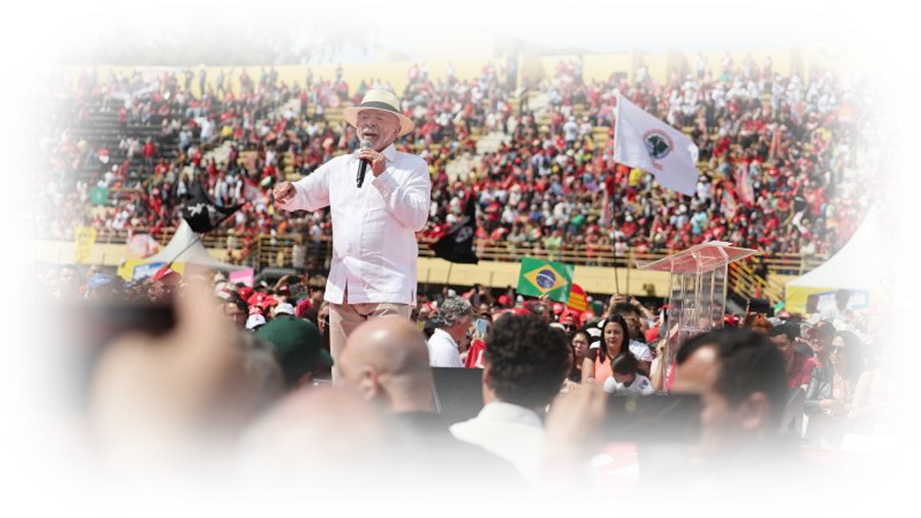
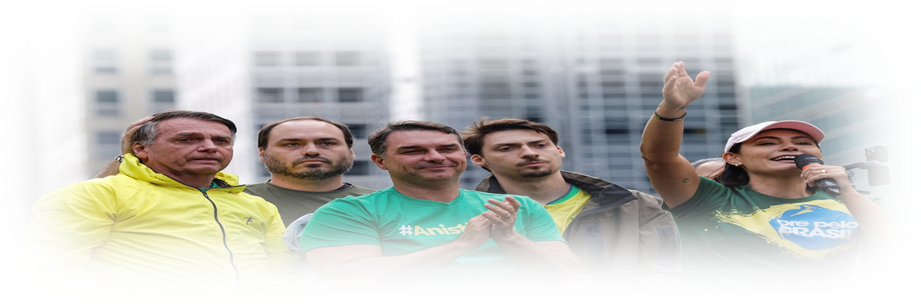
In Brazil, unlike other Latin American countries, the foreign vote was not decidedly right wing. Lula won by over 3.5% of the vote, well over four million votes, a turnaround of over six million votes with a virtually identical voter turnout. In ancient Rome, generals participating in triumphal parades had a man dyed red standing behind them reminding them they were human. At times, in two round presidential elections like Brazil’s, voters do the same, voting against someone in the first round as a warning, but supporting him or her in the second. Nonetheless, the shock of the first round will probably lead to changes in Lula’s governance in areas involving crime and violence, and with respect to more attention to food basket economics.
Because Lula will not be eligible for reelection in four years but many Bolsonaros will be, and because the Brazilian left lacks a viable successor, at least at present, the future does not look as bleak for the Brazilian right as a Bolsonaro victory would have been for the left. Notwithstanding his impressive comeback victory, governing for Lula will prove extremely difficult given the right’s control over Congress. His victory, however, is a serious defeat for President Trump and Prime Minister Netanyahu’s aspirations in Latin America and may bode ill for their own parties in the upcoming elections in their own countries.
Had Bolsonaro won, the United States would have quickly entered into long term agreements for natural resources, especially in the Amazon which would have been freed up for development and Israel would have gained another important foothold in Latin America. There would have been significant deregulation and reduction of public spending, except with respect to police and the armed forces. Integration with other Latin American countries would likely have been abandoned, as would Brazil’s leadership role in the BRICS. The Constitution would likely have been significantly amended in a manner making it easier to reshape the Supreme Court and entrench right wing rule, and, given the right’s control of Congress, it still may be.
Interestingly, the orchestrated transportation delays in Lula oriented districts in Northern Brazil were overcome by the two hour voting extensions while the weather delays in the South were apparently not. However, since both sides asked for the extension, neither side can legitimately challenge it.
Pro-Bolsonaro evangelicals may be wondering why God intervened in that manner. _____
Guillermo (“Bill”) Calvo Mahé (a sometime poet and aspiring empirical philosopher) is a writer, political commentator and academic currently residing in the Republic of Colombia (although he has primarily lived in the United States of America of which he is also a citizen). Until 2017 he chaired the political science, government and international relations programs at the Universidad Autónoma de Manizales. Previously, he chaired the social studies and foreign language departments at the Eastern Military Academy in Huntington, New York. He is currently the publisher of the Inannite Review available at Substack.com; an intermittent commentator on radio and television in both Colombia and abroad; and, an occasional contributor to diverse periodicals and publications. He has academic degrees in political science (BA, The Citadel, the Military College of South Carolina), law (JD, St. John’s University, School of Law), international legal studies (LL.M, the Graduate Division of the New York University School of Law) and translation and linguistic studies (GCTS, the University of Florida’s Center for Latin American Studies). However, he is also fascinated by mythology, religion, physics, astronomy and mathematics, especially with matters related to quanta, cosmology and cosmogony. He can be contacted at guillermo.calvo.mahe@gmail.com and much of his writing is available through his blog at https://guillermocalvo.com/.
The following is the transcript for the segment by Guillermo Calvo Mahé in a special report by India’s NewsX World with respect to the Bolsonaro Dynasty in Brazil, a reality regardless of the final results of the 2026 Brazilian Elections. It has been slightly edited to correct grammatical issues and provide context and updating information has been added: _______
On Sunday October 4, the Brazilian electorate followed the path of most recent Latin American elections, at least as far as the Congress is concerned, rejecting the progressive left and embracing the conservative right. In that context, a question arises as to whether Brazil’s turn to the right is a reaction against what the public perceives of as a moribund and corrupt economy (notwithstanding significant progress in minimizing poverty during the current administration) or whether it reflects the crystallization of a Bolsonaro family dynasty (given the fact that so many members of the Bolsonaro family are now in elected positions of power). Jahir Bolsonaro, the family’s patriarch, was 38th president of Brazil, having served in that role from 2019 to 2023 and as a member of the Chamber of Deputies from 1991 to 2019. Previously, he served as a captain in the Brazilian army. However, he has been in prison serving a twenty-seven year sentence for organizing an attempted coup against his successor, the current president of Brazil, Luiz Inácio Lula da Silva, who is currently running for reelection against Jahir Bolsonaro’s son, Flavio.
One answer to the unexpected results of the initial round of the Brazilian elections which involved not only the presidency but the Chamber of Deputies, a significant part of the Senate and the powerful state governors seems to be that, come what may during the final round of presidential voting on October 31, Jahir Bolsonaro has managed to install his family firmly in control of the Congress and in likely control of the presidency. If so, that would quickly lead to his from imprisonment and expand Bolsonaro family control of the federal judiciary as well.
So, who are the members of the evolving Bolsonaro family dynasty? Let’s start with Flavio.
Flavio is not his father’s clone nor a mere figurehead. He has his own 23 year political career including eight years as a senator and, although his father is certainly Flavio’s political mentor, they have differing styles and different focuses, something Flavio emphasizes:
Flavio’s presidential campaign stressed down to earth economic issues and concerns rather than abstract ideological issues and Flavio used a more restrained personal style, reaching out to centrist voters as well as focusing on conservative themes. Still, like his father, he also stressed his relationships with the United States and Israel would be much more positive, his relations with China more limited and that his interests in the BRICS coalition would be secondary at best.
As in all recent elections in Latin America, Flavio’s stressed the problem of allegedly rampant crime and a decline in morals urging a return to traditional Christian values and was highly critical of the threats of an emerging socialist state.
Flavio’s campaign focused on sophisticated use of targeted and tightly focused social media rather than on the mass, amateur WhatsApp forwarding networks used by his father and, perhaps thanks to his brother Eduardo’s US contacts, his use of the Internet was extremely well financed by, among others, the Rockbridge Network, a group co-founded by U.S. Vice President JD Vance and backed by prominent right-wing donors and Silicon Valley investors such as Peter Thiel and Rebekah Mercer, and supporters of Israel.
Of course, a political dynasty such as that established in India by the Nehru–Gandhi family, in the United States by the Kennedy and Bush families or as is common in many Latin American countries, is a complex concept, but it is one that the family’s patriarch, Jahir Bolsonaro, has apparently mastered.
The second round of the presidential election is not clear cut as most believe given that 40 million voters either did not participate (notwithstanding Brazil’s mandatory voting requirements) or cast null or none of the above ballots in the first round of voting and, as October 25 approaches, polls indicated that it is tightening, although Flavio remains in the lead, but, even if enough voters who failed to participate in the initial round were pulled into the Lula camp to overcome Flavio’s initial two million plus lead and a Lula comeback took place, a Bolsonaro political dynastic structure seems firmly in place, one that, given the age of its diverse members, could last for decades.
For example, in addition to Flavio, Jahir Bolsonaro’s current wife, Michelle, Jahir’s third wife and Flavio’s second step mother, is virtually the same age as Flavio and an ambitious political power on her own, especially among evangelical Christians and among conservative women, two constituencies largely responsible for Flavio’s success in the first round. She is also extremely powerful in the Liberal Party, the political party that sponsors the Bolsonaro family, even more so than Flavio. In the recent elections she attained the highest vote ever for the Brazilian Senate. But Flavio and his brothers have had serious conflicts with Michelle and their goals and ambitions are not always compatible.
In addition to Michelle, the Bolsonaro clan now boasts a number of other members of Congress with current and future electoral aspirations. Flavio’s brother Carlos (age 43), the family’s social media and digital genius, is now in the Senate; 28 year old Jair Renan, Flavio’s half-brother, is now a deputy in the Chamber of Deputies; Flavio’s brother Eduardo, age 43, is a former Deputy who fled to the United States when threatened with possible prosecution for lobbying foreign powers to intervene in his father’s trial (he was convicted in absentia) but used his exile very successfully to cultivate strong ties with members of the Trump administration and is likely to return and resume his political career; and, Jahir’s brother, the uncle of the clan, Renato Bolsonaro, age 62, also won a seat in the incoming Congress. There are also Michelle’s two daughters waiting on the sidelines (one in her teens and the other in her twenties), the eldest from a previous relationship.
So yes, Flavio Bolsonaro successfully used economic discontent to pull ahead of Luiz Inácio Lula da Silva in the initial round of voting but a Bolsonaro political dynasty definitely seems to be coalescing in Brazil although perhaps, who will lead it, is not always clear. _____
As an update with respect to the election itself, it appears that foreign interference in the second round of Brazil’s presidential elections has significantly intensified, including alleged intervention by Meta in favor of Flavio Bolsonaro. The Lula campaign has formally accused Meta’s platforms (Instagram, Facebook, and WhatsApp) of having utilized biased algorithms, restricted content distribution, and disabled advertising capabilities to systematically disadvantage Lula and favor Flavio.
The core allegations against Meta have involved accusations that the Meta AI engine is intrinsically biased. For instance, the AI system reportedly refused to generate campaign images or content when using the prompt “Lula 13” but readily generated them for “Flávio 22”. The Lula campaign specifically claimed that Instagram restricted Lula’s official profile from promoting feed posts, froze or interrupted video view counts and temporarily caused his profile and other left-wing leaders to disappear from search results prior to the first round of voting. The allegations have neutral support; for example, the non-profit group Ekō alleged that Meta broke Brazilian electoral laws by approving foreign-funded, AI-generated ads that spread disinformation and hate speech. A separate study from the Federal University of Rio de Janeiro found over 1,600 irregular political advertisements on Meta platforms funded primarily from the United States and Israel which violates Brazil’s ban on foreign electoral spending.
In mid-October 2026, Justice Marco Aurélio Bellizze of Brazil’s Superior Electoral Court ordered Meta to take immediate action to guarantee equal treatment for both candidates. The court mandated that Meta apply identical criteria for its AI tools and barred the company from suppressing political content or search results to cause a campaign imbalance. Meta was also issued a tight deadline to submit granular, profile-by-profile explanations of any restrictions applied to Lula’s accounts.
As expected, Meta denied any political bias rejecting all claims of “deliberate” bias or political engineering, stating that its systems do not distribute content based on ideology and are applied equally worldwide. In its defense, Meta cited widespread, unrelated global technical issues. The company stated that a freeze on Instagram Reels view counts impacted creators across more than 100 countries and was not isolated to Lula’s account. Similarly, a brief disruption to ad-creation tools affected users globally rather than targeting specific campaigns.
Notwithstanding the abovementioned, given time constraints, none of the foregoing is anticipated to have a significant impact on the highly polarized electorate. Indeed electoral violence and threats of violence, primarily from supporters of the Bolsonaro which have sought to intimidate the electorate may be more important. For example, on October 7, 2026, a major fire devastated UFPE’s Innovation Directorate building in Recife, destroying pharmaceutical, computer science, and genetics laboratories. This incident followed two other fires at the institution within an eight-day span, causing an estimated R$100 million in damages and obliterating two decades of scientific research. The fires broke out immediately after students held protests on campus supporting President Luiz Inácio Lula da Silva and opposing Flavio Bolsonaro ahead of the October 25 presidential runoff election. Because the fires occurred hours after students received explicit bomb threats attributed to Bolsonaro supporters, Brazil’s Federal Police and the Federal Prosecutor’s Office opened a criminal investigation into the matter. _______
Guillermo (“Bill”) Calvo Mahé (a sometime poet and aspiring empirical philosopher) is a writer, political commentator and academic currently residing in the Republic of Colombia (although he has primarily lived in the United States of America of which he is also a citizen). Until 2017 he chaired the political science, government and international relations programs at the Universidad Autónoma de Manizales. Previously, he chaired the social studies and foreign language departments at the Eastern Military Academy in Huntington, New York. He is currently the publisher of the Inannite Review available at Substack.com; an intermittent commentator on radio and television in both Colombia and abroad; and, an occasional contributor to diverse periodicals and publications. He has academic degrees in political science (BA, The Citadel, the Military College of South Carolina), law (JD, St. John’s University, School of Law), international legal studies (LL.M, the Graduate Division of the New York University School of Law) and translation and linguistic studies (GCTS, the University of Florida’s Center for Latin American Studies). However, he is also fascinated by mythology, religion, physics, astronomy and mathematics, especially with matters related to quanta, cosmology and cosmogony. He can be contacted at guillermo.calvo.mahe@gmail.com and much of his writing is available through his blog at https://guillermocalvo.com/.
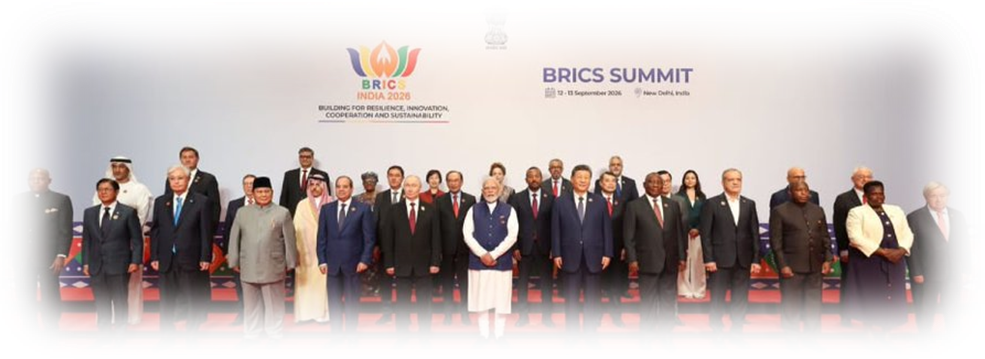
During September 12th and 13th of this year I had the privilege of participating in a brief forum conducted by India’s NewsX World on the 2026 BRICS Summit, as it was taking place, and of interacting with senior military, judicial and diplomatic personnel from various countries, including the Peoples’ Republic of China, The Union of South Africa and, of course the Republic of India. It was a very rewarding experience. The following are some of my observations on the summit, and its results.
Prime Minister Narendra Modi did a masterful job of balancing diverse interests and perspectives including those of three countries in active military confrontations, Saudi Arabia, the United Arab Emirates and Iran, as well as beautifully dealing with endemic border friction between the host country, India, which currently holds the presidency of the BRICS, and the Peoples’ Republic of China which will assume the presidency during 2027. It seemed that Mr. Modi and Chinese President Xi were carefully laying the groundwork for strategic continuity among the BRICS community, a very welcome attitude.
The Unanimous Joint Resolution addressed numerous critical issues, including many down to earth pragmatic projects that touch the everyday lives of their citizens in areas involving health, livelihood, culture and human rights. There had been concerns that the increased membership of the BRICS, now comprising eleven full members: Brazil, Russia, India, China, South Africa, Egypt, Ethiopia, Iran, Indonesia, and the UAE; alongside ten partner nations, Belarus, Bolivia, Cuba, Kazakhstan, Malaysia, Nigeria, Thailand, Uganda, Uzbekistan and Vietnam, would render consensus unlikely and consensus is required because, unlike the European Union or the United Nations, unanimity is the rule, sovereignty and equality being a pillar of the group. Of course, there was another possibility, that a forum more democratic and inclusive than that provided by the United Nations Security Council could, even if with divergent interests and goals, through compromise, consensus and real diplomacy among equals, attain social, political and economic objectives that have alluded older and more structured institutions, institutions where oligarchical constraints limit productive long term solutions. Seemingly, at least for now, the latter succeeded thanks to the collaborative efforts of Prime Minister Narendra Modi and Presidents Vladimir Putin and Xi Jinping.
On the issue of dedolarization, the Indian perspective prevailed, perhaps because the European Union’s experience with the Euro has made BRICS members unwilling to follow suit, sovereignty in the European Union having become passé at best, but also because of two other important factors: first, India’s unwillingness to antagonize the United States, something with which a number of other members and partner nations concur, especially Saudi Arabia, the United Arab Emirates and now Bolivia; and secondly, because the BRICS countries have developed and are in the process of expanding fiscal solutions to the abuse of the United States dollar as the principal international means of exchange. Chief among such emerging modalities are BRICS Pay, central bank digital currency proposals and, bilateral agreements such as those in place between the Russian Federation and the Peoples’ Republic of China as well as Iran and, the New Development Bank.
BRICS Pay is a collaborative cross-border payment system developed by the BRICS economic bloc to facilitate transactions using local national currencies while bypassing the U.S. dollar and Western-dominated networks like SWIFT. BRICS Pay functions as a cloud-based connector linking national payment systems (such as Brazil’s Pix or China’s CIPS) enabling retail (QR code-based) and business to business transactions directly in member currencies, removing the need for a U.S. dollar intermediary.
Central bank digital currency proposals, under the leadership of India, seek to connect central bank digital currencies for smoother, dollar-independent cross-border tourism and trade settlements using blockchain technologies. The plan focuses on connecting existing national fast payment systems and sovereign digital currencies rather than creating a new single currency union. The initiative builds on the 2025 Rio de Janeiro declaration which encouraged efficient and interoperable cross-border payment mechanisms within the bloc in order to lower transaction fees and bypass multiple intermediary banks for businesses, exporters, and travelers.
The BRICS New Development Bank already provides an alternative (albeit limited by capital constraints) for emerging and developing economies to the abusive controls imposed on loans through the United States controlled World Bank and International Monetary Fund. It aims to fund infrastructure and sustainable development across emerging economies, positioning its future around local currency financing, digital asset integration and expanded cooperation among diverse economic states of development. To date, the New Development Bank has provided alternative financing options for development projects across the Global South, having funded close to 100 projects totaling over $32 billion. It is currently primarily funded by the Peoples’ Republic of China but new members Saudi Arabia and the United Arab Emirates could, should they chose to do so, vastly increase its current capitalization. An interesting indirect aspect of the existence and potential evolution of the New Development Bank may be the leverage it provides the BRICS with respect to making control over the World Bank and International Monetary Fund more democratic and their operations less intrusive, one of the goals set forth in the Joint Resolution.
Other very pragmatic proposals I found intriguing include the BRICS Global Value Chains Action Plan 2026–2030, an invoice discounting mechanism for trade finance; a dedicated micro, small, and medium enterprise digital platform launched by India during 2026 to connect users with access to knowledge, finance, and international markets; and, a micro, small, and medium enterprise cooperation portal and a startup innovation fund. However. to me, the most important aspect was the call to resurrect international law, virtually assassinated by Israel and the United States, and to reform major international institutions such as the United Nations, the World Trade Organization, the International Monetary Fund which have never met the needs of the vast majority of the world’s population (almost half of which resides in BRICS member nations), but have instead, represented oligarchic interests interested in looting the less developed world and maintaining traditional privileges.
On August 13 of this year (2026), Sue Seboda published an article on Substack entitled “Will the SAVE Act Save America or is it just more spitballs and sledgehammers…”. It follows a multipart series of articles Sue has written and published on Substack dealing with the history of immigration and immigration legislation in the United States, a decent fairly objective effort worth reading, as is her latest article which can be accessed at https://sueseboda.substack.com/p/will-the-save-act-save-america?r=lwzkv&utm_campaign=post&utm_medium=web. Sue strikes me as being on the conservative side of the political spectrum but objective and open minded. I like her work. I, on the other hand, am and have long been a democratic socialist along the lines of Noam Chomsky, Nelson Mandela, Pepe Mujica, Martin Luther King, Jr., etc. (not to be confused with Vladimir Lenin, Joseph Stalin or even Leon Trotsky).
Sue’s article deals with very significant issues, issues that also impact other critical issues not dealt with in the article such as the nature of the federal decennial census used to apportion Congressional representation and distribute federal funds and the issue of birthright citizenship, all of which should probably be dealt with concurrently via a federal constitutional clarifying amendment after robust debate that results in legal requirements that deal with real problems in a manner avoiding discrimination based on race, gender, religious beliefs or national origins but definitely limits the roles of non-citizens in United States institutions. The article focuses on the pros and cons of the Safeguard American Voter Eligibility Act (SAVE Act), a proposed Congressional bill that would requires individuals to provide documentary proof of United States citizenship (such as a passport or certified birth certificate) when registering to vote in federal elections.
If formal participation in the political process by undocumented migrants is an important issue, an even more critical issue has been ignored and is generally ignored, the role of foreign governments and their agents, advocates and representative in the United States electoral and political system and the role of campaign contributions from sources ineligible to vote in the elections impacted, including political action committees, corporations, labor unions, chambers of commerce and individuals. That is a real clear and present danger. The two great villains in the foregoing, albeit not the only ones, are the Israeli American Public Affairs Committee (AIPAC) and the United States Supreme Court, especially in its Citizens United decision, Citizens United v. FEC; 558 U.S. 310 (2010) and its June 30, 2026 decision in National Republican Senatorial Committee v. Federal Election Commission, 609 U.S. ____ (2026). Of course, the legacy media focuses primarily on imaginary roles by Russia and China, ignoring the reality of United States interference in foreign elections, most recently, along with Israel, throughout Latin America.
For the most part (in the author’s opinion), the least rational political posture with respect to securing the electoral process has been that adopted by the Democratic Party and its activist base which vehemently oppose action to require picture identification and proof of citizenship to vote. That specifically includes vehement opposition to the SAVE Act which includes concepts that enjoy overwhelming support among the citizenry, opposition to which is likely to cost the Democratic Party a significant number of votes among the independent voter community in upcoming Congressional elections. The SAVE Act is far from perfect and could certainly use a bit of constitutional and pragmatic polish though its premises seem sound. However, a rising swell of Republicans, apparently political descendants of the nineteenth century “American Party”[1], are seeking clearly inappropriate actions designed to minimize the rights and even citizenship status of United States citizens, especially naturalized citizens and Islamic Americans, or indeed any United States citizens opposed to Zionist and Israeli control over United States officials, both elected and appointed. Republican advocates have gone as far as to demand that certain United States citizens be stripped of their citizenship and expelled from the United States for opposing policies such as undeclared wars and support for genocide and ethnic cleansing, or that they at least be imprisoned and deprived of their political rights. The foregoing is even more ludicrous than Democratic Party and Democratic Party activist opposition to limiting the right to vote and receipt of federal benefits, as a right, to United States citizens.
The reality is that the positions of both the Democratic and Republican parties are based on few moral, ethical, legal or constitutional factors but rather, only on how they benefit their ability to dominate government at all levels: federal, state and local. That is something that should disgust all decent citizens regardless of their favored political ideologies but, unfortunately, the communications and entertainment industries in the United States, rather than educate and enlighten, manipulate, obfuscate, confuse and deceive, making functional democracy at best highly improbable, inefficient and dysfunctional, i.e., the ludicrous system we have today led by the ludicrous national leaders proffered by both major political parties for the past half century: i.e., William Jefferson Clinton, George W. Bush, Barack H. Obama, Joseph Robinette Biden and Donald J. Trump (with their supporting casts in Congress, the Judiciary and the Bureaucracy, led by their noses by the Military Industrial Complex against which President Dwight David Eisenhower warned as he left office).
It may be that at some level things are changing, ironically, based on dissidents within the Republican Party (such as Tucker Carlson, Marjorie Taylor Green, Thomas Massie, Joe Kent and Candace Owens) seeking a real “Make America First” alternative, and on an evolving democratic socialist wing in the Democratic Party led by recently elected New York City Mayor Zohran Mamdani. I confess to admiring them all, though I’m not always in full agreement with them. If they could somehow unite and develop a platform based on issues with which they agree, and there are many, many of the worst problems engrained for over a century in United States politics might be minimized. However, that is a posture their respective followers appear to consider anathema and thus, such a scenario is only a bit more probable than Hell freezing over or the United States electorate finally coming to grips with the Declaration of Independence they claim to revere.
Guillermo (“Bill”) Calvo Mahé (a sometime poet and aspiring empirical philosopher) is a writer, political commentator and academic currently residing in the Republic of Colombia (although he has primarily lived in the United States of America of which he is also a citizen). Until 2017 he chaired the political science, government and international relations programs at the Universidad Autónoma de Manizales. Previously, he chaired the social studies and foreign language departments at the Eastern Military Academy in Huntington, New York. He is currently the publisher of the Inannite Review available at Substack.com; an intermittent commentator on radio and television; and, an occasional contributor to diverse periodicals and publications. He has academic degrees in political science (BA, The Citadel, the Military College of South Carolina), law (JD, St. John’s University, School of Law), international legal studies (LL.M, the Graduate Division of the New York University School of Law) and translation and linguistic studies (GCTS, the University of Florida’s Center for Latin American Studies). However, he is also fascinated by mythology, religion, physics, astronomy and mathematics, especially with matters related to quanta, cosmology and cosmogony. He can be contacted at guillermo.calvo.mahe@gmail.com and much of his writing is available through his blog at https://guillermocalvo.com/.
Just how stupid does Israel think the majority of people in the United States are?
Well, given the probable truth behind the assassination of JFK, the destruction of the Twin Towers, the “Six Day War, the Nakba, etc., very stupid indeed. And the Israeli leadership has a point. So much so that it is brazenly adding a new element to its hoped for total destruction of Iran.
First, Israeli leadership talked Donald J. Trump into going on an assassination spree in Iran, a frequent Mossad tactic but this time engaged in on an industrial scale using the United States as the weapon. Then, Netanyahu terrified Mr. Trump (like Mr. Netanyahu, he’s not very brave unless heavily protected or in a bunker) by whispering into his ear that such actions might have consequences. Horrors, tit for tat. But, then again, speaking of tits, the United States and its tax payers have been providing Israel with all it wants for three quarters of a century.
Sooo, by claiming that if Mr. Trump is assassinated it will have been the Iranians’ who were responsible, Israel’s leaders have apparently set in a motion a plan where United States retaliation will implement the Greater Israel project at little or no cost to the Israeli state (as occurred in Iraq and Libya and Syria, etc.). Which in turn means that should that occur, it will probably have been Israel that orchestrated the assassination, whether or not it was actually Israelis who carried it out (think Twin Towers); especially with a cadre of United States politicians whose loyalty is to Israel ready to replace Mr. Trump, perhaps permanently, given Israeli success in electoral manipulation all over the world.
Something to bear in mind as Israel once again collectively cries wolf (think antisemitism and holocaust) while it sort of pretends to dress in (slaughtered) sheep’s clothing.
Apologies for all the parentheticals (for some reason, they just seemed appropriate). _____
Guillermo (“Bill”) Calvo Mahé (a sometime poet and aspiring empirical philosopher) is a writer, political commentator and academic currently residing in the Republic of Colombia (although he has primarily lived in the United States of America of which he is also a citizen). Until 2017 he chaired the political science, government and international relations programs at the Universidad Autónoma de Manizales. Previously, he chaired the social studies and foreign language departments at the Eastern Military Academy in Huntington, New York. He is currently the publisher of the Inannite Review available at Substack.com; an intermittent commentator on radio and television; and, an occasional contributor to diverse periodicals and publications. He has academic degrees in political science (BA, The Citadel, the Military College of South Carolina), law (JD, St. John’s University, School of Law), international legal studies (LL.M, the Graduate Division of the New York University School of Law) and translation and linguistic studies (GCTS, the University of Florida’s Center for Latin American Studies). However, he is also fascinated by mythology, religion, physics, astronomy and mathematics, especially with matters related to quanta, cosmology and cosmogony. He can be contacted at guillermo.calvo.mahe@gmail.com and much of his writing is available through his blog at https://guillermocalvo.com/.
Dos errores fundamentales cometió Gustavo Francisco Petro Urrego en su presidencia y fueron graves y muy costoso. Primero, aunque con buenas intenciones, se rodeó de personas equivocadas: ineptas en algunos casos, desleales en otros y corruptos en otros. Y segundo, no pudo controlar sus instintos pugnaces lo cual les permitió a quienes le querían causar daño manipularlo en forma constante, primero insultando o calumniándolo y luego criticando su reacción cuando en forma agresiva se defendía; obvia hipocresía pero efectiva.
En lo último necesitaba algo más de sabiduría y disciplina. Las políticas que propuso fueron brillantes y nobles (como es el), y son esenciales, pero no se lograron en un sistema tan profundamente corrupto como es el colombiano, y eso en el legislativo, la judicatura y la burocracia. Es probable que si el presidente hubiese sido perfecto en todo aspecto esa corrupción coordinada para mantener el poder en las manos de los peores entre nosotros aun habría logrado evitar que se lograra un gobierno justo, equitativo y sostenible y la culpa por eso no es del señor Petro sino de un electorado tan inepto y manipulable que imposibilita lo que a ellos más les beneficiaría.
Esa es la maldición de la democracia y no solo en Colombia, no solo en la América Latina, pero también en Norte América y en Europa y en el mundo Anglosajón. El que controla la información controla el electorado y el electorado es más fácil engañar y manipular hoy que en cualquier tiempo de la historia. Y el control de la información se ha vuelto un arte y una ciencia malévola con los nuevos medios y las nuevas tecnologías, un arte y una ciencia controlada por una clase de billonarios hipócritas y depravados, dedicados a una acumulación de poder y riqueza total, creando una enorme clase esclavizada, pero sin que sus miembros se den cuenta.
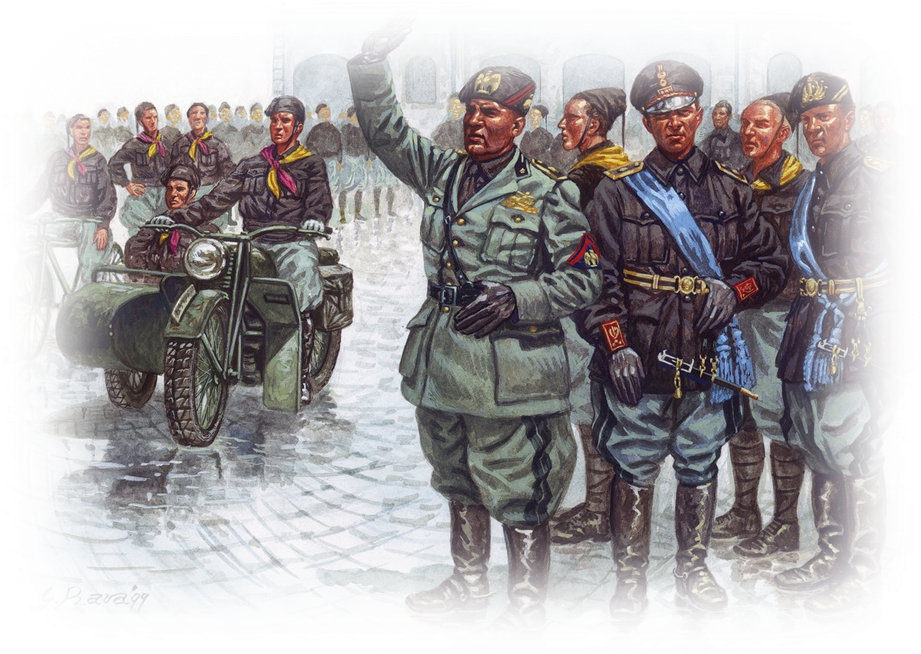
Creo que es muy posible que por lo menos en la América Latina, quizás con la excepción del Brasil, ese estatus ya sea permanente, o por lo menos, de largo plazo, y que las ultimas elecciones honestas ya están en el pasado, y eso en casi todas partes del mundo, un cáncer social y cívico metatizado. Obviamente en Colombia, por ejemplo, ha asumido el poder, irónicamente con ayuda masiva sionista, un aspirante a copiar il Duce, el de Italia hace un siglo pero sin su experiencia o patriotismo (pero si con todos sus aspectos malévolos). Y esos tipos no rinden el poder, acusando a sus oponentes de todos los pecados y las aspiraciones que ellos mismos poseen. Un perfecto ejemplo es que el que siempre ha defendido a los más corruptos y de ellos ha acumulado su fortuna y su fama denomine su empalme “empalme anticorrupción. O que acuse al presidente Pero ante el Congreso de “traición a la patria” cuando el mismo señor de la Espriella juró, hace solo tres años, poner los intereses de los Estados Unidos por encima de los de Colombia y el diciembre pasado prometió poner los de Israel por encima de todo.
El progresismo colombiano creía hace cuatro años que había, “cesado la horrible noche”.
Guillermo Calvo Mahé es escritor, comentarista, analista político y académico residente en la República de Colombia. Aspira ser poeta y filósofo empírico y a veces se lo cree. Hasta el 2017 coordinaba los programas de Ciencia Política, Gobierno y Relaciones Internacionales de la Universidad Autónoma de Manizales. En la actualidad, participa en entrevistas radiales y televisadas, foros, seminarios y congresos cívicos y edita y publica la revista virtual, The Inannite Review disponible en Substack.com/. Tiene títulos académicos en ciencias políticas (del Citadel, la universidad militar de la Carolina del Sur), derecho (de la St. John’s University en la ciudad de Nueva York), estudios jurídicos internacionales (de la facultad posgrado de derecho de la New York University) y estudios posgrado de lingüística y traducción (del Centro de Estudios Latinoamericanos de la Universidad de la Florida). Sin embargo, también es fascinado por la mitología, la religión, la física, la astronomía y las matemáticas, especialmente en lo relacionado con lo cuántico y la cosmogonía. Puede ser contactado en guillermo.calvo.mahe@gmail.com y gran parte de su escritura está disponible a través de su blog en https://guillermocalvo.com/.
On the Northern Hemisphere’s Midsummer’s Eve, Abelardo Gabriel de la Espriella Otero barely defeated progressive Iván Cepeda Castro, a victory more for Donald Trump and Benjamin Netanyahu than for the Colombian people and follows a recent trend of contested, extremely narrow conservative electoral victories in Latin America. In alphabetical order, Argentina, Bolivia, Chile, Colombia, Costa Rica, Ecuador, El Salvador, Honduras, Paraguay and Perú are now back in the fold of the Monroe Doctrine (and its Israeli corollary). As in all of the elections involved, foreign interference through massive infusions of foreign cash and possibly discrete cyber intervention into social media and electoral systems was alleged by allies of the defeated candidate as the reason for his defeat and, in this world where verity seems nonexistent, who knows whether those allegations have any merit. As in the contested 2020 election in the United States, there will be no meaningful investigations in Colombia, despite President Gustavo Francisco Petro Urrego’s urgent pleas to the Colombian judiciary.
Electoral Results
The final stages of the Colombian electoral process pursuant to which preliminary results are formally scrutinized before declaration of final results have concluded with minimum changes. Turnout for the final election was relatively high, approximately 63.6% of the eligible electorate participated (as has coincidently occurred in most challenged elections in the Western Hemisphere during the past two decades), with preliminary results showing 12,959,542 (49.66%) votes for Abelardo Gabriel de la Espriella Otero versus 12,708,712 (48.7%) for Ivan Mr. Cepeda Castro; a difference of 250,830 votes, less than 1%. This was, percentagewise, the closest election in Colombian history. The next closest election, in 1970, led to a civil war due to a perception that the vote had been manipulated at the last minute and the election stolen. Iván Cepeda has conceded the election and urged his followers to avoid violence. Current president Gustavo Francisco Petro Urrego however and many of his supporters insist that, as in 1970, the election was stolen and promise that eventually, somehow, their allegations will be proven, a promise which however now seems moot. As the defeated candidate in the presidential election, Mr. Cepeda will be entitled to a seat in the Colombian Senate for the next four years adding one more member to those held by his party. In the initial round, de la Espriella won 43.7% of the popular vote while Mr. Cepeda followed with 40.9% of the vote. This will be only the second time since the second round runoff system for the two leading candidates was adopted that the victor will have failed to attain the backing of a majority of the participating electorate, a result made possible by Colombia’s “none of the above” option referred to as the “voto en blanco”. So, not a mandate but a victory just the same, and one promising drastic changes.
History of closest presidential elections in Colombian History
Year
Victor v Loser
PercentagesVictor v Loser
Difference in Votes
Difference in Percentages
2026
Abelardo de la Espriella v Iván Cepeda
49.66% v 48.7%
250,830 votes
0.96%
1970
Misael Pastrana Borrero v Gustavo Rojas Pinilla
50.8% v 49.2%
63,557 votes
1.6%
1994
Ernesto Samper v Andrés Pastrana
50.5% v 48.4%
156,585 votes
2.1%
1978
Julio César Turbay v Belisario Betancur
49.5% v 46.59%
147,061 votes
2.71%
The Candidates:
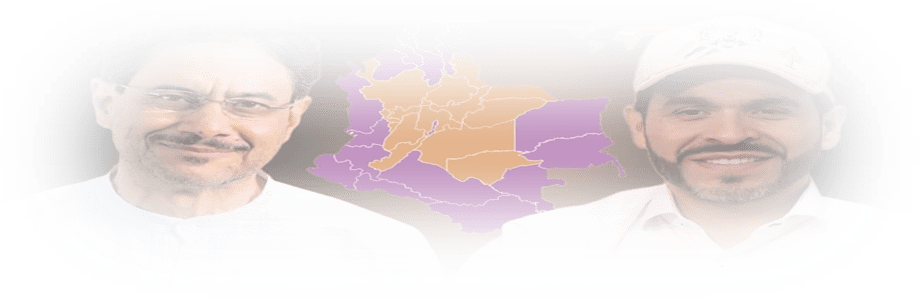
After an initial round of voting left all other candidates far behind, Abelardo Gabriel de la Espriella who refers to himself as the “Tiger” and mild mannered progressive Iván Cepeda Castro advanced to the second round. Mr. de la Espriella is a firebrand admirer of Donald Trump, Benjamin Netanyahu, Javier Gerardo Milei, Nasry Asfura and Nayib Bukele as well as a follower of Colombia’s former president, Alvaro Uribe Velez and has historical links to leaders of the Autodefensas Unidas (United Self-Defense Forces) de Colombia, especially through his association with the foremer head of such group, Salvatore Mancuso, a member of social circles frequented by the de la Espriella family. Mr. Cepeda, the son of an assassinated Colombian Senator (and Communist Party leader), was an ally of current Colombian president Gustavo Francisco Petro Urrego and a bitter enemy of former president Alvaro Uribe Velez. Specific detailed biographical data for each of the two final candidates compiled from information available on Wikipedia is provided following the end of this article.
Electoral Analysis
Six different factors explain the results of this election:
1. The Petro factor
The election was, in large part, at least as far as the opposition to the current administration was concerned, a referendum on president Gustavo Francisco Petro Urrego who, ironically, has an approval rating of +7, i.e., 50% approval versus 43% disapproval. As with most elections everywhere, it seem that in Colombia, rather than voting in favor of someone because of strongly held beliefs, voters vote against candidates and political parties based on fear, supporting candidates they neither respect nor trust. Mr. Petro is a combative charismatic progressive who was easy to bait into constant battles on social media and, ironically, had problems similar to those experienced by United States president Donald Trump with the media and with his opposition, at least during Mr. Trump’s first term.
Despite the fact that unemployment and inflation dropped to record lows while commerce, foreign investment, tourism and the Colombian currency boomed, the Colombian opposition painted Mr. Petro as a pugnacious would be communist dictator interested in overthrowing the constitution and remaining in power, and as a tool of the remnants of Colombia’s decades old insurgency who was converting Colombia into a failed state such as Cuba and Venezuela. Mr. Petro was described as a “guerrillero” because of his former membership in the insurgency that emerged when the 1970 Colombian presidential election was apparently stolen by united traditionalist political parties.
Mr. Cepeda was heavily criticized for the failure of the Petro administration in its efforts to attain a total peace, one with both insurgents and organized armed criminal elements, and Mr. Cepeda was characterized as a communist because of his assassinated father’s leadership of the Colombian communist party almost forty years ago. He was also labelled by supporters of de la Espriella as a narcoterrorist soft on crime, largely because of his historic human rights activities. The constitutional convention proposed by President Petro and Mr. Cepeda in order to implement policies that the Congress refused to consider was criticized as a plot to perpetuate Mr. Petro in power, even though Mr. de la Espriella’s hero, former president Alvaro Uribe Velez, had also at various times proposed a constitutional convention, and in his case, reelection was a definite goal. One of Mr. Cepeda’s major problems however was probably his legal case against popular former president Alvaro Uribe Velez for witness tampering which energized and united Uribe’s followers while Mr. Cepeda’s laid-back style and lack of charisma and showmanship failed to energize students and younger voters in the manner attained by his predecessor, current president Gustavo Petro.
2. The Vice Presidential Candidates
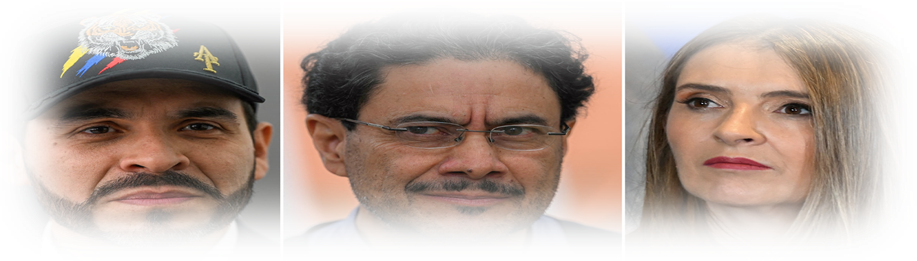
The choices for vice president were possibly determinative. Senator Cepeda chose Senator Aida Marina Quilcué Vivas as his running mate, a morally noble and highly respected indigenous woman but who only completed the 8th grade and was relatively inexperienced outside of civic and indigenous affairs. Mr. de la Espriella, in contrast, chose José Manuel Restrepo Abondano, a highly recognized academic, economist, journalist and former minister as his running mate. That was especially important given Mr. de la Espriella’s total lack of experience in government or economics. Given the margin of victory, less than one percent, the contrast between the vice presidential candidates may well have been determinative. It may also prove determinative in the long term as the progressive movement in Colombia seems to lack an obvious viable future presidential candidate (other than possibly Senator Diana Carolina Corcho Mejia) while Mr. Restrepo would probably be a very strong presidential contender for 2030. Speaking of the vice-presidency, current Afro-Colombian vice president Francia Elena Márquez Mina may also have tipped the balance in favor of Mr. de la Espriella by offering only tepid support for Mr. Cepeda, initially having opposed his candidacy in favor of his rival, Roy Leonardo Barreras Montealegre. Her vice presidency proved an embarrassing failure for Afro Colombians as she was able to do little with the special role assigned to her as Minister of Equality in a ministry specifically designed for her, an embarrassment she blamed on lack of support from Mr. Petro. The Ministry’s constitutional status was successfully legally attacked at the outset by Senator and defeated presidential candidate Paloma Valencia, a subsequent ally of Mr. de la Espriella based on technical grounds.
3. Pacto Historico
Mr. Cepeda’s political party, the Pacto Historico, now the country’s largest political party, is highly energetic and idealistic but disorganized and riddled with internal feuds, too often made public, which have made it impossible to effectively manage. Furthermore, its election-related decisions, rather than being strategic and pragmatic, tend to be idealistic and dogmatic, frequently rejecting potential political newcomers and alliances as insufficiently pure. Mr. Petro dealt with those issues by greatly expanding his base, including many politicians from traditional parties opposed to him but, in doing so, he made unfortunate personnel decisions that resulted in corruption scandals he did not adequately address. All of the foregoing proved costly to Mr. Cepeda.
4. Legacy Media Antipathy
The Colombian media is owned by a few very wealthy individuals dedicated to maintaining the status quo and virulently opposed to Mr. Petro and to his political party, greatly exaggerating their shortcomings while ignoring serious issues involving his opponents. Because Congress was controlled by Colombia’s traditional political parties (although the Pacto Histrico enjoyed a plurality of the seats) traditionalist legislators successfully blocked most of Mr. Petro’s initiatives, then blamed him, his party and Mr. Cepeda for the consequences, especially with respect to issues pertaining to deficiencies in healthcare and budget shortfalls. The fact that unemployment and inflation dropped to record lows while commerce, foreign investment, tourism and the Colombian currency boomed was virtually ignored with many Colombians convinced that the country was on the verge of an economic collapse.
5. Social Media
Mr. de la Espriella enjoyed a massive advantage in electoral funding, more than doubling the funds available to Mr. Cepeda from his own fortune, with multiples of such funds allegedly “invested” in the election by foreign governments, especially the United States and Israel and even cash strapped Argentina. That facilitated the massive use of social media by Mr. de la Espriella’s campaign and its allies, much of it automatically generated from bots and much of it outlandishly inaccurate but very effective. Mr. de la Espriella appropriated national symbols such as the flag, the jersey worn by the national football team and a sharp military salute, although he, like his hero, President Trump, had declined obligatory military service. His slogan, “firm with the fatherland” was ridiculed by some given his triple nationality and promise of allegiance to the United States (which he confirmed would run Colombia’s foreign policy). His stress on law and order was also ridiculed given his history of successfully defending some of Colombia’s most notorious criminals. In that regard, Mr. de la Espriella’s claim that “ethics has no place in the practice of law” was illustrative of his pragmatism. While Mr. de la Espriella had absolutely no government experience, he turned that into a positive, claiming to run as an outsider despite the fact that he was supported by all of the traditional political parties, although he refused to officially acknowledge their endorsements.
6. Allegations of Foreign Interference
Mr. de la Espriella’s had numerous foreign allies who were active in the electoral campaign. In addition to President Trump and Israeli Prime Minister Netanyahu, they included Argentina’s Javier Milei, Honduras’s Nasry Asfura, El Salvador’s Nayib Bukele, Costa Rica’s Laura Fernandez Delgado, Ecuador’s Daniel Noboa, Chile’s José Antonio Kast, Bolivia’s Rodrigo Paz Pereira, Paraguay’s Santiago Peña and even Peru’s recently elected Keiko Fujimori. All of them are supporters of both President Trump and Israeli Prime Minister Netanyahu. Mr. Trump has directly claimed responsibility for Mr. de la Espriella’s victory claiming that it was his endorsement that did the trick. Others, including outgoing President Petro, suspect Israel was even more important to the de la Espriella campaign.
Ecuadorian president Daniel Noboa endorsed Mr. de la Espriella’s presidential campaign saying that if de la Espriella were elected, the Ecuadorian government would eliminate recently placed tariffs on Colombian products (which many suspect had been placed in the first place in order to assist Mr. de la Espriella’s political campaign). In addition, Mr. de la Espriella received public endorsements from Chilean president José Antonio Kast and Argentine president Javier Milei. In mid-June 2026, the Colombian Ministry of Foreign Affairs criticized statements made by Milei in support of Mr. de la Espriella’s candidacy, citing them as political interference and a violation of the Charter of the Organization of American States. United States President Donald Trump also endorsed Mr. de la Espriella in a series of Truth Social posts accusing his opponent Iván Cepeda of being a “radical left-wing Marxist” and noting that Mr. de la Espriella could improve relations between Colombia and the United States which were subject to several diplomatic confrontations between Mr. Trump and outgoing president Gustavo Petro. Nate Morris, President Trump’s nominee to be Ambassador to Colombia, commented that he looked forward to working with Mr. de la Espriella to advance Mr. Trump’s agenda in Colombia.
7. The Israeli Factor
Mr. de la Espriella has consistently voiced support for Israel and campaigned in Colombia’s Jewish community, making pro-Israel promises and saying his government would “defend Judeo-Christian principles”. Indeed, during December of 2025 he met with Israeli Foreign Minister Gideon Sa’ar for two hours in Argentina and has apparently held a number of telephone conferences with important Israeli leaders, including Prime Minister Benjamin Netanyahu. Foreign Minister Sa’ar has officially extended an open invitation for Mr. de la Espriella to visit Israel where formal state meetings with Prime Minister Netanyahu and President Isaac Herzog are expected to take place in Jerusalem in the near future. Mr. de la Espriella pledged to reverse Petro’s 2024 decision to cut ties with Israel and promised to relocate the Colombian embassy to Jerusalem. Following Mr. de la Espriella’s victory Mr. Netanyahu publicly congratulated him on social media, stating that “friends of Israel keep winning” adding “I look forward to working with you to strengthen the bond between Israel and Colombia.” As a consequence of the foregoing, Many Colombian progressives are sure that Israeli technology was responsible for Mr. de la Espriella’s victory with rationales ranging from the purchase, design and implementation of his social media strategy and the use of virtual accounts to direct alteration of electoral results on electoral data gathering computer systems, especially given the strained relationship between Thomas Greg & Sons and the Petro administration over cancellation of the contract to control the Colombian passport system.
President Petro alleges that foreign actors, probably Israeli, accessed the National Registry’s website and rewrote voting data on some E-14 forms, having stated: “Today we have evidence of a change in IP addresses of several servers of the national registry”. Thomas Greg & Sons, the influential private logistics and security printing firm that runs Colombia’s electoral infrastructure over Mr. Petro’s opposition is owned by Fernando and Camilo Bautista Palacio, both of whom were convicted of bank fraud in the US in the 1980s. In April Mr. Petro accused the Bautista brothers of negotiating a deal with de la Espriella that would see them secure the presidency for the far-right candidate in return for recovering their prior passport printing monopoly.
Petro has alleged without substantial proof that the E-14 forms used for vote tabulation were altered by removal of the historical individual identification tracking stamp, a dramatic change implemented over Mr. Petro’s objections by the head of the National Civil Registry, Hernan Penagos Giraldo, a former senator and member of the Partido de la U (Social Party of National Unity) founded by former president Alvaro Uribe, a political party that endorsed Mr. de la Espriella. Mr. Petro has alleged since well before the elections that algorithms were modified affecting tabulation software provided and administered by Thomas Greg & Sons permitting alterations after data entry thus permitting counting of altered E-14 forms, and notes that census eligibility data was also modified to include a large number of “new” people after the census cutoff date. Ironically, his allegations mirror those made by Mr. Trump with respect to his own presidential campaign in 2020.
As additional evidence of possible Israeli cyber intervention in the elections, Colombian progressives point to Mr. de la Espriella’s two hour meeting with Israel’s foreign minister during December of 2025 and also to the apparent advance information concerning the electoral results on electoral betting websites which all heavily favored a victory by Mr. de la Espriella (as they had with respect to right wing candidates in earlier elections in Argentina, Honduras, El Salvador, Costa Rica, Ecuador, Bolivia, Chile, Paraguay and most recently Peru). Electoral betting websites—often referred to as prediction markets—are owned by privately held technology and financial firms rather than traditional casinos. The major platforms include:
Polymarket, owned and majority-controlled by its founder and CEO, Shayne Coplan. Its markets on Israeli military actions have been marred by controversy regarding users acting on classified intelligence. There is a belief in certain Colombian circles that Polymarket’s markets certainty of a victory by de la Espriella was based on inside knowledge of Israeli impact on the election, both through funding and possible cyberwarfare.
Kalshi, founded and owned by Tarek Mansour and Luana Lopes Lara both of whom are Israeli supporters and have been accused of being tied to the Mossad.
PredictIt, operated as a non-profit project, is owned and managed by Victoria University of Wellington in New Zealand. PredictIt traders historically demonstrated acute attention to Israeli political news. For instance, in 2019, when major English-language news outlets incorrectly reported that Netanyahu had been indicted, PredictIt users hired professional translators to analyze original Hebrew documents to correctly resolve their trading contracts before the media corrected the error.
8. Refusal to Investigate Allegations of Fraud
As was the case in the United States with respect to allegations of fraud during the 2020 federal elections, responsible authorities in Colombia, primarily the National Registry, the National Electoral Council and the offices of the procurator and the attorney general, have declined to investigate Mr. Petro’s allegations on technical grounds citing a lack of evidence and comfort with existing processes, procedures, software, etc., and insist the elections were free of material issues, a posture largely supported by foreign observers and the Colombian legacy media and seemingly confirmed through the official process of electoral scrutiny conducted by approximately one million Colombian jurists, bureaucrats and citizens.
Internal Colombian Problems with Fraud
Fraud is, according to some (including defeated presidential candidates Claudia Lopez and Paloma Valencia), Colombia’s most distressing problem, a position Claudia Lopez and Paloma Valencia once, despite their stark political differences, jointly espoused and vowed to combat during their joint participation in a political forum at the Universidad Autónoma de Manizales denominated Hornadas de Ciencia Política and hosted by the author of this article. Corruption seemingly riddles the Colombian judiciary and bureaucracy at all levels with efforts to combat it quickly being converted into means to facilitate it. Indeed, as indicated above, Thomas Greg & Sons, the influential private logistics and security printing firm that runs Colombia’s electoral infrastructure, is owned by Fernando and Camilo Bautista Palacio, both convicted of bank fraud in the US in the 1980s.
Such corruption not only has serious economic consequences but has led to a loss of confidence in the political, economic and electoral system by the Colombian people, a factor which lends credibility to claims of electoral fraud, whether or not accurate. Mr. Petro’s failure to deal with corruption, which was present in his own administration, was perhaps the biggest failure of his administration. Mr. de la Espriella has vowed to conquer the problem but is surrounded by people, both Colombian and foreign, tainted by allegations and even convictions for corruption, some of whom have been his legal clients. As in most of the world, corruption seems a societal cancer impossible to eradicate.
Geopolitical Considerations
The election has important geopolitical considerations given Colombia’s vast natural resources and biodiversity as well as its strategic location with maritime access to the Pacific and Atlantic Oceans and the Caribbean as well as a pool of former military personnel (from both the state and insurgencies) that more and more frequently are hiring themselves out as mercenaries in regional conflicts ranging from the Ukraine to Africa and the Middle East, frequently in coordination with the United States Central Intelligence Agency and the Israeli Mossad. During the past few administration, the People’s Republic of China has made many economic and commercial inroads into Latin America and the election of Mr. de la Espriella serves United States interests in rolling them back, as well as Israeli interests in attempting to attain an important economic and political role in Latin America, as it has done in the United States and Europe; especially important as Zionism has become increasingly unpopular among the public in the United States and Europe, albeit not among elitist government leaders there and Israel works to cultivate support elsewhere.
As for Colombia, its experiments with independence and a world leadership role in civic affairs would seem at least suspended and Latin American efforts at independent consolidation, for example, through UNASUR and the Inter-American Human Rights system, have suffered a significant setback. So, while the United States and Israel seem the real winners in the 2026 Colombian presidential elections, it was not only Colombia’s progressive aspirations that were defeated but Chinese aspirations as well.
Conclusions
While Israel may be losing influence among the United Sates electorate, that is certainly not the case with new governments in Latin America where Israel is seeking to challenge China and even the United States for influence and economic opportunities, that despite deep opposition among the Latin American public to Israeli genocide and ethnic cleansing throughout the Middle East. To Israel, it’s the leaders that matter and they have apparently been politically and economically seduced throughout the Northern and Pacific rims of Latin America, at least for the foreseeable future.
Mr. de la Espriella’s victory seemingly marks a remarkable return to power for backers of Colombia’s right wing paramilitary forces, the United Self-Defense Forces of Colombia (Autodefensas Unidas de Colombia, or AUC) whose death squads have been accused of having undertaken a genocide in Colombia’s countryside to protect the interests of cattle barons and drug traffickers while battling left wing guerrilla movements including the Revolutionary Armed Forces of Colombia (the FARC) and the National Liberation Army (ELN). Colombia’s experiment with social justice, equity, equality, environmental responsibility and negotiated peace will be suspended for the foreseeable future and in all likelihood, largely reversed. Mr. de la Espriella has, like Mr. Trump, endorsed fracking and pumping of oil galore, “gutting the political left wing”, death to insurgents and drug traffickers (although as a lawyer he has defended both) and lower taxes for the wealthy, but all to be done with pizzazz and filled with nationalist semiology, although subservient to United States direction and goals. Whether given Colombia’s complex constitutional structure, with multiple versions of supreme tribunals and a dysfunctional administrative system designed to minimize corruption but which instead, facilitate it and Mr. de la Espriella’s political debts to diverse traditionalist political parties who control the Congress and the judiciary he can keep any of his Trump-like promises, such as an end to insurgencies and narcotics trafficking in 90 days, Mr. de la Espriella can do a better job of keeping his campaign promises than Mr. Trump has dome will be interesting to observe. He has been specific on goals but vague on methods, not unusual in politics anywhere.
The election is also a victory for former president Alvaro Uribe Velez whose trials for corruption and human rights violations are likely to be ended, through a presidential pardon, if necessary.
One interesting question up-in-the-air is who will lead the opposition to de la Espriella’s government on behalf of the Pacto Histórico? I don’t think it will be Ivan Mr. Cepeda. It may be Gustavo Petro, as occurred with prior ex-presidents Cesar Gaviria and Alvaro Uribe Velez, but that does not seem a sure thing. Perhaps not even likely. Diana Carolina Corcho Mejía, a primary opponent of Mr. Cepeda for the presidential nomination, was elected to the Senate at the top of the list for the Pacto Histórico and might be the best bet. She is an attractive, charismatic and well educated woman with degrees in medicine, psychiatry and political science and with government experience as a minister in the health sector. Or, perhaps it will be a leaderless opposition, with different factions all contesting the role and Mr. de la Espriella laughing as he consolidates a potentially dictatorial regime given his control of the executive and probably, the Congress, the bureaucracy, the National Electoral Council, the Civil Registry and the judiciary as well.
Colombia right now faces a very nebulous and very polarized future but then again, so does most of Latin America, and so does the United States, and so does Europe, and so does the Middle East, etc., etc., etc.
Caveat: The author, while he has been critical of President Petro’s implementation of policies and pugnacious reaction to criticism is personally a democratic socialist and supportive of the political and economic reforms proposed by the Petro administration and has, on several occasions prior to Mr. Petro’s presidency, personally met and interacted with Mr. Petro. The foregoing article should be interpreted with this caveat in mind although the author believes the foregoing does not impact his objectivity as a political analyst.
Guillermo (“Bill”) Calvo Mahé (a sometime poet and aspiring empirical philosopher) is a writer, political commentator and academic currently residing in the Republic of Colombia (although he has primarily lived in the United States of America of which he is also a citizen). Until 2017 he chaired the political science, government and international relations programs at the Universidad Autónoma de Manizales. Previously, he chaired the social studies and foreign language departments at the Eastern Military Academy in Huntington, New York. He is currently the publisher of the Inannite Review available at Substack.com; an intermittent commentator on radio and television; and, an occasional contributor to diverse periodicals and publications. He has academic degrees in political science (BA, The Citadel, the Military College of South Carolina), law (JD, St. John’s University, School of Law), international legal studies (LL.M, the Graduate Division of the New York University School of Law) and translation and linguistic studies (GCTS, the University of Florida’s Center for Latin American Studies). However, he is also fascinated by mythology, religion, physics, astronomy and mathematics, especially with matters related to quanta, cosmology and cosmogony. He can be contacted at guillermo.calvo.mahe@gmail.com and much of his writing is available through his blog at https://guillermocalvo.com/.
Biographical Details for Abelardo Gabriel de la Espriella Otero
Abelardo Gabriel de la Espriella Otero (born on July 31, 1978) is a Colombian entertainer, lawyer, businessman and politician born in Bogotá although he grew up in Montería, Córdoba. During his early years, de la Espriella associated socially with the decade older paramilitary leader Salvatore Mancuso, a member of social circles frequented by the de la Espriella family. He performed in his high school’s theater group and later worked for a popular local radio station, La Voz de Montería. His father was a lawyer who served as a magistrate in the Administrative Tribunal of Córdoba and was a candidate for governor of Córdoba during the 1997 Colombian regional and municipal elections. He is also a close friend of Álvaro Uribe Velez who was president of Colombia from 2002 to 2010.
Mr. de la Espriella studied law, first at the Universidad Sergio Arboleda but received his degree from the Universidad Del Rosario and in 2012 a master’s degree in law from the Universidad Nebrija founded in 1995 and based in Madrid, Spain. He specializes in administrative and criminal law and became a prominent public figure through his defense of high-profile clients, including several accused of ties to right-wing paramilitary groups with whose leaders his family was seemingly socially associated.
Mr. de la Espriella evolved into a flamboyant multimillionaire relatively quickly by defending controversial people, including some accused of trafficking in narcotics, of engaging in paramilitary death squads and in sexual assaults. Reminiscent of proclivities of United States president Donald J. Trump, Mr. de la Espriella has also started a number of relatively small and not yet successful businesses including: male fashion design, male cosmetics, alcoholic beverages (mainly involving wine and rum) which, from time to time, have generate inexplicable profits. He has toyed with a singing career with styles ranging from Latin vallenato to opera, where he considers himself a tenor. After living in Miami for over a decade, he received United States citizenship in 2023, after which, he moved to Italy for several years and acquired Italian citizenship. He currently owns expensive properties in the United States, Italy and Colombia in which he and his family live intermittently.
As an attorney, he defended political figures accused of having allied themselves with paramilitaries, some of whom had been close to him since childhood and others such as former congresswoman Eleonora Pineda, a friend of his mother and Dieb Maloof and Rocío Arias. In 2012, de la Espriella represented Dania Londoño Suárez, a Colombian woman linked to the United States Secret Service prostitution scandal in Cartagena and, according to an Associated Press report, he confirmed that his client had reached a pre-agreement with Playboy magazine and negotiated an interview with the American television network ABC. He stated that as a result of those agreements she would not grant interviews to other news outlets and declined to disclose the financial terms involved.
From 2013 to 2019, Mr. de la Espriella served as legal counsel to Alex Saab, a notorious Colombian businessman later indicted in the United States on charges including money laundering and alleged operation as a financial agent for the Venezuelan government of Nicolás Maduro. Mr. Saab has publicly described Mr. de la Espriella as a close associate and legal advisor. In May of 2014, Venezuelan political strategist Juan José Rendón was reported to be scheduled to give a statement at the Colombian Consulate in Miami in connection with an investigation and, as reported in La Prensa, he was to be accompanied by attorney Abelardo de la Espriella. In 2015, Mr. de la Espriella served as the attorney for Pastor Álvaro Gámez of Pasto in conjunction with defense of allegations of sexual abuse. Seven women filed public complaints questioning de la Espriella’s involvement in defending sexual predators alleging that he had unethically discredited their testimonies and evidence in court.
In 2005, Mr. de la Espriella founded the Foundation for Peace Initiatives (FIPAZ), an organization that promoted a referendum to recognize the political rights of all armed actors in the Colombian conflicts and to amend the Constitution to prohibit the extradition of Colombians. In conjunction with the foregoing, Mr. de la Espriella served as an advisor to the right wing paramilitary death squad movement, the United Self-Defense Forces of Colombia. The foundation organized university forums in which Iván Roberto Duque, alias “Ernesto Báez”, a former commander of the Central Bolívar Bloc of the United Self-Defense Forces of Colombia (AUC) took part and at which paramilitary leader Salvatore Mancuso was present and photographed alongside Mr. de la Espriella. In 2008, Mr. Báez stated that “the armed organization sought out students through Abelardo de la Espriella as a dissemination channel to justify the war undertaken by the paramilitary organization”. In a 2011 ruling against former congressman Juan Pablo Sánchez, Colombia’s Supreme Court found that FIPAZ “did not promote peace when the self-defense groups were massacring, disappearing, killing, and torturing, but rather when they sought to project themselves politically through university students” and ordered that copies of its decision be forwarded to the Colombian Ministry of Justice so that Mr. de la Espriella could be investigated. However, the Office of the Attorney General, under the leadership of Mario Iguarán, a close friend of Mr. de la Espriella, had closed the investigation against Mr. de la Espriella for conspiracy to commit crimes and money laundering in 2009.
In 2026, the Inter American Press Association and the Colombian Foundation for Press Freedom raised concerns about potential judicial harassment of media sources by Mr. de la Espriella when, in response to a column discussing his ties to Mr. Saab, he announced possible legal actions against the author. Between 2008 and 2019, he reportedly filed 109 defamation and slander cases, many of which were dismissed. The Foundation for Press Freedom has described these cases as examples of judicial harassment.
In May of 2026, Mr. de la Espriella became embroiled in controversy after showing explicit photos outlining his clothed genitals to a female journalist as part of an interview with Piso 8 FM, which various media outlets characterized as sexist and sexual harassment. The incident sparked outrage among women’s rights groups and led to a court order requiring de la Espriella to publicly apologize to the journalist.
In the run-up to the 2026 presidential election, the political website La Silla Vacía noted that”, in order to set himself apart from the conservative candidate, Paloma Valencia, “everything in his [Mr. de la Espriella’s] campaign revolves around the idea of the ‘alpha male’ as an unquestionable sign of his ability to govern”. His rallies have featured figures from across the political right in Latin America including military veteran leaders and evangelical preachers. Ecuadorian president Daniel Noboa endorsed his presidential campaign saying that if de la Espriella were elected, the Ecuadorian government would eliminate recently placed tariffs on Colombian products which many suspect had been placed in order to assist Mr. de la Espriella’s political campaign. In addition, Mr. de la Espriella received public endorsements from Chilean president José Antonio Kast and Argentine president Javier Milei. In mid-June 2026, the Colombian Ministry of Foreign Affairs criticized statements made by Milei in support of Mr. de la Espriella’s candidacy, citing them as political interference and a violation of the Charter of the Organization of American States. United States President Donald Trump also endorsed Mr. de la Espriella in a series of Truth Social posts accusing his opponent Iván Cepeda of being a “radical left-wing Marxist” and noting that Mr. de la Espriella could improve relations between Colombia and the United States which were subject to several diplomatic confrontations between Mr. Trump and outgoing president Gustavo Petro. Nate Morris, President Trump’s nominee to be Ambassador to Colombia, commented that he looked forward to working with Mr. de la Espriella to advance Mr. Trump’s agenda in Colombia.
Mr. de la Espriella has been widely described as right-wing or far-right, even of having fascist tendencies. He supports the right to bear arms, withdrawing Colombia from international organizations such as the Inter-American Court of Human Rights and the United Nations. He has said he would authorize police to shoot at protesters they deem to be violent and has also threatened to kill suspects of drug trafficking by downing planes and shooting boats, something which has been “widely denounced as a form of extrajudicial killing, effectively denying suspects the chance of defending themselves in a court of law”. He has also asserted that he would “gut” his left wing political opponents if elected.
Mr. de la Espriella supports implementing a security system similar to the one put in place by President Nayib Bukele in El Salvador proposing, for example, the creation of ten private, for profit mega-prisons across Colombia. Mr. de la Espriella has also expressed staunch support for Israeli Prime Minister Benjamin Netanyahu. In an August 2025 interview, when questioned about the military offensive in Gaza he stated that “the State of Israel and Prime Minister Netanyahu were doing what they have to do to defend their people” adding that he would take similar hardline measures to defend Colombia against terrorism, stating that he would not “kneel before terrorism.” These statements drew severe backlash from opposition figures and human rights commentators who condemned his rhetoric as an explicit justification of the mass casualties and destruction in the Gaza Strip. During December of 2025 he met with Israeli Foreign Minister Gideon Sa’ar for two hours in Argentina and has apparently held a number of telephone conferences with important Israeli leaders, including Prime Minister Benjamin Netanyahu. Foreign Minister Sa’ar has officially extended an open invitation for Mr. de la Espriella to visit Israel where formal state meetings with Prime Minister Netanyahu and President Isaac Herzog are expected to take place in the near future. Mr. de la Espriella has pledged to reverse President Petro’s 2024 decision to cut ties with Israel and has promised to relocate the Colombian embassy to Jerusalem. Following his victory in the June 2026 presidential election, Netanyahu publicly congratulated de la Espriella on social media, noting that “friends of Israel keep winning.”
Mr. de la Espriella is supportive of large scale reductions of government expenditures and consolidation of government ministries in order to reduce taxes. He supports the bombing of alleged “narco-terrorist camps” and fumigation of coca plantations with the help of United States aircraft in addition to ending the peace processes with Colombian armed groups. He is an admirer of United States President Donald Trump and has said that he wants to subordinate Colombia’s foreign policy to that of the United States. He welcomed the United States attack against Venezuela in January of 2026 and has repeatedly stated that any future diplomatic relationship with Venezuela would be channeled through the United States Department of State. He has announced his intention to join President Trump’s Shield of the Americas and publicly stated that he not only supports regime change in Cuba following the 2026 Cuban crisis but supports that country’s annexation by the United States as a territory in free association similar in status to Puerto Rico. He is against abortion and same-sex adoption, stating that his positions are intended to prioritize “traditional Judeo-Christian principles and values”. He has espoused views often connected to transphobia, alleging that schools are trying to indoctrinate children with “gender ideology”. Mr. de la Espriella has further made clear his intention to limit the power and influence of FECODE, the country’s main teachers’ union, as well as to propose reforms to the education system to include a more active approach to teaching traditional religious values.
Mr. de la Espriella was formerly an aggressive atheist but recently converted to Catholicism and “raises the conservative banners of several supporting Christian churches”. In fact, Colombian evangelicals are among his most fervent supporters.
He is married to Ana Lucía Pineda and has four children.
Biographical Details for Iván Cepeda Castro
Iván Cepeda Castro was born in Bogotá in 1962 into a leftwing political family, the eldest son of Manuel Cepeda Vargas, then leader of the Colombian Communist Party and Yira Castro. In 1965 at the age of 3, Mr. Cepeda and his family were forced into exile by violent right wing political forces and during his early years he lived in Prague. Following the Warsaw Pact invasion of Czechoslovakia in 1968, his family sought refuge in Havana, Cuba. They returned to Colombia in 1970 but remained a target of political violence. At the age of 13, Mr. Cepeda joined the Communist Youth and at 19, he moved to Bulgaria to study at Sofia University where he earned a bachelor’s degree in philosophy.
Mr. Cepeda’s time in the Eastern Bloc was a period of ideological transition. He returned to Colombia in 1987 as a critic of the Soviet model which he considered authoritarian, advocating instead for a democratic and pluralistic left-wing approach associated more with democratic socialism such as that espoused by Albert Einstein, Nelson Mandela, martin Luther King, Jr., Noam Chomsky, Zohran Mamdani, etc. Ironic given right wing claims that label him a communist. In Colombia, Mr. Cepeda became involved in the presidential campaign of Bernardo Jaramillo Oss who was assassinated in 1990. That same year, Mr. Cepeda joined the M-19 Democratic Alliance, a political party formed after the former urban guerilla group organized after the stolen presidential election of 1970 signed a peace treaty with the Colombian state and disarmed. On August 9, 1994, his father, then a Colombian Senator, was assassinated in Bogotá in an operation orchestrated state agents and right wing paramilitary groups such as those with which Abelardo de la Espriella’s parents were indirectly involved.
Following his father’s assassination, Mr. Cepeda created the Manuel Cepeda Vargas Foundation with his then-wife, Claudia Girón, to assist in identifying the perpetrators. In 2003 Mr. Cepeda and others founded the National Movement for Victims of State Crimes made up of 17 organizations that sought justice for victims of crimes that occurred during the armed conflicts of the 1980s and 1990s. This led to increased threats of violence against Mr. Cepeda again leading him in into exile in 2000, this time in France. He returned to Colombia in 2003 to resume his work advocating for victims of state and paramilitary violence. Mr. Cepeda has worked to promote the historic memory of members of the Patriotic Union, a left wing Colombian political party formed by former members of the M-19 political insurgency, who were assassinated by persons associated with the Colombian state and who were regarded by institutions such as the National Center for Historical Memory as victims of a political genocide. During the presidency of Gustavo Petro, he served as a peace talk intermediator with leaders of Marxist–Leninist guerrilla groups such as factions of the Revolutionary Armed Forces of Colombia (FARC) who refused to accept the peace accords negotiated during the government of Juan Manuel Santos, and the National Liberation Army (ELN).
Mr. Cepeda entered electoral politics in 2009 as a member of the Polo Democrático Alternativo political party, really an alliance of leftist political parties and movements, winning a seat in the House of Representatives, representing the capital, Bogotá, and focused on investigating right wing paramilitary influence in Colombian politics; something that made him an enemy of the Colombian president at the time, Alvaro Uribe Velez, suspected of being, along with his brother, one of the organizers of the Autodefensas Unidas de Colombia (United Auto-Defense Forces of Colombia; AUC).
Mr. Cepeda was elected to the Senate in 2014 and re-elected in 2018 and 2022. In 2025 Mr. Cepeda emerged as the principal successor to President Gustavo Petro within the left-wing Pacto Histórico coalition. In October of 2025 he won the party’s primary election with 65% of the vote, defeating former health minister Diana Carolina Corcho Mejía. In March of 2026, Mr. Cepeda officially registered his candidacy for the May 31, 2026 general election, selecting indigenous leader and fellow Senator Aida Marina Quilcué Vivas as his vice-presidential running mate. His campaign focused on the continuation of the Petro administration’s Total Peace policy, agrarian reform, and the protection of judicial independence. Mr. Cepeda followed a line of continuity in terms of human rights and the fight against climate change. He supported reducing Colombia’s dependence on fossil fuels, while also expressing support for continuing the outgoing president’s policy of steering the country toward renewable energy and away from any new oil and gas development. He also opposed “the establishment of new foreign military bases in Latin America,” while supporting “multilateralism” and “non-membership in military alliances such as NATO.”
On economic issues, he has always aimed for better wealth redistribution in order to reduce the country’s socio-economic disparities. That would have involved progressive taxation, i.e., higher taxes on large fortunes, and especially on the profits of major corporations. The revenue generated would have been used to fund social programs and help improve infrastructure and public services. Mr. Cepeda proposed the creation of a “People’s Bank”, to which the most vulnerable households could turn to for microloans enabling them to develop their economic activities. He supported reforms carried out by Gustavo Petro such as the substantial increase in the minimum wage, pension reform, and the expansion of agrarian reform which returned one million hectares of land to victims of the armed conflict.
Mr. Cepeda has been plaintiff in a high-profile legal dispute with former President Álvaro Uribe which has increased the antagonism against him across the right wing of the political spectrum which adulates Mr. Uribe. The case began in 2012 when Mr. Cepeda presented testimony to the Congress alleging that then senator and former president Uribe’s had been involved in the creation of paramilitary groups. Mr. Uribe initially sued Mr. Cepeda for defamation but the Supreme Court of Colombia dismissed the charges in 2018 and instead opened an investigation into Mr. Uribe for witness tampering and bribery. This led to Mr. Uribe’s conviction and house arrest in 2020 and then. To Mr. Uribe’s resignation from the Senate in order to shift the jurisdiction of the case from the Congress to the ordinary legal system. In July of 2025, a criminal court convicted Mr. Uribe of bribery and procedural fraud, sentencing him to 12 years of house arrest, however, the conviction was overturned in October of 2025 by the Uribe-friendly Superior Tribunal of Bogotá which cited procedural flaws in wiretap evidence and acquitted the former president. Subsequently, Mr. Cepeda’s legal team announced the filing of an extraordinary appeal (casación) before the Supreme Court that has yet to be resolved.
Mr. Cepeda is currently married to attorney Pilar Rueda and was previously married to Claudia Girón.
No obstante la gran probabilidad (para mí, realidad) de que intervención extranjera por parte de los EE.UU., Israel y sus colonias latinoamericanas (Argentina, Bolivia, Ecuador, Paraguay, etc.) impactó nuestra elección presidencial en forma importante, la realidad es que el progresismo colombiano, en temas electorales cometió grandes errores durante los últimos cuatro años y no con respecto a las políticas que se propusieron como grandes reformas en el Congreso sino en la manera que se buscó implementarlas, y en las relaciones públicas. Aún más, peleamos entre nosotros a todo nivel en forma constante y publica y es más fácil organizar gatos que organizarnos a nosotros. Decisiones importantes sobre candidaturas no se hicieron en forma estratégica sino en forma exageradamente idealista e ideológica ignorando la meritocracia y la percepción pública. Escoger una mujer noble pero sin experiencia como vicepresidente fue un error mortal. Y escoger a Iván cepeda como nuestro candidato presidencial sin considerar su impacto unificador con respecto a la derecha, en vez de alguien como Clara López, fue otro.
Si en los escrutinios triunfa de la Espriella, lo cual es probable dado el control sobre la judicatura, el Consejo Nacional Electoral, la Registraduría y la Procuraduría por la derecha, entonces es probable que la derecha gobernara no por cuatro sino por lo menos por ocho años, teniendo un vicepresidente muy preparado y ambicioso listo para las contiendas del 2028. Tenemos que mirarnos en un espejo real y pensar bien cómo vamos a seguir. ¿Existe una figura capaz de liderar una oposición efectiva en el Congreso durante los proximo cuatro años cuando somos minoría aunque con el partido más grande? ¿Existe alguien con el carisma, la sabiduría y la experiencia para ser serio candidato presidencial serio en el 2028?
Lamentablemente no lo veo. Lo que veo es que como en Argentina, volveremos a ser colonia no solo de los EE.UU., pero de Israel, con sionistas comprando valiosas partes de nuestro país. Y la culpa es nuestra por haber desperdiciado una oportunidad casa única. Quizas, algún día tendremos otra oportunidad de crear un país progresista justo, equitativo, económicamente y ambientalmente sostenible, meritocratico y en paz pero, por ahora, solo nos queda aprender como funcionar en forma unida sin peleas internas constantes y como triunfar sin dividirnos y sin ser soberbios con respecto a nuestro éxito.
Ojala el señor Abelardo de la Espriella no sea quien parece ser y que su lealtad sea hacia Colombia pero muy posiblemente volvió la horrible noche que por tantos años ha oscurecido la tierra más bella de mundo.
Guillermo Calvo Mahé es escritor, comentarista, analista político y académico residente en la República de Colombia. Aspira ser poeta y filósofo empírico y a veces se lo cree. Hasta el 2017 coordinaba los programas de Ciencia Política, Gobierno y Relaciones Internacionales de la Universidad Autónoma de Manizales. En la actualidad, participa en entrevistas radiales y televisadas, foros, seminarios y congresos cívicos y edita y publica la revista virtual, The Inannite Review disponible en Substack.com/. Tiene títulos académicos en ciencias políticas (del Citadel, la universidad militar de la Carolina del Sur), derecho (de la St. John’s University en la ciudad de Nueva York), estudios jurídicos internacionales (de la facultad posgrado de derecho de la New York University) y estudios posgrado de lingüística y traducción (del Centro de Estudios Latinoamericanos de la Universidad de la Florida). Sin embargo, también es fascinado por la mitología, la religión, la física, la astronomía y las matemáticas, especialmente en lo relacionado con lo cuántico y la cosmogonía. Puede ser contactado en guillermo.calvo.mahe@gmail.com y gran parte de su escritura está disponible a través de su blog en https://guillermocalvo.com/.
Today’s anniversary of the invasion of Normandy on June 6, 1944, primarily by United States and British troops is a bitter day for me because the things we were taught our ancestors fought for and that so many died to attain seem to have been illusory, mere propaganda. “Never again” has become, “Look away and move on, nothing here to see”. Genocide and ethnic cleansing have become, if not acceptable, at least easy to ignore while lawyers quibble of their meaning.
Those who died and were maimed and fought on that day expected better from us but we’ve let them down, we’ve let them down completely, and that’s a travesty not worthy of celebration.
Democracy is and perhaps has always been at best dysfunctional, everywhere. And the United States now has its own Führer, an uber-leader who can do no wrong in the eyes of his followers. And European countries have coalesced into a sort of Fascist Italy, each country ignoring the will of the vast majority of its population under weak, corrupt and inept leaders, all (perhaps with the exception of Russia and Spain) terrified to abide by the purported signature accomplishment of the Second World War, the decisions of the Nuremburg tribunals and the Charter of the United Nations, lest the Zionist media and financiers (rather than Nazis) destroy them, one by one.
An image of the see-no-evil-hear-no-evil-criticize-no evil simian caricature comes to mind (my apologies to simians everywhere).
So many lives lost on and after June 6, 1944, so many promises made and never kept.
That’s what I’ll remember today, a day of mourning rather than celebration. _____
Guillermo (“Bill”) Calvo Mahé (a sometime poet and aspiring empirical philosopher) is a writer, political commentator and academic currently residing in the Republic of Colombia (although he has primarily lived in the United States of America of which he is also a citizen). Until 2017 he chaired the political science, government and international relations programs at the Universidad Autónoma de Manizales. Previously, he chaired the social studies and foreign language departments at the Eastern Military Academy in Huntington, New York. He is currently the publisher of the Inannite Review available at Substack.com; an intermittent commentator on radio and television; and, an occasional contributor to diverse periodicals and publications. He has academic degrees in political science (BA, The Citadel, the Military College of South Carolina), law (JD, St. John’s University, School of Law), international legal studies (LL.M, the Graduate Division of the New York University School of Law) and translation and linguistic studies (GCTS, the University of Florida’s Center for Latin American Studies). However, he is also fascinated by mythology, religion, physics, astronomy and mathematics, especially with matters related to quanta, cosmology and cosmogony. He can be contacted at guillermo.calvo.mahe@gmail.com and much of his writing is available through his blog at https://guillermocalvo.com/.
Como era predecible, Colombia va a segunda vuelta con Abelardo de la Espriella e Iván Cepeda y, con el dinero disponible para de la Espriella desde sus propias fuentes y fuentes con origen en países como los EE.UU., Israel, Argentina, etc., tiene buena posibilidad, quizás probabilidad de ganar en segunda vuelta, en especial si hay reconciliación con Paloma Valencia, Álvaro Uribe y el Centro Democrático.
Paloma Valencia cometió muchos errores y le costó. Más que todo en su decisión sobre su fórmula vicepresidencial, Juan Daniel Oviedo Arango, quien, por ser gay, le restó muchos más votos de los que le agregó. Los votos que le resto se fueron con de la Espriella y los votos que le agrego se los cobro a Iván Cepeda. Esa es nuestra Colombia. Ademas, por buscar aproximarse al casi inexistente centro político colombiano, perdió muchos votos de derecha, todos los cuales, con mucho placer, los acepto Abelardo de la Espriella.
En el caso de Iván Cepeda, también creo le costó mucho su selección de formula vicepresidencial, Aida Marina Quilcue Vivas, una mujer noble y admirable, pero comparada con José Manuel Restrepo Abondano, la formula vicepresidencial de Abelardo de La Espriella, sufrió mucho. José Manuel Restrepo Abondano le sumo mucho a de la Espriella en temas de educación, trayectoria académica y gubernamental, importantes debilidades de Abelardo de la Espriella. Y la masiva diferencia en los gastos de dinero hizo el resto. También, creo que los jóvenes no salieron en forma masiva para apoyar al senador Cepeda como lo hicieron con Gustavo Petro. Eso siempre ha sido el problema con contar con el apoyo de las generaciones más jóvenes.
Abelardo de la Espriella recaudo y gastó más que el doble las sumas que les eran disponibles a Paloma Valencia e Iván Cepeda y eso, sin contar la masiva cantidad de dinero adicional gastado “indirectamente” por interventores internacionales. Ese dinero dominó a los medios sociales, en especial TikTok e Instagram. Los dominó, no solo con apoyadores, sino con “bots”, falsas noticias, espectáculo, etc., manejados con la enorme experiencia y dinero del sionismo. Y el apoyo casi total por los medios de comunicación que les pertenecían en algunos casos a antiguos clientes, no sobró.
No sé si en segunda vuelta Iván Cepeda se pueda recuperar a no ser que, por el constante y exagerado triunfalismo del liderazgo del Pacto Histórico, muchos de sus adherentes se encontraron perezosos este domingo. Y ahora se encuentran totalmente despiertos. Lo dudo. Entonces, esperemos que la carne de mula, como ahora se come en Argentina, nos guste. Por suerte, soy más que todo vegetariano.
Guillermo Calvo Mahé es escritor, comentarista, analista político y académico residente en la República de Colombia. Aspira ser poeta y filósofo empírico y a veces se lo cree. Hasta el 2017 coordinaba los programas de Ciencia Política, Gobierno y Relaciones Internacionales de la Universidad Autónoma de Manizales. En la actualidad, participa en entrevistas radiales y televisadas, foros, seminarios y congresos cívicos y edita y publica la revista virtual, The Inannite Review disponible en Substack.com/. Tiene títulos académicos en ciencias políticas (del Citadel, la universidad militar de la Carolina del Sur), derecho (de la St. John’s University en la ciudad de Nueva York), estudios jurídicos internacionales (de la facultad posgrado de derecho de la New York University) y estudios posgrado de lingüística y traducción (del Centro de Estudios Latinoamericanos de la Universidad de la Florida). Sin embargo, también es fascinado por la mitología, la religión, la física, la astronomía y las matemáticas, especialmente en lo relacionado con lo cuántico y la cosmogonía. Puede ser contactado en guillermo.calvo.mahe@gmail.com y gran parte de su escritura está disponible a través de su blog en https://guillermocalvo.com/.