The Other Side of the Horizon

He was as far from suicidal as a human being could be.  Indeed, he suspected that immortality was a distinct possibility for him, and not in a reincarnative sense but in his own body, a body to be kept permanently in decent repair.  Ironically, when he was thirteen or fourteen, he’d experimented with suicide, but not in order to terminate his life but rather, to assure himself that it had a transcendent meaning, that he was, as he was so often told by his grandmother’s esoteric colleagues in the Theosophical Society, destined to accomplish very transcendent things. 

That seemed a very heavy burden to him rather than a compliment, one he was not all that interested in bearing, but if bear it he must, he wanted to know it involved something real.  It seemed logical to him that if his experiment with suicide failed, then perhaps there was merit in the assertions of those arcane adults who to him, seemed as likely to be dangerously deluded as sagacious.  The experiment was either a success or a failure, as experiments are wont to be, depending on one’s perspectives.  He did not “disincarnate”, as his would be mentors might have phrased it, but he did become seriously ill, ill enough to be taken to a hospital where his stomach was pumped and he was placed on a short term diet of ice cubes (“food poisoning” having been suspected).  He did not disclose what had actually happened to anyone at the time, or anyone at all for many decades.

So, … he didn’t “pass away” but it turns out that didn’t really prove anything, although the converse would certainly have been definitive, and very final.  In consequence he lived his life with a sense that a permanent quest might always be on the horizon, but a very ill-defined quest and a very ill-defined horizon, both in distance and scope.  That permanent state of uncertainty and ambiguity led him to investigate diverse spiritual and religious traditions in depth, and to constantly reflect on the nature of divinity, and on whether or not divinity was merely an illusion.  And also to delve into psychology and parapsychology, into physics and metaphysics, into mathematics and astronomy, and then into history and cosmogony, poetry and literature and even political theory and science.   The latter led him to comparative philosophy albeit superficially, and then to empirical philosophy with himself as both the philosopher and the student.

Because he also had to eat and needed a place to live and a vehicle in which to travel, he studied law, at which he unfortunately excelled although he despised it for its ethical ambivalence.  But he practiced it anyway, at least for a while, and not unsuccessfully, at least for a time.  However, it was so contrary to his quest for practical verity, equity and justice that eventually, he ran afoul of the unwritten but binding rules pursuant to which that profession was practiced and took on foes much too powerful to defeat, and was consequently cast out of that profession, with a suggestion that he lead revolts elsewhere, which he henceforth did, although with the pen rather than the sword, and eventually, with the keyboard and the cell phone.

He gained some respect in the world at large, and perhaps helped more than a few people, and his students (he became an academic), at least most of them, both liked and admired him, and he them. 

Unfortunately, the former was not true with respect to his personal progeny, his greatest failure.  There were other areas he should have avoided as well, or at least dealt with in much better ways.  He had way too many intimate relationships in a quest for his perfect mate, many of whom didn’t thereafter care for him at all, although some remained friends and a few, very good friends, which was sometimes complex and frequently complicated.  Still, his writing and appearances on radio and television and in forums and seminars did succeed in making a bit of a difference in the way the world was perceived, if not in how it was run, although at least he tried, and more and more people came to respect his views, although not really enough to make a difference. 

As he matured, sort of, the boy in him was a permanent guest, essential to potential immortality of sorts, he came to realize that it only took helping mold a few very special people, perhaps even just one, who could attain the goals that, when he was very young, had been allocated to him, for him to fulfill the prophecies that had started him on his quixotic quests and that perhaps those well-meaning esoterics had merely misinterpreted his role, which was apparently to serve as a link in a long, long chain towards the eventual Kwisatz Haderach.  Whatever that was.

So, ….   As we noted at the start of this reflection, he was not really suicidal at all but it was yet too early to tell if he was immortal, after all, he was still alive and was aging in a manner somewhat slower than was usual for most.  His hair was still dark and abundant while that of his contemporaries, at least those who still had hair was snow white, and he was very active in diverse areas, including athletics which he loved, but he had lost a step or three and new aches tended to appear every now and then.  And immortality he’d realized, would not be all it was cracked up to be, which explained some of the contradictions and fallacies associated with divinity.  After all, if one were the last immortal, the last of the last, the final guardian, one would be destined to learn just how lonesome utter loneliness might be and thus, eventually, come to understand why divinity and sanity could not coexist in the same being.

A strange life so far, but not one bereft of magic, at least as far as the most esoteric and farfetched hypotheses imaginable based quantum theories were concerned.

And who knows what might turn up on the other sides of the horizon.
_______

© Guillermo Calvo Mahé; Manizales, 2023; all rights reserved.  Please feel free to share with appropriate attribution.

Guillermo (“Bill”) Calvo Mahé (a sometime poet) is a writer, political commentator and academic currently residing in the Republic of Colombia (although he has primarily lived in the United States of America of which he is also a citizen).  Until 2017 he chaired the political science, government and international relations programs at the Universidad Autónoma de Manizales.  He is currently the publisher of the Inannite Review, available at Substack.com, a commentator on Radio Guasca FM, and an occasional contributor to the regional magazine, el Observador.  He has academic degrees in political science (the Citadel), law (St. John’s University), international legal studies (New York University) and translation and linguistic studies (the University of Florida’s Center for Latin American Studies).  However, he is also fascinated by mythology, religion, physics, astronomy and mathematics, especially with matters related to quanta and cosmogony.  He can be contacted at guillermo.calvo.mahe@gmail.com and much of his writing is available through his blog at https://guillermocalvo.com/.

Introspection on a Sunday Morn

Writing helps me to develop and understand concepts that come to mind intuitively or reflexibly, frequently providing unanticipated insights as I reread what I’ve written, a sort of communication mechanism connecting me to my subconscious perhaps, or perhaps just a means to add dimension to perceptions and introspections. 

Whatever the case, it’s an important cognitive tool.  

It led me recently, as I worked on a micro story, to reflect on the similarity between neoliberal and “woke” philosophies, in both cases, purportedly liberal but in fact, extreme in their exclusionary tendencies and refusal to tolerate dissent.  In each case, advocating censorship and demanding conformity in the name of liberty and thus, oxymoronic. 

Then, while writing this brief reflection, it brought to mind a similar phenomenon with reference to Christianity, how the Paulist revolution totally turned the original concept espoused by the Nazarene and his direct followers on its head, turning a positive doctrine of inclusion and tolerance into a negative exclusionary and restrictive means of control. 

Our minds, as Freud, Jung and others noted, are strange and complex instruments, capable of finding truth in the depths of deception while concurrently distorting reality to promote deceit.
_______

© Guillermo Calvo Mahé; Manizales, 2023; all rights reserved.  Please feel free to share with appropriate attribution.

Guillermo (“Bill”) Calvo Mahé (a sometime poet) is a writer, political commentator and academic currently residing in the Republic of Colombia (although he has primarily lived in the United States of America of which he is also a citizen).  Until 2017 he chaired the political science, government and international relations programs at the Universidad Autónoma de Manizales.  He is currently the publisher of the Inannite Review, available at Substack.com, a commentator on Radio Guasca FM, and an occasional contributor to the regional magazine, el Observador.  He has academic degrees in political science (the Citadel), law (St. John’s University), international legal studies (New York University) and translation and linguistic studies (the University of Florida’s Center for Latin American Studies).  However, he is also fascinated by mythology, religion, physics, astronomy and mathematics, especially with matters related to quanta and cosmogony.  He can be contacted at guillermo.calvo.mahe@gmail.com and much of his writing is available through his blog at https://guillermocalvo.com/.

The Woke and Globalization in the Context of Hoped-for Relationships: A Soliloquy of Sorts

He considered himself an empirical philosopher.  He’d taken a number of college level philosophy courses but almost always dropped out before final exams having found his instructors unbearably opinionated and unfair in their grading schemes.  He was not always wrong about that.  The times were, in fact, sort of “a’changing”, although perhaps not in the manner Bob Dylan had expected.  On the other hand, perhaps he was wrong about that.  But anyway, he considered himself a philosopher.  After all, innovative philosophers frequently went unrecognized.  And innovative philosophies were not built upon the structures and beliefs expressed in prior philosophies.  There was a great deal to be said for “thinking outside the box”.  And he enjoyed pondering abstract notions and arguing about them with others, especially with others who were less informed than he was, especially when their rhetorical abilities were less developed than his.

On this particular day (it was morning, very early morning, although it seemed like very late at night and sleep had eluded him), he was considering something he’d found written on a discarded, or perhaps lost, notebook.  Handwritten.  What a novelty.  Who wrote anymore he’d thought when he first opened it, when computers and the Internet so easily facilitated cutting and pasting!  And when with multiple-stage-translation-programs, intralingual rather than interlingual, it wasn’t that hard to disguise the origins of materials borrowed from uncited sources. 

The “notes” in the notebook dealt with a comparison of the similarities between the sociopolitical and economic concepts of globalization and localization, and the social beliefs of followers of “identity politics” who referred to themselves as the “woke.  At least that’s how it was titled.

The author claimed to recall when “globalization” made sense, but then, according to the author, in a Marxian sort of dialectic, up had popped “localization”.  Which to the author made sense as well, although the concepts were diametrically opposed.  The first had seemed to the author a sort of Alexandrian concept in the sense that Alexander of Macedon was among the first to publicly insist that all men were equal, while the second, seemed a profoundly libertarian sociological interpretation which insisted on the collective right to be communally special, communally different, with an innate right to preserve independent cultures.  “The difference between the homogenous and the heterogeneous” the author had written.

The ‘woke’ would homogenize us all (if they could) into a society perhaps ruled by a version of Kurt Vonnegut’s ‘handicapper general’: all races comingled into one and, if possible all genders as well.” 

Interesting perspective he thought.  He’d read that book by Vonnegut.  “Harrison” something or other.  It was in a class that dealt with comparative dystopian literature.  He remembered that, for some reason, he’d confused it with a book about strange firemen whose job it was to burn books, and that he’d dropped that class when the class had found his mistake amusing.  Way too amusing.  The other students obviously couldn’t grasp dystopian subtleties, and anyway, none of the girls in the class paid any attention to him.

The author had continued (in handwriting that seemed too perfect to be a man’s), writing that: “of course, until real equality was attained” (according to the “woke” with which the author was in contact, evidently the notebook involved some sort of research project was involved), “all races, genders, nationalities, religions (at least their secular versions), sexual proclivities, etc., had to be represented in everything public, and to the extent possible, everything private as well.  No one’s feelings could be hurt under threat of dire legal sanctions and civil penalties.

A delight to trial lawyers everywhere” the author had noted, underlining the phrase for some reason.  The notes continued, now in sort of a narrative fashion, as though meant to be read somewhere, perhaps to a class:

The “woke” envision a “globalized” version of social interaction at every level.  Pretty much today’s version of the world as portrayed by Hollywood.  Unfortunately, a clash among “woke” constituencies erupted when the “Trans” (males who insisted they be treated as females, sort of like full time cross dressers as they used to be called, although the difference between trans and gay men seems sort of subtle, at least to me) insisted on competing on an equal basis in female sporting events, and feminists realized that the despised patriarchy, albeit in drag, was once again depriving women of competitive rights to equality in everything. 

Ironic” the author had noted.  Apparently wondering how that scenario would play out, a sort of “unstoppable force facing an immovable barrier”.  At least that was the metaphor the author had used.

Then the author had added a “note”:

Note: what happens if a Trans person also identifies as a lesbian?  Seems as though that would be a man who identifies and dresses like a woman but still prefers intimate relations with women.  Interesting.

The author had then continued, slightly changing focus:

Traditionalists, at least of the antithetically anti-woke variety on the dialectic scale, those who insist that biological diversity is a reality and that there are only two genders and are thus, according to the “woke”, automatically racist misogynists, anti-Semites, fascist warmongers and patrons of genocide if they refuse to accept alternative views on gender (even if they clung to pacifism, internationally and domestically), have sort of sprung up in a reaction against the “woke”, albeit in a sort of anarchic fashion, apparently tending to be libertarian.

He put down the notebook, wondering what kind of person the author was, sort of hoping it was a woman, a pretty one, preferably slender. 

He thought of getting up and rummaging around his refrigerator for a beer, he was pretty sure there was at least one left.  He kept different kinds of beer in his refrigerator, mainly for effect.  Cheap beer for when he was alone and dark beer for when he had company he wanted to impress.  Lowenbrau dark, he loved how old and European the brewery was, apparently it was still brewed in Mucich.  The cheap beer he drank straight from the can but the dark beer he liked to serve in frozen beer mugs he kept in the freezer section.  He had a similar formula for wines and tequila, although he didn’t drink those straight from the bottle.  He had fancy wine and shot glasses for special guests, sometimes professors but usually coeds, and plain old glasses when he drank alone, … which was not all that often.  He had to hoard his money wisely. 

It was late (and very early concurrently, as we noted earlier) so he just put the notebook down, and shuffled off to his bed, still unmade but the sheets were relatively clean.  He always changed them when he hoped one of his female guests would consider spending the night.  That was not all that often but he’d gotten sort of lucky a few nights before.

The next morning he went off to a class he was auditing, well, auditing without the professor’s or the university’s knowledge, the class where he’d found the notebook,  It was a big class in an auditorium style room and, even though roll was called on occasion, no one noticed that his name was not included.  It wasn’t as if he was fascinated by the subject, but it was a good place to meet sort of interesting people, some of whom were attractive women who under normal circumstances would not pay much attention to him.

After the class he walked to a sort of down and out, twenty-four hour, seven days a week diner whose prices (if not necessarily the food), appealed to him and had the soup and sandwich special, a BLT and French Onion soup, then headed towards Central Park.  He liked to walk along Central Park West and imagine that he had an apartment in one of the buildings that adjoined “the” Park.  He liked to go by the Dakotas where John Lennon had once lived and where he’d died. 

He wondered what Yoko Ono was really like.  His friend Bill hated her and called her Yucky-Oh-No, blaming her for the Beatle’s separation.  But he didn`t care, he was a Stone’s man himself.

He sort of drifted into the heart of Park and watched a softball game being played next to an impromptu touch football game.  The players kept getting mixed up and the softball guys became annoyed when the touch football guys drifted onto the space the softball players had claimed as their own, after all, it was set up for softball.  But the Park was everyone’s.  Some middle-aged women were playing soccer on the opposite side.  After a while though it started to drizzle so he headed back to his garden apartment. 

“Garden apartment” he mumbled, “right, it’s more like a subterranean cave”.  But it was what he could afford, and after all, he was playing the role of an undergraduate student.  Cement block and wood plank bookshelves and all, decorated with multicolored candle residue set in old bottles of Chianti.  It was a studio apartment but the bathroom wasn’t bad, and it wasn’t really all that tiny.  “Less to cleanup” he thought to himself.

When he walked in his door he spotted the notebook on the floor by his bed, picked it up and placed it on the table that doubled as a desk and dining space.  “Got to clean this up a bit” he thought, hoping someone interesting would drop by.  Oddly enough, that happened sometimes.  So he made his bed, without changing the sheets, and even washed the dirty dishes in the sink that served both the kitchen and the bathroom.  It was never a good idea to leave dirty dishes there if someone ever showed up and needed to use the John.  He wondered what “John” had to do with bathroom functions, but for some reason it did.  He decided he’d Google the question after he was through cleaning up and decided what to do with his evening.

In the meantime, the drizzle morphed into a driving rain which sort of decided his evening plans for him.  A pleasant evening at home, or it might have been if his aparta-studio had been a bit larger and had had a fireplace, one with real logs and a warm fire burning.  And if he had some brandy, but for the moment, his tequila would do.  So he got his salt shaker out, cut up a lime and half-filled a water glass with the amber liquid he liked best.  Dinner and drink combined he thought, as he opened a bag of nachos, humming Margaritaville to himself and imagining he was in Key West

After his sort of dinner he picked up the notebook again, speculating on who the owner might be, imagining that it belonged to one of the more attractive women in the class he was sort of auditing.  There were a few, and he wondered if he could use it as an excuse to meet one or more of them in a gallant sort of way, certainly a reasonable ice breaker.  But he wanted to read it first, not because he was all that interested in its contents, but he wanted to be able to pretend that he had been just in case the owner seemed worthwhile.  He could develop and rehearse a few lines first, just in case.

So he opened the notebook and continued reading:

There is a confusing sort of middle ground”, the author had written.  “The ‘woke” insist on the right to personalization in matters of style, of dress, tattoos, interpersonal intimate groupings, but certainly not in matters of political opinions where only those whose opinions are ‘correct’ ought to be ‘allowed’ to share and express them.  To the “woke”, effective censorship is the hallmark of a free society.  On the other hand, ‘traditionalists’, at least younger traditionalists, don’t seem to give much of a damn what they wear, as long as it’s fairly clean.  At least that’s been my experience with those I know and classify that way.

I wonder if that means anything” the author had written, “If it provides any psychological or sociological insights?”  There was a telephone number circled in red with a date about a week ahead.  “Hmmm” he wondered, “should I call and try and find out to whom the notebook belongs?”  Or perhaps, he thought, he could pin a note in the classroom where he’d found it with his own name and phone number asking the owner to contact him, but then he decided that might put his surreptitious attendance at risk.  “Drats!” he mumbled to himself, putting off deciding what to do, … if anything.  The notebook had some sketches, not bad, and some geometric drawings whose meaning was utterly unclear.

Then he sort of decided it was time to sleep, or rather, he just fell asleep with his night lamp still on and dreamt of riots and chaos and rats and roaches.  In his dreams that evening, after the episode with the non-human vermin, somewhere outside of time and space, the shade of Maximilien François Marie Isidore de Robespierre smiled, chuckled, … perhaps even laughed uproariously, albeit maniacally, … he just couldn’t seem to stop.

He woke late with a foul taste somewhat inexplicably in his mouth and a throbbing ache behind his eyes, as if he’d spent the night drinking, which he most assuredly had not.  So, first things first, he went to the multipurpose sink and brushed his teeth, then took a few aspirin, or ibuprofen, or, well, something to exorcise whatever was playing in his head and making it pound.  Then he took a hot shower and changed into not quite clean, definitely grubby clothing, … stay at home clothing, no shoes or socks necessary.

He’d pretty much finished the notebook and was wondering what to do with, or about it, which led him to reflect on its context in an introspective manner.  He liked introspection.  He was an empirical philosopher after all.

We wondered where on the personality spectrum dealt with in the notes he fell, or whether he had a place there at all.  Too much of his personality was reflective, depending on who he was with and what he hoped to accomplish with respect to them.  Did he hope to impress them with his erudition or merely induce them to like him, or to at least consider him tolerable?  Or did he want to make them feel insecure and inferior?  Or was he merely hoping for a one night stand free of subsequent mental, emotional or medical entanglements?

To “wake” or not to “wake” he thought to himself, “that is the question.  Whether it is better in the ….” But he couldn’t recall the rest of the quote he wanted to play with.  His head was still not quite right.  Of course, he realized that his attitude towards being or not being among the “woke” would in all likelihood depend on whether the author of the notebook was male or female (he voted for female), and if female, whether she was attractive or not, and if attractive, whether or not there were any possibilities for any kind of relationship with her, whether ephemeral or meaningful.  An awful lot of variables and all centered, assuming the best, on what her position was with respect to the “woke”.

And that was not quite clear to him, although it seemed she (assuming it was a she) found them superficial.  Then again, the author seemed to find both groups superficial.

Well, at least for the nonce, perhaps his habitual boredom would not be at the fore.

He wondered if it might not be wise to actually register for the class he was purportedly auditing.

_______

© Guillermo Calvo Mahé; Manizales, 2023; all rights reserved.  Please feel free to share with appropriate attribution.

Guillermo (“Bill”) Calvo Mahé (a sometime poet) is a writer, political commentator and academic currently residing in the Republic of Colombia (although he has primarily lived in the United States of America of which he is also a citizen).  Until 2017 he chaired the political science, government and international relations programs at the Universidad Autónoma de Manizales.  He is currently the publisher of the Inannite Review, available at Substack.com, a commentator on Radio Guasca FM, and an occasional contributor to the regional magazine, el Observador.  He has academic degrees in political science (the Citadel), law (St. John’s University), international legal studies (New York University) and translation and linguistic studies (the University of Florida’s Center for Latin American Studies).  However, he is also fascinated by mythology, religion, physics, astronomy and mathematics, especially with matters related to quanta and cosmogony.  He can be contacted at guillermo.calvo.mahe@gmail.com and much of his writing is available through his blog at https://guillermocalvo.com/.


Ironies in being a Sports Fan

Being a “fan” is a form of self-deprecation.  Rather than taking pride in our own accomplishments, we tag along vicariously on the hoped for accomplishments of others.  Being a “sports” fan seems an exercise in sadomasochism as well.  We suffer through defeats in which we really play little or no part while gloating over the defeats of others’ aspirations when our teams triumph, all the while of course, our attention and energies are distracted and siphoned away from pressing existential issues, like our families, our jobs, war and peace; like minimization of poverty and inequality; like efficient and just penal and educational systems.  The list seems endless but we can avoid worrying about the related problems, or working towards their solutions, by concentrating on sports.  Or the rich and famous in show business, etc.

Being a fan is addictive as surely as the most powerful intoxicants perhaps because, like them, it’s a way to avoid our realities.  And perhaps, given the reality that we have little or no real ability to impact the world in which we live, like the opiate of the masses referenced by Karl Marx, it’s a necessary vice.

One to which I’m clearly as addicted as anyone.  Goooo Yankees!  Goooo Jets!!  Goooo Citadel Bulldogs!!!  ….  Not a great year.
_______

© Guillermo Calvo Mahé; Manizales, 2023; all rights reserved.  Please feel free to share with appropriate attribution.

Guillermo (“Bill”) Calvo Mahé (a sometime poet) is a writer, political commentator and academic currently residing in the Republic of Colombia (although he has primarily lived in the United States of America of which he is also a citizen).  Until 2017 he chaired the political science, government and international relations programs at the Universidad Autónoma de Manizales.  He is currently the publisher of the Inannite Review, available at Substack.com, a commentator on Radio Guasca FM, and an occasional contributor to the regional magazine, el Observador.  He has academic degrees in political science (the Citadel), law (St. John’s University), international legal studies (New York University) and translation and linguistic studies (the University of Florida’s Center for Latin American Studies).  However, he is also fascinated by mythology, religion, physics, astronomy and mathematics, especially with matters related to quanta and cosmogony.  He can be contacted at guillermo.calvo.mahe@gmail.com and much of his writing is available through his blog at https://guillermocalvo.com/.

A Saga of Willy-o’-the-Wisp

He preferred Will-o’-the-wisp to Ignis Fatuus, or you could call him just plain Will and he’d not mind, or Willy if you were close.  One of his paramours had affectionately called him Wispy Will, he’d sort of liked that.  But Ignis Fatuus was not only pompous, but sounded gaseous, sort of like sentient flatulence, which, unfortunately, made sense.  Will preferred to focus on his luminosity though.

“Foot lose and fancy free” he’d sometimes hum as he travelled hither and yon, seeking not even he knew what or whom, he was just driven you might say, he certainly would.  He preferred marshes, especially around dusk, and at dawn, and he liked to pop out of what appeared to be the ether, but ether was not all that popular anymore.  Blasted scientists!

None knew where he lived, or if he’d ever had a Mum or a Dad, or siblings even.  He liked the sibilant sound of the word though, “siblings”, and he liked to elongate it, “siiiiibliiiings”.  Sometimes he felt certain he must have had all of the foregoing but that had been so long ago that he could not recall, not even memories of once having had memories concerning them.

Some claimed that he was fey, or at least one of the Fey.  He liked that too.  It made him feel a part of something greater than an ethereal, ephemeral ball of smelly gas.  Sometimes he’d pretend that he was just lost and seeking his family, or perhaps his clan, and sometimes he’d believe that was true.  The truth is that he’d played at that game so often he had no idea what the truth was.  Not even an inkling.

He did like to float though, and over the years and then the ages, he’d gotten sort of good at it.  And at popping on and off, appearing and disappearing seemingly at will.  He wondered sometimes whether or not that ability had not, at some point, been responsible for his sobriquet.  It wasn’t really a nickname though, “a nickname required a real name didn’t it” he’d sometimes whisper to himself, or even to those who unsuccessfully sought him.  His life was, after all, a perpetual game of hide and seek, one he always won as he never played the seeking part.  Or at least he didn’t think he did.

Will-o’-the-wisp he was, he was”, no matter what others deigned to call him, unless it was Will or Willy or Wispy Will, but certainly not “Ignis Fatuus”, at least not for a thousand years or so.  He’d sing that sometimes to the tune of a song by a young British group of hermits led by someone named Herman whose spouse had apparently been married seven times previously and for some reason, that had seemed a point of pride to Herman.  But Will mainly liked the tune and would hum it to himself, making up new verses, or repeating old verses he’d once made up and then perhaps forgotten, … perhaps.  There had been other tunes he’d taken up in the past, making up his own lyrics as he floated, somewhat bloated, from place to place.  One had to do with a “Yankee”, whatever that was, who’d gone to a large city now called London to ride a pony or something.  Strange.  He recalled London when it was a mere hint of a village, not even yet Londinium and still had plenty of marshes in which he could play, but that had been quite a while ago.

He actually recalled quite a great many places and many, many foolish people who unsuccessfully tried to catch him, especially during the fall and early winter, and the very early spring.  He could be in many places at the same time and then, no where at all, time being a sort of stream to him, one of several in which he could play.  And sometimes he’d even run into himself, which was sort of confusing, but he always recognized himself and who and what he was, so he’d just whisper a sibilant sibling greeting and move on.

I’m Willy-o’-the-wisp I am, Willy-o’-the-wisp I am I am, I got married to the widow next door, she’s been married seven time before, and every one was a Willy, never had a Henry or a Sam, Willy-o’-the-wisp I am I am, Willy-o’-the-wisp I am, Willy-o’-the-wisp I am, Willy-o’-the-wisp I am!

Sigh!”
_______

© Guillermo Calvo Mahé; Manizales, 2023; all rights reserved.  Please feel free to share with appropriate attribution.

Guillermo (“Bill”) Calvo Mahé (a sometime poet) is a writer, political commentator and academic currently residing in the Republic of Colombia (although he has primarily lived in the United States of America of which he is also a citizen).  Until 2017 he chaired the political science, government and international relations programs at the Universidad Autónoma de Manizales.  He is currently the publisher of the Inannite Review, available at Substack.com, a commentator on Radio Guasca FM, and an occasional contributor to the regional magazine, el Observador.  He has academic degrees in political science (the Citadel), law (St. John’s University), international legal studies (New York University) and translation and linguistic studies (the University of Florida’s Center for Latin American Studies).  However, he is also fascinated by mythology, religion, physics, astronomy and mathematics, especially with matters related to quanta and cosmogony.  He can be contacted at guillermo.calvo.mahe@gmail.com and much of his writing is available through his blog at https://guillermocalvo.com/.

Epiphanies on a Late Summer’s Day

He’d been sitting in a garden, under a large tree, and he noticed the position of his arms and legs, somewhat uncomfortable but very balanced, and a flower came to mind, a lotus.

Not often, but also, not infrequently, he’d considered the possibility that he was in fact divine, and not just divine, but “the” divinity, the divinity often referred to as “god”, and that he’d incarnated and in incarnating, had voluntarily surrendered the powers popularly associated with divinity, and that consequently, he could not escape his mortality, nor could he put to right all the horrors, injustice and inequity he’d experienced or observed as a mortal.  Then, usually, he’d reject the possibility, realizing what he’d think of anyone else who made that sort of claim or posited that sort of possibility.  Then, on third thought, he wondered if divinity had in fact incarnated and been rejected, possibly confined to a sanatorium or worse.

What about Jesus he wondered?  Into which category did he belong?  The divine or the deluded or perhaps, merely the confused?

The something related came to mind, as though it had been planted there, perhaps planted an eternity ago in everyone that there had ever been.  What if the divine had in fact incarnated but in each and every one of us, in the good and the evil, the sane and the insane, in believers, non-believers and agnostics, in victims and victimizers?

And he realized just how likely that was.  A somewhat foolish and immature divinity, perhaps the only divinity.  Trapped in an evolutionary mass prison of his, her or its own making, unable to escape, unable to repent, unable to correct an infinity of errors.  Forced to trust that somehow or other things would, at the very least, improve instead of to worsen (as seemed the norm).

No more prescience, or omnipotence, or ubiquity.  Just regret for a very foolish but apparently irrevocable error.

He’d been sitting in a garden, under a large tree, and he noticed the position of his arms and legs, somewhat uncomfortable but very balanced, and a flower came to mind, a lotus.

And he dreamed of a state of being where all his errors might disappear, where everything might disappear, all emotions, all desires, all fears, all memories, perhaps even all mistakes.

Abnegation he thought, or would that merely be self-serving denial, a quest to avoid the consequences of primordial mistakes.

What if rather than dead, god was only so thoroughly dispersed among us that like Humpty Dumpty, neither all the King’s horses nor all the King’s men could ever put him (or her or it) back together again.

That might well explain a great many things, perhaps even everything.

But then again, perhaps not.
_______

© Guillermo Calvo Mahé; Manizales, 2023; all rights reserved.  Please feel free to share with appropriate attribution.

Guillermo (“Bill”) Calvo Mahé (a sometime poet) is a writer, political commentator and academic currently residing in the Republic of Colombia (although he has primarily lived in the United States of America of which he is also a citizen).  Until 2017 he chaired the political science, government and international relations programs at the Universidad Autónoma de Manizales.  He is currently the publisher of the Inannite Review, available at Substack.com, a commentator on Radio Guasca FM, and an occasional contributor to the regional magazine, el Observador.  He has academic degrees in political science (the Citadel), law (St. John’s University), international legal studies (New York University) and translation and linguistic studies (the University of Florida’s Center for Latin American Studies).  However, he is also fascinated by mythology, religion, physics, astronomy and mathematics, especially with matters related to quanta and cosmogony.  He can be contacted at guillermo.calvo.mahe@gmail.com and much of his writing is available through his blog at https://guillermocalvo.com/.
Remembering Marianne Bass

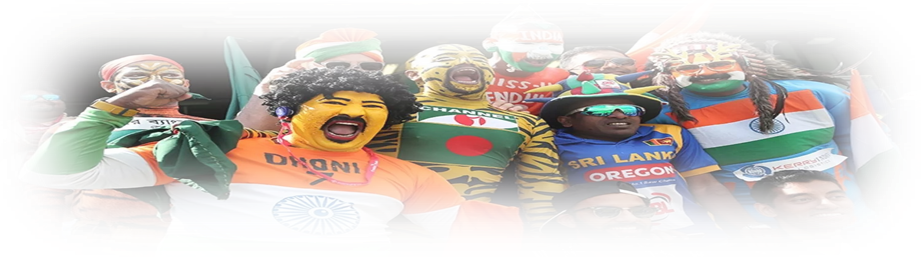
Once upon a time, a long time ago, as single lives come and go, there was a little girl whose name was Marianne, Marianne Bass, although it might have been Mary Anne, or Maryanne.  Who knows, girls play a bit with the spelling of their names.  In a sense, she may have been a precursor to another Marianne about a decade later, one with whom I’m amazingly still in touch.

I was “Billy” then, recently arrived from my beloved Manizales into a strange new world, but my English had improved drastically from its non-existence a year earlier.  I wonder if I had an accent.  Friends my age who’d known me for about six months claimed it had disappeared.  And I’d made the great leap forward scholastically from the rear to the head of my class, a sudden linguistic epiphany had made that possible.  But there was still some confusion.  I was very good at drawing for my age, and I’d been asked to draw a turkey for Thanksgiving, but there were still some words that confused me: chicken and kitchen for example, and, … turkey and turtle.  So we wound up with my famous drawing of the first ever Thanksgiving turtle.  Turkeys may well have found the concept an improvement.

Marianne Bass in Mrs. Mary Dunn’s class.  I recall her new front teeth had already fully come in, mine probably had not.

It must have been, in Miami Beach, or Maybe Miami, probably in 1953-54.  My first serious crush.  I was seven and she might have been eight.  She never knew how I felt but I wonder whether she suspected.  We were not close, I was pretty timid (in the midst of confused childish immigrant syndrome) but after seven decades I still recall her from time to time.  Especially when I’m in the midst of melancholic nostalgia, in the midst of misty reflections and introspection.  Times sort of like today.  I do recall one special lunch we shared, albeit in the school cafeteria, where she told me quite a bit about herself, she’d been left back so was older than I was, and as young as we were, I grasped that she was more than just beautiful, that there was a depth to her, and intelligence as well, and that fascinated me.  Perhaps that’s why after so, so long, I still recall her so clearly.

I wonder what her life has been like.  Hopefully full and meaningful.  Hopefully she married someone who appreciated her and had great kids and delightful grandkids.  Hopefully her life was secure and free of violence, physical and emotional and that the sorrow she inevitably suffered was shallow and superficial. 

I wonder if she remembered me at all, … ever. 

I of course moved on.  Moved on way too often but I recall her very fondly.  I wish she knew although I’m not sure why.  I wish she knew what I’d made of my life, at least with respect to its positive aspects. 

Marianne Bass in Mrs. Mary Dunn’s class, a pretty time, a very different time, one now, of course, in every sense, long, long gone.

_______

© Guillermo Calvo Mahé; Manizales, 2023; all rights reserved.  Please feel free to share with appropriate attribution.

Guillermo (“Bill”) Calvo Mahé (a sometime poet) is a writer, political commentator and academic currently residing in the Republic of Colombia (although he has primarily lived in the United States of America of which he is also a citizen).  Until 2017 he chaired the political science, government and international relations programs at the Universidad Autónoma de Manizales.  He is currently the publisher of the Inannite Review, available at Substack.com, a commentator on Radio Guasca FM, and an occasional contributor to the regional magazine, el Observador.  He has academic degrees in political science (the Citadel), law (St. John’s University), international legal studies (New York University) and translation and linguistic studies (the University of Florida’s Center for Latin American Studies).  However, he is also fascinated by mythology, religion, physics, astronomy and mathematics, especially with matters related to quanta and cosmogony.  He can be contacted at guillermo.calvo.mahe@gmail.com and much of his writing is available through his blog at https://guillermocalvo.com/.
Reflections on Melancholy, Boredom and Brandy

How do my nostalgia and melancholy relate to bitterness?  Or are they more associated with boredom?  Or a combination of both?  

Actually, I’d guess, they’re related to the full panoply of emotions I’ve felt and to the spectrum of my personal experiences.  To all of my regrets and joys; a distillation of sorts, one perhaps diluted in the process, but perhaps, synergistically enhanced instead. 

A strange sort of brandy, part biological, part cognitive, part emotional and part spiritual. 

And what of that brandy’s residue?  The things seemingly forgotten but perhaps just hiding.  Hiding from me and from anyone and everyone, but perhaps, like a neurosis, rather than hiding are only in stasis, preparing to pounce unexpectedly, and to create an alternative version of the person I perceive as me.

Brandy, distilled wine, sometimes disguised as cognacs and armagnacs, but only when blended in France, albeit from grapes whose ancestors were once migrants in Chile.  Strange.  Sort of like my nostalgia and melancholy, all of them filtered through traces of bitterness, but spiced with joys and regrets.
_______

© Guillermo Calvo Mahé; Manizales, 2023; all rights reserved.  Please feel free to share with appropriate attribution.

Guillermo (“Bill”) Calvo Mahé (a sometime poet) is a writer, political commentator and academic currently residing in the Republic of Colombia (although he has primarily lived in the United States of America of which he is also a citizen).  Until 2017 he chaired the political science, government and international relations programs at the Universidad Autónoma de Manizales.  He is currently the publisher of the Inannite Review, available at Substack.com, a commentator on Radio Guasca FM, and an occasional contributor to the regional magazine, el Observador.  He has academic degrees in political science (the Citadel), law (St. John’s University), international legal studies (New York University) and translation and linguistic studies (the University of Florida’s Center for Latin American Studies).  However, he is also fascinated by mythology, religion, physics, astronomy and mathematics, especially with matters related to quanta and cosmogony.  He can be contacted at guillermo.calvo.mahe@gmail.com and much of his writing is available through his blog at https://guillermocalvo.com/.

Observations on the Other Side of the Veil and Just where Jimmy Buffet Might Be

Nirvana doesn’t appeal to me.  Nor frankly do Heaven, Hell, Purgatory, etc., although heaven is such an amorphous concept it can encompass anything. 

Abrahamic heaven is certainly not my thing.  At best, horribly boring with perpetual psalms, harping and sycophancy. 

But an afterlife with everyone I’ve cared for would be interesting even if complex given competing and inconsistent relationships; at least in my case.

Hell is apparently were all the fun people go so a hell without the torment would be pretty awesome.  I wonder if Jimmy Buffet is there, and the Beatles who’ve passed on, and Elvis, and Mickey Mantle and Joe DiMaggio.  Awesome artists of course, Vincent van Gogh and Picasso, Rembrandt and da Vinci, Raphael and el Greco, Michelangelo too.  And actors and actresses and writers, and of course, poets.  Of course, a lot of unpleasant characters would be there as well, loads of politicians and lawyers and pseudo journalists, pederasts and rapists and  reams upon reams of religious leaders, popes, cardinals, bishops, priests, rabbis, pastors.  And a lot of military officers, especially generals and field marshals and such.  And monarchs and judges and jurists who made mistaken decisions. 

So Hell, … interesting but not really for me.  Too much like the current world.

Purgatory.  Hmmm, probably pretty cool, maybe the best of Hell without its downside.  But Limbo?  Well, sort of vacuous with a lot of babies wailing wondering just what the heck they were doing there, and who they were, and why they’d been abandoned. 

What kind of deity creates the foregoing and where ought he, she, it or they be reigning, if anywhere at all.

But Nirvana. 

I guess I’m not yet evolved enough to yearn for the absence of everything and anything, everyone and anyone.  As though I’d never been, which I find philosophically confusing.  Why all the effort, all the incarnations and suffering and, well, pleasure too, if the goal is to return to what I was before I was.  Unless, of course, it’s just an exercise for the education, training and evolution of the omnidivine.

But what happens when the omnidivine attains Nirvana?

Now Margaritaville. 

That would be something else.
_______

© Guillermo Calvo Mahé; Manizales, 2023; all rights reserved.  Please feel free to share with appropriate attribution.

Guillermo (“Bill”) Calvo Mahé (a sometime poet) is a writer, political commentator and academic currently residing in the Republic of Colombia (although he has primarily lived in the United States of America of which he is also a citizen).  Until 2017 he chaired the political science, government and international relations programs at the Universidad Autónoma de Manizales.  He is currently the publisher of the Inannite Review, available at Substack.com, a commentator on Radio Guasca FM, and an occasional contributor to the regional magazine, el Observador.  He has academic degrees in political science (the Citadel), law (St. John’s University), international legal studies (New York University) and translation and linguistic studies (the University of Florida’s Center for Latin American Studies).  However, he is also fascinated by mythology, religion, physics, astronomy and mathematics, especially with matters related to quanta and cosmogony.  He can be contacted at guillermo.calvo.mahe@gmail.com and much of his writing is available through his blog at https://guillermocalvo.com/.