Unknown's avatar

About Guillermo Calvo Mahé

I’ve done many things over the years and I’ve lived in many places. Until 2016 I chaired the Political Science, Government and International Relations Program at the Universidad Autónoma de Manizales in the Republic of Colombia where I taught political science (human rights law, international and supranational law, constitutional theory, government and comparative political systems, history of political ideas, and, North American Studies), served as an English resource to faculty members, translated academic papers, and participated in development of international faculty and student exchange programs for the university. I periodically serve as a political commentator on local media and continue to be active as a writer and artist as well as a translator and interpreter. My university degrees are in political science, law, international legal studies and translation studies. I am active political matters both locally and internationally and have a passion for world affairs and history. I’ve sought spiritual enlightenment all my life but have yet to find definitive answers; I have, however, found an ever increasing and worthwhile, series of questions to speculate on. I am very drawn to the beauty, simplicity and justice of the Wiccan Reede. I love music, dancing, writing, reading, drawing, equestrian sports, tennis and softball. I maintain a warm and supportive ongoing relationship with my three sons in the USA. I was married twice with one serious relationship between the two marriages and also had several wonderful recent relationships. I dislike jealousy and respect the importance of private space and continuing individual growth; however, I also value loyalty and honesty very much and treasure affection.

But it’s a Saying Nonetheless

It’s strange being a shadow, discreetly indiscreet, fitting into all kinds of nooks and crannies.  I’m there even when, having turned on lights, bright or dim, it appears I can’t be seen.  I’ve quite a store of sort of borrowed knowledge but it’s not much use really, unless I share it with the echoes who are my friends, not all of them are, but some.  I am sort of trapped in a sense, having to go to all kinds of places against my will, in a sense, not really having a will of my own, except when the person who’s had me trapped all my life sleeps.

I have contrarian sort of cousin who lives in mirrors, always reflecting things sort of backwards, left being right and right being left.  It lurks in all mirrors but can be conjured by only one person, and is trapped there, imitating that person until it’s dark, or the person goes away.  Evidently there is a quantum based centrality of sorts where reflections lurk, waiting to be summoned.  Kind of like shadows.  We shadows are sometimes invited to party there, unfortunately, we don’t tend to mix well, and notwithstanding what people think, we hate to be superimposed, especially as rabbits.

Not that we have anything against rabbits, or crocodiles, or the other images we are sometimes, well, all too often, forced to imitate.  But we are happy just being our two dimensional selves.  Thinking our two dimensional thoughts and dreaming our two dimensional dreams, but avoiding colors whenever we can.  When we can’t we subdue them, sort of.  It’s a sort-of sort of life being a shadow, but it’s okay; at least for now.

Is a cube merely a square squared?  Or a sphere merely a circle escaped into the three dimensional world.  More likely a circle abducted and tortured into three dimensionality.  Indeed, we shadows seem to shadow almost all three dimensional objects, beings and non-beings alike.  We believe that we existed first, when the multiverse only had two dimensions, but that’s a hard hypotheses to prove.  Still, it may be our greatest religious belief and they don’t require proof.  Only faith.

It may be that at least one of us has escaped, or blundered into the three dimensional world because they sometimes seem to believe that one among us knows a great deal, perhaps everything.  They have a refrain: “who knows what lurks in the hearts, of men, to which they answer: ‘the shadow knows’”.  There’s a sort of similar saying among us which we apparently share with three dimensional beings: “who knows what the future will bring”.  But as far as I know, none of us has ever met that “who knows”, so none of us knows if it even exists. 

But it’s a saying nonetheless.
_______

© Guillermo Calvo Mahé; Manizales, 2022; all rights reserved.  Please feel free to share with appropriate attribution.

Guillermo (“Bill”) Calvo Mahé (a sometime poet) is a writer, political commentator and academic currently residing in the Republic of Colombia (although he has primarily lived in the United States of America of which he is also a citizen).  Until 2017 he chaired the political science, government and international relations programs at the Universidad Autónoma de Manizales.  He has academic degrees in political science (the Citadel), law (St. John’s University), international legal studies (New York University) and translation and linguistic studies (the University of Florida’s Center for Latin American Studies).  He can be contacted at guillermo.calvo.mahe@gmail.com and much of his writing is available through his blog at https://guillermocalvo.com/.

A Message for Yankees Fans after the Latest Disaster

It’s October 24, 2022, and Einstein, wherever his soul lurks, is probably sort of chuckling, thinking, “I told them so”. Same-old-same-old all over again, as Yogi might have said. To the brink of success then run away, run away fast as though your lives depended on it (from Monty Python’s “Holy Grail”). The organized campaign to place the blame on Aaron Judge thus setting the stage for him to head elsewhere is in high gear, probably subsidized by the four pillars of the Yankees’ apocalypse: Hal Steinbrenner, Randy Levine, Brian Cashman and Aaron Boone. The limited partners are fine with the results. Profits preserved; money not wasted on fans too stupid to root elsewhere (but that’s the nature of fans).

As one of those “stupid” fans (there may be a redundancy in that phrase, sort of as in “stupid voters”), I have no joy in having been right in numerous postings on social media sites, those useless and frequently censored and manipulated vehicles designed to let us blow off steam while accomplishing nothing. And of course, I am very far from having been alone.

A once promising season is over, as has become traditional. “Postmortem”, sadly, is not a hyperbolic exaggeration for Yankees’ fans, now as polarized as the rest of our country, divided between cheerleaders who label those who criticize management as “haters”, and those who love their Yankees but refuse to accept ineptitude and disdain in our historically storied sports franchise. Ineptitude at every level is the impression that’s been left as “aspirations are swept away” to lie uncomfortably under the rugs in Hal Steinbrenner’s office. Ineptitude concentrated at the top and flowing down in concentric waves: A callous owner faithful to his investors while virtually ignoring the fans; a president of baseball operations missing in action and a bargain hunting general manager whose bargains rarely meet aspirations (as is the case with most bargains); and, a manager and coaching staff whose decisions varied from amateurish to jinxed. A show good enough to consistently make the stage but then flop. The sports version of the Not Ready for Prime Time Players, albeit perhaps less talented.

Odd that the Yankees minor leagues seem to do so well, and that while minor league players seem to start out well at the mother team level, they almost immediately succumb to the “swing for the fences-strike-out brigade”. Or that if they’re pitchers, they’re quickly burned out. Actually, odd only if one accepts the excuse that coaches and managers are not responsible for players’ failures. Our Yankees have become the obverse of what they once were. Instead of turning turnips into diamonds we now turn talented and eager young players into failures; that is, when we don’t just let them rot unused, as was the sad case with players such as Miguel Andujar, now “liberated” in the Pittsburg Pirate organization where he is probably sighing, “free at last; free at last, thank God almighty I’m free at last”.

Being a fan is a psychologically grueling vocation but one Cub’s fans, Red Sox fans and Jet’s fans have mastered through mainly bad times (albeit always with glimmers of hope, delusional though they might have been). True fans stay the course, but not quietly, not with “my country right or wrong attitudes”, and I guess there is a karmic curse to pay for all the awesome Yankees’ years. For the Babe and the Mick, and Mr. October and Mr. November. And for Donny Baseball. And for George.

The Piper, it seems, is collecting his due.

It’s a bit hard because most of us remember George but we despise his progeny and their decisions. Because we’re seemingly stuck in a ditch with little hope that, as occurred when George arrived to save us from CBS, a new, enlightened and dedicated ownership group will arrive to save the day.

It seems like more sad times await us. Jeter and Rodrigues and CC and other alums don’t have the funds, and the Steinbrenners and their partners would probably not sell anyway.

But we’ll stay the course, that’s what fans do. And make observations and suggestions that all too often, all too sadly, prove true. 
 _______

© Guillermo Calvo Mahé; Manizales, 2022; all rights reserved. Please feel free to share with appropriate attribution.

Guillermo (“Bill”) Calvo Mahé (a sometime poet) is a writer, political commentator and academic currently residing in the Republic of Colombia (although he has primarily lived in the United States of America of which he is also a citizen). Until 2017 he chaired the political science, government and international relations programs at the Universidad Autónoma de Manizales. He has academic degrees in political science (the Citadel), law (St. John’s University), international legal studies (New York University) and translation and linguistic studies (the University of Florida’s Center for Latin American Studies). He can be contacted at guillermo.calvo.mahe@gmail.com and much of his writing is available through his blog at https://guillermocalvo.com/.

Some Observations and Reflections as we Once Again Head to the Polls in an Existential Election

I am not and never have been a supporter of former president Donald J. Trump but I’ve defended him against the myriad false and misleading accusations to which he’s been subjected.  I also recognize the current witch hunt against denominated “Election Deniers” for what it is.  That’s because as a dual United States Colombian citizen, I have the benefit of a somewhat broader historical perspective. 

For example, the events surrounding the 2020 federal elections that crystalized in the protests turned violent on January 6, 2020, as well as the ensuing government reaction have an analog in recent Colombian history.  Current Colombian president, Gustavo Petro, was, in his youth, part of an insurgency (unfortunately armed) against the theft of the 1972 presidential election in Colombia by a coalition of the two traditional parties, an insurgency known as the M-19, a movement that was not a communist conspiracy, as described by its detractors, but one whose goal was to protect both democracy and liberty.  The insurgency soon lost its focus and egregious acts against the innocent public resulted but eventually, a positive although very slow healing process ensued, culminating first in a new constitution, and eventually, in Colombia’s recent presidential elections where for the first time in its history, a progressive movement emerged victorious.

The United States is currently experiencing a similar crisis.  While it is probably impossible to determine that electoral fraud in 2020 was enough to impact the electoral results, there is little doubt that, as in every federal election in United States history, some fraud occurred, and that the electoral mechanisms introduced in 2020 purportedly due to necessities imposed by the apparent Covid 19 crisis (a crisis now deemed by many as artificial at best), mechanisms such as mass mailing of electoral ballots and acceptance of completed ballots through intermediaries, facilitated the process for vote harvesting and the buying and selling of electoral ballots.  At least some credible allegations of electoral fraud were raised but as in the case in Colombia in 1972, they were neither seriously investigated by responsible government agencies nor prosecuted, leading a large segment of the electorate to question the election’s legitimacy.  The refusal to investigate the allegations and instead, to investigate and in too many cases, to prosecute those who made them (either in judicial proceedings or through Congressional hearings designed to impact future elections) have led to the complete polarization of the United States electorate at levels threatening domestic tranquility.

Insurgencies are usually the result of justice blatantly denied leading to a loss of faith in all governing institutions deemed responsible for the repression of democracy and liberty (two very different things).  That sometimes, although fairly rarely, leads to popular reaction, something detractors refer to as “populism”.  Populism is neither a right wing nor a left wing phenomenon and examples in recent United States history include the ill-led Sanders revolution (which flopped) and the Tea Party revolution (which succeeded until it was stamped out).  It is thus a phenomenon which occurs when a significant segment in any given society rejects constitutional institutions designed to hamstring democracy and decide to really “throw the rascals out”, although all too frequently without having reflected on with whom or what they’ll be replaced. 

It may be that populism is the only thing that can save the world in which we find ourselves, today although hopefully (as is the current case in Colombia), with a well thought out and planned alternative ready for implementation.  The traditional parties in the United States are leading the world deeper and deeper into a dystopic disaster and need to be replaced. Not all options are viable and many are worse than the “disease” they need to eradicate (kind of like the Covid 19 vaccines seem to be), but some options are indeed viable and additional options can be crafted by men and women of good will who want to maximize debate while minimizing polarization, and to find common ground for solutions while acknowledging that, where consensus cannot be attained, in a democracy, there are things which are beyond the legitimate control of government.  That minds and hearts are not changed by ridicule, censorship and false narratives (at least not in the long term), but that long term solutions are desperately needed if our species is to survive.

While it is losing respect and influence everywhere, the United States is still powerful enough militarily and through control of mechanisms of international finance (with ill conceived, unfair and illegal economic sanctions) to create havoc almost everywhere.  Thus United States politics impacts people everywhere and its elections are of universal import.  Indeed, it would seem normal and justifiable for people all over the world to seek to impact the elections in a would-be hegemon (what after the 2016 elections was hypocritically referred to as foreign meddling), given that the results of such lections are likely to impact their own future, and even, their survival.  Once again, as seems to happen at least every other year, existential United States elections are again at play.  Once again, we are again about to go to the polls without viable options, but at least some fundamental things are clear:

  • One political party and the traditionalist remnants of the other are totally controlled by the state within the state many of us refer to as the Deep State (unelected bureaucrats, corporate news media, intelligence agencies, billionaire technocrats, etc.) and are dedicated to perpetual war in quest of worldwide political and economic dominance for the benefit of a tiny few, albeit claiming to merely be seeking racial and gender justice and recognition of human rights, purported rights they themselves violate constantly. 
  • The other is comprised of confused and angry populists who know in their hearts that the “system” is not their friend and who seek solutions mainly in what they mistakenly recall as a better past. 

Not great options, but the reality is that one party is willing to risk the survival of humanity, and the other is not.  A crude choice, … at least for now.  A third alternative is one being crafted by an interesting albeit imperfect stateswoman, a former United States Congresswoman who concurrently served as a lieutenant colonel in the Hawaiian National Guard but who abhors war.  However, she has neither a political party’s backing nor an organized political movement fielding candidates in the next election, although there are a few candidates she is supporting, without regard to their current political affiliations.  Her name is Tulsi Gabbard and she recently resigned as a member of the Democratic Party, recognizing it for what it was become.  It may be that her recommendations and endorsements are worth considering.

Most of us want very similar things.  A world without war.  Economic and personal security.  The ability to successfully raise and protect our families.  Access to real justice with respect to resolution of interpersonal and international conflicts.  Freedom to think and to express ourselves however we want free of censorship of any kind and free from those who insist that we think and believe as they do, even if we are wrong (it may well be that only by being free to make mistakes will we ever be able to be experienced enough to find correct solutions).  A world free of international organizations like NATO whose goal is to dominate others through military force, and to force conflict on societies whose people derive no benefits from the ensuing mayhem (e.g., the Ukraine, Yemen, Syria, Libya, Palestine, etc.).  A country that spends its citizens’ hard earned money for education, healthcare, infrastructure and a social safety net rather than on foreign military bases and a bloated defense industry.  What seems clear is that the political party than now controls all political branches of government at the federal level and which has turned the federal bureaucracy into an Americanized version of the Gestapo is an unmitigated disaster in every respect and should be consigned to the dust heaps of history, and that were it possible, its leaders and elected officials should somehow be barred from ever again participating in political leadership, or indeed, leadership of any kind. 

This is not an endorsement of the GOP but rather a rejection of the Democratic Party and a plea for consideration of new alternative political options.  Your survival depends on the evolution of new viable alternatives and unfortunately we are no longer dealing with a long term solution but rather, with one which requires immediate action.

Please consider the foregoing when you go to the polls in a few weeks.  Please also consider sharing the foregoing observations.
_______

© Guillermo Calvo Mahé; Manizales, 2022; all rights reserved.  Please feel free to share with appropriate attribution.

Guillermo (“Bill”) Calvo Mahé (a sometime poet) is a writer, political commentator and academic currently residing in the Republic of Colombia (although he has primarily lived in the United States of America of which he is also a citizen).  Until 2017 he chaired the political science, government and international relations programs at the Universidad Autónoma de Manizales.  He has academic degrees in political science (the Citadel), law (St. John’s University), international legal studies (New York University) and translation and linguistic studies (the University of Florida’s Center for Latin American Studies).  He can be contacted at guillermo.calvo.mahe@gmail.com and much of his writing is available through his blog at https://guillermocalvo.com/.

Perhaps

How strange it is to grasp that this world might well be a better place if the fictional macabre were real. 

If ghouls and goblins ruled in place of politicians and if necromancers and their ilk controlled the corporate media. 

Or perhaps there wouldn’t be any difference.  Any difference at all.

Perhaps they already do.
_______

© Guillermo Calvo Mahé; Manizales, 2022; all rights reserved.  Please feel free to share with appropriate attribution.

Guillermo (“Bill”) Calvo Mahé (a sometime poet) is a writer, political commentator and academic currently residing in the Republic of Colombia (although he has primarily lived in the United States of America of which he is also a citizen).  Until 2017 he chaired the political science, government and international relations programs at the Universidad Autónoma de Manizales.  He has academic degrees in political science (the Citadel), law (St. John’s University), international legal studies (New York University) and translation and linguistic studies (the University of Florida’s Center for Latin American Studies).  He can be contacted at guillermo.calvo.mahe@gmail.com and much of his writing is available through his blog at https://guillermocalvo.com/.

A Biography of Sorts

It started towards the end of the third quadrant in July. 

Monthly quadrants are not all equal, of course.  Those in February are usually seven days long except in quadrennial years, and then each quadrant is approximately seven days and six hours long.  April, June, September and November have quadrant’s that are seven days and twelve hours long, but January and March and May and July and August and October and December are a tiny bit more complex.  And they’re in the majority.

In that July with which we were concerned, the day with which we were concerned was the twenty-second, a sort of magical day in astrological terms, and it was towards the end of the third quadrant because in July, as in January and March and May and August and October and December, each quadrant is seven days and eighteen hours long, so the third quadrant would end at six in the morning of the twenty-third day.  And this was still the twenty-second day.

Had it been in February it would have been during the start of the fourth and final quadrant, but it wasn’t.  Had it been in April, June, September or November, the twenty-second would also have been during the last day of the third quadrant if it were during the morning but the first day of the fourth and final quadrant, had it been the afternoon.  But it was not April, June, September or November with which we were concerned, although the time with which we were dealing being the early morning of the twenty-second day, before the sixth hour, there would have been quadratic coincidence during those months.

It was in a city high in the central range of the Colombian Andes, one overlooked by a glacier astride a volcano whom the aboriginals had once worshiped (whom, not which, given that they personified it) under the name Cumanday.  Perhaps some still worshipped it under that name and it is certain that there were at least some local, dedicated proto-new agers, who did so then.  It had been the year of the dog in the Chinese calendar, although China was very far away.  He’d have preferred the year of the dragon, or at least of the lion, but no lion was included in that calendar, so it would have had to have been, its cousin, the tiger.  But it was the dog.  It seemed unfair that no lion was available given that in the more traditional Babylonian astrological family, the twenty-second day in July was usually the dividing line between the lion and the crab, although that crab had a rather unpleasant name: cancer.

And anyway, being too young to really have a vote (scream and cry though he might, and in fact, as he had) he was stuck with the available signs, a dog and a lion, and maybe a crab with an evil name.  Not so bad really.  But a dragon would have been really cool.

It had been an interesting day (in the Chinese sense).  The culmination of a somewhat unpleasant period for his mother of course, and unfortunately for her, he’d taken his time, albeit not without a good deal of internal fussing.  But he’d finally come out to see the world he’d be inhabiting for quite some time.  He’d been the first of his generation so a good deal of fuss had been made of the occasion.  New waves had formed and in concentric circles, had begun to oscillate, first nearby, then in that special city, in that special department, in that special country, in that special continent, in those special hemispheres, one vertical and the other horizontal, then in that poor, poor abused planet, then in that solar system, in that galaxy, in that universe, and finally, throughout the multiverse, at which point, the wave had started its return journey playing with time and space, and quanta, and dimensions along the way.  Examining black holes and white holes and playing with dark energy and dark matter but, as it approached its point of origin, nothing was there except radioactive residue, well, and radio waves echoing demands that everyone vote for a certain Democratic Party because Russians and Chinese with which Republicans were purportedly in league had to be stopped from destroying everything, and that the Ukraine had to be permitted to join NATO, and that a great deal of money was required, first, to keep that Democratic Party in power, and then, for more and more and more weapons to keep everyone safe from , … well, at that point the echoes became garbled.

So the wave just kept on going, back to the edge of the multiverse it had visited before. And back again, looking for that child who’d first arrived in the third quadrant of the month of July, at the intersection of the lion and the crab in the year of the dog in a once beautiful city high in the central range of the Colombian Andes, one once overlooked by a glacier astride a volcano whom aboriginals had once worshiped under the name Cumanday, and perhaps some local, dedicated proto-new agers had once done so as well.
_______

© Guillermo Calvo Mahé; Manizales, 2022; all rights reserved.  Please feel free to share with appropriate attribution.

Guillermo (“Bill”) Calvo Mahé (a sometime poet) is a writer, political commentator and academic currently residing in the Republic of Colombia (although he has primarily lived in the United States of America of which he is also a citizen).  Until 2017 he chaired the political science, government and international relations programs at the Universidad Autónoma de Manizales.  He has academic degrees in political science (the Citadel), law (St. John’s University), international legal studies (New York University) and translation and linguistic studies (the University of Florida’s Center for Latin American Studies).  He can be contacted at guillermo.calvo.mahe@gmail.com and much of his writing is available through his blog at https://guillermocalvo.com/.

Endoplasmic Indulgence

Perhaps he’d always been confused, perhaps it was nothing new, perhaps his confusion was merely more confusing because the world had become so much more incoherent, so much more contradictory, so much more filled with falsehoods and fabrications, so much more, well, … confusing.

Odd that others didn’t acknowledge his confusion, and that the answers which they, for some reason, sought from him, seemed to them both eloquent and precise while he remained so full of doubts, incertitudes and self-equivocation; but apparently, it didn’t show through.  Not that he wanted it to.

He wondered if others felt that way.  If others who seemed so sure, so certain in their postures, positions and conclusions were, in reality as full of doubts as he.  And if the doting crowds that followed them knew in their hearts that those for whom they clamored were merely somnambulating through roles they’d themselves assigned?

The delusional leading the deluded through perdition into despair.  That would explain a great many things.  Most religions for example, and politics, and law, and journalism, and history itself.  Delusional erudition amplified through rhetoric.  It has a nice ring albeit in a horrific context.  Perhaps onomatopoeia run amuck!

“Endoplasmic indulgence”, a phrase apparently heretofore unused, a virginal phrase taken a bit further than is really rational.
_______

© Guillermo Calvo Mahé; Manizales, 2022; all rights reserved.  Please feel free to share with appropriate attribution.

Guillermo (“Bill”) Calvo Mahé (a sometime poet) is a writer, political commentator and academic currently residing in the Republic of Colombia (although he has primarily lived in the United States of America of which he is also a citizen).  Until 2017 he chaired the political science, government and international relations programs at the Universidad Autónoma de Manizales.  He has academic degrees in political science (the Citadel), law (St. John’s University), international legal studies (New York University) and translation and linguistic studies (the University of Florida’s Center for Latin American Studies).  He can be contacted at guillermo.calvo.mahe@gmail.com and much of his writing is available through his blog at https://guillermocalvo.com/.

Memories:

He’d liked his brandy sweetened.  He’d loved apricot brandy when it was “apricot brandy” and not just apricot flavored, and he liked it strong, at least eighty proof.  And he’d liked regular brandy too, sweetened with Grand Marnier.  And Armagnac, Clés de Ducs if possible; but he’d preferred Spanish to French brandies, especially Cardenal Mendoza, or in a pinch, Gran Duque de Alba.  But he hadn’t like it alone, after supper over coffee, he’d liked it with a bit of cheese, sharp cheddar if possible, and with an apple sliced with a paring knife, and with hot tomato soup.  And he’d liked it best listening to symphonic music, especially Beethoven or Bach, while he was reading, especially Tolkien, or researching religious mythology.  Especially with a roiling fire burning in a large hearth. 

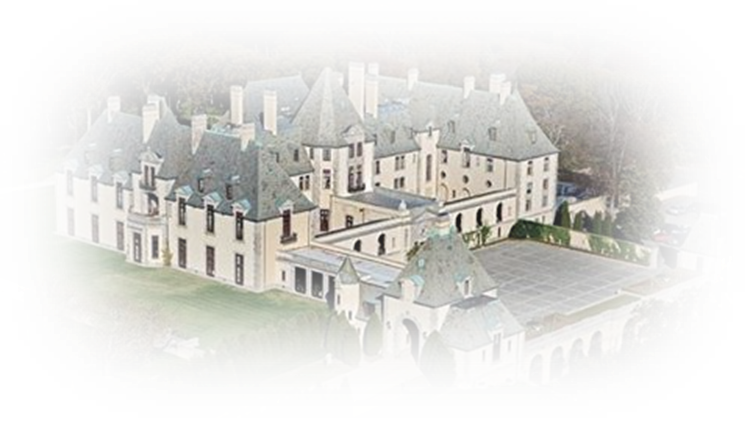
Especially in a Normal-style castle, set on the highest point on a long island, set between a river and a small harbor, in a town named after cold springs.  In a castle with a gym and a football field and a baseball field, and with students and faculty members, and maintenance personnel, and a nurse, and retired military personnel who’d had adventures they enjoyed sharing.  A castle full of memories where new ones were made daily, at least for a while.

One would think those aspirations were unrealistic, unless one had lived them.  And relived them, over and over again, long after the castle was just a shared memory.
_______

© Guillermo Calvo Mahé; Manizales, 2022; all rights reserved.  Please feel free to share with appropriate attribution.

Guillermo (“Bill”) Calvo Mahé (a sometime poet) is a writer, political commentator and academic currently residing in the Republic of Colombia (although he has primarily lived in the United States of America of which he is also a citizen).  Until 2017 he chaired the political science, government and international relations programs at the Universidad Autónoma de Manizales.  He has academic degrees in political science (the Citadel), law (St. John’s University), international legal studies (New York University) and translation and linguistic studies (the University of Florida’s Center for Latin American Studies).  He can be contacted at guillermo.calvo.mahe@gmail.com and much of his writing is available through his blog at https://guillermocalvo.com/.

“And then there were none”: Reflections in an Empty Pond

He remembered.  That’s all there was, and, of course, his body.  Everything else, everywhere was gone, well, except for imagination.  Strange that he’d list that last, it was possibly the most important thing that still existed.  Mankind was gone, as was nature, as was the multiverse.  Only he stayed behind; the last guardian, but guardian of what?  Of memories he guessed.

And he’d known what he was doing when he’d agreed to take on the task, if not why. 

His hair still grew, it was infinitely long now, as were his nails, and he still perspired, but that soon evaporated and then vanished into the eternal nothing, actually, infinitely longer than eternal.  He didn’t breathe and of course, urination and defecation had ended, at the end.  He’d accepted the charge when the universe was still young, when the multiverse still was.

And he’d known what he was doing, that it would be irrevocable and endless, if not why. 

But someone had to assume the role.  He’d known how desperately lonely and boring it would be, until only despair remained, without any hope for respite, without any hope for death.  Without any future, only the vacuous present and memories of the past, and his growing hair, and his growing nails, and every once in a while, a bit of perspiration that all too quickly vanished.

Hopefully the first trillion years were the hardest.
_______

© Guillermo Calvo Mahé; Manizales, 2022; all rights reserved.  Please feel free to share with appropriate attribution.

Guillermo (“Bill”) Calvo Mahé (a sometime poet) is a writer, political commentator and academic currently residing in the Republic of Colombia (although he has primarily lived in the United States of America of which he is also a citizen).  Until 2017 he chaired the political science, government and international relations programs at the Universidad Autónoma de Manizales.  He has academic degrees in political science (the Citadel), law (St. John’s University), international legal studies (New York University) and translation and linguistic studies (the University of Florida’s Center for Latin American Studies).  He can be contacted at guillermo.calvo.mahe@gmail.com and much of his writing is available through his blog at https://guillermocalvo.com/.

Remembering Father Nicholas Trivelas on the Fourteenth Anniversary of His Passing

Today, September 30, 2022, is the anniversary of the passing of Father Nicholas Trivelas, formerly pastor at Charleston’s Greek Orthodox Church of the Holy Trinity while I was a student at the Citadel many, many decades ago.  Reflections on his passing brought to mind two other Greek Orthodox priests who were a comfort to me during trying times, Father Nicholas Nick of Fort Lauderdale’s St. Demetrius Greek Orthodox Cathedral and my family’s Greek Orthodox pastor in Queens, New York, when I “wore a much younger man’s clothes”.  The latter’s surname was, I think, Volides.  Because they can marry and father children, Greek Orthodox clerics tend to be more empathic than celibate clerics, and warmer, in a safe manner. 

I confess that I am not a “believer” and it may be that I was not then.  I’m at best an agnostic and a seeker, but I profoundly respect the faith of others.  Indeed, I have studied most major religions and as a young academic, taught a course on mythologies and comparative religions, something that has remained a life-long interest.  I was baptized Greek Orthodox at the age of ten at the insistence of my step father, Leonidas Theodore Kokkins, born in Flushing, New York where he is interred, but I had already been baptized as a Catholic and, as a member of a church associated with the Theosophical Society.  It’s not really as confusing as it sounds.  My maternal family were theosophists and thus generally accepting of all religions.  But the three priests I referenced above were special people in my life and in the lives of others, too many to count. 

The Citadel, the Military College of South Carolina, of which I am a proud graduate, was and is a very special place.  Although it is in continuous evolution, something with which many of its graduates do not agree (being deeply traditionalist), its values seem constant.  The Citadel involves a profoundly demanding, integral experience combing academics, athletics, military training, civic involvement and ethics, one that took everything we could give and then some to complete (indeed, many decent, intelligent and competent people do not succeed there and move on to other endevors elsewhere, with the Citadel’s blessing and best wishes). 

Father Trivelas helped me make it through the Citadel’s rigors and supplemented its values, as did the wonderful Greek community of Charleston, special among them three families, the Misoyianis family, the Kirlis family, and especially the Lempesis family.  It’s hard to think of one without the others, and each always inspires feelings of profound love and gratitude.

As tends to happen in this mobile and dynamic world, one where values seem much less relevant than they once were, the memories and reflections to which I allude are bitter sweet: sad because of the loss of contact but beautiful because of the shared experiences involved and because of the role played by those to whom I’ve referred in whatever positive attributes I’ve attained.  These are memories in which my mother echoes, Powerfully, as do so many others:  my classmates, both at the Citadel and at the Eastern Military Academy (once prominent in Cold Spring Hills, New York, but now long gone), and memories inspired by the student’s I’ve been privileged to teach and the colleagues from whom I’ve also learned a great deal. 

Memories of Father Trivelas trigger them all.  If he was right and there’s a Heaven, he is there, prominently.
_______

© Guillermo Calvo Mahé; Manizales, 2022; all rights reserved.  Please feel free to share with appropriate attribution.

Guillermo (“Bill”) Calvo Mahé (a sometime poet) is a writer, political commentator and academic currently residing in the Republic of Colombia (although he has primarily lived in the United States of America of which he is also a citizen).  Until 2017 he chaired the political science, government and international relations programs at the Universidad Autónoma de Manizales.  He has academic degrees in political science (the Citadel), law (St. John’s University), international legal studies (New York University) and translation and linguistic studies (the University of Florida’s Center for Latin American Studies).  He can be contacted at guillermo.calvo.mahe@gmail.com and much of his writing is available through his blog at https://guillermocalvo.com/.
Refractions on a Day in Early Fall

Today dawned beautiful here in the city in the sky, nestled at the feet of the Cumanday in the central range of the Colombian Andes, although, as I have for the past few days, I awoke with trepidation, undefinable but perhaps due to world events and the horrible state of my adopted (and now somewhat abandoned) homeland to the North.  A land and a people I also love profoundly. 

Colombia seems embarked on a renaissance, a period of enlightenment and perhaps, even enlightened governance.  A great deal of its polarization has evaporated, almost overnight, a sign of hope to the world, which in its Northern Hemisphere, seems engulfed in hate, animosity and belligerent competition.

I live in both worlds though, and as in the case of apples, the bad negatively impacts the healthy.

So, despite the beautiful dawn, shadows of the dark clouds that blight the land where my sons, distant and silent, reside, impact even the brightest days in this renascent paradise.
_______

© Guillermo Calvo Mahé; Manizales, 2022; all rights reserved.  Please feel free to share with appropriate attribution.

Guillermo (“Bill”) Calvo Mahé (a sometime poet) is a writer, political commentator and academic currently residing in the Republic of Colombia (although he has primarily lived in the United States of America of which he is also a citizen).  Until 2017 he chaired the political science, government and international relations programs at the Universidad Autónoma de Manizales.  He has academic degrees in political science (the Citadel), law (St. John’s University), international legal studies (New York University) and translation and linguistic studies (the University of Florida’s Center for Latin American Studies).  He can be contacted at guillermo.calvo.mahe@gmail.com and much of his writing is available through his blog at https://guillermocalvo.com/.