Reflections on Poetry and on the Nature and Uses of Prayer

Sam Hamill

It came to me as I read indigenous reflections written in 1976, almost half a century ago, by Arthur Amiotte, then an artist and teacher who lived among the Teton Sioux in South Dakota, that I have never understood the nature or functions of prayer.  Not strange given how few if any priests or pastors or rabbis have ever grasped them.  Prayer had always seemed superficial to me, ritual repetition of sounds directed at one or more beings to whom we seemed little more than insects, inferior objects to be scorned and disdained, albeit in a strange and twisted, masochistic way, loved as well. 

An observation attributed to a gentle Nazarene whom the Hebrews and perhaps the Romans may have tortured and perhaps hung or crucified has always made a great deal of sense to me: his suggestion that direct communion with the divine, without ritual or intervention, without prayer, was really the only legitimate and effective means of touching divinity but, reviewing Arthur Amiotte’s indigenous reflections, something I’ve been doing while concurrently reading the probably fictitious writing of Carlos Castaneda (fictitious not being synonymous with useless),  another alternative occurred to me.  Ironically occurred to me who, if not an atheist am at best a panentheist.  It came to me in the form of an epiphany: Prayer may well have a positive purpose but it is unrelated to the ritual repetition of sounds the meaning of which few really consider as they utter them, and fewer still understand

In that instant of epiphany, it came to me that ritual prayer does have a role and a meaning and a use and a purpose but that it is very different from the meaningless collective rote exercise that takes place on designated days at designated hours in designated places under the leadership of designated men and sometimes, although rarely, designated women.  It is, or perhaps, better stated, it should be, an isolated, personal reflective instrument that properly tuned and used can lead to introspection, contemplation, meditation and self-examination, all in a quest for insight, perhaps totally novel insight, and through such insight, to both elucidation and pragmatic solutions. 

That makes sense, or made sense to me; finally.  Prayers, correctly used, can be catalysts for internal communication in which, perhaps, a spark of the divine (if a spark of the divine exists within each of us, as some among the Gnostics tend to believe), may, at times, be present.

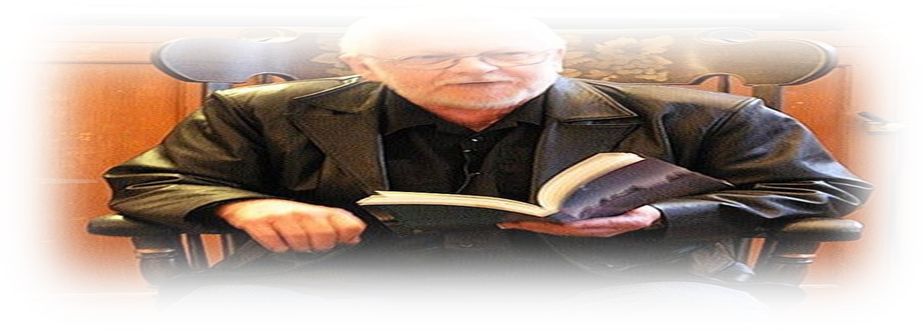
Poetry” Sam Hammill (a great friend, a great poet and a great translator) once told me “is meant to be spoken and heard”.  As much as I admired him and still do (though he is long gone), I did not agree.  For me, reading poetry rather than listening to it permitted me to transcend the music of the words in order to wrestle with the layers of meaning involved, not all of them layers the author intended.  In that sense, it seems that poems are “written on mirrors”, i.e., they have different meanings for everyone who really delves into their depths based on the reader’s personal experiences, context and perceptions.  I’ve shared my observation with another poet I admire but who is as different from Sam, in many but not all ways, as two poets can be.  Sam was a big man, a former United States marine, with a booming voice, an adventurer in every sense, while the second poet, Carlos Mario Uribe Alvarez, is a fairly diminutive and soft spoken Colombian, but one who annually gathers poets from all over the world to declaim and share perspectives in the sky-high Andean city where I’ve now lived for almost two decades.  Despite their differences, as is the case with many poets, they both share a taste for variety in women, each of whom they love in their own way, and for strong intoxicants, whether drunk or inhaled. 

As it was for Sam, poetry for Carlos, at the numerous events he organizes, is an oral exercise.  I dutifully attend the readings performed by earnest and talented artists who have profound truths to share but I get little out of the readings.  Indeed, I’ve urged that each reading be preceded by contextualization and a sharing of the motives and reflections and introspection that gave birth to each poem presented.  Sam would have argued with me.  Carlos agrees, but seemingly superficially.

I now feel the same way about prayer after my epiphany.  But perhaps that’s just me.  Writing and reading call to me much more than does listening to prayers or poetic expositions.  Reading permits me to dive and delve and reflect while writing seems a means of communicating with my inner self, with the me who’s been and the me that may someday be, and perhaps, at times, with echoes and shadows of divinity that have made their way, if not to me, at least towards me.

Interesting.  But perhaps not novel except for those of us who have been long misled by Abrahamic delusions.  Perhaps my epiphany is an echo of something lost by those of us who have misplaced things that our ancestors understood well and perhaps used and perhaps some among us may still understand and practice it, albeit alone and in personal places in a manner such as that of which that gentle Nazarene once spoke.

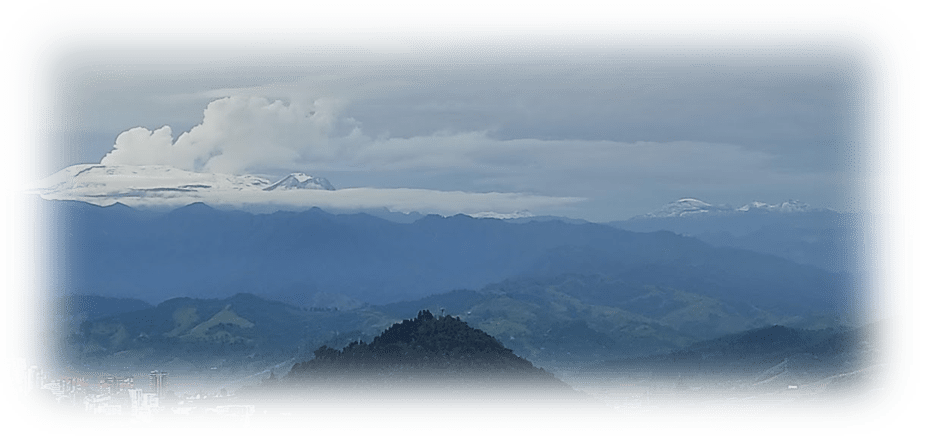
Thoughts on a pleasant autumn day high in the central range of the Colombian Andes.
_____

© Guillermo Calvo Mahé; Manizales, 2025; all rights reserved.  Please feel free to share with appropriate attribution.

Guillermo (“Bill”) Calvo Mahé (a sometime poet and aspiring empirical philosopher) is a writer, political commentator and academic currently residing in the Republic of Colombia (although he has primarily lived in the United States of America of which he is also a citizen). Until 2017 he chaired the political science, government and international relations programs at the Universidad Autónoma de Manizales. Previously, he chaired the social studies and foreign language departments at the Eastern Military Academy in Huntington, New York. He is currently the publisher of the Inannite Review available at Substack.com; an intermittent commentator on radio and television; and, an occasional contributor to diverse periodicals and publications. He has academic degrees in political science (BA, The Citadel, the Military College of South Carolina), law (JD, St. John’s University, School of Law), international legal studies (LL.M, the Graduate Division of the New York University School of Law) and translation and linguistic studies (GCTS, the University of Florida’s Center for Latin American Studies). However, he is also fascinated by mythology, religion, physics, astronomy and mathematics, especially with matters related to quanta, cosmology and cosmogony. He can be contacted at guillermo.calvo.mahe@gmail.com and much of his writing is available through his blog at https://guillermocalvo.com/.

Of Butterflies and Bibles

I’ve frequently wondered as to what motivated the inept linguist or translator who turned the word “flutterby” into “butterfly”.  That usually brings to mind (at least to my mind) the inept Catholic “saint”, Jerome of Stridon, who made a mess of his Latin translation of the Greek version of the Hebrew Tanakh.  Poor Lucifer, demoted by the purported saint from the Roman god of truth and light into a rebellious archangel and the patron of evil (a role that belonged to a Hebrew “entity” whose name was Hel-El).

Flutterby is obviously the correct term to describe the fluttering, flying insect, often beautiful, that has nothing to do with butter but is stuck with that appellation. I don’t suppose Jerome was responsible, he knew nothing of English, but who knows.  The absence of knowledge never stopped him.

And as to the “Latin” version of the Bible on which the St. James and other mistranslations are based, what can one say other than perhaps, …

… “Oy Vei”!

_____

© Guillermo Calvo Mahé; Manizales, 2025; all rights reserved.  Please feel free to share with appropriate attribution.

Guillermo (“Bill”) Calvo Mahé (a sometime poet and aspiring empirical philosopher) is a writer, political commentator and academic currently residing in the Republic of Colombia (although he has primarily lived in the United States of America of which he is also a citizen). Until 2017 he chaired the political science, government and international relations programs at the Universidad Autónoma de Manizales. Previously, he chaired the social studies and foreign language departments at the Eastern Military Academy in Huntington, New York. He is currently the publisher of the Inannite Review available at Substack.com; an intermittent commentator on radio and television; and, an occasional contributor to diverse periodicals and publications. He has academic degrees in political science (BA, The Citadel, the Military College of South Carolina), law (JD, St. John’s University, School of Law), international legal studies (LL.M, the Graduate Division of the New York University School of Law) and translation and linguistic studies (GCTS, the University of Florida’s Center for Latin American Studies). However, he is also fascinated by mythology, religion, physics, astronomy and mathematics, especially with matters related to quanta, cosmology and cosmogony. He can be contacted at guillermo.calvo.mahe@gmail.com and much of his writing is available through his blog at https://guillermocalvo.com/.

Gardening in Eden

“Paradise; … boring???”

Well yes, but, … well, not at first no, but time was strange there, everything seemed endlessly repetitive.  Well, … at least until the end. 

Then boredom ceased being an issue.
_______

© Guillermo Calvo Mahé; Manizales, 2024; all rights reserved.  Please feel free to share with appropriate attribution. Guillermo (“Bill”) Calvo Mahé (a sometime poet) is a writer, political commentator and academic currently residing in the Republic of Colombia (although he has primarily lived in the United States of America of which he is also a citizen).  Until 2017 he chaired the political science, government and international relations programs at the Universidad Autónoma de Manizales.  He is currently the publisher of the Inannite Review, available at Substack.com, a commentator on Radio Guasca FM, and an occasional contributor to the regional magazine, el Observador.  He has academic degrees in political science (the Citadel), law (St. John’s University), international legal studies (New York University) and translation and linguistic studies (the University of Florida’s Center for Latin American Studies).  However, he is also fascinated by mythology, religion, physics, astronomy and mathematics, especially with matters related to quanta and cosmogony.  He can be contacted at guillermo.calvo.mahe@gmail.com and much of his writing is available through his blog at https://guillermocalvo.com/.

Vincent, an Ode to Van Gogh

If this is not the most beautiful song ever, there are none more beautiful: Don McLean’s Vincent, an Ode to Van Gogh.  More beautiful as poetry than as music and, set to prose it might read like this:

Starry, starry night, paint your palette blue and gray, look out on a summer’s day with eyes that know the darkness in my soul.

Shadows on the hills, sketch the trees and the daffodils, catch the breeze and the winter chills in colors on the snowy, linen land.

Now, I understand what you tried to say to me and how you suffered for your sanity, and how you tried to set them free.  They would not listen, they did not know how; perhaps they’ll listen now.

Starry, starry night, flaming flowers that brightly blaze, swirling clouds in violet haze reflect in Vincent’s eyes of china blue; colors changing hue, morning fields of amber grain, weathered faces lined in pain are soothed beneath the artist’s loving hand.

Now, I understand, what you tried to say to me, how you suffered for your sanity, how you tried to set them free.  They would not listen, they did not know how, perhaps they’ll listen now.

For they could not love you, but still your love was true and when no hope was left inside on that starry, starry night, you took your life as lovers often do.  But I could have told you, Vincent, this world was never meant for one as beautiful as you.

Starry, starry night, portraits hung in empty halls, frameless heads on nameless walls with eyes that watch the world and can’t forget, like the strangers that you’ve met; the ragged men in ragged clothes, the silver thorn of bloody rose lie crushed and broken on the virgin snow.

Now, I think I know what you tried to say to me, how you suffered for your sanity, how you tried to set them free.  They would not listen, they’re not listening still, perhaps they never will.
_______

Lyrics set to prose copyrighted by Don McLean.  Observations and commentary, © Guillermo Calvo Mahé; Manizales, 2023; all rights reserved.  Please feel free to share with appropriate attribution.

Guillermo (“Bill”) Calvo Mahé (a sometime poet) is a writer, political commentator and academic currently residing in the Republic of Colombia (although he has primarily lived in the United States of America of which he is also a citizen).  Until 2017 he chaired the political science, government and international relations programs at the Universidad Autónoma de Manizales.  He is currently the publisher of the Inannite Review, available at Substack.com, a commentator on Radio Guasca FM, and an occasional contributor to the regional magazine, el Observador.  He has academic degrees in political science (the Citadel), law (St. John’s University), international legal studies (New York University) and translation and linguistic studies (the University of Florida’s Center for Latin American Studies).  However, he is also fascinated by mythology, religion, physics, astronomy and mathematics, especially with matters related to quanta and cosmogony.  He can be contacted at guillermo.calvo.mahe@gmail.com and much of his writing is available through his blog at https://guillermocalvo.com/.

A Beautiful Day in the Central Range of the Colombian Andes, As the World Burns

It’s a beautiful, sunny Saturday in the city in the sky.  The one set among snow clad peaks and thermal springs near an adjacent volcano or two and the remnants of several glaciers.  The one set atop the central range of the Colombian Andes in the midst of a sea of mountains dressed in diverse verdant shades.  It seems summery although in the Northern Hemisphere, the part of our planet in which this part of Colombia is set, it is late autumn, just short of winter.  But then, this close to the equator, seasons tend to meld and shift and be measured in hours rather than months.

The world seems as bad as it’s been since the second war to end all wars a bit over three quarters of a century ago, all the lessons it purportedly taught at best unlearned but more they were probably just fictitious attempts at justifying unjustifiable terminal follies.  Again.  After all, the second war to end all wars took place less than two decades after the first war to end all wars ended.  And wars?  Well, they’re just fine, in fact, perhaps healthier than ever.

Still, … as individuals here and there, life plows on, life: full of interpersonal challenges and triumphs, its own interpersonal beauty and mystique artfully masking our own errors and mistakes.

The Global South (which ironically includes Russia and China and Iran but definitely not the Ukraine) seems to be making headway in its quest for liberation from the constant abuse, humiliation and looting that flows from the North.  But not without severe challenges as the Global North has no intention of brooking what it considers insolence by lesser species.  By people almost but not quite human. 

Notwithstanding the hypocritical “woke”, condescension still rules. 

Still, … there is a scent of a different sort of future and lingering echoes seem to wonder whether such future will be better or just filled with shadows from the past, and whether the images we’ll see in our future mirrors will reflect who we’ve been, or we claim to have been, or who we wish we had been, or who we’d like to be, or who we’ve been forced to become.  Hopefully the images that stare back at us will not be too much like those of those who for so long have oppressed so many.  Wishful thinking, I know, but “if our reach does not exceed our grasp, then what’s a heaven for”, as Robert Browning wrote.  But then, he was a poet, not a politician, a journalist or a historian (the illusory professions).

Omnipresent, dystopia seems to rule.  We seem to be a people in transition, greedily tearing down the past without any agreement on what will replace the corrupt social institutions that have been decaying, putrefied for millennia.  Decaying but refusing to die.  That confuses and polarizes us as we’re manipulated by the worst among us, the Northern hegemonic wannabe leaders who refuse to let go and definitely decline to share, but who still exercise almost total control.  Yet, “almost” is an optimistic harbinger, a qualifier that hints at possible changes, perhaps even beneficent changes.

Who can tell? 

But we can hope. 

Especially on a beautiful sunny Saturday in early December, one in which at least some of us are safely ensconced among some of those we most love, … at least for the day. 

The carnage, genocide and ethnic cleansing underway in Palestine by the worst cultural descendants of the tribe which, after looting Egypt, went on to plunder and murder every man woman and child in ancient Jericho, continues unabated despite popular condemnation in the Global South and even, among an enlightened minority in Europe, the United States and even Israel, although, from here in the heights of the Andes, as in the United States and Europe, to some, that all seems very far away.  Far enough away so that the screams of pain and dying gasps and mourning and lamentations are barely audible and thus, perhaps, at least for them, can be sanitized and washed away.

Or at least shouted down and obfuscated through carefully crafted rhetoric, with reckoning postponed, if not for ever, at least for another day.   

After all, who mourns for ancient Jericho today?
_______

© Guillermo Calvo Mahé; Manizales, 2023; all rights reserved.  Please feel free to share with appropriate attribution.

Guillermo (“Bill”) Calvo Mahé (a sometime poet) is a writer, political commentator and academic currently residing in the Republic of Colombia (although he has primarily lived in the United States of America of which he is also a citizen).  Until 2017 he chaired the political science, government and international relations programs at the Universidad Autónoma de Manizales.  He is currently the publisher of the Inannite Review, available at Substack.com, a commentator on Radio Guasca FM, and an occasional contributor to the regional magazine, el Observador.  He has academic degrees in political science (the Citadel), law (St. John’s University), international legal studies (New York University) and translation and linguistic studies (the University of Florida’s Center for Latin American Studies).  However, he is also fascinated by mythology, religion, physics, astronomy and mathematics, especially with matters related to quanta and cosmogony.  He can be contacted at guillermo.calvo.mahe@gmail.com and much of his writing is available through his blog at https://guillermocalvo.com/.

Translation Quagmires

For someone who seeks linguistic exactitude, third person pronouns sometimes cause quandaries requiring that they be avoided in order to minimize confusion, take the following reflection, for example:

So, he reflected, the title should really have been “The Steppenwolf” rather than just “Steppenwolf”; but what a horrible translation by Basil Creighton.  He had a graduate degree in translation studies and linguistics and was a pretty active writer besides (“he”, not Basil, although perhaps Basil did as well, although Basil was no longer among the living and thus, not likely to be offended by the observation).  Perhaps, he considered, Basil was trying too hard to reflect the original German rather than the meaning Hesse sought to attain and the emotional reaction he sought to elicit.  Although, to be fair, he (hmmm, which he?) wasn’t absolutely, 100% positive that the Picador edition he was reading was that specific translation, one copyrighted in 1929.  A revised translation had been copyrighted in 1963.  Evidently it was revised by Joseph Mileck and Borst Frenz.  If so, the collaborative translation by the three was still terrible.  Whoever had translated the editions of Hesse’s Siddhartha he’d frequently read was infinitely more successful (again, which he; although it seems obvious to me).  The original translation was by Hilda Rosner; Sherab Chödzin Kohn evidently translated it later.  He may have read them both (again, which he) although the Rosner version was more likely.  Indeed, the latest copy he had was translated by Joachim Neugroschel.  In an interview that touched on his translation process, Neugroschel had claimed that he “never read a book before translating it” claiming that he had no reason to do so.  “I do not” he’d expressed “translate the words literally. Only a bad translator would translate literally …. It is a question of music and rhythm.”  What a shame that Joachim did not translate Steppenwolf.

Linguistic questions such as those reflected in the foregoing, with many more profoundly impactful issues, impact translation.  It should be so smooth that the reader should feel that what he or she was reading was the original, in the original language, and that requires not only translation but acculturation, unless of course, it is important that the passages read seem as though the speaker was not totally comfort in the language being used, and foreign indicia were thus important.  The passage used as an example is quite correct in criticizing the Hermann Hesse masterpiece in question which is extremely awkward, robbing the text of the impact Hesse attained in the original German among German audiences.  But still, the work is acknowledged in numerous languages as a major literary, psychological and sociological tour de force.

One is tempted to attempt one’s own translation. 

I wonder when the copyright expires?  2026 I think, although it might have expired in 2020.
_______

© Guillermo Calvo Mahé; Manizales, 2023; all rights reserved.  Please feel free to share with appropriate attribution.

Guillermo (“Bill”) Calvo Mahé (a sometime poet) is a writer, political commentator and academic currently residing in the Republic of Colombia (although he has primarily lived in the United States of America of which he is also a citizen).  Until 2017 he chaired the political science, government and international relations programs at the Universidad Autónoma de Manizales.  He is currently the publisher of the Inannite Review, available at Substack.com, a commentator on Radio Guasca FM, and an occasional contributor to the regional magazine, el Observador.  He has academic degrees in political science (the Citadel), law (St. John’s University), international legal studies (New York University) and translation and linguistic studies (the University of Florida’s Center for Latin American Studies).  However, he is also fascinated by mythology, religion, physics, astronomy and mathematics, especially with matters related to quanta and cosmogony.  He can be contacted at guillermo.calvo.mahe@gmail.com and much of his writing is available through his blog at https://guillermocalvo.com/.

The Revelations of John (an Exile in Patmos) Reconsidered ,… Sort of

Or perhaps, the “Reconsiderations of Bill or Guille” (an expatriate of sorts in Manizales)

Introduction

(The serious part)

The purported revelations of John of Patmos (really, an expatriate who fled to Patmos), a John who styled himself the Elder, the purported book of revelations written on or about the year 96 of the Common Era, seem, in their apocalyptic aspects, almost completely Zoroastrian.  A cartoonish culmination of the doctrine of ethical dualism.  Indeed, the version of Yešu[1] it envisions, denominated “Christ”, seems utterly different than the loving Jesus reflected in modern imagery, much more the messiah longed for by racist, ethnocentric Hebrews, to whom all others were inferiors, now, ironically, subsumed in fundamentalist Paulist Christianity[2].

Interestingly, old Johnny seemed most bothered by the sexual and dietary heresies of the Nicolaitans, followers of Nicholas the Deacon, a real apostle (unlike Saul, albeit as a replacement) and member of the Jerusalem Community.  As in today’s uber polarized world, relatively irrelevant issues were used to divide people who had much more in common than in conflict, the apparent goal (as it is today) being the elimination of any who held contrary views, regardless of how innocuous.  The Nicolaitans’ horrible heresy (according to their detractors, including John but strangely, not Saul), involved the belief that monogamy was not essential and that sharing those beloved with others was a positive, rather than a negative thing, true love promoting the joy and pleasure of the beloved, rather than restricting it; but also, the belief that it was not inappropriate to eat food (specifically meat), offered in sacrifice to idols if it had first been exorcised, … probably important when food was scarce.

John was not original in his revelations, primarily using imagery, threats and promises old before Yešu had purportedly incarnated.  Imagery, threats and promises made in writings such as the books of Daniel and Ezekiel in the Old Testament, 1 Esdras in the Apocrypha, the Book of Enoch in the Pseudepigrapha, the Assumption of Moses, and, portions of the Synoptic Gospels.  He merely placed them in a new, anti-Roman Imperial context, and directed them specifically against the Roman Emperor and those who followed him, especially followers of Yešu willing to compromise the beliefs Pauline Christianity required of them.  In essence, he was a plagiarist, but that was not looked down upon in antiquity.  Indeed, a popular literary device at the time was the antithesis of plagiarism, giving famous others credit for what one had written in order to enhance its impact.

Of course, all of the threats and promises reflected in John’s purported revelations were to take place while the Roman Empire continued to exist in its pagan version.  It’s hard to believe that they applied after the Roman Empire became Pauline, when it became Pauline Christians who engaged in persecution, torture and murder, as well as who placed restrictions on religious beliefs; actions such as those attributed by John to the Romans.  Hence, everything predicted should have taken place prior to the Emperor Constantine’s decrees in the year 331 of the Common Era, decrees which made Pauline Christianity the official religion of the Roman Empire. 

Through distorted rationalization (such as are common today in journalism) disassociated from the religious aspect of John’s purported revelations and focused exclusively on their political dimension, i.e., the existence of the Roman State, one could, albeit unconvincingly, argue that the promised (or threatened) events need only have occurred prior to the fall of the Eastern Roman (Byzantine) Empire in the year 1453 of the Common Era.  And if later, only if today’s Vatican State is seen as the continuation of the Roman Empire against which John railed can an argument be made that the prophecies of John’s purported revelations remain merely inchoate, rather than utter claptrap.

Interestingly, the sexual beliefs associated with Nicholas the Deacon seem to never have gone out of style and seem, at least since the 1960’s, to have emerged from the closet, as it were.  As to eating food sacrificed to idols, well, who knows?  Who can tell where today’s food has its origins, regardless of labeling laws, … except perhaps for Kosher food.

Summary of John’s Imagery

(The satirical part.  Accurate, but satire just the same.  Unavoidably so):

Yešu, in his role as the Pauline “Christ”, purportedly speaking from heaven to John, addresses messages to seven angels, each responsible for one of seven specific Pauline churches in Asia Minor.  One might ask why Yešu, in heaven, would need the assistance of John, to address his angels, but evidently the divine communication network was not functioning at the time.  So much for ubiquitous omnipresence.

With reference to the seven angels, one each had purportedly been assigned the role of guardian to Pauline churches in Ephesus, Smyrna, Thyatira, Pergamum, Sardis, Philadelphia and Laodicea.  Evidently, five of the angels were not doing such a great job at eliminating those who found the doctrines of the Nicolaitans reasonable.  Yešu seems especially miffed with the angel charged with guarding the Pauline church at Pergamum, where “Satan”[3] was purported to have his headquarters. 

Interesting. 

One wonders if Pergamum has been carefully searched in quest of a portal leading to the infernal regions.  For anyone interested, the site of Pergamum is located sixteen miles from the Aegean Sea on a lofty isolated hill on the northern side of the broad valley of the Bakır River, a site currently occupied by the modern town of Bergama, in the province of İzmir in Turkey.  One wonders if, as in the Colombian municipality of Rio Sucio, they have biannual carnivals dedicated to “the Devil”.

Following Yešu’s message to his angels, strangely, via John (as I’ve noted), he describes to John, evidently for transmittal to us, a message concerning seven seals (no, not the animals, just scrolls) on which is (or will be) purportedly written an account of events that “are about to take place” (the term “about” was evidently to be interpreted in a very broad manner, a manner to include any temporal period whatsoever; hmmm, a bit suspicious that).  But only Yešu is purportedly authorized to open the seals (no one else being worthy). 

There follows a bit of equine fantasy (I’m rather fond of horses myself) as the first four seals, if ever opened (John assures us they will, be, Yešu told him so) for some reason deal with horses.  Sigismund Schlomo Freud might have had something to say concerning that imagery, had it ever been brought to his attention.  Perhaps it was and perhaps he did.  Hmmm, on at least one occasion Freud did discuss equine fixations as follows: he interpreted horses, as a phobia (unfortunately he did not discuss them directly as a fixation), as symbolic of the father, and that fear that a horse would bite represented fear of castration as punishment for incestuous desires towards the mother, an expression of the Oedipus complex.  One might wonder what that tells us about John.  As far as I know, Yešu had no personal interaction with horses, only asses, although certain ranks of Roman soldiers in Palestine (where Yešu lived) did use them.  For the safety of my eternal soul then, I’ll limit my observations to John.

Anyway, again according to Yešu (via John), when Yešu opens the first seal, a white horse will appear whose rider will go forth to conquer. Other seals will then be opened, and three more horses: a red one, a black one, and a pale one, will appear in rapid succession.  According to analysts of John’s purported revelations, the four horses and their respective riders purportedly symbolize the conflicts that will mark the beginning of the final destruction of the Roman Empire (and have nothing to do with an Oedipal Complex, but, … who knows).

When the fifth seal is opened, the souls of those who have been waiting for the purported second coming, in duly respectful tones but obviously “verily” annoyed, will demand to know (respectfully of course), how much longer they have to wait until their suffering is avenged, but will be advised (one assumes by Yešu) that they still have a while to wait, and that their wait is likely to be unpleasant, but that if they are patient and faithful (it seems they were not merely souls, but living entities as well), they will be among the redeemed whose names are written in a “Book of Life”.  Evidently, such souls will never have been previously exposed to the revelations of John and will thus be ignorant of what is happening; apparently not being all that conscientious in complying with their Pauline educational obligations.

According to good old John, the scene then changes and we will embark on act two of his revelations.  One wonders if John’s production might not make a good video game.  Four angels representing the four winds of heaven will be told to hold back their winds (hmmm, flatulent angels) until “the servants of God have had seals placed on their foreheads”.  “Ouch”; one wonders if that will hurt.  It seems quite a bit like branding.  Then, apparently, notwithstanding the billions who have, since the dawn of the Common Era, attempted to comply with the usually incoherent, incomprehensible and contradictory instructions they keep receiving from the heirs of Paul (and presumably John) in Yešu’s name of course, all but a very few of them, 144,000 to be precise, will be sentenced to perdition.  As of the dawn of 2023, the world’s current population is approximately eight billion people, most of whom may have souls (although most politicians, lawyers, journalists and priests may not).  As of the dawn of 2023, it is estimated that 117 billion people have lived on Earth, the vast majority having lived following the start of the Common Era.  Assuming that Yešu decarnated (a neologism for when he abandoned his “carnate” form) approximately 1,990 years ago, as 2023 dawns, that means that, were the events “imagined” by John to occur today, an average of only about 72 people per year would have been “saved”.  One wonders at those stuck in Limbo, all the unbaptized infants, etc., what is to happen to them?  That means that fewer people will be “saved”, regardless of their piety, belief and conduct, than currently comprise the 0.01% who rule and own us.  What are the probabilities that such 0.01% have somehow cornered this market as well?  Hmm, they currently constitute about 800,000 people; that means that less than one in five of them will make the cut.  Interesting situation, at least for them.  For the rest of us, it’s apparently “Abandon All Hope”.

Anyway, according to Yešu (according to John), before Yešu opens the rest of the seals, another series of disasters will be heralded by seven angels, each one carrying a trumpet. One wonders if the seven angels are the same each time, or if they arrive in teams of seven.  The trumpets must be huge as they have massive destructive power when blown, although they perhaps are only indicia of coming calamities, Harbingers in Black, perhaps like those that the Latin American poet César Abraham Vallejo Mendoza wrote about in his poem, “Los Heraldos Negros”. 

Following the blowing of the trumpets, a massive earthquake will purportedly occur, turning rivers to blood.  The light of the sun and the moon will be extinguished and the stars will come unglued and fall to Earth.  Then things will really get bad, especially for any surviving persecutors of (one assumes) the 144,000 lucky ones.  Given all the schisms in Pauline Christianity since John’s day, where members of each Pauline denomination claim all others are to be condemned to Hell as heretics, certainly a form of persecution, it would seem that the most avidly religious may well be both among the punished and the vindicated, concurrently, which may explain the 144,000 number.

John, apparently paraphrasing Yešu, unless he has a really good memory, then maligns dragons, equating them with poor old confused Satan (remember the whole thing with Hêl él, Lucifer, and Sama’el; now they’re turned into a dragon, yeesh!!!).  But apparently, Satan and Marcus Cocceius Nerva, the Roman Emperor in the year 96 of the Common Era (when John purportedly wrote his “revelations”), are to be considered one and the same.  Poor Nerva; he did not reign long at all, just fifteen months, and he was a reformer of sorts, no Caligula or Nero.  But then, perhaps communication was slow back then and good old John thought that someone else was in charge.  However, one would assume that Yešu would have known better.  Perhaps poor John just misunderstood.  After all, it may be that Yešu was declaiming to John in Enoquiano, the mythical celestial language.  And there have never been all that many certified, or even qualified Enoquiano translators and interpreters, at least since the fall of that tower in Babel.

Anyway, ….

The “Dragon”, a-Satan (clearly a reference to Hêl él who rebelled in Heaven against YHWH and then purportedly schemed with Herod I, also known as Herod the Great, to do away with the infant Yešu) will somehow have been busy along with his retinue of angels (supposedly fully one third of the former Heavenly Host), challenging Yešu, YHWH and the Holy Spirit, purportedly working through poor Nerva (more probably his predecessors as Nerva was the first of the Five Good Emperors, or perhaps his successors, or perhaps the Papacy, or who knows who).  At any rate, “he” (whoever “he” is) will have been the one who will have been persecuting Yešu’s followers.  Hmmm, that “he” could be any leader of any purportedly Pauline church[4] since, based on the aforementioned thousands of Pauline schisms, almost all followers of Yešu will have been commended to condemnation in Hell and to damnation (assuming the two things are different) by other followers of Paul, given that they each consider all others blasphemous heretics.

Actually, the aforesaid “he” ought to be easy to recognize as, according to good old John (as told to him directly by Yešu), “he” will have seven heads and ten horns and will be somehow further identifiable by calculating his number, it should be “666” (although how our numbers are calculated remains a mystery); so be in the lookout for anyone fitting that description.

As the end finally draws near (again), again according to John as told directly by Yešu, or perhaps only by Yešu’s voice, three angels will appear (one wonders what will have happened to the other four, if indeed they are the same, or why the change in numbers if they are different; and whatever will have happened to the horses and their jockeys?).  One angel will announce that the hour of God’s judgment has come, the second one will yell that Babylon has fallen (which happened millennia ago so is no surprise) and the third will be doing his best to terrify anyone who’s been worshipping “the Beast” (probably the Dragon, you remember, our composite nemesis), all of whom are to then be thrown into a lake of fire where they will forever be destroyed. Hmmm, that seems a bit oxymoronic at best, poor phrasing, as destruction seems a final event rather than a process.  But then again, as you may recall, it may be that Yešu was declaiming to John in Enoquiano, hard for mortals to understand.

As if that’s not enough, with all the bad guys frying in a lake of fire (sounds sort of like something the Nazis were accused of doing), seven more angels will then appear (ahhh, the seven reunited perhaps), each one carrying a bowl filled with one of seven plagues as YHWH will be really wroth!!!!.  One wonders at the interaction of the fire in the humungous lake into which billions of bodies and souls are frying, with the plagues, which are to be as follows, almost as though they were a recipe: the first bowl will have some sort of agent generating “foul and evil sores” on the men who at the time bear the mark of the beast and who worship its image (does that mean women will be exempt, just asking, that will certainly please feminists); the second, will be poured into the sea (which sea is not clear), and will turn its waters into blood (which supposedly had already occurred to rivers somewhat earlier), but this time, killing everything there (assuming our pollution has not already done that).  Hmmm, it seems YHWH will become a mass polluter. Then, similar calamities, all different, will follow as each angel carelessly empties its bowl, without any thought for the consequences.

So, having destroyed everyone and everything except for the 144,000 lucky prize winners, Yešu will finally return, riding on clouds (hopefully not thoroughly polluted) and, amazingly, it appears that the fiery lake and plagues will not have been enough to destroy all the “wicked”, because more will be slain by the light Yešu’s coming generates (as though he were radioactive).  Apparently, concurrently with that event, the Dragon (a-Satan, etc.) will be bound underground for a thousand years and the Earth itself will be condemned to a thousand year period of desolation.  In the meantime, the 144,000 lucky righteous ones will have been flown to a celestial city where they can hang out with YHWH, Yešu, the Holly Spirit, and those angels who’d declined Hêl él’s invitation to rebel.

But that’s only for a single millennium.  Apparently, somehow, during that time, the remainder of the 117 billion will have recovered; revived so that they can be destroyed again.  Interesting to speculate as to when they will have died as their torment was to have been perpetual, what with the fiery lake, the plagues and all.

Anyway, according to John, as told to him by the voice of Yešu (one wonders if his voice is an entity in and of itself, which would seem to make the trinity a bit crowded), the celestial city will land on earth and someone or someones will engage in one more wars (which will probably make the 144,000 very happy, as, assuming they coincide with the current 0.01% who rule us, war seems to be their favorite pastime), and the wicked will be destroyed … again.  After which, the residue of humanity will live happily ever after, perpetually partying with YHWH, Yešu, the Holly Spirit, and those angels who’d declined Hêl él’s invitation to rebel, in the celestial city now on earth.  Given the slight population, it could be on a tiny Island somewhere in the Caribbean perhaps, perhaps near Eden, a new Jerusalem with streets of gold,  walls of jasper and gates of pearl (and what about windows?), in the midst of the good old River of Life, which will flow eternally from the throne of God, with neither sorrow nor crying allowed (or else), for God will wipe away all tears (one wonders, with no crying, from whence tears will appear), and there will be no more death.

One does wonder a bit what might happen to any of the happy denizens of the grounded celestial city, should they become a bit too independent; one wonders whether “free will” will be an aspect of that paradise; one wonders, … just asking, what would happen to any who might transgress.  You know, sing out of tune or harp off chord or something.  Perhaps wonder about dear old Nicholas the Deacon.

Anyway ….

Amen.

Concluding Observation

One wonders what happened after good old John sobered up.
_______

© Guillermo Calvo Mahé; Manizales, 2023; all rights reserved.  Please feel free to share with appropriate attribution.

Guillermo (“Bill”) Calvo Mahé (a sometime poet) is a writer, political commentator and academic currently residing in the Republic of Colombia (although he has primarily lived in the United States of America of which he is also a citizen).  Until 2017 he chaired the political science, government and international relations programs at the Universidad Autónoma de Manizales.  He has academic degrees in political science (the Citadel), law (St. John’s University), international legal studies (New York University) and translation and linguistic studies (the University of Florida’s Center for Latin American Studies).  He can be contacted at guillermo.calvo.mahe@gmail.com and much of his writing is available through his blog at https://guillermocalvo.com/.


[1] Yešu, commonly referred to as Jesus, or the Christ, or Joshua, or Yeshua, but the correct Aramaic variant (the name he might answer to) was Yešu.  He never, ever, ever answered to Christ.

[2] The adjective Paulist is added because Saul of Tarsus perverted the original teachings of Yešu, for his own purposes, in opposition to the religious movement that initially sought to promote the beliefs espoused by Yešu as promoted by Yešu’s brothers and apostles through an organization known as the Jerusalem Community.  He referred to his counter movement as Christianity and to Yešu as the “Christ”, a Greek term roughly analogous to messenger or messiah.  Saul, who renamed himself “Paul” for some reason, first tried to destroy the Jerusalem Community through legal and religious means within Judaism (including assassinations) but eventually found it much more profitable to coopt it, disassociating them from their Jewish origins by melding Jewish beliefs with Greek spiritual philosophies.

[3] Known to latter pre-Pauline Hebrews as ha-Satan, the unfortunate syncretic composite through mistranslation by Jerome of Stridon of the Hebrew archangel Hêl él, Lucifer, the Roman god of truth and light, and, YHWH’s chief legal advisor and prosecutor, Sama’el.  Poor Lucifer, eternally calumnied since then.

[4] All leaders with the possible exception of a certain Jorge Mario Bergoglio, also known currently as Pope Francis I.  He’s an unusually forgiving and empathic sort who refuses to condemn anyone.

The Latin Mind (Mente Latina) by José Martí

The Latin Mind (Mente Latina) by José Martí

The author[1]

Jose Marti, regarded as the father of modernism in Spanish literature, was born in Havana, on January 28, 1853.  He attended the Universities of Madrid and Saragossa, receiving doctorates in law, philosophy and letters. While exiled in Spain, he published “El presidio politico en Cuba”(1871), which described the horrid conditions in Cuban prisons, and “La Republica Española ante la Revolución Cubana” (1873), which urged the nascent, very turbulent, First Spanish Republic (February through December, 1873) to permit the establishment of an independent Cuban government.   In 1880, he settled in New York City where he worked as a journalist for “The Hour” and the “New York Sun” and as foreign correspondent for several Latin American newspapers including “La Nación” of Buenos Aires and Mexico’s “Partido Liberal” and wrote for La America, a Spanish language periodical.

While residing in New York, he was appointed consul for the Republics of Uruguay, Paraguay and Argentina, served as a delegate to the first Pan American conference, taught high school Spanish in the New York City public schools and, gave classes to the poor and illiterate in New York’s Hispanic community.  In 1892, he founded the Cuban Revolutionary Party and its political organ “Patria” to lay the groundwork for the liberation of his homeland. In 1895, Marti returned to Cuba as part of the initial wave of an expatriate invasion determined to overthrow the Spanish colonial government (he was proclaimed a Major General by the other commanders) but died in a skirmish at Dos Rios, on May 19, 1895.  Jose Marti’s three major collections of poetry are “Ismaelillo” (1882), “Versos sencillos” (1891) and “Versos libres” written sometime during the 1880’s but published posthumously in 1913.  The main body of his writing was journalistic in nature, written mainly for newspapers and magazines.

The Essay “Mente latina”

In the essay entitled “Mente latina” (published in the November, 1894 edition), he reaffirmed his anti-colonialist and anti-racist beliefs, formulating his own Pan-Latin-American doctrine. He emphasized the need to come to terms with the continent’s multiracial identity and the importance of teaching thoroughly the history of America from the Incas to modern times, in short: “to love what is ours and not just what is not ours”, reacting against the deprecating attitude among the general population in the United States that he perceived towards the sophistication, education and capabilities of Latin Americans, an attitude, which, if anything, seems to have become more ubiquitous since his death as Americans have become more and more xenophobic.  The essay points out mundane statistics in a mundane publication from a mundane small college in the United States that objectively demonstrated how Hispanic students drastically outperformed their United States counterparts in normal head to head academic interaction.  Of course, the example was selected by Marti to make a point and is not a scientifically conclusive or sociologically valid interpretation; nonetheless, it was effective, at least from a Hispanic perspective.

Legacy for the Hispanic Diaspora

From the translator’s perspective as a Colombian who spent the vast majority of his life in the United States, it’s interesting, in a distressing fashion, that among the majority of the native born, non-Hispanic population more than a century after the publication of Marti’s essay, the stereotype of Colombians is of a violent, dishonest people, principally involved in the cultivation or distribution of narcotics, with a small “good” percentage involved in the cultivation and distribution of coffee, while in most of the rest of the world they are perceived of as hard working, intelligent, educated and motivated.

But perhaps that’s starting to change.  During the past decade, tired of a half century of war the Colombian people demanded peace, and after a complex, sometimes ill conceived, sometimes manipulated process, as 2016 turned, peace seemed a distinct possibility, freeing Colombian fiscal and human resources to attain the possibilities that ought always to have been enjoyed by a land so blessed by nature’s bounties.  Perhaps that will also lead to real independence, discarding the role of subservient baby brother that Marti so hoped all Latin Americans would do.

The dreams of continental freedom and evolution have, during the past several decades, demonstrated signs of fruition.  The political concept referred to as New Latin American Constitutionalism has resulted in experimentation, albeit sometimes problematically, with new forms of governance: discarding old oligarchies in favor of more direct popular participation, discarding control by multinationals in favor of local and indigenous interests and recognizing broader concepts of human, social and environmental rights, although not without periodic setbacks orchestrated, as so frequently happened in the past, from abroad.

Perhaps finally, out of the mists of time, the assertions of Marti, Neruda Garcia Marquez and so many others of that special breed of Latin American patriot poets are attaining the recognition demanded in Jose Marti’s very special essay, set side by side below in the original Spanish and in its English translation.

Mente latina[2]

Entre los muchos libros que han venido a favorecer en lo que va de mes La América, uno hay que regocija, y no es más que el catálogo de un colegio.

No nos place el catálogo porque nos dé asunto para huecas y fáciles celebraciones a las conquistas nuevas, que con trabajos arduos se celebran mejor que con palabras sin meollo, que de puro repetidas van quitando ya prestigio y energía a las ideas que envuelven; sino porque en las páginas del pequeño libro resalta gloriosa, en una prueba humilde y elocuente, la inteligencia latina.

No nos dio la Naturaleza en vano las palmas para nuestros bosques, y Amazonas y Orinocos para regar nuestras comarcas; de estos ríos la abundancia, y de aquellos palmares la eminencia, tiene la mente hispanoamericana, por lo que conserva el indio, cuerda; por lo que le viene de la tierra, fastuosa y volcánica; por lo que de árabe le trajo el español, perezosa y artística. ¡Oh! El día en que empiece a brillar, brillará cerca del Sol; el día en que demos por finada nuestra actual existencia de aldea. Academias de indios; expediciones de cultivadores a los países agrícolas; viajes periódicos y constantes con propósitos serios a las tierras más adelantadas; ímpetu y ciencia en las siembras; oportuna presentación de nuestros frutos a los pueblos extranjeros; copiosa red de vías de conducción dentro de cada país, y de cada país a otros; absoluta e indispensable consagración del respeto al pensamiento ajeno; he ahí lo que ya viene, aunque en algunas tierras sólo se ve de lejos; he ahí puesto ya en forma el espíritu nuevo.

Bríos no nos faltan. Véase el catálogo del colegio. Es un colegio norteamericano, donde apenas una sexta parte de los educandos es de raza española. Pero en premios no: allí la parte crece, y si por cada alumno hispanoparlante hay seis que hablan inglés, por cada seis americanos del Norte premiados hay otros seis americanos del Sud.

En esa mera lista de clases y nombres, por la que el ojo vulgar pasa con descuido, La América dilata sus miradas. En esta inmensa suma de analogías que componen el sistema universal, en cada hecho pequeño está un resumen, ya futuro o pasado; un hecho grande.

¿No ha de ponernos alegres ver que donde entra a lidiar un niño de nuestras tierras, pobre de carnes y de sangre acuosa, contra carnudos y sanguíneos rivales, vence?

En este colegio de que hablamos, apenas van los alumnos de raza española a más clases que a las de las elementales y a las de comercio. Pues en el elenco de las clases de comercio, de cada tres alumnos favorecidos dos son de nuestras tierras. El mejor tenedor de libros es un Vicente de la Hoz. El que más supo de leyes comerciales es un Esteban Viña. El que acaparó todos los premios de su clase, sin dejar migaja para los formidables yanquizuelos, es un Luciano Malabet; ¡y los tres premios de composición en inglés no son para un Smith, un O’Brien y un Sullivan, sino para un Guzmán, un Arellano y un Villa!

¡Oh! ¡si a estas inteligencias nuestras se las pusiese a nivel de su tiempo; si no se las educase para golillas y doctos de birrete de los tiempos de audiencias y gobernadores; si no se les dejase, en su anhelo de saber, nutrirse de vaga y galvánica literatura de pueblos extranjeros medio muertos; si se hiciese el consorcio venturoso de la inteligencia que ha de aplicarse a un país y el país a que ha de aplicarse; si se preparase a los sudamericanos, no para vivir en Francia, cuando no son franceses, ni en los Estados Unidos, que es la más fecunda de estas modas malas, cuando no son norteamericanos, ni en los tiempos coloniales, cuando están viviendo ya fuera de la colonia, en competencia con pueblos activos, creadores, vivos, libres, sino para vivir en la América del Sur! . . . Mata a su hijo en la América del Sur el que le da mera educación universitaria.

Se abren campañas por la libertad política; debieran abrirse con mayor vigor por la libertad espiritual; por la acomodación del hombre a la tierra en que ha de vivir.

The Latin Mind

Among the many books favorably reviewed in La America’s “What’s New This Month” section, one delights, even though it’s only a school catalogue.

The catalogue delights, not because it provides grounds for hollow and superficial celebrations concerning new conquests.  Those are better celebrated through arduous work rather than by meaningless words which, through constant repetition, deprive the ideas they encapsulate of prestige and energy.  Rather, because through humble yet eloquent evidence, this small book gloriously highlights Latin intelligence.

Nature did not supply our forests with palms or evolve Amazons and Orinocos to water our shires in vain; abundance flows from those rivers and grace[3]from the palm groves, the Hispanic mind is rational because of what the aboriginals safeguard,[4] from that which is derived from the land, lovely and effusive,[5] from what the Arab brought the Spaniard, languid and artistic.  Oh!  On the day it starts to shine, it will shine nigh the sun; the day on which we will put our rustic existence to rest.  Indian academies; cultivators’ expeditions to agricultural countries; periodic as well as continuous journeys with serious purposes to the most advanced lands; stimulus and science in our sowings; timely presentation of our yields[6] to foreign countries; copious highway networks within each country, and from each country to others; absolute and indispensable devotion to respect for other viewpoints; there you have what will come, albeit in some places it can only be viewed in the distance; there you have the new spirit, already fashioned.

We are not lacking in resolve.  Just look at the school’s catalogue.  It’s a North American school where barely one sixth of the students are Hispanic.  But not in awards; there the proportion grows, and if for every Spanish speaker six speak English, for every six North Americans commended there are another six Americans from the South.

On that meager list of classes and names, over which ordinary eyes carelessly skim, America dilates its gaze.  Within this vast sum of analogies that comprise the universal system, a summary is contained in every minor detail, whether past or future; a great deed.

Shouldn’t it gladden us when we see a thin, anemic child from our homelands competing against well fed and full blooded rivals … prevail?

In this school of which we speak, students of Hispanic origin mostly attend basic or commercial classes.  But, among the rolls of those who excel in commercial classes, two out of every three are from our homelands.  The best bookkeeper is a Vicente de la Hoz.  The one who knows most about commercial laws is an Esteban Viña.  The one who monopolizes all the awards in his class, leaving nothing for the formidable “yanquizuelos[7], is a Luciano Malabet; and, the three prizes for English composition were awarded, not to a Smith, an O’Brien or a Sullivan, but to a Guzmán, an Arellano and a Villa!

Oh!  If only these intelligences of ours were set at the level of their own time; if they were not educated for the ruffs and erudite mortarboards from the era of audiences and governors; if they were not left, in their eagerness to learn, to suckle in the rootless and galvanic literature of half dead foreigners; if the successful association of intelligence that ought to be applied to a country were matched to the country to which it ought to be applied; if South Americans were prepared, not to live in France when they’re not French, nor in the United States (which is the most prolific of these bad models), when they are not North Americans, nor in the colonial era when they are already living post colonially, competing with active, creative, lively and free peoples, but rather, to live in South America!  ….  He who in South America gives his son a mere university education kills him.

Campaigns for political liberty are launched; campaigns for spiritual liberty, for the reconciliation of man with the land in which he ought to live, should be launched with greater vigor.

[1]              Biographical Information extracted from materials found at oldpoetry.com, see http://oldpoetry.com/oauthor/show/Jose_Marti.

[2]              La América, Nueva York, noviembre de 1884. Reproducido en Obras completas. Volumen VI. La Habana: Editorial Nacional de Cuba, 1963. 24-26.

[3]              There may have been a play on words in the source text that is not easily duplicated in the target text, i.e., a word similar to the word “palmares”, “palmarés” (with the accented last syllable), means “list of winners” in Spanish.  Also, there may have been an allusion to the importance palms played in the Christian Gospels on the Sunday prior to the execution and resurrection of Jesus the Nazarene.

[4]              The Spanish original places a semicolon rather than a coma at this point, but the following clause would then lack coherence.

[5]              The Spanish original places a semicolon rather than a coma at this point, but the following clause would then lack coherence.

[6]              Translation of the word “frutos” can, even when limited to this context, be justified in very different ways ranging from the very tangible “fruits” or “products” to more intangible concepts such as “successes”, “accomplishments” or, as selected, “achievements”.

[7]              As the term was, I believe, created by Marti and has no adequate English definition, but in its current form, is adequate to convey its meaning to target audiences, it was retained as a culturally borrowed term.

Selected Poems by Cesar Abraham Vallejo Mendoza (March 16 1892 – April 15 1938) Translated by Guillermo Calvo Mahé

Selected Poems by Cesar Abraham Vallejo Mendoza (March 16 1892 – April 15 1938)
Translated by Guillermo Calvo Mahé Continue reading

José Asunción Silva: “Juntos Los Dos” (“Together, We Two”)

José Asunción Silva: “Juntos Los Dos” (“Together, We Two”) Continue reading