The True Meaning of Life and all that Rot (Literally; or is it “figuratively”?)

Philosophy is an interesting human concept, our very own innovation designed to concurrently enlighten and befuddle us.  It both opens our minds and channels them into narrow calcified tunnels with light so distant as to become virtually invisible, and hence, rendering real knowledge ungraspable.  At least that’s frequently the case.  But not always.  Take the “meaning of life as an example.  Is it really as complicated and unfathomable as we´ve made it?  Or, is it rather simple and basic?  Based on the following hypothesis, you be the judge.

Sooo, about the “meaning of life” about which we[1] humans spend so much time wondering and, with regards to which, we spend so much time bemoaning the absence of answers.  At least some of us.  At least during certain stages of our lives (for example, during the onset of puberty at adolescence, then as we approach midlife crises, then as we approach what we refer to as our third or golden years, and finally, as we face transition beyond the veil). 

I think I may have found it (it being “the” answer), at least as far as “we” humans are concerned, but, notwithstanding the conclusions of Douglas Adams (wherever he is now that he’s passed beyond the veil), it has nothing to do with the number forty-two.

I would warn readers that the answer’s a bit humbling and hardly grandiose.  Rather, it’s quite utilitarian, although still rather important.  And it applies narrowly and specifically to only one of life’s realms, thus other forms of life have other primal purposes since, when we ask what the purpose of life is, we are referring to the purpose of life and its meaning among we humans.  Accordingly, the answer lies there. 

But what are our premises?  After all, every well thought out answer starts with premises.

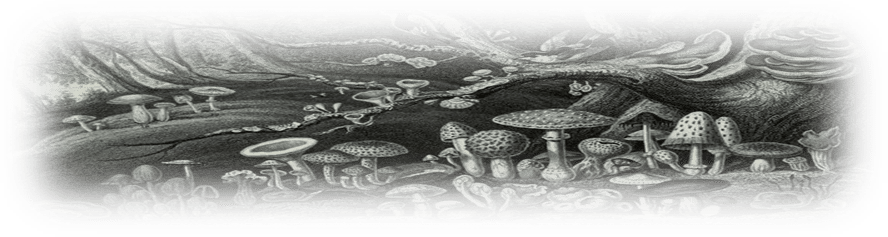
Well, interestingly enough, there seem to be just three.  First[2] we have to acknowledge that we humans are part of the animal kingdom, or at least evolved therefrom[3]; second, that the animal and plant kingdoms are both an innovation of our joint forefathers eukaryotes; and third, that those animals possessed of alimentary canals which process ingested nourishment into waste, are our direct ancestors.  There!  We’re set.  Sort of.

Based on the foregoing, the reality with respect to the meaning of life, or perhaps, more accurately, our lives, is that the primary and perhaps sole purpose and function of the denizens of the branch of the animal kingdom of which we’re a part was supposed to be, according to nature (our progenitor), the proliferation of vegetable species, most importantly fruit, beyond their normal range.  That was to be accomplished through the combination of our innovative freedom of movement, compared to the plants we were digesting, and our excretionary functions.  Consequently, we were not “forbidden” to eat the fruit of life, but, as Eve would in no uncertain terms conform, impelled to do so, and to digest it, and having digested it into a compost that included seeds and the fertilizing agents necessary for propagation, excrete the residue to spread vegetable life far and wide.

The plant and animal kingdoms (all multicellular animals), of course, constitute only two of the five currently recognized living realms, the others being fungi (moulds, mushrooms and yeast), protists (amoeba, chlorella and plasmodium) and prokaryotes (bacteria and blue-green algae) but in the context of our foundational inquiry, we are only concerned with the first two, and with respect to those, original purposes soon became complicated and convoluted, perhaps resulting in our current confusion and despair.

While our original purpose for existing as part of the living realms was clear, the animal kingdom duchy (sort to speak, or perhaps principality) of which we are part soon deviated as carnivores insisted on intruding onto the alimentary premises which the vegetable kingdom found imperative, and rather than consuming plants and fruit, especially fruit, they insisted on a form of primordial cannibalism and expanding on that, we humans evolved into omnivores, consuming anything and everything that did not consume us first.  But that was not enough for us, we then degraded the importance of our excretions.  Indeed, we disdained and contained them through nonproductive (at least from the vegetable kingdom’s perspective) purportedly salutary practices, such deviation from our primary purpose having been erroneously premised on cultural misinterpretation of our role, our “prime directive” as Gene Roddenberry might have put it, and then, of course, misdirection.  Since then, we’ve invented myriads of fields of reflection and introspection trying to rediscover the purpose we ourselves rendered, if not obsolete, at least anachronistic.

Following the hypothesis that no good deed goes unpunished, at least for long, the animal kingdom, duchy of which we are a part, through the intervention and innovations of we humans, has and continues to conquer and devastate our creators in the vegetable kingdom, indeed, in all five of life’s realms, which may be the source of the rumor spread by Friedrich Nietzsche to the effect that “God”, whoever or whatever that was (hint, it’s obviously nature) is dead, although Nietzsche was merely projecting nature’s future.

Interestingly, the foregoing also implies another epiphany, one that involves the identity of the “adversary, to whom some humans unfairly refer in their purportedly sacred writings as Lucifer, or Satan, or Shaitan, but which more accurately, was a certain Hêl él[4].  In fact, if the foregoing is accurate, the adversary was in fat not some deviant archangel but rather, a certain Robert Thom, the Scott[5] who initiated sewage treatment in the city of Paisley[6]; the clearest and most expansive example of the law of unintended consequences. 

If only plants could speak what stories they could tell. 

Sooo, … about artificial intelligence …!
_______

© Guillermo Calvo Mahé; Manizales, 2023; all rights reserved.  Please feel free to share with appropriate attribution.

Guillermo (“Bill”) Calvo Mahé (a sometime poet) is a writer, political commentator and academic currently residing in the Republic of Colombia (although he has primarily lived in the United States of America of which he is also a citizen).  Until 2017 he chaired the political science, government and international relations programs at the Universidad Autónoma de Manizales.  He is currently the publisher of the Inannite Review, available at Substack.com, a commentator on Radio Guasca FM, and an occasional contributor to the regional magazine, el Observador.  He has academic degrees in political science (the Citadel), law (St. John’s University), international legal studies (New York University) and translation and linguistic studies (the University of Florida’s Center for Latin American Studies).  However, he is also fascinated by mythology, religion, physics, astronomy and mathematics, especially with matters related to quanta and cosmogony.  He can be contacted at guillermo.calvo.mahe@gmail.com and much of his writing is available through his blog at https://guillermocalvo.com/.


[1] I know, I know, it should be “us”, but I don’t really like the way “us” sounds in this context, and, … I am the author, with all rights to “poetic license”, sooo, “we” it is.

[2] I know, I know, … again.  “Premises, premises”, but what can we do without them.

[3] The “derived therefrom” phrase preemptively addresses arguments insisting that we are qualitatively different than animals.

[4] Look him up, it’s worth it.

[5] I hate to admit that the English may have been correct when some postulated that the devil was most certainly a Scott.  But evidently, at least in this one instance, it appears they were on to something.  I guess the axiom that no one is always wrong may, in fact, be somewhat correct.

[6] Although the Minoan civilization of Crete and the Roman Empire used underground clay pipes for “sanitation” purposes.  So perhaps the identity of the “adversary” is all too securely hidden.

An Interview with Yaʿaqov ben Yosef, the Nazarene; the Son of Mary and …

[Interview through impenetrable rails in purportedly pearly gates, somewhere outside of time and space]

Interviewer (me): 

Sooo, is it “άκωβος” now, or “Iacobus”?  I’m not sure what they speak in there.  For some reason a lot of people over the years assumed it was Greek and then, Latin, but perhaps its Aramaic, or Hebrew, or perhaps Enochian.  Enochian makes the most sense, but no one understands it where I’m from. You know, there are a lot of strange, maybe even weird rumors about you down below, and definitely weird rumors in the deepest of basements.  Thanks for granting me this exclusive interview to clear things up.  It is exclusive, … right?  I mean, you haven’t really done this before have you.  Given all the stuff written over the years back home, it’s a bit confusing where they got their material. 

Here’s a list of questions, I assume you’ll be able to read them.

יעקב, James, or Jacob, or Santiago, or ….:

Okay, well, not exactly in any order, I have no recollection of ever having granted interviews before, actually, I’d never heard of the concept until you showed up, but I did know quite a few people back in Yerushalayim, and even more people apparently claim to have known me.  Maybe they did, I didn’t really keep records.  You can call me יעקב (Yaʿaqov), but if you can’t pronounce that, then James will do, although I’m sort of partial to “Santiago” although, for the life of me, I can’t fathom how the Spanish got “Santiago” out of Yaʿaqov, or for that matter, where “James” came from.  Is “Yaʿaqov” really that confusing for you English speakers?  It must have had something to do with an ancestor of one of those clowns who worked at the entry desk at Ellis Island.

Don’t look so surprised, we get a lot of news up here, well, at least sometimes.  When the airwaves aren’t clogged up with incessant prayers.

Still, … I can’t really read the list of questions you gave me, I never learned to read in English, we didn’t have it back then, my family only spoke Aramaic most of the time, and we read Hebrew, and understood Greek, and even some Latin.  But I only really read Hebrew.  And anyway, I’m not Joe Biden you know.  I don’t need to have someone prepare cheat sheets for my interviews.

So, if you don’t mind, I’ll just rattle off what we up here refer to as a stream of consciousness, sort of anticipating what I think you probably want to know.  You know, to share with those down there.  Actually, according to my brother, we were expecting a bunch of you up here a while ago.  Maybe you can enlighten as to why the hold up.

Anyway …

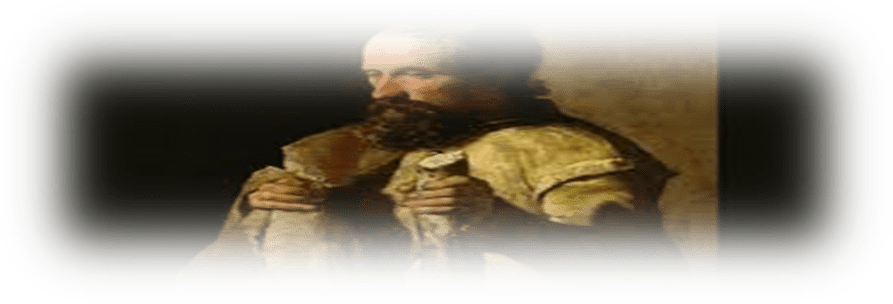
During my lifetime I was sometimes referred to as “James (יעקב, Yaʿaqov) the Just”, to which I invariably replied, “just James please”.  Well, in your language.  In mine, at the time, it was “Yaʿaqov”.  But after I’d journeyed beyond the veil, “James the Just” seems to have stuck, … As well as exaggerated rumors concerning my hygiene, or lack thereof, (for the purported sake of piety).  Neither really made sense.  I had to submerge myself in water not infrequently, in conjunction with ritual cleansing required by my Hebrew religious rituals, although it’s true that I rarely cut my hair.  Most of us Jews didn’t, at the time, and never my facial fair, which after a certain length stopped growing of its own volition.  Damned Hegesippus didn’t know anything about the real me, he just made stuff up.  Yeah; I know it was him!  Damned rumor mongering gentile!  And please, don’t think I’m using inappropriate verbiage. “Damned” is exactly the correct adjective when I use it, … especially up here.

It’s not true that I never drank either.  My brother Yeshua, as you know, insisted that we drink in his remembrance, but even as a child, who in Palestine would ever permit their children to drink our water without being treated with wine to avoid disease?  I was a confirmed bachelor though, that part is accurate; Miriam of nearby Magdala was the only woman I was ever drawn to, but she only had eyes, or anything else, for my brother, the prophet, or rabbi, or whatever.  That was for the best anyway.

Bishop?  Me?  We had no priests even, let alone bishops.  We were communists for Heaven’s sake.  Yeshua had made it perfectly clear how he felt about that, although that creep, Saul, seems to have befuddled Simon on that and other points while the two of them were carousing in the Imperial capital.  That damned Saul (and as you know, I mean it literally) perverted everything he touched.  Money, money, money, but it worked.  Simon should have stayed home. 

As for my skydiving off of the Temple roof, well, I can’t really recall doing that but I understand that I was stoned around that time, so, who’s to say.  I understand that being “stoned” has several different connotations nowadays though.

Oh!!!  And yes, Miriam was our mother!!!

Anyway, that’s about it for this interview.  Hope I clarified a few misconceptions, and obviously, I do have a sense of humor.

Interviewer (me): 

Wow!  You pegged the questions, although the answers are a bit unexpected.

You know, lots of us expected your brother to return an awfully long time ago, and to take us up with him.  Any idea where he is now?  A lot of people would like to know.  The delay really caused a lot of confusion, and then, a lot of us sort of lost faith.  But the “Adventists” are great at rationalization, even if not great at math, but even they’re starting to look a bit put off.

יעקב, James, or Jacob, or Santiago, or ….:

Hmmm, well, errr, … time doesn’t really run here, at all, so maybe Yeshua just sort of got carried away, the angels tend to put him to sleep with all those constant hymns and harping, and Dad’s preaching is pretty drawn out.  His Dad I mean.  Mine was Yosef.

But I’ll be sure to tell him you stopped by and asked after him.  If I see him that is.  This place has no dimensions or space, so things can get confusing.

Interviewer (me): 

Ahhhh!  Hmmm, well, I guess that’s it then.  But, well, could I ask a huge favor?  Would you please give your brother my regards, and his Dad too, and my mom, please let her now I really miss her, and my grandparents, and ….

_______

© Guillermo Calvo Mahé; Manizales, 2023; all rights reserved.  Please feel free to share with appropriate attribution. Guillermo (“Bill”) Calvo Mahé (a sometime poet) is a writer, political commentator and academic currently residing in the Republic of Colombia (although he has primarily lived in the United States of America of which he is also a citizen).  Until 2017 he chaired the political science, government and international relations programs at the Universidad Autónoma de Manizales.  He is currently the publisher of the Inannite Review, available at Substack.com.  He has academic degrees in political science (the Citadel), law (St. John’s University), international legal studies (New York University) and translation and linguistic studies (the University of Florida’s Center for Latin American Studies).  However, he is also fascinated by mythology, religion, physics, astronomy and mathematics, especially with matters related to quanta and cosmogony.  He can be contacted at guillermo.calvo.mahe@gmail.com and much of his writing is available through his blog at https://guillermocalvo.com/.

A Divine Revelation to a Society of Seekers

Divinity enjoyed timeless access to everything, eternally, within the perfect balance of absolute, omni-dimensional, omni-universal naught that is best described as absolute zero. That balance was broken when Divinity expired causing the primal omni-explosion that created the omniverse.

Residue of the expired Divinity comprises every component of the omniverse some of which evolved into Divine avatars in the form of gods and demons, their status, attributes and abilities depending in the degree of belief lent to them by sentient entities.

Every aspect of the omniverse bears a portion of the Divine and thus, only in total concert can they reconstitute Divinity, or more accurately, the Divine Ghost. Note that a ghost, the non-physical residue of a formerly living being, is not the same as a spirit, which coexists in a symbiotic relationship with a living component.

Time is the medium in which the Divine Ghost dwells but it streams linearly in all possible directions and at all possible speeds, seeking to reflect, albeit pallidly, the infinite possibilities once latent and inchoate, that once eternally constituted its corpus.
_______

© Guillermo Calvo Mahé; Ocala, Florida, December 4, 2005; all rights reserved.  Please feel free to share with appropriate attribution.

Guillermo (“Bill”) Calvo Mahé (a sometime poet) is a writer, political commentator and academic currently residing in the Republic of Colombia (although he has primarily lived in the United States of America of which he is also a citizen).  Until 2017 he chaired the political science, government and international relations programs at the Universidad Autónoma de Manizales.  He is currently the publisher of the Inannite Review, available at Substack.com.  He has academic degrees in political science (the Citadel), law (St. John’s University), international legal studies (New York University) and translation and linguistic studies (the University of Florida’s Center for Latin American Studies).  However, he is also fascinated by mythology, religion, physics, astronomy and mathematics, especially with matters related to quanta and cosmogony.  He can be contacted at guillermo.calvo.mahe@gmail.com and much of his writing is available through his blog at https://guillermocalvo.com/.

On the Possibility of Divine Contrition

What if some of what objective alien academics might, on reflection, consider Terran religious myths, turned out to be true.  Consider the two most visible this week: the divine massacre of Egypt’s first born male children at the request of at least one Hebrew leader; and then, a bit over a millennia later, the execution of the purported son of the Hebrew god, again, at the demand of at least some Hebrew leaders.

What if the execution of the Nazarene, Yeshua ben Miriam, or ben Deux, or ben Yosef, depending on his paternity, involved an act of contrition by the Hebrew divinity for the execution, at his command, of so many innocents, and that does not relate solely to the Egyptian firstborn, but to almost all of the human race in the purported Great Flood, and to numerous Canaanites whose land, property and women were apparently gifts from the Hebrew God to the followers of a man from Ur Kaśdim who married his own sister and did not hesitate to generously share her with others (if it was to his benefit), and perhaps, even to the imposition of mortality not only on Eve, purportedly for her sins, and Adam, but on all humanity.

What if, having had over a millennia to reflect, the Hebrew divinity discovered a conscience and decided that his own sins (he was obviously male) required a supreme sacrifice, that of a version of himself? 

That certainly makes more ethical and moral sense than a sacrifice by mankind of a divinity’s son, to expunge the sin by one ancestress of having taken a bite from an apple (or a fruit of some kind, anyway).

Something to consider during the celebration of this week which so reeks of irony.

_______

© Guillermo Calvo Mahé; Manizales, 2023; all rights reserved.  Please feel free to share with appropriate attribution.

Guillermo (“Bill”) Calvo Mahé (a sometime poet) is a writer, political commentator and academic currently residing in the Republic of Colombia (although he has primarily lived in the United States of America of which he is also a citizen).  Until 2017 he chaired the political science, government and international relations programs at the Universidad Autónoma de Manizales.  He is currently the publisher of the Inannite Review, available at Substack.com.  He has academic degrees in political science (the Citadel), law (St. John’s University), international legal studies (New York University) and translation and linguistic studies (the University of Florida’s Center for Latin American Studies).  However, he is also fascinated by mythology, religion, physics, astronomy and mathematics, especially with matters related to quanta and cosmogony.  He can be contacted at guillermo.calvo.mahe@gmail.com and much of his writing is available through his blog at https://guillermocalvo.com/.

Something to Mess with as Easter Week once again Makes an Appearance

Sooo, ….  Most of our quotidian numerical systems today are premised on Arabic numerals with10 as the base, hence we start at 0, go through 9 and then start over with zero preceded by one, etc. 

The base 60 system used by the Babylonians, the one we use to tell time, and for angles and circles, etc., was much more sophisticated because, while ten is divisible by 1, 2, 5 and 10 (and perhaps 0), 60 is divisible by each of those, plus, 3, 4, 6 and all of their multiples. 

Most computer language is premised on an “on” and “off” binary concept using symbols of “0”s and “1”s. 

Is monotheistic religion, religion based on platonic models, premised on base “infinity”, with only one, all-encompassing number, making it equivalent to monist panentheism? 

Something to mess with, mentally, as Easter week once again makes an appearance.
_______

© Guillermo Calvo Mahé; Manizales, 2023; all rights reserved.  Please feel free to share with appropriate attribution.

Guillermo (“Bill”) Calvo Mahé (a sometime poet) is a writer, political commentator and academic currently residing in the Republic of Colombia (although he has primarily lived in the United States of America of which he is also a citizen).  Until 2017 he chaired the political science, government and international relations programs at the Universidad Autónoma de Manizales.  He is currently the publisher of the Inannite Review, available at Substack.com.  He has academic degrees in political science (the Citadel), law (St. John’s University), international legal studies (New York University) and translation and linguistic studies (the University of Florida’s Center for Latin American Studies).  However, he is also fascinated by mythology, religion, physics, astronomy and mathematics, especially with matters related to quanta and cosmogony.  He can be contacted at guillermo.calvo.mahe@gmail.com and much of his writing is available through his blog at https://guillermocalvo.com/.

Darker than Dark in Shades of Indigo

The deity was bored.  It was lonely and bored, but the concepts were without divine context.  It had been lonely and bored forever, although forever was not as long, initially as it thereafter became.  Not only was there nothing to do.  There was absolutely nothing.  Period.  And exclamation point as well.  Or that’s the way it might have been expressed, had expression then existed.

There being nothing, no context at all, there was no movement, everything, which was concurrently nothing, was absolutely still, absolutely silent, and it would also have been absolutely dark, had darkness existed.  Indeed, if anything at all could be said to exist, it was the utter dearth of anything, and thus, divinity was but dearth somehow personified, in a non-contextual setting, tinged only with the incorporeal non-existent echoes of boredom and loneliness, as they slept perpetually amidst non-existent shadows.

Darker than dark in shades of indigo would have been infinitely brighter than the utter absence of everything and anything, … before.  Is it any wonder that the Deity is somewhat less than sane?
_______

© Guillermo Calvo Mahé; Manizales, 2023; all rights reserved.  Please feel free to share with appropriate attribution.

Guillermo (“Bill”) Calvo Mahé (a sometime poet) is a writer, political commentator and academic currently residing in the Republic of Colombia (although he has primarily lived in the United States of America of which he is also a citizen).  Until 2017 he chaired the political science, government and international relations programs at the Universidad Autónoma de Manizales.  He is currently the publisher of the Inannite Review, available at https://guillermocalvomah.substack.com/.  He has academic degrees in political science (the Citadel), law (St. John’s University), international legal studies (New York University) and translation and linguistic studies (the University of Florida’s Center for Latin American Studies).  However, he is also fascinated by mythology, religion, physics, astronomy and mathematics, especially with matters related to quanta and cosmogony.  He can be contacted at guillermo.calvo.mahe@gmail.com and much of his writing is available through his blog at https://guillermocalvo.com/.

Reflections on Alexander

On June 11 of this year, 2023, it will be two millennia, three centuries, four decades and six years since the death of Alexander III of Macedon, really of Macedon, Greece, Persia, Asia, and the world.  And not just the “world” he ruled but from many perspectives, our own world as well.

His dynastic family[1] was the Argeadai (Ἀργεάδαι) which colonized Macedonia from Argos (famous for the Golden Fleece sought by Jason and the Argonauts) around 750 b.c.e., 400 years before Alexander’s birth. “Argeadai” was the family name his ancestor, Alexander I, used to prove to the hellanodikai (the judges who decided if you were Greek), that he was Dorian, and as a Dorian, Alexander was thus also part of the Heracleidae (Ἡρακλεῖδαι, the purported sons of Heracles).  More proximately, he was known to his contemporaries as Filipidis (Φιλιππίδης), son of Philip, which was his father’s name.  Almost everyone, everywhere today however just refers to him, in whatever their native languages are, as “Alexander the Great”.  That’s been true for more than 2,346 years now.

Alexander has always fascinated me.  I named my second son after him.  My first’s son’s Greek name, “Basileus” (“great king”, the title by which Alexander was addressed) was also, from my perspective, a link to the Alexander that I so admired.  My fascination was not premised on his renowned military prowess or on his charisma, but rather, on the fact that he considered all men brothers, regardless of their nationality, their race, their religion or their sexual orientation, and that he treated those his armies conquered as one people, much to the distaste and despair of his Macedonian brethren.  An attitude which, after more than 2,346 years, we have yet to fully accept although hundreds of millions, perhaps billions of people have claimed to do so, unfortunately, usually, in an extremely hypocritical manner.

His tomb, eventually located in Egypt’s Alexandria, a city Alexander founded, was revered for hundreds of years.  Both Iulius Caesar and his grandnephew, Octavian, visited it almost three centuries after Alexander’s death.  Unfortunately, as so often happened in antiquity, the tomb was looted and his amazingly preserved body, it apparently refused to decay, has vanished.  The Roman emperor Gaius (Caligula), may have been to blame; he wanted Alexander’s armor, but other Roman emperors or popes evidently eventually needed the gold of his sarcophagus, and ultimately, apparently looters just wanted whatever they could get to sell, although there are legends that it was Christians from Venice who stole the body, believing it to be that of Mark the Evangelist, or perhaps Matthew, or maybe Luke.  Christians and looters are synonymous to people all over the world, especially in the Americas.

His vision of the brotherhood of man was adopted by the stoic philosophers, and eventually, by the early Christian churches, adopted but pretty much ignored.  An attitude all too similar to ours today.

What might he have accomplished had he lived beyond his span of a bit less than thirty-three years?

We could sure use an Alexander, in the latter sense, today.
_______

© Guillermo Calvo Mahé; Manizales, 2023; all rights reserved.  Please feel free to share with appropriate attribution.

Guillermo (“Bill”) Calvo Mahé (a sometime poet) is a writer, political commentator and academic currently residing in the Republic of Colombia (although he has primarily lived in the United States of America of which he is also a citizen).  Until 2017 he chaired the political science, government and international relations programs at the Universidad Autónoma de Manizales.  He has academic degrees in political science (the Citadel), law (St. John’s University), international legal studies (New York University) and translation and linguistic studies (the University of Florida’s Center for Latin American Studies).  However, he is also fascinated by mythology, religion, physics, astronomy and mathematics, especially with matters related to quanta and cosmogony.  He can be contacted at guillermo.calvo.mahe@gmail.com and much of his writing is available through his blog at https://guillermocalvo.com/.


[1] Information obtained from a post by Achilles Monomaxos.

Nirvana

Is Nirvana one with the singularity posited by some physicists and mathematicians? 

Or perhaps, striding into metaphysics, is it one with a pre-singularity, one before it attained any mass at all and encompassed only inchoate infinity? 

Or is Nirvana, in another sense, inchoate chaos, where chaos refers to all possibilities existing concurrently?

Thoughts for an afternoon in late February, some-when in inchoate eternity.
_______

© Guillermo Calvo Mahé; Manizales, 2023; all rights reserved.  Please feel free to share with appropriate attribution.

Guillermo (“Bill”) Calvo Mahé (a sometime poet) is a writer, political commentator and academic currently residing in the Republic of Colombia (although he has primarily lived in the United States of America of which he is also a citizen).  Until 2017 he chaired the political science, government and international relations programs at the Universidad Autónoma de Manizales.  He has academic degrees in political science (the Citadel), law (St. John’s University), international legal studies (New York University) and translation and linguistic studies (the University of Florida’s Center for Latin American Studies).  However, he is also fascinated by mythology, religion, physics, astronomy and mathematics, especially with matters related to quanta and cosmogony.  He can be contacted at guillermo.calvo.mahe@gmail.com and much of his writing is available through his blog at https://guillermocalvo.com/.

Refractory Reflections on Metaphysics, Self-Awareness and the History of our Cosmos:  Perhaps a satire, but hopefully informative

Introduction:

For some reason, many people associate the term “metaphysics” with beliefs outside scientific norms, beliefs in magic or miracles or ghosts or religion, but in reality, the term applies to one of the four main branches of philosophy (those being metaphysics, epistemology, logic, and ethics).  Metaphysics is technically then, at least linguistically, the branch of philosophy that studies the fundamental nature of reality; i.e., the premises for the concepts of being, identity and change, of space and time, of cause and effect, necessity and possibility.  Interestingly, it also encompasses questions concerning the nature of consciousness and the relationship between mind and matter, between substance and attribute, and between potentiality and actuality.

That then begs the question as to what philosophy is.  Given that most fully recognized doctoral degrees today purport to be doctorates of philosophy, “recognized” because they are purportedly research oriented as opposed to merely working doctoral degrees like law or medicine, etc., that makes the term “philosophy either all-encompassing or meaningless, or, as some philosophers who thrive on controversy and contradiction forcefully assert, both concurrently.  Interesting that if philosophy is purportedly a quest for truth, its four branches are so ethereal, so either overflowing or lacking in substance (or both concurrently) that obfuscation seems its primary value.

Logic seems an exercise valid only insofar as its premises are accurate.  It would seem logical to test logic by measuring its conclusions with empirical evidence, but when we do that and the conclusions don’t coincide with actuality, we tend to just torture the result into submission by blaming external factors, or just lying (the most popular current trend).  Logic could be a process through which we constantly refine premises so that they approach veracity, if we could bind ourselves to the quest for truth, a Holy Grail of sorts, but we have, as of yet, in most cases, been unable to attain that strong a discipline.

Ethics seems a great deal like aesthetics, its postulates being utterly subjective based on the preferences of the beholder.  It too has, to date, escaped the quest for truth, at most sometimes encompassing agreed upon common denominators as to appropriate behavior; what philosopher David Hume referred to as “conventions”, i.e., agreements among a defined segment of the population, possibly a vast majority thereof, to treat something as valid, because such postulate seems to work well enough to be relied on.  Unfortunately, many such postulates with respect to behavior are demonstrably illogical and rather than based on reason, are merely arbitrary impositions of authority through force (e.g., monogamous behavior, sovereignty, autonomy, purported democracy, liberty, rights, etc., honored at least as much in the breach as in their respect).

Epistemology is vague enough to be virtually objectively undefinable.  Subjectively, it involves the study of the nature, origin, and scope of knowledge, the rationality of belief, and various related issues. It asks what constitutes knowledge (differentiating it from mere supposition and belief), and how knowledge can be obtained, tested and thus refined.  What roles do perception, reason, memory and testimony play in the attainment of information worthy of reliance, and conversely, what factors impair the reliability of perception, reason, memory and testimony.  And finally, assuming knowledge is distilled from belief, how it can be organized and structured to render it useful, but subject to limitants, including whether all justified beliefs must be derived (i.e., derived from justified foundational beliefs) or whether justification requires only a coherent set of beliefs.

Epistemology is subject to philosophical skepticism which questions whether it is possible to attain knowledge at all, positing that, at best, we may enjoy Hume’s conventions, …. for a time.  In fact, questioning whether knowledge exists or is merely a temporary phenomenon involving a mere subjective exercise in relative opinions has become very stylish through positing of seemingly unanswerable queries such as: “What do we know”; “What does it mean to say that we know something?”; “What makes justified beliefs justified?”; and, “How do we know that we know?”

So, …. given the foregoing context, is it any wonder that metaphysics is both misunderstood and confusing?  Still, notwithstanding the foregoing, let’s delve into the metaphysical juncture between religion, cosmogony and cosmology.  It could be fun, perhaps even informative, assuming information, in fact, exists.

Unbridled speculation concerning sentience

[Hmm, why does the foregoing make some of us (well, at least me, I was being optimistic) think of the number one-hundred-and-eleven, perhaps a sacred number of sorts.  At least in Middle Earth.[1]

Anyway …  a “convention”, perhaps the first convention, the primal premise:  Prior to the beginning there was naught, absolutely.  Except perhaps, for a speck.  A very heavy speck perhaps, a singularity, although that might have been quite a bit after the beginning, if there was, in fact, a beginning.  But what if there was a “something” (certainly not time, not yet) before the beginning when only “sentience” existed?

“Sentience”, an awkward term as used in this reflection as it presupposes both senses and something to sense.  For our purposes however, let’s define it as a term of art referencing self-awareness, or at least, consciousness of a sort, even when there is nothing, necessarily, of which to be conscious (not to imply that it is not operative in the presence of senses and things to sense).

The huge probability is that sentience evolved over a very long time after the beginning, when there existed enough interactive complexity to give rise to life, and then to sensory rather than reactive input, and then to self-awareness and finally, to cognizance.  We tend to believe that all of the foregoing are biological concepts (and carbon based biology at that), but Richard Dawkins, a British evolutionary biologist, author and avowed atheist (indeed, ironically, the purported “god of the atheists”) has expounded on a concept of potential non-biological intelligence that leads to interesting alternative hypotheses, hypotheses that “breathe new life” into purportedly “debunked” philosophies concerning group sentience and intelligence, prime examples being the postulates of philosophers Thomas Hobbes, Georg Wilhelm Friedrich Hegel and Immanuel Kant concerning the volitional realities of history and of the “state” as sort of living entities.

Dawkins inadvertently gave life to such philosophical hypotheses when he expounded on a hypotheses concerning fundamental (i.e., basic) units of information which he referred to as “memes”.  Dawkins asserted that memes mirrored the concept of biological “genes” by congregating into complex organisms: genes into diverse life forms and memes into what Dawkins referred to as memeplexes.  Memeplexes apparently have many, if not all, the attributes of biological life, using the minds, emotions, etc., of human beings as tools and carriers similarly to the way we use cells, organs, etc., to grow, evolve, mutate, propagate and operate.  According to Dawkins and now many others, examples of memeplexes include religions, political movements and philosophies, all of which are purportedly characterized by birth, growth, mutation and defensive reactions. 

As not all life appears to be self-aware, neither are memeplexes.  While self-awareness is a complex concept which remains unexplained, it has been hypothesized that self-awareness arises when a critical mass of interactive complexity develops.  For biological creatures, that is attained through neuronic interaction in the brain.  A basic observation is that we, as human beings, are normally self-aware, but that we are also composite living entities comprised of trillions of cells, also independent living structures (even if probably not self-aware entities) which act through preprogrammed reaction rather than volition. 

It is posited that perhaps such complexity can also be attained through other means.  For example, socially, though interaction among groups of humans, it being understood in sociology that group dynamics frequently result in actions in which individual members of a group would not engage.  Those observations have led some to draw the hypotheses that a similar process exists, not only among groups of humans operating through memeplexes, but perhaps, even through non-biological conglomerations, such ecosystems, planets, solar systems, galaxies, perhaps even a universe or the multiverse as well. 

Based on the foregoing, whether biological of non-biological, one would seemingly be justified in assuming that sentience was a post creation, evolutionary phenomena.  However, to a great many fellow members of our human species, when pitted against faith, facts are balderdash, and with faith, anything is possible, even levitation of mountains by individuals without the use of tools.  Thus, to them, no matter what the facts, theories or hypotheses claim, and no matter what the evidence, sentience was first, and eternal to boot, and omniscient, and ubiquitously omnipresent, and omnipotent and even, despite apparent empirical contradictions, omnibenevolent.

Sentience as Divinity

Sooo, … anyway, let’s play the latter’s game and assume, for argument’s sake, that notwithstanding the evidence or lack of evidence, there might, at one point before time, have been a single sentience.  A monist first cause, eternal in the sense that it preceded both time and space.  In that case, one could well assume that such single sentience would have been bored out of its gourd (had gourds then existed) and it would also seem to follow that boredom was the very first thing perceived by that sentience, the motive force, as it were, the inspiration for everything that followed.  And it would further seem that, after a period (not yet time because motion did not yet exist and motion seems essential to time), let’s call it eventually, more than one sentience would evolve (if there had ever been sentience at all).  After all, the miracle of sentience is much more improbable than is the probability that, should sentience have arisen, it would arise again, and thus become multiple and varied.  It would have been terribly boring otherwise.  If there was more than one, they could at least sense each other, thus not being condemned to only perceiving “to themselves” about nothing.

At any rate, assuming that sentience was first (as discussed above, an improbability), then, perhaps, it would be appropriate to consider such sentience equivalent to what some among us[2] have come to perceive as “divine” (no, not in the aesthetic sense, nor in the epistemological sense, but rather, in a popular variant of the “metaphysical” sense).  Consequently, for purposes of these reflections, it would seem appropriate to define such sentience as Divinity (capitalized, out of respect, just in case).  “The” Divinity, or at least the original Divinity.

Anyway (again, as promised), ….

Evolutionary Naught

“Nothing” is an interestingly existential concept in its absolute sense.  It can seemingly take two principal directions.  The first is somewhat obvious (albeit very boring): the absence of everything.  But the second option, why that’s something else entirely, both literally and figuratively.  It could, in fact, at least as a mathematical concept, and mathematical concepts frequently seem to pave the way for realities of sorts, be the inchoate sum total of everything possible in time, space and whatever we’ve yet to perceive (even quanta) if everything includes equivalent positive and negative aspects, not linearly (two dimensional), but omni directional in three or more dimensions, probably a spherical concept, without any edges or angles, and hence infinite.  I.e., the sum total of everything intangible as well as tangible which, it would be mathematically reasonable to assume, equal zero, and thus, naught.  Under the latter scenario, nothing would contain inchoate infinity, and should motion be somehow attained and time thus created, why it might well include eternity itself. 

Hmmm, sounds quite a bit like embryonic chaos.  Chaos, not in a negative sense implying disorder, but in the almost magical sense of infinite possibilities and thus, total uncertainty.  Seemingly a close relative to quanta.

Because for purposes of this part of this reflection we have posited Divinity as an assumption, then one should probably wonder as to the relationship between our aforementioned Divinity and the second sort of nothing, let’s capitalize it and call it “Naught”, and our speculative sort of epistle would then entail how they may have interacted to permit the existence of all that is, something we might perhaps refer to as either the “Big Bang” or “Creation”, depending on one’s attitude towards metaphysics.

At some point it appears that, possibly volitionally (as a result of a decision by Divinity), or perhaps merely accidentally, Naught was fractured, cleft, cracked, busted, no longer, … well, … nothing, and a minimalist singularity escaped (the “Great Escape”).  There are probably those, and it is not reasonable to just assume that they’re wrong, who believe that Naught came first, the singularity second and Divinity (if at all) came third, but that is not, apparently, a palatable version as far as Divinity (at least the Abrahamic version of Divinity) is concerned, although there are others (secular physicists and philosophers they’re called) who deny that Divinity exists at all, although they do admit to sentience and to the singularity[3].  A still third group, generic philosophers (as we initially explained), in the quest for what they define as truth, who will argue with anyone about anything, including whether or not what they seek exists, or can be defined, or is permanent, etc.  You get the point I think.

Anyway, it seems we’ll have to engage in something that David Hume, a philosopher who did not believe truth could be found, developed as a working substitute.  As indicated previously, Hume believed that because, in his opinion, first causes, to which he referred as “premises”, could never be proven, for convenience (there being no other option, unless, perhaps, one were the Divine and the Divine were omniscient) we would need to reach a working consensus, a sort of pragmatic, temporary substitute for truth, because such “consensus” seemed to work.  Hume referred to such working consensuses (as initially discussed towards the “beginning” of this apparently interminable reflection) as a “conventions”.[4]

For purposes of this epistle (as we’ve indicated on now several occasions[5]) we will assume that sentience somehow evolved into Divinity within Naught eternities prior to the Great Escape, and then, volitionally, by escaping from Naught, destroyed Naught’s prefect balance, converting Naught into an omnidimensional, omnidirectional singularity, which then eventually expanded into an infinite number of universes which we will, as a convention, refer to as the omniverse, a neo-platonic monist sort of concept comprised of a series of multiverses, each comprised of uncountable universes, etc., etc., etc.

[Because reflecting on an infinity of multiverses, or even just one multiverse would not only take a long time, and writing about it, a lot of paper, really, more time and paper than have ever existed, we’ll focus on one universe for the nonce, the one we inhabit.  One we’ll call “Cosmos”, as did the ancient Greeks (and today’s Russians).]

In the Beginning

We know turn to speculation of what our hypothetical Divinity might have witnessed, perhaps as possibly eventually shared with a few select individuals (long after individuals had evolved), no, not priests, or at least not priests as such, but mathematicians and physicists.

In the “Beginning”, hmmm, an interesting concept.  There is of course the version favored by faith imbued Abrahamics, and similar versions posited by diverse other mythologies (mythology in the broad sense which encompasses virtually all religions), but there is also, to all appearances, a version imbued with evidence which even Creationists (an Abrahamic religious phenomena) seem to accept, so for now, we’ll roll with that, at least, for purposes of this reflection, or perhaps epistle.

Sooo, ….

In this version of the “Beginning”, rather than just a six day endeavor (plus one day for sort of resting), a singularity burst forth from Naught in the form of  massive, unimaginable heat, heat in all probability never to be duplicated (interesting to speculate that an Abrahamic Hell may have preceded Heaven), plus four “forces”.  First out and thus eldest was gravity, then electromagnetism, then quantum flavourdynamics (which some call the weak force, a name it resents as pejorative) and then the nuclear force (which enjoys being referred to as the strong force, i.e., as it binds elemental particles together).  They introduced an era known to some and accepted by others, but by no means all, commonly referred to as “cosmic inflation”.  During the cosmic inflation era (epoch, eon, or whatever), the singularity is unwrapped, perhaps by Divinity, and its residue quickly expands (really quickly, we lack a concept reflecting enough speed to adequately describe how quickly) and begins to sort of cool, albeit with intermittent explosive events which, through gravity, perhaps attempting to recreate the initial singularity in an inverse process, heats a tiny bit of that which was cooled.  As the foregoing required motion, time, as a concept we sort of grasp (if perhaps not to the extent of understanding), was also born.  Time, born concurrently with the Great Escape, might have an interesting case to make insisting that it was first, but that seems a chicken versus egg conundrum, or would have, had there been chickens and eggs at the time in forms other than possibly inchoate.

Interestingly, although we do not personally recall it, all of the ingredients for the matter which currently comprises each and every one of us was present at the Beginning, thus, in a sense, we are all virtually the same age, the same age as our Cosmos.  Anyway ….

The Beginning!!!  Oh what a time it was!!!  Albeit very brief at first.  Yactoseconds were eternities then.  It was the era ruled by Planck-Time (no relation to Hammer Time).  During the initial second, only energy existed, energy comprised of neutrinos in thermal equilibrium with protons, neutrons and electrons, all maintained through weak force interaction.   The era that comprised a single second had no name at the time (at least that we know of, Divinity might have a different story to tell) but it has since come to be referred to indirectly as the “coupling era”; a suggestively interesting nomenclature. 

Eventually (a very short eventually, having taken but a second, but it was all the time that had ever existed, so perhaps it seemed long to the coupled neutrinos and protons, neutrons and electrons), the rate of the weak interaction became slower than the rate of initial expansion of the universe, or perhaps (it’s hard to remember after more than fourteen billion years), instead, the time scale for weak interactions became greater than the age of the universe at that time (there being no real difference), and the orgy quickly petered out (so to speak).  As a side note, the temperature of the Cosmos at the time of “decoupling” was approximately ten billion degrees Kelvin (very, very hot).  As a result of decoupling, neutrinos formed a cosmic neutrino background.  Primordial singularity remnants, which we, in or ignorance, call black holes (a name for which they do not care), may also have been formed during the first eternal second (hmmm, sounds oxymoronic, but it’s probably true).  Sort of progeny of the wild times.

Beginning towards the end of the first second composite subatomic particles emerged, including protons and neutrons, and then, after more and more eternities, at about two minutes after the Great Escape, nucleosynthesis (apparently a new and kinkier sort of mating) occurred and, about a quarter of the protons and all the neutrons fused into elements, initially hydrogen, then its heavier variant, hydrogen+ (also known as deuterium) apparently having swallowed a neutron (hmmm, why are there so many sexual analogies?).  The hydrogen and deuterium then started to mate like crazy, siring mainly primordial helium; i.e., a family comprised of an alpha particle (two protons and two neutrons) engulfed in an electron wave comprised of two electrons.  The next orgy then took place as the then ruling citizenry (hydrogen and helium atoms, protons, neutrinos and neutrons) engaged in constant and more complex coupling, generating more and more complex atoms. 

Divinity, perhaps looking on, perhaps not yet prudish, would seem to have been pleased.  The bit of havoc it wreaked was bearing fruit, … sort of.

The Joys of Plasmic Baths

Eternities and eons after the Great Escape, what we would call twenty minutes today (eternities and eons were much shorter back then), the Cosmos was no longer hot enough for nuclear fusion but far too hot for neutral atoms to exist or for photons to travel far.  It was then comprised of a miasma of energy and opaque plasma.  For us currently, as biological beings, plasma would be deadly, but sort of cool (in a non-thermatic sense).  It was comprised of an extremely hot and thick ionized substance, in composition, somewhere between gaseous and liquid.  For the Divine, it might have been a warm bath.  Indeed, while improbable to the extreme, it is not impossible that a form of life might have inhabited the primordial plasma realm, well, in the sense that nothing is demonstrably impossible.  After all, most of the matter in our Cosmos (ninety-nine point nine percent) is still plasma in the form of stars, etc., and we live in the Cosmos. 

Eventually, a tiny bit of the plasma (one tenth of one percent, oddly, the percent of current humans who rule the world) evolved into the other three states of matter (gas, liquid and solids), but eventually took quite a while.  Actually, about eighteen-thousand years.  But a tiny bit of the former plasma was still quite a lot, much more than even googols (as a number, not an autocratic internet platform) of the newer forms of matter.

A recombination epoch began at around 18,000 years after the Great Escape as electrons combined with helium nuclei (perhaps the first mixed marriages and the threat of assimilation was born) to form He+, an ionized form of helium (perhaps copying the initial experiment through which hydrogen swallowed a neutron to form deuterium), and, about 29,000 years later, as the universe cooled (relatively), matter (including, of course, plasma), rather than radiation, began to predominate.

At age 100,000, relative to the Great Escape, neutral helium atoms (without the +) formed giving birth to the first molecule, helium hydride. About 270,000 years later (370,000 years after the Great Escape), helium hydride and hydrogen concluded a long term affair as a result of which, molecular hydrogen was born and, for the first time, the Cosmos attained transparency, apparently an important accomplishment.  And stars started to form. Hmmm, “a star is born”, good name for a movie.

The relatively newly formed hydrogen and helium atoms, with traces of lithium, quickly attained their ground state (state of lowest energy) by parting from some of their photons (“photon decoupling”), some of which are still around (perhaps sad at having been rejected) as the cosmic microwave background, the oldest direct observation we currently have of our Cosmos.

Wow, it’s like a tele-novela (Spanish for soap opera), except, as best we know, there was no television at the time.  But the romance was palpable.

Evidently, Divinity had done enough for a while and it was time for lights out, and a nap.  Divinity, of course (assuming it exists), takes credit for everything that’s happened.  He, she, it or they were (assuming they exist) experimenting, playing, laying out and implementing a plan.  But the Cosmos was now able to coast on its own for a while.  A pretty long while really, about nine-hundred-and-ninety-nine million, six-hundred-and-thirty thousand years.  Give or take a few days.

The universe was transparent, comprised of plasma, energy, hydrogen and helium with a bit of lithium mixed in, and it was playing with the Elder (gravity), but slowly.  No stars or other sources of light existed and the original glow from the plasma had dissipated. That brilliant pale orange glow of decoupling photons and radio emissions released by hydrogen atoms had first shifted red and then after the first three million years, faded, thus, no visible light.  Perfect for naps.

One may wonder about dark matter and dark energy at the time, as well as antimatter, but, the volumes in which those chapters were kept have been mislaid, and thus unavailable right now.

Wow, talk about an “On the Seventh Day”!

Let there be Light!

Soooo, ….

Divinity may have been napping for a while but, between two hundred million and five hundred million years after the Great Escape, lights slowly started turning on as the earliest generations of stars and galaxies started to form and early large structures gradually emerged, all drawn to the foam-like dark matter filaments which had already begun to draw together throughout the Cosmos.  Details concerning size and duration[6] are apparently in those mislaid chapters as well (“mislaid”, yuck, … a sexual connotation gain, just a coincidence in terminology).[7] 

An article encaptioned “Chronology of the Universe” on which much of the foregoing and following is based describes early star formation as follows (almost a quote but slightly modified):

They [the stars] may have been between 100 and 300 times larger than the star we call Sol and non-metallic, and of relatively brief duration (after all, they were beta versions), flashes in the pan so to speak as rumors still circulating claim that they quickly consumed their fuel (hydrogen) and detonated “as highly energetic pair-instability supernovae”(I don’t know why the imagery keeps sounding so sexual, in this case, like very inexperienced pre-adolescent boys)”after mere millions of years”, but it may well be that less ambitious, smaller stars with more staying power are still around.  But even in the former case, the resulting super novae had a lasting impact as they “created” (hmmm, that may not be the correct word as Divinity likes to claim that prerogative for him, her, it or their selves) most of the everyday elements we see today, … including those of which we are comprised.

During that same period, high-energy photons from the earliest stars, dwarf galaxies and perhaps quasars led to a period of reionization that finished by about one billion years after the Great Escape, and then, the lights really finally started to turn back on.  Showtime!  The stars were much as they are today, except for being hotter, more dense (not intellectually, as far as we know), with more spiral and irregular galaxies and more interested in procreation.  Our current galaxies may, as far as we can tell (despite our relative myopia), tend to include far more giant elliptical galaxies, galaxy clusters and super galaxies.

The lights were on, but, and it’s a pretty big but (but, not butt, although perhaps that accidental analogy works), because of the constant acceleration of our universe, presumably, based on the hypotheses (described as a “law”, whatever that is) that neither more energy nor more matter can be created (or purportedly destroyed, just converted inter se)[8], the apparently constant and consistent acceleration and expansion of the boundaries of our Cosmos seemingly diminished the ability of gravity to decelerate them[9] while, concurrently but in contrast, on the dark side, dark energy (believed to be a constant scalar field throughout the visible universe) had and has been a constant factor tending to accelerate expansion[10].  Thus, again, “apparently” (everything we seem to know about physics always seems to be only apparently, as you may have noticed), the Cosmo’s expansion passed an inflection point about five or six billion years ago and it entered the modern “dark-energy-dominated era”.  Soooo, at least since then, expansion is now accelerating rather than decelerating. Cosmic sentience may know what’s going on, assuming it exists, but perhaps it doesn’t care, or perhaps, like us, it hasn’t noticed, being concerned with other things.  And with reference to “laws” of physics, you know how legislatures are.  Consistency is not their hallmark.

Anyway ….

“Notwithstanding the foregoing” (a sort of legal phrase that sometimes pinch hits for “anyway, ….  There are among us purported experts who believe they understand how our Cosmos will function for about eighty-six billion more years (and, unlike journalists, they may be right, although studies of quantic phenomena certainly keep stirring our perceptions of the Cosmic “pot”), but after that, hmmm, who knows.  At some time the “Stelliferous Era”, the era when celestial progeny has been looked on as favorable, stylish and productive, our current era, will end, and, sort of like is happening in many parts of Terra today where populations have become more jaded and more interested in individuality than in families, where they find gender a sort of optional fad preferring choice over biological legacy, star formation will begin to atrophy until no new stars are born.  Because it is anticipated that the Cosmos will continue to expand, that may mean that we will enter an age of hermits, less and less closely related, with less and less interstellar interaction.  And the observable Cosmos will become more and more limited to the local, perhaps eventually, depending on how quanta feels about this, perhaps our Cosmos will expand so much, that only isolated neutrinos and their cousins will remain, although black holes would seem a sort of wild card.

Hmmm, except for being massively larger, that would seem a lot like just before “the Beginning”.

And our friend, the universal sentience and its component families???   What we’ve hypothetically defined as “Divinity”?  Hmm, perhaps only the shadow knows.
_______

© Guillermo Calvo Mahé; Manizales, 2023; all rights reserved.  Please feel free to share with appropriate attribution.

Guillermo (“Bill”) Calvo Mahé (a sometime poet) is a writer, political commentator and academic currently residing in the Republic of Colombia (although he has primarily lived in the United States of America of which he is also a citizen).  Until 2017 he chaired the political science, government and international relations programs at the Universidad Autónoma de Manizales.  He has academic degrees in political science (the Citadel), law (St. John’s University), international legal studies (New York University) and translation and linguistic studies (the University of Florida’s Center for Latin American Studies).  However, he is also fascinated by mythology, religion, physics, astronomy and mathematics, especially with matters related to quanta and cosmogony.  He can be contacted at guillermo.calvo.mahe@gmail.com and much of his writing is available through his blog at https://guillermocalvo.com/.


[1] [Hmmm, a warm welcome to our first footnote.  Probably more to come.  This was just too long to include, as an interruption in the main text].  Anyway, … a caveat with respect to the terms “anyway”, “so” (usually elongated to “soooo” and “Mmmmm”.  They are terms that I will frequently use as sort of placeholders without real independent meaning, i.e., as “expletives” or “fillers”, although the term “expletive” also pertains, in a negative sense, to words or phrases charged with negative connotations.  Strange); … anyway ….  A further linguisti-grammatical caveat: I use series of “.”, not only to denote text missing in a quotation, but as long pauses.  I think that’s it … for now.

[2] Those who are not among “us of little faith”.

[3] As to which they seem to argue interminably, and along with secular mathematicians, argue about the nature of Naught.

[4] Of course, as is the case with language, that term has been distorted, mutated and changed and now also refers to gatherings of people with shared interests who need excuses to avoid normal “social” conventions and engage in behavior Divinity might find objectionable.  At least Divinity as perceived by some, a sort of very opinionated negative sort of totalitarian Divinity.

[5] It seems as though such arbitrary assumption sticks in someone’s craw and thus, has to be repeatedly reinforced.

[6] Anyway, … it sounds like something else, something prurient, but I assure you that was not so, or at least I’m pretty sure that was not so.  My primal matter, like yours, was there, but not yet sentient, … I don’t think.

[7] Hmmm, if we are going to postulate Abrahamic possibilities, then one might speculate on whether or not the deposed former archangel Hêl él had anything to do with dark matter.

[8] Perhaps because the concept of preservation of the matter-energy concept was so thoroughly violated at “the” Beginning, some busybodies decided that a law needed to be passed controlling the issue, but who was there at the time to legislate that law???  How would violations be punished?

[9] Hmmm, how might that impact that other gravity related law, that whatever goes up must go down.  I’m getting an image of a typical legislative body, corruption rampant, charged with legislating physical laws, and not doing such a great job.

[10] Sooo, black matter, black energy, what if rather than Hêl él to blame, it’s a reflection of Zoroastrian ethical dualism: Spenta Mainyu versus Angra Mainyu?

Magic and Miracles, a senryū of sorts in e minor flat

Sooooo, … on the nature of magic and miracles,

Seemingly metaphysical fraternal twins stamped on the same coin,

Albeit perhaps on different sides.

_______

© Guillermo Calvo Mahé; Manizales, 2023; all rights reserved.  Please feel free to share with appropriate attribution.

Guillermo (“Bill”) Calvo Mahé (a sometime poet) is a writer, political commentator and academic currently residing in the Republic of Colombia (although he has primarily lived in the United States of America of which he is also a citizen).  Until 2017 he chaired the political science, government and international relations programs at the Universidad Autónoma de Manizales.  He has academic degrees in political science (the Citadel), law (St. John’s University), international legal studies (New York University) and translation and linguistic studies (the University of Florida’s Center for Latin American Studies).  He can be contacted at guillermo.calvo.mahe@gmail.com and much of his writing is available through his blog at https://guillermocalvo.com/.