The Irrelevance of International Humanitarian Law

Perhaps it’s time to reevaluate the premises on which World War II has been judged.  After all, apparently the problems with genocide and ethnic cleansing which purportedly differentiated the two warring camps may have had more to do with the methods with which those two purported crimes against humanity were implemented, or perhaps the numbers involved, rather than with they’re having been undertaken.  Gas bad!  Bombs good.  That was sort of clear when Hiroshima and Nagasaki were destroyed but seems absolutely clear now with the Israeli destruction of the Gaza Strip and elimination of its troublesome population. 

Interestingly though, United States courts at both the state and federal level have ruled that execution through use of gas chambers does not constitute cruel and unusual punishment; see, e.g., Hunt v. Nuth, 57 F.3d 1327 (4th Cir. 1995), Gray v. Lucas, 710 F.2d 1048 (5th Cir. 1983) and the Supreme Court decision in Gomez v. Fierro, 519 U.S. 918 (1996).  To violate the 8th Amendment to the United States Constitution’s prohibition against cruel and unusual punishment it would need to involve some sort of torture, such as dismemberment (as results, for example from non-nuclear forms of bombing). 

Hmmm, so just what is the difference?

Given the foregoing, perhaps the Nazis, while extremely unpleasant towards diverse ethnic and social groups executed in gas chambers (e.g., Jews, Gypsies, sexually deviant groups as measured by standards at the time, etc.), where less culpable of crimes against humanity, at least in the manner of execution if not in numbers, than today’s Israel.  Since today’s Israeli campaign of genocide and ethnic cleansing against non-Jews in the area of Greater Israel (the Nazi concept of lebensraum comes to mind) have been deemed appropriate responses to feelings of national insecurity and reprisals for rebellion such as those which occurred during the second war to end all wars in the Warsaw ghetto and elsewhere; perhaps Germans of all stripes are owed an apology, perhaps the decisions of the Nuremburg tribunals need to be vacated, and perhaps appropriate compensation should be paid to the descendants of those executed and otherwise punished erroneously in such trials as well as in the similar trials held in Tokyo.

As current Israeli leaders have specified, no rules involving human rights or proscriptions against lesa humanidad are applicable to military reprisals against groups deemed undesirable or inconvenient in light of national objectives.

Case closed, finally!!!  It’s only logical.  Everyone is innocent except, of course, for the victims.
_______

© Guillermo Calvo Mahé; Manizales, 2023; all rights reserved.  Please feel free to share with appropriate attribution.

Guillermo (“Bill”) Calvo Mahé (a sometime poet) is a writer, political commentator and academic currently residing in the Republic of Colombia (although he has primarily lived in the United States of America of which he is also a citizen).  Until 2017 he chaired the political science, government and international relations programs at the Universidad Autónoma de Manizales.  He is currently the publisher of the Inannite Review, available at Substack.com, a commentator on Radio Guasca FM, and an occasional contributor to the regional magazine, el Observador.  He has academic degrees in political science (the Citadel), law (St. John’s University), international legal studies (New York University) and translation and linguistic studies (the University of Florida’s Center for Latin American Studies).  However, he is also fascinated by mythology, religion, physics, astronomy and mathematics, especially with matters related to quanta and cosmogony.  He can be contacted at guillermo.calvo.mahe@gmail.com and much of his writing is available through his blog at https://guillermocalvo.com/.
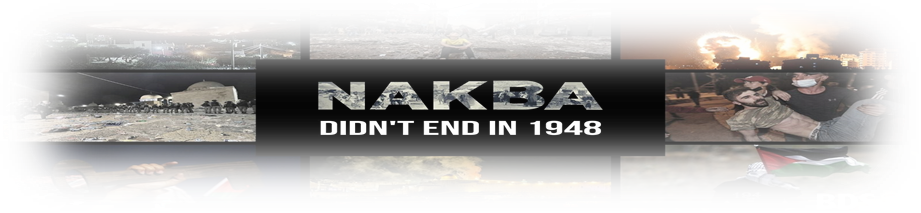
A Brief Reflection on the Latest Rationalization for Genocide

I wonder if the Israelis murder Palestinians with a joy similar to that ascribed to the Nazis as they murdered Jews (and many, many others).  Or whether instead, when the Nazis did what they are credited with having done, they did so with remorse, considering it a necessary evil, as apparently some Israelis do today.  Just how different, really, are Benjamin Netanyahu and Adolf Hitler and Harry Truman and Winston Churchill and Joseph Biden and Dick Cheney and George W. Bush, et. al.?  Interesting that they’re all political rather than military leaders.

It is horribly ironic that, as human beings, Nazis and Zionists share so many qualities and experiences, but terrible that they are not the only ones.  Terrible that their shared emotions, attitudes and actions flow throughout our history and prehistory as one group of humans finds it essential to destroy another.  As the Jews did millennia ago at Jericho and elsewhere.  As the United States did first with its indigenous population and then at Hiroshima and Nagasaki.  As so many groups of humans coalesced into societies almost always seem to do. 

Obviously, despite the hypocritically noble proclamations by the victors of the second war to end all wars, like those by the noble victors of the first war to end all wars, and like those by the noble victors in so many armed conflicts before and since, the human capacity to rationalize evil has not changed at all.  It may be what defines us.  It’s who we’ve always been and seems as though it’s what we’ll always be.

We seemingly are what we are, and that has too little in it of the truly noble and perhaps none of the equitable or just.
_______

© Guillermo Calvo Mahé; Manizales, 2023; all rights reserved.  Please feel free to share with appropriate attribution.

Guillermo (“Bill”) Calvo Mahé (a sometime poet) is a writer, political commentator and academic currently residing in the Republic of Colombia (although he has primarily lived in the United States of America of which he is also a citizen).  Until 2017 he chaired the political science, government and international relations programs at the Universidad Autónoma de Manizales.  He is currently the publisher of the Inannite Review, available at Substack.com, a commentator on Radio Guasca FM, and an occasional contributor to the regional magazine, el Observador.  He has academic degrees in political science (the Citadel), law (St. John’s University), international legal studies (New York University) and translation and linguistic studies (the University of Florida’s Center for Latin American Studies).  However, he is also fascinated by mythology, religion, physics, astronomy and mathematics, especially with matters related to quanta and cosmogony.  He can be contacted at guillermo.calvo.mahe@gmail.com and much of his writing is available through his blog at https://guillermocalvo.com/.

Reevaluating Genocide during and after the Second World War: a Critique of History and Historians

On Tuesday, October 17, 2023, Jonathan Cook published an article in Consortium News (Volume 28, Number 284), entitled “Israel’s Official Ethnic Cleansing Program”.  He’s absolutely correct, but reacting to the long term consequences of root problems is inadequate without addressing the root causes.  In this case, we historians and journalists are the great facilitators, and the hypocrisy following the second war to end all wars, popularly referred to as the Second World War or World War II, is the root cause.

The second war to end all wars was followed by a series of trials based on application of promising ex post facto ius cogens that proclaimed that genocide was impermissible under any circumstances and that violators could be subjected to the death penalty, notwithstanding provisions of domestic law under which their actions were obligatory.  The trials were held in the cities of Nuremberg in Germany and Tokyo in Japan and purportedly established the framework on which future interstate belligerency would be judged.  A number of former Axis political and military leaders were executed and, in the ensuing decades, numerous lower level personnel were convicted and punished for following orders deemed violative of the new norms for armed conflicts, even though such norms did not exist at the time the conduct in question took place.  The repugnance with which such conduct was to be judged henceforth justified the violation of the prohibition of ex post facto penal law.

Subsequent history has demonstrated that the foregoing scenario was a fraud and that the Nuremberg and Tokyo trials were mere expressions of the vengeance of conquerors on the conquered, albeit packaged in beautiful and inspirational camouflage.  That should have been obvious given the reality that both sides in the second war to end all wars engaged in blatant genocidal actions: consider Hiroshima and Nagasaki, but also the obliteration of German and Japanese cities from the sky and the utter absence of related accountability, so it ought to be no surprise that subsequent more neatly packaged and sold examples of genocidal conduct continue, not only unpunished, but as in the case of Israel and the Palestinians, even extolled.

The only real lasting consequence of the second war to end all wars seems to have been that the British quest for global political and economic hegemony was transferred to the United States and that hypocrisy continued its unabated bludgeoning of truth in what passed for journalism and history.  Genocide continues to be celebrated, most notably by adherents of the primordial Abrahamic faith during Hanukkah and Passover while the same cultural group constantly decries the genocide practiced on it (and others) by the Germans, incoherently using it as justification for its own long term campaign of genocide against Palestinians and other adherents of the junior branches of the Abrahamic faith.  One wonders if Abram realized the horrendous long term consequences of his sexual abuse of his wife, Sarai’s, handmaiden Hagar.

I have taught and researched international law at the university level and have sadly concluded that, as with so much that purports to involve moral, ethical and legal norms, it exists only as an aspiration, but an aspiration carefully kept at bay and pulled out only when it is convenient for those who wield sufficient control over the use of force to force their will on others, but who insist on being portrayed as morally and ethically justified.  We historians are largely at fault for being so inept and hypocritical in our chosen avocation, as are purported journalists for the same reason.  Indeed writers of acknowledged fiction, writers such as, for example, Gore Vidal, come much closer to the truth than we ever do, earning us a place in a Shakespearean hell alongside lawyers, clerics and politicians.  Rather than eulogized, we deserve disdain and worse because the genocidal murder of so many rests all too comfortably on what passes for our consciences.

Something to think about as we attend and participate in seminars and congresses and teach our classes and publish our articles and books and accept the compensation we are awarded for the foregoing, and perhaps, hope that there is neither a Heaven nor a Hell, other than the one we help create and perpetuate here on earth.
_______

© Guillermo Calvo Mahé; Manizales, 2023; all rights reserved.  Please feel free to share with appropriate attribution.

Guillermo (“Bill”) Calvo Mahé (a sometime poet) is a writer, political commentator and academic currently residing in the Republic of Colombia (although he has primarily lived in the United States of America of which he is also a citizen).  Until 2017 he chaired the political science, government and international relations programs at the Universidad Autónoma de Manizales.  He is currently the publisher of the Inannite Review, available at Substack.com, a commentator on Radio Guasca FM, and an occasional contributor to the regional magazine, el Observador.  He has academic degrees in political science (the Citadel), law (St. John’s University), international legal studies (New York University) and translation and linguistic studies (the University of Florida’s Center for Latin American Studies).  However, he is also fascinated by mythology, religion, physics, astronomy and mathematics, especially with matters related to quanta and cosmogony.  He can be contacted at guillermo.calvo.mahe@gmail.com and much of his writing is available through his blog at https://guillermocalvo.com/.

A Brief Reflection on Distressing Historical Realities

How would Zionists have perceived of Adolf Hitler if instead of a final solution to the Jewish problem, he’d sought to implement a final solution to the Muslim problem?  Not using the same tactics but rather, a more subtle and gradual form of violent genocide with much better public relations?  How would the United States and the “Western Europeans” have perceived of him and his henchmen?

That seems worth considering as we see just that taking place in the tiny Gaza Strip, indeed, throughout Palestine, and in Lebanon and Syria too with Iran on the wish list; as we witness how Benjamin Netanyahu and his henchmen are perceived by Zionists, the United Kingdom and the countries that make up the NATO alliance.

The answer to the foregoing is deeply disturbing as we see the reflections of those we’ve characterized as history’s worst villains reflected in our own mirrors.  It says a great deal about the hypocrisy inherent in our purported value systems and in the history we are taught and then, in turn, teach.  Is it any wonder then that, not recognizing them, we seem utterly unable to learn from our past mistakes, to correct them, instead endlessly repeating them?

How would the “holocaust” be remembered had the foregoing scenario been the one that took place in the decade from 1936 through 1945? 

Probably a great deal like Hanukkah and Passover are celebrated today, and that is a terrible reflection on who we’ve become.
_______

© Guillermo Calvo Mahé; Manizales, 2023; all rights reserved.  Please feel free to share with appropriate attribution.

Guillermo (“Bill”) Calvo Mahé (a sometime poet) is a writer, political commentator and academic currently residing in the Republic of Colombia (although he has primarily lived in the United States of America of which he is also a citizen).  Until 2017 he chaired the political science, government and international relations programs at the Universidad Autónoma de Manizales.  He is currently the publisher of the Inannite Review, available at Substack.com, a commentator on Radio Guasca FM, and an occasional contributor to the regional magazine, el Observador.  He has academic degrees in political science (the Citadel), law (St. John’s University), international legal studies (New York University) and translation and linguistic studies (the University of Florida’s Center for Latin American Studies).  However, he is also fascinated by mythology, religion, physics, astronomy and mathematics, especially with matters related to quanta and cosmogony.  He can be contacted at guillermo.calvo.mahe@gmail.com and much of his writing is available through his blog at https://guillermocalvo.com/.

On the Continuous Pillaging and Enslavement of the Palestinian People

Armed Palestinian resisters to Israeli occupation and imprisonment without trial of thousands and thousands of their brethren have shocked the “Western” world by breaking out of the Gaza Ghetto and daring to attack Israel, sort of like armed Jewish resisters once attacked Nazis in the Warsaw “ghetto”.  They dared to take prisoners to exchange for the thousands of Palestinians held without trial by the Israeli occupiers, the former but not the latter considered anathema.  After all, only Israelis have prisoners, those captured by Hamas are hostages.  As in the first war to end all wars, “Western” media has quickly demonized those it disdains, claiming, without evidence, all sorts of atrocities and brutalities involving women and infants.  Then, it was the “Huns” dining on babies; now it is Hamas purportedly raping women and beheading infants.  While atrocities are probable (the thirst for revenge tends to lead to inhumane reactions), these particular reports, like those from the first war to end all wars, are highly improbable or at least, extremely exaggerated.  On the other hand, the murder of tens of thousands of Palestinian women and children by the Israelis are well documented and credible.  But “that” was collateral damage so it doesn’t count.  And after all, the roughly forty to one ratio of Israeli to Palestinian casualties must be maintained, the score is important in this particular game.

The consequences of the Hamas led breakout were predictable, as predictable as reprisals by the Nazis during the second war to end all wars.  Collective punishment of innocent Palestinians, regardless of what “International law” prohibits or what the Nuremberg tribunals decided, is “necessary”.  And anyway, that’s not too much different than what has been happening every day, even before Hamas unexpectedly acted.  Hunting Palestinians has become similar to the extermination of the Buffalo by “sportsmen” in the United States during the nineteenth century.  Or to extermination of vermin whenever we fumigate for pests who have “invaded” our homes.  After all, as a prominent Israeli leader recently exclaimed, “Palestinians are subhuman animals”.

For three quarters of a century, European invaders have subjected the Palestinian people to the most brutal form of colonialist exploitation imaginable.  Exploitation coupled with a campaign of gradual genocide and constant pillaging and plundering.  It was necessary.  Unfortunately.  Zionists wanted the homes Palestinians had lived in for millennia, and modern Israel is beautiful and needs “lebensraum”.  And six million Jews were killed by the Nazis, which somehow justifies the annihilation of Palestinians.

The ex post facto rules applied to the losers in the second war to end all wars purportedly established an international legal structure that forbade the foregoing.  Instead, it continues unabated with the victims labeled “terrorists” and the victimizers treated as victims by a jaded and dishonest “press”.  In France and Germany, indicia of support for Palestinian rights is now officially illegal; elsewhere in the so called West, it is “unofficially” censored, the probable fate of this article.

Hypocrisy and deception “uber alles” are prevalent in everything, but especially in intercultural relations, both domestic and international.  Perhaps though, that’s not a modern phenomenon.  As I delve more and more deeply into history, it seems mined with little more than lies, obvious and verifiable falsehoods which make those aspects of history we’re forbidden from studying, like the causes and consequences of the second war to end all wars, very, very suspect.  Just how different were the Nazis (and perhaps the “allies” as well) from today’s Zionists in Palestine or the United States almost everywhere.  The perception from the Global South with reference to the foregoing seems very different from that among the populace in the United States, Canada, the United Kingdom and the European Union.  But then, there is seemingly a disconnect between the populations of the latter and their governments, with those purportedly “democratic” governments disdainful of the will and opinions of those they rule.  As Abraham Lincoln, that consummate politician reputedly once said, “you can’t fool all of the people all of the time”.  Left unsaid, perhaps, was the corollary: “But you can at least try.”

I and those of my generation in the United States were once taught that restraints on liberty, restrains on the right to opine and to deliberate, where characteristics of totalitarian states, especially states such as Nazi Germany, the Soviet Union and Soviet allies, and that the second war to end all wars was fought to preserve our rights and freedoms, but today, the reverse seems true.  Perhaps it always has been.  The normative environment concerning opinions involving the current situation in the Middle East in the conflict between Israel and the Palestinians it enslaves is illustrative, as is the situation with the conflict between the Ukraine and the Russian Federation.  In each case, “Western” populations are exposed consistently to a barrage of verifiably false information, but pointing out its fallacies is, “verboten”, verboten not only socially but legally.  And protests, the fundamental right of citizens in a free society, are also now “out of bounds”.

It is ironic that many Palestinians are descendants of Jews who refused to participate in the diaspora following the Jewish revolt against Imperial Rome, instead converting over the centuries to Christianity and Islam in order to remain in their homeland, while most of the Zionists who have stolen that homeland are descendants of converts to Judaism over the centuries who intermarried with the Jews who left.  It is also ironic that, but for the tolerance of Islam for Judaism during the millennium following Islam’s founding, there might well be no Jews at all today.  But those inconvenient truths are papered over.  Papered over with silence at best and outright deception at worst.  The past is irrelevant to Zionists and their apologist unless it’s convenient, like remembrance of Nazi atrocities.  The Nazis, of course, where not Muslims, but that makes no difference.  Their atrocities are now used to justify the similar atrocities of Israeli Zionists against the Palestinian people.  As in the Holocaust, the murder of women, children, the aged and infirm are necessary in order to implement a final solution to an inconvenient problem, and as in the former case, the “Western” world stands by with eyes tightly shut, not only rationalizing its inaction, but this time, making genocide viable (albeit better hidden behind a curtain of better managed public relations).

It is to the credit of the best ethical and moral standards of Judaism that many Jews stand among the most vocal critics of the foregoing while fundamentalist Christians in large numbers have decided that acceleration of “the end times” and the return of Yeshua the Nazarene to lead them to paradise justifies all such atrocities.  Incoherence rules, as it seemingly always has.  And what passes for history will likely clean the mess up, will package it in tidy narratives full of quotes and citations to what passes for journalism.

“Never again” is an empty slogan and the rulings of the Nuremberg tribunals following the second war to end all wars are hollow.  Genocide is, in fact, celebrated annually during Chanukah (the exterminations of the Canaanite residents of Jericho) and Passover (the massacre of the first born of Egypt).  Of course, genocide and ethnic cleansing are not an exclusively Israeli phenomenon.  They are the hallmark of European colonialism, perpetuated against indigenous populations in the Americas, Africa, the Far East, Oceania and elsewhere. 

Still, one wonders how the current Israeli genocide and ethnic cleansing will be celebrated in the future, … and by whom.
_______

© Guillermo Calvo Mahé; Manizales, 2023; all rights reserved.  Please feel free to share with appropriate attribution.

Guillermo (“Bill”) Calvo Mahé (a sometime poet) is a writer, political commentator and academic currently residing in the Republic of Colombia (although he has primarily lived in the United States of America of which he is also a citizen).  Until 2017 he chaired the political science, government and international relations programs at the Universidad Autónoma de Manizales.  He is currently the publisher of the Inannite Review, available at Substack.com, a commentator on Radio Guasca FM, and an occasional contributor to the regional magazine, el Observador.  He has academic degrees in political science (the Citadel), law (St. John’s University), international legal studies (New York University) and translation and linguistic studies (the University of Florida’s Center for Latin American Studies).  However, he is also fascinated by mythology, religion, physics, astronomy and mathematics, especially with matters related to quanta and cosmogony.  He can be contacted at guillermo.calvo.mahe@gmail.com and much of his writing is available through his blog at https://guillermocalvo.com/.

Reflections on Patrick Lawrence’s Recent Article Dealing with Cognitive Warfare

On Sunday October 1, 2013, yesterday as I write this, Patrick Lawrence published an article in Consortium news entitled “IMPEACHMENT: ‘Cognitive Warfare’ on Capitol Hill” (Volume 28, Number 269 — Monday, October 2, 2023).  It’s an important article reflecting truths obvious to any objective, cognitively competent person.  At least one would think so, but Patrick sort of makes the point that such might not be the case, and explains some of the reasons why.

I do have one issue with Patrick, his use of the phrase “liberal authoritarian ideology” with respect to this otherwise praiseworthy article.  “Liberal authoritarianism” is an oxymoronic phrase unfortunately used more and more by decent and intelligent people.  The same is true of terms like “progressive” and “leftist” when coupled with the concepts of authoritarianism, totalitarianism and censorship.  The Democratic Party is not liberal, progressive or leftist, and it is to that political party that Patrick’s observations are (or should be) directed.  Unfortunately, language has become so utterly manipulated that its capacity to serve as an efficient communicative tool is now trivialized.

It is worth noting that the term “democracy” too has been perverted.  Now, as used by the corporate media, the term demands facilitation of electoral fraud through relaxation of identity verification and use of unsecured ballots.  It is no wonder, at least to me, that opponents of such measures suspect that they’re meant to be used to improperly impact elections.  In the Republic of Colombia, for example, where I now live, where for almost a decade I chaired a university political science program, and thus, with which I’m familiar, the concept of voting without identity verification through picture ID supplemented by signature verification and ballot access available only at polling stations during actual voting would be considered anathema.  The same is true almost everywhere else in the world.  But not in many states in the United States of America, purportedly the “land of the free and the home of the brave” (at least according to slavery advocate Francis Scott Key).

There is a sort of new term that has become essential in order to understand what is happening socially, politically and economically in the United States, and to understand the gist of Patrick’s article, and that term is “Deep State”.  The Deep State is an unfortunate reality, albeit not as an organized entity but rather, as a loose confederation of like-minded villains who now control the corporate media, most of the federal bureaucracy (especially the Department of Justice, all of the intelligence agencies and the federal judiciary), with analogs at the state, county and municipal levels in a number of jurisdictions.  The two major political parties were long controlled by the Deep State, although a successful rebellion by the so called “Tea Party” has made the GOP unpredictable and thus, well, unreliable.  Because of such lack of reliability as far as the Deep State is concerned, a dictatorship (in the non-pejorative sense of consolidation of legislative, executive and judicial power) by the so called “Democratic” Party has been become essential, with all theoretical “checks and balances” disabled, which brings me to the subject matter of Patrick’s well thought out article, i.e., “cognitive warfare”, both domestically and abroad, something Cassandrically prescient dystopian authors have been warning us about for at least a century, most notably Eric Arthur Blair writing as George Orwell, in his novels, Animal Farm and 1984, but also, ironically, President Dwight David Eisenhower in his farewell address.

Patrick’s article deals with the possible impeachment of current president Joseph Robinette Biden for numerous felonies and is set in the context of the cognitive warfare with which it is being opposed.  Impeachment was once something drastic, but not so since the Clinton presidency, a presidency that accomplished so much long term institutional malevolence, from moving the Democratic Party away from its liberal roots to creating a mockery of verity, crystalized in Bill Clinton’s quote “it depends on what the meaning of ‘is’ is.”  The two impeachments of then president Trump turned the concept into a partisan political stunt, as a consequence of which, all future impeachment proceedings become suspect, even one where the evidence is likely to be as obvious as it is in the case discussed in the article (remember when the emoluments clause of the Constitution was a big deal?).

We are, of course, as Patrick implies, in the post truth era, a predictable successor to the era when the concept of verity was stripped of meaning through the hypothesis that verity was non-existent, all meaning being relative based on the perceptor’s cognitive functions.  The article is well worth reading, even if, as the Trojan prophetess Cassandra might have keened, were she among us: “things are not likely to improve so we’d best start to appreciate the benefits, if any, of authoritarian chaos, perpetual war and civil strife”: in essence, an updated version of Hobbes’ state of nature.
_______

© Guillermo Calvo Mahé; Manizales, 2023; all rights reserved.  Please feel free to share with appropriate attribution.

Guillermo (“Bill”) Calvo Mahé (a sometime poet) is a writer, political commentator and academic currently residing in the Republic of Colombia (although he has primarily lived in the United States of America of which he is also a citizen).  Until 2017 he chaired the political science, government and international relations programs at the Universidad Autónoma de Manizales.  He is currently the publisher of the Inannite Review, available at Substack.com, a commentator on Radio Guasca FM, and an occasional contributor to the regional magazine, el Observador.  He has academic degrees in political science (the Citadel), law (St. John’s University), international legal studies (New York University) and translation and linguistic studies (the University of Florida’s Center for Latin American Studies).  However, he is also fascinated by mythology, religion, physics, astronomy and mathematics, especially with matters related to quanta and cosmogony.  He can be contacted at guillermo.calvo.mahe@gmail.com and much of his writing is available through his blog at https://guillermocalvo.com/.

The Other Side of the Horizon

He was as far from suicidal as a human being could be.  Indeed, he suspected that immortality was a distinct possibility for him, and not in a reincarnative sense but in his own body, a body to be kept permanently in decent repair.  Ironically, when he was thirteen or fourteen, he’d experimented with suicide, but not in order to terminate his life but rather, to assure himself that it had a transcendent meaning, that he was, as he was so often told by his grandmother’s esoteric colleagues in the Theosophical Society, destined to accomplish very transcendent things. 

That seemed a very heavy burden to him rather than a compliment, one he was not all that interested in bearing, but if bear it he must, he wanted to know it involved something real.  It seemed logical to him that if his experiment with suicide failed, then perhaps there was merit in the assertions of those arcane adults who to him, seemed as likely to be dangerously deluded as sagacious.  The experiment was either a success or a failure, as experiments are wont to be, depending on one’s perspectives.  He did not “disincarnate”, as his would be mentors might have phrased it, but he did become seriously ill, ill enough to be taken to a hospital where his stomach was pumped and he was placed on a short term diet of ice cubes (“food poisoning” having been suspected).  He did not disclose what had actually happened to anyone at the time, or anyone at all for many decades.

So, … he didn’t “pass away” but it turns out that didn’t really prove anything, although the converse would certainly have been definitive, and very final.  In consequence he lived his life with a sense that a permanent quest might always be on the horizon, but a very ill-defined quest and a very ill-defined horizon, both in distance and scope.  That permanent state of uncertainty and ambiguity led him to investigate diverse spiritual and religious traditions in depth, and to constantly reflect on the nature of divinity, and on whether or not divinity was merely an illusion.  And also to delve into psychology and parapsychology, into physics and metaphysics, into mathematics and astronomy, and then into history and cosmogony, poetry and literature and even political theory and science.   The latter led him to comparative philosophy albeit superficially, and then to empirical philosophy with himself as both the philosopher and the student.

Because he also had to eat and needed a place to live and a vehicle in which to travel, he studied law, at which he unfortunately excelled although he despised it for its ethical ambivalence.  But he practiced it anyway, at least for a while, and not unsuccessfully, at least for a time.  However, it was so contrary to his quest for practical verity, equity and justice that eventually, he ran afoul of the unwritten but binding rules pursuant to which that profession was practiced and took on foes much too powerful to defeat, and was consequently cast out of that profession, with a suggestion that he lead revolts elsewhere, which he henceforth did, although with the pen rather than the sword, and eventually, with the keyboard and the cell phone.

He gained some respect in the world at large, and perhaps helped more than a few people, and his students (he became an academic), at least most of them, both liked and admired him, and he them. 

Unfortunately, the former was not true with respect to his personal progeny, his greatest failure.  There were other areas he should have avoided as well, or at least dealt with in much better ways.  He had way too many intimate relationships in a quest for his perfect mate, many of whom didn’t thereafter care for him at all, although some remained friends and a few, very good friends, which was sometimes complex and frequently complicated.  Still, his writing and appearances on radio and television and in forums and seminars did succeed in making a bit of a difference in the way the world was perceived, if not in how it was run, although at least he tried, and more and more people came to respect his views, although not really enough to make a difference. 

As he matured, sort of, the boy in him was a permanent guest, essential to potential immortality of sorts, he came to realize that it only took helping mold a few very special people, perhaps even just one, who could attain the goals that, when he was very young, had been allocated to him, for him to fulfill the prophecies that had started him on his quixotic quests and that perhaps those well-meaning esoterics had merely misinterpreted his role, which was apparently to serve as a link in a long, long chain towards the eventual Kwisatz Haderach.  Whatever that was.

So, ….   As we noted at the start of this reflection, he was not really suicidal at all but it was yet too early to tell if he was immortal, after all, he was still alive and was aging in a manner somewhat slower than was usual for most.  His hair was still dark and abundant while that of his contemporaries, at least those who still had hair was snow white, and he was very active in diverse areas, including athletics which he loved, but he had lost a step or three and new aches tended to appear every now and then.  And immortality he’d realized, would not be all it was cracked up to be, which explained some of the contradictions and fallacies associated with divinity.  After all, if one were the last immortal, the last of the last, the final guardian, one would be destined to learn just how lonesome utter loneliness might be and thus, eventually, come to understand why divinity and sanity could not coexist in the same being.

A strange life so far, but not one bereft of magic, at least as far as the most esoteric and farfetched hypotheses imaginable based quantum theories were concerned.

And who knows what might turn up on the other sides of the horizon.
_______

© Guillermo Calvo Mahé; Manizales, 2023; all rights reserved.  Please feel free to share with appropriate attribution.

Guillermo (“Bill”) Calvo Mahé (a sometime poet) is a writer, political commentator and academic currently residing in the Republic of Colombia (although he has primarily lived in the United States of America of which he is also a citizen).  Until 2017 he chaired the political science, government and international relations programs at the Universidad Autónoma de Manizales.  He is currently the publisher of the Inannite Review, available at Substack.com, a commentator on Radio Guasca FM, and an occasional contributor to the regional magazine, el Observador.  He has academic degrees in political science (the Citadel), law (St. John’s University), international legal studies (New York University) and translation and linguistic studies (the University of Florida’s Center for Latin American Studies).  However, he is also fascinated by mythology, religion, physics, astronomy and mathematics, especially with matters related to quanta and cosmogony.  He can be contacted at guillermo.calvo.mahe@gmail.com and much of his writing is available through his blog at https://guillermocalvo.com/.

Boredom, Love and Introspection

Reflection and introspection at times clarified things for him.  His life had not been bad but it had been confusing, and despite its complexities and diversity, he was unfulfilled.  Fulfillment, he realized, at least in his case, had to come from within, and his attempts to obtain it through his diverse relationships had always been a mistake, a detour at best, a deliberate misdirection at worst.  But misdirection by whom, and for what purpose?  That seemed incomprehensible.  He was not usually prone to delusions of grandeur, or to despair.  He was just not important enough to merit that kind of attention, unless each and every one of us was.

We humans are gregarious he thought to himself, seeking to contradict instincts that hinted that introversion was not synonymous with temerity, and that at least in his case, accurate answers were more likely to be derived from inner reflection than from outward associations.  His truths lay within, something he’d always sensed, and perhaps it was boredom more than anything else that misled him.  Alleviation of boredom through intimacy with others was not love, although it often seemed that way, and when the boredom dissipated somewhat, what passed for love was gone as well.  Residues remained, affection, respect, gratitude, but nothing of the synergistic mutual resonance that he felt love should have involved, and those residues were always tinged with regret and self-recrimination because the residues included consequences to others, as if, vampire-like, he’d left the objects of his affection drained.

It was not love that he sought, although that’s what he frequently thought, but fulfillment of a very different kind, fulfillment that had no fear of loneliness nor need of external resources.  A sort of fulfillment crafted from inner echoes and infinite reflections in perfectly juxtaposed interior mirrors where, perhaps, his soul communed with his heart and with his mind seeking to grasp the eternal within and without.  And in that context, others would always be a distraction when the mists of passion lifted.  As they always did.

He was, he felt, a sort of tempest, a cyclone, a hurricane whose vortex needed to keep ascending fighting against emotional gravity wells lest he crash to earth and lose himself in drifts and eddies of rootless emotions, then be crushed in the grasp of history’s relentlessly chaotic tides.  But he’d always been drawn to chaos in whose inchoate depths everything remained possible and from whence he suspected he’d been cast adrift eons ago, before there existed time or space.  Cast adrift to find something, perhaps an antidote to relentless order, or perhaps something altogether intangible, perhaps an antidote to a divine inchoatesy, perhaps a counter balance to divinity itself, if divinity in fact existed.

What would that make him he wondered, as images of Hêlēl and Samael and Shaitan churned in his version of Jung’s universal unconscious, or was that subconscious, and any way, was there a difference there, or any relevance?  Did relevance in fact exist?  Was he utterly lost or on the verge of enlightenment, perhaps sitting in a lotus-like position, meditating under an immense primordial tree, perhaps somewhere near the intersection of Ragnarok and Eden, futilely seeking enlightenment?

Or was he just bored.  …. 

Again.
_______

© Guillermo Calvo Mahé; Manizales, 2023; all rights reserved.  Please feel free to share with appropriate attribution.

Guillermo (“Bill”) Calvo Mahé (a sometime poet) is a writer, political commentator and academic currently residing in the Republic of Colombia (although he has primarily lived in the United States of America of which he is also a citizen).  Until 2017 he chaired the political science, government and international relations programs at the Universidad Autónoma de Manizales.  He is currently the publisher of the Inannite Review, available at Substack.com, a commentator on Radio Guasca FM, and an occasional contributor to the regional magazine, el Observador.  He has academic degrees in political science (the Citadel), law (St. John’s University), international legal studies (New York University) and translation and linguistic studies (the University of Florida’s Center for Latin American Studies).  However, he is also fascinated by mythology, religion, physics, astronomy and mathematics, especially with matters related to quanta and cosmogony.  He can be contacted at guillermo.calvo.mahe@gmail.com and much of his writing is available through his blog at https://guillermocalvo.com/.

Memories

It’s a day for echoes hiding in shadows
but with the expectation
that they’ll be found;

Faded colors that once lived in rainbows
reminiscing about the past
where the grass was always greener.
_______

© Guillermo Calvo Mahé; Manizales, 2023; all rights reserved.  Please feel free to share with appropriate attribution.

Guillermo (“Bill”) Calvo Mahé (a sometime poet) is a writer, political commentator and academic currently residing in the Republic of Colombia (although he has primarily lived in the United States of America of which he is also a citizen).  Until 2017 he chaired the political science, government and international relations programs at the Universidad Autónoma de Manizales.  He is currently the publisher of the Inannite Review, available at Substack.com, a commentator on Radio Guasca FM, and an occasional contributor to the regional magazine, el Observador.  He has academic degrees in political science (the Citadel), law (St. John’s University), international legal studies (New York University) and translation and linguistic studies (the University of Florida’s Center for Latin American Studies).  However, he is also fascinated by mythology, religion, physics, astronomy and mathematics, especially with matters related to quanta and cosmogony.  He can be contacted at guillermo.calvo.mahe@gmail.com and much of his writing is available through his blog at https://guillermocalvo.com/.

Paradise Lost or Perhaps Just Never Attained

Sequentially serial monogamy.  Or polygamy, or polyandry, or polyamory, or what have you.

Are those among the paths nature expected us to tread?  Paths that would separate and segment child bearing, child rearing, sexual intimacy, economic collaboration and companionship into different functions, each potentially involving differing relationships over time, but relationships tied together through decency and harmonious post relationship continuity?  Something I think Robert Heinlein seemed to espouse and which makes a great deal of sense, but with which, emotionally, most of us are not prepared to cope, that inability being primarily attributable to hypocritical Abrahamic strictures which insist that jealousy and possession ought to be our prime motivators.  Motivators that rule our personal lives as well as our lives as members of collectives, collectives from dysfunctional nuclear families to contending nations bent on mutual annihilation.

The concepts work well in Heinlein’s novels but not that well in real life, although perhaps they should. 

Perhaps, some day, somewhere, they may.

Paradise lost or perhaps just never attained, …

_______

© Guillermo Calvo Mahé; Manizales, 2023; all rights reserved.  Please feel free to share with appropriate attribution.

Guillermo (“Bill”) Calvo Mahé (a sometime poet) is a writer, political commentator and academic currently residing in the Republic of Colombia (although he has primarily lived in the United States of America of which he is also a citizen).  Until 2017 he chaired the political science, government and international relations programs at the Universidad Autónoma de Manizales.  He is currently the publisher of the Inannite Review, available at Substack.com, a commentator on Radio Guasca FM, and an occasional contributor to the regional magazine, el Observador.  He has academic degrees in political science (the Citadel), law (St. John’s University), international legal studies (New York University) and translation and linguistic studies (the University of Florida’s Center for Latin American Studies).  However, he is also fascinated by mythology, religion, physics, astronomy and mathematics, especially with matters related to quanta and cosmogony.  He can be contacted at guillermo.calvo.mahe@gmail.com and much of his writing is available through his blog at https://guillermocalvo.com/.