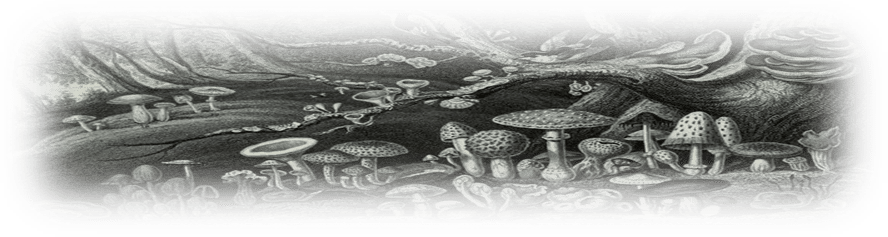
The True Meaning of Life and all that Rot (Literally; or is it “figuratively”?)

Philosophy is an interesting human concept, our very own innovation designed to concurrently enlighten and befuddle us.  It both opens our minds and channels them into narrow calcified tunnels with light so distant as to become virtually invisible, and hence, rendering real knowledge ungraspable.  At least that’s frequently the case.  But not always.  Take the “meaning of life as an example.  Is it really as complicated and unfathomable as we´ve made it?  Or, is it rather simple and basic?  Based on the following hypothesis, you be the judge.

Sooo, about the “meaning of life” about which we[1] humans spend so much time wondering and, with regards to which, we spend so much time bemoaning the absence of answers.  At least some of us.  At least during certain stages of our lives (for example, during the onset of puberty at adolescence, then as we approach midlife crises, then as we approach what we refer to as our third or golden years, and finally, as we face transition beyond the veil). 

I think I may have found it (it being “the” answer), at least as far as “we” humans are concerned, but, notwithstanding the conclusions of Douglas Adams (wherever he is now that he’s passed beyond the veil), it has nothing to do with the number forty-two.

I would warn readers that the answer’s a bit humbling and hardly grandiose.  Rather, it’s quite utilitarian, although still rather important.  And it applies narrowly and specifically to only one of life’s realms, thus other forms of life have other primal purposes since, when we ask what the purpose of life is, we are referring to the purpose of life and its meaning among we humans.  Accordingly, the answer lies there. 

But what are our premises?  After all, every well thought out answer starts with premises.

Well, interestingly enough, there seem to be just three.  First[2] we have to acknowledge that we humans are part of the animal kingdom, or at least evolved therefrom[3]; second, that the animal and plant kingdoms are both an innovation of our joint forefathers eukaryotes; and third, that those animals possessed of alimentary canals which process ingested nourishment into waste, are our direct ancestors.  There!  We’re set.  Sort of.

Based on the foregoing, the reality with respect to the meaning of life, or perhaps, more accurately, our lives, is that the primary and perhaps sole purpose and function of the denizens of the branch of the animal kingdom of which we’re a part was supposed to be, according to nature (our progenitor), the proliferation of vegetable species, most importantly fruit, beyond their normal range.  That was to be accomplished through the combination of our innovative freedom of movement, compared to the plants we were digesting, and our excretionary functions.  Consequently, we were not “forbidden” to eat the fruit of life, but, as Eve would in no uncertain terms conform, impelled to do so, and to digest it, and having digested it into a compost that included seeds and the fertilizing agents necessary for propagation, excrete the residue to spread vegetable life far and wide.

The plant and animal kingdoms (all multicellular animals), of course, constitute only two of the five currently recognized living realms, the others being fungi (moulds, mushrooms and yeast), protists (amoeba, chlorella and plasmodium) and prokaryotes (bacteria and blue-green algae) but in the context of our foundational inquiry, we are only concerned with the first two, and with respect to those, original purposes soon became complicated and convoluted, perhaps resulting in our current confusion and despair.

While our original purpose for existing as part of the living realms was clear, the animal kingdom duchy (sort to speak, or perhaps principality) of which we are part soon deviated as carnivores insisted on intruding onto the alimentary premises which the vegetable kingdom found imperative, and rather than consuming plants and fruit, especially fruit, they insisted on a form of primordial cannibalism and expanding on that, we humans evolved into omnivores, consuming anything and everything that did not consume us first.  But that was not enough for us, we then degraded the importance of our excretions.  Indeed, we disdained and contained them through nonproductive (at least from the vegetable kingdom’s perspective) purportedly salutary practices, such deviation from our primary purpose having been erroneously premised on cultural misinterpretation of our role, our “prime directive” as Gene Roddenberry might have put it, and then, of course, misdirection.  Since then, we’ve invented myriads of fields of reflection and introspection trying to rediscover the purpose we ourselves rendered, if not obsolete, at least anachronistic.

Following the hypothesis that no good deed goes unpunished, at least for long, the animal kingdom, duchy of which we are a part, through the intervention and innovations of we humans, has and continues to conquer and devastate our creators in the vegetable kingdom, indeed, in all five of life’s realms, which may be the source of the rumor spread by Friedrich Nietzsche to the effect that “God”, whoever or whatever that was (hint, it’s obviously nature) is dead, although Nietzsche was merely projecting nature’s future.

Interestingly, the foregoing also implies another epiphany, one that involves the identity of the “adversary, to whom some humans unfairly refer in their purportedly sacred writings as Lucifer, or Satan, or Shaitan, but which more accurately, was a certain Hêl él[4].  In fact, if the foregoing is accurate, the adversary was in fat not some deviant archangel but rather, a certain Robert Thom, the Scott[5] who initiated sewage treatment in the city of Paisley[6]; the clearest and most expansive example of the law of unintended consequences. 

If only plants could speak what stories they could tell. 

Sooo, … about artificial intelligence …!
_______

© Guillermo Calvo Mahé; Manizales, 2023; all rights reserved.  Please feel free to share with appropriate attribution.

Guillermo (“Bill”) Calvo Mahé (a sometime poet) is a writer, political commentator and academic currently residing in the Republic of Colombia (although he has primarily lived in the United States of America of which he is also a citizen).  Until 2017 he chaired the political science, government and international relations programs at the Universidad Autónoma de Manizales.  He is currently the publisher of the Inannite Review, available at Substack.com, a commentator on Radio Guasca FM, and an occasional contributor to the regional magazine, el Observador.  He has academic degrees in political science (the Citadel), law (St. John’s University), international legal studies (New York University) and translation and linguistic studies (the University of Florida’s Center for Latin American Studies).  However, he is also fascinated by mythology, religion, physics, astronomy and mathematics, especially with matters related to quanta and cosmogony.  He can be contacted at guillermo.calvo.mahe@gmail.com and much of his writing is available through his blog at https://guillermocalvo.com/.


[1] I know, I know, it should be “us”, but I don’t really like the way “us” sounds in this context, and, … I am the author, with all rights to “poetic license”, sooo, “we” it is.

[2] I know, I know, … again.  “Premises, premises”, but what can we do without them.

[3] The “derived therefrom” phrase preemptively addresses arguments insisting that we are qualitatively different than animals.

[4] Look him up, it’s worth it.

[5] I hate to admit that the English may have been correct when some postulated that the devil was most certainly a Scott.  But evidently, at least in this one instance, it appears they were on to something.  I guess the axiom that no one is always wrong may, in fact, be somewhat correct.

[6] Although the Minoan civilization of Crete and the Roman Empire used underground clay pipes for “sanitation” purposes.  So perhaps the identity of the “adversary” is all too securely hidden.

Serendipity:

The Saga of a Gal Sort of Named Sue, and … well, … Company

This is a story about consonance, not assonance, but certainly contains more than a trace of dissonance.  It’s a sort of fractured and sad love story.  The characters are, well characters, and no effort has been made, with respect to the nature of their names, to protect the innocent, so we are neither admitting nor denying that they involve real people or real situations, at least deliberately.  But nature being what it is, …who knows?

Well, … maybe the Shadow, … but who else?

Anyway ….

Sue was a lucky girl.  At least for a while.  Good things fell in her pretty lap without her ever having to do anything to earn them, anything at all.  Some said “serendipitous” was her middle name.  It wasn’t.  “Serendipity” was her first name but, for some reason, she preferred to use Sue, which was, in point of fact, her middle name.  Interesting.

Everything about Sue was pretty too.  Not beautiful, not cute, just pretty.  But so much prettiness tended to dazzle, and it wasn’t as threatening as beautiful, although perhaps not as perky as cute.  Being perfectly pretty helped, well, let’s call her “Sue” (since she prefers that name), it helped Sue with everything: with her grades, with her roles in all kinds of organizations, with her teachers (none of whom ever even considered hitting on her), with her family and relatives, with whatever job she decided she wanted, although, to be fair, she never sought anything beyond her capabilities, and she gave every job she ever had her all.  That was Sue.

At least until she inadvertently met “Melancholy Mike” during her senior year in college.  Sometimes destiny sucks.  Or is that fate.  Or perhaps, karma.

Mike wasn’t really melancholy at all, he just had terrible luck at everything he tried despite seemingly having all the physical and mental assets for which any male could hope.  Although he was fast and had great hand and eye coordination, he somehow always had “bad luck” accidents, and, truth be told, he was easily distracted, which is probably why it seemed so hard for him to keep his “eye on the ball”, in every sense.  So, … rather than being a first string varsity sports star, he tended to be a junior varsity backup, but not with awesome promise, without awesome potential .  Same was true with academics, and work, and, as we’ll see, with personal relationships.

Initially, everyone Melancholy Mike met wanted to be his friend and, if it involved a female, and well, some males too, a bit more than just a friend.  To say that Melancholy Mike was not empathic was a massive understatement, so he didn’t pick up on how others felt about him and, all too soon, those who’d initially been drawn to him became, at best, cross with him.  Too many stupid little things just seemed to go wrong around him.  He tended to trip quite a lot, and to spill things, and to blurt things out he’d have been better off keeping to himself.  And all too soon, those who’d initially found him fascinating but had then become being cross saw their feelings devolve towards disdain, and quickly thereafter, to avoidance, and then to generation of nasty, untruthful rumors (which is how he acquired the moniker “melancholy”).  That was especially true among those who’d originally found him irresistible but, with respect to whom, he’d “failed to catch the pass”, if you get the drift.  They’d be embarrassed at first, feeling foolish, then his lack of any reaction towards their obviously miffed feelings, made them feel belittled and ignored, even though he was just being oblivious and, had he caught on, might frequently have reacted in a very positive manner.  Thus, over time, by his senior year in college, Melancholy Mike had become singularly unpopular.

While Melancholy Mike was “usually” oblivious, that was not the case when he met Sue.  They bumped into each other, literally, in a park by a pretty flowing river, where flowers of diverse species bloomed and shade trees abounded.  Sue had gone there to study and Melancholy Mike, well, frankly, he’d not been paying attention where he was going and had gotten lost.  They’d really bumped into each other, as I indicated, literally, but figuratively and physically as well.  Melancholy Mike had tripped over Sue and hit his nose on a large rock and was bleeding profusely.  Sue, who was always nice, sought to stem the bleeding and, of course, succeeded in doing so.  But in the midst of that endeavor, she glanced into his eyes, and became lost there, and when Melancholy Mike, who was in a bit of a daze, looked at her face, he figured perhaps he’d been hurt worse than he’d thought, worse than usual, and …. 

Well, as somewhat polar opposites, the attraction had been as intense as it was immediate, but then, all too soon, perhaps a few weeks later, it seemed as if a thick glob of sticky and sickly sweet molasses had engulfed them, sort of like amber sometimes engulfs insects.  The figurative ambient mess kept making them keep figuratively colliding, first to one side and then to the other, but still clinging.  Yuck, what an awful metaphor, or was that a simile, but anyway, it was unfortunately all too accurate.

Having never learned to cope with failure, Sue refused to admit its possibility,  She stuck by Melancholy Mike, literally, figuratively, physically and every which way, and he rubbed off on her (given that her attention was focused on him).  It had to be, to avoid constant disasters, and people started to avoid her as well but, she was so entranced with Melancholy Mike that she didn’t notice, at least not until it was too late to do anything about it, and thus, she was not only stuck to Melancholy Mike, but also stuck with him.

During a tumultuous courtship, as Sue too became ostracized from her old friends and acquaintances, and even her family, their relationship became stronger instead of weaker.  A phenomenon common when parents disapprove of a child’s choice in romantic partner.  Thus they married on a spontaneous whim, without her family’s approval (his was ecstatic) and started on a life somewhat lacking in the bliss they’d expected.  As might be expected, after turmoil overwhelmed ecstasy, they first separated, to sort of sort things out, give each other a bit of space, and then, at Sue’s insistence and to her family’s profound joy, they got divorced, but then, inexplicably, got back together, got engaged, which they hadn’t done before they were initially married (purportedly the second marriage would involve a long engagement), but then, impulsively, they eloped again (they had no one to invite to their weddings anyway, neither the first, nor the second, nor the ….; but that’s another story).  Well, maybe it’s really part of the same story but the repetitive nature of the telling becomes tedious, soooo ….

After their second wedding, hoping it would help them bond, they quickly had two kids, the first, a cute daughter with an amazing voice whom they named “Melony” (but her nickname, among her friends, friends she never dared bring home, was “Melody”); and then, eighteen months later, a son whom they named Anthony but called Tony.  Tony was, from the very first, even as an infant, pretty much a loner, a kid who preferred comic books, Anime and video games to interaction with other humans.  Tony also refrained from bringing friends home (but that was because he hadn’t any).  In a futile quest to build unity, the family tried acquiring pets, but they tended to run away all too soon, or to die, although Melony suspected that they may have committed suicide. 

Their house was not awful, in fact, if you liked oddities, you might have found it fascinating, in a sort of poor couple’s Adams’ Family, well, not mansion, but a hell of a nice triple wide mobile home, with an aboveground pool outside, and next to it, a third-hand Jacuzzi that worked intermittently, on and off (but off involved squirting tepid water full of rust).  And their home was set on a quarter acre, but next to a junk yard.  Melancholy Mike liked the spot because he loved the junk, and Sue hated the spot because she hated the junk, but she loved Melancholy Mike, at least then, sooo.  Well, perhaps geography explained why they had such a hard time staying together, even for the kids’ sake, although the kids would have been happier, had they stayed apart, especially the times when Melony could live with Sue, and Tony with Melancholy Mike.

As soon as Melony turned eighteen, she left home and joined a travelling troupe of purported actors, and at one of their gigs, in Rye, New York, an inebriated talent scout spotted her singing, and, sobering up quickly, he introduced himself and eventually, talked her into leaving the group.  He fell in love with her and financed music lessons and introduced her to the right people, and got her a contract with a decent recording label, and she climbed the stairway to success, but dropped Joe off on the first rung (Joe, well Joseph H. Riddle II, it should just have been Junior, was the talent scout’s name).

Joe became so despondent when he was so suddenly and completely dumped that he sought out Melony’s parents, and, after interacting with them briefly, for about a week, he realized why Melony was as she was, and decided he was better off without her, and returned to his own family from whom he’d been estranged while he explored his artistic roots.  And his family, a very wealthy and prominent family, took their prodigal son back, but he had to accompany them to religious services at least three times a week.  They were thrice born fundamentalists, who are much more stringent in their puritanical traditions than the merely born-again (whom they disdained even more than they disdained the heathen and the heretic).  But anyway, once again, that’s another story.  Suffice it to say that their family strictures explain why Joe had left in the first place, to pursue a career indirectly involving the arts.  Until, of course, he crashed into the Melony hurricane.

So, to wrap things up.  Melony became hugely successful as a heavy metal singer with Goth overtones set in a hodgepodge of sort of country music styles.  Sue finally divorced Melancholy Mike, permanently, and became a nun in a European religious order where, to the extent possible under the circumstances, she regained a good bit of her serendipitous nature (a lot of good that did in a convent though).  Melancholy Mike kept screwing things up but Tony’s jobs at the local Burger King, where he became a deputy assistant manager and counter boy, but with a night gig as a stock man (boy was too insulting for forty year old man) in a videogame warehouse, his dream job, kept them in stale burgers and hot dogs and pork and beans and cheap beer, which was fine with them. 

And, they all lived, if not happily, well … at least ever after.
_______

© Guillermo Calvo Mahé; Manizales, 2023; all rights reserved.  Please feel free to share with appropriate attribution. Guillermo (“Bill”) Calvo Mahé (a sometime poet) is a writer, political commentator and academic currently residing in the Republic of Colombia (although he has primarily lived in the United States of America of which he is also a citizen).  Until 2017 he chaired the political science, government and international relations programs at the Universidad Autónoma de Manizales.  He is currently the publisher of the Inannite Review, available at Substack.com, a commentator on Radio Guasca FM, and an occasional contributor to the regional magazine, el Observador.  He has academic degrees in political science (the Citadel), law (St. John’s University), international legal studies (New York University) and translation and linguistic studies (the University of Florida’s Center for Latin American Studies).  However, he is also fascinated by mythology, religion, physics, astronomy and mathematics, especially with matters related to quanta and cosmogony.  He can be contacted at guillermo.calvo.mahe@gmail.com and much of his writing is available through his blog at https://guillermocalvo.com/.

Payment of Interest on the National Debt versus Social Security Payments

There is a purportedly existential crisis under way involving the possibility that the United States of America, until recently the world’s hegemon, lacks enough funds to pay its current debts.  Some wonder how, if that’s the case, the Biden administration can be so generous to the Ukrainian military and whether, such “generosity is not largely responsible for the current situation.  Others would note that were this a down and out debtor looking to refinance his or her debt, no competent financial institution would step up to the plate.  The International Monetary Fund most probably would not, nor the World Bank (at least if it involved any regular country whose currency did not currently, at least for now, dominate international trade).

The Biden administration is broke and its looking for a bailout, … again.  But then again, the same has been true of other administrations, Republican as well as Democrat.  This would be the 81st or 82nd such existential increase in the nation’s borrowing authority.

Public borrowing by the United States is never logical given that the funds it borrows are usually issued by that same government, at miniscule rates, to the banks that then lend them to it.  If the government just had some responsible mechanism for issuing its own currency directly to pay its debts, it would avoid the related, crushing interest payments.  But then, where’s the fun in that, or the profit.

Anyway, ….

The Biden administration will get its way, at least in part, increasing the already boated 31.5 trillion dollar national debt by another trillion and a half, but in doing so, several important points have slipped out that should have an impact on 2024 elections from dog catcher to president.  The points have to do with priorities and where we stand in that respect, but also with the cynical decision to raise the debt limit so that its impact on the 2024 federal elections will be minimized.  Are we really that stupid?

But, as outrageous at that first point is, there is one more outrageous, by an immense magnitude.  The issue of priorities.

The Biden administration has made it clear that if there is insufficient cash to go around, first priority in payments will be to holders of United States debt securities, many of them banks and financial institutions which, as indicated above, leveraged the purchase of government securities using lower interest loans from the Federal Reserve. 

At the end of the line, are Social Security recipients, although perhaps that “threat” was mainly suggested to generate massive fear among a vulnerable segment of the electorate, “encouraging” them to force their representatives in Congress to back down.  The cynicism in that ploy should have serious, indeed, permanent political consequences.  Social Security is not a welfare program, it is a compulsory investment program with penal sanctions for failure to comply, not all that different, when one considers it, from an organized crime protection racket enforced by hired goons, but an investment program in which one does not get to make the investment decisions.  They’re made by the Federal Government, “for our own good”.  Just like the phrase “I’m from the government and I’m here to help you” the former phrase generates well deserved ridicule.

Investors “deserve” their profits purportedly because they assume voluntary risks.  When the “risk” is removed, they are no longer investors, they are instead an offshoot of organized criminals, like loan sharks.  Social Security recipients did not have the “option” of not “investing” and thus, under no circumstance, in a democracy based on law, should they ever be placed in a lower priority than other creditors of the United States.  That does not mean that Social Security is absolutely guaranteed.  Were the United States, for reasons beyond its control, to find itself with no funds to pay anyone, then Social Security recipients would have to suffer along with everyone else.  But to place purported investors at the head of the line is an outrage.

It’s an outrage that “investors” would be paid before military veterans or serving military personnel as well.  In fact, it’s an outrage that purported “investors” would be paid ahead of any other class of creditors.  In any other setting, holders of unsecured debt would find themselves at the end of the line, but not with the Biden administration in charge of the decision.  It knows on which side its bread is buttered, it knows from whence its political “contributions” come, and it knows to whom its real loyalties are owed, and it’s clear that it’s not to “We the People”.  All the old canards that the Democratic Party is the party of common men and women, of the downtrodden, of labor and of the retired went out with the sewage when the Clinton administration (of which the Biden administration is and the Obama administration was a continuation) assumed control of that political party in 1992.

Not that the GOP is much better, or at least the traditionalists in the GOP.  Who can tell what its populist wing (now apparently that party’s largest segment) would do.  That segment’s leaders talk a different game, but they were outmatched and outmaneuvered in 2020 by the state within a state many refer to as the Deep State, and which is the investment community’s enforcement arm.  But if populists from both the left and the right opened their eyes and took a whiff at the odor emanating from the District of Colombia, if they ever joined forces (and the outrage currently being perpetrated might be a sufficient catalyst to break the bonds that keep then apart and at each other’s’ throats), then perhaps a whole new set of government representatives and functionaries would get their priorities straight.

Something to seriously consider every time you head to the ballot box in the future, assuming that votes are still actually taken into account.
_______

© Guillermo Calvo Mahé; Manizales, 2023; all rights reserved.  Please feel free to share with appropriate attribution.

Guillermo (“Bill”) Calvo Mahé (a sometime poet) is a writer, political commentator and academic currently residing in the Republic of Colombia (although he has primarily lived in the United States of America of which he is also a citizen).  Until 2017 he chaired the political science, government and international relations programs at the Universidad Autónoma de Manizales.  He is currently the publisher of the Inannite Review, available at Substack.com.  He has academic degrees in political science (the Citadel), law (St. John’s University), international legal studies (New York University) and translation and linguistic studies (the University of Florida’s Center for Latin American Studies).  However, he is also fascinated by mythology, religion, physics, astronomy and mathematics, especially with matters related to quanta and cosmogony.  He can be contacted at guillermo.calvo.mahe@gmail.com and much of his writing is available through his blog at https://guillermocalvo.com/.

Windfall Profits, the Defense Industry and the American Tax Payer:

Reflections during another Memorial Day

The fulcrum on which political decisions are leveraged and the world’s future mortgaged is inherently tied to the welfare of investors in “defense” industries, of their senior executives and directors, and secondarily, the welfare of ancillary industries and businesses that profit from war and the threat of war, and if war and the threat of war are constants, then investments in “defense” industries are predictably secure.  Something the commander of allied forces in the Second World War and later, president of the United States, Dwight David Eisenhower begged us to avoid.  To the extent related government expenditures are not carefully monitored and waste prevails, so much the better.  That millions subsidize such profits with their lives in diverse parts of the world is merely “collateral damage”, at least to those not suffering such consequences, directly or indirectly.  And of course, on this Memorial Day, we recognize that such casualties are not only innocent foreigners, but also the bravest Americans, those who, believing that their service is essential, volunteer to put their lives and welfare on the line.

The Athenians attitude towards those who provided the armaments for their military and naval forces was wise.  They were required to serve on the front lines.  Not so our own war profiteers, neither they nor their families, except in extremely rare cases, serve at all, being too busy enjoying the fruits of others’ labors.  And most of those who do serve, Albert Gore and George W. Bush being prime examples, do so ensconced in protective cocoons, far from danger, surrounded by photographers so that their purported service can be documented for future use.  The Clintons and the Obamas and the Bidens (Joe and Hunter and Jimmy) and the Trumps were excused from service through the labyrinth of useful loopholes available to those wealthy or influential enough to avoid service, something which needs to be differentiated from the refusal to serve by those opposed to war, and who would never send the children, spouses, siblings or relatives of others to tread where they refused to serve.  Those who declined to serve but on attaining power of any sort, do not hesitate to send others to die or kill, and to suffer and cause mayhem, and to suffer and cause irreparable psychological trauma, are contemptuously referred to by those who served, as well as by conscientious objectors, as “chicken hawks”.  Our country is led by chicken hawks.  Chicken hawks in government, in the “defense” industries and in the corporate media as well.  And the results are predictable.  Profits for the few, massive profits.  But famine and chaos and mayhem and death and destruction for far too many on the other side of the ledger.  Some of them our own.  Some of them the best among us.

This Memorial Day takes place at an interesting time.  There has been hugely hyperbolic debate between the Republican led House of Representatives and the Biden administration concerning the need to raise the national debt limit, an increase once again required, for the 82nd time, because rather than pay for federal expenditures through taxes, to which voters would object and, as a result, might seriously consider what their taxes were being used to fund, it is more palatable, at least for now, to just, well, … borrow the money.  Federal debt financing is done through unsecured borrowing from third parties, largely banks and financial institutions but also investors, foreign and domestic.  Interestingly, the interest paid to holders of United States debt securities is higher than that paid by financial institutions to the Federal Reserve for the money borrowed to acquire such securities, among other things.  Many might wonder why the prohibitions against “ponzi” schemes which the Federal government prosecutes, are not applicable to the largest ponzi scheme of all.

The current direct national debt, that which is disclosed (it may well be substantially greater and does not include state, municipal or local debt), currently stands at almost thirty-two-trillion dollars[1], but the Biden administration insists that it must be increased immediately, if not sooner, and traditionalist members of the Republican Party are in agreement, although its populist branch is  not.  There is a current proposal on the table in Congress to acquiesce to the Biden administration’s demand to increase the national debt during the period preceding the next presidential election (so that it need not be revisited and become a political issue therein), by one-and-a-half-trillion dollars.

Sooo.  Why?

Because the United States government wants to spend the Russian Federation and the People’s Republic of China into oblivion by funding wars involving the Ukraine, already under way, and Taiwan, even at the risk of a nuclear holocaust, and anyway, that addition to the national debt, like the accumulated debt before it, ends up in the pockets of, well, you may have already guessed the answer from the introductory material above, “investors in “defense” industries, their senior executives and directors, and secondarily, the welfare of ancillary industries and businesses that profit from war and the threat of war”.

And who, you may ask, will pay that accumulated debt?

The answer is interesting and reminiscent of the attitude of French King Louis XV, you know, the one who preceded Luis XVI, who, along with his family and many others, lost his head in the French Revolution of 1789 (which, to an extent, may explain the drastic reaction by the powers that be to the political protests of January 6, 2020).  The answer is, … “who cares”!  At worse, the United States could print the money necessary to pay off the debt, although that would create never before imagined hyperinflation, inflation that would make that suffered in Germany following the War to End All Wars (well, we now call it the first of the world wars) at the dawn of the twentieth century a trifle.  One might recall that the inflation following the first of the world wars led to the rise of fascism in various countries, and threatened to do the same in most others.  Of course, some consider that fascism is currently in vogue among those who most criticized it way back then.

This Memorial Day, as I mourn my many friends and my former classmates who’ve perished in combat during the past six decades (I’m a Citadel graduate), it occurred to me that the answer to our ludicrous national debt crisis is rather simple and does not require a reinvention of the wheel.  It’s called a “windfall profits tax”.  One that should be imposed on those who’ve so profited from the perpetual wars (what would Emanuel Kant think).  You may have guessed the answer again, it’s the same as the answer to the former query: “investors in “defense” industries, their senior executives and directors, and secondarily, the welfare of ancillary industries and businesses that profit from war and the threat of war”.  A tax of 90% on all profits derived from them, directly and indirectly, from whatever sources and wherever derived, until the national debt is paid off, with tax avoidance punishable by forfeiture of all assets and life imprisonment.

Simple, sort of.  At least in a democracy where voters have some awareness of how things work, and why.

A suggestion as we remember those of our fellow men and woman who’ve sacrificed so much, unfortunately, all too often uselessly, on this Memorial Day.

Something on which not only to reflect, but perhaps on which to act.
_______

© Guillermo Calvo Mahé; Manizales, 2023; all rights reserved.  Please feel free to share with appropriate attribution.

Guillermo (“Bill”) Calvo Mahé (a sometime poet) is a writer, political commentator and academic currently residing in the Republic of Colombia (although he has primarily lived in the United States of America of which he is also a citizen).  Until 2017 he chaired the political science, government and international relations programs at the Universidad Autónoma de Manizales.  He is currently the publisher of the Inannite Review, available at Substack.com.  He has academic degrees in political science (the Citadel), law (St. John’s University), international legal studies (New York University) and translation and linguistic studies (the University of Florida’s Center for Latin American Studies).  However, he is also fascinated by mythology, religion, physics, astronomy and mathematics, especially with matters related to quanta and cosmogony.  He can be contacted at guillermo.calvo.mahe@gmail.com and much of his writing is available through his blog at https://guillermocalvo.com/.


[1] Information based on the national debt clock as of this Memorial Day, available at https://www.usdebtclock.org/.

Karma and Me

Progeny, it turns out, was not all I hoped it would be, what I expected it’d be, all that I worked so hard to make it.  Futility?  Perhaps.  But then again, perhaps not.  Apparently, despite their reflections, opinions and observations concerning me, my three sons are happy with who they are, and, in an important sense, they’ve highlighted the many errors I made.  Not as a father, although they’ve plenty of complaints, but as a son to an amazing mother I too often took too much for granted.  Especially when I was younger.

And then, I wonder. 

I wonder how my mother felt about her own progeny.  Thinking about it objectively, were I her, I would have considered us an ungrateful bunch, too often, in my sister’s case, bitterly critical, and in my brother’s, unable to wean successfully, and in mine, to whom she gave more than to any of my siblings, perhaps too cocky, to sure I was right and she was wrong.  Too distant.  Too much like my own sons.

Karma’s a bitch, but as someone who hates to be indebted, it’s better this way. 

Who knows, perhaps I’ve accumulated a positive balance.  But I so wish I would have been a much better son, a more understanding son, a more accepting son, one who more vocally expressed his love, admiration and gratitude.  Now, given the ways of destiny and time and entropy, it’s too late.  Unless somehow my mother, from far beyond the veil, can sense what I now feel and what I now understand and can enjoy it, revel in it, and somehow grasp and hold it.

What I wouldn’t give to be able to correct all my past mistakes, to have been more understanding, less egocentric, more empathic. 

More like her.
_______

© Guillermo Calvo Mahé; Manizales, 2023; all rights reserved.  Please feel free to share with appropriate attribution. Guillermo (“Bill”) Calvo Mahé (a sometime poet) is a writer, political commentator and academic currently residing in the Republic of Colombia (although he has primarily lived in the United States of America of which he is also a citizen).  Until 2017 he chaired the political science, government and international relations programs at the Universidad Autónoma de Manizales.  He is currently the publisher of the Inannite Review, available at Substack.com.  He has academic degrees in political science (the Citadel), law (St. John’s University), international legal studies (New York University) and translation and linguistic studies (the University of Florida’s Center for Latin American Studies).  However, he is also fascinated by mythology, religion, physics, astronomy and mathematics, especially with matters related to quanta and cosmogony.  He can be contacted at guillermo.calvo.mahe@gmail.com and much of his writing is available through his blog at https://guillermocalvo.com/.

The Eighth Day of May

Today, May 8, 2023, is an important day to me because two very important people were born on that day, long ago.  Vicki Meryl Forest (now Baker) and Michael Harris Jordan.  Two very different people important for very different reasons.

Vicki is 70 today.  She and her delightful family were wonderful to me during very difficult times.  Unfortunately, in the end, I couldn’t bring myself to culminate the wonderful relationship we shared because of the trauma of the one that preceded it.  Vicki deserved everything I could have given, she was an amazing woman, a delight in every sense.  I know that whoever she’s with today is a happy man, and I’m certain she made a wonderful mother.  I often recall her father Irvin and mother Lucie, her sister Elise and nieces Jennifer and Melissa, and her brother-in-law Saul Sklar, with whom I still correspond from time to time.  I recall them all with a great deal of love.  Vicki was sunshine crystalized, I’m pretty sure she still is.

Coincidently, Michael would also have been 70 today.  He was a fascinating person, the son of my friend and sometimes client, David E. Jordan, a financier of sorts, as was his son.  He was short and stocky and funny and creative and bright, a great chef and a very decent man.  He experimented with all kinds of things during his life, which unfortunately, ended much too soon.  Not that everything in our relationship was rosy and bright from a professional aspect, but that was more due to his dad’s misadventures and to one of his brother’s machinations.  But in sum, it was a privilege and a joy to have been a part of Michael’s life.

It’s a pretty day high in the central range of the Colombian Andes where I now live, close by to a volcano seemingly stirring by the side of a tall former glacier, far from the Islands in New York where I met them both, and the Florida peninsula where I last interacted with them.  But they’re comfortably ensconced in my memories and in my heart.

And they always make the eighth day of May very special.
_______

© Guillermo Calvo Mahé; Manizales, 2023; all rights reserved.  Please feel free to share with appropriate attribution.

Guillermo (“Bill”) Calvo Mahé (a sometime poet) is a writer, political commentator and academic currently residing in the Republic of Colombia (although he has primarily lived in the United States of America of which he is also a citizen).  Until 2017 he chaired the political science, government and international relations programs at the Universidad Autónoma de Manizales.  He is currently the publisher of the Inannite Review, available at Substack.com.  He has academic degrees in political science (the Citadel), law (St. John’s University), international legal studies (New York University) and translation and linguistic studies (the University of Florida’s Center for Latin American Studies).  However, he is also fascinated by mythology, religion, physics, astronomy and mathematics, especially with matters related to quanta and cosmogony.  He can be contacted at guillermo.calvo.mahe@gmail.com and much of his writing is available through his blog at https://guillermocalvo.com/.

The Political Fallacy of Right versus Left

The left-right dichotomy in the political spectrum is greatly exaggerated and manipulated in order to (through the divide and conquer strategy made famous by the British in foreign affairs) keep the most selfish among us in perpetual power.  The infinitesimally tiny billionaire class which owns the corporate media, all major political parties and the leadership of “our” government’s bureaucracy, uses that left-right divide to fuel the polarization essential to maintain itself in power, stressing faux issues such as abortion, gun control and identity politics in order to avoid the issues that really make a difference in our lives, issues like peace, equity, healthcare, education and sustainable family economics.  Issues as to which families on both sides of the left-right political spectrum mostly agree.

The majority of citizen-victims (a more accurate characterization of just what and who we are, except, perhaps, that “subject” might be more accurate than citizen), sense that something is terribly wrong, and so, are more and more drawn to populist figures who, although less articulate and less versed in rhetoric, resonate with them.  And it’s not a United States phenomenon but rather, one spreading throughout the “western” world.  Jair Messias Bolsonaro in Brazil and Rodolfo Hernández Suárez in Colombia were analogues to Donald John Trump in the United States, albeit much less experienced or capable than the unpleasant Mr. Trump.  All received significant support from populists on the right.  But other much more palatable choices on the left of the populist spectrum like Colombia’s Gustavo Petro, Brazil’s Luiz Inácio Lula da Silva and Mexico’s Andrés Manuel López Obrador, have managed to attain power.  Other leftist populists in Latin America attained power briefly but were quickly deposed by United States funded and supported “soft” and hard coups d’état, as was the case recently in Peru, and a few years ago in Bolivia and Honduras.

If populists on the left and on the right, including populists in the United States, e.g., political followers of Bernie Sanders, Tulsi Gabbard, Dennis Kucinich, etc. (on the left) and the Republican Tea Party (on the right) ever stopped to carefully analyze the current situation and their respective ideals, we’d realize that we have a great deal in common, most importantly, a common foe.  That foe is the billionaire class referenced above, and its tools, are primarily the Democratic Party, traditionalist Republicans, the corporate media, and moles implanted throughout the federal bureaucracy, especially the intelligence communities, the Department of Justice and the judiciary.  A foe which, however, if we united and respected our right to be different, even our right to be wrong, we could finally render impotent.

The “Deep State” is a term some of us use to identify the informal coalition that comprises our foe.  The foe that bleeds United States tax payers of funds that could be used for universal healthcare, for universal education at all levels, for a meaningful universal social safety net, for decent infrastructure, etc., syphoning such funds into expenditures to fund permanent armed conflict around the world, which, at the costs of millions of lives, funds the lavish lifestyles of the few.  Consider: most of the world’s wealth is owned by sixteen families, while a majority of the world’s people lack adequate food, adequate shelter, adequate clothing, adequate healthcare and adequate education.  Children die every second of every day from United States funded bombs to support the whims of the very worst among us, all with the essential assistance of very foolish voters who feel that by rewriting history, evil history will not have happened.  That through censorship, reality and truth will become irrelevant.  That by insulting, ridiculing and calumnying those with different perspectives we will all finally get along and freedom will finally ring.

All of the foregoing negativity is possible because we are denuded of empathy and common sense through emotional manipulation.  Through what purports to be entertainment but is instead, Orwellian propaganda glorifying villainy, murder, dishonesty and violence; an us versus them disease, with what passes for news being a filter that eliminates that which does not promote Deep State agendas and replaces it with calumny, ridicule and deception (plus a smattering of Pablum to keep us bored).  Some of us remember Pablum, albeit vaguely; tasteless baby food, carefully blended to assure homogeneity.

If we, as a People, in sufficient numbers, ever grasp the foregoing and, taking the time to reflect on it, evaluate it and digest it, unite (despite our superficial differences), and, rejecting polarization, decide to impose rather than merely demand change, our progeny might inherit a world they’ll respect.

And we’d earn their blessings instead of their justified disdain.
_______

© Guillermo Calvo Mahé; Manizales, 2023; all rights reserved.  Please feel free to share with appropriate attribution.

Guillermo (“Bill”) Calvo Mahé (a sometime poet) is a writer, political commentator and academic currently residing in the Republic of Colombia (although he has primarily lived in the United States of America of which he is also a citizen).  Until 2017 he chaired the political science, government and international relations programs at the Universidad Autónoma de Manizales.  He is currently the publisher of the Inannite Review, available at Substack.com.  He has academic degrees in political science (the Citadel), law (St. John’s University), international legal studies (New York University) and translation and linguistic studies (the University of Florida’s Center for Latin American Studies).  However, he is also fascinated by mythology, religion, physics, astronomy and mathematics, especially with matters related to quanta and cosmogony.  He can be contacted at guillermo.calvo.mahe@gmail.com and much of his writing is available through his blog at https://guillermocalvo.com/.

Black Listed Gifts

I was watching the “Black List” last night, “binging” on the latest season available on Netflix, an obvious US propaganda piece as is most of what comes out of Hollywood and its clones (the reality as far back as Woodrow Wilson’s epoch).  But amazingly, in that episode something resonated in a humanistically positive manner. 

Imagine that. 

For some unfathomable reason, I enjoy the program.  Perhaps it’s the acting, especially by James Spader.  And it provides insights into the manner in which US propaganda has culturally conquered much of the world with brazen distortions.  But I rarely find the really useful human element that permits us to better understand ourselves, and improve who we are.  The element essential in great works of art.

I did last night, and it involved a gift, the gift being a very used old portable radio.

Economically, today, I am not well off.  But like most among my current peers, I am living well enough, largely because I became an expatriate of sorts, living in a beautiful albeit affordable place, a beautiful city high in the central range of the Colombian Andes.  Beautiful mountains, snowcapped peaks, thermal springs, perpetual spring, but no oceans or beaches.  A place where social security is a bit more than enough to get by.  But where friends and family are a long way off.

I’ve been much better off, wealthy even, in a past where limousines were not an occasional luxury but a normal tool, where the making of an expensive gift was “no big deal”.  But I’ve also been much less well off than I am now, and it’s that time in my life that resonated with the “Black List” episode I viewed last night.  And it dealt with the character I find least interesting, least credible, most boring: Diego Klattenhoff as agent Donald Ressler.

The resonance involved the realization that the most important gifts I ever made where those that involved something I already owned, something I had to sacrifice under the circumstances of the moment because I lacked the wherewithal to merely “buy something appropriate”.  Usually it was a book, but sometimes a keepsake I’d picked up somewhere or other.  It involved a sacrifice of something for which I really cared, something I’d miss, but which to me, at the time, seemed important to pass on.  I’ve also received gifts like that and last night I realized that I’d not appreciated their worth at the time.  I do now.

In this materialistic and polarized world, one where empathy is hard to generate and harder to find, where a touch of humanity seems a rare thing but is actually omnipresent, hidden in the quotidian, especially in the lives of the least well-off.  Hidden in plain sight amidst the most vulnerable among us.  Hidden among that silent majority where almost everything involves a sacrifice, but where such sacrifices are joyfully made and never regretted, but also, perhaps, as in my case, where such sacrifices are not quite fully appreciated by the recipients.  At least not until it’s much too late to express our gratitude.

It made me think, especially of my mother.  Eventually a single mom who made the best of what I’ve become and accomplished possible without ever stressing the many sacrifices she and the rest of my family had to make, things I just took for granted until she was gone. 

Her case and mine, unfortunately, are not unusual.  Especially today when the generational shift is so bitter, and where too many of the young consider themselves ethically and morally superior, while concurrently entitled, and view their parents and their parent’s generation as out of touch bigots.  A generation that has no idea what the adage “it’s better to give than to receive” means, or worse, that it even exists.  Where giving is something that’s done with the taxes other people pay, and mainly given to industries dedicated to legalized murder on a massive scale, in the name of liberty and peace and equality.

Amazingly, the episode made me think, rather than just react and enjoy the action and the acting.

Talk about finding pearls in a dung heap!
_______

© Guillermo Calvo Mahé; Manizales, 2023; all rights reserved.  Please feel free to share with appropriate attribution.

Guillermo (“Bill”) Calvo Mahé (a sometime poet) is a writer, political commentator and academic currently residing in the Republic of Colombia (although he has primarily lived in the United States of America of which he is also a citizen).  Until 2017 he chaired the political science, government and international relations programs at the Universidad Autónoma de Manizales.  He is currently the publisher of the Inannite Review, available at Substack.com.  He has academic degrees in political science (the Citadel), law (St. John’s University), international legal studies (New York University) and translation and linguistic studies (the University of Florida’s Center for Latin American Studies).  However, he is also fascinated by mythology, religion, physics, astronomy and mathematics, especially with matters related to quanta and cosmogony.  He can be contacted at guillermo.calvo.mahe@gmail.com and much of his writing is available through his blog at https://guillermocalvo.com/.

Now What?

As I write this, I wonder if it will ever be permitted to see the light of day.  I’m certain that access to this article will be subjected to the de facto censorship limiting its spread and access through algorithms designed to limit postures frowned upon by our Internet censors.  But perhaps some brave souls will share it.  Every once in a while we somehow manage to get our messages heard, after which, of course, they’re distorted.

As usual when I write about abuse of the political, electoral and legal systems by the Deep State and its primary tools, the Democratic Party, traditionalist Republicans and the corporate media to impact the electoral options of Donald John Trump, I precede by asserting that I do not care for him and do not intend to vote for him, even as a protest.  But Mr. Trump has been indicted through the machinations of a Deep State tool, one of several local attorneys general and federal prosecutors tasked with preventing him for again running for and again possibly winning the United States presidency. 

The action is unprecedented, not only because it involves a former United States president, but because the purported “crime” involves having been the victim of blackmail and extortion.  But the real reason seems obvious to me.  It seems obvious to many who love peace, to the many who really strive for equity and equality, and for a system of governance based on justice and legality.

Mr. Trump has many negative characteristics but also a few saving graces, and it is the latter which have led the Deep State to take this unprecedented action, an action so polarizing that it once again promotes the prospect that American citizens will feel it is their duty to act in an uncivil, possibly violent manner.  The saving graces all involve repudiation of neoconservative military activities abroad, for example, in the Ukraine and in Taiwan; they involve repudiation of the dangerously anachronistic North Atlantic Treaty Organization and the similar web of offensive military alliances and bases around the world designed to promote and preserve political, economic and military hegemony, even at the risk of nuclear war.  They involve a desire to redirect spending on defense towards improved infrastructure.

Mr. Trump’s posture with respect to the foregoing is neither consistent nor coherent given his dedication to Israeli objectives and his intent to do to the Islamic Republic of Iran what his predecessors did to Iraq, nor given his methodology of governance through arrogance and aggressive posturing on economic issues, but it is deeply threatening to those who rule us through proxies, those who rule us through moles scattered throughout the bureaucracy and the judiciary, throughout what used to be a purportedly free press, throughout international institutions.  That is why a minor league functionary has taken the unprecedented, illegal action that confronts the United States today.  The action which will exacerbate the polarization which led to the events of January 6, 2020, and which, step by step, is bringing Americans closer and closer to another disastrous civil conflict.

Some among the American people seem to be waking up to the reality that democracy in the United States is an illusion, too many perhaps.  And the Deep State will not tolerate such independence, not again.  It is hell bent on preventing the miscalculations that led to the disastrous 2016 presidential and Congressional elections, disastrous at least from their perspective.  And no price is too high to pay to avoid them, especially when it is We the People who pay the price, not those who rule us.  Who rule us as though they were the proud owners of Tolkien’s one ring.

Julian Assange sits rotting in a British prison, thanks to the Deep State, in that case including Mr. Trump.  The real criminals, the Clintons, the Obamas, the Bush’s and the Bidens (and I don’t mean just Hunter and Jimmy), are free to loot, plunder and cast the world into chaos; a world suffering from the blights of inflation and recession everywhere, and from the violence of the antithesis of Kant’s perpetual peace.  And I’m not at all certain that We the People can do anything about it.  It may already be too late. 

It is certainly way too late to stop the madness through the prophylactic means the Constitution was adopted to provide, means such as limiting the war powers to Congress, an institution which, for more than a century, has abdicated its most important responsibilities, both with respect to peace, and to foreign affairs, and to the wise use of our tax dollars.  And I’m not certain that there are any other constitutional options still open. 

Many of us seriously question the legitimacy of the electoral process, some, because of recent events, but others because the United States has always been a duopoly, a faux democracy with the electoral system rigged in favor of two principal players, both ultimately controlled by the same people.  That leaves us no options that most of us find acceptable, certainly not those options brewing under the surface among left and right wing armed thugs who consider themselves patriots.

So, … “now what”, as Troy’s Cassandra might ask, after having warned us of what was happening for so long?  As Julian Assange might ask, or Edward Snowden, or Chelsea Manning, or as the small group of independent journalists exiled from the major media constantly remind us.  Or as George Orwell and Aldous Huxley and myriad other authors of dystopian novels illustrated for us.

Now what?
_______

© Guillermo Calvo Mahé; Manizales, 2023; all rights reserved.  Please feel free to share with appropriate attribution.

Guillermo (“Bill”) Calvo Mahé (a sometime poet) is a writer, political commentator and academic currently residing in the Republic of Colombia (although he has primarily lived in the United States of America of which he is also a citizen).  Until 2017 he chaired the political science, government and international relations programs at the Universidad Autónoma de Manizales.  He is currently the publisher of the Inannite Review, available at Substack.com.  He has academic degrees in political science (the Citadel), law (St. John’s University), international legal studies (New York University) and translation and linguistic studies (the University of Florida’s Center for Latin American Studies).  However, he is also fascinated by mythology, religion, physics, astronomy and mathematics, especially with matters related to quanta and cosmogony.  He can be contacted at guillermo.calvo.mahe@gmail.com and much of his writing is available through his blog at https://guillermocalvo.com/.

On the Day Designated Internationally to Honor Men

It’s March 19, 2023, a Sunday and a day purportedly designated internationally to honor men, but as a holiday, it’s sort of a flop.  It’s not a great day for florists or restauranteurs, or for retail sales or for holiday bookings.  But perhaps it’s meaningful if we take a moment to recognize our less fortunate male brethren.  And there are so many.  And holiday’s all too often, rather than being happy days, are those most filled with regrets, and nostalgia, and melancholy.

So, … today, I’m thinking of all of the men who work diligently to support and protect their families, but who are deprecated for not spending enough quality time at home, and of those men who, through no fault of their own, have been sundered from their families and have lost everything they ever accumulated, who are left to live out what remains of their lives alone, and to those fathers who, after an unsuccessful relationship with their wives, find themselves estranged from their children. 

Of course, there’s another side to that dismal coin, men who are appreciated and beloved by their families, loved by their wives and admired by their children, but sadly, in today’s dysfunctional world, they’re the exception rather than the norm.  And of course, there are plenty of men who, because of their conduct, deserve their fate; but also, too many who don’t.

It’s an issue that’s not impacted by race, religion, national origin or political tendencies, … it just is, and there are few support groups to help these victims cope, nor any entertainment series to highlight the issue, nor any visible champions to highlight and ameliorate their plight, or legislators looking for legal and judicial reforms to resolve the social tragedy they represent. 

Just a few of us who, from time to time, remember and reflect.

Something to think about as this purported holiday fades to grey.

_______

© Guillermo Calvo Mahé; Manizales, 2023; all rights reserved.  Please feel free to share with appropriate attribution.

Guillermo (“Bill”) Calvo Mahé (a sometime poet) is a writer, political commentator and academic currently residing in the Republic of Colombia (although he has primarily lived in the United States of America of which he is also a citizen).  Until 2017 he chaired the political science, government and international relations programs at the Universidad Autónoma de Manizales.  He is currently the publisher of the Inannite Review, available at https://guillermocalvomah.substack.com/.  He has academic degrees in political science (the Citadel), law (St. John’s University), international legal studies (New York University) and translation and linguistic studies (the University of Florida’s Center for Latin American Studies).  However, he is also fascinated by mythology, religion, physics, astronomy and mathematics, especially with matters related to quanta and cosmogony.  He can be contacted at guillermo.calvo.mahe@gmail.com and much of his writing is available through his blog at https://guillermocalvo.com/.