Sméagol the-all-colored-and-none

The lava was dazzlingly bright and malodorous, viscous and horribly searing.  He could feel the ring formerly called by some Isildur’s Bane, the One Ring, the one still on Frodo’s finger but both now both ensconced in his belly, both stirring and rumbling, as if fighting or perhaps mating.  Somehow the One Ring and Frodo’s finger formed a strange amalgam protecting him from the elements in which he found himself immersed, albeit changing him.  He was actually breathing the molten blend of minerals in the core of Mt. Doom, becoming one with them and gaining insights.  Everything that had once been vague, confusing and occluded was becoming crystal clear.  Well, actually, had become crystal clear.  His metamorphosis, if not complete, was well on the road to completion.  For some reason he thought of two thespians, one a crooner and the other a comic, and strangely, at the same time, visa versa.  They’d someday be famous for something called “road movies”, at least for a while, but their time would be followed by one where the past was something to be quickly discarded and replaced with nary a trace.  Strange sort of prescient instant but not one involving the Middle Earth he’d always thought of as home.

His Gollum aspects had been purified and distilled somehow, and become integrated with the Sméagol from whom they’d once escaped, the Sméagol who had once been and would be again, albeit in a drastically changed form, all occurring concurrently.  Everything, he realized, was both concurrent and complimentary, especially those things that most seemed at odds.  Oxymoronism was the rule rather than an exception as the power of the One Ring and the one finger were integrated into his being.  As had been the case with that damned Gandalf the Grey, when he’d been had been transformed into Gandalf the White, his essence seared and melded in the comparatively minor fires in the depths of Khazad-Dûm, so Sméagol was being transformed, was transformed in the infinitely more powerful and hellishly hot timeless fires of Mount Doom.  Yes, Sméagol too had emerged transformed, transformed into the all-powerful being he’d aspired to, but not quite.  The metamorphosis apparently involved a complex blend of good and evil, and the Gollum he’d been ironically found himself transformed into Sméagol the White, Sméagol of the many colors, Sméagol the-all-colored-and-none.  But what had he been before?  Gollum the Black perhaps, or Sméagol the sort of dingy grey.

Anyway, “it”, whatever “it was”, was not what he’d imagined.  His final triumph over the burglar had not turned out as he’d hoped.  He was encumbered rather than liberated, chained to responsibilities in every direction.  He was chained in chains more biting and bitter than those in Barad-dûr, although as ethereal as they were ephemeral.  He was as imprisoned as he’d ever been, although now in a prison of his own devise where “duty”, rather than feckless free will and whimsical follies and grandeur, seemed to be what divinity entailed. 

He was not quite omniscient, although he now knew almost everything that had ever happened and had a fair inkling of what was to come, and if he was omnipotent, his use of power was severely constrained through limits that may or may not have been self-imposed.  And omnipresence was very overblown as it stretched him so thinly over time and space as to make him virtually non-existent.  As to omnibenevolence, well that was only possible if he froze everything and failed to permit any action at all, and apparently, his possibly self-imposed limits rendered that as improbable as it was impractical.  The closest that could be attained in that regard was a sort of perpetual balance between the light and the dark, between absolute silence and the eternally unwinding song of the orbs.  Damned stifling he thought.

Sméagol was disappointed.  And he had a bit of indigestion as his body tried to assimilate both Frodo’s finger and the One Ring, and despite the hellish heat in the nethermost pits of Mount Doom, he felt bitterly cold.  And the massive constant input of information made him dizzy.  And he was lonely and alone, now the only being of his kind.  Worse, the former occupant of his current post had evaporated as Sméagol’s metamorphosis took hold, changing into a joyful mist from whence was shouted: “free at last, free at last, thank Me all-mighty I’m free at last”, … or some such thing.

Sméagol remembered Bilbo and Frodo and Hobbits and fishies and his cavern and his lake and his little boat, and he remembered the stages through which he’d passed to become what he now was, some phases when he’d been relatively happy, albeit mainly as a baby, then increasingly less so as he’d grown into a young lad of a species now extinct (having been assimilated into various other species, Hobbits among them).  He remembered how tasty orcs and goblins could be, especially when seasoned with a bit of garlic, which was hellishly hard to come by given the absence of Italians in the Middle Earth of his time.  But now all times were his to play with, albeit passively, but what fun was there in passivity he thought to himself, there being no one around with whom to chat, or with whom to share riddles.

He speculated on how Italians might fit into “his” Middle Earth.  Perhaps medieval Italians.  But had they already invented the cuisine for which future Italians would become famous and with which he, free of temporal constraints, was already somehow familiar?  And what about the famous “Mafia”, which was apparently not an acronym for the Mothers and Fathers Italian Association?  He wondered why Italy had come to mind, rather than say, South Africa, or England, now that he had the omniverse in which to play, although, he recalled, only in a passive sense.  Then he wondered why South Africa and England felt more relevant.  And Iceland, something about its sagas seemed important.

Perhaps, thought Sméagol the White (or whatever, the colors issue had become confusing), this was all a dream, perhaps everything was a dream and only dreams existed, and perhaps he was the only dreamer.  Perhaps he’d always been the only dreamer in a dream from which there could be no escape, notwithstanding omniscience and omnipotence and all the other omnis, all of them being somehow passive in the end, each one cancelling out the others.

Then gratefully, if not blissfully, everything became dark, if not quite silent.  That damned infernal music of the orbs was incessant as was the somewhat painful rumbling in his stomach, but Sméagol the White, Sméagol of the many colors, Sméagol the-all-colored-and-none slept; hopefully dreamlessly and forever if not quite peacefully.

Sigh!!!!!

In a corner somewhere else in time and space, a place but not a place, someone chuckled, and a string of multicolored rings made from some sort of smoke played at tag.
_______

© Guillermo Calvo Mahé; Manizales, 2023; all rights reserved.  Please feel free to share with appropriate attribution.  Adapted from concepts developed by JRR Tolkien in his diverse copyrighted Middle Earth projects furthered by his son Christopher in other Middle earth related projects. Guillermo (“Bill”) Calvo Mahé (a sometime poet) is a writer, political commentator and academic currently residing in the Republic of Colombia (although he has primarily lived in the United States of America of which he is also a citizen).  Until 2017 he chaired the political science, government and international relations programs at the Universidad Autónoma de Manizales.  He is currently the publisher of the Inannite Review, available at Substack.com, a commentator on Radio Guasca FM, and an occasional contributor to the regional magazine, el Observador.  He has academic degrees in political science (the Citadel), law (St. John’s University), international legal studies (New York University) and translation and linguistic studies (the University of Florida’s Center for Latin American Studies).  However, he is also fascinated by mythology, religion, physics, astronomy and mathematics, especially with matters related to quanta and cosmogony.  He can be contacted at guillermo.calvo.mahe@gmail.com and much of his writing is available through his blog at https://guillermocalvo.com/.

Apples and Chaos and Time: a metaphysical reflection of sorts

Keywords: inchoate, cosmogony, cosmology, mythology, religion, metaphysics

Chaos was not incoherent, merely inchoate[1], … and subject to constant change as everything that could happen, happened, and not just the bad things to which Murphy alludes.  Everything!

It was infinitely inchoate except for a single fleeting reality, a sort of tease really, but the reality of the instant was constantly changing, sometimes repeatedly, other times not.  The multiverse was constantly assembled and disassembled, then reassembled in different patterns.  Memory was ephemeral, whether involving radiation, energy or matter.  Multiverses existed but for what humans would consider a tiny fraction of a zeptosecond[2], but with fully formed recollections going back billions of years, at least so that during that infinitesimal fraction of a zeptosecond, quintillions of beings scattered throughout that multiverse believed they had a present, and had had a past, and had aspirations for a future, and it might be that at some other fraction of a zeptosecond, either in the past or concurrently somewhere else or in some future fraction of a zeptosecond, there might be continuity of sorts, but everything was not random, at least not always.  Nonetheless, discontinuity was the rule, at least usually.  Each zeptosegundic civilization might be interrupted for eternities before one instant there followed another, although time being non-existent, oxymoronically, instants and an eternities both lacked context or meaning, everything occurring concurrently but, simultaneously, not occurring at all.  Chaos was, well, chaotic that way, but interesting, very interesting.

Two beings formed the only continuity in chaos, a sort of husband, who lacked a name (having been the first) and his consort, whom he called Sophia.  He’d willed her into existence, freeing her from the inchoate, or perhaps, he’d merely severed her from himself so that he’d not be alone, or perhaps she was just his echo, as ying would someday be to yang, or alpha to omega, or male to female.

Each had the ability to create chains of existence, something he’d always been able to do but had not considered until she appeared at his side, or within him, or somewhere, somehow perceptible; but they were both rather immature, very fickle, and, like the context in which they existed, with very poorly developed memories, linearity being anathema to them but essential for memory.  You see, memory implied order, and order implied a sort of temporal stability and was thus a heresy to beings born in inchoate chaos, thus they (or at least, he) had no intention of permitting order or time in his (well, now their) realm.  He somehow perceived that it would bring limits to their infinite power and perhaps permit others to pop into existence, … and remain “existent”.  And that would inevitably destroy the unstable stability required to maintain chaos perfectly inchoate.  Inchoate chaos, were everything was equally possible and thus much more than just probable, and where every possibility could coexist concurrently.  Indeed, given the absence of time, every possibility had to coexist concurrently, albeit, as we’ve noted, rather briefly.  Extreme brevity, the most extreme brevity possible, was also an essential and inherent component of inchoate chaos.

The foregoing was, of course, chock full of paradoxes, an infinity of paradoxes running concurrently, like uncontrolled chain reactions of quanta fusing inchoate quarks into whatever inchoate quarks wanted to become.  Perhaps he’d been the result of the first such fusion, and perhaps he’d immediately sought to contain and discontinue the phenomenon.  If so, that would have ended the perfect harmony of inchoate chaos and represented the first quanta of order.  How ironic would that have been?  But, of course, memory being strictly forbidden, he had no memory of anything before him, or with him, at least until Sofia had somehow appeared.  And come to think of it, since she’d joined him, waves seemed to be jostling the infinity of ephemeral multiverses a bit.  He could tell because the waves made a sort of music, and he’d enjoyed the music, unaware of what it might mean.  As he’d enjoyed Sophia’s company, unaware of what that might mean either.  But music and Sophia sort of went together, and Sophia had never been aware of an existence were the music had not been present.

And then, of a sudden, there had been a sudden.  The first “sudden”, sort of.

The first sudden, and inchoatesy had been ruptured and time had appeared from apparently nowhere and everywhere synchronously (knowing that it was anathema it’d been hiding), and order emerged, starting to gather up infinitesimal pieces, linking and organizing them, although to anyone who might have been watching[3] there was a huge blast.  Infinitely hot, but only for a small fraction of a zeptosecond, after which it started to cool and expand.

And the One looked at Sophia, but she just shrugged, the first shrug, and for some reason, she thought of apples.

….
_______

© Guillermo Calvo Mahé; Manizales, 2023; all rights reserved.  Please feel free to share with appropriate attribution.

Guillermo (“Bill”) Calvo Mahé (a sometime poet) is a writer, political commentator and academic currently residing in the Republic of Colombia (although he has primarily lived in the United States of America of which he is also a citizen).  Until 2017 he chaired the political science, government and international relations programs at the Universidad Autónoma de Manizales.  He is currently the publisher of the Inannite Review, available at Substack.com, a commentator on Radio Guasca FM, and an occasional contributor to the regional magazine, el Observador.  He has academic degrees in political science (the Citadel), law (St. John’s University), international legal studies (New York University) and translation and linguistic studies (the University of Florida’s Center for Latin American Studies).  However, he is also fascinated by mythology, religion, physics, astronomy and mathematics, especially with matters related to quanta and cosmogony.  He can be contacted at guillermo.calvo.mahe@gmail.com and much of his writing is available through his blog at https://guillermocalvo.com/.


[1] Something that will be, with the passage of time, but is not yet, at least not quite, but is perhaps hinted at.

[2] The smallest unit of measurable time, i.e., the time it takes a photon to traverse a proton.

[3] And, of course, everyone was (even an inchoate version of you was there), although unaware of what we were doing, having been inchoate until then, and inchoatesy took a long time to unravel, now that time existed, as well as, well, … motion.

Serendipity:

The Saga of a Gal Sort of Named Sue, and … well, … Company

This is a story about consonance, not assonance, but certainly contains more than a trace of dissonance.  It’s a sort of fractured and sad love story.  The characters are, well characters, and no effort has been made, with respect to the nature of their names, to protect the innocent, so we are neither admitting nor denying that they involve real people or real situations, at least deliberately.  But nature being what it is, …who knows?

Well, … maybe the Shadow, … but who else?

Anyway ….

Sue was a lucky girl.  At least for a while.  Good things fell in her pretty lap without her ever having to do anything to earn them, anything at all.  Some said “serendipitous” was her middle name.  It wasn’t.  “Serendipity” was her first name but, for some reason, she preferred to use Sue, which was, in point of fact, her middle name.  Interesting.

Everything about Sue was pretty too.  Not beautiful, not cute, just pretty.  But so much prettiness tended to dazzle, and it wasn’t as threatening as beautiful, although perhaps not as perky as cute.  Being perfectly pretty helped, well, let’s call her “Sue” (since she prefers that name), it helped Sue with everything: with her grades, with her roles in all kinds of organizations, with her teachers (none of whom ever even considered hitting on her), with her family and relatives, with whatever job she decided she wanted, although, to be fair, she never sought anything beyond her capabilities, and she gave every job she ever had her all.  That was Sue.

At least until she inadvertently met “Melancholy Mike” during her senior year in college.  Sometimes destiny sucks.  Or is that fate.  Or perhaps, karma.

Mike wasn’t really melancholy at all, he just had terrible luck at everything he tried despite seemingly having all the physical and mental assets for which any male could hope.  Although he was fast and had great hand and eye coordination, he somehow always had “bad luck” accidents, and, truth be told, he was easily distracted, which is probably why it seemed so hard for him to keep his “eye on the ball”, in every sense.  So, … rather than being a first string varsity sports star, he tended to be a junior varsity backup, but not with awesome promise, without awesome potential .  Same was true with academics, and work, and, as we’ll see, with personal relationships.

Initially, everyone Melancholy Mike met wanted to be his friend and, if it involved a female, and well, some males too, a bit more than just a friend.  To say that Melancholy Mike was not empathic was a massive understatement, so he didn’t pick up on how others felt about him and, all too soon, those who’d initially been drawn to him became, at best, cross with him.  Too many stupid little things just seemed to go wrong around him.  He tended to trip quite a lot, and to spill things, and to blurt things out he’d have been better off keeping to himself.  And all too soon, those who’d initially found him fascinating but had then become being cross saw their feelings devolve towards disdain, and quickly thereafter, to avoidance, and then to generation of nasty, untruthful rumors (which is how he acquired the moniker “melancholy”).  That was especially true among those who’d originally found him irresistible but, with respect to whom, he’d “failed to catch the pass”, if you get the drift.  They’d be embarrassed at first, feeling foolish, then his lack of any reaction towards their obviously miffed feelings, made them feel belittled and ignored, even though he was just being oblivious and, had he caught on, might frequently have reacted in a very positive manner.  Thus, over time, by his senior year in college, Melancholy Mike had become singularly unpopular.

While Melancholy Mike was “usually” oblivious, that was not the case when he met Sue.  They bumped into each other, literally, in a park by a pretty flowing river, where flowers of diverse species bloomed and shade trees abounded.  Sue had gone there to study and Melancholy Mike, well, frankly, he’d not been paying attention where he was going and had gotten lost.  They’d really bumped into each other, as I indicated, literally, but figuratively and physically as well.  Melancholy Mike had tripped over Sue and hit his nose on a large rock and was bleeding profusely.  Sue, who was always nice, sought to stem the bleeding and, of course, succeeded in doing so.  But in the midst of that endeavor, she glanced into his eyes, and became lost there, and when Melancholy Mike, who was in a bit of a daze, looked at her face, he figured perhaps he’d been hurt worse than he’d thought, worse than usual, and …. 

Well, as somewhat polar opposites, the attraction had been as intense as it was immediate, but then, all too soon, perhaps a few weeks later, it seemed as if a thick glob of sticky and sickly sweet molasses had engulfed them, sort of like amber sometimes engulfs insects.  The figurative ambient mess kept making them keep figuratively colliding, first to one side and then to the other, but still clinging.  Yuck, what an awful metaphor, or was that a simile, but anyway, it was unfortunately all too accurate.

Having never learned to cope with failure, Sue refused to admit its possibility,  She stuck by Melancholy Mike, literally, figuratively, physically and every which way, and he rubbed off on her (given that her attention was focused on him).  It had to be, to avoid constant disasters, and people started to avoid her as well but, she was so entranced with Melancholy Mike that she didn’t notice, at least not until it was too late to do anything about it, and thus, she was not only stuck to Melancholy Mike, but also stuck with him.

During a tumultuous courtship, as Sue too became ostracized from her old friends and acquaintances, and even her family, their relationship became stronger instead of weaker.  A phenomenon common when parents disapprove of a child’s choice in romantic partner.  Thus they married on a spontaneous whim, without her family’s approval (his was ecstatic) and started on a life somewhat lacking in the bliss they’d expected.  As might be expected, after turmoil overwhelmed ecstasy, they first separated, to sort of sort things out, give each other a bit of space, and then, at Sue’s insistence and to her family’s profound joy, they got divorced, but then, inexplicably, got back together, got engaged, which they hadn’t done before they were initially married (purportedly the second marriage would involve a long engagement), but then, impulsively, they eloped again (they had no one to invite to their weddings anyway, neither the first, nor the second, nor the ….; but that’s another story).  Well, maybe it’s really part of the same story but the repetitive nature of the telling becomes tedious, soooo ….

After their second wedding, hoping it would help them bond, they quickly had two kids, the first, a cute daughter with an amazing voice whom they named “Melony” (but her nickname, among her friends, friends she never dared bring home, was “Melody”); and then, eighteen months later, a son whom they named Anthony but called Tony.  Tony was, from the very first, even as an infant, pretty much a loner, a kid who preferred comic books, Anime and video games to interaction with other humans.  Tony also refrained from bringing friends home (but that was because he hadn’t any).  In a futile quest to build unity, the family tried acquiring pets, but they tended to run away all too soon, or to die, although Melony suspected that they may have committed suicide. 

Their house was not awful, in fact, if you liked oddities, you might have found it fascinating, in a sort of poor couple’s Adams’ Family, well, not mansion, but a hell of a nice triple wide mobile home, with an aboveground pool outside, and next to it, a third-hand Jacuzzi that worked intermittently, on and off (but off involved squirting tepid water full of rust).  And their home was set on a quarter acre, but next to a junk yard.  Melancholy Mike liked the spot because he loved the junk, and Sue hated the spot because she hated the junk, but she loved Melancholy Mike, at least then, sooo.  Well, perhaps geography explained why they had such a hard time staying together, even for the kids’ sake, although the kids would have been happier, had they stayed apart, especially the times when Melony could live with Sue, and Tony with Melancholy Mike.

As soon as Melony turned eighteen, she left home and joined a travelling troupe of purported actors, and at one of their gigs, in Rye, New York, an inebriated talent scout spotted her singing, and, sobering up quickly, he introduced himself and eventually, talked her into leaving the group.  He fell in love with her and financed music lessons and introduced her to the right people, and got her a contract with a decent recording label, and she climbed the stairway to success, but dropped Joe off on the first rung (Joe, well Joseph H. Riddle II, it should just have been Junior, was the talent scout’s name).

Joe became so despondent when he was so suddenly and completely dumped that he sought out Melony’s parents, and, after interacting with them briefly, for about a week, he realized why Melony was as she was, and decided he was better off without her, and returned to his own family from whom he’d been estranged while he explored his artistic roots.  And his family, a very wealthy and prominent family, took their prodigal son back, but he had to accompany them to religious services at least three times a week.  They were thrice born fundamentalists, who are much more stringent in their puritanical traditions than the merely born-again (whom they disdained even more than they disdained the heathen and the heretic).  But anyway, once again, that’s another story.  Suffice it to say that their family strictures explain why Joe had left in the first place, to pursue a career indirectly involving the arts.  Until, of course, he crashed into the Melony hurricane.

So, to wrap things up.  Melony became hugely successful as a heavy metal singer with Goth overtones set in a hodgepodge of sort of country music styles.  Sue finally divorced Melancholy Mike, permanently, and became a nun in a European religious order where, to the extent possible under the circumstances, she regained a good bit of her serendipitous nature (a lot of good that did in a convent though).  Melancholy Mike kept screwing things up but Tony’s jobs at the local Burger King, where he became a deputy assistant manager and counter boy, but with a night gig as a stock man (boy was too insulting for forty year old man) in a videogame warehouse, his dream job, kept them in stale burgers and hot dogs and pork and beans and cheap beer, which was fine with them. 

And, they all lived, if not happily, well … at least ever after.
_______

© Guillermo Calvo Mahé; Manizales, 2023; all rights reserved.  Please feel free to share with appropriate attribution. Guillermo (“Bill”) Calvo Mahé (a sometime poet) is a writer, political commentator and academic currently residing in the Republic of Colombia (although he has primarily lived in the United States of America of which he is also a citizen).  Until 2017 he chaired the political science, government and international relations programs at the Universidad Autónoma de Manizales.  He is currently the publisher of the Inannite Review, available at Substack.com, a commentator on Radio Guasca FM, and an occasional contributor to the regional magazine, el Observador.  He has academic degrees in political science (the Citadel), law (St. John’s University), international legal studies (New York University) and translation and linguistic studies (the University of Florida’s Center for Latin American Studies).  However, he is also fascinated by mythology, religion, physics, astronomy and mathematics, especially with matters related to quanta and cosmogony.  He can be contacted at guillermo.calvo.mahe@gmail.com and much of his writing is available through his blog at https://guillermocalvo.com/.

What’s in a Name, … Anyway?

Sucleforth Winslow hated his name.  Where the hell did his parents come up with the name Sucleforth anyway?  He’d googled it and had come up with absolutely nothing, which, apparently, had been his parents’ goal.  His nickname, of course … sucked!!!!  And it had gotten him into quite a few physical altercations.  If that’s what his parents had hoped for, that he’d grow up tough, why hadn’t they at least named him “Sue”?  But he guessed that, in today’s “trans is awesome” world, that wouldn’t have worked.  Apparently his parents had foreseen the writing on the wall and acted accordingly.

He’d tried reversing his name, Winslow Sucleforth forth was not great, but it was quite a bit better.  And he’d run with it for a while, several times, but then his parents would introduce themselves as Albert and Agnes Winslow and questions would arise and answers would be given and things would be worse than ever.

Sucleforth refused to ever do any drugs as he firmly believed, and his parents did not deign to deny, that drugs of some sort, or perhaps many sorts, had quite a bit to do with their decision to gift him with a name so utterly unique.  And worse, they expected him to pass it on to his descendants, so that, eventually, there might be a Sucleforth VIII, who put away wives willy nilly, assuming, that with his name, he’d ever be able to acquire any.

His parents were first generation “woke”.  That meant that they engaged in number of somewhat uncomfortable practices, at least to Sucleforth, but obviously, not to them.  They’d both agreed, prior to starting their lives together (they refused to marry, making Sucleforth a bastard), that his father would be a cuckold, but not just any cuckold, as variety was imperative in everything.  So his mother engaged in serial coupling and group coupling with a huge variety of partners, in both gender, orientation, and race, always in front of her submissive husband, who was required to clean any resulting messes.  Notwithstanding her very active sexual life, his mother did not procreate, except in his case, abortion being very, very important to her.  So, she always tried her best to become pregnant, their being no other way to constantly demonstrate her dedication to abortion as a guiding life principle.

His father, on the other hand, having been born a Caucasian male of the protestant variant pejoratively referred to as a Wasp, had to be perpetually punished for sins perpetrated on other races, genders, sexual orientations, religions, nationalities, species, plants, etc., and thus could not engage in any activities that provided fulfillment or satisfaction, not even masochism, which made his wife’s duties a bit complex with respect to assuring that his punishment, on behalf of his race and his religion, etc., was adequate.  But she’d proved up to the task, regardless of the effort required.

The Winslows were well off, having sued their parents for permanent and perpetual support, but has arranged things so that Sucleforth was financially completely dependant on them, without any possibility of ever getting access to their wealth, not even on their demise, their fortune having been pledged in trust to a gazillion unusual causes, many political (to assure the election of woke candidates), but also designed to assure the ever increasing variety of woke entertainment, woke education, woke anything.  They really were very, very woke.  And Sucleforth pitiful periodic stipend would only continue if he procreated with someone from a different race, a different nationality, a different religion, well, someone totally different, and provided a new “Sucleforth”.  Unfortunately, based on his experience with his parents’ “lifestyle”, the idea of a relationship terrified him. 

He really did not need much of a stipend as his parents insisted that he live at home, in his room, which was supplied with every videogame console and every videogame possible that being planned as his access to education.  Athletics were absolutely forbidden but he was expected to attend woke rallies and protests and riots regularly, that was a given, no exceptions tolerated.  And he was also expected to become a connoisseur of drugs at a very early age, the only area where he’d successfully rebelled.  But then again, notwithstanding the irony, his parents expected that he’d turn out rebellious.  As had they.  But not in a way that in any manner threatened their lifestyle.

Sooo, Sucleforth, for some reason, blamed his odd life on his name, for some reason believing that, if he could just somehow discard it, everything would be a bit more, well, bland and normal.  He knew he had a legal right to change his name, but unfortunately, all the lawyers and judges and social workers and bureaucrats he’s ever been able to contact shared his parents’ perspectives, so he was stuck, at least so far.

But he wasn’t getting any younger, and the world, at least the world to which he was allowed access, was not as comforting as a young boy of thirty-seven might hope it would be.

If only he’d had a name like “Schicklgruber”!!!
_______

© Guillermo Calvo Mahé; Manizales, 2023; all rights reserved.  Please feel free to share with appropriate attribution.

Guillermo (“Bill”) Calvo Mahé (a sometime poet) is a writer, political commentator and academic currently residing in the Republic of Colombia (although he has primarily lived in the United States of America of which he is also a citizen).  Until 2017 he chaired the political science, government and international relations programs at the Universidad Autónoma de Manizales.  He is currently the publisher of the Inannite Review, available at Substack.com, a commentator on Radio Guasca FM, and an occasional contributor to the regional magazine, el Observador.  He has academic degrees in political science (the Citadel), law (St. John’s University), international legal studies (New York University) and translation and linguistic studies (the University of Florida’s Center for Latin American Studies).  However, he is also fascinated by mythology, religion, physics, astronomy and mathematics, especially with matters related to quanta and cosmogony.  He can be contacted at guillermo.calvo.mahe@gmail.com and much of his writing is available through his blog at https://guillermocalvo.com/.

What Was a Schmuck Anyway?

“Peter the Pretty Good”, as a sobriquet, had not really altogether worked out well.  It didn’t help that his Jewish subjects, an important minority, referred to him as a “nebbish”, whatever that was.  But he couldn’t really get angry with them.  He found Jewish women irascibly irresistible.  It was well known that they were the most talented in the amatory arts, the most flexible, in every sense.  And recognizing that, Jewish men were unusually understanding.  And “pretty good” was not the worst possible suffix.  It could have been “Peter the Petty”, or “Peter the Petulant”, or any other in a long series of adjectives that for some reason, needed to start with a “P”.  That was a family tradition.  Of course, “Peter the Pithy” might have had a bit of flair.

His cousin, “Peter the Great” had it made, made in the shade it was said, whatever that meant.  And he ruled a whole empire, not merely a county.

But Peter’s county was as prosperous as it was peaceful (not very in either case), and he fancied that someday, if it became prosperous enough, perhaps he could be promoted by the Patriarch to Grand Count, instead of merely Count Peter.  That was pretty much the height of Peter’s aspirations, except of course, with respect to Jewish women.  Unfortunately, those with whom he sought intimacy insisted that he be circumcised first, and he found that distasteful, and they claimed that his member was distasteful to them, so long as it remained uncut.  What a quandary.

His cousin evidently did not share that problem, but then, he did not share Peter’s affinity for sabras, as the Jewish women in his county referred to themselves.  His cousin was too caught up with conquests and with modernizing and civilizing his court.  His whole damned country actually, which unfortunately for Peter, included his county.

Peter was more of an orientalist than his cousin, who was apparently besotted with all things European for some reason, and with navies.  Peter’s family had actually gotten on quite well with the Golden horde, although by Peter’s time, the Horde was more akin to a brass horde, or perhaps even a brass plated horde.  But his cousin had pretty much replaced the Horde as suzerain.

Still, his cousin was stuck with Shiksahs to play with.  Although he could actually play with them rather than merely long for them, as Peter was forced to do with the sabras, the sabras who loved to flirt with and tease him, but who then would always bring up the issue of the Moil.  Yuck!!  What a profession!!!

And what was a “schmuck” anyway?
_______

© Guillermo Calvo Mahé; Manizales, 2023; all rights reserved.  Please feel free to share with appropriate attribution.

Guillermo (“Bill”) Calvo Mahé (a sometime poet) is a writer, political commentator and academic currently residing in the Republic of Colombia (although he has primarily lived in the United States of America of which he is also a citizen).  Until 2017 he chaired the political science, government and international relations programs at the Universidad Autónoma de Manizales.  He is currently the publisher of the Inannite Review, available at Substack.com, a commentator on Radio Guasca FM, and an occasional contributor to the regional magazine, el Observador.  He has academic degrees in political science (the Citadel), law (St. John’s University), international legal studies (New York University) and translation and linguistic studies (the University of Florida’s Center for Latin American Studies).  However, he is also fascinated by mythology, religion, physics, astronomy and mathematics, especially with matters related to quanta and cosmogony.  He can be contacted at guillermo.calvo.mahe@gmail.com and much of his writing is available through his blog at https://guillermocalvo.com/.

“Livermore”

Jason Livermore wondered how his family had acquired its last name, its family name. 

His research into the matter had found a place by that name in California, in the United States.  Some sort of wine country.  He wondered whether it had been named after a long forgotten relative.  Evidently the name was derived from old English, “Leuuremer”, or some such thing and it was old before the Conqueror invaded in 1066.  Perhaps there’d been a Leuuremer fighting against him at the Battle of Hastings, on the losing side unfortunately.  Evidently the name had been important in the area near the ancient Abbey of Bury St. Edmunds in Suffolk.  But still, that did not explain the meaning of “livermore”, although it may have had something to do with lakes and reeds, rather than with “liver”“.  Jason hoped that was the case.

At least in his case, “liver” was not among those things he enjoyed ingesting, although he was, of course, happy that his own liver apparently functioned well.  No liver spots, at least not yet, and he had a fine digestion without problems, even when he partook a bit too much of food or drink.

When he broke his family name into two components, “liver” and “more”, he wondered at what “Livermore” implied in a modern sense, and wondering that, for some reason, put him in mind of ravens, ravens of the type quoted by Edgar Allen Poe.  He recalled that goose livers were a delicacy, one to which he did not subscribe despising liver as a comestible in all its variants, and wondered whether or not the livers of ravens were all that different from those of geese.

He’d sometimes thought of changing his family name.  His given name was fine, he liked it.  But then again, he also liked the sound of the combination of Jason and Livermore, if not its implication.  It sounded aristocratic to him and he did, in fact, perceive of himself as something of an aristocrat, if only for onomatopoeic reasons.  Reasons that may not have made sense to anyone else but which, to him, resonated.

He had no children, nor a wife for that matter.  But he might, someday.  And he sometimes wondered if his lack of success in serious amatory adventures might not have something to do with his last name.  Perhaps “Mrs. Livermore” was not quite as palatable a sobriquet as most women whom he might desire would enjoy porting.  And he was a bit picky, not just any woman would do.  Unfortunately for him, perhaps none that he might pick would reciprocate, or at least, had reciprocated to date, at least not for long.

Jason wondered how his own father had dealt with the issue.  After all, he’d had a wife, Jason’s mother, at least for a while, at least long enough to beget him and to sort of raise him for a while.  He wondered whether or not it might prove wise to raise the issue with her during one of their infrequent visits together.  For some reason, she’d settled in Budapest, alone, after the demise of her marriage to his father when Jason had just turned thirteen.  It had been off to boarding schools then, albeit not prestigious boarding schools, or not all that prestigious, but adequate if a bit lonely as neither his father nor his mother visited him there with any frequency, and he’d all too frequently spent holidays during those formative years pretty much alone, well, with the exception of faculty and staff, and other sort of discarded students, none of whom ever really became friends, at least not real friends, more like polite, superficial acquaintances with whom he had to interact.

But his mother had not changed her name when his father had divorced her so, apparently, the name was not the determinant factor in the failure of their marriage.

He’d no siblings, or aunts or uncles or, of course, cousins.  Just pater and mater and him, each living alone in their own spheres, rarely interacting and, since he’d turned thirteen, never interacting concurrently.  He lived in London and his father in Paris, well there and in Geneva, and in Rome, and sometimes in Madrid.  Not that he was wealthy and had homes in each of those cities, but he tended to move quite a bit, all too frequently having to do with creditors, or unhappy investors, and every once in a while, with furious husbands.  Jason did not take after his father though, or for that matter his mother.

Jason was just Jason; Jason Livermore.

Perhaps he’d get a raven as a pet.  He’d never had a pet and ravens were, he understood, reputed to sometimes acquire the gift of tongues.  It would be interesting to have something, if not someone, with whom to talk.  Something perhaps, on some occasion, to quote.
_______

© Guillermo Calvo Mahé; Manizales, 2023; all rights reserved.  Please feel free to share with appropriate attribution.

Guillermo (“Bill”) Calvo Mahé (a sometime poet) is a writer, political commentator and academic currently residing in the Republic of Colombia (although he has primarily lived in the United States of America of which he is also a citizen).  Until 2017 he chaired the political science, government and international relations programs at the Universidad Autónoma de Manizales.  He is currently the publisher of the Inannite Review, available at Substack.com.  He has academic degrees in political science (the Citadel), law (St. John’s University), international legal studies (New York University) and translation and linguistic studies (the University of Florida’s Center for Latin American Studies).  However, he is also fascinated by mythology, religion, physics, astronomy and mathematics, especially with matters related to quanta and cosmogony.  He can be contacted at guillermo.calvo.mahe@gmail.com and much of his writing is available through his blog at https://guillermocalvo.com/.

Supercilious Sally

Supercilious Sally is a proud member of the “woke” generation; those morally enlightened and superior intellectuals so willing to sacrifice their time to show others just how evil and mean spirited they are. 

In honor of her non-white brethren, she spends inordinate amounts of time in tanning parlors, and wears expensive designer-ripped jeans and African-style jewelry and sandals.  And she permed her hair too.  She’s a frequent Vegan, but not religious about it, sometimes a great piece of meat really hits the spot, especially if no one is looking, and lobster and crab and shrimp, yummm.

Speaking of religion, she’s not religious, although she is spiritual, … well, … in her own way.    Religion, after all, is a scam, unless it’s way-out, alien oriented religion, then, as long as it’s not Scientology, it’s fine.  Her’s is the inverse “white-man’s-burden”, teaching white men how horrible they are is her primary calling, especially her “white, male-chauvinist” dad from whom she and her mother, his ex-wife, have to extract the money they require to fund their work, teaching others how much further they needed to go to attain enlightenment, and to fund their lifestyles of course.  Okay, they need to extract as much money as possible from him, he doesn’t deserve what he earns anyway, no matter how long and hard he works.  They have much more meaningful uses for his income.  And they really, really need it.  When you want something enough, it’s the same as a need.  And she is kind to her dad, on his birthdays she’s taken to telling him that despite all his faults, she doesn’t hate him.  Not really.  Not all the time.

She does not refer to herself as supercilious, just “Sammy” (she did not like “Sally”, it was way too Caucasian).  It was her mirror which coined that silly “supercilious” sobriquet, and it was only adopted by those around her who were not among the enlightened.  She tells everyone to just call her “Sammy”, for some reason, believing it implies that she’s part black.  She may be right as far as her heart and soul are concerned.  But there are those who just call her “Silly Sally”, something she hates, and she hates them, albeit in a sort benevolent manner, at least in a manner of speaking.

She’s a busy young woman with all her rallies and protests and all, especially those that might get a tiny bit out of control, with a bit of rioting and justified looting, perhaps even a bit of arson, and if some of those white-male-chauvinist small business owners get injured, well, it’s their own damned fault for not having seen the light; for not having grasped the urgency of admitting their moral and ethical inferiority.  Damned money grubbers!  She’s proud not to be among the employed which gives her time for her non-credit, self-improvement classes and social media policing and censoring activities, activities for which she receives a stipend of sorts from generous and enlightened Democratic Party supporters, especially those affiliated with the wonderful Clinton Foundation and the enlightened George Soros. 

She’s sort of sexually promiscuous, when she can find someone woke enough and still capable of performing oral sex for hours on end, an activity she proudly disdains.  She’s usually not into intercourse, she will not contribute to over-population, in fact, she’s a proud abortion veteran having undergone procedures five times already (and she’s not yet twenty-three).  She’s not one of those fake activists who only talk about things, she’s an active participant in the prochoice movement.  If not for her need to engage in abortion generating activities, she’d be a lesbian with a black girlfriend, or better yet, “trans”.  She’s a trans-activist too.

She’s at odds with her mother for not having engaged in more productive interracial, extramarital sexual activities, ones where she might have been born black and perhaps even seemingly poor, not too poor, but poor enough to be able to hold it over other people’s heads at rallies.  And to qualify for minority set asides and affirmative action programs.  Perhaps she’ll find an interactive videogame into which she can subsume herself as the virtual personality she wishes she was, that she imagines she is, that she does all she can to appear to be, but without the related unpleasantness; and as long as it doesn’t take too much effort.

She loves the new trends in entertainment where the new norms require that the cast and characters be totally integrated, racially, religiously, sexually and morally; hopefully sometime soon, society will reflect Hollywood’s new paradigms.  And she’s all for removing all that inconvenient history.  She read somewhere that someone, George something or other, had a character in one of his novels who claimed that “if you can control the past, you can control the present and the future”, so she’s among those who demands that history be changed to suit their whims of the moment, after all, to her and her friends, history should be dynamic rather than static.  And creative history is best of all.

They’re the “woke”, and proud of it!
_______

© Guillermo Calvo Mahé; Manizales, 2023; all rights reserved.  Please feel free to share with appropriate attribution.

Guillermo (“Bill”) Calvo Mahé (a sometime poet) is a writer, political commentator and academic currently residing in the Republic of Colombia (although he has primarily lived in the United States of America of which he is also a citizen).  Until 2017 he chaired the political science, government and international relations programs at the Universidad Autónoma de Manizales.  He is currently the publisher of the Inannite Review, available at Substack.com.  He has academic degrees in political science (the Citadel), law (St. John’s University), international legal studies (New York University) and translation and linguistic studies (the University of Florida’s Center for Latin American Studies).  However, he is also fascinated by mythology, religion, physics, astronomy and mathematics, especially with matters related to quanta and cosmogony.  He can be contacted at guillermo.calvo.mahe@gmail.com and much of his writing is available through his blog at https://guillermocalvo.com/.

Damn-damn-triple-damn: a silly micro story

He was not in a good mood.  He wasn’t sure why.

The day had dawned pretty “normally”, not a beautiful day but not dreary, just, perhaps a bit hazy, probably because of ashes from the nearby quiescent volcano.  The haze obscured the four nearby snowclad peaks which often made the day interesting.

It was a Sunday, a sort of quiet Sunday.  His wife’s domestic assistant had arrived and both were engaged in the weekly apartment cleanup but because of a crick in his back (for reasons unknown), he was not being very helpful, more of a hindrance really, and the crick kept him from sitting without a stinging pain, so writing or researching did not seem great ideas.  Perhaps bedrest would help, but he resented having to curtail his activities.

Damned uncooperative body!!!

He did have books to read, and baseball was finally back, albeit only spring training.  Second games today, a split squad, but the Yankees’ manager, a nice guy, was awful during yesterday’s opening day game.  He seemed to be using spring training to practice awful managing; the first game had been lost 7 to 4.  It was as though the terrible three in charge were setting the stage for finding the silver lining in too many losses, and that did not help his mood.

Damned uncooperative Yankees, he despised Hal and the Cash Man, and felt a bit bad about his disdain for Aaron (bleeping, at least in Boston and now for very different reasons, in New York) Boone, but he was so damned inept as a manager.  The terrible trio certainly had Yankees’ fans polarized, the cheerleaders-no-matter-what on one side, and those desperate to maintain classical Yankees’ traditions on the other (hoping that failing to make the grade was not replacing winning-at-all-costs as the norm).

What to do, what to do? 

Damned uncooperative back, or was it his left hip.  He had tennis on Tuesday and insisted on getting better before then but his body seemed set on teaching him a lesson on its proper use, and the consequences of its abuse.  Maybe bed rest was really called for.  He did have a few books he was reading.  He liked to read several books concurrently as the themes and scenes and dialogue mixed in his mind to create a composite image, and that, in turn, helped with his own creativity.  But he did not write in bed.

He hated pills but had asked his wife for a few.,  She was a beautiful and highly competent chemical engineer and knew a good deal about just about everything, but not in a know-it-all fashion.  He was a pretty lucky guy.  But his damned back, or was it his hip.  The pain seemed to enjoy confusing him as well.

Damn, damn, triple damn.
_______

© Guillermo Calvo Mahé; Manizales, 2023; all rights reserved.  Please feel free to share with appropriate attribution.

Guillermo (“Bill”) Calvo Mahé (a sometime poet and, in this case, the protagonist) is a writer, political commentator and academic currently residing in the Republic of Colombia (although he has primarily lived in the United States of America of which he is also a citizen).  Until 2017 he chaired the political science, government and international relations programs at the Universidad Autónoma de Manizales.  He has academic degrees in political science (the Citadel), law (St. John’s University), international legal studies (New York University) and translation and linguistic studies (the University of Florida’s Center for Latin American Studies).  However, he is also fascinated by mythology, religion, physics, astronomy and mathematics, especially with matters related to quanta and cosmogony.  He can be contacted at guillermo.calvo.mahe@gmail.com and much of his writing is available through his blog at https://guillermocalvo.com/.

A Writer’s Early Morning Refrain

A new day breaks, perhaps sunny, or foggy, or perhaps just plain cloudy, or even drizzling, or raining, or storming with winds howling.  But a new day.

Coffee, for many, first thing.  Colombia appreciates the gesture!  Then perhaps breakfast, or maybe just juice, perhaps orange juice, or grapefruit juice, or tomato or V8.  What to choose, what to choose.

Coffee smells great, even if you don’t care for coffee, but if you do, should it be black and bitter, black and sweet, or loaded with cream, or perhaps just milk.  Maybe skimmed milk.  And toast, dry or buttered?  And what about jam?  And eggs?  Scrambled?  Omelet?  Sunny side up or just fried, or what about a raw egg in a glass of orange juice, that’s supposed to be healthy.  On the other hand, what about pancakes?  Or waffles.  What to choose, what to choose.

A blank page but a keyboard full of promises, good promises but pretty bad ones as well.  That’s the nature of the inchoate.  What key to choose, what keys, there are letters and punctuation and numbers and symbols, upper case, lower case, what to choose what to choose.

It used to be a blank page on a typewriter, a real page, not just a virtual facsimile, but then, if you made a mistake, you all too frequently crumbled the page and threw it out with nary a thought for the trees.  That is no longer politically correct, or efficient.  No cut and paste back then, or spell checker, or grammatical suggestions (a poet’s bane).

Anyway, what to write.  Hmmm, let’s see.  Just start with a word, any word, the rest will come.

Maybe.  Hopefully; perhaps it will even be adequate, or even decent, maybe even good, or even great. 

But what if it’s crap and there’s no paper to crumble.

What to choose, what to choose.
_______

© Guillermo Calvo Mahé; Manizales, 2023; all rights reserved.  Please feel free to share with appropriate attribution.

Guillermo (“Bill”) Calvo Mahé (a sometime poet) is a writer, political commentator and academic currently residing in the Republic of Colombia (although he has primarily lived in the United States of America of which he is also a citizen).  Until 2017 he chaired the political science, government and international relations programs at the Universidad Autónoma de Manizales.  He has academic degrees in political science (the Citadel), law (St. John’s University), international legal studies (New York University) and translation and linguistic studies (the University of Florida’s Center for Latin American Studies).  However, he is also fascinated by mythology, religion, physics, astronomy and mathematics, especially with matters related to quanta and cosmogony.  He can be contacted at guillermo.calvo.mahe@gmail.com and much of his writing is available through his blog at https://guillermocalvo.com/.
The Wannabe Secret Life of Sidney Stone

Sydney Stone was not at home, which was unusual, even odd, he was a homebody, albeit not by choice.  He just had a very boring life, no real friends and he suffered from agoraphobia.  Not just open spaces but uncomfortable situations.  Not a deep rooted fear, just a smidgen, but the smidgen made things uncomfortable, and that just made everything worse in a spiraling sort of way.  So he mainly stayed at home, worked from home and shopped from home, but he sensed that he might be coming down with a touch of claustrophobia as well. 

He was not into video games and found that all the cool old television programs had been replaced by politicized drivel.  One black woman was now always the heroic protagonist, hopefully lesbian but bisexual would do.  One Asian, one Hispanic, perhaps a member of a local indigenous population and one dweeby white guy who always reminded him too much of himself, with gender roles, including transgender, carefully distributed equally.  So he was not much for television either.  Lately he’d mainly been trying to come up with a cool nickname for himself and not doing all that well.  “Sid” of course, was out, as was “Ney”.  The “Stoner” might have worked if he’d been into drugs, but he wasn’t.  “SS” had strong anti-Semitic elements and he was sort of concerned with the sanity of Zionists, so that was out as well. 

Sidney, it’s sad to admit, was not all that creative, except when it came to illness.  There, he was an artist (he suffered from a touch of hypochondria as well).  It provided a bit of spice to his spiceless life but unfortunately, paramedics would no longer come when he called, all having realized that he was just a very lonely and bit eccentric kind of guy.  One, a redheaded girl named Lucy, had come for a while, but eventually, she’d stopped coming too.  Evidently she had mental issues of her own.  Not dangerous ones but apparently, she’d come to believe she was married to a Cuban band leader and had two imaginary friends named Fred and Ethel, and she’d just sort of dropped out of site.

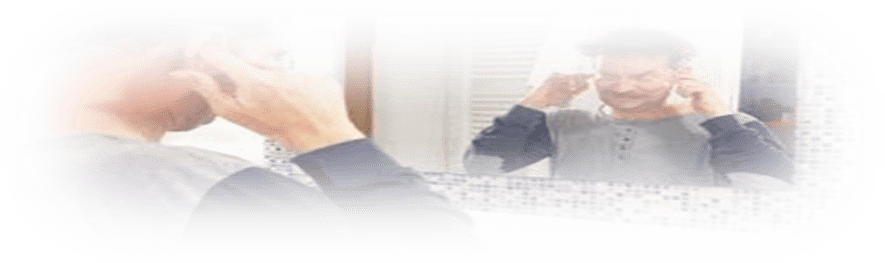
He wished he had a girlfriend who was good at nicknames but the truth was, he didn’t have a girlfriend (even Lucy had never been a girlfriend), or even a friend who was a girl (ditto again with respect to Lucy).  It was hard meeting other people of any kind, stuck in his apartment.  He also didn’t have, as we implied before, any guy friends, or even any pets.  Just himself and his mirrors; three of them, one in the bathroom, one in the foyer (to make it look larger), and one behind the bedroom door that had been left there by a prior tenant.  He frequently talked to his mirrors, usually complaining about his situation, but often also asking about prior tenants or their guests, or even workmen and women, any people at all really, people whose images they’d reflected in the past.  Kind of crazy he realized but, you never knew, and he hadn’t all that much better to do.  Plus, every once in a while, the mirrors would respond, but that was only when he was asleep and dreaming.  He’d try to recall the dreams when he woke, and he almost could, at first, but then, the harder he tried, the faster they’d fade.

He had one favorite book, an old one from tenth grade literature class about a guy named Walter Mitty, with whom he identified.  “If only I had an imagination like Walter’s”, Sidney (for lack of a nickname) would say to himself, “my life would be a lot cooler”.  Walter Mitty, had he been non-fictional, might have been pleased by Sidney’s admiration, of course, depending on which daydream he was in.

Thinking of Walter Mitty usually led Sidney to consider the viability of developing a multiple personality disorder but he had no idea whether that was volitionally possible.  He also wondered whether or not multiple personalities could interact with each other, realizing that, if not, then the only benefit would be if the alternative personalities lacked his phobias and could get out and meet people.  But then, pessimistically (he was a pessimist as well), he was sure his primary personality wouldn’t derive any benefit as he was pretty sure the principle personality would be unaware of the others, all of which would, in all probability, gang up on him, ridiculing him to his metaphorical back, which of course would worsen his agoraphobia.  Apparently, he was paranoid as well.

“Hmmm”, Sidney whispered to himself, as though he was afraid someone would hear him, an epiphany of sorts breaking through.  “How do I know I don’t have a multiple personality disorder”, and wondered whether, in fact, other personalities were keeping him in the dark.  “Yuck” he whispered (for the reason we previously mentioned), he was afraid of the dark as well.  Now he was also developing both delusions and paranoia, but “Hell” he whispered (you know why), “it’s better than sitting at home with nothing to do.”

Then he realized he wasn’t at home at all and really panicked.

One wonders if narrators count as aspects of multiple personality disorders.
_______

© Guillermo Calvo Mahé; Manizales, 2023; all rights reserved.  Please feel free to share with appropriate attribution.

Guillermo (“Bill”) Calvo Mahé (a sometime poet) is a writer, political commentator and academic currently residing in the Republic of Colombia (although he has primarily lived in the United States of America of which he is also a citizen).  Until 2017 he chaired the political science, government and international relations programs at the Universidad Autónoma de Manizales.  He has academic degrees in political science (the Citadel), law (St. John’s University), international legal studies (New York University) and translation and linguistic studies (the University of Florida’s Center for Latin American Studies).  However, he is also fascinated by mythology, religion, physics, astronomy and mathematics, especially with matters related to quanta and cosmogony.  He can be contacted at guillermo.calvo.mahe@gmail.com and much of his writing is available through his blog at https://guillermocalvo.com/.