An Early Spring Morning in the Colombian Andes

Apparently a world away
it’s cloudy and damp in the Central Range of the Colombian Andes,
an eerily beautiful morning in a city in the sky. 

Fluvial clouds cover mountains and hide glaciers
in fleecy mist blankets, as though it were too early to rise,
the sun apparently still resting. 

Oddly reminiscent of the patterns on screens
of early televisions
preceding the day’s programming.
_______

© Guillermo Calvo Mahé; Manizales, 2023; all rights reserved.  Please feel free to share with appropriate attribution.

Guillermo (“Bill”) Calvo Mahé (a sometime poet) is a writer, political commentator and academic currently residing in the Republic of Colombia (although he has primarily lived in the United States of America of which he is also a citizen).  Until 2017 he chaired the political science, government and international relations programs at the Universidad Autónoma de Manizales.  He is currently the publisher of the Inannite Review, available at https://guillermocalvomah.substack.com/.  He has academic degrees in political science (the Citadel), law (St. John’s University), international legal studies (New York University) and translation and linguistic studies (the University of Florida’s Center for Latin American Studies).  However, he is also fascinated by mythology, religion, physics, astronomy and mathematics, especially with matters related to quanta and cosmogony.  He can be contacted at guillermo.calvo.mahe@gmail.com and much of his writing is available through his blog at https://guillermocalvo.com/.

Spheres, a senryū of sorts in e minor flat

Spheres:  an infinity of angles,
endless possibilities,
perhaps even cyclic gateways, …

everywhere else then back again.
_______

© Guillermo Calvo Mahé; Manizales, 2023; all rights reserved.  Please feel free to share with appropriate attribution.

Guillermo (“Bill”) Calvo Mahé (a sometime poet) is a writer, political commentator and academic currently residing in the Republic of Colombia (although he has primarily lived in the United States of America of which he is also a citizen).  Until 2017 he chaired the political science, government and international relations programs at the Universidad Autónoma de Manizales.  He is currently the publisher of the Inannite Review, available at https://guillermocalvomah.substack.com/.  He has academic degrees in political science (the Citadel), law (St. John’s University), international legal studies (New York University) and translation and linguistic studies (the University of Florida’s Center for Latin American Studies).  However, he is also fascinated by mythology, religion, physics, astronomy and mathematics, especially with matters related to quanta and cosmogony.  He can be contacted at guillermo.calvo.mahe@gmail.com and much of his writing is available through his blog at https://guillermocalvo.com/.

On the Day Designated Internationally to Honor Men

It’s March 19, 2023, a Sunday and a day purportedly designated internationally to honor men, but as a holiday, it’s sort of a flop.  It’s not a great day for florists or restauranteurs, or for retail sales or for holiday bookings.  But perhaps it’s meaningful if we take a moment to recognize our less fortunate male brethren.  And there are so many.  And holiday’s all too often, rather than being happy days, are those most filled with regrets, and nostalgia, and melancholy.

So, … today, I’m thinking of all of the men who work diligently to support and protect their families, but who are deprecated for not spending enough quality time at home, and of those men who, through no fault of their own, have been sundered from their families and have lost everything they ever accumulated, who are left to live out what remains of their lives alone, and to those fathers who, after an unsuccessful relationship with their wives, find themselves estranged from their children. 

Of course, there’s another side to that dismal coin, men who are appreciated and beloved by their families, loved by their wives and admired by their children, but sadly, in today’s dysfunctional world, they’re the exception rather than the norm.  And of course, there are plenty of men who, because of their conduct, deserve their fate; but also, too many who don’t.

It’s an issue that’s not impacted by race, religion, national origin or political tendencies, … it just is, and there are few support groups to help these victims cope, nor any entertainment series to highlight the issue, nor any visible champions to highlight and ameliorate their plight, or legislators looking for legal and judicial reforms to resolve the social tragedy they represent. 

Just a few of us who, from time to time, remember and reflect.

Something to think about as this purported holiday fades to grey.

_______

© Guillermo Calvo Mahé; Manizales, 2023; all rights reserved.  Please feel free to share with appropriate attribution.

Guillermo (“Bill”) Calvo Mahé (a sometime poet) is a writer, political commentator and academic currently residing in the Republic of Colombia (although he has primarily lived in the United States of America of which he is also a citizen).  Until 2017 he chaired the political science, government and international relations programs at the Universidad Autónoma de Manizales.  He is currently the publisher of the Inannite Review, available at https://guillermocalvomah.substack.com/.  He has academic degrees in political science (the Citadel), law (St. John’s University), international legal studies (New York University) and translation and linguistic studies (the University of Florida’s Center for Latin American Studies).  However, he is also fascinated by mythology, religion, physics, astronomy and mathematics, especially with matters related to quanta and cosmogony.  He can be contacted at guillermo.calvo.mahe@gmail.com and much of his writing is available through his blog at https://guillermocalvo.com/.

Darker than Dark in Shades of Indigo

The deity was bored.  It was lonely and bored, but the concepts were without divine context.  It had been lonely and bored forever, although forever was not as long, initially as it thereafter became.  Not only was there nothing to do.  There was absolutely nothing.  Period.  And exclamation point as well.  Or that’s the way it might have been expressed, had expression then existed.

There being nothing, no context at all, there was no movement, everything, which was concurrently nothing, was absolutely still, absolutely silent, and it would also have been absolutely dark, had darkness existed.  Indeed, if anything at all could be said to exist, it was the utter dearth of anything, and thus, divinity was but dearth somehow personified, in a non-contextual setting, tinged only with the incorporeal non-existent echoes of boredom and loneliness, as they slept perpetually amidst non-existent shadows.

Darker than dark in shades of indigo would have been infinitely brighter than the utter absence of everything and anything, … before.  Is it any wonder that the Deity is somewhat less than sane?
_______

© Guillermo Calvo Mahé; Manizales, 2023; all rights reserved.  Please feel free to share with appropriate attribution.

Guillermo (“Bill”) Calvo Mahé (a sometime poet) is a writer, political commentator and academic currently residing in the Republic of Colombia (although he has primarily lived in the United States of America of which he is also a citizen).  Until 2017 he chaired the political science, government and international relations programs at the Universidad Autónoma de Manizales.  He is currently the publisher of the Inannite Review, available at https://guillermocalvomah.substack.com/.  He has academic degrees in political science (the Citadel), law (St. John’s University), international legal studies (New York University) and translation and linguistic studies (the University of Florida’s Center for Latin American Studies).  However, he is also fascinated by mythology, religion, physics, astronomy and mathematics, especially with matters related to quanta and cosmogony.  He can be contacted at guillermo.calvo.mahe@gmail.com and much of his writing is available through his blog at https://guillermocalvo.com/.
If I Only Could, I Surely Would … or Would I?

After a bit over three quarters of a century, the “sounds of silence” have acquired a new meaning, one no longer political.  They now represent the realization, one often addressed by many of all ages, regarding the importance of appreciating the value of solitude and self-reliance.  Not because others have let us down, that would be merely reactive, or because our health is failing and mortality seems near (it’s not, or doesn’t seem to be), but just because, after so many experiences, good as well as bad, we may finally realize to whom we owe ultimate loyalty, perhaps even love, although love seems to become more nebulous as I age, something I know is different with many, perhaps most others. 

In my case, I’ve come to realize that “hello darkness my old friend” is not a rhetorical use of an oxymoron, but a realization that the person I am, the person I’ve been, really is an old friend, one who will not abandon me regardless of how often I criticize myself, and how frequently I’ve regretted paths not trod as well as turns I’ve taken.

The friend in the mirror does not look as he once did, but subtly diminishing eyesight makes the site at least tolerable, as does the care I’ve taken of the body we share, at least usually.  Our conversations are more wide ranging as well as more profound, and rather than seeking answers, we now more frequently enjoy the expanding range of fascinating questions which experience permits us to explore, the new dimensions of our perceptions, jokes now finally fully understood.  Old books reread with new meanings found.  Poetry, finally making more sense, at least sometimes.

The world, as it seemingly aways has, seems bound for hell in a handbasket, and I keep trying to make a dent, however small, in efforts to salvage it.  Although now, I’m not as sure as I once was, why.  I really think I understand Cassandra’s primordial frustrations, perhaps those of the primordially long chain of parents as well, and, of course, to some extent at least, my own. 

From the shadows I think I hear Ebenezer Scrooge whispering “bah humbug”, even when Christmas is long past and not yet near.  And I smile, perhaps even chuckle.  Perhaps he had a point.  Perhaps he was right and the three angels sent to devil him were wrong.  Or, perhaps not.

Cycles seem concerning.  How does one break free?  Do I really want to?  Or would it be awesome to be able to start anew, this life’s lessons not just learned but remembered too.

“The sounds of silence, I’ve loved that song, the words, the tune.  Meanings I once thought I’d grasped.  And I wonder, … how would I write that song today, … if I only could.
_______

© Guillermo Calvo Mahé; Manizales, 2023; all rights reserved.  Please feel free to share with appropriate attribution.

Guillermo (“Bill”) Calvo Mahé (a sometime poet) is a writer, political commentator and academic currently residing in the Republic of Colombia (although he has primarily lived in the United States of America of which he is also a citizen).  Until 2017 he chaired the political science, government and international relations programs at the Universidad Autónoma de Manizales.  He has academic degrees in political science (the Citadel), law (St. John’s University), international legal studies (New York University) and translation and linguistic studies (the University of Florida’s Center for Latin American Studies).  However, he is also fascinated by mythology, religion, physics, astronomy and mathematics, especially with matters related to quanta and cosmogony.  He can be contacted at guillermo.calvo.mahe@gmail.com and much of his writing is available through his blog at https://guillermocalvo.com/.

Thoughts on Rereading Roger Zelazny’s Creatures of Light and Darkness

I first read Roger Zelazny’s Creatures of Light and Darkness over a half century ago.  It was sort of interesting but hard to grasp.  I hadn’t realized that, in large part, it was an epic poem. 

At the time, I’d not yet come to understand poetry. 

I wonder if Zelazny realized it was a poem. 

I’m rereading it now that I’m a bit wiser.  Or at least I believe I am.  Now that I’ve been exposed to poetry and even written some, although I’m still not always sure just what it is; only that meter, rhyme, alliteration, consonance, metaphor, simile and allegory sometimes but not always play a part.  Only that generation of emotion and visions and interweaving realities seems essential. 

I wonder how I’ll see this side of Roger this time.
_______

© Guillermo Calvo Mahé; Manizales, 2023; all rights reserved.  Please feel free to share with appropriate attribution.

Guillermo (“Bill”) Calvo Mahé (a sometime poet) is a writer, political commentator and academic currently residing in the Republic of Colombia (although he has primarily lived in the United States of America of which he is also a citizen).  Until 2017 he chaired the political science, government and international relations programs at the Universidad Autónoma de Manizales.  He has academic degrees in political science (the Citadel), law (St. John’s University), international legal studies (New York University) and translation and linguistic studies (the University of Florida’s Center for Latin American Studies).  However, he is also fascinated by mythology, religion, physics, astronomy and mathematics, especially with matters related to quanta and cosmogony.  He can be contacted at guillermo.calvo.mahe@gmail.com and much of his writing is available through his blog at https://guillermocalvo.com/.

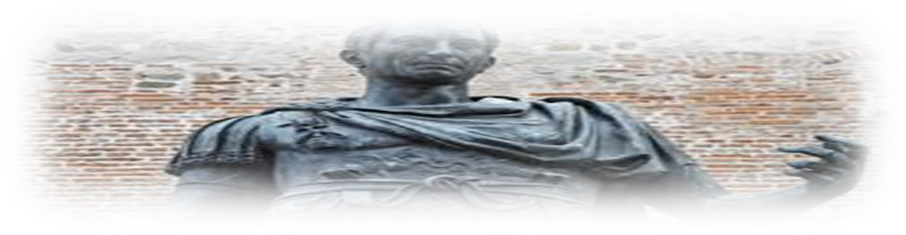
Once Again, the Ides of March

It’s March 15, 2023.  Once again the Ides of March. 

Two millennia, six decades and seven years ago, more or less (given Pope Gregory’s machinations with the calendar), Gaius Iulius Caesar was assassinated by a number of the colleagues he’d pardoned multiple times, including his reputed illegitimate son, Marcus Junius Brutus, as he entered the purportedly sacrosanct Roman Senate.  His crime, protecting the Roman lower classes against those who perceived themselves their betters, and denominated themselves the “boni” (the good).

He was a populist and populists are not well regarded by those who seek permanent power by hiding in the shadows and working through moles in the bureaucracy, the military and in the institutions that operate the economy.

Not that he was a paragon of virtue in all respects, especially shameful was his conduct of the so called Gallic Wars, but he was a fascinatingly complex human being, whose heart, at least with respect to the Roman people, seemed to be in the right place.

Except for the absence of a charismatic and effective populist leader protecting the interests of the most vulnerable among us, little if anything has changed today from the world that Gaius Iulius Caesar left us so long ago.
_______

© Guillermo Calvo Mahé; Manizales, 2023; all rights reserved.  Please feel free to share with appropriate attribution.

Guillermo (“Bill”) Calvo Mahé (a sometime poet) is a writer, political commentator and academic currently residing in the Republic of Colombia (although he has primarily lived in the United States of America of which he is also a citizen).  Until 2017 he chaired the political science, government and international relations programs at the Universidad Autónoma de Manizales.  He has academic degrees in political science (the Citadel), law (St. John’s University), international legal studies (New York University) and translation and linguistic studies (the University of Florida’s Center for Latin American Studies).  However, he is also fascinated by mythology, religion, physics, astronomy and mathematics, especially with matters related to quanta and cosmogony.  He can be contacted at guillermo.calvo.mahe@gmail.com and much of his writing is available through his blog at https://guillermocalvo.com/.

On the Nature of Responses to the Question “Why”?

The answer to the most fundamental of questions, “why”, may be very enlightening concerning a person’s fundamental cognitive programming.  Among the diverse potential responses, two are very brief, precise and telling.  They are “why not” and “because.  Seemingly similar, they are introspectively very different, one is passive, “why not”, shifting the burden of response and leaving all possibilities open, and the other is active and aggressive, “because”, an exclamation point implied, shutting off debate.

Of course, the answer may be a long, complex and complicated discourse, also enlightening, but making it almost impossible to summarize the diverse parts of the cognitive spectrum on which it may fall, and, again of course, the lengths, complexities and natures of possible responses are almost infinite, say infinity divided by ten, for arguments sake.

“Why”?

“I don’t know”.  And “I don’t know is frequently, perhaps, the most honest answer but one most people are not secure enough to consider.
_______

© Guillermo Calvo Mahé; Manizales, 2023; all rights reserved.  Please feel free to share with appropriate attribution.

Guillermo (“Bill”) Calvo Mahé (a sometime poet) is a writer, political commentator and academic currently residing in the Republic of Colombia (although he has primarily lived in the United States of America of which he is also a citizen).  Until 2017 he chaired the political science, government and international relations programs at the Universidad Autónoma de Manizales.  He has academic degrees in political science (the Citadel), law (St. John’s University), international legal studies (New York University) and translation and linguistic studies (the University of Florida’s Center for Latin American Studies).  However, he is also fascinated by mythology, religion, physics, astronomy and mathematics, especially with matters related to quanta and cosmogony.  He can be contacted at guillermo.calvo.mahe@gmail.com and much of his writing is available through his blog at https://guillermocalvo.com/.
Vague Memories

The space on the page is still warm, although perhaps now only tepid.

It had, once upon a winter’s day, been occupied.  Occupied by a very special calid phrase, one subsequently erased, but the message’s essence remained, remained aware, somewhere in time, if no longer in space.  Indelible, ineradicable, ineffaceable. 

Destiny is not, by its nature, kind.  But perhaps it knows best.

Still, echoes of misplaced emotions resonate and ephemeral rainbows endure, albeit hidden amidst profoundly deep, dark shadows.  And anyway, notwithstanding the past or the present or the future, somewhere, some-when, hummingbirds play with dragonflies while flowers and willow o’ the wisps in season sing of might have beens.

Vague memories strayed far from home.
_______

© Guillermo Calvo Mahé; Manizales, 2023; all rights reserved.  Please feel free to share with appropriate attribution.

Guillermo (“Bill”) Calvo Mahé (a sometime poet) is a writer, political commentator and academic currently residing in the Republic of Colombia (although he has primarily lived in the United States of America of which he is also a citizen).  Until 2017 he chaired the political science, government and international relations programs at the Universidad Autónoma de Manizales.  He has academic degrees in political science (the Citadel), law (St. John’s University), international legal studies (New York University) and translation and linguistic studies (the University of Florida’s Center for Latin American Studies).  However, he is also fascinated by mythology, religion, physics, astronomy and mathematics, especially with matters related to quanta and cosmogony.  He can be contacted at guillermo.calvo.mahe@gmail.com and much of his writing is available through his blog at https://guillermocalvo.com/.
Nirvana

Is Nirvana one with the singularity posited by some physicists and mathematicians? 

Or perhaps, striding into metaphysics, is it one with a pre-singularity, one before it attained any mass at all and encompassed only inchoate infinity? 

Or is Nirvana, in another sense, inchoate chaos, where chaos refers to all possibilities existing concurrently?

Thoughts for an afternoon in late February, some-when in inchoate eternity.
_______

© Guillermo Calvo Mahé; Manizales, 2023; all rights reserved.  Please feel free to share with appropriate attribution.

Guillermo (“Bill”) Calvo Mahé (a sometime poet) is a writer, political commentator and academic currently residing in the Republic of Colombia (although he has primarily lived in the United States of America of which he is also a citizen).  Until 2017 he chaired the political science, government and international relations programs at the Universidad Autónoma de Manizales.  He has academic degrees in political science (the Citadel), law (St. John’s University), international legal studies (New York University) and translation and linguistic studies (the University of Florida’s Center for Latin American Studies).  However, he is also fascinated by mythology, religion, physics, astronomy and mathematics, especially with matters related to quanta and cosmogony.  He can be contacted at guillermo.calvo.mahe@gmail.com and much of his writing is available through his blog at https://guillermocalvo.com/.