A Tale of Canaan and Ur and Uruk, of Three Trees in Three Gardens and of Eggs and Omelets as Well, all as Overheard by an Angry South Wind: A sort of bridge over troubled waters

Gilgamesh was not really fond of the little Canaanite wanabe storm deity, one of El’s seventy sons, one not all that important.  The kid was Baal’s shadow, always following him around, mimicking his gestures behind his back, envious and enthralled concurrently, ambivalent, apparently without much of a future (although past, present and future as well as time in general were considered irrelevancies to deities, even very minor and insignificant deities).  Anyway, in the little deity’s opinion, all of his siblings shared the ichor derived from El’s semen so, in a sense, they were all sort of avatars, a form of equality; at least that’s what the little deity kept telling himself, at least then. 

Gilgamesh was a Kengirian from the city of Uruk who loved to wander, even though as Uruk’s king he had serious responsibilities.  He had a decent, well trained staff though and they knew better than to disappoint him. 

His wanderings not infrequently took him to the lands of the Canaanites, no big deal really, but also, given that he was at least a demigod, on occasion they also took him to the divine court of El, the elder and ruler of the El-ohim.  The El-ohim were the Canaanite’s complex pantheon, in some ways, an incubator for other pantheons although certainly not for the much older pantheon of the Anunnaki to which Gilgamesh was sort of pledged. 

Gilgamesh interacted with the members of the El-ohim, perhaps a bit too proudly, but with the exception of El and his spouse Athirat, they tended to defer to him.  Sort of.  Sort of fearfully.  But with their dignity at least superficially sort of preserved.  They’d heard stories.  And it was, of course, at the court of El that he’d encountered the minor deity some referred to as “the pest” (as in pest-ilence).  If he had a name, it was too much trouble to worry about remembering.  Gigamesh just thought of him, when he thought of him (which was very infrequently), as “he-that-was-whatever-he-was”.

Gilgamesh was not a full, one hundred percent deity, that was true, although he was a son of Ninsun, a goddess, and of Lugalbanda, who although born a mortal was eventually deified.  Lugalbanda had been a great king, albeit of a small city by today’s standards, but the largest and most powerful then existing (boasting of between 40,000 and 80,000 inhabitants, depending on how its boundaries were interpreted).  Even so, Gilgamesh was and had always been (and would always be) unique.  Like his father, he tended to be the best at everything he tried.  Something the little Canaanite divinity, taken with him, unsuccessfully sought to emulate, … at the time. 

The very minor divinity (at least then), had a very vivid imagination.  While his principal role in the pantheon of the El-ohim merely involved smelting and metallurgy, not such a small thing as future events would indicate, it seemed just a craft to him, and he sometimes fantasized about eliminating his father and then his sixty-nine brothers, especially Baal, and perhaps even his mother and sisters, although perhaps the latter could serve in a divine harem.  When he was in a more generous mood, his fantasy was a bit less bloodthirsty, perhaps he might just someday dethrone them all and rule over, but not merely as a primus inter pares.  While time did not really exist for divinities, at least not as it did for mortals, he felt that someday, his time would come. “Just wait and see”.

Given his insignificance among the El-ohim, the little Canaanite deity tended to wander alone in lonely desserts in the mortal realms rather than sitting around, ignored at court.  He loved basking in the heat, learning to wield lightning and thunder, and even assuming the form of fire as a burning shrub from time to time, frightening the inhabitants.  He loved playing in the giant sandstorms that appeared out of nowhere but which did him no harm.  Indeed, he considered himself a sort of storm god rather than merely a patron of metalworkers.   Deism had its privileges, even for insignificant, minor deities.  And of course, he experimented with melting rocks and extracting the metals they hoarded, especially the shiny yellow one that seemed to capture the essence of the sun and which was so easy to mold into interesting shapes.

Sometimes when visiting the El-ohim, Gilgamesh, unobserved, would watch the pompous little deity at play and laugh to himself, recalling his own infancy at court.  And his own apparently bloated aspirations at the time as he fantasized about what kind of king he might be when his time came.  Sometimes Gilgamesh even speculated on what might become of the young and obviously insecure deity.  Insecure with good reason.  But divine insecurity tended to breed unpredictability and ruthlessness, both of which interested Gilgamesh (he was prone to neither but fascinated by both).  And sometimes, albeit not that often, Gilgamesh too fantasized, longing for the challenge of an equal, imagining that a real challenge might be fun.

Interestingly, after a time, a pretty long time for those forced to deal with that messy concept, the little deity (no longer quite so little, in fact, he’d be best referred to as a “young” deity), decided to find out more about Gilgamesh, a sort of reversal of roles, but stealthily, by following Gilgamesh to his own domain, Uruk. 

And he did. 

He was fascinated, not only by the cosmopolitan nature of the city and its people, but by all of the area that surrounded it, and he wished that rather than having been born among the El-ohim, he’d been born into the Anunnaki.  Charmed by the area, a sort of league of cities, the young Canaanite deity took to wandering there instead of in the Canaanite dessert and eventually, after a millennium or so, he started spending more and more time in a Kengirian city not all that far from Uruk, one called Ur.  And he sort of started hanging around there, but sort of incognito, especially careful to avoid being noticed by the local deities who might take it into their heads, as a sort of diplomatic courtesy, to suggest to El that he might want to have a sort of census of his progeny.  And then El might take it into his head to have proud Baal come and collect him, which would be even more humiliating than usual.  And so, while wondering around the land known to its inhabitants as Kengir (but by others as Sumer), and from time to time slipping into the abode of their local pantheon (after all, fair was fair, and if Gilgamesh, not even a full deity, could visit his pantheon, why shouldn’t he visit theirs), the young Canaanite deity learned a good deal more about his childhood hero, who, it seems, was everybody’s hero.  Indeed, much later, he would be acknowledged by many as the first superhero of the human race, although, as we know, he was not fully human.

He learned many interesting things, but a few stood out.

It turned out that Gilgamesh had had two true friends, … well sort of.  Maybe only one.  And that one for only a time.  The first and foremost had been Enkidu, called by most “the hairy man”, unkempt and uncouth, but very strong and very loyal.  He’d passed on to the underworld, and Gilgamesh had tried to save him, battling and defeating both monsters and divinities along the way, but to no avail.

The other had been Inanna, a beautiful and all too amorous goddess with a terrible temper.  She may have been a member of the Anunnaki that the young deity admired, the pantheon in which Gilgamesh played a much more direct role, but the issue seemed confusing, at least to him.  Inanna had once unsuccessfully sought to seduce Gilgamesh, then, a while later, had begged a favor only he could perform and which he’d granted.  Superficially it seemed a minor favor, one involving a beautiful but vexing tree which Inanna had found drifting in the great river Euphrates, one of the many that flowed into the nearby sea (really, just a gulf).  It was not just any tree though, no indeed.  For one thing, it was immensely thick, thicker than several houses combined, thicker even than it was tall.  And its trunk seemed made of silver, which, as a metallurgist of sorts, was of interest to the young Canaanite deity; and its leaves seemed made of gold, his favorite metal.  And rather than just one variety of fruit, it produced two, but only during alternating seasons, each large and juicy.  One was yellow and the other red.  Under the proper astral and atmospheric conditions and subject to appropriate invocations and incantations, the fruit could grant the person that consumed it either knowledge (the yellow fruit) or immortality (the red), or if, with patience, both were eventually consumed, then omniscience and immortality. 

It was a tree with its own very special name, one it had given itself (it was capable of communing, at least with deities).  It called itself Huluppu.  After salvaging it, Inanna had replanted it in her own garden and had nursed it and cared for it as her own.  For very personal reasons but not exactly altruistic reasons.  She had definite plans for the tree but needed for it to attain a specific level of maturity before they could be implemented.  Plans that required sacrifices, specifically, one sacrifice not at all to the tree’s liking.  But then, what the hell could a tree do when a deity, or even a human had designs on it?  Still, according to legend, it could not be forced to assume other shapes as long as it was inhabited.  And rules were rules.

Fortunately for the tree (at least for a while), while it was both unique and special (the two things are not exactly synonymous), there were a few beings who had, over time, nested in its branches and in its roots and eventually, for brief period, even in its trunk.  On the down side, unfortunately their cacophony robbed Inanna of the sleep which, while not something which, as a goddess, she required, was something she enjoyed, especially when accompanied.  Like the tree, the three who called it home were special.  The first, an incarnation of the South Wind, had originally uprooted the tree from where divine Enki, Inanna’s grandfather and the avatar of Wisdom, had planted it as a seedling in Dilmun, the Anunnaki’s garden by the shores of the great river.  He’d planted it and endowed it with a “backup” copy of all his vast wisdom and knowledge deeming it prudent, as he planned a sojourn to the underworld to visit his granddaughter Ereshkigal.  One never knew what awaited one there or how easy it would be to return with everything one had had when one arrived.  He recalled all the fuss when Inanna had made that seven layered trip.

As told above, Inanna had found the tree floating near the juncture where the great river flowed into a nearby sea (actually, just a gulf) and with divine prescience, recognizing that it might someday prove essential for certain rites and rituals necessary for her to come fully into her attributes, she’d rescued it, re-planting it in her own garden.  Unfortunately for Inanna, she’d done so somewhat carelessly, somehow not noticing that the South Wind had incarnated in avian form as the divine Anzu bird, and had nested along with its young in the tree’s branches.  And the Anzu bird had not been alone.  In the tree’s roots, long before it had been uprooted, resided a very special serpent, perhaps the very first serpent, one who could not be charmed and who called itself Nin-gish-zida.  Somehow, when replanting the tree, Inanna had not noticed it either.  But then again, the tree was huge!

Nin-gish-zida was not a slithering tube, as future serpents were to become, but rather, had the body of a well formed man but with chameleonic skin that blended with its surroundings making it virtually invisible.  And it was endowed with both great wisdom and knowledge, both inadvertently obtained from Enki’s backup due to the serpent’s long association with the tree.  In a sense, it was knowledge gained by physical proximity and osmosis, something lazy but creative students in the far future would unsuccessfully intend to duplicate by placing books they’d failed to read under their pillows prior to final exams.

The third and most recent denizen, she’d moved in after Inanna had transplanted it, was a beautiful virgin, at least then.  One known to Inanna.  After all, she was Inanna’s personal handmaiden.  But, seeking a secret refuge of her own, one away from prying eyes (who knew why), Lilitu (that was her name) had had made a place of her own in the tree’s trunk, a trunk (as we’ve noted) so vast that the entrance to Lilitu’s hideaway was safely hidden from even a divinity’s inquisitive eyes.

Of course, after Huluppu had been safely replanted in Inanna’s garden, the noise from the three interlopers made their presence obvious to Inanna, but for some reason, perhaps the Anzu bird’s divinity, or Nin-gish-zida’s camouflage, or Lilitu’s stealth, Inanna was unable to dislodge them, nor did it seem essential, at least for a time.  But, after many, many years (as reckoned by mortals), Inanna, determined that the time had come to harvest the tree and use its flesh for her existential, coming of age rites.  She’d finally attained the level of maturity at which she needed to undertake special rituals involving vessels made from Huluppu’s flesh (a bed and a throne to be specific), but according to the rules of the rituals involved (who knows why), she could not dismember Huluppu unless it had first been vacated. 

Unable to dislodge the tree’s tenants on her own, not yet having attained her full powers, she’d begged the assistance of her twin brother and sometimes paramour, Utu, the sun god, (as she was goddess of the moon, among other things) in ridding the tree of its “vermin (her word, not mine), something she felt would be relatively simple for him given the fact that as he circled the mortal realms, shining light on everything, everything was visible to him and the unwelcome guests would be unable to hide from him.  But for reasons he did not disclose but which we can surmise, he’d declined.

So, surmising: as we’ve already suggested, Inanna needed the throne and bed made from the wood of the Huluppu tree in order to complete the ritual required before she could fully attain her divinity, making her Utu’s equal, and perhaps that was threatening to Utu.  On the other hand, perhaps not.  The three siblings in that particular branch of Enki’s progeny did not always get along.  Ereshkigal, was the eldest and with her husband Nergal, ruled Kur (sometimes called Irkalla), the underworld and abode of those who’d passed beyond the veil.  She was usually the most difficult, being envious of Inanna’s beauty and fearful of her ability to seduce most males, and jealous of Utu’s ability to dwell in the sky, at least during the day, while she was forced to dwell beneath the ground.  On the other hand, Utu felt that while not the eldest of the three, as a male (he was a chauvinist among very feminist sisters) he should have primacy over Inanna as, in his opinion, the sun should always outshine the moon.  So perhaps it was not surprising that Inanna had been unable to seduce Utu into assisting her, although seducing him was usually not all that difficult (incest among divinities was not universally proscribed). 

Sibling rivalries often prove very problematic, even after the siblings have purportedly matured.

The young Canaanite deity had become privy to the foregoing and followed developments with interest, especially when Inanna, despite her prior history with Gilgamesh (as we’ve written, she’d been unsuccessful in attempts to seduce him), had turned to him for help after Utu had declined her request.  Gilgamesh had been taken by Inanna’s beauty, but had refused to be seduced by her because his pride was greater than his lust. And he was all too aware of Inanna’s fickle nature and reputation of disdain for former lovers (including her husband Dumuzid, the timid shepherd divinity and perhaps, patron deity of cuckolds).  To be eventually cast off by Inanna, as always occurred, would impact his reputation for invincibility in a very negative manner and his reputation meant a lot to him.  In fact, he may have been the first person to have had his own biographer, one who was working on a series of clay tablets describing Gilgamesh’s epic exploits.  There were no photographers then but Gilgamesh, somewhat vain about his appearance, also had a court sculptor who specialized in bass reliefs meant to assure Gilgamesh’s immortality, whether or not he managed to avoid eventual exile to Ereshkigal’s realm.

Anyway, notwithstanding the foregoing (as lawyers, even then, were wont to say) Gilgamesh was aware that a woman scorned was a dangerous thing and helping her in the matter of the Huluppu tree seemed just the thing to ameliorate her antagonism.  Thus, eventually, perhaps with the help of his friend, Enkidu, or perhaps alone, Gilgamesh did as Inanna had requested and not only evicted the Huluppu tree’s sort of tenants but also personally crafted both her throne and her bed (which, as we noted, he declined to share), thereby assuaging her enmity, although, in doing so, he secured the everlasting antipathy of the Anzu bird, of Nin-gish-zida, and of Lilitu as well. 

Oh well he’d thought, inventing a saying that would become famous in many different languages, “you can’t make omelets without breaking eggs”. The young Canaanite deity, who was busy taking all of the foregoing into account, especially liked that saying, and all too quickly appropriated it as his own.  Somewhere, another divinity watched and snickered, he’s known by many names, one being Murphy, and he’s a legislator of sorts, even today.  His two most famous legislative achievements are the Law of Unintended Consequences, and a more negative variant thereof which bears his name and provides that “whatever can go wrong, will.  “Snicker, snicker, snicker” (and not the delicious future candy bar variant).

The prying young Canaanite deity, well, not quite as young by that time, more a sort of an elder adolescent, being aware of all the foregoing, had already made excellent albeit somewhat duplicitous use of that knowledge, all the while chuckling about the eggs and omelet metaphor.  As we’ve discussed, he’d been very taken by the Anunnaki, and especially, by their garden, Dilmun, and saw an opportunity to start working on realizing his long held and now much more complex fantasies.  For some reason, thinking of omelets and eggs breaking led him to think about starting his very own pantheon, and he had some clever ideas now on just how to begin, although it meant “borrowing”, not only ideas, but a few other things as well.

“Borrowing” appealed to him.  He couldn’t help it; kleptomania was part of his nature, something of which his many siblings had constantly accused him.  So he started his new project by stealing (in his mind, “salvaging”) two of the shadows cast by the Huluppu tree (the morning shadow and the afternoon shadow) just before it had been felled by Gilgamesh, and from those shadows, the young Canaanite deity crafted special trees of his own, but, unbeknown to him, shades of Nin-gish-zida inhabited them both, moving from one to the other in the darkest dark of night.

The formerly little Canaanite divinity also eventually sort of “borrowed” Lilitu.  Some would claim he’d stolen her from Inanna (not all that hard as her eviction had caused hard feelings), and had eventually placed all of the foregoing in his own garden, modeled on the plans for Dilmun that he’d somehow “acquired”.  But he’d been very careful to first carefully wipe Lilitu’s memory clean so that she’d not repent of her escape and confess.  Inanna, her former mistress, was, after all, not only the patron goddess of carnal love (perhaps lust would be more accurate), but of war as well.

The no longer little (as we’ve made abundantly clear) Canaanite divinity had special plans for Lilitu, being a voyeur at that stage of his emotional and sexual development.  Perhaps he’d devolved into voyeurism, as sometimes happens with males after a divorce or two, because his own prior direct experiences with female deities had not turned out well.  He’d had more than a few unsuccessful relationships with, among others, Anat-Yahu, Aholah and Aholibah, Asherah, Anatha of the Lions and Ashima of the Doves (ones he’d married and then divorced, but, had used his best efforts to wipe away any records of the divine judicial proceedings involved).  For some reason, he preferred to be thought of as sexually abstentious rather than as a cuckold.  An aversion he perhaps shared with Gilgamesh.

It’s said that for a time, he’d gifted Lilitu to a fellow whose name was Adam who the once little deity claimed to have created from dust.  Perhaps dust from one of the dessert storms he’d so loved.  But the Anzu bird, once again in the form of the South Wind, had managed to escape his clutches, having been terrified when he kept snickering about omelets (the Anzu bird having an obvious aversion to broken eggs).  Being able to shift forms between bird and wind, by the same means it had managed to escape the avaricious clutches of Inanna and Gilgamesh too.  As would Lilitu, eventually.  Unfortunately, Nin-gish-zida’s fate was not as positive.

But that’s another tale.  A rather tall tale at that.

Anyway, the young Canaanite deity, now no longer all that young, in fact, sporting long hair and a luxuriantly full beard which he’d copied from Gilgamesh, decided to leave his garden and, like Gilgamesh, go exploring.  Attaining his fantasies still required a good deal of work and even more luck, so he decided to return to Kengir, of course, avoiding at all costs, for the time being, until he could build up his strength, returning to the court of the El-ohim.  He’d, in fact, renounced his allegiance to the El-ohim and no longer even considered himself a Canaanite.  He was out on his own, an explorer, an innovator, a revolutionary, one with the wind (albeit not the South Wind), although he was not yet quite ready to make that public.  He’d need to build up his following before his coming out party.  He still needed a bit of patience, but time (which usually did not impact deities) was on his side.

So, smiling at the term, tempus fugit, he took his time and sort of loitered in Uruk and its environs for several centuries, perhaps even a millennium, learning everything he could about the Anunnaki and the Kengirites, their histories and rites and rituals.  Carried away with his “research, the now former Canaanite divinity, still a divinity of sorts, just not a Canaanite divinity, at least in his mind (which was all that mattered to him), lost touch with his original objective, Gilgamesh, until, eventually, it became clear to him that his hero (or perhaps now, former hero), had permanently departed for parts unknown.  Most people suspected that he’d become a denizen of Kur, although whether as a subject or ruler was unclear.  Or that perhaps he’d retired to Dilmun joining the Anunnaki side of his family there, but again, whether as a subject or ruler was unclear.  The fact though was that Gilgamesh was no longer in Kengir, other kings having replaced him in Uruk.  Consequently, the now middle-aged Canaanite deity spent less and less time in the environs of Uruk and more and more in nearby Ur and, while stealthily wandering in Ur, sort of stumbled onto a pair of angry, petulant and very dissatisfied siblings.

He liked them at once, they reminded him of, … well, … of himself, .. way back when.  One was a petulant young man whose name was Abram, and the other a very attractive young girl whose name was Sarai (or something like that).  Anyway, they were very unhappy because their parents were very opposed to their aspirations for intimacy (given that they were brother and sister).  And in fact, the priests of the religion of which they were a part were demanding that they, or at least Abram, be sacrificed as a form of atonement for their amorous aspirations.  That was not something Abram was really interested in, at least not in a positive manner, nor, to be honest, was Sarai.

Up to that time, despite his success with his garden and Adam and Lilitu, perhaps because of the unwelcome intervention of that busybody, Nin-gish-zidam the wandering former Canaanite divinity had not really acquired many worshippers of his own, and worshippers were, as all deities knew, the key to increasing their power.  He had Adam, and a replacement for the escaped Lilitu, a pleasant girl he’d convinced Adam that he’d made especially for him from one of Adam’s ribs (Adam tended to be somewhat gullible), and then, after he’d thrown Adam and Eve out of his garden (one he’d named Eden) in a temper tantrum over dietary transgressions (the now mature former Canaanite deity was strict on dietary rules and rituals, although even he didn’t fully understand why).  they’d had children, all but one of whom had acknowledged him as a deity.  But the one who got away had caused quite a bit of trouble (perhaps taking after the formerly Canaanite deity), as had his descendants.  So he needed a new strategy with updated tactics, and he had what he felt was a brilliant idea.

He just needed a few new adherents to start the ball rolling (so to speak), and if he managed to talk Abram and Sarai into escaping from Kengir, hopefully collecting additional followers along the trip, hell, he might finally be able to attain the aspirations that had seemed so improbable way back when he’d been a kid (in case you’ve forgotten, supplanting his parents and siblings, perhaps even all the other deities in all the other pantheons as well).  There’s probably a related psychological syndrome associated with the foregoing, with a fancy name, or there will be when Freud, Jung and company show up.  Or perhaps Joseph Campbell, or Robert Graves.

Anyway …

Adding a touch of silver to his beard, hair and mustachios, in order to disguise himself and make himself appear more mature and more powerful, he appeared to Abram in his divine aspect (rather than in the disguised from in which he’d met first met him and Sarai), and, feeding on his dissatisfaction and fear (who really wants to be sacrificed), promised him that if he and Sarai would worship him, and only him, he’d give them and any of their family members they selected (and who’d agree with a few minor rules and conditions which the now former Canaanite deity might suggest) a land of their own.  A place where they could fornicate or do whatever they wanted to their hearts content, although, as indicated above, they’d have to adhere to his commandments and rituals.  He did warn Abram that it might take them a while to get to the land he’d promised them (and which he didn’t actually control, he was, interestingly enough, thinking of Canaan) and that they might encounter some problems along the way.  But he also promised that he’d be with them always (and that part was true; you may remember that he had a penchant for voyeurism). 

Well, neither Abram nor Sarai had ever, to their knowledge, met a deity before and thus, after Abram shared with Sarai his discussion with the former Canaanite deity, she was very impressed at the interest taken in Abram, making him even more special in her eyes, and she also felt that it was obvious that if a deity was willing to help them, then their parents’ prohibition against incest and the priests’ demand that Abram be sacrificed were just old-fashioned and incompatible with the changing mores of the time, and that neither their parents nor their priests understood anything concerning the exigencies of true love (especially when coupled with irresistible lust), and that this new deity was much more hip than the deities their parents and their priests worshipped so, after talking it over (as usual, Abram did most of the talking and Sarai the listening, plus all the real work), they both agreed to follow the former Canaanite deity and, in the dead of night, with the former Canaanite deity’s help, drugged their parents and escaped with most of their parent’s goods and flocks (not stealing they assured themselves, just an advance on their inheritances, as the former Canaanite deity had explained to them).  And as the former Canaanite deity had hoped, they’d been joined by a number of their siblings, including Haran, Nahor and Abram and Sari’s nephew Lot.  A great start to the former Canaanite deity’s plot.

And away they went, the formerly young Canaanite god snickering (sort of like Murphy), thinking, “man this is going to be fun”.  And it wasn’t really stealing he thought, not for the first time.  He didn’t steal!  He just sometimes borrowed things other deities were not really using, and Abram and Sarai certainly fit that pattern, as had the shadows of the Huluppu tree (he’d actually saved them from becoming shadows of mere furniture) and Lilitu (who, as he saw it, Inanna had discarded).  He just loved omelets!  And he had already become very fond of gardening as well.

Of Nin-gish-zida he had nothing to say.  That had proved awkward, but it involved a sort of collateral damage situation, or perhaps an “adoption”, certainly not a kidnapping.  Anyone can make a mistake he thought.  Admitting that he could err was, however, another matter.

Good thing that Gilgamesh had not been immortal though, he thought to himself.  That might have proven awkward, at best.  And that damned Lilitu, where the hell had she disappeared to?

Now to erase all those other pesky deities!  And to remake Canaan in his image.

“Pest” was he? 

They didn’t know the half of it.
_______

© Guillermo Calvo Mahé; Manizales, 2023; all rights reserved.  Please feel free to share with appropriate attribution.

Guillermo (“Bill”) Calvo Mahé (a sometime poet) is a writer, political commentator and academic currently residing in the Republic of Colombia (although he has primarily lived in the United States of America of which he is also a citizen).  Until 2017 he chaired the political science, government and international relations programs at the Universidad Autónoma de Manizales.  He is currently the publisher of the Inannite Review, available at Substack.com, a commentator on Radio Guasca FM, and an occasional contributor to the regional magazine, el Observador.  He has academic degrees in political science (the Citadel), law (St. John’s University), international legal studies (New York University) and translation and linguistic studies (the University of Florida’s Center for Latin American Studies).  However, he is also fascinated by mythology, religion, physics, astronomy and mathematics, especially with matters related to quanta and cosmogony.  He can be contacted at guillermo.calvo.mahe@gmail.com and much of his writing is available through his blog at https://guillermocalvo.com/.

Physics or Metaphysics or Just Deity’s First Day

Deity did not remember waking, ever, or having come into existence, but it had.  Its initial memory was reflecting on curiosity, difficult as, other than itself, there was nothing about which to be curious, but there was a tension between that infinite boredom that was its essence and curiosity concerning what it was and from whence it came, a curiosity insatiable because of the dearth of answers, a dearth which could seemingly never be satisfied thus imposing boundaries that bound it, the only boundaries there were, the only boundaries there had ever been. 

Fortunately, time did not exist, nor did space, so the boredom was not as overpowering as it might have been.  Reflection on introspection, somewhat vacuous at best, was all there was to entertain Deity.  And perhaps reflections on boredom, on the nature of boredom, accompanied perhaps, by speculation on whether or not boredom might not have complex components.  What if boredom was a composite of other factors, but then, Deity knew nothing of either composites or factors, or anything really.  It knew everything there was to know, which was virtually nothing, but virtually nothing was not the same as nothing, so, in that sense, it was concurrently omniscient.

Then, after forever as then defined, although there being no one to define it, it was undefinably ineffable, of a sudden, everything, which prior to that instant had been nothing, exploded.  A tiny explosion at first, but growing geometrically, growing omnidirectionally, matter and energy and radiation seemingly forming from what some might someday describe as inchoate ether, and Deity experienced surprise.  Not its first surprise; that had occurred the instant outside of time when it had attained sentience, albeit with nothing about which to be sentient.  But this was its first sort of external surprise, although external was not the appropriate concept as it had been Deity that had exploded, perhaps as a result of uncontainable curiosity meeting immovable boredom, and thus it was Deity itself that was expanding geometrically and omnidirectionally, morphing from Deity to Divinity, and wondering whether it could exercise any control over what appeared to be a deterministic phenomenon, one based solely on reaction and counter reaction, infinitely amplified; well, almost infinitely.  And the concept of volition entered Divinity’s lexicon, a very brief lexicon just then, but with a great deal of potential for future growth now that future was a concept, and past, and present.

Confusion reigned with chaos as its consort, or perhaps, visa versa, as determinism played with volition in Divinity’s imagination and boredom radiated into apparent nothingness, but apparent nothingness is not the same as nothingness, even if solely comprised of echoes and shadows playing at becoming rainbows and fireflies, well, perhaps someday. 

Reflection and introspection gave way to a struggle to contain and control the emerging expansion, but then immediately, or almost immediately, which was obviously different than immediately, reflection returned to speculate over what had happened, and whether why was relevant, or existed at all, which of course resulted in the birth of why, and curiosity broke its tensional tie with boredom.  Not that boredom disappeared, but it was somewhat subsumed, at least for a while, as eternity and infinity blossomed and grew, and Divinity entered its infancy, bereft of either a maternal or paternal influence, … at least as far as it knew.

And thus ended the first instant of unrecorded time, with many, many more instants to come, instants in diverse colors and flavors, instants with quite a few consequences, some of which, perhaps, were eventually collected into what would someday be referred to as a zeptosecond, and zeptoseconds into almost eternal nanoseconds, and then, well seconds and minutes, until finally, the temporal and spatial cumulous conformed what some would refer to as the first day, although, of course, Divinity was not among them.

But that’s a different story.
_______

© Guillermo Calvo Mahé; Manizales, 2023; all rights reserved.  Please feel free to share with appropriate attribution.

Guillermo (“Bill”) Calvo Mahé (a sometime poet) is a writer, political commentator and academic currently residing in the Republic of Colombia (although he has primarily lived in the United States of America of which he is also a citizen).  Until 2017 he chaired the political science, government and international relations programs at the Universidad Autónoma de Manizales.  He is currently the publisher of the Inannite Review, available at Substack.com, a commentator on Radio Guasca FM, and an occasional contributor to the regional magazine, el Observador.  He has academic degrees in political science (the Citadel), law (St. John’s University), international legal studies (New York University) and translation and linguistic studies (the University of Florida’s Center for Latin American Studies).  However, he is also fascinated by mythology, religion, physics, astronomy and mathematics, especially with matters related to quanta and cosmogony.  He can be contacted at guillermo.calvo.mahe@gmail.com and much of his writing is available through his blog at https://guillermocalvo.com/.

Rantings on Volition

At some point, perhaps, somewhere, some-when before time, the primal singularity acted out, perhaps speculating on an eventual battle between determinism (the concept that everything will be determined in the first instant of existence and all that follows will involve mere predictable reaction), and volition (the concept that choice will prove a reality that will impact consequences).  Perhaps that primal singularity wondered if choice would be an option.  Perhaps, the primal singularity speculated on the relevance of right versus wrong.

Perhaps it engaged in the following soliloquy:

It may be that volition will be an attribute isolated only to biological entities broadly defined, starting with the tiniest and most primordial microorganisms.  Perhaps it will involve an experiment challenging otherwise predictable determinism, a sort of experimental determinist deviation which may set determinism somewhat askew, creating a tension between that phenomenon and its former perfection, where determinism will seek to erase the consequences of volition in the long term, while volition will mess with determinism in the short”.

In that sense, all our human idiocies would eventually come to naught, right versus wrong an irrelevancy, a mere artificial construct, and life will prove but a transitory anomaly, a sort of practical joke on the multiverse.  Unless, of course, life unexpectedly survives and in some volitional form or other, prevails, at least until entropy has the final word.

Or, perhaps not.

Perhaps the foregoing are only the rantings of an anarchic empirical philosopher.
_______

© Guillermo Calvo Mahé; Manizales, 2023; all rights reserved.  Please feel free to share with appropriate attribution.

Guillermo (“Bill”) Calvo Mahé (a sometime poet) is a writer, political commentator and academic currently residing in the Republic of Colombia (although he has primarily lived in the United States of America of which he is also a citizen).  Until 2017 he chaired the political science, government and international relations programs at the Universidad Autónoma de Manizales.  He is currently the publisher of the Inannite Review, available at Substack.com, a commentator on Radio Guasca FM, and an occasional contributor to the regional magazine, el Observador.  He has academic degrees in political science (the Citadel), law (St. John’s University), international legal studies (New York University) and translation and linguistic studies (the University of Florida’s Center for Latin American Studies).  However, he is also fascinated by mythology, religion, physics, astronomy and mathematics, especially with matters related to quanta and cosmogony.  He can be contacted at guillermo.calvo.mahe@gmail.com and much of his writing is available through his blog at https://guillermocalvo.com/.

Musings on a Midsummer’s Eve

Did the Magdalene and the Nazarene, either together or alone, ever touch the waters that bathe Northern Africa, Southern Europe and Southwestern Asia, the sea purportedly in the middle of the world, at least as perceived by them?  Perhaps on a soft and balmy midsummer’s eve?

Probably not, but given the millennia that separate us from them, who can tell. 

Immersion in that central sea would have been both pleasant and mystically sacred.  Especially on such a day.  At least it would seem so to me, notwithstanding that so many millions have been so privileged. 

A wandering thought on a midsummer’s morning.
_______

© Guillermo Calvo Mahé; Manizales, 2023; all rights reserved.  Please feel free to share with appropriate attribution.

Guillermo (“Bill”) Calvo Mahé (a sometime poet) is a writer, political commentator and academic currently residing in the Republic of Colombia (although he has primarily lived in the United States of America of which he is also a citizen).  Until 2017 he chaired the political science, government and international relations programs at the Universidad Autónoma de Manizales.  He is currently the publisher of the Inannite Review, available at Substack.com, a commentator on Radio Guasca FM, and an occasional contributor to the regional magazine, el Observador.  He has academic degrees in political science (the Citadel), law (St. John’s University), international legal studies (New York University) and translation and linguistic studies (the University of Florida’s Center for Latin American Studies).  However, he is also fascinated by mythology, religion, physics, astronomy and mathematics, especially with matters related to quanta and cosmogony.  He can be contacted at guillermo.calvo.mahe@gmail.com and much of his writing is available through his blog at https://guillermocalvo.com/.

The Evening of the Day Before

Midsummer’s eve was probably yesterday, but it could have been “the evening of the day before”, a good title for a book perhaps.  Perhaps a book by Umberto Eco or a play by Will-o’-the-wisp Shakespeare.

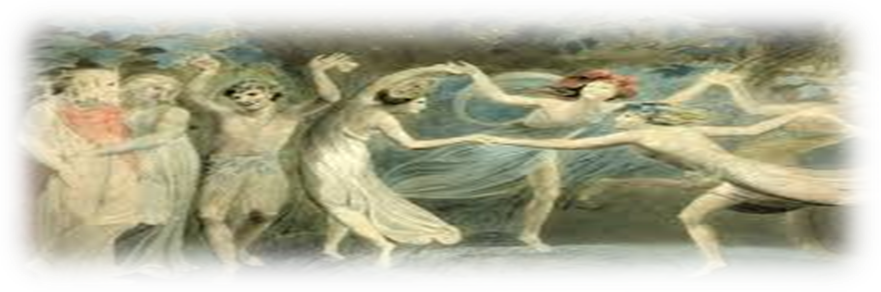
I wonder if Titania and Oberon and Puck were out cavorting.  I certainly hope so, but, if so, “wherefore were they and why”?

Wandering thoughts on an early summer’s day in a sort of late Juniper’s June.
_______

© Guillermo Calvo Mahé; Manizales, 2023; all rights reserved.  Please feel free to share with appropriate attribution.

Guillermo (“Bill”) Calvo Mahé (a sometime poet) is a writer, political commentator and academic currently residing in the Republic of Colombia (although he has primarily lived in the United States of America of which he is also a citizen).  Until 2017 he chaired the political science, government and international relations programs at the Universidad Autónoma de Manizales.  He is currently the publisher of the Inannite Review, available at Substack.com, a commentator on Radio Guasca FM, and an occasional contributor to the regional magazine, el Observador.  He has academic degrees in political science (the Citadel), law (St. John’s University), international legal studies (New York University) and translation and linguistic studies (the University of Florida’s Center for Latin American Studies).  However, he is also fascinated by mythology, religion, physics, astronomy and mathematics, especially with matters related to quanta and cosmogony.  He can be contacted at guillermo.calvo.mahe@gmail.com and much of his writing is available through his blog at https://guillermocalvo.com/.

The True Meaning of Life and all that Rot (Literally; or is it “figuratively”?)

Philosophy is an interesting human concept, our very own innovation designed to concurrently enlighten and befuddle us.  It both opens our minds and channels them into narrow calcified tunnels with light so distant as to become virtually invisible, and hence, rendering real knowledge ungraspable.  At least that’s frequently the case.  But not always.  Take the “meaning of life as an example.  Is it really as complicated and unfathomable as we´ve made it?  Or, is it rather simple and basic?  Based on the following hypothesis, you be the judge.

Sooo, about the “meaning of life” about which we[1] humans spend so much time wondering and, with regards to which, we spend so much time bemoaning the absence of answers.  At least some of us.  At least during certain stages of our lives (for example, during the onset of puberty at adolescence, then as we approach midlife crises, then as we approach what we refer to as our third or golden years, and finally, as we face transition beyond the veil). 

I think I may have found it (it being “the” answer), at least as far as “we” humans are concerned, but, notwithstanding the conclusions of Douglas Adams (wherever he is now that he’s passed beyond the veil), it has nothing to do with the number forty-two.

I would warn readers that the answer’s a bit humbling and hardly grandiose.  Rather, it’s quite utilitarian, although still rather important.  And it applies narrowly and specifically to only one of life’s realms, thus other forms of life have other primal purposes since, when we ask what the purpose of life is, we are referring to the purpose of life and its meaning among we humans.  Accordingly, the answer lies there. 

But what are our premises?  After all, every well thought out answer starts with premises.

Well, interestingly enough, there seem to be just three.  First[2] we have to acknowledge that we humans are part of the animal kingdom, or at least evolved therefrom[3]; second, that the animal and plant kingdoms are both an innovation of our joint forefathers eukaryotes; and third, that those animals possessed of alimentary canals which process ingested nourishment into waste, are our direct ancestors.  There!  We’re set.  Sort of.

Based on the foregoing, the reality with respect to the meaning of life, or perhaps, more accurately, our lives, is that the primary and perhaps sole purpose and function of the denizens of the branch of the animal kingdom of which we’re a part was supposed to be, according to nature (our progenitor), the proliferation of vegetable species, most importantly fruit, beyond their normal range.  That was to be accomplished through the combination of our innovative freedom of movement, compared to the plants we were digesting, and our excretionary functions.  Consequently, we were not “forbidden” to eat the fruit of life, but, as Eve would in no uncertain terms conform, impelled to do so, and to digest it, and having digested it into a compost that included seeds and the fertilizing agents necessary for propagation, excrete the residue to spread vegetable life far and wide.

The plant and animal kingdoms (all multicellular animals), of course, constitute only two of the five currently recognized living realms, the others being fungi (moulds, mushrooms and yeast), protists (amoeba, chlorella and plasmodium) and prokaryotes (bacteria and blue-green algae) but in the context of our foundational inquiry, we are only concerned with the first two, and with respect to those, original purposes soon became complicated and convoluted, perhaps resulting in our current confusion and despair.

While our original purpose for existing as part of the living realms was clear, the animal kingdom duchy (sort to speak, or perhaps principality) of which we are part soon deviated as carnivores insisted on intruding onto the alimentary premises which the vegetable kingdom found imperative, and rather than consuming plants and fruit, especially fruit, they insisted on a form of primordial cannibalism and expanding on that, we humans evolved into omnivores, consuming anything and everything that did not consume us first.  But that was not enough for us, we then degraded the importance of our excretions.  Indeed, we disdained and contained them through nonproductive (at least from the vegetable kingdom’s perspective) purportedly salutary practices, such deviation from our primary purpose having been erroneously premised on cultural misinterpretation of our role, our “prime directive” as Gene Roddenberry might have put it, and then, of course, misdirection.  Since then, we’ve invented myriads of fields of reflection and introspection trying to rediscover the purpose we ourselves rendered, if not obsolete, at least anachronistic.

Following the hypothesis that no good deed goes unpunished, at least for long, the animal kingdom, duchy of which we are a part, through the intervention and innovations of we humans, has and continues to conquer and devastate our creators in the vegetable kingdom, indeed, in all five of life’s realms, which may be the source of the rumor spread by Friedrich Nietzsche to the effect that “God”, whoever or whatever that was (hint, it’s obviously nature) is dead, although Nietzsche was merely projecting nature’s future.

Interestingly, the foregoing also implies another epiphany, one that involves the identity of the “adversary, to whom some humans unfairly refer in their purportedly sacred writings as Lucifer, or Satan, or Shaitan, but which more accurately, was a certain Hêl él[4].  In fact, if the foregoing is accurate, the adversary was in fat not some deviant archangel but rather, a certain Robert Thom, the Scott[5] who initiated sewage treatment in the city of Paisley[6]; the clearest and most expansive example of the law of unintended consequences. 

If only plants could speak what stories they could tell. 

Sooo, … about artificial intelligence …!
_______

© Guillermo Calvo Mahé; Manizales, 2023; all rights reserved.  Please feel free to share with appropriate attribution.

Guillermo (“Bill”) Calvo Mahé (a sometime poet) is a writer, political commentator and academic currently residing in the Republic of Colombia (although he has primarily lived in the United States of America of which he is also a citizen).  Until 2017 he chaired the political science, government and international relations programs at the Universidad Autónoma de Manizales.  He is currently the publisher of the Inannite Review, available at Substack.com, a commentator on Radio Guasca FM, and an occasional contributor to the regional magazine, el Observador.  He has academic degrees in political science (the Citadel), law (St. John’s University), international legal studies (New York University) and translation and linguistic studies (the University of Florida’s Center for Latin American Studies).  However, he is also fascinated by mythology, religion, physics, astronomy and mathematics, especially with matters related to quanta and cosmogony.  He can be contacted at guillermo.calvo.mahe@gmail.com and much of his writing is available through his blog at https://guillermocalvo.com/.


[1] I know, I know, it should be “us”, but I don’t really like the way “us” sounds in this context, and, … I am the author, with all rights to “poetic license”, sooo, “we” it is.

[2] I know, I know, … again.  “Premises, premises”, but what can we do without them.

[3] The “derived therefrom” phrase preemptively addresses arguments insisting that we are qualitatively different than animals.

[4] Look him up, it’s worth it.

[5] I hate to admit that the English may have been correct when some postulated that the devil was most certainly a Scott.  But evidently, at least in this one instance, it appears they were on to something.  I guess the axiom that no one is always wrong may, in fact, be somewhat correct.

[6] Although the Minoan civilization of Crete and the Roman Empire used underground clay pipes for “sanitation” purposes.  So perhaps the identity of the “adversary” is all too securely hidden.

An Interview with Yaʿaqov ben Yosef, the Nazarene; the Son of Mary and …

[Interview through impenetrable rails in purportedly pearly gates, somewhere outside of time and space]

Interviewer (me): 

Sooo, is it “άκωβος” now, or “Iacobus”?  I’m not sure what they speak in there.  For some reason a lot of people over the years assumed it was Greek and then, Latin, but perhaps its Aramaic, or Hebrew, or perhaps Enochian.  Enochian makes the most sense, but no one understands it where I’m from. You know, there are a lot of strange, maybe even weird rumors about you down below, and definitely weird rumors in the deepest of basements.  Thanks for granting me this exclusive interview to clear things up.  It is exclusive, … right?  I mean, you haven’t really done this before have you.  Given all the stuff written over the years back home, it’s a bit confusing where they got their material. 

Here’s a list of questions, I assume you’ll be able to read them.

יעקב, James, or Jacob, or Santiago, or ….:

Okay, well, not exactly in any order, I have no recollection of ever having granted interviews before, actually, I’d never heard of the concept until you showed up, but I did know quite a few people back in Yerushalayim, and even more people apparently claim to have known me.  Maybe they did, I didn’t really keep records.  You can call me יעקב (Yaʿaqov), but if you can’t pronounce that, then James will do, although I’m sort of partial to “Santiago” although, for the life of me, I can’t fathom how the Spanish got “Santiago” out of Yaʿaqov, or for that matter, where “James” came from.  Is “Yaʿaqov” really that confusing for you English speakers?  It must have had something to do with an ancestor of one of those clowns who worked at the entry desk at Ellis Island.

Don’t look so surprised, we get a lot of news up here, well, at least sometimes.  When the airwaves aren’t clogged up with incessant prayers.

Still, … I can’t really read the list of questions you gave me, I never learned to read in English, we didn’t have it back then, my family only spoke Aramaic most of the time, and we read Hebrew, and understood Greek, and even some Latin.  But I only really read Hebrew.  And anyway, I’m not Joe Biden you know.  I don’t need to have someone prepare cheat sheets for my interviews.

So, if you don’t mind, I’ll just rattle off what we up here refer to as a stream of consciousness, sort of anticipating what I think you probably want to know.  You know, to share with those down there.  Actually, according to my brother, we were expecting a bunch of you up here a while ago.  Maybe you can enlighten as to why the hold up.

Anyway …

During my lifetime I was sometimes referred to as “James (יעקב, Yaʿaqov) the Just”, to which I invariably replied, “just James please”.  Well, in your language.  In mine, at the time, it was “Yaʿaqov”.  But after I’d journeyed beyond the veil, “James the Just” seems to have stuck, … As well as exaggerated rumors concerning my hygiene, or lack thereof, (for the purported sake of piety).  Neither really made sense.  I had to submerge myself in water not infrequently, in conjunction with ritual cleansing required by my Hebrew religious rituals, although it’s true that I rarely cut my hair.  Most of us Jews didn’t, at the time, and never my facial fair, which after a certain length stopped growing of its own volition.  Damned Hegesippus didn’t know anything about the real me, he just made stuff up.  Yeah; I know it was him!  Damned rumor mongering gentile!  And please, don’t think I’m using inappropriate verbiage. “Damned” is exactly the correct adjective when I use it, … especially up here.

It’s not true that I never drank either.  My brother Yeshua, as you know, insisted that we drink in his remembrance, but even as a child, who in Palestine would ever permit their children to drink our water without being treated with wine to avoid disease?  I was a confirmed bachelor though, that part is accurate; Miriam of nearby Magdala was the only woman I was ever drawn to, but she only had eyes, or anything else, for my brother, the prophet, or rabbi, or whatever.  That was for the best anyway.

Bishop?  Me?  We had no priests even, let alone bishops.  We were communists for Heaven’s sake.  Yeshua had made it perfectly clear how he felt about that, although that creep, Saul, seems to have befuddled Simon on that and other points while the two of them were carousing in the Imperial capital.  That damned Saul (and as you know, I mean it literally) perverted everything he touched.  Money, money, money, but it worked.  Simon should have stayed home. 

As for my skydiving off of the Temple roof, well, I can’t really recall doing that but I understand that I was stoned around that time, so, who’s to say.  I understand that being “stoned” has several different connotations nowadays though.

Oh!!!  And yes, Miriam was our mother!!!

Anyway, that’s about it for this interview.  Hope I clarified a few misconceptions, and obviously, I do have a sense of humor.

Interviewer (me): 

Wow!  You pegged the questions, although the answers are a bit unexpected.

You know, lots of us expected your brother to return an awfully long time ago, and to take us up with him.  Any idea where he is now?  A lot of people would like to know.  The delay really caused a lot of confusion, and then, a lot of us sort of lost faith.  But the “Adventists” are great at rationalization, even if not great at math, but even they’re starting to look a bit put off.

יעקב, James, or Jacob, or Santiago, or ….:

Hmmm, well, errr, … time doesn’t really run here, at all, so maybe Yeshua just sort of got carried away, the angels tend to put him to sleep with all those constant hymns and harping, and Dad’s preaching is pretty drawn out.  His Dad I mean.  Mine was Yosef.

But I’ll be sure to tell him you stopped by and asked after him.  If I see him that is.  This place has no dimensions or space, so things can get confusing.

Interviewer (me): 

Ahhhh!  Hmmm, well, I guess that’s it then.  But, well, could I ask a huge favor?  Would you please give your brother my regards, and his Dad too, and my mom, please let her now I really miss her, and my grandparents, and ….

_______

© Guillermo Calvo Mahé; Manizales, 2023; all rights reserved.  Please feel free to share with appropriate attribution. Guillermo (“Bill”) Calvo Mahé (a sometime poet) is a writer, political commentator and academic currently residing in the Republic of Colombia (although he has primarily lived in the United States of America of which he is also a citizen).  Until 2017 he chaired the political science, government and international relations programs at the Universidad Autónoma de Manizales.  He is currently the publisher of the Inannite Review, available at Substack.com.  He has academic degrees in political science (the Citadel), law (St. John’s University), international legal studies (New York University) and translation and linguistic studies (the University of Florida’s Center for Latin American Studies).  However, he is also fascinated by mythology, religion, physics, astronomy and mathematics, especially with matters related to quanta and cosmogony.  He can be contacted at guillermo.calvo.mahe@gmail.com and much of his writing is available through his blog at https://guillermocalvo.com/.

A Divine Revelation to a Society of Seekers

Divinity enjoyed timeless access to everything, eternally, within the perfect balance of absolute, omni-dimensional, omni-universal naught that is best described as absolute zero. That balance was broken when Divinity expired causing the primal omni-explosion that created the omniverse.

Residue of the expired Divinity comprises every component of the omniverse some of which evolved into Divine avatars in the form of gods and demons, their status, attributes and abilities depending in the degree of belief lent to them by sentient entities.

Every aspect of the omniverse bears a portion of the Divine and thus, only in total concert can they reconstitute Divinity, or more accurately, the Divine Ghost. Note that a ghost, the non-physical residue of a formerly living being, is not the same as a spirit, which coexists in a symbiotic relationship with a living component.

Time is the medium in which the Divine Ghost dwells but it streams linearly in all possible directions and at all possible speeds, seeking to reflect, albeit pallidly, the infinite possibilities once latent and inchoate, that once eternally constituted its corpus.
_______

© Guillermo Calvo Mahé; Ocala, Florida, December 4, 2005; all rights reserved.  Please feel free to share with appropriate attribution.

Guillermo (“Bill”) Calvo Mahé (a sometime poet) is a writer, political commentator and academic currently residing in the Republic of Colombia (although he has primarily lived in the United States of America of which he is also a citizen).  Until 2017 he chaired the political science, government and international relations programs at the Universidad Autónoma de Manizales.  He is currently the publisher of the Inannite Review, available at Substack.com.  He has academic degrees in political science (the Citadel), law (St. John’s University), international legal studies (New York University) and translation and linguistic studies (the University of Florida’s Center for Latin American Studies).  However, he is also fascinated by mythology, religion, physics, astronomy and mathematics, especially with matters related to quanta and cosmogony.  He can be contacted at guillermo.calvo.mahe@gmail.com and much of his writing is available through his blog at https://guillermocalvo.com/.

On the Possibility of Divine Contrition

What if some of what objective alien academics might, on reflection, consider Terran religious myths, turned out to be true.  Consider the two most visible this week: the divine massacre of Egypt’s first born male children at the request of at least one Hebrew leader; and then, a bit over a millennia later, the execution of the purported son of the Hebrew god, again, at the demand of at least some Hebrew leaders.

What if the execution of the Nazarene, Yeshua ben Miriam, or ben Deux, or ben Yosef, depending on his paternity, involved an act of contrition by the Hebrew divinity for the execution, at his command, of so many innocents, and that does not relate solely to the Egyptian firstborn, but to almost all of the human race in the purported Great Flood, and to numerous Canaanites whose land, property and women were apparently gifts from the Hebrew God to the followers of a man from Ur Kaśdim who married his own sister and did not hesitate to generously share her with others (if it was to his benefit), and perhaps, even to the imposition of mortality not only on Eve, purportedly for her sins, and Adam, but on all humanity.

What if, having had over a millennia to reflect, the Hebrew divinity discovered a conscience and decided that his own sins (he was obviously male) required a supreme sacrifice, that of a version of himself? 

That certainly makes more ethical and moral sense than a sacrifice by mankind of a divinity’s son, to expunge the sin by one ancestress of having taken a bite from an apple (or a fruit of some kind, anyway).

Something to consider during the celebration of this week which so reeks of irony.

_______

© Guillermo Calvo Mahé; Manizales, 2023; all rights reserved.  Please feel free to share with appropriate attribution.

Guillermo (“Bill”) Calvo Mahé (a sometime poet) is a writer, political commentator and academic currently residing in the Republic of Colombia (although he has primarily lived in the United States of America of which he is also a citizen).  Until 2017 he chaired the political science, government and international relations programs at the Universidad Autónoma de Manizales.  He is currently the publisher of the Inannite Review, available at Substack.com.  He has academic degrees in political science (the Citadel), law (St. John’s University), international legal studies (New York University) and translation and linguistic studies (the University of Florida’s Center for Latin American Studies).  However, he is also fascinated by mythology, religion, physics, astronomy and mathematics, especially with matters related to quanta and cosmogony.  He can be contacted at guillermo.calvo.mahe@gmail.com and much of his writing is available through his blog at https://guillermocalvo.com/.

Something to Mess with as Easter Week once again Makes an Appearance

Sooo, ….  Most of our quotidian numerical systems today are premised on Arabic numerals with10 as the base, hence we start at 0, go through 9 and then start over with zero preceded by one, etc. 

The base 60 system used by the Babylonians, the one we use to tell time, and for angles and circles, etc., was much more sophisticated because, while ten is divisible by 1, 2, 5 and 10 (and perhaps 0), 60 is divisible by each of those, plus, 3, 4, 6 and all of their multiples. 

Most computer language is premised on an “on” and “off” binary concept using symbols of “0”s and “1”s. 

Is monotheistic religion, religion based on platonic models, premised on base “infinity”, with only one, all-encompassing number, making it equivalent to monist panentheism? 

Something to mess with, mentally, as Easter week once again makes an appearance.
_______

© Guillermo Calvo Mahé; Manizales, 2023; all rights reserved.  Please feel free to share with appropriate attribution.

Guillermo (“Bill”) Calvo Mahé (a sometime poet) is a writer, political commentator and academic currently residing in the Republic of Colombia (although he has primarily lived in the United States of America of which he is also a citizen).  Until 2017 he chaired the political science, government and international relations programs at the Universidad Autónoma de Manizales.  He is currently the publisher of the Inannite Review, available at Substack.com.  He has academic degrees in political science (the Citadel), law (St. John’s University), international legal studies (New York University) and translation and linguistic studies (the University of Florida’s Center for Latin American Studies).  However, he is also fascinated by mythology, religion, physics, astronomy and mathematics, especially with matters related to quanta and cosmogony.  He can be contacted at guillermo.calvo.mahe@gmail.com and much of his writing is available through his blog at https://guillermocalvo.com/.