Ironies in being a Sports Fan

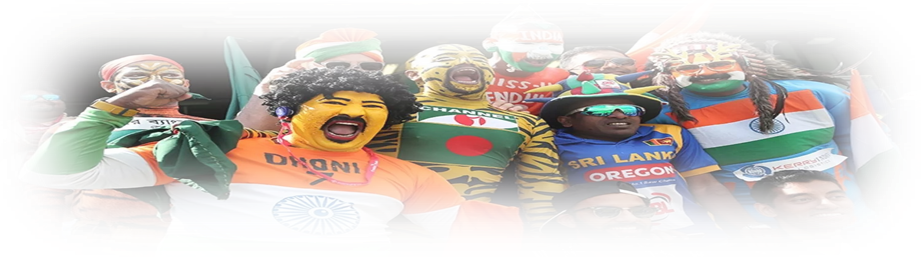
Being a “fan” is a form of self-deprecation.  Rather than taking pride in our own accomplishments, we tag along vicariously on the hoped for accomplishments of others.  Being a “sports” fan seems an exercise in sadomasochism as well.  We suffer through defeats in which we really play little or no part while gloating over the defeats of others’ aspirations when our teams triumph, all the while of course, our attention and energies are distracted and siphoned away from pressing existential issues, like our families, our jobs, war and peace; like minimization of poverty and inequality; like efficient and just penal and educational systems.  The list seems endless but we can avoid worrying about the related problems, or working towards their solutions, by concentrating on sports.  Or the rich and famous in show business, etc.

Being a fan is addictive as surely as the most powerful intoxicants perhaps because, like them, it’s a way to avoid our realities.  And perhaps, given the reality that we have little or no real ability to impact the world in which we live, like the opiate of the masses referenced by Karl Marx, it’s a necessary vice.

One to which I’m clearly as addicted as anyone.  Goooo Yankees!  Goooo Jets!!  Goooo Citadel Bulldogs!!!  ….  Not a great year.
_______

© Guillermo Calvo Mahé; Manizales, 2023; all rights reserved.  Please feel free to share with appropriate attribution.

Guillermo (“Bill”) Calvo Mahé (a sometime poet) is a writer, political commentator and academic currently residing in the Republic of Colombia (although he has primarily lived in the United States of America of which he is also a citizen).  Until 2017 he chaired the political science, government and international relations programs at the Universidad Autónoma de Manizales.  He is currently the publisher of the Inannite Review, available at Substack.com, a commentator on Radio Guasca FM, and an occasional contributor to the regional magazine, el Observador.  He has academic degrees in political science (the Citadel), law (St. John’s University), international legal studies (New York University) and translation and linguistic studies (the University of Florida’s Center for Latin American Studies).  However, he is also fascinated by mythology, religion, physics, astronomy and mathematics, especially with matters related to quanta and cosmogony.  He can be contacted at guillermo.calvo.mahe@gmail.com and much of his writing is available through his blog at https://guillermocalvo.com/.
A Saga of Willy-o’-the-Wisp

He preferred Will-o’-the-wisp to Ignis Fatuus, or you could call him just plain Will and he’d not mind, or Willy if you were close.  One of his paramours had affectionately called him Wispy Will, he’d sort of liked that.  But Ignis Fatuus was not only pompous, but sounded gaseous, sort of like sentient flatulence, which, unfortunately, made sense.  Will preferred to focus on his luminosity though.

“Foot lose and fancy free” he’d sometimes hum as he travelled hither and yon, seeking not even he knew what or whom, he was just driven you might say, he certainly would.  He preferred marshes, especially around dusk, and at dawn, and he liked to pop out of what appeared to be the ether, but ether was not all that popular anymore.  Blasted scientists!

None knew where he lived, or if he’d ever had a Mum or a Dad, or siblings even.  He liked the sibilant sound of the word though, “siblings”, and he liked to elongate it, “siiiiibliiiings”.  Sometimes he felt certain he must have had all of the foregoing but that had been so long ago that he could not recall, not even memories of once having had memories concerning them.

Some claimed that he was fey, or at least one of the Fey.  He liked that too.  It made him feel a part of something greater than an ethereal, ephemeral ball of smelly gas.  Sometimes he’d pretend that he was just lost and seeking his family, or perhaps his clan, and sometimes he’d believe that was true.  The truth is that he’d played at that game so often he had no idea what the truth was.  Not even an inkling.

He did like to float though, and over the years and then the ages, he’d gotten sort of good at it.  And at popping on and off, appearing and disappearing seemingly at will.  He wondered sometimes whether or not that ability had not, at some point, been responsible for his sobriquet.  It wasn’t really a nickname though, “a nickname required a real name didn’t it” he’d sometimes whisper to himself, or even to those who unsuccessfully sought him.  His life was, after all, a perpetual game of hide and seek, one he always won as he never played the seeking part.  Or at least he didn’t think he did.

Will-o’-the-wisp he was, he was”, no matter what others deigned to call him, unless it was Will or Willy or Wispy Will, but certainly not “Ignis Fatuus”, at least not for a thousand years or so.  He’d sing that sometimes to the tune of a song by a young British group of hermits led by someone named Herman whose spouse had apparently been married seven times previously and for some reason, that had seemed a point of pride to Herman.  But Will mainly liked the tune and would hum it to himself, making up new verses, or repeating old verses he’d once made up and then perhaps forgotten, … perhaps.  There had been other tunes he’d taken up in the past, making up his own lyrics as he floated, somewhat bloated, from place to place.  One had to do with a “Yankee”, whatever that was, who’d gone to a large city now called London to ride a pony or something.  Strange.  He recalled London when it was a mere hint of a village, not even yet Londinium and still had plenty of marshes in which he could play, but that had been quite a while ago.

He actually recalled quite a great many places and many, many foolish people who unsuccessfully tried to catch him, especially during the fall and early winter, and the very early spring.  He could be in many places at the same time and then, no where at all, time being a sort of stream to him, one of several in which he could play.  And sometimes he’d even run into himself, which was sort of confusing, but he always recognized himself and who and what he was, so he’d just whisper a sibilant sibling greeting and move on.

I’m Willy-o’-the-wisp I am, Willy-o’-the-wisp I am I am, I got married to the widow next door, she’s been married seven time before, and every one was a Willy, never had a Henry or a Sam, Willy-o’-the-wisp I am I am, Willy-o’-the-wisp I am, Willy-o’-the-wisp I am, Willy-o’-the-wisp I am!

Sigh!”
_______

© Guillermo Calvo Mahé; Manizales, 2023; all rights reserved.  Please feel free to share with appropriate attribution.

Guillermo (“Bill”) Calvo Mahé (a sometime poet) is a writer, political commentator and academic currently residing in the Republic of Colombia (although he has primarily lived in the United States of America of which he is also a citizen).  Until 2017 he chaired the political science, government and international relations programs at the Universidad Autónoma de Manizales.  He is currently the publisher of the Inannite Review, available at Substack.com, a commentator on Radio Guasca FM, and an occasional contributor to the regional magazine, el Observador.  He has academic degrees in political science (the Citadel), law (St. John’s University), international legal studies (New York University) and translation and linguistic studies (the University of Florida’s Center for Latin American Studies).  However, he is also fascinated by mythology, religion, physics, astronomy and mathematics, especially with matters related to quanta and cosmogony.  He can be contacted at guillermo.calvo.mahe@gmail.com and much of his writing is available through his blog at https://guillermocalvo.com/.
Observations on the Other Side of the Veil and Just where Jimmy Buffet Might Be

Nirvana doesn’t appeal to me.  Nor frankly do Heaven, Hell, Purgatory, etc., although heaven is such an amorphous concept it can encompass anything. 

Abrahamic heaven is certainly not my thing.  At best, horribly boring with perpetual psalms, harping and sycophancy. 

But an afterlife with everyone I’ve cared for would be interesting even if complex given competing and inconsistent relationships; at least in my case.

Hell is apparently were all the fun people go so a hell without the torment would be pretty awesome.  I wonder if Jimmy Buffet is there, and the Beatles who’ve passed on, and Elvis, and Mickey Mantle and Joe DiMaggio.  Awesome artists of course, Vincent van Gogh and Picasso, Rembrandt and da Vinci, Raphael and el Greco, Michelangelo too.  And actors and actresses and writers, and of course, poets.  Of course, a lot of unpleasant characters would be there as well, loads of politicians and lawyers and pseudo journalists, pederasts and rapists and  reams upon reams of religious leaders, popes, cardinals, bishops, priests, rabbis, pastors.  And a lot of military officers, especially generals and field marshals and such.  And monarchs and judges and jurists who made mistaken decisions. 

So Hell, … interesting but not really for me.  Too much like the current world.

Purgatory.  Hmmm, probably pretty cool, maybe the best of Hell without its downside.  But Limbo?  Well, sort of vacuous with a lot of babies wailing wondering just what the heck they were doing there, and who they were, and why they’d been abandoned. 

What kind of deity creates the foregoing and where ought he, she, it or they be reigning, if anywhere at all.

But Nirvana. 

I guess I’m not yet evolved enough to yearn for the absence of everything and anything, everyone and anyone.  As though I’d never been, which I find philosophically confusing.  Why all the effort, all the incarnations and suffering and, well, pleasure too, if the goal is to return to what I was before I was.  Unless, of course, it’s just an exercise for the education, training and evolution of the omnidivine.

But what happens when the omnidivine attains Nirvana?

Now Margaritaville. 

That would be something else.
_______

© Guillermo Calvo Mahé; Manizales, 2023; all rights reserved.  Please feel free to share with appropriate attribution.

Guillermo (“Bill”) Calvo Mahé (a sometime poet) is a writer, political commentator and academic currently residing in the Republic of Colombia (although he has primarily lived in the United States of America of which he is also a citizen).  Until 2017 he chaired the political science, government and international relations programs at the Universidad Autónoma de Manizales.  He is currently the publisher of the Inannite Review, available at Substack.com, a commentator on Radio Guasca FM, and an occasional contributor to the regional magazine, el Observador.  He has academic degrees in political science (the Citadel), law (St. John’s University), international legal studies (New York University) and translation and linguistic studies (the University of Florida’s Center for Latin American Studies).  However, he is also fascinated by mythology, religion, physics, astronomy and mathematics, especially with matters related to quanta and cosmogony.  He can be contacted at guillermo.calvo.mahe@gmail.com and much of his writing is available through his blog at https://guillermocalvo.com/.

Sméagol the-all-colored-and-none

The lava was dazzlingly bright and malodorous, viscous and horribly searing.  He could feel the ring formerly called by some Isildur’s Bane, the One Ring, the one still on Frodo’s finger but both now both ensconced in his belly, both stirring and rumbling, as if fighting or perhaps mating.  Somehow the One Ring and Frodo’s finger formed a strange amalgam protecting him from the elements in which he found himself immersed, albeit changing him.  He was actually breathing the molten blend of minerals in the core of Mt. Doom, becoming one with them and gaining insights.  Everything that had once been vague, confusing and occluded was becoming crystal clear.  Well, actually, had become crystal clear.  His metamorphosis, if not complete, was well on the road to completion.  For some reason he thought of two thespians, one a crooner and the other a comic, and strangely, at the same time, visa versa.  They’d someday be famous for something called “road movies”, at least for a while, but their time would be followed by one where the past was something to be quickly discarded and replaced with nary a trace.  Strange sort of prescient instant but not one involving the Middle Earth he’d always thought of as home.

His Gollum aspects had been purified and distilled somehow, and become integrated with the Sméagol from whom they’d once escaped, the Sméagol who had once been and would be again, albeit in a drastically changed form, all occurring concurrently.  Everything, he realized, was both concurrent and complimentary, especially those things that most seemed at odds.  Oxymoronism was the rule rather than an exception as the power of the One Ring and the one finger were integrated into his being.  As had been the case with that damned Gandalf the Grey, when he’d been had been transformed into Gandalf the White, his essence seared and melded in the comparatively minor fires in the depths of Khazad-Dûm, so Sméagol was being transformed, was transformed in the infinitely more powerful and hellishly hot timeless fires of Mount Doom.  Yes, Sméagol too had emerged transformed, transformed into the all-powerful being he’d aspired to, but not quite.  The metamorphosis apparently involved a complex blend of good and evil, and the Gollum he’d been ironically found himself transformed into Sméagol the White, Sméagol of the many colors, Sméagol the-all-colored-and-none.  But what had he been before?  Gollum the Black perhaps, or Sméagol the sort of dingy grey.

Anyway, “it”, whatever “it was”, was not what he’d imagined.  His final triumph over the burglar had not turned out as he’d hoped.  He was encumbered rather than liberated, chained to responsibilities in every direction.  He was chained in chains more biting and bitter than those in Barad-dûr, although as ethereal as they were ephemeral.  He was as imprisoned as he’d ever been, although now in a prison of his own devise where “duty”, rather than feckless free will and whimsical follies and grandeur, seemed to be what divinity entailed. 

He was not quite omniscient, although he now knew almost everything that had ever happened and had a fair inkling of what was to come, and if he was omnipotent, his use of power was severely constrained through limits that may or may not have been self-imposed.  And omnipresence was very overblown as it stretched him so thinly over time and space as to make him virtually non-existent.  As to omnibenevolence, well that was only possible if he froze everything and failed to permit any action at all, and apparently, his possibly self-imposed limits rendered that as improbable as it was impractical.  The closest that could be attained in that regard was a sort of perpetual balance between the light and the dark, between absolute silence and the eternally unwinding song of the orbs.  Damned stifling he thought.

Sméagol was disappointed.  And he had a bit of indigestion as his body tried to assimilate both Frodo’s finger and the One Ring, and despite the hellish heat in the nethermost pits of Mount Doom, he felt bitterly cold.  And the massive constant input of information made him dizzy.  And he was lonely and alone, now the only being of his kind.  Worse, the former occupant of his current post had evaporated as Sméagol’s metamorphosis took hold, changing into a joyful mist from whence was shouted: “free at last, free at last, thank Me all-mighty I’m free at last”, … or some such thing.

Sméagol remembered Bilbo and Frodo and Hobbits and fishies and his cavern and his lake and his little boat, and he remembered the stages through which he’d passed to become what he now was, some phases when he’d been relatively happy, albeit mainly as a baby, then increasingly less so as he’d grown into a young lad of a species now extinct (having been assimilated into various other species, Hobbits among them).  He remembered how tasty orcs and goblins could be, especially when seasoned with a bit of garlic, which was hellishly hard to come by given the absence of Italians in the Middle Earth of his time.  But now all times were his to play with, albeit passively, but what fun was there in passivity he thought to himself, there being no one around with whom to chat, or with whom to share riddles.

He speculated on how Italians might fit into “his” Middle Earth.  Perhaps medieval Italians.  But had they already invented the cuisine for which future Italians would become famous and with which he, free of temporal constraints, was already somehow familiar?  And what about the famous “Mafia”, which was apparently not an acronym for the Mothers and Fathers Italian Association?  He wondered why Italy had come to mind, rather than say, South Africa, or England, now that he had the omniverse in which to play, although, he recalled, only in a passive sense.  Then he wondered why South Africa and England felt more relevant.  And Iceland, something about its sagas seemed important.

Perhaps, thought Sméagol the White (or whatever, the colors issue had become confusing), this was all a dream, perhaps everything was a dream and only dreams existed, and perhaps he was the only dreamer.  Perhaps he’d always been the only dreamer in a dream from which there could be no escape, notwithstanding omniscience and omnipotence and all the other omnis, all of them being somehow passive in the end, each one cancelling out the others.

Then gratefully, if not blissfully, everything became dark, if not quite silent.  That damned infernal music of the orbs was incessant as was the somewhat painful rumbling in his stomach, but Sméagol the White, Sméagol of the many colors, Sméagol the-all-colored-and-none slept; hopefully dreamlessly and forever if not quite peacefully.

Sigh!!!!!

In a corner somewhere else in time and space, a place but not a place, someone chuckled, and a string of multicolored rings made from some sort of smoke played at tag.
_______

© Guillermo Calvo Mahé; Manizales, 2023; all rights reserved.  Please feel free to share with appropriate attribution.  Adapted from concepts developed by JRR Tolkien in his diverse copyrighted Middle Earth projects furthered by his son Christopher in other Middle earth related projects. Guillermo (“Bill”) Calvo Mahé (a sometime poet) is a writer, political commentator and academic currently residing in the Republic of Colombia (although he has primarily lived in the United States of America of which he is also a citizen).  Until 2017 he chaired the political science, government and international relations programs at the Universidad Autónoma de Manizales.  He is currently the publisher of the Inannite Review, available at Substack.com, a commentator on Radio Guasca FM, and an occasional contributor to the regional magazine, el Observador.  He has academic degrees in political science (the Citadel), law (St. John’s University), international legal studies (New York University) and translation and linguistic studies (the University of Florida’s Center for Latin American Studies).  However, he is also fascinated by mythology, religion, physics, astronomy and mathematics, especially with matters related to quanta and cosmogony.  He can be contacted at guillermo.calvo.mahe@gmail.com and much of his writing is available through his blog at https://guillermocalvo.com/.
Apples and Chaos and Time: a metaphysical reflection of sorts

Keywords: inchoate, cosmogony, cosmology, mythology, religion, metaphysics

Chaos was not incoherent, merely inchoate[1], … and subject to constant change as everything that could happen, happened, and not just the bad things to which Murphy alludes.  Everything!

It was infinitely inchoate except for a single fleeting reality, a sort of tease really, but the reality of the instant was constantly changing, sometimes repeatedly, other times not.  The multiverse was constantly assembled and disassembled, then reassembled in different patterns.  Memory was ephemeral, whether involving radiation, energy or matter.  Multiverses existed but for what humans would consider a tiny fraction of a zeptosecond[2], but with fully formed recollections going back billions of years, at least so that during that infinitesimal fraction of a zeptosecond, quintillions of beings scattered throughout that multiverse believed they had a present, and had had a past, and had aspirations for a future, and it might be that at some other fraction of a zeptosecond, either in the past or concurrently somewhere else or in some future fraction of a zeptosecond, there might be continuity of sorts, but everything was not random, at least not always.  Nonetheless, discontinuity was the rule, at least usually.  Each zeptosegundic civilization might be interrupted for eternities before one instant there followed another, although time being non-existent, oxymoronically, instants and an eternities both lacked context or meaning, everything occurring concurrently but, simultaneously, not occurring at all.  Chaos was, well, chaotic that way, but interesting, very interesting.

Two beings formed the only continuity in chaos, a sort of husband, who lacked a name (having been the first) and his consort, whom he called Sophia.  He’d willed her into existence, freeing her from the inchoate, or perhaps, he’d merely severed her from himself so that he’d not be alone, or perhaps she was just his echo, as ying would someday be to yang, or alpha to omega, or male to female.

Each had the ability to create chains of existence, something he’d always been able to do but had not considered until she appeared at his side, or within him, or somewhere, somehow perceptible; but they were both rather immature, very fickle, and, like the context in which they existed, with very poorly developed memories, linearity being anathema to them but essential for memory.  You see, memory implied order, and order implied a sort of temporal stability and was thus a heresy to beings born in inchoate chaos, thus they (or at least, he) had no intention of permitting order or time in his (well, now their) realm.  He somehow perceived that it would bring limits to their infinite power and perhaps permit others to pop into existence, … and remain “existent”.  And that would inevitably destroy the unstable stability required to maintain chaos perfectly inchoate.  Inchoate chaos, were everything was equally possible and thus much more than just probable, and where every possibility could coexist concurrently.  Indeed, given the absence of time, every possibility had to coexist concurrently, albeit, as we’ve noted, rather briefly.  Extreme brevity, the most extreme brevity possible, was also an essential and inherent component of inchoate chaos.

The foregoing was, of course, chock full of paradoxes, an infinity of paradoxes running concurrently, like uncontrolled chain reactions of quanta fusing inchoate quarks into whatever inchoate quarks wanted to become.  Perhaps he’d been the result of the first such fusion, and perhaps he’d immediately sought to contain and discontinue the phenomenon.  If so, that would have ended the perfect harmony of inchoate chaos and represented the first quanta of order.  How ironic would that have been?  But, of course, memory being strictly forbidden, he had no memory of anything before him, or with him, at least until Sofia had somehow appeared.  And come to think of it, since she’d joined him, waves seemed to be jostling the infinity of ephemeral multiverses a bit.  He could tell because the waves made a sort of music, and he’d enjoyed the music, unaware of what it might mean.  As he’d enjoyed Sophia’s company, unaware of what that might mean either.  But music and Sophia sort of went together, and Sophia had never been aware of an existence were the music had not been present.

And then, of a sudden, there had been a sudden.  The first “sudden”, sort of.

The first sudden, and inchoatesy had been ruptured and time had appeared from apparently nowhere and everywhere synchronously (knowing that it was anathema it’d been hiding), and order emerged, starting to gather up infinitesimal pieces, linking and organizing them, although to anyone who might have been watching[3] there was a huge blast.  Infinitely hot, but only for a small fraction of a zeptosecond, after which it started to cool and expand.

And the One looked at Sophia, but she just shrugged, the first shrug, and for some reason, she thought of apples.

….
_______

© Guillermo Calvo Mahé; Manizales, 2023; all rights reserved.  Please feel free to share with appropriate attribution.

Guillermo (“Bill”) Calvo Mahé (a sometime poet) is a writer, political commentator and academic currently residing in the Republic of Colombia (although he has primarily lived in the United States of America of which he is also a citizen).  Until 2017 he chaired the political science, government and international relations programs at the Universidad Autónoma de Manizales.  He is currently the publisher of the Inannite Review, available at Substack.com, a commentator on Radio Guasca FM, and an occasional contributor to the regional magazine, el Observador.  He has academic degrees in political science (the Citadel), law (St. John’s University), international legal studies (New York University) and translation and linguistic studies (the University of Florida’s Center for Latin American Studies).  However, he is also fascinated by mythology, religion, physics, astronomy and mathematics, especially with matters related to quanta and cosmogony.  He can be contacted at guillermo.calvo.mahe@gmail.com and much of his writing is available through his blog at https://guillermocalvo.com/.


[1] Something that will be, with the passage of time, but is not yet, at least not quite, but is perhaps hinted at.

[2] The smallest unit of measurable time, i.e., the time it takes a photon to traverse a proton.

[3] And, of course, everyone was (even an inchoate version of you was there), although unaware of what we were doing, having been inchoate until then, and inchoatesy took a long time to unravel, now that time existed, as well as, well, … motion.

The Evening of the Day Before

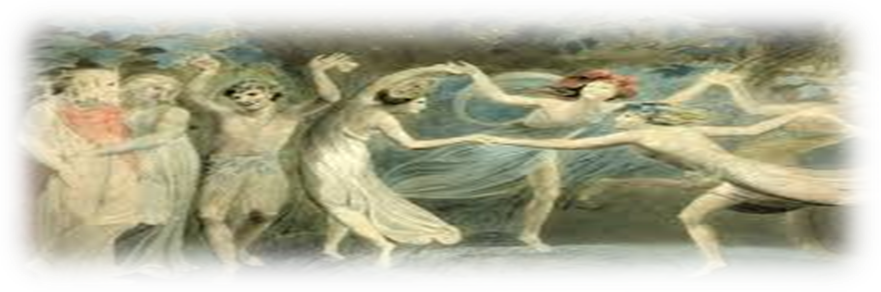
Midsummer’s eve was probably yesterday, but it could have been “the evening of the day before”, a good title for a book perhaps.  Perhaps a book by Umberto Eco or a play by Will-o’-the-wisp Shakespeare.

I wonder if Titania and Oberon and Puck were out cavorting.  I certainly hope so, but, if so, “wherefore were they and why”?

Wandering thoughts on an early summer’s day in a sort of late Juniper’s June.
_______

© Guillermo Calvo Mahé; Manizales, 2023; all rights reserved.  Please feel free to share with appropriate attribution.

Guillermo (“Bill”) Calvo Mahé (a sometime poet) is a writer, political commentator and academic currently residing in the Republic of Colombia (although he has primarily lived in the United States of America of which he is also a citizen).  Until 2017 he chaired the political science, government and international relations programs at the Universidad Autónoma de Manizales.  He is currently the publisher of the Inannite Review, available at Substack.com, a commentator on Radio Guasca FM, and an occasional contributor to the regional magazine, el Observador.  He has academic degrees in political science (the Citadel), law (St. John’s University), international legal studies (New York University) and translation and linguistic studies (the University of Florida’s Center for Latin American Studies).  However, he is also fascinated by mythology, religion, physics, astronomy and mathematics, especially with matters related to quanta and cosmogony.  He can be contacted at guillermo.calvo.mahe@gmail.com and much of his writing is available through his blog at https://guillermocalvo.com/.
The True Meaning of Life and all that Rot (Literally; or is it “figuratively”?)

Philosophy is an interesting human concept, our very own innovation designed to concurrently enlighten and befuddle us.  It both opens our minds and channels them into narrow calcified tunnels with light so distant as to become virtually invisible, and hence, rendering real knowledge ungraspable.  At least that’s frequently the case.  But not always.  Take the “meaning of life as an example.  Is it really as complicated and unfathomable as we´ve made it?  Or, is it rather simple and basic?  Based on the following hypothesis, you be the judge.

Sooo, about the “meaning of life” about which we[1] humans spend so much time wondering and, with regards to which, we spend so much time bemoaning the absence of answers.  At least some of us.  At least during certain stages of our lives (for example, during the onset of puberty at adolescence, then as we approach midlife crises, then as we approach what we refer to as our third or golden years, and finally, as we face transition beyond the veil). 

I think I may have found it (it being “the” answer), at least as far as “we” humans are concerned, but, notwithstanding the conclusions of Douglas Adams (wherever he is now that he’s passed beyond the veil), it has nothing to do with the number forty-two.

I would warn readers that the answer’s a bit humbling and hardly grandiose.  Rather, it’s quite utilitarian, although still rather important.  And it applies narrowly and specifically to only one of life’s realms, thus other forms of life have other primal purposes since, when we ask what the purpose of life is, we are referring to the purpose of life and its meaning among we humans.  Accordingly, the answer lies there. 

But what are our premises?  After all, every well thought out answer starts with premises.

Well, interestingly enough, there seem to be just three.  First[2] we have to acknowledge that we humans are part of the animal kingdom, or at least evolved therefrom[3]; second, that the animal and plant kingdoms are both an innovation of our joint forefathers eukaryotes; and third, that those animals possessed of alimentary canals which process ingested nourishment into waste, are our direct ancestors.  There!  We’re set.  Sort of.

Based on the foregoing, the reality with respect to the meaning of life, or perhaps, more accurately, our lives, is that the primary and perhaps sole purpose and function of the denizens of the branch of the animal kingdom of which we’re a part was supposed to be, according to nature (our progenitor), the proliferation of vegetable species, most importantly fruit, beyond their normal range.  That was to be accomplished through the combination of our innovative freedom of movement, compared to the plants we were digesting, and our excretionary functions.  Consequently, we were not “forbidden” to eat the fruit of life, but, as Eve would in no uncertain terms conform, impelled to do so, and to digest it, and having digested it into a compost that included seeds and the fertilizing agents necessary for propagation, excrete the residue to spread vegetable life far and wide.

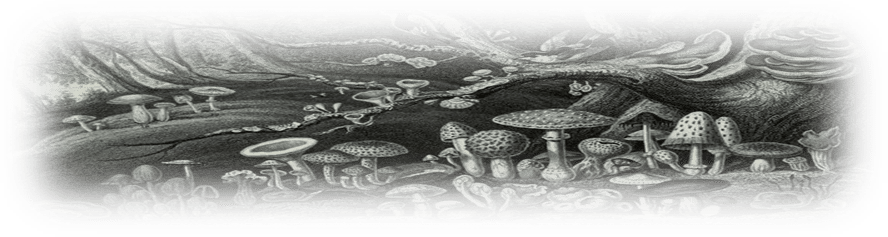
The plant and animal kingdoms (all multicellular animals), of course, constitute only two of the five currently recognized living realms, the others being fungi (moulds, mushrooms and yeast), protists (amoeba, chlorella and plasmodium) and prokaryotes (bacteria and blue-green algae) but in the context of our foundational inquiry, we are only concerned with the first two, and with respect to those, original purposes soon became complicated and convoluted, perhaps resulting in our current confusion and despair.

While our original purpose for existing as part of the living realms was clear, the animal kingdom duchy (sort to speak, or perhaps principality) of which we are part soon deviated as carnivores insisted on intruding onto the alimentary premises which the vegetable kingdom found imperative, and rather than consuming plants and fruit, especially fruit, they insisted on a form of primordial cannibalism and expanding on that, we humans evolved into omnivores, consuming anything and everything that did not consume us first.  But that was not enough for us, we then degraded the importance of our excretions.  Indeed, we disdained and contained them through nonproductive (at least from the vegetable kingdom’s perspective) purportedly salutary practices, such deviation from our primary purpose having been erroneously premised on cultural misinterpretation of our role, our “prime directive” as Gene Roddenberry might have put it, and then, of course, misdirection.  Since then, we’ve invented myriads of fields of reflection and introspection trying to rediscover the purpose we ourselves rendered, if not obsolete, at least anachronistic.

Following the hypothesis that no good deed goes unpunished, at least for long, the animal kingdom, duchy of which we are a part, through the intervention and innovations of we humans, has and continues to conquer and devastate our creators in the vegetable kingdom, indeed, in all five of life’s realms, which may be the source of the rumor spread by Friedrich Nietzsche to the effect that “God”, whoever or whatever that was (hint, it’s obviously nature) is dead, although Nietzsche was merely projecting nature’s future.

Interestingly, the foregoing also implies another epiphany, one that involves the identity of the “adversary, to whom some humans unfairly refer in their purportedly sacred writings as Lucifer, or Satan, or Shaitan, but which more accurately, was a certain Hêl él[4].  In fact, if the foregoing is accurate, the adversary was in fat not some deviant archangel but rather, a certain Robert Thom, the Scott[5] who initiated sewage treatment in the city of Paisley[6]; the clearest and most expansive example of the law of unintended consequences. 

If only plants could speak what stories they could tell. 

Sooo, … about artificial intelligence …!
_______

© Guillermo Calvo Mahé; Manizales, 2023; all rights reserved.  Please feel free to share with appropriate attribution.

Guillermo (“Bill”) Calvo Mahé (a sometime poet) is a writer, political commentator and academic currently residing in the Republic of Colombia (although he has primarily lived in the United States of America of which he is also a citizen).  Until 2017 he chaired the political science, government and international relations programs at the Universidad Autónoma de Manizales.  He is currently the publisher of the Inannite Review, available at Substack.com, a commentator on Radio Guasca FM, and an occasional contributor to the regional magazine, el Observador.  He has academic degrees in political science (the Citadel), law (St. John’s University), international legal studies (New York University) and translation and linguistic studies (the University of Florida’s Center for Latin American Studies).  However, he is also fascinated by mythology, religion, physics, astronomy and mathematics, especially with matters related to quanta and cosmogony.  He can be contacted at guillermo.calvo.mahe@gmail.com and much of his writing is available through his blog at https://guillermocalvo.com/.

[1] I know, I know, it should be “us”, but I don’t really like the way “us” sounds in this context, and, … I am the author, with all rights to “poetic license”, sooo, “we” it is.

[2] I know, I know, … again.  “Premises, premises”, but what can we do without them.

[3] The “derived therefrom” phrase preemptively addresses arguments insisting that we are qualitatively different than animals.

[4] Look him up, it’s worth it.

[5] I hate to admit that the English may have been correct when some postulated that the devil was most certainly a Scott.  But evidently, at least in this one instance, it appears they were on to something.  I guess the axiom that no one is always wrong may, in fact, be somewhat correct.

[6] Although the Minoan civilization of Crete and the Roman Empire used underground clay pipes for “sanitation” purposes.  So perhaps the identity of the “adversary” is all too securely hidden.

Serendipity:

The Saga of a Gal Sort of Named Sue, and … well, … Company

This is a story about consonance, not assonance, but certainly contains more than a trace of dissonance.  It’s a sort of fractured and sad love story.  The characters are, well characters, and no effort has been made, with respect to the nature of their names, to protect the innocent, so we are neither admitting nor denying that they involve real people or real situations, at least deliberately.  But nature being what it is, …who knows?

Well, … maybe the Shadow, … but who else?

Anyway ….

Sue was a lucky girl.  At least for a while.  Good things fell in her pretty lap without her ever having to do anything to earn them, anything at all.  Some said “serendipitous” was her middle name.  It wasn’t.  “Serendipity” was her first name but, for some reason, she preferred to use Sue, which was, in point of fact, her middle name.  Interesting.

Everything about Sue was pretty too.  Not beautiful, not cute, just pretty.  But so much prettiness tended to dazzle, and it wasn’t as threatening as beautiful, although perhaps not as perky as cute.  Being perfectly pretty helped, well, let’s call her “Sue” (since she prefers that name), it helped Sue with everything: with her grades, with her roles in all kinds of organizations, with her teachers (none of whom ever even considered hitting on her), with her family and relatives, with whatever job she decided she wanted, although, to be fair, she never sought anything beyond her capabilities, and she gave every job she ever had her all.  That was Sue.

At least until she inadvertently met “Melancholy Mike” during her senior year in college.  Sometimes destiny sucks.  Or is that fate.  Or perhaps, karma.

Mike wasn’t really melancholy at all, he just had terrible luck at everything he tried despite seemingly having all the physical and mental assets for which any male could hope.  Although he was fast and had great hand and eye coordination, he somehow always had “bad luck” accidents, and, truth be told, he was easily distracted, which is probably why it seemed so hard for him to keep his “eye on the ball”, in every sense.  So, … rather than being a first string varsity sports star, he tended to be a junior varsity backup, but not with awesome promise, without awesome potential .  Same was true with academics, and work, and, as we’ll see, with personal relationships.

Initially, everyone Melancholy Mike met wanted to be his friend and, if it involved a female, and well, some males too, a bit more than just a friend.  To say that Melancholy Mike was not empathic was a massive understatement, so he didn’t pick up on how others felt about him and, all too soon, those who’d initially been drawn to him became, at best, cross with him.  Too many stupid little things just seemed to go wrong around him.  He tended to trip quite a lot, and to spill things, and to blurt things out he’d have been better off keeping to himself.  And all too soon, those who’d initially found him fascinating but had then become being cross saw their feelings devolve towards disdain, and quickly thereafter, to avoidance, and then to generation of nasty, untruthful rumors (which is how he acquired the moniker “melancholy”).  That was especially true among those who’d originally found him irresistible but, with respect to whom, he’d “failed to catch the pass”, if you get the drift.  They’d be embarrassed at first, feeling foolish, then his lack of any reaction towards their obviously miffed feelings, made them feel belittled and ignored, even though he was just being oblivious and, had he caught on, might frequently have reacted in a very positive manner.  Thus, over time, by his senior year in college, Melancholy Mike had become singularly unpopular.

While Melancholy Mike was “usually” oblivious, that was not the case when he met Sue.  They bumped into each other, literally, in a park by a pretty flowing river, where flowers of diverse species bloomed and shade trees abounded.  Sue had gone there to study and Melancholy Mike, well, frankly, he’d not been paying attention where he was going and had gotten lost.  They’d really bumped into each other, as I indicated, literally, but figuratively and physically as well.  Melancholy Mike had tripped over Sue and hit his nose on a large rock and was bleeding profusely.  Sue, who was always nice, sought to stem the bleeding and, of course, succeeded in doing so.  But in the midst of that endeavor, she glanced into his eyes, and became lost there, and when Melancholy Mike, who was in a bit of a daze, looked at her face, he figured perhaps he’d been hurt worse than he’d thought, worse than usual, and …. 

Well, as somewhat polar opposites, the attraction had been as intense as it was immediate, but then, all too soon, perhaps a few weeks later, it seemed as if a thick glob of sticky and sickly sweet molasses had engulfed them, sort of like amber sometimes engulfs insects.  The figurative ambient mess kept making them keep figuratively colliding, first to one side and then to the other, but still clinging.  Yuck, what an awful metaphor, or was that a simile, but anyway, it was unfortunately all too accurate.

Having never learned to cope with failure, Sue refused to admit its possibility,  She stuck by Melancholy Mike, literally, figuratively, physically and every which way, and he rubbed off on her (given that her attention was focused on him).  It had to be, to avoid constant disasters, and people started to avoid her as well but, she was so entranced with Melancholy Mike that she didn’t notice, at least not until it was too late to do anything about it, and thus, she was not only stuck to Melancholy Mike, but also stuck with him.

During a tumultuous courtship, as Sue too became ostracized from her old friends and acquaintances, and even her family, their relationship became stronger instead of weaker.  A phenomenon common when parents disapprove of a child’s choice in romantic partner.  Thus they married on a spontaneous whim, without her family’s approval (his was ecstatic) and started on a life somewhat lacking in the bliss they’d expected.  As might be expected, after turmoil overwhelmed ecstasy, they first separated, to sort of sort things out, give each other a bit of space, and then, at Sue’s insistence and to her family’s profound joy, they got divorced, but then, inexplicably, got back together, got engaged, which they hadn’t done before they were initially married (purportedly the second marriage would involve a long engagement), but then, impulsively, they eloped again (they had no one to invite to their weddings anyway, neither the first, nor the second, nor the ….; but that’s another story).  Well, maybe it’s really part of the same story but the repetitive nature of the telling becomes tedious, soooo ….

After their second wedding, hoping it would help them bond, they quickly had two kids, the first, a cute daughter with an amazing voice whom they named “Melony” (but her nickname, among her friends, friends she never dared bring home, was “Melody”); and then, eighteen months later, a son whom they named Anthony but called Tony.  Tony was, from the very first, even as an infant, pretty much a loner, a kid who preferred comic books, Anime and video games to interaction with other humans.  Tony also refrained from bringing friends home (but that was because he hadn’t any).  In a futile quest to build unity, the family tried acquiring pets, but they tended to run away all too soon, or to die, although Melony suspected that they may have committed suicide. 

Their house was not awful, in fact, if you liked oddities, you might have found it fascinating, in a sort of poor couple’s Adams’ Family, well, not mansion, but a hell of a nice triple wide mobile home, with an aboveground pool outside, and next to it, a third-hand Jacuzzi that worked intermittently, on and off (but off involved squirting tepid water full of rust).  And their home was set on a quarter acre, but next to a junk yard.  Melancholy Mike liked the spot because he loved the junk, and Sue hated the spot because she hated the junk, but she loved Melancholy Mike, at least then, sooo.  Well, perhaps geography explained why they had such a hard time staying together, even for the kids’ sake, although the kids would have been happier, had they stayed apart, especially the times when Melony could live with Sue, and Tony with Melancholy Mike.

As soon as Melony turned eighteen, she left home and joined a travelling troupe of purported actors, and at one of their gigs, in Rye, New York, an inebriated talent scout spotted her singing, and, sobering up quickly, he introduced himself and eventually, talked her into leaving the group.  He fell in love with her and financed music lessons and introduced her to the right people, and got her a contract with a decent recording label, and she climbed the stairway to success, but dropped Joe off on the first rung (Joe, well Joseph H. Riddle II, it should just have been Junior, was the talent scout’s name).

Joe became so despondent when he was so suddenly and completely dumped that he sought out Melony’s parents, and, after interacting with them briefly, for about a week, he realized why Melony was as she was, and decided he was better off without her, and returned to his own family from whom he’d been estranged while he explored his artistic roots.  And his family, a very wealthy and prominent family, took their prodigal son back, but he had to accompany them to religious services at least three times a week.  They were thrice born fundamentalists, who are much more stringent in their puritanical traditions than the merely born-again (whom they disdained even more than they disdained the heathen and the heretic).  But anyway, once again, that’s another story.  Suffice it to say that their family strictures explain why Joe had left in the first place, to pursue a career indirectly involving the arts.  Until, of course, he crashed into the Melony hurricane.

So, to wrap things up.  Melony became hugely successful as a heavy metal singer with Goth overtones set in a hodgepodge of sort of country music styles.  Sue finally divorced Melancholy Mike, permanently, and became a nun in a European religious order where, to the extent possible under the circumstances, she regained a good bit of her serendipitous nature (a lot of good that did in a convent though).  Melancholy Mike kept screwing things up but Tony’s jobs at the local Burger King, where he became a deputy assistant manager and counter boy, but with a night gig as a stock man (boy was too insulting for forty year old man) in a videogame warehouse, his dream job, kept them in stale burgers and hot dogs and pork and beans and cheap beer, which was fine with them. 

And, they all lived, if not happily, well … at least ever after.
_______

© Guillermo Calvo Mahé; Manizales, 2023; all rights reserved.  Please feel free to share with appropriate attribution. Guillermo (“Bill”) Calvo Mahé (a sometime poet) is a writer, political commentator and academic currently residing in the Republic of Colombia (although he has primarily lived in the United States of America of which he is also a citizen).  Until 2017 he chaired the political science, government and international relations programs at the Universidad Autónoma de Manizales.  He is currently the publisher of the Inannite Review, available at Substack.com, a commentator on Radio Guasca FM, and an occasional contributor to the regional magazine, el Observador.  He has academic degrees in political science (the Citadel), law (St. John’s University), international legal studies (New York University) and translation and linguistic studies (the University of Florida’s Center for Latin American Studies).  However, he is also fascinated by mythology, religion, physics, astronomy and mathematics, especially with matters related to quanta and cosmogony.  He can be contacted at guillermo.calvo.mahe@gmail.com and much of his writing is available through his blog at https://guillermocalvo.com/.

What’s in a Name, … Anyway?

Sucleforth Winslow hated his name.  Where the hell did his parents come up with the name Sucleforth anyway?  He’d googled it and had come up with absolutely nothing, which, apparently, had been his parents’ goal.  His nickname, of course … sucked!!!!  And it had gotten him into quite a few physical altercations.  If that’s what his parents had hoped for, that he’d grow up tough, why hadn’t they at least named him “Sue”?  But he guessed that, in today’s “trans is awesome” world, that wouldn’t have worked.  Apparently his parents had foreseen the writing on the wall and acted accordingly.

He’d tried reversing his name, Winslow Sucleforth forth was not great, but it was quite a bit better.  And he’d run with it for a while, several times, but then his parents would introduce themselves as Albert and Agnes Winslow and questions would arise and answers would be given and things would be worse than ever.

Sucleforth refused to ever do any drugs as he firmly believed, and his parents did not deign to deny, that drugs of some sort, or perhaps many sorts, had quite a bit to do with their decision to gift him with a name so utterly unique.  And worse, they expected him to pass it on to his descendants, so that, eventually, there might be a Sucleforth VIII, who put away wives willy nilly, assuming, that with his name, he’d ever be able to acquire any.

His parents were first generation “woke”.  That meant that they engaged in number of somewhat uncomfortable practices, at least to Sucleforth, but obviously, not to them.  They’d both agreed, prior to starting their lives together (they refused to marry, making Sucleforth a bastard), that his father would be a cuckold, but not just any cuckold, as variety was imperative in everything.  So his mother engaged in serial coupling and group coupling with a huge variety of partners, in both gender, orientation, and race, always in front of her submissive husband, who was required to clean any resulting messes.  Notwithstanding her very active sexual life, his mother did not procreate, except in his case, abortion being very, very important to her.  So, she always tried her best to become pregnant, their being no other way to constantly demonstrate her dedication to abortion as a guiding life principle.

His father, on the other hand, having been born a Caucasian male of the protestant variant pejoratively referred to as a Wasp, had to be perpetually punished for sins perpetrated on other races, genders, sexual orientations, religions, nationalities, species, plants, etc., and thus could not engage in any activities that provided fulfillment or satisfaction, not even masochism, which made his wife’s duties a bit complex with respect to assuring that his punishment, on behalf of his race and his religion, etc., was adequate.  But she’d proved up to the task, regardless of the effort required.

The Winslows were well off, having sued their parents for permanent and perpetual support, but has arranged things so that Sucleforth was financially completely dependant on them, without any possibility of ever getting access to their wealth, not even on their demise, their fortune having been pledged in trust to a gazillion unusual causes, many political (to assure the election of woke candidates), but also designed to assure the ever increasing variety of woke entertainment, woke education, woke anything.  They really were very, very woke.  And Sucleforth pitiful periodic stipend would only continue if he procreated with someone from a different race, a different nationality, a different religion, well, someone totally different, and provided a new “Sucleforth”.  Unfortunately, based on his experience with his parents’ “lifestyle”, the idea of a relationship terrified him. 

He really did not need much of a stipend as his parents insisted that he live at home, in his room, which was supplied with every videogame console and every videogame possible that being planned as his access to education.  Athletics were absolutely forbidden but he was expected to attend woke rallies and protests and riots regularly, that was a given, no exceptions tolerated.  And he was also expected to become a connoisseur of drugs at a very early age, the only area where he’d successfully rebelled.  But then again, notwithstanding the irony, his parents expected that he’d turn out rebellious.  As had they.  But not in a way that in any manner threatened their lifestyle.

Sooo, Sucleforth, for some reason, blamed his odd life on his name, for some reason believing that, if he could just somehow discard it, everything would be a bit more, well, bland and normal.  He knew he had a legal right to change his name, but unfortunately, all the lawyers and judges and social workers and bureaucrats he’s ever been able to contact shared his parents’ perspectives, so he was stuck, at least so far.

But he wasn’t getting any younger, and the world, at least the world to which he was allowed access, was not as comforting as a young boy of thirty-seven might hope it would be.

If only he’d had a name like “Schicklgruber”!!!
_______

© Guillermo Calvo Mahé; Manizales, 2023; all rights reserved.  Please feel free to share with appropriate attribution.

Guillermo (“Bill”) Calvo Mahé (a sometime poet) is a writer, political commentator and academic currently residing in the Republic of Colombia (although he has primarily lived in the United States of America of which he is also a citizen).  Until 2017 he chaired the political science, government and international relations programs at the Universidad Autónoma de Manizales.  He is currently the publisher of the Inannite Review, available at Substack.com, a commentator on Radio Guasca FM, and an occasional contributor to the regional magazine, el Observador.  He has academic degrees in political science (the Citadel), law (St. John’s University), international legal studies (New York University) and translation and linguistic studies (the University of Florida’s Center for Latin American Studies).  However, he is also fascinated by mythology, religion, physics, astronomy and mathematics, especially with matters related to quanta and cosmogony.  He can be contacted at guillermo.calvo.mahe@gmail.com and much of his writing is available through his blog at https://guillermocalvo.com/.

What Was a Schmuck Anyway?

“Peter the Pretty Good”, as a sobriquet, had not really altogether worked out well.  It didn’t help that his Jewish subjects, an important minority, referred to him as a “nebbish”, whatever that was.  But he couldn’t really get angry with them.  He found Jewish women irascibly irresistible.  It was well known that they were the most talented in the amatory arts, the most flexible, in every sense.  And recognizing that, Jewish men were unusually understanding.  And “pretty good” was not the worst possible suffix.  It could have been “Peter the Petty”, or “Peter the Petulant”, or any other in a long series of adjectives that for some reason, needed to start with a “P”.  That was a family tradition.  Of course, “Peter the Pithy” might have had a bit of flair.

His cousin, “Peter the Great” had it made, made in the shade it was said, whatever that meant.  And he ruled a whole empire, not merely a county.

But Peter’s county was as prosperous as it was peaceful (not very in either case), and he fancied that someday, if it became prosperous enough, perhaps he could be promoted by the Patriarch to Grand Count, instead of merely Count Peter.  That was pretty much the height of Peter’s aspirations, except of course, with respect to Jewish women.  Unfortunately, those with whom he sought intimacy insisted that he be circumcised first, and he found that distasteful, and they claimed that his member was distasteful to them, so long as it remained uncut.  What a quandary.

His cousin evidently did not share that problem, but then, he did not share Peter’s affinity for sabras, as the Jewish women in his county referred to themselves.  His cousin was too caught up with conquests and with modernizing and civilizing his court.  His whole damned country actually, which unfortunately for Peter, included his county.

Peter was more of an orientalist than his cousin, who was apparently besotted with all things European for some reason, and with navies.  Peter’s family had actually gotten on quite well with the Golden horde, although by Peter’s time, the Horde was more akin to a brass horde, or perhaps even a brass plated horde.  But his cousin had pretty much replaced the Horde as suzerain.

Still, his cousin was stuck with Shiksahs to play with.  Although he could actually play with them rather than merely long for them, as Peter was forced to do with the sabras, the sabras who loved to flirt with and tease him, but who then would always bring up the issue of the Moil.  Yuck!!  What a profession!!!

And what was a “schmuck” anyway?
_______

© Guillermo Calvo Mahé; Manizales, 2023; all rights reserved.  Please feel free to share with appropriate attribution.

Guillermo (“Bill”) Calvo Mahé (a sometime poet) is a writer, political commentator and academic currently residing in the Republic of Colombia (although he has primarily lived in the United States of America of which he is also a citizen).  Until 2017 he chaired the political science, government and international relations programs at the Universidad Autónoma de Manizales.  He is currently the publisher of the Inannite Review, available at Substack.com, a commentator on Radio Guasca FM, and an occasional contributor to the regional magazine, el Observador.  He has academic degrees in political science (the Citadel), law (St. John’s University), international legal studies (New York University) and translation and linguistic studies (the University of Florida’s Center for Latin American Studies).  However, he is also fascinated by mythology, religion, physics, astronomy and mathematics, especially with matters related to quanta and cosmogony.  He can be contacted at guillermo.calvo.mahe@gmail.com and much of his writing is available through his blog at https://guillermocalvo.com/.