Reflections on a Chilly Morning in Late November

It’s cold in Manizales, a city in the sky set high in the central range of the Colombian Andes, although it dawned hot and sunny.  Well, relatively hot.  It’s about nine o’clock in the morning on the last day of November in a year that has seen the very worst of humanity triumph all over a sad and abused planet.

In Manizales it never really gets too hot or, truth be told, too cold.  Just different ranges of spring although the humidity varies, frequently by the hour.  Still, it’s chilly right now.  Today I’ve layered up: tee shirt under shirt under sweater.  That’s all I need here to escape the chill.  The morning has turned foggy, visibility outside is nil, but it involves low lying clouds more than fog, as occurs when you’re in a city higher than the seven thousand foot mark, an interesting albeit common phenomenon in this city in the sky set amidst mountains usually dressed in myriad shades of green.  The sight is eerily beautiful.  It’s as though the city repented of having woken early and pulled its ethereally fluffy white blankets back up over its head. 

It’s a good day for a fireplace.  For several fireplaces.  We have a small one set high on a wall in the living room but it’s not wood burning, it’s powered by a relatively small propane gas cylinder, not a fireplace Santa would appreciate but very pretty when it’s lit.  Something we seldom do.  If I were to build the perfect house it would be set amidst waterfalls and deep caverns and lakes but near the ocean, and would have fireplaces all over the place, and large rooms with balconies, and the roof would be a park-like terrace full of plants but with a Jacuzzi and would feature wrought iron outdoor living room furniture of sorts, and a wrought iron desk with a glass top so I could work outside, and an outdoor fire pit nearby. 

But, for now, no such luck. 

Still, I can’t complain, I have a large tenth floor apartment that occupies the entire floor giving us a three hundred and sixty degree view of the city and of the surrounding mountains, many clad in snow, and of the neighboring city set below, far below with a tall cathedral set not very far away, and a small park set outside of the front door.  And with a used-book store set aside our lobby.  The city’s cultural center with its large performing arts center is across the street and a block away we have the city’s initial aerial cable transport station, gondolas taking us to the nearby bus terminal and then to the neighboring municipality.  And, two blocks from our front door, a small modern shopping mall.

What I don’t have is my three sons, now all grown; two with children of their own.  They live a continent away in the Global North and I never see them now; well, except every once in a while in a video call.  We’ve lived apart for a very long time now, decades.  I’ve remarried to a wonderful woman, not just attractive but spiritual and intelligent and eclectic, and she fills a lot of the void I’ve created for myself after leaving most of my past behind, as do the wonderfully kind, talented and artistic people of Manizales, and as do my few expatriate friends, traces of my old life, but nothing can replace my sons.  I think of them daily.  And I think of the many, many people I’ve known, some of whom I’ve loved.  Most of them have long vanished from my life but not from my memory.

It’s been a full life, one full of blessing and of challenges, most of which (the challenges) have been overcome.  It frequently feels as though it’s been too full but today, for some reason, it seems hollow.  Perhaps it’s the weather but, although the low lying clouds still have everything covered so that it seems as though the world outside my windows has been erased, a bright spot in the white, a brighter white, seems to be trying to break through.  Of course, eventually it will.  It always does.

So, why does today still feel so gloomy?

It must be missing my sons and the grandchildren I’ve never really gotten to know which sculpts the day in hollow tones.  And the echoes of old relationships turned acrid which, at least from time to time, still cast long and somber shadows.

_____

© Guillermo Calvo Mahé; Manizales, 2025; all rights reserved.  Please feel free to share with appropriate attribution.

Guillermo (“Bill”) Calvo Mahé (a sometime poet and aspiring empirical philosopher) is a writer, political commentator and academic currently residing in the Republic of Colombia (although he has primarily lived in the United States of America of which he is also a citizen). Until 2017 he chaired the political science, government and international relations programs at the Universidad Autónoma de Manizales. Previously, he chaired the social studies and foreign language departments at the Eastern Military Academy in Huntington, New York. He is currently the publisher of the Inannite Review available at Substack.com; an intermittent commentator on radio and television; and, an occasional contributor to diverse periodicals and publications. He has academic degrees in political science (BA, The Citadel, the Military College of South Carolina), law (JD, St. John’s University, School of Law), international legal studies (LL.M, the Graduate Division of the New York University School of Law) and translation and linguistic studies (GCTS, the University of Florida’s Center for Latin American Studies). However, he is also fascinated by mythology, religion, physics, astronomy and mathematics, especially with matters related to quanta, cosmology and cosmogony. He can be contacted at guillermo.calvo.mahe@gmail.com and much of his writing is available through his blog at https://guillermocalvo.com/.

Reflection on Fathers’ Day, 2025

Fathers’ day in 2025 falls on the Ides of June, a month containing thirty days thus set squarely at the end of the first half of the month.  Interesting.  Why though, I don’t know.  The world seemingly finds itself on the brink of World War III as Israel, backed by the United States, the United Kingdom, Germany and France continues its rampage in the Middle East, engaging in genocide and ethnic cleansing in Palestine while it invades and occupies Syria and Lebanon and now, has launched an all-out, Pearl Harbor style, war against Iran.  But it’s still “fathers’ day”, somewhat of a commercial disappointment but meaningful in its own way.

On Fathers’ Day I frequently reflect about fathers who’ve lost access to their children or who’ve become estranged from their children, sometimes deservedly so but too often due to a complex mix of reasons over which neither they nor their children had control.  Of course, this year, thanks to Israel, there are a great many more fathers who’ve lost their children, permanently, and children who have lost their fathers (and their mothers), also permanently, but that has been the norm in Palestine since the Zionist invasion.  Thus, for me, it’s not really a day for celebration but rather, for mourning.  And for reflection and introspection.  I certainly want to reflect a bit on fatherhood, it may be the last chance we get.  But this year, I want to focus on my sons, Billy and Alex, who are now fathers, and on my third son, Edward, who has deferred the experience, as well as to reflect on my own parents, and my own related experiences.

My son Billy’s fatherhood represents the idyllic spectrum in an idyllic setting with an idyllic wife and two idyllic children: Rosario, the eldest (by quite a bit), and Cameron, the new kid on the block.  The positive family television series of the 1950s and early 1960s (e.g., Father Knows Best, the Danny Thomas Show, My Three Sons, Leave it to Beaver, etc.) have nothing on Billy’s actual life.  And I fervently hope it stays that way.  He is married to the only woman who he has ever dated, graduated from the Citadel, the Military College of South Carolina, as I did, and has been employed by the same financial services firm for a decade.  Stability in a positive setting is his hallmark.

Alex’s experience with fatherhood has been more complicated.  Alex’s experiences in everything have been more complicated.  He has lived a full life even though he’s only thirty-seven.  Some of it has been harsh and unfair, but he’s always turned his negative experiences into assets and is not a published author researching and writing about things that have fascinated him since he was a child.  He was an excellent teacher while he lived with me in Colombia, perhaps the most popular English teacher in the City of Manizales where people still ask me how he’s been doing, but he met a coworker who he married, and she was afflicted with the North American dream and talked him into returning to the United States.  She had a baby daughter when they met and Alex quickly became the only father she ever knew.  They immediately bonded and grew to love each other completely.  Alex eventually married Salo’s mother, largely, I believe, because of his love for Salo, and subsequently became the father of his own daughter, Melissa, an absolute delight.  Unfortunately, his world was recently stricken by a bitter divorce where he had to fight with everything he had to retain even shared custody of Melissa.  That is hardly unusual when the North American Dream is involved and the spouse attains United States citizenship, permitting her (or him) to initiate the process of bringing their own families to the United States without having to count on their former spouse.  But divorce, for whatever reason is all too common now although, in my admittedly biased opinion, it was very much undeserved in Alex’s case.  He is a great dad and one of the most empathic people I know.  Many of his friends have told me that they owe their lives to him as he was there for them when they most needed someone.  He has also been there for me in my own darkest hours.  I certainly hope fate will reciprocate that empathy in Alex’s case.  No one deserves it more than he does.  More than any of my other sons, Alex has mirrored my experiences, on the positive side with respect to his vocation as an educator and a writer but on the negative side with an unsuccessful domestic relationship.  Hopefully, in the end, Alex’s experience will turn out as positive as mine has, albeit with less stops along the way.

My youngest son Edward, perhaps impacted by the trauma occasioned as my marriage to his mother fell apart, has avoided the issue altogether.  He has done so by remaining single and has instead dedicated himself to being the best uncle ever.  Edward’s is the safer route and the one that so many people are now taking, avoiding the terrible pain of unsuccessful parenthood but missing out on the indescribable joys that parenthood so often brings.  My aunt Carola followed that path, as does my current sister-in-law, Diana Carolina.  As does my nephew Robert.

With reference to my own experience as a son I frequently think about my own parents, my mother, my father and my stepfather.  I am among the majority who now sport a fragmented family.  I’ve sometimes been critical of them all, although mainly of my father who vanished when I was three, who sort of reappeared, at a distance, when I was fourteen only to quickly vanish again when I was twenty-two, and who then, reappeared for good (but also for ill) when I turned fifty-four.  He was a brilliant, deeply talented but horribly blemished man who left children scattered here and there as one attempt at a family after another failed.  His refusal to acknowledge the verities involved eventually alienated him from all his children, although a few of us nonetheless made sure that despite our abandonment, he was taken care of in his final years.  He had a very different upbringing than I did.  He was raised in a traditional family with a father who was a well-known and respected sculptor and artist as well as a civic activist and he seemed headed for an illustrious career as an innovative aeronautical engineer as well as a journalist.  As a young teen he had already founded and published a newspaper in the Colombian city of San Gil, the “Gazette Juvenil”, and had engineered a prototype jet engine.  But perhaps too soon, he had met my mother, secretly married her and, when their deception was discovered, was given the choice by his parents of abandoning her or being cast from his family.  He chose my mother and was taken in by my grandmother but his dreams had been dashed and he became an accountant instead.  Unfortunately, perhaps, the marriage did not last.  After a manic series of successes and failures and way too many intimate relationships, his life ended several years ago in a small, somewhat primitive adult congregate living facility in Venezuela where he was visited frequently only by my half-sister Ellen.  A sad end to a sad life.

My stepfather, to whom I always referred as “Pop”, at his suggestion, was a very loving father but apparently also deeply flawed, immersed in mysteries from which I was shielded, and involved in occasional instances of violence towards me, although to the best of my knowledge, not towards my siblings or my mother.  He was a felon having been sent to jail in his youth for a botched burglary involving a union scandal.  He’d been tasked with breaking into the home of a New York labor leader to obtain documentation proving that union funds were being misdirected but as a burglar, he was not very successful and had been easily captured.  His future prospects were destroyed in that instant as those who’d sent him on what to him appeared to involve a noble mission all too quickly disavowed him.  When he was eventually released from prison decades later he worked as a short order cook but presented himself to my mother, when they met, as a successful restauranteur.  His family was well off and owned the Metropole Café and Restaurant in New York City as well a large beauty salon on Northern Boulevard in Flushing, but he had no economic interest in either and he was living in Miami Beach anyway.  The foregoing could have been overcome had he not also become addicted to gambling.  He apparently felt that through gambling he’d be able to make up for all the economic opportunities he’d missed while imprisoned.  He neither drank nor consumed narcotics but his gambling seemed all consuming as a result of which we never, during our nine years as a family, lived in the same place for longer than a year.  I loved him very much but eventually, although I knew nothing of his past, I lost respect for him, ironically, as his respect for me grew.  He died very young, just before his sixtieth birthday, when I was twenty-six and was about to start law school.  His last words to me were to the effect that he had more faith in me than he had in god, asking me to look after my siblings, my sister Marina and my brother Teddy.

And my mother? 

Why discuss my mother on fathers’ day; after all, this reflection is about fathers. 

Well, … she was an amazing human being, something common to many mothers, albeit not free of flaws.  She made mistakes but always tried her very best and she was amazingly successful in providing for our needs, providing for them alone after her marriage to my step father ended in 1962 when she, like so many other mothers, became a single parent.  She was a much more successful provider than seemed possible, never permitting me to grasp just how hard it had been for her to earn enough to give me an excellent education.  I love and respect her more every day despite the fact that she’s been gone for a bit over thirty-five years, and I admire her, not least of all, because rather than criticize my failed father figures, she hid their flaws and emphasized their good points, creating a virtual father for me from traces of my father and from her own inventions, giving him credit for many of the things for which she herself had been responsible, all woven into a benign albeit illusory paternal tapestry.  A trajectory very different from that employed by most single mothers who instead disparage their former spouses seeking to induce their children to do the same.  That’s why she fully belongs in my reflections on fatherhood.

Although my early life was difficult, I thought it normal.  Neither my father nor my stepfather were really active in my upbringing.  Neither taught me sports nor enrolled me in little league or pop warner football, which I would have loved, or taught me how to play any sport, but somehow or other I learned the related skills on my own.  Perhaps because of that neglect I promised myself that if I ever had children I would be a very active part of their lives.  And I was.  But as I now understand, they would have much preferred that I’d been more distant and less involved.  I tried to be the best father ever but, according to my sons, and they would know, I failed. 

Parenting standards have changed a great deal during my lifetime and the ones Billy and Alex have adopted certainly seem superior to those I and their mother employed.  But parenting standards as well as the nature of the family are in flux and that has led me to conclude that perhaps Edward’s choice might have been the wisest, at least for me.  Still, that seemingly logical observation is tempered by my own memories of the unsurpassable joy my sons engendered when times were good.  Or at least when I perceived that they were good.  I’m reminded of the controversy over Bing Crosby as a father but he at least had the opportunity to correct the errors he made trying to raise his first four sons during a much happier experience with the three children from his second marriage.  Second chances, however, are not all that common.  Nor would I now want any more children of my own.  However, another strange element somewhat related to parenthood is the relationship I’ve had during the past six decades with hundreds of young people, initially only males but during the last two decades with young women as well, my former students.  First at the Eastern Military Academy in Huntington, New York, which I attended and where I returned as an instructor and administrator after I’d graduated from the Citadel, the Military College of South Carolina; and then, at various universities in Manizales, Colombia, the city of my birth.  As a student at Eastern one person stood out as a father figure to many of us, Leopold Hedbavny, Jr., first as the dean of faculty and then, when I returned, as the headmaster.  Another wonderful paternal figure awaited me at the Citadel, the assistant commandant of cadets during my tenure there, Lt. Colonel Thomas Nugent Courvoisie, a father to all of us (to whom he referred as his lambs).  Interestingly, to a degree, following their example I morphed into a father figure for some of my own students and I felt that kinship profoundly, one molded of responsibility and privilege, and that sense continued when I returned to Colombia after a life in the United States.

There’s a saying that “the more things change, the more they stay the same”, at least in important aspects and, as a historian, that seems to me to be a refrain that has echoed in one form or another through the millennia.  Parenting standards and goals seem to alternate generationally.  We seem to try to fill the gaps in our own experiences but, once filled, what we thought was essential seems either irrelevant or negative to our children.  Instead, they find their own serious gaps in what we sought to provide them.  Intergenerational communication, as of today, seems to have always been a largely hopeless goal.  At least in too many families, mine certainly included, and that bidirectionally.

So, all things considered, on this fathers’ day, a very complex day for me as it is for many others, as I reflect on my life and paternal experiences, I come to the conclusion that, despite my lack of success, in reality, I have a great deal for which to be grateful.  I give thanks for the lessons in fatherhood my sons learned from my mistakes, lessons which have made them wonderful parents.  I profoundly regret my failings which have led to estrangement from them but which, perhaps, have made them better men, and I give thanks for the fact that if I was not the father I hoped to be, I now have a wonderful wife who I cherish and who cherishes and cares for me and who, to an extent, fills the void which the estrangement from my sons has left.  Last but certainly not least, I give thanks that I have many hundreds of former students from over half a century as an educator, some of whom have seen a father figure in me.  I remain in almost daily contact with many of them and still try to help them whenever I can.

As an important and very relevant aside, my younger brother Teddy passed away in his sleep at the end of May with his daughter Alissa, with whom he too had had a complex relationship but one that, at its end, became profound and beautiful, at his side, … literally.  During a part of his life he revered aliens that he’d once feared and, on the shores of Venice Beach in California, on certain dawns only he knew how to identify, he could be found seeking to evoke them.  Not to ask for anything but rather, to express his gratitude, although gratitude for what I don’t know.  He would chant “Great Ones, we are grateful” in that phrasing sharing the grace for which he hoped with us all.  He was a child woven from threads of love into a somewhat tattered and battered but beautiful tapestry.  His experience of fatherhood reminds me of Milton’s Paradise Lost and Paradise Regained rather than of Dante’s Inferno in which I sometimes imagine myself to be trapped (but from which I always somehow finding a means of escape).  For me, it’s not been a perfect life but it has been one that’s given me a great deal for which, deservedly or not, to be grateful.  And perhaps, it’s given me hope that, assuming that the end is not as near to us as it appears to be, I’ll have more for which to be grateful as time flows on.

Since I cannot change the errors of the past, a bit of wisdom, perhaps, would be nice.
_____

© Guillermo Calvo Mahé; Manizales, 2025; all rights reserved.  Please feel free to share with appropriate attribution.

Guillermo (“Bill”) Calvo Mahé (a sometime poet) is a writer, political commentator and academic currently residing in the Republic of Colombia (although he has primarily lived in the United States of America of which he is also a citizen). Until 2017 he chaired the political science, government and international relations programs at the Universidad Autónoma de Manizales. Previously, he chaired the social studies and foreign language departments at the Eastern Military Academy in Huntington, New York. He is currently the publisher of the Inannite Review available at Substack.com; an intermittent commentator on radio and television; and, an occasional contributor to diverse periodicals and publications. He has academic degrees in political science (BA, The Citadel, The Military College of South Carolina), law (JD, St. John’s University, School of Law), international legal studies (LL.M, the Graduate Division of the New York University School of Law) and translation and linguistic studies (GCTS, the University of Florida’s Center for Latin American Studies). However, he is also fascinated by mythology, religion, physics, astronomy and mathematics, especially with matters related to quanta, cosmology and cosmogony. He can be contacted at guillermo.calvo.mahe@gmail.com and much of his writing is available through his blog at https://guillermocalvo.com/.
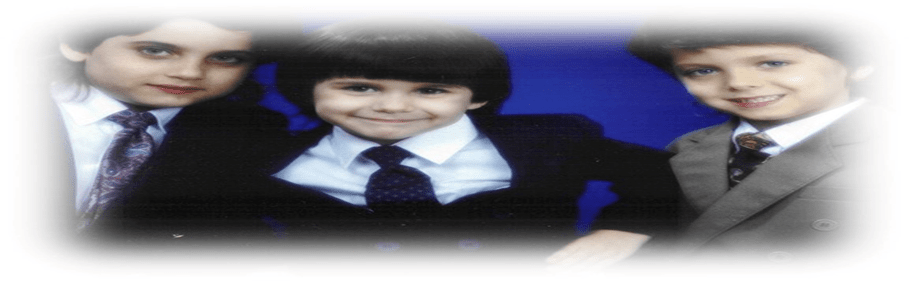
Thoughts on a Mothers Day’s Eve

Sooo, it’s Mothers’ Day’s Eve. 

Tomorrow is the day most beloved by restaurateurs, florists and purveyors of assorted merchandise.  But for many mothers it’s a very different sort of day, for those mothers whose children have become estranged, for those mothers who for one reason or another, found themselves unable to keep their children.  For those mothers whose children find them unworthy of respect or of affection. 

Many of us have not been great sons or daughters taking for granted that incredibly special relationship until it’s too late.  And then, of course, it’s too late.  I know I certainly should have been a much better son.  I always knew my mother loved me very much but I did not appreciate all the sacrifices she made and all that she endured to make me, as far as my better points go, the person I became.

It’s not easy to be a parent, and a “good parent” is an ideal that is too complex to easily attain.  Many of the best parents are those most resented, at least for a while, by children who are incapable of understanding that forming a human being capable of confronting the challenges he or she are sure to face requires difficult decisions and that in seeking to make them, mistakes are not infrequent, and that such mistakes are all too often exaggeratedly taken out of context.  But parents and those of their children who, rather than avoid parenthood become parents, are links in a chain as old as our species. 

On this Mother’s Day my heart goes out to those mothers, who like so many fathers, find themselves ignored, or disrespected, or alone.  Or who will merely engage in introspection on how much better they could have performed their sacred missions. 

It’s a day for celebration; yes!  And for recognition in many cases.  But also for reflection, introspection, forgiveness and empathy.
_____

© Guillermo Calvo Mahé; Manizales, 2025; all rights reserved.  Please feel free to share with appropriate attribution.

Guillermo (“Bill”) Calvo Mahé (a sometime poet) is a writer, political commentator and academic currently residing in the Republic of Colombia (although he has primarily lived in the United States of America of which he is also a citizen). Until 2017 he chaired the political science, government and international relations programs at the Universidad Autónoma de Manizales. Previously, he chaired the social studies and foreign language departments at the Eastern Military Academy in Huntington, New York. He is currently the publisher of the Inannite Review available at Substack.com; an intermittent commentator on radio and television; and, an occasional contributor to diverse periodicals and publications. He has academic degrees in political science (BA, The Citadel, The Military College of South Carolina), law (JD, St. John’s University, School of Law), international legal studies (LL.M, the Graduate Division of the New York University School of Law) and translation and linguistic studies (GCTS, the University of Florida’s Center for Latin American Studies). However, he is also fascinated by mythology, religion, physics, astronomy and mathematics, especially with matters related to quanta, cosmology and cosmogony. He can be contacted at guillermo.calvo.mahe@gmail.com and much of his writing is available through his blog at https://guillermocalvo.com/.

A Nostalgically Melancholy Christmas Carroll[1]


[1] To the tune of Joan Baez singing “There but for Fortune” and Simon and Garfunkel’s version of “The Seven O’clock News/Silent Night”.

An introspection dedicated to Billy, Alex and Edward, to Marina and Teddy, to my mother, Rosario who’s been gone now for a third of a century, and to her sisters Carola (who joined her a while ago) and Livia who is blessedly still here.  To long gone “Pop” who left us in 1972 and to our matriarch, Juanita, who after having lived a bit more than a century, determined, on her own, that it was time to go.  And, of course, to Natalia.

Christmas has often seemed nostalgically melancholy to me.  It involves an anniversary, each anniversary different, sometimes very different.  My happiest were when I was surrounded by family, first as a young child with my younger sister Marina, then with Marina and my little brother Teddy and with my mother and my stepfather Leon.  Then, eventually, much later, as a parent with a wife and one, then two, and finally three sons.

My first recollection is when Marina and I were very little.  My mother and father had separated and he was probably with his family in Barinas, Venezuela while my mother had started her adventure in the United States.  We were left in my grandmother Juanita’s care, along with my wonderful aunts, Livia and Carola.  My earliest Christmas memory involves my grandmother’s annual Christmas event for the poorest children in the City of Manizales in Colombia.  My grandmother owned a hotel, the Hotel Roma, which included a wonderful restaurant with a large dining room and, for Christmas, she’d pile the dining room with a small mountain of gifts which, on that occasion, I, in representation of baby Jesus (I was three at the time) was charged with distributing to the many dozens of very poor young children present.  It should have been a beautiful event except that I misbehaved.  I kept a toy I liked for myself and when my grandmother found out, my baby Jesus role was over forever.  She said I’d behaved more like baby Satan.  My transgression that evening, even as young as I was, impacted me profoundly and since that time I have always tried my best to be kind to those less advantaged than I.

My next set of memories were after I and Marina had joined my mother in the United States and we had formed a new family with my stepfather Leon (who I always called “Pop” at his suggestion).  We didn’t have very much back then but we didn’t know we were poor and Christmas was full of presents, or so it seemed. For me, usually toy guns, toy guns that became more and more realistic (that not being politically incorrect back then) and, on two occasions, electric trains.  I can’t recall what presents Marina and Teddy received except on one occasion, Christmas of 1956, an eventful year.  We’d been living idyllically for over a year in Charlotte, for once in a house rather than in an apartment, and even had a housekeeper but, in a flash, it was all gone and we were headed back to Miami Beach, to a tiny apartment again, and worse, my stepfather was not with us having been injured in a serious car accident.  We had virtually nothing except a bit of charity from my stepfather’s sister, my aunt Mary, and my mother was understandably a wreck so that a good deal of family “management” had devolved on eleven year old me, and Christmas was around the corner.  I’d arranged for small presents for Marina and Teddy so that they’d continue to believe in Santa, comic books for Marina as I recall, and perhaps a football for Teddy (which I too could use) but, on Christmas Eve, as twilight fell, in walked Pop, his arms loaded with gifts.  The relief I felt was intense and the happiness awesome.  The best present ever.  We had each other.  ….  Until we didn’t.  Not quite.  Not in the same way.  Five years later, in 1961 our family abruptly fragmented as so many, indeed most, do now.  As the one I was to lead in the future many decades later was to do as well.  I recall our last Christmas all together, it was in New York, in Queens Village, and it had snowed, and I recall that Marina, Teddy and I along with other children made snow angels in the yard of the small apartment complex where we then lived on Hillside Boulevard between 215th and 216th streets.  Abbot Arms it was called, as I recall.

After that I was in a military boarding school, the Eastern Military Academy, and then in college at the Citadel, the Military College of South Carolina, and I usually spent Christmases with friends at their homes.  Pleasant times, even wonderful times, but not the same.  And after college, I returned to the military academy from which I’d graduated, the one that had become home to me and where I spent almost a decade as a teacher and administrator.  The Eastern Military Academy was a magical place, indeed, it was a real castle (Oheka Castle nowadays), and Christmases were interesting, almost always white.  All the students were gone and the resident faculty members gathered to share the season in front of roaring fires with special egg nog and shared meals.  Christmas then was communal, shared with special people.  With Susan Metz with whom I lived at the time and with the literary scholar, Roger Hamilton, and with the LaForges and the Coffeens, and especially with the wonderful Greene family, David, the patriarch and his wonderful wife Jane, and their children: Robert (who was to become my best friend) and Laurie who passed away much too young.  They were family but, of course, a very different sort of family.

My second “real” family, the one I founded as an adult, also shared what to me seemed beautiful winter holidays and that was as true when we could afford anything any of us wanted as it was when, occasionally, very briefly, we had practically nothing.  Billy, Alex and Edward, my sons, always made Christmas very special, no matter what.  Indeed, my most beautiful memory involves a time when, after a country hotel and restaurant we’d bought in Laurel Hills, North Carolina (the Echo Mountain Inn) had failed and we’d lost almost everything, we were spending Christmas morning in the Florida home of George and Agnes Chamberlin, the wonderful parents of a childhood friend, and presents were being opened.  One came packed in a series of boxes to the utter delight of my second son, Alex (then about three years old).  Alex was very excited as every present was opened (even though most were not for him) and, when the gag box within a box within a box package was being opened, he kept exclaiming, “a box; a box”.  I also very fondly recall when some years later, at a time when our fortunes had vastly improved, my sons’ mother Cyndi and I climbed the roof of our large comfortable home to plant replica reindeer tracks so that my three sons would continue to believe in St. Nicholas, or at least to remain open-minded on the subject.  Open mindedness reinforced by their mother’s refrain of “if you don’t believe you won’t receive”.  A persuasive argument.  I also recall the time some years later when I combed the country looking for a just released video game console my sons were desperate to receive (am Xbox as I recall), one which a business partner in upstate New York finally located for me.  And I recall how pleased I was with myself for having been able to find it, the best present of all for me having been being able to please my sons.

When Christmases were happy times, one of the things that most impacted me, in addition to being extremely grateful for my family, was the spirit of decency and goodwill that seemed to permeate the season.  The hope for peace and justice and for a better world that seemed a legacy from the Nazarene who many called “the Prince of Peace” (but in whose name, incongruously, his most devoted followers caused so much killing and mayhem and misery).  The latter reality became more obvious to me as I matured intellectually and became a more devoted historian and academic; when I eventually began to pierce the veils of delusion woven around us all and Christmas lost much of its allure, its tidings of hope receding and becoming instead, an opportunity for contrasting the stark realities in which we lived.  Realities in which a tiny few had more than they could ever consume.  Realities in which a seeming majority managed to get by somehow.  But a reality in which many, way too many, suffered terribly, both materially and spiritually.  A reality where far too many found the holiday season the saddest and most despairing time of the year.  To a greater and greater extent, the latter’s despair touched me, every year a bit more.  It touched me as our world spiraled more and more out of quilter, it touched me more and more as justice and equity were revealed as empty promises, mere delusive illusions, and it touched me more and more as I came to realize that superficial things that seem to bring us pleasure, things like television programs and concerts and movies and sports were merely temporary distractions used to maintain us tightly under control.  In that regard I remember the famous version of “Silent Night” by Paul Simon and Art Garfunkel released in 1966 (the 7:00 News and Silent Night medley) at the height of the military misadventure then known as the Vietnam War, a war that claimed many of those I most loved and admired.  People like my Citadel classmates Woody Woodhouse and Ron Ashe and John Bradman and too many others to name.

Still, even then, Christmas had its enchantment.  I recall Christmas during 1976 while I was attending the graduate division of the New York University’s School of Law to earn a postgraduate degree in international legal studies.  I recall how on the day before Christmas Eve that year I drove with my wonderful friend, Robert Greene, through the neighborhood in lower Manhattan adjoining the Williamsburg Bridge which I traversed every weekday as I travelled to classes in Washington Square Park, and how from my car window we passed out bottles of Lowenbrau dark beer to the homeless men and women who congregated on our route, people who we were too poor to help on normal occasions, and I recall how pleased we were with our apparent beneficence, something which certainly did more for us than it did for the recipients of our gifts.  And then I recall that, after my classes that evening, we were off, back to our Long Island home at the military academy where we both taught, off to share tidings of comfort and joy, a time of awakening for both of us but shielded from the dark by families and friends sharing memories that would keep us warm for years to come.  That keep me warm today.

The 1970’s were a strange time, a time full of hope when we who’d come of age in the sixties thought we could change the world only to have it change us during the 1980’s.  The 1980’s when we reverted to form, our idealistic illusions fading more and more each year as we had our own families and I had my own sons.  Providing for them became the greater good and the world’s ills, and the ills of many around us became less clear, less important, at least to us.  That digression lasted through the turn of the millennium, a privileged time for many of us in many senses, but a worse and worse time for most of the world.

I remember the last Christmas I spent as part of a family with my sons and their mother Cyndi, still my wife then.  It was in 2006.  By 2007 our family had imploded and exploded and fragmented and the last traces of merry Christmases had faded until their echoes had become dissonant and I found myself among the masses of those for whom the holidays were the saddest part of the year rather than the happiest.  Not that I was terribly off, just that by 2008 I was in a different country, back in Colombia where I’d been born, in a different continent, separated from the family I had once led and which I missed very much.  And that in that loneliness, although I was not alone, I came closer and closer to understanding the darker side of our world, a darker side about which I, then a college professor, taught.  And I became very personally impacted by the seeming futility of seeking that world that the promises attributed to the ancient Nazarene proclaimed were our due and our responsibility.  And I somehow blamed him for having failed us when the reverse was much more true.

Those darker times have now largely passed, at least personally.  Since 2019 I’ve found comfort with my current wife, Natalia, a woman who, as a noncustodial parent, has also endured the loss of intimacy with her children.  Because of shared negative experiences we’re able to comfort each other and to share a new version of joy, although one tinged with maturity and reality.  One grounded in spirituality and civic activism.  One which resonates with the echoes of the homeless and the poor and with their suffering, suffering of which Joan Baez once sang “there but for fortune go you or I”.  So now, this season is neither merry nor full of despair but, at least for my wife and for me, it has evolved into a time for reflection and introspection, and for recalling memories of other days, and for watching old Christmas classics like “The Bells of St. Mary’s” and “Going My Way” where Bing Crosby, long gone, still creates the illusion of Christmas as a magical time, a time when anything is possible and, at any rate, when things seemingly turned out well.  It has evolved into a time for my own version of Charles Dickens’ “A Christmas Carroll”; a time where I welcome the spirits of Christmases past to share a cup of cheer, albeit nostalgically and melancholically as I recall happy times now receded into fond memories.

Soo, it’s that season again, but this year, this terrible year when genocide has become acceptable in Nazareth and Bethlehem and the other areas where the Nazarene whose birth we celebrate once trod, it’s a time for even more reflection and introspection than usual, and for treasuring the people, not the things, that leave us with at least a trace of hope that the Christmas dreams of our youth will someday be reflected in better, more just and kinder realities.  Times when that gentle Nazarene, were he among us, whether or not he was or is divine, would find us having been worth his sacrifice.  And with that image in my heart, an ironic refrain seems to fill the end of a movie as a portly old man dressed in red and white, in extremely good humor, shouts: “and a merry Christmas to all, and to all a good night”.
_____

© Guillermo Calvo Mahé; Manizales, 2024; all rights reserved.  Please feel free to share with appropriate attribution.

Guillermo (“Bill”) Calvo Mahé (a sometime poet) is a writer, political commentator and academic currently residing in the Republic of Colombia (although he has primarily lived in the United States of America of which he is also a citizen). Until 2017 he chaired the political science, government and international relations programs at the Universidad Autónoma de Manizales. Previously, he chaired the social studies and foreign language departments at the Eastern Military Academy in Huntington, New York. He is currently the publisher of the Inannite Review available at Substack.com; an intermittent commentator on radio and television; and, an occasional contributor to diverse periodicals and publications. He has academic degrees in political science (BA, The Citadel, The Military College of South Carolina), law (JD, St. John’s University, School of Law), international legal studies (LL.M, the Graduate Division of the New York University School of Law) and translation and linguistic studies (GCTS, the University of Florida’s Center for Latin American Studies). However, he is also fascinated by mythology, religion, physics, astronomy and mathematics, especially with matters related to quanta, cosmology and cosmogony. He can be contacted at guillermo.calvo.mahe@gmail.com and much of his writing is available through his blog at https://guillermocalvo.com/.