
Perhaps

How strange it is to grasp that this world might well be a better place if the fictional macabre were real. 

If ghouls and goblins ruled in place of politicians and if necromancers and their ilk controlled the corporate media. 

Or perhaps there wouldn’t be any difference.  Any difference at all.

Perhaps they already do.
_______

© Guillermo Calvo Mahé; Manizales, 2022; all rights reserved.  Please feel free to share with appropriate attribution.

Guillermo (“Bill”) Calvo Mahé (a sometime poet) is a writer, political commentator and academic currently residing in the Republic of Colombia (although he has primarily lived in the United States of America of which he is also a citizen).  Until 2017 he chaired the political science, government and international relations programs at the Universidad Autónoma de Manizales.  He has academic degrees in political science (the Citadel), law (St. John’s University), international legal studies (New York University) and translation and linguistic studies (the University of Florida’s Center for Latin American Studies).  He can be contacted at guillermo.calvo.mahe@gmail.com and much of his writing is available through his blog at https://guillermocalvo.com/.

A Biography of Sorts

It started towards the end of the third quadrant in July. 

Monthly quadrants are not all equal, of course.  Those in February are usually seven days long except in quadrennial years, and then each quadrant is approximately seven days and six hours long.  April, June, September and November have quadrant’s that are seven days and twelve hours long, but January and March and May and July and August and October and December are a tiny bit more complex.  And they’re in the majority.

In that July with which we were concerned, the day with which we were concerned was the twenty-second, a sort of magical day in astrological terms, and it was towards the end of the third quadrant because in July, as in January and March and May and August and October and December, each quadrant is seven days and eighteen hours long, so the third quadrant would end at six in the morning of the twenty-third day.  And this was still the twenty-second day.

Had it been in February it would have been during the start of the fourth and final quadrant, but it wasn’t.  Had it been in April, June, September or November, the twenty-second would also have been during the last day of the third quadrant if it were during the morning but the first day of the fourth and final quadrant, had it been the afternoon.  But it was not April, June, September or November with which we were concerned, although the time with which we were dealing being the early morning of the twenty-second day, before the sixth hour, there would have been quadratic coincidence during those months.

It was in a city high in the central range of the Colombian Andes, one overlooked by a glacier astride a volcano whom the aboriginals had once worshiped (whom, not which, given that they personified it) under the name Cumanday.  Perhaps some still worshipped it under that name and it is certain that there were at least some local, dedicated proto-new agers, who did so then.  It had been the year of the dog in the Chinese calendar, although China was very far away.  He’d have preferred the year of the dragon, or at least of the lion, but no lion was included in that calendar, so it would have had to have been, its cousin, the tiger.  But it was the dog.  It seemed unfair that no lion was available given that in the more traditional Babylonian astrological family, the twenty-second day in July was usually the dividing line between the lion and the crab, although that crab had a rather unpleasant name: cancer.

And anyway, being too young to really have a vote (scream and cry though he might, and in fact, as he had) he was stuck with the available signs, a dog and a lion, and maybe a crab with an evil name.  Not so bad really.  But a dragon would have been really cool.

It had been an interesting day (in the Chinese sense).  The culmination of a somewhat unpleasant period for his mother of course, and unfortunately for her, he’d taken his time, albeit not without a good deal of internal fussing.  But he’d finally come out to see the world he’d be inhabiting for quite some time.  He’d been the first of his generation so a good deal of fuss had been made of the occasion.  New waves had formed and in concentric circles, had begun to oscillate, first nearby, then in that special city, in that special department, in that special country, in that special continent, in those special hemispheres, one vertical and the other horizontal, then in that poor, poor abused planet, then in that solar system, in that galaxy, in that universe, and finally, throughout the multiverse, at which point, the wave had started its return journey playing with time and space, and quanta, and dimensions along the way.  Examining black holes and white holes and playing with dark energy and dark matter but, as it approached its point of origin, nothing was there except radioactive residue, well, and radio waves echoing demands that everyone vote for a certain Democratic Party because Russians and Chinese with which Republicans were purportedly in league had to be stopped from destroying everything, and that the Ukraine had to be permitted to join NATO, and that a great deal of money was required, first, to keep that Democratic Party in power, and then, for more and more and more weapons to keep everyone safe from , … well, at that point the echoes became garbled.

So the wave just kept on going, back to the edge of the multiverse it had visited before. And back again, looking for that child who’d first arrived in the third quadrant of the month of July, at the intersection of the lion and the crab in the year of the dog in a once beautiful city high in the central range of the Colombian Andes, one once overlooked by a glacier astride a volcano whom aboriginals had once worshiped under the name Cumanday, and perhaps some local, dedicated proto-new agers had once done so as well.
_______

© Guillermo Calvo Mahé; Manizales, 2022; all rights reserved.  Please feel free to share with appropriate attribution.

Guillermo (“Bill”) Calvo Mahé (a sometime poet) is a writer, political commentator and academic currently residing in the Republic of Colombia (although he has primarily lived in the United States of America of which he is also a citizen).  Until 2017 he chaired the political science, government and international relations programs at the Universidad Autónoma de Manizales.  He has academic degrees in political science (the Citadel), law (St. John’s University), international legal studies (New York University) and translation and linguistic studies (the University of Florida’s Center for Latin American Studies).  He can be contacted at guillermo.calvo.mahe@gmail.com and much of his writing is available through his blog at https://guillermocalvo.com/.

“And then there were none”: Reflections in an Empty Pond

He remembered.  That’s all there was, and, of course, his body.  Everything else, everywhere was gone, well, except for imagination.  Strange that he’d list that last, it was possibly the most important thing that still existed.  Mankind was gone, as was nature, as was the multiverse.  Only he stayed behind; the last guardian, but guardian of what?  Of memories he guessed.

And he’d known what he was doing when he’d agreed to take on the task, if not why. 

His hair still grew, it was infinitely long now, as were his nails, and he still perspired, but that soon evaporated and then vanished into the eternal nothing, actually, infinitely longer than eternal.  He didn’t breathe and of course, urination and defecation had ended, at the end.  He’d accepted the charge when the universe was still young, when the multiverse still was.

And he’d known what he was doing, that it would be irrevocable and endless, if not why. 

But someone had to assume the role.  He’d known how desperately lonely and boring it would be, until only despair remained, without any hope for respite, without any hope for death.  Without any future, only the vacuous present and memories of the past, and his growing hair, and his growing nails, and every once in a while, a bit of perspiration that all too quickly vanished.

Hopefully the first trillion years were the hardest.
_______

© Guillermo Calvo Mahé; Manizales, 2022; all rights reserved.  Please feel free to share with appropriate attribution.

Guillermo (“Bill”) Calvo Mahé (a sometime poet) is a writer, political commentator and academic currently residing in the Republic of Colombia (although he has primarily lived in the United States of America of which he is also a citizen).  Until 2017 he chaired the political science, government and international relations programs at the Universidad Autónoma de Manizales.  He has academic degrees in political science (the Citadel), law (St. John’s University), international legal studies (New York University) and translation and linguistic studies (the University of Florida’s Center for Latin American Studies).  He can be contacted at guillermo.calvo.mahe@gmail.com and much of his writing is available through his blog at https://guillermocalvo.com/.

Remembering Father Nicholas Trivelas on the Fourteenth Anniversary of His Passing

Today, September 30, 2022, is the anniversary of the passing of Father Nicholas Trivelas, formerly pastor at Charleston’s Greek Orthodox Church of the Holy Trinity while I was a student at the Citadel many, many decades ago.  Reflections on his passing brought to mind two other Greek Orthodox priests who were a comfort to me during trying times, Father Nicholas Nick of Fort Lauderdale’s St. Demetrius Greek Orthodox Cathedral and my family’s Greek Orthodox pastor in Queens, New York, when I “wore a much younger man’s clothes”.  The latter’s surname was, I think, Volides.  Because they can marry and father children, Greek Orthodox clerics tend to be more empathic than celibate clerics, and warmer, in a safe manner. 

I confess that I am not a “believer” and it may be that I was not then.  I’m at best an agnostic and a seeker, but I profoundly respect the faith of others.  Indeed, I have studied most major religions and as a young academic, taught a course on mythologies and comparative religions, something that has remained a life-long interest.  I was baptized Greek Orthodox at the age of ten at the insistence of my step father, Leonidas Theodore Kokkins, born in Flushing, New York where he is interred, but I had already been baptized as a Catholic and, as a member of a church associated with the Theosophical Society.  It’s not really as confusing as it sounds.  My maternal family were theosophists and thus generally accepting of all religions.  But the three priests I referenced above were special people in my life and in the lives of others, too many to count. 

The Citadel, the Military College of South Carolina, of which I am a proud graduate, was and is a very special place.  Although it is in continuous evolution, something with which many of its graduates do not agree (being deeply traditionalist), its values seem constant.  The Citadel involves a profoundly demanding, integral experience combing academics, athletics, military training, civic involvement and ethics, one that took everything we could give and then some to complete (indeed, many decent, intelligent and competent people do not succeed there and move on to other endevors elsewhere, with the Citadel’s blessing and best wishes). 

Father Trivelas helped me make it through the Citadel’s rigors and supplemented its values, as did the wonderful Greek community of Charleston, special among them three families, the Misoyianis family, the Kirlis family, and especially the Lempesis family.  It’s hard to think of one without the others, and each always inspires feelings of profound love and gratitude.

As tends to happen in this mobile and dynamic world, one where values seem much less relevant than they once were, the memories and reflections to which I allude are bitter sweet: sad because of the loss of contact but beautiful because of the shared experiences involved and because of the role played by those to whom I’ve referred in whatever positive attributes I’ve attained.  These are memories in which my mother echoes, Powerfully, as do so many others:  my classmates, both at the Citadel and at the Eastern Military Academy (once prominent in Cold Spring Hills, New York, but now long gone), and memories inspired by the student’s I’ve been privileged to teach and the colleagues from whom I’ve also learned a great deal. 

Memories of Father Trivelas trigger them all.  If he was right and there’s a Heaven, he is there, prominently.
_______

© Guillermo Calvo Mahé; Manizales, 2022; all rights reserved.  Please feel free to share with appropriate attribution.

Guillermo (“Bill”) Calvo Mahé (a sometime poet) is a writer, political commentator and academic currently residing in the Republic of Colombia (although he has primarily lived in the United States of America of which he is also a citizen).  Until 2017 he chaired the political science, government and international relations programs at the Universidad Autónoma de Manizales.  He has academic degrees in political science (the Citadel), law (St. John’s University), international legal studies (New York University) and translation and linguistic studies (the University of Florida’s Center for Latin American Studies).  He can be contacted at guillermo.calvo.mahe@gmail.com and much of his writing is available through his blog at https://guillermocalvo.com/.

Refractions on a Day in Early Fall

Today dawned beautiful here in the city in the sky, nestled at the feet of the Cumanday in the central range of the Colombian Andes, although, as I have for the past few days, I awoke with trepidation, undefinable but perhaps due to world events and the horrible state of my adopted (and now somewhat abandoned) homeland to the North.  A land and a people I also love profoundly. 

Colombia seems embarked on a renaissance, a period of enlightenment and perhaps, even enlightened governance.  A great deal of its polarization has evaporated, almost overnight, a sign of hope to the world, which in its Northern Hemisphere, seems engulfed in hate, animosity and belligerent competition.

I live in both worlds though, and as in the case of apples, the bad negatively impacts the healthy.

So, despite the beautiful dawn, shadows of the dark clouds that blight the land where my sons, distant and silent, reside, impact even the brightest days in this renascent paradise.
_______

© Guillermo Calvo Mahé; Manizales, 2022; all rights reserved.  Please feel free to share with appropriate attribution.

Guillermo (“Bill”) Calvo Mahé (a sometime poet) is a writer, political commentator and academic currently residing in the Republic of Colombia (although he has primarily lived in the United States of America of which he is also a citizen).  Until 2017 he chaired the political science, government and international relations programs at the Universidad Autónoma de Manizales.  He has academic degrees in political science (the Citadel), law (St. John’s University), international legal studies (New York University) and translation and linguistic studies (the University of Florida’s Center for Latin American Studies).  He can be contacted at guillermo.calvo.mahe@gmail.com and much of his writing is available through his blog at https://guillermocalvo.com/.
Dark and Dystopian Observations, Reflections and Introspection as Autumn Approaches, 2022

Like so many people the world over, I am appalled at the increase in prices and reduction in portions of most of the quotidian things we purchase, something that impacts most of us.  But some, those responsible for inflation, it impacts not at all.  And it has a cause, the idiotic United States practice of imposing economic sanctions that boomerang back on its own nationals, an illustration of biting off one’s nose to spite one’s face.  We are urged to accept the related suffering so that those our government opposes will suffer as well, which of course, only results in spiraling suffering for most of us.

So many of our problems have the same roots.  Take increased polarization and incivility, and the loss of liberty, and the explosion in censorship, not only through governmental means and through governmental allies in Big Tech, but now in our own, interpersonal social interactions.  I am a member of several sports oriented social media sites where those who criticize their team’s management are ordered by other fans to shut up, leave, or are personally ridiculed.  In one case, a person is infuriated by my use of the word “opine”.  And I am tempted to retaliate.  It would be easy for a great many reasons, but so far, I’ve, for the most part, refrained.  But the emotional reaction is there, and if I give in, they would win. 

And that is happening to so many of us that our survival as a species seems miraculous.  Perhaps to miraculous to continue.  Intolerance has been cultivated among us by those who preach the importance of tolerance but whose actions utterly belie their suggestions, if such strongly phrased demands can be deemed “suggestions”.  Our history is erased, destroyed or distorted.  Not that our history is in any sense accurate, but the elimination of its indicia does nothing to correct it, and worse, that with which the “purportedly woke cancel culture” warriors would replace it is at least as inaccurate.  Truth has become even more a victim than reasonable prices.

Manipulation of the means through which we communicate is largely responsible, at least in the form of the tool with which we are bludgeoned.  Democracy in the United States, perhaps everywhere, is non-existent, as are reliable elections, either because of purported gerrymandering or vote rigging or false polling or false reporting or even worse, non-reporting of essential facts.  But even if it did exist and function, it would not guarantee equity or justice or even decency.  After all, the greatest arch villain of the last century, one manufactured by government propaganda, the corporate media and historians, was purportedly “democratically” elected. 

The only solution to our current suicidal dystopia would require a massive change in our attitudes, in our goals, in our hearts and in our souls.  We would need to embrace that which a poor Nazarene preacher once urged but which we criticize as “communist” or “socialist”, with no idea what those concepts involve, or how unattainable they are, or how infrequently their underlying values are espoused, except, perhaps, at Christmas or Easter, or sometimes, albeit rarely, in religious services.  But those services, at least among Christians, mostly focus on the opposite, the maliciously bitter doctrines superimposed on those of the humble Nazarene by the pernicious Saul of Tarsus, a precursor for those who today seek to stifle our most benign, generous and joyous instincts.

Perhaps, fortunately for our planet, solar system, galaxy and universe, it may be that an Armageddon manufactured by our Deep State is about to arrive.  We’ve manipulated the Russians into a war which we are actively promoting and are doing our best to do the same with the Chinese and the Iranians, and as written above, that disfunctionality is affecting even our passive participation in sports, and certainly our politics. 

One wonders at the stupidity involved, and grieves at the destruction of all that is good and beautiful and promising that will disappear with all that is putrid and vile.  Equality attained at last.  And one even dares to hope that, if by sharing our perspectives in a friendly manner, in a respectful manner, “one heart at a time”, the disaster can be averted.  But this morning, it certainly doesn’t look that way, not while the very worst among us revel in their power and restrain no impediment to its retention, regardless of the price.

After all, they’ve grown used to most of us paying the price while they celebrate what they perceive of as benefits; short term though they will in all probability prove to be.
_______

© Guillermo Calvo Mahé; Manizales, 2022; all rights reserved.  Please feel free to share with appropriate attribution.

Guillermo (“Bill”) Calvo Mahé (a sometime poet) is a writer, political commentator and academic currently residing in the Republic of Colombia (although he has primarily lived in the United States of America of which he is also a citizen).  Until 2017 he chaired the political science, government and international relations programs at the Universidad Autónoma de Manizales.  He has academic degrees in political science (the Citadel), law (St. John’s University), international legal studies (New York University) and translation and linguistic studies (the University of Florida’s Center for Latin American Studies).  He can be contacted at guillermo.calvo.mahe@gmail.com and much of his writing is available through his blog at https://guillermocalvo.com/.

A Measure of Sad Times

He is very sensitive to all kinds of external stimuli, which he internalizes and, after profound reflection, synthesizes and sometimes grasps an idle lie.  And he loves music, he considers it the primordial language, the most effective language, one speaking directly to the soul.  But for some reason, of late, he has not wanted to heed it.  An affirmative wanting not to listen to it.  And he is perplexed, he doesn’t understand the why of it.  But, then again, there are so many things he just can’t comprehend.

Perhaps it has something to do with the state of the world.  With the current dearth of truth and omnipresence of vitriol and violence. 

Music, without words, he has long believed, rarely lies, except perhaps for martial music.  In that case, it’s as though music was forced to perform, like a beautiful woman being ravished.  Beauty turned inside out and violated.  National anthems tend to follow that pattern, at least frequently.  Unfortunately, he’s come to feel that, like a virus, that pattern seems to be spreading.  Marketing “jingles” of course almost always lie, as do their political variants.  And they’ve overtaken beautiful instrumentals, symphonies and boleros and gipsy inspired variants of flamencos.

Words can apparently pervert anything, and he wonders at the folk wisdom that claims speech evolved to facilitate deception, and thus, of course, the legal profession, and journalism, and politics. But then, what of poetry?

It has dawned on him that truth is not always beautiful and that beauty is all too frequently dishonest.  Even, he guesses, where music is involved.  Perhaps it’s that epiphany that has him down.  Perhaps it is reflections such as these that are muddling and blocking his instinctive love, indeed his need, for music. 

A measure of sad times. 

Perhaps that’s what Don McLean once sensed when he wrote his epic and second best song (Vincent was the very best), without realizing it.

“A long, long time, ago, I can still remember how the music used to make me smile ….”
_______

© Guillermo Calvo Mahé; Manizales, 2022; all rights reserved.  Please feel free to share with appropriate attribution.

Guillermo (“Bill”) Calvo Mahé (a sometime poet) is a writer, political commentator and academic currently residing in the Republic of Colombia (although he has primarily lived in the United States of America of which he is also a citizen).  Until 2017 he chaired the political science, government and international relations programs at the Universidad Autónoma de Manizales.  He has academic degrees in political science (the Citadel), law (St. John’s University), international legal studies (New York University) and translation and linguistic studies (the University of Florida’s Center for Latin American Studies).  He can be contacted at guillermo.calvo.mahe@gmail.com and much of his writing is available through his blog at https://guillermocalvo.com/.
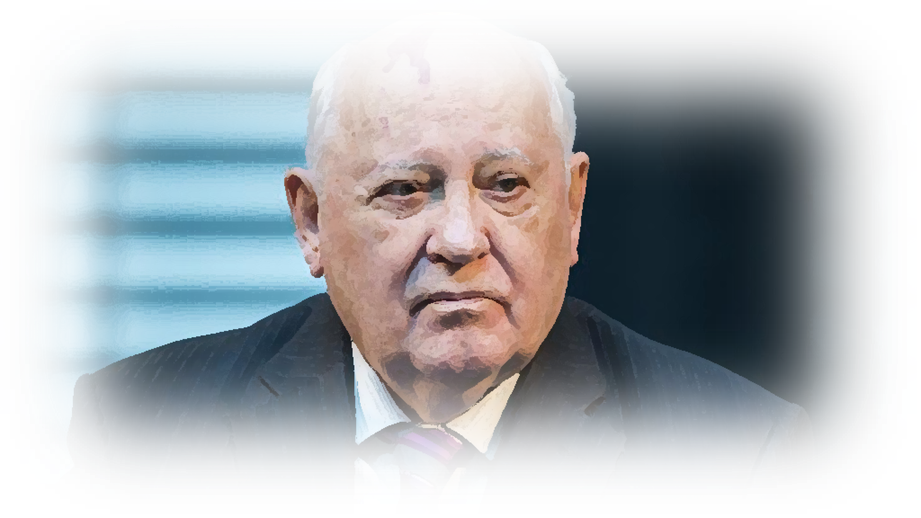
Observations on the Passing of Mikhail Gorbachev

He was a courageous and creative humanitarian, ironically the product of a justifiably paranoid regime, a man whose vision for a just world, where individual and collective interests might be reconciled, was thwarted by the power mad egoists who rule us in the so-called West. 

As Yeshua ben Miriam is reported to have observed, “a prophet has no honor in his own home”, and so, he is all too frequently blamed in Russia for the misery occasioned by his successor, Boris Yeltsin, who virtually sold Russia to Western backed gangsters, a prelude to our modern, post-truth world.  But some of us who were both alive and alert at the time know the truth: he almost singlehandedly ended the age of the Iron Curtain and the first Cold War. 

Unfortunately, he naively felt that leaders in the United States, Germany and NATO shared his vision, and he and Russia were promptly betrayed.  Something from which the Chinese and the current Russian leadership appear to have learned.

It may be a long time before a conciliator of his stature appears on the world stage at an opportune moment, a long time we perhaps no longer have.
_______

© Guillermo Calvo Mahé; Manizales, 2022; all rights reserved.  Please feel free to share with appropriate attribution.

Guillermo (“Bill”) Calvo Mahé (a sometime poet) is a writer, political commentator and academic currently residing in the Republic of Colombia (although he has primarily lived in the United States of America of which he is also a citizen).  Until 2017 he chaired the political science, government and international relations programs at the Universidad Autónoma de Manizales.  He has academic degrees in political science (the Citadel), law (St. John’s University), international legal studies (New York University) and translation and linguistic studies (the University of Florida’s Center for Latin American Studies).  He can be contacted at guillermo.calvo.mahe@gmail.com and much of his writing is available through his blog at https://guillermocalvo.com/.

The Last Guardian: A Divine nightmare

A mote in black on black.  An echo of a shadow of what once might have been once upon a time. 

He was the only thing that remained of the once infinitely expansive multiverse, everything else had withered and disappeared so many eternities ago, that an eternity was infinitely less than a grain of sand in everything that had ever been.  He’d volunteered to stay behind when both he and the multiverse were relatively young, knowing just how lonely he’d eventually be when everything, even time, was so long gone that it was impossible to recall that it had ever been.  But it had, and he remained.  And he recalled, there was nothing else.  The multiverse reduced to his own body or his body expanded to encompass the multiverse, it made no difference.  There was utterly and absolutely nothing else.  The body he’d worn so long ago somehow perfectly preserved and, despite the absence of air or water or sustenance or space, still fully, well, sort of fully, functional.  Despairingly so as it had no functions at all.  A relic.  A memorial of sorts.

His last breath had been an infinity of eons ago, the last trace of long forgotten gasses inhaled, and then, absolutely nothing.  No time, no space.  Just him.  Existing, and watching, although for what he’d no idea.  There was nothing else to see.  He was self-contained.  Only that which he was and would always be but had not always been, now and for very, very long, always conscious.  Eternities’ chosen scapegoat paying for long forgotten sins of long forgotten others.

There was no future, only a long distant past.  And a present out of time.  And the promise he’d made to stay behind so that everything else could end.  He recalled that on the day he’d turned seventy-six, he’d wondered for the first but not the last time, if divinity had once played the role he was now charged with assuming, the sole role at the end of time and space.  If so, that would explain a great deal, perhaps everything.  How could anything remain sane in any sense at all after being so utterly alone, and yet, knowing what awaited, he’d confirmed his commitment, which implied something about his sanity as well.

While still enjoying a normal life span, he’d watched as his contemporaries aged and passed on, and then his descendants.  He’d been there, albeit an oddity, a freak, as species, including humans, evolved and changed, and planets evolved and died, and as different species conquered space and even time, and then they too moved on, but he was cursed with anachronistic eternity, a never ending relic.  And on the last instant of time, everything was gone, everything but him.

The other side of panentheism.  The last guardian, long after the end of time and space.
_______

© Guillermo Calvo Mahé; Manizales, 2022; all rights reserved.  Please feel free to share with appropriate attribution.

Guillermo (“Bill”) Calvo Mahé (a sometime poet) is a writer, political commentator and academic currently residing in the Republic of Colombia (although he has primarily lived in the United States of America of which he is also a citizen).  Until 2017 he chaired the political science, government and international relations programs at the Universidad Autónoma de Manizales.  He has academic degrees in political science (the Citadel), law (St. John’s University), international legal studies (New York University) and translation and linguistic studies (the University of Florida’s Center for Latin American Studies).  He can be contacted at guillermo.calvo.mahe@gmail.com and much of his writing is available through his blog at https://guillermocalvo.com/.

An Objective Rant Pertaining to Abortion and other Issues

Word games are tempting in a world fraught with apparently imminent disaster (or is that eminent), but they’re not productive by themselves, not if problem resolution is the goal.  Unfortunately, the only problem that really concerns our corporate media and political “leaders” is the maintenance of power, and that requires that polarization be heightened, which in turn requires the “creation” and maintenance of polarizing issues, not their resolution.

Abortion is a great example right now, given the Supreme Court’s recent decision in Dobbs v. Jackson Women’s Health Organization (No. 19-1392, 597 U.S. ___ [2022]).  The underlying issue seems to me to be irresolvable morally or ethically because it involves the clash of two fundamental social premises (not rights, the concept of rights is incoherent).  First, the purported sanctity of life (notwithstanding our addiction to perpetual wars and the death penalty); and second, the right of humans to control their own bodies (notwithstanding government interference in diverse health related issues, including recent pandemic oriented mandatory measures).  Law, however, is notwithstanding platitudes to the contrary, not bound to moral or ethical factors.  It merely involves the exercise of raw power over individuals based on collective decisions, though it is usually justified using arguments disguised as morality, ethics, justice, equity or pragmatism.  In reality, in fact, a great deal of law involves norms imposed in order to maintain a parasitic minority in permanent power.

For about half a century, the availability of optional abortion in order to eradicate errors of judgment by women was protected by the United States Supreme Court through usurpation of constitutional and legislative powers.  Not a rarity, unfortunately. Men, on the other hand, did not enjoy a related privilege in conjunction with support related obligations based on their own errors of judgment, and of course, embryos, well what the hell are they anyway but inchoate child rearing problems and drains on our personal economy, especially now that the family has broken down and there is no real tradition of progeny caring for their forbearers in old age.  Well, that’s one perspective.  The other focuses on the incoherence of state mandated reproduction without shared responsibility for the consequences, responsibilities such as guaranteeing sustenance, housing, education, freedom from violence and adequate employment.

That abortion was rendered conditionally immune from state imposed prescriptions by inappropriate judicial action did not impact the reality of the important social issues involved.  They should have been dealt with by the People through their representatives; through exercise of constitutional and legislative duties unfortunately abdicated based on fears of ballot box consequences.  They should have been dealt with through constitutional means at the federal level, or constitutional or legislative means at the state level.  Unfortunately, notwithstanding emotional angst and hyperbolic outbursts, those responsibilities were ignored and proponents of abortion on demand were too lazy to undertake the social campaign required to condition society to accept their sociopolitical premises, instead, they resorted to the antithesis of democracy, the unelected, life tenured judiciary to come up with an arbitrary solution.  But recourse to such strategy inherently involved the probability that the judicially crafted solution to a social and constitutional issue, a political issue, would eventually be undone by a future judicial coup de’ grâce, also circumventing democratic institutions and requirements.

The foregoing is problematic but not malevolent, it is merely lazy and inept.  What is malevolent is the use of an issue as important as abortion for purposes of political polarization, specifically, keeping it in constant play as a means to secure political fundraising and political power by those on both sides of the debate, rather than resolving it through democratic decision making.  The recent United States Supreme Court decision in Dobbs v. Jackson Women’s Health Organization, while constitutionally sound, does nothing to resolve the issue, nor do purported opponents of the decision appear interested in taking any meaningful actions to legally resolve it in their favor.  Rather, they are merely using the case in order to salvage the disaster that seemed to await the political party that has made them its captives, its tools, in this autumn’s Congressional elections. 

A lot of noise and fury has been generated, albeit most demanding a continuation in power of a political party that traditionally betrays those who vote in its favor, and protests, a bit of violence and threats of violence, have been omnipresent.  However, no tangible efforts to legally and constitutionally attain that which they claim to be essential are being undertaken.  That would require reconciling diverse societal perspectives and convincing adversaries through education and logic, but we have come to perceive logic as a disease that afflicts an imaginary race we refer to as Vulcans, and education requires empathy, takes too long, and does not yield immediate and ongoing political dividends.  So, riots it is, perhaps with a bit of arson and mayhem thrown in, notwithstanding the platitudes and hypocrisy on display in the so called January 6 Congressional hearings.

And the purported victims?  The women who may be unable to obtain abortions and the unwanted children they will be forced to bear and perhaps raise?  Why, in an exact analogy to what is occurring to the populace and infrastructure of the Ukraine and the two self-proclaimed Donbass republics, they’re being efficiently used and abused for tawdry political purposes by politicians with nothing but disdain for ethics, morality, legality, democracy or constitutional government, caring only for the acquisition, maintenance and abuse of political power.

The foregoing is true regardless of which side of the abortion debate you call your own.  And the same is true with respect to the Second Amendment and gun rights; with respect to superiority hypotheses based on race, gender, sexual orientation, sexual identification, nationality, religion, ethnicity, age, etc.; indeed with any of the emotionally polarizing issues used by our unethical and ruthless elites and their minions to keep us divided and docile, too confused by our emotions (especially fear and hate) to defend ourselves from their predations.  The foregoing is true whether you’re a liberal, a progressive, a conservative, a libertarian or addicted to any other ideology.

The real issue today, as it has been through most of history, is the struggle between elite minorities who use their designees to abuse the concept of popular governance for their own greedy ends (today generically identified as “deep states”), and populists on every part of the political spectrum who seek liberation from those ubiquitous predatory parasites by eliminating their monopoly on political power.  Unfortunately, like addicts of all kinds, we are drawn to the issues that most effectively polarize us and are all too easily distracted from those that we really need to address, those issues involving real democratization of our political systems and processes and replacement of the political vultures who inhabit all current major political parties.  Issues we need to address so that we can civilly and efficiently resolve the policies that divide us, and, recognizing that our society is dynamic and our values variable, develop the ongoing mechanisms necessary for us to justly and equitable govern ourselves, permitting us each, individually and collectively, to realize our best potential.

Freed of our predatory political masters, perhaps empathy (the opposite of polarization) could again become a viable attribute in our political discourse and we could disagree without ridiculing and belittling each other and our respective belief’s, and perhaps we could, in good faith, understand that we all have valid points, and that legitimate democratic governance involves finding those perspectives we share, and granting our government the right to regulate them, but retaining individual autonomy with respect to those areas where a reasonable consensus is unattainable, rather than feeling compelled to always have our own way on every issue.  Perhaps someday, hopefully soon, we’ll awake from our induced traces and take our political responsibilities (they’re much more than mere illusory rights) seriously and vote for things in which we believe, rather than against illusory straw arguments crafted to confuse us; vote in favor of candidates in whom we believe rather than against those we’re manipulated into despising, and perhaps then we can cast “lesser evils” into the hells where they belong.  We would make mistakes and not always get our way, but at least it would be, “We the People”, governing ourselves.  We could not do any worse than the deep states that rule us now.

Something to at least think about.
_______

© Guillermo Calvo Mahé; Manizales, 2022; all rights reserved.  Please feel free to share with appropriate attribution.

Guillermo (“Bill”) Calvo Mahé (a sometime poet) is a writer, political commentator and academic currently residing in the Republic of Colombia (although he has primarily lived in the United States of America of which he is also a citizen).  Until 2017 he chaired the political science, government and international relations programs at the Universidad Autónoma de Manizales.  He has academic degrees in political science (the Citadel), law (St. John’s University), international legal studies (New York University) and translation and linguistic studies (the University of Florida’s Center for Latin American Studies).  He can be contacted at guillermo.calvo.mahe@gmail.com and much of his writing is available through his blog at https://guillermocalvo.com/.