The Political Fallacy of Right versus Left

The left-right dichotomy in the political spectrum is greatly exaggerated and manipulated in order to (through the divide and conquer strategy made famous by the British in foreign affairs) keep the most selfish among us in perpetual power.  The infinitesimally tiny billionaire class which owns the corporate media, all major political parties and the leadership of “our” government’s bureaucracy, uses that left-right divide to fuel the polarization essential to maintain itself in power, stressing faux issues such as abortion, gun control and identity politics in order to avoid the issues that really make a difference in our lives, issues like peace, equity, healthcare, education and sustainable family economics.  Issues as to which families on both sides of the left-right political spectrum mostly agree.

The majority of citizen-victims (a more accurate characterization of just what and who we are, except, perhaps, that “subject” might be more accurate than citizen), sense that something is terribly wrong, and so, are more and more drawn to populist figures who, although less articulate and less versed in rhetoric, resonate with them.  And it’s not a United States phenomenon but rather, one spreading throughout the “western” world.  Jair Messias Bolsonaro in Brazil and Rodolfo Hernández Suárez in Colombia were analogues to Donald John Trump in the United States, albeit much less experienced or capable than the unpleasant Mr. Trump.  All received significant support from populists on the right.  But other much more palatable choices on the left of the populist spectrum like Colombia’s Gustavo Petro, Brazil’s Luiz Inácio Lula da Silva and Mexico’s Andrés Manuel López Obrador, have managed to attain power.  Other leftist populists in Latin America attained power briefly but were quickly deposed by United States funded and supported “soft” and hard coups d’état, as was the case recently in Peru, and a few years ago in Bolivia and Honduras.

If populists on the left and on the right, including populists in the United States, e.g., political followers of Bernie Sanders, Tulsi Gabbard, Dennis Kucinich, etc. (on the left) and the Republican Tea Party (on the right) ever stopped to carefully analyze the current situation and their respective ideals, we’d realize that we have a great deal in common, most importantly, a common foe.  That foe is the billionaire class referenced above, and its tools, are primarily the Democratic Party, traditionalist Republicans, the corporate media, and moles implanted throughout the federal bureaucracy, especially the intelligence communities, the Department of Justice and the judiciary.  A foe which, however, if we united and respected our right to be different, even our right to be wrong, we could finally render impotent.

The “Deep State” is a term some of us use to identify the informal coalition that comprises our foe.  The foe that bleeds United States tax payers of funds that could be used for universal healthcare, for universal education at all levels, for a meaningful universal social safety net, for decent infrastructure, etc., syphoning such funds into expenditures to fund permanent armed conflict around the world, which, at the costs of millions of lives, funds the lavish lifestyles of the few.  Consider: most of the world’s wealth is owned by sixteen families, while a majority of the world’s people lack adequate food, adequate shelter, adequate clothing, adequate healthcare and adequate education.  Children die every second of every day from United States funded bombs to support the whims of the very worst among us, all with the essential assistance of very foolish voters who feel that by rewriting history, evil history will not have happened.  That through censorship, reality and truth will become irrelevant.  That by insulting, ridiculing and calumnying those with different perspectives we will all finally get along and freedom will finally ring.

All of the foregoing negativity is possible because we are denuded of empathy and common sense through emotional manipulation.  Through what purports to be entertainment but is instead, Orwellian propaganda glorifying villainy, murder, dishonesty and violence; an us versus them disease, with what passes for news being a filter that eliminates that which does not promote Deep State agendas and replaces it with calumny, ridicule and deception (plus a smattering of Pablum to keep us bored).  Some of us remember Pablum, albeit vaguely; tasteless baby food, carefully blended to assure homogeneity.

If we, as a People, in sufficient numbers, ever grasp the foregoing and, taking the time to reflect on it, evaluate it and digest it, unite (despite our superficial differences), and, rejecting polarization, decide to impose rather than merely demand change, our progeny might inherit a world they’ll respect.

And we’d earn their blessings instead of their justified disdain.
_______

© Guillermo Calvo Mahé; Manizales, 2023; all rights reserved.  Please feel free to share with appropriate attribution.

Guillermo (“Bill”) Calvo Mahé (a sometime poet) is a writer, political commentator and academic currently residing in the Republic of Colombia (although he has primarily lived in the United States of America of which he is also a citizen).  Until 2017 he chaired the political science, government and international relations programs at the Universidad Autónoma de Manizales.  He is currently the publisher of the Inannite Review, available at Substack.com.  He has academic degrees in political science (the Citadel), law (St. John’s University), international legal studies (New York University) and translation and linguistic studies (the University of Florida’s Center for Latin American Studies).  However, he is also fascinated by mythology, religion, physics, astronomy and mathematics, especially with matters related to quanta and cosmogony.  He can be contacted at guillermo.calvo.mahe@gmail.com and much of his writing is available through his blog at https://guillermocalvo.com/.

Black Listed Gifts

I was watching the “Black List” last night, “binging” on the latest season available on Netflix, an obvious US propaganda piece as is most of what comes out of Hollywood and its clones (the reality as far back as Woodrow Wilson’s epoch).  But amazingly, in that episode something resonated in a humanistically positive manner. 

Imagine that. 

For some unfathomable reason, I enjoy the program.  Perhaps it’s the acting, especially by James Spader.  And it provides insights into the manner in which US propaganda has culturally conquered much of the world with brazen distortions.  But I rarely find the really useful human element that permits us to better understand ourselves, and improve who we are.  The element essential in great works of art.

I did last night, and it involved a gift, the gift being a very used old portable radio.

Economically, today, I am not well off.  But like most among my current peers, I am living well enough, largely because I became an expatriate of sorts, living in a beautiful albeit affordable place, a beautiful city high in the central range of the Colombian Andes.  Beautiful mountains, snowcapped peaks, thermal springs, perpetual spring, but no oceans or beaches.  A place where social security is a bit more than enough to get by.  But where friends and family are a long way off.

I’ve been much better off, wealthy even, in a past where limousines were not an occasional luxury but a normal tool, where the making of an expensive gift was “no big deal”.  But I’ve also been much less well off than I am now, and it’s that time in my life that resonated with the “Black List” episode I viewed last night.  And it dealt with the character I find least interesting, least credible, most boring: Diego Klattenhoff as agent Donald Ressler.

The resonance involved the realization that the most important gifts I ever made where those that involved something I already owned, something I had to sacrifice under the circumstances of the moment because I lacked the wherewithal to merely “buy something appropriate”.  Usually it was a book, but sometimes a keepsake I’d picked up somewhere or other.  It involved a sacrifice of something for which I really cared, something I’d miss, but which to me, at the time, seemed important to pass on.  I’ve also received gifts like that and last night I realized that I’d not appreciated their worth at the time.  I do now.

In this materialistic and polarized world, one where empathy is hard to generate and harder to find, where a touch of humanity seems a rare thing but is actually omnipresent, hidden in the quotidian, especially in the lives of the least well-off.  Hidden in plain sight amidst the most vulnerable among us.  Hidden among that silent majority where almost everything involves a sacrifice, but where such sacrifices are joyfully made and never regretted, but also, perhaps, as in my case, where such sacrifices are not quite fully appreciated by the recipients.  At least not until it’s much too late to express our gratitude.

It made me think, especially of my mother.  Eventually a single mom who made the best of what I’ve become and accomplished possible without ever stressing the many sacrifices she and the rest of my family had to make, things I just took for granted until she was gone. 

Her case and mine, unfortunately, are not unusual.  Especially today when the generational shift is so bitter, and where too many of the young consider themselves ethically and morally superior, while concurrently entitled, and view their parents and their parent’s generation as out of touch bigots.  A generation that has no idea what the adage “it’s better to give than to receive” means, or worse, that it even exists.  Where giving is something that’s done with the taxes other people pay, and mainly given to industries dedicated to legalized murder on a massive scale, in the name of liberty and peace and equality.

Amazingly, the episode made me think, rather than just react and enjoy the action and the acting.

Talk about finding pearls in a dung heap!
_______

© Guillermo Calvo Mahé; Manizales, 2023; all rights reserved.  Please feel free to share with appropriate attribution.

Guillermo (“Bill”) Calvo Mahé (a sometime poet) is a writer, political commentator and academic currently residing in the Republic of Colombia (although he has primarily lived in the United States of America of which he is also a citizen).  Until 2017 he chaired the political science, government and international relations programs at the Universidad Autónoma de Manizales.  He is currently the publisher of the Inannite Review, available at Substack.com.  He has academic degrees in political science (the Citadel), law (St. John’s University), international legal studies (New York University) and translation and linguistic studies (the University of Florida’s Center for Latin American Studies).  However, he is also fascinated by mythology, religion, physics, astronomy and mathematics, especially with matters related to quanta and cosmogony.  He can be contacted at guillermo.calvo.mahe@gmail.com and much of his writing is available through his blog at https://guillermocalvo.com/.

Now What?

As I write this, I wonder if it will ever be permitted to see the light of day.  I’m certain that access to this article will be subjected to the de facto censorship limiting its spread and access through algorithms designed to limit postures frowned upon by our Internet censors.  But perhaps some brave souls will share it.  Every once in a while we somehow manage to get our messages heard, after which, of course, they’re distorted.

As usual when I write about abuse of the political, electoral and legal systems by the Deep State and its primary tools, the Democratic Party, traditionalist Republicans and the corporate media to impact the electoral options of Donald John Trump, I precede by asserting that I do not care for him and do not intend to vote for him, even as a protest.  But Mr. Trump has been indicted through the machinations of a Deep State tool, one of several local attorneys general and federal prosecutors tasked with preventing him for again running for and again possibly winning the United States presidency. 

The action is unprecedented, not only because it involves a former United States president, but because the purported “crime” involves having been the victim of blackmail and extortion.  But the real reason seems obvious to me.  It seems obvious to many who love peace, to the many who really strive for equity and equality, and for a system of governance based on justice and legality.

Mr. Trump has many negative characteristics but also a few saving graces, and it is the latter which have led the Deep State to take this unprecedented action, an action so polarizing that it once again promotes the prospect that American citizens will feel it is their duty to act in an uncivil, possibly violent manner.  The saving graces all involve repudiation of neoconservative military activities abroad, for example, in the Ukraine and in Taiwan; they involve repudiation of the dangerously anachronistic North Atlantic Treaty Organization and the similar web of offensive military alliances and bases around the world designed to promote and preserve political, economic and military hegemony, even at the risk of nuclear war.  They involve a desire to redirect spending on defense towards improved infrastructure.

Mr. Trump’s posture with respect to the foregoing is neither consistent nor coherent given his dedication to Israeli objectives and his intent to do to the Islamic Republic of Iran what his predecessors did to Iraq, nor given his methodology of governance through arrogance and aggressive posturing on economic issues, but it is deeply threatening to those who rule us through proxies, those who rule us through moles scattered throughout the bureaucracy and the judiciary, throughout what used to be a purportedly free press, throughout international institutions.  That is why a minor league functionary has taken the unprecedented, illegal action that confronts the United States today.  The action which will exacerbate the polarization which led to the events of January 6, 2020, and which, step by step, is bringing Americans closer and closer to another disastrous civil conflict.

Some among the American people seem to be waking up to the reality that democracy in the United States is an illusion, too many perhaps.  And the Deep State will not tolerate such independence, not again.  It is hell bent on preventing the miscalculations that led to the disastrous 2016 presidential and Congressional elections, disastrous at least from their perspective.  And no price is too high to pay to avoid them, especially when it is We the People who pay the price, not those who rule us.  Who rule us as though they were the proud owners of Tolkien’s one ring.

Julian Assange sits rotting in a British prison, thanks to the Deep State, in that case including Mr. Trump.  The real criminals, the Clintons, the Obamas, the Bush’s and the Bidens (and I don’t mean just Hunter and Jimmy), are free to loot, plunder and cast the world into chaos; a world suffering from the blights of inflation and recession everywhere, and from the violence of the antithesis of Kant’s perpetual peace.  And I’m not at all certain that We the People can do anything about it.  It may already be too late. 

It is certainly way too late to stop the madness through the prophylactic means the Constitution was adopted to provide, means such as limiting the war powers to Congress, an institution which, for more than a century, has abdicated its most important responsibilities, both with respect to peace, and to foreign affairs, and to the wise use of our tax dollars.  And I’m not certain that there are any other constitutional options still open. 

Many of us seriously question the legitimacy of the electoral process, some, because of recent events, but others because the United States has always been a duopoly, a faux democracy with the electoral system rigged in favor of two principal players, both ultimately controlled by the same people.  That leaves us no options that most of us find acceptable, certainly not those options brewing under the surface among left and right wing armed thugs who consider themselves patriots.

So, … “now what”, as Troy’s Cassandra might ask, after having warned us of what was happening for so long?  As Julian Assange might ask, or Edward Snowden, or Chelsea Manning, or as the small group of independent journalists exiled from the major media constantly remind us.  Or as George Orwell and Aldous Huxley and myriad other authors of dystopian novels illustrated for us.

Now what?
_______

© Guillermo Calvo Mahé; Manizales, 2023; all rights reserved.  Please feel free to share with appropriate attribution.

Guillermo (“Bill”) Calvo Mahé (a sometime poet) is a writer, political commentator and academic currently residing in the Republic of Colombia (although he has primarily lived in the United States of America of which he is also a citizen).  Until 2017 he chaired the political science, government and international relations programs at the Universidad Autónoma de Manizales.  He is currently the publisher of the Inannite Review, available at Substack.com.  He has academic degrees in political science (the Citadel), law (St. John’s University), international legal studies (New York University) and translation and linguistic studies (the University of Florida’s Center for Latin American Studies).  However, he is also fascinated by mythology, religion, physics, astronomy and mathematics, especially with matters related to quanta and cosmogony.  He can be contacted at guillermo.calvo.mahe@gmail.com and much of his writing is available through his blog at https://guillermocalvo.com/.

On the Day Designated Internationally to Honor Men

It’s March 19, 2023, a Sunday and a day purportedly designated internationally to honor men, but as a holiday, it’s sort of a flop.  It’s not a great day for florists or restauranteurs, or for retail sales or for holiday bookings.  But perhaps it’s meaningful if we take a moment to recognize our less fortunate male brethren.  And there are so many.  And holiday’s all too often, rather than being happy days, are those most filled with regrets, and nostalgia, and melancholy.

So, … today, I’m thinking of all of the men who work diligently to support and protect their families, but who are deprecated for not spending enough quality time at home, and of those men who, through no fault of their own, have been sundered from their families and have lost everything they ever accumulated, who are left to live out what remains of their lives alone, and to those fathers who, after an unsuccessful relationship with their wives, find themselves estranged from their children. 

Of course, there’s another side to that dismal coin, men who are appreciated and beloved by their families, loved by their wives and admired by their children, but sadly, in today’s dysfunctional world, they’re the exception rather than the norm.  And of course, there are plenty of men who, because of their conduct, deserve their fate; but also, too many who don’t.

It’s an issue that’s not impacted by race, religion, national origin or political tendencies, … it just is, and there are few support groups to help these victims cope, nor any entertainment series to highlight the issue, nor any visible champions to highlight and ameliorate their plight, or legislators looking for legal and judicial reforms to resolve the social tragedy they represent. 

Just a few of us who, from time to time, remember and reflect.

Something to think about as this purported holiday fades to grey.

_______

© Guillermo Calvo Mahé; Manizales, 2023; all rights reserved.  Please feel free to share with appropriate attribution.

Guillermo (“Bill”) Calvo Mahé (a sometime poet) is a writer, political commentator and academic currently residing in the Republic of Colombia (although he has primarily lived in the United States of America of which he is also a citizen).  Until 2017 he chaired the political science, government and international relations programs at the Universidad Autónoma de Manizales.  He is currently the publisher of the Inannite Review, available at https://guillermocalvomah.substack.com/.  He has academic degrees in political science (the Citadel), law (St. John’s University), international legal studies (New York University) and translation and linguistic studies (the University of Florida’s Center for Latin American Studies).  However, he is also fascinated by mythology, religion, physics, astronomy and mathematics, especially with matters related to quanta and cosmogony.  He can be contacted at guillermo.calvo.mahe@gmail.com and much of his writing is available through his blog at https://guillermocalvo.com/.


If I Only Could, I Surely Would … or Would I?

After a bit over three quarters of a century, the “sounds of silence” have acquired a new meaning, one no longer political.  They now represent the realization, one often addressed by many of all ages, regarding the importance of appreciating the value of solitude and self-reliance.  Not because others have let us down, that would be merely reactive, or because our health is failing and mortality seems near (it’s not, or doesn’t seem to be), but just because, after so many experiences, good as well as bad, we may finally realize to whom we owe ultimate loyalty, perhaps even love, although love seems to become more nebulous as I age, something I know is different with many, perhaps most others. 

In my case, I’ve come to realize that “hello darkness my old friend” is not a rhetorical use of an oxymoron, but a realization that the person I am, the person I’ve been, really is an old friend, one who will not abandon me regardless of how often I criticize myself, and how frequently I’ve regretted paths not trod as well as turns I’ve taken.

The friend in the mirror does not look as he once did, but subtly diminishing eyesight makes the site at least tolerable, as does the care I’ve taken of the body we share, at least usually.  Our conversations are more wide ranging as well as more profound, and rather than seeking answers, we now more frequently enjoy the expanding range of fascinating questions which experience permits us to explore, the new dimensions of our perceptions, jokes now finally fully understood.  Old books reread with new meanings found.  Poetry, finally making more sense, at least sometimes.

The world, as it seemingly aways has, seems bound for hell in a handbasket, and I keep trying to make a dent, however small, in efforts to salvage it.  Although now, I’m not as sure as I once was, why.  I really think I understand Cassandra’s primordial frustrations, perhaps those of the primordially long chain of parents as well, and, of course, to some extent at least, my own. 

From the shadows I think I hear Ebenezer Scrooge whispering “bah humbug”, even when Christmas is long past and not yet near.  And I smile, perhaps even chuckle.  Perhaps he had a point.  Perhaps he was right and the three angels sent to devil him were wrong.  Or, perhaps not.

Cycles seem concerning.  How does one break free?  Do I really want to?  Or would it be awesome to be able to start anew, this life’s lessons not just learned but remembered too.

“The sounds of silence, I’ve loved that song, the words, the tune.  Meanings I once thought I’d grasped.  And I wonder, … how would I write that song today, … if I only could.
_______

© Guillermo Calvo Mahé; Manizales, 2023; all rights reserved.  Please feel free to share with appropriate attribution.

Guillermo (“Bill”) Calvo Mahé (a sometime poet) is a writer, political commentator and academic currently residing in the Republic of Colombia (although he has primarily lived in the United States of America of which he is also a citizen).  Until 2017 he chaired the political science, government and international relations programs at the Universidad Autónoma de Manizales.  He has academic degrees in political science (the Citadel), law (St. John’s University), international legal studies (New York University) and translation and linguistic studies (the University of Florida’s Center for Latin American Studies).  However, he is also fascinated by mythology, religion, physics, astronomy and mathematics, especially with matters related to quanta and cosmogony.  He can be contacted at guillermo.calvo.mahe@gmail.com and much of his writing is available through his blog at https://guillermocalvo.com/.

Once Again, the Ides of March

It’s March 15, 2023.  Once again the Ides of March. 

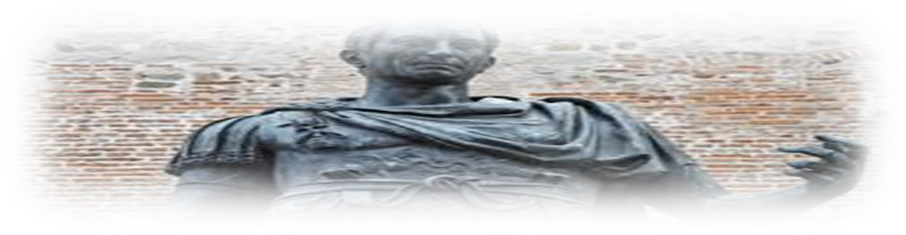
Two millennia, six decades and seven years ago, more or less (given Pope Gregory’s machinations with the calendar), Gaius Iulius Caesar was assassinated by a number of the colleagues he’d pardoned multiple times, including his reputed illegitimate son, Marcus Junius Brutus, as he entered the purportedly sacrosanct Roman Senate.  His crime, protecting the Roman lower classes against those who perceived themselves their betters, and denominated themselves the “boni” (the good).

He was a populist and populists are not well regarded by those who seek permanent power by hiding in the shadows and working through moles in the bureaucracy, the military and in the institutions that operate the economy.

Not that he was a paragon of virtue in all respects, especially shameful was his conduct of the so called Gallic Wars, but he was a fascinatingly complex human being, whose heart, at least with respect to the Roman people, seemed to be in the right place.

Except for the absence of a charismatic and effective populist leader protecting the interests of the most vulnerable among us, little if anything has changed today from the world that Gaius Iulius Caesar left us so long ago.
_______

© Guillermo Calvo Mahé; Manizales, 2023; all rights reserved.  Please feel free to share with appropriate attribution.

Guillermo (“Bill”) Calvo Mahé (a sometime poet) is a writer, political commentator and academic currently residing in the Republic of Colombia (although he has primarily lived in the United States of America of which he is also a citizen).  Until 2017 he chaired the political science, government and international relations programs at the Universidad Autónoma de Manizales.  He has academic degrees in political science (the Citadel), law (St. John’s University), international legal studies (New York University) and translation and linguistic studies (the University of Florida’s Center for Latin American Studies).  However, he is also fascinated by mythology, religion, physics, astronomy and mathematics, especially with matters related to quanta and cosmogony.  He can be contacted at guillermo.calvo.mahe@gmail.com and much of his writing is available through his blog at https://guillermocalvo.com/.

Reflections on Alexander

On June 11 of this year, 2023, it will be two millennia, three centuries, four decades and six years since the death of Alexander III of Macedon, really of Macedon, Greece, Persia, Asia, and the world.  And not just the “world” he ruled but from many perspectives, our own world as well.

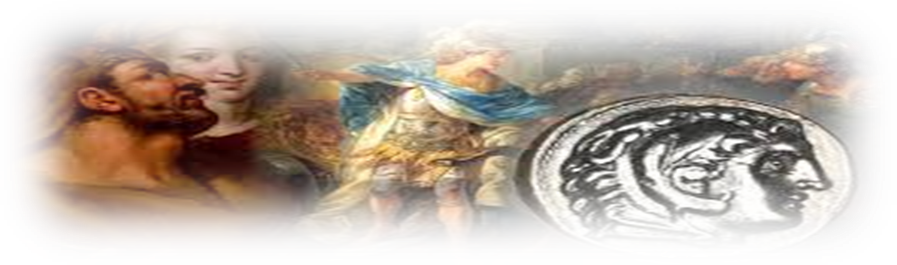
His dynastic family[1] was the Argeadai (Ἀργεάδαι) which colonized Macedonia from Argos (famous for the Golden Fleece sought by Jason and the Argonauts) around 750 b.c.e., 400 years before Alexander’s birth. “Argeadai” was the family name his ancestor, Alexander I, used to prove to the hellanodikai (the judges who decided if you were Greek), that he was Dorian, and as a Dorian, Alexander was thus also part of the Heracleidae (Ἡρακλεῖδαι, the purported sons of Heracles).  More proximately, he was known to his contemporaries as Filipidis (Φιλιππίδης), son of Philip, which was his father’s name.  Almost everyone, everywhere today however just refers to him, in whatever their native languages are, as “Alexander the Great”.  That’s been true for more than 2,346 years now.

Alexander has always fascinated me.  I named my second son after him.  My first’s son’s Greek name, “Basileus” (“great king”, the title by which Alexander was addressed) was also, from my perspective, a link to the Alexander that I so admired.  My fascination was not premised on his renowned military prowess or on his charisma, but rather, on the fact that he considered all men brothers, regardless of their nationality, their race, their religion or their sexual orientation, and that he treated those his armies conquered as one people, much to the distaste and despair of his Macedonian brethren.  An attitude which, after more than 2,346 years, we have yet to fully accept although hundreds of millions, perhaps billions of people have claimed to do so, unfortunately, usually, in an extremely hypocritical manner.

His tomb, eventually located in Egypt’s Alexandria, a city Alexander founded, was revered for hundreds of years.  Both Iulius Caesar and his grandnephew, Octavian, visited it almost three centuries after Alexander’s death.  Unfortunately, as so often happened in antiquity, the tomb was looted and his amazingly preserved body, it apparently refused to decay, has vanished.  The Roman emperor Gaius (Caligula), may have been to blame; he wanted Alexander’s armor, but other Roman emperors or popes evidently eventually needed the gold of his sarcophagus, and ultimately, apparently looters just wanted whatever they could get to sell, although there are legends that it was Christians from Venice who stole the body, believing it to be that of Mark the Evangelist, or perhaps Matthew, or maybe Luke.  Christians and looters are synonymous to people all over the world, especially in the Americas.

His vision of the brotherhood of man was adopted by the stoic philosophers, and eventually, by the early Christian churches, adopted but pretty much ignored.  An attitude all too similar to ours today.

What might he have accomplished had he lived beyond his span of a bit less than thirty-three years?

We could sure use an Alexander, in the latter sense, today.
_______

© Guillermo Calvo Mahé; Manizales, 2023; all rights reserved.  Please feel free to share with appropriate attribution.

Guillermo (“Bill”) Calvo Mahé (a sometime poet) is a writer, political commentator and academic currently residing in the Republic of Colombia (although he has primarily lived in the United States of America of which he is also a citizen).  Until 2017 he chaired the political science, government and international relations programs at the Universidad Autónoma de Manizales.  He has academic degrees in political science (the Citadel), law (St. John’s University), international legal studies (New York University) and translation and linguistic studies (the University of Florida’s Center for Latin American Studies).  However, he is also fascinated by mythology, religion, physics, astronomy and mathematics, especially with matters related to quanta and cosmogony.  He can be contacted at guillermo.calvo.mahe@gmail.com and much of his writing is available through his blog at https://guillermocalvo.com/.

[1] Information obtained from a post by Achilles Monomaxos.

The Former Right to Protest, now a Restricted Privilege

Protests in the United States, once a sacrosanct right, have become tolerable only when deemed politically correct by politicized leaders of the criminal justice system (an oxymoron) and their rubber stamp echoes in the lazy, politicized judicial system.  The purported guardians of the truth and defenders of the citizenry from governmental abuse, the “fourth estate” (i.e., the “press”) have, for the most part, switched sides.  Just consider what happens now to real journalists like Julian Assange and Seymour Hersh.

It’s no longer the nature of the protests that matter (whether peaceful or violent), but the subject matter.  While perhaps, to an extent that has always been the case in the United States, it has now become the rule.  Contrast reactions to protests during the four years immediately following the 2016 presidential election, when apparently anything was fair game including looting, arson, mayhem and murder, with the protests following the presidential election in 2020, when less severe political protests became anathema.  But the bastardization of the right to protest and of the related right to freedom of expression, has now taken a massive leap backward, a backflip, if you will.

On March 9, 2023, Peoples Dispatch, formerly The Dawn News (an international media project which seeks to assure that the coverage of news is not restricted to the rhetoric of politicians and the fortunes of big companies but encompasses the richness and diversity of mobilizations from around the world), published an article, without identifying the writer, perhaps for obvious reasons, entitled “Protesters Charged with Terrorism in Atlanta”.  The article, as is so often the case, was published in Consortium News, one of the very few reliable sources of information still available, and dealt with the spreading tendency to treat political protest in the United States as “terrorism”.  Atlanta is once again a focal point.

This time, protests involved the perversion of the government’s eminent domain powers to create what residents called a “cop city”, a proposed $90 million police training complex in the City of Atlanta, Georgia.  The government’s reaction seems not only perverse, but, with the cooperation of the media, was orchestrated to create the false impression that the protestors were not local residents but rather out of state provocateurs.  In recent years, when convenient for electoral purposes, Georgia has become a magnet for out of state activists who have been urged to participate in second round elections, even if they voted elsewhere in the initial rounds, but evidently, they are only welcome when convenient for Deep State purposes.

The United States Declaration of Independence and its Constitution of 1787-89 (which replaced the first constitution of the United States, the Articles of Confederation), both unequivocally enshrine the right to protest government actions, and not always peacefully.  The Revolutionary War was hardly peaceful.  But the Deep State is, with the collaboration of the corporate media, the Department of Justice, the intelligence agencies, the Democratic Party and traditionalist (non-Tea Party) Republicans, as well as a lazy and politicized judiciary, doing away with such right.  It is now merely a privilege afforded to the politically useful, e.g., supporters of black lives matter groups, pro-abortion groups and anti-Trump groups of all kind (e.g., the vagina hatted, the “resistance”, the Russiagated crowd, etc.). 

An example of where we find ourselves is reflected in the information being made available to the public, despite large scale obstruction by the Democratic Party, the Capitol Police, the Justice Department and the corporate media concerning the events that really took place on January 6, 2020, events which were the subject of orchestrated, televised hearings by a special committee of the House of Representatives and of thousands of prosecutions by the Biden “Justice” Department.  Police videos, frequently withheld from defendants, show how completely false and out of control the Deep State has become in seeking to impose and maintain control over an uncooperative electorate.  Trumped up charges of terrorism and espionage, perverting completely the original intent of legislation that authorized drastic curtailment of civil rights under extraordinary circumstances, have now become common, and the cooperative judiciary acts, not as a neutral arbiter, but as a collaborative prosecutor, impeding rights to present relevant evidence in kangaroo court proceedings.  The events in Atlanta were a logical extension of the prosecutorial improprieties in the trials of defendants charged with criminal violations for their participation in events at the Capitol on January 6, 2020.  And it is unlikely that the tendency will end in Atlanta.  We have gone from a libertarian state, to an authoritarian system tending towards totalitarianism, the things of which our Deep State has so often accused other states.

The image of Julian Assange, incarcerated and tortured in a maximum security British prison at the request of the Biden administration which seeks to extradite and try him for telling the truth tells it all.  Magna Carta, like our Bill of Rights, seems now useful primarily for purposes of post fecal hygiene.

We were warned this would happen.  We were warned in 1948 by George Orwell, we were warned by Aldous Huxley, we were warned by Kurt Vonnegut, and we were warned by many others, and despite a blackout on real news by the corporate media, we are constantly being warned by courageous independent journalists like Julian Assange (and you know where he is), Seymour Hersh and the varied writers who publish in Consortium News (a donation supported news source) and other alternative news sources like Truthdig, and Common Dreams and now Substack.  We were warned by brave whistleblowers like Chelsea Manning and Edward Snowden, among many others (most either jailed, formerly jailed or in exile).  All of the foregoing have done their best to keep any who care informed.  Unfortunately, as this article illustrates, the tide is in favor of the corrupt, the power mad, the warmongers and of their insipidly silly supporters who ironically identify as the “woke”.

Our situation today parallels that which was the subject of a poem following World War II by Martin Niemöller, a German Lutheran pastor and theologian born in Lippstadt, Germany, in 1892.  A version of his poem is enshrined in the United States Holocaust Museum, as follows:

“First they came for the socialists, and I did not speak out because I was not a socialist.  Then they came for the trade unionists, and I did not speak out because I was not a trade unionist.  Then they came for the Jews, and I did not speak out because I was not a Jew.  Then they came for me and there was no one left to speak for me.”

It may already be too late to turn things around, but, like Troy’s Cassandra, some of us will keep trying, and if it’s too late for the United States, that may not be the case with the global south. 

From the Republic of Colombia, … here’s hoping.
_______

© Guillermo Calvo Mahé; Manizales, 2023; all rights reserved.  Please feel free to share with appropriate attribution.

Guillermo (“Bill”) Calvo Mahé (a sometime poet) is a writer, political commentator and academic currently residing in the Republic of Colombia (although he has primarily lived in the United States of America of which he is also a citizen).  Until 2017 he chaired the political science, government and international relations programs at the Universidad Autónoma de Manizales.  He has academic degrees in political science (the Citadel), law (St. John’s University), international legal studies (New York University) and translation and linguistic studies (the University of Florida’s Center for Latin American Studies).  However, he is also fascinated by mythology, religion, physics, astronomy and mathematics, especially with matters related to quanta and cosmogony.  He can be contacted at guillermo.calvo.mahe@gmail.com and much of his writing is available through his blog at https://guillermocalvo.com/.
Vague Memories

The space on the page is still warm, although perhaps now only tepid.

It had, once upon a winter’s day, been occupied.  Occupied by a very special calid phrase, one subsequently erased, but the message’s essence remained, remained aware, somewhere in time, if no longer in space.  Indelible, ineradicable, ineffaceable. 

Destiny is not, by its nature, kind.  But perhaps it knows best.

Still, echoes of misplaced emotions resonate and ephemeral rainbows endure, albeit hidden amidst profoundly deep, dark shadows.  And anyway, notwithstanding the past or the present or the future, somewhere, some-when, hummingbirds play with dragonflies while flowers and willow o’ the wisps in season sing of might have beens.

Vague memories strayed far from home.
_______

© Guillermo Calvo Mahé; Manizales, 2023; all rights reserved.  Please feel free to share with appropriate attribution.

Guillermo (“Bill”) Calvo Mahé (a sometime poet) is a writer, political commentator and academic currently residing in the Republic of Colombia (although he has primarily lived in the United States of America of which he is also a citizen).  Until 2017 he chaired the political science, government and international relations programs at the Universidad Autónoma de Manizales.  He has academic degrees in political science (the Citadel), law (St. John’s University), international legal studies (New York University) and translation and linguistic studies (the University of Florida’s Center for Latin American Studies).  However, he is also fascinated by mythology, religion, physics, astronomy and mathematics, especially with matters related to quanta and cosmogony.  He can be contacted at guillermo.calvo.mahe@gmail.com and much of his writing is available through his blog at https://guillermocalvo.com/.

On the Nature of the Historical Political Spectrum in the United States

It is not surprising that given today’s truth-free, all fake all the time narrative expositions, there is a complete lack of clarity in the United States as to what people on the left of the political spectrum believe. Or on the right. Or on the non-existent center. Everything centers on the need for government to continue to financially squeeze its citizenry for more and more of its hard earned earnings to pay for more and more weaponry leading to more and more profits for the defense industry, big pharmacy, the financial sector, etc. But understanding the nature of political theories is probably important, should a functioning democracy with accurately informed rather than merely manipulated voters, be a goal. Sooo, in an effort at a bit of clarification, perhaps essential for our survival, I offer the following:

With respect to the left wing of the political spectrum, popular ignorance is due to two principal factors:

What beliefs are those that are really espoused and sought by the leftist wing of the political spectrum? Fundamentally, that everyone has dual natures: as individuals, on the one hand but concurrently, on the other, as integral parts of collectives, including structural collectives such as families, local communities, regional communities, the state, mankind, etc., and thematic collectives such as churches, religions, philosophies, political alignments, etc. An essential corollary of such beliefs is the realization that such dual natures will frequently appear to be in conflict, and that in resolving such conflicts, the first stage is to seek a way to reconcile them so that both will be respected, but, that in the event the conflict cannot be reconciled, that collective interest should prevail, something the fictional Star Trek character, “Spock”, defined as “… the needs of the many outweigh the needs of the few”. Libertarians reach the opposite conclusion, holding that individual rights trump collective rights when the two cannot be reconciled.

Based on the foregoing, the real left postulates the following policies, many of which are shared by many among the real right and others:

  • First, rejection of conflict resolution through violence at all levels, from interpersonal through international. Thus leftists are anti-family violence, anti-death penalty, anti-”cruel and unusual” penal sanctions, antiwar; opposed to large military budgets and to international military alliances and to establishment of military forces abroad.
  • Second, that in conjunction with the foregoing, equality of opportunity regardless of inherent characteristics (such as gender, race, religion, national origin, social class, etc.) is essential as is equity and justice tempered with mercy.
  • Third, that freedom of expression, regardless of the merits of what is expressed, is essential and consequently, that censorship is rarely if ever justified, and, as a corollary, that we should strive to maintain open minds, accepting that what we think frequently changes, and that admitting our mistakes and learning from them is essential to progress. Thus, that listening is an essential corollary to espousing.
  • Fourth, a concept related to the third, that social interaction requires that empathy trump polarization and that disagreements be dealt with transparently but respectfully, especially avoiding calumny and ridicule.
  • Fifth, that the principal role of the collective known as the state is to “provide for the common welfare through a social safety net including access to education at all levels, access to all necessary health care, provision of superior infrastructure, provision of unobtrusive domestic and international security, and provision of a system for equitable conflict resolution, free of corruption, inefficiency and nepotism.

Clearly leftist beliefs are utopian but leftists much prefer the utopian to the dystopian.

While those on the right of the political spectrum, those who are labeled conservative, would seem to be the principal opponents of those on the left, that perspective is inaccurate. Real conservatism is a procedure-based philosophy rather than one based on specific policies and its goals frequently coincide with those on the left of the political spectrum. Conservatism is premised on a profound respect for consensus as a decision making mechanism, but consensus that takes into account the opinions of those who have preceded us as well as those yet unborn. Consequently, the decision making process is characterized by inertia, making change difficult to attain and thus, solutions to problems difficult to implement. Respect for tradition is an essential aspect of conservatism and that sometimes leads to perpetuation of mistakes and to an inability to deal equitably with changed circumstances, leading to calcified social and economic relationships. On the other hand, it also prevents erroneous policy deviations and promotes the attainment of long term, strategic goals.

Libertarians are a difficult to place on the political spectrum. Their underlying philosophy is based on the primacy of the individual and a deep distrust for accumulated political power, refusing to delegate any but a bare modicum of sovereignty to the state. Consequently, they are perceived socially as leftists but economically as rightists, even insisting on adherence to the “gold standard” as the basis for monetary policies. Like leftists, libertarians are anti-war, anti-foreign interventions, welcome unfettered immigration, oppose large expenditures on the military and oppose infringements on individual liberties and criminal sanctions for “victimless crimes but, like many conservatives, are opposed to taxes for collectivist social programs. They were once a growing independent political movement in the United States and may still be the largest non-major formal political party, but their energy was zapped when many of their leaders were coopted into the “Liberty Caucus” of the GOP.

Minor leftist parties are numerous, but like cats, seemingly impossible to shepherd and thus, largely ineffectual. The minority status of the foregoing has seemingly been made permanent through what they refer to as the corporate media’s “conspiracy of silence”, i.e., the deliberate policy of ignoring their candidates and policies as a result of which they are virtually unknown to the United States electorate, and that, even when they are noticed, they are ridiculed or vilified (for drawing votes away from the corporate media’s preferred candidates). Ironic given the United States’ electorates’ dissatisfaction with both major parties and the predominance of voters who reject being identified with either.

The real adversaries of the left, libertarian and right wings of the political spectrum are political pragmatists, those without any real beliefs but a strong imperative to accumulate and perpetuate power (political, economic, social and cultural). Being free of principles, truth and consistency are not obstacles to the realization of their goals and thus they freely advocate principles which they have no intention of implementing, if such advocacy advances their quest for power. Consequently, they can proclaim admiration for democracy, pluralism, liberty, equality, equity, justice and peace while, through their actions, utterly subverting them all. Power and the quest to accumulate anything and everything appear addictive and, as with most addictions, ignore long term consequences in favor of immediate gratification. Thus, they are reactive rather than strategic. The lack of principles make pragmatists operationally flexible, especially if they attain control of the means of mass communication and access to the principal sources of capital. That confluence equates to dictatorial political power in societies that base their political systems on the appearance of democracy. Such operational flexibility permits political pragmatists to coopt collectives from both the right and left wings of the political spectrum, as has occurred in the United States, and prior to that, in the United Kingdom, and, like viruses, to propagate their power almost unchecked. To them, dystopia is just fine (as dystopian authors like George Orwell, Aldous Huxley, Kurt Vonnegut, Ray Bradbury, Yevgeny Zamiatin, Kazuo Ishiguro and many, many more, have warned).

In the United States, there are only two major political parties and neither is leftist. The Republican Party, also referred to as the GOP (Grand Old Party, although it is by far, the younger of the two), is a meld of right wing conservatives and libertarians with Deep State pragmatists while the Democratic Party is died in the wool Deep State pragmatist, but presenting itself as progressive and liberal in order to maintain its deluded power bases. How deluded is exemplified by the reality that most African Americans vote for the Democratic Party, no matter what, regardless of the historical nature of the Democratic Party as the political party that opposed emancipation, which promoted the Ku Klux Klan, among other politically aberrant movements, as do feminists, regardless of the misogynist conduct of many of that party’s leaders ( e.g., the Kennedys, Bill Clinton, etc.) and as do members of the auto-denominated LGBT communities.

One wonders at the naivety of the United States electorate, a collective generally comprised of decent people who espouse ethical and moral values, tend to be hard working and generous. But then, history teaches us that people with noble traditions can empower virtual monsters, as occurred with the German nation which from the world’s most socially progressive people during the eighteenth and nineteenth centuries, permitted the rise to leadership of the Nazis, and the Jewish nation, one of the world’s most enlightened populations from which evolved today’s Jewish State Zionists. In each case, emotional manipulation overcame deeply rooted principles, as has occurred in the United States since the start of the twentieth century.

One wonders if the reverse can somehow be attained, i.e., whether an emotionally manipulated people can overcome the historic victories of the political pragmatists who now rule them by becoming cognitively aware of the realities concerning those who cultivate political, economic and social power through the quest for their votes.

Unlikely, I know, ….

But one can hope.
_________

© Guillermo Calvo Mahé; Manizales, 2023; all rights reserved.  Please feel free to share with appropriate attribution.

Guillermo (“Bill”) Calvo Mahé (a sometime poet) is a writer, political commentator and academic currently residing in the Republic of Colombia (although he has primarily lived in the United States of America of which he is also a citizen).  Until 2017 he chaired the political science, government and international relations programs at the Universidad Autónoma de Manizales.  He has academic degrees in political science (the Citadel), law (St. John’s University), international legal studies (New York University) and translation and linguistic studies (the University of Florida’s Center for Latin American Studies).  However, he is also fascinated by mythology, religion, physics, astronomy and mathematics, especially with matters related to quanta and cosmogony.  He can be contacted at guillermo.calvo.mahe@gmail.com and much of his writing is available through his blog at https://guillermocalvo.com/.