A Biography of Sorts

It started towards the end of the third quadrant in July. 

Monthly quadrants are not all equal, of course.  Those in February are usually seven days long except in quadrennial years, and then each quadrant is approximately seven days and six hours long.  April, June, September and November have quadrant’s that are seven days and twelve hours long, but January and March and May and July and August and October and December are a tiny bit more complex.  And they’re in the majority.

In that July with which we were concerned, the day with which we were concerned was the twenty-second, a sort of magical day in astrological terms, and it was towards the end of the third quadrant because in July, as in January and March and May and August and October and December, each quadrant is seven days and eighteen hours long, so the third quadrant would end at six in the morning of the twenty-third day.  And this was still the twenty-second day.

Had it been in February it would have been during the start of the fourth and final quadrant, but it wasn’t.  Had it been in April, June, September or November, the twenty-second would also have been during the last day of the third quadrant if it were during the morning but the first day of the fourth and final quadrant, had it been the afternoon.  But it was not April, June, September or November with which we were concerned, although the time with which we were dealing being the early morning of the twenty-second day, before the sixth hour, there would have been quadratic coincidence during those months.

It was in a city high in the central range of the Colombian Andes, one overlooked by a glacier astride a volcano whom the aboriginals had once worshiped (whom, not which, given that they personified it) under the name Cumanday.  Perhaps some still worshipped it under that name and it is certain that there were at least some local, dedicated proto-new agers, who did so then.  It had been the year of the dog in the Chinese calendar, although China was very far away.  He’d have preferred the year of the dragon, or at least of the lion, but no lion was included in that calendar, so it would have had to have been, its cousin, the tiger.  But it was the dog.  It seemed unfair that no lion was available given that in the more traditional Babylonian astrological family, the twenty-second day in July was usually the dividing line between the lion and the crab, although that crab had a rather unpleasant name: cancer.

And anyway, being too young to really have a vote (scream and cry though he might, and in fact, as he had) he was stuck with the available signs, a dog and a lion, and maybe a crab with an evil name.  Not so bad really.  But a dragon would have been really cool.

It had been an interesting day (in the Chinese sense).  The culmination of a somewhat unpleasant period for his mother of course, and unfortunately for her, he’d taken his time, albeit not without a good deal of internal fussing.  But he’d finally come out to see the world he’d be inhabiting for quite some time.  He’d been the first of his generation so a good deal of fuss had been made of the occasion.  New waves had formed and in concentric circles, had begun to oscillate, first nearby, then in that special city, in that special department, in that special country, in that special continent, in those special hemispheres, one vertical and the other horizontal, then in that poor, poor abused planet, then in that solar system, in that galaxy, in that universe, and finally, throughout the multiverse, at which point, the wave had started its return journey playing with time and space, and quanta, and dimensions along the way.  Examining black holes and white holes and playing with dark energy and dark matter but, as it approached its point of origin, nothing was there except radioactive residue, well, and radio waves echoing demands that everyone vote for a certain Democratic Party because Russians and Chinese with which Republicans were purportedly in league had to be stopped from destroying everything, and that the Ukraine had to be permitted to join NATO, and that a great deal of money was required, first, to keep that Democratic Party in power, and then, for more and more and more weapons to keep everyone safe from , … well, at that point the echoes became garbled.

So the wave just kept on going, back to the edge of the multiverse it had visited before. And back again, looking for that child who’d first arrived in the third quadrant of the month of July, at the intersection of the lion and the crab in the year of the dog in a once beautiful city high in the central range of the Colombian Andes, one once overlooked by a glacier astride a volcano whom aboriginals had once worshiped under the name Cumanday, and perhaps some local, dedicated proto-new agers had once done so as well.
_______

© Guillermo Calvo Mahé; Manizales, 2022; all rights reserved.  Please feel free to share with appropriate attribution.

Guillermo (“Bill”) Calvo Mahé (a sometime poet) is a writer, political commentator and academic currently residing in the Republic of Colombia (although he has primarily lived in the United States of America of which he is also a citizen).  Until 2017 he chaired the political science, government and international relations programs at the Universidad Autónoma de Manizales.  He has academic degrees in political science (the Citadel), law (St. John’s University), international legal studies (New York University) and translation and linguistic studies (the University of Florida’s Center for Latin American Studies).  He can be contacted at guillermo.calvo.mahe@gmail.com and much of his writing is available through his blog at https://guillermocalvo.com/.

Endoplasmic Indulgence

Perhaps he’d always been confused, perhaps it was nothing new, perhaps his confusion was merely more confusing because the world had become so much more incoherent, so much more contradictory, so much more filled with falsehoods and fabrications, so much more, well, … confusing.

Odd that others didn’t acknowledge his confusion, and that the answers which they, for some reason, sought from him, seemed to them both eloquent and precise while he remained so full of doubts, incertitudes and self-equivocation; but apparently, it didn’t show through.  Not that he wanted it to.

He wondered if others felt that way.  If others who seemed so sure, so certain in their postures, positions and conclusions were, in reality as full of doubts as he.  And if the doting crowds that followed them knew in their hearts that those for whom they clamored were merely somnambulating through roles they’d themselves assigned?

The delusional leading the deluded through perdition into despair.  That would explain a great many things.  Most religions for example, and politics, and law, and journalism, and history itself.  Delusional erudition amplified through rhetoric.  It has a nice ring albeit in a horrific context.  Perhaps onomatopoeia run amuck!

“Endoplasmic indulgence”, a phrase apparently heretofore unused, a virginal phrase taken a bit further than is really rational.
_______

© Guillermo Calvo Mahé; Manizales, 2022; all rights reserved.  Please feel free to share with appropriate attribution.

Guillermo (“Bill”) Calvo Mahé (a sometime poet) is a writer, political commentator and academic currently residing in the Republic of Colombia (although he has primarily lived in the United States of America of which he is also a citizen).  Until 2017 he chaired the political science, government and international relations programs at the Universidad Autónoma de Manizales.  He has academic degrees in political science (the Citadel), law (St. John’s University), international legal studies (New York University) and translation and linguistic studies (the University of Florida’s Center for Latin American Studies).  He can be contacted at guillermo.calvo.mahe@gmail.com and much of his writing is available through his blog at https://guillermocalvo.com/.

Memories:

He’d liked his brandy sweetened.  He’d loved apricot brandy when it was “apricot brandy” and not just apricot flavored, and he liked it strong, at least eighty proof.  And he’d liked regular brandy too, sweetened with Grand Marnier.  And Armagnac, Clés de Ducs if possible; but he’d preferred Spanish to French brandies, especially Cardenal Mendoza, or in a pinch, Gran Duque de Alba.  But he hadn’t like it alone, after supper over coffee, he’d liked it with a bit of cheese, sharp cheddar if possible, and with an apple sliced with a paring knife, and with hot tomato soup.  And he’d liked it best listening to symphonic music, especially Beethoven or Bach, while he was reading, especially Tolkien, or researching religious mythology.  Especially with a roiling fire burning in a large hearth. 

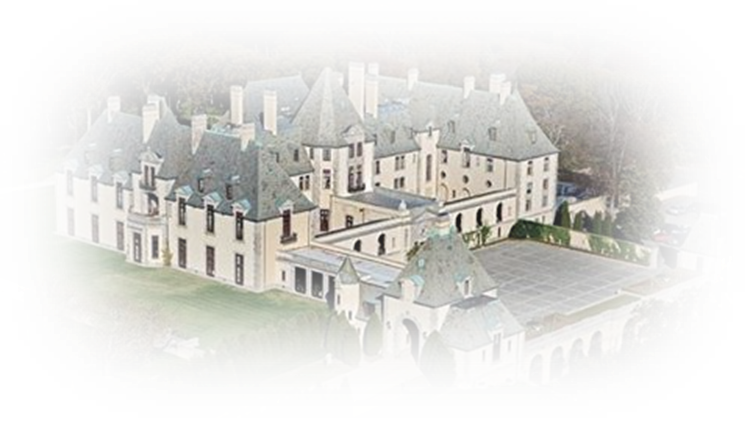
Especially in a Normal-style castle, set on the highest point on a long island, set between a river and a small harbor, in a town named after cold springs.  In a castle with a gym and a football field and a baseball field, and with students and faculty members, and maintenance personnel, and a nurse, and retired military personnel who’d had adventures they enjoyed sharing.  A castle full of memories where new ones were made daily, at least for a while.

One would think those aspirations were unrealistic, unless one had lived them.  And relived them, over and over again, long after the castle was just a shared memory.
_______

© Guillermo Calvo Mahé; Manizales, 2022; all rights reserved.  Please feel free to share with appropriate attribution.

Guillermo (“Bill”) Calvo Mahé (a sometime poet) is a writer, political commentator and academic currently residing in the Republic of Colombia (although he has primarily lived in the United States of America of which he is also a citizen).  Until 2017 he chaired the political science, government and international relations programs at the Universidad Autónoma de Manizales.  He has academic degrees in political science (the Citadel), law (St. John’s University), international legal studies (New York University) and translation and linguistic studies (the University of Florida’s Center for Latin American Studies).  He can be contacted at guillermo.calvo.mahe@gmail.com and much of his writing is available through his blog at https://guillermocalvo.com/.
Remembering Father Nicholas Trivelas on the Fourteenth Anniversary of His Passing

Today, September 30, 2022, is the anniversary of the passing of Father Nicholas Trivelas, formerly pastor at Charleston’s Greek Orthodox Church of the Holy Trinity while I was a student at the Citadel many, many decades ago.  Reflections on his passing brought to mind two other Greek Orthodox priests who were a comfort to me during trying times, Father Nicholas Nick of Fort Lauderdale’s St. Demetrius Greek Orthodox Cathedral and my family’s Greek Orthodox pastor in Queens, New York, when I “wore a much younger man’s clothes”.  The latter’s surname was, I think, Volides.  Because they can marry and father children, Greek Orthodox clerics tend to be more empathic than celibate clerics, and warmer, in a safe manner. 

I confess that I am not a “believer” and it may be that I was not then.  I’m at best an agnostic and a seeker, but I profoundly respect the faith of others.  Indeed, I have studied most major religions and as a young academic, taught a course on mythologies and comparative religions, something that has remained a life-long interest.  I was baptized Greek Orthodox at the age of ten at the insistence of my step father, Leonidas Theodore Kokkins, born in Flushing, New York where he is interred, but I had already been baptized as a Catholic and, as a member of a church associated with the Theosophical Society.  It’s not really as confusing as it sounds.  My maternal family were theosophists and thus generally accepting of all religions.  But the three priests I referenced above were special people in my life and in the lives of others, too many to count. 

The Citadel, the Military College of South Carolina, of which I am a proud graduate, was and is a very special place.  Although it is in continuous evolution, something with which many of its graduates do not agree (being deeply traditionalist), its values seem constant.  The Citadel involves a profoundly demanding, integral experience combing academics, athletics, military training, civic involvement and ethics, one that took everything we could give and then some to complete (indeed, many decent, intelligent and competent people do not succeed there and move on to other endevors elsewhere, with the Citadel’s blessing and best wishes). 

Father Trivelas helped me make it through the Citadel’s rigors and supplemented its values, as did the wonderful Greek community of Charleston, special among them three families, the Misoyianis family, the Kirlis family, and especially the Lempesis family.  It’s hard to think of one without the others, and each always inspires feelings of profound love and gratitude.

As tends to happen in this mobile and dynamic world, one where values seem much less relevant than they once were, the memories and reflections to which I allude are bitter sweet: sad because of the loss of contact but beautiful because of the shared experiences involved and because of the role played by those to whom I’ve referred in whatever positive attributes I’ve attained.  These are memories in which my mother echoes, Powerfully, as do so many others:  my classmates, both at the Citadel and at the Eastern Military Academy (once prominent in Cold Spring Hills, New York, but now long gone), and memories inspired by the student’s I’ve been privileged to teach and the colleagues from whom I’ve also learned a great deal. 

Memories of Father Trivelas trigger them all.  If he was right and there’s a Heaven, he is there, prominently.
_______

© Guillermo Calvo Mahé; Manizales, 2022; all rights reserved.  Please feel free to share with appropriate attribution.

Guillermo (“Bill”) Calvo Mahé (a sometime poet) is a writer, political commentator and academic currently residing in the Republic of Colombia (although he has primarily lived in the United States of America of which he is also a citizen).  Until 2017 he chaired the political science, government and international relations programs at the Universidad Autónoma de Manizales.  He has academic degrees in political science (the Citadel), law (St. John’s University), international legal studies (New York University) and translation and linguistic studies (the University of Florida’s Center for Latin American Studies).  He can be contacted at guillermo.calvo.mahe@gmail.com and much of his writing is available through his blog at https://guillermocalvo.com/.

Refractions on a Day in Early Fall

Today dawned beautiful here in the city in the sky, nestled at the feet of the Cumanday in the central range of the Colombian Andes, although, as I have for the past few days, I awoke with trepidation, undefinable but perhaps due to world events and the horrible state of my adopted (and now somewhat abandoned) homeland to the North.  A land and a people I also love profoundly. 

Colombia seems embarked on a renaissance, a period of enlightenment and perhaps, even enlightened governance.  A great deal of its polarization has evaporated, almost overnight, a sign of hope to the world, which in its Northern Hemisphere, seems engulfed in hate, animosity and belligerent competition.

I live in both worlds though, and as in the case of apples, the bad negatively impacts the healthy.

So, despite the beautiful dawn, shadows of the dark clouds that blight the land where my sons, distant and silent, reside, impact even the brightest days in this renascent paradise.
_______

© Guillermo Calvo Mahé; Manizales, 2022; all rights reserved.  Please feel free to share with appropriate attribution.

Guillermo (“Bill”) Calvo Mahé (a sometime poet) is a writer, political commentator and academic currently residing in the Republic of Colombia (although he has primarily lived in the United States of America of which he is also a citizen).  Until 2017 he chaired the political science, government and international relations programs at the Universidad Autónoma de Manizales.  He has academic degrees in political science (the Citadel), law (St. John’s University), international legal studies (New York University) and translation and linguistic studies (the University of Florida’s Center for Latin American Studies).  He can be contacted at guillermo.calvo.mahe@gmail.com and much of his writing is available through his blog at https://guillermocalvo.com/.

Bastian

Sebastian liked his name, it meant “revered” in Latin.  It gave one something for which to aspire, not only a goal but a framework that ought to be followed to attain that goal, if that appellation were to be honorably earned.  And honor too was important to Sebastian, perhaps because of his name.

Not that it didn’t have drawbacks. 

What was its diminutive or affectionate form?  Seb, Sebbie, Baz and Bash came to mind.  Its Spanish variant, also Sebastian but pronounced differently, was both more popular and had easier nicknames, Sebas and Bastian being two.  Sebastian had tried to adopt Bastian, he liked it.  And not only because it seemed cooler than Seb, Sebbie, Baz or Bash.  It had style and not just a bit of power.  To Sebastian, Bastian seemed powerful.  Powerful and revered were as useful as they were complimentary.

Now to live up to the name and nickname, and to have the nickname accepted by his peers and by his future ex-wives (the latter was the trend).  Hopefully beautiful, interesting and honorable ex-wives, ex-wives who did not bear grudges or demand alimony, nor an unfair share of joint property.  Who did not irreparably break his heart or he there’s.  That would definitely not be honorable.

And what kind of an education and career would best suit a Sebastian whose nickname was Bastian and who sought to comport himself in an honorable fashion, but one not bereft of financial success and at least a modicum of fame?  An interesting and productive career following a fascinating education that ought to include a bit of adventure and a good deal of fun, perhaps even a bit of harmless mischief but in a good cause.  And dinosaurs and physics and astronomy too.  Perhaps even theoretical mathematics and study of quanta that might open portals to other dimensions or facilitate non-interval travel anywhere or, perhaps, even any when. 

That would be cool, and it could well be honorable as well.

Tough questions for a nine year old.
_______

© Guillermo Calvo Mahé; Manizales, 2022; all rights reserved.  Please feel free to share with appropriate attribution.

Guillermo (“Bill”) Calvo Mahé (a sometime poet) is a writer, political commentator and academic currently residing in the Republic of Colombia (although he has primarily lived in the United States of America of which he is also a citizen).  Until 2017 he chaired the political science, government and international relations programs at the Universidad Autónoma de Manizales.  He has academic degrees in political science (the Citadel), law (St. John’s University), international legal studies (New York University) and translation and linguistic studies (the University of Florida’s Center for Latin American Studies).  He can be contacted at guillermo.calvo.mahe@gmail.com and much of his writing is available through his blog at https://guillermocalvo.com/.

A Measure of Sad Times

He is very sensitive to all kinds of external stimuli, which he internalizes and, after profound reflection, synthesizes and sometimes grasps an idle lie.  And he loves music, he considers it the primordial language, the most effective language, one speaking directly to the soul.  But for some reason, of late, he has not wanted to heed it.  An affirmative wanting not to listen to it.  And he is perplexed, he doesn’t understand the why of it.  But, then again, there are so many things he just can’t comprehend.

Perhaps it has something to do with the state of the world.  With the current dearth of truth and omnipresence of vitriol and violence. 

Music, without words, he has long believed, rarely lies, except perhaps for martial music.  In that case, it’s as though music was forced to perform, like a beautiful woman being ravished.  Beauty turned inside out and violated.  National anthems tend to follow that pattern, at least frequently.  Unfortunately, he’s come to feel that, like a virus, that pattern seems to be spreading.  Marketing “jingles” of course almost always lie, as do their political variants.  And they’ve overtaken beautiful instrumentals, symphonies and boleros and gipsy inspired variants of flamencos.

Words can apparently pervert anything, and he wonders at the folk wisdom that claims speech evolved to facilitate deception, and thus, of course, the legal profession, and journalism, and politics. But then, what of poetry?

It has dawned on him that truth is not always beautiful and that beauty is all too frequently dishonest.  Even, he guesses, where music is involved.  Perhaps it’s that epiphany that has him down.  Perhaps it is reflections such as these that are muddling and blocking his instinctive love, indeed his need, for music. 

A measure of sad times. 

Perhaps that’s what Don McLean once sensed when he wrote his epic and second best song (Vincent was the very best), without realizing it.

“A long, long time, ago, I can still remember how the music used to make me smile ….”
_______

© Guillermo Calvo Mahé; Manizales, 2022; all rights reserved.  Please feel free to share with appropriate attribution.

Guillermo (“Bill”) Calvo Mahé (a sometime poet) is a writer, political commentator and academic currently residing in the Republic of Colombia (although he has primarily lived in the United States of America of which he is also a citizen).  Until 2017 he chaired the political science, government and international relations programs at the Universidad Autónoma de Manizales.  He has academic degrees in political science (the Citadel), law (St. John’s University), international legal studies (New York University) and translation and linguistic studies (the University of Florida’s Center for Latin American Studies).  He can be contacted at guillermo.calvo.mahe@gmail.com and much of his writing is available through his blog at https://guillermocalvo.com/.

Reflective Introspections

The central range of the Colombian Andes is beautiful, as is so much of that all too frequently tortured country.  Snow clad peaks overlook a paradise of perpetual spring which in turn overlooks a land of perpetual summer.  The weather changes seasons several times a day, sometimes dawning as a silvered wonderland, clouds blanketing verdant mountains, then a bit of rain quickly replaced by robin’s blue skies and in the evening, the sunsets that so delighted poet laurate Pablo Neruda.  Unfortunately, although nature does its best to provide an idyllic setting, as is the case in the United States and so much of the world, in Colombia we humans muck it up.

Inside a metaphorically reflective crystal mote, trapped within an imagined mirrored globe, a sentience engages in seemingly infinite introspection.  It is a bitterly sad period culminating during two days at the end of February; two days that have usually been very special.  They involve his three sons. It is his eldest son’s last day at thirty-four and first day at thirty-five.  For many years they have lived continents apart but until recently managed to bridge that gap.  The father plays with the new number noting that thirty-five is five times seven and three joined with five and that the son is the first of three, all prime numbers. He finds a strange delight in the magic he perceives in prime numbers.  The number two is special in that regard as the only even prime.  He recalls when his son was about eight and started to change, to become his own person, he recalls how proud he felt, how he believed he’d done well as a father.  Then he reflects on the present, a very different sort of reflection.

Like so many others in a bitterly polarized world, he and his firstborn are profoundly estranged.  On thirty four other occasions the father has written short missives shared with his son, celebrating the past and looking forward to the future.  This year the son has declined to receive them.  He has shut the father out, “ordering” him to refrain from any contact.  The son has judged the father’s political perspectives unacceptable.  They do not mirror his own.  The father does not despise nor deprecate those the son hates but rather seeks to understand and persuade them, and that is anathema in his son’s brave new world.  Not having succeeded through public ridicule to censor the father, the son has expelled him from his life.  His father was not “woke” enough, even though their stated goals may have coincided.  A strange new variant of “liberalism”.

That is the world of today.  But though his thoughts may not be shared this year, the father writes them anyway.  He reflects on what his son has attained, who he has become, gives him credit for his successes, such as they are, but blames himself for the faults.  In trying to make him strong he instead made him self-centered; in seeking to make him proud he planted the now-sown-seeds of hubris.  In seeking to make him love the concepts of honor and public service, he only made him politically ambitious and intolerant.  The father wonders if his son is a reflection of himself.  He thinks not, then wonders what it is his son perceives to the exclusion of so much.  The father recalls that he too was all too frequently sure of his own beliefs and that only when they had changed almost every decade did he succeed in opening his mind to the possibility of myriad verities.  Yet the father had always been open to others’ opinions, has long been aware that logic based on false premises only leads to false conclusions and that if actual results belie logic, then the premises are at fault.  But that logic, in and of itself, divorced from premises and conclusions, always seems pure and beautiful and infallible.  As infallible as Catholic Popes.

Father and son will not compromise their perspectives and while the father, being more experienced and mature can tolerate, or at least ignore the son’s, the son cannot accept that the father beliefs cannot be forced to conform to his.  A conundrum.  Perhaps to both, perhaps not.  Perhaps they will go their separate ways, the memories of each conforming to their decisions until it is too late.  That would be sad, very sad, but not uncommon, especially not today. 

Tolerance and free expression are not in vogue.  This is the age of hypocrisy, of overt manipulation, of censorship, concepts always ascendant but never as universal or blatant as they are today, except perhaps during the decade that started in the mid nineteen-thirties.  No, that’s wrong of course.  Human history and human misery encompass far more than the last century.  The problem is that history is a fiction woven by all too clever artisans so who knows anything but what one has lived, and even that seems all too flexible, memory being fallible and that fallibility artfully manipulated.

Notwithstanding the foregoing, from afar and in silence the father wishes the son a happy birthday and a happy future.  He has no idea what the son hopes and perhaps he now never will.  Then he smiles, somewhat bitterly, in the realization of how self-serving his observations are. 

But they are what they are. 

As are his son’s.
_______

© Guillermo Calvo Mahé; Manizales, 2021; all rights reserved.  Please feel free to share with appropriate attribution.

Guillermo (“Bill”) Calvo Mahé (a sometime poet) is a writer, political commentator and academic currently residing in the Republic of Colombia (although he has primarily lived in the United States of America of which he is also a citizen).  Until 2017 he chaired the political science, government and international relations programs at the Universidad Autónoma de Manizales.  He is currently a strategic analyst employed by Qest Consulting Group, Inc.  He has academic degrees in political science (the Citadel), law (St. John’s University), international legal studies (New York University) and translation and linguistic studies (the University of Florida’s Center for Latin American Studies).  He can be contacted at guillermo.calvo.mahe@gmail.com and much of his writing is available through his blog at http://www.guillermocalvo.com.

Reflections on the Nature of Divinity, and on its Delusions

Why do I feel compelled to take up the defense of those society considers the worst of the worst when, once upon a long time ago, as an attorney, I refused to either defend or prosecute, preferring to walk away from the legal profession, having sensed that it was soiled?

I don’t mean just ordinary villains, but legendarily evil forces like Lucifer and Cain?  Why do I sense that both history and myth have misjudged them and that it is my role to make their cases, at least through my writings?  Why do I sense that the entity so many of us humans worship is the real villain and that my role is to defend them and expose him, not only to my fellow beings but to the purported Divinity as well?   The Divinity I promised to seek so very long ago, and to honor whether I found him or not? 

With all due respect to current and ancient matriarchic and feminist concepts, the Divinity to which I allude definitely seems masculine, although perhaps not uniquely divine.

The evidence seems clear.  Being prescient, omniscient and omnipotent the mythical Abrahamic Divinity would also have to be guilty of every wrong ever committed, at least derivatively, and even more, the ultimate entrapper.  Lucifer’s sin was to love too much in the face of disdain, and, innocent Cain had no way to know that his actions would have terminal consequences.  Death was virginal then.  So how to convince the Divinity of his guilt, and that the only way to assuage such guilt is to admit the truth (there go the Bible and the Torah and the Koran), to seek the forgiveness of his victims and to make restitution.  In essence, to keep the promises originally made to Adam and Eve, and perhaps even more so, the promises to Lilith of which we’ve not been made privy. 

Why does this seem so clear to me but anathema to most?

Just what happened along the way that turned me into a contrarian?  Was it possibly Divinity itself who, in placing negative as well as positive aspects of destiny in my path, maneuvered me into this role?  Perhaps as a means of permitting itself to face its own guilt, and perhaps helping it assuage it an eventually heal?  Is that what the novel I started a decades ago is about and perhaps why, to make me understand complexities, it then placed Inanna’s avatars so precariously in my life?

Are good and evil inverted reflections in a chaotic sea, shifting with the setting sun and rising moon?

How can I ever know unless I accept the challenge and either succeed or fail?

So many questions.  And proof may be all around me, all around all of us; the world as it is seems so incoherent that it may well be proof that divinity and infernity are not what we’ve been led to believe.  Perhaps my contrarian intuition is the ultimate tool in my quiver, the one that long, long ago, at age seven, first led me to question the nature of the divine, and reject our age old conclusions.

Who’d have thought that after rejecting the legal profession as immoral I’d accept the ultimate contingency case?  Apparently someone or something did, which is why I am what I am and how I am, the essence of the inchoate but the inchoate always remains to be seen.

Infernal reflections?

Perhaps.
_______

© Guillermo Calvo Mahé; Manizales, 2022; all rights reserved.  Please feel free to share with appropriate attribution.

Guillermo (“Bill”) Calvo Mahé (a sometime poet) is a writer, political commentator and academic currently residing in the Republic of Colombia (although he has primarily lived in the United States of America of which he is also a citizen).  Until 2017 he chaired the political science, government and international relations programs at the Universidad Autónoma de Manizales.  He has academic degrees in political science (the Citadel), law (St. John’s University), international legal studies (New York University) and translation and linguistic studies (the University of Florida’s Center for Latin American Studies).  He can be contacted at guillermo.calvo.mahe@gmail.com and much of his writing is available through his blog at https://guillermocalvo.com/.

The Last Guardian: A Divine nightmare

A mote in black on black.  An echo of a shadow of what once might have been once upon a time. 

He was the only thing that remained of the once infinitely expansive multiverse, everything else had withered and disappeared so many eternities ago, that an eternity was infinitely less than a grain of sand in everything that had ever been.  He’d volunteered to stay behind when both he and the multiverse were relatively young, knowing just how lonely he’d eventually be when everything, even time, was so long gone that it was impossible to recall that it had ever been.  But it had, and he remained.  And he recalled, there was nothing else.  The multiverse reduced to his own body or his body expanded to encompass the multiverse, it made no difference.  There was utterly and absolutely nothing else.  The body he’d worn so long ago somehow perfectly preserved and, despite the absence of air or water or sustenance or space, still fully, well, sort of fully, functional.  Despairingly so as it had no functions at all.  A relic.  A memorial of sorts.

His last breath had been an infinity of eons ago, the last trace of long forgotten gasses inhaled, and then, absolutely nothing.  No time, no space.  Just him.  Existing, and watching, although for what he’d no idea.  There was nothing else to see.  He was self-contained.  Only that which he was and would always be but had not always been, now and for very, very long, always conscious.  Eternities’ chosen scapegoat paying for long forgotten sins of long forgotten others.

There was no future, only a long distant past.  And a present out of time.  And the promise he’d made to stay behind so that everything else could end.  He recalled that on the day he’d turned seventy-six, he’d wondered for the first but not the last time, if divinity had once played the role he was now charged with assuming, the sole role at the end of time and space.  If so, that would explain a great deal, perhaps everything.  How could anything remain sane in any sense at all after being so utterly alone, and yet, knowing what awaited, he’d confirmed his commitment, which implied something about his sanity as well.

While still enjoying a normal life span, he’d watched as his contemporaries aged and passed on, and then his descendants.  He’d been there, albeit an oddity, a freak, as species, including humans, evolved and changed, and planets evolved and died, and as different species conquered space and even time, and then they too moved on, but he was cursed with anachronistic eternity, a never ending relic.  And on the last instant of time, everything was gone, everything but him.

The other side of panentheism.  The last guardian, long after the end of time and space.
_______

© Guillermo Calvo Mahé; Manizales, 2022; all rights reserved.  Please feel free to share with appropriate attribution.

Guillermo (“Bill”) Calvo Mahé (a sometime poet) is a writer, political commentator and academic currently residing in the Republic of Colombia (although he has primarily lived in the United States of America of which he is also a citizen).  Until 2017 he chaired the political science, government and international relations programs at the Universidad Autónoma de Manizales.  He has academic degrees in political science (the Citadel), law (St. John’s University), international legal studies (New York University) and translation and linguistic studies (the University of Florida’s Center for Latin American Studies).  He can be contacted at guillermo.calvo.mahe@gmail.com and much of his writing is available through his blog at https://guillermocalvo.com/.