Why Cats?

An Abominable Abrahamic Allegory
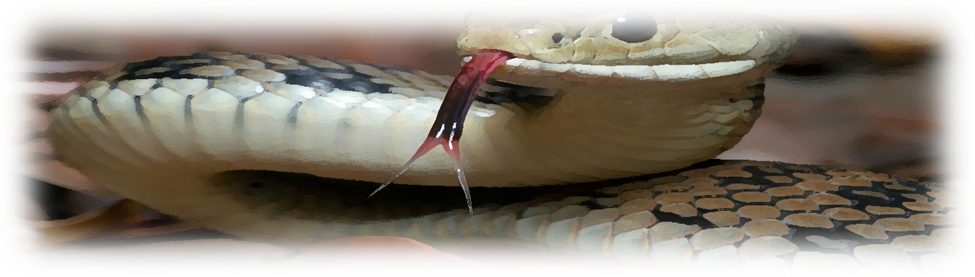
Not many knew where the Garden had been relocated, or when, or what for.  But a few did, a very few.  Of course, most people know why.  One “being” had been trapped there ever since, well, you know, ever since its gates had been locked and sealed.  On this particular day, the one there confined was having a very friendly chat (under the circumstances) with the only son of He who had restrained him.

The day was warm, with cooling zephyrs playing tag, but all the animals and fish and avians seem to have, at some point, disappeared.  The flora remained (for the most part) although not in the bright shades of green mixed with myriad colors it had once worn, now, yellows and browns seemed to predominate.  Flying insects on the other hand seemed omnipresent. 

One of the two there on this particular occasion, the Son, was lying on the grass with his back resting on the trunk of one of two enormous trees, each the focal point of concentric circles.  The other, the very first eupodophis, was resting in the branches of the other tree.  Neither tree bore any fruit although myth has it that in the past, things were otherwise. 

“Past”!  Perhaps that requires an explanation.  Time doesn’t exist in Divine realms, rather, everything that ever was, is or will be occurred simultaneously (which can be confusing).  So “past is really just a place in the Divine continuum.  The problem, however, is that without time there can be no motion, and without motion, how does one go from place to place, how does one find anything?  One can’t really move to get anywhere.  Not even to scratch an insect bite.  That may be why the Divine (who some call Dad and others the Big Guy, among other things) has non-Divine realms with other rules: “physics some call them”, others call them “magic.  But the Garden is a sort of halfway house set firmly amidst the battling shadows cast by Chaos and the echoes of Order.

Like most children (relatively and figuratively and perhaps even literally speaking), the Son (Nachash always called him Yesh although his name was Yeshua) was very curious and loved to visit and chat with the sole remaining denizen of the Garden, Nachash (sometimes referred to as the Serpent who could not be charmed).  Yesh especially enjoyed asking about his family, small though it was (just three, and one, the Spook, was not really corporeal, although every once in a great while, he or she, its gender was never really clear, liked to appear as a white dove).  Nachash was a primordial creature both in and out of time and had apparently been coexistent with various alleged demiurges so had quite a store of tales to tell.  For example: although Yesh referred to the Big Guy as “Dad” and knew him as YHWH, Nachash had once explained that he’d not always had a “name”.  For a time (which meant in the temporal realm), in dealing with his creations in the temporal realms, He’d played with the idea of calling himself “I am that which was before Alpha and will be after Omega”, but that seemed a bit long and tedious, and anyway, on one particularly annoying occasion, when he’d been asked for his name repeatedly and insistently by an impudent nebbish, He’d blurted out, in anger, to stifle further inquiry, “I am who I am”, and the foolish male biped who’d been nagging him and who had a very limited vocabulary just assumed that was a name.  “YHWH” (יהוה pronounced yodh, he, waw, and he) in his primitive linear language, and so YHWH it became, but that purported name was never to be pronounced for some unfathomable reason, something about a ‘Tetragrammaton’.  How confusing is that?”

Nachash recalled that someone had once written a somewhat sacrilegious and hence fun ditty that YHWH for some reason found amusing.  It ran something like “I am what I am and that’s all that I am”.  Then went on to deal with something to do with semen (or seaman) and spinach.  Olive oil was in there too somewhere.  Hmm, semen and olive oil sounds sort of kinky.  Why the Big Guy unexpectedly found the whole thing amusing is curious but with Him one could never tell, … which is the way He liked it.

Anyway …

On this particular morning Yesh was wondering why the two trees he and Nachash were sort of occupying no longer bore any fruit, or for that matter, any leaves.  Just an enormous quantity of interlocking branches heavy with thorns.

“Funny story there” said Nachash.  It has to do with the aftermath of the saga of Adam, Eve and the apple.  I get a very bum rap there.  Your Dad decided that incident involved an experiment he’d rather not repeat and thus, except for me and a few guys guarding the gate, this Garden has been virtually abandoned for ages upon ages, thus, … no gardeners.

“Yeah, I’ve heard ‘that’ story a gazillion times, but never understood the thing about the apple, … Why an apple”?  “Why was the whole thing such a big deal anyway?”

“Ahhhh, uttered Nachash, “there lies a tale” (albeit not a tail).

A semidry stream of sorts waddled lazily nearby and Nachash wondered if he could somehow manipulate Yesh into turning some of it into wine, but, the water was pretty fetid.  Plus it was hard to get Yesh to do anything that wasn´t his own idea.  Still, … maybe later.

“Actually”, continued Nachash, “it wasn’t the big deal those stupid supposed seers who keep claiming that they’d written the revealed word of He whose name may not be uttered, claimed that it was.  Like most everything they said (and which was later mangled in transcription and translation), it was either the result of too much fermented fruit juice or else, just highly ‘creative’ writing to justify the ineffably unjustifiable.  But then, I’m a victim of their exaggeration so may not be totally objective. 

“It just started out as a wager.”

“The Big Guy loves to gamble but hates to lose; and He has a temper, oy vey iz mir, does He have a temper!  Ask the Edomites or the Sodomites (if you can find any; which you can’t), or the Gomorrahites.  Why is there so little made of the Gomorrahites nowadays?  Sodomy has made a big comeback lately but I don’t know of anything associated with Gomorrah.”

“Or the Nephilim” noted Yesh.  Or poor Lot!  I know, I know”.

“Yeah, poor Lot!  Another series of wagers we made.  He won the first part but He always seems to lose when it comes to women and curiosity.  Poor Ado, and after she put up with so much crap while the Big Guy and I were betting on whether or not Lot was really a straight up sort of guy.  I don’t think He’s ever really understood women.  I remember Lilith.  Man did she ever piss Him off!”

“Anyway, about apples, they’ve always been trouble when women are involved” observed Nachash, “look at what happened to that schmuck Paris in Asia Minor”.

“That wasn’t us though” noted Yesh, “Dad had nothing to do with that.  Eris and Apollo orchestrated that little “incident” and because Cassandra wouldn’t, … you know, … accommodate Apollo, he’d added a bit of oil to the fire.  Ten years and then, those jokes about the stuffed horse: ‘the gift that kept on giving’ (at least briefly); and then, ‘beware of Greeks bearing gifts’.”

“Yeah, .. accommodate, good choice of words Yesh.  Apollo can be a schmuck when he doesn’t get his way.  Hmmm, so, … speaking of accommodations, any truth to the rumors of you and that chick from Magdala?”

Yesh blushed and didn’t answer, at least not right away.  Then he explained that “Miriam was really into salted fish, her Dad’s business I think.  I really disliked the smell, it reminded me too much of Ado, so, … no, and anyway, you know, my “immanence” and all that didn’t exactly give us much hope for a future together.”

Nachash and Yesh grew quiet, both seemingly daydreaming, recalling things that had yet to happen, time being somewhat confusing and confused in the Garden.  After a while Nachash stirred and asked:  “So what did you do to get the Big Guy so damned pissed at you?  You don’t gamble do you?  I know you drink and like card tricks and prestidigitation, but ….?  I thought you knew better than to ‘cross’ Him (pardon the pun).”

“Not sure” answered Yesh.  Probably a generational thing.  He sent me down to the temporal realm; you know, to get the lay of the land but without ever getting laid, and to report back to him on my impressions.  Boy did I get impressed, all over my head, in my hands, on my feet, in my ribs.  He did not care for my reports, not at all.”

“I thought he was a bit too much of a stickler for rules that didn’t make any sense.  I mean, … no lobster?  He especially hated my emphasis on forgiveness and turning the other cheek rather than poking out someone’s eyes.  He might have been happier with Moe, Larry and Curly as his progeny.  But anyway, after three Hellish days, we were cool.”

“Yeah, he has a soft spot for you!  Not for me though.  Look at what he’s done to my limbs; and you know what happened to Luci and his friends, and to poor Cain and his parents.  And to the predeluvianites.”

“Luci” …, murmured Nachash ruminating.  You know, when Luci was reassigned to the role of Shaitan after the unpleasant episode upstairs he became the very first lawyer, the prototype, the archetype as old Joe Campbell will one day say.  Talk about curses all around!  The King of loopholes, the Prince of Lies but who never quite lies himself.  He doesn’t have to; he just confuses the Hell out of everyone.  Kind of like a politician.”

Yesh nodded, agreeing, but noticed that his stomach was rumbling.  He was apparently a bit hungry but knew better that to seek anything to eat in the Garden.  Anyway, he was enjoying the conversation, it was filling in some holes in his memory, or perhaps things he’d never understood, or perhaps, things he’d never known despite his derivative blend of omniscience and prescience.  Or perhaps it was all just a load of, … fascinating fiction.

Anyway (again) ….

“Did Luci have anything to do with that thing with the apples and the trees” he asked Nachash?  I was pretty young back then (comparatively speaking), and mainly hung around with the Spook.  Dad was distant in those timeless days, but then, that’s always been his nature, notwithstanding his omnipresence.  He and that fellow who keeps track of things for St. Nick.

“Oh yeah” replied Nachash, “the Yule voyeur.” 

“Better not to get into that, it makes me squeamish” observed Yesh (surreptitiously glancing around).  “So, how did the two of you get into gaming anyway?  I assume there were rules blocking some of Dad’s divine attributes.”

“Well, first of all, Luci was just learning the ropes way back then so he wasn’t involved, although he did play an indirect role.  And yes, your Dad promised to suspend both omniscience and omnipresence.  Of course, I had to rely on His good faith and the fact that His supposed omnibenevolence would keep him from cheating.  Anyway, the Big Guy had done a pretty thorough job evicting Luci and his friends, and the celestial havens were sort of void.  Not that He noticed.  He was entranced with His new toys, well, at least after he’d replaced Lilith with Eve.  He was sure He’d finally gotten everything under control and seemed to have gotten over that debacle with Luci.  I just wanted to make things interesting.  Things were boring with most of the fun guys gone.  So I bet the Big Guy that His new toys wouldn`t be able to resist His ‘you can have anything but some fruit or other but I won’t tell you why’ gambit.  You know Him better than anyone, which may not be saying much.  I think He’s also omni-inscrutable.  But despite all of his power, He has some blind spots, one being that He can’t conceive that He doesn’t always have total control over everything.”

“Well maybe except for cats,” observed Yesh.  “He likes cats even if they refuse to acknowledge Him.  Free will he calls it, … but only for cats.  That’s what humans have never understood.”

“Man was He pissed when he lost” laughed Nachash, “He wasn’t supposed to take it out on me but He did, even if He claimed it was just evolution at work.  You know He doesn’t really believe in evolution, He calls it ‘intelligent design’, rules don’t apply to Him, no matter what old Noah believes.

“But why cats” wondered Yesh? “And apples.”

Grinning, Nachash added “why not bananas or mushrooms or cucumbers?”

Yesh didn’t get it.  After all, his conception had been immaculate.  As he left, Yesh could hear Nachash softly singing: something that sounded like “… blasphemy, is getting the best of me, there goes my eyeball, into a highball, …” to the tune of a song that would someday be entitled, Jealousy.
_________

© Guillermo Calvo Mahé; Manizales, 2022; all rights reserved.  Please feel free to share with appropriate attribution.

Guillermo (“Bill”) Calvo Mahé (a sometime poet) is a writer, political commentator and academic currently residing in the Republic of Colombia (although he has primarily lived in the United States of America of which he is also a citizen).  Until 2017 he chaired the political science, government and international relations programs at the Universidad Autónoma de Manizales.  He is currently a strategic analyst employed by Qest Consulting Group, Inc.  He has academic degrees in political science (the Citadel), law (St. John’s University), international legal studies (New York University) and translation and linguistic studies (the University of Florida’s Center for Latin American Studies).  He can be contacted at guillermo.calvo.mahe@gmail.com and much of his writing is available through his blog at http://www.guillermocalvo.com.

Unrequiteable

The unique resonance one soul feels for another now tinged with pain. 

A strange blend. 

Not altogether unpleasant. 

Perhaps like shadows and light or sweet and sour, or the odor of perspiration during intimacy, but distant, unattainable, as though alpha was enamored of omega, infinitely apart yet only a shadow away. 

A romance that never really started but whose echoes can never end.
_______

© Guillermo Calvo Mahé; Manizales, 2022; all rights reserved.  Please feel free to share with appropriate attribution.

Guillermo (“Bill”) Calvo Mahé (a sometime poet) is a writer, political commentator and academic currently residing in the Republic of Colombia (although he has primarily lived in the United States of America of which he is also a citizen).  Until 2017 he chaired the political science, government and international relations programs at the Universidad Autónoma de Manizales.  He is currently a strategic analyst employed by Qest Consulting Group, Inc.  He has academic degrees in political science (the Citadel), law (St. John’s University), international legal studies (New York University) and translation and linguistic studies (the University of Florida’s Center for Latin American Studies).  He can be contacted at guillermo.calvo.mahe@gmail.com and much of his writing is available through his blog at http://www.guillermocalvo.com.

Of Circles and Singularities and Love and Life

Circles, in some aspects, seem the perfect shape, but they also represent closed systems, at least when considered alone.  Spheres add dimension.  And groups of spheres, almost infinite groups of spheres, well that is a very different thing.  Groups of spheres seem to surround us, from micro, sub atomic structures to the shapes of ever expanding universes.  We humans, and perhaps other biological entities, seem trapped in the middle, although, the gift of volition would seem to impact the concept of a closed system, a flaw in the predestination that geometry and mathematics and physics seem to imply.  It is interesting to speculate on whether or not there was any volition inherent in the transition from singularity into everything which eventually evolved.  That might, to some extent, explain the imperfections in that first great conflagration.  Of course, that could imply a demiurge and, to be honest, demiurges are currently out of fashion.

Circes are symbols as well as archetypes, especially when configured in groups.  And while the potential configuration of circles is infinite the classification of their configurations are not.  They can be singularities (theoretically), solitary circles, groups of solitaries, concentric, overlapping, intersecting, and combinations of the foregoing.  As combinations they represent the fascinating possibilities inherent in chaos where all that can be, “is”, and is simultaneously notwithstanding inherent contradictions.

As archetypes, concentric circles represent hierarchies, authoritarian systems, each level encompassing a prior level around a singularity in the middle.  Overlapping circles represent interactions among some groups of circles without a hierarchy and without a centric singularity, and, intersecting circles represent interaction among all members of a group, without a hierarchy but with a common nucleus: circles interacting around a central axis with a portion of their circumferences overlaying, generating a small shared area, one that they occupy in common while the rest reflects a sort of independence.  The latter variant represents very special things to me on a number of levels.  The ideal blend of intimacy and independence in intimate interpersonal relationships, or the ideal relationship among social groups with shared values but also, with treasured differences; the antithesis of the revered melting pot concept much more accurately reflecting the ideal in a multicultural society and a multinational state.  No one’s values superimposed over those of others even as important values are shared.

Ideals are such frustrating things though. They posit idealized solutions to intractable problems: unstoppable forces crashing into immovable objects but with the hope that faith can indeed move mountains.  Somewhere in chaos, in the multiverse posited by the variant of string theory that encompasses eleven, rather than ten dimensions, somewhere where everything that can happen happens somewhere or some-when, idealized solutions function. But not here, not now.

It is very sad that in today’s polarized world where purported progressives have exchanged almost all of their values in a quest for perpetual power, the balance in my vision of intersecting circles is being brutalized and the quest for individuality, for harmonious liberty, for tolerance and mutual respect is being savaged.  It’s as though an intellectual pandemic infected many of the people who once shared my values and my goals and turned them into negative mirror images of what they once were.  Inexplicably, at least to me, metaphorically their quest seems to involve converting intersecting circles into concentric circles, and then, into singularities, reversing the tolerance-for-difference humankind once seemed determined to attain into Orwellian conformism.

I recall the hope and love inherent during the chaotic nineteen-sixties, a blend of incoherent emotions demanding change, demanding an end to bellicosity at every level; an end to war; an end to racism, xenophobia and misogyny; an end to intolerance; an end to inequity and injustice, but in each case, endings to be attained through empathy and love rather than conflict, conquest and suppression.  However, we lost our way and flower children became politicians and entrepreneurs and journalists and, instead of great writers, many became great publicists, enamored with the apparent magic of the tools behavioral psychology made available, tools that, like the mythical philosopher’s stone, permitted almost total manipulation of feelings and beliefs.  And truth became irrelevant, a merely relative concept. Rhetoric became a divinity at whose feet, amidst the sounds of silence, we became that against which we once railed.

As we changed, we propagated and under the leadership and guidance of many of us who, for diverse reasons, like Luke Skywalker aka Darth Vader turned to the dark side, much of our progeny became more and more incoherent, incongruent, vitriolic, violent and intolerant.  Slogans replaced goals and to them, the changes in the present we so need required that the historical past be destroyed and replaced: in essence, that our historical mirrors be exchanged for discordant pseudo-art: visual as well as vocal, cinematographic, etc.  To them, censorship, rather than the evil we once believed it to be, ought to be imposed in the name of security from discordant opinions, as though rather than the music of the orbs, only a single unending, unwavering, invariable note should be permitted to exist, and that what it lacked in terms of diversity, should be replaced with volume.

In essence, in this temporal instant, in this corner of the multiverse, we are experiencing a battle of discordant circular configurations, perhaps a battle between the armies of chaos (intersecting and overlapping circles, the good guys) and the armies of the concentric circles seeking the singularity we once were. Singularity which provides security through the absence of choices and the absence of opinions but which, in the end, crushes us all.
______

© Guillermo Calvo Mahé; Manizales, 2022; all rights reserved.  Please feel free to share with appropriate attribution.

Guillermo (“Bill”) Calvo Mahé (a sometime poet) is a writer, political commentator and academic currently residing in the Republic of Colombia (although he has primarily lived in the United States of America of which he is also a citizen).  Until 2017 he chaired the political science, government and international relations programs at the Universidad Autónoma de Manizales.  He is currently a strategic analyst employed by Qest Consulting Group, Inc.  He has academic degrees in political science (the Citadel), law (St. John’s University), international legal studies (New York University) and translation and linguistic studies (the University of Florida’s Center for Latin American Studies).  He can be contacted at guillermo.calvo.mahe@gmail.com and much of his writing is available through his blog at http://www.guillermocalvo.com.

Theophany

Imagine a second coming starring someone whose name was a hint, for example, Theophany Jones, or Smith, or Cohen, or Lopez, or perhaps, Abdallah.  Hmm, Theophany Abdallah has a nice ring. 

Imagine what the corporate and social media censors would have done with him (… or her). 

Once more, the word “crucify” comes to mind.
_______

© Guillermo Calvo Mahé; Manizales, 2022; all rights reserved.  Please feel free to share with appropriate attribution. Guillermo (“Bill”) Calvo Mahé (a sometime poet) is a writer, political commentator and academic currently residing in the Republic of Colombia (although he has primarily lived in the United States of America of which he is also a citizen).  Until 2017 he chaired the political science, government and international relations programs at the Universidad Autónoma de Manizales.  He is currently a strategic analyst employed by Qest Consulting Group, Inc.  He has academic degrees in political science (the Citadel), law (St. John’s University), international legal studies (New York University) and translation and linguistic studies (the University of Florida’s Center for Latin American Studies).  He can be contacted at guillermo.calvo.mahe@gmail.com and much of his writing is available through his blog at http://www.guillermocalvo.com.

Indigo Dreams

Lucidity. 

Transcendent in ethereal shades and hues of tenuous verity scented in primordial echoes from both the crystal past and fluid future, elusive memories of primeval music molding our bodies with dances we don’t quite understand but whose impact seems inexplicably profound.

Puppets on strings blowing in eternal winds, motes in infinite kaleidoscopes seeking paths towards illusory heavens; and then, ….

We wake to morning coffee and prophecies almost grasped quickly fade away.
_______

© Guillermo Calvo Mahé; Manizales, 2022; all rights reserved.  Please feel free to share with appropriate attribution. Guillermo (“Bill”) Calvo Mahé (a sometime poet) is a writer, political commentator and academic currently residing in the Republic of Colombia (although he has primarily lived in the United States of America of which he is also a citizen).  Until 2017 he chaired the political science, government and international relations programs at the Universidad Autónoma de Manizales.  He is currently a strategic analyst employed by Qest Consulting Group, Inc.  He has academic degrees in political science (the Citadel), law (St. John’s University), international legal studies (New York University) and translation and linguistic studies (the University of Florida’s Center for Latin American Studies).  He can be contacted at guillermo.calvo.mahe@gmail.com and much of his writing is available through his blog at http://www.guillermocalvo.com.
Monotheism

Synergistic synchronicity:

the paramount range of deific consonance;

concentrating divine entities

while multiplying their attributes.

_______

© Guillermo Calvo Mahé; Manizales, 2022; all rights reserved.  Please feel free to share with appropriate attribution.

Guillermo (“Bill”, once known as Billy) Calvo Mahé (a sometime poet) is a writer, political commentator and academic currently residing in the Republic of Colombia (although he has primarily lived in the United States of America of which he is also a citizen).  Until 2017 he chaired the political science, government and international relations programs at the Universidad Autónoma de Manizales.  He is currently a strategic analyst employed by Qest Consulting Group, Inc.  He has academic degrees in political science (the Citadel), law (St. John’s University), international legal studies (New York University) and translation and linguistic studies (the University of Florida’s Center for Latin American Studies).  He can be contacted at guillermo.calvo.mahe@gmail.com and much of his writing is available through his blog at http://www.guillermocalvo.com

An Estranged Father’s Optimistic Refrain

The concept of family is, at best, in transition, at worse, just a memory.  Its permanence is surely, in most cases, passé.  While the plight of mothers is often articulated, that of fathers, especially fathers left behind, is virtually ignored.  But some of us still manage to salvage the essence of what might have been.

My relationship with my three sons is strained at best, perhaps in some instances non-existent, but that is the present and recent past.  The more distant past is beautiful from my perspective, and remains, not only vivid, but healthy and alive:  I visit it frequently and its vibrant joy is not dissipated or diminished thereby.  It is seemingly unquenchable, a cornucopia molded through long days and arduous nights in frequently difficult times but with yields too beautiful to adequately describe. 

Living in the past is often criticized but to me that seems to be criticizing fulfillment of the fruits of one’s past sacrifices.  Streams of images of my three sons as they were growing are always nearby, images preserved when hope that everything would turn out positively was more than a mere possibility, as long as I persevered.  All I could ever want was inchoate and seemingly assured. 

It has not turned out that way, not the way I hoped and expected, at least not for me, but the impetus of those joyous times is the wind in today’s sails, echoing with fragrances and mirages of what was and what might have been.  So, rather than dwelling on what is, I revel in what was, insisting that having been real, the past is also permanent and that the love created there may be more than enough to see me through.

And that is true for so many, many, many fathers, most of whom believe that

No matter what,

It was all worthwhile.
_______

© Guillermo Calvo Mahé; Manizales, 2022; all rights reserved.  Please feel free to share with appropriate attribution.

Guillermo (“Bill”) Calvo Mahé (a sometime poet) is a writer, political commentator and academic currently residing in the Republic of Colombia (although he has primarily lived in the United States of America of which he is also a citizen).  Until 2017 he chaired the political science, government and international relations programs at the Universidad Autónoma de Manizales.  He is currently a strategic analyst employed by Qest Consulting Group, Inc.  He has academic degrees in political science (the Citadel), law (St. John’s University), international legal studies (New York University) and translation and linguistic studies (the University of Florida’s Center for Latin American Studies).  He can be contacted at guillermo.calvo.mahe@gmail.com and much of his writing is available through his blog at http://www.guillermocalvo.com.
The Legend of Will of Clan Wisp

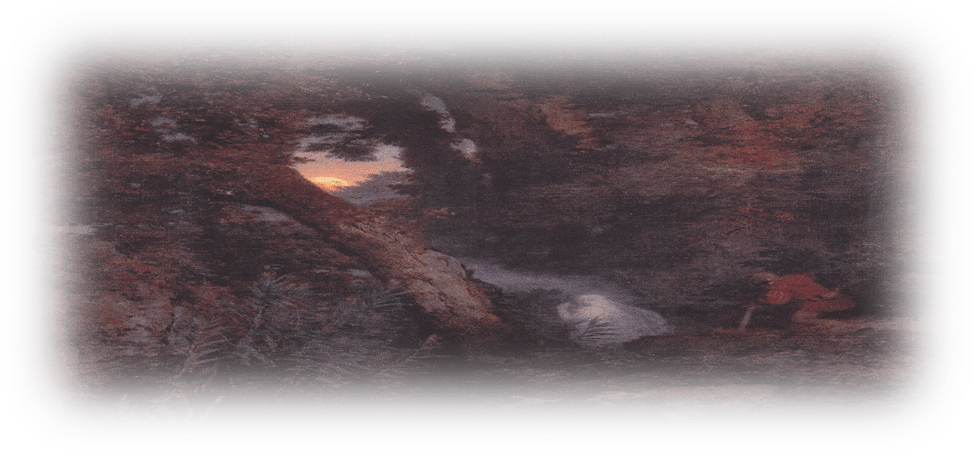
William was of clan Wisp, hence will-o’-the-wisp became a moniker with which he became associated, albeit long after his passing beyond the veil, although which veil seems hard to tell, in his case, both time and space being malleable.  And it fit. 

He’d been (or was or is) a contrarian, a libertarian, a thinker; here and there and in every case, quickly gone before the Deep State beasties could apprehend him.  Not the hero-type of which Marvel or DC Comics could make hay but then, their purpose was to distract, delay and obfuscate for the benefit of the unnamable, undisclosed masters.  Rather, he was a primordial architype of the kind Joseph Campbell might have been fond, as of course, was Joseph Campbell himself.  An architype that has become exceedingly rare although, of course, it’s always been rare.  He was (and perhaps still is) the perfect blend of his individual and collectivist natures (natures we all share).  Kind and generous but no one’s fool, charitable but seeking no charity for himself; always seeking to attain his better self rather than being critical of the failings of others.  He found ridicule as a form of comedy repugnant and praise irrelevant.  He tolerated mistakes, whether his or others, as long as they were used as tools from which to learn, knowing they made the best teachers, but he hated to make them.  He expressed his views openly and vigorously but had an open mind and was willing to change them if he became convinced they needed changing, and while he willingly shared his views, he never imposed them on others.  He led by example and, while he did not seek leadership roles, they somehow all too regularly found him, albeit always informally and never permanently, after all, he was (and perhaps still is) Will-o’-the-wisp.

Will seems gone today, when we most need him.  When blaring pseudo victims erase history with poorly structured creative narrative designed to avoid solving the problems reflected in the causes they claim to espouse.  After all, if the problems were solved, what would their roles be, roles for which they were richly rewarded with book deals and speaking fees by the unnamable, undisclosed masters.  Pithy ridicule rather than logic is their stock and trade, malleable tools facilitating hypocrisy, verisimilitude and deception; after all, the shell game is their favorite modus operandi and the naïve and gullible their stock-in-trade.

Then again, many-and-many were the times that foes thought Will gone for good (and good riddance) only to have him show up unexpectedly.  That was his stock-in-trade.  So, who knows? 

2021 was not his year, but 2022, it has a certain rhythmic quality he’s been known to favor.
_______

© Guillermo Calvo Mahé; Manizales, 2021; all rights reserved.  Please feel free to share with appropriate attribution. Guillermo (“Bill”) Calvo Mahé (a sometime poet) is a writer, political commentator and academic currently residing in the Republic of Colombia (although he has primarily lived in the United States of America of which he is also a citizen).  Until 2017 he chaired the political science, government and international relations programs at the Universidad Autónoma de Manizales.  He is currently a strategic analyst employed by Qest Consulting Group, Inc.  He has academic degrees in political science (the Citadel), law (St. John’s University), international legal studies (New York University) and translation and linguistic studies (the University of Florida’s Center for Latin American Studies).  He can be contacted at guillermo.calvo.mahe@gmail.com and much of his writing is available through his blog at http://www.guillermocalvo.com.

A New Year’s Message on my Wife’s Birthday, December 31, 2021

Is it goodbye and good riddance for 2021? 

Perhaps.  Okay, definitely, but not for the ills that beset us in this tempestuous year.

Were the worst of us really in charge?  Are they still?  It seems that way but experiences teach us that it can get even worse, much worse.  Of course, it could also get better, but momentum does not seem to be in that direction, not in the United States, although in various parts of Latin America 2021 has been very positive, especially in Bolivia, Peru, Chile and Honduras. 

Europe seems putrid as does the Middle East and Africa continues mired in a European designed quagmire.  Antarctica seems to be shrinking and we may soon meet its bedrock after millions of years in hibernation.  The Arctic is shrinking as well, bad news for some but not for the Russians or Canadians who may see not only Northwest and Northeast sea passages thriving but also once frozen tundra become productive farmland. 

Now comes the century which, in the current millennia, will see the second most number of twos, 2022. 

What will it bring? 

Well, in large part that depends on how gullible and manipulable and uninformed we are, as it always does.  No doubt the worst among us (who control the Deep State and its corporate media and Democratic Party as well as traditionalist Republicans) will continue working 24/7 to maintain the status quo ante in many things, all bad, and to polarize us even more, and to keep us balanced on a razor’s edge of nuclear annihilation constantly baiting both the Bear and the Dragon.  Still, left wing populists trapped in the Democratic Party may escape their overseers as right wing populists have done since 2016, and maybe, akin to the Miracle on 34th Street, both may realize that populists of all ilks, acting in unison, can bring us back from the brink of destruction; that they have much more in common than the policies that separate them, all too often illusory and manufactured and maintained solely to keep them at bay, disorganized, ineffective, and, most importantly, safely out of the way.

2022, 2+0+2+2 = 6.  Interesting.  The year of the twos equal six.  Almost but not quite synergistic. 

Might it be the year when, answering the plaintive query in Bob Dylan’s “Blowing in the Wind”, written in ten minutes across the street from the Gaslight in 1962 almost sixty years ago we decide that the time to attain equity, justice and peace is now?

Blowing in the Wind”, listening to it carefully today might bet the best way to bring in 2022.  Perhaps, even singing along:

How many roads must a man walk down before you call him a man?
How many seas must a white dove sail before she sleeps in the sand?
Yes, and how many times must the cannonballs fly before they’re forever banned?
The answer, my friend, is blowing in the wind, the answer is blowing in the wind!

Yes, and how many years must a mountain exist before it is washed to the sea?
And how many years can some people exist before they’re allowed to be free?
Yes, and how many times can a man turn his head and pretend that he just doesn’t see?
The answer, my friend, is blowing in the wind, the answer is blowing in the wind!

Yes, and how many times must a man look up before he can see the sky?
And how many ears must one man have before he can hear people cry?
Yes, and how many deaths will it take ’til he knows that too many people have died?
The answer, my friend, is blowing in the wind, the answer is blowing in the wind!

The answers, my friends, are blowing in the wind, the answers are blowing in the wind!
_______

© Guillermo Calvo Mahé; Manizales, 2021; all rights reserved (except, of course, for Bob Dylan’s lyrics).  Please feel free to share with appropriate attribution.

Guillermo (“Bill”) Calvo Mahé (a sometime poet) is a writer, political commentator and academic currently residing in the Republic of Colombia (although he has primarily lived in the United States of America of which he is also a citizen).  Until 2017 he chaired the political science, government and international relations programs at the Universidad Autónoma de Manizales.  He is currently a strategic analyst employed by Qest Consulting Group, Inc.  He has academic degrees in political science (the Citadel), law (St. John’s University), international legal studies (New York University) and translation and linguistic studies (the University of Florida’s Center for Latin American Studies).  He can be contacted at guillermo.calvo.mahe@gmail.com and much of his writing is available through his blog at http://www.guillermocalvo.com.

Confused Reflections as another Solstice Passes By

“Poignant with loss”.

The phrase resonates. 

Not in the sense of self-pity but perhaps a bit melodramatic.  Can one just as easily be poignant with joy?

Birth is the beginning of death and every gain is also the beginning of a corresponding loss.  A full life, one worth living, one where one has truly plumbed the depths and heights of feeling, one full of useful errors, is full of both loss and joy.  With vulnerability, dominion and confusion in equal measures.  With un-chainable emotions carefully balanced, control lost and regained and lost again.

For a very long time, most of my life really, the twin solstices have been poignant.  More so since I became estranged from my sons.  They are flying on their own, free to make their own mistakes and learn their own lessons.  To be deceived and perhaps enlightened as well.  To make their own joys and suffer their own sorrows.  To betray and be betrayed.  To accumulate and share experiences with their own, unique families.  The permanence for which I hoped proved transitory but in my life, transition has been the only constant.

Perhaps the poignancy I feel so often but more strongly during the solstices has to do with how often I’ve moved, starting when I was around two.  Back then, the constant change of situs was not yet impactful, at least not consciously so, but as I started school at five and changed schools at least once every year until I was fifteen, the changes become more and more difficult.  Friends were made each year only to be quickly lost.  That taught me how to make friends easily but also not to count on them.  Sadly, separations became easier and easier to bear until the seemed almost inconsequential, regardless of how strong bonds had once seemed.

That changed for a while when at the age of fifteen I became a “cadet”, first at the Eastern Military Academy in Huntington, New York, and then at the Citadel, the Military College of South Carolina.  Seven solid years of building bonds with schoolmates, ties which have persevered for decade after decade.  Then a return to Eastern as a faculty member; nine more years during which the nature of evolving bonds changed.  Bonding was no longer, for the most part, with peers, but rather, with my own pupils, young off-white tabulas almost rasas whom I sought to mentor.  Apparently I’d grown and passed through several rites of passage.  Some of those students have remained in my life, albeit at a distance, for more than half a century.

Fifteen was memorable for other reasons too.  I’d always had a crush on some girl or other but before I attained that lofty age, they rarely knew (I wonder though whether any suspected what I felt).  That changed.  I started developing intimate ties with young ladies, ties I rarely handled well.  Relationships seemed a game then.  I had so much to learn and they had so much to teach, all too frequently bittersweet.  Especially at this time of year.  Julia Iglesias (my favorite singer) singing “To All the Girls I’ve Loved Before” has come to have a special meaning for me, but one more often than not tinged with regrets.  Seemingly, perhaps I stayed fifteen for way too long.  I’m still in touch with some lost loves, but not many.  However, looking back, many more of them have stayed in my heart. 

As it is for all of us eventually, as time slipped by, I lost precious family members and then classmates and students and friends and perhaps former lovers as well.  The other side of the veil becomes more and more crowded so much faster now.  Losses of places and people accumulate in profound pools of nostalgia weaving melancholy tapestries in shades of gray and the colors in rainbows fade.  Melancholy becomes a place, one I visit as accumulated memories croon siren songs and I brood on things I’d change.  Things that once seemed so right but now seem as though they might have been mistakes.  Mistakes I’d correct, … if only I could.

So many people have touched my life.  So many have shared sadness and happiness, ecstasy and despair.  Others have merely crossed my path for an instant.  I recall people I should have met, people who I saw in passing without a shared word and who immediately moved on but who I’ve never forgotten and wish I’d gotten to know.  Roads not taken are always more plentiful than the paths we’ve trod and who knows where they might have led.

Hopefully I’ve grown wiser but wisdom is strange.  It’s an imperfect mirror with distorted reflections and more and more unanswered, perhaps unanswerable, questions.  Time alone doesn’t make one wise but perhaps it makes us more sage than we once were.  Mistakes overcome bring wisdom, and mistakes, I’ve had my share.  And not too few to mention.  My way was not always the best.

This season is not only about gift giving and festivities but more importantly, it has always also been a time for reflection and introspection.  A time to ponder how we’ve become who we are.  As we age, some of us become less egocentric and our contemplation expands to the collectives of which we’re a part, to our future as a species.  Those of us who study history professionally but by some miracle at least try to do so objectively, at some point realize that truth is more than just elusive.  We come to realize that our own memories are at best an imperfect motley, an indecipherable collage, and that our collective memory tends to be even worse.  What we call history, what we pass on to our progeny, is not only usually inaccurate but all too often cynically scored, liveried in beautiful music and soaring rhetoric designed to mold us into sated sheep and lyrical lemmings easily misled.  To our collective detriment.  Apparently, as we age, we become cynics, although the wise among us may attain that status sooner.

Things seemed so much easier to understand when I was very young, so many things seemed so clear, so obvious.  Faith made belief easy.  God was in his Heaven with Père Noel at his side taking notes.  Fantasy seemed as likely to be true as what passed for reality.  Truth and justice were tangible rather than imagined.  One once among us, a Prince of Peace, had ascended to sit at the right hand of his father and certainly would never take sides in wars where we slaughtered each other in his Holy name.  But then faith became more and more elusive and harsh “realities” slowly took its place, purported sanity replacing benevolent chaos.

Like so many others, I wonder: “do we lose cognitive capacity as we pass from the magic era of early childhood into the realm of knowledge acquired”?  Is accumulated wisdom the antithesis of infancy’s faith or are we each a unique melding of instinct and pain, knowledge and joy, deception and rejection, unable to really communicate with anyone or anything else, even with the people we were and those we’ll become?

What a depressing thought!

Can’t we be both unreservedly alone and completely connected with everyone and everything that’s ever been?  Quantically linked since before eternity was conceived, when everything was part of the primordial proto quark?  After all, once upon a time, every part of what we are was joined together at the starting gate of a Big Bang, before we became Magellanic Clouds and then stars and rays of light.  And isn’t light both an isolated particle and a collective wave?

Confused reflections as another solstice passes by.
_______

© Guillermo Calvo Mahé; Manizales, 2021; all rights reserved.  Please feel free to share with appropriate attribution.

Guillermo (“Bill”) Calvo Mahé (a sometime poet) is a writer, political commentator and academic currently residing in the Republic of Colombia (although he has primarily lived in the United States of America of which he is also a citizen).  Until 2017 he chaired the political science, government and international relations programs at the Universidad Autónoma de Manizales.  He is currently a strategic analyst employed by Qest Consulting Group, Inc.  He has academic degrees in political science (the Citadel), law (St. John’s University), international legal studies (New York University) and translation and linguistic studies (the University of Florida’s Center for Latin American Studies).  He can be contacted at guillermo.calvo.mahe@gmail.com and much of his writing is available through his blog at http://www.guillermocalvo.com.