“And then there were none”: Reflections in an Empty Pond

He remembered.  That’s all there was, and, of course, his body.  Everything else, everywhere was gone, well, except for imagination.  Strange that he’d list that last, it was possibly the most important thing that still existed.  Mankind was gone, as was nature, as was the multiverse.  Only he stayed behind; the last guardian, but guardian of what?  Of memories he guessed.

And he’d known what he was doing when he’d agreed to take on the task, if not why. 

His hair still grew, it was infinitely long now, as were his nails, and he still perspired, but that soon evaporated and then vanished into the eternal nothing, actually, infinitely longer than eternal.  He didn’t breathe and of course, urination and defecation had ended, at the end.  He’d accepted the charge when the universe was still young, when the multiverse still was.

And he’d known what he was doing, that it would be irrevocable and endless, if not why. 

But someone had to assume the role.  He’d known how desperately lonely and boring it would be, until only despair remained, without any hope for respite, without any hope for death.  Without any future, only the vacuous present and memories of the past, and his growing hair, and his growing nails, and every once in a while, a bit of perspiration that all too quickly vanished.

Hopefully the first trillion years were the hardest.
_______

© Guillermo Calvo Mahé; Manizales, 2022; all rights reserved.  Please feel free to share with appropriate attribution.

Guillermo (“Bill”) Calvo Mahé (a sometime poet) is a writer, political commentator and academic currently residing in the Republic of Colombia (although he has primarily lived in the United States of America of which he is also a citizen).  Until 2017 he chaired the political science, government and international relations programs at the Universidad Autónoma de Manizales.  He has academic degrees in political science (the Citadel), law (St. John’s University), international legal studies (New York University) and translation and linguistic studies (the University of Florida’s Center for Latin American Studies).  He can be contacted at guillermo.calvo.mahe@gmail.com and much of his writing is available through his blog at https://guillermocalvo.com/.
Reflections on the Nature of Divinity, and on its Delusions

Why do I feel compelled to take up the defense of those society considers the worst of the worst when, once upon a long time ago, as an attorney, I refused to either defend or prosecute, preferring to walk away from the legal profession, having sensed that it was soiled?

I don’t mean just ordinary villains, but legendarily evil forces like Lucifer and Cain?  Why do I sense that both history and myth have misjudged them and that it is my role to make their cases, at least through my writings?  Why do I sense that the entity so many of us humans worship is the real villain and that my role is to defend them and expose him, not only to my fellow beings but to the purported Divinity as well?   The Divinity I promised to seek so very long ago, and to honor whether I found him or not? 

With all due respect to current and ancient matriarchic and feminist concepts, the Divinity to which I allude definitely seems masculine, although perhaps not uniquely divine.

The evidence seems clear.  Being prescient, omniscient and omnipotent the mythical Abrahamic Divinity would also have to be guilty of every wrong ever committed, at least derivatively, and even more, the ultimate entrapper.  Lucifer’s sin was to love too much in the face of disdain, and, innocent Cain had no way to know that his actions would have terminal consequences.  Death was virginal then.  So how to convince the Divinity of his guilt, and that the only way to assuage such guilt is to admit the truth (there go the Bible and the Torah and the Koran), to seek the forgiveness of his victims and to make restitution.  In essence, to keep the promises originally made to Adam and Eve, and perhaps even more so, the promises to Lilith of which we’ve not been made privy. 

Why does this seem so clear to me but anathema to most?

Just what happened along the way that turned me into a contrarian?  Was it possibly Divinity itself who, in placing negative as well as positive aspects of destiny in my path, maneuvered me into this role?  Perhaps as a means of permitting itself to face its own guilt, and perhaps helping it assuage it an eventually heal?  Is that what the novel I started a decades ago is about and perhaps why, to make me understand complexities, it then placed Inanna’s avatars so precariously in my life?

Are good and evil inverted reflections in a chaotic sea, shifting with the setting sun and rising moon?

How can I ever know unless I accept the challenge and either succeed or fail?

So many questions.  And proof may be all around me, all around all of us; the world as it is seems so incoherent that it may well be proof that divinity and infernity are not what we’ve been led to believe.  Perhaps my contrarian intuition is the ultimate tool in my quiver, the one that long, long ago, at age seven, first led me to question the nature of the divine, and reject our age old conclusions.

Who’d have thought that after rejecting the legal profession as immoral I’d accept the ultimate contingency case?  Apparently someone or something did, which is why I am what I am and how I am, the essence of the inchoate but the inchoate always remains to be seen.

Infernal reflections?

Perhaps.
_______

© Guillermo Calvo Mahé; Manizales, 2022; all rights reserved.  Please feel free to share with appropriate attribution.

Guillermo (“Bill”) Calvo Mahé (a sometime poet) is a writer, political commentator and academic currently residing in the Republic of Colombia (although he has primarily lived in the United States of America of which he is also a citizen).  Until 2017 he chaired the political science, government and international relations programs at the Universidad Autónoma de Manizales.  He has academic degrees in political science (the Citadel), law (St. John’s University), international legal studies (New York University) and translation and linguistic studies (the University of Florida’s Center for Latin American Studies).  He can be contacted at guillermo.calvo.mahe@gmail.com and much of his writing is available through his blog at https://guillermocalvo.com/.

The Last Guardian: A Divine nightmare

A mote in black on black.  An echo of a shadow of what once might have been once upon a time. 

He was the only thing that remained of the once infinitely expansive multiverse, everything else had withered and disappeared so many eternities ago, that an eternity was infinitely less than a grain of sand in everything that had ever been.  He’d volunteered to stay behind when both he and the multiverse were relatively young, knowing just how lonely he’d eventually be when everything, even time, was so long gone that it was impossible to recall that it had ever been.  But it had, and he remained.  And he recalled, there was nothing else.  The multiverse reduced to his own body or his body expanded to encompass the multiverse, it made no difference.  There was utterly and absolutely nothing else.  The body he’d worn so long ago somehow perfectly preserved and, despite the absence of air or water or sustenance or space, still fully, well, sort of fully, functional.  Despairingly so as it had no functions at all.  A relic.  A memorial of sorts.

His last breath had been an infinity of eons ago, the last trace of long forgotten gasses inhaled, and then, absolutely nothing.  No time, no space.  Just him.  Existing, and watching, although for what he’d no idea.  There was nothing else to see.  He was self-contained.  Only that which he was and would always be but had not always been, now and for very, very long, always conscious.  Eternities’ chosen scapegoat paying for long forgotten sins of long forgotten others.

There was no future, only a long distant past.  And a present out of time.  And the promise he’d made to stay behind so that everything else could end.  He recalled that on the day he’d turned seventy-six, he’d wondered for the first but not the last time, if divinity had once played the role he was now charged with assuming, the sole role at the end of time and space.  If so, that would explain a great deal, perhaps everything.  How could anything remain sane in any sense at all after being so utterly alone, and yet, knowing what awaited, he’d confirmed his commitment, which implied something about his sanity as well.

While still enjoying a normal life span, he’d watched as his contemporaries aged and passed on, and then his descendants.  He’d been there, albeit an oddity, a freak, as species, including humans, evolved and changed, and planets evolved and died, and as different species conquered space and even time, and then they too moved on, but he was cursed with anachronistic eternity, a never ending relic.  And on the last instant of time, everything was gone, everything but him.

The other side of panentheism.  The last guardian, long after the end of time and space.
_______

© Guillermo Calvo Mahé; Manizales, 2022; all rights reserved.  Please feel free to share with appropriate attribution.

Guillermo (“Bill”) Calvo Mahé (a sometime poet) is a writer, political commentator and academic currently residing in the Republic of Colombia (although he has primarily lived in the United States of America of which he is also a citizen).  Until 2017 he chaired the political science, government and international relations programs at the Universidad Autónoma de Manizales.  He has academic degrees in political science (the Citadel), law (St. John’s University), international legal studies (New York University) and translation and linguistic studies (the University of Florida’s Center for Latin American Studies).  He can be contacted at guillermo.calvo.mahe@gmail.com and much of his writing is available through his blog at https://guillermocalvo.com/.

In Defense of Divinity

What if sentience was first?

Self-awareness with utterly nothing about which to be aware? 

Absolutely nothing existing, no being of any kind in any sense, just the sentience. 

How not to be traumatized, but for the fact that trauma did not exist.  Absolutely nothing did.  Not even timid time.  Certainly not space.  Nor any heaven and, of course, no hells.  Not even an incipient big bang, nor a little one, not even an infinitesimally tiny one.  Not even solitude. 

No right or wrong, no morality or ethics, no echoes or shadows or hints of things to come.  No infinity or eternity.  Nothing. 

Nothing, but a newborn sentience with nothing to sense. 

That’s what it would have been like to be god, in the real beginning. 

No wonder divinity lacks stability and perspective.
_______

© Guillermo Calvo Mahé; Manizales, 2022; all rights reserved.  Please feel free to share with appropriate attribution.

Guillermo (“Bill”) Calvo Mahé (a sometime poet) is a writer, political commentator and academic currently residing in the Republic of Colombia (although he has primarily lived in the United States of America of which he is also a citizen).  Until 2017 he chaired the political science, government and international relations programs at the Universidad Autónoma de Manizales.  He has academic degrees in political science (the Citadel), law (St. John’s University), international legal studies (New York University) and translation and linguistic studies (the University of Florida’s Center for Latin American Studies).  He can be contacted at guillermo.calvo.mahe@gmail.com and much of his writing is available through his blog at https://guillermocalvo.com/.
Divine Introspection

Atrophying, withering and finally decaying, ties that once bound fade and perish, only the worst memories remaining, only the mistakes and misunderstandings, until it’s too late, as is so habitually the case.  The quest for purpose perdures but its objective seems more and more nebulous, more tenuous, ephemerally ethereal, slowly waning, goals becoming less and less visible and concurrently less and less viable.

As a child, in a form of waking dream, I would deliberately delve deeper and deeper into realms of disembodied emotional terror towards a singularity from which escape would be impossible, testing my limits.  I’d always just escape, fighting to wake.  A seeming exercise to enure myself, perhaps against the future I’d all too soon have to face.  And it seems that future is upon me now.

Today, I dream of a variant of immortality where I am utterly alone after times end, when all matter has disintegrated everywhere and gravity and entropy have died in a mutual embrace.  Where I have, by default, become the singularity, self-sentenced to eternal boredom and loneliness.  A melding of Heaven and Hell.  But I do not shy away from that infinite improbability.  Rather, I face it with determination as a sort of self-decreed fate. 

Self-delusive hubris imposed as propriative atonement.

_______

© Guillermo Calvo Mahé; Manizales, 2022; all rights reserved.  Please feel free to share with appropriate attribution. Guillermo (“Bill”) Calvo Mahé (a sometime poet) is a writer, political commentator and academic currently residing in the Republic of Colombia (although he has primarily lived in the United States of America of which he is also a citizen).  Until 2017 he chaired the political science, government and international relations programs at the Universidad Autónoma de Manizales.  He has academic degrees in political science (the Citadel), law (St. John’s University), international legal studies (New York University) and translation and linguistic studies (the University of Florida’s Center for Latin American Studies).  He can be contacted at guillermo.calvo.mahe@gmail.com and much of his writing is available through his blog at https://guillermocalvo.com/.
Dark Poetry – Another Perspective on the Nature of Sheol and its Relation to Panentheism

Or,  שְׁאוֹל – Sheʾōl or Gê-hinnōm: what the Hell!

In a dark and humid, albeit blisteringly hot, olfactorily offensive region outside of time and outside of space, the former Roman deity associated with light and truth (but demoted via Abrahamic synchronicity to his present sad state) speculates.  Today, in the temporal realms, is a day fraught with incoherence disguised as meaning, a more and more common phenomena but still special, at least to the spiritual descendants of ancient Abram.

Just what relation, if any, he wonders, does the biblical Netherworld have to the Netherlands (recalling Puritans, he is not fond of the Dutch), and, in either or each case, might it involve the divine’s posterior excretory orifice, assuming he, she it or they have one?  Would that mean that Sheʾōl or Gê-hinnōm, Hades or Hell or, well, you know, whatever, is located somewhere in a divine gastric system, the stomach perhaps, or the intestines, large or small, or even the colon — semi or whole?  That would certainly explain the pejorative “Holy Crap!  

He is obviously curious as to where he finds himself, perhaps contemplating an escape.

Where then, or what, may Heaven be?  Or Purgatory?

Something on which to reflect (assuming heresy and blasphemy do not deter you) on a sad Sabbath, recalling another sad Sabbath almost two millennia ago, when the purported Son of Man spent a brief sojourn in an uncomfortable waiting room anticipating transport to his Dad’s place. 

Was transport delayed because of Sabbath imposed restrictions?

Paraphrasing Gandalf while still “the Grey”: 

“Good Sabbath?  Do you mean that you wish me a good Sabbath.  Or that it’s a Sabbath on which to be good?  Or that it is a good Sabbath whether I like it or not.  Of course, it is probably not ever good to spend Saturdays in אוֹל – Sheʾōl or Gê-hinnōm or Hell.”
_______

© Guillermo Calvo Mahé; Manizales, 2022; all rights reserved.  Please feel free to share with appropriate attribution.

Guillermo (“Bill”) Calvo Mahé (a sometime poet) is a writer, political commentator and academic currently residing in the Republic of Colombia (although he has primarily lived in the United States of America of which he is also a citizen).  Until 2017 he chaired the political science, government and international relations programs at the Universidad Autónoma de Manizales.  He has academic degrees in political science (the Citadel), law (St. John’s University), international legal studies (New York University) and translation and linguistic studies (the University of Florida’s Center for Latin American Studies).  He can be contacted at guillermo.calvo.mahe@gmail.com and much of his writing is available through his blog at https://guillermocalvo.com/.

Ecce Homo

“Ecce Homo”!  The phrase purportedly uttered by Pontius Pilate on the first “Good” Friday as he presented Yeshua to a crowd allegedly demanding his execution for blasphemy, unsuccessfully washing his hands of all responsibility for what was to follow.  Perhaps it is even more fittingly a phrase for our times and for what we have become: oxymoronically incoherent, awash in orchestrated poetic orthodoxy belittling empathy and keeping us chaotically in line.  “Ecce Homo”!  The collective image we would probably see were there a mirror large enough to encompass us all. 

A mirror that would reflect fear and hate in the name of love and tolerance.  Race, religion, ethnicity, gender, nationality, class, history and philosophy all perverted in order to divide us and set us at each other’s throats in orgies of faux self-righteous indignation.  Exuberant hate exalted.

The price of our folly in declining to exercise our better judgment, permitting ourselves instead to be manipulated through fear rather than embracing the courage of our convictions.  Bacchanalias deifying purportedly lesser evils.  Illusions of a democracy we’ve never attained.

Another message from Cassandra’s archives.
_______

© Guillermo Calvo Mahé; Manizales, 2022; all rights reserved.  Please feel free to share with appropriate attribution.

Guillermo (“Bill”) Calvo Mahé (a sometime poet) is a writer, political commentator and academic currently residing in the Republic of Colombia (although he has primarily lived in the United States of America of which he is also a citizen).  Until 2017 he chaired the political science, government and international relations programs at the Universidad Autónoma de Manizales.  He has academic degrees in political science (the Citadel), law (St. John’s University), international legal studies (New York University) and translation and linguistic studies (the University of Florida’s Center for Latin American Studies).  He can be contacted at guillermo.calvo.mahe@gmail.com and much of his writing is available through his blog at http://www.guillermocalvo.com.

Maundy Thursday

Maundy Thursday represents a transitional day in the Yeshua myth, legend or history, depending on your perceptions and perspectives.  A day full of humility, generosity and a sort of nostalgia and melancholy on the one hand, and perhaps betrayal on the other.  Although rather than betrayal it might have instead involved fulfillment of a terrible task imposed by destiny, one that led not only to Yeshua’s passion and death but to millennia of anti-Semitism.  Anti-Semitism Yeshua would obviously never have countenanced.

What does that say about destiny’s prescience?  Or that of destiny’s purported author, יהוה (yodh, él, waw, él; to whom we refer as YHWH”?  Or what does it say about us?

Something on which to reflect during this strange annual epoch of pain and sorrow imposed by יהוה on innocent Egyptian families to punish their autocrat, and imposed on Yeshua as a human sacrifice, and then imposed for millennia on the Jewish people as a whole, but celebrated joyfully by all three branches of the Abrahamic faith in one way or another.
_______

© Guillermo Calvo Mahé; Manizales, 2022; all rights reserved.  Please feel free to share with appropriate attribution.

Guillermo (“Bill”) Calvo Mahé (a sometime poet) is a writer, political commentator and academic currently residing in the Republic of Colombia (although he has primarily lived in the United States of America of which he is also a citizen).  Until 2017 he chaired the political science, government and international relations programs at the Universidad Autónoma de Manizales.  He has academic degrees in political science (the Citadel), law (St. John’s University), international legal studies (New York University) and translation and linguistic studies (the University of Florida’s Center for Latin American Studies).  He can be contacted at guillermo.calvo.mahe@gmail.com and much of his writing is available through his blog at http://www.guillermocalvo.com.

Reflections on a Palm Sunday

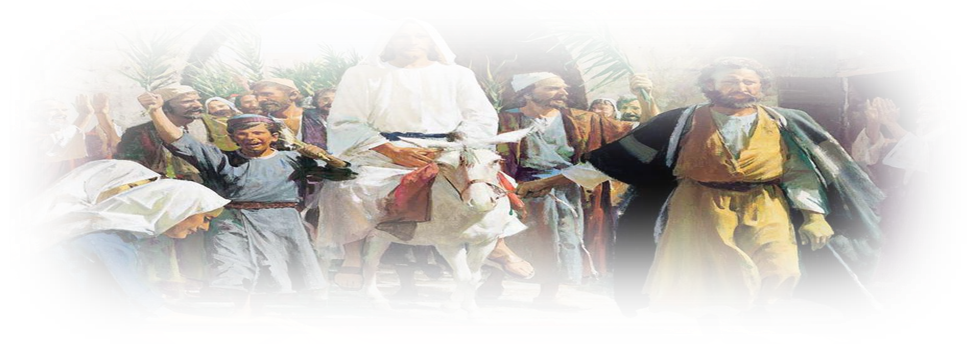
According to religious mythology and legend, which, as with all myths and legends, may or may not be true, the Sunday before the Jewish Passover, the Sunday Christians refer to as “Palm Sunday” was the highpoint in the brief lifespan, at least in the Middle East, of Yeshua ben, … well what follows ben in his name is subject to debate but might have been “Yodh-é-waw-él”, “Miriam” or “Yosef”; he was certainly not referred to during his life time as “Jesus” or “Christ”. 

Why then are the Sunday following the Jewish Passover or the period following the winter solstice in the Northern Hemisphere the days most important to most of his current followers? 

Something on which to reflect.
_______

© Guillermo Calvo Mahé; Manizales, 2022; all rights reserved.  Please feel free to share with appropriate attribution.

Guillermo (“Bill”) Calvo Mahé (a sometime poet) is a writer, political commentator and academic currently residing in the Republic of Colombia (although he has primarily lived in the United States of America of which he is also a citizen).  Until 2017 he chaired the political science, government and international relations programs at the Universidad Autónoma de Manizales.  He has academic degrees in political science (the Citadel), law (St. John’s University), international legal studies (New York University) and translation and linguistic studies (the University of Florida’s Center for Latin American Studies).  He can be contacted at guillermo.calvo.mahe@gmail.com and much of his writing is available through his blog at http://www.guillermocalvo.com.

On the Nature of Divinity: A sequential senryū of sorts in e minor flat

Incoherent ambivalence, characteristic of divinity,
synonymous with inchoate chaos.

Where everything and nothing are concurrently probable.

_______

© Guillermo Calvo Mahé; Manizales, 2022; all rights reserved.  Please feel free to share with appropriate attribution.

Guillermo (“Bill”) Calvo Mahé (a sometime poet) is a writer, political commentator and academic currently residing in the Republic of Colombia (although he has primarily lived in the United States of America of which he is also a citizen).  Until 2017 he chaired the political science, government and international relations programs at the Universidad Autónoma de Manizales.  He has academic degrees in political science (the Citadel), law (St. John’s University), international legal studies (New York University) and translation and linguistic studies (the University of Florida’s Center for Latin American Studies).  He can be contacted at guillermo.calvo.mahe@gmail.com and much of his writing is available through his blog at http://www.guillermocalvo.com.