Vincent, an Ode to Van Gogh

If this is not the most beautiful song ever, there are none more beautiful: Don McLean’s Vincent, an Ode to Van Gogh.  More beautiful as poetry than as music and, set to prose it might read like this:

Starry, starry night, paint your palette blue and gray, look out on a summer’s day with eyes that know the darkness in my soul.

Shadows on the hills, sketch the trees and the daffodils, catch the breeze and the winter chills in colors on the snowy, linen land.

Now, I understand what you tried to say to me and how you suffered for your sanity, and how you tried to set them free.  They would not listen, they did not know how; perhaps they’ll listen now.

Starry, starry night, flaming flowers that brightly blaze, swirling clouds in violet haze reflect in Vincent’s eyes of china blue; colors changing hue, morning fields of amber grain, weathered faces lined in pain are soothed beneath the artist’s loving hand.

Now, I understand, what you tried to say to me, how you suffered for your sanity, how you tried to set them free.  They would not listen, they did not know how, perhaps they’ll listen now.

For they could not love you, but still your love was true and when no hope was left inside on that starry, starry night, you took your life as lovers often do.  But I could have told you, Vincent, this world was never meant for one as beautiful as you.

Starry, starry night, portraits hung in empty halls, frameless heads on nameless walls with eyes that watch the world and can’t forget, like the strangers that you’ve met; the ragged men in ragged clothes, the silver thorn of bloody rose lie crushed and broken on the virgin snow.

Now, I think I know what you tried to say to me, how you suffered for your sanity, how you tried to set them free.  They would not listen, they’re not listening still, perhaps they never will.
_______

Lyrics set to prose copyrighted by Don McLean.  Observations and commentary, © Guillermo Calvo Mahé; Manizales, 2023; all rights reserved.  Please feel free to share with appropriate attribution.

Guillermo (“Bill”) Calvo Mahé (a sometime poet) is a writer, political commentator and academic currently residing in the Republic of Colombia (although he has primarily lived in the United States of America of which he is also a citizen).  Until 2017 he chaired the political science, government and international relations programs at the Universidad Autónoma de Manizales.  He is currently the publisher of the Inannite Review, available at Substack.com, a commentator on Radio Guasca FM, and an occasional contributor to the regional magazine, el Observador.  He has academic degrees in political science (the Citadel), law (St. John’s University), international legal studies (New York University) and translation and linguistic studies (the University of Florida’s Center for Latin American Studies).  However, he is also fascinated by mythology, religion, physics, astronomy and mathematics, especially with matters related to quanta and cosmogony.  He can be contacted at guillermo.calvo.mahe@gmail.com and much of his writing is available through his blog at https://guillermocalvo.com/.

A Beautiful Day in the Central Range of the Colombian Andes, As the World Burns

It’s a beautiful, sunny Saturday in the city in the sky.  The one set among snow clad peaks and thermal springs near an adjacent volcano or two and the remnants of several glaciers.  The one set atop the central range of the Colombian Andes in the midst of a sea of mountains dressed in diverse verdant shades.  It seems summery although in the Northern Hemisphere, the part of our planet in which this part of Colombia is set, it is late autumn, just short of winter.  But then, this close to the equator, seasons tend to meld and shift and be measured in hours rather than months.

The world seems as bad as it’s been since the second war to end all wars a bit over three quarters of a century ago, all the lessons it purportedly taught at best unlearned but more they were probably just fictitious attempts at justifying unjustifiable terminal follies.  Again.  After all, the second war to end all wars took place less than two decades after the first war to end all wars ended.  And wars?  Well, they’re just fine, in fact, perhaps healthier than ever.

Still, … as individuals here and there, life plows on, life: full of interpersonal challenges and triumphs, its own interpersonal beauty and mystique artfully masking our own errors and mistakes.

The Global South (which ironically includes Russia and China and Iran but definitely not the Ukraine) seems to be making headway in its quest for liberation from the constant abuse, humiliation and looting that flows from the North.  But not without severe challenges as the Global North has no intention of brooking what it considers insolence by lesser species.  By people almost but not quite human. 

Notwithstanding the hypocritical “woke”, condescension still rules. 

Still, … there is a scent of a different sort of future and lingering echoes seem to wonder whether such future will be better or just filled with shadows from the past, and whether the images we’ll see in our future mirrors will reflect who we’ve been, or we claim to have been, or who we wish we had been, or who we’d like to be, or who we’ve been forced to become.  Hopefully the images that stare back at us will not be too much like those of those who for so long have oppressed so many.  Wishful thinking, I know, but “if our reach does not exceed our grasp, then what’s a heaven for”, as Robert Browning wrote.  But then, he was a poet, not a politician, a journalist or a historian (the illusory professions).

Omnipresent, dystopia seems to rule.  We seem to be a people in transition, greedily tearing down the past without any agreement on what will replace the corrupt social institutions that have been decaying, putrefied for millennia.  Decaying but refusing to die.  That confuses and polarizes us as we’re manipulated by the worst among us, the Northern hegemonic wannabe leaders who refuse to let go and definitely decline to share, but who still exercise almost total control.  Yet, “almost” is an optimistic harbinger, a qualifier that hints at possible changes, perhaps even beneficent changes.

Who can tell? 

But we can hope. 

Especially on a beautiful sunny Saturday in early December, one in which at least some of us are safely ensconced among some of those we most love, … at least for the day. 

The carnage, genocide and ethnic cleansing underway in Palestine by the worst cultural descendants of the tribe which, after looting Egypt, went on to plunder and murder every man woman and child in ancient Jericho, continues unabated despite popular condemnation in the Global South and even, among an enlightened minority in Europe, the United States and even Israel, although, from here in the heights of the Andes, as in the United States and Europe, to some, that all seems very far away.  Far enough away so that the screams of pain and dying gasps and mourning and lamentations are barely audible and thus, perhaps, at least for them, can be sanitized and washed away.

Or at least shouted down and obfuscated through carefully crafted rhetoric, with reckoning postponed, if not for ever, at least for another day.   

After all, who mourns for ancient Jericho today?
_______

© Guillermo Calvo Mahé; Manizales, 2023; all rights reserved.  Please feel free to share with appropriate attribution.

Guillermo (“Bill”) Calvo Mahé (a sometime poet) is a writer, political commentator and academic currently residing in the Republic of Colombia (although he has primarily lived in the United States of America of which he is also a citizen).  Until 2017 he chaired the political science, government and international relations programs at the Universidad Autónoma de Manizales.  He is currently the publisher of the Inannite Review, available at Substack.com, a commentator on Radio Guasca FM, and an occasional contributor to the regional magazine, el Observador.  He has academic degrees in political science (the Citadel), law (St. John’s University), international legal studies (New York University) and translation and linguistic studies (the University of Florida’s Center for Latin American Studies).  However, he is also fascinated by mythology, religion, physics, astronomy and mathematics, especially with matters related to quanta and cosmogony.  He can be contacted at guillermo.calvo.mahe@gmail.com and much of his writing is available through his blog at https://guillermocalvo.com/.

Reflections on Thanksgiving Day, 1621 – 2023

Another strange Thanksgiving Day is on the horizon.  They’ve all been strange though.

It’s always been a day in which descendants of European colonists enjoy gorging themselves in banquets and eventually, watching football games, but one in which indigenous people in North America reflect on how their generosity was repaid with ethnic cleansing and genocide.

North American indigenous people can probably empathize with Muslims who sheltered and protected Jewish people for over a millennium but were then rewarded with the theft of Palestine and, of course, with ethnic cleansing and genocide as well.

Thanksgiving Day will probably be remembered this year by indigenous people everywhere, remembered but not celebrated.  Indigenous people whose lands were stolen and who were subjected to ethnic cleaning and genocide, a day like Columbus Day.  One in which to reflect on the hypocrisy inherent in colonialism, whether in the Americas, in Africa or in the Middle East.

Today, this year, 2023, it’s a day on which to reflect on the hypocrisy associated with the phrase “never again” and with other days remembering holocausts.  Holocausts as ancient as Jericho and as new as the one during World War II.  Or the one that has been occurring in Palestine since 1948.
_______

© Guillermo Calvo Mahé; Manizales, 2023; all rights reserved.  Please feel free to share with appropriate attribution.

Guillermo (“Bill”) Calvo Mahé (a sometime poet) is a writer, political commentator and academic currently residing in the Republic of Colombia (although he has primarily lived in the United States of America of which he is also a citizen).  Until 2017 he chaired the political science, government and international relations programs at the Universidad Autónoma de Manizales.  He is currently the publisher of the Inannite Review, available at Substack.com, a commentator on Radio Guasca FM, and an occasional contributor to the regional magazine, el Observador.  He has academic degrees in political science (the Citadel), law (St. John’s University), international legal studies (New York University) and translation and linguistic studies (the University of Florida’s Center for Latin American Studies).  However, he is also fascinated by mythology, religion, physics, astronomy and mathematics, especially with matters related to quanta and cosmogony.  He can be contacted at guillermo.calvo.mahe@gmail.com and much of his writing is available through his blog at https://guillermocalvo.com/.

Hiraeth

Nostalgia for primordial places to which we can’t return;
for long lost times.  For things that might have stood but never were;
for lost loves and loves that might have been.

Echoes from long lost places in our souls for which we mourn.

Wind and rocks and waves.  Trees and cliffs, flowers and blades of grass.
Willows o’ the-wisp.
Omnipresent nowheres lying in wait.

Ubiquitously melancholic whispers yearning wistfully for a home that never was.
_______

© Guillermo Calvo Mahé; Manizales, 2023; all rights reserved.  Inspiration thanks to Carl Butler of the Dark Poetry Society.  Please feel free to share with appropriate attribution. Guillermo (“Bill”) Calvo Mahé (a sometime poet) is a writer, political commentator and academic currently residing in the Republic of Colombia (although he has primarily lived in the United States of America of which he is also a citizen).  Until 2017 he chaired the political science, government and international relations programs at the Universidad Autónoma de Manizales.  He is currently the publisher of the Inannite Review, available at Substack.com, a commentator on Radio Guasca FM, and an occasional contributor to the regional magazine, el Observador.  He has academic degrees in political science (the Citadel), law (St. John’s University), international legal studies (New York University) and translation and linguistic studies (the University of Florida’s Center for Latin American Studies).  However, he is also fascinated by mythology, religion, physics, astronomy and mathematics, especially with matters related to quanta and cosmogony.  He can be contacted at guillermo.calvo.mahe@gmail.com and much of his writing is available through his blog at https://guillermocalvo.com/.

Jericho and Gaza, Bookends of Sorts

Today, the destruction of Gaza and the mass murder of women and children, the aged and the infirm by people from whom one would expect empathy and decency based on their own experiences appalls the decent among us.  But who speaks for those who suffered the same fate over three millennia ago from the ancestors of those today committing genocide?  From those who had purportedly just escaped from slavery in Kemet. 

Who grieves for the ancient but brutally murdered denizens of ancient Jericho? 

Who reflects on the reality that divinely inspired genocide was as acceptable more than three millennia ago as it is today for those from whom, based on their censorious sacred books, one would have expected at least a semblance of decency instead of barbarity, murder and mayhem.

One wonders if there were any descendants of Abram back then who recoiled at the atrocities committed in their names, as so many decent Jews do today.

Evidently though, for too many, the more things purport to change, the more they’ve stayed the same.
_______

© Guillermo Calvo Mahé; Manizales, 2023; all rights reserved.  Please feel free to share with appropriate attribution.

Guillermo (“Bill”) Calvo Mahé (a sometime poet) is a writer, political commentator and academic currently residing in the Republic of Colombia (although he has primarily lived in the United States of America of which he is also a citizen).  Until 2017 he chaired the political science, government and international relations programs at the Universidad Autónoma de Manizales.  He is currently the publisher of the Inannite Review, available at Substack.com, a commentator on Radio Guasca FM, and an occasional contributor to the regional magazine, el Observador.  He has academic degrees in political science (the Citadel), law (St. John’s University), international legal studies (New York University) and translation and linguistic studies (the University of Florida’s Center for Latin American Studies).  However, he is also fascinated by mythology, religion, physics, astronomy and mathematics, especially with matters related to quanta and cosmogony.  He can be contacted at guillermo.calvo.mahe@gmail.com and much of his writing is available through his blog at https://guillermocalvo.com/.

A Cease Fire is Not Enough

The ubiquitous calls for a ceasefire in Palestine miss the mark.  What is required is the fulfillment of the promises hastily made at Nuremberg following the second war to end all wars as victors vengeance disguised as justice took its toll and a promise was made: “Never Again!”  A promise which immediately proved impossible to keep as the most prominent of the Nazi’s victims, those whose vengeance was extracted at Nuremberg, almost immediately became the victimizers, exalting in the memories of the fate of ancient Jericho and seeking to duplicate it in Palestine. 

What is needed is accountability and implementation of the rules of law established as res gestae at Nuremberg.  Mass murder seeking genocide and ethnic cleansing, crimes of lesse humanidad, must be punished and the appropriate punishment was established at Nuremberg.  Mass murderers, whether few or many, must be held to account, whether directly involved, as in the case of Israel (and other countries), or indirectly as in the NATO countries that supply and resupply Israel with the means to engage in the mass slaughter of innocents in clear violation of International Law, of Humanitarian Law, of the laws regulating what is prohibited in armed conflicts or during occupations, even if the occupation is three quarters of a century old. 

A cease fire is not enough.

The Palestinian State already recognized by civilized countries, one within the borders established by the United Nations in 1948, or at least those existing before the “Six Day War”, must be universally recognized and protected, and such Palestinian State must be sovereign and independent, free to ally itself with whomever it will, but subject to the res gestae that purportedly governs us all.   

And the Palestinian dead and maimed during the past quarter century deserve the same memorialization as do the victims of Nazi concentration camps, gas chambers and crematoriums, as do the victims of the atomic bombing of Hiroshima and Nagasaki.  And the Palestinian State and the descendants of the Palestinian dead and maimed deserve reparations in the hundreds of billions of dollars from Israel and those NATO countries that enable Israeli crimes of lesse humanidad

It is time to take the promises made following the second war to end all wars seriously, and to shun all those that refuse to do so in every way possible.  The BDS movement is not enough.  Remember, as the justices at Nuremberg proclaimed (albeit hypocritically, no allied personnel engaged in comparable crimes were judged): “following orders is no defense”, and as they should have added, “voting to elect those who facilitate crimes of lesse humanidad, anywhere, is no better”.
_______

© Guillermo Calvo Mahé; Manizales, 2023; all rights reserved.  Please feel free to share with appropriate attribution.

Guillermo (“Bill”) Calvo Mahé (a sometime poet) is a writer, political commentator and academic currently residing in the Republic of Colombia (although he has primarily lived in the United States of America of which he is also a citizen).  Until 2017 he chaired the political science, government and international relations programs at the Universidad Autónoma de Manizales.  He is currently the publisher of the Inannite Review, available at Substack.com, a commentator on Radio Guasca FM, and an occasional contributor to the regional magazine, el Observador.  He has academic degrees in political science (the Citadel), law (St. John’s University), international legal studies (New York University) and translation and linguistic studies (the University of Florida’s Center for Latin American Studies).  However, he is also fascinated by mythology, religion, physics, astronomy and mathematics, especially with matters related to quanta and cosmogony.  He can be contacted at guillermo.calvo.mahe@gmail.com and much of his writing is available through his blog at https://guillermocalvo.com/.

Bittersweet Reflections on an Autumn Morning

I woke up this morning dreaming of the “The Bells of St. Mary’s”, a film starring Bing Crosby and Ingrid Bergman that I probably first watched as an eighth grade student at St. Gerard de Magella, a Catholic school in Hollis, Queens, a neighborhood in New York City.  It’s been a favorite of mine ever since, though hard to view now; times have changed and the values reflected in that film no longer predominate.  It reflects a sort of idyllic yet plebian epoch where we believed we stood for decency, ignoring the cultural cancers that afflicted us, the genocide of indigenous Americans and racism based on our history of unrepentant abuse of Africans, as well as our penchant for intervening militarily in the affairs of others in order to appropriate their natural resources. 

St. Gerard’s though seemed reflective of a streak of decency, as was Father O’Malley’s and Sister Mary’s St. Mary’s.  My best friend at the time, albeit briefly, was an African American of Jamaican ancestry whose name was Cuthbert Williamson.  Other close friends were Italian and Irish, and I had a serious crush on a girl whose ancestry I never knew, but whose name was Patricia Maher; all of us happily melding, unaware of how much our world would change or just how hypocritical the country we loved was and had always been. 

I think we’ve strayed from the path that might have led from there to the best version of who we should have become.  Instead of curing our societal ills, we glossed over them self-righteously and became a more and more polarized society and a larger and larger danger to ourselves and even more so to the rest of the world.  Indeed, we became that which we claimed so many of the best among us had died to prevent in the second of our wars to purportedly end all wars and today, our government, if not all of our people, avidly supports ethnic cleansing and the mass murder of civilians that most of the world, at least in the global south, considers genocide.  And, of course, our government seeks to embroil us in wars all over the globe in order to attain the worldwide hegemony that we purportedly disdained when I attended St. Gerard. 

Shortly after I graduated from St. Gerard, a sort of poetic prophet playing a harmonica and a guitar, and singing what seemed like the hymns of our generation (albeit sort of off key), arose and stirred us towards a better world, asking “when will we ever learn” and declaring that the “times they were a ‘changing”.  But we haven’t and they didn’t; … not really.  And the innocence of St. Mary’s is gone.

My mood as I awoke this morning was nostalgic and melancholy, as tends to happen as we mature, and I reflected on my personal failures and on my regrets instead of on the successes I’ve attained and the blessings I enjoy; on the many friends and relationships that have vanished and which I did not appreciate as much as they deserved.  Bittersweet memories, reflections and introspections.  But I also focused on the hope Bing Crosby and Ingrid Bergman generated when I watched their interplay, a sense of hope they still inspire whenever I manage to revisit Father O’Malley and Sister Mary. 

A sense of hope we desperately need today when their like seems all too hard to find.
_______

© Guillermo Calvo Mahé; Manizales, 2023; all rights reserved.  Please feel free to share with appropriate attribution.

Guillermo (“Bill”) Calvo Mahé (a sometime poet) is a writer, political commentator and academic currently residing in the Republic of Colombia (although he has primarily lived in the United States of America of which he is also a citizen).  Until 2017 he chaired the political science, government and international relations programs at the Universidad Autónoma de Manizales.  He is currently the publisher of the Inannite Review, available at Substack.com, a commentator on Radio Guasca FM, and an occasional contributor to the regional magazine, el Observador.  He has academic degrees in political science (the Citadel), law (St. John’s University), international legal studies (New York University) and translation and linguistic studies (the University of Florida’s Center for Latin American Studies).  However, he is also fascinated by mythology, religion, physics, astronomy and mathematics, especially with matters related to quanta and cosmogony.  He can be contacted at guillermo.calvo.mahe@gmail.com and much of his writing is available through his blog at https://guillermocalvo.com/.

Of Genocide, Ethnic Cleansing, Hubris and Impunity

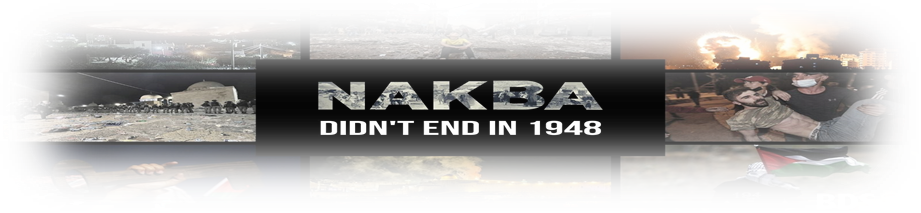
As of October 29, 2023, nearly 3,500 Palestinian children had been murdered by Israeli military personnel and an additional 1,000 are missing, presumably buried in the rubble of Gaza during the preceding three weeks.  An additional 6,000 Palestinian adults were also liquidated and an unknown number are missing, while almost a million have been uprooted from their destroyed homes.  Of course, that is sort of traditional, immediately after its founding Israel expelled more than 800,000 Palestinians from their homes almost overnight during 1948 and “appropriated” (stole) their land and possessions, an event known as the Nakba.  One might call the past three weeks Nakba II, or more accurately, the Nakbanth.  There have been too many Nakbas to accurately keep track.

While the past three weeks have involved a significant increase in indiscriminate extra judicial killing of Palestinians by Israelis, it was merely a continuation of official Israeli policy since 1948, with peaks and valleys to be sure, but such attempted annihilation of Palestinians, glossed over as merely “ethnic cleansing”, has been unabated.  The hunting of Palestinians by Israeli military personnel and settlers is a sick reality akin to the worst historical violations of human decency, let alone rights, actions akin not only to those of the Nazis but of the Huns and then the Mongols, and to United States’ soldiers and settlers with respect to the indigenous population of North America were bounties were paid for indigenous scalps without differentiation between age or gender. 

In the case of Israel, the justification for such inhumanity goes back millennia to old Hebrew genocidal traditions, traditions which are biblically recorded as far back as the genocide committed against the inhabitants of ancient Jericho, and involves a Hebraic version of the Nazi policy known as Lebensraum, one not only sanctioned, but commanded by the Hebrew deity, Yahweh, a deity who, ironically, is the same deity worshipped by Israel’s current Palestinian victims.  Perhaps the saddest irony is that Palestinians are much closer genetically to ancient Hebrews than are the Israelis.  They are the descendants of the Jewish people who stayed in the “Holy Land” instead of migrating away after the Roman destruction of the second Hebrew Temple, and who were, in large part, first forced by the Romans of the later Christianized Empire to convert to Christianity, and then, forced to convert to Islam by conquering Arab Muslims, a faith much closer to their original Judaism than was Christianity.  Current Israelis on the other hand are an amalgam, with Hebrew roots, to be sure, but primarily comprised of converts to Judaism from diverse European ethnic groups, primarily descendants of the ancient Eurasian Khazars but including many others. 

Still, murder is murder, genocide is genocide and impunity is impunity.  Hypocrisy reigns, seasoned with hubris, especially with reference to the phrase “Never Again” and to memorials remembering and honoring one segment of those who perished in the series of events during the first half of the twentieth century collectively referred to as the Holocaust, memorials that do not include remembrance of the Soviet citizens slaughtered, or the residents of Nagasaki and Hiroshima, or of Dresden or Tokyo.  The height of such hypocrisy, of course, in addition to the creation of the embryonic State of Israel by the United Nations in 1948, in Palestine rather than say, in Bavaria, involves the decisions of the tribunals established by the victors in the second war to end all wars in the cities of Nuremburg and Tokyo which authorized selective additional murder and torture, in the name of justice and humanity and, of course, as deemed necessary to assure that what is happening in Palestine today, would never occur.  Not all that successful I’d say.

Odd how the term anti-Semitism has morphed from an attitude of unjustifiable actions and attitudes against members of the Jewish faith based on their religious beliefs into defense of genocide and ethnic cleansing, and opposition to truths concerning related realities.  Fortunately, a great many Jews refuse to accept the commission of genocide and ethnic cleansing in their names and are prominent among those protesting against Israel.  The same is true of the populations of many of the countries supporting and defending the Israeli annihilation of Palestine and the Palestinian people.  Perhaps they’ll remember the forgoing when next they vote in purportedly democratic elections.

Something to think about as the descendants of the victors in the second war to end all wars employ the same tactics and excuses as did the losers, and as a third “war to end all wars” becomes more and more likely.

_______

© Guillermo Calvo Mahé; Manizales, 2023; all rights reserved.  Please feel free to share with appropriate attribution.

Guillermo (“Bill”) Calvo Mahé (a sometime poet) is a writer, political commentator and academic currently residing in the Republic of Colombia (although he has primarily lived in the United States of America of which he is also a citizen).  Until 2017 he chaired the political science, government and international relations programs at the Universidad Autónoma de Manizales.  He is currently the publisher of the Inannite Review, available at Substack.com, a commentator on Radio Guasca FM, and an occasional contributor to the regional magazine, el Observador.  He has academic degrees in political science (the Citadel), law (St. John’s University), international legal studies (New York University) and translation and linguistic studies (the University of Florida’s Center for Latin American Studies).  However, he is also fascinated by mythology, religion, physics, astronomy and mathematics, especially with matters related to quanta and cosmogony.  He can be contacted at guillermo.calvo.mahe@gmail.com and much of his writing is available through his blog at https://guillermocalvo.com/.


The Irrelevance of International Humanitarian Law

Perhaps it’s time to reevaluate the premises on which World War II has been judged.  After all, apparently the problems with genocide and ethnic cleansing which purportedly differentiated the two warring camps may have had more to do with the methods with which those two purported crimes against humanity were implemented, or perhaps the numbers involved, rather than with they’re having been undertaken.  Gas bad!  Bombs good.  That was sort of clear when Hiroshima and Nagasaki were destroyed but seems absolutely clear now with the Israeli destruction of the Gaza Strip and elimination of its troublesome population. 

Interestingly though, United States courts at both the state and federal level have ruled that execution through use of gas chambers does not constitute cruel and unusual punishment; see, e.g., Hunt v. Nuth, 57 F.3d 1327 (4th Cir. 1995), Gray v. Lucas, 710 F.2d 1048 (5th Cir. 1983) and the Supreme Court decision in Gomez v. Fierro, 519 U.S. 918 (1996).  To violate the 8th Amendment to the United States Constitution’s prohibition against cruel and unusual punishment it would need to involve some sort of torture, such as dismemberment (as results, for example from non-nuclear forms of bombing). 

Hmmm, so just what is the difference?

Given the foregoing, perhaps the Nazis, while extremely unpleasant towards diverse ethnic and social groups executed in gas chambers (e.g., Jews, Gypsies, sexually deviant groups as measured by standards at the time, etc.), where less culpable of crimes against humanity, at least in the manner of execution if not in numbers, than today’s Israel.  Since today’s Israeli campaign of genocide and ethnic cleansing against non-Jews in the area of Greater Israel (the Nazi concept of lebensraum comes to mind) have been deemed appropriate responses to feelings of national insecurity and reprisals for rebellion such as those which occurred during the second war to end all wars in the Warsaw ghetto and elsewhere; perhaps Germans of all stripes are owed an apology, perhaps the decisions of the Nuremburg tribunals need to be vacated, and perhaps appropriate compensation should be paid to the descendants of those executed and otherwise punished erroneously in such trials as well as in the similar trials held in Tokyo.

As current Israeli leaders have specified, no rules involving human rights or proscriptions against lesa humanidad are applicable to military reprisals against groups deemed undesirable or inconvenient in light of national objectives.

Case closed, finally!!!  It’s only logical.  Everyone is innocent except, of course, for the victims.
_______

© Guillermo Calvo Mahé; Manizales, 2023; all rights reserved.  Please feel free to share with appropriate attribution.

Guillermo (“Bill”) Calvo Mahé (a sometime poet) is a writer, political commentator and academic currently residing in the Republic of Colombia (although he has primarily lived in the United States of America of which he is also a citizen).  Until 2017 he chaired the political science, government and international relations programs at the Universidad Autónoma de Manizales.  He is currently the publisher of the Inannite Review, available at Substack.com, a commentator on Radio Guasca FM, and an occasional contributor to the regional magazine, el Observador.  He has academic degrees in political science (the Citadel), law (St. John’s University), international legal studies (New York University) and translation and linguistic studies (the University of Florida’s Center for Latin American Studies).  However, he is also fascinated by mythology, religion, physics, astronomy and mathematics, especially with matters related to quanta and cosmogony.  He can be contacted at guillermo.calvo.mahe@gmail.com and much of his writing is available through his blog at https://guillermocalvo.com/.

A Brief Reflection on the Latest Rationalization for Genocide

I wonder if the Israelis murder Palestinians with a joy similar to that ascribed to the Nazis as they murdered Jews (and many, many others).  Or whether instead, when the Nazis did what they are credited with having done, they did so with remorse, considering it a necessary evil, as apparently some Israelis do today.  Just how different, really, are Benjamin Netanyahu and Adolf Hitler and Harry Truman and Winston Churchill and Joseph Biden and Dick Cheney and George W. Bush, et. al.?  Interesting that they’re all political rather than military leaders.

It is horribly ironic that, as human beings, Nazis and Zionists share so many qualities and experiences, but terrible that they are not the only ones.  Terrible that their shared emotions, attitudes and actions flow throughout our history and prehistory as one group of humans finds it essential to destroy another.  As the Jews did millennia ago at Jericho and elsewhere.  As the United States did first with its indigenous population and then at Hiroshima and Nagasaki.  As so many groups of humans coalesced into societies almost always seem to do. 

Obviously, despite the hypocritically noble proclamations by the victors of the second war to end all wars, like those by the noble victors of the first war to end all wars, and like those by the noble victors in so many armed conflicts before and since, the human capacity to rationalize evil has not changed at all.  It may be what defines us.  It’s who we’ve always been and seems as though it’s what we’ll always be.

We seemingly are what we are, and that has too little in it of the truly noble and perhaps none of the equitable or just.
_______

© Guillermo Calvo Mahé; Manizales, 2023; all rights reserved.  Please feel free to share with appropriate attribution.

Guillermo (“Bill”) Calvo Mahé (a sometime poet) is a writer, political commentator and academic currently residing in the Republic of Colombia (although he has primarily lived in the United States of America of which he is also a citizen).  Until 2017 he chaired the political science, government and international relations programs at the Universidad Autónoma de Manizales.  He is currently the publisher of the Inannite Review, available at Substack.com, a commentator on Radio Guasca FM, and an occasional contributor to the regional magazine, el Observador.  He has academic degrees in political science (the Citadel), law (St. John’s University), international legal studies (New York University) and translation and linguistic studies (the University of Florida’s Center for Latin American Studies).  However, he is also fascinated by mythology, religion, physics, astronomy and mathematics, especially with matters related to quanta and cosmogony.  He can be contacted at guillermo.calvo.mahe@gmail.com and much of his writing is available through his blog at https://guillermocalvo.com/.