A Cease Fire is Not Enough

The ubiquitous calls for a ceasefire in Palestine miss the mark.  What is required is the fulfillment of the promises hastily made at Nuremberg following the second war to end all wars as victors vengeance disguised as justice took its toll and a promise was made: “Never Again!”  A promise which immediately proved impossible to keep as the most prominent of the Nazi’s victims, those whose vengeance was extracted at Nuremberg, almost immediately became the victimizers, exalting in the memories of the fate of ancient Jericho and seeking to duplicate it in Palestine. 

What is needed is accountability and implementation of the rules of law established as res gestae at Nuremberg.  Mass murder seeking genocide and ethnic cleansing, crimes of lesse humanidad, must be punished and the appropriate punishment was established at Nuremberg.  Mass murderers, whether few or many, must be held to account, whether directly involved, as in the case of Israel (and other countries), or indirectly as in the NATO countries that supply and resupply Israel with the means to engage in the mass slaughter of innocents in clear violation of International Law, of Humanitarian Law, of the laws regulating what is prohibited in armed conflicts or during occupations, even if the occupation is three quarters of a century old. 

A cease fire is not enough.

The Palestinian State already recognized by civilized countries, one within the borders established by the United Nations in 1948, or at least those existing before the “Six Day War”, must be universally recognized and protected, and such Palestinian State must be sovereign and independent, free to ally itself with whomever it will, but subject to the res gestae that purportedly governs us all.   

And the Palestinian dead and maimed during the past quarter century deserve the same memorialization as do the victims of Nazi concentration camps, gas chambers and crematoriums, as do the victims of the atomic bombing of Hiroshima and Nagasaki.  And the Palestinian State and the descendants of the Palestinian dead and maimed deserve reparations in the hundreds of billions of dollars from Israel and those NATO countries that enable Israeli crimes of lesse humanidad

It is time to take the promises made following the second war to end all wars seriously, and to shun all those that refuse to do so in every way possible.  The BDS movement is not enough.  Remember, as the justices at Nuremberg proclaimed (albeit hypocritically, no allied personnel engaged in comparable crimes were judged): “following orders is no defense”, and as they should have added, “voting to elect those who facilitate crimes of lesse humanidad, anywhere, is no better”.
_______

© Guillermo Calvo Mahé; Manizales, 2023; all rights reserved.  Please feel free to share with appropriate attribution.

Guillermo (“Bill”) Calvo Mahé (a sometime poet) is a writer, political commentator and academic currently residing in the Republic of Colombia (although he has primarily lived in the United States of America of which he is also a citizen).  Until 2017 he chaired the political science, government and international relations programs at the Universidad Autónoma de Manizales.  He is currently the publisher of the Inannite Review, available at Substack.com, a commentator on Radio Guasca FM, and an occasional contributor to the regional magazine, el Observador.  He has academic degrees in political science (the Citadel), law (St. John’s University), international legal studies (New York University) and translation and linguistic studies (the University of Florida’s Center for Latin American Studies).  However, he is also fascinated by mythology, religion, physics, astronomy and mathematics, especially with matters related to quanta and cosmogony.  He can be contacted at guillermo.calvo.mahe@gmail.com and much of his writing is available through his blog at https://guillermocalvo.com/.

Bittersweet Reflections on an Autumn Morning

I woke up this morning dreaming of the “The Bells of St. Mary’s”, a film starring Bing Crosby and Ingrid Bergman that I probably first watched as an eighth grade student at St. Gerard de Magella, a Catholic school in Hollis, Queens, a neighborhood in New York City.  It’s been a favorite of mine ever since, though hard to view now; times have changed and the values reflected in that film no longer predominate.  It reflects a sort of idyllic yet plebian epoch where we believed we stood for decency, ignoring the cultural cancers that afflicted us, the genocide of indigenous Americans and racism based on our history of unrepentant abuse of Africans, as well as our penchant for intervening militarily in the affairs of others in order to appropriate their natural resources. 

St. Gerard’s though seemed reflective of a streak of decency, as was Father O’Malley’s and Sister Mary’s St. Mary’s.  My best friend at the time, albeit briefly, was an African American of Jamaican ancestry whose name was Cuthbert Williamson.  Other close friends were Italian and Irish, and I had a serious crush on a girl whose ancestry I never knew, but whose name was Patricia Maher; all of us happily melding, unaware of how much our world would change or just how hypocritical the country we loved was and had always been. 

I think we’ve strayed from the path that might have led from there to the best version of who we should have become.  Instead of curing our societal ills, we glossed over them self-righteously and became a more and more polarized society and a larger and larger danger to ourselves and even more so to the rest of the world.  Indeed, we became that which we claimed so many of the best among us had died to prevent in the second of our wars to purportedly end all wars and today, our government, if not all of our people, avidly supports ethnic cleansing and the mass murder of civilians that most of the world, at least in the global south, considers genocide.  And, of course, our government seeks to embroil us in wars all over the globe in order to attain the worldwide hegemony that we purportedly disdained when I attended St. Gerard. 

Shortly after I graduated from St. Gerard, a sort of poetic prophet playing a harmonica and a guitar, and singing what seemed like the hymns of our generation (albeit sort of off key), arose and stirred us towards a better world, asking “when will we ever learn” and declaring that the “times they were a ‘changing”.  But we haven’t and they didn’t; … not really.  And the innocence of St. Mary’s is gone.

My mood as I awoke this morning was nostalgic and melancholy, as tends to happen as we mature, and I reflected on my personal failures and on my regrets instead of on the successes I’ve attained and the blessings I enjoy; on the many friends and relationships that have vanished and which I did not appreciate as much as they deserved.  Bittersweet memories, reflections and introspections.  But I also focused on the hope Bing Crosby and Ingrid Bergman generated when I watched their interplay, a sense of hope they still inspire whenever I manage to revisit Father O’Malley and Sister Mary. 

A sense of hope we desperately need today when their like seems all too hard to find.
_______

© Guillermo Calvo Mahé; Manizales, 2023; all rights reserved.  Please feel free to share with appropriate attribution.

Guillermo (“Bill”) Calvo Mahé (a sometime poet) is a writer, political commentator and academic currently residing in the Republic of Colombia (although he has primarily lived in the United States of America of which he is also a citizen).  Until 2017 he chaired the political science, government and international relations programs at the Universidad Autónoma de Manizales.  He is currently the publisher of the Inannite Review, available at Substack.com, a commentator on Radio Guasca FM, and an occasional contributor to the regional magazine, el Observador.  He has academic degrees in political science (the Citadel), law (St. John’s University), international legal studies (New York University) and translation and linguistic studies (the University of Florida’s Center for Latin American Studies).  However, he is also fascinated by mythology, religion, physics, astronomy and mathematics, especially with matters related to quanta and cosmogony.  He can be contacted at guillermo.calvo.mahe@gmail.com and much of his writing is available through his blog at https://guillermocalvo.com/.

Of Genocide, Ethnic Cleansing, Hubris and Impunity

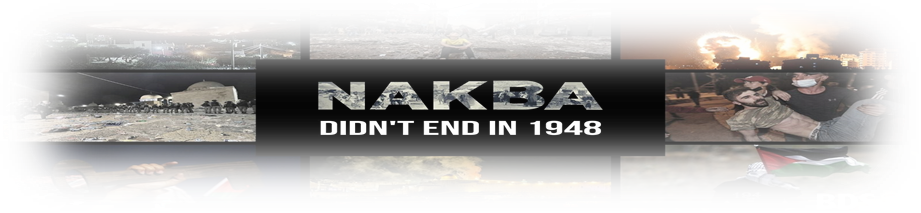
As of October 29, 2023, nearly 3,500 Palestinian children had been murdered by Israeli military personnel and an additional 1,000 are missing, presumably buried in the rubble of Gaza during the preceding three weeks.  An additional 6,000 Palestinian adults were also liquidated and an unknown number are missing, while almost a million have been uprooted from their destroyed homes.  Of course, that is sort of traditional, immediately after its founding Israel expelled more than 800,000 Palestinians from their homes almost overnight during 1948 and “appropriated” (stole) their land and possessions, an event known as the Nakba.  One might call the past three weeks Nakba II, or more accurately, the Nakbanth.  There have been too many Nakbas to accurately keep track.

While the past three weeks have involved a significant increase in indiscriminate extra judicial killing of Palestinians by Israelis, it was merely a continuation of official Israeli policy since 1948, with peaks and valleys to be sure, but such attempted annihilation of Palestinians, glossed over as merely “ethnic cleansing”, has been unabated.  The hunting of Palestinians by Israeli military personnel and settlers is a sick reality akin to the worst historical violations of human decency, let alone rights, actions akin not only to those of the Nazis but of the Huns and then the Mongols, and to United States’ soldiers and settlers with respect to the indigenous population of North America were bounties were paid for indigenous scalps without differentiation between age or gender. 

In the case of Israel, the justification for such inhumanity goes back millennia to old Hebrew genocidal traditions, traditions which are biblically recorded as far back as the genocide committed against the inhabitants of ancient Jericho, and involves a Hebraic version of the Nazi policy known as Lebensraum, one not only sanctioned, but commanded by the Hebrew deity, Yahweh, a deity who, ironically, is the same deity worshipped by Israel’s current Palestinian victims.  Perhaps the saddest irony is that Palestinians are much closer genetically to ancient Hebrews than are the Israelis.  They are the descendants of the Jewish people who stayed in the “Holy Land” instead of migrating away after the Roman destruction of the second Hebrew Temple, and who were, in large part, first forced by the Romans of the later Christianized Empire to convert to Christianity, and then, forced to convert to Islam by conquering Arab Muslims, a faith much closer to their original Judaism than was Christianity.  Current Israelis on the other hand are an amalgam, with Hebrew roots, to be sure, but primarily comprised of converts to Judaism from diverse European ethnic groups, primarily descendants of the ancient Eurasian Khazars but including many others. 

Still, murder is murder, genocide is genocide and impunity is impunity.  Hypocrisy reigns, seasoned with hubris, especially with reference to the phrase “Never Again” and to memorials remembering and honoring one segment of those who perished in the series of events during the first half of the twentieth century collectively referred to as the Holocaust, memorials that do not include remembrance of the Soviet citizens slaughtered, or the residents of Nagasaki and Hiroshima, or of Dresden or Tokyo.  The height of such hypocrisy, of course, in addition to the creation of the embryonic State of Israel by the United Nations in 1948, in Palestine rather than say, in Bavaria, involves the decisions of the tribunals established by the victors in the second war to end all wars in the cities of Nuremburg and Tokyo which authorized selective additional murder and torture, in the name of justice and humanity and, of course, as deemed necessary to assure that what is happening in Palestine today, would never occur.  Not all that successful I’d say.

Odd how the term anti-Semitism has morphed from an attitude of unjustifiable actions and attitudes against members of the Jewish faith based on their religious beliefs into defense of genocide and ethnic cleansing, and opposition to truths concerning related realities.  Fortunately, a great many Jews refuse to accept the commission of genocide and ethnic cleansing in their names and are prominent among those protesting against Israel.  The same is true of the populations of many of the countries supporting and defending the Israeli annihilation of Palestine and the Palestinian people.  Perhaps they’ll remember the forgoing when next they vote in purportedly democratic elections.

Something to think about as the descendants of the victors in the second war to end all wars employ the same tactics and excuses as did the losers, and as a third “war to end all wars” becomes more and more likely.

_______

© Guillermo Calvo Mahé; Manizales, 2023; all rights reserved.  Please feel free to share with appropriate attribution.

Guillermo (“Bill”) Calvo Mahé (a sometime poet) is a writer, political commentator and academic currently residing in the Republic of Colombia (although he has primarily lived in the United States of America of which he is also a citizen).  Until 2017 he chaired the political science, government and international relations programs at the Universidad Autónoma de Manizales.  He is currently the publisher of the Inannite Review, available at Substack.com, a commentator on Radio Guasca FM, and an occasional contributor to the regional magazine, el Observador.  He has academic degrees in political science (the Citadel), law (St. John’s University), international legal studies (New York University) and translation and linguistic studies (the University of Florida’s Center for Latin American Studies).  However, he is also fascinated by mythology, religion, physics, astronomy and mathematics, especially with matters related to quanta and cosmogony.  He can be contacted at guillermo.calvo.mahe@gmail.com and much of his writing is available through his blog at https://guillermocalvo.com/.

The Irrelevance of International Humanitarian Law

Perhaps it’s time to reevaluate the premises on which World War II has been judged.  After all, apparently the problems with genocide and ethnic cleansing which purportedly differentiated the two warring camps may have had more to do with the methods with which those two purported crimes against humanity were implemented, or perhaps the numbers involved, rather than with they’re having been undertaken.  Gas bad!  Bombs good.  That was sort of clear when Hiroshima and Nagasaki were destroyed but seems absolutely clear now with the Israeli destruction of the Gaza Strip and elimination of its troublesome population. 

Interestingly though, United States courts at both the state and federal level have ruled that execution through use of gas chambers does not constitute cruel and unusual punishment; see, e.g., Hunt v. Nuth, 57 F.3d 1327 (4th Cir. 1995), Gray v. Lucas, 710 F.2d 1048 (5th Cir. 1983) and the Supreme Court decision in Gomez v. Fierro, 519 U.S. 918 (1996).  To violate the 8th Amendment to the United States Constitution’s prohibition against cruel and unusual punishment it would need to involve some sort of torture, such as dismemberment (as results, for example from non-nuclear forms of bombing). 

Hmmm, so just what is the difference?

Given the foregoing, perhaps the Nazis, while extremely unpleasant towards diverse ethnic and social groups executed in gas chambers (e.g., Jews, Gypsies, sexually deviant groups as measured by standards at the time, etc.), where less culpable of crimes against humanity, at least in the manner of execution if not in numbers, than today’s Israel.  Since today’s Israeli campaign of genocide and ethnic cleansing against non-Jews in the area of Greater Israel (the Nazi concept of lebensraum comes to mind) have been deemed appropriate responses to feelings of national insecurity and reprisals for rebellion such as those which occurred during the second war to end all wars in the Warsaw ghetto and elsewhere; perhaps Germans of all stripes are owed an apology, perhaps the decisions of the Nuremburg tribunals need to be vacated, and perhaps appropriate compensation should be paid to the descendants of those executed and otherwise punished erroneously in such trials as well as in the similar trials held in Tokyo.

As current Israeli leaders have specified, no rules involving human rights or proscriptions against lesa humanidad are applicable to military reprisals against groups deemed undesirable or inconvenient in light of national objectives.

Case closed, finally!!!  It’s only logical.  Everyone is innocent except, of course, for the victims.
_______

© Guillermo Calvo Mahé; Manizales, 2023; all rights reserved.  Please feel free to share with appropriate attribution.

Guillermo (“Bill”) Calvo Mahé (a sometime poet) is a writer, political commentator and academic currently residing in the Republic of Colombia (although he has primarily lived in the United States of America of which he is also a citizen).  Until 2017 he chaired the political science, government and international relations programs at the Universidad Autónoma de Manizales.  He is currently the publisher of the Inannite Review, available at Substack.com, a commentator on Radio Guasca FM, and an occasional contributor to the regional magazine, el Observador.  He has academic degrees in political science (the Citadel), law (St. John’s University), international legal studies (New York University) and translation and linguistic studies (the University of Florida’s Center for Latin American Studies).  However, he is also fascinated by mythology, religion, physics, astronomy and mathematics, especially with matters related to quanta and cosmogony.  He can be contacted at guillermo.calvo.mahe@gmail.com and much of his writing is available through his blog at https://guillermocalvo.com/.

A Brief Reflection on the Latest Rationalization for Genocide

I wonder if the Israelis murder Palestinians with a joy similar to that ascribed to the Nazis as they murdered Jews (and many, many others).  Or whether instead, when the Nazis did what they are credited with having done, they did so with remorse, considering it a necessary evil, as apparently some Israelis do today.  Just how different, really, are Benjamin Netanyahu and Adolf Hitler and Harry Truman and Winston Churchill and Joseph Biden and Dick Cheney and George W. Bush, et. al.?  Interesting that they’re all political rather than military leaders.

It is horribly ironic that, as human beings, Nazis and Zionists share so many qualities and experiences, but terrible that they are not the only ones.  Terrible that their shared emotions, attitudes and actions flow throughout our history and prehistory as one group of humans finds it essential to destroy another.  As the Jews did millennia ago at Jericho and elsewhere.  As the United States did first with its indigenous population and then at Hiroshima and Nagasaki.  As so many groups of humans coalesced into societies almost always seem to do. 

Obviously, despite the hypocritically noble proclamations by the victors of the second war to end all wars, like those by the noble victors of the first war to end all wars, and like those by the noble victors in so many armed conflicts before and since, the human capacity to rationalize evil has not changed at all.  It may be what defines us.  It’s who we’ve always been and seems as though it’s what we’ll always be.

We seemingly are what we are, and that has too little in it of the truly noble and perhaps none of the equitable or just.
_______

© Guillermo Calvo Mahé; Manizales, 2023; all rights reserved.  Please feel free to share with appropriate attribution.

Guillermo (“Bill”) Calvo Mahé (a sometime poet) is a writer, political commentator and academic currently residing in the Republic of Colombia (although he has primarily lived in the United States of America of which he is also a citizen).  Until 2017 he chaired the political science, government and international relations programs at the Universidad Autónoma de Manizales.  He is currently the publisher of the Inannite Review, available at Substack.com, a commentator on Radio Guasca FM, and an occasional contributor to the regional magazine, el Observador.  He has academic degrees in political science (the Citadel), law (St. John’s University), international legal studies (New York University) and translation and linguistic studies (the University of Florida’s Center for Latin American Studies).  However, he is also fascinated by mythology, religion, physics, astronomy and mathematics, especially with matters related to quanta and cosmogony.  He can be contacted at guillermo.calvo.mahe@gmail.com and much of his writing is available through his blog at https://guillermocalvo.com/.

Reevaluating Genocide during and after the Second World War: a Critique of History and Historians

On Tuesday, October 17, 2023, Jonathan Cook published an article in Consortium News (Volume 28, Number 284), entitled “Israel’s Official Ethnic Cleansing Program”.  He’s absolutely correct, but reacting to the long term consequences of root problems is inadequate without addressing the root causes.  In this case, we historians and journalists are the great facilitators, and the hypocrisy following the second war to end all wars, popularly referred to as the Second World War or World War II, is the root cause.

The second war to end all wars was followed by a series of trials based on application of promising ex post facto ius cogens that proclaimed that genocide was impermissible under any circumstances and that violators could be subjected to the death penalty, notwithstanding provisions of domestic law under which their actions were obligatory.  The trials were held in the cities of Nuremberg in Germany and Tokyo in Japan and purportedly established the framework on which future interstate belligerency would be judged.  A number of former Axis political and military leaders were executed and, in the ensuing decades, numerous lower level personnel were convicted and punished for following orders deemed violative of the new norms for armed conflicts, even though such norms did not exist at the time the conduct in question took place.  The repugnance with which such conduct was to be judged henceforth justified the violation of the prohibition of ex post facto penal law.

Subsequent history has demonstrated that the foregoing scenario was a fraud and that the Nuremberg and Tokyo trials were mere expressions of the vengeance of conquerors on the conquered, albeit packaged in beautiful and inspirational camouflage.  That should have been obvious given the reality that both sides in the second war to end all wars engaged in blatant genocidal actions: consider Hiroshima and Nagasaki, but also the obliteration of German and Japanese cities from the sky and the utter absence of related accountability, so it ought to be no surprise that subsequent more neatly packaged and sold examples of genocidal conduct continue, not only unpunished, but as in the case of Israel and the Palestinians, even extolled.

The only real lasting consequence of the second war to end all wars seems to have been that the British quest for global political and economic hegemony was transferred to the United States and that hypocrisy continued its unabated bludgeoning of truth in what passed for journalism and history.  Genocide continues to be celebrated, most notably by adherents of the primordial Abrahamic faith during Hanukkah and Passover while the same cultural group constantly decries the genocide practiced on it (and others) by the Germans, incoherently using it as justification for its own long term campaign of genocide against Palestinians and other adherents of the junior branches of the Abrahamic faith.  One wonders if Abram realized the horrendous long term consequences of his sexual abuse of his wife, Sarai’s, handmaiden Hagar.

I have taught and researched international law at the university level and have sadly concluded that, as with so much that purports to involve moral, ethical and legal norms, it exists only as an aspiration, but an aspiration carefully kept at bay and pulled out only when it is convenient for those who wield sufficient control over the use of force to force their will on others, but who insist on being portrayed as morally and ethically justified.  We historians are largely at fault for being so inept and hypocritical in our chosen avocation, as are purported journalists for the same reason.  Indeed writers of acknowledged fiction, writers such as, for example, Gore Vidal, come much closer to the truth than we ever do, earning us a place in a Shakespearean hell alongside lawyers, clerics and politicians.  Rather than eulogized, we deserve disdain and worse because the genocidal murder of so many rests all too comfortably on what passes for our consciences.

Something to think about as we attend and participate in seminars and congresses and teach our classes and publish our articles and books and accept the compensation we are awarded for the foregoing, and perhaps, hope that there is neither a Heaven nor a Hell, other than the one we help create and perpetuate here on earth.
_______

© Guillermo Calvo Mahé; Manizales, 2023; all rights reserved.  Please feel free to share with appropriate attribution.

Guillermo (“Bill”) Calvo Mahé (a sometime poet) is a writer, political commentator and academic currently residing in the Republic of Colombia (although he has primarily lived in the United States of America of which he is also a citizen).  Until 2017 he chaired the political science, government and international relations programs at the Universidad Autónoma de Manizales.  He is currently the publisher of the Inannite Review, available at Substack.com, a commentator on Radio Guasca FM, and an occasional contributor to the regional magazine, el Observador.  He has academic degrees in political science (the Citadel), law (St. John’s University), international legal studies (New York University) and translation and linguistic studies (the University of Florida’s Center for Latin American Studies).  However, he is also fascinated by mythology, religion, physics, astronomy and mathematics, especially with matters related to quanta and cosmogony.  He can be contacted at guillermo.calvo.mahe@gmail.com and much of his writing is available through his blog at https://guillermocalvo.com/.
A Brief Reflection on Distressing Historical Realities

How would Zionists have perceived of Adolf Hitler if instead of a final solution to the Jewish problem, he’d sought to implement a final solution to the Muslim problem?  Not using the same tactics but rather, a more subtle and gradual form of violent genocide with much better public relations?  How would the United States and the “Western Europeans” have perceived of him and his henchmen?

That seems worth considering as we see just that taking place in the tiny Gaza Strip, indeed, throughout Palestine, and in Lebanon and Syria too with Iran on the wish list; as we witness how Benjamin Netanyahu and his henchmen are perceived by Zionists, the United Kingdom and the countries that make up the NATO alliance.

The answer to the foregoing is deeply disturbing as we see the reflections of those we’ve characterized as history’s worst villains reflected in our own mirrors.  It says a great deal about the hypocrisy inherent in our purported value systems and in the history we are taught and then, in turn, teach.  Is it any wonder then that, not recognizing them, we seem utterly unable to learn from our past mistakes, to correct them, instead endlessly repeating them?

How would the “holocaust” be remembered had the foregoing scenario been the one that took place in the decade from 1936 through 1945? 

Probably a great deal like Hanukkah and Passover are celebrated today, and that is a terrible reflection on who we’ve become.
_______

© Guillermo Calvo Mahé; Manizales, 2023; all rights reserved.  Please feel free to share with appropriate attribution.

Guillermo (“Bill”) Calvo Mahé (a sometime poet) is a writer, political commentator and academic currently residing in the Republic of Colombia (although he has primarily lived in the United States of America of which he is also a citizen).  Until 2017 he chaired the political science, government and international relations programs at the Universidad Autónoma de Manizales.  He is currently the publisher of the Inannite Review, available at Substack.com, a commentator on Radio Guasca FM, and an occasional contributor to the regional magazine, el Observador.  He has academic degrees in political science (the Citadel), law (St. John’s University), international legal studies (New York University) and translation and linguistic studies (the University of Florida’s Center for Latin American Studies).  However, he is also fascinated by mythology, religion, physics, astronomy and mathematics, especially with matters related to quanta and cosmogony.  He can be contacted at guillermo.calvo.mahe@gmail.com and much of his writing is available through his blog at https://guillermocalvo.com/.

The Other Side of the Horizon

He was as far from suicidal as a human being could be.  Indeed, he suspected that immortality was a distinct possibility for him, and not in a reincarnative sense but in his own body, a body to be kept permanently in decent repair.  Ironically, when he was thirteen or fourteen, he’d experimented with suicide, but not in order to terminate his life but rather, to assure himself that it had a transcendent meaning, that he was, as he was so often told by his grandmother’s esoteric colleagues in the Theosophical Society, destined to accomplish very transcendent things. 

That seemed a very heavy burden to him rather than a compliment, one he was not all that interested in bearing, but if bear it he must, he wanted to know it involved something real.  It seemed logical to him that if his experiment with suicide failed, then perhaps there was merit in the assertions of those arcane adults who to him, seemed as likely to be dangerously deluded as sagacious.  The experiment was either a success or a failure, as experiments are wont to be, depending on one’s perspectives.  He did not “disincarnate”, as his would be mentors might have phrased it, but he did become seriously ill, ill enough to be taken to a hospital where his stomach was pumped and he was placed on a short term diet of ice cubes (“food poisoning” having been suspected).  He did not disclose what had actually happened to anyone at the time, or anyone at all for many decades.

So, … he didn’t “pass away” but it turns out that didn’t really prove anything, although the converse would certainly have been definitive, and very final.  In consequence he lived his life with a sense that a permanent quest might always be on the horizon, but a very ill-defined quest and a very ill-defined horizon, both in distance and scope.  That permanent state of uncertainty and ambiguity led him to investigate diverse spiritual and religious traditions in depth, and to constantly reflect on the nature of divinity, and on whether or not divinity was merely an illusion.  And also to delve into psychology and parapsychology, into physics and metaphysics, into mathematics and astronomy, and then into history and cosmogony, poetry and literature and even political theory and science.   The latter led him to comparative philosophy albeit superficially, and then to empirical philosophy with himself as both the philosopher and the student.

Because he also had to eat and needed a place to live and a vehicle in which to travel, he studied law, at which he unfortunately excelled although he despised it for its ethical ambivalence.  But he practiced it anyway, at least for a while, and not unsuccessfully, at least for a time.  However, it was so contrary to his quest for practical verity, equity and justice that eventually, he ran afoul of the unwritten but binding rules pursuant to which that profession was practiced and took on foes much too powerful to defeat, and was consequently cast out of that profession, with a suggestion that he lead revolts elsewhere, which he henceforth did, although with the pen rather than the sword, and eventually, with the keyboard and the cell phone.

He gained some respect in the world at large, and perhaps helped more than a few people, and his students (he became an academic), at least most of them, both liked and admired him, and he them. 

Unfortunately, the former was not true with respect to his personal progeny, his greatest failure.  There were other areas he should have avoided as well, or at least dealt with in much better ways.  He had way too many intimate relationships in a quest for his perfect mate, many of whom didn’t thereafter care for him at all, although some remained friends and a few, very good friends, which was sometimes complex and frequently complicated.  Still, his writing and appearances on radio and television and in forums and seminars did succeed in making a bit of a difference in the way the world was perceived, if not in how it was run, although at least he tried, and more and more people came to respect his views, although not really enough to make a difference. 

As he matured, sort of, the boy in him was a permanent guest, essential to potential immortality of sorts, he came to realize that it only took helping mold a few very special people, perhaps even just one, who could attain the goals that, when he was very young, had been allocated to him, for him to fulfill the prophecies that had started him on his quixotic quests and that perhaps those well-meaning esoterics had merely misinterpreted his role, which was apparently to serve as a link in a long, long chain towards the eventual Kwisatz Haderach.  Whatever that was.

So, ….   As we noted at the start of this reflection, he was not really suicidal at all but it was yet too early to tell if he was immortal, after all, he was still alive and was aging in a manner somewhat slower than was usual for most.  His hair was still dark and abundant while that of his contemporaries, at least those who still had hair was snow white, and he was very active in diverse areas, including athletics which he loved, but he had lost a step or three and new aches tended to appear every now and then.  And immortality he’d realized, would not be all it was cracked up to be, which explained some of the contradictions and fallacies associated with divinity.  After all, if one were the last immortal, the last of the last, the final guardian, one would be destined to learn just how lonesome utter loneliness might be and thus, eventually, come to understand why divinity and sanity could not coexist in the same being.

A strange life so far, but not one bereft of magic, at least as far as the most esoteric and farfetched hypotheses imaginable based quantum theories were concerned.

And who knows what might turn up on the other sides of the horizon.
_______

© Guillermo Calvo Mahé; Manizales, 2023; all rights reserved.  Please feel free to share with appropriate attribution.

Guillermo (“Bill”) Calvo Mahé (a sometime poet) is a writer, political commentator and academic currently residing in the Republic of Colombia (although he has primarily lived in the United States of America of which he is also a citizen).  Until 2017 he chaired the political science, government and international relations programs at the Universidad Autónoma de Manizales.  He is currently the publisher of the Inannite Review, available at Substack.com, a commentator on Radio Guasca FM, and an occasional contributor to the regional magazine, el Observador.  He has academic degrees in political science (the Citadel), law (St. John’s University), international legal studies (New York University) and translation and linguistic studies (the University of Florida’s Center for Latin American Studies).  However, he is also fascinated by mythology, religion, physics, astronomy and mathematics, especially with matters related to quanta and cosmogony.  He can be contacted at guillermo.calvo.mahe@gmail.com and much of his writing is available through his blog at https://guillermocalvo.com/.

Observations on the Other Side of the Veil and Just where Jimmy Buffet Might Be

Nirvana doesn’t appeal to me.  Nor frankly do Heaven, Hell, Purgatory, etc., although heaven is such an amorphous concept it can encompass anything. 

Abrahamic heaven is certainly not my thing.  At best, horribly boring with perpetual psalms, harping and sycophancy. 

But an afterlife with everyone I’ve cared for would be interesting even if complex given competing and inconsistent relationships; at least in my case.

Hell is apparently were all the fun people go so a hell without the torment would be pretty awesome.  I wonder if Jimmy Buffet is there, and the Beatles who’ve passed on, and Elvis, and Mickey Mantle and Joe DiMaggio.  Awesome artists of course, Vincent van Gogh and Picasso, Rembrandt and da Vinci, Raphael and el Greco, Michelangelo too.  And actors and actresses and writers, and of course, poets.  Of course, a lot of unpleasant characters would be there as well, loads of politicians and lawyers and pseudo journalists, pederasts and rapists and  reams upon reams of religious leaders, popes, cardinals, bishops, priests, rabbis, pastors.  And a lot of military officers, especially generals and field marshals and such.  And monarchs and judges and jurists who made mistaken decisions. 

So Hell, … interesting but not really for me.  Too much like the current world.

Purgatory.  Hmmm, probably pretty cool, maybe the best of Hell without its downside.  But Limbo?  Well, sort of vacuous with a lot of babies wailing wondering just what the heck they were doing there, and who they were, and why they’d been abandoned. 

What kind of deity creates the foregoing and where ought he, she, it or they be reigning, if anywhere at all.

But Nirvana. 

I guess I’m not yet evolved enough to yearn for the absence of everything and anything, everyone and anyone.  As though I’d never been, which I find philosophically confusing.  Why all the effort, all the incarnations and suffering and, well, pleasure too, if the goal is to return to what I was before I was.  Unless, of course, it’s just an exercise for the education, training and evolution of the omnidivine.

But what happens when the omnidivine attains Nirvana?

Now Margaritaville. 

That would be something else.
_______

© Guillermo Calvo Mahé; Manizales, 2023; all rights reserved.  Please feel free to share with appropriate attribution.

Guillermo (“Bill”) Calvo Mahé (a sometime poet) is a writer, political commentator and academic currently residing in the Republic of Colombia (although he has primarily lived in the United States of America of which he is also a citizen).  Until 2017 he chaired the political science, government and international relations programs at the Universidad Autónoma de Manizales.  He is currently the publisher of the Inannite Review, available at Substack.com, a commentator on Radio Guasca FM, and an occasional contributor to the regional magazine, el Observador.  He has academic degrees in political science (the Citadel), law (St. John’s University), international legal studies (New York University) and translation and linguistic studies (the University of Florida’s Center for Latin American Studies).  However, he is also fascinated by mythology, religion, physics, astronomy and mathematics, especially with matters related to quanta and cosmogony.  He can be contacted at guillermo.calvo.mahe@gmail.com and much of his writing is available through his blog at https://guillermocalvo.com/.

A Reflection and Introspection on the Day my Mother would have been a Century Young

My mother would have been a century old today, or perhaps a century young. 

She was born on the 9th of July in 1923 to a complex couple, a sort of Cinderella and her Prince, only the prince was a French physician, albeit of noble stock, and the setting was in the Republic of Colombia, in the Department of Cundinamarca, in a small municipality near Bogota, and Cinderella was a beautiful very young woman, a bright young woman with little formal education (only her step siblings received that) but fascinated by the esoteric and by alternative spiritual philosophies, and those drew her close as the man who was to become her husband was, it was said, clairvoyant.  Unfortunately not clairvoyant enough to foretell his early death, leaving behind a beautiful young widow with two small children, one of them my mother: a little girl with a very long name: María del Rosario de Nuestra Señora de Chiquinquirá Mahé Val Buena (or perhaps Rubiano).  “Mahé” was her paternal last name.  People called her either “Rosario” or, if they were close to her, “Chalito”, but after she emigrated to the United States, most Americans called her “Rose”.  Late in life, for reasons of her own, she legally shortened her name to “Rosal”, Spanish for a rose bush, but that was something I never quite accepted.  Then again, … to me her name was always “Mom”. 

My mother was a very complex person and lived a very complex life, for some reason, usually electing to hide her myriad talents as an artist, a poet, a philosopher, a philanthropist, etc.  While she started her life as a beautiful and vibrant young woman who aspired to the stage, those dreams faded all too soon, and she lived most of her life very humbly, and all too often, very alone.  Still, she was a miracle worker who raised me as though, like my grandfather, I was a young noble and required appropriate training in history, politics, philosophy, chivalry, the arts, equestrian sports, etc.  I still can’t fathom how she accomplished it but I know that everything positive I ever became or I ever accomplished I owe to her.  The bad traits and failures are all my own.

She remained a child at heart all her life and loved watching and re-watching young Shirley temple movies and the Wizard of Oz, and was horrified when, as a teen, I went through an “objectivist”, Ayn Rand phase.  She wanted me to be a man of the people, a champion of the oppressed and certainly not an oppressor.  Fortunately, I outgrew that phase (as I outgrew many others) and slowly but steadily strove to be what she’d hoped.

She and my father were separated when I was very young.  Evidently they had a serious argument over his relationship with his secretary, a relationship he always claimed was innocent, but who knows.  And being naïve, she went for solace to my grandmother who immediately swept us up, sent my mother to the United States and apparently hid my younger sister and me among friends and relatives.  My father claimed to have searched for us, but he claimed a lot of things when I got to know him many years later, things that didn’t appear to be quite true, at least according to the trail of children he left behind, siblings I hardly knew but came to dearly love, after we eventually met.  Nevertheless, my mother loved him for the rest of her life and never said a negative thing about him to me.  Rather, she led me to believe that he’d been a paragon, a mixture of a De Vinci and a Rolando Furioso, albeit in a short, thin package.  Obviously, although saintly in most respects, veracity was not always her strong point.  It was only as I matured and aged that I came to realize that the paragon had always been her.

A century she never sought is what I’m sort of celebrating today, a day on which I’m reflecting on who she was and on everything she did, and not just for me.  My Colombian cousins practically worship her as, regardless of how little she had, on each of their birthdays and on every Christmas, she showered them with gifts, especially after her brother, their father had passed away.  She didn’t love life, but she loved me, and she loved her version of the divine.  She loved him with all her heart, and she longed to reunite with him, perhaps perceiving in the divine a father figure who she associated with her own father, he who had passed away much too soon, but had left her with a very lasting impression. 

She passed away very young as well.  Although not nearly as young as did he.  She was about to turn sixty-seven.  It was the fourth of June, 1990.  My youngest son, Edward, was born six months later.  My second son Alex doesn’t remember her, he was a wee bit more than two years old when she left.  But she bonded with Billy, my firstborn, and he remembers her well, and he remembers her stories about dinosaurs which he loved when little.  And he remembers our trips to visit her weekly towards the end; a four hour ride from Hendersonville, North Carolina, where we lived then, to Jacksonville, North Carolina, where my sister Marina was caring for her.  It was strange having four year old Billy watch her expiring but I wanted him to remember her always, and he does.  Those rides were memorable for both of us, silly rides with silly songs making silly noises in very sad times.

She’s been gone a long time now.  Thirty-three years, a month and five days.  And I think of her often.  I keep the plastic box which for a brief time held her ashes on a shelf in front of my desk, a box I’ve filled with little things I thought she might find meaningful: my sons’ baby teeth, an old bathing suit each wore in turn, my eldest son’s high school identification card, a cell phone my college roommate, now deceased, once gave me.  And taped to the box is a photocopy of a brief article in our local paper here in Manizales, I paper for which I write from time to time, an article with a photo of her, wishing her well as she moved to a new country.  An article almost three quarters of a century old.

I glance at that picture often, and I keep it close to me so that the pain of her passing lives on but morphed into something beautiful and positive, something that gives me courage and hope when I most need it, and an example to follow when I’m tempted to stray from the paths she sowed so carefully for me.

Happy birthday Mom, and thank you for being you, and thank you for everything you miraculously did to make me who you hoped I’d be.
_______

© Guillermo Calvo Mahé; Manizales, 2023; all rights reserved.  Please feel free to share with appropriate attribution.

Guillermo (“Bill”) Calvo Mahé (a sometime poet) is a writer, political commentator and academic currently residing in the Republic of Colombia (although he has primarily lived in the United States of America of which he is also a citizen).  Until 2017 he chaired the political science, government and international relations programs at the Universidad Autónoma de Manizales.  He is currently the publisher of the Inannite Review, available at Substack.com, a commentator on Radio Guasca FM, and an occasional contributor to the regional magazine, el Observador.  He has academic degrees in political science (the Citadel), law (St. John’s University), international legal studies (New York University) and translation and linguistic studies (the University of Florida’s Center for Latin American Studies).  However, he is also fascinated by mythology, religion, physics, astronomy and mathematics, especially with matters related to quanta and cosmogony.  He can be contacted at guillermo.calvo.mahe@gmail.com and much of his writing is available through his blog at https://guillermocalvo.com/.