
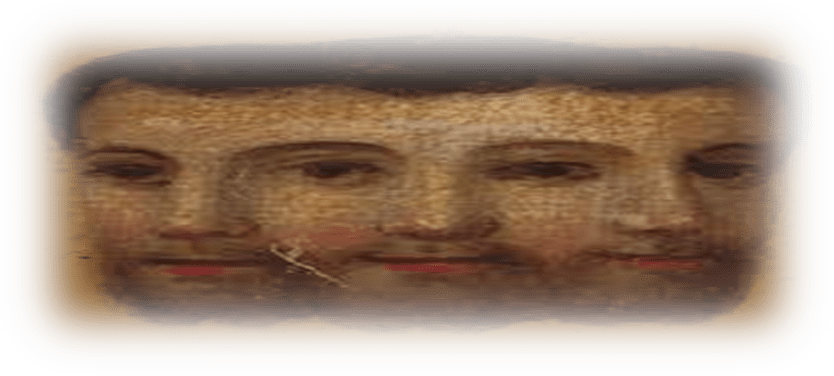
Today, much of the English speaking world celebrates the death of Maewyn Succat, the son of a wealthy Romanized Briton whether from England, Scotland or Wales is uncertain. From the age of 16 through 22 he was a purported slave in Ireland, having been shipwrecked there or perhaps kidnapped by Irish raiders and “forced” to act as a goat herder (horrors). At twenty-two he escaped or was expelled from Ireland and travelled to Gaul where he became a Catholic priest and adopted the Roman name Patricius (meaning “well-born” or “father of the citizens”).
He attained revenge for his “enslavement” by returning to Ireland sometime after the year 432 of the Common Era, commissioned by Pope Celestine I with following up on the conversion of the Irish, assuring that only the Catholic variant survived. Interestingly Pope Celestine I died that same year. The exact year of Maewyn Succat’s assignment and of his return to Ireland is seemingly unknowable, too confused by evolving myths although, if it was indeed Pope Celestine I who was involved, it would seemingly have been on or before July 27th in the year 432, absent some sort of miracle. he passed away on the 26th.
True to his assignment from whomever and whenever, Maewyn Succat brutally suppressed not only the ancient Irish culture and its tolerant indigenous religion but also the original variants of the Christian religion introduced into Ireland apparently by adherents of the Coptic Orthodox Church in Egypt and by Pelagianists (Christians who did not believe in original sin). Catholicism may have already been introduced into Ireland via Great Britain by Germanus of Auxerre and then definitely by a certain Palladius, a Galatian monk and chronicler of monasticism (also known as Patricius). Nonetheless, the ruthless Maewyn Succat has received the credit for such role, one celebrated interestingly enough, not on the day of his birth but on that of his death, perhaps a celebration the specters of his numerous victims appreciate.
So, the truth about “St.” Patrick is that virtually everything associated with him is less than honest, making this a most relevant holiday in our post-truth era. For example: Ireland never had snakes thus he never cast them out; at best, the story being a metaphor for him driving out paganism and earlier forms of Christianity. There is no evidence from his own writings that he used the shamrock to teach the Holy Trinity, a subsequently crafted legend at best. He was never formally canonized because he lived before the formal papal canonization process began. The original color associated with him was blue, not green, perhaps explaining the University of Notre Dame’s shifting uniform colors. For more detailed information I recommend an informal article on the Medium entitled “The Disturbing Truth about St. Patrick’s Day and Its Brutal History” by an author writing under the pseudonym “three raccoons in a spacesuit”, apparently fearful of revealing his or her real name anticipating retribution. The article is available at https://threeraccoons.medium.com/the-disturbing-truth-about-st-patricks-day-and-its-brutal-history-aaf74f68604c although probably behind a paywall.
How Maewyn Succat would treat those who engage in merry celebrations in his memory today is predictable. He would probably have had them tortured and executed so it’s a good thing he is no longer around, although many fundamentalist Christians, especially of the Zionist variant, may well share his perspectives, especially concerning the religious validity of genocide.
Sooo, ….
Have a memorable St. Patrick’s Say.
_____
© Guillermo Calvo Mahé; Manizales, 2026; all rights reserved. Please feel free to share with appropriate attribution.
Guillermo (“Bill”) Calvo Mahé (a sometime poet and aspiring empirical philosopher) is a writer, political commentator and academic currently residing in the Republic of Colombia (although he has primarily lived in the United States of America of which he is also a citizen). Until 2017 he chaired the political science, government and international relations programs at the Universidad Autónoma de Manizales. Previously, he chaired the social studies and foreign language departments at the Eastern Military Academy in Huntington, New York. He is currently the publisher of the Inannite Review available at Substack.com; an intermittent commentator on radio and television; and, an occasional contributor to diverse periodicals and publications. He has academic degrees in political science (BA, The Citadel, the Military College of South Carolina), law (JD, St. John’s University, School of Law), international legal studies (LL.M, the Graduate Division of the New York University School of Law) and translation and linguistic studies (GCTS, the University of Florida’s Center for Latin American Studies). However, he is also fascinated by mythology, religion, physics, astronomy and mathematics, especially with matters related to quanta, cosmology and cosmogony. He can be contacted at guillermo.calvo.mahe@gmail.com and much of his writing is available through his blog at https://guillermocalvo.com/.
 Guillermo Calvo Mahé