
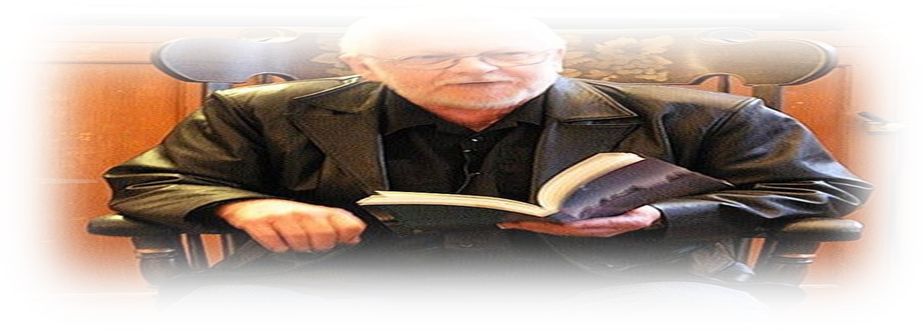
Reflections on Poetry and on the Nature and Uses of Prayer

Sam Hamill

It came to me as I read indigenous reflections written in 1976, almost half a century ago, by Arthur Amiotte, then an artist and teacher who lived among the Teton Sioux in South Dakota, that I have never understood the nature or functions of prayer.  Not strange given how few if any priests or pastors or rabbis have ever grasped them.  Prayer had always seemed superficial to me, ritual repetition of sounds directed at one or more beings to whom we seemed little more than insects, inferior objects to be scorned and disdained, albeit in a strange and twisted, masochistic way, loved as well. 

An observation attributed to a gentle Nazarene whom the Hebrews and perhaps the Romans may have tortured and perhaps hung or crucified has always made a great deal of sense to me: his suggestion that direct communion with the divine, without ritual or intervention, without prayer, was really the only legitimate and effective means of touching divinity but, reviewing Arthur Amiotte’s indigenous reflections, something I’ve been doing while concurrently reading the probably fictitious writing of Carlos Castaneda (fictitious not being synonymous with useless),  another alternative occurred to me.  Ironically occurred to me who, if not an atheist am at best a panentheist.  It came to me in the form of an epiphany: Prayer may well have a positive purpose but it is unrelated to the ritual repetition of sounds the meaning of which few really consider as they utter them, and fewer still understand

In that instant of epiphany, it came to me that ritual prayer does have a role and a meaning and a use and a purpose but that it is very different from the meaningless collective rote exercise that takes place on designated days at designated hours in designated places under the leadership of designated men and sometimes, although rarely, designated women.  It is, or perhaps, better stated, it should be, an isolated, personal reflective instrument that properly tuned and used can lead to introspection, contemplation, meditation and self-examination, all in a quest for insight, perhaps totally novel insight, and through such insight, to both elucidation and pragmatic solutions. 

That makes sense, or made sense to me; finally.  Prayers, correctly used, can be catalysts for internal communication in which, perhaps, a spark of the divine (if a spark of the divine exists within each of us, as some among the Gnostics tend to believe), may, at times, be present.

Poetry” Sam Hammill (a great friend, a great poet and a great translator) once told me “is meant to be spoken and heard”.  As much as I admired him and still do (though he is long gone), I did not agree.  For me, reading poetry rather than listening to it permitted me to transcend the music of the words in order to wrestle with the layers of meaning involved, not all of them layers the author intended.  In that sense, it seems that poems are “written on mirrors”, i.e., they have different meanings for everyone who really delves into their depths based on the reader’s personal experiences, context and perceptions.  I’ve shared my observation with another poet I admire but who is as different from Sam, in many but not all ways, as two poets can be.  Sam was a big man, a former United States marine, with a booming voice, an adventurer in every sense, while the second poet, Carlos Mario Uribe Alvarez, is a fairly diminutive and soft spoken Colombian, but one who annually gathers poets from all over the world to declaim and share perspectives in the sky-high Andean city where I’ve now lived for almost two decades.  Despite their differences, as is the case with many poets, they both share a taste for variety in women, each of whom they love in their own way, and for strong intoxicants, whether drunk or inhaled. 

As it was for Sam, poetry for Carlos, at the numerous events he organizes, is an oral exercise.  I dutifully attend the readings performed by earnest and talented artists who have profound truths to share but I get little out of the readings.  Indeed, I’ve urged that each reading be preceded by contextualization and a sharing of the motives and reflections and introspection that gave birth to each poem presented.  Sam would have argued with me.  Carlos agrees, but seemingly superficially.

I now feel the same way about prayer after my epiphany.  But perhaps that’s just me.  Writing and reading call to me much more than does listening to prayers or poetic expositions.  Reading permits me to dive and delve and reflect while writing seems a means of communicating with my inner self, with the me who’s been and the me that may someday be, and perhaps, at times, with echoes and shadows of divinity that have made their way, if not to me, at least towards me.

Interesting.  But perhaps not novel except for those of us who have been long misled by Abrahamic delusions.  Perhaps my epiphany is an echo of something lost by those of us who have misplaced things that our ancestors understood well and perhaps used and perhaps some among us may still understand and practice it, albeit alone and in personal places in a manner such as that of which that gentle Nazarene once spoke.

Thoughts on a pleasant autumn day high in the central range of the Colombian Andes.
_____

© Guillermo Calvo Mahé; Manizales, 2025; all rights reserved.  Please feel free to share with appropriate attribution.

Guillermo (“Bill”) Calvo Mahé (a sometime poet and aspiring empirical philosopher) is a writer, political commentator and academic currently residing in the Republic of Colombia (although he has primarily lived in the United States of America of which he is also a citizen). Until 2017 he chaired the political science, government and international relations programs at the Universidad Autónoma de Manizales. Previously, he chaired the social studies and foreign language departments at the Eastern Military Academy in Huntington, New York. He is currently the publisher of the Inannite Review available at Substack.com; an intermittent commentator on radio and television; and, an occasional contributor to diverse periodicals and publications. He has academic degrees in political science (BA, The Citadel, the Military College of South Carolina), law (JD, St. John’s University, School of Law), international legal studies (LL.M, the Graduate Division of the New York University School of Law) and translation and linguistic studies (GCTS, the University of Florida’s Center for Latin American Studies). However, he is also fascinated by mythology, religion, physics, astronomy and mathematics, especially with matters related to quanta, cosmology and cosmogony. He can be contacted at guillermo.calvo.mahe@gmail.com and much of his writing is available through his blog at https://guillermocalvo.com/.

Perniciously Concupiscent Parodies, Volume One

Biggus Dickus, a character eventually revealed (albeit tangentially) in Monty Python’s documentary on the Life of Brian (which dealt with purported events during the first century of the Common Era), may or may not have involved a parody of the infamous Roman Casanova-wanna-be, Primus Phalux Maximus Quintus (who may or may not have actually existed), and who if he did exist (improbable but one never knows), but for temporal improbabilities, may or may not have been the secret hidden triplet of Publius Clodius Pulcher, the third member of which was the audaciously beautiful, sensuous and libidinous Clodia Metelli, sometimes known as Quadrantaria, of whom the Roman eroticist poet Gaius Valerius Catullus longingly wrote dramatically ambivalent vignettes comprised in equal parts of love, despair and deprecation.  At least that might have been the lead story in the media in the late Roman Republic, circa sixty years before the Common Era, had its journalistic ethics born a resemblance to that of today’s maliciously creative corporate media, which, come to think of it, it may well have, both having prioritized creative writing.
_____

© Guillermo Calvo Mahé; Manizales, 2025; all rights reserved.  Please feel free to share with appropriate attribution.

Guillermo (“Bill”) Calvo Mahé (a sometime poet) is a writer, political commentator and academic currently residing in the Republic of Colombia (although he has primarily lived in the United States of America of which he is also a citizen). Until 2017 he chaired the political science, government and international relations programs at the Universidad Autónoma de Manizales. Previously, he chaired the social studies and foreign language departments at the Eastern Military Academy in Huntington, New York. He is currently the publisher of the Inannite Review available at Substack.com; an intermittent commentator on radio and television; and, an occasional contributor to diverse periodicals and publications. He has academic degrees in political science (BA, The Citadel, The Military College of South Carolina), law (JD, St. John’s University, School of Law), international legal studies (LL.M, the Graduate Division of the New York University School of Law) and translation and linguistic studies (GCTS, the University of Florida’s Center for Latin American Studies). However, he is also fascinated by mythology, religion, physics, astronomy and mathematics, especially with matters related to quanta, cosmology and cosmogony. He can be contacted at guillermo.calvo.mahe@gmail.com and much of his writing is available through his blog at https://guillermocalvo.com/.

Of Mary and Khnum: Mixing Strangely Erotic Fractured Metaphors in an Ancient Sheepfold

Mary, Mary, quite contrary, was wondering how her garden grew when, lo and behold, of a sudden, she thought she spotted a little lamb, one that perhaps might become her own.

Nearby, a certain Miss Muffat sat on her tuffet, eating her curds and weigh, while a friendly if somewhat frightening, somewhat hungry and a bit jealous arachnid (none other than the trickster deity known as Anansi), hanging by a silken thread, curiously passed her way.

As Miss Muffat and Anansi looked on, Mary, Mary, quite contrary, fondled what she thought was her new lamb but the ovis aries, in reality the Egyptian deity Khnum, reacted unexpectedly, at least as far as Mary, Mary, quite contrary, was concerned.  Anansi couldn’t help but giggle, which almost gave the game away.

Khnum, at first seemingly young and small, turned out not to have been either, not at all.  He was in fact very, very ancient really, and in reality, quite a bit larger than a lamb, and he had budding horns and, … well …, reacting to Mary, Mary, quite contrary’s soft caresses, seemed unusually amorous for a lamb, at least as far as little Miss Moffat could tell.

Then, slam bam, thank you mam ….  The lamb turned out to be a ram … and …. not just any ram, but the primordial creator of human bodies and of the life force known as kꜣ (“ka”), and Anansi’s giggles turned into guffaws.

Thus, some months later, to Miss Muffat’s surprise and the spider’s strange delight (it loved irony and was as much a contrarian as Mary), Mary, Mary, quite contrary, indeed had her little lamb. 

Which was not just any little lamb at all.[1]
_____

© Guillermo Calvo Mahé; Manizales, 2024; all rights reserved.  Please feel free to share with appropriate attribution.

Guillermo (“Bill”) Calvo Mahé (a sometime poet) is a writer, political commentator and academic currently residing in the Republic of Colombia (although he has primarily lived in the United States of America of which he is also a citizen). Until 2017 he chaired the political science, government and international relations programs at the Universidad Autónoma de Manizales. Previously, he chaired the social studies and foreign language departments at the Eastern Military Academy in Huntington, New York. He is currently the publisher of the Inannite Review available at Substack.com; an intermittent commentator on radio and television; and, an occasional contributor to diverse periodicals and publications. He has academic degrees in political science (BA, the Citadel, the Military College of South Carolina), law (JD, St. John’s University, School of Law), international legal studies (LL.M, the Graduate Division of the New York University School of Law) and translation and linguistic studies (GCTS, the University of Florida’s Center for Latin American Studies). However, he is also fascinated by mythology, religion, physics, astronomy and mathematics, especially with matters related to quanta, cosmology and cosmogony. He can be contacted at guillermo.calvo.mahe@gmail.com and much of his writing is available through his blog at https://guillermocalvo.com/.


[1] An afterword of sorts.  It is sadly strange that in this puritanical age, puritanical concerning sexual matters but not bothered by genocide at all, I would feel uncomfortable, perhaps even ironically guilty, in having written this satire on the ancient myth of Leda and the Swan.

Terminally Flummoxed, … or something like that

“I’m here to disembody you” she’d said.  She was extremely beautiful, in fact, she seemed to embody an ephemerally ethereal beauty, or perhaps, ethereally ephemeral.  They were very different things although, under the circumstances, very strong contradictions seemed essential.

The term “disembody” seemed unpleasant at best, regardless of the fact that she was impossibly beautiful, so he’d said, “disembody seems a rather unpleasant thing, is it anything like death?”  To which she’d answered, predictably, “yes and no”.  Then she’d tried to explain.

Death is understood, or perhaps, more clearly, misunderstood, as a permanent state.  Something unique as it only occurs once, at least on a personal basis.  Disembodiment is clearly different.  Confusing it with death, it’s understood by most, or more clearly, misunderstood, as something irrevocable.  The mistake is understandable given how poorly ‘time’ is understood.  And not just by mortals (who don’t really exist) but even by most immortals, … who do, … Do exist I mean.  Or perhaps not.

So” he’d replied, unable to think of anything else to say, “… disembodied?”

Yes” she’d replied, seeming happy, an even more beautiful smile on her even more beautiful face, “exactly so”.

So, are you ready?” she’d asked, we really need to begin the process”.

Process” he’d asked, again a bit flummoxed?  “And which process exactly would that be?

She seemed a bit impatient then, what with looking at her watch every couple of seconds, a worried expression on her even more beautiful face, and had replied “well, your disembodiment of course”.  Then she’d smiled, again looking even more beautiful, as if that were possible, and said:  “You needn’t worry, it won’t hurt at all although it’s admittedly a bit tedious at times, … well … usually.

For some he reason, he’d wondered how the word “flummoxed” was spelled.  For some reason, it had seemed vitally important.  And it was.  Or perhaps it wasn’t.  He usually didn’t have a problem in making up his mind, indeed, if anything, he tended to be too impulsive.  That may have been why he’d found himself in the state he was in, the word “state” seeming much more accurate than the word “place, for some reason.  Then, for some reason, he’d become fascinated with the nature, meaning and use of the term “so”, which they’d both been bantering around.  It seemed quite bereft of meaning albeit not of importance.  At the moment, its importance had seemed transcendental and he’d had a strong impulse to use it again, but he hadn’t wanted to seem inarticulate.

Still, he just hadn’t been able to think of anything else to say, except perhaps, for the word, or perhaps the term, “disembodied”, but that term had (in that particular now) made him quite nervous.

The exquisitely ephemerally, ethereally beautiful, or perhaps, ethereally ephemerally beautiful woman had stood staring at him, tapping her left foot on the ground, definitely impatiently, and had exasperatedly said “well?”  Or perhaps, more accurately, had asked “well”, and he hadn’t had the slightest clue as to how to reply.  Actually, he hadn’t really wanted to reply, he’d just wanted to stare at her.  But he’d known that staring was not polite, regardless of how impossibly beautiful someone might be, so he’d picked up his courage, and in spite of his fear, he’d said, or perhaps asked is a better term: “so, hmmm, disembodied?

Yes” she’d said.  Then, kindly, as if she’d grasped the state in which he found himself, she’d continued “let me explain, you seem confused.  Most people are.  About everything.  Almost always, but especially with respect to just what ‘disembodiment’ implies, or perhaps, what the term ‘disembodiment’ expresses would be more accurate”.  Evidently, linguistic accuracy was very important to her, and yes, she’d again become even more impossibly beautiful.

So, disembodiment” he’d repeated.  “Okay, ‘shoot’!”  Then he’d almost immediately, perhaps immediately, rejected his choice of metaphors (shoot) but it was too late, there was no way he could have taken it back without calling unpleasant attention to his dilemma.  He’d liked metaphors, liked them even better than he’d liked similes, but, he’d always realized he really didn’t understand allegories though he hadn’t a clue as to why allegories had any relevance to what he’d just been thinking.  He’d wondered how and why he’d become sidetracked in that direction, but just for a second.  She’d continued talking and he’d lost his concentration and had no idea what she’d said, but again, she’d been getting more and more beautiful, so much so that he’d been getting dizzy, and in fact, now that he’d thought about it, he’d been feeling a bit faint, quite a bit faint in fact.

And so” she’d concluded ….  That damned “so” again he’d thought, just what the hell did it mean, then he’d immediately regretted his choice of the metaphor “hell”, even if he’d only thought it, or at least he thought he’d only thought it, he’d certainly hoped so.  …. bodies are temporally permanent vessels” she’d continued, although words hadn’t seemed to matter to him anymore “… vessels which we transients occupy collectively with others, not permanently of course, rather, only for a time, and our departure does not necessarily imply the termination of the vessel.  Others enter it and assume experiential occupation for the time period allotted to them to do so, while those departing move on to other vessels, sometimes in concert, although rarely so, usually becoming parts of different experiential collectives.”

He’d looked puzzled but, amazingly, even though he didn’t seem quite conscious, he’d seemed to understand.  He was not really dying, he was just moving on, his term completed.  Kind of like graduating from elementary school and entering middle school but not quite high school or college, and certainly not graduate school.  Then a flood of questions seemed to have entered his mind, entered it on their own volition, entered his mind or whatever it was, all at the same time, questions such as:  “will I retain my current gender, will I have a gender, will I become one of those transsexuals or non-binary people, whatever that was?  Will I be old, young, rich, poor, Caucasian, indigenous (well, everyone was some sort of indigenous or other), or Asian, or Black.  Will I be human, or even animal he’d wondered, or “what if I enter a plant, or a rock”.

He’d sort of looked around, seeking the … whatever she was, or whatever she’d been, but she was no longer there, and then, he’d realized he was in a sort of dream state, he wasn’t there either, wherever there was or had been.  He wasn’t anywhere.  But he didn’t know if it was because he was in bodily transition or because he was just having a weird dream.  But she’d vanished and strangely, even though he’d recalled the “increasing beauty phenomenon”, he hadn’t, for the life of him, been able to remember what she’d looked like, or was it “for the life of ‘himself’”, then he’d again regretted his choice of metaphors, that time with respect to the phrase, “the life of” (he tended to second guess himself quite a lot as you may have noticed), and he’d wondered just what the “hell” life was and, again upset at his choice of metaphors, and totally, completely and irretrievably flummoxed, he’d ….
_______

© Guillermo Calvo Mahé; Manizales, 2024; all rights reserved.  Please feel free to share with appropriate attribution.

Guillermo (“Bill”) Calvo Mahé (a sometime poet) is a writer, political commentator and academic currently residing in the Republic of Colombia (although he has primarily lived in the United States of America of which he is also a citizen).  Until 2017 he chaired the political science, government and international relations programs at the Universidad Autónoma de Manizales.  He is currently the publisher of the Inannite Review, available at Substack.com, an intermittent commentator on radio and television, and, an occasional contributor to diverse periodicals and publications.  He has academic degrees in political science (the Citadel), law (St. John’s University), international legal studies (New York University) and translation and linguistic studies (the University of Florida’s Center for Latin American Studies).  However, he is also fascinated by mythology, religion, physics, astronomy and mathematics, especially with matters related to quanta and cosmogony.  He can be contacted at guillermo.calvo.mahe@gmail.com and much of his writing is available through his blog at https://guillermocalvo.com/.

The Lavender Rose

A single lavender rose, braving the snow, surviving despite the bitter cold, clinging tenaciously to life had invaded his dreams during a difficult night and its memory insistently clung to him after he woke, so much so that he immediately researched it meaning, something he did not frequently do as, while spiritual and curious, he had little faith in the symbolic interpretations of others, too many of whom seemed charlatans looking to exploit the gullible and naïve.  That morning, somewhat amused at himself and his foibles, he found himself among them.

The symbolic dream meanings for a lavender rose that he found that morning after brief and superficial research claimed that it represented a variant of innocent and instantaneous love, perhaps but not necessarily romantic, but he sensed that was not what it had meant in his dream.  In his dream, the lavender rose had been somewhat sentient and able to communicate indirectly, perhaps, emotively, initially fleeing from him as he tried to acquire it, the pot in which it had been planted falling and shattering and the flower portion disappearing.  But, as he had gathered the shards of the pot in which it had been planted and which had fallen, and the stalk and leaves and seeds with which it had been raised, it had, albeit damaged and with most of its petals lost, suddenly appeared and asked to return, promising to generate new buds.

Now that seemed symbolic and he wished, not for the first time, that he had the psychic gift or talent of mystic interpretation, or that he trusted in someone who did, which he did not.  Thus not only the lavender rose but the dream sequence in which he and she had met (it seemed feminine to him) remained an enigma.  An important enigma as it seemed important to discern the dream’s meaning, and perhaps, the role that lavender roses might someday play in his life, or in the lives of someone among those he loved.

He’d just have to wait and see, not only the usual occurrence in his life but perhaps of life in general, and perhaps that was its message.

_______

© Guillermo Calvo Mahé; Manizales, 2024; all rights reserved.  Please feel free to share with appropriate attribution.

Guillermo (“Bill”) Calvo Mahé (a sometime poet) is a writer, political commentator and academic currently residing in the Republic of Colombia (although he has primarily lived in the United States of America of which he is also a citizen).  Until 2017 he chaired the political science, government and international relations programs at the Universidad Autónoma de Manizales.  He is currently the publisher of the Inannite Review, available at Substack.com, an intermittent commentator on radio and television, and, an occasional contributor to diverse periodicals and publications.  He has academic degrees in political science (the Citadel), law (St. John’s University), international legal studies (New York University) and translation and linguistic studies (the University of Florida’s Center for Latin American Studies).  However, he is also fascinated by mythology, religion, physics, astronomy and mathematics, especially with matters related to quanta and cosmogony.  He can be contacted at guillermo.calvo.mahe@gmail.com and much of his writing is available through his blog at https://guillermocalvo.com/.

Vincent, an Ode to Van Gogh

If this is not the most beautiful song ever, there are none more beautiful: Don McLean’s Vincent, an Ode to Van Gogh.  More beautiful as poetry than as music and, set to prose it might read like this:

Starry, starry night, paint your palette blue and gray, look out on a summer’s day with eyes that know the darkness in my soul.

Shadows on the hills, sketch the trees and the daffodils, catch the breeze and the winter chills in colors on the snowy, linen land.

Now, I understand what you tried to say to me and how you suffered for your sanity, and how you tried to set them free.  They would not listen, they did not know how; perhaps they’ll listen now.

Starry, starry night, flaming flowers that brightly blaze, swirling clouds in violet haze reflect in Vincent’s eyes of china blue; colors changing hue, morning fields of amber grain, weathered faces lined in pain are soothed beneath the artist’s loving hand.

Now, I understand, what you tried to say to me, how you suffered for your sanity, how you tried to set them free.  They would not listen, they did not know how, perhaps they’ll listen now.

For they could not love you, but still your love was true and when no hope was left inside on that starry, starry night, you took your life as lovers often do.  But I could have told you, Vincent, this world was never meant for one as beautiful as you.

Starry, starry night, portraits hung in empty halls, frameless heads on nameless walls with eyes that watch the world and can’t forget, like the strangers that you’ve met; the ragged men in ragged clothes, the silver thorn of bloody rose lie crushed and broken on the virgin snow.

Now, I think I know what you tried to say to me, how you suffered for your sanity, how you tried to set them free.  They would not listen, they’re not listening still, perhaps they never will.
_______

Lyrics set to prose copyrighted by Don McLean.  Observations and commentary, © Guillermo Calvo Mahé; Manizales, 2023; all rights reserved.  Please feel free to share with appropriate attribution.

Guillermo (“Bill”) Calvo Mahé (a sometime poet) is a writer, political commentator and academic currently residing in the Republic of Colombia (although he has primarily lived in the United States of America of which he is also a citizen).  Until 2017 he chaired the political science, government and international relations programs at the Universidad Autónoma de Manizales.  He is currently the publisher of the Inannite Review, available at Substack.com, a commentator on Radio Guasca FM, and an occasional contributor to the regional magazine, el Observador.  He has academic degrees in political science (the Citadel), law (St. John’s University), international legal studies (New York University) and translation and linguistic studies (the University of Florida’s Center for Latin American Studies).  However, he is also fascinated by mythology, religion, physics, astronomy and mathematics, especially with matters related to quanta and cosmogony.  He can be contacted at guillermo.calvo.mahe@gmail.com and much of his writing is available through his blog at https://guillermocalvo.com/.

And Lapetus Looks On, Bemused

Continue reading

In the background “Silent Night” plays on

Continue reading

First Impressions on a Saturday’s Eve

Continue reading