Tangled Political Realities as November 2024 Approaches

In terms of political organizations, the concepts of “conservative”, “liberal”, “progressive”, “left”, right” and “center” no longer have any real meaning. Their meaning and context have been vacuumed, distorted and destroyed by those in charge of perpetrating and perpetuating lies and disinformation, the corporate media, faux historians, controlled academia and those who control the Internet (including both social media and search engines where algorithms rule). Such terms are now merely tools to polarize us, to divide us and to make us easier to control.

Two relevant opposing concepts do however exist: state-ism and populism.

Statists include an ironic amalgam of those who honestly believe that current governments are beneficent and the answer to all our social, economic and political problems with cynical deep state operatives who see the state as the ideal tool to control us and through such control, to extract ever increasing profits for the billionaire class. The latter is comprised of moles buried throughout the bureaucracy, the judiciary and the media who assure that government works to perpetuate the worst among us in power while keeping the bulk of us safely divided.

Populists are an amalgam from diverse, frequently opposing sociopolitical perspectives who share a belief that the institutions of government have been perverted and thus oppose them. In general, they share beliefs in real democracy and real liberty but acknowledge that such concepts do not currently exist.  Populists comprise the vast majority but have permitted statist to maintain them divided into opposing camps based on the fake labels listed above, i.e.: “conservative”, “liberal”, “progressive”, “left”, right” and “center”, which populists take seriously. The labels are institutionally fake but contextually relevant. The differences exist for populists but the reality is that far more unites each sector of the populist political spectrum than that which divides them. Something that statists seek to obfuscate at all costs because, should populists attain their common interests and often complimentary goals, the statist empire could be destroyed and the dreams of equity, relative equality, justice and peaceful coexistence might become realities.

Statists use divisive emotions to maintain dictatorial control: what were once known as “wedge issues” which keep populists at each others’ throats. Issues like abortion and gun control and immigration, and they distort sociocultural divisions like gender, sexual orientation, race, nationality and religion keeping real problems festering because as long as they remain unresolved, populists can be kept from uniting. And, of course, the most cynical and thus most effective statists in the United States are today found in the Democratic Party and among the traditionalist wing of the Republican Party, and in the United Kingdom, in the once populist Labour Party and in the Conservative Party, in each case, merely virtually identical two-headed-Hydrae.

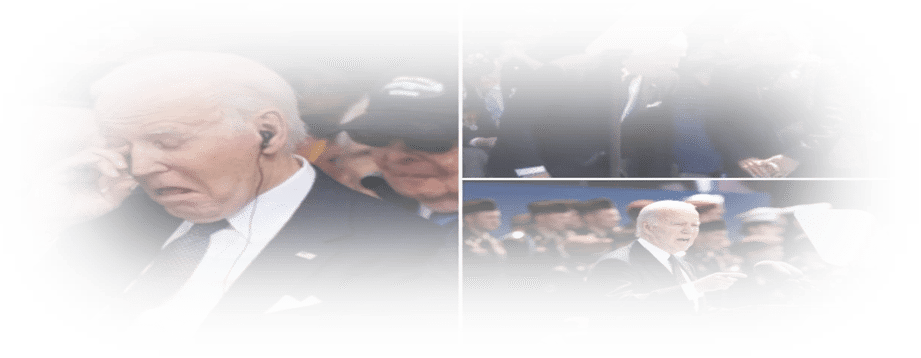
In the meantime, Hillary Clinton and her groupies try to re-seize control of the Democratic Party from a dazed and confused Joe Biden so that she can have one more chance to be the first female president while the Obama camp keeps pulling tangled strings behind the scenes to deflect her aspirations but is itself confused as to whether Michele or “AG” (his real name is Eric but he can’t let us forget he was once the Attorney General) Holder should replace their inept current figurehead, and Donald Trump keeps smirking and holding massive rallies while we ignore that three decent people are seeking to lead us out of the Deep State wilderness: Robert F. Kennedy, Jr., Jill Stein and Cornell West, PhD.

And the rich keep getting richer, the poor, poorer, the economic center keeps shrinking and people keep dying massively in elective and genocidal wars while defense industry dividends soar and the corporate media shouts:

Nothing here to see!  Move along!!!  Turn the page!!! Or else!!!

_______

© Guillermo Calvo Mahé; Manizales, 2024; all rights reserved.  Please feel free to share with appropriate attribution.

Guillermo (“Bill”) Calvo Mahé (a sometime poet) is a writer, political commentator and academic currently residing in the Republic of Colombia (although he has primarily lived in the United States of America of which he is also a citizen). Until 2017 he chaired the political science, government and international relations programs at the Universidad Autónoma de Manizales. Previously, he chaired the social studies and foreign language departments at the Eastern Military Academy in Huntington, New York. He is currently the publisher of the Inannite Review available at Substack.com; an intermittent commentator on radio and television; and, an occasional contributor to diverse periodicals and publications. He has academic degrees in political science (BA, the Citadel, the Military College of South Carolina), law (JD, St. John’s University, School of Law), international legal studies (LL.M, the Graduate Division of the New York University School of Law) and translation and linguistic studies (GCTS, the University of Florida’s Center for Latin American Studies). However, he is also fascinated by mythology, religion, physics, astronomy and mathematics, especially with matters related to quanta, cosmology and cosmogony. He can be contacted at guillermo.calvo.mahe@gmail.com and much of his writing is available through his blog at https://guillermocalvo.com/.

Recalling Teddy’s Wisdom and Optimism

Great Ones we are grateful” was an expression my younger brother Teddy used to shout to the sky above Venice Beach in California during early mornings and late evenings many decades ago, at a time when his intuition insisted that we were not alone in the universe, and that we had benign mentors watching over us.

Times seemed bad to Teddy back then, back in the seventies and early eighties of the last century during another millennium when the Age of Aquarius was purportedly about to dawn. Of course, now, those times seem like a golden age, at least in comparison to the present. And now, even to Teddy, the Great Ones, if they exist or ever existed, seem as distant from us, and as disinterested in us, as do our own divinities, leaving us abandoned to our own devices, led through illusions and delusions and deceit by the very worst among us.

So while my brother’s optimism and hope were beautiful in their way, they were more than anything a symptom of the reality that we’d lost our way and that we seemed congenitally incapable of finding our way back.

Although back towards what, given our history as a species, seems a depressing thought.

And our path forward, unfortunately, now seems even worse.
_____

© Guillermo Calvo Mahé; Manizales, 2024; all rights reserved.  Please feel free to share with appropriate attribution.

Guillermo (“Bill”) Calvo Mahé (a sometime poet) is a writer, political commentator and academic currently residing in the Republic of Colombia (although he has primarily lived in the United States of America of which he is also a citizen). Until 2017 he chaired the political science, government and international relations programs at the Universidad Autónoma de Manizales. Previously, he chaired the social studies and foreign language departments at the Eastern Military Academy in Huntington, New York. He is currently the publisher of the Inannite Review available at Substack.com; an intermittent commentator on radio and television; and, an occasional contributor to diverse periodicals and publications. He has academic degrees in political science (BA, the Citadel, the Military College of South Carolina), law (JD, St. John’s University, School of Law), international legal studies (LL.M, the Graduate Division of the New York University School of Law) and translation and linguistic studies (GCTS, the University of Florida’s Center for Latin American Studies). However, he is also fascinated by mythology, religion, physics, astronomy and mathematics, especially with matters related to quanta, cosmology and cosmogony. He can be contacted at guillermo.calvo.mahe@gmail.com and much of his writing is available through his blog at https://guillermocalvo.com/.

A Wakeup Call for Black Voters

African Americans were brought in chains to the Americas where for centuries they were forced to serve as slaves and, in a political sense that has not changed. After the purported emancipation of American slaves they’ve permitted themselves to remain in political slavery, first to the Grand Old Party and now, for almost a century, to the party that sought to keep them enslaved, the Democratic Party. In part that’s because American slaves, unlike the slaves in Haiti, did not free themselves. Haiti can hardly be qualified as a success but it’s version of Simon Bolívar and José Francisco de San Martín y Matorras and yes, George Washington, Toussaint Louverture should be an inspiration to all descendants of Africans stolen from their own lands and forced into slavery. Abraham Lincoln should not.

American slaves were emancipated only through a cynical ploy by Abraham Lincoln, a racist who believed African Americans could never coexist with whites and should all be expelled from the Union he loved. A cynical racist who believed that African Americans should never have political rights in the United States of America. American slaves were emancipated, not to enjoy the fruits of freedom and the ability to attain their highest potential, as individuals and as a race, but rather, to preserve the Union and to lower the cost of labor for Northern factory owners thriving as the industrial revolution permitted the evolution of what became known as the “gilded age” in the United States.

Slaves in the United States were emancipated, not because slavery was considered an intolerable evil, but because victory in the Civil War was essential for Northern industrialists to realize their dream of an American Empire. They were emancipated only to dissuade the United Kingdom and France from supporting the Confederacy’s aspirations for independence. In fact, when they were initially purportedly emancipated during the Civil War, they were emancipated only in the Confederacy over which the Union lacked legal jurisdiction but remained enslaved in the Union itself. That seems ironic based on how history has been taught in the United States for the past century but anyone can read Lincoln’s initial inaugural address where he said (and anyone can verify it on Google): “I have no purpose, directly or indirectly, to interfere with the institution of slavery in the States where it exists. I believe I have no lawful right to do so, and I have no inclination to do so.

The fact that Americans of African descent were emancipated by cynical whites by no means implies that there have not been brilliant, ethical and visionary leaders of African descent in the United States, leaders, for example, like Frederick Douglas or Marcus Garvey or Malcolm Little (later known as el-Hajj Malik el-Shabazz and finally as Malcolm X) or Martin Luther King, Jr., leaders who believed that Americans of African descent should break the bonds of political slavery that prevented them from attaining the role in American society to which their numbers and their talents should have entitled them.  Indeed, as of 2019, there were a total of 255 different African American led groups in the United States that avocated for African American political independence. But the old overseer system that controlled African Americans during their days as slaves, the system of treacherous African American overseers who betrayed their brothers and sisters, never ended. It just morphed into a system controlled and funded by people of all races that sees African Americans as a commodity to be controlled and used, especially in the political arena where African Americans can be herded into a monolithic voting bloc that serves its masters rather than its members just as slaves enriched plantation owners while they were maintained at barely subsistence levels. A system run by modern overseers like Barack Obama and Kamala Harris and Hakeem Sekou Jeffries and Charles Diggs and Charley Rangel and Kweisi Mfume and Shirley Chisholm and Louis Stokes and William L. Clay. Heroes to African Americans because some among them participated in apparently successful battles for desegregation and civil rights but whose principal loyalties were and are to the white led, power mad, ill-named Democratic Party.

The Democratic Party is a strange amalgam of disenfranchised minorities and fringe groups without common bonds other than their deluded acquiescence in their own continuous betrayal, especially since the ascension of the Clintons to political power in 1992. The party’s principal strategy is the use of polarization to goad their betrayed supporters to maintain them in power so that the party can, in turn, serve its real masters: the billionaire class, Wall Street, trial lawyers, but most of all, the military industrial complex. It seems amazing, especially with reference to African Americans, how successful condescending platitudes, backslapping and utter hypocrisy have been in keeping their voters in line even when, as in case of the Clintons, they are devastatingly betrayed. Witness the Clintons (two for the price of one) deformations of the criminal justice and welfare systems that devastated the African American community. But that’s exactly what overseers are for. What they’ve always been for.

The reality is that Black Power is an inchoate reality, as is the power of each and every component of the incoherent alliance that conforms the modern Democratic Party, but a reality that will only be realized when such groups are emancipated from political slavery and attain their own political power through their own political parties under leaders loyal to their constituencies rather than to the hidden leaders of what has come to be known as the Deep State. Shifting from one component of the political duopoly that has ruled the United States since the Civil War to the other is meaningless. Only a multiparty system embracing real democracy rather than its verisimilitude can bring about a real American Dream, a society where every American citizen can attain his or her own greatest personal potential, for their own benefit, and where overseers are consigned to the Hell they deserve.

Of course, the United States constitutional system at all levels, as implemented by legislation, regulations, rules, ordinances, decree and judicial decisions, poses a huge impediment to political emancipation and democracy. It was designed by slaveholders precisely for such purpose, with the seductive illusions of democracy, liberty and opportunity for all held out like a carrot, but the carrot has always been a mere mirage and only the stick has been real.

It’s not as though African American political parties don’t exist. Cornell West, PhD, a brilliant American philosopher of African descent is running for president during this electoral cycle, although the Democratic Party is doing all it can to keep him off the ballot in November, and the following are an illustrative listing of current African American political parties in the United States: the African People’s Socialist Party, the All-African People’s Revolutionary Party, the Black Hammer Party, the Black Panther Party, the Black Riders Liberation Party, the Freedom Now Party, the Harold Washington Party, the New Afrikan Black Panther Party, the New Black Panther Party, the Progressive Democratic Party, the Revolutionary Action Movement, the Revolutionary Black Panther Party, the Umoja Party and the United Citizens Party. However, they are singularly unsuccessful because the overseers appointed by the Democratic Party (and its allies in the corporate media) keep them virtually unknown.

African American voters bear a terrible stigma as a result of the homogeneous manner in which a majority have voted over the decades. They tend to be the balance of power in American politics and have been so since they were formally granted the rights of citizens pursuant to the thirteenth fourteenth and fifteen amendments to the United States Constitution following the Civil War. In reality, although they’ve derived few tangible benefits as a result of their political subservience, they’ve been responsible for the election of the administrations responsible for World War II, the Korean War, the Vietnam War, the wars on Serbia and Kosovo, the destruction of Libya (Africa’s most economically successful state), the promotion of civil war in Syria, the Ukrainian conflict, and, for Israeli genocide, ethnic cleansing and Apartheid in Palestine.  Those are intolerable moral burdens for a people to bear. For any people. But especially for a people who have been so utterly abused for over half a millennium.

What Americans of African descent really need if real freedom and real independence and real emancipation and real personal realization are their goals, rather than fourth class illusory citizenship, is their very own “Toussaint Louverture”.

If you’re an American of African descent and don’t know who he is, look him up. 

You may be glad you did.

______

© Guillermo Calvo Mahé; Manizales, 2024; all rights reserved.  Please feel free to share with appropriate attribution.

Guillermo (“Bill”) Calvo Mahé (a sometime poet) is a writer, political commentator and academic currently residing in the Republic of Colombia (although he has primarily lived in the United States of America of which he is also a citizen). Until 2017 he chaired the political science, government and international relations programs at the Universidad Autónoma de Manizales. Previously, he chaired the social studies and foreign language departments at the Eastern Military Academy in Huntington, New York. He is currently the publisher of the Inannite Review available at Substack.com; an intermittent commentator on radio and television; and, an occasional contributor to diverse periodicals and publications. He has academic degrees in political science (BA, the Citadel, the Military College of South Carolina), law (JD, St. John’s University, School of Law), international legal studies (LL.M, the Graduate Division of the New York University School of Law) and translation and linguistic studies (GCTS, the University of Florida’s Center for Latin American Studies). However, he is also fascinated by mythology, religion, physics, astronomy and mathematics, especially with matters related to quanta, cosmology and cosmogony. He can be contacted at guillermo.calvo.mahe@gmail.com and much of his writing is available through his blog at https://guillermocalvo.com/.

Humans: The Aberrant Species

Of all the species that share our planet, humans may well be the most aberrant. Aberrant in the willful rejection of nature’s guideposts. In part that’s because we’ve developed ethical and moral imperatives at odds with nature’s survival and improvement mechanisms. Thus, rather than discard the weak as inefficient, we protect and cherish them, at least on some level. Rather than propagation through biological natural selection so that the human race is constantly physically improving, our breeding selection criteria have become largely incoherent. No other life form that we know of does that on a consistent basis. We have counterintuitive dominant emotional motivational instincts such as love and mercy which lead us to react in manners different from other biological variants.

On the other hand, no other life form is as compulsively selfish and greedy as are humans who seem to have developed a manic addiction to accumulation, thus the majority of humans are deprived so that a very few can, not only gorge themselves, but hoard even what they cannot ever use. Mere survival has become inadequate to quench our thirst for things and power. We are perhaps the only species that values individualism above the collective good and we have moved from instinctively acting to assure our survival as a species and from survival of our diverse personal biological lines towards immediate gratification of whims. In that light, we are the only species that places a “moral” value on the ability to terminate the gestative life of healthy progeny. However, like many species, we have ingrained territorial instincts that make us as aggressive as any other species in the waging of war, something we do from tiny individual battles through battles between huge groups of states seeking hegemony.

What accounts for such anomalous tendencies?

I posit that it may involve a phenomenon described by atheist advocate Richard Dawkins as “memes” and, in operative combinations, as “memeplexes”.  Memes are akin to biological “genes”. Genes are the primary blueprints and building blocks for life based on the information they carry, perpetuate and share and through which they provide other genes and enzymes, etc., with orders that are usually carried out. When they are not, mutations occur with mutation also being an evolutionary tool seeking, through trial and error, to accomplish biological improvements. Memes perform similar functions but in a less direct biological context and, apparently, without an exterior guiding principal. They are the most basic units serving as a carriers of non-biological information.  While combinations of genes result in biological lifeforms ranging from amoeba to humans, combinations of memes form cultural quasi-life forms such as belief systems, philosophies, religions, nations, perhaps even history, etc., all of which share common elements associated with life forms such as birth, evolution, growth, instincts towards self-preservation, mutation, propagation, self-defense and aggression.

What seems to have occurred is that memeplexes have mutated into nature’s antagonists, into opponents of nature’s tendencies within us and, currently, memes and memeplexes seem to have proven dominant over genes, perhaps even reprograming genes and complexes of genes. In a fascinating albeit disturbing manner, memes and memeplexes use the human brain as their primary operational echanisms, both on an individual basis and collectively. In essence, memes hijack our brains and direct, or at least significantly impact our conduct through manipulation of our emotional reactions including our disposition and predisposition towards accepting things as accurate and true notwithstanding contrary physical and biological realities. Thus memes have converted truth from an absolute to a relative concept. They operate as a cancer infecting reality.

As we enter the age of what is termed “artificial intelligence”, really a complex series of programmed reactions used for both evaluative purposes and as mechanisms to impact our responses to diverse stimula, memeplexes become more and more controlling over the “rules” established through trial and error by evolutive nature and we become less and less a compound complex part of nature’s scheme seeking instead to bend nature to our memetic will.

If the religious concept of an antichrist or malevolent satanic figure applied to nature, then it seems reasonable to at least hypothesize that such “force” would be memetic based. Memes first conquered humans and then, using humans, memes have evolved as the antithesis to nature.

One wonders if a synthesis between nature and the bizarrely cancerous virtual world evolved through memes is possible, and if so, what it would be like.

It seems fascinating that Richard Dawkins, a bitter rival of anything associated with religion, was so prominent in sensing the basis for the subversion of nature.
_____

© Guillermo Calvo Mahé; Manizales, 2024; all rights reserved.  Please feel free to share with appropriate attribution.

Guillermo (“Bill”) Calvo Mahé (a sometime poet) is a writer, political commentator and academic currently residing in the Republic of Colombia (although he has primarily lived in the United States of America of which he is also a citizen). Until 2017 he chaired the political science, government and international relations programs at the Universidad Autónoma de Manizales. Previously, he chaired the social studies and foreign language departments at the Eastern Military Academy in Huntington, New York. He is currently the publisher of the Inannite Review available at Substack.com; an intermittent commentator on radio and television; and, an occasional contributor to diverse periodicals and publications. He has academic degrees in political science (BA, the Citadel, the Military College of South Carolina), law (JD, St. John’s University, School of Law), international legal studies (LL.M, the Graduate Division of the New York University School of Law) and translation and linguistic studies (GCTS, the University of Florida’s Center for Latin American Studies). However, he is also fascinated by mythology, religion, physics, astronomy and mathematics, especially with matters related to quanta, cosmology and cosmogony. He can be contacted at guillermo.calvo.mahe@gmail.com and much of his writing is available through his blog at https://guillermocalvo.com/.

Porque Colombia ha requerido un nuevo Constituyente desde el 1991

Como ocurre en muchos otros países, en Colombia, al parecer, adoramos a nuestra Constitución.  “Adoramos” es la palabra perfecta por que la tratamos como si fuera una reliquia sagrada no obstante que en casi todas sus metas, posiblemente en todas, ha sido un fracaso.  La “adoramos” pero en poco la respetamos y en menos la cumplimos.  Eso se ha notado en diversas ocasiones por la derecha política y también por la izquierda.  Pero el rechazo a su modificación, una modificación seria, ha sido inmenso.  ¿Y, por qué?

Pues en parte, la realidad es que una reforma eficiente de nuestra Constitución actual tendría que ser tan extensa que resultaría en su remplazo.  Nuestra Constitución está llena de palabras lindas y conceptos hermosos, tantos que es la segunda más larga del mundo.  Pero entre las lindas palabras y los hermosos conceptos están las cláusulas que permiten evadir todas sus promesas.  Un laberinto de requisitos técnicos incumplibles.  Sus promesas han sido ignoradas porque su implementación requiere colaboración política en el Congreso y requiere un Ministerio Publico honesto y eficiente, algo que, por la manera en el cual sus miembros son escogidos, ha resultado imposible.

Para evaluar una constitución, cualquiera constitución, se tiene que medir que tanto se ha logrado cumplir con sus metas.  Hagamos el ejercicio: ¿Se estableció la paz?  ¿Se eliminó la corrupción?  ¿Se logró la equidad?  ¿Se logró la igualdad?  ¿Se logró la justicia?  ¿Se ha eliminó la impunidad?  ¿Se ha disminuido la polarización?  ¿Se ha cumplido con los derechos prometidos?  ¿Se ha logrado la democracia? 

Si somos honestos y objetivos, creo que en ninguno de estos casos fundamentales la respuesta sea sí.  Entonces, ¿para qué sirve esta Constitución?  Bonita si es.  Pero es disfuncional.  ¿Y, por qué?

Pues, en gran parte no es justo decir que no sirve.  Si les sirve a algunos.  A los corruptos, a los ladrones.  A los que tienen el dinero para evadir la justicia.  Pero más que todo, les sirve a los partidos políticos.  Los reales sujetos de la Constitución colombiana del 1991 no son los ciudadanos, ellos son meros objetos.  Los sujetos son los partidos políticos y por ende, los que se benefician de la Constitución son los que controlan a esos partidos. 

Para entender lo anterior se requiere entender la diferencia entre un sujeto y un objeto.  Un objeto es una persona jurídica o natural o institucional sobre cual el poder del estado es ejercido.  Eso incluyo humanos, animales y hasta objetos inanimados, como carros, mesas, comida, etc.  Un sujeto es un objeto que tiene derechos de manejo sobre el poder político que lo impacta, pero derecho y poder real, no meras ilusiones.

En Colombia, los legisladores en el Congreso tienen que hacer lo que dice su partido o pierden sus curules.  No elegimos individuos al Congreso sino partidos.  Lo único que podemos hacer, si las listas electorales son abiertas, es cambiar el orden en el cual los candidatos podrían recibir sus curules.  Nada más.  Por lo tanto, no podemos elegir a quienes nos parecen los mejores y los más honestos líderes políticos para nuestro congreso, o para nuestras asambleas departamentales, o para nuestros concejos municipales.  Eso no es democracia.

En Colombia, planes estratégicos parecen imposibles lograr porque un plan estratégico requiere más de un periodo electoral para completarse, sea de derecha o de izquierda.  Tenemos la absurda noción de, no solo prohibir la reelección, sino también prohibir que una persona que ha ocupado un cargo político ejecutivo, o tiene familiares que han ejercido una función ejecutiva, tenga que esperar un año para superar esas limitaciones que actualmente son inhabilitantes.  Por lo tanto, lo normal es que ningún líder político que busca ascender en sus cargos pueda cumplir el periodo total para el cual fue escogido.  O renuncia un año antes del fin de su periodo legal, o, adiós a una nueva elección.  ¡Qué estupidez!  Esas limitaciones no existen en ningún país exitoso del mundo.

Lo que Colombia requiere, lo que cualquier país requiere, es una constitución decente y eficiente sin promesas incumplibles.  Una constitución escrita en manera comprensible por la ciudadanía.  Y, una sin aspectos plenamente legislativos que no tienen por qué estar incluidos en una obra tan permanente como debe ser constitución.  Una constitución real es algo extraordinario que solo debe tener cuatro funciones: 

  • Primero, crear y delimitar las instituciones estatales.  Es decir, las unidades geográficas y las instituciones gubernamentales como son la legislatura, el ejecutivo, la rama judicial, los procesos electorales, y los medios de control político, y, ademas, las instituciones responsables por la estricta interpretación constitucional y por resolver conflictos entre las diversas ramas del estado.
  • Segundo, toda constitución es inherentemente antidemocrática buscando impedir no solo el poder de la mayoría sino el poder de futuras generaciones.  Todo supuesto derecho fundamental o humano es antidemocrático en ese aspecto.  Pero antidemocrático no implica algo negativo o abusivo, ese aspecto es esencial para proteger la libertad, la autonomía personal y al bienestar y a la independencia de las minorías.
  • El tercer aspecto plenamente constitucional es el de establecer prioridades con respecto al ejercicio del poder, más que todo en temas presupuestales.  La realidad de mucho de lo que se define como “derechos fundamentales o humanos” nada tiene que ver con el concepto de un “derecho”.  Un derecho es inherente, nadie lo da, es eterno, no se puede condicionar.  Entonces, por supuesto, hoy en día, ningún derecho existe ya que ninguno cumple con esos requisitos pero si existen o pueden existir prioridades.  No podemos garantizar la paz, como promete nuestra Constitución, ni un medio ambiente sano, ni la educación, ni la salud, ni viviendas dignas, etc., pero una constitución si podría exigir que los primeros gastos estatales trataran con una función específica, luego, si hay suficiente dinero restante, con otra, y lo mismo hasta que se agota el dinero.  Entonces, en vez de derechos incumplidos, tendríamos prioridades incondicionales delimitadas constitucionalmente.
  • El cuarto y último aspecto trata con su permanencia.  Enmendarla debe ser, no solo difícil, sino que debe requerir de la misma formalidad con la cual se adoptó, y en ambos casos, eso debe, al final, incluir la aprobación directa del primer constituyente, del pueblo, o por plebiscito o por referendo (dependiendo en si hay más que una opción presentada).  Y debe haber proceso dentro de la misma constitución no solo para su enmienda, sino para su remplazo total y eso, por medios no solamente convocados por el gobierno, o por una rama del gobierno, sino por iniciativa popular suficientemente amplia par no resultar en propuestas poco serias o poco apoyadas por el pueblo.

Esos cuatro aspectos y ningunos más tratan con temas que se deben incluir en nuestra carta magna, en nuestra carta política, en nuestra constitución.  Lo que se incluye en una constitución se tiene que cumplir.  Si no se cumple, entonces ahí no debía estar y si esta, se debe de eliminar.

Entonces, si vamos a superar todos los problemas antes mencionados: ¿que debe abordar una constitución decente y eficiente para Colombia?  Pues hay modelos que debíamos investigar, pero no copiar.  Lo que funciona en otras partes no necesariamente funcionaria aquí.  Llegamos a donde estamos copiando conceptos constitucionales desde esa potencia del norte que tanto daño nos ha hecho, y copiados en forma incoherentemente descontextualizada ya que Colombia no es una federación y no aspira a ser un imperio. 

Una república que si me parece que tiene un modelo admirable que nos podría, en parte, funcionar, es la de la República Irlandés.  Ellos gozan de un modelo parlamentario pero no idéntico al inglés.  El modelo de gobierno parlamentario es mucho más democrático que el presidencial y mucho más eficiente.  Eso porque tanto la cámara baja del parlamento, la más importante aunque es denominada los comunes, y el ejecutivo son internamente ligados y cuando no están de acuerdo, en vez de congelarse la gobernación, hay nuevas elecciones para la cámara baja (y, por ende, el ejecutivo) y es el pueblo el que resuelve la crisis.  El parlamento escoge el primer ministro, quien es el jefe de gobierno pero no el jefe de estado, y el parlamento y el primer ministro, conjuntamente, escogen los jefes de los diversos ministerios.  La cámara alta, el senado, es muy innovadora ya que no es democrática, como es la cámara de los comunes, sino pluralista.  Sus miembros no son elegidos popularmente sino por diferentes segmentos de la sociedad.  Algunos son nombrados por el presidente (el jefe de estado, diferente siempre que el primer ministro), otros son elegidos por los sindicatos, otros por las universidades, otros por las cámaras de comercio, etc.  Y el presidente es elegido popularmente siendo la única persona elegida a nivel nacional.  El presidente es encargado más que todo con control político, con las fuerzas armadas y con temas diplomáticos.  Eso permite gobernanza por un tiempo indeterminado, un tiempo que podría ser o muy largo o muy corto, dependiendo en la voluntad popular.  El periodo electoral constitucional es de cinco años, pero no hay límites sobre re-elección.  Al mismo tiempo, podría ser más corto si el primer ministro pierde la confianza del parlamento o si el primer ministro, queriendo aumentar su respaldo en el parlamento, disuelve al parlamento y convoca elecciones tempranas. 

Quizás el aspecto que más admiro del sistema estatal de la Republica Irlandesa es el electoral.  Como en Colombia, las elecciones a los comunes se basan en listas, pero las listas no se conforman por los partidos sino por los electores en forma individual.  Por ejemplo, en el sistema colombiano actual, el Departamento de Caldas es representado en la Cámara de Representantes por cinco personas.  Pero los electores solo pueden votar por una y, al votar por esa, su partido y todos sus otros candidatos reciben el apoyo.  En la Republica Irlandesa, cada ciudadano tendría cinco votos, y los colocaría en orden de prioridad sin consideración de diferencias partidistas, creando así su propia lista.  Así se mantiene el concepto de proporcionalidad entre los diversos grupos de candidatos, sean por partido o independientes, pero no se obliga a que el voto sea limitado a un partido.  Ademas, una vez elegidos, los parlamentarios votan su conciencia y no pueden ser destituidos por diferencias entre ellos y sus partidos.

Entonces, tanto la derecha representada por los seguidores del expresidente Álvaro Uribe Vélez y la izquierda representada por el actual presidente de Colombia, Gustavo Francisco Petro Urrego, en parte, tenían la razon cuando decían que Colombia necesitaba un nuevo constituyente constitucional, pero ambos estaban equivocados cuando deseaban limitar los temas constitucionales a los cuales se limitaría esa convocatoria.  Necesitamos iniciar de nuevo porque los cambios esenciales para lograr un país democrático, libertario, equitativo, justo y libre de corrupción e impunidad necesitan un sistema muy diferente al que tenemos y al que siempre hemos tenido.  Un sistema en el cual son los individuos y no los partidos que gobiernan.  Pero por esa razon, los que ahora dominan el poder, tanto los de derecha como los de centro, izquierda y los meramente pragmáticos están totalmente en desacuerdo con un nuevo constituyente ilimitado.  Para ellos, su peor pesadilla es la devolución del poder al pueblo, en especial, si no logran dominar sus decisiones electorales por medio del temor, por medio de las mentiras, por medio de la manipulación o por medio de la corrupción.

Nuestra Constitución actual no es más que un rompecabezas conformado de montones de acuerdos políticos entre personas que buscaron beneficiarse personalmente y beneficiar a sus diversas agrupaciones politicoeconómicas y sociales.  Un rompecabezas incoherente, uno lleno de contradicciones irresolubles.  Por eso ha resultado imposible cumplir con sus numerosas hermosas promesas.  Un cambio de vestido o un poquito de maquillaje no serán adecuados para reformarla.

Una Colombia ideal, una Colombia utópica en temas de su gobernanza es posible, una Colombia mucho más eficiente y realmente honesta.  Una Colombia mucho más equitativa y justa.  Y eso es, no solo posible, sino probable.  Pero necesitamos desamarrarnos de los enlaces maquiavélicos con los cuales nuestros representantes nos enlazaron en 1991.

_______

© Guillermo Calvo Mahé; Manizales, 2024; todos derechos reservados.  Permiso para compartir con atribución.

Guillermo Calvo Mahé es escritor, comentarista, analista político y académico residente en la República de Colombia. Aspira ser poeta y a veces se lo cree.  Hasta el 2017 coordinaba los programas de Ciencia Política, Gobierno y Relaciones Internacionales de la Universidad Autónoma de Manizales y, entre las asignaturas que dictaba con relevancia a este artículo estaban Teoría Constitucional, Gobierno y sistemas políticos comparados, y, Derechos Humanos.  En la actualidad, participa en entrevistas radiales y televisadas, foros, seminarios y congresos cívicos y edita y publica la revista virtual The Inannite Review disponible en Substack.com/.  Tiene títulos académicos en ciencias políticas (del Citadel, la universidad militar de la Carolina del Sur), derecho (de la St. John’s University en la ciudad de Nueva York), estudios jurídicos internacionales (de la facultad posgrado de derecho de la New York University) y estudios posgrado de lingüística y traducción (del Centro de Estudios Latinoamericanos de la Universidad de la Florida).  Sin embargo, también es fascinado por la mitología, la religión, la física, la astronomía y las matemáticas, especialmente en lo relacionado con lo cuántico y la cosmogonía.  Puede ser contactado en guillermo.calvo.mahe@gmail.com y gran parte de su escritura está disponible a través de su blog en https://guillermocalvo.com/.