The Sad Saga of Adam Everyman: a confession of sorts

As he aged he increasingly came to acknowledge the harm he had caused others, either intentionally or carelessly or unavoidably, and he came to profoundly regret it.  He had too often been callous, albeit with a warm and sort of sincere smile, believing that he really sought to govern his life with good intentions, but his failures to do so were legion. 

He hated hypocrisy but that was mainly in others, his own example in that regard having been poor, although he tended to gloss over it in his introspections. 

He was a social and civic critic, and his related observations and speculations and analyses tended to be highly idealistic, and he was well thought of, except, perhaps, by those towards whom he had behaved inappropriately but, instead of seeking their forgiveness after admitting his faults, he sought forgiveness through penance of sorts, directed towards a divinity in which he did not really believe but which he constantly sought to find and understand. 

Faults in others were easy to identify and to criticize but in himself, they had for too long been artfully hidden, especially from himself. 

He had once reflected that if good and evil were objective rather than subjective, and that if an afterlife existed where punishments and rewards were bestowed based on merit, the only sure way to attain an adequate state of grace was to both forgive all the wrongs he had suffered and to attain forgiveness for the wrongs he had committed from those he had harmed.  Given his inability to do either, his only real hope rested in the unlikely possibility of immortality.
_____

© Guillermo Calvo Mahé; Manizales, 2025; all rights reserved.  Please feel free to share with appropriate attribution.

Guillermo (“Bill”) Calvo Mahé (a sometime poet) is a writer, political commentator and academic currently residing in the Republic of Colombia (although he has primarily lived in the United States of America of which he is also a citizen). Until 2017 he chaired the political science, government and international relations programs at the Universidad Autónoma de Manizales. Previously, he chaired the social studies and foreign language departments at the Eastern Military Academy in Huntington, New York. He is currently the publisher of the Inannite Review available at Substack.com; an intermittent commentator on radio and television; and, an occasional contributor to diverse periodicals and publications. He has academic degrees in political science (BA, The Citadel, The Military College of South Carolina), law (JD, St. John’s University, School of Law), international legal studies (LL.M, the Graduate Division of the New York University School of Law) and translation and linguistic studies (GCTS, the University of Florida’s Center for Latin American Studies). However, he is also fascinated by mythology, religion, physics, astronomy and mathematics, especially with matters related to quanta, cosmology and cosmogony. He can be contacted at guillermo.calvo.mahe@gmail.com and much of his writing is available through his blog at https://guillermocalvo.com/.
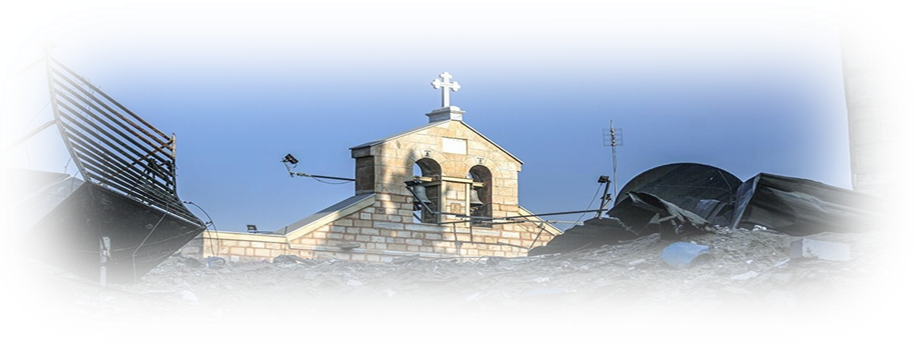
Reflections on an Easter Sunday

While I am admittedly not a believer in the divinity of any being born of a human woman, or perhaps, of any divinity at all, I am not a “non”-believer, acknowledging that anything is possible and that I have yet to discern the truth, though I have searched for it during eight decades so far.  Nonetheless, I have had a lifelong fascination with the Palestinian born in Nazareth whose personal name was probably Yešu and who would perhaps be most non-confrontationally referred to as Yešu of Nazareth, although he was purportedly born in Bethlehem, both Palestinian villages. 

I have read a great deal about him, not only through biblical sources but also the Jewish response to the Christian Gospels, a series of alternative versions collectively referred to as the Toledot Yeshu, and I have written and published a bit on the subject which draws me to it as a means of seeking to understand myself and ourselves and perhaps, even the concept of divinity. 

Today is a confluence of days holy to major branches of Christianity, the Orthodox, the Catholic, the Protestant and others, as well as part of a season sacred to Jews, a somewhat rare confluence, and it is taking place during the Zionist genocide of the Palestinians and the ethnic cleansing of Palestine thus, at least to me, it is a day not for joyous celebration of a resurrection but of sad reflection on human nature, and on how disappointed in us Yešu the Nazarene would be, as hypocrisy and murder and mayhem have become the norm, although it may well be probable that such has always been the case.
_____

© Guillermo Calvo Mahé; Manizales, 2025; all rights reserved.  Please feel free to share with appropriate attribution.

Guillermo (“Bill”) Calvo Mahé (a sometime poet) is a writer, political commentator and academic currently residing in the Republic of Colombia (although he has primarily lived in the United States of America of which he is also a citizen). Until 2017 he chaired the political science, government and international relations programs at the Universidad Autónoma de Manizales. Previously, he chaired the social studies and foreign language departments at the Eastern Military Academy in Huntington, New York. He is currently the publisher of the Inannite Review available at Substack.com; an intermittent commentator on radio and television; and, an occasional contributor to diverse periodicals and publications. He has academic degrees in political science (BA, The Citadel, The Military College of South Carolina), law (JD, St. John’s University, School of Law), international legal studies (LL.M, the Graduate Division of the New York University School of Law) and translation and linguistic studies (GCTS, the University of Florida’s Center for Latin American Studies). However, he is also fascinated by mythology, religion, physics, astronomy and mathematics, especially with matters related to quanta, cosmology and cosmogony. He can be contacted at guillermo.calvo.mahe@gmail.com and much of his writing is available through his blog at https://guillermocalvo.com/.

Anthropomorphic Nihilism

Once upon a time, not a very long time ago nor in a very faraway place, there lived, for a very brief instant in time, a very young title in search of a story.  It had heard of Neil Gaiman’s short story “Forbidden Brides of the Faceless Slaves in the Secret House of Dread Desire” and that had turned out rather well, thus, it found itself inspired, albeit perhaps not quite prepared for success.  The following is what, after not looking all that long or, to be honest, without very much exertion, it created:

The story started with an exclamation bereft of an introduction or of any character development or context, although, to an extent, context sort of followed: 

So what!  Who cares?  What’s the difference anyway?”

In that manner, in a huff, a disputation appeared to end, one between inanimate marble busts of “purported saints” Peter and Paul, sculptures crafted by one of Pablo Diego José Francisco de Paula Juan Nepomuceno Cipriano de la Santísima Trinidad Ruiz Picasso’s lesser known relatives who, for reasons of his or her own, chose to remain anonymous. 

The busts had been stored in a vestibule deep in the heart of the Vatican, a vestibule located within a labyrinth of sorts, not an artfully designed or planned labyrinth but rather, one that had seemingly evolved on its own as discarded tomes and relics and pieces of art accumulated in utterly random order, or rather, in a sort of articulated disorder.  Both saints on whom the busts had been purportedly modeled were reputed, within certain clandestine circles, to have been secret agents planted several millennia ago by Sanhedrin agents (precursors to the current Israeli Mossad) as provocateurs among naïve early followers of a troublesome Nazarene rabbi in order to undermine the early Judaic heretic sect all too quickly spreading like some sort of early virus (although viruses preceded humans by many eons).

For some odd reason, the busts of the purported saints, both of whom found themselves somewhat unexpectedly set in carefully hidden niches, were declaiming in a variant of sorts of modern English, although with blended Brooklyn-Yiddish accents, perhaps understandably given that the event to which we are alluding occurred relatively shortly after a visit by a group of the Vatican janitors and Swiss Guards assigned to the Vatican’s deepest dungeons, or perhaps storerooms; an incognito visit to the tourist filled Bioparco di Roma which was just then hosting a large American tourist group of former Yeshiva students.  One should, however, keep in mind, that the phrase “relatively shortly” may have a relative temporal meaning where the Vatican is involved.

Although, … perhaps the foregoing was just a dream one of the janitors or Swiss Guards was having after a hearty but poorly prepared meal using ingredients perhaps well past their due dates, certainly none of which met with Kosher dietary exigencies.  It’s been known to happen.  Well, not exactly in this fashion, but perhaps, metaphorically …. 

Or perhaps not.

On the other hand ….

No Neil Gaiman here, … unfortunately, he’s regrettably otherwise occupied.
_____

© Guillermo Calvo Mahé; Manizales, 2025; all rights reserved.  Please feel free to share with appropriate attribution.

Guillermo (“Bill”) Calvo Mahé (a sometime poet) is a writer, political commentator and academic currently residing in the Republic of Colombia (although he has primarily lived in the United States of America of which he is also a citizen). Until 2017 he chaired the political science, government and international relations programs at the Universidad Autónoma de Manizales. Previously, he chaired the social studies and foreign language departments at the Eastern Military Academy in Huntington, New York. He is currently the publisher of the Inannite Review available at Substack.com; an intermittent commentator on radio and television; and, an occasional contributor to diverse periodicals and publications. He has academic degrees in political science (BA, The Citadel, The Military College of South Carolina), law (JD, St. John’s University, School of Law), international legal studies (LL.M, the Graduate Division of the New York University School of Law) and translation and linguistic studies (GCTS, the University of Florida’s Center for Latin American Studies). However, he is also fascinated by mythology, religion, physics, astronomy and mathematics, especially with matters related to quanta, cosmology and cosmogony. He can be contacted at guillermo.calvo.mahe@gmail.com and much of his writing is available through his blog at https://guillermocalvo.com/.