If Only “the Times Were Really A’ Changing”

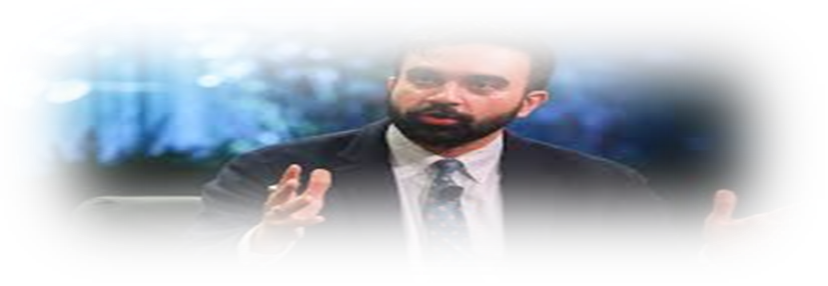
On June 28, 2025, Christian Paz published an article on Vox.com entitled “The Democratic Party is ripe for a takeover”.  Apparently, the primary victory of Zohran Mamdani is the catalyst, or the symptom, or something.  Except for the author’s apparent Trump derangement syndrome in which the Democratic Party’s sole goal should be to confront Mr. Trump, a situation historically reminiscent of the old Whig party’s focus on opposing Andrew Jackson, the article posits interesting possibilities, although possibilities in which I don’t believe or rather, possibilities I don’t believe are likely.

It is a positive that at least in the city of New York so many voters are apparently rejecting the calcified and corrupt leadership of the Democratic Party, a leadership without real ideals other than the attainment and maintenance of power in order to syphon off the country’s wealth to fund perpetual wars in a quest for hegemony, albeit under the control of the American Israel Public Affairs Committee (AIPAC).  But the Democratic Party is so tainted by historical sins and so cancer ridden with corruption that a Tea Party-like revolution ought not to save it, even if it could.  The dust bins of history have been all too empty for too much time.  Rather, as an apparent majority of the United States electorate frequently acknowledges (although it never does anything about it), what real liberals and real progressives and real leftists trapped in the quicksand that characterizes the Democratic Party need is a new political party of their own, one independent from AIPAC, the Deep State, the billionaire class and the forever war quest for hegemony that characterizes both the Democratic Party and most of the GOP.  A political party that really prioritizes the needs and aspirations of its members, the reality being that the United States political system is a factionalist collective rather than a grouping of altruistic political movements concerned with the common good and the general welfare.

The current Democratic Party, at least since 1992, has been reactive rather than proactive, with faux political goals and slogans echoed by a captive corporate press successfully enough to delude the more noble elements of its membership.  It went from GOP lite in the Clinton era, to a political hodgepodge during the Obama era more thoroughly controlled by the Deep State (an informal coalition comprised of unelected bureaucrats and judges) than is the GOP, amazing as that may seem.  And today, its principle goal is to oppose Donald Trump, no matter what he does, unless it aligns with AIPAC goals, but then again, AIPAC virtually owns both the Democratic and Republican parties.  And if opposition to Mr. Trump by any means, legal or not, has become the Democratic Party’s fixation, it is failing in that goal.  Failing dismally, and floundering.

That echoes what happened to the Whigs with respect to their hatred of Andrew Jackson during the mid-nineteenth century, when irate voters with specifically defined goals and ideals abandoned both the Whigs and the Democrats to found the Republican Party, although it too was eventually taken over by the values it was created to reject. 

The GOP too, like the Andrew Jackson controlled Democratic Party of the same mid-nineteenth century, has shifted its axis and threatens to splinter into various segments: one deemed traditionalist which tends to echo the current Democratic Party’s devotion to the Deep State and opposition to Mr. Trump;  a wing that seems to worship President Trump the way Democrats once worshipped President Jackson; and a libertarian wing that rejects forever wars, foreign intervention and the abandonment of the liberty purportedly guaranteed by the Bill of Rights.  That libertarian wing would also do well to strike out on its own as an independent political party guided by real ideals and real goals, while the traditionalist wing should just meld with the current leadership of the Democratic Party, a leadership seemingly in conflict with a substantial number of younger Democrats who, according to Mr. Paz (cool name, it means peace in Spanish) seem to be rebelling.

The electorate in general appears to be angry and dissatisfied but has been manipulated and confused by false news and the false narrative that masquerades as history so that its ability to make electoral decisions has become nonexistent.  We have been led to confuse the essential political concepts of democracy, liberty and pluralism because confusing them was essential for the small elite who rule us to attain and maintain political and economic power, not quite bleeding us dry, rather, like intelligent vampires, they understand that their victims, those who provide their sustenance, must be maintained at least barely alive.  Barely alive but without realizing their condition or who is to blame, being led to believe that they actually have a voice in their own affairs through a system that sort of smells like a meld of the adversative concepts of democracy, liberty and pluralism, a useful illusion.  A system that argues that peace can only be attained through perpetual war and prosperity through the diversion of taxpayers assets to defense contractors and their cronies.  That Christian values are now premised on acceptance of genocide and ethnic cleansing as well as capital punishment.  Somewhere, George Orwell weeps.

Democracy is the rule of a majority (more than 50%), not a plurality, and it does not guarantee that decisions will be correct, or just or equitable.  Liberty is a diametrically opposed concept that insists that no matter what a majority decides, or even what everybody else decides, every individual has sovereign and autonomous inherent rights that cannot be curtailed.  And pluralism?  That too is an antidemocratic concept but one involving the right of collectives to be different and to have a say in their affairs notwithstanding majoritarian opinions.  All three of those contradictory concepts are desirable so constitutions, in part, or at least in theory, exist to reconcile and prioritize them into some sort of workable political and legal system.  Unfortunately, like the quest for a unified field theory in physics, it has always been a utopian ideal distorted and manipulated by elites, except that physicists by and large tend to acknowledge that their goal has not been attained, while most of the electorate everywhere in our planet believes that the particular political systems through which they are ruled are really theirs and that their leaders have their best interests at heart, after all, in most countries, it was purportedly that electorate who selected them.

That is certainly true in the United States and has been true for most of its history.  For most of its history, the United States political system has seemed like a duopoly (a two party dictatorship) but rather, has always been a vehicle for the concentration of wealth and power by an elite few, today, not even an elite few in the United States but sixteen families that effectively rule the world and are responsible for almost all of the world’s poverty and for all of the world’s war and for all of the world’s disparity.

With reference to the surprise victory of Assemblyman Zohran Mamdani in the Democratic Party’s recent New York City mayoral primary, many Democratic Party leaders as well as most people who identify with the GOP are suffering AIPAC sponsored apoplexy because Mr. Mamdani is a Muslim with parental roots in Africa and opposes Zionism and genocide and ethnic cleansing and champions the working class and the downtrodden masses described in Emma Lazarus’ poem inscribed on the Statue of Liberty and thus, he must be a godless communist, although he identifies as a democratic socialist as did Albert Einstein and Martin Luther King, Jr., and Nelson Mandela, and as does Noam Chomsky today.  And the opposition of the moneyed classes to Mr. Mamdani led by AIPAC may well result in his defeat in the general election, whether by the opponents he just defeated running as independents or even by a Republican if the GOP proves Machiavellian enough to select a moderate candidate.  And perhaps the politics as usual crowd in both the Democratic Party and the GOP who Mr. Mamdani’s success has mortified have “nothing to fear but fear itself”.  But it seems to me a positive sign that in the city that boasts the largest Jewish population of any city in the world, a significant portion of that religious group (it’s not really an ethnicity and certainly not a race) may have taken up the antizionist slogan “not in our names” and rejected the distortion of Judaism marketed by AIPAC and its Israeli masters and voted their consciences and in favor of real classical Judaic values and traditions which, perhaps ironically, it is Mr. Mamdani who represents.  Or perhaps it’s not ironic.  The reality is that no religion is closer to real classical Judaism in all respects (except perhaps in the respect that it renders to that certain Jewish Nazarene), than is Islam.

Because of the foregoing, according to Mr. Paz and other optimists, it sort of smells a bit like the “times may be a’ changing”, at least in the desperate Democratic Party, but I wouldn’t hold my breath.
_____

© Guillermo Calvo Mahé; Manizales, 2025; all rights reserved.  Please feel free to share with appropriate attribution.

Guillermo (“Bill”) Calvo Mahé (a sometime poet) is a writer, political commentator and academic currently residing in the Republic of Colombia (although he has primarily lived in the United States of America of which he is also a citizen). Until 2017 he chaired the political science, government and international relations programs at the Universidad Autónoma de Manizales. Previously, he chaired the social studies and foreign language departments at the Eastern Military Academy in Huntington, New York. He is currently the publisher of the Inannite Review available at Substack.com; an intermittent commentator on radio and television; and, an occasional contributor to diverse periodicals and publications. He has academic degrees in political science (BA, The Citadel, The Military College of South Carolina), law (JD, St. John’s University, School of Law), international legal studies (LL.M, the Graduate Division of the New York University School of Law) and translation and linguistic studies (GCTS, the University of Florida’s Center for Latin American Studies). However, he is also fascinated by mythology, religion, physics, astronomy and mathematics, especially with matters related to quanta, cosmology and cosmogony. He can be contacted at guillermo.calvo.mahe@gmail.com and much of his writing is available through his blog at https://guillermocalvo.com/.
Reflection on Fathers’ Day, 2025

Fathers’ day in 2025 falls on the Ides of June, a month containing thirty days thus set squarely at the end of the first half of the month.  Interesting.  Why though, I don’t know.  The world seemingly finds itself on the brink of World War III as Israel, backed by the United States, the United Kingdom, Germany and France continues its rampage in the Middle East, engaging in genocide and ethnic cleansing in Palestine while it invades and occupies Syria and Lebanon and now, has launched an all-out, Pearl Harbor style, war against Iran.  But it’s still “fathers’ day”, somewhat of a commercial disappointment but meaningful in its own way.

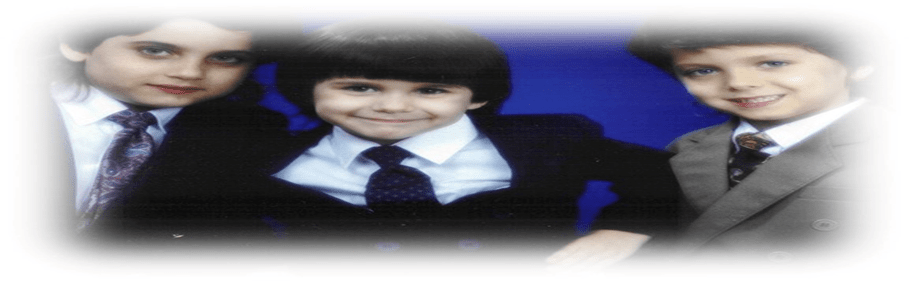
On Fathers’ Day I frequently reflect about fathers who’ve lost access to their children or who’ve become estranged from their children, sometimes deservedly so but too often due to a complex mix of reasons over which neither they nor their children had control.  Of course, this year, thanks to Israel, there are a great many more fathers who’ve lost their children, permanently, and children who have lost their fathers (and their mothers), also permanently, but that has been the norm in Palestine since the Zionist invasion.  Thus, for me, it’s not really a day for celebration but rather, for mourning.  And for reflection and introspection.  I certainly want to reflect a bit on fatherhood, it may be the last chance we get.  But this year, I want to focus on my sons, Billy and Alex, who are now fathers, and on my third son, Edward, who has deferred the experience, as well as to reflect on my own parents, and my own related experiences.

My son Billy’s fatherhood represents the idyllic spectrum in an idyllic setting with an idyllic wife and two idyllic children: Rosario, the eldest (by quite a bit), and Cameron, the new kid on the block.  The positive family television series of the 1950s and early 1960s (e.g., Father Knows Best, the Danny Thomas Show, My Three Sons, Leave it to Beaver, etc.) have nothing on Billy’s actual life.  And I fervently hope it stays that way.  He is married to the only woman who he has ever dated, graduated from the Citadel, the Military College of South Carolina, as I did, and has been employed by the same financial services firm for a decade.  Stability in a positive setting is his hallmark.

Alex’s experience with fatherhood has been more complicated.  Alex’s experiences in everything have been more complicated.  He has lived a full life even though he’s only thirty-seven.  Some of it has been harsh and unfair, but he’s always turned his negative experiences into assets and is not a published author researching and writing about things that have fascinated him since he was a child.  He was an excellent teacher while he lived with me in Colombia, perhaps the most popular English teacher in the City of Manizales where people still ask me how he’s been doing, but he met a coworker who he married, and she was afflicted with the North American dream and talked him into returning to the United States.  She had a baby daughter when they met and Alex quickly became the only father she ever knew.  They immediately bonded and grew to love each other completely.  Alex eventually married Salo’s mother, largely, I believe, because of his love for Salo, and subsequently became the father of his own daughter, Melissa, an absolute delight.  Unfortunately, his world was recently stricken by a bitter divorce where he had to fight with everything he had to retain even shared custody of Melissa.  That is hardly unusual when the North American Dream is involved and the spouse attains United States citizenship, permitting her (or him) to initiate the process of bringing their own families to the United States without having to count on their former spouse.  But divorce, for whatever reason is all too common now although, in my admittedly biased opinion, it was very much undeserved in Alex’s case.  He is a great dad and one of the most empathic people I know.  Many of his friends have told me that they owe their lives to him as he was there for them when they most needed someone.  He has also been there for me in my own darkest hours.  I certainly hope fate will reciprocate that empathy in Alex’s case.  No one deserves it more than he does.  More than any of my other sons, Alex has mirrored my experiences, on the positive side with respect to his vocation as an educator and a writer but on the negative side with an unsuccessful domestic relationship.  Hopefully, in the end, Alex’s experience will turn out as positive as mine has, albeit with less stops along the way.

My youngest son Edward, perhaps impacted by the trauma occasioned as my marriage to his mother fell apart, has avoided the issue altogether.  He has done so by remaining single and has instead dedicated himself to being the best uncle ever.  Edward’s is the safer route and the one that so many people are now taking, avoiding the terrible pain of unsuccessful parenthood but missing out on the indescribable joys that parenthood so often brings.  My aunt Carola followed that path, as does my current sister-in-law, Diana Carolina.  As does my nephew Robert.

With reference to my own experience as a son I frequently think about my own parents, my mother, my father and my stepfather.  I am among the majority who now sport a fragmented family.  I’ve sometimes been critical of them all, although mainly of my father who vanished when I was three, who sort of reappeared, at a distance, when I was fourteen only to quickly vanish again when I was twenty-two, and who then, reappeared for good (but also for ill) when I turned fifty-four.  He was a brilliant, deeply talented but horribly blemished man who left children scattered here and there as one attempt at a family after another failed.  His refusal to acknowledge the verities involved eventually alienated him from all his children, although a few of us nonetheless made sure that despite our abandonment, he was taken care of in his final years.  He had a very different upbringing than I did.  He was raised in a traditional family with a father who was a well-known and respected sculptor and artist as well as a civic activist and he seemed headed for an illustrious career as an innovative aeronautical engineer as well as a journalist.  As a young teen he had already founded and published a newspaper in the Colombian city of San Gil, the “Gazette Juvenil”, and had engineered a prototype jet engine.  But perhaps too soon, he had met my mother, secretly married her and, when their deception was discovered, was given the choice by his parents of abandoning her or being cast from his family.  He chose my mother and was taken in by my grandmother but his dreams had been dashed and he became an accountant instead.  Unfortunately, perhaps, the marriage did not last.  After a manic series of successes and failures and way too many intimate relationships, his life ended several years ago in a small, somewhat primitive adult congregate living facility in Venezuela where he was visited frequently only by my half-sister Ellen.  A sad end to a sad life.

My stepfather, to whom I always referred as “Pop”, at his suggestion, was a very loving father but apparently also deeply flawed, immersed in mysteries from which I was shielded, and involved in occasional instances of violence towards me, although to the best of my knowledge, not towards my siblings or my mother.  He was a felon having been sent to jail in his youth for a botched burglary involving a union scandal.  He’d been tasked with breaking into the home of a New York labor leader to obtain documentation proving that union funds were being misdirected but as a burglar, he was not very successful and had been easily captured.  His future prospects were destroyed in that instant as those who’d sent him on what to him appeared to involve a noble mission all too quickly disavowed him.  When he was eventually released from prison decades later he worked as a short order cook but presented himself to my mother, when they met, as a successful restauranteur.  His family was well off and owned the Metropole Café and Restaurant in New York City as well a large beauty salon on Northern Boulevard in Flushing, but he had no economic interest in either and he was living in Miami Beach anyway.  The foregoing could have been overcome had he not also become addicted to gambling.  He apparently felt that through gambling he’d be able to make up for all the economic opportunities he’d missed while imprisoned.  He neither drank nor consumed narcotics but his gambling seemed all consuming as a result of which we never, during our nine years as a family, lived in the same place for longer than a year.  I loved him very much but eventually, although I knew nothing of his past, I lost respect for him, ironically, as his respect for me grew.  He died very young, just before his sixtieth birthday, when I was twenty-six and was about to start law school.  His last words to me were to the effect that he had more faith in me than he had in god, asking me to look after my siblings, my sister Marina and my brother Teddy.

And my mother? 

Why discuss my mother on fathers’ day; after all, this reflection is about fathers. 

Well, … she was an amazing human being, something common to many mothers, albeit not free of flaws.  She made mistakes but always tried her very best and she was amazingly successful in providing for our needs, providing for them alone after her marriage to my step father ended in 1962 when she, like so many other mothers, became a single parent.  She was a much more successful provider than seemed possible, never permitting me to grasp just how hard it had been for her to earn enough to give me an excellent education.  I love and respect her more every day despite the fact that she’s been gone for a bit over thirty-five years, and I admire her, not least of all, because rather than criticize my failed father figures, she hid their flaws and emphasized their good points, creating a virtual father for me from traces of my father and from her own inventions, giving him credit for many of the things for which she herself had been responsible, all woven into a benign albeit illusory paternal tapestry.  A trajectory very different from that employed by most single mothers who instead disparage their former spouses seeking to induce their children to do the same.  That’s why she fully belongs in my reflections on fatherhood.

Although my early life was difficult, I thought it normal.  Neither my father nor my stepfather were really active in my upbringing.  Neither taught me sports nor enrolled me in little league or pop warner football, which I would have loved, or taught me how to play any sport, but somehow or other I learned the related skills on my own.  Perhaps because of that neglect I promised myself that if I ever had children I would be a very active part of their lives.  And I was.  But as I now understand, they would have much preferred that I’d been more distant and less involved.  I tried to be the best father ever but, according to my sons, and they would know, I failed. 

Parenting standards have changed a great deal during my lifetime and the ones Billy and Alex have adopted certainly seem superior to those I and their mother employed.  But parenting standards as well as the nature of the family are in flux and that has led me to conclude that perhaps Edward’s choice might have been the wisest, at least for me.  Still, that seemingly logical observation is tempered by my own memories of the unsurpassable joy my sons engendered when times were good.  Or at least when I perceived that they were good.  I’m reminded of the controversy over Bing Crosby as a father but he at least had the opportunity to correct the errors he made trying to raise his first four sons during a much happier experience with the three children from his second marriage.  Second chances, however, are not all that common.  Nor would I now want any more children of my own.  However, another strange element somewhat related to parenthood is the relationship I’ve had during the past six decades with hundreds of young people, initially only males but during the last two decades with young women as well, my former students.  First at the Eastern Military Academy in Huntington, New York, which I attended and where I returned as an instructor and administrator after I’d graduated from the Citadel, the Military College of South Carolina; and then, at various universities in Manizales, Colombia, the city of my birth.  As a student at Eastern one person stood out as a father figure to many of us, Leopold Hedbavny, Jr., first as the dean of faculty and then, when I returned, as the headmaster.  Another wonderful paternal figure awaited me at the Citadel, the assistant commandant of cadets during my tenure there, Lt. Colonel Thomas Nugent Courvoisie, a father to all of us (to whom he referred as his lambs).  Interestingly, to a degree, following their example I morphed into a father figure for some of my own students and I felt that kinship profoundly, one molded of responsibility and privilege, and that sense continued when I returned to Colombia after a life in the United States.

There’s a saying that “the more things change, the more they stay the same”, at least in important aspects and, as a historian, that seems to me to be a refrain that has echoed in one form or another through the millennia.  Parenting standards and goals seem to alternate generationally.  We seem to try to fill the gaps in our own experiences but, once filled, what we thought was essential seems either irrelevant or negative to our children.  Instead, they find their own serious gaps in what we sought to provide them.  Intergenerational communication, as of today, seems to have always been a largely hopeless goal.  At least in too many families, mine certainly included, and that bidirectionally.

So, all things considered, on this fathers’ day, a very complex day for me as it is for many others, as I reflect on my life and paternal experiences, I come to the conclusion that, despite my lack of success, in reality, I have a great deal for which to be grateful.  I give thanks for the lessons in fatherhood my sons learned from my mistakes, lessons which have made them wonderful parents.  I profoundly regret my failings which have led to estrangement from them but which, perhaps, have made them better men, and I give thanks for the fact that if I was not the father I hoped to be, I now have a wonderful wife who I cherish and who cherishes and cares for me and who, to an extent, fills the void which the estrangement from my sons has left.  Last but certainly not least, I give thanks that I have many hundreds of former students from over half a century as an educator, some of whom have seen a father figure in me.  I remain in almost daily contact with many of them and still try to help them whenever I can.

As an important and very relevant aside, my younger brother Teddy passed away in his sleep at the end of May with his daughter Alissa, with whom he too had had a complex relationship but one that, at its end, became profound and beautiful, at his side, … literally.  During a part of his life he revered aliens that he’d once feared and, on the shores of Venice Beach in California, on certain dawns only he knew how to identify, he could be found seeking to evoke them.  Not to ask for anything but rather, to express his gratitude, although gratitude for what I don’t know.  He would chant “Great Ones, we are grateful” in that phrasing sharing the grace for which he hoped with us all.  He was a child woven from threads of love into a somewhat tattered and battered but beautiful tapestry.  His experience of fatherhood reminds me of Milton’s Paradise Lost and Paradise Regained rather than of Dante’s Inferno in which I sometimes imagine myself to be trapped (but from which I always somehow finding a means of escape).  For me, it’s not been a perfect life but it has been one that’s given me a great deal for which, deservedly or not, to be grateful.  And perhaps, it’s given me hope that, assuming that the end is not as near to us as it appears to be, I’ll have more for which to be grateful as time flows on.

Since I cannot change the errors of the past, a bit of wisdom, perhaps, would be nice.
_____

© Guillermo Calvo Mahé; Manizales, 2025; all rights reserved.  Please feel free to share with appropriate attribution.

Guillermo (“Bill”) Calvo Mahé (a sometime poet) is a writer, political commentator and academic currently residing in the Republic of Colombia (although he has primarily lived in the United States of America of which he is also a citizen). Until 2017 he chaired the political science, government and international relations programs at the Universidad Autónoma de Manizales. Previously, he chaired the social studies and foreign language departments at the Eastern Military Academy in Huntington, New York. He is currently the publisher of the Inannite Review available at Substack.com; an intermittent commentator on radio and television; and, an occasional contributor to diverse periodicals and publications. He has academic degrees in political science (BA, The Citadel, The Military College of South Carolina), law (JD, St. John’s University, School of Law), international legal studies (LL.M, the Graduate Division of the New York University School of Law) and translation and linguistic studies (GCTS, the University of Florida’s Center for Latin American Studies). However, he is also fascinated by mythology, religion, physics, astronomy and mathematics, especially with matters related to quanta, cosmology and cosmogony. He can be contacted at guillermo.calvo.mahe@gmail.com and much of his writing is available through his blog at https://guillermocalvo.com/.

On the Nature and Birth Pangs of Neologisms

“Aniquinically yours” she shouted triumphally, “that’s how it’s used, it’s a neologism”.  It’s the adverbial form of the word “aniquinical” which is an adjective for the noun “aniquin”, although perhaps that’s a verb, but I’m pretty sure it’s a noun.

“Hmmm” Will replied skeptically.  “Hhmmm” was not an acceptable word in Scrabble no matter how frequently he thought about using it.  He was intrigued by the possibility of adding “h”s to increase the word score but, he abided by both the spirit and letter of the rules, no pun intended, and, getting back to Martina’s “aniquinically yours”, he responded on a more specific rather than reactive basis: “I’m pretty sure brand new neologisms designed to fit the board don’t count.  Anyway, they’d have to mean something and what the hell does ‘Aniquin’ mean”?

He’d used the word “neologism” recently and, after he had proved its existence to Alyssa, the arbiter in their game, Martina had become intrigued by the possibilities it represented for her in the game.  Now, she looked at him somewhat mysteriously, seductively, knowingly, as though she wasn’t bluffing and said: “everyone knows what that means, at least if they’ve had a modicum of education” (and she immediately thought: “modicum”, I’ll have to remember that).  But she simply said, “If you’re challenging, just look it up”.

From across the room Alyssa said, “I think she meant ‘Aniconically’, which is a word.

“Yeah” Martina said, “that’s what I said!”

“But, … you spelled it wrong” Alyssa added, to Martina’s disappointment.  “It’s spelled A-n-i-c-o-n-i-c-a-l-l-y”.

Will laughed and said, “So Martina, … what does ‘Aniconically’ mean anyway”?  Smirking, he knew Martina had just made up a word.  Martina was all too frequently creative in a deviously dishonest fashion.  But she was also beautiful and charming and charismatic and was thus usually able to pull off whatever she wanted, especially with men to whom she was not related.  But he was immune.  Martina was his younger, very competitive sister and Will loved her just the way she was, especially since, over time, he’d finally learned how to read her.

Apparently, the three were not quite as alone as they thought they were.  From what some might refer to as another dimension, perhaps one set in a sort of twilight that might have once been familiar to a certain Rod Serling, Aniquin apparently inchoately stillborn, looked on from the ether flowing from the board of the game on which Martina and Will were playing.  All boards used in that game were sources of soul-like concepts which, from time to time, entered and possessed, not bodies, but the memeplexes we refer to as words.  Aniquin wondered just what it was that it itself might someday mean and wondered what the hell ‘Aniconically’ meant.  There were a google of other inchoate concepts sharing the etherous, otherworldly vapor seemingly surrounding Aniquin, all of them inchoate or stillborn, all of them waiting to be defined, all of whom looked on expectantly, wondering whether a new word was being born.

Apparently, on Instagram there existed a certain “Ani Quinn”, so the potential for a new word existed.

In the meantime, in the more tangible world with which most of us are familiar, Martina and Will had dashed for their shared official Second Revised Edition of the Random House Webster’s Unabridged Dictionary, a huge tome which sat pompously, almost smirking, in the middle of a bookcase made of castoff cement blocks and wooden planks on which diverse other books shared space with old wine bottles covered in the multicolored waxy residue of former candles as well as with the lonely, seemingly disappointed (or perhaps just disinterested) jade-colored bust of a well-known ancient Indian sage, one who too many people believed to have been born in a place referred to by its inhabitants as the Middle Kingdom (which was definitely different from Middle Earth).

_____

© Guillermo Calvo Mahé; Manizales, 2025; all rights reserved.  Please feel free to share with appropriate attribution.

Guillermo (“Bill”) Calvo Mahé (a sometime poet) is a writer, political commentator and academic currently residing in the Republic of Colombia (although he has primarily lived in the United States of America of which he is also a citizen). Until 2017 he chaired the political science, government and international relations programs at the Universidad Autónoma de Manizales. Previously, he chaired the social studies and foreign language departments at the Eastern Military Academy in Huntington, New York. He is currently the publisher of the Inannite Review available at Substack.com; an intermittent commentator on radio and television; and, an occasional contributor to diverse periodicals and publications. He has academic degrees in political science (BA, The Citadel, The Military College of South Carolina), law (JD, St. John’s University, School of Law), international legal studies (LL.M, the Graduate Division of the New York University School of Law) and translation and linguistic studies (GCTS, the University of Florida’s Center for Latin American Studies). However, he is also fascinated by mythology, religion, physics, astronomy and mathematics, especially with matters related to quanta, cosmology and cosmogony. He can be contacted at guillermo.calvo.mahe@gmail.com and much of his writing is available through his blog at https://guillermocalvo.com/.