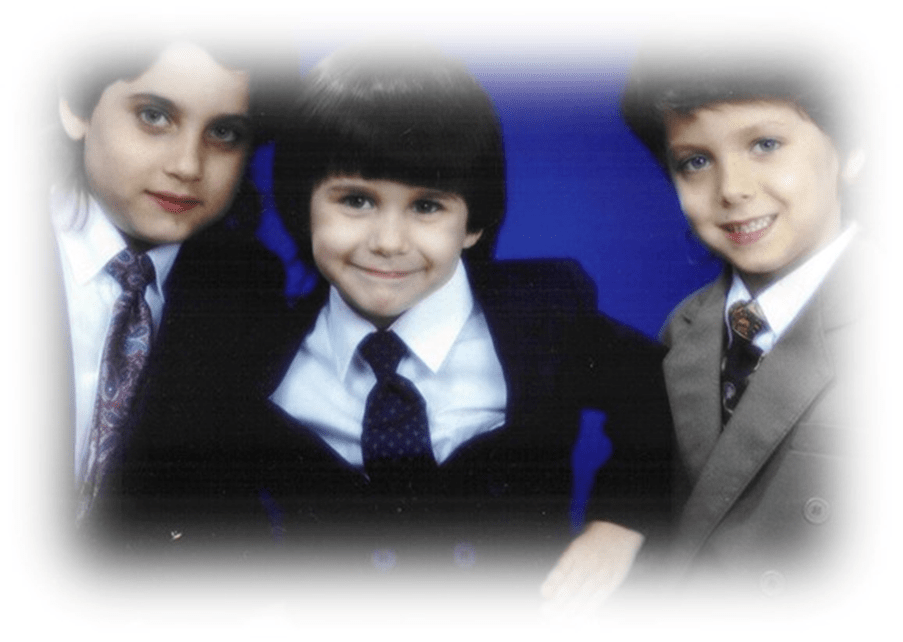
Bobby and Me: an Ode to Old Friends

It’s Christmas Eve in the year 2024, an eventful year although not for reasons we will be proud to remember, especially in the Middle East.  But it’s still that special season that has been honored wherever men have roamed since we became sentient and noticed the seeming miracle of the twin solstices, the one in the North, with the longest night, and the one in the South with the longest day.  The equator is currently not far from where I live in a wonderful city high in the Central range of the Colombian Andes.  Here, spring reigns eternal.  It’s a city at the southern edge of the Northern Hemisphere.  I guess that at the equator solstices and equinoxes coincide.  I have often wondered what it would be like to live in a home that straddles the equatorial line, one concurrently both real and imaginary.  It must be a magical place.  But, at any rate, for me, solstices as well as equinoxes have always seemed days for introspection and this year I’ve reflected on my friend Bobby, and on the special parochial school in Hollis, Queens, in New York City from which I graduated in late June of 1960, St. Gerard de Majella (we just called it St. Gerard’s).

So, about Bobby. 

I can’t recall his last name.  He’s not in the picture above, he didn’t graduate with me from St. Gerard’s.  He lived with his family over a candy store on Hillside Avenue in Queens Village, New York, between 215th and 216th streets I think.  I recall sharing “chocolate egg creams” there.  I lived in the Abbot Arms apartment complex across the street (at least I think that’s what it was called).  We were briefly “best” friends during the 1960-1961 academic year, a very difficult year for me and not just because hormones had kicked into high gear.  That was the year Bill Mazeroski broke Mickey Mantle’s heart, … and mine.  Bobby was Italian and his family was very kind, very warm; very full of joy.  I loved some of the food his wonderful mom made for us but not all of it, not the bull’s balls, … yuck!!!  But I ate them just the same. 

Bobby was one of the nicest people I’ve ever met.  He helped me through a rough time.  As had happened all too often, I’d switched schools in the middle of the 1960-61 academic year, having been transferred over my protests by my parents from Jamaica High School, which I really liked and where many of my friends from St. Gerard’s had gone, to Martin Van Buren, a relatively new school where I knew no one.  After almost yearly changes in schools, this was one too many and I finally rebelled.  I informally refused to accept the transfer, instead, riding the New York City subways all day until I was finally caught.  I remember that I’d planned to emancipate myself by becoming a comic book artist and had sent DC Comics an idea for a new super hero I’d drawn, “Ultraman” I think I called him.  Their rejection letter was polite: “they had enough artists and did not generally hire fourteen year olds”. 

I remember that chief among the delights of Jamaica High were two girls, Karen Luckhart (I think that was her last name but I’ve probably misspelled it) and Mary Bakanskas (ditto on the spelling), and I also had a host of other good friends.  One’s name was Tommy Scott, a classmate from St. Gerard’s; we used to hang out together before classes started.  There was also a very pretty sophomore named Cindy who sometimes deigned to join us freshmen at our early morning gatherings.  I remember that she smoked and seemed very mature and somewhat wise.  Smoking created impressions like that back then.  Now, not so much.  And then there was a sort of friend, Johnny Eckelstein, a sort of rival.  He was on Jamaica High’s track team.

I don’t remember anyone from my short stay at Van Buren. 

At the end of that academic year I was off to the Eastern Military Academy in Cold Spring Hills, New York, overlooking Cold Spring Harbor, an old whaling port.  It was my choice and a wise one.  Eastern provided me with an Island of stability as my family fell apart.  My mother and stepfather separated then divorced in 1962 and my younger siblings, my sister Marina and my brother Teddy were also sent to boarding schools, Marina to Sag Harbor and Teddy to St. Basil’s in upstate New York.  Eastern was the first school in my life where I remained for more than two years.  I graduated from Eastern in 1964 and returned to teach there for a decade after college at the Citadel. 

I never saw or heard from Bobby after I left for Eastern but I never forgot him either.

I frequently wonder what happened to all of those people with whom I shared a bit of friendship in that strange year.  I wish there was some way to reconnect but until recently, not even Facebook has helped.  I’ve tried.  I especially tried with respect to those who graduated with me from St. Gerard’s in June of 1960.  Most especially with respect to one with whom I may never have shared a single word.  Patricia Maher was her name and this time I´ve got the spelling right.  I’ve posted on a Facebook page for St. Gerard’s (which ceased operations in 2008 but whose chapel still survives) but have yet to receive any responses.  I’ve heard that former governor Mario Cuomo also went there.  He was one of my law school professors, the one I most admired although his sons have sullied his name.  I think of St. Gerard’s every time I watch Bing Crosby and Ingrid Bergman in the Bells of St. Mary’s (which I try to do every Christmas).  

I recall the transition from the 1950s to the 1960s at St. Gerard’s and the special message that the Virgin of Fatima had supposedly delivered to a young girl in Portugal, Lucia dos Santos was her name then.  She’d turned the message over, sealed, to the Vatican, and Pope John XXIII was supposed to finally unseal it as 1959 turned to 1960.  I recall the rumor that when he’ read it, he’d passed out and that the message was so troubling that after we’d waited for half a century to hear it (well, not us specifically, we’d only waited thirteen years), we’d just have to keep on waiting.

I remember St. Gerard’s and love it more every year and wonder what ever happened to my classmates, hoping that they’ve all enjoyed happy and productive lives.  But Bobby, I remember him best.  I hope he’s thriving and that he’s had a great life. 

I wonder if he remembers me as well.
_____

© Guillermo Calvo Mahé; Manizales, 2024; all rights reserved.  Please feel free to share with appropriate attribution.

Guillermo (“Bill”) Calvo Mahé (a sometime poet) is a writer, political commentator and academic currently residing in the Republic of Colombia (although he has primarily lived in the United States of America of which he is also a citizen). Until 2017 he chaired the political science, government and international relations programs at the Universidad Autónoma de Manizales. Previously, he chaired the social studies and foreign language departments at the Eastern Military Academy in Huntington, New York. He is currently the publisher of the Inannite Review available at Substack.com; an intermittent commentator on radio and television; and, an occasional contributor to diverse periodicals and publications. He has academic degrees in political science (BA, The Citadel, The Military College of South Carolina), law (JD, St. John’s University, School of Law), international legal studies (LL.M, the Graduate Division of the New York University School of Law) and translation and linguistic studies (GCTS, the University of Florida’s Center for Latin American Studies). However, he is also fascinated by mythology, religion, physics, astronomy and mathematics, especially with matters related to quanta, cosmology and cosmogony. He can be contacted at guillermo.calvo.mahe@gmail.com and much of his writing is available through his blog at https://guillermocalvo.com/.

A Nostalgically Melancholy Christmas Carroll[1]


[1] To the tune of Joan Baez singing “There but for Fortune” and Simon and Garfunkel’s version of “The Seven O’clock News/Silent Night”.

An introspection dedicated to Billy, Alex and Edward, to Marina and Teddy, to my mother, Rosario who’s been gone now for a third of a century, and to her sisters Carola (who joined her a while ago) and Livia who is blessedly still here.  To long gone “Pop” who left us in 1972 and to our matriarch, Juanita, who after having lived a bit more than a century, determined, on her own, that it was time to go.  And, of course, to Natalia.

Christmas has often seemed nostalgically melancholy to me.  It involves an anniversary, each anniversary different, sometimes very different.  My happiest were when I was surrounded by family, first as a young child with my younger sister Marina, then with Marina and my little brother Teddy and with my mother and my stepfather Leon.  Then, eventually, much later, as a parent with a wife and one, then two, and finally three sons.

My first recollection is when Marina and I were very little.  My mother and father had separated and he was probably with his family in Barinas, Venezuela while my mother had started her adventure in the United States.  We were left in my grandmother Juanita’s care, along with my wonderful aunts, Livia and Carola.  My earliest Christmas memory involves my grandmother’s annual Christmas event for the poorest children in the City of Manizales in Colombia.  My grandmother owned a hotel, the Hotel Roma, which included a wonderful restaurant with a large dining room and, for Christmas, she’d pile the dining room with a small mountain of gifts which, on that occasion, I, in representation of baby Jesus (I was three at the time) was charged with distributing to the many dozens of very poor young children present.  It should have been a beautiful event except that I misbehaved.  I kept a toy I liked for myself and when my grandmother found out, my baby Jesus role was over forever.  She said I’d behaved more like baby Satan.  My transgression that evening, even as young as I was, impacted me profoundly and since that time I have always tried my best to be kind to those less advantaged than I.

My next set of memories were after I and Marina had joined my mother in the United States and we had formed a new family with my stepfather Leon (who I always called “Pop” at his suggestion).  We didn’t have very much back then but we didn’t know we were poor and Christmas was full of presents, or so it seemed. For me, usually toy guns, toy guns that became more and more realistic (that not being politically incorrect back then) and, on two occasions, electric trains.  I can’t recall what presents Marina and Teddy received except on one occasion, Christmas of 1956, an eventful year.  We’d been living idyllically for over a year in Charlotte, for once in a house rather than in an apartment, and even had a housekeeper but, in a flash, it was all gone and we were headed back to Miami Beach, to a tiny apartment again, and worse, my stepfather was not with us having been injured in a serious car accident.  We had virtually nothing except a bit of charity from my stepfather’s sister, my aunt Mary, and my mother was understandably a wreck so that a good deal of family “management” had devolved on eleven year old me, and Christmas was around the corner.  I’d arranged for small presents for Marina and Teddy so that they’d continue to believe in Santa, comic books for Marina as I recall, and perhaps a football for Teddy (which I too could use) but, on Christmas Eve, as twilight fell, in walked Pop, his arms loaded with gifts.  The relief I felt was intense and the happiness awesome.  The best present ever.  We had each other.  ….  Until we didn’t.  Not quite.  Not in the same way.  Five years later, in 1961 our family abruptly fragmented as so many, indeed most, do now.  As the one I was to lead in the future many decades later was to do as well.  I recall our last Christmas all together, it was in New York, in Queens Village, and it had snowed, and I recall that Marina, Teddy and I along with other children made snow angels in the yard of the small apartment complex where we then lived on Hillside Boulevard between 215th and 216th streets.  Abbot Arms it was called, as I recall.

After that I was in a military boarding school, the Eastern Military Academy, and then in college at the Citadel, the Military College of South Carolina, and I usually spent Christmases with friends at their homes.  Pleasant times, even wonderful times, but not the same.  And after college, I returned to the military academy from which I’d graduated, the one that had become home to me and where I spent almost a decade as a teacher and administrator.  The Eastern Military Academy was a magical place, indeed, it was a real castle (Oheka Castle nowadays), and Christmases were interesting, almost always white.  All the students were gone and the resident faculty members gathered to share the season in front of roaring fires with special egg nog and shared meals.  Christmas then was communal, shared with special people.  With Susan Metz with whom I lived at the time and with the literary scholar, Roger Hamilton, and with the LaForges and the Coffeens, and especially with the wonderful Greene family, David, the patriarch and his wonderful wife Jane, and their children: Robert (who was to become my best friend) and Laurie who passed away much too young.  They were family but, of course, a very different sort of family.

My second “real” family, the one I founded as an adult, also shared what to me seemed beautiful winter holidays and that was as true when we could afford anything any of us wanted as it was when, occasionally, very briefly, we had practically nothing.  Billy, Alex and Edward, my sons, always made Christmas very special, no matter what.  Indeed, my most beautiful memory involves a time when, after a country hotel and restaurant we’d bought in Laurel Hills, North Carolina (the Echo Mountain Inn) had failed and we’d lost almost everything, we were spending Christmas morning in the Florida home of George and Agnes Chamberlin, the wonderful parents of a childhood friend, and presents were being opened.  One came packed in a series of boxes to the utter delight of my second son, Alex (then about three years old).  Alex was very excited as every present was opened (even though most were not for him) and, when the gag box within a box within a box package was being opened, he kept exclaiming, “a box; a box”.  I also very fondly recall when some years later, at a time when our fortunes had vastly improved, my sons’ mother Cyndi and I climbed the roof of our large comfortable home to plant replica reindeer tracks so that my three sons would continue to believe in St. Nicholas, or at least to remain open-minded on the subject.  Open mindedness reinforced by their mother’s refrain of “if you don’t believe you won’t receive”.  A persuasive argument.  I also recall the time some years later when I combed the country looking for a just released video game console my sons were desperate to receive (am Xbox as I recall), one which a business partner in upstate New York finally located for me.  And I recall how pleased I was with myself for having been able to find it, the best present of all for me having been being able to please my sons.

When Christmases were happy times, one of the things that most impacted me, in addition to being extremely grateful for my family, was the spirit of decency and goodwill that seemed to permeate the season.  The hope for peace and justice and for a better world that seemed a legacy from the Nazarene who many called “the Prince of Peace” (but in whose name, incongruously, his most devoted followers caused so much killing and mayhem and misery).  The latter reality became more obvious to me as I matured intellectually and became a more devoted historian and academic; when I eventually began to pierce the veils of delusion woven around us all and Christmas lost much of its allure, its tidings of hope receding and becoming instead, an opportunity for contrasting the stark realities in which we lived.  Realities in which a tiny few had more than they could ever consume.  Realities in which a seeming majority managed to get by somehow.  But a reality in which many, way too many, suffered terribly, both materially and spiritually.  A reality where far too many found the holiday season the saddest and most despairing time of the year.  To a greater and greater extent, the latter’s despair touched me, every year a bit more.  It touched me as our world spiraled more and more out of quilter, it touched me more and more as justice and equity were revealed as empty promises, mere delusive illusions, and it touched me more and more as I came to realize that superficial things that seem to bring us pleasure, things like television programs and concerts and movies and sports were merely temporary distractions used to maintain us tightly under control.  In that regard I remember the famous version of “Silent Night” by Paul Simon and Art Garfunkel released in 1966 (the 7:00 News and Silent Night medley) at the height of the military misadventure then known as the Vietnam War, a war that claimed many of those I most loved and admired.  People like my Citadel classmates Woody Woodhouse and Ron Ashe and John Bradman and too many others to name.

Still, even then, Christmas had its enchantment.  I recall Christmas during 1976 while I was attending the graduate division of the New York University’s School of Law to earn a postgraduate degree in international legal studies.  I recall how on the day before Christmas Eve that year I drove with my wonderful friend, Robert Greene, through the neighborhood in lower Manhattan adjoining the Williamsburg Bridge which I traversed every weekday as I travelled to classes in Washington Square Park, and how from my car window we passed out bottles of Lowenbrau dark beer to the homeless men and women who congregated on our route, people who we were too poor to help on normal occasions, and I recall how pleased we were with our apparent beneficence, something which certainly did more for us than it did for the recipients of our gifts.  And then I recall that, after my classes that evening, we were off, back to our Long Island home at the military academy where we both taught, off to share tidings of comfort and joy, a time of awakening for both of us but shielded from the dark by families and friends sharing memories that would keep us warm for years to come.  That keep me warm today.

The 1970’s were a strange time, a time full of hope when we who’d come of age in the sixties thought we could change the world only to have it change us during the 1980’s.  The 1980’s when we reverted to form, our idealistic illusions fading more and more each year as we had our own families and I had my own sons.  Providing for them became the greater good and the world’s ills, and the ills of many around us became less clear, less important, at least to us.  That digression lasted through the turn of the millennium, a privileged time for many of us in many senses, but a worse and worse time for most of the world.

I remember the last Christmas I spent as part of a family with my sons and their mother Cyndi, still my wife then.  It was in 2006.  By 2007 our family had imploded and exploded and fragmented and the last traces of merry Christmases had faded until their echoes had become dissonant and I found myself among the masses of those for whom the holidays were the saddest part of the year rather than the happiest.  Not that I was terribly off, just that by 2008 I was in a different country, back in Colombia where I’d been born, in a different continent, separated from the family I had once led and which I missed very much.  And that in that loneliness, although I was not alone, I came closer and closer to understanding the darker side of our world, a darker side about which I, then a college professor, taught.  And I became very personally impacted by the seeming futility of seeking that world that the promises attributed to the ancient Nazarene proclaimed were our due and our responsibility.  And I somehow blamed him for having failed us when the reverse was much more true.

Those darker times have now largely passed, at least personally.  Since 2019 I’ve found comfort with my current wife, Natalia, a woman who, as a noncustodial parent, has also endured the loss of intimacy with her children.  Because of shared negative experiences we’re able to comfort each other and to share a new version of joy, although one tinged with maturity and reality.  One grounded in spirituality and civic activism.  One which resonates with the echoes of the homeless and the poor and with their suffering, suffering of which Joan Baez once sang “there but for fortune go you or I”.  So now, this season is neither merry nor full of despair but, at least for my wife and for me, it has evolved into a time for reflection and introspection, and for recalling memories of other days, and for watching old Christmas classics like “The Bells of St. Mary’s” and “Going My Way” where Bing Crosby, long gone, still creates the illusion of Christmas as a magical time, a time when anything is possible and, at any rate, when things seemingly turned out well.  It has evolved into a time for my own version of Charles Dickens’ “A Christmas Carroll”; a time where I welcome the spirits of Christmases past to share a cup of cheer, albeit nostalgically and melancholically as I recall happy times now receded into fond memories.

Soo, it’s that season again, but this year, this terrible year when genocide has become acceptable in Nazareth and Bethlehem and the other areas where the Nazarene whose birth we celebrate once trod, it’s a time for even more reflection and introspection than usual, and for treasuring the people, not the things, that leave us with at least a trace of hope that the Christmas dreams of our youth will someday be reflected in better, more just and kinder realities.  Times when that gentle Nazarene, were he among us, whether or not he was or is divine, would find us having been worth his sacrifice.  And with that image in my heart, an ironic refrain seems to fill the end of a movie as a portly old man dressed in red and white, in extremely good humor, shouts: “and a merry Christmas to all, and to all a good night”.
_____

© Guillermo Calvo Mahé; Manizales, 2024; all rights reserved.  Please feel free to share with appropriate attribution.

Guillermo (“Bill”) Calvo Mahé (a sometime poet) is a writer, political commentator and academic currently residing in the Republic of Colombia (although he has primarily lived in the United States of America of which he is also a citizen). Until 2017 he chaired the political science, government and international relations programs at the Universidad Autónoma de Manizales. Previously, he chaired the social studies and foreign language departments at the Eastern Military Academy in Huntington, New York. He is currently the publisher of the Inannite Review available at Substack.com; an intermittent commentator on radio and television; and, an occasional contributor to diverse periodicals and publications. He has academic degrees in political science (BA, The Citadel, The Military College of South Carolina), law (JD, St. John’s University, School of Law), international legal studies (LL.M, the Graduate Division of the New York University School of Law) and translation and linguistic studies (GCTS, the University of Florida’s Center for Latin American Studies). However, he is also fascinated by mythology, religion, physics, astronomy and mathematics, especially with matters related to quanta, cosmology and cosmogony. He can be contacted at guillermo.calvo.mahe@gmail.com and much of his writing is available through his blog at https://guillermocalvo.com/.
The Lavender Rose

A single lavender rose, braving the snow, surviving despite the bitter cold, clinging tenaciously to life had invaded his dreams during a difficult night and its memory insistently clung to him after he woke, so much so that he immediately researched it meaning, something he did not frequently do as, while spiritual and curious, he had little faith in the symbolic interpretations of others, too many of whom seemed charlatans looking to exploit the gullible and naïve.  That morning, somewhat amused at himself and his foibles, he found himself among them.

The symbolic dream meanings for a lavender rose that he found that morning after brief and superficial research claimed that it represented a variant of innocent and instantaneous love, perhaps but not necessarily romantic, but he sensed that was not what it had meant in his dream.  In his dream, the lavender rose had been somewhat sentient and able to communicate indirectly, perhaps, emotively, initially fleeing from him as he tried to acquire it, the pot in which it had been planted falling and shattering and the flower portion disappearing.  But, as he had gathered the shards of the pot in which it had been planted and which had fallen, and the stalk and leaves and seeds with which it had been raised, it had, albeit damaged and with most of its petals lost, suddenly appeared and asked to return, promising to generate new buds.

Now that seemed symbolic and he wished, not for the first time, that he had the psychic gift or talent of mystic interpretation, or that he trusted in someone who did, which he did not.  Thus not only the lavender rose but the dream sequence in which he and she had met (it seemed feminine to him) remained an enigma.  An important enigma as it seemed important to discern the dream’s meaning, and perhaps, the role that lavender roses might someday play in his life, or in the lives of someone among those he loved.

He’d just have to wait and see, not only the usual occurrence in his life but perhaps of life in general, and perhaps that was its message.

_______

© Guillermo Calvo Mahé; Manizales, 2024; all rights reserved.  Please feel free to share with appropriate attribution.

Guillermo (“Bill”) Calvo Mahé (a sometime poet) is a writer, political commentator and academic currently residing in the Republic of Colombia (although he has primarily lived in the United States of America of which he is also a citizen).  Until 2017 he chaired the political science, government and international relations programs at the Universidad Autónoma de Manizales.  He is currently the publisher of the Inannite Review, available at Substack.com, an intermittent commentator on radio and television, and, an occasional contributor to diverse periodicals and publications.  He has academic degrees in political science (the Citadel), law (St. John’s University), international legal studies (New York University) and translation and linguistic studies (the University of Florida’s Center for Latin American Studies).  However, he is also fascinated by mythology, religion, physics, astronomy and mathematics, especially with matters related to quanta and cosmogony.  He can be contacted at guillermo.calvo.mahe@gmail.com and much of his writing is available through his blog at https://guillermocalvo.com/.

Transcendently Distasteful Realities

After deep reflection and introspection, he finally concluded that he did not really believe in anyone, not even in himself.  As long as interests coincided, loyalty was a possibility albeit not a certainty, but once they clashed, regardless of shared interests, loyalty evaporated into hazy rationalizations.  And that made sense. 

That was logical.  No one was safely reliable.  No one could always be counted on.  Love made no difference, it was, by its nature, always potentially ephemeral and always frailly ethereal. And when dissipated, love all too frequently morphed into something very negative, something akin to hate or at best, disdain.

Disquieting?  Of course.  Sad? Terribly.  But to expect otherwise was to delude oneself, something most of us did frequently, indeed, almost always.  When we find reality discomfiting, we usually ignore it and delve into our own personal fantasies, … and not the fun kind.

There were people he could almost count on but he admitted to himself that “almost” was a positivist way of presenting a negative, and dangerously so.  And it applied to himself as much as to anyone, and not just with respect to others, it applied to him in his roles with himself as well.  How strange.

It applied to us as individuals but also to us as collectives which explained much of history, not the fake narrative Pablum we’re taught and force fed daily, but the reality of what’s been and why.

He wondered if this day, a day where realism seemed ascendant, was a very good day, or a very bad day, and the answer was a confusingly emphatic: “yes”!
_______

© Guillermo Calvo Mahé; Manizales, 2024; all rights reserved.  Please feel free to share with appropriate attribution.

Guillermo (“Bill”) Calvo Mahé (a sometime poet) is a writer, political commentator and academic currently residing in the Republic of Colombia (although he has primarily lived in the United States of America of which he is also a citizen).  Until 2017 he chaired the political science, government and international relations programs at the Universidad Autónoma de Manizales.  He is currently the publisher of the Inannite Review, available at Substack.com, a commentator on Radio Guasca FM, and an occasional contributor to the regional magazine, el Observador.  He has academic degrees in political science (the Citadel), law (St. John’s University), international legal studies (New York University) and translation and linguistic studies (the University of Florida’s Center for Latin American Studies).  However, he is also fascinated by mythology, religion, physics, astronomy and mathematics, especially with matters related to quanta and cosmogony.  He can be contacted at guillermo.calvo.mahe@gmail.com and much of his writing is available through his blog at https://guillermocalvo.com/.

Reflections on the Christmas Season, … 2023

Charles Dickens’ “a Christmas Carol” has, since it was first portrayed on the stage and screen, resonated with very diverse segments of our population although now, more realistic Carols seem to focus on a new verse, one appended to the beginning of “the Twelve Days of Christmas”, one that starts six months earlier than the older verses and deals with “… myriad merchants a’ selling ….” So perhaps that older resonance is a bit dulled and in need of refreshing. 

Perhaps a bit of reflection might help, a bit of introspection as the solstice skims by us and echoes of pagan Yule and Roman Saturnalia regale us with mirth to go along with the myrrh purportedly provided to an ostensibly special infant born in Palestine long before Zionists sought to destroy that part of the world; well, destroy it, then absorb it, and then turn it into an exclusive Palestinians-free paradise.   One might be excused for wondering what use a newborn would have for myrrh, a fragrant gum resin obtained from certain trees and used, especially in the Near East, in perfumery, medicines, and incense, but, what the heck; … so the story goes and the gift of myrrh is not its least credible aspect.

Soooo, … let’s reflect away to the tune of “Jingle Bells”, or perhaps, the Jose Feliciano version of “Feliz Navidad”:

On an individual basis, the Christmas season is delightful, at least for people blessed with positive familial harmonics supplemented by ties of easily accessible meaningful friendship, but it is deeply depressing for those not so set apart.  The latter group concerns me deeply because it is comprised of the forgotten and of those who for one reason or other, never seemed to matter.  Those with whom the Nazarene, whose birthday so many purportedly celebrate during this season, would be most concerned, assuming he existed and was as beneficently described rather than the angry Pauline version.  Of course, while in the modern “Western” world the season focuses on the Nazarene, the season’s traditions are primordial and have been, in many cases, usurped through manufactured syncretism with far older and more complex cultures, cultures which in some cases have refused amalgamation.

Perhaps the foregoing might serve as a thought bandied about among the ghosts of Christmas past, Christmas present and Christmas future, a thought we might all want to take into account and perhaps, about which we might even consider doing something positive.  And if so, why limit it to this particular season?

Bah humbug!!!!  I wonder what exactly, using linguistic analysis and perhaps philology that is meant to mean.
_______

© Guillermo Calvo Mahé; Manizales, 2023; all rights reserved.  Please feel free to share with appropriate attribution.

Guillermo (“Bill”) Calvo Mahé (a sometime poet) is a writer, political commentator and academic currently residing in the Republic of Colombia (although he has primarily lived in the United States of America of which he is also a citizen).  Until 2017 he chaired the political science, government and international relations programs at the Universidad Autónoma de Manizales.  He is currently the publisher of the Inannite Review, available at Substack.com, a commentator on Radio Guasca FM, and an occasional contributor to the regional magazine, el Observador.  He has academic degrees in political science (the Citadel), law (St. John’s University), international legal studies (New York University) and translation and linguistic studies (the University of Florida’s Center for Latin American Studies).  However, he is also fascinated by mythology, religion, physics, astronomy and mathematics, especially with matters related to quanta and cosmogony.  He can be contacted at guillermo.calvo.mahe@gmail.com and much of his writing is available through his blog at https://guillermocalvo.com/.

Unorthodox Reflections on the Steppenwolf

I’m reading Hermann Hesse’s Steppenwolf, possible even rereading it.  I owned a copy in my twenties and thought I’d read it but it now seems obvious to me that I didn’t. 

There are several translations available but the one I’m reading seems inadequate to me.  I have a graduate degree in translation studies and linguistics (although it is not my primary profession) so perhaps I tend to be more critical than might be fair.  Still, the disappointment at what seemed a poor translation of a seminal novel faded as I “plowed” through it until, suddenly, it seemed much less inadequate.  The “plowing” ceased and sowing started, especially after I was introduced to “Hermine”. 

Originally, the title of this article, a sort of literary review, was to be “Reflections on Hermine”, perhaps it still should be, but as readers will note towards the end, the more traditionally serious civic and literary aspects of this piece devolve into what some will consider sophomoric parody, hence the modification to the title.  Hermine does not deserve to be tainted by parody, nor is it the intent of the latter part of this article to engage in parody, but one cannot control the reflections of readers or critics, especially those lacking in both a sense of humor and joy in the sensual; something now all too common as somehow, the liberal perspectives of the 1960s have morphed into censorious Puritanism.

“The” Steppenwolf’s transcendent fame is centered on its psychological reflections and on its refractive introspection with reference to human nature, but for me, at least so far, I’ve derived more from its perhaps unintended sociological and historical revelations as well as from the irreverent digression referenced above.  On the more serious historical side, shortly after Hermine was introduced I was struck by the protagonist’s bitterness towards German jingoists who virulently attacked him and other pacifists, much as happens today in the United States, the United Kingdom, Europe and of course, Israel.  What most struck me with reference to the foregoing is that the novel was published in 1927, long before Hitler’s ascent, and thus belied much of the fault assigned to him for subsequent events.  The blame, of course, rightfully belongs to the Treaty of Versailles and the viciousness of the victorious Entente, as hypocritical a group as ever blemished the face of our planet.  It was their greed and hypocrisy that generated bitterness and desire for revenge among the populace of the German nation, a supranational society that included not only the Weimer Republic but Austria as well, and parts of Poland and Czechoslovakia.  A subsurface fury very similar to that generated among Muslims and especially Palestinians today by the disdain with which they are treated by those same countries. 

Those brief passages generated cascading reflections on my part as they so accurately presaged the future and now, today’s present.  And not only with respect to the rise of the Nazis and their defeat in the oxymoronic “second war to end all wars”.  It also struck me that it was members of this same “alliance” now calcified in NATO, namely the United States, the United Kingdom and France, which orchestrated the now obviously hypocritical Nuremberg and Tokyo post war tribunals, proceedings disguised as efforts to impose ex post facto rules of war and legal norms applicable with respect to treatment of subjugated minorities.  Rules totally ignored with respect to the victors, not only during those proceedings but ever since.  Witness the United States’ facilitation of the slaughter of tens of thousands of Palestinian civilians by Israel for the past three quarters of a century, and especially since October 7, 2023.  But then, as Hesse notes, hypocrisy has almost always, perhaps always been the only norm governing interstate, international and intercultural conflicts.  It seems ingrained in our nature as the Steppenwolf aspect of Hesse’s protagonist so emotively observed.  As I focused on those brief passages, I couldn’t help but recall how the victors in the second war to end all wars, as they were in the first war to end all wars, were as guilty as the vanquished in too many instances, and that the same lot of hypocritical victors, led for centuries by the United Kingdom, have kept the world in constant conflict as they successfully exploited and looted the Global South.  Slavery has not really been eliminated, it’s just been camouflaged and swept under rugs.

Having taught history for a decade in my relative youth and, during the past several decades, having been actively involved in political analysis, both academically as chair of university political science, government and international relations programs, and as a participant in numerous media events, television and radio programs, etc., I was inexcusably caught off guard by the epochal reality brought to light for me by Hermann Hesse, i.e., the early appearance of underlying trends which would all too soon blossom into militarist fascism preceding the rise of the Nazi’s, although, on reflection, it is obvious that the Nazis did not sprout fully formed from ether.  And although I should not have been surprised, I was again caught off guard by the reality that “all too frequently one learns a great deal more from analyzing an epoch’s or a culture’s fiction than one does from assiduously studying learned historical treatises”, respected albeit inaccurate sources which all too frequently only blend strains of propaganda seasoned with rationalization in order to obfuscate what really happened and why.  It is fascinating to realize that either Herman Hesse was prescient or, more likely, that the history we are taught is so bogus that “the more we claim things change, the more they actually stay the same”.

I have another author to thank for my renewed interest in Hermann Hesse, one who reminds me of a now deceased friend, the brilliant translator and poet, Sam Hamill, who founded “Poets against War” as the disastrous second United States incursion into Iraq loomed.  His name is Germán Eugenio Restrepo and I met him at the introduction of his latest “sort-of-novel in a fascinating blend of art gallery, cultural center, restaurant and bar in the City of Manizales, a special and somewhat esoteric place with the very appropriate name, given the context of this article, of “El Bestiario” (the Bestiary in Spanish).  Germán mentioned Herman Hesse in passing in his novel, and then, responding to my detailed observations, reflections and analysis, admitted that, like so many others, he’d found Steppenwolf particularly meaningful in his youth, perhaps even foundational.  That led me to almost immediately purchase a copy of Steppenwolf, along with copies of other Herman Hesse’s novels I’d either never read or had lost (I’ve always kept a copy of Siddhartha nearby but I now also own Narcissus and Goldmund, Beneath the Wheel and The Glass Bead Game, all of which I’ve yet to start). 

Germán’s novel is entitled, in Spanish, Diatriba de un Ángel Caído (Diatribe of a Fallen Angel).  He’s a complex, erudite and talented fellow who, as in the case of Chilean Nobel laureate, Pablo Neruda, can “confess that he has lived.  His “novel” is full of insights and allusions to other works, of references to numerous philosophers and to enlightening esoterica.  Indeed, such allusions seemed as though they, rather than any of the characters in his book, were the protagonists, but its most endearing quality was the personal introspection it stimulated and the lost memories and feelings it evoked.  Germán’s novel also provided emotionally enlightening insights into the Republic of Colombia where I was born, and where, after half a century abroad, I again live, and of its disastrous history of bellicosity and inequity.  Unfortunately, his novel will probably be difficult to obtain, although with todays’ virtual world, perhaps electronic copies will be available.  It hope so.  It is one thing to read history and quite another to feel as though one were actually a participant in the distressing historical realities narrated, something both Hesse and Germán were able to elicit.

I’m a bit over two thirds of the way through The Steppenwolf and “Hermine”, the female protagonist, is evolving from the initial impression Hesse generated, although “her evolution” is not quite contextually accurate, she is who she always was and it is only my impression of who she is that is evolving.  I was initially struck by her ability to immediately attain total control over the chief protagonist, Harry Haller, something I’d once experienced (as the object) with a woman who kept me enthralled for about a decade in what now seems another life, but Hermine is quickly becoming more multidimensional and I find myself in that delightful point where, immersed in literature, I seem personally involved; recognizing the situation in which the protagonists find themselves but, as in the case of John Rawls’ “veil of ignorance”, unsure just how that resonance will play out.  I can’t help but contrast Steppenwolf with Hesse’s Siddhartha, an allegorical novel which I have loved for decades, and the comparison is still very much in the latter’s favor, but I’m intrigued by how that perception may evolve given the fame of the former.  The Steppenwolf seemed a bit convoluted at the start but has become a bit more human in the middle.  I guess the transcendent elements are yet to come, at least for me.

TheSteppenwolf, which I enjoy using as the title instead of merely Steppenwolf, is, in my opinion, the more appropriately translated title, although “the Steppenwolves” might have been more contextually accurate, as the novel deals with a bipolar hypothesis tested by multipolarity, one with which I’ve played in some of my own writings, especially in relationship to analyzing reincarnation, where I posit that if it exists, then our physical bodies are likely simultaneous experiential vehicles for myriads of entities requiring specific experiences, sort of like the “Legion” with whom Yeshua the Nazarene once interacted, but in a much more benign sense.  I’m intrigued by the spiritual concept of panentheism and in that sense, reincarnation would be the panentheistic means through which the divine, learns, evolves and approaches perfection (which it can never attain).  A context in which we are merely Divinity’s cells and organs.  In that sense, I’ve irreverently toyed with the idea that the more we pray, the more the Divine suffers from migraines.

In my own writings I frequently explore alternative perspectives from a contrarian viewpoint, exploring how, for example, Lucifer, Caine, Benedict Arnold and others almost universally adjudged arch villains perceive of themselves in relation to their antagonists.  And that proclivity is not limited to fiction.  I tend to champion causes disdained by many of my peers, even so far as to defend people whose values I find distasteful, Donald Trump being an example.

Sort of in that vein but taking another turn towards the irreverent (but perhaps not irrelevant), I will here dare to read between the lines writ by Hesse, delving into an essential aspect of the human psyche, one dealt with but perhaps not adequately articulated in The Steppenwolf (although, as I am only about two thirds of the way through the novel, I may be quite wrong).  It deals with the allegorical reality that not all literary wolves are wild animals.  Indeed, metaphorically, men who are enthralled by the predatory physical expression of lust (albeit usually denominated as love), are also referred to as “wolves” and thus, perhaps a person who perceives of himself as in a state of bipolarity between such a wolf and a more decent, more respectable or at least more superficially acceptable personality might, after having read Hermann Hesse’s Steppenwolf, consider himself a “schtuppenwolf”.  Personally, I find that term somewhat horrifyingly corny and way too much of a pun, but it just won’t go away as I share these impressions.  So, how might I share with the reader just what that impression entails?  Perhaps the concept can best be illustrated through an example in recent “media culture” (I can’t help but reflect that the phrase “media culture” seems somewhat oxymoronic).  The example that comes to mind involves the qualities, traits and practices fictionally memorialized in a comedic television series no longer generally available (having been judged as politically incorrect); i.e., the character of Charley Harper, played by Charlie Sheen (Carlos Estevez) in “Two-and-a-Half-Men”.  I wonder if Mr. Estevez ever read Steppenwolf, or any of the novels written by Hermann Hesse.  Others more critical of Mr. Estevez may unfairly wonder if he ever read anything at all.  Much earlier during the dawn of the television era, my example would have been the protagonist in a series about a photographer, The Bob Cummings Show.

Admittedly this turn in these observations seems a bit frivolous.  But it’s also relevant in the context of the complexity evoked by Hermann Hesse’s literary creation.  At least as far as I can glean (so far), Harry, the male protagonist in Steppenwolf, unexpectedly has room in his confusion for levity as well gloom, something Hermine clearly understands.  So, it seems fair to wonder, at least I do, what Hermann Hesse would have thought of the concept of a schtuppenwolf. 

At first blush, one might suspect that he would have found it disagreeable, but then, given his defense of multipolarity instead of bipolarity, there would certainly be room in the complex human psyche he portrayed for one or more schtuppenwolves, as well as for all sorts of alternative psychosocial personalities.  Indeed, to an extent, finding and extracting the schtuppenwolf seems to be what Hermann Hesse’s heroine, “Hermine”, sought to accomplish with Harry Haller when she intimately acquainted him with her friend, Maria. 

Initially the antithesis of Charley Harper, Harry eventually incorporates some of Charley Harper’s attributes into his complex of personalities.  Or perhaps, he merely becomes reacquainted with them, having experienced them during a happier youth, and then misplaced them.  It occurs to me that Carlos Estevez/Charlie Sheen/Charley Harper might also have opinions with reference to the foregoing (after all, he already has multiple names).  One wonders whether he might not find Derr Schtuppenwolf an excellent title for his own composite biography, or even better, autobiography.  Oh what a tale that could make, with dozens of Hermines and Marias, etc. 

I wonder what my new friend Germán will think of these observations.   He is profoundly serious and eclectic but not bereft of a sense of humor.  And sexual passion and eroticism play crucial roles in his own novel so that the concept of a schtuppenwolf might actually have a role to play therein, albeit unwritten; as it does in many poets and artists, or at least had before the Dawn of the Woke.  Schtuppenwolves, if not extinct, must now be carefully obfuscated.

What an admittedly strange digression in an article concerning serious novels, but perhaps, not one uncalled for.  Rather, what a sad reflection on our values and with reference to the world in which we find ourselves that, rather than joyous, the concept of a schtuppenwolf seems so incongruously out of place when analyzing one of Hermann Hesse’s seminal novels.  Actually, out of place anywhere if one hopes to avoid career shattering litigation.  Ask Johnny Depp for example.

If only the schtuppenwolf’s onomatopoeic component and “punnic” (as a neologistic derivative adjective for pun) aspects were not so prominent.

Postscript of sorts:

I’ve now passed the three quarters mark, I’m towards the end of the masked ball, Hermine has already revealed herself to Harry and, no, Harry lacks the qualities essential for a schtuppenwolf.  The desire is there, and the physical joy, as is the eroticism, but not the predatory elements necessary for a real schtuppenwolf.  In fact, it is Hermine and Maria who possess the requisite combination of energy and apparent disdain that make a schtuppenwolf.  But there’s still almost a quarter of the novel to go, a quarter of the novel in which, perhaps, I`ll find its existential nature, and perhaps a schtuppenwolf or two.

Yearning”, a fox trot.  Wondering what made it so special to Harry and the rest of the guests at the masque ball, I played it on YouTube.  Alas, I guess I lacked the appropriate context, or perhaps I was too full of context Harry and the others had yet to experience, nor could I identify the sounds of a saxophone Pablo would have been playing.  Oh well.  Still, Hesse made me curious enough to step out of the novel for an instant.  Nicely done!  On the other hand, YouTube automatically played “Suave” by Johannes Linstead next and, though separated by almost a century, Pablo on the saxophone seemed eerily present, eerily but happily.  And it occurred to me that if Harry was not a schtuppenwolf, Pablo most probably was, happily and innocently so.  Can a schtuppenwolf be innocent though?

Now it’s done, resolution irresolutely unresolved and the existential experience denied me.  A strange journey though, in that Magic Theater, the one starring Pablo as the schtuppenwolf and quite a bit more.
_______

© Guillermo Calvo Mahé; Manizales, 2023; all rights reserved.  Please feel free to share with appropriate attribution.

Guillermo (“Bill”) Calvo Mahé (a sometime poet) is a writer, political commentator and academic currently residing in the Republic of Colombia (although he has primarily lived in the United States of America of which he is also a citizen).  Until 2017 he chaired the political science, government and international relations programs at the Universidad Autónoma de Manizales.  He is currently the publisher of the Inannite Review, available at Substack.com, a commentator on Radio Guasca FM, and an occasional contributor to the regional magazine, el Observador.  He has academic degrees in political science (the Citadel), law (St. John’s University), international legal studies (New York University) and translation and linguistic studies (the University of Florida’s Center for Latin American Studies).  However, he is also fascinated by mythology, religion, physics, astronomy and mathematics, especially with matters related to quanta and cosmogony.  He can be contacted at guillermo.calvo.mahe@gmail.com and much of his writing is available through his blog at https://guillermocalvo.com/.

Ennui

Tweedledee and Tweedledum, Humpty Dumpty on the wall before he had a great fall, the Queen of Hearts seems heartless, at least as far as Alice is concerned and fair weather friends are best in the late Spring, definitely not in late Fall.

It was in 2005, as he remembered it, although it might have been in late 2004.  Approximately eighteen years had elapsed, enough time for someone to have been born and then attained majority.  One would think a great deal had happened during that interim, and it had, but still, he felt as though he’d stepped on a tread mill, and that there he’d stayed.

His marriage had failed through duplicity, perhaps self-induced, as so many marriages then tended to end.  Something which has not changed.  But ironically, that failure had led to liberation.  It had led to what, at first blush, seemed exhilarating freedom and new horizons.  Among other things, he’d finally felt that he’d become a poet: there’d been plenty of inspiration in superficial sorrow and contrived despondency, not because of his wife’s betrayal, not really, but because so much that he’d loved, especially his family, had to be surrendered if he was to move on, if he was to regain the momentum he’d foregone for so long.  There’s a price for most things under the sun and beyond the stars, perhaps for everything.  And it seems to bear compounded interest.

Of course, his experience was not unique, it had become commonplace, almost a rule.  Except, perhaps, for the bit about poetry.  But even that was not unusual.  And it was not his first experience at starting over after a failed relationship.  That too was no longer infrequent.  Transience now seemed the rule.

There was a melody he’d come across as his life was becoming undone, one he’d listen to constantly, one that seemed to translate what he felt and what he perceived he’d feel in the future, a melody more accurate and more complete than mere words.  It started out forlornly, then became reflective, perhaps introspective, and gradually, it became joyous, even festive.  It was an instrumental ballad, nouveaux flamenco played primarily on a Spanish guitar but accompanied by diverse forms of percussion, perhaps by violins as well.  He still payed it regularly.  Over time, it acquired additional meaning as different women passed through his life, a growing list of unsuccessful intimate relationships each of which he’d ended when he realized that, notwithstanding his aspirations, they were going nowhere and that he was impeding the ability of his paramours too find the truly meaningful long-term spouses they deserved.

His life seemed to parallel that special music: streaked with melancholy and nostalgia but also, unaccountably, because it had no rational justification, stained with tedium.  Too often his decisions seemed to become based on overcoming boredom rather than anything truly positive.  Monotony, bred, not by a lack of things to do, but by repetition. 

He was accomplishing interesting, even important things, he was writing and publishing a great deal, and his counsel was sought on a variety of issues by interesting people who took his opinions seriously, as a result of which, he’d attained the respect and affection of a new set of peers, but his life seemed to lack substance somehow, as though it was bereft of flavor and aroma, as though it were set in a colorless rainbow.  He was doing reasonably well, apparently growing, apparently happy, but those appearances lacked the dimensions he craved.  He felt that he just “was”.

Lumps comfortably resting on logs all too frequently came to mind.  Although sometimes, he’d imagine that the lumps might be enchanted princes in frog form.  Or even better, princesses. 

He missed his sons, who’d become estranged and were living their own lives in another continent, one that might just as well have been another planet, but that was not the problem.  He realized that they had their own lives to live, their own goals, their own aspirations and their own new families in which his role was, at best, minimal, but as long as they were happy, or at least satisfied, he was too. 

After a number of almost satisfying albeit unsuccessful intimate relationships he’d remarried, and his new wife embodied almost everything for which he’d ever hoped.  More than he could reasonable have expected really, more than he probably deserved.  Thus, his domestic life was tranquil and, to an extent, almost fulfilled.  But still, he felt hollow.  Hollow but ironically full of clamoring echoes calling for something he couldn’t divine, something that he couldn’t define.  

He’d hoped for hummingbirds and butterflies and dragon flies but had gotten flies and mosquitos instead.  They smelled of boredom, but then, what was boredom anyway?  Ennui perhaps.  Ennui is a bit more classy and complex than mere boredom.  And he wondered if he’d attained the point, as Fernando Pessoa had once supposed, where tedium had become his most reliable and constant companion?

Not a good trait for someone with expectations of immortality.

Tweedledee and Tweedledum, Humpty Dumpty on the wall before he had a great fall, the Queen of Hearts seems heartless, at least as far as Alice is concerned and fair weather friends are best in the late Spring, definitely not in late Fall.
_______

© Guillermo Calvo Mahé; Manizales, 2023; all rights reserved.  Please feel free to share with appropriate attribution.

Guillermo (“Bill”) Calvo Mahé (a sometime poet) is a writer, political commentator and academic currently residing in the Republic of Colombia (although he has primarily lived in the United States of America of which he is also a citizen).  Until 2017 he chaired the political science, government and international relations programs at the Universidad Autónoma de Manizales.  He is currently the publisher of the Inannite Review, available at Substack.com, a commentator on Radio Guasca FM, and an occasional contributor to the regional magazine, el Observador.  He has academic degrees in political science (the Citadel), law (St. John’s University), international legal studies (New York University) and translation and linguistic studies (the University of Florida’s Center for Latin American Studies).  However, he is also fascinated by mythology, religion, physics, astronomy and mathematics, especially with matters related to quanta and cosmogony.  He can be contacted at guillermo.calvo.mahe@gmail.com and much of his writing is available through his blog at https://guillermocalvo.com/.

Bittersweet Reflections on an Autumn Morning

I woke up this morning dreaming of the “The Bells of St. Mary’s”, a film starring Bing Crosby and Ingrid Bergman that I probably first watched as an eighth grade student at St. Gerard de Magella, a Catholic school in Hollis, Queens, a neighborhood in New York City.  It’s been a favorite of mine ever since, though hard to view now; times have changed and the values reflected in that film no longer predominate.  It reflects a sort of idyllic yet plebian epoch where we believed we stood for decency, ignoring the cultural cancers that afflicted us, the genocide of indigenous Americans and racism based on our history of unrepentant abuse of Africans, as well as our penchant for intervening militarily in the affairs of others in order to appropriate their natural resources. 

St. Gerard’s though seemed reflective of a streak of decency, as was Father O’Malley’s and Sister Mary’s St. Mary’s.  My best friend at the time, albeit briefly, was an African American of Jamaican ancestry whose name was Cuthbert Williamson.  Other close friends were Italian and Irish, and I had a serious crush on a girl whose ancestry I never knew, but whose name was Patricia Maher; all of us happily melding, unaware of how much our world would change or just how hypocritical the country we loved was and had always been. 

I think we’ve strayed from the path that might have led from there to the best version of who we should have become.  Instead of curing our societal ills, we glossed over them self-righteously and became a more and more polarized society and a larger and larger danger to ourselves and even more so to the rest of the world.  Indeed, we became that which we claimed so many of the best among us had died to prevent in the second of our wars to purportedly end all wars and today, our government, if not all of our people, avidly supports ethnic cleansing and the mass murder of civilians that most of the world, at least in the global south, considers genocide.  And, of course, our government seeks to embroil us in wars all over the globe in order to attain the worldwide hegemony that we purportedly disdained when I attended St. Gerard. 

Shortly after I graduated from St. Gerard, a sort of poetic prophet playing a harmonica and a guitar, and singing what seemed like the hymns of our generation (albeit sort of off key), arose and stirred us towards a better world, asking “when will we ever learn” and declaring that the “times they were a ‘changing”.  But we haven’t and they didn’t; … not really.  And the innocence of St. Mary’s is gone.

My mood as I awoke this morning was nostalgic and melancholy, as tends to happen as we mature, and I reflected on my personal failures and on my regrets instead of on the successes I’ve attained and the blessings I enjoy; on the many friends and relationships that have vanished and which I did not appreciate as much as they deserved.  Bittersweet memories, reflections and introspections.  But I also focused on the hope Bing Crosby and Ingrid Bergman generated when I watched their interplay, a sense of hope they still inspire whenever I manage to revisit Father O’Malley and Sister Mary. 

A sense of hope we desperately need today when their like seems all too hard to find.
_______

© Guillermo Calvo Mahé; Manizales, 2023; all rights reserved.  Please feel free to share with appropriate attribution.

Guillermo (“Bill”) Calvo Mahé (a sometime poet) is a writer, political commentator and academic currently residing in the Republic of Colombia (although he has primarily lived in the United States of America of which he is also a citizen).  Until 2017 he chaired the political science, government and international relations programs at the Universidad Autónoma de Manizales.  He is currently the publisher of the Inannite Review, available at Substack.com, a commentator on Radio Guasca FM, and an occasional contributor to the regional magazine, el Observador.  He has academic degrees in political science (the Citadel), law (St. John’s University), international legal studies (New York University) and translation and linguistic studies (the University of Florida’s Center for Latin American Studies).  However, he is also fascinated by mythology, religion, physics, astronomy and mathematics, especially with matters related to quanta and cosmogony.  He can be contacted at guillermo.calvo.mahe@gmail.com and much of his writing is available through his blog at https://guillermocalvo.com/.

Circuitous Introspection

He wrote in the third person when he wanted to make it less obvious about whom he wrote.  Of course, that sometimes made it more, rather than less, obvious.

Anyway, ….

He was a closet introvert who spent a great deal of time on reflective introspection trying to understand himself and to fathom the realities involving good and evil, all too often, apparently, sides of the same coin as interpreted by those impacted, either by their own actions, or by the consequences they experienced as a result of the actions of others.  He very much wanted to be good, as long as it was not too inconvenient, and he hated hypocrisy, at least in others. 

He believed that truth was an absolute but an obfuscated absolute, too often artificially complicated and muddled by those for whom truth was inconvenient, and that, sadly, included him.  He speculated on the nature of mendacity and came to various conclusions.  First, on the one hand, it was a natural human impulse when an imbalance of power existed, resulting in insecurity, or even when such an imbalance was only an inaccurate perception; but on the other, it was a sadistic expression of hubris on the part of those who wanted to be perceived as in the right, knowing that was not the case.  The latter tended to need quite a bit of cake in order to eat it, but without exhausting the supply available to them.  He wondered concerning the long term consequences of mendacity and came to conclude that it prevented solution to real problems, although perhaps masking the problems for a time during which they tended to metastasize, creating a more and more complex web woven of materials apparently based on singularity theory and thus, all but inescapable.  The conclusion?  Well, formulation of any real conclusion would require a lot more than merely two hands.

He also reflected on the consequences of boredom which he came to believe led to overeating and depression (among other things), and to ill thought out actions whose consequences were rarely positive.  Boredom seemed avoidable but cognitive labyrinths inexplicably blocked positive solutions, creating self-perpetuating negative feedback loops which required a great deal of discipline to avoid. 

“Discipline” doing something that needed doing when was not disposed to do it.

As seems obvious from the foregoing, his introspection tended to wander from subject to subject, sometimes involving rational links, sometimes objective, but all too often seemingly without rhyme or reason, or at least apparently without rhyme or reason.  Further reflection sometimes turned up profound insights, or at least what appeared to be profound insights.

He liked writing, perceiving that it provided a means of communication between the diverse aspects of his personality and nature, both concurrently and temporally, and disclosed the unreliability of memory, evidently something heavily impacted by what he referred to as legis murphiatum.  Writing seemed an essential means to maximize the potential of his introversion while minimizing the existential threat of boredom.

And, of course, he wrote in the third person when he wanted to make it less obvious about whom he wrote although sometimes that made it more, rather than less, obvious, about whom he wrote.
_______

© Guillermo Calvo Mahé; Manizales, 2023; all rights reserved.  Please feel free to share with appropriate attribution.

Guillermo (“Bill”) Calvo Mahé (a sometime poet) is a writer, political commentator and academic currently residing in the Republic of Colombia (although he has primarily lived in the United States of America of which he is also a citizen).  Until 2017 he chaired the political science, government and international relations programs at the Universidad Autónoma de Manizales.  He is currently the publisher of the Inannite Review, available at Substack.com, a commentator on Radio Guasca FM, and an occasional contributor to the regional magazine, el Observador.  He has academic degrees in political science (the Citadel), law (St. John’s University), international legal studies (New York University) and translation and linguistic studies (the University of Florida’s Center for Latin American Studies).  However, he is also fascinated by mythology, religion, physics, astronomy and mathematics, especially with matters related to quanta and cosmogony.  He can be contacted at guillermo.calvo.mahe@gmail.com and much of his writing is available through his blog at https://guillermocalvo.com/