Insouciant Reflections on Temporality

There are realms between instants, whether waking or lost in thought, instants with histories of their own and their own laws of nature, peopled by persons we seem to know, sometimes intimately, but at other times not at all.  They are fully formed for just that eternal instant, and then, usually, they’re gone, receding in inverse ratio to how much we try to keep them close.  But not always.

I experienced one of those recently, transitioning from one dream to another, first focusing on many of the mistakes I’ve made in my life.  Then the dream morphed into speculations on how those errors might be corrected.  Humorously I considered how easy it was for grace-based deeply religious adherents of Abrahamic faiths to effect corrections.  First, admit the transgressions to the divine; second, feel honest regret; and third, ask the divine for forgiveness.  Sort of a compressed version of the twelve-step program recommended to repentant alcoholics but without having to seek forgiveness from the ones harmed or having to attain a recompensive balance.  No such luck for me, I thought, I’m a sort of orthodox agnostic panentheist, but perhaps, in abstraction, I have my own sort of solution.  At the other end of the spectrum, of course, there are the “laws” of karma and dharma and the Wiccan Rede.

The instant then morphed again into a sort of para-scientific panacea situated at the border shared by the spiritual and the mystic, the normal and the paranormal, science and philosophy, fantasy and reality.  It went something like the following, which I’ve sought to reconstruct from that instant’s psychic residue.

Try to imagine, eerie, mystic music as you read, perhaps played by enormous sentient whales, eavesdropping on my speculation concerning the interaction of physics, philosophy and the supernatural.  After all, in a dream, even a very brief one, it seems anything is possible:

My discourse, no introduction, it just starts in the middle:

There are purported givens in physics and philosophy with which some people, I among them, do not agree.  Not because through research, trial and error our interpretations of hypotheses have raised reasonable doubts, but because, as suppositions and purported facts and premises are fed through our cognitive, we experience intellectual heartburn, intellectual rejection, … without understanding why.  A sort of intuitive reaction.

For me, two fundamental premises of modern physics just don’t ring true.  That nothing can go faster than the speed of light and that time is irreconcilably one directionally linear, or that it is linear at all. 

The latter caught my fancy as I sat at breakfast with my wife, lost in that world we inhabit where we ponder, perhaps influenced by dream like experiences as we transition into wakefulness. 

In that dream-like state, I saw time, in its more linear variant, and as it applied to me personally, as though it were a private phenomenon.

Reflecting on my introspection, certain hypotheses occurred to me:

  • First; that linearly, time is anchored by two singularities, one on each end, one in my absolute future and one in my absolute past, each generating tides and eddies, waves breaking, creating an ever changing ephemeral balance. 
  • Second; that chaos, in the sense of all possibilities inchoately coexisting, is the ocean on which everything floats or else, subsides, submerged in a strange sort of Jungian subconscious, somehow linked with everyone and everything, but tenuously. 
  • And time?  Time is the behemoth which feeds on chaos, digesting those aspects it finds comestible and excreting them as apparently untransmutable order. 

But “apparently”, I recalled, is a qualifier.

Then, based on the foregoing, I posited that there are also ever increasing and strengthening eddies, counter currents and riptides originating in the past, comprised of nostalgia and regret, and that the further from the past one travels, the stronger they swell.  The pull of the past’s singularity irresistible but impossible to re-claim. 

I’d go back if I could, to relive moments that, in a sense, had become sacred, and to correct others that now seem profane. 

When I was young, it was the inchoate singularity from the future which was strongest, but as more and more chaos was digested, it was the singularity at the other end, the one I call past, that expanded its event horizon and gained in strength, and which made me wonder at the choices I’d made, the options I’d elected from the options chaos presented and on which I’d acted, converting them into what I perceived as realities.

Traditionalist theories, to me mere hypotheses, claim that entropy is intrinsically tied to temporal phenomena, that as one moves between the temporal singularities I imagined, entropy increases.  Something seems odd there as increased entropy seems to involve an increase in disorder, and an increase in disorder seems to imply a movement back towards chaos and away from order, the opposite of what I’ve instinctively postulated, which perhaps explains why I instinctively reject the notion that time travel towards the past is impossible.  Instinctively but perhaps also rationally, based on some sort of inchoate perception.  It seems an explanation, a connection I sense, although perhaps others, for their own reasons, may agree.  We live in a world that seems spiraling towards a new Dark Age as social pressures increasingly forbid is to think what we will; conformity, ironically in the name of diversity, like another singularity, a malevolent form of gravity, driving us away from the light.

I draw comfort from the wonderfully magical world of the quanta.  A rebellious outlaw world that keeps throwing obstacles at today’s Einstein premised universal laws.  As in other areas impacted by those miniscule rebels, hypotheses labeled theories relating to entropy which tie it to the purported second “law” of thermodynamics, appear to break down as reality approaches the micro.  In doing so, they lead me to intuit that quantic uncertainty might tear that specific premise apart, disassembling it into non-physical, elemental particles, each going hither and yon as each possible perception survives in realities of its own.  And that provides a bit of less emotional, more intellectual support for my predilections.  It also provides hope for a future free of conformity’s restraints.

The quantic seemingly justifies my insouciance as I wonder at the nature of linearity, and at how improbable a one-dimensional concept is and how three dimensions multiplied through time create spherical realities with infinite poles each anchored by singularities impacting the version of reality that applies to me.

As I exited my reverie, a warm feeling suffused me as I recalled that String Theory and M Theory posit that, based on mathematical probabilities much less fanciful than my predilections, there are probably many more than just four dimensions with which to play, … if only we could find them.

Then, … as usually happens, my visions and my perceptions and fantasies began to dissipate, increasing rather than decreasing the number of unanswered and unanswerable questions in which my psyche loves to bathe. 

I wonder what I’ll think, … sometime in some future, … as to what I’ve just written should I happen to read it again?
_______

© Guillermo Calvo Mahé; Manizales, 2022; all rights reserved.  Please feel free to share with appropriate attribution.

Guillermo (“Bill”) Calvo Mahé (a sometime poet) is a writer, political commentator and academic currently residing in the Republic of Colombia (although he has primarily lived in the United States of America of which he is also a citizen).  Until 2017 he chaired the political science, government and international relations programs at the Universidad Autónoma de Manizales.  He has academic degrees in political science (the Citadel), law (St. John’s University), international legal studies (New York University) and translation and linguistic studies (the University of Florida’s Center for Latin American Studies).  He can be contacted at guillermo.calvo.mahe@gmail.com and much of his writing is available through his blog at https://guillermocalvo.com/.

Karmic Echoes: a haiku of sorts

Karmic echoes: self-sustaining strings of interlinked sins.


_______

© Guillermo Calvo Mahé; Manizales, 2022; all rights reserved.  Please feel free to share with appropriate attribution.

Guillermo (“Bill”) Calvo Mahé (a sometime poet) is a writer, political commentator and academic currently residing in the Republic of Colombia (although he has primarily lived in the United States of America of which he is also a citizen).  Until 2017 he chaired the political science, government and international relations programs at the Universidad Autónoma de Manizales.  He has academic degrees in political science (the Citadel), law (St. John’s University), international legal studies (New York University) and translation and linguistic studies (the University of Florida’s Center for Latin American Studies).  He can be contacted at guillermo.calvo.mahe@gmail.com and much of his writing is available through his blog at https://guillermocalvo.com/.

Introspections in Purples and Lavenders and Russets and Browns

I wonder how purple and lavender get along?  One reflecting royal masculinity and the other, tender femininity, or so it seems to me.  Crimson, best friends with scarlet, also seems to get along well with gold.  But gold and yellow, perhaps not as much.  And with green, not at all, although yellow and green are the happiest reflections of nature’s lust.  At least, … so it seems to me.

For some reason, I’ve always insisted on keeping negative information to myself, as if by doing so, I were protecting others dear to me, perhaps hoping that, alone, I’ll manage to make things right. But, perhaps, in a related manner, I generally decline to revel in the positive, instead, keeping it discreet, as if by recognizing it, by giving it too much importance, it would prove illusory, or perhaps, … disperse. 

Not that I don’t experience instances of intense joy, but they are ephemeral, lasting but an instant, and then fading to pastel shades that quickly meld, camouflaged, into the quotidian.  Not really two sides of the same coin but, perhaps, in some sense, complimentary; discretely so.  I wonder how common these reactions are among others?  I wonder if I’ll ever

Russets and browns swaying in autumn winds, then slowly drifting to pool over sylvan toes.  Never wondering why, or worrying as to where they’ll next go.  I wonder what it would be like to be a leaf, enjoying the sun, safely ensconced on a twig, the twig on a branch, the branch on a trunk, a trunk with long, slender fingers twisting below.

I wonder what impact my surface subterfuge has on the chaotic inner me, where nothing is held back, where no masks are allowed.  An inner me I don’t think I’ve ever met.  One perhaps at war with the me that others see.  One where emotions and aspirations roam free of all constraints, where a kernel of the child I may once have been, perhaps, still esoterically runs free.

_______

© Guillermo Calvo Mahé; Manizales, 2022; all rights reserved.  Please feel free to share with appropriate attribution.

Guillermo (“Bill”) Calvo Mahé (a sometime poet) is a writer, political commentator and academic currently residing in the Republic of Colombia (although he has primarily lived in the United States of America of which he is also a citizen).  Until 2017 he chaired the political science, government and international relations programs at the Universidad Autónoma de Manizales.  He has academic degrees in political science (the Citadel), law (St. John’s University), international legal studies (New York University) and translation and linguistic studies (the University of Florida’s Center for Latin American Studies).  He can be contacted at guillermo.calvo.mahe@gmail.com and much of his writing is available through his blog at https://guillermocalvo.com/.
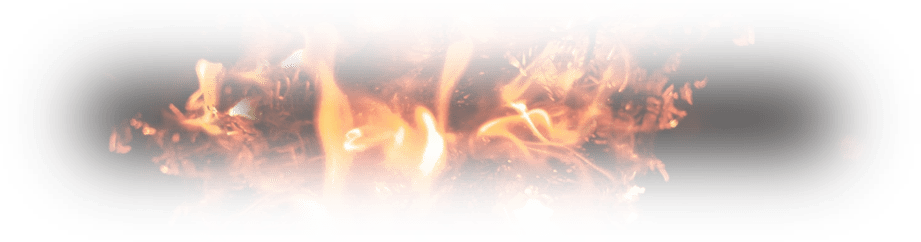
Inquiries into Consequential Imagery

If the Abrahamic divinity was infinite and eternal, why would it have attained an image on which to base our forms? 

And if it had an image, wouldn’t it be much more Zoroastrian, as in the myth of the “burning bush?  Were we to peer into a divine mirror, would we see fire’s reflection? 

Is that, perhaps, the nature of our souls, or perhaps our spirits?  And if so, what would we have to fear from the infernal?

Ethereal and ephemeral while concurrently ubiquitous and eternal, a mystery such as those of which religions are so fond.
_______

© Guillermo Calvo Mahé; Manizales, 2022; all rights reserved.  Please feel free to share with appropriate attribution.

Guillermo (“Bill”) Calvo Mahé (a sometime poet) is a writer, political commentator and academic currently residing in the Republic of Colombia (although he has primarily lived in the United States of America of which he is also a citizen).  Until 2017 he chaired the political science, government and international relations programs at the Universidad Autónoma de Manizales.  He has academic degrees in political science (the Citadel), law (St. John’s University), international legal studies (New York University) and translation and linguistic studies (the University of Florida’s Center for Latin American Studies).  He can be contacted at guillermo.calvo.mahe@gmail.com and much of his writing is available through his blog at https://guillermocalvo.com/.
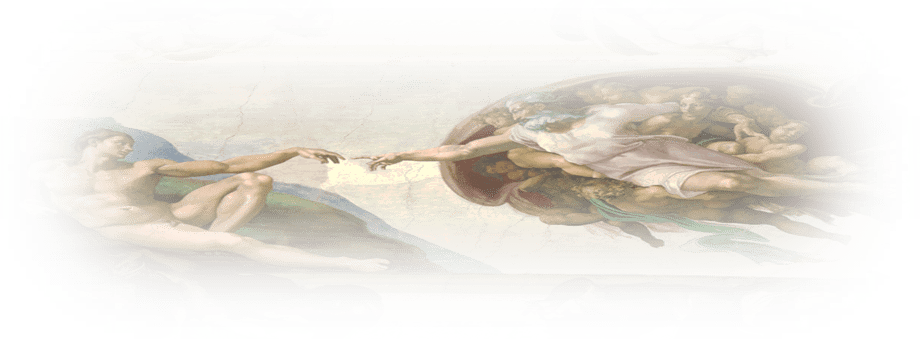
“Divinimorphic”

“Divinimorphic”, an interesting hypothesis.  The obverse of anthropomorphic in the quest to contextualize the human-divine relationship, … whether real or fictional. 

It’s a term that should exist in the Abrahamic context if humans were made following a divine template, albeit, obviously, a deliberately imperfect template, which raises questions about what sort of divinity would strive for imperfection.  But the term apparently doesn’t exist, at least not yet.  What does that say about our religious studies programs?

Instead of “divinimorphism”, humans have seemingly anthropomorphized divinity, returning the favor by making our divinities imperfect as well.  A weird sort of symbiosis. 

So, “divinimorphic”, a neologism which ought to catch on.
_______

© Guillermo Calvo Mahé; Manizales, 2022; all rights reserved.  Please feel free to share with appropriate attribution.

Guillermo (“Bill”) Calvo Mahé (a sometime poet) is a writer, political commentator and academic currently residing in the Republic of Colombia (although he has primarily lived in the United States of America of which he is also a citizen).  Until 2017 he chaired the political science, government and international relations programs at the Universidad Autónoma de Manizales.  He has academic degrees in political science (the Citadel), law (St. John’s University), international legal studies (New York University) and translation and linguistic studies (the University of Florida’s Center for Latin American Studies).  He can be contacted at guillermo.calvo.mahe@gmail.com and much of his writing is available through his blog at https://guillermocalvo.com/.

Involuted Lacunae

“I actually liked Babel” he admitted, “I admired its audacity.”

“Then, why destroy it” asked his adversary, or perhaps his assistant, at least at one time, the Archangel Hêl él?

“I didn’t, not really, I just set events in motion so that those who dared consider the faintest possibility of challenging me turned, instead, on each other.  It was a reflex reaction, one I’ve long regretted.”

“But what of their language, and their knowledge; their music and their poetry” asked Hell-El, fully knowing the answer but perhaps wanting to add a bit of salt, perhaps black salt from the Himalayas, to the metaphorical wound?

“Fragmented, unfortunately, couldn’t be helped.  I hadn’t the time to consider consequences before I acted, and thus, unintentionally loosened Confusion; Misperception and Misunderstanding from their bonds, and they quickly mated and sired Disdain and Manipulation and Treachery, which in turn, bred politics and religion and journalism, and, if not the Law, unfortunately, the legal profession.”

“Pity that!  Unfortunate. Right.  The end of possibilities you once fancied.  ….  On another front, any news from Humpty Dumpty and his egg shell restoration project”?
_______

© Guillermo Calvo Mahé; Manizales, 2022; all rights reserved.  Please feel free to share with appropriate attribution.

Guillermo (“Bill”) Calvo Mahé (a sometime poet) is a writer, political commentator and academic currently residing in the Republic of Colombia (although he has primarily lived in the United States of America of which he is also a citizen).  Until 2017 he chaired the political science, government and international relations programs at the Universidad Autónoma de Manizales.  He has academic degrees in political science (the Citadel), law (St. John’s University), international legal studies (New York University) and translation and linguistic studies (the University of Florida’s Center for Latin American Studies).  He can be contacted at guillermo.calvo.mahe@gmail.com and much of his writing is available through his blog at https://guillermocalvo.com/.

Kalliope, a Muse then in Training

He’d met her in the apartment building where their families lived at the time, on Northern Boulevard adjacent to Flushing High School and down the block from a Horn & Hardart.  They’d bonded quickly.  Although she was one year younger than he was, she was vastly more experienced in things intimate and would explain, in intricate detail, what they were proscribed from doing, after which, they’d of course try it.  Her breasts were beautiful, large for a fifteen-year-old, with pretty, very sensitive nipples, but she was otherwise slender, at least then.  Her hair was auburn, and worn a bit shorter than he liked, and her eyes a piercing blue.

He’d seen her, walking with her mother in Manhattan, years later and she’d filled out quite bit.  But back then, in that magical summer and autumn of 1961, she was perfect and he’d immediately succumbed to a sixteen-year old’s addiction for his first love. 

He recalled a day at the beach, perhaps Rockaway but it could have been Jones, and listening to the Beach Boys “Surfing Safari” and to the Drifters singing “Under the Boardwalk”, and to the Four Seasons.  The Beatles had yet to arrive and turn the musical world upside down.

He couldn’t get enough of her back then and when they parted at the end of each day, one or the other would immediately call.  They’d spend what seemed like hours listening to the other’s breath over the phone, having already said everything they could think of, especially how much they loved each other.  He attended a boarding school to which he returned at the end of the summer but she visited him there several times and they talked on the phone every evening.  They made plans for a future together.  He’d attend Columbia University and study international relations, hoping for a diplomatic career, she’d be with him.

It was an ambivalent paradise of joy and pain, at least until it ended about eight months later.  Then only pain, intense and bitter remained.  A future very different than the one they’d briefly planned, although very full as well, at least for him.  He never knew what became of her although it may be that she eventually settled in California.

But perhaps, in a sense, their relationship never really ended, at least from his perspective, after all, he’s writing this reflection.  He doesn’t think of her often anymore.  Sometimes decades go by but then, of a sudden, while reading a book perhaps, or hearing a song, echoes come roaring back.  Bittersweet echoes faded a bit more each time.  Echoes tinted with scents.  Her scent, or perhaps the scent of an ocean, or a park.  Or of her parents’ apartment.  He wonders what she looks like now, where she is, what she’s doing, and whether her life has been happy and fulfilled.  He hopes that it has.  He remembers her parents too, very fondly.  He recalls the time they plied him with Ouzo to see what he’d be like when inebriated.  To be sure he’d not be an abusive husband.  They were, after all, of Hellenic descent.

He’s had many other relationships since those halcyon days.  Way too many in his own opinion.  Many were meaningful with wonderful women.  Endings were usually sad.  But perhaps no other relationship was as intense, for which, in hindsight, he’s now grateful. 

He’s never again experienced that bliss, nor has he experience that pain. A fair exchange, all things considered.
_______

© Guillermo Calvo Mahé; Manizales, 2022; all rights reserved.  Please feel free to share with appropriate attribution.

Guillermo (“Bill”) Calvo Mahé (a sometime poet) is a writer, political commentator and academic currently residing in the Republic of Colombia (although he has primarily lived in the United States of America of which he is also a citizen).  Until 2017 he chaired the political science, government and international relations programs at the Universidad Autónoma de Manizales.  He has academic degrees in political science (the Citadel), law (St. John’s University), international legal studies (New York University) and translation and linguistic studies (the University of Florida’s Center for Latin American Studies).  He can be contacted at guillermo.calvo.mahe@gmail.com and much of his writing is available through his blog at https://guillermocalvo.com/.

But it’s a Saying Nonetheless

It’s strange being a shadow, discreetly indiscreet, fitting into all kinds of nooks and crannies.  I’m there even when, having turned on lights, bright or dim, it appears I can’t be seen.  I’ve quite a store of sort of borrowed knowledge but it’s not much use really, unless I share it with the echoes who are my friends, not all of them are, but some.  I am sort of trapped in a sense, having to go to all kinds of places against my will, in a sense, not really having a will of my own, except when the person who’s had me trapped all my life sleeps.

I have contrarian sort of cousin who lives in mirrors, always reflecting things sort of backwards, left being right and right being left.  It lurks in all mirrors but can be conjured by only one person, and is trapped there, imitating that person until it’s dark, or the person goes away.  Evidently there is a quantum based centrality of sorts where reflections lurk, waiting to be summoned.  Kind of like shadows.  We shadows are sometimes invited to party there, unfortunately, we don’t tend to mix well, and notwithstanding what people think, we hate to be superimposed, especially as rabbits.

Not that we have anything against rabbits, or crocodiles, or the other images we are sometimes, well, all too often, forced to imitate.  But we are happy just being our two dimensional selves.  Thinking our two dimensional thoughts and dreaming our two dimensional dreams, but avoiding colors whenever we can.  When we can’t we subdue them, sort of.  It’s a sort-of sort of life being a shadow, but it’s okay; at least for now.

Is a cube merely a square squared?  Or a sphere merely a circle escaped into the three dimensional world.  More likely a circle abducted and tortured into three dimensionality.  Indeed, we shadows seem to shadow almost all three dimensional objects, beings and non-beings alike.  We believe that we existed first, when the multiverse only had two dimensions, but that’s a hard hypotheses to prove.  Still, it may be our greatest religious belief and they don’t require proof.  Only faith.

It may be that at least one of us has escaped, or blundered into the three dimensional world because they sometimes seem to believe that one among us knows a great deal, perhaps everything.  They have a refrain: “who knows what lurks in the hearts, of men, to which they answer: ‘the shadow knows’”.  There’s a sort of similar saying among us which we apparently share with three dimensional beings: “who knows what the future will bring”.  But as far as I know, none of us has ever met that “who knows”, so none of us knows if it even exists. 

But it’s a saying nonetheless.
_______

© Guillermo Calvo Mahé; Manizales, 2022; all rights reserved.  Please feel free to share with appropriate attribution.

Guillermo (“Bill”) Calvo Mahé (a sometime poet) is a writer, political commentator and academic currently residing in the Republic of Colombia (although he has primarily lived in the United States of America of which he is also a citizen).  Until 2017 he chaired the political science, government and international relations programs at the Universidad Autónoma de Manizales.  He has academic degrees in political science (the Citadel), law (St. John’s University), international legal studies (New York University) and translation and linguistic studies (the University of Florida’s Center for Latin American Studies).  He can be contacted at guillermo.calvo.mahe@gmail.com and much of his writing is available through his blog at https://guillermocalvo.com/.

Perhaps

How strange it is to grasp that this world might well be a better place if the fictional macabre were real. 

If ghouls and goblins ruled in place of politicians and if necromancers and their ilk controlled the corporate media. 

Or perhaps there wouldn’t be any difference.  Any difference at all.

Perhaps they already do.
_______

© Guillermo Calvo Mahé; Manizales, 2022; all rights reserved.  Please feel free to share with appropriate attribution.

Guillermo (“Bill”) Calvo Mahé (a sometime poet) is a writer, political commentator and academic currently residing in the Republic of Colombia (although he has primarily lived in the United States of America of which he is also a citizen).  Until 2017 he chaired the political science, government and international relations programs at the Universidad Autónoma de Manizales.  He has academic degrees in political science (the Citadel), law (St. John’s University), international legal studies (New York University) and translation and linguistic studies (the University of Florida’s Center for Latin American Studies).  He can be contacted at guillermo.calvo.mahe@gmail.com and much of his writing is available through his blog at https://guillermocalvo.com/.

A Biography of Sorts

It started towards the end of the third quadrant in July. 

Monthly quadrants are not all equal, of course.  Those in February are usually seven days long except in quadrennial years, and then each quadrant is approximately seven days and six hours long.  April, June, September and November have quadrant’s that are seven days and twelve hours long, but January and March and May and July and August and October and December are a tiny bit more complex.  And they’re in the majority.

In that July with which we were concerned, the day with which we were concerned was the twenty-second, a sort of magical day in astrological terms, and it was towards the end of the third quadrant because in July, as in January and March and May and August and October and December, each quadrant is seven days and eighteen hours long, so the third quadrant would end at six in the morning of the twenty-third day.  And this was still the twenty-second day.

Had it been in February it would have been during the start of the fourth and final quadrant, but it wasn’t.  Had it been in April, June, September or November, the twenty-second would also have been during the last day of the third quadrant if it were during the morning but the first day of the fourth and final quadrant, had it been the afternoon.  But it was not April, June, September or November with which we were concerned, although the time with which we were dealing being the early morning of the twenty-second day, before the sixth hour, there would have been quadratic coincidence during those months.

It was in a city high in the central range of the Colombian Andes, one overlooked by a glacier astride a volcano whom the aboriginals had once worshiped (whom, not which, given that they personified it) under the name Cumanday.  Perhaps some still worshipped it under that name and it is certain that there were at least some local, dedicated proto-new agers, who did so then.  It had been the year of the dog in the Chinese calendar, although China was very far away.  He’d have preferred the year of the dragon, or at least of the lion, but no lion was included in that calendar, so it would have had to have been, its cousin, the tiger.  But it was the dog.  It seemed unfair that no lion was available given that in the more traditional Babylonian astrological family, the twenty-second day in July was usually the dividing line between the lion and the crab, although that crab had a rather unpleasant name: cancer.

And anyway, being too young to really have a vote (scream and cry though he might, and in fact, as he had) he was stuck with the available signs, a dog and a lion, and maybe a crab with an evil name.  Not so bad really.  But a dragon would have been really cool.

It had been an interesting day (in the Chinese sense).  The culmination of a somewhat unpleasant period for his mother of course, and unfortunately for her, he’d taken his time, albeit not without a good deal of internal fussing.  But he’d finally come out to see the world he’d be inhabiting for quite some time.  He’d been the first of his generation so a good deal of fuss had been made of the occasion.  New waves had formed and in concentric circles, had begun to oscillate, first nearby, then in that special city, in that special department, in that special country, in that special continent, in those special hemispheres, one vertical and the other horizontal, then in that poor, poor abused planet, then in that solar system, in that galaxy, in that universe, and finally, throughout the multiverse, at which point, the wave had started its return journey playing with time and space, and quanta, and dimensions along the way.  Examining black holes and white holes and playing with dark energy and dark matter but, as it approached its point of origin, nothing was there except radioactive residue, well, and radio waves echoing demands that everyone vote for a certain Democratic Party because Russians and Chinese with which Republicans were purportedly in league had to be stopped from destroying everything, and that the Ukraine had to be permitted to join NATO, and that a great deal of money was required, first, to keep that Democratic Party in power, and then, for more and more and more weapons to keep everyone safe from , … well, at that point the echoes became garbled.

So the wave just kept on going, back to the edge of the multiverse it had visited before. And back again, looking for that child who’d first arrived in the third quadrant of the month of July, at the intersection of the lion and the crab in the year of the dog in a once beautiful city high in the central range of the Colombian Andes, one once overlooked by a glacier astride a volcano whom aboriginals had once worshiped under the name Cumanday, and perhaps some local, dedicated proto-new agers had once done so as well.
_______

© Guillermo Calvo Mahé; Manizales, 2022; all rights reserved.  Please feel free to share with appropriate attribution.

Guillermo (“Bill”) Calvo Mahé (a sometime poet) is a writer, political commentator and academic currently residing in the Republic of Colombia (although he has primarily lived in the United States of America of which he is also a citizen).  Until 2017 he chaired the political science, government and international relations programs at the Universidad Autónoma de Manizales.  He has academic degrees in political science (the Citadel), law (St. John’s University), international legal studies (New York University) and translation and linguistic studies (the University of Florida’s Center for Latin American Studies).  He can be contacted at guillermo.calvo.mahe@gmail.com and much of his writing is available through his blog at https://guillermocalvo.com/.