
An article published recently by Sue Seboda entitled “The Clash over Immigration: Part 1
What History Can Teach Us” and available at https://sueseboda.substack.com/p/the-clash-over-immigration-part-1?r=87oth offers relevant objective historical insights essential in order to contextualize the arguments for and against the Safeguard American Voter Eligibility (“SAVE”) Act, arguments equally ignorant and emotional on both sides rather than cogent and carefully considered. I recommend that all prospective voters read Sue’s article, or another one equally objective and complete.
My personal position[1], based on pragmatic as well as constitutional grounds, is that the issues dealt with in the Act, as well as related issues such as “birthright citizenship”, are best dealt with through a comprehensive constitutional amendment rather than through legislation and especially, rather than through a presidential decree. Indeed, I’ve noted that in light of the federal nature of the United States, as a pragmatic issue, an easily accessible national registry of citizens, including a regularly updated nationalized identification system (such as exist in most of the world) might well prove essential given the transient nature of most residencies and the fact that federal elections are conducted at the county level (subdivided into electoral districts and polling stations)[2].
On pragmatic grounds that supporters of the Act should recognize but many don’t, preferring to react on a “no-matter-what support for the Act” basis, legislation and presidential decrees are easily reversible once the opposition attains power, something that, absent the advent of a long-term dictatorship, is probable. Thus, today’s triumphs could easily turn into defeats in the same manner that executive actions by presidents Obama and Biden circumventing legislations were promptly overturned by Mr. Trump. A well thought out, argued and evaluated constitutional solution would provide long term stability and clarity.
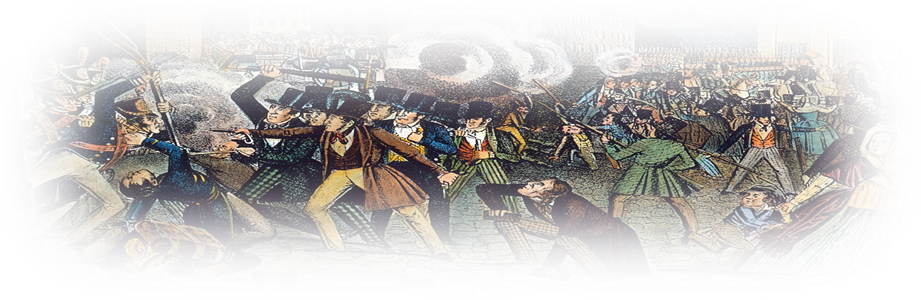
I personally support liberal immigration policies, strictly enforced. I do so for several reasons, moral as well as practical. Morally, the United States, despite always having been intensely xenophobic, was purportedly founded as a haven for foreigners as exemplified in Emma Lazarus’s sonnet, the “New Colossus” and, if the country is to remain true to its purported ideals, continued immigration is an essential pillar. But ignoring the foregoing, the reality is that current and anticipated demographics demonstrate a decreasing birthrate and a concurrent increase in the aging population which means that without an influx of new taxpayers and contributors to social security, the social security system and indeed, the treasury, will soon lack the necessary financing to fund essential government programs. That is a reality, unpleasant but unavoidable. Consequently, not only the United States but Western Europe desperately require not only their current immigrants, legal as well as undocumented, but additional immigrants as well. The real obstacle to the foregoing however involves racial, ethnic and religious bigotry with current citizens unwilling to see demographic changes that ironically duplicate those occasioned when their own ancestors immigrated and changed preexisting demographic realities. Ask any Native American. That bigoted reality existed during the colonial period when English colonists despised German newcomers, and then when they both despised Italian immigrants, and then the Hispanics, and especially for some reason, Asiatics[3].
So, I suggest you read at least the initial part of the cogent article by Sue Seboda referenced above and then, considering the issues I’ve raised in this brief reflection, think clearly rather than emotionally, avoiding reaction merely based on your political loyalties (they should reflect your opinions rather than forming them) and, based on facts rather than emotions, arrive at a wise and workable political posture that you will hopefully share with others. Hopefully many others. Whichever side of the issue you find most palatable.
_____
© Guillermo Calvo Mahé; Manizales, 2026; all rights reserved. Please feel free to share with appropriate attribution.
Guillermo (“Bill”) Calvo Mahé (a sometime poet and aspiring empirical philosopher) is a writer, political commentator and academic currently residing in the Republic of Colombia (although he has primarily lived in the United States of America of which he is also a citizen). Until 2017 he chaired the political science, government and international relations programs at the Universidad Autónoma de Manizales. Previously, he chaired the social studies and foreign language departments at the Eastern Military Academy in Huntington, New York. He is currently the publisher of the Inannite Review available at Substack.com; an intermittent commentator on radio and television; and, an occasional contributor to diverse periodicals and publications. He has academic degrees in political science (BA, The Citadel, the Military College of South Carolina), law (JD, St. John’s University, School of Law), international legal studies (LL.M, the Graduate Division of the New York University School of Law) and translation and linguistic studies (GCTS, the University of Florida’s Center for Latin American Studies). However, he is also fascinated by mythology, religion, physics, astronomy and mathematics, especially with matters related to quanta, cosmology and cosmogony. He can be contacted at guillermo.calvo.mahe@gmail.com and much of his writing is available through his blog at https://guillermocalvo.com/.
[1] I should disclose that I arrived as an immigrant to the United States, joining my mother and new step father (a native born US citizen whose parents had immigrated to the United States from Greece), on or about October 12, 1952, albeit as a legal, fully documented immigrant, and that I am currently a dual United States-Colombian citizen. Much easier way back then.
[2] I note that in the past I have been a member of the United States Libertarian Party, indeed, I was a member of the Executive Committee of the Libertarian Party of Florida, and that such political party vehemently opposes a national identification system, as has, in the past, the Republican Party. For many decades now, however, I’ve been a registered “independent”.
[3] The Civil War era American Party (better known as the Know Nothings) was illustrative of the foregoing, see generally Calvo Mahé (2026): “On the Organic Ancestry of MAGA and of Its Ironic Incoherence”, published on various platforms including the Medium, Substack and on my personal blog on February 10, 2026), available at https://guillermocalvo.com/2026/02/10/on-the-organic-ancestry-of-maga-and-of-its-ironic-incoherence/.
 Guillermo Calvo Mahé