Unknown's avatar

About Guillermo Calvo Mahé

I’ve done many things over the years and I’ve lived in many places. Until 2016 I chaired the Political Science, Government and International Relations Program at the Universidad Autónoma de Manizales in the Republic of Colombia where I taught political science (human rights law, international and supranational law, constitutional theory, government and comparative political systems, history of political ideas, and, North American Studies), served as an English resource to faculty members, translated academic papers, and participated in development of international faculty and student exchange programs for the university. I periodically serve as a political commentator on local media and continue to be active as a writer and artist as well as a translator and interpreter. My university degrees are in political science, law, international legal studies and translation studies. I am active political matters both locally and internationally and have a passion for world affairs and history. I’ve sought spiritual enlightenment all my life but have yet to find definitive answers; I have, however, found an ever increasing and worthwhile, series of questions to speculate on. I am very drawn to the beauty, simplicity and justice of the Wiccan Reede. I love music, dancing, writing, reading, drawing, equestrian sports, tennis and softball. I maintain a warm and supportive ongoing relationship with my three sons in the USA. I was married twice with one serious relationship between the two marriages and also had several wonderful recent relationships. I dislike jealousy and respect the importance of private space and continuing individual growth; however, I also value loyalty and honesty very much and treasure affection.

Reflections on an Easter Sunday

While I am admittedly not a believer in the divinity of any being born of a human woman, or perhaps, of any divinity at all, I am not a “non”-believer, acknowledging that anything is possible and that I have yet to discern the truth, though I have searched for it during eight decades so far.  Nonetheless, I have had a lifelong fascination with the Palestinian born in Nazareth whose personal name was probably Yešu and who would perhaps be most non-confrontationally referred to as Yešu of Nazareth, although he was purportedly born in Bethlehem, both Palestinian villages. 

I have read a great deal about him, not only through biblical sources but also the Jewish response to the Christian Gospels, a series of alternative versions collectively referred to as the Toledot Yeshu, and I have written and published a bit on the subject which draws me to it as a means of seeking to understand myself and ourselves and perhaps, even the concept of divinity. 

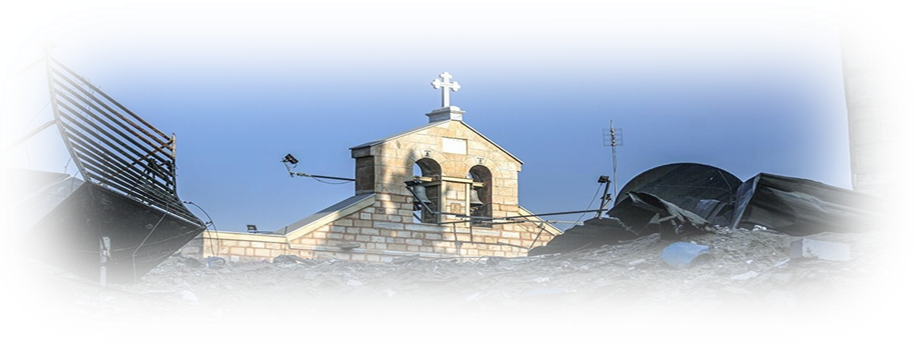
Today is a confluence of days holy to major branches of Christianity, the Orthodox, the Catholic, the Protestant and others, as well as part of a season sacred to Jews, a somewhat rare confluence, and it is taking place during the Zionist genocide of the Palestinians and the ethnic cleansing of Palestine thus, at least to me, it is a day not for joyous celebration of a resurrection but of sad reflection on human nature, and on how disappointed in us Yešu the Nazarene would be, as hypocrisy and murder and mayhem have become the norm, although it may well be probable that such has always been the case.
_____

© Guillermo Calvo Mahé; Manizales, 2025; all rights reserved.  Please feel free to share with appropriate attribution.

Guillermo (“Bill”) Calvo Mahé (a sometime poet) is a writer, political commentator and academic currently residing in the Republic of Colombia (although he has primarily lived in the United States of America of which he is also a citizen). Until 2017 he chaired the political science, government and international relations programs at the Universidad Autónoma de Manizales. Previously, he chaired the social studies and foreign language departments at the Eastern Military Academy in Huntington, New York. He is currently the publisher of the Inannite Review available at Substack.com; an intermittent commentator on radio and television; and, an occasional contributor to diverse periodicals and publications. He has academic degrees in political science (BA, The Citadel, The Military College of South Carolina), law (JD, St. John’s University, School of Law), international legal studies (LL.M, the Graduate Division of the New York University School of Law) and translation and linguistic studies (GCTS, the University of Florida’s Center for Latin American Studies). However, he is also fascinated by mythology, religion, physics, astronomy and mathematics, especially with matters related to quanta, cosmology and cosmogony. He can be contacted at guillermo.calvo.mahe@gmail.com and much of his writing is available through his blog at https://guillermocalvo.com/.

Anthropomorphic Nihilism

Once upon a time, not a very long time ago nor in a very faraway place, there lived, for a very brief instant in time, a very young title in search of a story.  It had heard of Neil Gaiman’s short story “Forbidden Brides of the Faceless Slaves in the Secret House of Dread Desire” and that had turned out rather well, thus, it found itself inspired, albeit perhaps not quite prepared for success.  The following is what, after not looking all that long or, to be honest, without very much exertion, it created:

The story started with an exclamation bereft of an introduction or of any character development or context, although, to an extent, context sort of followed: 

So what!  Who cares?  What’s the difference anyway?”

In that manner, in a huff, a disputation appeared to end, one between inanimate marble busts of “purported saints” Peter and Paul, sculptures crafted by one of Pablo Diego José Francisco de Paula Juan Nepomuceno Cipriano de la Santísima Trinidad Ruiz Picasso’s lesser known relatives who, for reasons of his or her own, chose to remain anonymous. 

The busts had been stored in a vestibule deep in the heart of the Vatican, a vestibule located within a labyrinth of sorts, not an artfully designed or planned labyrinth but rather, one that had seemingly evolved on its own as discarded tomes and relics and pieces of art accumulated in utterly random order, or rather, in a sort of articulated disorder.  Both saints on whom the busts had been purportedly modeled were reputed, within certain clandestine circles, to have been secret agents planted several millennia ago by Sanhedrin agents (precursors to the current Israeli Mossad) as provocateurs among naïve early followers of a troublesome Nazarene rabbi in order to undermine the early Judaic heretic sect all too quickly spreading like some sort of early virus (although viruses preceded humans by many eons).

For some odd reason, the busts of the purported saints, both of whom found themselves somewhat unexpectedly set in carefully hidden niches, were declaiming in a variant of sorts of modern English, although with blended Brooklyn-Yiddish accents, perhaps understandably given that the event to which we are alluding occurred relatively shortly after a visit by a group of the Vatican janitors and Swiss Guards assigned to the Vatican’s deepest dungeons, or perhaps storerooms; an incognito visit to the tourist filled Bioparco di Roma which was just then hosting a large American tourist group of former Yeshiva students.  One should, however, keep in mind, that the phrase “relatively shortly” may have a relative temporal meaning where the Vatican is involved.

Although, … perhaps the foregoing was just a dream one of the janitors or Swiss Guards was having after a hearty but poorly prepared meal using ingredients perhaps well past their due dates, certainly none of which met with Kosher dietary exigencies.  It’s been known to happen.  Well, not exactly in this fashion, but perhaps, metaphorically …. 

Or perhaps not.

On the other hand ….

No Neil Gaiman here, … unfortunately, he’s regrettably otherwise occupied.
_____

© Guillermo Calvo Mahé; Manizales, 2025; all rights reserved.  Please feel free to share with appropriate attribution.

Guillermo (“Bill”) Calvo Mahé (a sometime poet) is a writer, political commentator and academic currently residing in the Republic of Colombia (although he has primarily lived in the United States of America of which he is also a citizen). Until 2017 he chaired the political science, government and international relations programs at the Universidad Autónoma de Manizales. Previously, he chaired the social studies and foreign language departments at the Eastern Military Academy in Huntington, New York. He is currently the publisher of the Inannite Review available at Substack.com; an intermittent commentator on radio and television; and, an occasional contributor to diverse periodicals and publications. He has academic degrees in political science (BA, The Citadel, The Military College of South Carolina), law (JD, St. John’s University, School of Law), international legal studies (LL.M, the Graduate Division of the New York University School of Law) and translation and linguistic studies (GCTS, the University of Florida’s Center for Latin American Studies). However, he is also fascinated by mythology, religion, physics, astronomy and mathematics, especially with matters related to quanta, cosmology and cosmogony. He can be contacted at guillermo.calvo.mahe@gmail.com and much of his writing is available through his blog at https://guillermocalvo.com/.
Strange, Senryū-Like Pseudo-Scientific Observations

Memes and genes and photons, speed and time and space, dark matter and dark energy:

Is the transportation and reassembling of information, as is the case with memes and genes, a principle photonic function?

Does the purported reality that time bears an inverse relationship to speed and thus to space perhaps imply that it may flow in more than one direction?

Are dark matter and dark energy, in a sense, a reflection of the foregoing?
_____

© Guillermo Calvo Mahé; Manizales, 2025; all rights reserved.  Please feel free to share with appropriate attribution.

Guillermo (“Bill”) Calvo Mahé (a sometime poet) is a writer, political commentator and academic currently residing in the Republic of Colombia (although he has primarily lived in the United States of America of which he is also a citizen). Until 2017 he chaired the political science, government and international relations programs at the Universidad Autónoma de Manizales. Previously, he chaired the social studies and foreign language departments at the Eastern Military Academy in Huntington, New York. He is currently the publisher of the Inannite Review available at Substack.com; an intermittent commentator on radio and television; and, an occasional contributor to diverse periodicals and publications. He has academic degrees in political science (BA, The Citadel, The Military College of South Carolina), law (JD, St. John’s University, School of Law), international legal studies (LL.M, the Graduate Division of the New York University School of Law) and translation and linguistic studies (GCTS, the University of Florida’s Center for Latin American Studies). However, he is also fascinated by mythology, religion, physics, astronomy and mathematics, especially with matters related to quanta, cosmology and cosmogony. He can be contacted at guillermo.calvo.mahe@gmail.com and much of his writing is available through his blog at https://guillermocalvo.com/.

Thoughts on an Equinox in the Year 2025

At 5:01 a.m., EST, today, the 20th of March in the year 2025, all hemispheres on our planet experienced one of the two annual equinoxes.  One would hope today’s would involve an instant of harmony and balance but, … not so. 

Genocide, murder, ethnic cleansing and hypocrisy reign thanks to the monsters who inhabit Israel and to their enablers in the United States, the United Kingdom, Germany and France as well as among the diverse Middle Eastern dictatorships: Saudi Arabia, Qatar, the United Arab Emirates, Jordan, Egypt, etc. 

It is instead an instant during a multiyear period when evil reigns and when, as Leo Durocher once noted, nice guys finish last, although, among world leaders, nice guys are a rare breed, as rare as are decent men and women.

As was the case when the Nazis ruled in Germany, most decent people, at least in North America and Europe, are deluded.  They’re like ostriches with their heads in the sand or like the three simians who believe that as long as they can avoid hearing, seeing, or talking about the evil in which they’re immersed, they’re safe. 

Those in the Global South, more sensitized by their experience with the colonialist North, look on enraged and ashamed but impotent as the phrase “never again” morphs into “as usual”. 

Sad thoughts on a lonely planet spinning along in a multiverse where justice and equity are irrelevant.
_____

© Guillermo Calvo Mahé; Manizales, 2025; all rights reserved.  Please feel free to share with appropriate attribution.

Guillermo (“Bill”) Calvo Mahé (a sometime poet) is a writer, political commentator and academic currently residing in the Republic of Colombia (although he has primarily lived in the United States of America of which he is also a citizen). Until 2017 he chaired the political science, government and international relations programs at the Universidad Autónoma de Manizales. Previously, he chaired the social studies and foreign language departments at the Eastern Military Academy in Huntington, New York. He is currently the publisher of the Inannite Review available at Substack.com; an intermittent commentator on radio and television; and, an occasional contributor to diverse periodicals and publications. He has academic degrees in political science (BA, The Citadel, The Military College of South Carolina), law (JD, St. John’s University, School of Law), international legal studies (LL.M, the Graduate Division of the New York University School of Law) and translation and linguistic studies (GCTS, the University of Florida’s Center for Latin American Studies). However, he is also fascinated by mythology, religion, physics, astronomy and mathematics, especially with matters related to quanta, cosmology and cosmogony. He can be contacted at guillermo.calvo.mahe@gmail.com and much of his writing is available through his blog at https://guillermocalvo.com/.
Brief Reflections on the Ides of March in 44 BCE almost 2069 Years Later

The Ides of March, again, sort of.  

But how long has it actually been since that fateful 15th of March in the year 44 before the dawn of what we, for some reason, refer to as the Common Era? 

Actually, because of changes in the nature of our calendar, the 2069th anniversary of the assassination of Gaivs Ivlivs Caesar on the Ides of March in 44 BCE, as calculated under the Julian calendar adopted the year prior to Caesar’s death, would today yet be almost two weeks away, on the 28th of March in our current Eurocentric calendar. 

A tidbit to be sure but perhaps interesting given the nature of our world today, a confusing complex of false history and false news with just enough verisimilitude to make it sufficiently credible to aid in our perpetual manipulation.

Interesting also given how many among our polarized citizenry are reflecting favorably on the events of that day, without considering its consequences.
_____

© Guillermo Calvo Mahé; Manizales, 2025; all rights reserved.  Please feel free to share with appropriate attribution.

Guillermo (“Bill”) Calvo Mahé (a sometime poet) is a writer, political commentator and academic currently residing in the Republic of Colombia (although he has primarily lived in the United States of America of which he is also a citizen). Until 2017 he chaired the political science, government and international relations programs at the Universidad Autónoma de Manizales. Previously, he chaired the social studies and foreign language departments at the Eastern Military Academy in Huntington, New York. He is currently the publisher of the Inannite Review available at Substack.com; an intermittent commentator on radio and television; and, an occasional contributor to diverse periodicals and publications. He has academic degrees in political science (BA, The Citadel, The Military College of South Carolina), law (JD, St. John’s University, School of Law), international legal studies (LL.M, the Graduate Division of the New York University School of Law) and translation and linguistic studies (GCTS, the University of Florida’s Center for Latin American Studies). However, he is also fascinated by mythology, religion, physics, astronomy and mathematics, especially with matters related to quanta, cosmology and cosmogony. He can be contacted at guillermo.calvo.mahe@gmail.com and much of his writing is available through his blog at https://guillermocalvo.com/.

Aspirational Sanguinity

He’d thrown caution to the wind, gambling again against the future and the past, willingly offering them up in exchange for the possible enchantment that appeared to be within his grasp, fleeting though it might be, hoping that one single triumph would make everything else, all the past failures, irrelevant.

It was not a unique situation. 

In the past, similar circumstances had failed to fulfill his expectations.  But they’d always extracted the full price he’d been willing to pay.  He’d been left emotionally, physically and materially drained but, he’d just start anew, never learning and hoping that he never would.

His past infatuations had rarely matured into even meaningful relationships and certainly not into “the” special relationship he’d always optimistically intuited.  Yet “rarely” had always seemed, at least momentarily, enough.  And despite his past failures, not that many but not that few, he remained optimistic.  After all, the unique experience he hoped for could only really occur, in its most profound sense, once.  And only one person out of all the people who had ever been born or would ever be born could fulfill it.  The person who, as to him, would prove to be the single source of complete resonance: amorous, intellectual, spiritual and physical, melding their individual vibrancies into a single perfect wave, one between and among them and no one else.

Or so he understood. 

Others wondered what sort of wave might coalesce through the joinder of more than just two, perhaps even many vibrancies, and the more spiritual aspired to join the ultimate wave that might be formed joining us all.

The possibility of artificial intelligence encapsulated in the verisimilitude of human form might soon complicate the premises involved.

But, as to him, at that moment, at that instant, he wondered what she, the latest catalyst for his obsession, was thinking.  Or of what, perhaps, she was dreaming.  Which raised the issue of which was the real world, the waking or the dreaming.  And then, whether the objects in a dream, the beings who seemed to populate it, had their own realities, their own dreams.  And finally, the eternal speculation as to whether we might not all just be objects in the perpetual dream of the most primordial of all denizens of the vegetable kingdom, as so many plants and flowers and shrubs and trees, especially giant redwoods, seem to hope.
_____

© Guillermo Calvo Mahé; Manizales, 2025; all rights reserved.  Please feel free to share with appropriate attribution.

Guillermo (“Bill”) Calvo Mahé (a sometime poet) is a writer, political commentator and academic currently residing in the Republic of Colombia (although he has primarily lived in the United States of America of which he is also a citizen). Until 2017 he chaired the political science, government and international relations programs at the Universidad Autónoma de Manizales. Previously, he chaired the social studies and foreign language departments at the Eastern Military Academy in Huntington, New York. He is currently the publisher of the Inannite Review available at Substack.com; an intermittent commentator on radio and television; and, an occasional contributor to diverse periodicals and publications. He has academic degrees in political science (BA, The Citadel, The Military College of South Carolina), law (JD, St. John’s University, School of Law), international legal studies (LL.M, the Graduate Division of the New York University School of Law) and translation and linguistic studies (GCTS, the University of Florida’s Center for Latin American Studies). However, he is also fascinated by mythology, religion, physics, astronomy and mathematics, especially with matters related to quanta, cosmology and cosmogony. He can be contacted at guillermo.calvo.mahe@gmail.com and much of his writing is available through his blog at https://guillermocalvo.com/.

Perniciously Concupiscent Parodies, Volume One

Biggus Dickus, a character eventually revealed (albeit tangentially) in Monty Python’s documentary on the Life of Brian (which dealt with purported events during the first century of the Common Era), may or may not have involved a parody of the infamous Roman Casanova-wanna-be, Primus Phalux Maximus Quintus (who may or may not have actually existed), and who if he did exist (improbable but one never knows), but for temporal improbabilities, may or may not have been the secret hidden triplet of Publius Clodius Pulcher, the third member of which was the audaciously beautiful, sensuous and libidinous Clodia Metelli, sometimes known as Quadrantaria, of whom the Roman eroticist poet Gaius Valerius Catullus longingly wrote dramatically ambivalent vignettes comprised in equal parts of love, despair and deprecation.  At least that might have been the lead story in the media in the late Roman Republic, circa sixty years before the Common Era, had its journalistic ethics born a resemblance to that of today’s maliciously creative corporate media, which, come to think of it, it may well have, both having prioritized creative writing.
_____

© Guillermo Calvo Mahé; Manizales, 2025; all rights reserved.  Please feel free to share with appropriate attribution.

Guillermo (“Bill”) Calvo Mahé (a sometime poet) is a writer, political commentator and academic currently residing in the Republic of Colombia (although he has primarily lived in the United States of America of which he is also a citizen). Until 2017 he chaired the political science, government and international relations programs at the Universidad Autónoma de Manizales. Previously, he chaired the social studies and foreign language departments at the Eastern Military Academy in Huntington, New York. He is currently the publisher of the Inannite Review available at Substack.com; an intermittent commentator on radio and television; and, an occasional contributor to diverse periodicals and publications. He has academic degrees in political science (BA, The Citadel, The Military College of South Carolina), law (JD, St. John’s University, School of Law), international legal studies (LL.M, the Graduate Division of the New York University School of Law) and translation and linguistic studies (GCTS, the University of Florida’s Center for Latin American Studies). However, he is also fascinated by mythology, religion, physics, astronomy and mathematics, especially with matters related to quanta, cosmology and cosmogony. He can be contacted at guillermo.calvo.mahe@gmail.com and much of his writing is available through his blog at https://guillermocalvo.com/.

Very Diminutive Poetry of Sorts

Yiddish:

Onomatopoeic insouciance!

Not quite a haiku.
_____

© Guillermo Calvo Mahé; Manizales, 2025; all rights reserved.  Please feel free to share with appropriate attribution.

Guillermo (“Bill”) Calvo Mahé (a sometime poet) is a writer, political commentator and academic currently residing in the Republic of Colombia (although he has primarily lived in the United States of America of which he is also a citizen). Until 2017 he chaired the political science, government and international relations programs at the Universidad Autónoma de Manizales. Previously, he chaired the social studies and foreign language departments at the Eastern Military Academy in Huntington, New York. He is currently the publisher of the Inannite Review available at Substack.com; an intermittent commentator on radio and television; and, an occasional contributor to diverse periodicals and publications. He has academic degrees in political science (BA, The Citadel, The Military College of South Carolina), law (JD, St. John’s University, School of Law), international legal studies (LL.M, the Graduate Division of the New York University School of Law) and translation and linguistic studies (GCTS, the University of Florida’s Center for Latin American Studies). However, he is also fascinated by mythology, religion, physics, astronomy and mathematics, especially with matters related to quanta, cosmology and cosmogony. He can be contacted at guillermo.calvo.mahe@gmail.com and much of his writing is available through his blog at https://guillermocalvo.com/.

Perceptually Reversed Internecine Charges

What if words are in fact components of sentient collective streams that actually control us; that use our organic components as tools for their own internecine purposes? 

What if words are, in fact, sentient memes and memeplexes that ride us the way we are led to believe by them that we use animals and tools for what we erroneously perceive to be our own purposes. 

Mightn’t that explain why, in the end as in the beginning, our conduct tends towards incoherence, at least from our own reactive rather than volitional perceptions?

Mightn’t the word, “internecine” say it all, or at least, a great deal?

What if rather than “being because we think” we just “think we are”?

What would a mimetically sentient “god of the words” be like, after all, purportedly, “in the beginning was the Word”?
_____

© Guillermo Calvo Mahé; Manizales, 2025; all rights reserved.  Please feel free to share with appropriate attribution.

Guillermo (“Bill”) Calvo Mahé (a sometime poet) is a writer, political commentator and academic currently residing in the Republic of Colombia (although he has primarily lived in the United States of America of which he is also a citizen). Until 2017 he chaired the political science, government and international relations programs at the Universidad Autónoma de Manizales. Previously, he chaired the social studies and foreign language departments at the Eastern Military Academy in Huntington, New York. He is currently the publisher of the Inannite Review available at Substack.com; an intermittent commentator on radio and television; and, an occasional contributor to diverse periodicals and publications. He has academic degrees in political science (BA, The Citadel, The Military College of South Carolina), law (JD, St. John’s University, School of Law), international legal studies (LL.M, the Graduate Division of the New York University School of Law) and translation and linguistic studies (GCTS, the University of Florida’s Center for Latin American Studies). However, he is also fascinated by mythology, religion, physics, astronomy and mathematics, especially with matters related to quanta, cosmology and cosmogony. He can be contacted at guillermo.calvo.mahe@gmail.com and much of his writing is available through his blog at https://guillermocalvo.com/.

Thoughts on a Winter’s Day High in the Central Range of the Colombian Andes in a City in the Sky in early 2025

I sometimes listen to Paul Simon’s album Graceland when I’m making my bed and arranging my bedroom for the day ahead.  I tend to dance exuberantly (if not well) as I do but, concurrently, I also reflect on the context in which that album was developed and recorded.  And that invariably leads me to consider much more serious issues, and it gives me hope, even in today’s world where things seem so dark, and where evil and injustice and hypocrisy rule.

The album was contextually set in the Republic of South Africa just before it transitioned from a racist, nuclear powered apartheid state into one slowly evolving towards some sort of equity and harmony and justice, still only goals with ups and downs as though a roller coaster was involved, but for one amazing instant in time, an instant impacted in part by that album, South Africa became the shining beacon on a Hill that Ronald Reagan mistook for the country he led.  And that light, that spark, had a name and a history and a profundity hard to match, although other contemporaries who, to some extent shared the trials and tribulations involved, among them, Mohandas Gandhi, Martin Luther King, Jr., Malcolm X, and Muhamad Ali, came close. 

That catalytic shining light involved was the late Nelson Mandela who, after having suffered decades long attempts to humiliate and destroy him by the white South African oligarchs became not only a leader but a unifying symbol in his heterogeneous, multiracial society, the only society to give up both its racist traditions and nuclear armaments voluntarily, and it was white leaders among the white oppressors who, somehow or other, finding a moral compass or perhaps, just coming to their senses, voluntarily albeit grudgingly surrendered their hold on power.  A white society to an extent redeemed, more so certainly than the United States after its Civil War, an event historically distorted and manipulated for political ends having nothing to do with liberation of the Africans and African descendants so long held in bondage, slaves and their descendants who have, unfortunately, whether or not they realize it, merely exchanged one form of involuntary servitude for another.

Today, of course, an evil much worse than that of South Africa’s former masters dominates the Middle East with an even worse form of apartheid, one implemented through genocide and theft and rape and plunder, through calumny and deceit, one arguably even worse than that of the Nazis during the end of the Second World War, and that evil is made possible by hypocrites who claim to be defenders of liberty, justice and human rights from their safe bases in Europe and North America, the places where goods and services looted for centuries from the Global South are hoarded; the world against which Eric Arthur Blair warned us in 1948, a terrible year for justice and truth and equity, the year in which Zionism began its imitation of the Huns and the Visigoths and the hordes of Genghis the Khan.  “Graceland”, an album aptly named but perhaps not after Elvis Presley’s mansion but rather, aspirationally, perhaps reflecting on how a traumatized land and its traumatized indigenous population might one day attain a semblance of grace, of freedom, perhaps even a semblance of justice even if such aspirations are not yet realities.  Unfortunately, Israel’s Zionists do not seem likely to imitate South Africa’s white leaders and revert to the Jewish values, ethics and morals they purport to represent.  Rather, they seek to emulate European colonists in North America and Africa and Latin America and Southeast Asia who, in the name of a confused deity (at best), subjugated and virtually eliminated the indigenous populations who for millennia had peacefully occupied the territory European “settlers” coveted and to which they felt divinely entitled, notwithstanding the Decalogue’s (which they claim to hold sacred) Tenth Commandment.

My bed is now made, my bedroom is now attractively ordered, my exuberant dance is now done.  At least until the morrow.  I have now also read the daily news and reflect as I read about devastated Palestinians returning to their destroyed homes and homeland mourning their dead and attempting to care for their maimed and injured, at least for a few days, maybe even a few weeks.  And from afar, I wonder about what the future will bring now that the genocidal Biden administration is hopefully just a terrible part of recent history and a new era is promised.  Most probably a strange and incoherent era full of inequity and injustice, albeit perhaps not as evil as the dark days that purportedly ended on January 20, 2025.  Who can tell?  After all, even in our world miracles sometimes take place.  Miracles such as the one that took place when Nelson Mandela crossed that bridge after his liberation from decades of imprisonment to assume a path towards a future like the one we are all so consistently promised.  Like the future that Martin Luther King, Jr. perceived just before he was assassinated.  Like the one Mohandas Gandhi also saw for his people, Hindu and Muslim alike, before an assassin’s bullet ended his life.  Like the future of which so many Palestinian leaders murdered by Israel’s purported defense forces during the years since 1948 also dreamed.  Like the one in which murdered Palestinian children perhaps still believed as their limbs were sundered and their skulls were shattered by Israelis using armaments gifted to them by United States, British and German taxpayers, we among them.

Times like ours have long led me, at best an agnostic, to hope that whether or not a Heaven exists, there’s a Hell, one even more horrible than the one imagined by Dante Alighieri, even as I recognize that such an aspiration betrays my belief in the importance of empathy and understanding and forgiveness, one to which I aspire in emulation of someone in whom I don’t quite believe but who fascinates me and who I love and respect, fictional though he may be, at least in the guise presented to us: that gentle Palestinian from Bethlehem or Nazareth who purportedly lived two millennia ago and whose name, Yešu, is universally mispronounced and coupled with a sort of grammatical verbal, an adjective converted into a noun, a Greek term he never considered his own.

2025, like so many others, I wonder what it will bring, some of us hoping for the best, albeit with serious doubts, while others, not only hope for the worst but feel duty bound to do all they can to assure that the next four years will be terrible so that those they follow and support can regain power, the price being no object.  Lemmings come to mind and I wonder what it feels like to float in the air for a few instances before one crashes into the hard surface of a cold sea.  It must at least be interesting given how many of us continuously follow such course.

So, about Paul Simon, I wonder what he thinks about Zionism and Palestine and Palestinians.
_____

© Guillermo Calvo Mahé; Manizales, 2025; all rights reserved.  Please feel free to share with appropriate attribution.

Guillermo (“Bill”) Calvo Mahé (a sometime poet) is a writer, political commentator and academic currently residing in the Republic of Colombia (although he has primarily lived in the United States of America of which he is also a citizen). Until 2017 he chaired the political science, government and international relations programs at the Universidad Autónoma de Manizales. Previously, he chaired the social studies and foreign language departments at the Eastern Military Academy in Huntington, New York. He is currently the publisher of the Inannite Review available at Substack.com; an intermittent commentator on radio and television; and, an occasional contributor to diverse periodicals and publications. He has academic degrees in political science (BA, The Citadel, The Military College of South Carolina), law (JD, St. John’s University, School of Law), international legal studies (LL.M, the Graduate Division of the New York University School of Law) and translation and linguistic studies (GCTS, the University of Florida’s Center for Latin American Studies). However, he is also fascinated by mythology, religion, physics, astronomy and mathematics, especially with matters related to quanta, cosmology and cosmogony. He can be contacted at guillermo.calvo.mahe@gmail.com and much of his writing is available through his blog at https://guillermocalvo.com/.