Afterword

Mists stream slowly towards the end of time at the end of space but still, it seems something exists, something beyond the haze, deep in the dark of bygone nights but composed only of shadows and echoes and perhaps, the residue of pale dry rainbows.  A place where eternity goes to pass away and infinity, exhausted, goes to remember and weep.
_____

© Guillermo Calvo Mahé; Manizales, 2025; all rights reserved.  Please feel free to share with appropriate attribution.

Guillermo (“Bill”) Calvo Mahé (a sometime poet) is a writer, political commentator and academic currently residing in the Republic of Colombia (although he has primarily lived in the United States of America of which he is also a citizen). Until 2017 he chaired the political science, government and international relations programs at the Universidad Autónoma de Manizales. Previously, he chaired the social studies and foreign language departments at the Eastern Military Academy in Huntington, New York. He is currently the publisher of the Inannite Review available at Substack.com; an intermittent commentator on radio and television; and, an occasional contributor to diverse periodicals and publications. He has academic degrees in political science (BA, The Citadel, The Military College of South Carolina), law (JD, St. John’s University, School of Law), international legal studies (LL.M, the Graduate Division of the New York University School of Law) and translation and linguistic studies (GCTS, the University of Florida’s Center for Latin American Studies). However, he is also fascinated by mythology, religion, physics, astronomy and mathematics, especially with matters related to quanta, cosmology and cosmogony. He can be contacted at guillermo.calvo.mahe@gmail.com and much of his writing is available through his blog at https://guillermocalvo.com/.

The Ides of July, 2025, an All Too Personal Introspection

The Kalends and Nones have passed and now the Ides have arrived.  In a week, I’ll start the last voyage around our star, Sol, of the eighth decade of my life on Terra.  A lot has been crammed into those almost seventy-nine years, much of it difficult, some unpleasant, too much perfidious, but I’ve seem to have somehow managed to cope with it all and, a great deal has been undeservedly positive, amazingly so.

It appears, at least to others, that I’m unusually healthy for someone almost seventy-nine years old, unusually active with unusual stamina.  I still play tennis and when I do (three times a week), it’s for at least two hours, sometimes followed by an hour’s walk.  And my hair, though streaked with silver is both plentiful and still dark.  After a long life in the United States, I’m back where I started, in a celestial city high in the central range of the Colombian Andes, living on the tenth floor of a large and comfortable apartment only a few miles from where I first entered this world.  Still, slowly and intermittently, strange aches are making an appearance and, in addition, strange observations are occurring to me such as that “Jack Bunny” (or perhaps “Bugs Benny”) would be a fusion of Jack Benny and Bugs Bunny, and would make an awesome character: as “frugal” as he was witty and droll while concurrently being penurious and ever so lightly pernicious.  I confess that I loved them both although those who remember them tend to be fewer every year.

I’ve succeeded in many things, many of them unexpected.  I’ve taught American History and Problems of American Democracy, among many other things, to citizens of the United States, observing to myself the irony involved in that being done by someone who started life as a young boy from Manizales and that, as a serious historian and researcher, I’ve found that, more often than not, what I taught as a young historian was utterly false.  Indeed, while many feel we’ve recently entered the post truth era, to me, it seems that we as a people have been there since we invented language.  Not something of which I am proud although I’m proud to now understand that history has little to do with reality but a great deal to do with ever-present propaganda, and that “news” reporting has a lot to do with that.  It’s not for nothing that journalism’s most prestigious awards are named after Joseph Pulitzer, an entrepreneur who felt that fiction, presented as news, was an extremely profitable art form and, in that, he was not the first.  Not by far.  Especially in the Anglo-Saxon mythos bequeathed to the United States by the United Kingdom.

Since the early 1970’s I’ve been focused on issues involving the blatant hypocrisy with respect to the two “world” wars of the twentieth century and the related so called “cold war”, as well as on the myriad invasions of foreign countries by the United States to enforce a colonialist economic system deceptively labeled capitalism, amazed at to how easy it’s always been in systems falsely labeled as “democracies” to deceive the populace into accepting what should be unacceptable.  Today, that is especially obvious as the purported victims of the Nazi “Holocaust” engage in a holocaust of their own, one against the Palestinian people, a holocaust fully supported by the United States, the United Kingdom and their NATO allies, a “project involving attempts to implement the Zionist goal of a “Greater Israel” throughout the Middle East and I have consequently come to suspect that too many of the lives lost on every side of most of the conflicts since the dawn of the twentieth century in one way or another involve that hideous Zionist project.  As a young man I was horrified by the Nazi Holocaust and reflected a great deal on what I would have done to protect its victims, had I been born a few decades earlier than my birth in 1946.  After a good deal of reflection I naively concluded that it would have been my ethical and moral responsibility to have done everything in my power to save as many of the victims as possible.  Well now that responsibility is squarely on my shoulders, on our collective shoulders but, no matter how hard those of us who seek justice, equity and peace try, our efforts are nullified by the worst among us and I am coming to understand how the German people, previously among the most moral, ethical and socially conscious people in Europe, indeed, the ones who most fairly treated Europe’s Jews, so permitted the perversion of their values.  It seems, as the old refrain goes, “the more things change the more they stay the same”.  What a depressing realization.  Perhaps that realization is what metaphorically led the Hebrew Archangel Hêl él (inappropriately identified with the Roman god Lucifer) to futilely rebel against the vicious YHWH.

In addition to history I’ve taught comparative mythologies and comparative religions, comparative politics, comparative political systems and comparative constitutions; I’ve also taught democratic theory, international law, human rights law, constitutional law and the history of political ideas.  And I’ve written and lectured as a political analyst and commentator about United States and Colombian politics and about international affairs, about justice and injustice and about the futility of the antithesis of Kant’s perpetual peace.  For a while, I practiced law in New York and then in Florida, admittedly not all that successfully, and I’ve engaged in political consulting devising unusual solutions to mundane problems.  Notwithstanding the foregoing, I’ve not really succeeded in those things that most mattered to me, in my personal relations, although, during the past five years I seem to have finally experienced domestic bliss.  Hopefully, this time is the charm.  I’ve lived with too many women, too many of whom I’ve hurt although, in at least a few instances, failed relationships have matured into warm friendships.  And, in at least one case, a special relationship has lasted for more than six decades.

Professionally I’ve enjoyed impressive successes and devastating failures although in neither case were the results deserved, not really.  I started my professional career after graduating from both the Eastern Military Academy (where I also taught) and the Citadel, the Military College of South Carolina, firmly convinced that our government was beneficent and that the sacrifices it demanded of our best and brightest were really for the common good in a quest for justice, equity and peace.  Unfortunately, as I eventually discovered, I could not have been more wrong.  I found that out when, being true to the honor systems in which I’d been raised, I sought to expose government corruption only to find that corruption is the rule and that it does not take kindly to being exposed.  

You know, naiveté, when it impacts others, is as much a problem as is corruption.  Still, on reflection, my setbacks are the things that most improved me as a human being, the experiences that evoked wisdom and growth and an understanding of the reality in which we live and brought me closer to becoming the person I always hoped I would be: a person focused on others, on justice and equity and fair play, on compassion rather than on conspicuous consumption (although the gravitational well of conspicuous consumption still exercises a strong draw on my fantasies).  In those fantasies I’d be immensely wealthy but dedicated to philanthropy, to providing shelter and food for the homeless, education and healthcare for all, and the opportunity for everyone to attain everything of which they are capable, I would manage to assure a world free of violence and to minimize suffering, although I would still live more than just comfortably.  I wonder how many of today’s greediest billionaires once shared similar fantasies.

In reality though, my greatest fantasy has always been to return to the past and to correct my errors, albeit a return preserving everything I’ve ever learned.  Not at all likely.  An unrealizable chance to have been a better son and a better brother and a better husband and a better father and a better friend and a better teacher and a better lawyer, but not to have been quite so naïve or so trusting, or, with women, not to have so often been so cavalier.  Still, I seem to have learned from my mistakes and while still far from the person I’d like to see looking back at me in the mirror, I’m now perhaps the best version of myself that I’ve ever been, and that’s something not all of us achieve as the years grow heavier on our shoulders.

I’ve written quite a bit during the past two decades since the demise of my marriage to the mother of my three sons and among the things I’ve written is that, if there’s a karmic afterlife along Abrahamic lines, something in which I do not believe, then in order to attain a paradisiacal afterlife, two things would seem necessary (and perhaps only two things), two things somehow echoing a portion of what has come to be known as the Lord’s Prayer: first, to have forgiven everyone who has wronged me or caused me harm, intentionally or not, and second, to have received sincere forgiveness from everyone who I’ve harmed in any way, intentionally or not.  Unfortunately, I fear I would fail in both respects.  Most of us, unfortunately, would which is why, if a heaven and hell exist, heaven would be tiny and hell enormous.

My atonement for such failure, in another nightmarish fantasy, would be to be left as the final guardian of the omniverse, to live on and on, alone, incorporating everything that ever was or ever would be, reliving it from the perspective of every being that had ever been or ever would be, over and over again, but absolutely alone, the only remnant of everything that had ever been or would ever be, but without the capacity to attain insanity.  To become infinitely bored and alone.  Totally and completely alone.

Yuck!

I sometimes speculate that, if the evil Abrahamic deity in fact existed, something I cannot believe, an experience similar to the afterlife I’ve just described had turned it into the vicious deity reflected in the Tanakh, the one against whom Hêl él rebelled, the one who revels in genocide and demands ritual castration of its male followers and seems to enjoy deceit and trickery and the blood of sacrificed animals and murdered human beings as well.  And if that were the case, I wonder how it escaped the punishment that turned it into what it became, speculating that perhaps the creation in which we find ourselves is just its nightmarish fantasy.  But then I wonder if it’s all my own nightmarish fantasy and I wonder if perhaps I’m not already serving my sentence as the final guardian of the omniverse.

I think not.  I certainly hope not.

I believe that I still have quite a while to live.  That’s something I’ve promised my much younger wife, my very special wife, my wife who seems the embodiment of everything positive, a source of beneficence to everyone with whom she comes into contact, the woman who somehow or other found me and seems determined to love me and even to admire me. To trust me and to have faith in me.  And that has made me a better person than I’ve ever been before even if it’s a lot to even try live up to.

What a strange life my life has been.  Like Pablo Neruda’s, although not as nobly, my life has been much too full and with quite a bit of time still apparently left.  Which leads me to wonder just who and what I am and what my purpose in having lived has been, and what purposes still remain to be fulfilled.

Anyway, ….

Seventy-eight bottles of beer on the wall, seventy eight bottles of beer … and still counting.  As a seventy-ninth bottle seems about to arrive.
_____

© Guillermo Calvo Mahé; Manizales, 2025; all rights reserved.  Please feel free to share with appropriate attribution.

Guillermo (“Bill”) Calvo Mahé (a sometime poet) is a writer, political commentator and academic currently residing in the Republic of Colombia (although he has primarily lived in the United States of America of which he is also a citizen). Until 2017 he chaired the political science, government and international relations programs at the Universidad Autónoma de Manizales. Previously, he chaired the social studies and foreign language departments at the Eastern Military Academy in Huntington, New York. He is currently the publisher of the Inannite Review available at Substack.com; an intermittent commentator on radio and television; and, an occasional contributor to diverse periodicals and publications. He has academic degrees in political science (BA, The Citadel, The Military College of South Carolina), law (JD, St. John’s University, School of Law), international legal studies (LL.M, the Graduate Division of the New York University School of Law) and translation and linguistic studies (GCTS, the University of Florida’s Center for Latin American Studies). However, he is also fascinated by mythology, religion, physics, astronomy and mathematics, especially with matters related to quanta, cosmology and cosmogony. He can be contacted at guillermo.calvo.mahe@gmail.com and much of his writing is available through his blog at https://guillermocalvo.com/.

Reflection on Fathers’ Day, 2025

Fathers’ day in 2025 falls on the Ides of June, a month containing thirty days thus set squarely at the end of the first half of the month.  Interesting.  Why though, I don’t know.  The world seemingly finds itself on the brink of World War III as Israel, backed by the United States, the United Kingdom, Germany and France continues its rampage in the Middle East, engaging in genocide and ethnic cleansing in Palestine while it invades and occupies Syria and Lebanon and now, has launched an all-out, Pearl Harbor style, war against Iran.  But it’s still “fathers’ day”, somewhat of a commercial disappointment but meaningful in its own way.

On Fathers’ Day I frequently reflect about fathers who’ve lost access to their children or who’ve become estranged from their children, sometimes deservedly so but too often due to a complex mix of reasons over which neither they nor their children had control.  Of course, this year, thanks to Israel, there are a great many more fathers who’ve lost their children, permanently, and children who have lost their fathers (and their mothers), also permanently, but that has been the norm in Palestine since the Zionist invasion.  Thus, for me, it’s not really a day for celebration but rather, for mourning.  And for reflection and introspection.  I certainly want to reflect a bit on fatherhood, it may be the last chance we get.  But this year, I want to focus on my sons, Billy and Alex, who are now fathers, and on my third son, Edward, who has deferred the experience, as well as to reflect on my own parents, and my own related experiences.

My son Billy’s fatherhood represents the idyllic spectrum in an idyllic setting with an idyllic wife and two idyllic children: Rosario, the eldest (by quite a bit), and Cameron, the new kid on the block.  The positive family television series of the 1950s and early 1960s (e.g., Father Knows Best, the Danny Thomas Show, My Three Sons, Leave it to Beaver, etc.) have nothing on Billy’s actual life.  And I fervently hope it stays that way.  He is married to the only woman who he has ever dated, graduated from the Citadel, the Military College of South Carolina, as I did, and has been employed by the same financial services firm for a decade.  Stability in a positive setting is his hallmark.

Alex’s experience with fatherhood has been more complicated.  Alex’s experiences in everything have been more complicated.  He has lived a full life even though he’s only thirty-seven.  Some of it has been harsh and unfair, but he’s always turned his negative experiences into assets and is not a published author researching and writing about things that have fascinated him since he was a child.  He was an excellent teacher while he lived with me in Colombia, perhaps the most popular English teacher in the City of Manizales where people still ask me how he’s been doing, but he met a coworker who he married, and she was afflicted with the North American dream and talked him into returning to the United States.  She had a baby daughter when they met and Alex quickly became the only father she ever knew.  They immediately bonded and grew to love each other completely.  Alex eventually married Salo’s mother, largely, I believe, because of his love for Salo, and subsequently became the father of his own daughter, Melissa, an absolute delight.  Unfortunately, his world was recently stricken by a bitter divorce where he had to fight with everything he had to retain even shared custody of Melissa.  That is hardly unusual when the North American Dream is involved and the spouse attains United States citizenship, permitting her (or him) to initiate the process of bringing their own families to the United States without having to count on their former spouse.  But divorce, for whatever reason is all too common now although, in my admittedly biased opinion, it was very much undeserved in Alex’s case.  He is a great dad and one of the most empathic people I know.  Many of his friends have told me that they owe their lives to him as he was there for them when they most needed someone.  He has also been there for me in my own darkest hours.  I certainly hope fate will reciprocate that empathy in Alex’s case.  No one deserves it more than he does.  More than any of my other sons, Alex has mirrored my experiences, on the positive side with respect to his vocation as an educator and a writer but on the negative side with an unsuccessful domestic relationship.  Hopefully, in the end, Alex’s experience will turn out as positive as mine has, albeit with less stops along the way.

My youngest son Edward, perhaps impacted by the trauma occasioned as my marriage to his mother fell apart, has avoided the issue altogether.  He has done so by remaining single and has instead dedicated himself to being the best uncle ever.  Edward’s is the safer route and the one that so many people are now taking, avoiding the terrible pain of unsuccessful parenthood but missing out on the indescribable joys that parenthood so often brings.  My aunt Carola followed that path, as does my current sister-in-law, Diana Carolina.  As does my nephew Robert.

With reference to my own experience as a son I frequently think about my own parents, my mother, my father and my stepfather.  I am among the majority who now sport a fragmented family.  I’ve sometimes been critical of them all, although mainly of my father who vanished when I was three, who sort of reappeared, at a distance, when I was fourteen only to quickly vanish again when I was twenty-two, and who then, reappeared for good (but also for ill) when I turned fifty-four.  He was a brilliant, deeply talented but horribly blemished man who left children scattered here and there as one attempt at a family after another failed.  His refusal to acknowledge the verities involved eventually alienated him from all his children, although a few of us nonetheless made sure that despite our abandonment, he was taken care of in his final years.  He had a very different upbringing than I did.  He was raised in a traditional family with a father who was a well-known and respected sculptor and artist as well as a civic activist and he seemed headed for an illustrious career as an innovative aeronautical engineer as well as a journalist.  As a young teen he had already founded and published a newspaper in the Colombian city of San Gil, the “Gazette Juvenil”, and had engineered a prototype jet engine.  But perhaps too soon, he had met my mother, secretly married her and, when their deception was discovered, was given the choice by his parents of abandoning her or being cast from his family.  He chose my mother and was taken in by my grandmother but his dreams had been dashed and he became an accountant instead.  Unfortunately, perhaps, the marriage did not last.  After a manic series of successes and failures and way too many intimate relationships, his life ended several years ago in a small, somewhat primitive adult congregate living facility in Venezuela where he was visited frequently only by my half-sister Ellen.  A sad end to a sad life.

My stepfather, to whom I always referred as “Pop”, at his suggestion, was a very loving father but apparently also deeply flawed, immersed in mysteries from which I was shielded, and involved in occasional instances of violence towards me, although to the best of my knowledge, not towards my siblings or my mother.  He was a felon having been sent to jail in his youth for a botched burglary involving a union scandal.  He’d been tasked with breaking into the home of a New York labor leader to obtain documentation proving that union funds were being misdirected but as a burglar, he was not very successful and had been easily captured.  His future prospects were destroyed in that instant as those who’d sent him on what to him appeared to involve a noble mission all too quickly disavowed him.  When he was eventually released from prison decades later he worked as a short order cook but presented himself to my mother, when they met, as a successful restauranteur.  His family was well off and owned the Metropole Café and Restaurant in New York City as well a large beauty salon on Northern Boulevard in Flushing, but he had no economic interest in either and he was living in Miami Beach anyway.  The foregoing could have been overcome had he not also become addicted to gambling.  He apparently felt that through gambling he’d be able to make up for all the economic opportunities he’d missed while imprisoned.  He neither drank nor consumed narcotics but his gambling seemed all consuming as a result of which we never, during our nine years as a family, lived in the same place for longer than a year.  I loved him very much but eventually, although I knew nothing of his past, I lost respect for him, ironically, as his respect for me grew.  He died very young, just before his sixtieth birthday, when I was twenty-six and was about to start law school.  His last words to me were to the effect that he had more faith in me than he had in god, asking me to look after my siblings, my sister Marina and my brother Teddy.

And my mother? 

Why discuss my mother on fathers’ day; after all, this reflection is about fathers. 

Well, … she was an amazing human being, something common to many mothers, albeit not free of flaws.  She made mistakes but always tried her very best and she was amazingly successful in providing for our needs, providing for them alone after her marriage to my step father ended in 1962 when she, like so many other mothers, became a single parent.  She was a much more successful provider than seemed possible, never permitting me to grasp just how hard it had been for her to earn enough to give me an excellent education.  I love and respect her more every day despite the fact that she’s been gone for a bit over thirty-five years, and I admire her, not least of all, because rather than criticize my failed father figures, she hid their flaws and emphasized their good points, creating a virtual father for me from traces of my father and from her own inventions, giving him credit for many of the things for which she herself had been responsible, all woven into a benign albeit illusory paternal tapestry.  A trajectory very different from that employed by most single mothers who instead disparage their former spouses seeking to induce their children to do the same.  That’s why she fully belongs in my reflections on fatherhood.

Although my early life was difficult, I thought it normal.  Neither my father nor my stepfather were really active in my upbringing.  Neither taught me sports nor enrolled me in little league or pop warner football, which I would have loved, or taught me how to play any sport, but somehow or other I learned the related skills on my own.  Perhaps because of that neglect I promised myself that if I ever had children I would be a very active part of their lives.  And I was.  But as I now understand, they would have much preferred that I’d been more distant and less involved.  I tried to be the best father ever but, according to my sons, and they would know, I failed. 

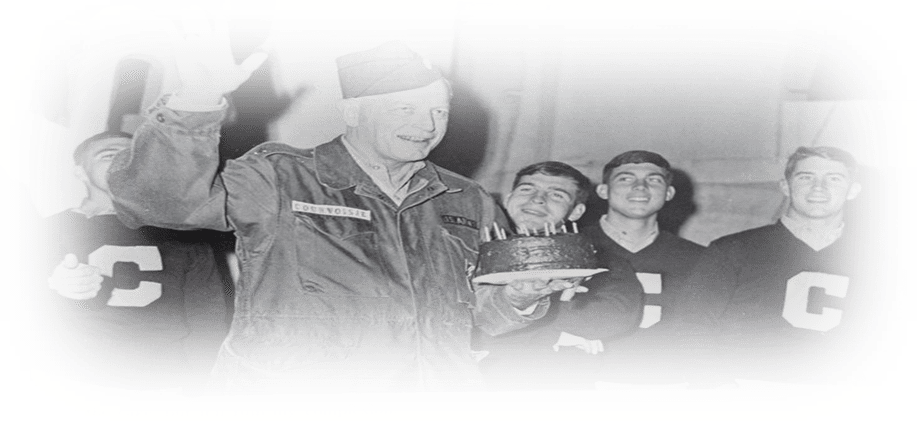
Parenting standards have changed a great deal during my lifetime and the ones Billy and Alex have adopted certainly seem superior to those I and their mother employed.  But parenting standards as well as the nature of the family are in flux and that has led me to conclude that perhaps Edward’s choice might have been the wisest, at least for me.  Still, that seemingly logical observation is tempered by my own memories of the unsurpassable joy my sons engendered when times were good.  Or at least when I perceived that they were good.  I’m reminded of the controversy over Bing Crosby as a father but he at least had the opportunity to correct the errors he made trying to raise his first four sons during a much happier experience with the three children from his second marriage.  Second chances, however, are not all that common.  Nor would I now want any more children of my own.  However, another strange element somewhat related to parenthood is the relationship I’ve had during the past six decades with hundreds of young people, initially only males but during the last two decades with young women as well, my former students.  First at the Eastern Military Academy in Huntington, New York, which I attended and where I returned as an instructor and administrator after I’d graduated from the Citadel, the Military College of South Carolina; and then, at various universities in Manizales, Colombia, the city of my birth.  As a student at Eastern one person stood out as a father figure to many of us, Leopold Hedbavny, Jr., first as the dean of faculty and then, when I returned, as the headmaster.  Another wonderful paternal figure awaited me at the Citadel, the assistant commandant of cadets during my tenure there, Lt. Colonel Thomas Nugent Courvoisie, a father to all of us (to whom he referred as his lambs).  Interestingly, to a degree, following their example I morphed into a father figure for some of my own students and I felt that kinship profoundly, one molded of responsibility and privilege, and that sense continued when I returned to Colombia after a life in the United States.

There’s a saying that “the more things change, the more they stay the same”, at least in important aspects and, as a historian, that seems to me to be a refrain that has echoed in one form or another through the millennia.  Parenting standards and goals seem to alternate generationally.  We seem to try to fill the gaps in our own experiences but, once filled, what we thought was essential seems either irrelevant or negative to our children.  Instead, they find their own serious gaps in what we sought to provide them.  Intergenerational communication, as of today, seems to have always been a largely hopeless goal.  At least in too many families, mine certainly included, and that bidirectionally.

So, all things considered, on this fathers’ day, a very complex day for me as it is for many others, as I reflect on my life and paternal experiences, I come to the conclusion that, despite my lack of success, in reality, I have a great deal for which to be grateful.  I give thanks for the lessons in fatherhood my sons learned from my mistakes, lessons which have made them wonderful parents.  I profoundly regret my failings which have led to estrangement from them but which, perhaps, have made them better men, and I give thanks for the fact that if I was not the father I hoped to be, I now have a wonderful wife who I cherish and who cherishes and cares for me and who, to an extent, fills the void which the estrangement from my sons has left.  Last but certainly not least, I give thanks that I have many hundreds of former students from over half a century as an educator, some of whom have seen a father figure in me.  I remain in almost daily contact with many of them and still try to help them whenever I can.

As an important and very relevant aside, my younger brother Teddy passed away in his sleep at the end of May with his daughter Alissa, with whom he too had had a complex relationship but one that, at its end, became profound and beautiful, at his side, … literally.  During a part of his life he revered aliens that he’d once feared and, on the shores of Venice Beach in California, on certain dawns only he knew how to identify, he could be found seeking to evoke them.  Not to ask for anything but rather, to express his gratitude, although gratitude for what I don’t know.  He would chant “Great Ones, we are grateful” in that phrasing sharing the grace for which he hoped with us all.  He was a child woven from threads of love into a somewhat tattered and battered but beautiful tapestry.  His experience of fatherhood reminds me of Milton’s Paradise Lost and Paradise Regained rather than of Dante’s Inferno in which I sometimes imagine myself to be trapped (but from which I always somehow finding a means of escape).  For me, it’s not been a perfect life but it has been one that’s given me a great deal for which, deservedly or not, to be grateful.  And perhaps, it’s given me hope that, assuming that the end is not as near to us as it appears to be, I’ll have more for which to be grateful as time flows on.

Since I cannot change the errors of the past, a bit of wisdom, perhaps, would be nice.
_____

© Guillermo Calvo Mahé; Manizales, 2025; all rights reserved.  Please feel free to share with appropriate attribution.

Guillermo (“Bill”) Calvo Mahé (a sometime poet) is a writer, political commentator and academic currently residing in the Republic of Colombia (although he has primarily lived in the United States of America of which he is also a citizen). Until 2017 he chaired the political science, government and international relations programs at the Universidad Autónoma de Manizales. Previously, he chaired the social studies and foreign language departments at the Eastern Military Academy in Huntington, New York. He is currently the publisher of the Inannite Review available at Substack.com; an intermittent commentator on radio and television; and, an occasional contributor to diverse periodicals and publications. He has academic degrees in political science (BA, The Citadel, The Military College of South Carolina), law (JD, St. John’s University, School of Law), international legal studies (LL.M, the Graduate Division of the New York University School of Law) and translation and linguistic studies (GCTS, the University of Florida’s Center for Latin American Studies). However, he is also fascinated by mythology, religion, physics, astronomy and mathematics, especially with matters related to quanta, cosmology and cosmogony. He can be contacted at guillermo.calvo.mahe@gmail.com and much of his writing is available through his blog at https://guillermocalvo.com/.

Initial Reflections on Pope Leo XIV

Raining on parades is not something of which I’m fond, especially given how many parades I participated in during my youth while a cadet, first at the Eastern Military Academy in Huntington, New York, and then at the Citadel, the Military College of South Carolina, which is not to say that I and my fellow cadets were not, at times, very grateful for rain that resulted in cancellation of weekly parades permitting us to enjoy additional leave time.  Today, however, as I reflect on the passing of Jorge Mario Bergoglio, Pope Francis I, and of Jose Mujica several weeks later, I find myself doing just that, although perhaps it’s just tears cascading I hear.  That we were privileged to share this world with two souls as purely beneficent as theirs has been an amazing blessing.

Following Francis I will not be an easy task, it may well prove extremely challenging as there is little hope of equaling his charismatic humility and the aura of human decency he generated.  It is unlikely that Robert Francis Prevost will follow the examples of humility and personal frugality that Jorge Mario Bergoglio set, both before and after he attained the papacy.  It is interesting, in a very sad manner, to note with profound regret that we lost both Pope Francis and his political homolog, Jose Mujica, the late, former president of Uruguay, within several weeks of each other.  That is an immense degree of decency lost in a very brief period, especially when human decency and humility among those who currently lead us is in such short supply.

My first impression of the new Pope was not positive but I admit that after Francis probably no one would have seemed comparatively positive to me, at least at first blush.  However, I fear that my unfair initial reaction may unfortunately have been instinctively and cognitively perceptive, especially after rumors that pressure to select Cardinal Prevost were exerted, who knows how, by the American Israel Public Affairs Committee and by neoliberal and neoconservative elements in a number of governments, especially that of the United States.  But I guess it would be extremely naïve in a professional political analyst to believe that the election of a new pope would be free of geopolitical pressure from many sides.  Especially if one has studied papal history.

Cardinal Prevost, now Pope Leo XIV, has aspects that should appeal to me emotionally.  He is a Peruvian as well as a United States citizen, the son of Louis Marius Prevost of French and Italian descent and of Mildred Martínez of Spanish descent and it appears that his maternal grandparents, Joseph Martinez, born in Haiti, and Louise Baquié, a Creole a native of New Orleans, were partially of African descent.  Like the new Pope, I’m also a dual national, having been born a citizen of the Republic of Colombia and naturalized many decades ago as a citizen of the United States of America.  And I share at least the Pope’s Spanish and French roots.  But for some reason, the ethnicity and dual citizenship that we share did not impact me in the way that Pope Francis’ Argentinian birth did.  It should have.  Instead, the fact that he is a United States native seems a double edged sword.  He is viewed with pride by United States’ citizens as the first United States born Pope but with suspicion by many throughout the world, fearful, as noted above, that his election was impacted by United States and especially, Israeli pressure.  Something that is given at least some credence if one reads between the lines of some of his public statements involving international affairs, both before and after he became Pontiff.

Still, he is unlikely to be as Deep State oriented as were his predecessors, John Paul or Benedict XVI, but he is also unlikely to be as progressive or humble as Francis, something his decision to reside in the Papal Palace at Castle Gandolfo eschewed by Francis makes clear.  However, as in the case of Supreme Court justices in the United States, the office frequently changes the holder and perhaps, rather than a disappointment (to me) he will prove to be an inspiration.

Only time will tell. 

The only certainty is that my perceptions are emotional, intuitive and not factually based although, like billions of others, I’ve sought for whatever facts I can find but, other than glowingly positive reports concerning his priesthood in Peru, reports of the kind frequently generated by public relations specialists rather than by historians, not much that rings true to me seems available.  Perhaps as I’ve matured, I’ve become a bit too cynical.

I certainly hope so.
_____

© Guillermo Calvo Mahé; Manizales, 2025; all rights reserved.  Please feel free to share with appropriate attribution.

Guillermo (“Bill”) Calvo Mahé (a sometime poet) is a writer, political commentator and academic currently residing in the Republic of Colombia (although he has primarily lived in the United States of America of which he is also a citizen). Until 2017 he chaired the political science, government and international relations programs at the Universidad Autónoma de Manizales. Previously, he chaired the social studies and foreign language departments at the Eastern Military Academy in Huntington, New York. He is currently the publisher of the Inannite Review available at Substack.com; an intermittent commentator on radio and television; and, an occasional contributor to diverse periodicals and publications. He has academic degrees in political science (BA, The Citadel, The Military College of South Carolina), law (JD, St. John’s University, School of Law), international legal studies (LL.M, the Graduate Division of the New York University School of Law) and translation and linguistic studies (GCTS, the University of Florida’s Center for Latin American Studies). However, he is also fascinated by mythology, religion, physics, astronomy and mathematics, especially with matters related to quanta, cosmology and cosmogony. He can be contacted at guillermo.calvo.mahe@gmail.com and much of his writing is available through his blog at https://guillermocalvo.com/.
Thoughts on a Mothers Day’s Eve

Sooo, it’s Mothers’ Day’s Eve. 

Tomorrow is the day most beloved by restaurateurs, florists and purveyors of assorted merchandise.  But for many mothers it’s a very different sort of day, for those mothers whose children have become estranged, for those mothers who for one reason or another, found themselves unable to keep their children.  For those mothers whose children find them unworthy of respect or of affection. 

Many of us have not been great sons or daughters taking for granted that incredibly special relationship until it’s too late.  And then, of course, it’s too late.  I know I certainly should have been a much better son.  I always knew my mother loved me very much but I did not appreciate all the sacrifices she made and all that she endured to make me, as far as my better points go, the person I became.

It’s not easy to be a parent, and a “good parent” is an ideal that is too complex to easily attain.  Many of the best parents are those most resented, at least for a while, by children who are incapable of understanding that forming a human being capable of confronting the challenges he or she are sure to face requires difficult decisions and that in seeking to make them, mistakes are not infrequent, and that such mistakes are all too often exaggeratedly taken out of context.  But parents and those of their children who, rather than avoid parenthood become parents, are links in a chain as old as our species. 

On this Mother’s Day my heart goes out to those mothers, who like so many fathers, find themselves ignored, or disrespected, or alone.  Or who will merely engage in introspection on how much better they could have performed their sacred missions. 

It’s a day for celebration; yes!  And for recognition in many cases.  But also for reflection, introspection, forgiveness and empathy.
_____

© Guillermo Calvo Mahé; Manizales, 2025; all rights reserved.  Please feel free to share with appropriate attribution.

Guillermo (“Bill”) Calvo Mahé (a sometime poet) is a writer, political commentator and academic currently residing in the Republic of Colombia (although he has primarily lived in the United States of America of which he is also a citizen). Until 2017 he chaired the political science, government and international relations programs at the Universidad Autónoma de Manizales. Previously, he chaired the social studies and foreign language departments at the Eastern Military Academy in Huntington, New York. He is currently the publisher of the Inannite Review available at Substack.com; an intermittent commentator on radio and television; and, an occasional contributor to diverse periodicals and publications. He has academic degrees in political science (BA, The Citadel, The Military College of South Carolina), law (JD, St. John’s University, School of Law), international legal studies (LL.M, the Graduate Division of the New York University School of Law) and translation and linguistic studies (GCTS, the University of Florida’s Center for Latin American Studies). However, he is also fascinated by mythology, religion, physics, astronomy and mathematics, especially with matters related to quanta, cosmology and cosmogony. He can be contacted at guillermo.calvo.mahe@gmail.com and much of his writing is available through his blog at https://guillermocalvo.com/.
The Sad Saga of Adam Everyman: a confession of sorts

As he aged he increasingly came to acknowledge the harm he had caused others, either intentionally or carelessly or unavoidably, and he came to profoundly regret it.  He had too often been callous, albeit with a warm and sort of sincere smile, believing that he really sought to govern his life with good intentions, but his failures to do so were legion. 

He hated hypocrisy but that was mainly in others, his own example in that regard having been poor, although he tended to gloss over it in his introspections. 

He was a social and civic critic, and his related observations and speculations and analyses tended to be highly idealistic, and he was well thought of, except, perhaps, by those towards whom he had behaved inappropriately but, instead of seeking their forgiveness after admitting his faults, he sought forgiveness through penance of sorts, directed towards a divinity in which he did not really believe but which he constantly sought to find and understand. 

Faults in others were easy to identify and to criticize but in himself, they had for too long been artfully hidden, especially from himself. 

He had once reflected that if good and evil were objective rather than subjective, and that if an afterlife existed where punishments and rewards were bestowed based on merit, the only sure way to attain an adequate state of grace was to both forgive all the wrongs he had suffered and to attain forgiveness for the wrongs he had committed from those he had harmed.  Given his inability to do either, his only real hope rested in the unlikely possibility of immortality.
_____

© Guillermo Calvo Mahé; Manizales, 2025; all rights reserved.  Please feel free to share with appropriate attribution.

Guillermo (“Bill”) Calvo Mahé (a sometime poet) is a writer, political commentator and academic currently residing in the Republic of Colombia (although he has primarily lived in the United States of America of which he is also a citizen). Until 2017 he chaired the political science, government and international relations programs at the Universidad Autónoma de Manizales. Previously, he chaired the social studies and foreign language departments at the Eastern Military Academy in Huntington, New York. He is currently the publisher of the Inannite Review available at Substack.com; an intermittent commentator on radio and television; and, an occasional contributor to diverse periodicals and publications. He has academic degrees in political science (BA, The Citadel, The Military College of South Carolina), law (JD, St. John’s University, School of Law), international legal studies (LL.M, the Graduate Division of the New York University School of Law) and translation and linguistic studies (GCTS, the University of Florida’s Center for Latin American Studies). However, he is also fascinated by mythology, religion, physics, astronomy and mathematics, especially with matters related to quanta, cosmology and cosmogony. He can be contacted at guillermo.calvo.mahe@gmail.com and much of his writing is available through his blog at https://guillermocalvo.com/.
Reflections on an Easter Sunday

While I am admittedly not a believer in the divinity of any being born of a human woman, or perhaps, of any divinity at all, I am not a “non”-believer, acknowledging that anything is possible and that I have yet to discern the truth, though I have searched for it during eight decades so far.  Nonetheless, I have had a lifelong fascination with the Palestinian born in Nazareth whose personal name was probably Yešu and who would perhaps be most non-confrontationally referred to as Yešu of Nazareth, although he was purportedly born in Bethlehem, both Palestinian villages. 

I have read a great deal about him, not only through biblical sources but also the Jewish response to the Christian Gospels, a series of alternative versions collectively referred to as the Toledot Yeshu, and I have written and published a bit on the subject which draws me to it as a means of seeking to understand myself and ourselves and perhaps, even the concept of divinity. 

Today is a confluence of days holy to major branches of Christianity, the Orthodox, the Catholic, the Protestant and others, as well as part of a season sacred to Jews, a somewhat rare confluence, and it is taking place during the Zionist genocide of the Palestinians and the ethnic cleansing of Palestine thus, at least to me, it is a day not for joyous celebration of a resurrection but of sad reflection on human nature, and on how disappointed in us Yešu the Nazarene would be, as hypocrisy and murder and mayhem have become the norm, although it may well be probable that such has always been the case.
_____

© Guillermo Calvo Mahé; Manizales, 2025; all rights reserved.  Please feel free to share with appropriate attribution.

Guillermo (“Bill”) Calvo Mahé (a sometime poet) is a writer, political commentator and academic currently residing in the Republic of Colombia (although he has primarily lived in the United States of America of which he is also a citizen). Until 2017 he chaired the political science, government and international relations programs at the Universidad Autónoma de Manizales. Previously, he chaired the social studies and foreign language departments at the Eastern Military Academy in Huntington, New York. He is currently the publisher of the Inannite Review available at Substack.com; an intermittent commentator on radio and television; and, an occasional contributor to diverse periodicals and publications. He has academic degrees in political science (BA, The Citadel, The Military College of South Carolina), law (JD, St. John’s University, School of Law), international legal studies (LL.M, the Graduate Division of the New York University School of Law) and translation and linguistic studies (GCTS, the University of Florida’s Center for Latin American Studies). However, he is also fascinated by mythology, religion, physics, astronomy and mathematics, especially with matters related to quanta, cosmology and cosmogony. He can be contacted at guillermo.calvo.mahe@gmail.com and much of his writing is available through his blog at https://guillermocalvo.com/.

Thoughts on an Equinox in the Year 2025

At 5:01 a.m., EST, today, the 20th of March in the year 2025, all hemispheres on our planet experienced one of the two annual equinoxes.  One would hope today’s would involve an instant of harmony and balance but, … not so. 

Genocide, murder, ethnic cleansing and hypocrisy reign thanks to the monsters who inhabit Israel and to their enablers in the United States, the United Kingdom, Germany and France as well as among the diverse Middle Eastern dictatorships: Saudi Arabia, Qatar, the United Arab Emirates, Jordan, Egypt, etc. 

It is instead an instant during a multiyear period when evil reigns and when, as Leo Durocher once noted, nice guys finish last, although, among world leaders, nice guys are a rare breed, as rare as are decent men and women.

As was the case when the Nazis ruled in Germany, most decent people, at least in North America and Europe, are deluded.  They’re like ostriches with their heads in the sand or like the three simians who believe that as long as they can avoid hearing, seeing, or talking about the evil in which they’re immersed, they’re safe. 

Those in the Global South, more sensitized by their experience with the colonialist North, look on enraged and ashamed but impotent as the phrase “never again” morphs into “as usual”. 

Sad thoughts on a lonely planet spinning along in a multiverse where justice and equity are irrelevant.
_____

© Guillermo Calvo Mahé; Manizales, 2025; all rights reserved.  Please feel free to share with appropriate attribution.

Guillermo (“Bill”) Calvo Mahé (a sometime poet) is a writer, political commentator and academic currently residing in the Republic of Colombia (although he has primarily lived in the United States of America of which he is also a citizen). Until 2017 he chaired the political science, government and international relations programs at the Universidad Autónoma de Manizales. Previously, he chaired the social studies and foreign language departments at the Eastern Military Academy in Huntington, New York. He is currently the publisher of the Inannite Review available at Substack.com; an intermittent commentator on radio and television; and, an occasional contributor to diverse periodicals and publications. He has academic degrees in political science (BA, The Citadel, The Military College of South Carolina), law (JD, St. John’s University, School of Law), international legal studies (LL.M, the Graduate Division of the New York University School of Law) and translation and linguistic studies (GCTS, the University of Florida’s Center for Latin American Studies). However, he is also fascinated by mythology, religion, physics, astronomy and mathematics, especially with matters related to quanta, cosmology and cosmogony. He can be contacted at guillermo.calvo.mahe@gmail.com and much of his writing is available through his blog at https://guillermocalvo.com/.

Thoughts on a Winter’s Day High in the Central Range of the Colombian Andes in a City in the Sky in early 2025

I sometimes listen to Paul Simon’s album Graceland when I’m making my bed and arranging my bedroom for the day ahead.  I tend to dance exuberantly (if not well) as I do but, concurrently, I also reflect on the context in which that album was developed and recorded.  And that invariably leads me to consider much more serious issues, and it gives me hope, even in today’s world where things seem so dark, and where evil and injustice and hypocrisy rule.

The album was contextually set in the Republic of South Africa just before it transitioned from a racist, nuclear powered apartheid state into one slowly evolving towards some sort of equity and harmony and justice, still only goals with ups and downs as though a roller coaster was involved, but for one amazing instant in time, an instant impacted in part by that album, South Africa became the shining beacon on a Hill that Ronald Reagan mistook for the country he led.  And that light, that spark, had a name and a history and a profundity hard to match, although other contemporaries who, to some extent shared the trials and tribulations involved, among them, Mohandas Gandhi, Martin Luther King, Jr., Malcolm X, and Muhamad Ali, came close. 

That catalytic shining light involved was the late Nelson Mandela who, after having suffered decades long attempts to humiliate and destroy him by the white South African oligarchs became not only a leader but a unifying symbol in his heterogeneous, multiracial society, the only society to give up both its racist traditions and nuclear armaments voluntarily, and it was white leaders among the white oppressors who, somehow or other, finding a moral compass or perhaps, just coming to their senses, voluntarily albeit grudgingly surrendered their hold on power.  A white society to an extent redeemed, more so certainly than the United States after its Civil War, an event historically distorted and manipulated for political ends having nothing to do with liberation of the Africans and African descendants so long held in bondage, slaves and their descendants who have, unfortunately, whether or not they realize it, merely exchanged one form of involuntary servitude for another.

Today, of course, an evil much worse than that of South Africa’s former masters dominates the Middle East with an even worse form of apartheid, one implemented through genocide and theft and rape and plunder, through calumny and deceit, one arguably even worse than that of the Nazis during the end of the Second World War, and that evil is made possible by hypocrites who claim to be defenders of liberty, justice and human rights from their safe bases in Europe and North America, the places where goods and services looted for centuries from the Global South are hoarded; the world against which Eric Arthur Blair warned us in 1948, a terrible year for justice and truth and equity, the year in which Zionism began its imitation of the Huns and the Visigoths and the hordes of Genghis the Khan.  “Graceland”, an album aptly named but perhaps not after Elvis Presley’s mansion but rather, aspirationally, perhaps reflecting on how a traumatized land and its traumatized indigenous population might one day attain a semblance of grace, of freedom, perhaps even a semblance of justice even if such aspirations are not yet realities.  Unfortunately, Israel’s Zionists do not seem likely to imitate South Africa’s white leaders and revert to the Jewish values, ethics and morals they purport to represent.  Rather, they seek to emulate European colonists in North America and Africa and Latin America and Southeast Asia who, in the name of a confused deity (at best), subjugated and virtually eliminated the indigenous populations who for millennia had peacefully occupied the territory European “settlers” coveted and to which they felt divinely entitled, notwithstanding the Decalogue’s (which they claim to hold sacred) Tenth Commandment.

My bed is now made, my bedroom is now attractively ordered, my exuberant dance is now done.  At least until the morrow.  I have now also read the daily news and reflect as I read about devastated Palestinians returning to their destroyed homes and homeland mourning their dead and attempting to care for their maimed and injured, at least for a few days, maybe even a few weeks.  And from afar, I wonder about what the future will bring now that the genocidal Biden administration is hopefully just a terrible part of recent history and a new era is promised.  Most probably a strange and incoherent era full of inequity and injustice, albeit perhaps not as evil as the dark days that purportedly ended on January 20, 2025.  Who can tell?  After all, even in our world miracles sometimes take place.  Miracles such as the one that took place when Nelson Mandela crossed that bridge after his liberation from decades of imprisonment to assume a path towards a future like the one we are all so consistently promised.  Like the future that Martin Luther King, Jr. perceived just before he was assassinated.  Like the one Mohandas Gandhi also saw for his people, Hindu and Muslim alike, before an assassin’s bullet ended his life.  Like the future of which so many Palestinian leaders murdered by Israel’s purported defense forces during the years since 1948 also dreamed.  Like the one in which murdered Palestinian children perhaps still believed as their limbs were sundered and their skulls were shattered by Israelis using armaments gifted to them by United States, British and German taxpayers, we among them.

Times like ours have long led me, at best an agnostic, to hope that whether or not a Heaven exists, there’s a Hell, one even more horrible than the one imagined by Dante Alighieri, even as I recognize that such an aspiration betrays my belief in the importance of empathy and understanding and forgiveness, one to which I aspire in emulation of someone in whom I don’t quite believe but who fascinates me and who I love and respect, fictional though he may be, at least in the guise presented to us: that gentle Palestinian from Bethlehem or Nazareth who purportedly lived two millennia ago and whose name, Yešu, is universally mispronounced and coupled with a sort of grammatical verbal, an adjective converted into a noun, a Greek term he never considered his own.

2025, like so many others, I wonder what it will bring, some of us hoping for the best, albeit with serious doubts, while others, not only hope for the worst but feel duty bound to do all they can to assure that the next four years will be terrible so that those they follow and support can regain power, the price being no object.  Lemmings come to mind and I wonder what it feels like to float in the air for a few instances before one crashes into the hard surface of a cold sea.  It must at least be interesting given how many of us continuously follow such course.

So, about Paul Simon, I wonder what he thinks about Zionism and Palestine and Palestinians.
_____

© Guillermo Calvo Mahé; Manizales, 2025; all rights reserved.  Please feel free to share with appropriate attribution.

Guillermo (“Bill”) Calvo Mahé (a sometime poet) is a writer, political commentator and academic currently residing in the Republic of Colombia (although he has primarily lived in the United States of America of which he is also a citizen). Until 2017 he chaired the political science, government and international relations programs at the Universidad Autónoma de Manizales. Previously, he chaired the social studies and foreign language departments at the Eastern Military Academy in Huntington, New York. He is currently the publisher of the Inannite Review available at Substack.com; an intermittent commentator on radio and television; and, an occasional contributor to diverse periodicals and publications. He has academic degrees in political science (BA, The Citadel, The Military College of South Carolina), law (JD, St. John’s University, School of Law), international legal studies (LL.M, the Graduate Division of the New York University School of Law) and translation and linguistic studies (GCTS, the University of Florida’s Center for Latin American Studies). However, he is also fascinated by mythology, religion, physics, astronomy and mathematics, especially with matters related to quanta, cosmology and cosmogony. He can be contacted at guillermo.calvo.mahe@gmail.com and much of his writing is available through his blog at https://guillermocalvo.com/.
Dreams of Freedom on an Early Winter’s Day

I’ve been listening to the beautiful Scottish Anthem, Highland Cathedral lately.  Almost compulsively so.  I’m very supportive of the rights of subjugated peoples, rights to the independence purportedly guaranteed as a result of the first war to end all wars, the one we now know, after its abject failure as World War I and, to me, the Scotts are an enigma.  Brutally subjugated by the English, they morphed into English tools for the subjugation of others including the attempted subjugations of residents of thirteen of England’s North American colonists, whole peoples throughout the world including the Indian subcontinent, Asia and Africa.  As an aside, I wonder why India is a subcontinent while Europe is a continent when, in reality, both are parts of Asia. 

Still, many Scotts are awakening and discarding the hypocrisy inherent in their subjugation.  Bagpipe hymns like Highland Cathedral and Scotland the Brave bring to mind the aspiration for freedom, independence and self-expression of legendary Scottish folk heroes like Robert the Bruce, John Balliol, David II and even he who was referred to as Bonny Prince Charley, the original Charles III.  Today, of course, they would be joined by numerous Palestinian martyrs.

Perhaps many of today’s Scotts are being shamed by the courage of the Palestinian people in the face of genocide, ethnic cleansing and the theft of their country by European invaders.  Scottish independence.  Now wouldn’t that be something.  And perhaps a United Ireland.  And, maybe even a free Wales.  And, of course, a Free Palestine. 

Highland Cathedral, perhaps an anthem for the subjugated everywhere. 

No wonder it resonates so in my soul.
_____

© Guillermo Calvo Mahé; Manizales, 2025; all rights reserved.  Please feel free to share with appropriate attribution.

Guillermo (“Bill”) Calvo Mahé (a sometime poet) is a writer, political commentator and academic currently residing in the Republic of Colombia (although he has primarily lived in the United States of America of which he is also a citizen). Until 2017 he chaired the political science, government and international relations programs at the Universidad Autónoma de Manizales. Previously, he chaired the social studies and foreign language departments at the Eastern Military Academy in Huntington, New York. He is currently the publisher of the Inannite Review available at Substack.com; an intermittent commentator on radio and television; and, an occasional contributor to diverse periodicals and publications. He has academic degrees in political science (BA, The Citadel, The Military College of South Carolina), law (JD, St. John’s University, School of Law), international legal studies (LL.M, the Graduate Division of the New York University School of Law) and translation and linguistic studies (GCTS, the University of Florida’s Center for Latin American Studies). However, he is also fascinated by mythology, religion, physics, astronomy and mathematics, especially with matters related to quanta, cosmology and cosmogony. He can be contacted at guillermo.calvo.mahe@gmail.com and much of his writing is available through his blog at https://guillermocalvo.com/.