Ironic Abrahamic Incoherencies

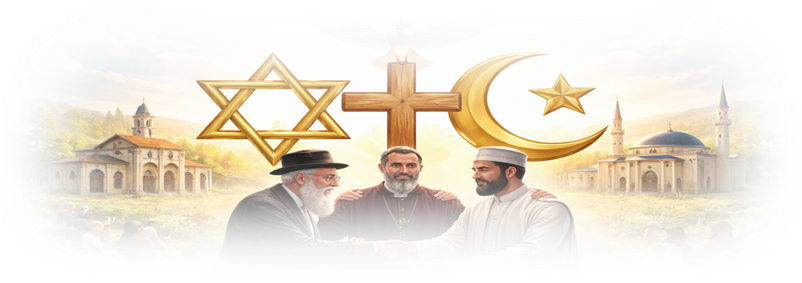
The three principal roots of the Abrahamic religions, Judaism, Christianity and Islam (there are hundreds of branches and thousands of twigs, metaphorically speaking) are profoundly incoherent in their relationship, inter se, having for the most parts, profound similarities, e.g., they all worship the same god, and minimal differences, mainly involving the role and nature of one person, the one variously referred to as Yešu, Yeshu, Yeshua, Jesus, Isa and variants thereof.

Ironically, the Abrahamic variant that most honors the most ancient Abrahamic strictures (as reflected in the Tanakh) is probably Islam.  Indeed, almost all of the much maligned Sharia Law is premised on ancient Jewish Law (absent requirements for animal sacrifice).  Islam is also the bridge between Judaism and Christianity, affording the Christian Jesus a major role in its religious traditions, second only to that ascribed to the prophet Mohamed, while Judaism, in its non-atheistic variants (e.g., Zionism), recognizes the existence of Jesus and his purported miracles but ascribes them to demonic practices, and claims that rather than reigning from heaven, he is consigned to eternal damnation in a molten pool of feces in some version of Hell (Calvo Mahé, 2025).  Zionism on the other hand (a fourth hand so to speak), was founded in the late nineteenth century by Jews who had embraced atheism and were interested primarily in colonization of the middle east and global political and economic dominance, and has virtually nothing in common with religious Judaism or any religion at all (Calvo Mahé, 2026).

This reflection has a catalyst and that is an article published in 2021 in Academia.edu (in the Academic Letters section) by Gregory B. Kaplan entitled “The psychology of converso humor” (Kaplan, 2021), the term “converso” referring to forced converts from Judaism to Christianity and their descendants.  Conversely, conversions to Judaism came from diverse sources including paganism, Greco-Roman polytheism, and traditional Middle Eastern/African religions and, of course, the massive Turko-Slavic conversions at the end of the ninth century by the Khazars.  These included the Arabian, pre Islamic Himyarite Kingdom in around 380 CE; the Kingdom of Adiabene in Northern Iraq during the first century CE; the Idumeans and Ituraeans in the Levant in the second century BCE (like the convertos, a forced conversion); North African Berber tribes after the rise of Islam.  Significant details concerning the foregoing are provided by Luis H. Feldman (1993, 2003) and Rabbi Pinvhas Landis (2022).

The catalytic aspect is specifically, based on this sentence: “During the 1400s, a dichotomy developed between New and Old Christians (those with no Jewish ancestors) according to which all conversos were perceived as heretical Christians. In consequence, conversos became subject to discrimination and persecution.”[1]

I found the reality reflected therein particularly ironic given that all original followers of Yešu, although they did not consider themselves “Christians”, were religious Jews.  Christianity was a perversion of their beliefs orchestrated by Saul of Tarsus who Christians consider a “saint”, but who historically cognizant Jews consider a Jewish infiltrator into the newly evolving variant of Judaism represented by Yešu and his purported apostles and followers.  Saul was, according to Jewish sources, including the Toledot Yeshu, purportedly an agent of the Jerusalem Sanhedrin who deliberately perverted Judaic principles within the evolving movement in order to make it different enough from Judaism to stem the adoption of Yešu’s principles by Jews and hence, Saul of Tarsus, Judas (the purported betrayer of Yešu) and in some cases, even Simon Peter (St. Peter) are revered by historically knowledgeable Jews as Jewish heroes (Calvo Mahé, 2024).  Thus, in a sense, original followers of Yešu were conversos as well and deprecated by subsequent Pauline “Christians”.

As ironic as any of the foregoing is the relationship of Christian Zionists to Judaism.  Christian Zionists in large part emerged from devout antisemites who saw the Zionist project as essential to the purported Second Coming (i.e., the return of Jesus Christ to judge the living and the dead and reign for a thousand years in an earthly kingdom), and they supported and support the Zionist project in the expectation that their version of Jesus will return and consign all but 144,000 of history’s Jewish population to perdition.  Mainly evangelical Protestants, Christian Zionists also tend to believe that most Christians whose beliefs do not align with theirs will also be consigned to perdition in Hell for eternity when Jesus returns.

It is interesting to reflect that, during the so called dark ages and even into the renaissance and enlightenment, Muslim scholars and leaders were the intellectual savors of Western Civilization and indeed, of Judaism, in much the same way that conversos became important, indeed critical leaders of Christian science, culture, politics and economics.  Thus, today’s globalist world, purportedly led by Zionists and Christians, in fact largely owes its foundations to conversos and Muslims.

The most positive meld of Abrahamic religions probably occurred in the Palestinian portion of the Ottoman Empire prior to its demise and the subsequent British Protectorate (which was supposed to assist in the evolution of an independent Palestinian state based on the concept of popular self-determination), the declaration of the State of Israel and the related Nakba.  There, for at least a time, Muslims, Christians and Jews lived together as Palestinian brethren.  Unfortunately, Zionists have destroyed that community in ongoing campaigns of genocide and ethnic cleansing, campaigns directed not only against Muslims but against Christians as well.

Ironic Abrahamic incoherencies all.

Sources:

Calvo Mahé, Guillermo (2024): The Life of Yešu According to Diverse Jewish Sources“; Noah’s Ark Research papers, Academia.edu, available at https://www.academia.edu/124579552/The_Life_of_Ye%C5%A1u_According_to_Diverse_Jewish_Sources.

Calvo Mahé, G. (2026): “On the Origen of the ‘Hebrews’“; Noah’s Ark Research papers, Academia.edu, available at ttps://www.academia.edu/165112048/On_the_Origen_of_the_Hebrews_.

Calvo Mahé, Guillermo (2026): “Zionism, Antisemitism, Jeffrey Epstein and the Purported Protocols of the Elders of Zion”; Medium, February 21, 2026 available at https://medium.com/@guillermo-calvo-mahe/zionism-antisemitism-jeffrey-epstein-and-the-purported-protocols-of-the-elders-of-zion-e95f278ae193.

Feldman, L. H. (1993): “Proselytism by Jews in the Third, Fourth, and Fifth Centuries“; Journal for the Study of Judaism in the Persian, Hellenistic, and Roman Period24 (1). Brill: 1–58.  Available at https://brill.com/view/journals/jsj/24/1/article-p1_1.xml?srsltid=AfmBOoqUGwgSYGRlA–6-SB6u07HaVTsLvFeUjP9oBc2Ced3HxeHBFXl.

Feldman, Louis H. (2003): “Conversion to Judaism in Classical Antiquity“; Hebrew Union College Annual. 74 Hebrew Union College – Jewish Institute of Religion 115-156: available at https://www.jstor.org/stable/i23503557.

Kaplan, G. B. (2021): “The psychology of converso humor”; Academia Letters, Article 674 available at https://doi.org/10.20935/AL674

Landis, Pinchas (2022): “The Surge of Converts to Judaism in Ancient Rome”; Aish.com, May 29, 2022 available at https://aish.com/the-surge-of-converts-to-judaism-in-ancient-rome/.

_____

© Guillermo Calvo Mahé; Manizales, 2026; all rights reserved.  Please feel free to share with appropriate attribution.

Guillermo (“Bill”) Calvo Mahé (a sometime poet and aspiring empirical philosopher) is a writer, political commentator and academic currently residing in the Republic of Colombia (although he has primarily lived in the United States of America of which he is also a citizen). Until 2017 he chaired the political science, government and international relations programs at the Universidad Autónoma de Manizales. Previously, he chaired the social studies and foreign language departments at the Eastern Military Academy in Huntington, New York. He is currently the publisher of the Inannite Review available at Substack.com; an intermittent commentator on radio and television; and, an occasional contributor to diverse periodicals and publications. He has academic degrees in political science (BA, The Citadel, the Military College of South Carolina), law (JD, St. John’s University, School of Law), international legal studies (LL.M, the Graduate Division of the New York University School of Law) and translation and linguistic studies (GCTS, the University of Florida’s Center for Latin American Studies). However, he is also fascinated by mythology, religion, physics, astronomy and mathematics, especially with matters related to quanta, cosmology and cosmogony. He can be contacted at guillermo.calvo.mahe@gmail.com and much of his writing is available through his blog at https://guillermocalvo.com/.


[1] In the interests of objectivity, the author discloses that he is not personally a believer in any of the Abrahamic faiths but is an admirer of the social, civic and economic postulates attributed to Yešu as reflected in democratic socialism.
On Palestinian Religious Evolution during the Past Two Millennia

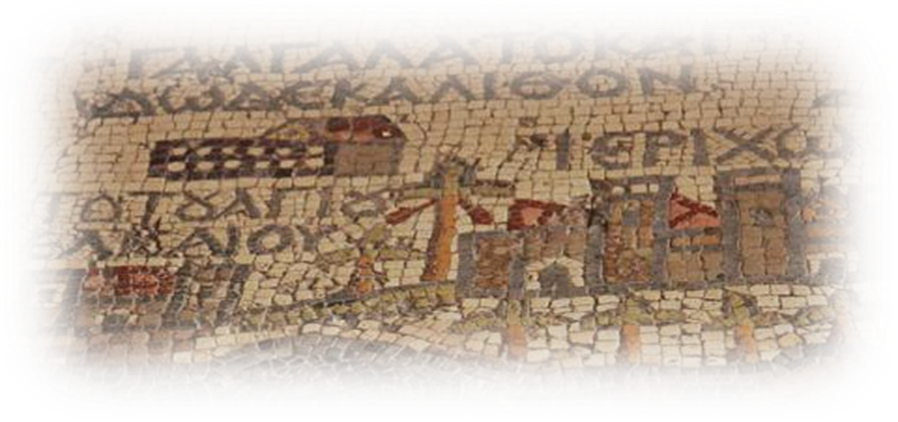
The following is a short primer on Palestinian religious evolution during the past two millennia dedicated to my unfortunately uneducated Christian Zionist friends who buy into the myth that God gave Palestine to Zionists.  All of this material was obtained in a quick, AI assisted search on the Internet and thus is easily verifiable.

Contrary to the claims of Zionists that “they” were promised Palestine, Jewish groups over a millennia following the purported time of Abraham and Moses, at the beginning of the Common Era, were highly varied and fragmented, lacking any single centralized religious authority. Instead, much like modern Christian sects, of which thousands of competing variants exist, many condemning their competitors as heretics, the “Jewish” population was divided into competing sects, political factions, and diaspora communities.

The primary ideological and social groups in first-century Judea included:

  • Pharisees: A group of scholars and laymen who emphasized rigorous adherence to both the written Torah and an extensive oral tradition. They believed in the resurrection of the dead and angels, and their teachings laid the groundwork for modern Rabbinic Judaism.
  • Sadducees: The wealthy, conservative elite, largely comprised of priests, who controlled the Jerusalem Temple and the Sanhedrin. They rejected the oral law, believed only in the literal written Torah, and did not believe in an afterlife or resurrection.
  • Essenes: Ascetic, separatist communities (such as those associated with the Dead Sea Scrolls at Qumran) who withdrew from mainstream society. They practiced strict purity rituals and communal ownership, believing the Temple establishment in Jerusalem had become corrupt.
  • Zealots and Revolutionaries: Militant, nationalistic factions that fiercely opposed Roman taxation and rule. Groups like the Sicarii (daggermen) resorted to violence and guerrilla warfare against both the Romans and Jewish elites they viewed as collaborators.
  • Herodians: A small, politically motivated group of Jews who supported the royal dynasty of Herod the Great and, by extension, Roman authority.
  • The “Common” Jews: The vast majority of the population who did not officially belong to any sect. They sought to maintain basic Jewish practices like observing Shabbat, keeping kosher, and practicing circumcision while living their daily lives.
  • Diaspora Jews: Communities living outside the Land of Israel in major Hellenistic centers like Alexandria (Egypt) and Rome. These groups adapted significantly to Greco-Roman culture while maintaining their religious and ethnic identity.

Beyond the major factions, the beginning of the Common Era featured numerous minor, highly specialized, and localized Jewish groups. Historians like Josephus and early textual records identify several smaller groups that emerged from specific theological, geographical, or political pressures:

1. Ascetic and Mystical Offshoots

  • Therapeutae: Based in Egypt (especially near Alexandria), this was a communal group of Jewish ascetics described by the Jewish philosopher Philo. Similar to the Essenes, they abandoned their property, lived in isolation, and dedicated their lives to intense prayer, fasting, and the allegorical study of scripture. Notably, unlike the Qumran Essenes, their community included women.
  • Bana’im (The Builders): Mentioned briefly in rabbinic literature, they were an Essene-like group in Palestine. They were obsessively preoccupied with ritual purity, particularly ensuring their clothes remained entirely free of mud stains or contaminants.
  • Hemerobaptists: A minor group whose defining characteristic was daily morning baptism. They believed that immersing themselves in water every single morning was necessary to wash away sins and maintain absolute ritual purity before prayer.

2. Radical and Political Factions

  • The Fourth Philosophy: This is the term Josephus used to describe an ideological movement started by Judas the Galilean. While they agreed with the Pharisees on religious matters, their defining political belief was a radical refusal to call any human “lord” or king, viewing Roman taxation as direct blasphemy against God. This philosophy birthed the later Zealot and Sicarii movements.
  • The Sicarii (Daggermen): A radical, covert splinter group of revolutionaries. They hid small daggers (sicae) under their cloaks to assassinate high-ranking Jewish elites and priests whom they accused of collaborating with the Roman occupiers.

3. Early Messianic and Borderline Groups

  • The Nazarenes / Early Christ-Followers: In the first decades of the Common Era, the followers of Jesus of Nazareth existed strictly as a minor sect within the broader Jewish framework. They continued to worship at the Temple, keep kosher, and follow the Torah, but they held the distinct conviction that the Messiah had already arrived.
  • The Samaritans: Though distinct from mainstream Jews, they shared a common Israelite heritage. They rejected the Jerusalem Temple entirely, holding that Mount Gerizim was the only divinely chosen place of worship, and accepted only their own version of the Torah (the Samaritan Pentateuch).

The reality is that Christianity also emerged as a Jewish group, expanded by Saul of Tarsus to include non-inhabitants of the Levant, and later, Islam emerged as a fusion of Judaism and Christianity with the remnants of inhabitants of the Levant, the ancient “Jews”, converting to Christianity or Islam, or, in some cases, coalescing into an evolving form of orthodox Judaism, albeit unlike modern Reform Liberal or Conservative Judaism and certainly unlike Zionism, founded by European converts to Judaism who rejected its religious aspects in favor of atheism with cultural Jewish trappings.

Modern “Judaism”

Modern Judaism evolved from Rabbinic Judaism which coalesced out of catastrophic historical crises. Practically all major forms of Judaism practiced today, including Orthodox, Conservative, and Reform, share a similar foundational lineage.  The transition from a fractured, temple-based religion to the diverse structures of non-monolithic modern Judaism occurred across two monumental phases:

Phase 1: The Cataclysm and the Blueprint (70 CE – 600 CE)

Before 70 CE, most but not all of Jewish life revolved around the Jerusalem Temple, animal sacrifices, and the priesthood. A major division had already occurred when Samaritan Jews had rejected the centralization of Judaism in Jerusalem with the Temple there as the purported focal point of Judaism.  When the Roman Empire destroyed the Temple in 70 CE, the economic and spiritual heart of Jerusalem centered Judaism was obliterated.  But Judaism survived and coalesced due to a series of radical transformations:

  • The Shift to Yavneh: According to tradition, a Pharisaic leader named Rabbi Yochanan ben Zakkai was smuggled out of the Roman siege of Jerusalem. He negotiated a deal with the Roman general Vespasian to establish an academy in the coastal town of Yavneh.
  • Ritual Substitution: At Yavneh, the surviving sages detached Judaism from a physical building. They decreed that communal prayer would replace animal sacrifice, the synagogue would replace the Temple, and rabbis (teachers) would replace priests.
  • The Compilation of the Talmud: Over the next several centuries, Jewish scholars debated and codified these laws into written texts: the Mishnah (c. 200 CE) and the Talmud (c. 600 CE). This created a portable, text-centered religion that could survive in the global diaspora.

Phase 2: The Enlightenment and the Modern Denominations (1700s – 1800s)

For over a thousand years, the rabbinic system was the undisputed norm. However, the European Enlightenment and Jewish Emancipation in the 18th and 19th centuries granted Jews civil rights, shattering the walls of the traditional Jewish ghetto and forcing a new question: How do you remain Jewish while integrating into modern Western society? This crisis split Rabbinic Judaism into the modern movements we recognize today:

  • Reform Judaism: Emerging in Germany, this movement aimed to modernize the religion. They translated prayers into local languages, introduced organs into synagogues, and viewed Jewish law (Halakha) as an evolving ethical guide rather than a binding set of divine mandates.
  • Orthodox Judaism: This arose as a direct counter-reaction to Reform Judaism. Leaders like Samson Raphael Hirsch argued that traditional Jewish law was immutable and fully divine. “Modern Orthodoxy” emerged to show that one could strictly observe the Torah while engaging with secular culture and education.
  • Conservative Judaism: Formed as a middle ground, this movement argued that Jewish law is dynamic and must adapt to the times, but its core traditions and historical practices must be conserved and respected.

None of the foregoing have direct links to any form of primitive Judaism with direct interaction with Moses, or Abram or YHWH, any more than do any Christian or Islamic sects, nor, of course, does Zionism.

_____

© Guillermo Calvo Mahé; Manizales, 2026; all rights reserved.  Please feel free to share with appropriate attribution.

Guillermo (“Bill”) Calvo Mahé (a sometime poet and aspiring empirical philosopher) is a writer, political commentator and academic currently residing in the Republic of Colombia (although he has primarily lived in the United States of America of which he is also a citizen). Until 2017 he chaired the political science, government and international relations programs at the Universidad Autónoma de Manizales. Previously, he chaired the social studies and foreign language departments at the Eastern Military Academy in Huntington, New York. He is currently the publisher of the Inannite Review available at Substack.com; an intermittent commentator on radio and television; and, an occasional contributor to diverse periodicals and publications. He has academic degrees in political science (BA, The Citadel, the Military College of South Carolina), law (JD, St. John’s University, School of Law), international legal studies (LL.M, the Graduate Division of the New York University School of Law) and translation and linguistic studies (GCTS, the University of Florida’s Center for Latin American Studies). However, he is also fascinated by mythology, religion, physics, astronomy and mathematics, especially with matters related to quanta, cosmology and cosmogony. He can be contacted at guillermo.calvo.mahe@gmail.com and much of his writing is available through his blog at https://guillermocalvo.com/.

On the Origen of the “Hebrews”

In many senses, the “Hebrews” are an enigma.  They’re the principal cultural component of the Abrahamic cultures which encompass Europe, the Middle East and the Americas but their origins although purportedly well documented in sacred scriptures are historically shrouded in mystery.  Hebrew mythology, as improbable as any mythology, is frequently, perhaps too frequently, considered not only history but sacrosanct notwithstanding obvious historical evidence which discredits it.  Today’s Jews claim descent from the ancient Hebrews but in many instances that is clearly inaccurate as the vast majority of modern Jews are converts from Turkey, Russia and Central and Eastern Europe, especially among the variant known as Ashkenazi who account for approximately 80% of modern Jewry.  The closest genetic descendants of ancient Hebrews ironically exist, in all likelihood, among Palestinians, most of whom religiously profess Islam, albeit with significant Christian minorities.

So, about the different possible origins for the “original” ancient Hebrews who first came into historical contexts approximately three millennia ago?  There are a number of hypotheses that we will briefly examine, hypotheses because there are not enough supporting facts to qualify any of them as theories, and for purposes of this article we will label them as follows:  the Sumerian hypothesis; the Moses hypothesis; and, the Habiru hypothesis.  Of course, there may well be many other hypotheses and one of them may someday even evolve into a theory.  This is a very brief survey, admittedly inadequately documented, but which may hopefully serve as a catalyst for further objective research.

The Sumerian Hypothesis

The traditional religious view is that the ancient Hebrews are descendants of the Talmudic patriarch Noah through his purported descendant, the Sumerian Nahor, a resident of Sumerian Ur, through his son, Terach, a pagan priest of the Sumerian moon god Nanna, and an idol maker (Hebrew: תֶּרַח Teraḥ).  Terach was purportedly the father of the rebellious Sumerian expatriate, Abram, from whom all three of the Abrahamic faiths in one sense or another, mainly another, are said to descend.

Rather than following what would normally have been, at least from a historian’s perspective, their Sumerian history or mythology, Terach and his descendants are described in the Hebrew Tanakh, in the Christian Old Testaments and in the Islamic Quran as having been descendants of Noah’s grandson Arpachshad, the son of Shem, and thus “Semites”.  Noah, of course, was the purported survivor of a divinely orchestrated genocide.  That is telling given that Sumer had its own great flood epic but, rather than Noah, its protagonist was Ziusudra (also referred to in related cultures as Utnapishtim or Atrahasis), the king of Shuruppak, a primordial Sumerian city located in what is now Tell Fara.  Shuruppak was located approximately thirty-five miles south of Nippur and eighteen miles north of ancient Uruk on the banks of the Euphrates (today in Iraq’s Al-Qādisiyyah Governorate). 

Following the Sumerian version of the great flood, one visited on humanity by a council of Sumerian divinities including Enlil and Inanna but excluding Enki, the genocidal flood meant to destroy all of humanity was launched purportedly because humanity was too noisy and disrupted the Sumerian divinities’ slumber.  However, Ziusudra and his wife survived having been warned of the flood by the god Enki and were subsequently granted relief from death by a repentant Enlil who, in penance of sorts, permitted them to reside in Dilmun, the paradisiacal garden of diverse families of Sumerian divinities.  Enki had created humanity from the blood of the demon (or divinity, there frequently being little difference) Qingu, a spawn and lover of the Creator divinity Tiamat, and was thus not anxious to see his creation destroyed.  Violating his duty to his fellow divinities, Enki had warned Ziusudra in a prophetic dream of the plan to eliminate humanity, a dream with very specific instructions concerning an ark which was to be built in a manner virtually identical to the ark which Noah was charged with constructing, and for a similar purpose. 

Following the instructions provided in the dream by Enki, Ziusudra invited his family and the laborers who had assisted in the ark’s construction, as well as diverse goods and many species of animals to join him on the ark which survived the great flood in a manner very similar to the ark on which Noah and his family and their goods and many species of animals also survived.  Interestingly, those same gods, who are collectively referred to as the Anunnaki (descendants of the Sumerian divinity An or Anu), in their youth, had also been threatened with destruction for being unbearably noisy by their own progenitor, their great, great, grandfather, Abzu.  One supposes that Nahor and his descendants, assuming they in fact existed, were all well familiar with the Sumerian flood epic and they and their descendants modified it to fit their specific cultural needs.  The same is true with respect to the Biblical Garden of Eden and the two primordial sacred trees contained therein as well as the serpent who dwelt in one of them.

At the time during which Terach and his sons purported lived, the diverse city states that had once comprised the area we refer to as Sumer (the land of the black haired people) had greatly declined and its people were ruled over by Babylonia, although a segment of Babylonia may, at the time, have included the Kaśdim (כשדים; Chaldeans) whose reigning monarch, according to the Hebrews (but to no one else) appears to have been someone referred to as Nimrod.  Nimrod might, perhaps, have been Naram-Sin of Akkad, grandson of Sargon, a ruler of the Akkadian Empire.  Of course, the Hebrew Tanakh’s genealogical reference are tied to Noah and incoherently ignore the existence of Sumer or Akkad.  Interestingly though, it was purportedly Nimrod who set out to build the infamous Tower of Babel so, if Nimrod ruled at the time, at least according to the Tanakh and to some sort of logic, all humans would, at the time, still have spoken the same language.

Until Terach’s departure from Ur with sons Abram, Haran, and Nahor II, and one daughter, Sarai, the family had been longtime residents of Ur and, assuming they were real historical figures, Ur may well have been their ancestral home.  Their sudden departure may have had something to do with opposition to Abram’s infatuation with his sister, who he took as his wife, rather than with Abram’s opposition to his father’s religion and profession, although in either case, it seems odd that Terach accompanied his sons, indeed led them in their exodus from Ur heading for the lands occupied by the Canaanites, lands which a divinity unnamed at the time had purportedly promised them in exchange for their worship.  In any event, according to the Tanakh, Terach and his family initially settled in the City of Harran where Terach died, whereupon his family, then led by Abram, moved on.  In some versions of the Abrahamic odyssey, prior to the family’s departure from Ur, Terach had sought to have Abram executed for destroying the religious items Terach fabricated only to have Abram rescued by the Canaanite divinity, one of the seventy sons of the Canaanite god El, whereupon there was a reconciliation of sorts with the patriarchal role eventually passing from Terach to Abram.  In any event, Abram’s divine Canaanite rescuer promised Abram dominion over Canaan if he abandoned all the Sumerian divinities who his ancestors had worshipped (perhaps Enlil and Enki and Inanna and An, etc.), something to which Abram, apparently a somewhat disloyal and avaricious individual, readily agreed.

The Moses Hypothesis

A further historical incoherence is presented in the Tanakh concerning the origins of the Hebrew’s monotheistic religion.  Based on the Abram-source-hypothesis, Abram was given the Hebrew’s religion directly from an egotistical unidentified Canaanite divinity but when, thereafter, Moishe (Moses) is introduced into the Tanakh, it appears that Moishe was the source of that religion, having ironically obtained it from descendants of the Biblical villain, Cain, descendants who had evolved into the Kenites (although sanitized narratives insist that the Kenites, also known as the Midianites, were really descendants of Abraham and his second wife Keturah).  In this latter variant, it was Moishe who imposed the religion he had adopted while wandering in the dessert (having fled Egypt, where he was a sort of adopted prince, after murdering a slave overseer) on the Hebrew tribes he had purportedly liberated from slavery in Egypt.

Many, perhaps most historians have come to consider the “revelations” in the Tanakh, especially the “revelations” in the Torah which comprises a component of the Tanakh, as a mythology neither more nor less credible than Sumerian mythology, noting that, based on linguistic analysis, the Torah was in all likelihood composed, not during the middle of the second millennium prior to what has become known as the “common era” (the Common Era), but rather, after the sixth century preceding the Common Era, a period referred to as the Persian[1] period following the “Babylonian” captivity, a diaspora of sorts, and that the Tanakh was periodically “editorialized” in a manner seeking to impact the tension between Hebrews who had remained in what is today Palestine and who traced their claims to ownership of the land from their purported ancestor, Abram (his name having evolved into Abraham), and the more sophisticated returning “exiles” who countered such claims basing theirs on the purported Mosaic Exodus from Egypt, traditions of the people who had taken to calling themselves “Israelites (Ska, 2009).  Ironically, that is a situation eerily similar to the current conflict between Palestinians, genetically linked to the Hebrews at the time of the Hellenic and Roman conquests, and the European and Turkish converts to Judaism since the eighth century of the Common Era who are known as the Ashkenazi and who invaded the Levant starting in the nineteenth century.

The Habiru Hypothesis

The Hebrew Tanakh is not the only source of information concerning the origin of the ancient Hebrews.  Indeed, perhaps much more accurate historical information than the Abrahamic myths is available but, for predictable reasons, is not easily accessible.  A number of historians assert that “Habiru” was the ancient term for the nomadic tribes that eventually came to be known as “Hebrews” and particularly, the term for the early Israelites of the period of the “judges” who “appropriated” the fertile region of Canaan for themselves.  According to some historical traditions (e.g., the Amarna letters, a collection of diplomatic correspondence between Egyptian rulers and their vassals in Canaan), the Habiru or (in Egyptian, Apiru) became the people we know today as the ancient Hebrews, some of whom are the ancestors of today’s Palestinians and of the Sephardim among modern Jews. 

The Amarna letters are an archive written on clay tablets primarily consisting of diplomatic correspondence between the Egyptian administration and its representatives in Canaan and the Amurru, or neighboring kingdom leaders during a period of no more than thirty years during the middle of the 14th century preceding the Common Era (the New Kingdom era).  Most experts who hypothesize concerning the “Habiru” believe that they were more a social class than an ethnic group, a group originally comprised of diverse ethnic groups of brigands who may have at one time led a settled life somewhere but who, due to the force of circumstances, became a rootless population of roving mercenaries who hired themselves out to whichever local mayor, king, or princeling would pay for their support.  One analysis proposes that the majority were Hurrian although there were a number of Semites and even some Kassite and Luwian adventurers amongst their number.  It was probably in that manner that they first came to Egypt, either as mercenaries or more probably raiders.  If accurate, that would explain how, as described in Exodus when writing about YHWH’s demands for his arc and tabernacle, a group of purported slaves escaped from ancient Egypt laden with gold, silver, precious jewels and woods and cloth.  Thus, rather than having been enslaved, they may well have been pursued after having engaged in a series of raids similar to those engaged in much later by Vikings in Nordic regions, Europe and the British Isles.

If the foregoing hypothesis is accurate, then Abdi-Ashirta and his son Aziru (rather than the Sumerian Abram or his purported descendant Moishe) would have been the catalytic leaders among the Habiru who they consolidated from diverse roots into the social unit that eventually made its way into our history as the Hebrews.  Abdi-Ashirta was a contemporary and vassal of the monotheistic Egyptian Pharaoh Akhenaten which may explain religious innovations attributed to the Hebrews.  Thus, it is very possible that, rather than descendants of the Sumerian exile Abram, the Hebrews of the Tanakh were a composite group of marauders.

Concluding Observations

During the last three quarters of a century the purported Holy Land, that land purportedly taken by the Hebrews from the Jebusites and the Canaanites, then conquered by Babylon and Persia, then by Alexander and then Rome, and which subsequently became a Christian and then a Muslim domain, has been a cauldron of inequity, something not historically unusual there, but in this instance, largely based on fallacious hysterical rather than historical arguments concerning ancient ownership rights.  Turko-Europeans who converted to Judaism during the eighth century colonized Palestine during the past century insisting that the inhabitants of Palestine during the past two millennia, mainly the descendants of Hebrews most but not all of whom converted from Judaism, first to Christianity and eventually to Islam, must, at the least be ethnically cleansed but if necessary, exterminated.  Exterminated as the Canaanites in Jericho and other parts of the Levant were exterminated, men, women, children and even livestock, by the Hebrew hordes purportedly led by Joshua.  Thus the relevance of this article in raising the question as to just who the Hebrews were and who their descendants are?

That is not the case with Ashkenazi Jews, today grown from a tiny minority of Jews in the ninth century to the largest segment of modern Judaism, the segment that today controls the modern State of Israel.  They may well have little to no relation to either the purported descendants of Abram or of the Habiru but rather, may well be the progeny of Turko-European converts to Judaism descended from the Khazars[2].

But that’s another story and just as controversial as this one.

Limited References[3]:

 K. L. Noll, Canaan and Israel in Antiquity: An Introduction, A&C Black, 2001 p. 164: “It would seem that, in the eyes of Merneptah’s artisans, Israel was a Canaanite group indistinguishable from all other Canaanite groups.” “It is likely that Merneptah’s Israel was a group of Canaanites located in the Jezreel Valley.”

McNutt, Paula (1999). Reconstructing the Society of Ancient Israel. Westminster John Knox Press. p. 33ISBN 978-0-664-22265-9.

Ska, Jean Louis (2009):  The Exegesis of the Pentateuch: Exegetical Studies and Basic Questions. Mohr Siebeck; Tübingen, Germany.

 Tubb, Jonathan N. (1998). Canaanites. University of Oklahoma Press. pp. 13–14. ISBN 0-8061-3108-X.
_____

© Guillermo Calvo Mahé; Manizales, 2026; all rights reserved.  Please feel free to share with appropriate attribution.  Paper originally published in Academia.edu.

Guillermo (“Bill”) Calvo Mahé (a sometime poet and aspiring empirical philosopher) is a writer, political commentator and academic currently residing in the Republic of Colombia (although he has primarily lived in the United States of America of which he is also a citizen). Until 2017 he chaired the political science, government and international relations programs at the Universidad Autónoma de Manizales. Previously, he chaired the social studies and foreign language departments at the Eastern Military Academy in Huntington, New York. He is currently the publisher of the Inannite Review available at Substack.com; an intermittent commentator on radio and television; and, an occasional contributor to diverse periodicals and publications. He has academic degrees in political science (BA, The Citadel, the Military College of South Carolina), law (JD, St. John’s University, School of Law), international legal studies (LL.M, the Graduate Division of the New York University School of Law) and translation and linguistic studies (GCTS, the University of Florida’s Center for Latin American Studies). However, he is also fascinated by mythology, religion, physics, astronomy and mathematics, especially with matters related to quanta, cosmology and cosmogony. He can be contacted at guillermo.calvo.mahe@gmail.com and much of his writing is available through his blog at https://guillermocalvo.com/.


[1] Ironically, given today’s Middle Eastern realities, it was the Persians, the descendants of today’s Iranians, who liberated the Hebrews from their Babylonian captivity.  Something one would assume the descendants of the Persians might rue.  Of course, the same is true of Muslims.  What Americans may rue in the future is, of course, yet to be determined.

[2] Zionists detest references to the Khazars as the ancestors of Ashkenazi Jews claiming that such references involve antisemitic plots to discredit the current State of Israel and, who knows, in today’s atmosphere were verity is an irrelevance, they may or may not have a point.

[3] It is unfortunate that a great many references originally available on the Internet seem to have been removed or drastically modified, especially with reference to the Khazars, since politicized sources attained growing control over most media and Internet platforms during the past several years.

Divine Quandaries

Divinity, at least according to followers of Abrahamic religions, involves five essential attributes: eternal existence, the divinity must have always existed and will always exist; omnipresence, i.e., the divinity must be ubiquitous, concurrently everywhere; omniscience, the divinity must have permanent and eternal knowledge concerning absolutely everything not only with respect to the past and the present, but also the future; omnipotence, the divinity must necessarily be all powerful, capable of anything and everything without reservation; and, the divinity must be omnibenevolent, all good without a trace of evil or negativity.

Other religions, more ancient religions as well as contemporary religions have been more realistic.  Deities, where they existed, were just more powerful than humans albeit not omnipotent, especially when they were plural.  If not ubiquitously omnipresent, they were perhaps not bound by the rules concerning time and space that apply to us and could show up when least expected.  Omniscient?  Not at all, although perhaps they, or some of them, were more cognitively gifted, at least sometimes.  Eternal?  Nope, they somehow came into being, usually sequentially, and in most cases, eventually expired, although the expiration was sometimes temporary.  And omnibenevolent?  Hell no!  They were willful and selfish and prone to emotional outburst.  Hmmm, that all sounds a great deal like the Abrahamic YHWH.

Still, to be fair, omniscience and ubiquitous omnipresence would seem possible if one eliminates time and space, treating them as illusions.  If time did not exist, then eternity would be either irrelevant or merely a natural state.  Perhaps in that context, since nothing would really exist, omnipotence might also be possible although not all that potent. But omnibenevolence is subjective although, in the absence of time and space and anything at all (other than perhaps, a sentient singularity), it might well be either irrelevant or natural, there being no choices to make.  In the foregoing context, an idealized divinity such as that imagined in Abrahamic religions might be possible, but only until time and space arrived, only until decisions became, not only possible, but necessary, even if any such decisions were merely illusions.

So, where does that leave us? 

Perhaps pondering on the nature of quantic phenomena and how they might impact the foregoing.  As I understand it, everything and anything is possible at a quantic level, sort of like the concept of chaos where, rather than consider it a negative, chaos is merely the confluence of every possibility; however, quantic activation would require an observer which would create a sort of bootstrap cosmogony.  Kind of like the ones were it is the worshippers who create the worshipped.

Or would that involve cosmology?

_____

© Guillermo Calvo Mahé; Manizales, 2025; all rights reserved.  Please feel free to share with appropriate attribution.

Guillermo (“Bill”) Calvo Mahé (a sometime poet and aspiring empirical philosopher) is a writer, political commentator and academic currently residing in the Republic of Colombia (although he has primarily lived in the United States of America of which he is also a citizen). Until 2017 he chaired the political science, government and international relations programs at the Universidad Autónoma de Manizales. Previously, he chaired the social studies and foreign language departments at the Eastern Military Academy in Huntington, New York. He is currently the publisher of the Inannite Review available at Substack.com; an intermittent commentator on radio and television; and, an occasional contributor to diverse periodicals and publications. He has academic degrees in political science (BA, The Citadel, the Military College of South Carolina), law (JD, St. John’s University, School of Law), international legal studies (LL.M, the Graduate Division of the New York University School of Law) and translation and linguistic studies (GCTS, the University of Florida’s Center for Latin American Studies). However, he is also fascinated by mythology, religion, physics, astronomy and mathematics, especially with matters related to quanta, cosmology and cosmogony. He can be contacted at guillermo.calvo.mahe@gmail.com and much of his writing is available through his blog at https://guillermocalvo.com/.

Reflections on Thanksgiving Day 2025

I am drawn to the concept of giving thanks rather than asking for boons from the divine.  It was something I felt strongly at times of spiritual longing while I was still more of a traditional believer, times long gone.  I am still drawn to the concept, albeit in a more generic form while concurrently more specifically.  While reflecting on towards what and towards whom my thanks should be directed.

A deity is evoked by most for purposes of giving thanks on this holiday, at least in the parts of the world where I’ve lived, in Europe and in the Americas.  It is an Abrahamic deity worshipped by three antagonistic branches, Judaism, Christianity and Islam, and that deity is purported to possess five principle unique attributes.  He (the deity is identified as masculine for the most part) is eternal, he has always existed and will always exist; he is omnipresent, i.e., he is ubiquitous, concurrently everywhere; he is omniscient, knows absolutely everything not only with respect to the past and the present, but also the future; he is omnipotent, all powerful, capable of anything and everything without reservation; and, he is omnibenevolent, all good without a trace of evil or negativity. 

I guess, if we humans did not exist, if our world did not exist, the concurrence of such attributes might conceivably be possible.  But we do exist, our world exists, and evil certainly exists and, on this Thanksgiving Day, evil seems to predominate, especially in the so called Western World.  And that evil seems to emanate directly from the purported Abrahamic Holy Land in the Middle East.

Today and for many years, decades really, It has been difficult, actually, impossible for me to be thankful to that incoherent complex of attributes that purportedly constitute “our” deity.  Or to believe that such an entity exists.  The three attributes most impossible for me to reconcile are the “omnis”: omnipotence, omniscience and omnibenevolence.  When effective, logic, a premise based form of analysis that purports to lead to accurate conclusions, could accept an evil or amoral omniscient, omnipresent omnipotence; or, it could accept an omnibenevolent, omnipresent and omniscient but impotent reality.  But not the confluence of all three attributes.  In general, the logical exercise in which we claim to believe and which we use, or more accurately, misuse and abuse, rarely works because, when its conclusions are put to the test and fail, rather that reexamine the premises and the analysis which led to the deficient conclusions (as tested against reality), we rationalize and make excuses.  We do so with respect to our Abrahamic concept of divinity by introducing the concept of purported “free will”, an oxymoronic absurdity when its exercise is subject to horrific and perpetual punishment.

The Abrahamic faiths are, not surprisingly given the forgoing, fratricidal, albeit usually sequentially so.  And hypocrisy reigns among at least two of them, Christianity and Judaism, the polar aspects of Abrahamic religion with Islam, strangely, being the bridge between them but, frequently, the most despised, belittled and calumnied by the other two. 

Take Christianity for example.  It was purportedly founded by followers of a gentle and loving Hebraic Palestinian from the small town of Nazareth during its Roman era but in reality, the religion as it has almost always existed was the creation of a misogynistic Hellenized Jew, Saul of Tarsus who eventually used a more politically convenient Roman name, Paulus.  The original Nazarene variant was centered in a small communist community in Jerusalem led by a certain James, cognamed “the Just” and comprised of the original disciples and apostles of his brother, a certain Yešu (today Latinized to its Hellenic variant, Jesus). The bastard Pauline variant quickly deformed into a traditionalist hierarchical control mechanism used to accumulate wealth and power, so much so that it eventually became the official religion of the Roman Empire.  Today, “evangelical and other so called Christians have completely rejected the communist economic premises of the original followers of Yešu, in part, because of the distortion of a statement by the founder of modern communism, an atheistic Jew, Karl Marx, to the effect that “religion was the opiate of the masses”, a statement contextually related to Marxian dialectic theory concerning economic evolution rather than to criticism of religion by which he meant that, at a certain point in economic history, religion was essential to survival making terrible conditions tolerable in the way that modern medications and medical treatments aid in our survival.  Through distortion and manipulation, modern Christianity, at least in the United States, has become the opposite of what Yešu espoused.  It has become a selfishly capitalistic, xenophobic philosophy apparently enamored of mass murder under the guise of capital punishment and perpetual war.  Judaism has also undergone drastic devolution with a significant component splitting off into an atheistic political Zionist variant espousing genocide, ethnic cleansing and even rape as a legitimate control mechanism for dealing with non-Zionist dissidence.  To those Abrahamic variants, Thanksgiving Day has become a de facto celebration of injustice, inequality and inequity, but that is something the original celebrants of the holiday in New England, the religiously intolerant Puritans would likely have ascribed.

That version of the Thanksgiving Day holiday, the one celebrated today, Thursday, November 27, 2025, is not one I can subscribe to, although I do enjoy some of its incidentals, like football games designed to draw our attention and energy away from our quotidian problems.  Thus, while in my moments of most intensely positive feelings towards divinity during a time long ago when I accepted the traditional Abrahamic version of divinity as possible, back when I gave thanks to “whatever gods may be” (a phrase from the poem “Invictus” by William Ernest Henley), today, my attitude is profoundly different.  Today, my thanks are limited to more tangible subjects.  To people I’ve known and to people I’ve never met but admire.  To those among the subjected and abused and downtrodden and tortured and maimed and killed who struggle to protect those they love and to stand for principles of equity and justice and compassion and generosity and peace, today something that applies most clearly to the Palestinian victims of Zionist genocide as it once stood for the Jewish victims of Nazi genocide, or to the Armenian victims of Turkish genocide, or to the indigenous victims everywhere of European genocide.  To all the economically deprived parents who work constantly to provide for their families as best they can.  To the Quixotic who struggle for “the right” against invincible odds, knowing that they themselves will never see the fruits of their labors.  But also to those who, for whatever reason, earned or not, I just love.  Those special people who were my classmates at the Citadel, and those fellow Citadel graduates who preceded and followed me, the same being true with respect to the now long departed Eastern Military Academy.  But also to my former students and colleagues everywhere. 

Today I give thanks to and for my family, especially my late mother Rosario and my late grandmother Juanita and my late aunt Carola.  To the many fellow travelers in the quest for a more equitable, more just, more peaceful, more compassionate, more peaceful and more loving world; those I know and who I can call friends as well as those with whom I am only acquainted and those who I’ve never met but who I know exist, have existed or will exist.

That seems a great deal for which to be thankful, even in these truly terrible times where orchestrated polarization for fun and profit regardless of the cost is the rule.  When the United States I love, indeed most of the Global North, is ruled from abroad by an ethics free elite.  Perhaps it always been this way.  But perhaps, the wonderful has always coexisted with the horrendous among the strange life forms who now refer to ourselves as humans.

So, … about the poem “Invictus”, one of my favorites.  It seems appropriate to close out these reflections by sharing it, albeit reformatted into a more narrative, rather than verse format:

Out of the night that covers me, black as the Pit from pole to pole, I thank whatever gods may be for my unconquerable soul.   In the fell clutch of circumstance I have not winced nor cried aloud.   Under the bludgeonings of chance my head is bloody, but unbowed.   Beyond this place of wrath and tears looms but the Horror of the shade, and yet, the menace of the years finds, and shall find, me unafraid.

It matters not how strait the gate, how charged with punishments the scroll, I am the master of my fate: I am the captain of my soul.

 
Thank you William Ernest Henley (1849 – 1903).

_____

© Guillermo Calvo Mahé; Manizales, 2025; all rights reserved.  Please feel free to share with appropriate attribution.

Guillermo (“Bill”) Calvo Mahé (a sometime poet and aspiring empirical philosopher) is a writer, political commentator and academic currently residing in the Republic of Colombia (although he has primarily lived in the United States of America of which he is also a citizen). Until 2017 he chaired the political science, government and international relations programs at the Universidad Autónoma de Manizales. Previously, he chaired the social studies and foreign language departments at the Eastern Military Academy in Huntington, New York. He is currently the publisher of the Inannite Review available at Substack.com; an intermittent commentator on radio and television; and, an occasional contributor to diverse periodicals and publications. He has academic degrees in political science (BA, The Citadel, the Military College of South Carolina), law (JD, St. John’s University, School of Law), international legal studies (LL.M, the Graduate Division of the New York University School of Law) and translation and linguistic studies (GCTS, the University of Florida’s Center for Latin American Studies). However, he is also fascinated by mythology, religion, physics, astronomy and mathematics, especially with matters related to quanta, cosmology and cosmogony. He can be contacted at guillermo.calvo.mahe@gmail.com and much of his writing is available through his blog at https://guillermocalvo.com/.

Reflections on a Conceivably Inept Creator

Reflecting on religion this morning, specifically on the Abrahamic variants to which most of my religious friends adhere, friends I profoundly respect and generally find to be genuinely good people, it came to me that they appear to consider their creator inept. 

They obviously, albeit respectfully, consider the creator to have been incapable of creating a decent product.  Indeed, their worship is full of lamentations concerning how terrible they are and acknowledging that their deficiencies are inherent and unavoidable. Indeed, purportedly not a single one of the creator’s creations have been free from defects except, perhaps, for himself, as incarnated, but then again, can one really be one’s own creation?

Perhaps.

Don’t know why but Ford Edsels come to mind.

Anyway, “mea culpa, mea culpa, mea maxima culpa” is an obligatory refrain by his creations when engaged in formal worship although, of course, logically, the “culpa” should really be ascribed to the entity, divine or otherwise, who designed such creations, especially if it was omniscient and omnipotent at the time.  Perhaps the refrain should more accurately be: “tua culpa, tua culpa, tua maxima culpa”.

Every time we criticize human fallibility, human frailty, the human proclivity to err against the divine will, we are criticizing, not only ourselves (the divine creation) but also the angelic supervision to which we are purportedly subject.  That concept of divinity posits not only an inept creator but one so full of hubris that it blames its errors on its creations, whether on us directly or on his angelic host, some of which also proved, let’s say … “deficient”.  Nephilim come to mind, as do their fathers.

Perhaps that explains the world in which we live, one where one branch of the Abrahamic faiths, the one involving the creator’s purportedly chosen people, engage, in the creator’s name, in genocide, massive and constant theft, justified rape, etc., (and not only recently, it’s a historical trend), and his more recent adherents in another branch, the Christians (originally Nazarenes and then Cristers) look the other way like the three famous simians who see no evil, hear no evil and certainly don’t expose any evil except with respect to whatever minor transgressions they themselves have engaged in, which they bemoan and chastise, … mainly on Sundays.

My reflections are, of course, blasphemous and heretical and somehow or other, probably evil.  Or, perhaps, the creator would agree that its followers are, perhaps inadvertently, being too critical of their creator.  Being very sensitive to any criticism (consider how it purportedly dealt with its archangel Hel-el, subsequently mistranslated by the abysmally ignorant St. Jerome as “Lucifer”; or how it dealt with almost all of its creations when, in a fit of temper, it drowned them all), … it may be worth reconsidering those aspects of its worship.  Just saying, …..

Still, as Elphaba Thropp, the purported wicked witch of the west, perhaps reflecting on YHWH or perhaps just on water, exclaimed with her dying breath in the 1930s version of the Wizard of Oz (the foregoing name is, however, as envisioned many decades later by author Gregory Maguire): …

What a world, what a world!!!!

_____

© Guillermo Calvo Mahé; Manizales, 2025; all rights reserved.  Please feel free to share with appropriate attribution.

Guillermo (“Bill”) Calvo Mahé (a sometime poet and aspiring empirical philosopher) is a writer, political commentator and academic currently residing in the Republic of Colombia (although he has primarily lived in the United States of America of which he is also a citizen). Until 2017 he chaired the political science, government and international relations programs at the Universidad Autónoma de Manizales. Previously, he chaired the social studies and foreign language departments at the Eastern Military Academy in Huntington, New York. He is currently the publisher of the Inannite Review available at Substack.com; an intermittent commentator on radio and television; and, an occasional contributor to diverse periodicals and publications. He has academic degrees in political science (BA, The Citadel, the Military College of South Carolina), law (JD, St. John’s University, School of Law), international legal studies (LL.M, the Graduate Division of the New York University School of Law) and translation and linguistic studies (GCTS, the University of Florida’s Center for Latin American Studies). However, he is also fascinated by mythology, religion, physics, astronomy and mathematics, especially with matters related to quanta, cosmology and cosmogony. He can be contacted at guillermo.calvo.mahe@gmail.com and much of his writing is available through his blog at https://guillermocalvo.com/.

Reflections on Evolutive Monotheism

Prior to the advent of egotistical monotheism in the Arabian peninsula, the goddesses Al-lātAl-‘Uzzá, and Manāt were believed, as once portrayed in Salman Rushdie’s infamous Satanic Verses, to have been the daughters of Allah and back then, before the rise of Islam, Allah was one among many members of the caste of the divine, as was supreme Canaanite divinity El and as was El’s errant son, YHWH, and as were YHWH’s sixty-nine brothers and their Sumerian cousins and many, many others.  And they cohabited, not quite in peace, but neither in a state of perpetual genocidal animosity, as, all too soon, came to be.  Came to be, if not the norm, at least the custom among those ghoulishly gullible Abrahamic humans who chose to follow and emulate ghastly YHWH.
_____

© Guillermo Calvo Mahé; Manizales, 2025; all rights reserved.  Please feel free to share with appropriate attribution.

Guillermo (“Bill”) Calvo Mahé (a sometime poet and aspiring empirical philosopher) is a writer, political commentator and academic currently residing in the Republic of Colombia (although he has primarily lived in the United States of America of which he is also a citizen). Until 2017 he chaired the political science, government and international relations programs at the Universidad Autónoma de Manizales. Previously, he chaired the social studies and foreign language departments at the Eastern Military Academy in Huntington, New York. He is currently the publisher of the Inannite Review available at Substack.com; an intermittent commentator on radio and television; and, an occasional contributor to diverse periodicals and publications. He has academic degrees in political science (BA, The Citadel, the Military College of South Carolina), law (JD, St. John’s University, School of Law), international legal studies (LL.M, the Graduate Division of the New York University School of Law) and translation and linguistic studies (GCTS, the University of Florida’s Center for Latin American Studies). However, he is also fascinated by mythology, religion, physics, astronomy and mathematics, especially with matters related to quanta, cosmology and cosmogony. He can be contacted at guillermo.calvo.mahe@gmail.com and much of his writing is available through his blog at https://guillermocalvo.com/.

Syncretic Evolutionary Accretion in Human Spirituality

I recently commented on an academic colleague’s article contrasting Christian and Jewish perspectives concerning the disgraced apostle Judas Iscariot, perhaps unfairly criticizing her observations based on the Jewish Toledot Yeshu as shallow[1].  The article described Christian attitudes with respect to Judas as reflecting the most extreme example of evil and betrayal possible, an attitude indeed shared by many, but not one universally shared among more modern Christians, especially in light of twentieth century efforts to rehabilitate Judas and ameliorate the perception of the Jewish role in the arrest, torture and execution of Yešu[2], given the climactic horrors of antisemitism during the Second World War seeking to treat both in a more neutral manner. 

The Jewish attitude towards Judas, as reflected in the Toledot Yeshu (as well as in both the Jerusalem and Babylonian Talmud), predictably regard him as a hero, albeit as a hero without ethical boundaries, and as the savior of Judaism in the face of encroachment by Yešu-inspired heretics (not yet misnamed “Christians” by Saul of Tarsus[3]).  My point in criticizing (too strong a word really) the authors’ description of related Christian perceptions concerning Judas was that, to an increasing number of Christians, rather than an arch-villain, Judas Iscariot is a tragically complex figure who faced irresolvable conflicts of interest between his aspirations seeking a messianic Jewish liberator and the otherworldly idealism attributed to the victim of his betrayal, a conflict complicated by the reality that, at any rate, he was irrevocably bound to the fate decreed for him by the always strange Abrahamic deity which both he and Yešu believed they served. 

For some reason, the forgoing led me to reflect on the accretive nature of Abrahamic religions and then, to reflect on the reality that most if not all religions seem accretive.  A strange leap but that’s my story and I’m sticking to it!

Consider:

The roots of all Abrahamic religions lie in the city of Uruk in ancient Sumer.  They all start with a certain Sumerian, ironically given subsequent beliefs, the son of an idol maker.  That Sumerian’s original name was phonetically Abiramu but has reached us as Abraham.  Based on the foregoing it seems clear that most of the stories in the Hebrew Book of Genesis, e.g., the Garden, the Flood, etc., have Sumerian roots, but as Abiramu and his sister-wife Sarai and their descendants fled though Egypt into Canaan, and Judaism slowly evolved as a religion, cultural borrowing was heavy and included Akhenaton’s monotheism, the Midian religion wholesale, and from Canaan, its divinity, YHWH, one of the seventy sons of the chief Canaanite god, El.  Somewhere along the line however, for reasons unknown, Judaism shed its female deities, the numerous wives of YHWH including Anat-Yahu, Aholah and Aholibah , Asherah, Anatha of the Lions and Ashima of the Doves, not to mention the Shekinah, a process largely rejected for centuries by the common people until Hebrew women were reduced to objects bereft of rights and a religious, civic and social patriarchy, purportedly divinely ordained, was established, history having been reformulated and recorded, as necessary.  Of course, all of the foregoing also forms the predicate for both Christianity and Islam, although Christianity added a number of Hellenic religious and philosophical concepts via Saul of Tarsus (Islam has always been much closer to Orthodox Judaism, ironic given today’s genocidal antipathies).  Wow!!!  What a journey in every sense.

Syncretism is a term used to describe the dialectic process through which accretion leads to religious evolution and it was certainly evident among the religions of the country the ancient Hebrews referred to as “Mizraim” (which we call Egypt) where gods from diverse regions were added to a growing common pantheon where they eventually tended to meld.  The same seems true with respect to divinities and their respective cults in the Indian subcontinent and to the divinities prominent in ancient Greece and Rome.  It may well be true of religions in the Americas as well. 

As a young academic many, many decades ago, I taught a course on comparative religions which I elected to divide into three major segments, the first dealt with primitive spiritual concepts such as animism and totems, the second with mythologies which my students denominated “other peoples’ religions” and finally, to the enormous diaspora of spiritual and religious concepts that have become prevalent during the past three millennia.  Through it all I sensed a fount of religious instincts sprouting from somewhere in central Asia, perhaps somewhere in what is today modern day Mongolia, the place from which, periodically, waves upon waves of refugees turned invaders seemed to erupt, waves that included the Huns, the Mongols and those to whom we refer as Indo-European, Hindus, Achaeans, Aryans, etc.  I visualized the foregoing as a crescendo of peoples and beliefs, perhaps sharing a common origin, then diffracting and subsequently reassembling in differing configurations.  However, all too soon, as tends to occur, the young academic I once was found his academic pursuits deflected into first history, then political science, then law, and my quest for “a unified theory of socio-spiritual evolution” returned to the ether from which it had apparently once sprung, … until recently.  Until when, after semi-retiring to pursue personal interests and research, I returned to old roots exploring the “legends” of Gilgamesh and the origins of YWHW and of the myriad faces of Yešu, which, somehow or other, after reading the article by Ora Limor and Israel Jacob Yuval (“Judas Iscariot: Revealer of the Hidden Truth”), led me back to this introspective reflection concerning the diametrically opposed perspectives concerning both Judas Iscariot and Yešu that have subtlety but profoundly impacted our history during the past two millennia, and that has led me to reflect on how much our socio-religious perspectives are changing as time goes by, as our values change and as our memories evolve. And of how long-held traditional religious beliefs are being considered by some among our new generations as mere myths, a sort of inversion of how the students in my class on comparative religion once considered mythology, while others seem willing to accept and espouse new hypotheses concerning intergalactic aliens as the sources of our civilizations and even, of the possibility that our remote biological ancestors from the Mesozoic Era, the dinosaurs, in fact survived and merely went underground, literally, where they await in their own civilizations for a chance to return to the surface once, in our arrogance, we arrange for our own extinction.

Chaos to me is not a negative but rather, the primal state where once upon a time everything at all was a possibility and contradictions comfortably cohabited as compliments.  Strangely, modern theories of physics involving both minimalist quantic phenomena and omniversal string theories seem filled with echoes of that primordial chaos, the chaos that seems to have existed before the Big Bang or the divine seven days of creation, take your pick. 

Today, as I write, confusion appears to reign, happily enthroned and smiling, as we impatiently seek to untangle the confused webs we’ve woven and somewhere perhaps, echoes from Elphaba Thropp’s refrain at the conclusion of the 1930’s movie, the Wizard of Oz, as she slowly melted, laid low by water, “… what a world, what a world” happily resonate, and perhaps, somewhere outside the bounds of time and space, Yešu and Judas dispassionately debate.

_____

© Guillermo Calvo Mahé; Manizales, 2024; all rights reserved.  Please feel free to share with appropriate attribution.

Guillermo (“Bill”) Calvo Mahé (a sometime poet) is a writer, political commentator and academic currently residing in the Republic of Colombia (although he has primarily lived in the United States of America of which he is also a citizen). Until 2017 he chaired the political science, government and international relations programs at the Universidad Autónoma de Manizales. Previously, he chaired the social studies and foreign language departments at the Eastern Military Academy in Huntington, New York. He is currently the publisher of the Inannite Review available at Substack.com; an intermittent commentator on radio and television; and, an occasional contributor to diverse periodicals and publications. He has academic degrees in political science (BA, The Citadel, The Military College of South Carolina), law (JD, St. John’s University, School of Law), international legal studies (LL.M, the Graduate Division of the New York University School of Law) and translation and linguistic studies (GCTS, the University of Florida’s Center for Latin American Studies). However, he is also fascinated by mythology, religion, physics, astronomy and mathematics, especially with matters related to quanta, cosmology and cosmogony. He can be contacted at guillermo.calvo.mahe@gmail.com and much of his writing is available through his blog at https://guillermocalvo.com/.


[1] Limor, Ora and Israel Jacob Yuval (2011): “Judas Iscariot: Revealer of the Hidden Truth” in Peter Schäfer, Michael Meerson, and Yaacov Deutsch, eds., Toledot Yeshu (The Life Story of Jesus) Revisited: A Princeton Conference; pp. 197-220; Mohr Siebeck, Tübingen available at https://www.academia.edu/43624042/Ora_Limor_and_Israel_Jacob_Yuval_Judas_Iscariot_Revealer_of_the_Hidden_Truth_in_Peter_Sch%C3%A4fer_Michael_Meerson_and_Yaacov_Deutsch_eds_Toledot_Yeshu_The_Life_Story_of_Jesus_Revisited_A_Princeton_Conference_T%C3%BCbingen_Mohr_Siebeck_2011_197_220.

[2] “Yešu” is the correct Aramaic phonetic pronunciation of the Hellenized name of the principle protagonist of the diverse Christian faiths usually referred to as “Jesus”.

[3] According to some versions of the Toledot Yeshu, Saul of Tarsus whose Roman name was Paulus and who is referred to by Christians as St. Paul, was really a Jewish infiltrator into the evolving Yešu heresy whose role it was to sunder the movement from Judaism in order to decelerate and minimize conversion.