
Phantasmagorical Reflections on the Nature of Time, Light, Luminous Sentience and the Higgs Boson

Theoretically, time doesn’t exist for photons.  That was recently explained to me and I found that hypothesis, or perhaps, theory, fascinating.  It’s something I’d never considered although traveling back in time by exceeding the speed of light has been a popular theme in science fiction for many decades, especially in the Star Trek franchise and, before that, in Superman films and comics.  I guess that if such literary devices had even a scintilla of possible accuracy a corollary would be that a balance attained at the speed of light would involve generation of the absence of time and hence, the phenomenon of which I was recently made aware.

Be that as it may, time certainly exists for anything with mass impacted by photons or other massless particles traveling at the speed of light in a vacuum.  As I understand it, other massless field perturbations (whatever they may be) may apparently also travel at the speed of light.  However, purportedly, notwithstanding warp drives and such, nothing with any mass at all can attain that speed as, after a certain speed, instead of increasing speed with the addition of otherwise accelerative energy, such additional energy would eventually merely expand the size of the mass it sought to accelerate as it approximated the speed of light. Thus, whatever residue of mass remained would never attain the speed of light unless the totality of mass was converted to energy, hence, the famous e = mc2, or more responsive to the foregoing, m = e/c2 or something like that.  Put more verbally, time decreases for objects as they accelerate towards the speed of light but, being unable to ever attain it, time for anything not traveling at the speed of light (or containing mass) never ceases to exist.

I wonder why the media through which photons, etc., travel makes a difference, or the speed, but apparently they do.  In another sense of the term “media” (as that term is applied to the transmission of subjective information through the press, or television “news”, etc.), I also wonder why, given its non-objective nature, a nature all too frequently infected by a desire to distort reality rather than present it, it has any relevance, but, unfortunately, for reasons inexplicable to some of us, it seems to.

Anyway, based on the foregoing, at least as I understand it right now, the light we are receiving from the furthest reaches of our universe (there may be more than one) is comprised of photons which, if they were sentient, would not have perceived that any time at all had passed during their journey, a temporal period which, to us, would have spanned almost fifteen billion years.  A corollary concept, at least as I perceive it, is that without relational motion, time, whether it is only an illusion or something independently real and tangible, would not exist.

As I reflect on the foregoing I’m struck by a paradox, the kind of paradox of which both religious and quantum “hypothetists”[1] seem enamored: i.e., that to the extent that time can exist only where there is motion, given that a photon is constantly in motion at the greatest theoretical velocity attainable, it is concurrently both intuitively and counterintuitively (and thus irreconcilably) probable that photons and related massless particles (to the extent that they exist) create time wherever they pass but never experience it.

Interesting.  Interesting also that speculation on the nature of divinity has led numerous theologians to believe that for the divine time does not exist either but rather, everything that would ever happen occurred concurrently and spontaneously, thus explaining omniscience, eternity and perhaps omnipresence, although not omnibenevolence or omnipotence but that, nonetheless, divinity creates and impacts time as perceived by us.  Hmmm, does that imply a photonic origin for divinity?  I’ll leave that for another day’s reflections.

But, back to our primary reflection: what about quantum phenomena as they relate to photons, etc.  Many of us are familiar with the inexplicable incongruities involving electrons and their variable perception oriented states and, at least in thought experiments, a similar situation with respect to cats cruelly trapped in boxes with a tempting dose of poison.  But what about photons and other massless objects capable of travelling at the speed of light in a vacuum?

Photons are purportedly massless, chargeless, and always travel at the speed of light (at least until recently) whilst carrying electromagnetic energy. Electrons, on the other hand, are, by comparison at least, massive, negatively charged particles that are a component of matter and are responsible for electricity but are incapable of attaining light speed.  One might then ask, shouldn’t electromagnetic energy be somehow related to electrons?  Apparently not.

Anyway, about the questions that occurred to me concerning the relationship, if any, between quantum phenomena and photons and other massless objects:  First, do quantum phenomena apply to them?  Apparently they do.  Photons are considered a type of quantum, i.e., fundamental units of physical particles such as light and matter.  Then, if that is so, can massless objects (photons for example) be quantically entangled so that what happens to one happens to its paired partner?  The answer is apparently yes as well.  Then, what about the phenomenon concerning the role of the observer in forcing a quantum particle to decide on its immediate future?  Hmmm.

Given recent experiments that have purportedly managed to slow photons to speeds as slow as thirty-eight miles per hour by changing the media through which they travel or by using electromagnetically induced transparency[2], a whole series of questions assail me.  Do such decelerated photons experience time?  If so (which I assume to be the case), then, if they were in any sense sentient, I assume that that they would be terribly shocked by their introduction into the temporal realms.  Or perhaps, if they had not prior to their deceleration been sentient (since time would appear essential to sentience), might they somehow evolve a sense of sentience when introduced to temporal phenomena?  And what would happen if photons subjected to quantic pairing where subjected to different temporal conditions, for example, if one of the pair was slowed down?  I assume its partner, wherever it was, would slow down as well.  What if that became infectious resulting in a cascading effect on light?  How might that impact us?  How might it impact time?

Sort of finally, I wonder at the relationship of the Higgs Boson and time.  Without it, mass would not exist and perhaps everything that moved, if anything moved, might well be travelling at the speed of light.  Yet, if everything were travelling at that speed, relatively speaking, nothing would be traveling at all (absent the concept of direction).  And I wonder if someday we’ll find that time itself is composed of massless particles.  What if such particles are somehow related to dark energy and dark matter?

Might Neil Gaiman or Christopher Moore, two of my favorite offbeat authors, turn the foregoing into a novel?  Might I?  Of course, theirs would probably be published while mine would probably tend to languish, literary agents interested in my work being even more rare than answers to the foregoing.

Something meaningful seems to be stirring at the edge of my imaginative perception but won’t permit me to grasp it. 

Perhaps it exists outside of temporal space and moves too quickly.
_____

© Guillermo Calvo Mahé; Manizales, 2025; all rights reserved.  Please feel free to share with appropriate attribution.

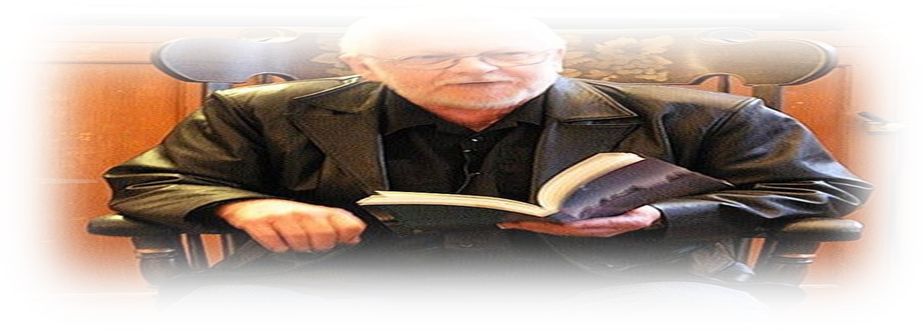
Guillermo (“Bill”) Calvo Mahé (a sometime poet) is a writer, political commentator and academic currently residing in the Republic of Colombia (although he has primarily lived in the United States of America of which he is also a citizen). Until 2017 he chaired the political science, government and international relations programs at the Universidad Autónoma de Manizales. Previously, he chaired the social studies and foreign language departments at the Eastern Military Academy in Huntington, New York. He is currently the publisher of the Inannite Review available at Substack.com; an intermittent commentator on radio and television; and, an occasional contributor to diverse periodicals and publications. He has academic degrees in political science (BA, The Citadel, The Military College of South Carolina), law (JD, St. John’s University, School of Law), international legal studies (LL.M, the Graduate Division of the New York University School of Law) and translation and linguistic studies (GCTS, the University of Florida’s Center for Latin American Studies). However, he is also fascinated by mythology, religion, physics, astronomy and mathematics, especially with matters related to quanta, cosmology and cosmogony. He can be contacted at guillermo.calvo.mahe@gmail.com and much of his writing is available through his blog at https://guillermocalvo.com/.

[1] I use “hypothetists as a neologism for speculative researchers who, given the absence of proof, are not really theorists.

[2] Apparently, electromagnetically induced transparency is a phenomenon where normally opaque media becomes transparent to light within a specific spectral range due to the effects of quantum interference. It is generated through us of a strong “control” light beam to create “dressed states” in a multi-level atom or molecule, allowing a weaker “probe” light beam to pass through the medium, thus ripping aside its attempt at obfuscation.

Thoughts on a Mothers Day’s Eve

Sooo, it’s Mothers’ Day’s Eve. 

Tomorrow is the day most beloved by restaurateurs, florists and purveyors of assorted merchandise.  But for many mothers it’s a very different sort of day, for those mothers whose children have become estranged, for those mothers who for one reason or another, found themselves unable to keep their children.  For those mothers whose children find them unworthy of respect or of affection. 

Many of us have not been great sons or daughters taking for granted that incredibly special relationship until it’s too late.  And then, of course, it’s too late.  I know I certainly should have been a much better son.  I always knew my mother loved me very much but I did not appreciate all the sacrifices she made and all that she endured to make me, as far as my better points go, the person I became.

It’s not easy to be a parent, and a “good parent” is an ideal that is too complex to easily attain.  Many of the best parents are those most resented, at least for a while, by children who are incapable of understanding that forming a human being capable of confronting the challenges he or she are sure to face requires difficult decisions and that in seeking to make them, mistakes are not infrequent, and that such mistakes are all too often exaggeratedly taken out of context.  But parents and those of their children who, rather than avoid parenthood become parents, are links in a chain as old as our species. 

On this Mother’s Day my heart goes out to those mothers, who like so many fathers, find themselves ignored, or disrespected, or alone.  Or who will merely engage in introspection on how much better they could have performed their sacred missions. 

It’s a day for celebration; yes!  And for recognition in many cases.  But also for reflection, introspection, forgiveness and empathy.
_____

© Guillermo Calvo Mahé; Manizales, 2025; all rights reserved.  Please feel free to share with appropriate attribution.

Guillermo (“Bill”) Calvo Mahé (a sometime poet) is a writer, political commentator and academic currently residing in the Republic of Colombia (although he has primarily lived in the United States of America of which he is also a citizen). Until 2017 he chaired the political science, government and international relations programs at the Universidad Autónoma de Manizales. Previously, he chaired the social studies and foreign language departments at the Eastern Military Academy in Huntington, New York. He is currently the publisher of the Inannite Review available at Substack.com; an intermittent commentator on radio and television; and, an occasional contributor to diverse periodicals and publications. He has academic degrees in political science (BA, The Citadel, The Military College of South Carolina), law (JD, St. John’s University, School of Law), international legal studies (LL.M, the Graduate Division of the New York University School of Law) and translation and linguistic studies (GCTS, the University of Florida’s Center for Latin American Studies). However, he is also fascinated by mythology, religion, physics, astronomy and mathematics, especially with matters related to quanta, cosmology and cosmogony. He can be contacted at guillermo.calvo.mahe@gmail.com and much of his writing is available through his blog at https://guillermocalvo.com/.

The Sad Saga of Adam Everyman: a confession of sorts

As he aged he increasingly came to acknowledge the harm he had caused others, either intentionally or carelessly or unavoidably, and he came to profoundly regret it.  He had too often been callous, albeit with a warm and sort of sincere smile, believing that he really sought to govern his life with good intentions, but his failures to do so were legion. 

He hated hypocrisy but that was mainly in others, his own example in that regard having been poor, although he tended to gloss over it in his introspections. 

He was a social and civic critic, and his related observations and speculations and analyses tended to be highly idealistic, and he was well thought of, except, perhaps, by those towards whom he had behaved inappropriately but, instead of seeking their forgiveness after admitting his faults, he sought forgiveness through penance of sorts, directed towards a divinity in which he did not really believe but which he constantly sought to find and understand. 

Faults in others were easy to identify and to criticize but in himself, they had for too long been artfully hidden, especially from himself. 

He had once reflected that if good and evil were objective rather than subjective, and that if an afterlife existed where punishments and rewards were bestowed based on merit, the only sure way to attain an adequate state of grace was to both forgive all the wrongs he had suffered and to attain forgiveness for the wrongs he had committed from those he had harmed.  Given his inability to do either, his only real hope rested in the unlikely possibility of immortality.
_____

© Guillermo Calvo Mahé; Manizales, 2025; all rights reserved.  Please feel free to share with appropriate attribution.

Guillermo (“Bill”) Calvo Mahé (a sometime poet) is a writer, political commentator and academic currently residing in the Republic of Colombia (although he has primarily lived in the United States of America of which he is also a citizen). Until 2017 he chaired the political science, government and international relations programs at the Universidad Autónoma de Manizales. Previously, he chaired the social studies and foreign language departments at the Eastern Military Academy in Huntington, New York. He is currently the publisher of the Inannite Review available at Substack.com; an intermittent commentator on radio and television; and, an occasional contributor to diverse periodicals and publications. He has academic degrees in political science (BA, The Citadel, The Military College of South Carolina), law (JD, St. John’s University, School of Law), international legal studies (LL.M, the Graduate Division of the New York University School of Law) and translation and linguistic studies (GCTS, the University of Florida’s Center for Latin American Studies). However, he is also fascinated by mythology, religion, physics, astronomy and mathematics, especially with matters related to quanta, cosmology and cosmogony. He can be contacted at guillermo.calvo.mahe@gmail.com and much of his writing is available through his blog at https://guillermocalvo.com/.

Anthropomorphic Nihilism

Once upon a time, not a very long time ago nor in a very faraway place, there lived, for a very brief instant in time, a very young title in search of a story.  It had heard of Neil Gaiman’s short story “Forbidden Brides of the Faceless Slaves in the Secret House of Dread Desire” and that had turned out rather well, thus, it found itself inspired, albeit perhaps not quite prepared for success.  The following is what, after not looking all that long or, to be honest, without very much exertion, it created:

The story started with an exclamation bereft of an introduction or of any character development or context, although, to an extent, context sort of followed: 

So what!  Who cares?  What’s the difference anyway?”

In that manner, in a huff, a disputation appeared to end, one between inanimate marble busts of “purported saints” Peter and Paul, sculptures crafted by one of Pablo Diego José Francisco de Paula Juan Nepomuceno Cipriano de la Santísima Trinidad Ruiz Picasso’s lesser known relatives who, for reasons of his or her own, chose to remain anonymous. 

The busts had been stored in a vestibule deep in the heart of the Vatican, a vestibule located within a labyrinth of sorts, not an artfully designed or planned labyrinth but rather, one that had seemingly evolved on its own as discarded tomes and relics and pieces of art accumulated in utterly random order, or rather, in a sort of articulated disorder.  Both saints on whom the busts had been purportedly modeled were reputed, within certain clandestine circles, to have been secret agents planted several millennia ago by Sanhedrin agents (precursors to the current Israeli Mossad) as provocateurs among naïve early followers of a troublesome Nazarene rabbi in order to undermine the early Judaic heretic sect all too quickly spreading like some sort of early virus (although viruses preceded humans by many eons).

For some odd reason, the busts of the purported saints, both of whom found themselves somewhat unexpectedly set in carefully hidden niches, were declaiming in a variant of sorts of modern English, although with blended Brooklyn-Yiddish accents, perhaps understandably given that the event to which we are alluding occurred relatively shortly after a visit by a group of the Vatican janitors and Swiss Guards assigned to the Vatican’s deepest dungeons, or perhaps storerooms; an incognito visit to the tourist filled Bioparco di Roma which was just then hosting a large American tourist group of former Yeshiva students.  One should, however, keep in mind, that the phrase “relatively shortly” may have a relative temporal meaning where the Vatican is involved.

Although, … perhaps the foregoing was just a dream one of the janitors or Swiss Guards was having after a hearty but poorly prepared meal using ingredients perhaps well past their due dates, certainly none of which met with Kosher dietary exigencies.  It’s been known to happen.  Well, not exactly in this fashion, but perhaps, metaphorically …. 

Or perhaps not.

On the other hand ….

No Neil Gaiman here, … unfortunately, he’s regrettably otherwise occupied.
_____

© Guillermo Calvo Mahé; Manizales, 2025; all rights reserved.  Please feel free to share with appropriate attribution.

Guillermo (“Bill”) Calvo Mahé (a sometime poet) is a writer, political commentator and academic currently residing in the Republic of Colombia (although he has primarily lived in the United States of America of which he is also a citizen). Until 2017 he chaired the political science, government and international relations programs at the Universidad Autónoma de Manizales. Previously, he chaired the social studies and foreign language departments at the Eastern Military Academy in Huntington, New York. He is currently the publisher of the Inannite Review available at Substack.com; an intermittent commentator on radio and television; and, an occasional contributor to diverse periodicals and publications. He has academic degrees in political science (BA, The Citadel, The Military College of South Carolina), law (JD, St. John’s University, School of Law), international legal studies (LL.M, the Graduate Division of the New York University School of Law) and translation and linguistic studies (GCTS, the University of Florida’s Center for Latin American Studies). However, he is also fascinated by mythology, religion, physics, astronomy and mathematics, especially with matters related to quanta, cosmology and cosmogony. He can be contacted at guillermo.calvo.mahe@gmail.com and much of his writing is available through his blog at https://guillermocalvo.com/.

Strange, Senryū-Like Pseudo-Scientific Observations

Memes and genes and photons, speed and time and space, dark matter and dark energy:

Is the transportation and reassembling of information, as is the case with memes and genes, a principle photonic function?

Does the purported reality that time bears an inverse relationship to speed and thus to space perhaps imply that it may flow in more than one direction?

Are dark matter and dark energy, in a sense, a reflection of the foregoing?
_____

© Guillermo Calvo Mahé; Manizales, 2025; all rights reserved.  Please feel free to share with appropriate attribution.

Guillermo (“Bill”) Calvo Mahé (a sometime poet) is a writer, political commentator and academic currently residing in the Republic of Colombia (although he has primarily lived in the United States of America of which he is also a citizen). Until 2017 he chaired the political science, government and international relations programs at the Universidad Autónoma de Manizales. Previously, he chaired the social studies and foreign language departments at the Eastern Military Academy in Huntington, New York. He is currently the publisher of the Inannite Review available at Substack.com; an intermittent commentator on radio and television; and, an occasional contributor to diverse periodicals and publications. He has academic degrees in political science (BA, The Citadel, The Military College of South Carolina), law (JD, St. John’s University, School of Law), international legal studies (LL.M, the Graduate Division of the New York University School of Law) and translation and linguistic studies (GCTS, the University of Florida’s Center for Latin American Studies). However, he is also fascinated by mythology, religion, physics, astronomy and mathematics, especially with matters related to quanta, cosmology and cosmogony. He can be contacted at guillermo.calvo.mahe@gmail.com and much of his writing is available through his blog at https://guillermocalvo.com/.

Thoughts on an Equinox in the Year 2025

At 5:01 a.m., EST, today, the 20th of March in the year 2025, all hemispheres on our planet experienced one of the two annual equinoxes.  One would hope today’s would involve an instant of harmony and balance but, … not so. 

Genocide, murder, ethnic cleansing and hypocrisy reign thanks to the monsters who inhabit Israel and to their enablers in the United States, the United Kingdom, Germany and France as well as among the diverse Middle Eastern dictatorships: Saudi Arabia, Qatar, the United Arab Emirates, Jordan, Egypt, etc. 

It is instead an instant during a multiyear period when evil reigns and when, as Leo Durocher once noted, nice guys finish last, although, among world leaders, nice guys are a rare breed, as rare as are decent men and women.

As was the case when the Nazis ruled in Germany, most decent people, at least in North America and Europe, are deluded.  They’re like ostriches with their heads in the sand or like the three simians who believe that as long as they can avoid hearing, seeing, or talking about the evil in which they’re immersed, they’re safe. 

Those in the Global South, more sensitized by their experience with the colonialist North, look on enraged and ashamed but impotent as the phrase “never again” morphs into “as usual”. 

Sad thoughts on a lonely planet spinning along in a multiverse where justice and equity are irrelevant.
_____

© Guillermo Calvo Mahé; Manizales, 2025; all rights reserved.  Please feel free to share with appropriate attribution.

Guillermo (“Bill”) Calvo Mahé (a sometime poet) is a writer, political commentator and academic currently residing in the Republic of Colombia (although he has primarily lived in the United States of America of which he is also a citizen). Until 2017 he chaired the political science, government and international relations programs at the Universidad Autónoma de Manizales. Previously, he chaired the social studies and foreign language departments at the Eastern Military Academy in Huntington, New York. He is currently the publisher of the Inannite Review available at Substack.com; an intermittent commentator on radio and television; and, an occasional contributor to diverse periodicals and publications. He has academic degrees in political science (BA, The Citadel, The Military College of South Carolina), law (JD, St. John’s University, School of Law), international legal studies (LL.M, the Graduate Division of the New York University School of Law) and translation and linguistic studies (GCTS, the University of Florida’s Center for Latin American Studies). However, he is also fascinated by mythology, religion, physics, astronomy and mathematics, especially with matters related to quanta, cosmology and cosmogony. He can be contacted at guillermo.calvo.mahe@gmail.com and much of his writing is available through his blog at https://guillermocalvo.com/.

Aspirational Sanguinity

He’d thrown caution to the wind, gambling again against the future and the past, willingly offering them up in exchange for the possible enchantment that appeared to be within his grasp, fleeting though it might be, hoping that one single triumph would make everything else, all the past failures, irrelevant.

It was not a unique situation. 

In the past, similar circumstances had failed to fulfill his expectations.  But they’d always extracted the full price he’d been willing to pay.  He’d been left emotionally, physically and materially drained but, he’d just start anew, never learning and hoping that he never would.

His past infatuations had rarely matured into even meaningful relationships and certainly not into “the” special relationship he’d always optimistically intuited.  Yet “rarely” had always seemed, at least momentarily, enough.  And despite his past failures, not that many but not that few, he remained optimistic.  After all, the unique experience he hoped for could only really occur, in its most profound sense, once.  And only one person out of all the people who had ever been born or would ever be born could fulfill it.  The person who, as to him, would prove to be the single source of complete resonance: amorous, intellectual, spiritual and physical, melding their individual vibrancies into a single perfect wave, one between and among them and no one else.

Or so he understood. 

Others wondered what sort of wave might coalesce through the joinder of more than just two, perhaps even many vibrancies, and the more spiritual aspired to join the ultimate wave that might be formed joining us all.

The possibility of artificial intelligence encapsulated in the verisimilitude of human form might soon complicate the premises involved.

But, as to him, at that moment, at that instant, he wondered what she, the latest catalyst for his obsession, was thinking.  Or of what, perhaps, she was dreaming.  Which raised the issue of which was the real world, the waking or the dreaming.  And then, whether the objects in a dream, the beings who seemed to populate it, had their own realities, their own dreams.  And finally, the eternal speculation as to whether we might not all just be objects in the perpetual dream of the most primordial of all denizens of the vegetable kingdom, as so many plants and flowers and shrubs and trees, especially giant redwoods, seem to hope.
_____

© Guillermo Calvo Mahé; Manizales, 2025; all rights reserved.  Please feel free to share with appropriate attribution.

Guillermo (“Bill”) Calvo Mahé (a sometime poet) is a writer, political commentator and academic currently residing in the Republic of Colombia (although he has primarily lived in the United States of America of which he is also a citizen). Until 2017 he chaired the political science, government and international relations programs at the Universidad Autónoma de Manizales. Previously, he chaired the social studies and foreign language departments at the Eastern Military Academy in Huntington, New York. He is currently the publisher of the Inannite Review available at Substack.com; an intermittent commentator on radio and television; and, an occasional contributor to diverse periodicals and publications. He has academic degrees in political science (BA, The Citadel, The Military College of South Carolina), law (JD, St. John’s University, School of Law), international legal studies (LL.M, the Graduate Division of the New York University School of Law) and translation and linguistic studies (GCTS, the University of Florida’s Center for Latin American Studies). However, he is also fascinated by mythology, religion, physics, astronomy and mathematics, especially with matters related to quanta, cosmology and cosmogony. He can be contacted at guillermo.calvo.mahe@gmail.com and much of his writing is available through his blog at https://guillermocalvo.com/.
Perniciously Concupiscent Parodies, Volume One

Biggus Dickus, a character eventually revealed (albeit tangentially) in Monty Python’s documentary on the Life of Brian (which dealt with purported events during the first century of the Common Era), may or may not have involved a parody of the infamous Roman Casanova-wanna-be, Primus Phalux Maximus Quintus (who may or may not have actually existed), and who if he did exist (improbable but one never knows), but for temporal improbabilities, may or may not have been the secret hidden triplet of Publius Clodius Pulcher, the third member of which was the audaciously beautiful, sensuous and libidinous Clodia Metelli, sometimes known as Quadrantaria, of whom the Roman eroticist poet Gaius Valerius Catullus longingly wrote dramatically ambivalent vignettes comprised in equal parts of love, despair and deprecation.  At least that might have been the lead story in the media in the late Roman Republic, circa sixty years before the Common Era, had its journalistic ethics born a resemblance to that of today’s maliciously creative corporate media, which, come to think of it, it may well have, both having prioritized creative writing.
_____

© Guillermo Calvo Mahé; Manizales, 2025; all rights reserved.  Please feel free to share with appropriate attribution.

Guillermo (“Bill”) Calvo Mahé (a sometime poet) is a writer, political commentator and academic currently residing in the Republic of Colombia (although he has primarily lived in the United States of America of which he is also a citizen). Until 2017 he chaired the political science, government and international relations programs at the Universidad Autónoma de Manizales. Previously, he chaired the social studies and foreign language departments at the Eastern Military Academy in Huntington, New York. He is currently the publisher of the Inannite Review available at Substack.com; an intermittent commentator on radio and television; and, an occasional contributor to diverse periodicals and publications. He has academic degrees in political science (BA, The Citadel, The Military College of South Carolina), law (JD, St. John’s University, School of Law), international legal studies (LL.M, the Graduate Division of the New York University School of Law) and translation and linguistic studies (GCTS, the University of Florida’s Center for Latin American Studies). However, he is also fascinated by mythology, religion, physics, astronomy and mathematics, especially with matters related to quanta, cosmology and cosmogony. He can be contacted at guillermo.calvo.mahe@gmail.com and much of his writing is available through his blog at https://guillermocalvo.com/.

Very Diminutive Poetry of Sorts

Yiddish:

Onomatopoeic insouciance!

Not quite a haiku.
_____

© Guillermo Calvo Mahé; Manizales, 2025; all rights reserved.  Please feel free to share with appropriate attribution.

Guillermo (“Bill”) Calvo Mahé (a sometime poet) is a writer, political commentator and academic currently residing in the Republic of Colombia (although he has primarily lived in the United States of America of which he is also a citizen). Until 2017 he chaired the political science, government and international relations programs at the Universidad Autónoma de Manizales. Previously, he chaired the social studies and foreign language departments at the Eastern Military Academy in Huntington, New York. He is currently the publisher of the Inannite Review available at Substack.com; an intermittent commentator on radio and television; and, an occasional contributor to diverse periodicals and publications. He has academic degrees in political science (BA, The Citadel, The Military College of South Carolina), law (JD, St. John’s University, School of Law), international legal studies (LL.M, the Graduate Division of the New York University School of Law) and translation and linguistic studies (GCTS, the University of Florida’s Center for Latin American Studies). However, he is also fascinated by mythology, religion, physics, astronomy and mathematics, especially with matters related to quanta, cosmology and cosmogony. He can be contacted at guillermo.calvo.mahe@gmail.com and much of his writing is available through his blog at https://guillermocalvo.com/.

Perceptually Reversed Internecine Charges

What if words are in fact components of sentient collective streams that actually control us; that use our organic components as tools for their own internecine purposes? 

What if words are, in fact, sentient memes and memeplexes that ride us the way we are led to believe by them that we use animals and tools for what we erroneously perceive to be our own purposes. 

Mightn’t that explain why, in the end as in the beginning, our conduct tends towards incoherence, at least from our own reactive rather than volitional perceptions?

Mightn’t the word, “internecine” say it all, or at least, a great deal?

What if rather than “being because we think” we just “think we are”?

What would a mimetically sentient “god of the words” be like, after all, purportedly, “in the beginning was the Word”?
_____

© Guillermo Calvo Mahé; Manizales, 2025; all rights reserved.  Please feel free to share with appropriate attribution.

Guillermo (“Bill”) Calvo Mahé (a sometime poet) is a writer, political commentator and academic currently residing in the Republic of Colombia (although he has primarily lived in the United States of America of which he is also a citizen). Until 2017 he chaired the political science, government and international relations programs at the Universidad Autónoma de Manizales. Previously, he chaired the social studies and foreign language departments at the Eastern Military Academy in Huntington, New York. He is currently the publisher of the Inannite Review available at Substack.com; an intermittent commentator on radio and television; and, an occasional contributor to diverse periodicals and publications. He has academic degrees in political science (BA, The Citadel, The Military College of South Carolina), law (JD, St. John’s University, School of Law), international legal studies (LL.M, the Graduate Division of the New York University School of Law) and translation and linguistic studies (GCTS, the University of Florida’s Center for Latin American Studies). However, he is also fascinated by mythology, religion, physics, astronomy and mathematics, especially with matters related to quanta, cosmology and cosmogony. He can be contacted at guillermo.calvo.mahe@gmail.com and much of his writing is available through his blog at https://guillermocalvo.com/.