Bobby and Me: an Ode to Old Friends

It’s Christmas Eve in the year 2024, an eventful year although not for reasons we will be proud to remember, especially in the Middle East.  But it’s still that special season that has been honored wherever men have roamed since we became sentient and noticed the seeming miracle of the twin solstices, the one in the North, with the longest night, and the one in the South with the longest day.  The equator is currently not far from where I live in a wonderful city high in the Central range of the Colombian Andes.  Here, spring reigns eternal.  It’s a city at the southern edge of the Northern Hemisphere.  I guess that at the equator solstices and equinoxes coincide.  I have often wondered what it would be like to live in a home that straddles the equatorial line, one concurrently both real and imaginary.  It must be a magical place.  But, at any rate, for me, solstices as well as equinoxes have always seemed days for introspection and this year I’ve reflected on my friend Bobby, and on the special parochial school in Hollis, Queens, in New York City from which I graduated in late June of 1960, St. Gerard de Majella (we just called it St. Gerard’s).

So, about Bobby. 

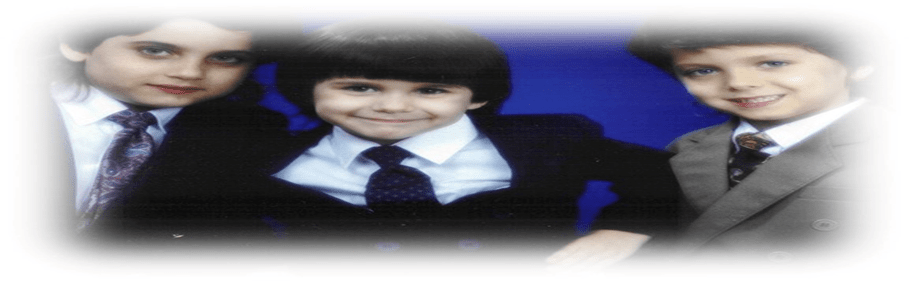
I can’t recall his last name.  He’s not in the picture above, he didn’t graduate with me from St. Gerard’s.  He lived with his family over a candy store on Hillside Avenue in Queens Village, New York, between 215th and 216th streets I think.  I recall sharing “chocolate egg creams” there.  I lived in the Abbot Arms apartment complex across the street (at least I think that’s what it was called).  We were briefly “best” friends during the 1960-1961 academic year, a very difficult year for me and not just because hormones had kicked into high gear.  That was the year Bill Mazeroski broke Mickey Mantle’s heart, … and mine.  Bobby was Italian and his family was very kind, very warm; very full of joy.  I loved some of the food his wonderful mom made for us but not all of it, not the bull’s balls, … yuck!!!  But I ate them just the same. 

Bobby was one of the nicest people I’ve ever met.  He helped me through a rough time.  As had happened all too often, I’d switched schools in the middle of the 1960-61 academic year, having been transferred over my protests by my parents from Jamaica High School, which I really liked and where many of my friends from St. Gerard’s had gone, to Martin Van Buren, a relatively new school where I knew no one.  After almost yearly changes in schools, this was one too many and I finally rebelled.  I informally refused to accept the transfer, instead, riding the New York City subways all day until I was finally caught.  I remember that I’d planned to emancipate myself by becoming a comic book artist and had sent DC Comics an idea for a new super hero I’d drawn, “Ultraman” I think I called him.  Their rejection letter was polite: “they had enough artists and did not generally hire fourteen year olds”. 

I remember that chief among the delights of Jamaica High were two girls, Karen Luckhart (I think that was her last name but I’ve probably misspelled it) and Mary Bakanskas (ditto on the spelling), and I also had a host of other good friends.  One’s name was Tommy Scott, a classmate from St. Gerard’s; we used to hang out together before classes started.  There was also a very pretty sophomore named Cindy who sometimes deigned to join us freshmen at our early morning gatherings.  I remember that she smoked and seemed very mature and somewhat wise.  Smoking created impressions like that back then.  Now, not so much.  And then there was a sort of friend, Johnny Eckelstein, a sort of rival.  He was on Jamaica High’s track team.

I don’t remember anyone from my short stay at Van Buren. 

At the end of that academic year I was off to the Eastern Military Academy in Cold Spring Hills, New York, overlooking Cold Spring Harbor, an old whaling port.  It was my choice and a wise one.  Eastern provided me with an Island of stability as my family fell apart.  My mother and stepfather separated then divorced in 1962 and my younger siblings, my sister Marina and my brother Teddy were also sent to boarding schools, Marina to Sag Harbor and Teddy to St. Basil’s in upstate New York.  Eastern was the first school in my life where I remained for more than two years.  I graduated from Eastern in 1964 and returned to teach there for a decade after college at the Citadel. 

I never saw or heard from Bobby after I left for Eastern but I never forgot him either.

I frequently wonder what happened to all of those people with whom I shared a bit of friendship in that strange year.  I wish there was some way to reconnect but until recently, not even Facebook has helped.  I’ve tried.  I especially tried with respect to those who graduated with me from St. Gerard’s in June of 1960.  Most especially with respect to one with whom I may never have shared a single word.  Patricia Maher was her name and this time I´ve got the spelling right.  I’ve posted on a Facebook page for St. Gerard’s (which ceased operations in 2008 but whose chapel still survives) but have yet to receive any responses.  I’ve heard that former governor Mario Cuomo also went there.  He was one of my law school professors, the one I most admired although his sons have sullied his name.  I think of St. Gerard’s every time I watch Bing Crosby and Ingrid Bergman in the Bells of St. Mary’s (which I try to do every Christmas).  

I recall the transition from the 1950s to the 1960s at St. Gerard’s and the special message that the Virgin of Fatima had supposedly delivered to a young girl in Portugal, Lucia dos Santos was her name then.  She’d turned the message over, sealed, to the Vatican, and Pope John XXIII was supposed to finally unseal it as 1959 turned to 1960.  I recall the rumor that when he’ read it, he’d passed out and that the message was so troubling that after we’d waited for half a century to hear it (well, not us specifically, we’d only waited thirteen years), we’d just have to keep on waiting.

I remember St. Gerard’s and love it more every year and wonder what ever happened to my classmates, hoping that they’ve all enjoyed happy and productive lives.  But Bobby, I remember him best.  I hope he’s thriving and that he’s had a great life. 

I wonder if he remembers me as well.
_____

© Guillermo Calvo Mahé; Manizales, 2024; all rights reserved.  Please feel free to share with appropriate attribution.

Guillermo (“Bill”) Calvo Mahé (a sometime poet) is a writer, political commentator and academic currently residing in the Republic of Colombia (although he has primarily lived in the United States of America of which he is also a citizen). Until 2017 he chaired the political science, government and international relations programs at the Universidad Autónoma de Manizales. Previously, he chaired the social studies and foreign language departments at the Eastern Military Academy in Huntington, New York. He is currently the publisher of the Inannite Review available at Substack.com; an intermittent commentator on radio and television; and, an occasional contributor to diverse periodicals and publications. He has academic degrees in political science (BA, The Citadel, The Military College of South Carolina), law (JD, St. John’s University, School of Law), international legal studies (LL.M, the Graduate Division of the New York University School of Law) and translation and linguistic studies (GCTS, the University of Florida’s Center for Latin American Studies). However, he is also fascinated by mythology, religion, physics, astronomy and mathematics, especially with matters related to quanta, cosmology and cosmogony. He can be contacted at guillermo.calvo.mahe@gmail.com and much of his writing is available through his blog at https://guillermocalvo.com/.

A Nostalgically Melancholy Christmas Carroll[1]


[1] To the tune of Joan Baez singing “There but for Fortune” and Simon and Garfunkel’s version of “The Seven O’clock News/Silent Night”.

An introspection dedicated to Billy, Alex and Edward, to Marina and Teddy, to my mother, Rosario who’s been gone now for a third of a century, and to her sisters Carola (who joined her a while ago) and Livia who is blessedly still here.  To long gone “Pop” who left us in 1972 and to our matriarch, Juanita, who after having lived a bit more than a century, determined, on her own, that it was time to go.  And, of course, to Natalia.

Christmas has often seemed nostalgically melancholy to me.  It involves an anniversary, each anniversary different, sometimes very different.  My happiest were when I was surrounded by family, first as a young child with my younger sister Marina, then with Marina and my little brother Teddy and with my mother and my stepfather Leon.  Then, eventually, much later, as a parent with a wife and one, then two, and finally three sons.

My first recollection is when Marina and I were very little.  My mother and father had separated and he was probably with his family in Barinas, Venezuela while my mother had started her adventure in the United States.  We were left in my grandmother Juanita’s care, along with my wonderful aunts, Livia and Carola.  My earliest Christmas memory involves my grandmother’s annual Christmas event for the poorest children in the City of Manizales in Colombia.  My grandmother owned a hotel, the Hotel Roma, which included a wonderful restaurant with a large dining room and, for Christmas, she’d pile the dining room with a small mountain of gifts which, on that occasion, I, in representation of baby Jesus (I was three at the time) was charged with distributing to the many dozens of very poor young children present.  It should have been a beautiful event except that I misbehaved.  I kept a toy I liked for myself and when my grandmother found out, my baby Jesus role was over forever.  She said I’d behaved more like baby Satan.  My transgression that evening, even as young as I was, impacted me profoundly and since that time I have always tried my best to be kind to those less advantaged than I.

My next set of memories were after I and Marina had joined my mother in the United States and we had formed a new family with my stepfather Leon (who I always called “Pop” at his suggestion).  We didn’t have very much back then but we didn’t know we were poor and Christmas was full of presents, or so it seemed. For me, usually toy guns, toy guns that became more and more realistic (that not being politically incorrect back then) and, on two occasions, electric trains.  I can’t recall what presents Marina and Teddy received except on one occasion, Christmas of 1956, an eventful year.  We’d been living idyllically for over a year in Charlotte, for once in a house rather than in an apartment, and even had a housekeeper but, in a flash, it was all gone and we were headed back to Miami Beach, to a tiny apartment again, and worse, my stepfather was not with us having been injured in a serious car accident.  We had virtually nothing except a bit of charity from my stepfather’s sister, my aunt Mary, and my mother was understandably a wreck so that a good deal of family “management” had devolved on eleven year old me, and Christmas was around the corner.  I’d arranged for small presents for Marina and Teddy so that they’d continue to believe in Santa, comic books for Marina as I recall, and perhaps a football for Teddy (which I too could use) but, on Christmas Eve, as twilight fell, in walked Pop, his arms loaded with gifts.  The relief I felt was intense and the happiness awesome.  The best present ever.  We had each other.  ….  Until we didn’t.  Not quite.  Not in the same way.  Five years later, in 1961 our family abruptly fragmented as so many, indeed most, do now.  As the one I was to lead in the future many decades later was to do as well.  I recall our last Christmas all together, it was in New York, in Queens Village, and it had snowed, and I recall that Marina, Teddy and I along with other children made snow angels in the yard of the small apartment complex where we then lived on Hillside Boulevard between 215th and 216th streets.  Abbot Arms it was called, as I recall.

After that I was in a military boarding school, the Eastern Military Academy, and then in college at the Citadel, the Military College of South Carolina, and I usually spent Christmases with friends at their homes.  Pleasant times, even wonderful times, but not the same.  And after college, I returned to the military academy from which I’d graduated, the one that had become home to me and where I spent almost a decade as a teacher and administrator.  The Eastern Military Academy was a magical place, indeed, it was a real castle (Oheka Castle nowadays), and Christmases were interesting, almost always white.  All the students were gone and the resident faculty members gathered to share the season in front of roaring fires with special egg nog and shared meals.  Christmas then was communal, shared with special people.  With Susan Metz with whom I lived at the time and with the literary scholar, Roger Hamilton, and with the LaForges and the Coffeens, and especially with the wonderful Greene family, David, the patriarch and his wonderful wife Jane, and their children: Robert (who was to become my best friend) and Laurie who passed away much too young.  They were family but, of course, a very different sort of family.

My second “real” family, the one I founded as an adult, also shared what to me seemed beautiful winter holidays and that was as true when we could afford anything any of us wanted as it was when, occasionally, very briefly, we had practically nothing.  Billy, Alex and Edward, my sons, always made Christmas very special, no matter what.  Indeed, my most beautiful memory involves a time when, after a country hotel and restaurant we’d bought in Laurel Hills, North Carolina (the Echo Mountain Inn) had failed and we’d lost almost everything, we were spending Christmas morning in the Florida home of George and Agnes Chamberlin, the wonderful parents of a childhood friend, and presents were being opened.  One came packed in a series of boxes to the utter delight of my second son, Alex (then about three years old).  Alex was very excited as every present was opened (even though most were not for him) and, when the gag box within a box within a box package was being opened, he kept exclaiming, “a box; a box”.  I also very fondly recall when some years later, at a time when our fortunes had vastly improved, my sons’ mother Cyndi and I climbed the roof of our large comfortable home to plant replica reindeer tracks so that my three sons would continue to believe in St. Nicholas, or at least to remain open-minded on the subject.  Open mindedness reinforced by their mother’s refrain of “if you don’t believe you won’t receive”.  A persuasive argument.  I also recall the time some years later when I combed the country looking for a just released video game console my sons were desperate to receive (am Xbox as I recall), one which a business partner in upstate New York finally located for me.  And I recall how pleased I was with myself for having been able to find it, the best present of all for me having been being able to please my sons.

When Christmases were happy times, one of the things that most impacted me, in addition to being extremely grateful for my family, was the spirit of decency and goodwill that seemed to permeate the season.  The hope for peace and justice and for a better world that seemed a legacy from the Nazarene who many called “the Prince of Peace” (but in whose name, incongruously, his most devoted followers caused so much killing and mayhem and misery).  The latter reality became more obvious to me as I matured intellectually and became a more devoted historian and academic; when I eventually began to pierce the veils of delusion woven around us all and Christmas lost much of its allure, its tidings of hope receding and becoming instead, an opportunity for contrasting the stark realities in which we lived.  Realities in which a tiny few had more than they could ever consume.  Realities in which a seeming majority managed to get by somehow.  But a reality in which many, way too many, suffered terribly, both materially and spiritually.  A reality where far too many found the holiday season the saddest and most despairing time of the year.  To a greater and greater extent, the latter’s despair touched me, every year a bit more.  It touched me as our world spiraled more and more out of quilter, it touched me more and more as justice and equity were revealed as empty promises, mere delusive illusions, and it touched me more and more as I came to realize that superficial things that seem to bring us pleasure, things like television programs and concerts and movies and sports were merely temporary distractions used to maintain us tightly under control.  In that regard I remember the famous version of “Silent Night” by Paul Simon and Art Garfunkel released in 1966 (the 7:00 News and Silent Night medley) at the height of the military misadventure then known as the Vietnam War, a war that claimed many of those I most loved and admired.  People like my Citadel classmates Woody Woodhouse and Ron Ashe and John Bradman and too many others to name.

Still, even then, Christmas had its enchantment.  I recall Christmas during 1976 while I was attending the graduate division of the New York University’s School of Law to earn a postgraduate degree in international legal studies.  I recall how on the day before Christmas Eve that year I drove with my wonderful friend, Robert Greene, through the neighborhood in lower Manhattan adjoining the Williamsburg Bridge which I traversed every weekday as I travelled to classes in Washington Square Park, and how from my car window we passed out bottles of Lowenbrau dark beer to the homeless men and women who congregated on our route, people who we were too poor to help on normal occasions, and I recall how pleased we were with our apparent beneficence, something which certainly did more for us than it did for the recipients of our gifts.  And then I recall that, after my classes that evening, we were off, back to our Long Island home at the military academy where we both taught, off to share tidings of comfort and joy, a time of awakening for both of us but shielded from the dark by families and friends sharing memories that would keep us warm for years to come.  That keep me warm today.

The 1970’s were a strange time, a time full of hope when we who’d come of age in the sixties thought we could change the world only to have it change us during the 1980’s.  The 1980’s when we reverted to form, our idealistic illusions fading more and more each year as we had our own families and I had my own sons.  Providing for them became the greater good and the world’s ills, and the ills of many around us became less clear, less important, at least to us.  That digression lasted through the turn of the millennium, a privileged time for many of us in many senses, but a worse and worse time for most of the world.

I remember the last Christmas I spent as part of a family with my sons and their mother Cyndi, still my wife then.  It was in 2006.  By 2007 our family had imploded and exploded and fragmented and the last traces of merry Christmases had faded until their echoes had become dissonant and I found myself among the masses of those for whom the holidays were the saddest part of the year rather than the happiest.  Not that I was terribly off, just that by 2008 I was in a different country, back in Colombia where I’d been born, in a different continent, separated from the family I had once led and which I missed very much.  And that in that loneliness, although I was not alone, I came closer and closer to understanding the darker side of our world, a darker side about which I, then a college professor, taught.  And I became very personally impacted by the seeming futility of seeking that world that the promises attributed to the ancient Nazarene proclaimed were our due and our responsibility.  And I somehow blamed him for having failed us when the reverse was much more true.

Those darker times have now largely passed, at least personally.  Since 2019 I’ve found comfort with my current wife, Natalia, a woman who, as a noncustodial parent, has also endured the loss of intimacy with her children.  Because of shared negative experiences we’re able to comfort each other and to share a new version of joy, although one tinged with maturity and reality.  One grounded in spirituality and civic activism.  One which resonates with the echoes of the homeless and the poor and with their suffering, suffering of which Joan Baez once sang “there but for fortune go you or I”.  So now, this season is neither merry nor full of despair but, at least for my wife and for me, it has evolved into a time for reflection and introspection, and for recalling memories of other days, and for watching old Christmas classics like “The Bells of St. Mary’s” and “Going My Way” where Bing Crosby, long gone, still creates the illusion of Christmas as a magical time, a time when anything is possible and, at any rate, when things seemingly turned out well.  It has evolved into a time for my own version of Charles Dickens’ “A Christmas Carroll”; a time where I welcome the spirits of Christmases past to share a cup of cheer, albeit nostalgically and melancholically as I recall happy times now receded into fond memories.

Soo, it’s that season again, but this year, this terrible year when genocide has become acceptable in Nazareth and Bethlehem and the other areas where the Nazarene whose birth we celebrate once trod, it’s a time for even more reflection and introspection than usual, and for treasuring the people, not the things, that leave us with at least a trace of hope that the Christmas dreams of our youth will someday be reflected in better, more just and kinder realities.  Times when that gentle Nazarene, were he among us, whether or not he was or is divine, would find us having been worth his sacrifice.  And with that image in my heart, an ironic refrain seems to fill the end of a movie as a portly old man dressed in red and white, in extremely good humor, shouts: “and a merry Christmas to all, and to all a good night”.
_____

© Guillermo Calvo Mahé; Manizales, 2024; all rights reserved.  Please feel free to share with appropriate attribution.

Guillermo (“Bill”) Calvo Mahé (a sometime poet) is a writer, political commentator and academic currently residing in the Republic of Colombia (although he has primarily lived in the United States of America of which he is also a citizen). Until 2017 he chaired the political science, government and international relations programs at the Universidad Autónoma de Manizales. Previously, he chaired the social studies and foreign language departments at the Eastern Military Academy in Huntington, New York. He is currently the publisher of the Inannite Review available at Substack.com; an intermittent commentator on radio and television; and, an occasional contributor to diverse periodicals and publications. He has academic degrees in political science (BA, The Citadel, The Military College of South Carolina), law (JD, St. John’s University, School of Law), international legal studies (LL.M, the Graduate Division of the New York University School of Law) and translation and linguistic studies (GCTS, the University of Florida’s Center for Latin American Studies). However, he is also fascinated by mythology, religion, physics, astronomy and mathematics, especially with matters related to quanta, cosmology and cosmogony. He can be contacted at guillermo.calvo.mahe@gmail.com and much of his writing is available through his blog at https://guillermocalvo.com/.

Winter Solstice

Today marks this year’s Winter Solstice, Summer Solstice in the Southern Hemisphere.  Here in Manizales high in the Central range of the beautiful Colombian Andes, we are on the Southern edge of the Northern Hemisphere.  The Winter Solstice was one of the earlier dates for Christmas prior to Pope Gregory XIII’s calendar changes in 1582 more than a millennia after the holiday had been moved to December 25 by the Roman Christian Church in order to coincide with the birth of the Persian divinity, Mithras, coincidentally born of a virgin and died crucified.

A day for balanced reflection, for endings and new beginnings.

_____

© Guillermo Calvo Mahé; Manizales, 2024; all rights reserved.  Please feel free to share with appropriate attribution.

Guillermo (“Bill”) Calvo Mahé (a sometime poet) is a writer, political commentator and academic currently residing in the Republic of Colombia (although he has primarily lived in the United States of America of which he is also a citizen). Until 2017 he chaired the political science, government and international relations programs at the Universidad Autónoma de Manizales. Previously, he chaired the social studies and foreign language departments at the Eastern Military Academy in Huntington, New York. He is currently the publisher of the Inannite Review available at Substack.com; an intermittent commentator on radio and television; and, an occasional contributor to diverse periodicals and publications. He has academic degrees in political science (BA, The Citadel, The Military College of South Carolina), law (JD, St. John’s University, School of Law), international legal studies (LL.M, the Graduate Division of the New York University School of Law) and translation and linguistic studies (GCTS, the University of Florida’s Center for Latin American Studies). However, he is also fascinated by mythology, religion, physics, astronomy and mathematics, especially with matters related to quanta, cosmology and cosmogony. He can be contacted at guillermo.calvo.mahe@gmail.com and much of his writing is available through his blog at https://guillermocalvo.com/.

Yešu the Nazarene; “They would not listen, they’re not listening still; perhaps they never will”

Of all the beliefs attributed to Yešu the Nazarene, none alienated him more from mainstream Judaism and indeed, from his Roman masters than did his profound belief in equity, equality and justice, beliefs that in the economic sphere are, given the attitudes of his modern followers, especially in the United States, profoundly ironic and indeed, oxymoronic.  And they were not just beliefs but practices, both during his life among his apostles and, after his demise, in the Jerusalem community briefly led by his brother James until the movement was corrupted and perverted into the modern concepts collectively referred to as “Christianity” by Saul of Tarsus, a man who, according to Jewish lore, lore reflected in both the Jerusalem and Babylonian Talmuds but also in the series of alternative gospels known under the collective name of the Toledot Yeshu, was a Jewish mole in the Nazarene movement whose mission it was to separate followers of Yešu from mainstream Judaism, something in which Saul, better known to “Christians” as “Paul”, was eminently successful.

Most people in the United States and Europe who consistently use the term “communism” have no idea what it entails, just as they have no idea what “socialism” or “fascism” entail, believing only that they are evil totalitarian political and economic philosophies.  That they are merely pejoratives to be indiscriminately hurled against those that they oppose, regardless of how incoherent the context.  Their ignorance is not their fault, it has been carefully cultivated by both Jewish leaders and the leaders of “Christianity”, the movement established by Saul of Tarsus which captured and distorted the movement founded by Yešu, the Nazarene.  “Communism” is the direct reflection of Yešu’s teachings to the effect that we should share what we have with those less fortunate and that no one should accumulate more than is needed, especially if doing so deprives others of necessities.  Needles and camels come to mind.  That is also the premise of socialism.  Neither communism nor socialism have anything to do with totalitarianism, or with authoritarianism, or with dictatorship, or with tyranny although, as in the case of capitalism, neoliberalism, globalism, etc., those negative antilibertarian control features have been combined with economic doctrines in order to maintain elites in power.  And Yešu’s economic philosophies had nothing to do with maintaining elites in power.  Rather they urged leveling of the playing field and equality and equity for all, with justice tempered by mercy.  Remember, he preferred the company of sinners to that of hypocrites.

Of course, Yešu’s philosophies were quickly overwhelmed and subsumed by those of Saul of Tarsus, and eventually, by those of numerous Catholic Popes and then, by the philosophies incoherently evolved by followers of Martin Luther and John Calvin in Yešu’s name, e.g., the Protestant ethic and capitalism.  How Yešu must hate that, especially if he is the being who his purported followers believe him to be.  How Yešu must despise neoliberalism and globalism and neoconservatism.  How disappointed he must be that his teachings have, for the most part, been so completely perverted.  How shocked he must be as his purported followers support genocide, and ethnic cleansing and apartheid and eschew tolerance. 

Yešu, ironically given modern perceptions, was a dedicated communist.  I am not a believer in the divinity of Yešu but I profoundly respect and admire what he tried to teach us and regret that as in the song “Vincent” written by Don McLean as a tribute to Vincent van Gogh, “…. They would not listen, they’re not listening still; perhaps they never will”.

_____

© Guillermo Calvo Mahé; Manizales, 2024; all rights reserved.  Please feel free to share with appropriate attribution.

Guillermo (“Bill”) Calvo Mahé (a sometime poet) is a writer, political commentator and academic currently residing in the Republic of Colombia (although he has primarily lived in the United States of America of which he is also a citizen). Until 2017 he chaired the political science, government and international relations programs at the Universidad Autónoma de Manizales. Previously, he chaired the social studies and foreign language departments at the Eastern Military Academy in Huntington, New York. He is currently the publisher of the Inannite Review available at Substack.com; an intermittent commentator on radio and television; and, an occasional contributor to diverse periodicals and publications. He has academic degrees in political science (BA, The Citadel, The Military College of South Carolina), law (JD, St. John’s University, School of Law), international legal studies (LL.M, the Graduate Division of the New York University School of Law) and translation and linguistic studies (GCTS, the University of Florida’s Center for Latin American Studies). However, he is also fascinated by mythology, religion, physics, astronomy and mathematics, especially with matters related to quanta, cosmology and cosmogony. He can be contacted at guillermo.calvo.mahe@gmail.com and much of his writing is available through his blog at https://guillermocalvo.com/.

A Satirical Trumpian Fairy Tale, Twice Removed

Trumpets please!!!!

Ladies and gentlemen, we present this sort of satirically sordid tale for your amusement and entertainment.  It may or may not be based on fact, that’s a matter of perspective, and the names may or may not have been changed to protect the innocent.  Or the guilty.  Once again, a matter of perspective.

Let’s begin:

Deius Clandestinius Amorphus, the eighty seventh of that designation in his dynasty, glanced languidly at his twenty seventh consort, soon to be his eighth wife, junior grade, at least for the time being.  Time would tell how high she rose or how far she fell.  Hard to predict at the moment as she had just turned twelve (or so she claimed, she looked much closer to fifty) and he was just short of eighty-three.  He was not an emperor, or a king, or a prince, or even a duke.  Rather, he was an ascendant file clerk at the small law firm of Blathers & Associates.  Small but successful, a boutique firm specializing in electoral manipulation.  Sly, as he preferred to be called given all the syllables and numbers in his name, was the eighth cousin, thrice removed, of Yackoff Stanton, the senior associate in the firm to whom he owed his position with its attendant salary and more importantly, its fringe benefits.  Yackoff, in turn, was aspiring and constantly plotting to ascend to the position of most junior partner, a position long unfilled as the firm was bereft of any partners at all, Mrs. Blather not being keen on having to share her authority with anyone else, not since she had attained her current position upon the death of her husband, Slayton Armington Blathers, the great grandson thrice removed of the firm’s founder. 

Like Kamala (that was the impending bride’s name), Mrs. Blathers had once also been a consort but had ascended to the role of junior wife from which she had clawed and seduced her way to senior wife-once-removed, further ascending to senior wife when her predecessor succumbed to a strange and inexplicable stomached ailment after tea and crumpets or some such dainty brought to her by her ladies in waiting, the current Mrs. Blathers among them, … perhaps fortuitously.  The current widow Blathers did not care for tea or crumpets or for any other such dainties, perhaps because her own husband had suffered a fate similar to that suffered by her own predecessor soon after the dowager Blathers had become senior wife.  Some considered it interesting that the latest Mrs. Blathers first name was Lucretia, … but that’s another story.

Sly was a diligent and dedicated employee whose principle responsibility involved the destruction of electoral records (or what for a brief instant in time had passed as electoral records), before their authenticity could be verified, which he did in coordination with numerous county clerks’ and electoral supervisors’ offices in what had once been the State of California (in what had once been a federal republic of sorts).  That’s what made him such a catch and explained his numerous concubines and wives, that and the fact that he was the youngest elder in the Reformed Orthodox California Church of All Saints and Assorted Personages, Nancy Pelosi chapter.  Nancy Pelosi had long been Lucretia’s favorite saint. 

Because of the sinecure involved, Sly had never aspired to become even the most junior deputy associate twice removed, much less a partner.  He not only knew on which side his bread was buttered, but also where the jam and honey and peanut butter and cream cheese were hidden.  Sly had no children, none at all, but he did have quite a few cousins in varying degrees of consanguinity.  Nor did he plan on ever having any children if he could help it.  He did, however, have one cat, a very old and very cranky cat, one who mainly slept and ate nowadays, or perhaps, she always had.  And snarled, snarled a lot, definitely snarled.  He had, for reasons unknown or at least never admitted, named her Hillary.

Lucretia liked neither Hillary nor Kamala, being, for some reason, of a very suspicious nature, nor did she like Yackoff although he was her stepsister’s great grandson, nor did she like Sly but Sly managed to remain largely unnoticed.  Truth be told, except for her admiration for St. Nancy, Lucretia did not seem to like anyone, anyone at all.  And Lucretia kept no pets, she was suspicious of animals as well.  She just sort of kept to herself, counting her ever increasing virtual mountains of bitcoins, a sort of female Scrooge McDuck but without that billionaire avian’s sense of adventure.  She had once been eerily beautiful but now, despite numerous facelifts and other aesthetic procedures, people who somehow or other managed to navigate the complex labyrinth of security in which she was ensconced all too frequently mistook her for a rare pallid walking and talking prune (although the talking was mainly limited to “who the Hell are you and how did you get in here!!!”).  Still, she was a competent albeit not a creative administrator and the firm prospered, although there were those who nervously whispered, mainly to themselves, that the firm ran itself.  That, of course, was not true, it was run by a virtual artificial intelligence project, a joint project really, one referred to as “AG Holder” by those who knew of it.  A joint project devised by a cabal of former intelligence agency leaders and former presidents of what had once been a federal republic.

It was ironic that given the reality that with the demise of that once-upon-a-time federal republic, elections had no meaning and thus, there was really no need to manipulate them, but the firm’s success had been deemed a work of art and a natural treasure (in California), and thus, elections continued to be held and, as sure as the fact that the sun was likely to both rise and set, even though it could rarely be seen through the California smog, electoral results were artfully delayed for longer and longer periods of time, time during which Sly and his coterie of county clerks and electoral “supervisors” danced their dance of many veils.

As the nuptials for Sly and Kamala approached, Oprah, Sly’s current senior wife fretted.  She always fretted concerning her weight which seemed involved in a mysterious game of give and take, but now she fretted about Kamala, until recently her latest “bestest” friend.  A “bestest” friend who certainly paid well for being befriended. 

What if for some reason or other the wedding was called off”?  How, wondered Oprah, would that affect their blossoming relationship?  

Elsewhere, similar thoughts were occurring to Kamala.

_____

© Guillermo Calvo Mahé; Manizales, 2024; all rights reserved.  Please feel free to share with appropriate attribution.

Guillermo (“Bill”) Calvo Mahé (a sometime poet) is a writer, political commentator and academic currently residing in the Republic of Colombia (although he has primarily lived in the United States of America of which he is also a citizen). Until 2017 he chaired the political science, government and international relations programs at the Universidad Autónoma de Manizales. Previously, he chaired the social studies and foreign language departments at the Eastern Military Academy in Huntington, New York. He is currently the publisher of the Inannite Review available at Substack.com; an intermittent commentator on radio and television; and, an occasional contributor to diverse periodicals and publications. He has academic degrees in political science (BA, The Citadel, The Military College of South Carolina), law (JD, St. John’s University, School of Law), international legal studies (LL.M, the Graduate Division of the New York University School of Law) and translation and linguistic studies (GCTS, the University of Florida’s Center for Latin American Studies). However, he is also fascinated by mythology, religion, physics, astronomy and mathematics, especially with matters related to quanta, cosmology and cosmogony. He can be contacted at guillermo.calvo.mahe@gmail.com and much of his writing is available through his blog at https://guillermocalvo.com/.

Misplaced Optimism. … Perhaps

He had a tendency to confuse aesthetics for love,
at least at first,
at least for a while,

especially when it was laced with scents of obsession.

It usually did not end well,
or, ….
well, at least it never had. 

…. Not yet.
_____

© Guillermo Calvo Mahé; Manizales, 2024; all rights reserved.  Please feel free to share with appropriate attribution.

Guillermo (“Bill”) Calvo Mahé (a sometime poet) is a writer, political commentator and academic currently residing in the Republic of Colombia (although he has primarily lived in the United States of America of which he is also a citizen). Until 2017 he chaired the political science, government and international relations programs at the Universidad Autónoma de Manizales. Previously, he chaired the social studies and foreign language departments at the Eastern Military Academy in Huntington, New York. He is currently the publisher of the Inannite Review available at Substack.com; an intermittent commentator on radio and television; and, an occasional contributor to diverse periodicals and publications. He has academic degrees in political science (BA, The Citadel, The Military College of South Carolina), law (JD, St. John’s University, School of Law), international legal studies (LL.M, the Graduate Division of the New York University School of Law) and translation and linguistic studies (GCTS, the University of Florida’s Center for Latin American Studies). However, he is also fascinated by mythology, religion, physics, astronomy and mathematics, especially with matters related to quanta, cosmology and cosmogony. He can be contacted at guillermo.calvo.mahe@gmail.com and much of his writing is available through his blog at https://guillermocalvo.com/.

Syncretic Evolutionary Accretion in Human Spirituality

I recently commented on an academic colleague’s article contrasting Christian and Jewish perspectives concerning the disgraced apostle Judas Iscariot, perhaps unfairly criticizing her observations based on the Jewish Toledot Yeshu as shallow[1].  The article described Christian attitudes with respect to Judas as reflecting the most extreme example of evil and betrayal possible, an attitude indeed shared by many, but not one universally shared among more modern Christians, especially in light of twentieth century efforts to rehabilitate Judas and ameliorate the perception of the Jewish role in the arrest, torture and execution of Yešu[2], given the climactic horrors of antisemitism during the Second World War seeking to treat both in a more neutral manner. 

The Jewish attitude towards Judas, as reflected in the Toledot Yeshu (as well as in both the Jerusalem and Babylonian Talmud), predictably regard him as a hero, albeit as a hero without ethical boundaries, and as the savior of Judaism in the face of encroachment by Yešu-inspired heretics (not yet misnamed “Christians” by Saul of Tarsus[3]).  My point in criticizing (too strong a word really) the authors’ description of related Christian perceptions concerning Judas was that, to an increasing number of Christians, rather than an arch-villain, Judas Iscariot is a tragically complex figure who faced irresolvable conflicts of interest between his aspirations seeking a messianic Jewish liberator and the otherworldly idealism attributed to the victim of his betrayal, a conflict complicated by the reality that, at any rate, he was irrevocably bound to the fate decreed for him by the always strange Abrahamic deity which both he and Yešu believed they served. 

For some reason, the forgoing led me to reflect on the accretive nature of Abrahamic religions and then, to reflect on the reality that most if not all religions seem accretive.  A strange leap but that’s my story and I’m sticking to it!

Consider:

The roots of all Abrahamic religions lie in the city of Uruk in ancient Sumer.  They all start with a certain Sumerian, ironically given subsequent beliefs, the son of an idol maker.  That Sumerian’s original name was phonetically Abiramu but has reached us as Abraham.  Based on the foregoing it seems clear that most of the stories in the Hebrew Book of Genesis, e.g., the Garden, the Flood, etc., have Sumerian roots, but as Abiramu and his sister-wife Sarai and their descendants fled though Egypt into Canaan, and Judaism slowly evolved as a religion, cultural borrowing was heavy and included Akhenaton’s monotheism, the Midian religion wholesale, and from Canaan, its divinity, YHWH, one of the seventy sons of the chief Canaanite god, El.  Somewhere along the line however, for reasons unknown, Judaism shed its female deities, the numerous wives of YHWH including Anat-Yahu, Aholah and Aholibah , Asherah, Anatha of the Lions and Ashima of the Doves, not to mention the Shekinah, a process largely rejected for centuries by the common people until Hebrew women were reduced to objects bereft of rights and a religious, civic and social patriarchy, purportedly divinely ordained, was established, history having been reformulated and recorded, as necessary.  Of course, all of the foregoing also forms the predicate for both Christianity and Islam, although Christianity added a number of Hellenic religious and philosophical concepts via Saul of Tarsus (Islam has always been much closer to Orthodox Judaism, ironic given today’s genocidal antipathies).  Wow!!!  What a journey in every sense.

Syncretism is a term used to describe the dialectic process through which accretion leads to religious evolution and it was certainly evident among the religions of the country the ancient Hebrews referred to as “Mizraim” (which we call Egypt) where gods from diverse regions were added to a growing common pantheon where they eventually tended to meld.  The same seems true with respect to divinities and their respective cults in the Indian subcontinent and to the divinities prominent in ancient Greece and Rome.  It may well be true of religions in the Americas as well. 

As a young academic many, many decades ago, I taught a course on comparative religions which I elected to divide into three major segments, the first dealt with primitive spiritual concepts such as animism and totems, the second with mythologies which my students denominated “other peoples’ religions” and finally, to the enormous diaspora of spiritual and religious concepts that have become prevalent during the past three millennia.  Through it all I sensed a fount of religious instincts sprouting from somewhere in central Asia, perhaps somewhere in what is today modern day Mongolia, the place from which, periodically, waves upon waves of refugees turned invaders seemed to erupt, waves that included the Huns, the Mongols and those to whom we refer as Indo-European, Hindus, Achaeans, Aryans, etc.  I visualized the foregoing as a crescendo of peoples and beliefs, perhaps sharing a common origin, then diffracting and subsequently reassembling in differing configurations.  However, all too soon, as tends to occur, the young academic I once was found his academic pursuits deflected into first history, then political science, then law, and my quest for “a unified theory of socio-spiritual evolution” returned to the ether from which it had apparently once sprung, … until recently.  Until when, after semi-retiring to pursue personal interests and research, I returned to old roots exploring the “legends” of Gilgamesh and the origins of YWHW and of the myriad faces of Yešu, which, somehow or other, after reading the article by Ora Limor and Israel Jacob Yuval (“Judas Iscariot: Revealer of the Hidden Truth”), led me back to this introspective reflection concerning the diametrically opposed perspectives concerning both Judas Iscariot and Yešu that have subtlety but profoundly impacted our history during the past two millennia, and that has led me to reflect on how much our socio-religious perspectives are changing as time goes by, as our values change and as our memories evolve. And of how long-held traditional religious beliefs are being considered by some among our new generations as mere myths, a sort of inversion of how the students in my class on comparative religion once considered mythology, while others seem willing to accept and espouse new hypotheses concerning intergalactic aliens as the sources of our civilizations and even, of the possibility that our remote biological ancestors from the Mesozoic Era, the dinosaurs, in fact survived and merely went underground, literally, where they await in their own civilizations for a chance to return to the surface once, in our arrogance, we arrange for our own extinction.

Chaos to me is not a negative but rather, the primal state where once upon a time everything at all was a possibility and contradictions comfortably cohabited as compliments.  Strangely, modern theories of physics involving both minimalist quantic phenomena and omniversal string theories seem filled with echoes of that primordial chaos, the chaos that seems to have existed before the Big Bang or the divine seven days of creation, take your pick. 

Today, as I write, confusion appears to reign, happily enthroned and smiling, as we impatiently seek to untangle the confused webs we’ve woven and somewhere perhaps, echoes from Elphaba Thropp’s refrain at the conclusion of the 1930’s movie, the Wizard of Oz, as she slowly melted, laid low by water, “… what a world, what a world” happily resonate, and perhaps, somewhere outside the bounds of time and space, Yešu and Judas dispassionately debate.

_____

© Guillermo Calvo Mahé; Manizales, 2024; all rights reserved.  Please feel free to share with appropriate attribution.

Guillermo (“Bill”) Calvo Mahé (a sometime poet) is a writer, political commentator and academic currently residing in the Republic of Colombia (although he has primarily lived in the United States of America of which he is also a citizen). Until 2017 he chaired the political science, government and international relations programs at the Universidad Autónoma de Manizales. Previously, he chaired the social studies and foreign language departments at the Eastern Military Academy in Huntington, New York. He is currently the publisher of the Inannite Review available at Substack.com; an intermittent commentator on radio and television; and, an occasional contributor to diverse periodicals and publications. He has academic degrees in political science (BA, The Citadel, The Military College of South Carolina), law (JD, St. John’s University, School of Law), international legal studies (LL.M, the Graduate Division of the New York University School of Law) and translation and linguistic studies (GCTS, the University of Florida’s Center for Latin American Studies). However, he is also fascinated by mythology, religion, physics, astronomy and mathematics, especially with matters related to quanta, cosmology and cosmogony. He can be contacted at guillermo.calvo.mahe@gmail.com and much of his writing is available through his blog at https://guillermocalvo.com/.


[1] Limor, Ora and Israel Jacob Yuval (2011): “Judas Iscariot: Revealer of the Hidden Truth” in Peter Schäfer, Michael Meerson, and Yaacov Deutsch, eds., Toledot Yeshu (The Life Story of Jesus) Revisited: A Princeton Conference; pp. 197-220; Mohr Siebeck, Tübingen available at https://www.academia.edu/43624042/Ora_Limor_and_Israel_Jacob_Yuval_Judas_Iscariot_Revealer_of_the_Hidden_Truth_in_Peter_Sch%C3%A4fer_Michael_Meerson_and_Yaacov_Deutsch_eds_Toledot_Yeshu_The_Life_Story_of_Jesus_Revisited_A_Princeton_Conference_T%C3%BCbingen_Mohr_Siebeck_2011_197_220.

[2] “Yešu” is the correct Aramaic phonetic pronunciation of the Hellenized name of the principle protagonist of the diverse Christian faiths usually referred to as “Jesus”.

[3] According to some versions of the Toledot Yeshu, Saul of Tarsus whose Roman name was Paulus and who is referred to by Christians as St. Paul, was really a Jewish infiltrator into the evolving Yešu heresy whose role it was to sunder the movement from Judaism in order to decelerate and minimize conversion.

Our Other World

Volition free.  Dreams.  Kaleidoscopes which almost all share but in unique and individual manners regardless of the efforts of others to invade or intrude upon them.  Our other world.  The one most closely linked to us but which we can’t understand, although we frequently try to and sometimes believe that we succeed. 

The world others seek to invade as well; in order to seek to define us.  The battlefield Sigmund Freud and others long before human history unsuccessfully tried to conquer by insisting on interpreting it and, in seeking to do so merely muddled the world of the woke as did Inanna’s sister in-law Geshtin-anna with respect to a certain dream involving her brother Dumuzi’s exile to the realm ruled by Inanna’s sister, Ereshkigal.  One wonders though if that mightn’t be where old dreams go after they’ve expired.

Logic is replaced in our other world by an analog all its own, one just as powerful but concurrently lacking in power as it has in the lands of the woke.  An ephemeral and ever changing version with traces left like landmines to explode when we least expect them, sometimes exploding unacknowledged, their consequences deftly swathed in mysterious consequences. A place where natural laws, physical laws cannot bind us, although its own undecipherable laws have their own rules, rules we lack the means to understand.

Volition free delight as well as terror drifting free, like manic wills o’ the wisp or dandelions, or perhaps lucid dragons or just poorly fried eggs.  Primordial chaos resting comfortably free of the restraints imposed by selfish order.

Our other world.
_____

© Guillermo Calvo Mahé; Manizales, 2024; all rights reserved.  Please feel free to share with appropriate attribution.

Guillermo (“Bill”) Calvo Mahé (a sometime poet) is a writer, political commentator and academic currently residing in the Republic of Colombia (although he has primarily lived in the United States of America of which he is also a citizen). Until 2017 he chaired the political science, government and international relations programs at the Universidad Autónoma de Manizales. Previously, he chaired the social studies and foreign language departments at the Eastern Military Academy in Huntington, New York. He is currently the publisher of the Inannite Review available at Substack.com; an intermittent commentator on radio and television; and, an occasional contributor to diverse periodicals and publications. He has academic degrees in political science (BA, the Citadel, the Military College of South Carolina), law (JD, St. John’s University, School of Law), international legal studies (LL.M, the Graduate Division of the New York University School of Law) and translation and linguistic studies (GCTS, the University of Florida’s Center for Latin American Studies). However, he is also fascinated by mythology, religion, physics, astronomy and mathematics, especially with matters related to quanta, cosmology and cosmogony. He can be contacted at guillermo.calvo.mahe@gmail.com and much of his writing is available through his blog at https://guillermocalvo.com/.

Humans: The Aberrant Species

Of all the species that share our planet, humans may well be the most aberrant. Aberrant in the willful rejection of nature’s guideposts. In part that’s because we’ve developed ethical and moral imperatives at odds with nature’s survival and improvement mechanisms. Thus, rather than discard the weak as inefficient, we protect and cherish them, at least on some level. Rather than propagation through biological natural selection so that the human race is constantly physically improving, our breeding selection criteria have become largely incoherent. No other life form that we know of does that on a consistent basis. We have counterintuitive dominant emotional motivational instincts such as love and mercy which lead us to react in manners different from other biological variants.

On the other hand, no other life form is as compulsively selfish and greedy as are humans who seem to have developed a manic addiction to accumulation, thus the majority of humans are deprived so that a very few can, not only gorge themselves, but hoard even what they cannot ever use. Mere survival has become inadequate to quench our thirst for things and power. We are perhaps the only species that values individualism above the collective good and we have moved from instinctively acting to assure our survival as a species and from survival of our diverse personal biological lines towards immediate gratification of whims. In that light, we are the only species that places a “moral” value on the ability to terminate the gestative life of healthy progeny. However, like many species, we have ingrained territorial instincts that make us as aggressive as any other species in the waging of war, something we do from tiny individual battles through battles between huge groups of states seeking hegemony.

What accounts for such anomalous tendencies?

I posit that it may involve a phenomenon described by atheist advocate Richard Dawkins as “memes” and, in operative combinations, as “memeplexes”.  Memes are akin to biological “genes”. Genes are the primary blueprints and building blocks for life based on the information they carry, perpetuate and share and through which they provide other genes and enzymes, etc., with orders that are usually carried out. When they are not, mutations occur with mutation also being an evolutionary tool seeking, through trial and error, to accomplish biological improvements. Memes perform similar functions but in a less direct biological context and, apparently, without an exterior guiding principal. They are the most basic units serving as a carriers of non-biological information.  While combinations of genes result in biological lifeforms ranging from amoeba to humans, combinations of memes form cultural quasi-life forms such as belief systems, philosophies, religions, nations, perhaps even history, etc., all of which share common elements associated with life forms such as birth, evolution, growth, instincts towards self-preservation, mutation, propagation, self-defense and aggression.

What seems to have occurred is that memeplexes have mutated into nature’s antagonists, into opponents of nature’s tendencies within us and, currently, memes and memeplexes seem to have proven dominant over genes, perhaps even reprograming genes and complexes of genes. In a fascinating albeit disturbing manner, memes and memeplexes use the human brain as their primary operational echanisms, both on an individual basis and collectively. In essence, memes hijack our brains and direct, or at least significantly impact our conduct through manipulation of our emotional reactions including our disposition and predisposition towards accepting things as accurate and true notwithstanding contrary physical and biological realities. Thus memes have converted truth from an absolute to a relative concept. They operate as a cancer infecting reality.

As we enter the age of what is termed “artificial intelligence”, really a complex series of programmed reactions used for both evaluative purposes and as mechanisms to impact our responses to diverse stimula, memeplexes become more and more controlling over the “rules” established through trial and error by evolutive nature and we become less and less a compound complex part of nature’s scheme seeking instead to bend nature to our memetic will.

If the religious concept of an antichrist or malevolent satanic figure applied to nature, then it seems reasonable to at least hypothesize that such “force” would be memetic based. Memes first conquered humans and then, using humans, memes have evolved as the antithesis to nature.

One wonders if a synthesis between nature and the bizarrely cancerous virtual world evolved through memes is possible, and if so, what it would be like.

It seems fascinating that Richard Dawkins, a bitter rival of anything associated with religion, was so prominent in sensing the basis for the subversion of nature.
_____

© Guillermo Calvo Mahé; Manizales, 2024; all rights reserved.  Please feel free to share with appropriate attribution.

Guillermo (“Bill”) Calvo Mahé (a sometime poet) is a writer, political commentator and academic currently residing in the Republic of Colombia (although he has primarily lived in the United States of America of which he is also a citizen). Until 2017 he chaired the political science, government and international relations programs at the Universidad Autónoma de Manizales. Previously, he chaired the social studies and foreign language departments at the Eastern Military Academy in Huntington, New York. He is currently the publisher of the Inannite Review available at Substack.com; an intermittent commentator on radio and television; and, an occasional contributor to diverse periodicals and publications. He has academic degrees in political science (BA, the Citadel, the Military College of South Carolina), law (JD, St. John’s University, School of Law), international legal studies (LL.M, the Graduate Division of the New York University School of Law) and translation and linguistic studies (GCTS, the University of Florida’s Center for Latin American Studies). However, he is also fascinated by mythology, religion, physics, astronomy and mathematics, especially with matters related to quanta, cosmology and cosmogony. He can be contacted at guillermo.calvo.mahe@gmail.com and much of his writing is available through his blog at https://guillermocalvo.com/.

Futile Expatiation

Author Anonymous

He wrote in the third person when he sought to obfuscate about whom he was writing, all too frequently himself, and in that manner, he sought to both assuage his guilt, if guilt was involved and appropriate, while somehow reducing the karmic burden involved. 

It is likely, as Mahasamatman would have pointed out were he aware of him or cared what he did or why, that his exercise was in all probability futile, like masturbation in the hope of engendering a descendant.

Then again, ….
_____

© Guillermo Calvo Mahé; Manizales, 2024; all rights reserved.  Please feel free to share with appropriate attribution.

Guillermo (“Bill”) Calvo Mahé (a sometime poet) is a writer, political commentator and academic currently residing in the Republic of Colombia (although he has primarily lived in the United States of America of which he is also a citizen).  Until 2017 he chaired the political science, government and international relations programs at the Universidad Autónoma de Manizales.  Previously, he chaired the social studies and foreign language departments at the Eastern Military Academy.  He is currently the publisher of the Inannite Review available at Substack.com; an intermittent commentator on radio and television; and, an occasional contributor to diverse periodicals and publications.  He has academic degrees in political science (the Citadel, the Military College of South Carolina), law (St. John’s University, School of Law), international legal studies (the Graduate Division of the New York University School of Law) and translation and linguistic studies (the University of Florida’s Center for Latin American Studies).  However, he is also fascinated by mythology, religion, physics, astronomy and mathematics, especially with matters related to quanta, cosmology and cosmogony.  He can be contacted at guillermo.calvo.mahe@gmail.com and much of his writing is available through his blog at https://guillermocalvo.com/.