Divine Quandaries

Divinity, at least according to followers of Abrahamic religions, involves five essential attributes: eternal existence, the divinity must have always existed and will always exist; omnipresence, i.e., the divinity must be ubiquitous, concurrently everywhere; omniscience, the divinity must have permanent and eternal knowledge concerning absolutely everything not only with respect to the past and the present, but also the future; omnipotence, the divinity must necessarily be all powerful, capable of anything and everything without reservation; and, the divinity must be omnibenevolent, all good without a trace of evil or negativity.

Other religions, more ancient religions as well as contemporary religions have been more realistic.  Deities, where they existed, were just more powerful than humans albeit not omnipotent, especially when they were plural.  If not ubiquitously omnipresent, they were perhaps not bound by the rules concerning time and space that apply to us and could show up when least expected.  Omniscient?  Not at all, although perhaps they, or some of them, were more cognitively gifted, at least sometimes.  Eternal?  Nope, they somehow came into being, usually sequentially, and in most cases, eventually expired, although the expiration was sometimes temporary.  And omnibenevolent?  Hell no!  They were willful and selfish and prone to emotional outburst.  Hmmm, that all sounds a great deal like the Abrahamic YHWH.

Still, to be fair, omniscience and ubiquitous omnipresence would seem possible if one eliminates time and space, treating them as illusions.  If time did not exist, then eternity would be either irrelevant or merely a natural state.  Perhaps in that context, since nothing would really exist, omnipotence might also be possible although not all that potent. But omnibenevolence is subjective although, in the absence of time and space and anything at all (other than perhaps, a sentient singularity), it might well be either irrelevant or natural, there being no choices to make.  In the foregoing context, an idealized divinity such as that imagined in Abrahamic religions might be possible, but only until time and space arrived, only until decisions became, not only possible, but necessary, even if any such decisions were merely illusions.

So, where does that leave us? 

Perhaps pondering on the nature of quantic phenomena and how they might impact the foregoing.  As I understand it, everything and anything is possible at a quantic level, sort of like the concept of chaos where, rather than consider it a negative, chaos is merely the confluence of every possibility; however, quantic activation would require an observer which would create a sort of bootstrap cosmogony.  Kind of like the ones were it is the worshippers who create the worshipped.

Or would that involve cosmology?

_____

© Guillermo Calvo Mahé; Manizales, 2025; all rights reserved.  Please feel free to share with appropriate attribution.

Guillermo (“Bill”) Calvo Mahé (a sometime poet and aspiring empirical philosopher) is a writer, political commentator and academic currently residing in the Republic of Colombia (although he has primarily lived in the United States of America of which he is also a citizen). Until 2017 he chaired the political science, government and international relations programs at the Universidad Autónoma de Manizales. Previously, he chaired the social studies and foreign language departments at the Eastern Military Academy in Huntington, New York. He is currently the publisher of the Inannite Review available at Substack.com; an intermittent commentator on radio and television; and, an occasional contributor to diverse periodicals and publications. He has academic degrees in political science (BA, The Citadel, the Military College of South Carolina), law (JD, St. John’s University, School of Law), international legal studies (LL.M, the Graduate Division of the New York University School of Law) and translation and linguistic studies (GCTS, the University of Florida’s Center for Latin American Studies). However, he is also fascinated by mythology, religion, physics, astronomy and mathematics, especially with matters related to quanta, cosmology and cosmogony. He can be contacted at guillermo.calvo.mahe@gmail.com and much of his writing is available through his blog at https://guillermocalvo.com/.

Reflections on Thanksgiving Day 2025

I am drawn to the concept of giving thanks rather than asking for boons from the divine.  It was something I felt strongly at times of spiritual longing while I was still more of a traditional believer, times long gone.  I am still drawn to the concept, albeit in a more generic form while concurrently more specifically.  While reflecting on towards what and towards whom my thanks should be directed.

A deity is evoked by most for purposes of giving thanks on this holiday, at least in the parts of the world where I’ve lived, in Europe and in the Americas.  It is an Abrahamic deity worshipped by three antagonistic branches, Judaism, Christianity and Islam, and that deity is purported to possess five principle unique attributes.  He (the deity is identified as masculine for the most part) is eternal, he has always existed and will always exist; he is omnipresent, i.e., he is ubiquitous, concurrently everywhere; he is omniscient, knows absolutely everything not only with respect to the past and the present, but also the future; he is omnipotent, all powerful, capable of anything and everything without reservation; and, he is omnibenevolent, all good without a trace of evil or negativity. 

I guess, if we humans did not exist, if our world did not exist, the concurrence of such attributes might conceivably be possible.  But we do exist, our world exists, and evil certainly exists and, on this Thanksgiving Day, evil seems to predominate, especially in the so called Western World.  And that evil seems to emanate directly from the purported Abrahamic Holy Land in the Middle East.

Today and for many years, decades really, It has been difficult, actually, impossible for me to be thankful to that incoherent complex of attributes that purportedly constitute “our” deity.  Or to believe that such an entity exists.  The three attributes most impossible for me to reconcile are the “omnis”: omnipotence, omniscience and omnibenevolence.  When effective, logic, a premise based form of analysis that purports to lead to accurate conclusions, could accept an evil or amoral omniscient, omnipresent omnipotence; or, it could accept an omnibenevolent, omnipresent and omniscient but impotent reality.  But not the confluence of all three attributes.  In general, the logical exercise in which we claim to believe and which we use, or more accurately, misuse and abuse, rarely works because, when its conclusions are put to the test and fail, rather that reexamine the premises and the analysis which led to the deficient conclusions (as tested against reality), we rationalize and make excuses.  We do so with respect to our Abrahamic concept of divinity by introducing the concept of purported “free will”, an oxymoronic absurdity when its exercise is subject to horrific and perpetual punishment.

The Abrahamic faiths are, not surprisingly given the forgoing, fratricidal, albeit usually sequentially so.  And hypocrisy reigns among at least two of them, Christianity and Judaism, the polar aspects of Abrahamic religion with Islam, strangely, being the bridge between them but, frequently, the most despised, belittled and calumnied by the other two. 

Take Christianity for example.  It was purportedly founded by followers of a gentle and loving Hebraic Palestinian from the small town of Nazareth during its Roman era but in reality, the religion as it has almost always existed was the creation of a misogynistic Hellenized Jew, Saul of Tarsus who eventually used a more politically convenient Roman name, Paulus.  The original Nazarene variant was centered in a small communist community in Jerusalem led by a certain James, cognamed “the Just” and comprised of the original disciples and apostles of his brother, a certain Yešu (today Latinized to its Hellenic variant, Jesus). The bastard Pauline variant quickly deformed into a traditionalist hierarchical control mechanism used to accumulate wealth and power, so much so that it eventually became the official religion of the Roman Empire.  Today, “evangelical and other so called Christians have completely rejected the communist economic premises of the original followers of Yešu, in part, because of the distortion of a statement by the founder of modern communism, an atheistic Jew, Karl Marx, to the effect that “religion was the opiate of the masses”, a statement contextually related to Marxian dialectic theory concerning economic evolution rather than to criticism of religion by which he meant that, at a certain point in economic history, religion was essential to survival making terrible conditions tolerable in the way that modern medications and medical treatments aid in our survival.  Through distortion and manipulation, modern Christianity, at least in the United States, has become the opposite of what Yešu espoused.  It has become a selfishly capitalistic, xenophobic philosophy apparently enamored of mass murder under the guise of capital punishment and perpetual war.  Judaism has also undergone drastic devolution with a significant component splitting off into an atheistic political Zionist variant espousing genocide, ethnic cleansing and even rape as a legitimate control mechanism for dealing with non-Zionist dissidence.  To those Abrahamic variants, Thanksgiving Day has become a de facto celebration of injustice, inequality and inequity, but that is something the original celebrants of the holiday in New England, the religiously intolerant Puritans would likely have ascribed.

That version of the Thanksgiving Day holiday, the one celebrated today, Thursday, November 27, 2025, is not one I can subscribe to, although I do enjoy some of its incidentals, like football games designed to draw our attention and energy away from our quotidian problems.  Thus, while in my moments of most intensely positive feelings towards divinity during a time long ago when I accepted the traditional Abrahamic version of divinity as possible, back when I gave thanks to “whatever gods may be” (a phrase from the poem “Invictus” by William Ernest Henley), today, my attitude is profoundly different.  Today, my thanks are limited to more tangible subjects.  To people I’ve known and to people I’ve never met but admire.  To those among the subjected and abused and downtrodden and tortured and maimed and killed who struggle to protect those they love and to stand for principles of equity and justice and compassion and generosity and peace, today something that applies most clearly to the Palestinian victims of Zionist genocide as it once stood for the Jewish victims of Nazi genocide, or to the Armenian victims of Turkish genocide, or to the indigenous victims everywhere of European genocide.  To all the economically deprived parents who work constantly to provide for their families as best they can.  To the Quixotic who struggle for “the right” against invincible odds, knowing that they themselves will never see the fruits of their labors.  But also to those who, for whatever reason, earned or not, I just love.  Those special people who were my classmates at the Citadel, and those fellow Citadel graduates who preceded and followed me, the same being true with respect to the now long departed Eastern Military Academy.  But also to my former students and colleagues everywhere. 

Today I give thanks to and for my family, especially my late mother Rosario and my late grandmother Juanita and my late aunt Carola.  To the many fellow travelers in the quest for a more equitable, more just, more peaceful, more compassionate, more peaceful and more loving world; those I know and who I can call friends as well as those with whom I am only acquainted and those who I’ve never met but who I know exist, have existed or will exist.

That seems a great deal for which to be thankful, even in these truly terrible times where orchestrated polarization for fun and profit regardless of the cost is the rule.  When the United States I love, indeed most of the Global North, is ruled from abroad by an ethics free elite.  Perhaps it always been this way.  But perhaps, the wonderful has always coexisted with the horrendous among the strange life forms who now refer to ourselves as humans.

So, … about the poem “Invictus”, one of my favorites.  It seems appropriate to close out these reflections by sharing it, albeit reformatted into a more narrative, rather than verse format:

Out of the night that covers me, black as the Pit from pole to pole, I thank whatever gods may be for my unconquerable soul.   In the fell clutch of circumstance I have not winced nor cried aloud.   Under the bludgeonings of chance my head is bloody, but unbowed.   Beyond this place of wrath and tears looms but the Horror of the shade, and yet, the menace of the years finds, and shall find, me unafraid.

It matters not how strait the gate, how charged with punishments the scroll, I am the master of my fate: I am the captain of my soul.

 
Thank you William Ernest Henley (1849 – 1903).

_____

© Guillermo Calvo Mahé; Manizales, 2025; all rights reserved.  Please feel free to share with appropriate attribution.

Guillermo (“Bill”) Calvo Mahé (a sometime poet and aspiring empirical philosopher) is a writer, political commentator and academic currently residing in the Republic of Colombia (although he has primarily lived in the United States of America of which he is also a citizen). Until 2017 he chaired the political science, government and international relations programs at the Universidad Autónoma de Manizales. Previously, he chaired the social studies and foreign language departments at the Eastern Military Academy in Huntington, New York. He is currently the publisher of the Inannite Review available at Substack.com; an intermittent commentator on radio and television; and, an occasional contributor to diverse periodicals and publications. He has academic degrees in political science (BA, The Citadel, the Military College of South Carolina), law (JD, St. John’s University, School of Law), international legal studies (LL.M, the Graduate Division of the New York University School of Law) and translation and linguistic studies (GCTS, the University of Florida’s Center for Latin American Studies). However, he is also fascinated by mythology, religion, physics, astronomy and mathematics, especially with matters related to quanta, cosmology and cosmogony. He can be contacted at guillermo.calvo.mahe@gmail.com and much of his writing is available through his blog at https://guillermocalvo.com/.
Of Butterflies and Bibles

I’ve frequently wondered as to what motivated the inept linguist or translator who turned the word “flutterby” into “butterfly”.  That usually brings to mind (at least to my mind) the inept Catholic “saint”, Jerome of Stridon, who made a mess of his Latin translation of the Greek version of the Hebrew Tanakh.  Poor Lucifer, demoted by the purported saint from the Roman god of truth and light into a rebellious archangel and the patron of evil (a role that belonged to a Hebrew “entity” whose name was Hel-El).

Flutterby is obviously the correct term to describe the fluttering, flying insect, often beautiful, that has nothing to do with butter but is stuck with that appellation. I don’t suppose Jerome was responsible, he knew nothing of English, but who knows.  The absence of knowledge never stopped him.

And as to the “Latin” version of the Bible on which the St. James and other mistranslations are based, what can one say other than perhaps, …

… “Oy Vei”!

_____

© Guillermo Calvo Mahé; Manizales, 2025; all rights reserved.  Please feel free to share with appropriate attribution.

Guillermo (“Bill”) Calvo Mahé (a sometime poet and aspiring empirical philosopher) is a writer, political commentator and academic currently residing in the Republic of Colombia (although he has primarily lived in the United States of America of which he is also a citizen). Until 2017 he chaired the political science, government and international relations programs at the Universidad Autónoma de Manizales. Previously, he chaired the social studies and foreign language departments at the Eastern Military Academy in Huntington, New York. He is currently the publisher of the Inannite Review available at Substack.com; an intermittent commentator on radio and television; and, an occasional contributor to diverse periodicals and publications. He has academic degrees in political science (BA, The Citadel, the Military College of South Carolina), law (JD, St. John’s University, School of Law), international legal studies (LL.M, the Graduate Division of the New York University School of Law) and translation and linguistic studies (GCTS, the University of Florida’s Center for Latin American Studies). However, he is also fascinated by mythology, religion, physics, astronomy and mathematics, especially with matters related to quanta, cosmology and cosmogony. He can be contacted at guillermo.calvo.mahe@gmail.com and much of his writing is available through his blog at https://guillermocalvo.com/.
Reflections on a Conceivably Inept Creator

Reflecting on religion this morning, specifically on the Abrahamic variants to which most of my religious friends adhere, friends I profoundly respect and generally find to be genuinely good people, it came to me that they appear to consider their creator inept. 

They obviously, albeit respectfully, consider the creator to have been incapable of creating a decent product.  Indeed, their worship is full of lamentations concerning how terrible they are and acknowledging that their deficiencies are inherent and unavoidable. Indeed, purportedly not a single one of the creator’s creations have been free from defects except, perhaps, for himself, as incarnated, but then again, can one really be one’s own creation?

Perhaps.

Don’t know why but Ford Edsels come to mind.

Anyway, “mea culpa, mea culpa, mea maxima culpa” is an obligatory refrain by his creations when engaged in formal worship although, of course, logically, the “culpa” should really be ascribed to the entity, divine or otherwise, who designed such creations, especially if it was omniscient and omnipotent at the time.  Perhaps the refrain should more accurately be: “tua culpa, tua culpa, tua maxima culpa”.

Every time we criticize human fallibility, human frailty, the human proclivity to err against the divine will, we are criticizing, not only ourselves (the divine creation) but also the angelic supervision to which we are purportedly subject.  That concept of divinity posits not only an inept creator but one so full of hubris that it blames its errors on its creations, whether on us directly or on his angelic host, some of which also proved, let’s say … “deficient”.  Nephilim come to mind, as do their fathers.

Perhaps that explains the world in which we live, one where one branch of the Abrahamic faiths, the one involving the creator’s purportedly chosen people, engage, in the creator’s name, in genocide, massive and constant theft, justified rape, etc., (and not only recently, it’s a historical trend), and his more recent adherents in another branch, the Christians (originally Nazarenes and then Cristers) look the other way like the three famous simians who see no evil, hear no evil and certainly don’t expose any evil except with respect to whatever minor transgressions they themselves have engaged in, which they bemoan and chastise, … mainly on Sundays.

My reflections are, of course, blasphemous and heretical and somehow or other, probably evil.  Or, perhaps, the creator would agree that its followers are, perhaps inadvertently, being too critical of their creator.  Being very sensitive to any criticism (consider how it purportedly dealt with its archangel Hel-el, subsequently mistranslated by the abysmally ignorant St. Jerome as “Lucifer”; or how it dealt with almost all of its creations when, in a fit of temper, it drowned them all), … it may be worth reconsidering those aspects of its worship.  Just saying, …..

Still, as Elphaba Thropp, the purported wicked witch of the west, perhaps reflecting on YHWH or perhaps just on water, exclaimed with her dying breath in the 1930s version of the Wizard of Oz (the foregoing name is, however, as envisioned many decades later by author Gregory Maguire): …

What a world, what a world!!!!

_____

© Guillermo Calvo Mahé; Manizales, 2025; all rights reserved.  Please feel free to share with appropriate attribution.

Guillermo (“Bill”) Calvo Mahé (a sometime poet and aspiring empirical philosopher) is a writer, political commentator and academic currently residing in the Republic of Colombia (although he has primarily lived in the United States of America of which he is also a citizen). Until 2017 he chaired the political science, government and international relations programs at the Universidad Autónoma de Manizales. Previously, he chaired the social studies and foreign language departments at the Eastern Military Academy in Huntington, New York. He is currently the publisher of the Inannite Review available at Substack.com; an intermittent commentator on radio and television; and, an occasional contributor to diverse periodicals and publications. He has academic degrees in political science (BA, The Citadel, the Military College of South Carolina), law (JD, St. John’s University, School of Law), international legal studies (LL.M, the Graduate Division of the New York University School of Law) and translation and linguistic studies (GCTS, the University of Florida’s Center for Latin American Studies). However, he is also fascinated by mythology, religion, physics, astronomy and mathematics, especially with matters related to quanta, cosmology and cosmogony. He can be contacted at guillermo.calvo.mahe@gmail.com and much of his writing is available through his blog at https://guillermocalvo.com/.
Reflection on Fathers’ Day, 2025

Fathers’ day in 2025 falls on the Ides of June, a month containing thirty days thus set squarely at the end of the first half of the month.  Interesting.  Why though, I don’t know.  The world seemingly finds itself on the brink of World War III as Israel, backed by the United States, the United Kingdom, Germany and France continues its rampage in the Middle East, engaging in genocide and ethnic cleansing in Palestine while it invades and occupies Syria and Lebanon and now, has launched an all-out, Pearl Harbor style, war against Iran.  But it’s still “fathers’ day”, somewhat of a commercial disappointment but meaningful in its own way.

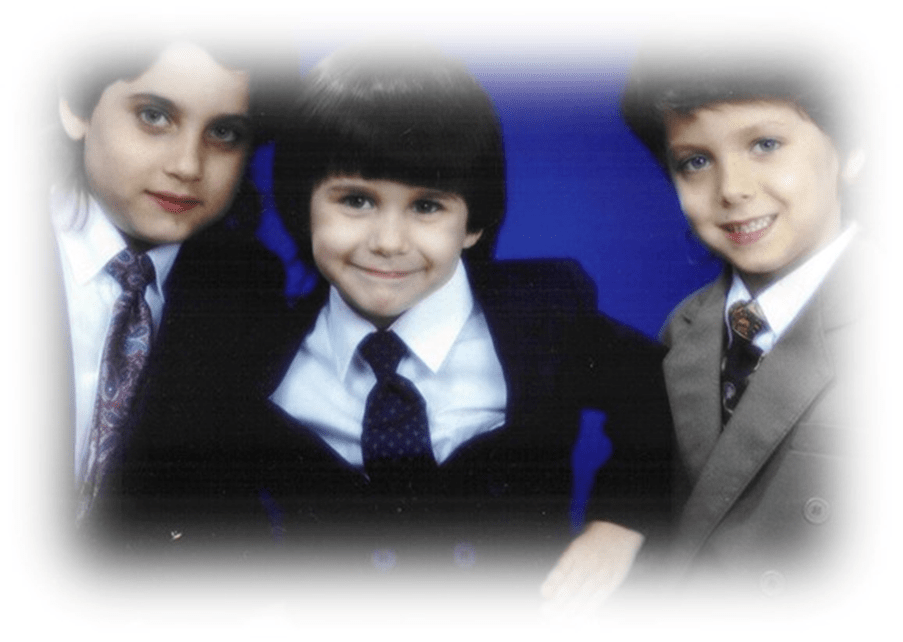
On Fathers’ Day I frequently reflect about fathers who’ve lost access to their children or who’ve become estranged from their children, sometimes deservedly so but too often due to a complex mix of reasons over which neither they nor their children had control.  Of course, this year, thanks to Israel, there are a great many more fathers who’ve lost their children, permanently, and children who have lost their fathers (and their mothers), also permanently, but that has been the norm in Palestine since the Zionist invasion.  Thus, for me, it’s not really a day for celebration but rather, for mourning.  And for reflection and introspection.  I certainly want to reflect a bit on fatherhood, it may be the last chance we get.  But this year, I want to focus on my sons, Billy and Alex, who are now fathers, and on my third son, Edward, who has deferred the experience, as well as to reflect on my own parents, and my own related experiences.

My son Billy’s fatherhood represents the idyllic spectrum in an idyllic setting with an idyllic wife and two idyllic children: Rosario, the eldest (by quite a bit), and Cameron, the new kid on the block.  The positive family television series of the 1950s and early 1960s (e.g., Father Knows Best, the Danny Thomas Show, My Three Sons, Leave it to Beaver, etc.) have nothing on Billy’s actual life.  And I fervently hope it stays that way.  He is married to the only woman who he has ever dated, graduated from the Citadel, the Military College of South Carolina, as I did, and has been employed by the same financial services firm for a decade.  Stability in a positive setting is his hallmark.

Alex’s experience with fatherhood has been more complicated.  Alex’s experiences in everything have been more complicated.  He has lived a full life even though he’s only thirty-seven.  Some of it has been harsh and unfair, but he’s always turned his negative experiences into assets and is not a published author researching and writing about things that have fascinated him since he was a child.  He was an excellent teacher while he lived with me in Colombia, perhaps the most popular English teacher in the City of Manizales where people still ask me how he’s been doing, but he met a coworker who he married, and she was afflicted with the North American dream and talked him into returning to the United States.  She had a baby daughter when they met and Alex quickly became the only father she ever knew.  They immediately bonded and grew to love each other completely.  Alex eventually married Salo’s mother, largely, I believe, because of his love for Salo, and subsequently became the father of his own daughter, Melissa, an absolute delight.  Unfortunately, his world was recently stricken by a bitter divorce where he had to fight with everything he had to retain even shared custody of Melissa.  That is hardly unusual when the North American Dream is involved and the spouse attains United States citizenship, permitting her (or him) to initiate the process of bringing their own families to the United States without having to count on their former spouse.  But divorce, for whatever reason is all too common now although, in my admittedly biased opinion, it was very much undeserved in Alex’s case.  He is a great dad and one of the most empathic people I know.  Many of his friends have told me that they owe their lives to him as he was there for them when they most needed someone.  He has also been there for me in my own darkest hours.  I certainly hope fate will reciprocate that empathy in Alex’s case.  No one deserves it more than he does.  More than any of my other sons, Alex has mirrored my experiences, on the positive side with respect to his vocation as an educator and a writer but on the negative side with an unsuccessful domestic relationship.  Hopefully, in the end, Alex’s experience will turn out as positive as mine has, albeit with less stops along the way.

My youngest son Edward, perhaps impacted by the trauma occasioned as my marriage to his mother fell apart, has avoided the issue altogether.  He has done so by remaining single and has instead dedicated himself to being the best uncle ever.  Edward’s is the safer route and the one that so many people are now taking, avoiding the terrible pain of unsuccessful parenthood but missing out on the indescribable joys that parenthood so often brings.  My aunt Carola followed that path, as does my current sister-in-law, Diana Carolina.  As does my nephew Robert.

With reference to my own experience as a son I frequently think about my own parents, my mother, my father and my stepfather.  I am among the majority who now sport a fragmented family.  I’ve sometimes been critical of them all, although mainly of my father who vanished when I was three, who sort of reappeared, at a distance, when I was fourteen only to quickly vanish again when I was twenty-two, and who then, reappeared for good (but also for ill) when I turned fifty-four.  He was a brilliant, deeply talented but horribly blemished man who left children scattered here and there as one attempt at a family after another failed.  His refusal to acknowledge the verities involved eventually alienated him from all his children, although a few of us nonetheless made sure that despite our abandonment, he was taken care of in his final years.  He had a very different upbringing than I did.  He was raised in a traditional family with a father who was a well-known and respected sculptor and artist as well as a civic activist and he seemed headed for an illustrious career as an innovative aeronautical engineer as well as a journalist.  As a young teen he had already founded and published a newspaper in the Colombian city of San Gil, the “Gazette Juvenil”, and had engineered a prototype jet engine.  But perhaps too soon, he had met my mother, secretly married her and, when their deception was discovered, was given the choice by his parents of abandoning her or being cast from his family.  He chose my mother and was taken in by my grandmother but his dreams had been dashed and he became an accountant instead.  Unfortunately, perhaps, the marriage did not last.  After a manic series of successes and failures and way too many intimate relationships, his life ended several years ago in a small, somewhat primitive adult congregate living facility in Venezuela where he was visited frequently only by my half-sister Ellen.  A sad end to a sad life.

My stepfather, to whom I always referred as “Pop”, at his suggestion, was a very loving father but apparently also deeply flawed, immersed in mysteries from which I was shielded, and involved in occasional instances of violence towards me, although to the best of my knowledge, not towards my siblings or my mother.  He was a felon having been sent to jail in his youth for a botched burglary involving a union scandal.  He’d been tasked with breaking into the home of a New York labor leader to obtain documentation proving that union funds were being misdirected but as a burglar, he was not very successful and had been easily captured.  His future prospects were destroyed in that instant as those who’d sent him on what to him appeared to involve a noble mission all too quickly disavowed him.  When he was eventually released from prison decades later he worked as a short order cook but presented himself to my mother, when they met, as a successful restauranteur.  His family was well off and owned the Metropole Café and Restaurant in New York City as well a large beauty salon on Northern Boulevard in Flushing, but he had no economic interest in either and he was living in Miami Beach anyway.  The foregoing could have been overcome had he not also become addicted to gambling.  He apparently felt that through gambling he’d be able to make up for all the economic opportunities he’d missed while imprisoned.  He neither drank nor consumed narcotics but his gambling seemed all consuming as a result of which we never, during our nine years as a family, lived in the same place for longer than a year.  I loved him very much but eventually, although I knew nothing of his past, I lost respect for him, ironically, as his respect for me grew.  He died very young, just before his sixtieth birthday, when I was twenty-six and was about to start law school.  His last words to me were to the effect that he had more faith in me than he had in god, asking me to look after my siblings, my sister Marina and my brother Teddy.

And my mother? 

Why discuss my mother on fathers’ day; after all, this reflection is about fathers. 

Well, … she was an amazing human being, something common to many mothers, albeit not free of flaws.  She made mistakes but always tried her very best and she was amazingly successful in providing for our needs, providing for them alone after her marriage to my step father ended in 1962 when she, like so many other mothers, became a single parent.  She was a much more successful provider than seemed possible, never permitting me to grasp just how hard it had been for her to earn enough to give me an excellent education.  I love and respect her more every day despite the fact that she’s been gone for a bit over thirty-five years, and I admire her, not least of all, because rather than criticize my failed father figures, she hid their flaws and emphasized their good points, creating a virtual father for me from traces of my father and from her own inventions, giving him credit for many of the things for which she herself had been responsible, all woven into a benign albeit illusory paternal tapestry.  A trajectory very different from that employed by most single mothers who instead disparage their former spouses seeking to induce their children to do the same.  That’s why she fully belongs in my reflections on fatherhood.

Although my early life was difficult, I thought it normal.  Neither my father nor my stepfather were really active in my upbringing.  Neither taught me sports nor enrolled me in little league or pop warner football, which I would have loved, or taught me how to play any sport, but somehow or other I learned the related skills on my own.  Perhaps because of that neglect I promised myself that if I ever had children I would be a very active part of their lives.  And I was.  But as I now understand, they would have much preferred that I’d been more distant and less involved.  I tried to be the best father ever but, according to my sons, and they would know, I failed. 

Parenting standards have changed a great deal during my lifetime and the ones Billy and Alex have adopted certainly seem superior to those I and their mother employed.  But parenting standards as well as the nature of the family are in flux and that has led me to conclude that perhaps Edward’s choice might have been the wisest, at least for me.  Still, that seemingly logical observation is tempered by my own memories of the unsurpassable joy my sons engendered when times were good.  Or at least when I perceived that they were good.  I’m reminded of the controversy over Bing Crosby as a father but he at least had the opportunity to correct the errors he made trying to raise his first four sons during a much happier experience with the three children from his second marriage.  Second chances, however, are not all that common.  Nor would I now want any more children of my own.  However, another strange element somewhat related to parenthood is the relationship I’ve had during the past six decades with hundreds of young people, initially only males but during the last two decades with young women as well, my former students.  First at the Eastern Military Academy in Huntington, New York, which I attended and where I returned as an instructor and administrator after I’d graduated from the Citadel, the Military College of South Carolina; and then, at various universities in Manizales, Colombia, the city of my birth.  As a student at Eastern one person stood out as a father figure to many of us, Leopold Hedbavny, Jr., first as the dean of faculty and then, when I returned, as the headmaster.  Another wonderful paternal figure awaited me at the Citadel, the assistant commandant of cadets during my tenure there, Lt. Colonel Thomas Nugent Courvoisie, a father to all of us (to whom he referred as his lambs).  Interestingly, to a degree, following their example I morphed into a father figure for some of my own students and I felt that kinship profoundly, one molded of responsibility and privilege, and that sense continued when I returned to Colombia after a life in the United States.

There’s a saying that “the more things change, the more they stay the same”, at least in important aspects and, as a historian, that seems to me to be a refrain that has echoed in one form or another through the millennia.  Parenting standards and goals seem to alternate generationally.  We seem to try to fill the gaps in our own experiences but, once filled, what we thought was essential seems either irrelevant or negative to our children.  Instead, they find their own serious gaps in what we sought to provide them.  Intergenerational communication, as of today, seems to have always been a largely hopeless goal.  At least in too many families, mine certainly included, and that bidirectionally.

So, all things considered, on this fathers’ day, a very complex day for me as it is for many others, as I reflect on my life and paternal experiences, I come to the conclusion that, despite my lack of success, in reality, I have a great deal for which to be grateful.  I give thanks for the lessons in fatherhood my sons learned from my mistakes, lessons which have made them wonderful parents.  I profoundly regret my failings which have led to estrangement from them but which, perhaps, have made them better men, and I give thanks for the fact that if I was not the father I hoped to be, I now have a wonderful wife who I cherish and who cherishes and cares for me and who, to an extent, fills the void which the estrangement from my sons has left.  Last but certainly not least, I give thanks that I have many hundreds of former students from over half a century as an educator, some of whom have seen a father figure in me.  I remain in almost daily contact with many of them and still try to help them whenever I can.

As an important and very relevant aside, my younger brother Teddy passed away in his sleep at the end of May with his daughter Alissa, with whom he too had had a complex relationship but one that, at its end, became profound and beautiful, at his side, … literally.  During a part of his life he revered aliens that he’d once feared and, on the shores of Venice Beach in California, on certain dawns only he knew how to identify, he could be found seeking to evoke them.  Not to ask for anything but rather, to express his gratitude, although gratitude for what I don’t know.  He would chant “Great Ones, we are grateful” in that phrasing sharing the grace for which he hoped with us all.  He was a child woven from threads of love into a somewhat tattered and battered but beautiful tapestry.  His experience of fatherhood reminds me of Milton’s Paradise Lost and Paradise Regained rather than of Dante’s Inferno in which I sometimes imagine myself to be trapped (but from which I always somehow finding a means of escape).  For me, it’s not been a perfect life but it has been one that’s given me a great deal for which, deservedly or not, to be grateful.  And perhaps, it’s given me hope that, assuming that the end is not as near to us as it appears to be, I’ll have more for which to be grateful as time flows on.

Since I cannot change the errors of the past, a bit of wisdom, perhaps, would be nice.
_____

© Guillermo Calvo Mahé; Manizales, 2025; all rights reserved.  Please feel free to share with appropriate attribution.

Guillermo (“Bill”) Calvo Mahé (a sometime poet) is a writer, political commentator and academic currently residing in the Republic of Colombia (although he has primarily lived in the United States of America of which he is also a citizen). Until 2017 he chaired the political science, government and international relations programs at the Universidad Autónoma de Manizales. Previously, he chaired the social studies and foreign language departments at the Eastern Military Academy in Huntington, New York. He is currently the publisher of the Inannite Review available at Substack.com; an intermittent commentator on radio and television; and, an occasional contributor to diverse periodicals and publications. He has academic degrees in political science (BA, The Citadel, The Military College of South Carolina), law (JD, St. John’s University, School of Law), international legal studies (LL.M, the Graduate Division of the New York University School of Law) and translation and linguistic studies (GCTS, the University of Florida’s Center for Latin American Studies). However, he is also fascinated by mythology, religion, physics, astronomy and mathematics, especially with matters related to quanta, cosmology and cosmogony. He can be contacted at guillermo.calvo.mahe@gmail.com and much of his writing is available through his blog at https://guillermocalvo.com/.
Yešu the Nazarene; “They would not listen, they’re not listening still; perhaps they never will”

Of all the beliefs attributed to Yešu the Nazarene, none alienated him more from mainstream Judaism and indeed, from his Roman masters than did his profound belief in equity, equality and justice, beliefs that in the economic sphere are, given the attitudes of his modern followers, especially in the United States, profoundly ironic and indeed, oxymoronic.  And they were not just beliefs but practices, both during his life among his apostles and, after his demise, in the Jerusalem community briefly led by his brother James until the movement was corrupted and perverted into the modern concepts collectively referred to as “Christianity” by Saul of Tarsus, a man who, according to Jewish lore, lore reflected in both the Jerusalem and Babylonian Talmuds but also in the series of alternative gospels known under the collective name of the Toledot Yeshu, was a Jewish mole in the Nazarene movement whose mission it was to separate followers of Yešu from mainstream Judaism, something in which Saul, better known to “Christians” as “Paul”, was eminently successful.

Most people in the United States and Europe who consistently use the term “communism” have no idea what it entails, just as they have no idea what “socialism” or “fascism” entail, believing only that they are evil totalitarian political and economic philosophies.  That they are merely pejoratives to be indiscriminately hurled against those that they oppose, regardless of how incoherent the context.  Their ignorance is not their fault, it has been carefully cultivated by both Jewish leaders and the leaders of “Christianity”, the movement established by Saul of Tarsus which captured and distorted the movement founded by Yešu, the Nazarene.  “Communism” is the direct reflection of Yešu’s teachings to the effect that we should share what we have with those less fortunate and that no one should accumulate more than is needed, especially if doing so deprives others of necessities.  Needles and camels come to mind.  That is also the premise of socialism.  Neither communism nor socialism have anything to do with totalitarianism, or with authoritarianism, or with dictatorship, or with tyranny although, as in the case of capitalism, neoliberalism, globalism, etc., those negative antilibertarian control features have been combined with economic doctrines in order to maintain elites in power.  And Yešu’s economic philosophies had nothing to do with maintaining elites in power.  Rather they urged leveling of the playing field and equality and equity for all, with justice tempered by mercy.  Remember, he preferred the company of sinners to that of hypocrites.

Of course, Yešu’s philosophies were quickly overwhelmed and subsumed by those of Saul of Tarsus, and eventually, by those of numerous Catholic Popes and then, by the philosophies incoherently evolved by followers of Martin Luther and John Calvin in Yešu’s name, e.g., the Protestant ethic and capitalism.  How Yešu must hate that, especially if he is the being who his purported followers believe him to be.  How Yešu must despise neoliberalism and globalism and neoconservatism.  How disappointed he must be that his teachings have, for the most part, been so completely perverted.  How shocked he must be as his purported followers support genocide, and ethnic cleansing and apartheid and eschew tolerance. 

Yešu, ironically given modern perceptions, was a dedicated communist.  I am not a believer in the divinity of Yešu but I profoundly respect and admire what he tried to teach us and regret that as in the song “Vincent” written by Don McLean as a tribute to Vincent van Gogh, “…. They would not listen, they’re not listening still; perhaps they never will”.

_____

© Guillermo Calvo Mahé; Manizales, 2024; all rights reserved.  Please feel free to share with appropriate attribution.

Guillermo (“Bill”) Calvo Mahé (a sometime poet) is a writer, political commentator and academic currently residing in the Republic of Colombia (although he has primarily lived in the United States of America of which he is also a citizen). Until 2017 he chaired the political science, government and international relations programs at the Universidad Autónoma de Manizales. Previously, he chaired the social studies and foreign language departments at the Eastern Military Academy in Huntington, New York. He is currently the publisher of the Inannite Review available at Substack.com; an intermittent commentator on radio and television; and, an occasional contributor to diverse periodicals and publications. He has academic degrees in political science (BA, The Citadel, The Military College of South Carolina), law (JD, St. John’s University, School of Law), international legal studies (LL.M, the Graduate Division of the New York University School of Law) and translation and linguistic studies (GCTS, the University of Florida’s Center for Latin American Studies). However, he is also fascinated by mythology, religion, physics, astronomy and mathematics, especially with matters related to quanta, cosmology and cosmogony. He can be contacted at guillermo.calvo.mahe@gmail.com and much of his writing is available through his blog at https://guillermocalvo.com/.
Reflections on Anthropomorphic Deity Based Divinity

Deity based divinity, especially the anthropomorphic variants, beg the question as to whether such divinity or divinities were the creators, or were, in fact, created by those who worship him, her, it or them.  That he, she, it or they are derivative emanations made manifest and empowered by at least some of us ourselves.

If the latter case, then it seems that they were created through the energy expended by their earliest worshipers amplified through mass rituals and, unfortunately, at least for us, because negative energies like fear and hate and fury and envy are stronger than positive energies such as love, compassion, generosity and empathy, the prevalence of furious, jealous divinities like YHWH, deities who seek to control everything and impose drastic punishments for disobedience makes sense. 

But making sense is not the same as justification.  And perhaps if they are our creations, we can also de-create them, eradicate them by refusing to acknowledge them as our masters and by refusing to obey their commandments, by replacing them with our own morals and ethics, hopefully positive ones, with or without mythic archetypes who require veneration.

Perhaps, rather than a guilt ridden refrain, that’s what occurred to Friedrich Nietzsche when, reflecting Georg Wilhelm Friedrich Hegel, Heinrich Heine, Philipp Mainländer and others he proclaimed: “God is dead. God remains dead. And we have killed him. How shall we, the murderers of all murderers, comfort ourselves?”  I wonder what Mark Twain would make of all of this.

The foregoing seems especially relevant in hypocrisy ridden times like ours when “genocide” is being considered by many as a positive, as a harbinger of the beginning of the end, as sign of an impending apocalypse for which they yearn, perhaps one in the form of a nuclear holocaust.  

Something on which to at least ponder.
_____

© Guillermo Calvo Mahé; Manizales, 2024; all rights reserved.  Please feel free to share with appropriate attribution. Guillermo (“Bill”) Calvo Mahé (a sometime poet) is a writer, political commentator and academic currently residing in the Republic of Colombia (although he has primarily lived in the United States of America of which he is also a citizen). Until 2017 he chaired the political science, government and international relations programs at the Universidad Autónoma de Manizales. Previously, he chaired the social studies and foreign language departments at the Eastern Military Academy in Huntington, New York. He is currently the publisher of the Inannite Review available at Substack.com; an intermittent commentator on radio and television; and, an occasional contributor to diverse periodicals and publications. He has academic degrees in political science (BA, The Citadel, The Military College of South Carolina), law (JD, St. John’s University, School of Law), international legal studies (LL.M, the Graduate Division of the New York University School of Law) and translation and linguistic studies (GCTS, the University of Florida’s Center for Latin American Studies). However, he is also fascinated by mythology, religion, physics, astronomy and mathematics, especially with matters related to quanta, cosmology and cosmogony. He can be contacted at guillermo.calvo.mahe@gmail.com and much of his writing is available through his blog at https://guillermocalvo.com/.

Reflections on the Christmas Season, … 2023

Charles Dickens’ “a Christmas Carol” has, since it was first portrayed on the stage and screen, resonated with very diverse segments of our population although now, more realistic Carols seem to focus on a new verse, one appended to the beginning of “the Twelve Days of Christmas”, one that starts six months earlier than the older verses and deals with “… myriad merchants a’ selling ….” So perhaps that older resonance is a bit dulled and in need of refreshing. 

Perhaps a bit of reflection might help, a bit of introspection as the solstice skims by us and echoes of pagan Yule and Roman Saturnalia regale us with mirth to go along with the myrrh purportedly provided to an ostensibly special infant born in Palestine long before Zionists sought to destroy that part of the world; well, destroy it, then absorb it, and then turn it into an exclusive Palestinians-free paradise.   One might be excused for wondering what use a newborn would have for myrrh, a fragrant gum resin obtained from certain trees and used, especially in the Near East, in perfumery, medicines, and incense, but, what the heck; … so the story goes and the gift of myrrh is not its least credible aspect.

Soooo, … let’s reflect away to the tune of “Jingle Bells”, or perhaps, the Jose Feliciano version of “Feliz Navidad”:

On an individual basis, the Christmas season is delightful, at least for people blessed with positive familial harmonics supplemented by ties of easily accessible meaningful friendship, but it is deeply depressing for those not so set apart.  The latter group concerns me deeply because it is comprised of the forgotten and of those who for one reason or other, never seemed to matter.  Those with whom the Nazarene, whose birthday so many purportedly celebrate during this season, would be most concerned, assuming he existed and was as beneficently described rather than the angry Pauline version.  Of course, while in the modern “Western” world the season focuses on the Nazarene, the season’s traditions are primordial and have been, in many cases, usurped through manufactured syncretism with far older and more complex cultures, cultures which in some cases have refused amalgamation.

Perhaps the foregoing might serve as a thought bandied about among the ghosts of Christmas past, Christmas present and Christmas future, a thought we might all want to take into account and perhaps, about which we might even consider doing something positive.  And if so, why limit it to this particular season?

Bah humbug!!!!  I wonder what exactly, using linguistic analysis and perhaps philology that is meant to mean.
_______

© Guillermo Calvo Mahé; Manizales, 2023; all rights reserved.  Please feel free to share with appropriate attribution.

Guillermo (“Bill”) Calvo Mahé (a sometime poet) is a writer, political commentator and academic currently residing in the Republic of Colombia (although he has primarily lived in the United States of America of which he is also a citizen).  Until 2017 he chaired the political science, government and international relations programs at the Universidad Autónoma de Manizales.  He is currently the publisher of the Inannite Review, available at Substack.com, a commentator on Radio Guasca FM, and an occasional contributor to the regional magazine, el Observador.  He has academic degrees in political science (the Citadel), law (St. John’s University), international legal studies (New York University) and translation and linguistic studies (the University of Florida’s Center for Latin American Studies).  However, he is also fascinated by mythology, religion, physics, astronomy and mathematics, especially with matters related to quanta and cosmogony.  He can be contacted at guillermo.calvo.mahe@gmail.com and much of his writing is available through his blog at https://guillermocalvo.com/.