
On the Confusing Nature of Contextualized Instants and Other Anomalies

According to one system used to measure the passage of “time” (whatever that is) and to identify events that occurred during that particular stream, one among many events once stood out.  Well in truth almost an infinity of events stood out at least with respect to the entities with which this reflection deals but, for the nonce (another sort of vaguely defined unit of “time”) we intend to deal with some specific events that they somehow deemed crystalized.  The author uses the plural first person pronoun, not in the royal sense, but rather, as a means of including both the author and the readers in the assertion.  Anyway, we will attempt to reflect on an undefined, perhaps undefinable specific series of related events, albeit only after we engage in an effort to place them in a somewhat coherent temporal context (again, a concept related to “time”) albeit using the limited form of communication available to our protagonists.

Diverse series of somewhat related events have seemed interesting to the strange carbon based biological composites which, at the “time” about which we are reflecting, inhabited a satellite revolving around another satellite and with a satellite of its own (as will be explained below) who considered themselves the pinnacle of natural evolution as well as the beneficiaries of particular attention from beings ironically superior to themselves, or at least of one such being which some among them believe to be a deity.  They believe themselves to be sentient and, not just sentient, but special, although, to be honest, they subdivide themselves into a myriad of subgroups and each subgroup considers that only it is special and that all the other virtually identical subgroups, at least with respect to their biological composition, are inferior.  Incoherent, we agree, but we are just doing our best to describe related contextualizing phenomena.  

One of the units of “time” (a concept they cannot quite define but which they use all of the, well, time), is a period they refer to as a year; i.e., the “time” it takes the satellite of a “star” (a “star” being a very large spherical continuous nuclear explosion) inhabited by them (the satellite), the “star being known to them as “Sol”, among other names, and the satellite they inhabit being referred to by many of them as “Terra”, among other names, “among other names” because they have apparently (despite ancient legends concerning a time prior to the destruction of a great tower) never been quite been able to agree on appropriate nomenclature …. 

Oh my, we’ve digressed so much in an effort at contextualization that we’ve assuredly confused the reader’s train of thought, so, we’ll sort of “reboot”: … “a year” is the term they use to refer to the approximate amount of “time” it takes their Terra to complete one circumnavigation of their Sol.

These peculiar and extremely conceited beings further subdivide the “year” into days, the time it took Terra, the satellite they inhabit, to complete one revolution around its axis, and then further subdivide their perception of times into units smaller than days known to them as hours and seconds and milliseconds and nanoseconds, etc., as well as into units larger than days which they refer to as weeks and months and seasons.  Months and seasons are related to the orbits of a satellite of Terra, which these entities, who believe themselves to be sentient, sometimes refer to as Luna (among other names).  Weeks?  Well, they really have no logical basis (but they could if the “year” were divided into thirteen, rather than twelve months, and each month further divided into four, seven day weeks instead of into a variable number of days ranging from twenty-eight to thirty-one). In that case, a day or two would be left over and would be deemed outside of the normal calendar designations of months and weeks, perhaps being designated holidays, for example, New Year’s Day and, every four years, Leap Day. Why months are arranged as they currently are is difficult to say which is not the same as saying that such somewhat irrational albeit purportedly sentient beings do not have myriads of rationalizations to explain their incoherence.  Oh my, a double negative, … confusing.

At this point, it probably makes sense to identify the author of this reflection.  Not exactly an easy thing to do but essential if we’re ever to get to the point.

The author is a confused member of the protagonists in this reflection but knows that “he” is confused.  What, the reader may now wonder is a “he”?  Well, these entities subdivide themselves into two major biological categories, male and female, although lately (another concept related to time involving proximity, “proximity” being a concept related to something referred to as “space” but which could, by analogy, also refer to “time”), a number of these entities have been refusing to acknowledge such categories and refer to themselves as, among other things, non-binary, or else, just somewhat arbitrarily switch their biological characterization to a variant of the other category to which they refer as “their culturally perceived gender”.

Perhaps the foregoing will lead the reader to understand why the author perceives of himself as confused.  So confused in fact that he has completely lost track of the nature of this reflection and as to why he has been writing it and as to just what series of events he had hoped to memorialize when he started writing this reflection.

Contextualization can be so confusing!  It seems that the author has lost himself amidst shifting eddies of time and space flowing somewhere hidden deep within what passes for his mind.

Ahhh, fortunately, perhaps, or perhaps not, clarity, or something akin to clarity seems to engulf him and he recalls that when he started writing this reflection he had been speculating on the nature of what some among his contemporaries referred to as divinity, and on how different perspectives were with respect to that strange but seemingly transcendental concept, and then, that he had been wondering about the nature of “surety”, not in the sense of one who stands for the obligations of another, but in the sense of certainty, acknowledging that his interpretation of that term was based on linguistic analysis rather than custom and that language was utterly inefficient in that respect, as opposed, perhaps, to numbers.  And that as he started writing, he had started to reflect on the nature of “knowledge” which, in terms of absolute accuracy, seemed as unattainable as infinity, and he considered the probability that all we had, really, were opinions, some of which we held very strongly, and then he had recalled a philosopher, David Hume, who had wrestled with related speculations and had concluded that absolute truths might or might not exist, and that as humans we could at best approximate the practical semblance of truths by developing what he called “conventions”, useful vehicles which we could, for a time, treat as “truths” but knowing that at some point, their seeming verity might well prove an illusion but how, over time, “conventions” became calcified so that, to most people, they became unassailable truths for which they were prepared to fight and to kill and to die, although “to kill for” was certainly favored over “to die over”.  And then, he had become distracted with the concept of prepositions, wondering how a “convention” had evolved in the English language, really a hodgepodge combination of diverse linguistic traditions, to the effect that it was improper to end a sentence with a preposition.  Certainly a much safer “convention” than the diverse religious “conventions” among the fratricidal Abrahamic religions which declared any failure to firmly consider related “conventions” absolute truths were what they referred to as “heresies”, and that heretics had to be eliminated, justifying genocide regardless of commandments that abjured homicide.  And then he recalled how, as a very young teacher, he had taught a course on comparative religions which he had expanded to include comparative mythologies as neither he nor his students could establish clear boundaries between the two concepts and how, after decades of research, he had come to perceive all organized religions, especially the Abrahamic variants, as more mythic than those belief systems that he and his students had once considered ancient superstitions.  Not a comforting thought, so he had returned to speculating on the nature of time and space which had doubled back to the concept of “conventions” and thence, to this strange reflection.

And the author wonders, first, whether anyone will ever read this reflection and, if so, what the reader or readers will make of it.  And what they will make of him.  And whether or not he will be embarrassed if anyone who knows him will attribute it to him.

Then he decides that perhaps it’s “time” to end this strange reflection.

“Time” he wonders, just what is it?  Not just how it’s measured.  And then he speculates on whether time can exist without motion and then, finally (another concept related to time), while wondering whether syllogisms had anything to do with silliness, he seemingly stops writing ….

At least for the nonce.
_____

© Guillermo Calvo Mahé; Manizales, 2025; all rights reserved.  Please feel free to share with appropriate attribution.

Guillermo (“Bill”) Calvo Mahé (a sometime poet and aspiring empirical philosopher) is a writer, political commentator and academic currently residing in the Republic of Colombia (although he has primarily lived in the United States of America of which he is also a citizen). Until 2017 he chaired the political science, government and international relations programs at the Universidad Autónoma de Manizales. Previously, he chaired the social studies and foreign language departments at the Eastern Military Academy in Huntington, New York. He is currently the publisher of the Inannite Review available at Substack.com; an intermittent commentator on radio and television; and, an occasional contributor to diverse periodicals and publications. He has academic degrees in political science (BA, The Citadel, the Military College of South Carolina), law (JD, St. John’s University, School of Law), international legal studies (LL.M, the Graduate Division of the New York University School of Law) and translation and linguistic studies (GCTS, the University of Florida’s Center for Latin American Studies). However, he is also fascinated by mythology, religion, physics, astronomy and mathematics, especially with matters related to quanta, cosmology and cosmogony. He can be contacted at guillermo.calvo.mahe@gmail.com and much of his writing is available through his blog at https://guillermocalvo.com/.

Reflections on Evolutive Monotheism

Prior to the advent of egotistical monotheism in the Arabian peninsula, the goddesses Al-lātAl-‘Uzzá, and Manāt were believed, as once portrayed in Salman Rushdie’s infamous Satanic Verses, to have been the daughters of Allah and back then, before the rise of Islam, Allah was one among many members of the caste of the divine, as was supreme Canaanite divinity El and as was El’s errant son, YHWH, and as were YHWH’s sixty-nine brothers and their Sumerian cousins and many, many others.  And they cohabited, not quite in peace, but neither in a state of perpetual genocidal animosity, as, all too soon, came to be.  Came to be, if not the norm, at least the custom among those ghoulishly gullible Abrahamic humans who chose to follow and emulate ghastly YHWH.
_____

© Guillermo Calvo Mahé; Manizales, 2025; all rights reserved.  Please feel free to share with appropriate attribution.

Guillermo (“Bill”) Calvo Mahé (a sometime poet and aspiring empirical philosopher) is a writer, political commentator and academic currently residing in the Republic of Colombia (although he has primarily lived in the United States of America of which he is also a citizen). Until 2017 he chaired the political science, government and international relations programs at the Universidad Autónoma de Manizales. Previously, he chaired the social studies and foreign language departments at the Eastern Military Academy in Huntington, New York. He is currently the publisher of the Inannite Review available at Substack.com; an intermittent commentator on radio and television; and, an occasional contributor to diverse periodicals and publications. He has academic degrees in political science (BA, The Citadel, the Military College of South Carolina), law (JD, St. John’s University, School of Law), international legal studies (LL.M, the Graduate Division of the New York University School of Law) and translation and linguistic studies (GCTS, the University of Florida’s Center for Latin American Studies). However, he is also fascinated by mythology, religion, physics, astronomy and mathematics, especially with matters related to quanta, cosmology and cosmogony. He can be contacted at guillermo.calvo.mahe@gmail.com and much of his writing is available through his blog at https://guillermocalvo.com/.
Clara Eugenia López Obregón – Porque la apoyo para la presidencia de Colombia


Introducción:

Este comentario, que trata con la precandidatura de la senadora y anterior alcaldesa de Bogotá, Clara Eugenia López Obregón, refleja mi opinión positiva sobre ella, posición que he tenido desde ya muchos años.  La verdad, posición que asumí desde que volví a Colombia en el 2007 después de una vida en los EE.UU.  Desde su participación en los debates presidenciales de 2014 he creído que ella era la mejor opción presidencial para Colombia y por muchas razones, aunque admiro mucho al presidente Petro y también a dos de los otros actuales precandidatos presidenciales del Pacto Histórico, Iván Cepeda y Carolina Corcho.

Clara parece especial por razones complicadas, incluso quizás incoherentes en ciertos aspectos.  De lo que entiendo, de joven, durante los años 70, fue amiga y quizás novia de Álvaro Uribe Vélez, era durante el tiempo cuando él entonces señor Uribe supuestamente era liberal.  El mismo Álvaro Uribe Vélez quien hoy en día es el mayor oponente de lo que ella ahora apoya, pero yo aspiro que, basado en ese pasado, las relaciones de ella con la derecha colombiana (odio las frases ultraderecha y ultra izquierda que solo son peyorativas) podrían ser positivas o por lo menos cordiales, aun habiendo sido ella por ya muchos años definitivamente de izquierda.  Creo que por su experiencia y forma de ser podría lograr una relación política cordial con quienes piensan diferente sin ser media tibia como el señor Fajardo o amarga como el senador Robledo y eso mucho necesitamos en Colombia para minimizar la polarización política, cívica y cultural en la cual nos encontramos.  Ademas, por su extensa trayectoria política, creo que tiene relaciones, si no siempre excelentes, por lo menos adecuadas, con muchos políticos tradicionales que sin denegar su asociación con brechas morales y éticas con respecto al abuso del poder para su propio beneficio, siguen esenciales para lograr reformas importantes, como lastimosamente ha descubierto (o debe haber descubierto) el Presidente Petro.  Lo anterior, en mi opinión, la hace la mejor candidata para lograr el éxito no solo en las próximas elecciones, ampliando en forma importante el anticipado “Frente Amplio”, pero en la gobernanza esencial que necesitaría lograr si su campaña fuera exitosa.  Pero, ademas de esos temas pragmáticos, creo que es la persona más preparada que tenemos en Colombia para enfrentar y resolver en forma positiva los numerosos retos que nos enfrentan.  A diferencia con otros precandidatos nobles y sinceros, Clara es multidimensional en su experiencia, conocimiento y enfoque.

Biografía

Entonces, echémosle una mirada, aunque superficial, a su trayectoria cívica y política.  Datos extensos y específicos al respecto no serán difíciles encontrar.  De acuerdo a Wikipedia, una fuente de poca confianza con respecto a muchas cosas pero, en este caso, pareciéndose neutral, ella quedó huérfana muy joven pero fue “adoptada política y familiarmente” por el líder político liberal Alfonso López Michelsen, presidente de Colombia entre 1974 y 1978 y el primo de su padre.  Ella estudió economía en la Universidad de Harvard y, posteriormente, se licenció en derecho en la Universidad de los Andes.  En la actualidad, es candidata a doctorado en derecho tributario y financiero en la Universidad de Salamanca. 

Durante su estadía en Harvard, se involucró activamente en protestas en contra de la incursión de los Estados Unidos en Vietnam e inicio un cambio filosófico desde sus raíces en el progresismo liberal hacia la izquierda, llegando a entender realidades sobre esa potencia del norte que por tanto tiempo nos ha dominado con desprecio, y que tanto daño nos ha hecho, algo que en los últimos días el señor Trump ha hecho más claro que nunca.  Por eso, a diferencia de mucha de la clase política en la cual nació, ella no ha vendido sus valores y su persona por los beneficios económicos personales con los cuales la oligarquía estadounidense compra la lealtad de tantos líderes en nuestro continente.

Regresó a Colombia en 1974 aceptando un cargo en la Secretaría Económica de la presidencia de Colombia, presidencia ocupada en ese tiempo por su mentor, el liberal Alfonso López Michelsen, movimiento en el cual inicialmente milito pero que abandonó en forma permanente en 1979, al parecer, reaccionando en forma muy inesperada con respecto a una disputa entre los expresidentes López Michelsen y Carlos Lleras Restrepo, irónicamente tomando el lado ideológico a favor de Lleras Restrepo y su pupilo Luis Carlos Galán Sarmiento.  Por lo tanto, se inscribió en el Nuevo Liberalismo, movimiento fundado por Galán y el exalcalde de Neiva, Rodrigo Lara Bonilla.

Como militante en el Nuevo Liberalismo fue elegida concejal y eventualmente presidenta del concejo distrital en Bogotá, eso durante los años 80 y, posteriormente, fue elegida contralora distrital de Bogotá. En el Nuevo Liberalismo apoyó la candidatura presidencial de Carlos Galán en 1982 (no obstante la posición contraria de su anterior benefactor y mentor Alfonso López) pero en 1986 cambio su perspectiva y afiliación política, moviéndose más hacia la izquierda política y salió del Nuevo Liberalismo para afiliarse con la Unión Patriótica desde la cual, en oposición a la candidatura presidencial de Galán en 1986, apoyó a Jaime Pardo Leal quien quedó en tercer lugar en esa contienda antes de ser asesinado en 1987.  En 1988, por primero vez, se lanzó como candidata a la alcaldía de Bogotá bajo la bandera de la Unión Patriótica, elección que fue impactada en forma irónica por el secuestro del candidato que resultó exitoso, quizás por haber sido secuestrado y liberado, el candidato conservador y conocido periodista, Andrés Pastrana Arango, apoyado por su padre, el expresidente Misael Pastrana.

1990 fue un año desastroso para la izquierda colombiana y, en realidad, para toda Colombia.  Bernardo Jaramillo Ossa, el candidato de la Unión Patriótica apoyado por Clara para la presidencia fue asesinado en abril de 1990, después del asesinato de Luis Carlos Galán en agosto de 1989 y antes del asesinato de Carlos Pizarro, también en abril de 1990.  Traumatizada políticamente, como se encontraba gran parte del país, Clara se alejó de la política por casi una década, dedicándose a la academia y respaldando a las ambiciones políticas de su esposo, Carlos Romero, como concejal.  En 2002 volvió a involucrarse en temas de gobernanza cuando fue nombrada Auditora General de Colombia por el entonces presidente, su viejo pretendiente, Álvaro Uribe Vélez, función que ejerció por tres años hasta que se vio obligada a denunciar ante la Corte Suprema de Justicia de Colombia la posible infiltración de organizaciones armadas ilegales de extrema derecha en el Estado Colombiano, eso después de que Salvatore Mancuso, el exjefe máximo de la Autodefensas Unidas de Colombia, dio a conocer que al menos el 35% de los miembros del actual Congreso de la Republica eran aliados suyos. Esa denuncia de Clara dio inicio al proceso investigativo que adelantaría el supremo tribunal, y que derivaría en un proceso judicial que desató un escándalo político en Colombia conocido como la Parapolítica.

Encontrándose ya estigmatizada por el “uribismo” decidió volver a involucrarse en la contienda electoral apoyando la nueva conglomeración política de izquierda, el Polo Democrático Alternativo, partido por el cual aspiró a la Cámara de Representantes en 2006, perdiendo curul por poco más de cien votos.  Por un tiempo después de esa campaña considero una nueva campaña para la alcaldía de Bogotá pero decidió  apoyar la candidatura de Samuel Moreno Rojas quien, como a tantos otros, la engaño por un tiempo con respecto a su falta de ética, algo demostrada por su rol en el denominado Carrusel de la contratación y que resulto en su destitución como alcalde.  Para Clara eso fue una gran decepción pero, a la vez, una gran oportunidad de aprendizaje. 

Como importante asesora en la campaña de Samuel Moreno Rojas Clara fue designada como Secretaria de Gobierno en la nueva administración municipal bogotana lo cual requirió que su esposo, Carlos Romero, renunciara a su escaño en el Concejo de Bogotá.  Como Secretaria de Gobierno, llego a denunciar el caso de “falsos positivos” en la supuesta guerra uribista en contra de las Fuerzas Armadas Revolucionarias de Colombia (las FARC) y otros movimientos insurgentes, caso en el cual, para recibir “comisiones” por cada insurgente “eliminado”, táctica sugerida por los gobiernos de George W. Bush y Barak Obama en los EE.UU., miembros de las fuerzas públicas colombianas capturaban a jóvenes inocentes, disfrazándolos de insurgentes para entregar sus cadáveres en cambio recompensas.  En específico, la investigación en la cual participo Clara trató con 19 jóvenes que figuraban desaparecidos y que fueron ingresados por el ejército a medicina legal en la ciudad de Ocaña, Norte de Santander, como muertos en combate.  El resultante escandalo a nivel nacional e internacional culminó con la destitución de 27 oficiales del ejército por su involucramiento en el asesinato de más de tres mil jóvenes inocentes en diversas regiones de Colombia.

Clara ocupó la Secretaría Distrital de Gobierno hasta el 10 de marzo de 2010, fecha en la que fue escogida como fórmula vicepresidencial de Gustavo Petro para las elecciones presidenciales de 2010 en las que alcanzaron más de un millón trescientos mil votos, pero no resultaron elegidos.  Tras la renuncia de Jaime Dussán Calderón a la presidencia del Polo Democrático, el Comité Ejecutivo del partido la proclamó unánimemente como nueva presidenta de esa colectividad, cargo que asumió en abril de 2010. Renuncio a ese cargo temporalmente en junio de 2011 porque, habiendo brotado el escándalo de la corrupción de la administración municipal y la resultante destitución de Samuel Moreno Rojas como alcalde, ella fue escogida el 8 de junio de 2011 por el entonces presidente de la Republica, Manuel Santos, para remplazar a Moreno como alcaldesa encargada, un reto que parecía desagradable e imposible y con desastrosas implicaciones para un futuro político.  Bogotá se encontraba política y económicamente ahogada, después de tres años, solo el 15% del presupuesto se había ejecutado y la confianza de los bogotanos en su gobierno era solo del 7%.  Pero Clara y su equipo lograron milagros.  Aunque solo se esperaba que mantuviera el cargo por solo tres meses, se amplió su periodo hasta el primero de enero de 2012 y su rendimiento fue inesperadamente excelente, tan productivo como el de Moreno había sido desastroso.  En su discurso de posesión prometió que defendería el patrimonio de los ciudadanos rechazando la privatización de la Empresa de Telecomunicaciones de Bogotá ETB, pero también preservando para los ciudadanos en su conjunto los otros bienes distritales.  Dirigiéndose al escándalo del denominado carrusel de contratación municipal, prometió transparencia en la firma de contratos y licitaciones.​ De acuerdo a la encuesta Gallup, entro a su cargo en un ambiente de desconfianza total con una aprobación minúscula para salió de su cargo apoyada por el 76% de los ciudadanos, la más amplia aprobación registrada hasta entonces para la alcaldía de Bogotá.  Entre sus numerosos logros se destacaron el plan decenal de agua que por primera vez otorgó de manera gratuita el mínimo vital a las familias más pobres de la capital, el subsidio al transporte público para las personas con discapacidad y sus cuidadores y la expedición de decreto de participación incidente de los ciudadanos en la confección de los planes y programas del gobierno de la ciudad.  Cuando entro a su cargo, después de tres años solo se había ejecutado el 15% del presupuesto municipal autorizado, cuando lo entrego, se había ejecutado, en solo ocho meses, el 95%.[1]

Luego de su rol como salvadora de Bogotá, Clara volvió a las contiendas electorales primero, como la candidata del Polo Democrático para la presidencia de Colombia en las elecciones del 2014 donde obtuvo casi dos millones de votos y ocupó la cuarta posición, y luego, como candidata a la Alcaldía de Bogotá en representación del Polo Democrático, la Unión Patriótica y el Movimiento Alternativo Indígena y Social (MAIS).  

No fue exitosa en esa elección pero el 25 de abril de 2016, Clara fue designada por el presidente Juan Manuel Santos, a quien había apoyado en segunda, como Ministra de Trabajo, cargo que ocupó hasta el 5 de mayo de 2017 cuando renuncio para participar en las elecciones presidenciales de 2018.  Desde el 20 de julio de 2022 ha sido senadora de la Republica.  Además de lo anterior, ha sido profesora de la Universidad del Rosario y Universidad de los Andes.

De nuevo, precandidata a la presidencia

En 2025, Clara confirmó su precandidatura presidencial para las elecciones de 2026 postulándose a través de la coalición política “Unitarios” conformado por cerca de 15 partidos que se presenta como un complemento fraterno al Pacto Histórico.  La meta de su campaña es participar en la consulta del “Frente Amplio” en marzo de 2026. En esa consulta se enfrentarían precandidatos como Roy Barreras, Camilo Romero y la figura que finalmente designe el Pacto Histórico (probablemente o Carolina Corcho o Iván Cepeda), su objetivo siendo la continuación de la transformación iniciada por Gustavo Petro.

En lo personal, no soy miembro del partido político Colombia Humana o del nuevo partido unificado, el Pacto Histórico, aunque a ambos los he asesorado y creo en sus ideales.  No soy “petrista” aunque conozco y apoyo a Gustavo Petro porque esa frase huele demasiadamente al caudillismo en el cual ni él ni yo creemos.  Para mí, como analista político, me es importante ser independiente de organizaciones políticas donde la ética insiste que cada miembro debe acatar a las decisiones colectivas.  Estoy muy de acuerdo con las políticas que la administración actual ha propuesto y por las cuales ha luchado, aunque sin el éxito que merecen, pero me ha preocupado la falta de dirección política personal por parte del presidente, algo que me parece esencial en negociaciones directas con la oposición y hasta con aliados, roles que han asumido diversas personas en formas algo incoherentes.  No obstante esa observación, entiendo que dada la histórica corrupción de nuestros líderes políticos, burócratas, empresarios y medios de comunicación, lograr los cambios transcendentales requeridos para crear la sociedad justa, eficiente e igualitaria que merecemos los colombianos es un tema muy complicado y, en última instancia, parece requerir intervención ciudadana por medio de una nueva constituyente, algo con el cual el presidente Petro y Clara están de acuerdo.  Mi perspectiva con respecto a la constitución colombiana es mucho más drástica que la de ellos, algo sobre cual circulé hace un tiempo un artículo “Porque Colombia ha requerido un nuevo Constituyente desde el 1991”.  Yo creo que los defectos constitucionales son tan profundos que requieren una revisión total de la Constitución de 1991, una constitución larguísima, llena de promesas incumplibles e instituciones incoherentes y en la cual, en importantes partes, los sujetos no son los ciudadanos sino los partidos políticos.  Como ejemplo de lo último solo hay que entender que la prohibición a lo doble militancia les prohíbe a los supuestos representantes del Pueblo votar su conciencia, en vez, siendo legalmente forzados a votar como deciden sus partidos.  En base de lo último, las reformas esenciales propuestas por el actual gobierno para eliminar corrupción y lograr sistemas de salud, pensión, medicina, trabajo, tributo, etc., justos y eficientes han sido derrotadas.

No obstante esa perspectiva compartida sobre la necesidad de una reforma constitucional, no estoy de acuerdo con la manera en la cual Clara cree que se debe implementar una constituyente, eso siendo por medio de democracia directa utilizando tecnologías novedosas para coordinar los esfuerzos.  Pero eso es lo único con lo cual no estoy de acuerdo en las propuestas de Clara.  Me encantaria si fuera posible pero coordinar treinta millones de participantes me parece una tarea imposible, en especial cunado trata con temas tan complicados que requieren conocimiento supremamente complejo sobre derecho, teorías constitucionales, economía, política comparada e historia.

Entonces, ¿por qué no los otros dos precandidatos que también mucho admiro?

Carolina Corcho es una brillante y ética persona con experiencia en temas cívicos y profundo conocimiento sobre el disfuncional sistema de salud colombiana pero carece de experiencia electoral y ejecutiva y todavía es algo unidimensional en su experticia.  Ademas, creo que para ella sería difícil interactuar en forma eficiente con fuerzas políticas y económicas opositoras a las reformas en las cuales ella, como Clara, como Iván Cepeda y como el presidente Petro creen.  Iván Cepeda ha sido entre los mejores legisladores de nuestro país con impecable trayectoria en la lucha contra la corrupción y por la paz, lo admiro enormemente y lo quiero.  Pero carece de experiencia administrativa y ejecutiva y el uribismo y sus aliados son sus enemigos mortales, lo odian aún más que odian al presidente Petro, entonces gobernar en forma exitosa sería difícil, quizás imposible.

Eso deja a Clara que lo tiene todo, la experiencia tanto electoral como administrativa habiendo sido ministra, alcaldesa y senadora, ella tiene los ideales que admiro, los cuales comparte con Carolina e Iván y con el presidente y, tiene la posibilidad de interactuar en forma positiva con diversas corrientes políticas para crear una coalición amplia capaz de implementar importantes reformas.  Como Carolina e Iván, es brillante y ética y progresista, pero con mayor capacidad de unirnos y de minimizar la polarización que tan horriblemente nos infecta. 

Por eso la apoyo.[1]


[1] Por la necesidad de circular esta reflexión en forma expedita, no se ha logrado revisarla en temas de estilo, etc., por lo cual se solicita disculpas.

_______

© Guillermo Calvo Mahé; Manizales, 2025; todos derechos reservados.  Permiso para compartir con atribución.

Guillermo Calvo Mahé es escritor, comentarista, analista político y académico residente en la República de Colombia. Aspira ser poeta y filósofo empírico y a veces se lo cree.  Hasta el 2017 coordinaba los programas de Ciencia Política, Gobierno y Relaciones Internacionales de la Universidad Autónoma de Manizales. En la actualidad, participa en entrevistas radiales y televisadas, foros, seminarios y congresos cívicos y edita y publica la revista virtual, The Inannite Review disponible en Substack.com/.  Tiene títulos académicos en ciencias políticas (del Citadel, la universidad militar de la Carolina del Sur), derecho (de la St. John’s University en la ciudad de Nueva York), estudios jurídicos internacionales (de la facultad posgrado de derecho de la New York University) y estudios posgrado de lingüística y traducción (del Centro de Estudios Latinoamericanos de la Universidad de la Florida).  Sin embargo, también es fascinado por la mitología, la religión, la física, la astronomía y las matemáticas, especialmente en lo relacionado con lo cuántico y la cosmogonía.  Puede ser contactado en guillermo.calvo.mahe@gmail.com y gran parte de su escritura está disponible a través de su blog en https://guillermocalvo.com/.


[1] Datos obtenidos desde el artículo sobre Clara López disponible en Wikipedia (https://es.wikipedia.org/wiki/Clara_L%C3%B3pez) revisado el 18 de octubre de 2015.

Old Corps

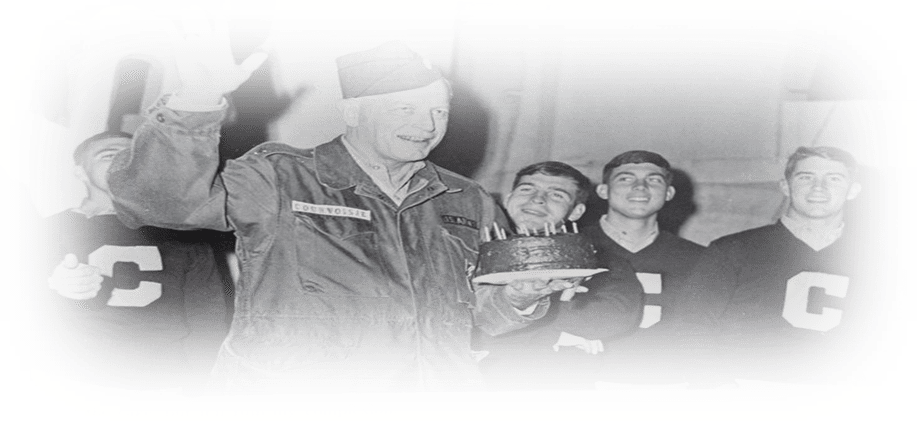
Old Corps:  Something that in our day, the 1960’s, we looked up to and admired but which, with the passage of time, has somehow become a pejorative.  The uniforms have changed: first the silk full dress sashes were gone, then real sashes of any kind; then the blitzed brass; then the so-called grey nasties and the cotton uniform trousers and now, epilates sprout on sort of grey shirts, none of which are drastically starched, but perhaps that part is superficial.  The family mess is gone and that had a value none now understand, as is the strict daily formation schedule.  And today’s version of fatigues, without even spit shined boots, are the daily norm.  The honor system we revered, if not the words of the Honor Code, has also gone the way of the Dodo, as it has in all the senior military colleges being deemed much too inhumane and inflexible.

Standards have changed.  They are imposed from above rather than percolating from the corps and that is a shame.  We grew together as a corps and discarded grievous errors, like racism, because we were taught from within by people like Charley Foster that it was not only immoral and wrong, but stupid and wholly inconsistent with the Honor Code which was our core.  Hazing was abused in our time but served a purpose as those held in captivity during the stupid wars in Southeast Asia made clear.  And the rigors of our year-long fourth class system were not forced on us but demanded by us; we wanted the most profoundly challenging plebe system in the world.

Times have changed.  Today, October 11, 2025, we demolished a mediocre Division II school in football and the corps was proud.  I was ashamed.  As I wrote, I much preferred when we went against the very best and had our butts kicked to being bullies.  I would have been horrified had we lost today but, when did we set our standards that low?  And it was not a victory for the corps but one attained by de facto non-cadet mercenaries we sort of hire to make it seem as though we really compete.

I do take great pride in our academic achievements but believe that they could be attained, and even surpassed, if they were set in the context we treasured where we demanded to be challenged so that the impossible was merely challenging,  But those days are no longer with us and perhaps will never return.

Today’s Citadel is a fine institution but it’s not the institution many of us, most of us, hoped it would remain or, even more, the institution so many us believed it could become.  The excuses are myriad but they’re excuses and I believe in my heart of hearts that today’s corps of cadets, like ours, would prefer the environment we felt we had bequeathed it, and that they would make us proud.

I don’t know where the responsibility lies for the foregoing dilution in values and traditions.  It’s hard for me to accept that it lies in a four star Marine Corps general who is also a Citadel graduate, or in the members of the Board of Visitors we elect.  It was not sudden but rather, gradual, one change deemed insignificant after another until our beloved alma mater became something different.  Not totally different, the spirit of the corps of cadets remains, or so I believe.  But the leadership is something else.  As is the experience and inevitably the product

Somewhere in time and space generals Summerall and Clark spin in their graves as does the Boo, and as do many of our classmates and those who went before us.  And it seems there is little we can do but hope that this is a cyclical phenomenon and that sometimes soon, the pendulum will right itself.  But perhaps that hope needs a bit of help from those of us in a position to make a difference.
_____

© Guillermo Calvo Mahé; Manizales, 2025; all rights reserved.  Please feel free to share with appropriate attribution.

Guillermo (“Bill”) Calvo Mahé (a sometime poet and aspiring empirical philosopher) is a writer, political commentator and academic currently residing in the Republic of Colombia (although he has primarily lived in the United States of America of which he is also a citizen). Until 2017 he chaired the political science, government and international relations programs at the Universidad Autónoma de Manizales. Previously, he chaired the social studies and foreign language departments at the Eastern Military Academy in Huntington, New York. He is currently the publisher of the Inannite Review available at Substack.com; an intermittent commentator on radio and television; and, an occasional contributor to diverse periodicals and publications. He has academic degrees in political science (BA, The Citadel, the Military College of South Carolina), law (JD, St. John’s University, School of Law), international legal studies (LL.M, the Graduate Division of the New York University School of Law) and translation and linguistic studies (GCTS, the University of Florida’s Center for Latin American Studies). However, he is also fascinated by mythology, religion, physics, astronomy and mathematics, especially with matters related to quanta, cosmology and cosmogony. He can be contacted at guillermo.calvo.mahe@gmail.com and much of his writing is available through his blog at https://guillermocalvo.com/.