Porque Colombia ha requerido un nuevo Constituyente desde el 1991

Como ocurre en muchos otros países, en Colombia, al parecer, adoramos a nuestra Constitución.  “Adoramos” es la palabra perfecta por que la tratamos como si fuera una reliquia sagrada no obstante que en casi todas sus metas, posiblemente en todas, ha sido un fracaso.  La “adoramos” pero en poco la respetamos y en menos la cumplimos.  Eso se ha notado en diversas ocasiones por la derecha política y también por la izquierda.  Pero el rechazo a su modificación, una modificación seria, ha sido inmenso.  ¿Y, por qué?

Pues en parte, la realidad es que una reforma eficiente de nuestra Constitución actual tendría que ser tan extensa que resultaría en su remplazo.  Nuestra Constitución está llena de palabras lindas y conceptos hermosos, tantos que es la segunda más larga del mundo.  Pero entre las lindas palabras y los hermosos conceptos están las cláusulas que permiten evadir todas sus promesas.  Un laberinto de requisitos técnicos incumplibles.  Sus promesas han sido ignoradas porque su implementación requiere colaboración política en el Congreso y requiere un Ministerio Publico honesto y eficiente, algo que, por la manera en el cual sus miembros son escogidos, ha resultado imposible.

Para evaluar una constitución, cualquiera constitución, se tiene que medir que tanto se ha logrado cumplir con sus metas.  Hagamos el ejercicio: ¿Se estableció la paz?  ¿Se eliminó la corrupción?  ¿Se logró la equidad?  ¿Se logró la igualdad?  ¿Se logró la justicia?  ¿Se ha eliminó la impunidad?  ¿Se ha disminuido la polarización?  ¿Se ha cumplido con los derechos prometidos?  ¿Se ha logrado la democracia? 

Si somos honestos y objetivos, creo que en ninguno de estos casos fundamentales la respuesta sea sí.  Entonces, ¿para qué sirve esta Constitución?  Bonita si es.  Pero es disfuncional.  ¿Y, por qué?

Pues, en gran parte no es justo decir que no sirve.  Si les sirve a algunos.  A los corruptos, a los ladrones.  A los que tienen el dinero para evadir la justicia.  Pero más que todo, les sirve a los partidos políticos.  Los reales sujetos de la Constitución colombiana del 1991 no son los ciudadanos, ellos son meros objetos.  Los sujetos son los partidos políticos y por ende, los que se benefician de la Constitución son los que controlan a esos partidos. 

Para entender lo anterior se requiere entender la diferencia entre un sujeto y un objeto.  Un objeto es una persona jurídica o natural o institucional sobre cual el poder del estado es ejercido.  Eso incluyo humanos, animales y hasta objetos inanimados, como carros, mesas, comida, etc.  Un sujeto es un objeto que tiene derechos de manejo sobre el poder político que lo impacta, pero derecho y poder real, no meras ilusiones.

En Colombia, los legisladores en el Congreso tienen que hacer lo que dice su partido o pierden sus curules.  No elegimos individuos al Congreso sino partidos.  Lo único que podemos hacer, si las listas electorales son abiertas, es cambiar el orden en el cual los candidatos podrían recibir sus curules.  Nada más.  Por lo tanto, no podemos elegir a quienes nos parecen los mejores y los más honestos líderes políticos para nuestro congreso, o para nuestras asambleas departamentales, o para nuestros concejos municipales.  Eso no es democracia.

En Colombia, planes estratégicos parecen imposibles lograr porque un plan estratégico requiere más de un periodo electoral para completarse, sea de derecha o de izquierda.  Tenemos la absurda noción de, no solo prohibir la reelección, sino también prohibir que una persona que ha ocupado un cargo político ejecutivo, o tiene familiares que han ejercido una función ejecutiva, tenga que esperar un año para superar esas limitaciones que actualmente son inhabilitantes.  Por lo tanto, lo normal es que ningún líder político que busca ascender en sus cargos pueda cumplir el periodo total para el cual fue escogido.  O renuncia un año antes del fin de su periodo legal, o, adiós a una nueva elección.  ¡Qué estupidez!  Esas limitaciones no existen en ningún país exitoso del mundo.

Lo que Colombia requiere, lo que cualquier país requiere, es una constitución decente y eficiente sin promesas incumplibles.  Una constitución escrita en manera comprensible por la ciudadanía.  Y, una sin aspectos plenamente legislativos que no tienen por qué estar incluidos en una obra tan permanente como debe ser constitución.  Una constitución real es algo extraordinario que solo debe tener cuatro funciones: 

  • Primero, crear y delimitar las instituciones estatales.  Es decir, las unidades geográficas y las instituciones gubernamentales como son la legislatura, el ejecutivo, la rama judicial, los procesos electorales, y los medios de control político, y, ademas, las instituciones responsables por la estricta interpretación constitucional y por resolver conflictos entre las diversas ramas del estado.
  • Segundo, toda constitución es inherentemente antidemocrática buscando impedir no solo el poder de la mayoría sino el poder de futuras generaciones.  Todo supuesto derecho fundamental o humano es antidemocrático en ese aspecto.  Pero antidemocrático no implica algo negativo o abusivo, ese aspecto es esencial para proteger la libertad, la autonomía personal y al bienestar y a la independencia de las minorías.
  • El tercer aspecto plenamente constitucional es el de establecer prioridades con respecto al ejercicio del poder, más que todo en temas presupuestales.  La realidad de mucho de lo que se define como “derechos fundamentales o humanos” nada tiene que ver con el concepto de un “derecho”.  Un derecho es inherente, nadie lo da, es eterno, no se puede condicionar.  Entonces, por supuesto, hoy en día, ningún derecho existe ya que ninguno cumple con esos requisitos pero si existen o pueden existir prioridades.  No podemos garantizar la paz, como promete nuestra Constitución, ni un medio ambiente sano, ni la educación, ni la salud, ni viviendas dignas, etc., pero una constitución si podría exigir que los primeros gastos estatales trataran con una función específica, luego, si hay suficiente dinero restante, con otra, y lo mismo hasta que se agota el dinero.  Entonces, en vez de derechos incumplidos, tendríamos prioridades incondicionales delimitadas constitucionalmente.
  • El cuarto y último aspecto trata con su permanencia.  Enmendarla debe ser, no solo difícil, sino que debe requerir de la misma formalidad con la cual se adoptó, y en ambos casos, eso debe, al final, incluir la aprobación directa del primer constituyente, del pueblo, o por plebiscito o por referendo (dependiendo en si hay más que una opción presentada).  Y debe haber proceso dentro de la misma constitución no solo para su enmienda, sino para su remplazo total y eso, por medios no solamente convocados por el gobierno, o por una rama del gobierno, sino por iniciativa popular suficientemente amplia par no resultar en propuestas poco serias o poco apoyadas por el pueblo.

Esos cuatro aspectos y ningunos más tratan con temas que se deben incluir en nuestra carta magna, en nuestra carta política, en nuestra constitución.  Lo que se incluye en una constitución se tiene que cumplir.  Si no se cumple, entonces ahí no debía estar y si esta, se debe de eliminar.

Entonces, si vamos a superar todos los problemas antes mencionados: ¿que debe abordar una constitución decente y eficiente para Colombia?  Pues hay modelos que debíamos investigar, pero no copiar.  Lo que funciona en otras partes no necesariamente funcionaria aquí.  Llegamos a donde estamos copiando conceptos constitucionales desde esa potencia del norte que tanto daño nos ha hecho, y copiados en forma incoherentemente descontextualizada ya que Colombia no es una federación y no aspira a ser un imperio. 

Una república que si me parece que tiene un modelo admirable que nos podría, en parte, funcionar, es la de la República Irlandés.  Ellos gozan de un modelo parlamentario pero no idéntico al inglés.  El modelo de gobierno parlamentario es mucho más democrático que el presidencial y mucho más eficiente.  Eso porque tanto la cámara baja del parlamento, la más importante aunque es denominada los comunes, y el ejecutivo son internamente ligados y cuando no están de acuerdo, en vez de congelarse la gobernación, hay nuevas elecciones para la cámara baja (y, por ende, el ejecutivo) y es el pueblo el que resuelve la crisis.  El parlamento escoge el primer ministro, quien es el jefe de gobierno pero no el jefe de estado, y el parlamento y el primer ministro, conjuntamente, escogen los jefes de los diversos ministerios.  La cámara alta, el senado, es muy innovadora ya que no es democrática, como es la cámara de los comunes, sino pluralista.  Sus miembros no son elegidos popularmente sino por diferentes segmentos de la sociedad.  Algunos son nombrados por el presidente (el jefe de estado, diferente siempre que el primer ministro), otros son elegidos por los sindicatos, otros por las universidades, otros por las cámaras de comercio, etc.  Y el presidente es elegido popularmente siendo la única persona elegida a nivel nacional.  El presidente es encargado más que todo con control político, con las fuerzas armadas y con temas diplomáticos.  Eso permite gobernanza por un tiempo indeterminado, un tiempo que podría ser o muy largo o muy corto, dependiendo en la voluntad popular.  El periodo electoral constitucional es de cinco años, pero no hay límites sobre re-elección.  Al mismo tiempo, podría ser más corto si el primer ministro pierde la confianza del parlamento o si el primer ministro, queriendo aumentar su respaldo en el parlamento, disuelve al parlamento y convoca elecciones tempranas. 

Quizás el aspecto que más admiro del sistema estatal de la Republica Irlandesa es el electoral.  Como en Colombia, las elecciones a los comunes se basan en listas, pero las listas no se conforman por los partidos sino por los electores en forma individual.  Por ejemplo, en el sistema colombiano actual, el Departamento de Caldas es representado en la Cámara de Representantes por cinco personas.  Pero los electores solo pueden votar por una y, al votar por esa, su partido y todos sus otros candidatos reciben el apoyo.  En la Republica Irlandesa, cada ciudadano tendría cinco votos, y los colocaría en orden de prioridad sin consideración de diferencias partidistas, creando así su propia lista.  Así se mantiene el concepto de proporcionalidad entre los diversos grupos de candidatos, sean por partido o independientes, pero no se obliga a que el voto sea limitado a un partido.  Ademas, una vez elegidos, los parlamentarios votan su conciencia y no pueden ser destituidos por diferencias entre ellos y sus partidos.

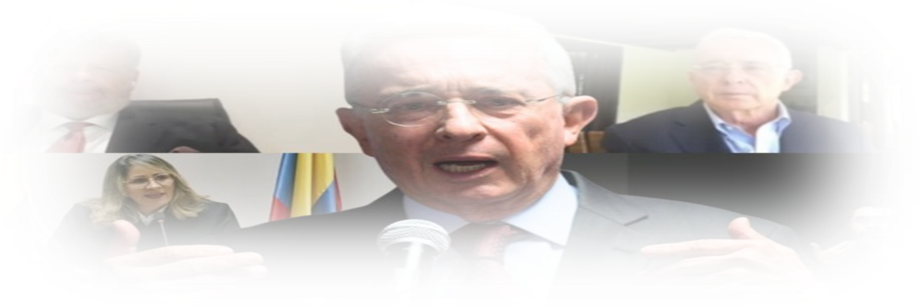
Entonces, tanto la derecha representada por los seguidores del expresidente Álvaro Uribe Vélez y la izquierda representada por el actual presidente de Colombia, Gustavo Francisco Petro Urrego, en parte, tenían la razon cuando decían que Colombia necesitaba un nuevo constituyente constitucional, pero ambos estaban equivocados cuando deseaban limitar los temas constitucionales a los cuales se limitaría esa convocatoria.  Necesitamos iniciar de nuevo porque los cambios esenciales para lograr un país democrático, libertario, equitativo, justo y libre de corrupción e impunidad necesitan un sistema muy diferente al que tenemos y al que siempre hemos tenido.  Un sistema en el cual son los individuos y no los partidos que gobiernan.  Pero por esa razon, los que ahora dominan el poder, tanto los de derecha como los de centro, izquierda y los meramente pragmáticos están totalmente en desacuerdo con un nuevo constituyente ilimitado.  Para ellos, su peor pesadilla es la devolución del poder al pueblo, en especial, si no logran dominar sus decisiones electorales por medio del temor, por medio de las mentiras, por medio de la manipulación o por medio de la corrupción.

Nuestra Constitución actual no es más que un rompecabezas conformado de montones de acuerdos políticos entre personas que buscaron beneficiarse personalmente y beneficiar a sus diversas agrupaciones politicoeconómicas y sociales.  Un rompecabezas incoherente, uno lleno de contradicciones irresolubles.  Por eso ha resultado imposible cumplir con sus numerosas hermosas promesas.  Un cambio de vestido o un poquito de maquillaje no serán adecuados para reformarla.

Una Colombia ideal, una Colombia utópica en temas de su gobernanza es posible, una Colombia mucho más eficiente y realmente honesta.  Una Colombia mucho más equitativa y justa.  Y eso es, no solo posible, sino probable.  Pero necesitamos desamarrarnos de los enlaces maquiavélicos con los cuales nuestros representantes nos enlazaron en 1991.

_______

© Guillermo Calvo Mahé; Manizales, 2024; todos derechos reservados.  Permiso para compartir con atribución.

Guillermo Calvo Mahé es escritor, comentarista, analista político y académico residente en la República de Colombia. Aspira ser poeta y a veces se lo cree.  Hasta el 2017 coordinaba los programas de Ciencia Política, Gobierno y Relaciones Internacionales de la Universidad Autónoma de Manizales y, entre las asignaturas que dictaba con relevancia a este artículo estaban Teoría Constitucional, Gobierno y sistemas políticos comparados, y, Derechos Humanos.  En la actualidad, participa en entrevistas radiales y televisadas, foros, seminarios y congresos cívicos y edita y publica la revista virtual The Inannite Review disponible en Substack.com/.  Tiene títulos académicos en ciencias políticas (del Citadel, la universidad militar de la Carolina del Sur), derecho (de la St. John’s University en la ciudad de Nueva York), estudios jurídicos internacionales (de la facultad posgrado de derecho de la New York University) y estudios posgrado de lingüística y traducción (del Centro de Estudios Latinoamericanos de la Universidad de la Florida).  Sin embargo, también es fascinado por la mitología, la religión, la física, la astronomía y las matemáticas, especialmente en lo relacionado con lo cuántico y la cosmogonía.  Puede ser contactado en guillermo.calvo.mahe@gmail.com y gran parte de su escritura está disponible a través de su blog en https://guillermocalvo.com/.

On Equatorial Solstices and Balancing Harmonics

The solstices which take place in the arbitrarily denominated months of June and December (at least in what is commonly referred to, for inexplicable reasons given the nature of directions, as “western” culture) generate complex emotional vortexes, emotive textures woven of delight and depression, both inter and intra-personally.  

Topographically, in the northern hemisphere, the December solstice marks the end of lengthening nights and the beginning of longer days, in the south, the opposite is true.  The inverse occurs in each north-south hemisphere in June.  But what happens right on the equator? 

Perhaps a bit of confusion as to what all the fuss is about.  Or perhaps the solstices are at their most unique, most special and most profound on the equator, especially if one were to set one foot in the northern hemisphere and the other in the southern, something possible in southern Colombia and in the other twelve countries which the equator bisects (Ecuador, Brazil, Sao Tome & Principe, Gabon, the Republic of the Congo, the Democratic Republic of the Congo, Uganda, Kenya, Somalia, the Maldives, Indonesia and Kiribati).  The so called Coriolis Effect based on the consequences of the earth’s rotation, makes storms swirl clockwise in the southern hemisphere and counterclockwise in the northern hemisphere, thus, physically, unlike the arbitrary denominations of east and west as static points, or the arbitrary temporal division into months of varying lengths, the concepts of “north” and “south” have actual physical consequences.  But what happens at the equator, especially during the solstices? 

One would think the equator would be the site of special ceremonies during the two annual solstices in each country through which it passes.  There are, of course, myriad festivals related to the two solstices almost everywhere (other than on the equator itself).  Think, of course, of Christmas, originally celebrated on or about the exact date of the solstice until Pope Gregory XIII shifted dates around and the law of unintended consequences extracted astronomical significance from that festival.  Of course, like east and west and calendar months, the placement of the Christmas season in December was completely arbitrary, counterintuitive and incoherent given available evidence, apparently seeking primarily to obscure the date theretofore assigned to the Zoroastrian god Mithras (born of a virgin on December 25) and perhaps the Roman festival of Saturnalia as well as a plethora of “pagan” solstice related festivals (whatever “pagan” means).  Like the foregoing, other solstice related festivals are generally focused on climactic consequences in one of the two north-south hemispheres.  In Ecuador for example, Inti Raymi (the Fiesta del Sol) has been long celebrated on June 21 to the south of the equator rather than exactly along the border, that exactitude being infinitesimal and difficult to set with exactitude, other than through, for example, striding it.  The Inti Raymi was a traditional religious ceremony of the Inca Empire in honor of the god Inti (Quechua for sun), the most venerated deity in the Inca religion.  It was declared a festival of “intangible cultural heritage” on June 29, 2016, and it is still celebrated throughout the formerly Incan Andean region due to its association with indigenous cosmogony and with the bounty provided by the Pacha Mama (a Gaia-like indigenous deity popular in the Andes). 

Oddly, festivals set exactly adjacent to both sides of the equator during the solstices do not appear to exist, at least not formally, which is surprising.  It would seem a perfect trajectory and day, perhaps a perfect instant, for reflection and introspection, for seeking a perfect balance, for merging the negative and the positive, the ying and the yang, for celebrating the similarities in things that seem opposed.  To acknowledge the harmonics possible in polarization and how they can generate dialectic evolution.  An instant to pray for peace and harmony.

Which, perhaps, explains the dearth of related ceremonies.  The military industrial complex which rules us all the way that Tolkien’s “one ring” ruled the rest would never permit such a festival.

Still, if that impediment could somehow be overcome, what about a semi-annual ceremony along the equator, once for each solstice, where a line of people one person wide, alternating men and women perhaps, is formed along the entire land portion of the equator, with every participant straddling the equator and holding hands with those before and after them, all assembled several minutes before the solstice and disbanded several minutes afterward to assure coincidence with the instant of the solstice, all focusing during that time on a world at peace, one where all opinions respected, one seeking continuing evolution towards harmonious unity and perfection.

Wouldn’t that be something?  Perhaps it’s something to consider.
_______

© Guillermo Calvo Mahé; Manizales, 2023; all rights reserved.  Please feel free to share with appropriate attribution.

Guillermo (“Bill”) Calvo Mahé (a sometime poet) is a writer, political commentator and academic currently residing in the Republic of Colombia (although he has primarily lived in the United States of America of which he is also a citizen).  Until 2017 he chaired the political science, government and international relations programs at the Universidad Autónoma de Manizales.  He is currently the publisher of the Inannite Review, available at Substack.com, a commentator on Radio Guasca FM, and an occasional contributor to the regional magazine, el Observador.  He has academic degrees in political science (the Citadel), law (St. John’s University), international legal studies (New York University) and translation and linguistic studies (the University of Florida’s Center for Latin American Studies).  However, he is also fascinated by mythology, religion, physics, astronomy and mathematics, especially with matters related to quanta and cosmogony.  He can be contacted at guillermo.calvo.mahe@gmail.com and much of his writing is available through his blog at https://guillermocalvo.com/.

Ramblings as I Turn Seventy-Seven

July 22, 2023, Manizales.  High in the central range of the Colombian Andes, touching the sky while playing with clouds and watching birds soar below me.  Verdant mountains, snow clad peaks and thermal springs, the tall spires of a gothic cathedral with a Christ seemingly having finally accepted the adversary’s challenge while Kumanday lies dormant, at least mostly, although it’s stirred quite a bit lately in its sleep, as though unpleasant dreams were unsettling him.

Double digits again. 

1946.  The first was the instant of my birth when I was zero-zero, although of course, that could be represented in a single digit, “zero.  Mom, la Mamita, Carola and Livia, my father, all too briefly.  The Hotel Roma.  Manizales, Colombia, the Earth, the Solar system, the Galaxy, the Universe, The Multiverse.  Divinity.  All new to me just then.

1957.  Eleven: a turbulent year spent traveling from one state to another, one country to another, one continent to another. North Carolina, where I was happy, then Florida and insecurity, then Colombia, back to roots, for a little while.  A period of extreme changes, both personally, and in the country of my birth.

1968.  Twenty-two:  Rites of passage, a Citadel man.  Things changing much, much too quickly and in too confused a manner.  Bobby Kennedy assassinated.  Susan.  On my own for the first time and not all that well done.

1979.  Thirty-three:  A great deal had been accomplished, a great deal lost as well.  Vicki.  Florida.  Hazeltine.  Rutti- tootie and kazuti.

1990.  Forty-four: Cyndi; three sons, finally, but all hell breaking out, hopes dashed.  Reality confronted and slowly understood.  Metamorphosis of sorts.  Hendersonville. 

2001.  Fifty-five: Millennium’s beginning, aliens on the moon delayed.  My world seemed all too well but that was an illusion, the calm before another storm.  Joe Radcliffe in the rearview window, Lenny Tucker in his place.  Ocala.

2012.  Sixty-six:  Manizales.  Diana Marcela for a bit.  Political science, the university, the media, nationally and internationally.  Alex, two of three in the language of the Borg, or perhaps, three of five, is with me in Colombia, but on his own, having attained his own place in the world.

2023.  Seventy seven:  Natalia.  Love and stability.  Writing.  Radio.  Tennis.  Free time.  Introspection encounters speculation and reflection.

In the good old US of A in 2023:  Orwellian dystopia rampant, censorship, perpetual war, polarization.  Inchoate nuclear and environmental devastation.  Deception.  Manipulation.  Hypocrisy.  Racism and xenophobia rampant. 

Still, I have my Citadel and EMA brethren to remind me that all is not lost and that pockets of the benign still bravely exist.

A compilation: Loads of errors, from some of which I’ve learned and become a better person.  Many, many regrets, people I’ve hurt, things I’d do very differently.  Successes, most unexpected, a few well earned; luck as much as anything else.  Legacies, in writing at least, all over the place and in diverse genres.  Former students everywhere, some coming into their own while others retire.  And my own progeny: not how I’d planned or what I’d hoped for them, but seemingly doing well, although far, far away, and even more, very, very distant.  Life seems good, better than I earned on my own.  Caesar was right, the goddess Fortuna is the one most to be feared as well as adored.
_______

© Guillermo Calvo Mahé; Manizales, 2023; all rights reserved.  Please feel free to share with appropriate attribution.

Guillermo (“Bill”) Calvo Mahé (a sometime poet) is a writer, political commentator and academic currently residing in the Republic of Colombia (although he has primarily lived in the United States of America of which he is also a citizen).  Until 2017 he chaired the political science, government and international relations programs at the Universidad Autónoma de Manizales.  He is currently the publisher of the Inannite Review, available at Substack.com, a commentator on Radio Guasca FM, and an occasional contributor to the regional magazine, el Observador.  He has academic degrees in political science (the Citadel), law (St. John’s University), international legal studies (New York University) and translation and linguistic studies (the University of Florida’s Center for Latin American Studies).  However, he is also fascinated by mythology, religion, physics, astronomy and mathematics, especially with matters related to quanta and cosmogony.  He can be contacted at guillermo.calvo.mahe@gmail.com and much of his writing is available through his blog at https://guillermocalvo.com/.

Of Cerulean and Cyan and Vermilion Too

A young man wonders about colors, specifically two, although perhaps three.  He’s been named after one of them, although little of anything concerning the color seems to apply to him.  He wonders what his parents had been thinking when they chose that name for him, and he reflects that he’s never actually been christened, so perhaps the name has not yet been as impactful as his parents had hoped.

He might have elected to study art, but he studied language instead, as had his mother.  His father, a florist, wondered why.  Sometimes he did too.  His mother was pleased though, and his two sisters didn’t seem to have ever considered why he studied what he did, or why his name often seemed so blue.  At first blush theirs seemed a bit more traditional, but that wasn’t quite true.  Hmmm.

Cerulean leans more towards blue than does the more balanced cyan.  And cerulean, although a light variant of blue, is darker than cyan.  Of course, that means that cyan leans more towards green than does cerulean, which just shares green’s echoes and smiles, and perhaps its similes, and that cyan is darker, but not much.

The young man thinks they’re friends, and that perhaps, at one time or another, they’ve been lovers, or perhaps just kissing cousins.  In imperial Byzantium they might have had an awkward relationship, with cerulean angry at cyan’s flirtation with green, but he wonders how they got along in subsequent Muslim caliphates, perhaps in Istanbul?

He wonders how cyan and cerulean feel about azure.  Or how cerulean feels about vermilion, either cyan’s complement or antithesis, depending on perspectives.  Or how vermilion feels about cyan, a complex relationship.  And whether their feelings are reciprocal or complimentary or constant or true, or just passing fancies.

He wonders if his parents had been high when they’d selected his name.  It could have been true, they were free spirits of sorts, floating along life’s byways and sometimes stumbling along a highway or two.  It didn’t matter though.  He loved his name, and he wondered whether he’d ever find its mate, and what she would be like, and whether she’d love her name too.

Cerulean and cyan, and vermilion as well.  Perhaps, in addition to colors, they were places and times in which to lose oneself, or perhaps to find oneself, were one lost.  Like somehow lost quantum paired electrons, or just sundered hearts, or misplaced halves of the same fruit, or rainbows that had lost their colors and now dressed only in shades of grey.

He might have elected to study art, but he studied language instead, as had his mother.  His father, a florist, wondered why.  Sometimes he did too.  His mother was pleased though, and his two sisters didn’t seem to have ever considered why he studied what he did, or why his name often seemed so blue.  At first blush theirs seemed a bit more traditional, but that wasn’t quite true.  Hmmm.

A young man wonders about colors, specifically two, although perhaps three.  He’s been named after one of them, although little of anything concerning the color seems to apply to him.  He wonders what his parents had been thinking when they chose that name for him, and he reflects that he’s never actually been christened, so perhaps the name has not yet been as impactful as his parents had hoped.
_______

© Guillermo Calvo Mahé; Manizales, 2023; all rights reserved.  Please feel free to share with appropriate attribution.

Guillermo (“Bill”) Calvo Mahé (a sometime poet) is a writer, political commentator and academic currently residing in the Republic of Colombia (although he has primarily lived in the United States of America of which he is also a citizen).  Until 2017 he chaired the political science, government and international relations programs at the Universidad Autónoma de Manizales.  He is currently the publisher of the Inannite Review, available at Substack.com.  He has academic degrees in political science (the Citadel), law (St. John’s University), international legal studies (New York University) and translation and linguistic studies (the University of Florida’s Center for Latin American Studies).  However, he is also fascinated by mythology, religion, physics, astronomy and mathematics, especially with matters related to quanta and cosmogony.  He can be contacted at guillermo.calvo.mahe@gmail.com and much of his writing is available through his blog at https://guillermocalvo.com/.

Context on the Current Criminal Case against Former US President Donald John Trump, a Perspective from the Republic of Colombia

The following is based on an article written by the author for use in the Republic of Colombia trying to contextualize for a Colombian audience the nature of the actions recently brought against former president Donald Trump by Manhattan District Attorney Alvin Bragg.  It contrasts Mr. Trump’s current situation with the similar experiences of Colombia’s current president, a left wing progressive, when he was the mayor of Bogota and a probable contender for the Colombian presidency (which he obviously won, but only after intervention by the Interamerican Human Rights Court, an institution to which the United States does not subscribe).

The recent indictment of former President Donald John Trump by a grand jury convened and controlled by Manhattan District Attorney Alvin Bragg seems very confusing to foreigners, primarily because reports in the traditional United States lack both context and objectivity, and, further, admittedly, because the former president’s personality is so abrasive, self-centered and unpleasant, that it is difficult to feel compassion for him.  However, as indicated in the introduction, for Colombians, some analogies involving their own recent experiences are useful. 

One, involves a political leader who shares Mr. Trump’s aggressive personality, Carlos Felipe Mejía Mejía, a former senator from former president Alvaro Uribe Velez’s ultra-right wing political party, the Centro Democratico (a favorite of the United States’ Deep State), and the other (again as mentioned in the introduction), involves the experiences of current Colombian president Gustavo Petro’s in the face of abuse of the Colombian legal system by his opponents, to prevent him from participating in electoral politics.  Mr. Petro’s struggles were successful only because, unlike the United States, Colombia respects international law and human rights and accepts the decisions of the Interamerican Court of Human Rights, an institution established through the Interamerican Convention on Human Rights, which the United States has refused to ratify (that tribunal found the abuse of the legal system to bar Mr. Petro from political activity illegal).  Mr. Petro had been removed from office as mayor of Bogota and barred from future political by the national procurator, a political opponent, pretty much in the manner Democratic prosecutors in Georgia and New York, as well as in the Department of Justice, are seeking to convict Mr. Trump of crimes in order to render him ineligible to engage in political activity, especially with respect to the presidential elections scheduled for 2024.

The following is pretty much how I explained the current situation in the United States to a Colombian audience:

Former president Donald Trump has just been indicted by a grand jury organized by a county attorney within New York City on 34 felony counts. They all have to do with a payment pursuant to a legal settlement and non-disclosure agreement seeking to put an end to accusations by Mrs. Stephanie Gregory Clifford, a former porn star using the name “Stormy Daniels”, to the effect that Mr. Trump had spent a night with her when, although married, he was a private citizen.

Normally, Ms. Clifford’s demands would have involved the crimes of blackmail and extortion and she would have been the person facing criminal prosecution, but the current case is, for purely political reasons, different. The truth is that the alleged crimes attributed to Mr. Trump have never existed in American jurisprudence and, rather, involve an “innovation” by the Manhattan District Attorney focused on the way in which the expenses were reported by Mr. Trump’s employees, i.e., not as donations from Mr. Trump to his own presidential campaign, but as business or personal legal expenses, paid to his attorney, who had paid them to Ms. Clifford.  Indeed, the agreement was between that attorney and Ms. Clifford, for the benefit of Mr. Trump.

If settlement and non-disclosure agreements were a crime, then many American politicians would (or should) be in jail, especially major Trump adversaries, but that doesn’t seem to matter. It also doesn’t matter whether he is eventually found innocent. The mere accusations (indictments are only accusations, after all) are expected to have the desired impact. An electoral victory in 2024 for someone more in accord with current neoconservative politics in the United States.

So, why the current situation? After all, Mr. Trump is clearly a neoliberal capitalist very much in the mold of many of his political opponents.  Well, because “very much” is apparently not enough, especially when it involves rejection of traditional neoconservative tactics.

Former President Trump currently leads presidential preference polls for the 2024 presidential elections in the United States, and that is intolerable to the Democratic Party and to traditional Republicans, not because of his alleged immoral personal conduct, that’s a matter between him and his wife, but because Mr. Trump disagrees with current policies concerning the conflict in the Ukraine, because he wants to end NATO, which he perceives as anachronistic, and also, because he believes that the huge expenditures on “defense” spending, on military bases in other countries and on interventions in foreign affairs should be reduced considerably, with the savings used to improve domestic infrastructure, lower taxes charged to US citizens and reduce the national debt to zero.

For the powers that actually control the American state (which President Dwight David Eisenhower warned against when he alluded to “the military/industrial complex”), that would be intolerable given that such industry “earns” billions of dollars in profits every year. Thus, as was the case for current the Colombian president (prior to intervention by the Interamerican Human Rights Court), Mr. Trump’s opponents are seeking to destroy him politically through constant and consistent abuse of the legal system, abuse orchestrated by Democratic prosecutors in several states, especially in New York and Georgia, as well as in the Department of Justice; prosecutors using all the resources available through the United States criminal justice system (an oxymoron) to convict Mr. Trump of offenses which would make him ineligible to run for or hold public office.

In the case of Colombian President Petro, the Inter-American Court of Human Rights prevented his political opponents from denying the Colombian people the right to elect the candidate of their choice as president, but nothing of that nature exists with respect to the United States, purportedly the land of the free, and Mr. Trump is at the mercy of judges and prosecutors appointed by his political enemies, and a press that hates him.  Not an enviable position for Mr. Trump, but also, not an enviable position for those Americans, perhaps a majority, who see him as their champion.  The United States is currently more polarized than it has been since 1859, and we know what happened then.  This situation is likely to make matters even worse, but then, that’s a future problem and as Louis XV is alleged to have proclaimed: “Let the flood come, as long as I’m no longer here”, which it did.  From this author’s perspective, the issue is not whether Mr. Trump is a good or decent person, he is not a Trump supporter nor does he intend to vote for him, but in a democracy, a real democracy, what is happening to Mr. Trump should not be tolerated.

It should be noted that the author tried to post a Spanish version of this article on Facebook, but it was immediately banned, allegedly for violating the community guidelines against nudity. Judge for yourself what this article has to do with that subject, and then ask yourself what is happening, and why.
_______

© Guillermo Calvo Mahé; Manizales, 2023; all rights reserved.  Please feel free to share with appropriate attribution.

Guillermo (“Bill”) Calvo Mahé (a sometime poet) is a writer, political commentator and academic currently residing in the Republic of Colombia (although he has primarily lived in the United States of America of which he is also a citizen).  Until 2017 he chaired the political science, government and international relations programs at the Universidad Autónoma de Manizales.  He is currently the publisher of the Inannite Review, available at Substack.com.  He has academic degrees in political science (the Citadel), law (St. John’s University), international legal studies (New York University) and translation and linguistic studies (the University of Florida’s Center for Latin American Studies).  However, he is also fascinated by mythology, religion, physics, astronomy and mathematics, especially with matters related to quanta and cosmogony.  He can be contacted at guillermo.calvo.mahe@gmail.com and much of his writing is available through his blog at https://guillermocalvo.com/.

Introspections on an Early Spring Evening in April during 2023

Pipes, a variety of pipes, large ones, long ones, meerschaum pipes, water pipes, he’d had many, and brandies too, although mainly fruit brandies, peach and apricot especially, but sometimes cherry, and of course, the good ones, Cardenal Mendoza in the corked box, and once in a very long while, two or three times perhaps, Gran Duque de Alba. He’d preferred the Spanish brandies but the best one had probably been an Armagnac, 25 year old Cles Des Ducs. It came in a beautiful crystal decanter in a wooden cigar box, both of which he still had. He also loved Grand Marnier, although somehow, it seemed to get sweeter as he aged, and then, too sweet. But his current wife still enjoyed it. And of course, wines, especially those red wines from the Bordeaux region he’d loved when he lived in New York, but could now rarely obtain.

He’d enjoyed symphonic music, classical, especially Beethoven, but Mozart as well, and Tchaikovsky, and Brahms, and Vivaldi, and Shubert. And all of the foregoing because his mother had led him to believe that his long-vanished father, whom he’d eventually located, late in life for them both, had favored them. Perhaps he had but it was just as likely that his mother had invented the specifics as part of a virtual profile, one she’d created to guide him into becoming the man she’d hoped he’d be. And for the most part, perhaps she’d succeeded. But not totally; he was pretty deeply flawed in too many ways. His sons had told him so, … eventually. His mother had been an amazing woman in every positive sense. Not perfect, her insecurities made that impossible, but then again, she’d somehow overcome every obstacle life had thrown her way, and there were many of them, among which, were his father, and his step father, and who knew who else. Perhaps him as well.

The pipes were all gone. His lately returned father had appropriated a few, his favorites, and his second son’s friends had stolen the last ones during a party of sorts at his apartment, they used them for pot and hashish and who knows what. And the alcohol came and went, but it was not all that important to him, thank goodness. And the music, … well that stuck, but supplemented by classical guitar and flamenco works which created another virtual world for him, an Arab sort of world fading into Iberian imagery set in Granada, and Valencia, and the Alhambra, and even Johnny-come-lately Aranjuez.

Cigars had been a stage all their own, one he sometimes used to market his law firm, and when that was gone, his strategic consultancy, and when that was a memory as well, his writing, but never his university academic endeavors, smoking had become anachronistic by then, and although he tended to love anachronisms, that was not one.

It was a sort of strange day in early spring high in the central range of the Colombian Andes where he now lived, as usual, in a home reminiscent of a museum, a large apartment full of old books already read, many several times, but some, not at all. The Quimbayas Cumanday, a snow-clad volcano that overlooked his tenth floor apartment was no longer quiescent, but not altogether active. It seethed and spumed ash and shook the surrounding mountainsides several thousand times a day, but the tremors were slight, at least for the most part, and neither he nor his wife were very troubled by them, at least not any more. If it were to erupt, the magma would slither down the other side of the glacier, although streams of mud might prove troublesome to nearby towns. It was over fifteen thousand feet high, and the city in the sky where he lived was above the seven thousand foot mark, leaving a great deal of space to be filled before magma ever became a problem, or before beaches were created through global warming, which to him would be a blessing; he missed the ocean.

He loved seeing the Quimbayas Cumanday, now called something else, the name of some bureaucrat or other, and the other three chains of snowclad ranges visible from the windows in his bedroom and his library and his guest room, and he wondered what it might look like, should it erupt, and what it would sound like, and whether it would be during the day or would waken him and his wife in mid-night, or whether it would really ever erupt at all. The small constant tremors made that less likely as they constantly released pressures that would otherwise build up. Quimbayas Cumanday seemed to know just what it was doing. He wondered whether referring to Quimbayas Cumanday as an “it” was insulting, but then again, how to know if it was a “he” or a “she”. Divinities are sort of strange that way.

The day was drawing to a close and soon the sun would set, pretty much behind the tall gothic cathedral that graced the city, the second tallest in the hemisphere, as he understood it. The sun set there during the periods closest to the equinoxes, then moved in a range, left and right for a while, and beyond the sunset he knew lay the Pacific Ocean, lightning and thunder there making the view of the west visible from his apartment’s long corridor, decorated as an art gallery of sorts, a periodically entertaining spectacle. Not that he could see the Ocean, it was too far away, but he knew that was where the sun set, and that it was from there that the thunder and lightning played.

Soon it would be dusk and the moon and the very few constellations and stars and planets visible, Venus and Jupiter among them, would come to visit. He loved the view of the night sky as seen from distant oceans or from desserts where billions of lights and stellar clouds created insuperable cyclical works of art and prompted speculation on the natures of divinity and time, and of eternity and infinity, and of mathematics and physics, and perhaps, of other distant species. But little of that was visible amidst the light-pollution generated by the city.

He loved the instant of transition that twilight turned dusk represented, as purples and oranges and lavenders and greens darkened and slowly became indigo. To him that was a magical instant repeated twice each day, a cycle reminiscent of the only two times during each day when broken clocks and timepieces were perfectly balanced.

He often thought of his three sons at dusk, now grown and estranged, living far, far away, and wondered at might have beens, and of all the people he’d known and somehow wronged, and of how he’d change things, if he only could. And of his father, gone for good now, and of those family members he’d treasured now gone as well. And of his many former classmates and students now scattered around the world, and of those curious people who read the articles and stories and poems he published, and wondered whether they took them seriously, or, like his sons, took him for a fool.

And he wondered what was to become of a world that in so many ways seemed to be headed headlong towards perdition, but also, gratefully, of the southern hemisphere which seemed to be finding its own way, learning from the many, many mistakes of its northern brethren, the self-proclaimed elder brothers and bearers of the “white man’s burden”.

And finally, he knew, his wife would soon call him to bed and that he’d lie pleasantly at her side, trying to fall asleep, fitfully at first, and that he’d eventually dream strange and entertaining dreams of far-off places and strange things, and of people and places he’d known, and then, as he woke, he’d wonder which realm was real.

© Guillermo Calvo Mahé; Manizales, 2023; all rights reserved.  Please feel free to share with appropriate attribution.

Guillermo (“Bill”) Calvo Mahé (a sometime poet) is a writer, political commentator and academic currently residing in the Republic of Colombia (although he has primarily lived in the United States of America of which he is also a citizen).  Until 2017 he chaired the political science, government and international relations programs at the Universidad Autónoma de Manizales.  He is currently the publisher of the Inannite Review, available at Substack.com.  He has academic degrees in political science (the Citadel), law (St. John’s University), international legal studies (New York University) and translation and linguistic studies (the University of Florida’s Center for Latin American Studies).  However, he is also fascinated by mythology, religion, physics, astronomy and mathematics, especially with matters related to quanta and cosmogony.  He can be contacted at guillermo.calvo.mahe@gmail.com and much of his writing is available through his blog at https://guillermocalvo.com/.

An Early Spring Morning in the Colombian Andes

Apparently a world away
it’s cloudy and damp in the Central Range of the Colombian Andes,
an eerily beautiful morning in a city in the sky. 

Fluvial clouds cover mountains and hide glaciers
in fleecy mist blankets, as though it were too early to rise,
the sun apparently still resting. 

Oddly reminiscent of the patterns on screens
of early televisions
preceding the day’s programming.
_______

© Guillermo Calvo Mahé; Manizales, 2023; all rights reserved.  Please feel free to share with appropriate attribution.

Guillermo (“Bill”) Calvo Mahé (a sometime poet) is a writer, political commentator and academic currently residing in the Republic of Colombia (although he has primarily lived in the United States of America of which he is also a citizen).  Until 2017 he chaired the political science, government and international relations programs at the Universidad Autónoma de Manizales.  He is currently the publisher of the Inannite Review, available at https://guillermocalvomah.substack.com/.  He has academic degrees in political science (the Citadel), law (St. John’s University), international legal studies (New York University) and translation and linguistic studies (the University of Florida’s Center for Latin American Studies).  However, he is also fascinated by mythology, religion, physics, astronomy and mathematics, especially with matters related to quanta and cosmogony.  He can be contacted at guillermo.calvo.mahe@gmail.com and much of his writing is available through his blog at https://guillermocalvo.com/.

Tempus Fugit

Tempus fugit” is usually translated into English as “time flies” but that’s not quite right, it’s not accurate.  The correct translation is “time flees”, it escapes.  And that is very different.  It focuses not on the speed with which time disappears, but rather, implies that it is escaping from something it fears or dreads, hopefully towards a refuge, albeit one it may not reach or attain. 

A bit of context.  The expression originated with the Latin poet Virgil, he who wrote Rome’s epic, the Aeneid, but also The Georgics, a long poem divided into four books, in which a version of the expression is first found (Book 3, line 284): “fugit inreparabile tempus”, i.e., irretrievable, time escapes.  The subject of The Georgics is agriculture, but not in a placid rural setting, rather, in large part, it focuses on the importance of human labor and puts me in mind of the noble, Colombian campesinos, in essence, a complex expression relating to those who till the fields, whether as small land owning farmers or their employees, but who, unlike serfs or peasants, are imbued with a bit of what a Roman might have described as dignitas, more than mere dignity, more nobly earned.

The poem is both long and complex, and practical.  It deals in detail with matters that are necessary and practical in an agricultural setting, but in the context of the complex realities of the Roman Civil War following the assassination of Gaius Iulius Caesar and the ascension of his grandnephew and heir, Octavian.  In that regard, for some reason, it puts me in mind of Peter Sellers’ cinematic masterpiece, “Being There”, one of my favorite films, and of the nobility of its protagonist, Chauncey, an orphan employed by a wealthy family as their gardener, a man who grows up without any education other than that which he garners by watching television and through working in his employer’s garden.  Once his employer passes away, Chauncey is set adrift in the world with no possessions other than the clothing his employer bequeathed him, and the observations concerning gardening, which he shares with those he meets.  They assume that such observations are metaphors, profound wisdom shared by Chauncey which applies to their own complex problems, and Chauncey is hailed by the most important and powerful as a genius, albeit a very humble genius.  In reality, Chauncey is the essence of innocence possessed of a beautiful naivety which does not know that there exist impossibilities.

Perhaps time flees towards a world in which Chauncey is not the exception but the norm; one in which Yeshua the Nazarene might find comfort, as might we.  Perhaps traces of that concept can be found in the lives and lore of Colombia’s noble campesinos, from whom we Colombians and others can learn so much.

Tempus Fugit”. Perhaps an expression much more meaningful than we understand.
_______

© Guillermo Calvo Mahé; Manizales, 2023; all rights reserved.  Please feel free to share with appropriate attribution.

Guillermo (“Bill”) Calvo Mahé (a sometime poet) is a writer, political commentator and academic currently residing in the Republic of Colombia (although he has primarily lived in the United States of America of which he is also a citizen).  Until 2017 he chaired the political science, government and international relations programs at the Universidad Autónoma de Manizales.  He has academic degrees in political science (the Citadel), law (St. John’s University), international legal studies (New York University) and translation and linguistic studies (the University of Florida’s Center for Latin American Studies).  However, he is also fascinated by mythology, religion, physics, astronomy and mathematics, especially with matters related to quanta and cosmogony.  He can be contacted at guillermo.calvo.mahe@gmail.com and much of his writing is available through his blog at https://guillermocalvo.com/.

Observations regarding the decision of the Inter-American Court of Human Rights in the case of the Patriotic Union (a political party) versus the Colombian State

Today, January 30, 2023, I am proud to be a Latin American, the place where, perhaps more than in any other part of the world, there is a supranational institution truly dedicated to the protection of the rights of our population and its members against the corruption, ineptitude and violence of the governments which, for centuries have managed our countries under the direction and in the service of foreign powers. The truth is that today, when hypocrisy and falsehood reign throughout of our planet but especially among those countries in the northern hemisphere which proclaim themselves exceptional and morally superior, perhaps only in Latin America is real progress being made in the great battle (perhaps started at the beginning of the French Revolution) to achieve respect for the dignity of the individual, the dignity of minorities and the dignity of those who are different or believe in ways different from those established by elitist traditions. Respect for the dignity inherent in a world at peace where the sovereignty, dignity and rights of others are respected.

A horrible injustice, the torture, murder, calumny and genocide perpetrated by prior Colombian governments against the Patriotic Union and other social, cultural, civic and political movements has been, at least acknowledged, and some blame has been somewhat assigned, albeit directed at a Colombian State that under its recently elected center-left government (the first in Colombia’s history), has initiated profound attempts to effect change. But real justice calls for external processes with respect to those foreign countries responsible for so many barbaric episodes in our continent (and elsewhere), and it calls for internal processes that really establish the responsibility of the specific individuals involved in these crimes and the responsibility of their families who enjoyed and continue to enjoy the benefits illegally stolen from their relatives’ victims and from the innocent Colombian people. Processes with real consequences, consequences similar to those imposed by the Nuremberg Tribunals after World War II, although those cases were almost entirely hypocritical, as were those who organized them but exempted themselves from answering for their own massive crimes against humanity, the “Allies” which were already planning similar crimes against billions of future victims through neoliberal economic policies enforced through neoconservative military and clandestine means.

I am proud to be a citizen of the newly evolving Colombia, although I am extremely embarrassed by the Colombian State of the past. And I personally deeply regret that I was not in Colombia during my formative years, working, as were the members of the Patriotic Union and other truly civic groups (many of whom paid with their lives), to attain the justice and common welfare that every Colombian deserves. Like so many other Colombians and Latin Americans, my family fled the violence orchestrated elsewhere, and I, as a six year old, became a member of the Latin Diaspora, only returning fifteen years ago after a life abroad.

We can do little to change the past, but we can learn from it, and as the Jews constantly urge (although unfortunately not through example), we can do everything possible to avoid the past’s mistakes. That, at least, seems to be what the Inter-American Court of Human Rights’ decision and related orders directed at the Colombian State demand. In furtherance of such goals, all Colombians and all Latin Americans can join the Patriotic Union and the numerous other social, cultural, indigenous, Afro-descendant and related political movements, and with the many victims of our unjust (until now perpetual) conflicts, to finally begin to extinguish violence, to extinguish impunity, to extinguish inequity and inequality, to extinguish injustice and intolerance towards those with different perspectives, to hold those who govern us accountable for their corruption and ineptitude, and to assure that our supposed public servants (too many of whom believe that they are superior to those to whom their duty is really owed) come to understand what just what a “servant” is.

January 30, 2023: a day upon which to reflect and a day on which dedicate ourselves to creating the Colombia that we all deserve. A day to always remember. A day for understanding the complex emotions we should be feeling, a synthesis of pride, elation and joy, intractably intertwined with shame and remorse and dedicated to doing better in the future, much, much better.

Guillermo Calvo Mahé

_______

© Guillermo Calvo Mahé; Manizales, 2023; all rights reserved.  Please feel free to share with appropriate attribution.

Guillermo (“Bill”) Calvo Mahé (a sometime poet) is a writer, political commentator and academic currently residing in the Republic of Colombia (although he has primarily lived in the United States of America of which he is also a citizen).  Until 2017 he chaired the political science, government and international relations programs at the Universidad Autónoma de Manizales.  He has academic degrees in political science (the Citadel), law (St. John’s University), international legal studies (New York University) and translation and linguistic studies (the University of Florida’s Center for Latin American Studies).  He can be contacted at guillermo.calvo.mahe@gmail.com and much of his writing is available through his blog at https://guillermocalvo.com/.

Some Observations and Reflections as we Once Again Head to the Polls in an Existential Election

I am not and never have been a supporter of former president Donald J. Trump but I’ve defended him against the myriad false and misleading accusations to which he’s been subjected.  I also recognize the current witch hunt against denominated “Election Deniers” for what it is.  That’s because as a dual United States Colombian citizen, I have the benefit of a somewhat broader historical perspective. 

For example, the events surrounding the 2020 federal elections that crystalized in the protests turned violent on January 6, 2020, as well as the ensuing government reaction have an analog in recent Colombian history.  Current Colombian president, Gustavo Petro, was, in his youth, part of an insurgency (unfortunately armed) against the theft of the 1972 presidential election in Colombia by a coalition of the two traditional parties, an insurgency known as the M-19, a movement that was not a communist conspiracy, as described by its detractors, but one whose goal was to protect both democracy and liberty.  The insurgency soon lost its focus and egregious acts against the innocent public resulted but eventually, a positive although very slow healing process ensued, culminating first in a new constitution, and eventually, in Colombia’s recent presidential elections where for the first time in its history, a progressive movement emerged victorious.

The United States is currently experiencing a similar crisis.  While it is probably impossible to determine that electoral fraud in 2020 was enough to impact the electoral results, there is little doubt that, as in every federal election in United States history, some fraud occurred, and that the electoral mechanisms introduced in 2020 purportedly due to necessities imposed by the apparent Covid 19 crisis (a crisis now deemed by many as artificial at best), mechanisms such as mass mailing of electoral ballots and acceptance of completed ballots through intermediaries, facilitated the process for vote harvesting and the buying and selling of electoral ballots.  At least some credible allegations of electoral fraud were raised but as in the case in Colombia in 1972, they were neither seriously investigated by responsible government agencies nor prosecuted, leading a large segment of the electorate to question the election’s legitimacy.  The refusal to investigate the allegations and instead, to investigate and in too many cases, to prosecute those who made them (either in judicial proceedings or through Congressional hearings designed to impact future elections) have led to the complete polarization of the United States electorate at levels threatening domestic tranquility.

Insurgencies are usually the result of justice blatantly denied leading to a loss of faith in all governing institutions deemed responsible for the repression of democracy and liberty (two very different things).  That sometimes, although fairly rarely, leads to popular reaction, something detractors refer to as “populism”.  Populism is neither a right wing nor a left wing phenomenon and examples in recent United States history include the ill-led Sanders revolution (which flopped) and the Tea Party revolution (which succeeded until it was stamped out).  It is thus a phenomenon which occurs when a significant segment in any given society rejects constitutional institutions designed to hamstring democracy and decide to really “throw the rascals out”, although all too frequently without having reflected on with whom or what they’ll be replaced. 

It may be that populism is the only thing that can save the world in which we find ourselves, today although hopefully (as is the current case in Colombia), with a well thought out and planned alternative ready for implementation.  The traditional parties in the United States are leading the world deeper and deeper into a dystopic disaster and need to be replaced. Not all options are viable and many are worse than the “disease” they need to eradicate (kind of like the Covid 19 vaccines seem to be), but some options are indeed viable and additional options can be crafted by men and women of good will who want to maximize debate while minimizing polarization, and to find common ground for solutions while acknowledging that, where consensus cannot be attained, in a democracy, there are things which are beyond the legitimate control of government.  That minds and hearts are not changed by ridicule, censorship and false narratives (at least not in the long term), but that long term solutions are desperately needed if our species is to survive.

While it is losing respect and influence everywhere, the United States is still powerful enough militarily and through control of mechanisms of international finance (with ill conceived, unfair and illegal economic sanctions) to create havoc almost everywhere.  Thus United States politics impacts people everywhere and its elections are of universal import.  Indeed, it would seem normal and justifiable for people all over the world to seek to impact the elections in a would-be hegemon (what after the 2016 elections was hypocritically referred to as foreign meddling), given that the results of such lections are likely to impact their own future, and even, their survival.  Once again, as seems to happen at least every other year, existential United States elections are again at play.  Once again, we are again about to go to the polls without viable options, but at least some fundamental things are clear:

  • One political party and the traditionalist remnants of the other are totally controlled by the state within the state many of us refer to as the Deep State (unelected bureaucrats, corporate news media, intelligence agencies, billionaire technocrats, etc.) and are dedicated to perpetual war in quest of worldwide political and economic dominance for the benefit of a tiny few, albeit claiming to merely be seeking racial and gender justice and recognition of human rights, purported rights they themselves violate constantly. 
  • The other is comprised of confused and angry populists who know in their hearts that the “system” is not their friend and who seek solutions mainly in what they mistakenly recall as a better past. 

Not great options, but the reality is that one party is willing to risk the survival of humanity, and the other is not.  A crude choice, … at least for now.  A third alternative is one being crafted by an interesting albeit imperfect stateswoman, a former United States Congresswoman who concurrently served as a lieutenant colonel in the Hawaiian National Guard but who abhors war.  However, she has neither a political party’s backing nor an organized political movement fielding candidates in the next election, although there are a few candidates she is supporting, without regard to their current political affiliations.  Her name is Tulsi Gabbard and she recently resigned as a member of the Democratic Party, recognizing it for what it was become.  It may be that her recommendations and endorsements are worth considering.

Most of us want very similar things.  A world without war.  Economic and personal security.  The ability to successfully raise and protect our families.  Access to real justice with respect to resolution of interpersonal and international conflicts.  Freedom to think and to express ourselves however we want free of censorship of any kind and free from those who insist that we think and believe as they do, even if we are wrong (it may well be that only by being free to make mistakes will we ever be able to be experienced enough to find correct solutions).  A world free of international organizations like NATO whose goal is to dominate others through military force, and to force conflict on societies whose people derive no benefits from the ensuing mayhem (e.g., the Ukraine, Yemen, Syria, Libya, Palestine, etc.).  A country that spends its citizens’ hard earned money for education, healthcare, infrastructure and a social safety net rather than on foreign military bases and a bloated defense industry.  What seems clear is that the political party than now controls all political branches of government at the federal level and which has turned the federal bureaucracy into an Americanized version of the Gestapo is an unmitigated disaster in every respect and should be consigned to the dust heaps of history, and that were it possible, its leaders and elected officials should somehow be barred from ever again participating in political leadership, or indeed, leadership of any kind. 

This is not an endorsement of the GOP but rather a rejection of the Democratic Party and a plea for consideration of new alternative political options.  Your survival depends on the evolution of new viable alternatives and unfortunately we are no longer dealing with a long term solution but rather, with one which requires immediate action.

Please consider the foregoing when you go to the polls in a few weeks.  Please also consider sharing the foregoing observations.
_______

© Guillermo Calvo Mahé; Manizales, 2022; all rights reserved.  Please feel free to share with appropriate attribution.

Guillermo (“Bill”) Calvo Mahé (a sometime poet) is a writer, political commentator and academic currently residing in the Republic of Colombia (although he has primarily lived in the United States of America of which he is also a citizen).  Until 2017 he chaired the political science, government and international relations programs at the Universidad Autónoma de Manizales.  He has academic degrees in political science (the Citadel), law (St. John’s University), international legal studies (New York University) and translation and linguistic studies (the University of Florida’s Center for Latin American Studies).  He can be contacted at guillermo.calvo.mahe@gmail.com and much of his writing is available through his blog at https://guillermocalvo.com/.