Ironic Abrahamic Incoherencies

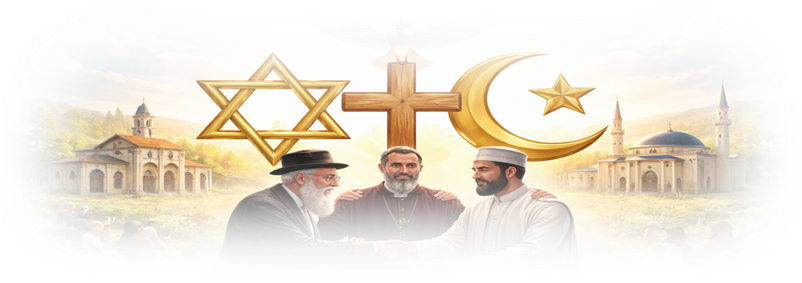
The three principal roots of the Abrahamic religions, Judaism, Christianity and Islam (there are hundreds of branches and thousands of twigs, metaphorically speaking) are profoundly incoherent in their relationship, inter se, having for the most parts, profound similarities, e.g., they all worship the same god, and minimal differences, mainly involving the role and nature of one person, the one variously referred to as Yešu, Yeshu, Yeshua, Jesus, Isa and variants thereof.

Ironically, the Abrahamic variant that most honors the most ancient Abrahamic strictures (as reflected in the Tanakh) is probably Islam.  Indeed, almost all of the much maligned Sharia Law is premised on ancient Jewish Law (absent requirements for animal sacrifice).  Islam is also the bridge between Judaism and Christianity, affording the Christian Jesus a major role in its religious traditions, second only to that ascribed to the prophet Mohamed, while Judaism, in its non-atheistic variants (e.g., Zionism), recognizes the existence of Jesus and his purported miracles but ascribes them to demonic practices, and claims that rather than reigning from heaven, he is consigned to eternal damnation in a molten pool of feces in some version of Hell (Calvo Mahé, 2025).  Zionism on the other hand (a fourth hand so to speak), was founded in the late nineteenth century by Jews who had embraced atheism and were interested primarily in colonization of the middle east and global political and economic dominance, and has virtually nothing in common with religious Judaism or any religion at all (Calvo Mahé, 2026).

This reflection has a catalyst and that is an article published in 2021 in Academia.edu (in the Academic Letters section) by Gregory B. Kaplan entitled “The psychology of converso humor” (Kaplan, 2021), the term “converso” referring to forced converts from Judaism to Christianity and their descendants.  Conversely, conversions to Judaism came from diverse sources including paganism, Greco-Roman polytheism, and traditional Middle Eastern/African religions and, of course, the massive Turko-Slavic conversions at the end of the ninth century by the Khazars.  These included the Arabian, pre Islamic Himyarite Kingdom in around 380 CE; the Kingdom of Adiabene in Northern Iraq during the first century CE; the Idumeans and Ituraeans in the Levant in the second century BCE (like the convertos, a forced conversion); North African Berber tribes after the rise of Islam.  Significant details concerning the foregoing are provided by Luis H. Feldman (1993, 2003) and Rabbi Pinvhas Landis (2022).

The catalytic aspect is specifically, based on this sentence: “During the 1400s, a dichotomy developed between New and Old Christians (those with no Jewish ancestors) according to which all conversos were perceived as heretical Christians. In consequence, conversos became subject to discrimination and persecution.”[1]

I found the reality reflected therein particularly ironic given that all original followers of Yešu, although they did not consider themselves “Christians”, were religious Jews.  Christianity was a perversion of their beliefs orchestrated by Saul of Tarsus who Christians consider a “saint”, but who historically cognizant Jews consider a Jewish infiltrator into the newly evolving variant of Judaism represented by Yešu and his purported apostles and followers.  Saul was, according to Jewish sources, including the Toledot Yeshu, purportedly an agent of the Jerusalem Sanhedrin who deliberately perverted Judaic principles within the evolving movement in order to make it different enough from Judaism to stem the adoption of Yešu’s principles by Jews and hence, Saul of Tarsus, Judas (the purported betrayer of Yešu) and in some cases, even Simon Peter (St. Peter) are revered by historically knowledgeable Jews as Jewish heroes (Calvo Mahé, 2024).  Thus, in a sense, original followers of Yešu were conversos as well and deprecated by subsequent Pauline “Christians”.

As ironic as any of the foregoing is the relationship of Christian Zionists to Judaism.  Christian Zionists in large part emerged from devout antisemites who saw the Zionist project as essential to the purported Second Coming (i.e., the return of Jesus Christ to judge the living and the dead and reign for a thousand years in an earthly kingdom), and they supported and support the Zionist project in the expectation that their version of Jesus will return and consign all but 144,000 of history’s Jewish population to perdition.  Mainly evangelical Protestants, Christian Zionists also tend to believe that most Christians whose beliefs do not align with theirs will also be consigned to perdition in Hell for eternity when Jesus returns.

It is interesting to reflect that, during the so called dark ages and even into the renaissance and enlightenment, Muslim scholars and leaders were the intellectual savors of Western Civilization and indeed, of Judaism, in much the same way that conversos became important, indeed critical leaders of Christian science, culture, politics and economics.  Thus, today’s globalist world, purportedly led by Zionists and Christians, in fact largely owes its foundations to conversos and Muslims.

The most positive meld of Abrahamic religions probably occurred in the Palestinian portion of the Ottoman Empire prior to its demise and the subsequent British Protectorate (which was supposed to assist in the evolution of an independent Palestinian state based on the concept of popular self-determination), the declaration of the State of Israel and the related Nakba.  There, for at least a time, Muslims, Christians and Jews lived together as Palestinian brethren.  Unfortunately, Zionists have destroyed that community in ongoing campaigns of genocide and ethnic cleansing, campaigns directed not only against Muslims but against Christians as well.

Ironic Abrahamic incoherencies all.

Sources:

Calvo Mahé, Guillermo (2024): The Life of Yešu According to Diverse Jewish Sources“; Noah’s Ark Research papers, Academia.edu, available at https://www.academia.edu/124579552/The_Life_of_Ye%C5%A1u_According_to_Diverse_Jewish_Sources.

Calvo Mahé, G. (2026): “On the Origen of the ‘Hebrews’“; Noah’s Ark Research papers, Academia.edu, available at ttps://www.academia.edu/165112048/On_the_Origen_of_the_Hebrews_.

Calvo Mahé, Guillermo (2026): “Zionism, Antisemitism, Jeffrey Epstein and the Purported Protocols of the Elders of Zion”; Medium, February 21, 2026 available at https://medium.com/@guillermo-calvo-mahe/zionism-antisemitism-jeffrey-epstein-and-the-purported-protocols-of-the-elders-of-zion-e95f278ae193.

Feldman, L. H. (1993): “Proselytism by Jews in the Third, Fourth, and Fifth Centuries“; Journal for the Study of Judaism in the Persian, Hellenistic, and Roman Period24 (1). Brill: 1–58.  Available at https://brill.com/view/journals/jsj/24/1/article-p1_1.xml?srsltid=AfmBOoqUGwgSYGRlA–6-SB6u07HaVTsLvFeUjP9oBc2Ced3HxeHBFXl.

Feldman, Louis H. (2003): “Conversion to Judaism in Classical Antiquity“; Hebrew Union College Annual. 74 Hebrew Union College – Jewish Institute of Religion 115-156: available at https://www.jstor.org/stable/i23503557.

Kaplan, G. B. (2021): “The psychology of converso humor”; Academia Letters, Article 674 available at https://doi.org/10.20935/AL674

Landis, Pinchas (2022): “The Surge of Converts to Judaism in Ancient Rome”; Aish.com, May 29, 2022 available at https://aish.com/the-surge-of-converts-to-judaism-in-ancient-rome/.

_____

© Guillermo Calvo Mahé; Manizales, 2026; all rights reserved.  Please feel free to share with appropriate attribution.

Guillermo (“Bill”) Calvo Mahé (a sometime poet and aspiring empirical philosopher) is a writer, political commentator and academic currently residing in the Republic of Colombia (although he has primarily lived in the United States of America of which he is also a citizen). Until 2017 he chaired the political science, government and international relations programs at the Universidad Autónoma de Manizales. Previously, he chaired the social studies and foreign language departments at the Eastern Military Academy in Huntington, New York. He is currently the publisher of the Inannite Review available at Substack.com; an intermittent commentator on radio and television; and, an occasional contributor to diverse periodicals and publications. He has academic degrees in political science (BA, The Citadel, the Military College of South Carolina), law (JD, St. John’s University, School of Law), international legal studies (LL.M, the Graduate Division of the New York University School of Law) and translation and linguistic studies (GCTS, the University of Florida’s Center for Latin American Studies). However, he is also fascinated by mythology, religion, physics, astronomy and mathematics, especially with matters related to quanta, cosmology and cosmogony. He can be contacted at guillermo.calvo.mahe@gmail.com and much of his writing is available through his blog at https://guillermocalvo.com/.


[1] In the interests of objectivity, the author discloses that he is not personally a believer in any of the Abrahamic faiths but is an admirer of the social, civic and economic postulates attributed to Yešu as reflected in democratic socialism.

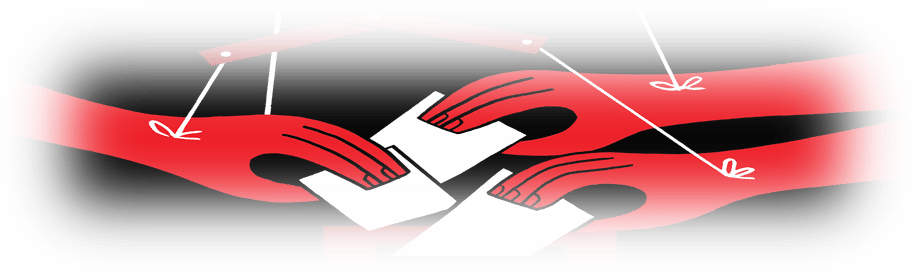
Serious Reflections on Mr. Trumps Soliloquy Concerning Electoral Fraud

Mr. Trump may be vile and corrupt but he is not always wrong or wrong about everything although he certainly tends to distort reality viciously, even when he has a scintilla of a point. 

For example, his allegations about electoral fraud are not without foundation.  There are clearly ineligible voters registered to vote in the United States and elsewhere, although how many is not clear.  And many of the suggestions in the Safeguard American Voter Eligibility (SAVE) Act have merit, indeed, many of the safeguards are staples of electoral systems all over the world although the United States federal system, coupled with the antipathy in the United States to a uniform form of national identity card, makes implementation problematic.

However, a much more serious related problem, one apparently being exploited by Israel and perhaps others (including diverse intelligence agencies all over the world), involves an insidious form of identity theft, i.e., where eligible voters who do not normally vote but whose votes are sometimes cast nonetheless, without their knowledge or consent, drastically impact electoral results.  There is purportedly evidence that companies with access to electoral data trace such non-voters and make related information available to diverse governments and entrepreneurial enterprises, facilitating electoral fraud.

The indicia is a large and anomalous increase in voting volume in favor of the victorious candidate, one that then wins by small margins as recently occurred all over Latin America and may have occurred in the 2020 United States elections.  Given the political disinterest of those whose “votes” are cast without their knowledge or authority, such tactic is almost impossible to prove or even detect other than on a macro level, and the law generally does not accept that kind of proof.  And when those charged with electoral integrity are involved, no investigations take place, complaints being dismissed on technical grounds. 

That seems to be the new electoral norm everywhere.  Of course, the foregoing observation is labelled, at best, as a “conspiracy theory” although it is clear that it is really more than just a working hypothesis.   When added to the reality that abuse of social media to circulate massive amounts of false information, scientifically timed for optimal electoral results is rampant, it seems obvious that “democracy” has become even more of a non sequitur than usual.
_____

© Guillermo Calvo Mahé; Manizales, 2026; all rights reserved.  Please feel free to share with appropriate attribution.  Image copyright New York Times.

Guillermo (“Bill”) Calvo Mahé (a sometime poet and aspiring empirical philosopher) is a writer, political commentator and academic currently residing in the Republic of Colombia (although he has primarily lived in the United States of America of which he is also a citizen). Until 2017 he chaired the political science, government and international relations programs at the Universidad Autónoma de Manizales. Previously, he chaired the social studies and foreign language departments at the Eastern Military Academy in Huntington, New York. He is currently the publisher of the Inannite Review available at Substack.com; an intermittent commentator on radio and television; and, an occasional contributor to diverse periodicals and publications. He has academic degrees in political science (BA, The Citadel, the Military College of South Carolina), law (JD, St. John’s University, School of Law), international legal studies (LL.M, the Graduate Division of the New York University School of Law) and translation and linguistic studies (GCTS, the University of Florida’s Center for Latin American Studies). However, he is also fascinated by mythology, religion, physics, astronomy and mathematics, especially with matters related to quanta, cosmology and cosmogony. He can be contacted at guillermo.calvo.mahe@gmail.com and much of his writing is available through his blog at https://guillermocalvo.com/.

On Palestinian Religious Evolution during the Past Two Millennia

The following is a short primer on Palestinian religious evolution during the past two millennia dedicated to my unfortunately uneducated Christian Zionist friends who buy into the myth that God gave Palestine to Zionists.  All of this material was obtained in a quick, AI assisted search on the Internet and thus is easily verifiable.

Contrary to the claims of Zionists that “they” were promised Palestine, Jewish groups over a millennia following the purported time of Abraham and Moses, at the beginning of the Common Era, were highly varied and fragmented, lacking any single centralized religious authority. Instead, much like modern Christian sects, of which thousands of competing variants exist, many condemning their competitors as heretics, the “Jewish” population was divided into competing sects, political factions, and diaspora communities.

The primary ideological and social groups in first-century Judea included:

  • Pharisees: A group of scholars and laymen who emphasized rigorous adherence to both the written Torah and an extensive oral tradition. They believed in the resurrection of the dead and angels, and their teachings laid the groundwork for modern Rabbinic Judaism.
  • Sadducees: The wealthy, conservative elite, largely comprised of priests, who controlled the Jerusalem Temple and the Sanhedrin. They rejected the oral law, believed only in the literal written Torah, and did not believe in an afterlife or resurrection.
  • Essenes: Ascetic, separatist communities (such as those associated with the Dead Sea Scrolls at Qumran) who withdrew from mainstream society. They practiced strict purity rituals and communal ownership, believing the Temple establishment in Jerusalem had become corrupt.
  • Zealots and Revolutionaries: Militant, nationalistic factions that fiercely opposed Roman taxation and rule. Groups like the Sicarii (daggermen) resorted to violence and guerrilla warfare against both the Romans and Jewish elites they viewed as collaborators.
  • Herodians: A small, politically motivated group of Jews who supported the royal dynasty of Herod the Great and, by extension, Roman authority.
  • The “Common” Jews: The vast majority of the population who did not officially belong to any sect. They sought to maintain basic Jewish practices like observing Shabbat, keeping kosher, and practicing circumcision while living their daily lives.
  • Diaspora Jews: Communities living outside the Land of Israel in major Hellenistic centers like Alexandria (Egypt) and Rome. These groups adapted significantly to Greco-Roman culture while maintaining their religious and ethnic identity.

Beyond the major factions, the beginning of the Common Era featured numerous minor, highly specialized, and localized Jewish groups. Historians like Josephus and early textual records identify several smaller groups that emerged from specific theological, geographical, or political pressures:

1. Ascetic and Mystical Offshoots

  • Therapeutae: Based in Egypt (especially near Alexandria), this was a communal group of Jewish ascetics described by the Jewish philosopher Philo. Similar to the Essenes, they abandoned their property, lived in isolation, and dedicated their lives to intense prayer, fasting, and the allegorical study of scripture. Notably, unlike the Qumran Essenes, their community included women.
  • Bana’im (The Builders): Mentioned briefly in rabbinic literature, they were an Essene-like group in Palestine. They were obsessively preoccupied with ritual purity, particularly ensuring their clothes remained entirely free of mud stains or contaminants.
  • Hemerobaptists: A minor group whose defining characteristic was daily morning baptism. They believed that immersing themselves in water every single morning was necessary to wash away sins and maintain absolute ritual purity before prayer.

2. Radical and Political Factions

  • The Fourth Philosophy: This is the term Josephus used to describe an ideological movement started by Judas the Galilean. While they agreed with the Pharisees on religious matters, their defining political belief was a radical refusal to call any human “lord” or king, viewing Roman taxation as direct blasphemy against God. This philosophy birthed the later Zealot and Sicarii movements.
  • The Sicarii (Daggermen): A radical, covert splinter group of revolutionaries. They hid small daggers (sicae) under their cloaks to assassinate high-ranking Jewish elites and priests whom they accused of collaborating with the Roman occupiers.

3. Early Messianic and Borderline Groups

  • The Nazarenes / Early Christ-Followers: In the first decades of the Common Era, the followers of Jesus of Nazareth existed strictly as a minor sect within the broader Jewish framework. They continued to worship at the Temple, keep kosher, and follow the Torah, but they held the distinct conviction that the Messiah had already arrived.
  • The Samaritans: Though distinct from mainstream Jews, they shared a common Israelite heritage. They rejected the Jerusalem Temple entirely, holding that Mount Gerizim was the only divinely chosen place of worship, and accepted only their own version of the Torah (the Samaritan Pentateuch).

The reality is that Christianity also emerged as a Jewish group, expanded by Saul of Tarsus to include non-inhabitants of the Levant, and later, Islam emerged as a fusion of Judaism and Christianity with the remnants of inhabitants of the Levant, the ancient “Jews”, converting to Christianity or Islam, or, in some cases, coalescing into an evolving form of orthodox Judaism, albeit unlike modern Reform Liberal or Conservative Judaism and certainly unlike Zionism, founded by European converts to Judaism who rejected its religious aspects in favor of atheism with cultural Jewish trappings.

Modern “Judaism”

Modern Judaism evolved from Rabbinic Judaism which coalesced out of catastrophic historical crises. Practically all major forms of Judaism practiced today, including Orthodox, Conservative, and Reform, share a similar foundational lineage.  The transition from a fractured, temple-based religion to the diverse structures of non-monolithic modern Judaism occurred across two monumental phases:

Phase 1: The Cataclysm and the Blueprint (70 CE – 600 CE)

Before 70 CE, most but not all of Jewish life revolved around the Jerusalem Temple, animal sacrifices, and the priesthood. A major division had already occurred when Samaritan Jews had rejected the centralization of Judaism in Jerusalem with the Temple there as the purported focal point of Judaism.  When the Roman Empire destroyed the Temple in 70 CE, the economic and spiritual heart of Jerusalem centered Judaism was obliterated.  But Judaism survived and coalesced due to a series of radical transformations:

  • The Shift to Yavneh: According to tradition, a Pharisaic leader named Rabbi Yochanan ben Zakkai was smuggled out of the Roman siege of Jerusalem. He negotiated a deal with the Roman general Vespasian to establish an academy in the coastal town of Yavneh.
  • Ritual Substitution: At Yavneh, the surviving sages detached Judaism from a physical building. They decreed that communal prayer would replace animal sacrifice, the synagogue would replace the Temple, and rabbis (teachers) would replace priests.
  • The Compilation of the Talmud: Over the next several centuries, Jewish scholars debated and codified these laws into written texts: the Mishnah (c. 200 CE) and the Talmud (c. 600 CE). This created a portable, text-centered religion that could survive in the global diaspora.

Phase 2: The Enlightenment and the Modern Denominations (1700s – 1800s)

For over a thousand years, the rabbinic system was the undisputed norm. However, the European Enlightenment and Jewish Emancipation in the 18th and 19th centuries granted Jews civil rights, shattering the walls of the traditional Jewish ghetto and forcing a new question: How do you remain Jewish while integrating into modern Western society? This crisis split Rabbinic Judaism into the modern movements we recognize today:

  • Reform Judaism: Emerging in Germany, this movement aimed to modernize the religion. They translated prayers into local languages, introduced organs into synagogues, and viewed Jewish law (Halakha) as an evolving ethical guide rather than a binding set of divine mandates.
  • Orthodox Judaism: This arose as a direct counter-reaction to Reform Judaism. Leaders like Samson Raphael Hirsch argued that traditional Jewish law was immutable and fully divine. “Modern Orthodoxy” emerged to show that one could strictly observe the Torah while engaging with secular culture and education.
  • Conservative Judaism: Formed as a middle ground, this movement argued that Jewish law is dynamic and must adapt to the times, but its core traditions and historical practices must be conserved and respected.

None of the foregoing have direct links to any form of primitive Judaism with direct interaction with Moses, or Abram or YHWH, any more than do any Christian or Islamic sects, nor, of course, does Zionism.

_____

© Guillermo Calvo Mahé; Manizales, 2026; all rights reserved.  Please feel free to share with appropriate attribution.

Guillermo (“Bill”) Calvo Mahé (a sometime poet and aspiring empirical philosopher) is a writer, political commentator and academic currently residing in the Republic of Colombia (although he has primarily lived in the United States of America of which he is also a citizen). Until 2017 he chaired the political science, government and international relations programs at the Universidad Autónoma de Manizales. Previously, he chaired the social studies and foreign language departments at the Eastern Military Academy in Huntington, New York. He is currently the publisher of the Inannite Review available at Substack.com; an intermittent commentator on radio and television; and, an occasional contributor to diverse periodicals and publications. He has academic degrees in political science (BA, The Citadel, the Military College of South Carolina), law (JD, St. John’s University, School of Law), international legal studies (LL.M, the Graduate Division of the New York University School of Law) and translation and linguistic studies (GCTS, the University of Florida’s Center for Latin American Studies). However, he is also fascinated by mythology, religion, physics, astronomy and mathematics, especially with matters related to quanta, cosmology and cosmogony. He can be contacted at guillermo.calvo.mahe@gmail.com and much of his writing is available through his blog at https://guillermocalvo.com/.

New Warnings Fresh from the Echoes of Trojan Princess Cassandra’s Dystopic Visions, Israeli Edition

On January 10, 2026, at 10:55 a.m., EDST, ToI Staff and Jacob Magid of the Times of Israel reported that “Israel had warned the United States that Iran devised a new plot to assassinate Trump”.[1]

Just how stupid does Israel think the majority of people in the United States are? 

Well, given the probable truth behind the assassination of JFK, the destruction of the Twin Towers, the “Six Day War, the Nakba, etc., very stupid indeed.  And the Israeli leadership has a point.  So much so that it is brazenly adding a new element to its hoped for total destruction of Iran.

First, Israeli leadership talked Donald J. Trump into going on an assassination spree in Iran, a frequent Mossad tactic but this time engaged in on an industrial scale using the United States as the weapon.  Then, Netanyahu terrified Mr. Trump (like Mr. Netanyahu, he’s not very brave unless heavily protected or in a bunker) by whispering into his ear that such actions might have consequences.  Horrors, tit for tat.  But, then again, speaking of tits, the United States and its tax payers have been providing Israel with all it wants for three quarters of a century.

Sooo, by claiming that if Mr. Trump is assassinated it will have been the Iranians’ who were  responsible, Israel’s leaders have apparently set in a motion a plan where United States retaliation will implement the Greater Israel project at little or no cost to the Israeli state (as occurred in Iraq and Libya and Syria, etc.).  Which in turn means that should that occur, it will probably have been Israel that orchestrated the assassination, whether or not it was actually Israelis who carried it out (think Twin Towers); especially with a cadre of United States politicians whose loyalty is to Israel ready to replace Mr. Trump, perhaps permanently, given Israeli success in electoral manipulation all over the world.

Something to bear in mind as Israel once again collectively cries wolf (think antisemitism and holocaust) while it sort of pretends to dress in (slaughtered) sheep’s clothing.

Apologies for all the parentheticals (for some reason, they just seemed appropriate).
_____

© Guillermo Calvo Mahé; Manizales, 2026; all rights reserved.  Please feel free to share with appropriate attribution.

Guillermo (“Bill”) Calvo Mahé (a sometime poet and aspiring empirical philosopher) is a writer, political commentator and academic currently residing in the Republic of Colombia (although he has primarily lived in the United States of America of which he is also a citizen). Until 2017 he chaired the political science, government and international relations programs at the Universidad Autónoma de Manizales. Previously, he chaired the social studies and foreign language departments at the Eastern Military Academy in Huntington, New York. He is currently the publisher of the Inannite Review available at Substack.com; an intermittent commentator on radio and television; and, an occasional contributor to diverse periodicals and publications. He has academic degrees in political science (BA, The Citadel, the Military College of South Carolina), law (JD, St. John’s University, School of Law), international legal studies (LL.M, the Graduate Division of the New York University School of Law) and translation and linguistic studies (GCTS, the University of Florida’s Center for Latin American Studies). However, he is also fascinated by mythology, religion, physics, astronomy and mathematics, especially with matters related to quanta, cosmology and cosmogony. He can be contacted at guillermo.calvo.mahe@gmail.com and much of his writing is available through his blog at https://guillermocalvo.com/.


[1] The article, “Israel reportedly warned US that Iran devised a new plot to assassinate Trump” can be accessed at https://www.timesofisrael.com/israel-reportedly-warned-us-that-iran-devised-a-new-plot-to-assassinate-trump/.

On the Nature of Patriotism

Patriotism is a complex concept almost always presented in simplistic terms, usually erroneous.  

One aspect of course is a willingness to risk your life, health and wealth in protection of what patriotism requires us to defend.  Many of my Citadel classmates have done so.  And anyone involved in the death and destruction of other human beings risks not only his or now her life, health and wealth but also, to the extent they believe in religion, almost any religion, their immortal souls. 

I believe the focus on such willingness or on the observance of national symbols or the taking of oaths or the parroting of official narratives and echoing of a current administration’s policies misses the point.  I believe the point is succinctly, albeit perhaps hypocritically, embodied in the United States’ Declaration of Independence, and in the Preamble to the current Constitution, and in the Bill of Rights and, in other countries, in similar foundational instruments. 

In essence, patriotism is a citizen’s duty not only to protect his or her country, but to hold it to its foundational value’s against all enemies, foreign yes, but more importantly, domestic.  And domestic enemies are not those with whom we disagree, or who criticize our countries’ policies and actions, but those who blindly and unquestionably follow an administration’s policies and actions that contravene foundational values. 

Given the massive peer pressure to conform, especially with respect to what ought to be indefensible policies and actions, that is often more difficult than the willingness to risk life, health and wealth.  Something too many decent and brave people cannot grasp. 

Were it not so, then “We the People” should be pledging our lives and our sacred honor to British King Charles the III as we sing God Save the King.
_____

© Guillermo Calvo Mahé; Manizales, 2026; all rights reserved.  Please feel free to share with appropriate attribution.  This article is dedicated to those of my Citadel classmates who I love and respect but who disdain my criticism of the country we all love.

Guillermo (“Bill”) Calvo Mahé (a sometime poet and aspiring empirical philosopher) is a writer, political commentator and academic currently residing in the Republic of Colombia (although he has primarily lived in the United States of America of which he is also a citizen). Until 2017 he chaired the political science, government and international relations programs at the Universidad Autónoma de Manizales. Previously, he chaired the social studies and foreign language departments at the Eastern Military Academy in Huntington, New York. He is currently the publisher of the Inannite Review available at Substack.com; an intermittent commentator on radio and television; and, an occasional contributor to diverse periodicals and publications. He has academic degrees in political science (BA, The Citadel, the Military College of South Carolina), law (JD, St. John’s University, School of Law), international legal studies (LL.M, the Graduate Division of the New York University School of Law) and translation and linguistic studies (GCTS, the University of Florida’s Center for Latin American Studies). However, he is also fascinated by mythology, religion, physics, astronomy and mathematics, especially with matters related to quanta, cosmology and cosmogony. He can be contacted at guillermo.calvo.mahe@gmail.com and much of his writing is available through his blog at https://guillermocalvo.com/.