A Bit of Reciprocity: a sort of prayer

If he or she or it or even they exist, the divine, they and I are, I think, friends.  Mainly because I dare to interact with them as a sort of equal.  Not in terms of power of course, but in sensitivities and concerns and perceptions, seeing in divinity those same traits, albeit not easily admitted, especially to “believers” who insist that divinity is perfect: eternal, omniscient, ubiquitous, omnipotent and omnibenevolent, when the divine has or have, in all probability (assuming probability is relevant), doubts of his, her, its’ or their own, and perhaps quite a bit of guilt and remorse.

The divine, if the concept exists, desperately need someone with whom to communicate and not in prayer (which probably generates divine migraines) or devotion, but openly and honestly, without fear of being judged, but rather, hoping for empathy, in much the same way as humans should hope to relate with whatever concept of divinity they individually have.

Of course, the likelihood that divinity exists is rather slight but, all the same, even if imagined, it can be comforting. 

Or, terrifying. 

Terrifying if he, she, it or they are really, to any extent, omniscient, ubiquitous, and omnipotent but not omnibenevolent (eternal is irrelevant).  Given the world as it is and as it has seemingly always been, omnibenevolence obviously cannot coexist with the other attributes traditionally associated with divinity by purportedly modern humans.  The ancients, even the purported descendants of Abraham, knew that.  Their divinities were selfish, self-centered, prone to outbursts and as frequently wrong as they were right, regardless of what their sycophants wrote. Which explains why they were terrified of their divinities and sought to appease them, rather than to understand them.  Interestingly, similar fear seems to infest most Abrahamic religions, despite the love on which they are purportedly premised.

But I like my concept much more.  Ours is a hubris free relationship involving imperfect, perhaps insecure divinities that need us as much as we need them.  It is more comforting, more reflective of the best in us as humans (or is it we?).  Thus, I cater to the divine generously, open to whatever they need to get off of their metaphorical shoulders without expecting all that much in return, other than a bit of reciprocity.

Hmm, reciprocity. 

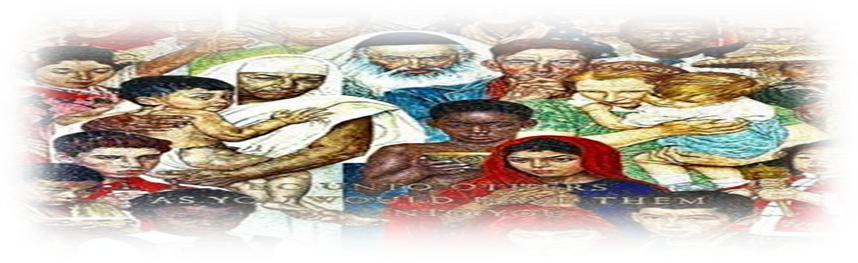
Isn’t that the essence of the so called “Golden Rule”?
_____

© Guillermo Calvo Mahé; Manizales, 2026; all rights reserved.  Please feel free to share with appropriate attribution.

Guillermo (“Bill”) Calvo Mahé (a sometime poet and aspiring empirical philosopher) is a writer, political commentator and academic currently residing in the Republic of Colombia (although he has primarily lived in the United States of America of which he is also a citizen). Until 2017 he chaired the political science, government and international relations programs at the Universidad Autónoma de Manizales. Previously, he chaired the social studies and foreign language departments at the Eastern Military Academy in Huntington, New York. He is currently the publisher of the Inannite Review available at Substack.com; an intermittent commentator on radio and television; and, an occasional contributor to diverse periodicals and publications. He has academic degrees in political science (BA, The Citadel, the Military College of South Carolina), law (JD, St. John’s University, School of Law), international legal studies (LL.M, the Graduate Division of the New York University School of Law) and translation and linguistic studies (GCTS, the University of Florida’s Center for Latin American Studies). However, he is also fascinated by mythology, religion, physics, astronomy and mathematics, especially with matters related to quanta, cosmology and cosmogony. He can be contacted at guillermo.calvo.mahe@gmail.com and much of his writing is available through his blog at https://guillermocalvo.com/.

Reflections on Good, Evil, Divinity and Efficiency

Nature and nature’s god, if there is one, and if there is a difference between the two concepts, cares nothing at all about the human concepts of good and evil, or good and evil at all, caring only for efficiency and its maximization but, lacking omniscience, seeks to find efficiency through trial and error, through experimentation which is frequently not only unsuccessful, but results in devastating failures, that is where infinity and eternity create the ideal laboratory. 

We humans refer to the foregoing as evolution, which may well not be a bio-centric concept but rather, applicable to every process in the cosmos, or better yet, the multiverse or best of all, the omniverse, at least for now.  That concept expands as the concept (or fiction) of time is filtered in.

Of course, evolution in a cosmic sense was probably most prominent during the early stages of cosmic evolution, during the first zeptoseconds after whatever first occurred, but continued experimenting with energy and with the smallest possible particulate units which we currently believe to involve quarks and leptons but probably involved a series of predecessors, most of them failed.

I wonder what it was like before the first zeptosecond.  A concept, at least in human terms, that needs light and hydrogen atoms but which obviously had precursors, smaller and shorter until they sought to merge with a time before infinity or eternity had been posited as divine hypotheses, assuming, of course, the improbable existence of divinity.

It must be incredibly comforting to be unconcerned with good or evil, merely enjoying the creative frustrations of the quest for efficiency, a road like, the road to Hell, littered with positive intentions but unconcerned with damnation.

We humans, of course, believe that we know better.  We have concepts of good and evil contradictory to nature’s quest for efficiency and contrary to the dictates of cruel evolution.  We believe ourselves more enlightened, which more than anything confuses us as we have, to date, been utterly unable to abide by the morality and ethics we invent to discredited nature’s cruel quest for efficiency.  But then, comforting hypocrisy is our hall mark. One with which we imbue the verisimilitudes of divinity we create in hopes that those illusions will provide us with answers to unfathomable and hence unanswerable queries, and the most foul among us use the myths we create, to maximize control and power and wealth and hubris.  And they find that efficient, at least in the short term, and hence divine.

We humans, and perhaps all forms of life, are apparently aberrations nature has yet to categorize as failed experiments, failures which, or perhaps who, like Mordred, aspire to supplement their parentage, or progenitor, nature itself, and force it into our own image, one where good and evil exist as relative concepts, useful tools as long as they’re ignored whenever inconvenient.

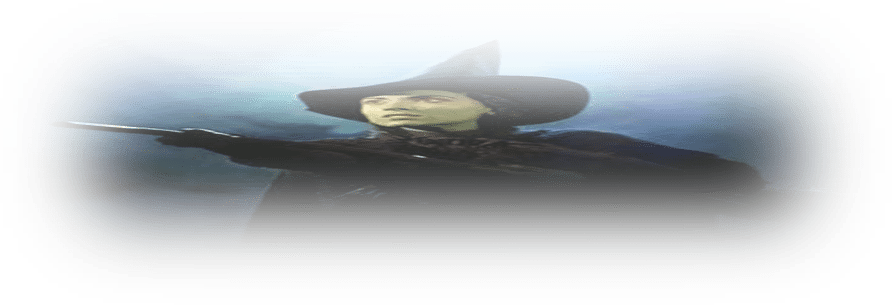
Observations which my deistic friends of Abrahamic persuasions will find heretical and anathema, at best, but which Elphaba apparently grasped as, exposed to water, she slowly started to melt and in her personal, last instant epiphany, exclaimed: “What a world, what a world!
_____

© Guillermo Calvo Mahé; Manizales, 2026; all rights reserved.  Please feel free to share with appropriate attribution.

Guillermo (“Bill”) Calvo Mahé (a sometime poet and aspiring empirical philosopher) is a writer, political commentator and academic currently residing in the Republic of Colombia (although he has primarily lived in the United States of America of which he is also a citizen). Until 2017 he chaired the political science, government and international relations programs at the Universidad Autónoma de Manizales. Previously, he chaired the social studies and foreign language departments at the Eastern Military Academy in Huntington, New York. He is currently the publisher of the Inannite Review available at Substack.com; an intermittent commentator on radio and television; and, an occasional contributor to diverse periodicals and publications. He has academic degrees in political science (BA, The Citadel, the Military College of South Carolina), law (JD, St. John’s University, School of Law), international legal studies (LL.M, the Graduate Division of the New York University School of Law) and translation and linguistic studies (GCTS, the University of Florida’s Center for Latin American Studies). However, he is also fascinated by mythology, religion, physics, astronomy and mathematics, especially with matters related to quanta, cosmology and cosmogony. He can be contacted at guillermo.calvo.mahe@gmail.com and much of his writing is available through his blog at https://guillermocalvo.com/.

A Very Brief Reflection on Non-Citizen Impact on Governance in the United States

On August 13 of this year (2026), Sue Seboda published an article on Substack entitled “Will the SAVE Act Save America or is it just more spitballs and sledgehammers…”.  It follows a multipart series of articles Sue has written and published on Substack dealing with the history of immigration and immigration legislation in the United States, a decent fairly objective effort worth reading, as is her latest article which can be accessed at https://sueseboda.substack.com/p/will-the-save-act-save-america?r=lwzkv&utm_campaign=post&utm_medium=web.  Sue strikes me as being on the conservative side of the political spectrum but objective and open minded.  I like her work.  I, on the other hand, am and have long been a democratic socialist along the lines of Noam Chomsky, Nelson Mandela, Pepe Mujica, Martin Luther King, Jr., etc. (not to be confused with Vladimir Lenin, Joseph Stalin or even Leon Trotsky).

Sue’s article deals with very significant issues, issues that also impact other critical issues not dealt with in the article such as the nature of the federal decennial census used to apportion Congressional representation and distribute federal funds and the issue of birthright citizenship, all of which should probably be dealt with concurrently via a federal constitutional clarifying amendment after robust debate that results in legal requirements that deal with real problems in a manner avoiding discrimination based on race, gender, religious beliefs or  national origins but definitely limits the roles of non-citizens in United States institutions.  The article focuses on the pros and cons of the Safeguard American Voter Eligibility Act (SAVE Act), a proposed Congressional bill that would requires individuals to provide documentary proof of United States citizenship (such as a passport or certified birth certificate) when registering to vote in federal elections.

If formal participation in the political process by undocumented migrants is an important issue, an even more critical issue has been ignored and is generally ignored, the role of foreign governments and their agents, advocates and representative in the United States electoral and political system and the role of campaign contributions from sources ineligible to vote in the elections impacted, including political action committees, corporations, labor unions, chambers of commerce and individuals.  That is a real clear and present danger.  The two great villains in the foregoing, albeit not the only ones, are the Israeli American Public Affairs Committee (AIPAC) and the United States Supreme Court, especially in its Citizens United decision, Citizens United v. FEC; 558 U.S. 310 (2010) and its June 30, 2026 decision in National Republican Senatorial Committee v. Federal Election Commission, 609 U.S. ____ (2026).  Of course, the legacy media focuses primarily on imaginary roles by Russia and China, ignoring the reality of United States interference in foreign elections, most recently, along with Israel, throughout Latin America.

For the most part (in the author’s opinion), the least rational political posture with respect to securing the electoral process has been that adopted by the Democratic Party and its activist base which vehemently oppose action to require picture identification and proof of citizenship to vote.  That specifically includes vehement opposition to the SAVE Act which includes concepts that enjoy overwhelming support among the citizenry, opposition to which is likely to cost the Democratic Party a significant number of votes among the independent voter community in upcoming Congressional elections.  The SAVE Act is far from perfect and could certainly use a bit of constitutional and pragmatic polish though its premises seem sound.  However, a rising swell of Republicans, apparently political descendants of the nineteenth century “American Party”[1], are seeking clearly inappropriate actions designed to minimize the rights and even citizenship status of United States citizens, especially naturalized citizens and Islamic Americans, or indeed any United States citizens opposed to Zionist and Israeli control over United States officials, both elected and appointed.  Republican advocates have gone as far as to demand that certain United States citizens be stripped of their citizenship and expelled from the United States for opposing policies such as undeclared wars and support for genocide and ethnic cleansing, or that they at least be imprisoned and deprived of their political rights.  The foregoing is even more ludicrous than Democratic Party and Democratic Party activist opposition to limiting the right to vote and receipt of federal benefits, as a right, to United States citizens.

The reality is that the positions of both the Democratic and Republican parties are based on few moral, ethical, legal or constitutional factors but rather, only on how they benefit their ability to dominate government at all levels: federal, state and local.  That is something that should disgust all decent citizens regardless of their favored political ideologies but, unfortunately, the communications and entertainment industries in the United States, rather than educate and enlighten, manipulate, obfuscate, confuse and deceive, making functional democracy at best highly improbable, inefficient and dysfunctional, i.e., the ludicrous system we have today led by the ludicrous national leaders proffered by both major political parties for the past half century: i.e., William Jefferson Clinton, George W. Bush, Barack H. Obama, Joseph Robinette Biden and Donald J. Trump (with their supporting casts in Congress, the Judiciary and the Bureaucracy, led by their noses by the Military Industrial Complex against which President Dwight David Eisenhower warned as he left office).

It may be that at some level things are changing, ironically, based on dissidents within the Republican Party (such as Tucker Carlson, Marjorie Taylor Green, Thomas Massie, Joe Kent and Candace Owens) seeking a real “Make America First” alternative, and on an evolving democratic socialist wing in the Democratic Party led by recently elected New York City Mayor Zohran Mamdani.  I confess to admiring them all, though I’m not always in full agreement with them.  If they could somehow unite and develop a platform based on issues with which they agree, and there are many, many of the worst problems engrained for over a century in United States politics might be minimized.  However, that is a posture their respective followers appear to consider anathema and thus, such a scenario is only a bit more probable than Hell freezing over or the United States electorate finally coming to grips with the Declaration of Independence they claim to revere.

Good article Sue!!!
_____

© Guillermo Calvo Mahé; Manizales, 2026; all rights reserved.  Please feel free to share with appropriate attribution.

Guillermo (“Bill”) Calvo Mahé (a sometime poet and aspiring empirical philosopher) is a writer, political commentator and academic currently residing in the Republic of Colombia (although he has primarily lived in the United States of America of which he is also a citizen). Until 2017 he chaired the political science, government and international relations programs at the Universidad Autónoma de Manizales. Previously, he chaired the social studies and foreign language departments at the Eastern Military Academy in Huntington, New York. He is currently the publisher of the Inannite Review available at Substack.com; an intermittent commentator on radio and television; and, an occasional contributor to diverse periodicals and publications. He has academic degrees in political science (BA, The Citadel, the Military College of South Carolina), law (JD, St. John’s University, School of Law), international legal studies (LL.M, the Graduate Division of the New York University School of Law) and translation and linguistic studies (GCTS, the University of Florida’s Center for Latin American Studies). However, he is also fascinated by mythology, religion, physics, astronomy and mathematics, especially with matters related to quanta, cosmology and cosmogony. He can be contacted at guillermo.calvo.mahe@gmail.com and much of his writing is available through his blog at https://guillermocalvo.com/.


[1] Better known as the “Know Nothing Party”.

Memories and Reflections after a Strange Dream in Early August of 2026

I started my eighth decade recently and, on reflection, I’m sometimes a bit surprised that I’ve somehow survived.  Like many others, perhaps most, as I mature (I like that term better than age) I engage in quite a bit of reflection and introspection, sifting through a past that has always been too transient, seeking for nuggets somehow worth salvaging, if only in memory.  The streams of time are unforgiving.

Last night I had a strange sort of dream but one not uncommon for me.  I have an active and very strange dream life.  In the dream it was the penultimate day of classes for me in a boarding school somewhere, but not one I ever really attended although I did attend boarding academic institutions through most of high school and during my college undergraduate years (but in military institutions, the Eastern Military Academy in Huntington, New York and the Citadel in Charleston South Carolina).  In this dream it was a civilian facility and coeducational.  It was not a very fancy place, indeed, it seemed drab, old and somewhat run down; really sort of dank and dark and dreary.  Not at all like Eastern (a palace, literally, now called OHEKA Castle) or the Citadel (magnificently beautiful).

In the dream, my roommate and I had not yet packed our things which were carelessly strewn about and I needed to contact my mother to verify how I was to get home.  She’d called and left a message asking what I wanted to eat and I had responded to the message somehow, asking for something too expensive for our budget, not realizing that it was a tangible question about the meal she wanted to prepare for me when I got home. Instead, I’d assumed that is was a sort of generic question into what I liked most, regardless of how unlikely it was that I’d get it.  It was a dream thus normal logic was not involved.  In the dream, the girl who’d conveyed our messages had not asked my mother for a phone number to which I could respond.  Well, that was logical, it was my mother after all.  The girl had no reason to know how frequently my family moved and in doing so, changed everything, telephone numbers included.  And I had no way of knowing how I was going to get home.  The latter was frequently true and frequently, it was not home I’d be heading to but a friend’s house.  Luckily for me, there were always friends with decent houses around, houses nicer than my family’s, and I gravitated to them.  It was a sort of desertion I now realize.  I was abandoning my family for some reason.  In reality.  Not in the dream.  That’s something I’ve long regretted. 

In my boarding school career there were seven end-of-the-academic-year departures and seven more Christmas vacation departures and for many of them, perhaps most, home was not my destination.  An unfortunate consequence was that my younger siblings, a sister and a half-brother, did not get any benefit from guidance I might have shared with them, or protection I might have given them, or love we might have shared.  My family lived in New York during that period, in numerous different places, but all in Queens.  First, in Ozone Park, then in Hollis, then in Queens Village and finally, in several different places in Flushing.  We’d moved to New York from Miami Beach when I was twelve, with detours, first for about eighteen months in Charlotte, and then for about six months at my grandmother’s home in South America, in the Republic of Colombia; in the City of Manizales, an oasis of stability we would visit for short periods from time to time. 

In Colombia we were seemingly well off; well, my grandmother was well off, relatively.  She owned a hotel, several taverns, a flower shop and a beautiful country home high on a hill surrounded by hundreds of thousands of carnations and roses, and fruit trees, with a pool by the side of a gazeebo and an artificial cement lake with swans and ducks, and a flowing stream at the foot of the property.  In the United States we seemed to get by but faced continuous financial problems I knew nothing about; problems from which my mother sheltered me completely, … somehow.  I had a stepfather, my father having vanished from our lives when I was three or four, although, according to him (many decades later, when we briefly reunited), it was we who had vanished, had been taken and hidden from him by my grandmother.  My mother had immigrated to the United States when my father vanished as so many Latin Americans did then and do now, but it was easier back then, back then as the 1940s turned into the 1950s and she remarried when I was six. 

My stepfather was a complex person whose complexities were not perceived by me until much later.  He was very loving but sometimes violent with me.  Back then corporal punishment was the norm.  The major problem with my stepfather though was that he was a compulsive gambler, cards I think, in Greek clubs, he was of Greek descent, a first generation “American” (United States citizen).  The consequences of his gambling “problems” were something my mother lived through for about nine years after which they separated, something I criticized at the time, at least to myself.  I’d been kept ignorant of the problems he caused her and us. She had never spoken ill of my birth father nor did she with respect to my stepfather which made them seem heroes, when the real hero, well heroine, had been her. During our time with my stepfather we had to move almost every year and unknown to me, creditors hounded my mother and stepfather, and not the commercial kind.  Still, while he was with us, I loved him very much and perceived of him as a protector rather than as a problem.

Anyway, while I was boarding at Eastern, weekends home were a possibility but one of which I rarely took advantage.  I generally stayed at the school, which was largely vacated on weekends, in part because I always had a problem with foreign languages (first Latin and then French) and didn’t meet the academic requirements for weekend passes which required an 80% average in every subject, cumulative average not being enough.  Ironic because I scored in the top three percentile in foreign languages on my college boards and I earned a graduate certificate in translation studies and linguistics relatively late in life; after I’d earned degrees in political science from the Citadel, and in law and then in international legal studies from universities in New York City. 

When I did get to leave the school for weekends or on vacations, I would frequently stay with a friend’s family either in Huntington, on Caledonia Road, the Chamberlins, or the Rothchilds in Little Neck.  Both families were very kind to me.  I should have been with my own family although, by then, we had joined the ranks of the dysfunctional, at least more obviously so.  When I was close to turning sixteen, my mother and stepfather separated and my siblings were also sent to boarding schools for which my mother miraculously managed to pay.  She’d studied cosmetology during the latter part of her marriage to my stepfather, apparently aware that she would soon need to be financially independent.  But I was the only one of my siblings who stuck it out and graduated.  Perhaps that was more because that’s all my mother could afford than because of any failings on the parts of my siblings.  I never knew which but strongly suspect the former.

At the Citadel, things were not that much different.  Of the three summers between its four year academic program, I spent two away, the first, attending summer classes but also vacation time with Rob Shelnutt and his wonderful family in Tarpon Springs.  Rob was to become my future Citadel roommate for several years.  Then, the final summer, I again spent attending summer classes at the Citadel while living with three of my classmates in an apartment we rented collectively in Charleston.  I did spend the intervening summer close to home but mainly living with my young aunt Carola.  I had a summer job with A.G. Becker & Sons on Wall Street helping to support my family because my mother had to have gall bladder surgery.  For once, I got to be productive and responsible and spend some time with my siblings.  Oddly, I can’t remember what they were doing at the time, my sister was not going to school but my younger brother should have been in high school.  Strange that I can’t remember anything to do with them that summer.

Actually, for some reason, there are way too many things about my immediate family that I never knew and rather than clarify things, my siblings confused them, sharing almost totally different versions of important events to which I was not privy.  It seems that my mother was determined to protect me from anything that might derail my path towards a better future, something she accomplished, but only for me.  My siblings were left behind in a sense.  Something which, as I came to realize it, generated strong feelings of guilt, feelings accentuated by the last words I recall my stepfather saying to me shortly before he passed away from his third heart attack.  That was at a time when he’d briefly reconciled with my mother and I had become a faculty member at Eastern (to which, like a homing pigeon, I’d returned after graduating from the Citadel).  I’d just started or been accepted to law school and he was very proud of me and told me that he “believed in me more than he believed in God”.  And he’d asked me to always look out for my sister and brother.  The former rather than the latter was a heavy burden, especially when my stepfather died shortly thereafter.  The latter was a duty I tried to meet but usually not all that successfully.  Much later I served as by brother’s legal guardian for a while and I think I helped him overcome serious issues, but my sister has always been extremely independent and distant and has always rejected any efforts on my part to help her.  We talk on the phone several times a year, on holidays and on her birthday, or if there is a local climactic disaster, and we care for each other a great deal, but that’s it.  And my brother?  He passed away last September but he sometimes seems to visit me in my dreams, seemingly now a link to my mother who passed away in early June of 1990.

On two occasions when I was returning home from the Citadel I hitchhiked, my two great hitchhiking adventures, both positive.  Once was with my roommate at the time, Jeff Ronald, who was driving to his home in Springfield Massachusetts and dropped me off, … somewhere, from which I somehow got to New York City, but the second time was more memorable.  It was right after graduation and I was set to go home with Jeff again but at the last minute I decided to go as far as Maryland with my friend Toby Griffen, a somewhat proudly eccentric intellectual who I intuited I’d rarely see again.  That was a long hitchhike in several stages.  Apparently offended however, Jeff kept a number of my things which he’d promised to take back for me, a typewriter and portable radio and probably some clothes.  I don’t recall how, but I made it back to New York, to Flushing where my mother, sister and brother were living at the time in a somewhat run down rented house, one in which I’d never stayed.  There are quite a few gaps in my memory of instances like that.  Looking back on that “trip” I’m amazed that I had the reckless courage to undertake it and the surety (a double entendre of sorts) that it would turn out all right, but those were different times and people were seemingly different then.  And it did turn out all right, except for my “misplaced” belongings.

When I delve into my past, which I frequently do, I tend to focus on things I would change and in fact, I would seemingly change many things.  I would have loved people who slipped by and let slip by some of those with whom I had failed relationships (more for their sake than for mine), and I’d have studied mathematics and physics rather than political science and history.  But then, I’d probably not have had my three sons, now 40, 38 and about to turn 36.  I’d change most of the important decisions in my life but, then again, reflecting on how that new life would probably have turned out, I might well be wishing I could change that one as well.  Seemingly, as the saying goes: “the more things change, the more they stay the same”.  Of course, the ultimate related daydream involves returning to a very young version of myself having retained knowledge of the future and having become a zillionaire philanthropist and peace activist.  I’m pretty sure I’d stick with that.

In a related sense, I’ve actually had to start my life over again, and too frequently it seems.  From scratch.  But, of course, without any prescience.  Still, I’ve survived and at times thrived.  I guess it’s a good thing that I was blissfully unaware when they occurred of many of the serious issues and deficiencies in my life, things that I’ve discovered in my reflections and introspection, things which consequently did not impact me as negatively as they might have had I focused on them at the time they occurred instead of from the relative safety of the future (when they’ve already been somewhat successfully resolved).  I’ve been at least as fortunate as I’ve been unlucky and, as in the case of my hero, the Chilean Nobel laureate, communist civic activist and Latin American nationalist, Pablo Neruda, my biography might be titled, “I Can Confess that I’ve Lived”.

 I’ve lived quite a bit, seemingly a dozen lifetimes in one.  I’ve helped some people a lot, mainly my students, and hurt others much more than they deserved, mainly my relationships with women, and I’ve been seriously betrayed on several occasions while I think that I’ve not betrayed others, other than in some cases romantically.  But during the past several decades, after I returned to where I started, back in Manizales, I’ve seemingly found a semblance of stability and the time to remember.  And, as I’m doing now, to record and share my memories.

Dreams tend to fade quickly, perhaps leaving behind traces that are sometimes reassembled later but others can be fascinating catalysts, as the one last night has been, triggering a flood of memories, reflections, introspections and speculation.  Last night’s dream is unlikely to fade at all.

Now, as to the future? 

Perhaps my adventures, or misadventures, are just beginning.
_____

© Guillermo Calvo Mahé; Manizales, 2026; all rights reserved.  Please feel free to share with appropriate attribution.

Guillermo (“Bill”) Calvo Mahé (a sometime poet and aspiring empirical philosopher) is a writer, political commentator and academic currently residing in the Republic of Colombia (although he has primarily lived in the United States of America of which he is also a citizen). Until 2017 he chaired the political science, government and international relations programs at the Universidad Autónoma de Manizales. Previously, he chaired the social studies and foreign language departments at the Eastern Military Academy in Huntington, New York. He is currently the publisher of the Inannite Review available at Substack.com; an intermittent commentator on radio and television; and, an occasional contributor to diverse periodicals and publications. He has academic degrees in political science (BA, The Citadel, the Military College of South Carolina), law (JD, St. John’s University, School of Law), international legal studies (LL.M, the Graduate Division of the New York University School of Law) and translation and linguistic studies (GCTS, the University of Florida’s Center for Latin American Studies). However, he is also fascinated by mythology, religion, physics, astronomy and mathematics, especially with matters related to quanta, cosmology and cosmogony. He can be contacted at guillermo.calvo.mahe@gmail.com and much of his writing is available through his blog at https://guillermocalvo.com/.
Linguistics

Linguistics is confusing but fun. 

For example, there are allographs (different letters or combinations of letters that represent the exact same sound such as “f””, “ph” and sometimes even “gh”) and heterographs: words that sound the exact same but are sometimes spelled differently, e.g., male and mail in one sense, and rose (the flower) and rose (the act of having risen, in the other).  And, of course, homophones (which are heterographs that are always spelled differently).

In the foregoing context, but different in aspect, the spellings of mold and mould are interesting and their relationship is hard to define linguistically because they have identical ranges of diverse meanings, from to form something or someone to a fungus, with the spelling varying on a regional basis. 

But their range of meanings can raise interesting confusion with respect to a phrase such as “helped ‘mold’ (or ‘mould’) a person.  One variant is sort of positive, stressing the formed aspect in a positive manner but, as a sort of metaphor, using its fungal aspect might mean to somehow lead a person to decay. 

It must be a bit of a boring day!   

Hmm, boring, as in making a hole or as in feeling a lack of energy and motivation, which brings to mind “hole” and “whole”.
_____

© Guillermo Calvo Mahé; Manizales, 2026; all rights reserved.  Please feel free to share with appropriate attribution.

Guillermo (“Bill”) Calvo Mahé (a sometime poet and aspiring empirical philosopher) is a writer, political commentator and academic currently residing in the Republic of Colombia (although he has primarily lived in the United States of America of which he is also a citizen). Until 2017 he chaired the political science, government and international relations programs at the Universidad Autónoma de Manizales. Previously, he chaired the social studies and foreign language departments at the Eastern Military Academy in Huntington, New York. He is currently the publisher of the Inannite Review available at Substack.com; an intermittent commentator on radio and television; and, an occasional contributor to diverse periodicals and publications. He has academic degrees in political science (BA, The Citadel, the Military College of South Carolina), law (JD, St. John’s University, School of Law), international legal studies (LL.M, the Graduate Division of the New York University School of Law) and translation and linguistic studies (GCTS, the University of Florida’s Center for Latin American Studies). However, he is also fascinated by mythology, religion, physics, astronomy and mathematics, especially with matters related to quanta, cosmology and cosmogony. He can be contacted at guillermo.calvo.mahe@gmail.com and much of his writing is available through his blog at https://guillermocalvo.com/.
A Very Brief Observation Concerning the Concept of Treason in a Pluralistic Democracy

The concept that rejecting the political posture of an individual or political movement or party can constitute “treason” in a pluralistic democracy is oxymoronic.  

The allegiance of a citizen in a democracy is to the corporate concept of the “People”, not to any person or political party, and certainly not to any serving government.  Perhaps not even to the “State”.

The principal political duty of individuals in a democracy is to maintain their civic responsibilities by informing and educating themselves, exercising their reason and common sense, and sharing their opinions with other citizens without fear of reprisals, calumnies or ridicule. 

The foregoing is something almost entirely absent from current discourse in purported Western democracies.  Perhaps the “adjective “Western” now changes the nature of the noun modified making it synonymous instead with oligarchical autocracy and dictatorship.
_____

© Guillermo Calvo Mahé; Manizales, 2026; all rights reserved.  Please feel free to share with appropriate attribution.

Guillermo (“Bill”) Calvo Mahé (a sometime poet and aspiring empirical philosopher) is a writer, political commentator and academic currently residing in the Republic of Colombia (although he has primarily lived in the United States of America of which he is also a citizen). Until 2017 he chaired the political science, government and international relations programs at the Universidad Autónoma de Manizales. Previously, he chaired the social studies and foreign language departments at the Eastern Military Academy in Huntington, New York. He is currently the publisher of the Inannite Review available at Substack.com; an intermittent commentator on radio and television; and, an occasional contributor to diverse periodicals and publications. He has academic degrees in political science (BA, The Citadel, the Military College of South Carolina), law (JD, St. John’s University, School of Law), international legal studies (LL.M, the Graduate Division of the New York University School of Law) and translation and linguistic studies (GCTS, the University of Florida’s Center for Latin American Studies). However, he is also fascinated by mythology, religion, physics, astronomy and mathematics, especially with matters related to quanta, cosmology and cosmogony. He can be contacted at guillermo.calvo.mahe@gmail.com and much of his writing is available through his blog at https://guillermocalvo.com/.