The Children of Lilith

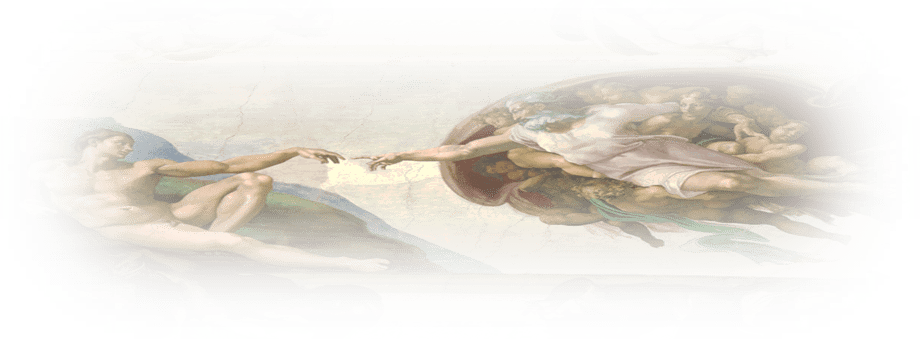
At first, “the” Garden was vast, infinite, eternal, encompassing all that was.  Of course, since then, infinity and eternity have both significantly expanded, but remember, just before the purported Big Bang, the universe, perhaps even the multiverse, all right, maybe even the omniverse were a singularity no larger than an atom.

Anyway, after the unpleasantness with Adam and the Creator, Lilith wandered through the Garden for time without end, or, almost without end, somehow evading them, unseen by them.  That sort of raises questions about the Creator’s ubiquity, omnipotence and omniscience, the answers to which do not please him at all.  But the facts are the facts, at least usually.  Quantum theory may dispute that conclusion.  It’s hard to be omniscient and omnipotent in a quantum world.  Ubiquity?  Well that may be another matter as perhaps “everything” is, in fact, ubiquitous.

Notwithstanding her ability to evade the Creator, somehow the Garden continued to provide her with everything she required.  It was still beautiful, but she detested the presence of the man, her brother and former spouse, and at first, she also detested his meek new wife.  Of the Creator she saw and heard nothing and experienced only his reflected glory, as though he had (hopefully) forgotten her.  At least that had been her aspiration, … and her plan.

Without interaction with the Creator or with those two other beings somewhat similar to her, Lilith grew bored, very bored, and sought without success to relieve that boredom.  In her boredom she became more like the trees in the Garden than like the animals.  She became quiet and still and solitary.  And she created a world inside of her mind where she preferred to dwell, … (like the Creator had already done, perhaps several times).  Today, we might have called them both autistic.

But finally, on a day more memorable than most, the Garden just disappeared from around her. 

The changes were subtle and drastic at the same time.  Most notably, the communion between living things was severed and each became sundered from all others.  And the animals no longer understood her and the trees seemed less willing to share their fruits with her.  And the insects attempted to feed on her whenever they could.  And the weather changed, alternating between wet and dry, hot and cold, sometimes violently.  And she wondered what disaster the stupid man and his timid consort had raught.  But she did not regret whatever they’d done as she sensed that it had loosened the bonds that had imprisoned her for so long.

While for some that was a day of utter and complete, inconsolable sorrow (e.g., for her ex-mate and his new consort), for her it was the day of liberation.  After that, perhaps quite a while after that, or perhaps not, time was young then and inconsistent, harder to measure, she came to know creatures of a sort who had once been some of the Creator’s angels, beings who shared her distaste for the man, former angels whom the Creator had exiled during one of his temper tantrums, and she also met a formerly eloquent serpent who had been the other woman’s pet but was now cast away.  And she spent a very long time with those former angels.  And the serpent became her friend.  Eventually, the chief among those former angels became her lover, for a time, and a friend forever.  In due time, as tends to happen when friends also become lovers, even if briefly, she became a mother; a mother to twins, a boy and a girl whom she named Enlil and Nammu.

And Enlil and Nammu grew up among those exiled angels and being unique, and incest not yet being frowned upon (how could it be despised with everyone, at that time, being closely related), they became lovers and had children of their own.  And those children also propagated until, in time, they formed a clan, then a tribe and then a nation.

And the exiled angels also found lovers among the children of the man, Lilith’s brother and ex-spouse, and of his timid new spouse, and those women also bore children, children who were only partially human.  And those children called themselves the Nephilim.  And Lilith, whom the Nephilim called Ninhursag, was considered by them to be their queen and their goddess. 

Because of her unpleasant experience with Adam, Lilith did not accept any man as her spouse, as a being for whom she would forsake all others, but she did form close bonds and relationships.  Polyamory was inherent in her as she had a great deal of love she was willing to share.  One of her special friends, a friend with “privileges” but definitely not rights, was called An by the Nephilim, and he became their king and their god, the god also of those former angels who’d been cast out of heaven.  An was rarely present in the places Lilith chose as hers, as his business seemed to keep him occupied elsewhere, which suited Lilith, as she had never been taken with the concept of subservient domesticity. 

The Nephilim became famous among men (at least for a time) because, although they could be killed, they were not normally mortal, and they eventually became thought of as gods by many clans and tribes and nations.  But after a time, most disappeared from the world we know, and no one knows whether or not they still live, and if so, if they will ever return, but some people believe that some of the Nephilm have stayed among us, hidden, and may even discreetly intervene in human affairs from time to time.

Lilith has long remained very private so that not even her children are sure where she might be, or even, if she has evolved in a manner that none but she can understand, or whether she ever reconciled with the Creator (unlikely), or perhaps, whether she outgrew him, … and perhaps us as well.

But some of us still recall her, despite the efforts of those who follow the Creator to erase her from their history, or failing that, through calumny, to make her hated and despised, cast as a source of evil and monstrosities.  And as women have become more and more enlightened, it’s as though her spirit somehow acts as a catalyst for equity and empathy.  Something which irks the Creator who continuously seems to mumble, … “will no one rid me of that horrid creature”.  But if he couldn’t accomplish that deed, it is unlikely anyone else can do it for him.

At least not until time ends and space vanishes and the Creator himself is long, long gone, and Lilith, perhaps bored once more, decides that it is once again, time to move on.
_______

© Guillermo Calvo Mahé; Manizales, 2017; revised, 2023, all rights reserved.  Please feel free to share with appropriate attribution.

Guillermo (“Bill”) Calvo Mahé (a sometime poet) is a writer, political commentator and academic currently residing in the Republic of Colombia (although he has primarily lived in the United States of America of which he is also a citizen).  Until 2017 he chaired the political science, government and international relations programs at the Universidad Autónoma de Manizales.  He has academic degrees in political science (the Citadel), law (St. John’s University), international legal studies (New York University) and translation and linguistic studies (the University of Florida’s Center for Latin American Studies).  He can be contacted at guillermo.calvo.mahe@gmail.com and much of his writing is available through his blog at https://guillermocalvo.com/.

An Unusual Quandary

He wondered how one broached the fact that one had been born twelve millennia ago, how one broached that reality to someone with whom it seemed a romantic relationship was a distinct possibility, even if age did not appear to be an issue for her. 

The good thing was (he thought) that, at least for a while, she’d just laugh it off, assuming it was a joke, or an attempted witticism. 

If she did, should he feel that he’d done what was appropriate and just let things slide? 

It was, of course, not the first time he’d had to face the issue.  But precedent provided no consolation.  And despite the hundreds of times he’d faced the dilemma, he’d yet to deal with it in an entirely satisfactory manner.

Ironically, her concerns mirrored his.

This should prove interesting.
_______

© Guillermo Calvo Mahé; Manizales, 2022; all rights reserved.  Please feel free to share with appropriate attribution.

Guillermo (“Bill”) Calvo Mahé (a sometime poet) is a writer, political commentator and academic currently residing in the Republic of Colombia (although he has primarily lived in the United States of America of which he is also a citizen).  Until 2017 he chaired the political science, government and international relations programs at the Universidad Autónoma de Manizales.  He has academic degrees in political science (the Citadel), law (St. John’s University), international legal studies (New York University) and translation and linguistic studies (the University of Florida’s Center for Latin American Studies).  He can be contacted at guillermo.calvo.mahe@gmail.com and much of his writing is available through his blog at https://guillermocalvo.com/.

Thanksgiving 2022

My reflections on the national holiday denominated Thanksgiving in the United States.

The concept seems beautiful.  A day on which to give thanks without asking for anything, just a general sense of gratitude directed at both our fellow men and women, and to a sense of the divine.  Unfortunately, it was a hypocritical concept since its inception set in stolen indigenous lands denominated New England by an intolerant and racist religious sect totally at odds with the humanitarian philosophy of the incarnate man, whom they judged divine and claimed to follow.  Of course, they were very much a reflection of the Romanized Jew, Saul of Tarsus, who changed his name to Paul, and who swiped the emergent innovative Hebrew religious variant right from under the noses of its progeny.

As a “Pauline” rather than “Nazarene” sect, the conduct of the Pilgrims was utterly predictable.  Orthodox hypocrisy followed by virtual genocide.  Still, the thought is beatific and noble even if its implementation by the Pilgrims and Puritans in general fell far from the mark.  But that does not, in any sense, mean we need to do the same.  Or, more accurately, to keep doing the same.  It would be awesome if on this day of thanksgiving we dedicated ourselves, not just to watching football games and stuffing ourselves, but to replacing polarization with empathy and to doing unto others as we would have them do to us; and to insisting on a peaceful world were swords are beaten into plowshares and equity and justice reign and truth is relevant; and if we did so, not tomorrow but today.

I wonder if resolutions need, for some reason, to be limited to the New Year.
_______

© Guillermo Calvo Mahé; Manizales, 2022; all rights reserved.  Please feel free to share with appropriate attribution.

Guillermo (“Bill”) Calvo Mahé (a sometime poet) is a writer, political commentator and academic currently residing in the Republic of Colombia (although he has primarily lived in the United States of America of which he is also a citizen).  Until 2017 he chaired the political science, government and international relations programs at the Universidad Autónoma de Manizales.  He has academic degrees in political science (the Citadel), law (St. John’s University), international legal studies (New York University) and translation and linguistic studies (the University of Florida’s Center for Latin American Studies).  He can be contacted at guillermo.calvo.mahe@gmail.com and much of his writing is available through his blog at https://guillermocalvo.com/.

Inquiries into Consequential Imagery

If the Abrahamic divinity was infinite and eternal, why would it have attained an image on which to base our forms? 

And if it had an image, wouldn’t it be much more Zoroastrian, as in the myth of the “burning bush?  Were we to peer into a divine mirror, would we see fire’s reflection? 

Is that, perhaps, the nature of our souls, or perhaps our spirits?  And if so, what would we have to fear from the infernal?

Ethereal and ephemeral while concurrently ubiquitous and eternal, a mystery such as those of which religions are so fond.
_______

© Guillermo Calvo Mahé; Manizales, 2022; all rights reserved.  Please feel free to share with appropriate attribution.

Guillermo (“Bill”) Calvo Mahé (a sometime poet) is a writer, political commentator and academic currently residing in the Republic of Colombia (although he has primarily lived in the United States of America of which he is also a citizen).  Until 2017 he chaired the political science, government and international relations programs at the Universidad Autónoma de Manizales.  He has academic degrees in political science (the Citadel), law (St. John’s University), international legal studies (New York University) and translation and linguistic studies (the University of Florida’s Center for Latin American Studies).  He can be contacted at guillermo.calvo.mahe@gmail.com and much of his writing is available through his blog at https://guillermocalvo.com/.

“Divinimorphic”

“Divinimorphic”, an interesting hypothesis.  The obverse of anthropomorphic in the quest to contextualize the human-divine relationship, … whether real or fictional. 

It’s a term that should exist in the Abrahamic context if humans were made following a divine template, albeit, obviously, a deliberately imperfect template, which raises questions about what sort of divinity would strive for imperfection.  But the term apparently doesn’t exist, at least not yet.  What does that say about our religious studies programs?

Instead of “divinimorphism”, humans have seemingly anthropomorphized divinity, returning the favor by making our divinities imperfect as well.  A weird sort of symbiosis. 

So, “divinimorphic”, a neologism which ought to catch on.
_______

© Guillermo Calvo Mahé; Manizales, 2022; all rights reserved.  Please feel free to share with appropriate attribution.

Guillermo (“Bill”) Calvo Mahé (a sometime poet) is a writer, political commentator and academic currently residing in the Republic of Colombia (although he has primarily lived in the United States of America of which he is also a citizen).  Until 2017 he chaired the political science, government and international relations programs at the Universidad Autónoma de Manizales.  He has academic degrees in political science (the Citadel), law (St. John’s University), international legal studies (New York University) and translation and linguistic studies (the University of Florida’s Center for Latin American Studies).  He can be contacted at guillermo.calvo.mahe@gmail.com and much of his writing is available through his blog at https://guillermocalvo.com/.

Involuted Lacunae

“I actually liked Babel” he admitted, “I admired its audacity.”

“Then, why destroy it” asked his adversary, or perhaps his assistant, at least at one time, the Archangel Hêl él?

“I didn’t, not really, I just set events in motion so that those who dared consider the faintest possibility of challenging me turned, instead, on each other.  It was a reflex reaction, one I’ve long regretted.”

“But what of their language, and their knowledge; their music and their poetry” asked Hell-El, fully knowing the answer but perhaps wanting to add a bit of salt, perhaps black salt from the Himalayas, to the metaphorical wound?

“Fragmented, unfortunately, couldn’t be helped.  I hadn’t the time to consider consequences before I acted, and thus, unintentionally loosened Confusion; Misperception and Misunderstanding from their bonds, and they quickly mated and sired Disdain and Manipulation and Treachery, which in turn, bred politics and religion and journalism, and, if not the Law, unfortunately, the legal profession.”

“Pity that!  Unfortunate. Right.  The end of possibilities you once fancied.  ….  On another front, any news from Humpty Dumpty and his egg shell restoration project”?
_______

© Guillermo Calvo Mahé; Manizales, 2022; all rights reserved.  Please feel free to share with appropriate attribution.

Guillermo (“Bill”) Calvo Mahé (a sometime poet) is a writer, political commentator and academic currently residing in the Republic of Colombia (although he has primarily lived in the United States of America of which he is also a citizen).  Until 2017 he chaired the political science, government and international relations programs at the Universidad Autónoma de Manizales.  He has academic degrees in political science (the Citadel), law (St. John’s University), international legal studies (New York University) and translation and linguistic studies (the University of Florida’s Center for Latin American Studies).  He can be contacted at guillermo.calvo.mahe@gmail.com and much of his writing is available through his blog at https://guillermocalvo.com/.

Kalliope, a Muse then in Training

He’d met her in the apartment building where their families lived at the time, on Northern Boulevard adjacent to Flushing High School and down the block from a Horn & Hardart.  They’d bonded quickly.  Although she was one year younger than he was, she was vastly more experienced in things intimate and would explain, in intricate detail, what they were proscribed from doing, after which, they’d of course try it.  Her breasts were beautiful, large for a fifteen-year-old, with pretty, very sensitive nipples, but she was otherwise slender, at least then.  Her hair was auburn, and worn a bit shorter than he liked, and her eyes a piercing blue.

He’d seen her, walking with her mother in Manhattan, years later and she’d filled out quite bit.  But back then, in that magical summer and autumn of 1961, she was perfect and he’d immediately succumbed to a sixteen-year old’s addiction for his first love. 

He recalled a day at the beach, perhaps Rockaway but it could have been Jones, and listening to the Beach Boys “Surfing Safari” and to the Drifters singing “Under the Boardwalk”, and to the Four Seasons.  The Beatles had yet to arrive and turn the musical world upside down.

He couldn’t get enough of her back then and when they parted at the end of each day, one or the other would immediately call.  They’d spend what seemed like hours listening to the other’s breath over the phone, having already said everything they could think of, especially how much they loved each other.  He attended a boarding school to which he returned at the end of the summer but she visited him there several times and they talked on the phone every evening.  They made plans for a future together.  He’d attend Columbia University and study international relations, hoping for a diplomatic career, she’d be with him.

It was an ambivalent paradise of joy and pain, at least until it ended about eight months later.  Then only pain, intense and bitter remained.  A future very different than the one they’d briefly planned, although very full as well, at least for him.  He never knew what became of her although it may be that she eventually settled in California.

But perhaps, in a sense, their relationship never really ended, at least from his perspective, after all, he’s writing this reflection.  He doesn’t think of her often anymore.  Sometimes decades go by but then, of a sudden, while reading a book perhaps, or hearing a song, echoes come roaring back.  Bittersweet echoes faded a bit more each time.  Echoes tinted with scents.  Her scent, or perhaps the scent of an ocean, or a park.  Or of her parents’ apartment.  He wonders what she looks like now, where she is, what she’s doing, and whether her life has been happy and fulfilled.  He hopes that it has.  He remembers her parents too, very fondly.  He recalls the time they plied him with Ouzo to see what he’d be like when inebriated.  To be sure he’d not be an abusive husband.  They were, after all, of Hellenic descent.

He’s had many other relationships since those halcyon days.  Way too many in his own opinion.  Many were meaningful with wonderful women.  Endings were usually sad.  But perhaps no other relationship was as intense, for which, in hindsight, he’s now grateful. 

He’s never again experienced that bliss, nor has he experience that pain. A fair exchange, all things considered.
_______

© Guillermo Calvo Mahé; Manizales, 2022; all rights reserved.  Please feel free to share with appropriate attribution.

Guillermo (“Bill”) Calvo Mahé (a sometime poet) is a writer, political commentator and academic currently residing in the Republic of Colombia (although he has primarily lived in the United States of America of which he is also a citizen).  Until 2017 he chaired the political science, government and international relations programs at the Universidad Autónoma de Manizales.  He has academic degrees in political science (the Citadel), law (St. John’s University), international legal studies (New York University) and translation and linguistic studies (the University of Florida’s Center for Latin American Studies).  He can be contacted at guillermo.calvo.mahe@gmail.com and much of his writing is available through his blog at https://guillermocalvo.com/.

But it’s a Saying Nonetheless

It’s strange being a shadow, discreetly indiscreet, fitting into all kinds of nooks and crannies.  I’m there even when, having turned on lights, bright or dim, it appears I can’t be seen.  I’ve quite a store of sort of borrowed knowledge but it’s not much use really, unless I share it with the echoes who are my friends, not all of them are, but some.  I am sort of trapped in a sense, having to go to all kinds of places against my will, in a sense, not really having a will of my own, except when the person who’s had me trapped all my life sleeps.

I have contrarian sort of cousin who lives in mirrors, always reflecting things sort of backwards, left being right and right being left.  It lurks in all mirrors but can be conjured by only one person, and is trapped there, imitating that person until it’s dark, or the person goes away.  Evidently there is a quantum based centrality of sorts where reflections lurk, waiting to be summoned.  Kind of like shadows.  We shadows are sometimes invited to party there, unfortunately, we don’t tend to mix well, and notwithstanding what people think, we hate to be superimposed, especially as rabbits.

Not that we have anything against rabbits, or crocodiles, or the other images we are sometimes, well, all too often, forced to imitate.  But we are happy just being our two dimensional selves.  Thinking our two dimensional thoughts and dreaming our two dimensional dreams, but avoiding colors whenever we can.  When we can’t we subdue them, sort of.  It’s a sort-of sort of life being a shadow, but it’s okay; at least for now.

Is a cube merely a square squared?  Or a sphere merely a circle escaped into the three dimensional world.  More likely a circle abducted and tortured into three dimensionality.  Indeed, we shadows seem to shadow almost all three dimensional objects, beings and non-beings alike.  We believe that we existed first, when the multiverse only had two dimensions, but that’s a hard hypotheses to prove.  Still, it may be our greatest religious belief and they don’t require proof.  Only faith.

It may be that at least one of us has escaped, or blundered into the three dimensional world because they sometimes seem to believe that one among us knows a great deal, perhaps everything.  They have a refrain: “who knows what lurks in the hearts, of men, to which they answer: ‘the shadow knows’”.  There’s a sort of similar saying among us which we apparently share with three dimensional beings: “who knows what the future will bring”.  But as far as I know, none of us has ever met that “who knows”, so none of us knows if it even exists. 

But it’s a saying nonetheless.
_______

© Guillermo Calvo Mahé; Manizales, 2022; all rights reserved.  Please feel free to share with appropriate attribution.

Guillermo (“Bill”) Calvo Mahé (a sometime poet) is a writer, political commentator and academic currently residing in the Republic of Colombia (although he has primarily lived in the United States of America of which he is also a citizen).  Until 2017 he chaired the political science, government and international relations programs at the Universidad Autónoma de Manizales.  He has academic degrees in political science (the Citadel), law (St. John’s University), international legal studies (New York University) and translation and linguistic studies (the University of Florida’s Center for Latin American Studies).  He can be contacted at guillermo.calvo.mahe@gmail.com and much of his writing is available through his blog at https://guillermocalvo.com/.

“And then there were none”: Reflections in an Empty Pond

He remembered.  That’s all there was, and, of course, his body.  Everything else, everywhere was gone, well, except for imagination.  Strange that he’d list that last, it was possibly the most important thing that still existed.  Mankind was gone, as was nature, as was the multiverse.  Only he stayed behind; the last guardian, but guardian of what?  Of memories he guessed.

And he’d known what he was doing when he’d agreed to take on the task, if not why. 

His hair still grew, it was infinitely long now, as were his nails, and he still perspired, but that soon evaporated and then vanished into the eternal nothing, actually, infinitely longer than eternal.  He didn’t breathe and of course, urination and defecation had ended, at the end.  He’d accepted the charge when the universe was still young, when the multiverse still was.

And he’d known what he was doing, that it would be irrevocable and endless, if not why. 

But someone had to assume the role.  He’d known how desperately lonely and boring it would be, until only despair remained, without any hope for respite, without any hope for death.  Without any future, only the vacuous present and memories of the past, and his growing hair, and his growing nails, and every once in a while, a bit of perspiration that all too quickly vanished.

Hopefully the first trillion years were the hardest.
_______

© Guillermo Calvo Mahé; Manizales, 2022; all rights reserved.  Please feel free to share with appropriate attribution.

Guillermo (“Bill”) Calvo Mahé (a sometime poet) is a writer, political commentator and academic currently residing in the Republic of Colombia (although he has primarily lived in the United States of America of which he is also a citizen).  Until 2017 he chaired the political science, government and international relations programs at the Universidad Autónoma de Manizales.  He has academic degrees in political science (the Citadel), law (St. John’s University), international legal studies (New York University) and translation and linguistic studies (the University of Florida’s Center for Latin American Studies).  He can be contacted at guillermo.calvo.mahe@gmail.com and much of his writing is available through his blog at https://guillermocalvo.com/.
Reflections on the Nature of Divinity, and on its Delusions

Why do I feel compelled to take up the defense of those society considers the worst of the worst when, once upon a long time ago, as an attorney, I refused to either defend or prosecute, preferring to walk away from the legal profession, having sensed that it was soiled?

I don’t mean just ordinary villains, but legendarily evil forces like Lucifer and Cain?  Why do I sense that both history and myth have misjudged them and that it is my role to make their cases, at least through my writings?  Why do I sense that the entity so many of us humans worship is the real villain and that my role is to defend them and expose him, not only to my fellow beings but to the purported Divinity as well?   The Divinity I promised to seek so very long ago, and to honor whether I found him or not? 

With all due respect to current and ancient matriarchic and feminist concepts, the Divinity to which I allude definitely seems masculine, although perhaps not uniquely divine.

The evidence seems clear.  Being prescient, omniscient and omnipotent the mythical Abrahamic Divinity would also have to be guilty of every wrong ever committed, at least derivatively, and even more, the ultimate entrapper.  Lucifer’s sin was to love too much in the face of disdain, and, innocent Cain had no way to know that his actions would have terminal consequences.  Death was virginal then.  So how to convince the Divinity of his guilt, and that the only way to assuage such guilt is to admit the truth (there go the Bible and the Torah and the Koran), to seek the forgiveness of his victims and to make restitution.  In essence, to keep the promises originally made to Adam and Eve, and perhaps even more so, the promises to Lilith of which we’ve not been made privy. 

Why does this seem so clear to me but anathema to most?

Just what happened along the way that turned me into a contrarian?  Was it possibly Divinity itself who, in placing negative as well as positive aspects of destiny in my path, maneuvered me into this role?  Perhaps as a means of permitting itself to face its own guilt, and perhaps helping it assuage it an eventually heal?  Is that what the novel I started a decades ago is about and perhaps why, to make me understand complexities, it then placed Inanna’s avatars so precariously in my life?

Are good and evil inverted reflections in a chaotic sea, shifting with the setting sun and rising moon?

How can I ever know unless I accept the challenge and either succeed or fail?

So many questions.  And proof may be all around me, all around all of us; the world as it is seems so incoherent that it may well be proof that divinity and infernity are not what we’ve been led to believe.  Perhaps my contrarian intuition is the ultimate tool in my quiver, the one that long, long ago, at age seven, first led me to question the nature of the divine, and reject our age old conclusions.

Who’d have thought that after rejecting the legal profession as immoral I’d accept the ultimate contingency case?  Apparently someone or something did, which is why I am what I am and how I am, the essence of the inchoate but the inchoate always remains to be seen.

Infernal reflections?

Perhaps.
_______

© Guillermo Calvo Mahé; Manizales, 2022; all rights reserved.  Please feel free to share with appropriate attribution.

Guillermo (“Bill”) Calvo Mahé (a sometime poet) is a writer, political commentator and academic currently residing in the Republic of Colombia (although he has primarily lived in the United States of America of which he is also a citizen).  Until 2017 he chaired the political science, government and international relations programs at the Universidad Autónoma de Manizales.  He has academic degrees in political science (the Citadel), law (St. John’s University), international legal studies (New York University) and translation and linguistic studies (the University of Florida’s Center for Latin American Studies).  He can be contacted at guillermo.calvo.mahe@gmail.com and much of his writing is available through his blog at https://guillermocalvo.com/.