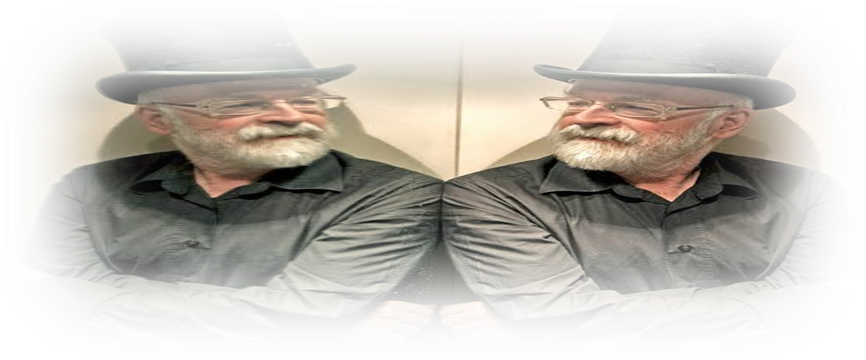
Remembering the Seventies

The 1970’s: Eastern Military Academy, the faculty and Susan, they say you can never go back but I did, and it’s never left me, except for Susan.  Or did I leave her? St. John’s University, the School of Law and Joan Aceste and Joyce Raskin and June Callwood, fantasies and friends, Mario Cuomo and hard work, success, and regrets.  Always regrets as time marches on.  The Graduate Division of the New York University School of Law, awakening and Helene Alba; the world opening up to teach me how wrong I’d too often been and would be again.  The New York State Assembly and then, Kaufmann and Feit and Vickie Forest. All things I should have kept but let go.

What an awesome decade, perhaps the most challenging and happiest of my life; until the eighties and my three sons, Billy, Alex and Edward. 

What a full life it’s been, and what a full life it is, even if it’s consistently taken a turn towards the dark side.

But the seventies were special, full of optimism and certainty, even if it was misplaced.
_____

© Guillermo Calvo Mahé; Manizales, 2026; all rights reserved.  Please feel free to share with appropriate attribution.

Guillermo (“Bill”) Calvo Mahé (a sometime poet and aspiring empirical philosopher) is a writer, political commentator and academic currently residing in the Republic of Colombia (although he has primarily lived in the United States of America of which he is also a citizen). Until 2017 he chaired the political science, government and international relations programs at the Universidad Autónoma de Manizales. Previously, he chaired the social studies and foreign language departments at the Eastern Military Academy in Huntington, New York. He is currently the publisher of the Inannite Review available at Substack.com; an intermittent commentator on radio and television in both Colombia and abroad; and, an occasional contributor to diverse periodicals and publications. He has academic degrees in political science (BA, The Citadel, the Military College of South Carolina), law (JD, St. John’s University, School of Law), international legal studies (LL.M, the Graduate Division of the New York University School of Law) and translation and linguistic studies (GCTS, the University of Florida’s Center for Latin American Studies). However, he is also fascinated by mythology, religion, physics, astronomy and mathematics, especially with matters related to quanta, cosmology and cosmogony. He can be contacted at guillermo.calvo.mahe@gmail.com and much of his writing is available through his blog at https://guillermocalvo.com/.

Reflexiones sobre reflexiones

«Ve’betarayin yehon qadmayin ve’qadmayin betarayin» («הָרִאשׁוֹנִים יִהְיוּ אַחֲרוֹנִים וְהָאַחֲרוֹנִים – רִאשׁוֹנִים» en hebreo); la primera frase estaba en arameo.  «Los primeros serán los últimos y los últimos serán los primeros», según se dice, eso proclamó Jesús —o más exactamente, Yešu—. Pero ¿qué hay de los que están entre esos dos polos? ¿Existirá una relación inversa en toda la escala? ¿Y qué decir de los que ocupan el centro: los insípidos, los tibios o casi fríos, aquellos que, buscando mantener abiertas todas las opciones, se niegan a tomar partido? ¿Dónde se situarán y cuándo?

Por supuesto, están los hipócritas, los mentirosos, los manipuladores; aquellos que adoptan una postura sin intención alguna de actuar en consecuencia y que, de hecho, a menudo actúan de manera totalmente opuesta a lo que dicen defender. Suelen congregarse en la política, el derecho, el periodismo y entre el clero.

Hay quienes consideran que los que están en el medio son los peores de todos: los cobardes, los cómplices. Claro que en ese punto intermedio hay diversas variantes, y tal vez distintos olores. La ambivalencia. ¿En qué se diferencia de la indecisión? ¿O de la apatía? ¿Y cuál podría ser la relación entre la apatía y lo patético?

Hay quienes afirman que «es mejor haber amado y perdido que no nunca haber amado». ¿Cómo se traduce esto conceptualmente en el caso de quienes expresan su opinión y resultan estar equivocados, frente a aquellos que, por miedo a equivocarse, nunca opinan?

¿Dónde te situarías tú?

Es solo una pregunta.

Se atribuye a Albert Einstein la siguiente frase: «El mundo es un lugar peligroso para vivir, no por causa de los malvados, sino por aquellos que no hacen nada al respecto».

Me pregunto qué diría Yešu.
_______

© Guillermo Calvo Mahé; Manizales, 2026; todos derechos reservados.  Permiso para compartir con atribución.

Guillermo Calvo Mahé es escritor, comentarista, analista político y académico residente en la República de Colombia. Aspira ser poeta y filósofo empírico y a veces se lo cree.  Hasta el 2017 coordinaba los programas de Ciencia Política, Gobierno y Relaciones Internacionales de la Universidad Autónoma de Manizales. En la actualidad, participa en entrevistas radiales y televisadas, foros, seminarios y congresos cívicos tabto en Colombia como en el exterior y edita y publica la revista virtual, The Inannite Review disponible en Substack.com/.  Tiene títulos académicos en ciencias políticas (del Citadel, la universidad militar de la Carolina del Sur), derecho (de la St. John’s University en la ciudad de Nueva York), estudios jurídicos internacionales (de la facultad posgrado de derecho de la New York University) y estudios posgrado de lingüística y traducción (del Centro de Estudios Latinoamericanos de la Universidad de la Florida).  Sin embargo, también es fascinado por la mitología, la religión, la física, la astronomía y las matemáticas, especialmente en lo relacionado con lo cuántico y la cosmogonía.  Puede ser contactado en guillermo.calvo.mahe@gmail.com y gran parte de su escritura está disponible a través de su blog en https://guillermocalvo.com/.

Reflections on Reflecting

“Ve’betarayin yehon qadmayin ve’qadmayin betarayin” (“הָרִאשׁוֹנִים יִהְיוּ אַחֲרוֹנִים וְהָאַחֲרוֹנִים – רִאשׁוֹנִים” in Hebrew), the first was in Aramaic. 

“The first shall be last and the last shall be first” Jesus, more accurately Yešu, is reported to have declaimed.  But, what about those in between?  Will there be an inverse relationship all the way through?  And what of those in the middle, the bland, the lukewarm or almost cool, those who, seeking to keep all options open, refuse to take a stand.  Where will they stand and when?

Of course, there are the hypocrites, the liars, the manipulators, those who take a stand with no intention of acting on it, indeed, who frequently act in a manner totally opposed to that they claim to espouse.  They tend to congregate in politics, and law, and journalism, and among the clergy.

There are those who feel that those in the middle are the worst of all, the cowardly, the enablers.  Of course, there are a number of flavors in the middle, and perhaps odors.  Ambivalence. How different is it than indecision?  Or apathy?  And what might the relationship between apathy and pathetic be?

There are those who assert that “it is better to have loved and lost than never to have loved at all”.  How does that translate in the context of those who opine and turn out to have been wrong versus those, who, fearing to be wrong, never opine at all?

Where would you place yourself? 

Just asking.

Albert Einstein is credited with saying: “The world is a dangerous place to live, not because of the people who are evil, but because of the people who don’t do anything about it.”

I wonder what Yešu would say?
_____

© Guillermo Calvo Mahé; Manizales, 2026; all rights reserved.  Please feel free to share with appropriate attribution.

Guillermo (“Bill”) Calvo Mahé (a sometime poet and aspiring empirical philosopher) is a writer, political commentator and academic currently residing in the Republic of Colombia (although he has primarily lived in the United States of America of which he is also a citizen). Until 2017 he chaired the political science, government and international relations programs at the Universidad Autónoma de Manizales. Previously, he chaired the social studies and foreign language departments at the Eastern Military Academy in Huntington, New York. He is currently the publisher of the Inannite Review available at Substack.com; an intermittent commentator on radio and television in both Colombia and abroad; and, an occasional contributor to diverse periodicals and publications. He has academic degrees in political science (BA, The Citadel, the Military College of South Carolina), law (JD, St. John’s University, School of Law), international legal studies (LL.M, the Graduate Division of the New York University School of Law) and translation and linguistic studies (GCTS, the University of Florida’s Center for Latin American Studies). However, he is also fascinated by mythology, religion, physics, astronomy and mathematics, especially with matters related to quanta, cosmology and cosmogony. He can be contacted at guillermo.calvo.mahe@gmail.com and much of his writing is available through his blog at https://guillermocalvo.com/.
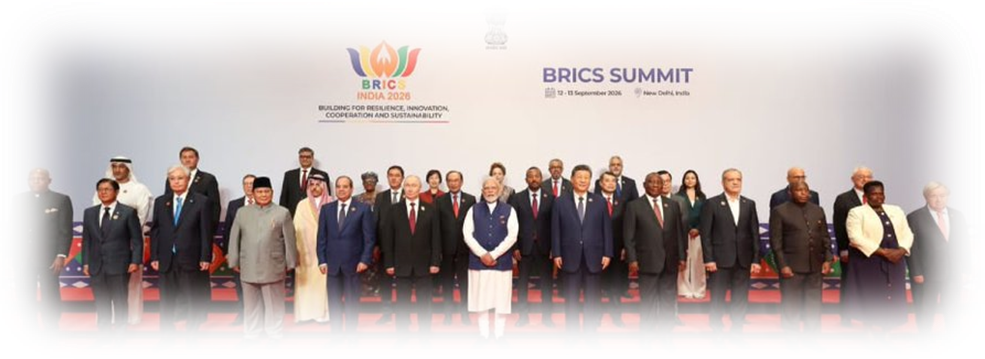
Very Brief Reflections on the 2026 BRICS Summit Held in Bharat Mandapam in Pragati Maidan, New Delhi, India on the 12th and 13th of September

During September 12th and 13th of this year I had the privilege of participating in a brief forum conducted by India’s NewsX World on the 2026 BRICS Summit, as it was taking place, and of interacting with senior military, judicial and diplomatic personnel from various countries, including the Peoples’ Republic of China, The Union of South Africa and, of course the Republic of India.  It was a very rewarding experience.  The following are some of my observations on the summit, and its results.

Prime Minister Narendra Modi did a masterful job of balancing diverse interests and perspectives including those of three countries in active military confrontations, Saudi Arabia, the United Arab Emirates and Iran, as well as beautifully dealing with endemic border friction between the host country, India, which currently holds the presidency of the BRICS, and the Peoples’ Republic of China which will assume the presidency during 2027.  It seemed that Mr. Modi and Chinese President Xi were carefully laying the groundwork for strategic continuity among the BRICS community, a very welcome attitude. 

The Unanimous Joint Resolution addressed numerous critical issues, including many down to earth pragmatic projects that touch the everyday lives of their citizens in areas involving health, livelihood, culture and human rights.  There had been concerns that the increased membership of the BRICS, now comprising eleven full members: Brazil, Russia, India, China, South Africa, Egypt, Ethiopia, Iran, Indonesia, and the UAE; alongside ten partner nations, Belarus, Bolivia, Cuba, Kazakhstan, Malaysia, Nigeria, Thailand, Uganda, Uzbekistan and Vietnam, would render consensus unlikely and consensus is required because, unlike the European Union or the United Nations, unanimity is the rule, sovereignty and equality being a pillar of the group.  Of course, there was another possibility, that a forum more democratic and inclusive than that provided by the United Nations Security Council could, even if with divergent interests and goals, through compromise, consensus and real diplomacy among equals, attain social, political and economic objectives that have alluded older and more structured institutions, institutions where oligarchical constraints limit productive long term solutions.  Seemingly, at least for now, the latter succeeded thanks to the collaborative efforts of Prime Minister Narendra Modi and Presidents Vladimir Putin and Xi Jinping.

On the issue of dedolarization, the Indian perspective prevailed, perhaps because the European Union’s experience with the Euro has made BRICS members unwilling to follow suit, sovereignty in the European Union having become passé at best, but also because of two other important factors: first, India’s unwillingness to antagonize the United States, something with which a number of other members and partner nations concur, especially Saudi Arabia, the United Arab Emirates and now Bolivia; and secondly, because the BRICS countries have developed and are in the process of expanding fiscal solutions to the abuse of the United States dollar as the principal international means of exchange.  Chief among such emerging modalities are BRICS Pay, central bank digital currency proposals and, bilateral agreements such as those in place between the Russian Federation and the Peoples’ Republic of China as well as Iran and, the New Development Bank.

  • BRICS Pay is a collaborative cross-border payment system developed by the BRICS economic bloc to facilitate transactions using local national currencies while bypassing the U.S. dollar and Western-dominated networks like SWIFT.  BRICS Pay functions as a cloud-based connector linking national payment systems (such as Brazil’s Pix or China’s CIPS) enabling retail (QR code-based) and business to business transactions directly in member currencies, removing the need for a U.S. dollar intermediary.
  • Central bank digital currency proposals, under the leadership of India, seek to connect central bank digital currencies for smoother, dollar-independent cross-border tourism and trade settlements using blockchain technologies.  The plan focuses on connecting existing national fast payment systems and sovereign digital currencies rather than creating a new single currency union. The initiative builds on the 2025 Rio de Janeiro declaration which encouraged efficient and interoperable cross-border payment mechanisms within the bloc in order to lower transaction fees and bypass multiple intermediary banks for businesses, exporters, and travelers.
  • The BRICS New Development Bank already provides an alternative (albeit limited by capital constraints) for emerging and developing economies to the abusive controls imposed on loans through the United States controlled World Bank and International Monetary Fund.  It aims to fund infrastructure and sustainable development across emerging economies, positioning its future around local currency financing, digital asset integration and expanded cooperation among diverse economic states of development.  To date, the New Development Bank has provided alternative financing options for development projects across the Global South, having funded close to 100 projects totaling over $32 billion.  It is currently primarily funded by the Peoples’ Republic of China but new members Saudi Arabia and the United Arab Emirates could, should they chose to do so, vastly increase its current capitalization.  An interesting indirect aspect of the existence and potential evolution of the New Development Bank may be the leverage it provides the BRICS with respect to making control over the World Bank and International Monetary Fund more democratic and their operations less intrusive, one of the goals set forth in the Joint Resolution.

Other very pragmatic proposals I found intriguing include the BRICS Global Value Chains Action Plan 2026–2030, an invoice discounting mechanism for trade finance; a dedicated micro, small, and medium enterprise digital platform launched by India during 2026 to connect users with access to knowledge, finance, and international markets; and, a micro, small, and medium enterprise cooperation portal and a startup innovation fund.  However. to me, the most important aspect was the call to resurrect international law, virtually assassinated by Israel and the United States, and to reform major international institutions such as the United Nations, the World Trade Organization, the International Monetary Fund which have never met the needs of the vast majority of the world’s population (almost half of which resides in BRICS member nations), but have instead, represented oligarchic interests interested in looting the less developed world and maintaining traditional privileges. 

The article by Pepe Escobar accessible through the following link shared below provides other interesting (although perhaps less optimistic) perspectives on what was a very important and well attended summit: https://geopoliticsprime.substack.com/p/history-on-a-roll-brics-yemen-hormuz?r=lwzkv&utm_campaign=post&utm_medium=web. It is worth reading.
_____

© Guillermo Calvo Mahé; Manizales, 2026; all rights reserved.  Please feel free to share with appropriate attribution. Guillermo (“Bill”) Calvo Mahé (a sometime poet and aspiring empirical philosopher) is a writer, political commentator and academic currently residing in the Republic of Colombia (although he has primarily lived in the United States of America of which he is also a citizen). Until 2017 he chaired the political science, government and international relations programs at the Universidad Autónoma de Manizales. Previously, he chaired the social studies and foreign language departments at the Eastern Military Academy in Huntington, New York. He is currently the publisher of the Inannite Review available at Substack.com; an intermittent commentator on radio and television in both Colombia and abroad; and, an occasional contributor to diverse periodicals and publications. He has academic degrees in political science (BA, The Citadel, the Military College of South Carolina), law (JD, St. John’s University, School of Law), international legal studies (LL.M, the Graduate Division of the New York University School of Law) and translation and linguistic studies (GCTS, the University of Florida’s Center for Latin American Studies). However, he is also fascinated by mythology, religion, physics, astronomy and mathematics, especially with matters related to quanta, cosmology and cosmogony. He can be contacted at guillermo.calvo.mahe@gmail.com and much of his writing is available through his blog at https://guillermocalvo.com/.
Nihilistic Pessimism

Lugubriously lethargic lassitude is the art form the legacy media has perfected on behalf of its masters to keep us from realizing what has happened to the world we hoped to leave as a legacy for our descendants, the world we thought we’d be able to glimpse and, at times enjoy, the world we were promised if we would just work hard and behave.

It is the hopeless state that assails us when we seek to exercise our political duties and go to the polls with no real choice at all, all the available candidates having already been bought and paid for with our money but certainly not for our benefit.

It is the residue we’re left with when those who own and control us abuse us, and we’re left without recourse in the face of their immune impunity.

It is our reaction when we are forced to realize that Jeffrey Epsteins rule our world through their bought and paid for proxies and that we can, at best, sit and watch as children are abused and Palestinians are slaughtered for fun and profit, hoping that the vision of German Lutheran pastor Martin Niemöller’s “First They Came” will not apply to us, at least not in the near future.

It is what being inside a societal black hole’s event horizon feels like for those not among the Chosen.  It is what being aware feels like in the Dystopia we live in, one where we sometimes envy those blissfully unaware among us, those who make it possible.  It is what we feel when we’ve come to realize that the metaphorical sign atop the gates of mythic Hell joyfully proclaiming the death of hope already apply to us.
_____

© Guillermo Calvo Mahé; Manizales, 2026; all rights reserved.  Please feel free to share with appropriate attribution.

Guillermo (“Bill”) Calvo Mahé (a sometime poet and aspiring empirical philosopher) is a writer, political commentator and academic currently residing in the Republic of Colombia (although he has primarily lived in the United States of America of which he is also a citizen). Until 2017 he chaired the political science, government and international relations programs at the Universidad Autónoma de Manizales. Previously, he chaired the social studies and foreign language departments at the Eastern Military Academy in Huntington, New York. He is currently the publisher of the Inannite Review available at Substack.com; an intermittent commentator on radio and television; and, an occasional contributor to diverse periodicals and publications. He has academic degrees in political science (BA, The Citadel, the Military College of South Carolina), law (JD, St. John’s University, School of Law), international legal studies (LL.M, the Graduate Division of the New York University School of Law) and translation and linguistic studies (GCTS, the University of Florida’s Center for Latin American Studies). However, he is also fascinated by mythology, religion, physics, astronomy and mathematics, especially with matters related to quanta, cosmology and cosmogony. He can be contacted at guillermo.calvo.mahe@gmail.com and much of his writing is available through his blog at https://guillermocalvo.com/.
Reflections on Dodger and the Late, Great, Sir Terry Pratchett

I’m reading Dodger, a sort of historical novel by Terry Pratchett, well, “Sir” Terry Pratchett, “the late” Sir Terry Pratchett.  I’m very fond of the author and his many novels and Dodger has many of the elements I most like in a novel: real historical characters, albeit in fictional settings, at least in part, although perhaps the most important parts; and, a protagonist that I find beguiling, whether or not I identify with him.  But so far Dodger has not dazzled me as it has the reviewers, may Sir Terry’s soul forgive me.

In part that’s because, as I do with all of Sir Terry’s novels, especially now that he is unlikely to write any more, I am stretching it out as long as I can and it may be that, because of that, it has not caught fire for me, and, at any rate, there are still over seventy pages to go, but, it feels contrived to me.  It involves a genre different than the one I associate with Pratchett novels and lacks the savage wit and comedy that usually generates a bit of uncontainable laughter, laughter of the out-loud variant, which makes it seem strange (although had it been written by another author, perhaps that reflection would not stand out as much).  But then again, I love historical novels of all kinds and by many different authors and most are not usually funny. 

I enjoy philosophical interventions in novels, interventions that lead me to reflect on the human condition and on my personal condition, and that aspect is seemingly present but for some reason it doesn’t resonate, at least not for me.  I don’t quite know why.  I thought, for an instant, that perhaps I was just angry at Sir Terry for having proven to be mortal and having left us (after all, he was born two years after I was) but that was just an excuse I made up.  I’m concurrently reading and enjoying a number of his other novels (Going Postal comes to mind). Actually, in some cases I’m rereading novels I first read decades ago.  Actually, some, half a century ago, when Terry Pratchett was both alive and a commoner, before he became first Sir Terry and then, the late Sir Terry. 

Of course, I’ve changed during those decades.  During that more than half century.  And not just once or twice and not slightly, but seemingly totally at times (several times).  And the current version of me does not enjoy things other versions loved (such as Robert Heinlein’s writing style).  I still love Terry Pratchett’s and I really enjoyed his collaborations with Neil Gaiman but Dodger has, so far, inexplicably fallen flat, at least for me, if not for the critics.  Then again, critics frequently panned Terry Pratchett’s novels, at least before he became Sir Terry, as they pan many works of literature, cinema and what was once the silver screen that I thoroughly enjoy (the older Star Trek series are examples (ntil Voyager and the change in focus that followed, which the critics loved).  

Well, I still have a bit over seventy pages to go and, who knows, perhaps suddenly in those seventy pages it will all come together for me.  An epiphany of sorts.  At any rate, for now, my apologies to Terry Pratchett and to Sir Terry, and to his ghost (who is most assuredly reading my writing and laughing, although perhaps not for the reasons I would most appreciate).

Interesting though that I decided to write this “reflection” before I finished Dodger leaving both me and the late, great, Sir Terry Pratchett somewhat of an “out”.  I think he would at least have chuckled at that.
_____

© Guillermo Calvo Mahé; Manizales, 2026; all rights reserved.  Please feel free to share with appropriate attribution.

Guillermo (“Bill”) Calvo Mahé (a sometime poet and aspiring empirical philosopher) is a writer, political commentator and academic currently residing in the Republic of Colombia (although he has primarily lived in the United States of America of which he is also a citizen). Until 2017 he chaired the political science, government and international relations programs at the Universidad Autónoma de Manizales. Previously, he chaired the social studies and foreign language departments at the Eastern Military Academy in Huntington, New York. He is currently the publisher of the Inannite Review available at Substack.com; an intermittent commentator on radio and television; and, an occasional contributor to diverse periodicals and publications. He has academic degrees in political science (BA, The Citadel, the Military College of South Carolina), law (JD, St. John’s University, School of Law), international legal studies (LL.M, the Graduate Division of the New York University School of Law) and translation and linguistic studies (GCTS, the University of Florida’s Center for Latin American Studies). However, he is also fascinated by mythology, religion, physics, astronomy and mathematics, especially with matters related to quanta, cosmology and cosmogony. He can be contacted at guillermo.calvo.mahe@gmail.com and much of his writing is available through his blog at https://guillermocalvo.com/.