In terms of political organizations, the concepts of “conservative”, “liberal”, “progressive”, “left”, right” and “center” no longer have any real meaning. Their meaning and context have been vacuumed, distorted and destroyed by those in charge of perpetrating and perpetuating lies and disinformation, the corporate media, faux historians, controlled academia and those who control the Internet (including both social media and search engines where algorithms rule). Such terms are now merely tools to polarize us, to divide us and to make us easier to control.
Two relevant opposing concepts do however exist: state-ism and populism.
Statists include an ironic amalgam of those who honestly believe that current governments are beneficent and the answer to all our social, economic and political problems with cynical deep state operatives who see the state as the ideal tool to control us and through such control, to extract ever increasing profits for the billionaire class. The latter is comprised of moles buried throughout the bureaucracy, the judiciary and the media who assure that government works to perpetuate the worst among us in power while keeping the bulk of us safely divided.
Populists are an amalgam from diverse, frequently opposing sociopolitical perspectives who share a belief that the institutions of government have been perverted and thus oppose them. In general, they share beliefs in real democracy and real liberty but acknowledge that such concepts do not currently exist. Populists comprise the vast majority but have permitted statist to maintain them divided into opposing camps based on the fake labels listed above, i.e.: “conservative”, “liberal”, “progressive”, “left”, right” and “center”, which populists take seriously. The labels are institutionally fake but contextually relevant. The differences exist for populists but the reality is that far more unites each sector of the populist political spectrum than that which divides them. Something that statists seek to obfuscate at all costs because, should populists attain their common interests and often complimentary goals, the statist empire could be destroyed and the dreams of equity, relative equality, justice and peaceful coexistence might become realities.
Statists use divisive emotions to maintain dictatorial control: what were once known as “wedge issues” which keep populists at each others’ throats. Issues like abortion and gun control and immigration, and they distort sociocultural divisions like gender, sexual orientation, race, nationality and religion keeping real problems festering because as long as they remain unresolved, populists can be kept from uniting. And, of course, the most cynical and thus most effective statists in the United States are today found in the Democratic Party and among the traditionalist wing of the Republican Party, and in the United Kingdom, in the once populist Labour Party and in the Conservative Party, in each case, merely virtually identical two-headed-Hydrae.
In the meantime, Hillary Clinton and her groupies try to re-seize control of the Democratic Party from a dazed and confused Joe Biden so that she can have one more chance to be the first female president while the Obama camp keeps pulling tangled strings behind the scenes to deflect her aspirations but is itself confused as to whether Michele or “AG” (his real name is Eric but he can’t let us forget he was once the Attorney General) Holder should replace their inept current figurehead, and Donald Trump keeps smirking and holding massive rallies while we ignore that three decent people are seeking to lead us out of the Deep State wilderness: Robert F. Kennedy, Jr., Jill Stein and Cornell West, PhD.
And the rich keep getting richer, the poor, poorer, the economic center keeps shrinking and people keep dying massively in elective and genocidal wars while defense industry dividends soar and the corporate media shouts:
“Nothing here to see! Move along!!! Turn the page!!! Or else!!!”
Guillermo (“Bill”) Calvo Mahé (a sometime poet) is a writer, political commentator and academic currently residing in the Republic of Colombia (although he has primarily lived in the United States of America of which he is also a citizen). Until 2017 he chaired the political science, government and international relations programs at the Universidad Autónoma de Manizales. Previously, he chaired the social studies and foreign language departments at the Eastern Military Academy in Huntington, New York. He is currently the publisher of the Inannite Review available at Substack.com; an intermittent commentator on radio and television; and, an occasional contributor to diverse periodicals and publications. He has academic degrees in political science (BA, the Citadel, the Military College of South Carolina), law (JD, St. John’s University, School of Law), international legal studies (LL.M, the Graduate Division of the New York University School of Law) and translation and linguistic studies (GCTS, the University of Florida’s Center for Latin American Studies). However, he is also fascinated by mythology, religion, physics, astronomy and mathematics, especially with matters related to quanta, cosmology and cosmogony. He can be contacted at guillermo.calvo.mahe@gmail.com and much of his writing is available through his blog at https://guillermocalvo.com/.
African Americans were brought in chains to the Americas where for centuries they were forced to serve as slaves and, in a political sense that has not changed. After the purported emancipation of American slaves they’ve permitted themselves to remain in political slavery, first to the Grand Old Party and now, for almost a century, to the party that sought to keep them enslaved, the Democratic Party. In part that’s because American slaves, unlike the slaves in Haiti, did not free themselves. Haiti can hardly be qualified as a success but it’s version of Simon Bolívar and José Francisco de San Martín y Matorras and yes, George Washington, Toussaint Louverture should be an inspiration to all descendants of Africans stolen from their own lands and forced into slavery. Abraham Lincoln should not.
American slaves were emancipated only through a cynical ploy by Abraham Lincoln, a racist who believed African Americans could never coexist with whites and should all be expelled from the Union he loved. A cynical racist who believed that African Americans should never have political rights in the United States of America. American slaves were emancipated, not to enjoy the fruits of freedom and the ability to attain their highest potential, as individuals and as a race, but rather, to preserve the Union and to lower the cost of labor for Northern factory owners thriving as the industrial revolution permitted the evolution of what became known as the “gilded age” in the United States.
Slaves in the United States were emancipated, not because slavery was considered an intolerable evil, but because victory in the Civil War was essential for Northern industrialists to realize their dream of an American Empire. They were emancipated only to dissuade the United Kingdom and France from supporting the Confederacy’s aspirations for independence. In fact, when they were initially purportedly emancipated during the Civil War, they were emancipated only in the Confederacy over which the Union lacked legal jurisdiction but remained enslaved in the Union itself. That seems ironic based on how history has been taught in the United States for the past century but anyone can read Lincoln’s initial inaugural address where he said (and anyone can verify it on Google): “I have no purpose, directly or indirectly, to interfere with the institution of slavery in the States where it exists. I believe I have no lawful right to do so, and I have no inclination to do so.”
The fact that Americans of African descent were emancipated by cynical whites by no means implies that there have not been brilliant, ethical and visionary leaders of African descent in the United States, leaders, for example, like Frederick Douglas or Marcus Garvey or Malcolm Little (later known as el-Hajj Malik el-Shabazz and finally as Malcolm X) or Martin Luther King, Jr., leaders who believed that Americans of African descent should break the bonds of political slavery that prevented them from attaining the role in American society to which their numbers and their talents should have entitled them. Indeed, as of 2019, there were a total of 255 different African American led groups in the United States that avocated for African American political independence. But the old overseer system that controlled African Americans during their days as slaves, the system of treacherous African American overseers who betrayed their brothers and sisters, never ended. It just morphed into a system controlled and funded by people of all races that sees African Americans as a commodity to be controlled and used, especially in the political arena where African Americans can be herded into a monolithic voting bloc that serves its masters rather than its members just as slaves enriched plantation owners while they were maintained at barely subsistence levels. A system run by modern overseers like Barack Obama and Kamala Harris and Hakeem Sekou Jeffries and Charles Diggs and Charley Rangel and Kweisi Mfume and Shirley Chisholm and Louis Stokes and William L. Clay. Heroes to African Americans because some among them participated in apparently successful battles for desegregation and civil rights but whose principal loyalties were and are to the white led, power mad, ill-named Democratic Party.
The Democratic Party is a strange amalgam of disenfranchised minorities and fringe groups without common bonds other than their deluded acquiescence in their own continuous betrayal, especially since the ascension of the Clintons to political power in 1992. The party’s principal strategy is the use of polarization to goad their betrayed supporters to maintain them in power so that the party can, in turn, serve its real masters: the billionaire class, Wall Street, trial lawyers, but most of all, the military industrial complex. It seems amazing, especially with reference to African Americans, how successful condescending platitudes, backslapping and utter hypocrisy have been in keeping their voters in line even when, as in case of the Clintons, they are devastatingly betrayed. Witness the Clintons (two for the price of one) deformations of the criminal justice and welfare systems that devastated the African American community. But that’s exactly what overseers are for. What they’ve always been for.
The reality is that Black Power is an inchoate reality, as is the power of each and every component of the incoherent alliance that conforms the modern Democratic Party, but a reality that will only be realized when such groups are emancipated from political slavery and attain their own political power through their own political parties under leaders loyal to their constituencies rather than to the hidden leaders of what has come to be known as the Deep State. Shifting from one component of the political duopoly that has ruled the United States since the Civil War to the other is meaningless. Only a multiparty system embracing real democracy rather than its verisimilitude can bring about a real American Dream, a society where every American citizen can attain his or her own greatest personal potential, for their own benefit, and where overseers are consigned to the Hell they deserve.
Of course, the United States constitutional system at all levels, as implemented by legislation, regulations, rules, ordinances, decree and judicial decisions, poses a huge impediment to political emancipation and democracy. It was designed by slaveholders precisely for such purpose, with the seductive illusions of democracy, liberty and opportunity for all held out like a carrot, but the carrot has always been a mere mirage and only the stick has been real.
It’s not as though African American political parties don’t exist. Cornell West, PhD, a brilliant American philosopher of African descent is running for president during this electoral cycle, although the Democratic Party is doing all it can to keep him off the ballot in November, and the following are an illustrative listing of current African American political parties in the United States: the African People’s Socialist Party, the All-African People’s Revolutionary Party, the Black Hammer Party, the Black Panther Party, the Black Riders Liberation Party, the Freedom Now Party, the Harold Washington Party, the New Afrikan Black Panther Party, the New Black Panther Party, the Progressive Democratic Party, the Revolutionary Action Movement, the Revolutionary Black Panther Party, the Umoja Party and the United Citizens Party. However, they are singularly unsuccessful because the overseers appointed by the Democratic Party (and its allies in the corporate media) keep them virtually unknown.
African American voters bear a terrible stigma as a result of the homogeneous manner in which a majority have voted over the decades. They tend to be the balance of power in American politics and have been so since they were formally granted the rights of citizens pursuant to the thirteenth fourteenth and fifteen amendments to the United States Constitution following the Civil War. In reality, although they’ve derived few tangible benefits as a result of their political subservience, they’ve been responsible for the election of the administrations responsible for World War II, the Korean War, the Vietnam War, the wars on Serbia and Kosovo, the destruction of Libya (Africa’s most economically successful state), the promotion of civil war in Syria, the Ukrainian conflict, and, for Israeli genocide, ethnic cleansing and Apartheid in Palestine. Those are intolerable moral burdens for a people to bear. For any people. But especially for a people who have been so utterly abused for over half a millennium.
What Americans of African descent really need if real freedom and real independence and real emancipation and real personal realization are their goals, rather than fourth class illusory citizenship, is their very own “Toussaint Louverture”.
If you’re an American of African descent and don’t know who he is, look him up.
Guillermo (“Bill”) Calvo Mahé (a sometime poet) is a writer, political commentator and academic currently residing in the Republic of Colombia (although he has primarily lived in the United States of America of which he is also a citizen). Until 2017 he chaired the political science, government and international relations programs at the Universidad Autónoma de Manizales. Previously, he chaired the social studies and foreign language departments at the Eastern Military Academy in Huntington, New York. He is currently the publisher of the Inannite Review available at Substack.com; an intermittent commentator on radio and television; and, an occasional contributor to diverse periodicals and publications. He has academic degrees in political science (BA, the Citadel, the Military College of South Carolina), law (JD, St. John’s University, School of Law), international legal studies (LL.M, the Graduate Division of the New York University School of Law) and translation and linguistic studies (GCTS, the University of Florida’s Center for Latin American Studies). However, he is also fascinated by mythology, religion, physics, astronomy and mathematics, especially with matters related to quanta, cosmology and cosmogony. He can be contacted at guillermo.calvo.mahe@gmail.com and much of his writing is available through his blog at https://guillermocalvo.com/.
United States president Joseph Robinette Biden was a disaster in his initial 2024 presidential debate against Donald Trump, the truncated affair orchestrated by CNN which, at the demand of the Biden administration, excluded presidential candidates Robert F. Kennedy, Jr., Jill Stein and Cornell West, PhD, each of whom would also have trounced the inept Mr. Biden. Mr. Trump performed well, to an extent curbing his impulsive nature and was the clear winner. However, the fear of accountability should Donald Trump return to the Whitehouse will increase rather than decrease abuse of the corporate media and the legal system by the Deep State, possibly leading it to panic and take ever more drastic actions to prevent the American electorate from exercising its political rights.
So, what to expect?
Well, the potential for an assassination of Mr. Trump orchestrated by the Deep State is higher than ever. The potential for adverse judgments against Mr. Trump in the pending wave of “lawfare against him orchestrated by the Deep State, the Biden administration and their supporters at the state level, including private citizens, will increase. And the Supreme Court will experience massive pressure from mortified traditional Republicans, especially on the Chief Justice, to rule in favor of Mr. Trump’s opponents. It seems clear that the law of unanticipated if not unintended consequences is merrily at work.
If Mr. Trump nonetheless survives and prevails, assuming massive electoral fraud is unsuccessful, no sure thing, Deep State moles will once again seek to obstruct not so much Mr. Trump’s policies as his ability to govern. There is really very little difference in the policies of the modern Democratic Party and the GOP, other than with respect to abortion and the Second Amendment. If Mr. Trump is artfully defeated and the electoral fraud is more obvious this time than it was in 2020, then ever increasing civil strife is possible, although the Deep State is so well armed that a civil war would probably prove futile. At any rate, regardless of the results, the electorate, already utterly polarized may fragment from bipolar to multipolar which would be the only positive thing.
The one sure thing seems to be that whoever eventually wins:
• The ensuing administration will continue to support genocide in the Middle East, probably expanded from just the Palestinians to the Lebanese and the Syrians as Nazis in Hell smile and say, we told you so and welcome aboard to their former non-Soviet adversaries in World War II.
• In Europe, confusion may reign. A Trump victory should surely generate much needed introspection and a settlement of the Deep State orchestrated Ukrainian quagmire may result. But it’s also possible that a creeping advance to a third world war, initially conventional but eventually nuclear, will continue. Still, the corruption of the ideal of European unity by NATO may finally be perceived by the electorates in France and Germany and in the flotsam that echoes the posture of those two subservient polities throughout Europe.
• The de facto Sino-Russian alliance is likely to strengthen, as is the growing closeness of Iran, North Korea and Syria with that group, but that would be true regardless of the results of the United States’ election and Global North hegemony will continue its decline as the Global South continues to evolve politically and economically. The demise of the United States dollar will continue as faith in its ability to function as a neutral reserve currency has already been shattered by the abusive United States international economic sanctions regime.
It is unfortunate that with three decent alternative candidates, the Deep State and its corporate media will exclude them from consideration by voters this November but that has been the case since the unexpected Republican victory in 1860, 164 years ago. The echoes of Cassandric warnings are loud and clear but the three monkeys that represent the so-called Western World continue to plug their ears, shut their eyes and cover their mouths.
Guillermo (“Bill”) Calvo Mahé (a sometime poet) is a writer, political commentator and academic currently residing in the Republic of Colombia (although he has primarily lived in the United States of America of which he is also a citizen). Until 2017 he chaired the political science, government and international relations programs at the Universidad Autónoma de Manizales. Previously, he chaired the social studies and foreign language departments at the Eastern Military Academy in Huntington, New York. He is currently the publisher of the Inannite Review available at Substack.com; an intermittent commentator on radio and television; and, an occasional contributor to diverse periodicals and publications. He has academic degrees in political science (BA, the Citadel, the Military College of South Carolina), law (JD, St. John’s University, School of Law), international legal studies (LL.M, the Graduate Division of the New York University School of Law) and translation and linguistic studies (GCTS, the University of Florida’s Center for Latin American Studies). However, he is also fascinated by mythology, religion, physics, astronomy and mathematics, especially with matters related to quanta, cosmology and cosmogony. He can be contacted at guillermo.calvo.mahe@gmail.com and much of his writing is available through his blog at https://guillermocalvo.com/.
At long last Julian Assange has been released by the vile government of the United Kingdom after a guilty plea was extorted by the equally vile Biden administration in the United States. It is not only way past time, but the imprisonment and indictments of Julian Assange should never have happened nor should the traitorous actions of Lenin Moreno, then president of Ecuador, or the betrayal of all standards of journalism by what passes for journalism throughout the NATO bloc, ever occurred.
The extorted release of Julian Assange by the ill-named United States Department of Justice highlights the putrid nature of what passes for justice in the United States and the United Kingdom, legal systems that punish the innocent and reward the guilty through “plea bargains”, really a system for extorting the innocent by threatening them with draconian punishment if they do not agree to accept often unfounded prosecutorial accusations while conversely rewarding the guilty through sentences (if that) much more lenient than they deserve for their wrongs. The former is certainly what happened in the case of Julian Assange but it is so obvious that prosecutors just wanted cover for their own crimes of lesse humanidad that it highlights the plight of millions of Americans and others subjected to this ludicrous travesty. Plea bargaining is capitalism imposed on the justice system, a “let’s make a deal or else” concept identical to that used by extortionists in organized crime, an obvious form of state sponsored racketeering.
I’m thrilled that Julian Assange is free but it’s analogous to a situation where after having murdered millions, the Nazis (or Zionists) let one of their victims survive after torturing him or her into confessing that he or she was a traitor to the master race. No punishment could be too severe for those responsible, not only for prosecuting the Assange case but all other plea bargains where innocent people are coerced into admitting guilt in order to escape from continuing torture. Had the Biden administration any trace, any semblance of decency it would have released Julian Assange with profound apologies and just compensation for the torture inflicted upon him for having dared to seek and share the truth concerning terrible state sponsored crimes. But that was not the case and the Biden administration needs to be held accountable rather than given credit.
The governments of the United States and the United Kingdom are not the only villains. The purported profession of journalism finds itself indelibly stained by its conduct throughout the Assange saga, especially media such as the United Kingdom’s Guardian or the United States’ Washington Post, New York Times, CNN, MSNBC and Fox News. Decent people should boycott every enterprise that supports them through advertising or grants or just plain bribes.
It is unlikely that Julian Assange will ever be able to return to the brave brand of real journalism we all so desperately need. Well, all but the very worst among us, our political and military leaders. A decade of torture will have, if not broken him, seriously debilitated him, and worse, set an example for anyone who might otherwise dare to cooperate in exposing inconvenient truths involving the travesties of the NATO bloc of purported libertarian democracies. And that was the goal of the Biden administration. As George W. Bush once falsely proclaimed on the deck of a United States aircraft career, “mission accomplished”. But at least Julian Assange is free and will soon be in the bosom of his wonderful family who will do all they can to make him whole again.
As for us, all we can do is do our best to hold the real villains accountable, those who have totally perverted the concepts of justice, of legality, of ethics and of morality; those for whom perpetual war is the worthiest and most profitable goal and who have politicized and destroyed what pass for legal systems. And to fearlessly emulate Julian’s quest for truth, a torch he has probably now passed to us.
Guillermo (“Bill”) Calvo Mahé (a sometime poet) is a writer, political commentator and academic currently residing in the Republic of Colombia (although he has primarily lived in the United States of America of which he is also a citizen). Until 2017 he chaired the political science, government and international relations programs at the Universidad Autónoma de Manizales. Previously, he chaired the social studies and foreign language departments at the Eastern Military Academy in Huntington, New York. He is currently the publisher of the Inannite Review available at Substack.com; an intermittent commentator on radio and television; and, an occasional contributor to diverse periodicals and publications. He has academic degrees in political science (BA, the Citadel, the Military College of South Carolina), law (JD, St. John’s University, School of Law), international legal studies (LL.M, the Graduate Division of the New York University School of Law) and translation and linguistic studies (GCTS, the University of Florida’s Center for Latin American Studies). However, he is also fascinated by mythology, religion, physics, astronomy and mathematics, especially with matters related to quanta, cosmology and cosmogony. He can be contacted at guillermo.calvo.mahe@gmail.com and much of his writing is available through his blog at https://guillermocalvo.com/.
For most of this millennium, candidates for the United States presidency have been absolute horrors, recognized as such by the majority of the voters, but, what passes for democracy in the United States is really a multilevel filtering system that leaves the candidate selection process virtually free of public participation, thus, only candidates acceptable to the oligarchy that actually rules us ever obtain the major party nominations essential for electoral participation. Indeed, the process has failed only three times during the past century, the election of Richard Millhouse Nixon in 1968, the election of James Earl Carter, Jr. in 1976, and the election of Donald John Trump in 2016. In each case, the furious traditional political apparatus quickly destroyed the successful candidates. The latter case is the most interesting however, especially, as it was undone by electoral machinations during the 2020 election, and because a possible replay is in process right now, and it is carefully tied to the concept of a “straw man”.
The concept of “straw men” and, in today’s egalitarian atmosphere, “straw women” is essential in today’s sociopolitical context where manipulation and hypocrisy are the rule and truth an irrelevancy to be avoided at all costs. In that context, the Democratic Party, a once essential ideologically-leftist political force (now bereft of any ideology except a quest for permanent dictatorial power dedicated to the profits possible in the antithesis of Kant’s “perpetual peace”), crafted the ultimate “straw” man”, a sort of golem, one essential to the modern ill-named Democratic Party (given its vacuity of principles). That is, given the reality that the principle candidates offered for the highest office by the Democratic Party generate little if any public support on their own and thus, it has become essential for that Deep State pillar to “create” a vilifiable figure against whom to run; a boogey man to frighten voters, one apparently as evil in every way as it is possible to portray so that the even more horrible candidates offered to the electorate by the Democratic Party seem the better option, a concept known as lesser evil politics. Of course, that also requires that other available options offered by non-traditional political parties and movements such as Jill Stein, Cornel West, PhD, Robert F. Kennedy, Jr., etc., be hidden and silenced, but with a subservient mass media, that has never proven difficult.
Thus, enter “Donald John Trump”, a former Democrat and former best friend of the modern Democratic Party’s founders, Bill and Hillary Clinton, the “straw man” extraordinaire, particularly given the shade of his hair which so nearly matches that of Hillary. The perfect foil for first, Hillary Clinton and then, Joseph Robinette Biden, … at least, so it seemed. However, despite the best efforts of the Democratic Party and its puppet masters in the Deep State as well as of the mass media, things did not go according to script in 2016 and possibly, during 2020. 2024 remains to be seen. However, lessons were learned as a result of the 2016 fiasco, and with the elimination of anti-electoral fraud mechanisms through mass mailing of electoral ballots and their collection through indirect means without required verification, the ability of voters to make incorrect electoral decisions has been severely limited. Additionally, the criminalization of challenges to electoral results, regardless of how suspicious such results seemed, have made unacceptable results improbable.
The Democrat’s “straw man” for 2016, Donald Trump, proved enigmatic. He apparently started out with all the attributes Democrats had hoped for when Bill Clinton urged him to run for the presidency in opposition to his own wife. “The Donald” (as he likes to style himself) was and is an arrogant egocentric, egomaniac with a propensity for ludicrous superlatives for purposes of self-promotion, coupled with childish bullying tactics and a proclivity for name calling. Obviously, at least initially, he was the ideal opponent for the most polarizing and disliked political figure in United States at the time, Mrs. Clinton. Of course, he’d have to first defeat a host of Republicans eager to go head to head against Mrs. Clinton who, with respect to them, was bound to lose, so, the Donald had to be positioned, with the help of the docile mass media, for maximum exposure. After all, who, seeing the Donald’s ludicrous posturing, linguistic vulgarity and pomposity would not, in the end, consider Hillary the lesser evil and, holding their noses, covering their eyes, plugging their ears and covering their mouths, vote for her in preference to the Donald?
The first part of the plan worked, albeit perhaps too well. The Donald steamrolled his Republican opponents and became a darling of the populist segment of the Republican Party. A strange political bloc which had, in large part, rejected the corruption inherent in all major United States political institutions. It involved an informal hodgepodge of diverse political groupings ranging from libertarian to extreme conservative but, its largest segment involved a disorganized, leaderless group that described itself as the “Tea Party”. While not formally organized or led, people who self-identified as members of the Tea Party tended to vote in concert and, to the shocked surprise of the traditional segment of the GOP, they soon constituted a majority of the Republican Party’s electorate. The Democratic Party experienced a populist wave itself in the form of backers of purportedly independent and progressive Senator Bernie Sanders, but he quickly sold out his Sanderistas, leaving them sucking their thumbs and wondering what happened. That left only the Donald for those sick of traditional politics as usual, and lightning struck via the law of unintended consequences, leaving both Machiavellian Democrats and traditional Republicans flabbergasted.
The “Deep State” (an informal alliance of billionaires, intelligence agencies, the mass media and moles planted throughout the federal bureaucracy by the Obama administration), was especially flabbergasted but not totally unprepared. The Deep State, which had enjoyed an unbreakable grip on both major parties since the Clintons’ victory in 1992, was faced with the ultimate “loose cannon” in the Donald, a billionaire who was beholden to no one and whose megalomania knew no bounds. Indeed, the Donald seemed a sort of Mussolini who perceived that he was worthy of deification. Unfortunately for the Deep State, the Democratic Party and traditionalist Republicans, a major segment of the electorate agreed with him and still does, that despite the massive attacks to which he has been subjected since he was surprisingly elected president in 2016 and much more so since he refused to accept the obvious electoral manipulation and possible electoral fraud that led to his defeat in the 2020 re-run.
The Donald’s policies mainly dealt with treating symptoms fairly well, while ignoring underlying causes and his administration did unexpectedly well during its first three years, but John Fauci, MD, the federal Centers for Disease Control and the corporate media came to the Democratic Party’s rescue during the fourth year of the Trump administration, successfully leveraging a global virus into an international economic disaster and blaming it all on the hapless Donald. It took a major Deep State managed misinformation campaign, a fake foreign political interference scandal and a gullible public, especially among African Americans to undo the 2016 debacle, but, with the help of a mole ridden federal bureaucracy, by January 20, 2021, the Donald was out of the picture, at least temporarily.
But the Clintons had created a political version of the Frankenstein monster, a golem who went on to crush them, and seems ready to do so again despite the Deep State’s new massive campaign against him, one pitting the subverted United States Justice Department and Democratic Party controlled state and local chief legal officers and tame judges and juries bringing deeply flawed legal and criminal actions against him. The Donald though, like a good golem, just refuses to die.
So, what happens if he wins again? He’s been leading in most polls, most of the time?
Well, there is a significant possibility that he would be prevented from assuming his office by a real “insurrection”, you know, like the ones foreseen in the 14th Amendment to the Constitution, not like the limited protests that took place on January 6, 2021 (and which seemed to have been infiltrated by Deep State agents whose goal was to use them as a means of preventing more meaningful protests from taking place, a sort of “straw protest” strategy). If that takes place, all bets are off. The Deep State, which would have been responsible for orchestrating the insurrection, would immediately label opponents to that de facto coup d’état as “insurrections and, since it controls the armed forces, intelligence agencies, police forces, prosecutorial agencies and the judiciary, as well as the mass media, the real insurrectionists would continue to govern, and those seeking to defend the Constitution would promptly be imprisoned or, perhaps, even disappeared (as happens in so many countries that experience United States intelligence agency orchestrated coups d’état). And then what?
Good question.
There are of course, other options. “Non-straw person” options. At least three. There is African American philosopher, Cornel West, PhD, a brilliant civic leader who, unfortunately is running a terrible campaign; there’s traditional Green Party candidate Jill Stein, a brilliant Jewish woman opposed to Israeli genocide and military opportunism in favor of liberal domestic programs; and, then there’s Robert F. Kennedy, Jr. (RFK, Jr.), a courageous liberal anticorruption crusader with a lifetime of real achievements but who, unfortunately, is tied to Israel because a Palestinian assassinated his father in 1968. Of the three, the Israeli backing Zionists who control so much of the mass media (not Jews, Zionists) and the political bribery process known as campaign contributions will assure that only pro-Israeli RFK, Jr., has any chance, although his opposition to other Deep State military projects like the Ukrainian adventure designed to overthrow Vladimir Putin in the Russian Federation and the series of provocations designed to incite a hot war between the United States (or its proxies) and the Peoples’ Republic of China over the Chinese province of Taiwan make him anathema to the billionaire class that rules us. However, RFK, Jr.’s poll numbers keep going up, so much so that now, not only the Democratic Party is “dead” set on preventing his candidacy (I use the term dead because, notwithstanding the assassination of his father and uncle, the Biden administration refuses to provide RFK, Jr., with secret service protection), but so is the Trump campaign and a magnificent recently released video narrated by Woody Harrelson presenting the real RFK, Jr., rather than the parody portrayed by the mass media, is making so many waves, that the oligarchs of the Internet have started a campaign to block its distribution (his campaign just filed a related law suit against META). A campaign identical to the one waged by them against Mr. Trump in 2020. The link to the video, as of right now, is https://www.kennedy24.com/who-is-bobby-video-donate?utm_campaign=elon_musk&utm_medium=email1&utm_source=joinkennedy. Who knows how long it will be permitted to function. Watch it if you can.
Anyway, as we see the United States government, along with that of the United Kingdom, Canada and Australia defend Israeli genocide with all the armaments they can supply, even diverting armaments from the Ukraine, making a sick mockery over the claims made to justify military adventurism since World War I, we can sit by, glued to our television screens (if we’re older) or to our computers and cell phones (if we’re younger), being spoon fed deceptive propaganda and assured that everything is and will continue to be just fine, as long as we vote the way we’re supposed to or even, if we don’t. It may not make a difference how we vote anymore.
So, how about those Yankees? Or Dodgers, or whatever will distract us from the issues that will mold our future and that of our children for generations to come.
Guillermo (“Bill”) Calvo Mahé (a sometime poet) is a writer, political commentator and academic currently residing in the Republic of Colombia (although he has primarily lived in the United States of America of which he is also a citizen). Until 2017 he chaired the political science, government and international relations programs at the Universidad Autónoma de Manizales. He is currently the publisher of the Inannite Review, available at Substack.com, an intermittent commentator on radio and television, and, an occasional contributor to diverse periodicals and publications. He has academic degrees in political science (the Citadel), law (St. John’s University), international legal studies (New York University) and translation and linguistic studies (the University of Florida’s Center for Latin American Studies). However, he is also fascinated by mythology, religion, physics, astronomy and mathematics, especially with matters related to quanta and cosmogony. He can be contacted at guillermo.calvo.mahe@gmail.com and much of his writing is available through his blog at https://guillermocalvo.com/.
The Deep State is an informal but profound alliance between the military industrial complex (against which president Dwight David Eisenhower warned us in November of 1960); the intelligence agencies of the United States, the United Kingdom and the State of Israel, plus their counterparts in diverse NATO member states; the traditional mass media in the United States and in US allies; the Democratic Party; and, traditionalist members of the Republican Party such as the Bush Family, the Cheney family, the McCain family and their political allies. The Deep State has riddled the federal government at all levels with moles, i.e. unelected bureaucrats, especially in the Department of Justice and its state and local level analogues, and throughout the federal judiciary; moles who carry out the orders of their billionaire masters rather than those of the people we elect to run our government, unless, of course, those interests coincide. Populists, from both the left and the right wings of the political spectrum, are individuals and organizations who believe deeply in democracy and liberty, but believe that the formal governmental institutions responsible for guaranteeing such concepts are inept and corrupt, and thus, they have little faith in the traditional political castes.
The Deep State manages to hold unto dictatorial power (i.e., control of legislative, executive, judicial, police and electoral functions) by keeping the populists divided based on fringe issues, most notably abortion and the right to bear arms, and by focusing attention on polarizing issues such as race, gender, sexual preferences, national origins, religion (and its absence) and the fake war on terror. Under the Biden administration, the Deep State has criminalized the right to protest, unless, as in the case of the Black Lives Matter rights, the protests serve their domestic political aspirations.
It is obvious that the Deep state profoundly manipulated the 2018 congressional elections and the 2020 presidential elections and that such manipulation had a profound impacts on the results. It is also at least possible and possibly likely, that the use of mass mail-in ballots without requiring the voters themselves to turn them in facilitated electoral fraud, possibly enough to have impacted the 2020 presidential election. Many of those who protested those results, whether violently, peacefully or through the legal process have been subjected to the full weight of federal and state penal systems in clear violation of the most fundamental principles of what used to pass for democracy in the United States, and that includes not only Republicans, but independents and members of smaller political parties. Many people who despised the GOP candidate in that election had no problem with the subversion of the civic rights involved as it helped their “team” to win, despite that such victory proved utterly hollow (where is health care for all, world peace, economic wellbeing, equity, equality, etc.?). But now, in a sense, the precedents they applauded have come back to haunt at least some of them, actually, the very best among them. I refer to the current police and legal attacks against students, faculty members and others who dare to protest against Israeli genocide.
As in the case of the Deep State machinations in the 2020 presidential elections, it is clear that the students, faculty members and others protesting against Israeli genocide have an existentially valid point. Everything they demand involves what the Nuremburg trials following the second war to end all wars prohibited and sought to punish by invoking the death penalty against the leaders involved and forever outlawing their political movements, outlawing them everywhere, but that has not proved to be the case as neo-Nazis rule the Ukraine, with full Deep State support, as well as Israel. And those who dare to point that out, to protest against it either violently, peacefully or through legal actions, find themselves persecuted, both civically and legally, with their futures placed in serious jeopardy, as is the case in the series of trials against protesters and critics of the results of the 2020 presidentai election.
It is profoundly ironic that the issues involved in both cases are so similar, while those involved feel that the two principle issues are completely different, and that the members of each group have nothing in common, when in reality, they are, in fact, so similar. Each group is comprised of deeply committed individuals who profoundly believe in truth, justice and equity, and who are willing to risk their “lives, property and sacred honor”, a phrase once attributed to United States founding father Patrick Henry”, to see justice done. They have a common enemy, the Deep State which adroitly manipulates them and uses each of the groups against the other in order to maintain the dictatorial power that permits it to abuse police at all levels and the penal laws such police and departments of justice are sworn to uphold, in order to continue the very profitable state of perpetual war, to continue to overthrow governments and to keep the truth under wraps, as it does, for example, though the imprisonment of one of the world’s only real journalist, Julian Assange. All actions which maximize the profits and minimize the risks of the wealthiest and least honorable among us.
How ironic that Trump supporters, to whom it is obvious that he is being persecuted through abuse of power in order to prevent his return to power, and that the corporate media has made a mockery of the truth in order to assist in that process, trust that same media when it calumnies against those who oppose genocide, apartheid and ethnic cleansing, deeming them domestic terrorists, the same label it applies to those who expressed their outrage at what they perceived to be massive electoral fraud, in their protests at the United States Capitol on January 6, 2021. And how ironic that the students, faculty members and their supporters who are being subjected to high handed mass media and police abuse and abuse of legal processes to stifle their protests against obvious genocide, with tactics all too similar to those used against the s called January 6 terrorists, don’t realize that they not only have a commonality of interests in the legal process, but that many of their goals are compatible rather than antagonistic.
It is irony such as this, it is our own civic incoherence, which permits the worst among us to attain and maintain power, while the lives of the best and most courageous among us are destroyed. Something for all of us to consider as we vote this November and to consider that there are at least five candidates running for president, not just two, and that many political parties and movements are fielding candidates for the Senate and the House of Representatives, not just two. And that the same is true at the state and local levels. And that the only wasted votes are those we decline to cast for the things in which we believe and which we instead cast based on induced fears and in support of purportedly lesser evils. _______
Guillermo (“Bill”) Calvo Mahé (a sometime poet) is a writer, political commentator and academic currently residing in the Republic of Colombia (although he has primarily lived in the United States of America of which he is also a citizen). Until 2017 he chaired the political science, government and international relations programs at the Universidad Autónoma de Manizales. He is currently the publisher of the Inannite Review, available at Substack.com, an intermittent commentator on radio and television, and, an occasional contributor to diverse periodicals and publications. He has academic degrees in political science (the Citadel), law (St. John’s University), international legal studies (New York University) and translation and linguistic studies (the University of Florida’s Center for Latin American Studies). However, he is also fascinated by mythology, religion, physics, astronomy and mathematics, especially with matters related to quanta and cosmogony. He can be contacted at guillermo.calvo.mahe@gmail.com and much of his writing is available through his blog at https://guillermocalvo.com/.
This reflection is long overdue and deals with facts that have been in plain sight for a very long time but which have been obfuscated, distorting the terrible reality in which we find ourselves and thus, making real solutions to the problems we face unattainable. However, the horrible deliberate slaughter we are experiencing in the Middle East, specifically in Palestine (Hedges, 2024, Al Jazeera, 2017), has brought the issue treated in this reflection to the forefront and, if the phrase “never again” is ever to attain the meaning ascribed to it (primarily as a slogan) following the Holocaust, it is essential that the concepts involved be fully and accurately examined. The topic dealt with in this reflection deals with the sociopolitical phenomenon known as Zionism, a widely used term usually devoid of context which, to an extent, this reflection seeks to provide. Not as a mere academic exercise but as a wakeup call and an existential warning, especially to the Jewish community which has been and continues to be used and abused by Zionists for their own nefarious purposes.
Zionism was originally a positive and important defensive reaction to European antisemitism seeking to encourage persecuted Jews worldwide to unite to aggressively defend their rights to equality and eventually, to establish a special refuge under Jewish control (Eichler, 2013). Many places were considered, including Argentina, Brazil and Uganda but eventually, the Palestinian portion of the Ottoman Empire came to be especially coveted, although it had been inhabited for millennia by, among others, the descendants of Jews who had refused to leave Palestine despite Roman persecution, most of whom had first been forcibly converted to Christianity and then to Islam. Those descendants of the original Hebrew population form the core of today’s Palestinians, albeit intermixed with other nationalities and cultures including Arab migrants.
In its quest to wrest Palestine from its inhabitants (Al Jazeera, 2017), Zionism unfortunately morphed into a rabid subgroup within Judaism but which also included Christian fundamentalist. The latter, although inherently anti-Semitic, see the establishment of a dominant Jewish state in Palestine as a prerequisite for Armageddon and then, the second coming of their messiah (Lewis, 2021) whom they refer to as Jesus the Christ, appellations which that individual never used, his name probably having been Yeshua ben Yosef. Problematically, Zionists attempt to speak for all Jews despite being rejected and considered anathema by many (Glass, 1975) and, instead of reducing antisemitism, have increased it, in many cases actively promoting it in an effort to force recalcitrant Jews to come under their umbrella, especially with respect to securing a Jewish majority in Palestine (Dowty, 2008; Nicosia, 2008; Reinharz, 1985). Indeed, Zionist tactics and strategies have come to mimic those of the German Nazis during the second war to end all wars, an irony of epic proportions. In light of the foregoing, it is essential to understand that Zionism and Judaism are extremely far from synonymous.
Unintended consequences are not always bad things; sometimes they make us reexamine past assumptions and beliefs. That is certainly the case with respect to the current genocide perpetrated by Israeli Zionists against Palestinians in the quest for ethnic cleansing (Hedges, 2024; Borrows-Freedman, 2024) and the support of such atrocities by all the major participants in the second war to end all wars, both Allies and Axis powers. Atrocities involving Israeli genocide and ethnic cleansing ongoing for over three quarters of a century (Al Jazeera (2017), in fact, since the end of the second war to end all wars, a war purportedly fought to eliminate state sponsored crimes of lesse humanidad, although, as in the case of most wars, the purported purpose was far from accurate.[1] In light of that reality, it is past time to conduct an objective review of just what happened during the build up to the second war to end all wars, what really happened during that war and what happened immediately following the war, in order to determine why it occurred, who was to blame and just how widespread the evil was. One question that has been asked but never answered with respect to that war’s immediate aftermath is why the atomic bombing of Japan was not considered genocide or the internment of Japanese Americans in concentration camps not considered a crime of lesse humanidad, such as the crimes with which leaders of the countries that lost that war were charged.[2]
The reality is that history has demonstrated that the Nuremburg trials and their Tokyo counterparts (Sellers, 2010; Buruma, 2023) were fraudulent travesties in large part orchestrated to divert attention from massively horrible war crimes committed by the victors, not just violations of human rights during the war but during the preceding centuries. It is therefore no surprise that their high sounding promotion and promises of a better, more just world have proven profoundly empty and that tens of millions died in vain, among them, twenty-seven million Russians, as well as the victims of the Holocaust. We celebrate the victims of that Holocaust, the one with the capital H, but dare not look into why it occurred or the role of Zionism in promoting it and turning Germany from a bastion of opportunity for Jews (Reinharz, 1985, chapters 3 and 4)[3], into their assassin, a question much more than just relevant in analyzing the nature of Zionism and its goals in light of the murderous nature of Zionism today (Rossinow, 2018), always noting that Zionism and Judaism are very far from synonymous. Indeed, during the first half of the twentieth century as it is today, Zionism is the prime promoter of antisemitism.
Very few people realize that during the first war to end all wars, the vast majority of Jews everywhere in the world were pro-German, including those in Germany, Russia and the United States, and that Zionists, betraying the majority of Jews everywhere, were tasked by the British with orchestrating the defeat of the Central Powers (Germany, Austria Hungary and Turkey) by goading the United States into entering the war on behalf of the Triple Entente (the United Kingdom, France and for a time Russia) in exchange for the land occupied for millennia by Palestinians (Cornelius, 2005; Stein, 1961). That was done and was the main reason that Germany, devastated in the post war “peace”, turned on its patriotic Jews, i.e., because Zionists claimed to have acted on behalf of Jews worldwide, without, of course, having the right to make that claim.
That such Zionists actions would lead to a massive increase in antisemitism was not only understood by Zionist leaders but was an important goal as they hoped that the extremely talented and productive Jewish community in Germany would be forced to immigrate to Palestine. That the costs of that massive and vituperous increase in antisemitism would be horrendous was irrelevant as, is the case of today’s genocide in Palestine, the ends, any ends at all, justified the means. However, German Jews were not as easy to manipulate as Zionists hoped so in 1933, well before the Holocaust, the one with the capital H, the World Zionist Organization, again acting in the name of all Jews, formally declared war on Germany, economic war to be sure, and organized a worldwide embargo on trade with Germany much as the United States has done this millennium with numerous countries, including Cuba, Venezuela, Iran and North Korea, and increasingly with Russia and China. The Zionist hope was that Germany would overreact and thus, that its Jewish population would either emigrate to Palestine voluntarily or be expelled. Zionists actually facilitated such emigration in collaboration with Adolf Hitler, on amicable terms, by negotiating what became known as the Transfer Agreement. All of the foregoing is clearly documented for anyone interested in the truth. See for example, “The Transfer Agreement and the Boycott Fever, 1933” (Walensky, 1987), a study published by someone with profound antizionist sentiments, to be sure, and thus attacked as unreliable, although, while its opinions and conclusions may be unsettling, even troubling to many, the facts are impeccable and are also documented by Jewish sources well-disposed towards Zionism (see Weiss, 1998).
The foregoing information is shared, not to justify the Holocaust, or to deny it, but to illustrate the nature of Zionism, an abomination to true Judaism, one willing to sacrifice anyone and anything in order to attain its delusional dreams of power and dominion. Domination not only over all Palestinians (or at least any that survived) but also of all Arabs and all Muslims, all in a sick parody of the Nazis final solution to the Jewish problem, the latter, a solution in large part crafted with the help of hypocritical Zionists themselves. Given that Zionists were willing to risk the death of six million Jews in order to appropriate the Palestinian homeland, their actions today putting the world at risk of nuclear holocaust ought not to shock or surprise us.
Most Zionists have always believed that genocide is an acceptable tool, taking the cue from the numerous instances in Hebrew history where it was used against their opponents, purportedly under divine command (Lemos, 2023). The examples are legion (most contained in the Torah) starting with the exodus from Egypt, the annihilation of Jericho, etc. Many have been cited by current Israeli leaders, including Israel’s prime minister, foreign minister and minister of defense as examples to follow with reference to the Palestinian people, more than 24,000 of whom, as of the date of this reflection (April 30, 2024), have been massacred by the Israeli Defense Forces, the vast majority of them defenseless women and children, many in obvious cold blood with the location of mass graves now a normal occurrence. Events celebrated in festive dancing and songs not only by Israeli soldiers, but more disturbingly, by Israeli children.
The so-called law of unintended consequences all too frequently results in terrible disasters and one might take the position that the horrible experiences involving antisemitism during the last century involved that phenomenon, but that would be a mistake. The consequences of Zionism were foreseen, intentional and lasting, impacting millions of people every day. The crux of this reflection is that today’s Zionist conduct, to the detriment of Jewish interests as well as to that of Zionism’s opponents, is not new. And perhaps, as an aside, to note how ironic it is that the three branches of the Abrahamic religion, Judaism, Christianity and Islam seem to have adopted the fratricide of Abel by Cain as their guiding principle.
A reading of the sources and suggested readings below makes the foregoing absolutely clear and it is the author’s hope that readers, disturbed by what is alleged in this reflection, will read, digest and analyze them. Many are available on line. The author has reached the conclusion that with the help of Zionists leaders, millions of Jews were the victims of genocide during the first half of the twentieth century. Readers may reach other conclusions. Nonetheless, it seems ironically clear that Zionism, which was a reaction to the crimes against many hundreds of thousands, if not millions, of Jews, the victims of antisemitism throughout Europe during the past two millennia, have used the promotion of antisemitism as the most successful tool in their arsenal. An arsenal not really meant to protect the Jewish people but to consolidate power among a select group within Judaism, to steal their neighbor’s land, and to murder millions directly and indirectly through manipulation of Zionist allies in the United States and ironically, in Europe. Europe, where antisemitism was prevalent for millennia while the Islamic world, including Palestine, was the only place where Jews, as people of the book, were provided refuge and a modicum of opportunity.
Lemos, T.M. (2023): “Chapter 6, Genocide in Ancient Israelite and Early Jewish Sources”, pp. 185 – 208, The Cambridge World History of Genocide, Part II – The Ancient World; Cambridge University Press, Cambridge.
[1] The American Civil War is an obvious example. The claim that it was fought to eliminate the scourge of African slavery is obviously untrue, witness President Abraham Lincoln’s first inaugural address and the fact that slavery continued in numerous Union states throughout that war, but continues to be taught and stressed as a fact. In truth, Abraham Lincoln was a rabid racist who felt Africans were inferior, should never attain political rights in the United States and indeed, should all be shipped out of its jurisdiction, preferably to Liberia or Panama, as he felt that Africans and whites could never, and should never, live together. See, e.g., Adams, 2000.
[2] Those objectives are critical but beyond the scope of this reflection and indeed, as it has been for over three quarters of a century, much of the required research seems impossible given existing legal prohibitions on research and expression, and the relentless classification of essential information as top secret. One wonders why? But even if the information were readily available, the required report would be beyond the scope of even detailed treatise, requiring the free exchange of diverse opinions to untangle the incredible web deliberately woven to obfuscate the truth we need to know. Thus, of course, the scope of this brief reflection is much more limited, but perhaps, nonetheless essential.
[3] Most Russian and German Jews supported the Germans, as did much of the largely anti-British Irish. Indeed, the other principle Central Power, the Ottoman Empire was also supported by most of the Jews and indeed, both David Ben-Gurion and Yitzhak Ben-Tzvi volunteered for the Turkish Army and, when they were rejected, moved to the US and tried to recruit Jews to set up a Jewish unit in the Turkish army, see Teveth, 1985, pp. 25, 26.
Guillermo (“Bill”) Calvo Mahé (a sometime poet) is a writer, political commentator and academic currently residing in the Republic of Colombia (although he has primarily lived in the United States of America of which he is also a citizen). Until 2017 he chaired the political science, government and international relations programs at the Universidad Autónoma de Manizales. He is currently the publisher of the Inannite Review, available at Substack.com, an intermittent commentator on radio and television, and, an occasional contributor to diverse periodicals and publications. He has academic degrees in political science (the Citadel), law (St. John’s University), international legal studies (New York University) and translation and linguistic studies (the University of Florida’s Center for Latin American Studies). However, he is also fascinated by mythology, religion, physics, astronomy and mathematics, especially with matters related to quanta and cosmogony. He can be contacted at guillermo.calvo.mahe@gmail.com and much of his writing is available through his blog at https://guillermocalvo.com/.
Guillermo (“Bill”) Calvo Mahé (a sometime poet) is a writer, political commentator and academic currently residing in the Republic of Colombia (although he has primarily lived in the United States of America of which he is also a citizen). Until 2017 he chaired the political science, government and international relations programs at the Universidad Autónoma de Manizales. He is currently the publisher of the Inannite Review, available at Substack.com, a commentator on Radio Guasca FM, and an occasional contributor to the regional magazine, el Observador. He has academic degrees in political science (the Citadel), law (St. John’s University), international legal studies (New York University) and translation and linguistic studies (the University of Florida’s Center for Latin American Studies). However, he is also fascinated by mythology, religion, physics, astronomy and mathematics, especially with matters related to quanta and cosmogony. He can be contacted at guillermo.calvo.mahe@gmail.com and much of his writing is available through his blog at https://guillermocalvo.com/.
As an independent academic, researcher, political analyst and commentator, I have several observations concerning candidates for the 2024 presidential nomination.
First, as to the GOP, albeit only two of the four mentioned remain, I would rank candidates as follows on the basis of danger to humanity and world peace: most dangerous, Nicky Haley (a Biden clone and Deep State shill); then, Ron DeSantis, Donald Trump and Vivek Ramaswamy. Ramaswamy seemed the most interesting, notwithstanding his Hindu inspired Islamophobia and reminded me of Tulsi Gabbard in some respects, but, as in the case of DeSantis, he has acknowledged the inevitable and dropped out. There were other GOP candidates but they really had nothing to offer, indeed, as in the case of Haley, most were sponsored and paid for by pro-Biden, Deep State loyal Democratic Party related donors. Of course, ranked on the basis of lousy personality, pomposity, apparent ego and childishness, no one can touch “the” Donald. Haley refuses to abandon her quest but that may be a preplanned Deep State strategy to cause Mr. Trump to expend resources ahead of the real contest in November. Ms. Haley and the Deep State are as friendly as is Mr. Biden and the Deep State. Cozier than that one cannot get.
On the Democratic Party side, well, there is no side although two candidates Dean Phillips, a Biden clone who feels Biden is just too old and infirm, and Marianne Williamson, a talanted and interesting non-politician, are running. However, the ill named Democratic Party has refused to organize debates and the corporate media is doing all it can to cooperate by rendering everyone but Mr. Biden invisible. Still, Ms. Williamson bears consideration. On the worst to best basis therefore, Ms. Williamson seems best, followed by Mr. Phillips (as neutral, or neutered, as one can get), and then, in last place, the worst candidate from any party, movement, etc., perhaps ever, the eternal warmonger and merchant of personal greed and corruption, “Genocide Joe”, aka, Mr. Joseph Robinette Biden.
Independents and third party candidates are very interesting and provide the most intelligent, competent and honest candidates so, of course, they are carefully facing assassination by silence. For the record, and in their case, in no particular order given that they are all pretty good, I would rank the top three as follows: Cornel West, an Afro-American philosopher, academic, civil rights leader, political activist and pacifist as the best, although his campaign seems terminally hokey; then, his former running mate (she was at the top of the ticket, he was in the second spot), perpetual Green Party candidate, Jill Stein, who shares most of Mr. West’s political perspectives but is a Jewish woman, rather than an Afro-American male; and, perhaps most interesting but with a fatal flaw, the most recognized candidate among the independents (largely because of his family name), Robert F. Kennedy, Jr. He is, of course, the son of the late senator, attorney general and assassinated presidential candidate whose name he bears, and the nephew of the late, assassinated president, John F. Kennedy. Mr. Kennedy shares many of Dr. West’s and Ms. Stein’s progressive perspectives but is apparently owned, lock, stock and barrel, by the American Israel Public Affairs Committee (AIPAC), not unexpected given the reality that his father was assassinated by a Palestinian, but still, his tolerance for Israeli genocide and ethnic cleansing pretty much neutralizes his many positive qualities for most people who might otherwise have been inclined to support him.
The real question is, of course, given realities associated with the United States electoral system as impacted by lax voting standards and requirements; interference by the legal and penal system as well as the intelligence agencies; interference by most of the owners of major Internet platforms; and, the utter lack of objectivity by the corporate press (most in favor of Democrats, no matter what, but one in favor of Republicans on the same basis), what difference do candidates make, or the will of the electorate for that matter???
Of course, as in 2016, all of us but especially the Deep State may be surprised. But I doubt it. They’ve learned their lesson. The one sure thing is that the best person running, the most ethical, most experienced, with the best judgment, hasn’t a chance.
Good (and bad news) from another source concerning this year’s federal election, the person who would have been the best presidential candidate (he once was, but was trounced), Dennis Kucinich, is running for the House of Representatives again, albeit this time, wisely, as an independent. Goooo Dennis!!! Gooo independents!!!! The bad news is that he is not running for president. The corporate press, of course, is doing all it can (again) to make him invisible so any help readers can provide to overcome that tactic would, I’m sure, be greatly appreciated. He was Robert F. Kennedy, Jr.’s campaign manager but resigned when Mr. Kennedy’s anti-Palestinian bias led him to support Israeli atrocities. Good for him (Dennis, not Robert), his integrity, unlike that of most politicians, is neither for sale nor for lease. _______
Guillermo (“Bill”) Calvo Mahé (a sometime poet) is a writer, political commentator and academic currently residing in the Republic of Colombia (although he has primarily lived in the United States of America of which he is also a citizen). Until 2017 he chaired the political science, government and international relations programs at the Universidad Autónoma de Manizales. He is currently the publisher of the Inannite Review, available at Substack.com, a commentator on Radio Guasca FM, and an occasional contributor to the regional magazine, el Observador. He has academic degrees in political science (the Citadel), law (St. John’s University), international legal studies (New York University) and translation and linguistic studies (the University of Florida’s Center for Latin American Studies). However, he is also fascinated by mythology, religion, physics, astronomy and mathematics, especially with matters related to quanta and cosmogony. He can be contacted at guillermo.calvo.mahe@gmail.com and much of his writing is available through his blog at https://guillermocalvo.com/.
To an objective political observer, admittedly an endangered species as, among other things, he or she would need to have been either politically neutral or supportive of political movements with no chance of attaining or sharing in political power, January 6, 2021 was a reaction against a series of real insurrections that began more than four years earlier, insurrections which began during early November of 2016 when the leadership of the Democratic Party orchestrated a slow motion coup. A coup orchestrated in conjunction with most of the corporate media, the outgoing Obama administration, a large portion of the federal bureaucracy (especially the intelligence agencies and the Department of Justice), a significant portion of the judiciary at both state and federal levels and traditionalist members of the Republican Party (who vehemently opposed their party’s candidate). The insurrection, in large part involved a quest for autocratic power by political professionals tied to the military-industrial-intelligence complex but included many decent citizens who were terrified of the president-elect, both because of the successful media campaign against him as well as because of his “shoot-himself-in-the foot pomposity, belligerence and immaturity.
The insurrection was clear and obvious on January 20, 2017, inauguration day, when massive demonstrations against the new president were held in diverse parts of the country but especially in the capital, Washington, D.C., seeking to disorder the inauguration where the “protestors” swore to do everything in their power to disrupt the new administration, asserting that the new president was not their president. Unlike the events of January 6, 2021, those efforts were carefully coordinated, orchestrated, funded and organized with former attorney general Eric Holder as the point person. Mr. Holder had been charged by the outgoing president, Barak Obama, to lead a “civic” organization purportedly engaged in coordinating large scale, full time activities to “promote democracy”. As important as the Holder led organization was the attack on the new president launched by the Democratic Party in Congress and through the bureaucracy alleging that Hillary Clinton’s defeat in the 2016 presidential election had been due to illegal foreign interference by the Russian Federation. In the federal bureaucracy, the insurrection was stimulated through a series of continuing leaks of both classified information and rumors, most of which lacked serious merit. Finally, concurrently with the foregoing, an ongoing series of nationwide violent disturbances, including takeovers of government property were coordinated with the assistance of local elected officials, purportedly in protest of police abuse of power resulting in the deaths of a number of people who were apparently, but not always, involved in illegal activities.
Supporters of the newly elected president watched all of the foregoing in dismay, protesting the lack of related enforcement of applicable laws and, concurrently, the whole country was put through the spectacle in Congress and in the Justice Department referred to as Russiagate. The new president was accused of violations of the emoluments clause of the Constitution because his long established businesses continued to operate and a number of his supporters were promptly indicted by a hostile Department of Justice as unregistered foreign agents under rules that apparently did not apply to his political opponents. They still don’t. Nor, apparently, does the emoluments clause.
During the 2020 electoral cycle, as evidenced in information that became public when Elon Musk acquired Twitter, all the major social media platforms, major portions of the federal bureaucracy (especially the intelligence agencies and Department of Justice), all conspired to obfuscate evidence unfavorable to the incumbent’s opponent in the presidential election and to promote disinformation unfavorable to the incumbent, as well as to deprive the incumbent of access to most major media, social as well as corporate. In addition, purportedly based on measures required to avoid the consequences of the Covid 19 pandemic, most states controlled by Democratic Party affiliated governors relaxed restrictions designed to avoid electoral fraud by expanding access to both receipt and return of electoral ballots through mass mailing without required voter requests, and enabling their return, not by voters but by third parties, something anathema worldwide in states that seek to promote electoral integrity and avoid a market in votes.
The result of the foregoing was that an important plurality of the electorate lost confidence in the electoral results, especially when a barrage of mail-in ballots, many harvested by third parties and subject to discrepancies involving dates and signature verification, arrived at the last instant changing the anticipated electoral results. The foregoing seemed especially egregious in elections in the State of Georgia were many residents of foreign states were encouraged to move their voting domicile to Georgia in order to permit them to vote there. While problematic the issue became acute when a runoff was required in elections to the Senate and it was suspected that voters who had already cast ballots in other states, moved their voting domicile and were allegedly permitted to vote in the second round of the elections, although they’d not been registered in the first round. Numerous complaints of voting irregularities and improprieties were lodged all over the country but, in stark contrast to the allegations of Russian interference in the 2016 elections, the vast majority of such complaints were dismissed on procedural grounds and few were in fact investigated, exacerbating the suspicion that the election had been “rigged”.
On January 6, 2021, Donald Trump was still president of the United States and called for massive but peaceful protests, much the way the Democratic Party did in 2017, but also, to assure that protests did not get out of line, he urged that federal troops be deployed to protect the Capitol, an offer rejected by the Democratic Party leaders who controlled both the House of Representatives and the Senate. In the United States infiltration of political and civic movements by local, state and federal agents has become normal and the groups that organized the proposed protests for January 6 were thoroughly infiltrated, apparently not only by agents charged with gathering intelligence, but by agents provocateur who apparently participated in encouraging some of the protesters to invade the Capitol grounds in order to delay certification of the results of the 2020 presidential election by the Democratic Party controlled Senate while a member of the Republican Party still served as that bodies presiding officer. Apparently, some hoped that the vice president would order an investigation of the claims of electoral fraud and delay the certification but in that, they were very mistaken. A small group broke off from the massive protests and apparently, in many cases with the assistance of Capitol police, invaded the Capitol seeking to occupy it. Something not common but not unheard of either in other protests during the past century. To many of them, the Capitol represented the most appropriate site to engage in political protest, but some of them crossed the line and engaged in ludicrous activities as though they were souvenir shopping or engaging in photo sessions. There was some violence but the only serious violence was that taken by federal agents and police against the trespassers, in one case, involving what appeared to be the type of abusive taking of life which had led to the prior year’s Black Lives Matter protests. It is interesting to reflect on the purported terror the trespassers caused among the members of Congress present, members from both parties, members despised by most of the electorate with an approval rating at the time of only 20%. That approval rating is now even lower. Perhaps they have good cause to fear the electorate which, however, while disapproving heartily of Congress as a whole, keeps reelecting the same people in their own districts.
The consequences of the protests and trespass on January 6, 2021 were completely different than the reactions to myriad protests during the prior four years, many of which involved violence and takeover of government property on a long term basis, but few if any charges or prosecutions. Instead of investigating the allegations of electoral irregularities which led to the protests concerning the results of the 2020 elections, many of the protestors as well as the trespassers were charged with serious crimes, with many prosecuted, found guilty and, if they dared to fight the charges, sentenced to lengthy periods of incarceration. The fact that they honestly believed they were performing their duty to protect the Constitution was, despite constitutional guarantees and especially the provisions of the Declaration of Independence, deemed irrelevant. As was the comparison with the activities of the four prior years.
The last three years have done nothing to diminish the absence of faith in the legitimacy of the electoral system. Indeed, flagrant attempts to defeat democratic (small “d”) support for the ex-president have increased, with the full weight of the judicial system at both the state and federal level, both the penal and civil systems, weaponized to prevent the former president, who leads all the presidential polls, from returning to power; to prevent him from even appearing on presidential ballots. That, of course, reinforces rather than diminishes the certainty among those who believe that the 2020 presidential election was “stolen”, that they were right, and that those involved in the disturbances at the Capitol three years ago were brave patriots fighting to preserve, rather than to overthrow democracy.
Many believe (with cause) that the electoral systems in purported democracies all over the world are unreliable, and that includes many in the United States. They may well be right. They are probably right. Even if votes are actually counted accurately, as to which there is now serious doubt, manipulation by the corporate media, social media, the bureaucracy and the judicial system has become fairly obvious. That is a systemic problem in a system where selection of members of the judiciary is a thoroughly politicized process and where self-serving billionaires not only control all media, but own it, and have the technological tools to completely manipulate it.
The issue of a downward spiral involving geese and ganders is now very concerning. If Mr. Trump regains power, what happens next? The bureaucracy is so thoroughly entrenched, as is the judiciary, that attempts to reform them would require massive dismissals, something that the courts could easily obstruct for at least four years. Calling for a new constitutional convention may be an answer, but the specter of declaration of a state of insurrection, martial law and the emergence of a permanent, formal dictatorship seems all too likely. The former may be the case regardless of who wins given that another election deemed stolen may well lead to a real insurrection, and as Abraham Lincoln taught us, the only way to deal with real insurrections is through an autocratic dictatorship. Not that we’re all that far from such a situation now.
Donald Trump is not the cause of the foregoing problems, although he may well be a catalyst. It is hard to understand, given his personality and mannerisms, how so many voters support him, but they do. And, as in the case of so many who vote for Democratic Party candidates although they loath them and their policies, many Trump supporters support him, I strongly suspect, because they loath the party of perpetual war, ever increasing defense and intelligence budgets, foreign intervention and polarizing woke policies, the Democratic Party. And because in both cases, although other options exist (in this electoral cycle, Robert F. Kennedy, Jr., Jill Stein and Cornel West come to mind), they are frozen out of the quest for power by the corporate media and the duopolous dictatorship under which we’ve lived all of our lives.
As an aside, one wonders how those who celebrate the 4th of July can feel so opposed to political insurrections by citizens who honestly believe in the principles enunciated in the Declaration of Independence celebrated on such date. Thomas Jefferson, the author of the Declaration of Independence, believed that such reactions were healthy and ought to take place at least every twenty years. While to me that seems extreme, given our current polarization and the extent to which our civil and political liberties are being curtailed, I acknowledge that populist reactions from both the left and right wings of the political spectrum appear to have reached a boiling point. Given this sad state of affairs, one obvious to those of us who live abroad but apparently invisible to too many of those who live in the United States, the future certainly bodes ill for the United States, but as far as most of the world is concerned, that may not be a bad thing.
Things on which to reflect, seven plus years after the start of the successful Democratic Party insurrection of 2017. _______
Guillermo (“Bill”) Calvo Mahé (a sometime poet) is a writer, political commentator and academic currently residing in the Republic of Colombia (although he has primarily lived in the United States of America of which he is also a citizen). Until 2017 he chaired the political science, government and international relations programs at the Universidad Autónoma de Manizales. He is currently the publisher of the Inannite Review, available at Substack.com, a commentator on Radio Guasca FM, and an occasional contributor to the regional magazine, el Observador. He has academic degrees in political science (the Citadel), law (St. John’s University), international legal studies (New York University) and translation and linguistic studies (the University of Florida’s Center for Latin American Studies). However, he is also fascinated by mythology, religion, physics, astronomy and mathematics, especially with matters related to quanta and cosmogony. He can be contacted at guillermo.calvo.mahe@gmail.com and much of his writing is available through his blog at https://guillermocalvo.com/.






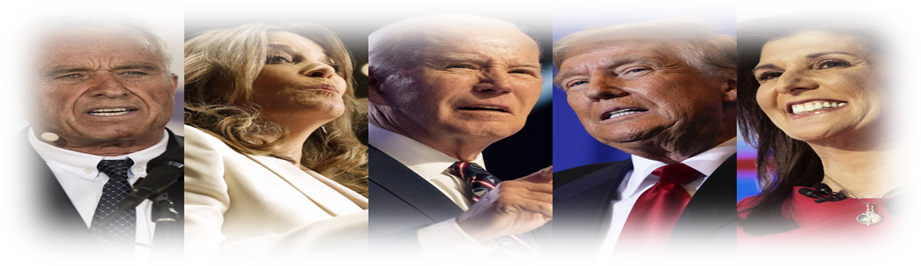

 Guillermo Calvo Mahé