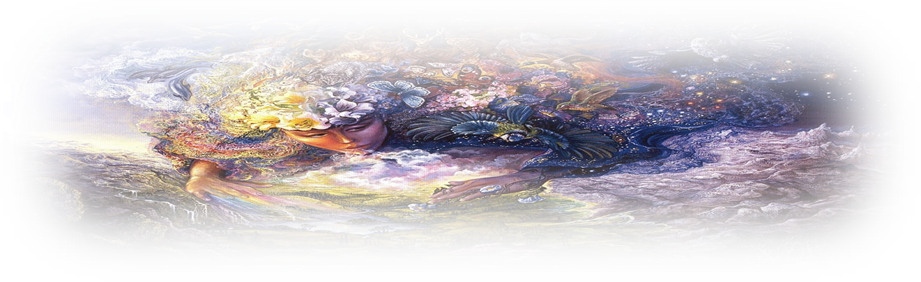
Divine Quandaries

Divinity, at least according to followers of Abrahamic religions, involves five essential attributes: eternal existence, the divinity must have always existed and will always exist; omnipresence, i.e., the divinity must be ubiquitous, concurrently everywhere; omniscience, the divinity must have permanent and eternal knowledge concerning absolutely everything not only with respect to the past and the present, but also the future; omnipotence, the divinity must necessarily be all powerful, capable of anything and everything without reservation; and, the divinity must be omnibenevolent, all good without a trace of evil or negativity.

Other religions, more ancient religions as well as contemporary religions have been more realistic.  Deities, where they existed, were just more powerful than humans albeit not omnipotent, especially when they were plural.  If not ubiquitously omnipresent, they were perhaps not bound by the rules concerning time and space that apply to us and could show up when least expected.  Omniscient?  Not at all, although perhaps they, or some of them, were more cognitively gifted, at least sometimes.  Eternal?  Nope, they somehow came into being, usually sequentially, and in most cases, eventually expired, although the expiration was sometimes temporary.  And omnibenevolent?  Hell no!  They were willful and selfish and prone to emotional outburst.  Hmmm, that all sounds a great deal like the Abrahamic YHWH.

Still, to be fair, omniscience and ubiquitous omnipresence would seem possible if one eliminates time and space, treating them as illusions.  If time did not exist, then eternity would be either irrelevant or merely a natural state.  Perhaps in that context, since nothing would really exist, omnipotence might also be possible although not all that potent. But omnibenevolence is subjective although, in the absence of time and space and anything at all (other than perhaps, a sentient singularity), it might well be either irrelevant or natural, there being no choices to make.  In the foregoing context, an idealized divinity such as that imagined in Abrahamic religions might be possible, but only until time and space arrived, only until decisions became, not only possible, but necessary, even if any such decisions were merely illusions.

So, where does that leave us? 

Perhaps pondering on the nature of quantic phenomena and how they might impact the foregoing.  As I understand it, everything and anything is possible at a quantic level, sort of like the concept of chaos where, rather than consider it a negative, chaos is merely the confluence of every possibility; however, quantic activation would require an observer which would create a sort of bootstrap cosmogony.  Kind of like the ones were it is the worshippers who create the worshipped.

Or would that involve cosmology?

_____

© Guillermo Calvo Mahé; Manizales, 2025; all rights reserved.  Please feel free to share with appropriate attribution.

Guillermo (“Bill”) Calvo Mahé (a sometime poet and aspiring empirical philosopher) is a writer, political commentator and academic currently residing in the Republic of Colombia (although he has primarily lived in the United States of America of which he is also a citizen). Until 2017 he chaired the political science, government and international relations programs at the Universidad Autónoma de Manizales. Previously, he chaired the social studies and foreign language departments at the Eastern Military Academy in Huntington, New York. He is currently the publisher of the Inannite Review available at Substack.com; an intermittent commentator on radio and television; and, an occasional contributor to diverse periodicals and publications. He has academic degrees in political science (BA, The Citadel, the Military College of South Carolina), law (JD, St. John’s University, School of Law), international legal studies (LL.M, the Graduate Division of the New York University School of Law) and translation and linguistic studies (GCTS, the University of Florida’s Center for Latin American Studies). However, he is also fascinated by mythology, religion, physics, astronomy and mathematics, especially with matters related to quanta, cosmology and cosmogony. He can be contacted at guillermo.calvo.mahe@gmail.com and much of his writing is available through his blog at https://guillermocalvo.com/.

On the Confusing Nature of Contextualized Instants and Other Anomalies

According to one system used to measure the passage of “time” (whatever that is) and to identify events that occurred during that particular stream, one among many events once stood out.  Well in truth almost an infinity of events stood out at least with respect to the entities with which this reflection deals but, for the nonce (another sort of vaguely defined unit of “time”) we intend to deal with some specific events that they somehow deemed crystalized.  The author uses the plural first person pronoun, not in the royal sense, but rather, as a means of including both the author and the readers in the assertion.  Anyway, we will attempt to reflect on an undefined, perhaps undefinable specific series of related events, albeit only after we engage in an effort to place them in a somewhat coherent temporal context (again, a concept related to “time”) albeit using the limited form of communication available to our protagonists.

Diverse series of somewhat related events have seemed interesting to the strange carbon based biological composites which, at the “time” about which we are reflecting, inhabited a satellite revolving around another satellite and with a satellite of its own (as will be explained below) who considered themselves the pinnacle of natural evolution as well as the beneficiaries of particular attention from beings ironically superior to themselves, or at least of one such being which some among them believe to be a deity.  They believe themselves to be sentient and, not just sentient, but special, although, to be honest, they subdivide themselves into a myriad of subgroups and each subgroup considers that only it is special and that all the other virtually identical subgroups, at least with respect to their biological composition, are inferior.  Incoherent, we agree, but we are just doing our best to describe related contextualizing phenomena.  

One of the units of “time” (a concept they cannot quite define but which they use all of the, well, time), is a period they refer to as a year; i.e., the “time” it takes the satellite of a “star” (a “star” being a very large spherical continuous nuclear explosion) inhabited by them (the satellite), the “star being known to them as “Sol”, among other names, and the satellite they inhabit being referred to by many of them as “Terra”, among other names, “among other names” because they have apparently (despite ancient legends concerning a time prior to the destruction of a great tower) never been quite been able to agree on appropriate nomenclature …. 

Oh my, we’ve digressed so much in an effort at contextualization that we’ve assuredly confused the reader’s train of thought, so, we’ll sort of “reboot”: … “a year” is the term they use to refer to the approximate amount of “time” it takes their Terra to complete one circumnavigation of their Sol.

These peculiar and extremely conceited beings further subdivide the “year” into days, the time it took Terra, the satellite they inhabit, to complete one revolution around its axis, and then further subdivide their perception of times into units smaller than days known to them as hours and seconds and milliseconds and nanoseconds, etc., as well as into units larger than days which they refer to as weeks and months and seasons.  Months and seasons are related to the orbits of a satellite of Terra, which these entities, who believe themselves to be sentient, sometimes refer to as Luna (among other names).  Weeks?  Well, they really have no logical basis (but they could if the “year” were divided into thirteen, rather than twelve months, and each month further divided into four, seven day weeks instead of into a variable number of days ranging from twenty-eight to thirty-one). In that case, a day or two would be left over and would be deemed outside of the normal calendar designations of months and weeks, perhaps being designated holidays, for example, New Year’s Day and, every four years, Leap Day. Why months are arranged as they currently are is difficult to say which is not the same as saying that such somewhat irrational albeit purportedly sentient beings do not have myriads of rationalizations to explain their incoherence.  Oh my, a double negative, … confusing.

At this point, it probably makes sense to identify the author of this reflection.  Not exactly an easy thing to do but essential if we’re ever to get to the point.

The author is a confused member of the protagonists in this reflection but knows that “he” is confused.  What, the reader may now wonder is a “he”?  Well, these entities subdivide themselves into two major biological categories, male and female, although lately (another concept related to time involving proximity, “proximity” being a concept related to something referred to as “space” but which could, by analogy, also refer to “time”), a number of these entities have been refusing to acknowledge such categories and refer to themselves as, among other things, non-binary, or else, just somewhat arbitrarily switch their biological characterization to a variant of the other category to which they refer as “their culturally perceived gender”.

Perhaps the foregoing will lead the reader to understand why the author perceives of himself as confused.  So confused in fact that he has completely lost track of the nature of this reflection and as to why he has been writing it and as to just what series of events he had hoped to memorialize when he started writing this reflection.

Contextualization can be so confusing!  It seems that the author has lost himself amidst shifting eddies of time and space flowing somewhere hidden deep within what passes for his mind.

Ahhh, fortunately, perhaps, or perhaps not, clarity, or something akin to clarity seems to engulf him and he recalls that when he started writing this reflection he had been speculating on the nature of what some among his contemporaries referred to as divinity, and on how different perspectives were with respect to that strange but seemingly transcendental concept, and then, that he had been wondering about the nature of “surety”, not in the sense of one who stands for the obligations of another, but in the sense of certainty, acknowledging that his interpretation of that term was based on linguistic analysis rather than custom and that language was utterly inefficient in that respect, as opposed, perhaps, to numbers.  And that as he started writing, he had started to reflect on the nature of “knowledge” which, in terms of absolute accuracy, seemed as unattainable as infinity, and he considered the probability that all we had, really, were opinions, some of which we held very strongly, and then he had recalled a philosopher, David Hume, who had wrestled with related speculations and had concluded that absolute truths might or might not exist, and that as humans we could at best approximate the practical semblance of truths by developing what he called “conventions”, useful vehicles which we could, for a time, treat as “truths” but knowing that at some point, their seeming verity might well prove an illusion but how, over time, “conventions” became calcified so that, to most people, they became unassailable truths for which they were prepared to fight and to kill and to die, although “to kill for” was certainly favored over “to die over”.  And then, he had become distracted with the concept of prepositions, wondering how a “convention” had evolved in the English language, really a hodgepodge combination of diverse linguistic traditions, to the effect that it was improper to end a sentence with a preposition.  Certainly a much safer “convention” than the diverse religious “conventions” among the fratricidal Abrahamic religions which declared any failure to firmly consider related “conventions” absolute truths were what they referred to as “heresies”, and that heretics had to be eliminated, justifying genocide regardless of commandments that abjured homicide.  And then he recalled how, as a very young teacher, he had taught a course on comparative religions which he had expanded to include comparative mythologies as neither he nor his students could establish clear boundaries between the two concepts and how, after decades of research, he had come to perceive all organized religions, especially the Abrahamic variants, as more mythic than those belief systems that he and his students had once considered ancient superstitions.  Not a comforting thought, so he had returned to speculating on the nature of time and space which had doubled back to the concept of “conventions” and thence, to this strange reflection.

And the author wonders, first, whether anyone will ever read this reflection and, if so, what the reader or readers will make of it.  And what they will make of him.  And whether or not he will be embarrassed if anyone who knows him will attribute it to him.

Then he decides that perhaps it’s “time” to end this strange reflection.

“Time” he wonders, just what is it?  Not just how it’s measured.  And then he speculates on whether time can exist without motion and then, finally (another concept related to time), while wondering whether syllogisms had anything to do with silliness, he seemingly stops writing ….

At least for the nonce.
_____

© Guillermo Calvo Mahé; Manizales, 2025; all rights reserved.  Please feel free to share with appropriate attribution.

Guillermo (“Bill”) Calvo Mahé (a sometime poet and aspiring empirical philosopher) is a writer, political commentator and academic currently residing in the Republic of Colombia (although he has primarily lived in the United States of America of which he is also a citizen). Until 2017 he chaired the political science, government and international relations programs at the Universidad Autónoma de Manizales. Previously, he chaired the social studies and foreign language departments at the Eastern Military Academy in Huntington, New York. He is currently the publisher of the Inannite Review available at Substack.com; an intermittent commentator on radio and television; and, an occasional contributor to diverse periodicals and publications. He has academic degrees in political science (BA, The Citadel, the Military College of South Carolina), law (JD, St. John’s University, School of Law), international legal studies (LL.M, the Graduate Division of the New York University School of Law) and translation and linguistic studies (GCTS, the University of Florida’s Center for Latin American Studies). However, he is also fascinated by mythology, religion, physics, astronomy and mathematics, especially with matters related to quanta, cosmology and cosmogony. He can be contacted at guillermo.calvo.mahe@gmail.com and much of his writing is available through his blog at https://guillermocalvo.com/.

Panentheistic Reflections on Evolutionary Structure

Within the diverse variants of hypotheses concerning the concept of transmigration of souls (including but not limited to the concept of reincarnation) karma occupies an important role.  However, an alternative related karma-free concept appeals to me, that of panentheistic monism.  In the variant of panentheistic monism to which I am most drawn, a hierarchy of self-aware intelligences exist which include us, evolving constantly based on experience, but based on a concentric form of collectivism.  Thus, in our case, we are comprised of diverse collectives; one includes our cells, then, on a higher plane, we are a collective comprised of our organs which are collectives of our cells, then, we are bodies comprised of a collective of our organs and our cells.  Further up the concentric ladder, we perceive of ourselves as individuals but also as members of collectives in which we are parts, e.g., our bond pairings, our families, our clans (extended families), our social groupings (religions, social communities, racial and ethnic identifications, etc.) culminating in our belief that we are part of a collective that we identify as humanity.

The interesting thing is that the collectives of which we are members, albeit subject to numerous variable tensions, seem to have identities of their own, a concept central to sociological hypotheses where groups act in a manner significantly different than would their individual members, willingly sacrificing the interests of individual members for what the collective perceives as a “greater good” (but which much more often seems to involve the interests of elites capable of manipulating the group for their benefit through coercion, very much in the manner that cancers function in our individual bodies).  That is a phenomenon that seems omnipresent in human collectives, at least as far as we know.  An open and critical question involves whether or not the collectives of which we are a part culminate at the level of our species, or whether our species is itself a part of an aware and volitional series of more complex entities such as the complex varieties of life found on our planet and, perhaps, the complex of biological and non-biological components of our environment, including air, water, weather, etc.  If so and, if we are just incapable of perceiving the levels of sentience of which we are a part (for example, the concept of Gaia), perhaps our planetary system is itself only a component of a series of greater sentient wholes, wholes such as our solar system, the group of solar systems of which our own is a part, the galaxy, the universe, etc.

Panentheism is generally viewed as a religious or spiritual concept but that may be misleading.  It may also involve an organizational reality where the omniverse (the total of all multiverses which, in turn, involve the organizational structure of individual universes, each with its own laws of physics and evolution) is sentient and self-aware, sentience being the extra-physical factor that separates the concept of panentheism from the related concept of pantheism.  In their religious variants, pantheism is the belief that divinity is the sum total of everything to which panentheism adds sentient self-awareness.

Monism adds an evolutionary element thus, each component of the pantheistic omniverse is deemed to be evolving and, in evolving, is assisting its superior structures to evolve so that, in a sense, inferior structures (inferior in terms of their level rather than their abilities) are the engines that drive the evolution of the structures of which they are components.  In a sense, there is a striving towards never-attainable perfection at all levels, a striving that is not always constant or successful so that evolution does not involve constant progress, although progress, in the long term, tends to be consistent.

The foregoing applies to the function we refer to as the transmigration of souls as it is apparently through experiences during myriad lifetimes that the systems of which we are components learn and evolve.  We are the tools for their perception of experiences, experiences that test their own evolutionary hypotheses, testing them and converting them into theories, and perhaps, eventually, into natural laws, laws being concepts impossible to violate.

Good and evil are hypotheses which we, in our diverse human groupings, develop, develop as guideposts, but they probably do not, except perhaps in very rare cases, rise to the level of theories and certainly even more rarely to the level of laws, although we tend to treat them as such.  Concepts involving good and evil tend to involve evolutionary processes that start as a practices, evolve into traditions, then customs and then, perhaps, into social norms which may eventually become codified into obligations whose violation is subject to penal sanctions.  But, since violations are possible at all levels and exceptions prevail, they do not really, regardless of how denominated, evolve into real laws.

The foregoing, at least for me, explains the incoherent societies in which we live and in which humans have always lived, where deceit, treachery and hypocrisy seem to be the norm, especially when we describe them in patriotic and religious terms.  But, on the brighter side, we are parts of an infant omniverse taking baby steps which perhaps in time may produce an evolutionary structure worth admiring.
_____

© Guillermo Calvo Mahé; Manizales, 2025; all rights reserved.  Please feel free to share with appropriate attribution.

Guillermo (“Bill”) Calvo Mahé (a sometime poet and aspiring empirical philosopher) is a writer, political commentator and academic currently residing in the Republic of Colombia (although he has primarily lived in the United States of America of which he is also a citizen). Until 2017 he chaired the political science, government and international relations programs at the Universidad Autónoma de Manizales. Previously, he chaired the social studies and foreign language departments at the Eastern Military Academy in Huntington, New York. He is currently the publisher of the Inannite Review available at Substack.com; an intermittent commentator on radio and television; and, an occasional contributor to diverse periodicals and publications. He has academic degrees in political science (BA, The Citadel, the Military College of South Carolina), law (JD, St. John’s University, School of Law), international legal studies (LL.M, the Graduate Division of the New York University School of Law) and translation and linguistic studies (GCTS, the University of Florida’s Center for Latin American Studies). However, he is also fascinated by mythology, religion, physics, astronomy and mathematics, especially with matters related to quanta, cosmology and cosmogony. He can be contacted at guillermo.calvo.mahe@gmail.com and much of his writing is available through his blog at https://guillermocalvo.com/.

An Interlocking Spherical Introspection

It seems interesting and perhaps even meaningful in some way that I am so much more drawn to interlocking identical serial spheres which share a common center at their edges than I am to concentric circles which seem less interesting to me, perhaps even boring; the former sacred and magical while the latter merely organizationally utilitarian, a means of describing concentrating priorities.  I’m not sure why I feel as I do, indeed, the reality is that I haven’t a clue.  But I do.

Perhaps there is an egalitarian element in interlocking serial spheres which share a common center at their edges, something wholly lacking in concentric circles, and perhaps in the shared centers of the former there exists a focused form of synergy.  Not a dominant focus but rather, a sort of distillation which, for some reason puts me in mind of the brandy that one can make from the liquid residue of frozen mead.  A strange sort of simile but perhaps one that, with reflection and introspection, might yield a primordial sort of sacred meaning.  Perhaps a sort of key to something we should know but which has, for some reason, perhaps a very good reason, been withheld.

For some reason, I sense that my preference discloses something important about me, something that I should know and perhaps even more, something those who, for some reason or other, rely on me or care for me or fear me, with or without cause, should know.  Perhaps it’s a clue to a secret pathway towards my soul or even, an echo hidden in shadows cast by a source of distant wisdom that enjoys teasing me with hints of who I am or who I should be, or perhaps of who I once was.

Or perhaps, at their shared core, there’s a hint of what divinity might be.  Or of what divinity is not.

Or perhaps it’s just a silly, meaningless predilection.

But I rather think not.
_____

© Guillermo Calvo Mahé; Manizales, 2025; all rights reserved.  Please feel free to share with appropriate attribution.

Guillermo (“Bill”) Calvo Mahé (a sometime poet and aspiring empirical philosopher) is a writer, political commentator and academic currently residing in the Republic of Colombia (although he has primarily lived in the United States of America of which he is also a citizen). Until 2017 he chaired the political science, government and international relations programs at the Universidad Autónoma de Manizales. Previously, he chaired the social studies and foreign language departments at the Eastern Military Academy in Huntington, New York. He is currently the publisher of the Inannite Review available at Substack.com; an intermittent commentator on radio and television; and, an occasional contributor to diverse periodicals and publications. He has academic degrees in political science (BA, The Citadel, The Military College of South Carolina), law (JD, St. John’s University, School of Law), international legal studies (LL.M, the Graduate Division of the New York University School of Law) and translation and linguistic studies (GCTS, the University of Florida’s Center for Latin American Studies). However, he is also fascinated by mythology, religion, physics, astronomy and mathematics, especially with matters related to quanta, cosmology and cosmogony. He can be contacted at guillermo.calvo.mahe@gmail.com and much of his writing is available through his blog at https://guillermocalvo.com/.

Phantasmagorical Reflections on the Nature of Time, Light, Luminous Sentience and the Higgs Boson

Theoretically, time doesn’t exist for photons.  That was recently explained to me and I found that hypothesis, or perhaps, theory, fascinating.  It’s something I’d never considered although traveling back in time by exceeding the speed of light has been a popular theme in science fiction for many decades, especially in the Star Trek franchise and, before that, in Superman films and comics.  I guess that if such literary devices had even a scintilla of possible accuracy a corollary would be that a balance attained at the speed of light would involve generation of the absence of time and hence, the phenomenon of which I was recently made aware.

Be that as it may, time certainly exists for anything with mass impacted by photons or other massless particles traveling at the speed of light in a vacuum.  As I understand it, other massless field perturbations (whatever they may be) may apparently also travel at the speed of light.  However, purportedly, notwithstanding warp drives and such, nothing with any mass at all can attain that speed as, after a certain speed, instead of increasing speed with the addition of otherwise accelerative energy, such additional energy would eventually merely expand the size of the mass it sought to accelerate as it approximated the speed of light. Thus, whatever residue of mass remained would never attain the speed of light unless the totality of mass was converted to energy, hence, the famous e = mc2, or more responsive to the foregoing, m = e/c2 or something like that.  Put more verbally, time decreases for objects as they accelerate towards the speed of light but, being unable to ever attain it, time for anything not traveling at the speed of light (or containing mass) never ceases to exist.

I wonder why the media through which photons, etc., travel makes a difference, or the speed, but apparently they do.  In another sense of the term “media” (as that term is applied to the transmission of subjective information through the press, or television “news”, etc.), I also wonder why, given its non-objective nature, a nature all too frequently infected by a desire to distort reality rather than present it, it has any relevance, but, unfortunately, for reasons inexplicable to some of us, it seems to.

Anyway, based on the foregoing, at least as I understand it right now, the light we are receiving from the furthest reaches of our universe (there may be more than one) is comprised of photons which, if they were sentient, would not have perceived that any time at all had passed during their journey, a temporal period which, to us, would have spanned almost fifteen billion years.  A corollary concept, at least as I perceive it, is that without relational motion, time, whether it is only an illusion or something independently real and tangible, would not exist.

As I reflect on the foregoing I’m struck by a paradox, the kind of paradox of which both religious and quantum “hypothetists”[1] seem enamored: i.e., that to the extent that time can exist only where there is motion, given that a photon is constantly in motion at the greatest theoretical velocity attainable, it is concurrently both intuitively and counterintuitively (and thus irreconcilably) probable that photons and related massless particles (to the extent that they exist) create time wherever they pass but never experience it.

Interesting.  Interesting also that speculation on the nature of divinity has led numerous theologians to believe that for the divine time does not exist either but rather, everything that would ever happen occurred concurrently and spontaneously, thus explaining omniscience, eternity and perhaps omnipresence, although not omnibenevolence or omnipotence but that, nonetheless, divinity creates and impacts time as perceived by us.  Hmmm, does that imply a photonic origin for divinity?  I’ll leave that for another day’s reflections.

But, back to our primary reflection: what about quantum phenomena as they relate to photons, etc.  Many of us are familiar with the inexplicable incongruities involving electrons and their variable perception oriented states and, at least in thought experiments, a similar situation with respect to cats cruelly trapped in boxes with a tempting dose of poison.  But what about photons and other massless objects capable of travelling at the speed of light in a vacuum?

Photons are purportedly massless, chargeless, and always travel at the speed of light (at least until recently) whilst carrying electromagnetic energy. Electrons, on the other hand, are, by comparison at least, massive, negatively charged particles that are a component of matter and are responsible for electricity but are incapable of attaining light speed.  One might then ask, shouldn’t electromagnetic energy be somehow related to electrons?  Apparently not.

Anyway, about the questions that occurred to me concerning the relationship, if any, between quantum phenomena and photons and other massless objects:  First, do quantum phenomena apply to them?  Apparently they do.  Photons are considered a type of quantum, i.e., fundamental units of physical particles such as light and matter.  Then, if that is so, can massless objects (photons for example) be quantically entangled so that what happens to one happens to its paired partner?  The answer is apparently yes as well.  Then, what about the phenomenon concerning the role of the observer in forcing a quantum particle to decide on its immediate future?  Hmmm.

Given recent experiments that have purportedly managed to slow photons to speeds as slow as thirty-eight miles per hour by changing the media through which they travel or by using electromagnetically induced transparency[2], a whole series of questions assail me.  Do such decelerated photons experience time?  If so (which I assume to be the case), then, if they were in any sense sentient, I assume that that they would be terribly shocked by their introduction into the temporal realms.  Or perhaps, if they had not prior to their deceleration been sentient (since time would appear essential to sentience), might they somehow evolve a sense of sentience when introduced to temporal phenomena?  And what would happen if photons subjected to quantic pairing where subjected to different temporal conditions, for example, if one of the pair was slowed down?  I assume its partner, wherever it was, would slow down as well.  What if that became infectious resulting in a cascading effect on light?  How might that impact us?  How might it impact time?

Sort of finally, I wonder at the relationship of the Higgs Boson and time.  Without it, mass would not exist and perhaps everything that moved, if anything moved, might well be travelling at the speed of light.  Yet, if everything were travelling at that speed, relatively speaking, nothing would be traveling at all (absent the concept of direction).  And I wonder if someday we’ll find that time itself is composed of massless particles.  What if such particles are somehow related to dark energy and dark matter?

Might Neil Gaiman or Christopher Moore, two of my favorite offbeat authors, turn the foregoing into a novel?  Might I?  Of course, theirs would probably be published while mine would probably tend to languish, literary agents interested in my work being even more rare than answers to the foregoing.

Something meaningful seems to be stirring at the edge of my imaginative perception but won’t permit me to grasp it. 

Perhaps it exists outside of temporal space and moves too quickly.
_____

© Guillermo Calvo Mahé; Manizales, 2025; all rights reserved.  Please feel free to share with appropriate attribution.

Guillermo (“Bill”) Calvo Mahé (a sometime poet) is a writer, political commentator and academic currently residing in the Republic of Colombia (although he has primarily lived in the United States of America of which he is also a citizen). Until 2017 he chaired the political science, government and international relations programs at the Universidad Autónoma de Manizales. Previously, he chaired the social studies and foreign language departments at the Eastern Military Academy in Huntington, New York. He is currently the publisher of the Inannite Review available at Substack.com; an intermittent commentator on radio and television; and, an occasional contributor to diverse periodicals and publications. He has academic degrees in political science (BA, The Citadel, The Military College of South Carolina), law (JD, St. John’s University, School of Law), international legal studies (LL.M, the Graduate Division of the New York University School of Law) and translation and linguistic studies (GCTS, the University of Florida’s Center for Latin American Studies). However, he is also fascinated by mythology, religion, physics, astronomy and mathematics, especially with matters related to quanta, cosmology and cosmogony. He can be contacted at guillermo.calvo.mahe@gmail.com and much of his writing is available through his blog at https://guillermocalvo.com/.


[1] I use “hypothetists as a neologism for speculative researchers who, given the absence of proof, are not really theorists.

[2] Apparently, electromagnetically induced transparency is a phenomenon where normally opaque media becomes transparent to light within a specific spectral range due to the effects of quantum interference. It is generated through us of a strong “control” light beam to create “dressed states” in a multi-level atom or molecule, allowing a weaker “probe” light beam to pass through the medium, thus ripping aside its attempt at obfuscation.

The Sad Saga of Adam Everyman: a confession of sorts

As he aged he increasingly came to acknowledge the harm he had caused others, either intentionally or carelessly or unavoidably, and he came to profoundly regret it.  He had too often been callous, albeit with a warm and sort of sincere smile, believing that he really sought to govern his life with good intentions, but his failures to do so were legion. 

He hated hypocrisy but that was mainly in others, his own example in that regard having been poor, although he tended to gloss over it in his introspections. 

He was a social and civic critic, and his related observations and speculations and analyses tended to be highly idealistic, and he was well thought of, except, perhaps, by those towards whom he had behaved inappropriately but, instead of seeking their forgiveness after admitting his faults, he sought forgiveness through penance of sorts, directed towards a divinity in which he did not really believe but which he constantly sought to find and understand. 

Faults in others were easy to identify and to criticize but in himself, they had for too long been artfully hidden, especially from himself. 

He had once reflected that if good and evil were objective rather than subjective, and that if an afterlife existed where punishments and rewards were bestowed based on merit, the only sure way to attain an adequate state of grace was to both forgive all the wrongs he had suffered and to attain forgiveness for the wrongs he had committed from those he had harmed.  Given his inability to do either, his only real hope rested in the unlikely possibility of immortality.
_____

© Guillermo Calvo Mahé; Manizales, 2025; all rights reserved.  Please feel free to share with appropriate attribution.

Guillermo (“Bill”) Calvo Mahé (a sometime poet) is a writer, political commentator and academic currently residing in the Republic of Colombia (although he has primarily lived in the United States of America of which he is also a citizen). Until 2017 he chaired the political science, government and international relations programs at the Universidad Autónoma de Manizales. Previously, he chaired the social studies and foreign language departments at the Eastern Military Academy in Huntington, New York. He is currently the publisher of the Inannite Review available at Substack.com; an intermittent commentator on radio and television; and, an occasional contributor to diverse periodicals and publications. He has academic degrees in political science (BA, The Citadel, The Military College of South Carolina), law (JD, St. John’s University, School of Law), international legal studies (LL.M, the Graduate Division of the New York University School of Law) and translation and linguistic studies (GCTS, the University of Florida’s Center for Latin American Studies). However, he is also fascinated by mythology, religion, physics, astronomy and mathematics, especially with matters related to quanta, cosmology and cosmogony. He can be contacted at guillermo.calvo.mahe@gmail.com and much of his writing is available through his blog at https://guillermocalvo.com/.

Perceptually Reversed Internecine Charges

What if words are in fact components of sentient collective streams that actually control us; that use our organic components as tools for their own internecine purposes? 

What if words are, in fact, sentient memes and memeplexes that ride us the way we are led to believe by them that we use animals and tools for what we erroneously perceive to be our own purposes. 

Mightn’t that explain why, in the end as in the beginning, our conduct tends towards incoherence, at least from our own reactive rather than volitional perceptions?

Mightn’t the word, “internecine” say it all, or at least, a great deal?

What if rather than “being because we think” we just “think we are”?

What would a mimetically sentient “god of the words” be like, after all, purportedly, “in the beginning was the Word”?
_____

© Guillermo Calvo Mahé; Manizales, 2025; all rights reserved.  Please feel free to share with appropriate attribution.

Guillermo (“Bill”) Calvo Mahé (a sometime poet) is a writer, political commentator and academic currently residing in the Republic of Colombia (although he has primarily lived in the United States of America of which he is also a citizen). Until 2017 he chaired the political science, government and international relations programs at the Universidad Autónoma de Manizales. Previously, he chaired the social studies and foreign language departments at the Eastern Military Academy in Huntington, New York. He is currently the publisher of the Inannite Review available at Substack.com; an intermittent commentator on radio and television; and, an occasional contributor to diverse periodicals and publications. He has academic degrees in political science (BA, The Citadel, The Military College of South Carolina), law (JD, St. John’s University, School of Law), international legal studies (LL.M, the Graduate Division of the New York University School of Law) and translation and linguistic studies (GCTS, the University of Florida’s Center for Latin American Studies). However, he is also fascinated by mythology, religion, physics, astronomy and mathematics, especially with matters related to quanta, cosmology and cosmogony. He can be contacted at guillermo.calvo.mahe@gmail.com and much of his writing is available through his blog at https://guillermocalvo.com/.

Immanence, Monism and Divine Introspection

At an intersection just outside of eternity and infinity in the reflections cast by chaos sits a being, or perhaps it is better referred to as everything.  It is sentient in a sense, and self-aware.  It appears to be sitting in what some refer to as the “lotus” position but it has nothing on which to sit, there being nothing but “it”, anywhere.  It’s an “it” because it is either androgynous or asexual, or perhaps it’s omnisexual.  Or perhaps that issue has no relevance.

It is reflecting introspectively wondering with respect to the concepts of immanence and monism, and whether each is inherently schizophrenic.  The inquiry relates to both its own nature and the nature of the twin concepts.  Concepts that may have been begotten, not made, although perhaps neither option is valid.  Or both are.

Immanence and monism” it ponders, “as divine attributes, seem interesting.  Even Fascinating.  Perhaps incomprehensible though.

The being reflects constantly, it reflects about everything but rarely, if ever, reaches conclusions.  That is its nature, immanent and monist, as far as it can tell, being both ephemeral and eternal. 

As far as it can tell.  At least so far.  Before the alpha and after the omega and everything in between. 

But what about betwixt” it wonders.

So, about immanence, and monism” it ponders: “they share the mysterious allure of the incomprehensibly oxymoronic that religions love, no explanation possible thus making faith essential.  In that sense, immanence and monism combine ubiquity with aloofness.  Being inherent while transcendentally apart.  Panentheistic rather than merely pantheistic.” 

Seemingly” it observes “monism must be a part of immanence while immanence is an inherent aspect of monism.” Each aspect of the foregoing observation contradicts the other but, so do most things.

Would being immanent be devastatingly lonely?  Monism certainly is.  Would sanity be possible in their contexts or merely irrelevant?  “What would it be like” it wonders, “to have another with whom to interact, another who is neither subservient nor superior?  Another who is outside the reach of immanence and who existentially rejects monism?”

For some reason, apples and serpents come to mind, but as positive rather than threatening things.

Apples and serpents; serpents and apples”.  It keeps repeating the words although it has no one to whom they can be addressed, repeating them until they meld into a single, compound and complex, all-encompassing sound, “Ooooohhhhhmmmm”.

And it reflects on that sound, wishing there were spheres without that might make a music all their own.

Ooooohhhhhmmmm”.
_______

© Guillermo Calvo Mahé; Manizales, 2024; all rights reserved.  Please feel free to share with appropriate attribution. Guillermo (“Bill”) Calvo Mahé (a sometime poet) is a writer, political commentator and academic currently residing in the Republic of Colombia (although he has primarily lived in the United States of America of which he is also a citizen).  Until 2017 he chaired the political science, government and international relations programs at the Universidad Autónoma de Manizales.  Previously, he chaired the social studies and foreign language departments at the Eastern Military Academy.  He is currently the publisher of the Inannite Review available at Substack.com; an intermittent commentator on radio and television; and, an occasional contributor to diverse periodicals and publications.  He has academic degrees in political science (the Citadel, the Military College of South Carolina), law (St. John’s University, School of Law), international legal studies (the Graduate Division of the New York University School of Law) and translation and linguistic studies (the University of Florida’s Center for Latin American Studies).  However, he is also fascinated by mythology, religion, physics, astronomy and mathematics, especially with matters related to quanta, cosmology and cosmogony.  He can be contacted at guillermo.calvo.mahe@gmail.com and much of his writing is available through his blog at https://guillermocalvo.com/.

Shadowy Echoes of Immortality

Purportedly, according to the current understanding of the “conventions” governing mainstream physics, “energy can neither be created nor destroyed; rather, it can only be transformed or transferred from one form to another”.  It appears that matter in its various states is treated, for purposes of such convention as merely a form of energy, a very concentrated form of energy.  Thus there has, for some time, been a pragmatic agreement in physics to treat the universal sum of energy and matter as a constant, at least until evidence to the contrary becomes available and is demonstrably more probable than the converse.

“Convention” is the term crafted by philosopher David Hume to describe the pragmatic agreements we arrive at to treat unproven or unprovable concepts as accurate, because they work, or seem to work, or have worked so far. That is the nature of knowledge to which we humans are privy, an agreement to treat things which function as true, until a more efficient truth appears to us.  That is why the conventions we treat as truths are relative, which is not to state that truth, absolute truth is inexistent.  We just have no way to establish it, at least not yet.  At least not permanently.  Given that nothing yet appears ultimately provable, but according to the so called “scientific method”, only disprovable, “conventions are all we have.  But we treat them so emphatically as truths that we are willing to kill and die to defend them.  We humans are a strange, illogical and incoherent lot.

Still, within the context of “conventions” in modern physics, concepts consistently being challenged and modified, as they should be, there are interesting questions that straddle the spheres of science and parascience.  One may involve the above referenced convention concerning the permanent nature of the energy-matter continuum.  The convention concerning the conservation of energy, including mass as a concentrated form of energy, raises for me a question as to the nature of life at all levels.  Life seems to involve a form of energy, at least in the form of temporarily self-perpetuating and constantly mutating electrical impulses which generate motion as well as: (1) reaction, (2) perception and (3), at least the illusion of creation.  My question, questions really, involve what happens to those electrical impulses that manifest as life.  Where do they go?  How do they dissipate or to what other forms of energy do they convert.

Perhaps into shadowy echoes of immortality resonating in infinity.

Something about which physicists and paraphysicists should perhaps ponder and argue.

_____

© Guillermo Calvo Mahé; Manizales, 2024; all rights reserved.  Please feel free to share with appropriate attribution. Guillermo (“Bill”) Calvo Mahé (a sometime poet) is a writer, political commentator and academic currently residing in the Republic of Colombia (although he has primarily lived in the United States of America of which he is also a citizen).  Until 2017 he chaired the political science, government and international relations programs at the Universidad Autónoma de Manizales.  Previously, he chaired the social studies and foreign language departments at the Eastern Military Academy.  He is currently the publisher of the Inannite Review available at Substack.com; an intermittent commentator on radio and television; and, an occasional contributor to diverse periodicals and publications.  He has academic degrees in political science (the Citadel, the Military College of South Carolina), law (St. John’s University, School of Law), international legal studies (the Graduate Division of the New York University School of Law) and translation and linguistic studies (the University of Florida’s Center for Latin American Studies).  However, he is also fascinated by mythology, religion, physics, astronomy and mathematics, especially with matters related to quanta, cosmology and cosmogony.  He can be contacted at guillermo.calvo.mahe@gmail.com and much of his writing is available through his blog at https://guillermocalvo.com/.