It’s Easter Sunday in 2026; a holiday the diverse branches and twigs of Christianity (there are so many of them) can agree on given that it’s based on the Hebrew version of the lunar calendar rather than on the calendars established by Julius Caesar and Pope Gregory XIII. It’s a strange holiday this year, a year that is a sort of culmination in a cycle of genocide, ethnic cleansing and orchestrated Islamophobia that has disclosed that international law and human rights have always been illusions, perhaps more accurately delusions, and that the purported hopes of a certain Hebrew carpenter and civic leader from Palestine for equity and decency have, for two millennia, been used as a diversion to facilitate control of humanity by the worst among us. War in the name of peace, hatred and polarization in the name of love and inequity in the name of equity and justice.
My Christian friends, or at least many of them, too many, shrug their shoulders at the foregoing and note that humans are imperfect. Then, in too many cases, they enthusiastically support obvious evil cleverly disguised as patriotism.
I am not a believer in the divinity of Yešu the Nazarene but I am a believer in his message of social justice and his golden rule and so, every holiday dedicated to him is for me, a day of shame.
Guillermo (“Bill”) Calvo Mahé (a sometime poet and aspiring empirical philosopher) is a writer, political commentator and academic currently residing in the Republic of Colombia (although he has primarily lived in the United States of America of which he is also a citizen). Until 2017 he chaired the political science, government and international relations programs at the Universidad Autónoma de Manizales. Previously, he chaired the social studies and foreign language departments at the Eastern Military Academy in Huntington, New York. He is currently the publisher of the Inannite Review available at Substack.com; an intermittent commentator on radio and television; and, an occasional contributor to diverse periodicals and publications. He has academic degrees in political science (BA, The Citadel, the Military College of South Carolina), law (JD, St. John’s University, School of Law), international legal studies (LL.M, the Graduate Division of the New York University School of Law) and translation and linguistic studies (GCTS, the University of Florida’s Center for Latin American Studies). However, he is also fascinated by mythology, religion, physics, astronomy and mathematics, especially with matters related to quanta, cosmology and cosmogony. He can be contacted at guillermo.calvo.mahe@gmail.com and much of his writing is available through his blog at https://guillermocalvo.com/.
Today, if you’re Christian or Muslim, it’s Holy Saturday, the Great Sabbath, Easter Eve or Black Saturday, take your pick. The day (the only full day) that Yešu of Nazareth purportedly spent visiting the nether regions deep in the bowels of somewhere.
People seem to think he spent three days there communing with the damned, or perhaps, the not-yet-saved might be a better term, but it only lasted, at most (if it lasted at all) from approximately three in the afternoon, Jerusalem time, on Friday until sometime before dawn on the following Sunday, so it was primarily a Sabbath sojourn among some of the most entertaining and merry people who had ever purportedly lived, although perhaps not as merry as they’d once been.
If the myth has any validity which, who knows, it might, I wonder what Yešu did that day and the parts of Friday afternoon and evening and Sunday between midnight and dawn. He did seem to love sinners and there may well have been many in that metaphorical Limbo. Limbo because, according to Christians and Muslims, no one had yet been saved so everyone was there. Not even the Catholic purgatory had yet come into being although, given that the Great Sacrifice had just come to pass, it must have been a chaos of sorting going on between the good, the evil and the somewhere-in-between. Perhaps Yešu helped with that.
It’s a strange “feast” day Christians live today. And Muslims as well. Muslims are big Yešu fans. For Jews on the other hand, it’s business as usual, except that one cannot conduct business on the Sabbath. _____
Guillermo (“Bill”) Calvo Mahé (a sometime poet and aspiring empirical philosopher) is a writer, political commentator and academic currently residing in the Republic of Colombia (although he has primarily lived in the United States of America of which he is also a citizen). Until 2017 he chaired the political science, government and international relations programs at the Universidad Autónoma de Manizales. Previously, he chaired the social studies and foreign language departments at the Eastern Military Academy in Huntington, New York. He is currently the publisher of the Inannite Review available at Substack.com; an intermittent commentator on radio and television; and, an occasional contributor to diverse periodicals and publications. He has academic degrees in political science (BA, The Citadel, the Military College of South Carolina), law (JD, St. John’s University, School of Law), international legal studies (LL.M, the Graduate Division of the New York University School of Law) and translation and linguistic studies (GCTS, the University of Florida’s Center for Latin American Studies). However, he is also fascinated by mythology, religion, physics, astronomy and mathematics, especially with matters related to quanta, cosmology and cosmogony. He can be contacted at guillermo.calvo.mahe@gmail.com and much of his writing is available through his blog at https://guillermocalvo.com/.
Abstract: This essay deals with the evolution of the American Israeli Public Affairs Committee in the United States and its impact on United States domestic and international policies, criticizing the acceptance of large sums of money by United States public officials to represent the interests of Israel. Money which originates in taxes paid by United States residents which are then granted to Israel and by Israel, to AIPAC, etc. It also touches on the nature of conflicts of interest and their resolution. It is meant as a catalyst of further discussion and research with readers urged to personally review the informational links in the footnotes in order to make their own determinations as to the positions expressed by the author and, as a caveat to those, in the United States and elsewhere who while exercising a public charge in one country accept funding from another, or on behalf of another. The essay concludes that “the phenomenon of public officials elected or appointed to protect the interests of their county accepting payments or contributions or assistance from other countries as an inducement to implement policies favorable to the “benefactor” is hardly rare and is the cornerstone of the foreign policy of many “developed countries” including the United States, the United Kingdom, all Western European countries, the Russian Federation and the People’s Republic of China. In each case, however, the recipient is betraying the public trust of the citizens of the country he or she purports to represent” Key words: AIPAC, Zionism, Judaism, “United States”, Congress, “Conflicts of Interest”, Antisemitism, “Political ‘contributions’”.
Introduction:
It seems that during the first three decades of this millennium there has been an inversion of the values espoused at the end of 1945 following the Second World War when in the conquered German city of Nuremburg tribunals were held to try some of the men that were deemed the worst violators of norms that regulated human behavior. Quite a number of those men were executed, sacrificed to what the victors sought to portray as a better future. But it was all a farce. Only the vanquished were punished and the institution created to assure that the horrors of the Second World War would never be repeated, the institution that replaced the idealistic Wilsonian League of Nations, was as big a farce as any. The truth is that the victors in the Second World War were every bit as evil as the vanquished. Just perhaps better at public relations.
The issue of genocide as anathema at the end of the Second World War was blatant hypocrisy. In terms of numbers of human beings murdered, the victors far exceeded the vanquished. The British Empire had already murdered over a hundred million human beings in its attempts to colonize the world, the United States had engaged in genocide against its indigenous population, and that was to be just a start. And Leopold of Belgium had murdered ten million of his subjects in Africa. As to genocide, the Nazis were pikers. But useful pikers for those who sought to engage in genocide and ethnic cleansing in the oil rich Middle East.
As this essay is being written, both the victors and the vanquished in the Second World War, as well as those who claim to speak in the name of the victims of the Nazi genocide, have disowned the legal principles and obligations the victors imposed on the world following the Second World War. The principles that representatives of the victims of the Nazi “holocaust” established as law in their roles as prosecutors and judges of the Nuremburg Tribunals. “Might makes right” as the Nazis seem to believe is the concept that, in the end has emerged triumphant. And “truth”, well it never has been all that important except as a deceptive slogan, an illusion to control the masses.
Still, perhaps pure evil in its arrogance has lifted a veil that in the end, may prove to be its undoing. This essay is dedicated to uncomfortable truths, in the hope that at some point, even the most recalcitrant at self-delusion may have their eyes forced open.
One of the principal elements illustrated by Eric Arthur Blair, writing under the pen name George Orwell, in his dystopian epic 1984 (published in 1948) was the irrelevance of truth which, rather than an accurate invariable was a non-existent ideal, the reality being that what passed for truth at any given moment was merely a variable distortionist tool to manipulate the illusion of reality in order to permit a dedicated and amoral minority to exercise consistent control. It was, however, not a prediction of a horrendous potential future but a reflection of the reality under which the world had operated, not only for centuries, but perhaps since the evolution of language. That is the world in which we live and in which all of us currently alive have lived for our entire lives.
The crux of this essay seeks to lift the political veil under which the United States political system (and others) has operated at least since the end of the Second World War. The title metaphorically references the account in the Gospel of Matthew of the Christian New Testament concerning the betrayal of Yešu the Nazarene by his erstwhile disciple, Judas Iscariot[1] (Matthew 26:15). In that account, chief priests of the Second Jewish Temple in Jerusalem purportedly offered Judas “thirty pieces of silver” as an inducement to assist them in the capture of Yešu, an offer which Judas purportedly accepted but of which he subsequently repented, returning the money which the chief priests then purportedly used to buy Akeldama, popularly now referred to as the Potter’s Field[2]. The Potters’ Field was purportedly thereafter purportedly used as a burial ground for poor, unknown, and foreign individuals[3]. The reference in the title equates the conduct of politicians, especially federal elected officials in the United States, with that of Judas Iscariot in the cited passage, analogizing Yešu to the United States’ citizenry and the role of the Jewish priests to the American Israel Public Affairs Committee (AIPAC), specifically with respect to bankrolling electoral politics in the United States[4]: massively rewarding politicians who do their bidding and destroying those who oppose them by recruiting and by bankrolling their opposition. The main difference is that the beneficiaries of AIPAC’s “generosity” rarely if ever repent and their betrayal is constant, consistent and to date, massively effective. Best of all for AIPAC, the ultimate victims are not only blissfully unaware of the betrayal but even revel in it in a sort of Stockholm syndrome, a psychological phenomenon where a hostage develops a bond with their captors. Facts do not move them, instead, they merely increase an obstinate refusal to acknowledge reality.
Another difference is that the equivalent of the “thirty pieces of silver” does not come directly from the coffers of AIPAC but rather starts its twisted journey in the form of taxes paid by United States residents to the government for which their betrayers supposedly work, a large portion of which is then transferred to Israel in the form of loans and grants and then a portion is contributed by Israel and Israeli benefactors to AIPAC. A viscously vicious circle. Such sums, in the aggregate, may involve trillions of dollars siphoned off to fund Israel and projects of interest to Israel, the foreign government that AIPAC was created to serve. And to related military “adventures” although perhaps misadventures may be a more accurate term.[5]
So, about AIPAC.
Historical Background:
Most of the following information concerning the organization and history of AIPAC was obtained from The Israel Lobby Archive, Institute for Research: Middle Eastern Policy (“ILA”; 2008-2017): including articles encaptioned “Isaiah L. Kenen: Foreign Agent to Founder of AIPAC” and “DOJ orders the AZC to Register as a Foreign Agent”. The archive can be accessed at https://www.israellobby.org/index.html and contains significantly more information that what is briefly summarized in this essay. A great deal of the information is factual and not difficult to verify, hence it is very credible, however, “opinions” should be separated from factual assertions. The Institute for Research: Middle Eastern Policy; Washington D.C. is a 501(c)(3) organization that conducts research largely through Freedom of Information Act requests but is criticized by Zionist organizations as anti-Israel. It is a detailed source of information that appears objective concerning the evolution of Zionism in the United States to which reference is made. Readers should probably review such materials on their own. For a Zionist perspective on the history and origins of Zionism, see generally Halperin, Liora (2015): “Origins and Evolution of Zionism”; Foreign Policy Research Institute, January 9, 2025 available at https://www.fpri.org/article/2015/01/origins-and-evolution-of-zionism/. A detailed academic analysis is contained in Mearsheimer, John and Walt, Stephen (2006): “The Israel Lobby and U.S. Foreign Policy“. London Review of Books Vol. 28, No. 6 (March 23, 2006), available at www.lrb.co.uk.
AIPAC’s genesis was in the late nineteenth century when the Zionist movement was organized, ironically, by a Hungarian atheist, Theodor (Binyamin Ze’ev) Herzl, who presided over the first World Zionist Congress in Basel, Switzerland, in August of 1897. In reaction to millennia of antisemitism, its goal was the establishment of a nationalist state somewhere where Jews could safely consolidate their political, economic and cultural traditions, with religion a distant, secondary consideration. Notwithstanding the foregoing, some historians and scholars identify American evangelist William E. Blackstone as the true “father of modern-day Zionism”, arguing that his efforts predated those of Theodor Herzl.
In 1943, the United States link between Zionism and a Jewish State in the British mandate of Palestine was established by Abba Hillel Silver, a rabbi from Cleveland, Ohio, who organized the American Zionist Emergency Council to coordinate support among American Jews for the establishment of a “Jewish State” in the British mandate of Palestine[6]. The Jewish Agency for Israel, a Jerusalem-based, non-governmental organization established in 1929 (the “Jewish Agency”)[7] which served as the executive arm of the World Zionist Organization was an essential intermediary in the formation and management of the American Zionist Emergency Council. The latter was heavily funded throughout the 1950s and early 1960s by the Jewish Agency (specifically by its American Section), laundering money received from Israel and from wealthy Zionists to influence United States policy. In 1949, Rabi Silver’s organization was renamed the American Zionist Council. However, AIPAC itself was formed in 1953, originally as the American Zionist Committee for Public Affairs by Isaiah Leo Kenen. Mr. Kenan, a Canadian-born journalist and lawyer, was an interesting fellow and self-described philanthropist (although perhaps more a beneficiary of Zionist philanthropy). He had initially been involved in lobbying both the United States Congress and the United Nations on behalf of the Jewish Agency in Palestine seeking implementation of the Balfour Declaration and, once Israel was established, he briefly joined the Israeli delegation to the United Nations.
In the fall of 1948, Arthur Liverhant, second secretary of the Israeli mission to the United Nations, initiated correspondence with the United States Department of Justice concerning registration of formal Israeli “information” offices in Washington, D.C., and New York City and on October 10th of that year they were registered under the Foreign Agents Registration Act of 1938 (the “FAR Act”) when Mr. Liverhant submitted the required forms to the Department of Justice. Rita Grossman, Bernard Zamichow, Isaiah Kenen, Harvey Rosenhouse and Harry Zinder were listed as its officers and Mr. Kenen was listed as the Director of Information at the New York office. In his related personal foreign agent disclosure application Mr. Kenan wrote “none” in response to the section requiring disclosure of all connections with foreign officials although in his biographies he noted the existence of working relations with many Israeli officials during the relevant period, including Abba Eban and David Ben-Gurion. The Justice Department found a number of deficiencies in the form submitted by Mr. Kenan and required him to file supplemental information. However, although he visited Congress to lobby for arms and aid to Israel during January of 1950, Mr. Kenen chose not to disclose such lobbying.
At the suggestion of the Israeli government Mr. Kenan almost immediately began seeking a means to circumvent the foreign agent registration requirements and the related oversight as they applied to him thus, on February 13, 1951, he advised the Justice Department that he was resigning from the Israel Office of Information, asserting that he had “severed” his relations with the Israel government and requesting that his name be removed from Israel’s FAR Act registration. In furtherance of the foregoing, he advised the Justice Department that he was starting his own independent consulting firm and admitted that the government of Israel would probably be his first client. In fact, his consulting firm was entirely funded by the new State of Israel and he continued reporting directly to diverse Israeli agencies including the foreign office and the recently organized Mossad[8]. In furtherance of his request to be relieved of reporting obligations under the FAR Act, Mr. Kenan advised the FAR Act section of the Justice Department that in his new roles, although he might travel to Israel and received compensation from Israel, the FAR Act should not be deemed applicable to him or to the American Zionist Council; however, he omitted very relevant related facts such as the fact that he was still conducting tours and engaging in lobbying initiatives on behalf of the Israeli government, for example, with visiting Senator Jacob Javits and with Congressmen Ribicoff, Fugate, Keating, O’Toole, Barrett and Fein. Furthermore, while he claimed that his employment at the American Zionist Council had “expired” before his Israel visits, the interruption, if it occurred, was brief as he immediately returned to his lobbying role with that organization (assuming he had ever left it), a role represented as uninterrupted in his biographies.
The FAR Act section of the Justice Department initially bought into Mr. Kenan’s inaccurate representations concluding that because, according to his affirmations, during his trip to Israel he had not published or transmitted any documents or propaganda material to the United States, neither he nor the American Zionist Organization was acting within the United States as an agent of a foreign principal. However, shortly thereafter, the Federal Bureau of Investigation received copies of Israel Office of Information literature circulating without required foreign agents’ disclosure stamps and initiated a related investigation which, a decade later, during the administration of John F. Kennedy, resulted in a contentious relationship. As a result of such investigation, the Senate initiated hearings.
During the pendency of the Senate hearings, Mr. Kenan and the State of Israel became worried that he would be investigated by the State Department for not registering as a foreign agent and, because of such concerns and in reaction to international criticism of the October 1953 Qibya massacre in which Israeli troops under Ariel Sharon killed at least 69 Palestinian villagers, two-thirds of them women and children[9], it was decided by Israel that the lobbying efforts of the American Zionist Council should be separated into a separate organization with separate finances and Mr. Kenan, with Israeli and Zionist funding, formed such separate entity. One that, not being tax exempt, was believed by the Israeli government to be empowered to engage in unsupervised lobbying on its behalf. The entity formed was the American Zionist Committee for Public Affairs which was renamed the American Israeli Public Affairs Committee (AIPAC) in 1959.
On October, 31, 1962, almost a decade after the United States Senate first began to investigate the issue of Israeli influence over United States foreign and domestic policy, assistant attorney general and director of the Justice Department’s internal security division, J. Walter Yeagley, notified then attorney general Robert F. Kennedy that registration of the American Zionist Council under the FAR Act was indeed required and had in fact been solicited. Mr. Yeagley, described the American Zionist Council as comprised “of representatives of the various Zionist organizations in the United States, including the Zionist Organization of America”, and for some reason, he did not believe that such interpretation would be controversial based on prior discussions between the longtime head of the FAR Act registration section, Nathan B. Lenvin, with both Mr. Kenan and Jewish Agency representative Maurice M. Boukstein. During such discussions Mr. Lenvin had made it clear that, in his view, the activities of both groups appeared to involve an agency relationship with the State of Israel that required registration. Based on such determinations, on November 11, 1962, the Justice Department “requested” that the American Zionist Council register under the FAR Act because it had received funds from the American Section of the Jewish Agency for Israel. However, to Mr. Lenvin’s surprise, the American Zionist Council declined to honor the “request”. Instead, the American Zionist Council’s president, Rabbi Irving Miller, insisting that the “request” for registration raised “many questions of fact and of relationships which should be resolved” prior to compliance and requested an extension of 120 days and such request was granted.
During those 120 days the American Zionist Council’s legal counsel, well known former federal district court judge Simon H. Rifkind, advised his client to completely discontinue the agency relationship with Israel and to cut off the receipt of any additional funds and Judge Rifkind informed Mr. Lenvin that he had so advised his client. However, when informed of the foregoing, Mr. Lenvin pointed out that the termination of such activities would not absolve the American Zionist Council of its obligation to register at which point the American Zionist Council initiated a public relations campaign in the media and in communications with its supporters insisting that the American Zionist Council’s attorneys firmly believed that the law was on its side and that registration under the FAR Act was not appropriate. The Justice Department rejected that position on April 1, 1963 with Mr. Lenvin insisting that litigation should be initiated should the American Zionist Council not comply.
Judge Rifkind, a very well-connected jurist active in political affairs, then complained to a number of his political and media contacts asserting that the vast number of Jews who adhered to the principles of Zionism could not understand how “our administration’ [the United States government] could do such harm to the Zionist movement and impair the effectiveness of the Council by insistence on registration” and Judge Rifkind appealed to Justice Department demanding that it exercise its discretionary power to waive such requirements in the interest of justice. At that point Judge Rifkind found an ally in the Justice Department, assistant attorney general Nicholas Katzenbach (subsequently to serve as attorney general under the more Zionist friendly Lyndon Baines Johnson) who intervened, suggesting that, as a compromise, the American Zionist Council might offer to make full disclosure of the receipt and expenditure of the funds it had received from the Jewish Agency so that such information would be available for public inspection, thus accomplishing “the purposes and objectives of the Registration Act” and eliminating the need for further government action. The stalemate continued until the assassination of President John F. Kennedy, when a more friendly administration apparently concurred with Mr. Katzenbach’s suggestion and thus AIPAC’s began its unprecedented rise to political power.
With massive funding from wealthy Zionists and “discreet” funding directly by Israel, AIPAC quickly grew into an extremely powerful group and, after the assassination of President John F. Kennedy in 1963 (and thereafter of Robert F. Kennedy in 1968, both of whom had been thorns in the side of the Zionist project to attain nuclear arms for Israel[10]), Zionists acting on behalf of the Israeli government became legally permitted to circumvent restrictions on foreign funding of United States political campaigns so that, eventually, AIPAC became the largest funder of Congressional and presidential campaigns for both the Republican and Democratic parties but, adding a stick to the carrot, it also became actively involved in recruiting and funding candidates to replace office holders who refused to support AIPAC’s “Israel First” policies[11]. AIPAC also became active in a similar manner at the state and even local levels.
Observations:
Based on AIPAC’s efforts, during the period since the administration of pro-Israeli president Lyndon Baines Johnson until October 7, 2023, Israel had received more than 300 billion dollars in direct United States government aid (in inflation adjusted current dollars)[12], a small fraction of what it had cost AIPAC to finance both major parties at all levels. But, as importantly, in addition to the foregoing, Israel and AIPAC apparently coordinated (and coordinate) activity among the wealthiest Zionists in the United States and elsewhere[13] facilitating their accumulation of massive wealth, a portion of which is donated to AIPAC and more directly to Israel. Zionist activists similar to AIPAC operate in the United Kingdom where they succeeded in dislodging Labour leader Jeremy Corbin from political contention and replaced him with current Zionist Prime Minister Keir Starmer and, in France, they secured the election of Rothschild pupil Emmanuel Macron as president. In Argentina, Zionists recently secured the replacement of Peronism with Zionist Javier Milei and in Colombia Zionists are currently backing right wing presidential contender Paloma Valencia as well as her right wing rival Abelardo de la Espriella. Indeed, Zionists operatives have been funding and advising (more accurately, perhaps, controlling) political leaders and movements all over Europe and Latin America, as well as in the Pacific Basin for decades. The metaphorical thirty pieces of silver have indeed gone a long way.[14]
That for three quarters of a century Israel has engaged in genocide and ethnic cleansing in Palestine has, in large part, been facilitated by AIPAC which not only finances Israeli interests but shields it from criticism in the United States and Europe through Zionist controlled media, as well as from legal consequences through its impact on the United States political and judicial system. That is also true in the United Kingdom and Australia as well as throughout the European Union. The efforts of AIPAC, as recent disclosure seems to imply, appear to have been massively supplemented by illicit activities undertaken by “sort of financier”, Jeffery Epstein who, apparently on behalf of the Israeli Mossad, exerted massive control over financial and political leaders all over the world through blackmail “honey pot” activities (and much worse).
Of course, those who accept AIPAC funding in exchange for their votes and for their performance or non-performance of political, administrative, civic and journalistic duties are at least as much to blame as the secretive membership and leadership[15] of AIPAC, probably more so, and voters who permit themselves to be duped, election after election, are to blame as well. Indeed, it is amazing that so many current and retired members of the United States armed forces as well as fundamentalist Christians whose religion is despised by Zionists, including many people for whom the author cares and who he admires, have become enthralled with supporting AIPAC causes and see no problem with their preferred candidates accepting AIPAC’s tainted political contributions. To them, for some reason, notwithstanding their United States citizenship and in many cases, solemn oaths to uphold and defend the United States Constitution, Israel comes first. Something then Senator Barack Obama once expressed publicly and which many United States politicians, elected and appointed officials and members of the armed forces have also expressed. Consider Senator Lindsay Graham for example, and even presidents Biden and Trump. Thus, today, as noted above, the metaphorical thirty pieces of silver have gone a long, long way towards attaining the Zionist dream of regional conquest of the Middle East and indirect domination of many major worldwide centers of political, economic and cultural power (as antisemites long claimed Jews would), albeit at United States’ taxpayers expense. Such generalized attribution to Jews is, however, patently unfair. Many, many Jews absolutely reject Zionism and certainly not all Zionists are Jews. Indeed, it may well be that Christian Zionists in the United States vastly outnumber their Jewish counterparts: an irony given that after Israel has gone after and murdered hundreds of thousands of Muslims in the Middle East, Israelis are now attacking Christians there as well.[16]
Conclusions:
There was a time when accepting what amount to bribes from foreign powers in exchange for an elected or appointed public officials’ loyalty was considered treason. Not so today. And that is not only true in the United States. Ironically perhaps, the bribes are largely United States’ tax payer funded. Under the second Trump administration, much of the veil that concealed AIPAC and Israeli activities and goals has been cast aside and their activities are much more brazen with concepts such as international law and crimes against humanity openly mocked as irrelevancies. Power in its most naked form has been unmasked as the only basis for political decisions and impunity is now openly praised. A world in chaos is seen as opportunity laden and is openly pursued. Idealism has become a quaint anachronism at best. If the foregoing seems a drastic change, it isn’t, it’s business as usual only now, a bit more openly acknowledged and accepted. The need for subtlety and subterfuge now seemingly unnecessary, corruption has now become not only omnipresent but admired.
In light of the foregoing, the alleged treason of Judas Iscariot now seems almost petty.[17] For well over half a century the government of the United States has not represented its citizenry. Indeed, way too many of its elected representatives derive more income from AIPAC, albeit denominated as political contributions, than they are paid by the United States directly for their services, and a great many have become millionaires. Key figures include former Speaker Nancy Pelosi and Senators Rick Scott and Mark Warner, all staunch Israeli supporters. AIPAC not only has an improper and undue influence over the government but its allies also control the military industrial complex President Dwight David Eisenhower urged us to be wary of in his farewell address and investors in that industry derive huge fortunes at the expense of future generations of United States citizens who are now burdened with over thirty eight trillion dollars in debt even though they are yet to be born. And Israel has corrupted the moral fiber to which the United States once aspired. Now, along with Israel, the United States promotes genocide and ethnic cleansing; indeed, it finances it. And like Israel, under current president Donald J. Trump, the United States now asserts that international law is meaningless, that only power matters.
The author recently published reflections on a film released in 1984 entitled “Red Dawn”, a film released when the United States still considered itself the champion of the oppressed rather than of the oppressors[18]. That is clearly no longer the case. But the irony lies in the reality that instead of having been conquered by a rival super power, the United States has been conquered from within, by United States citizens whose loyalties are elsewhere. In the case of Zionists, Israel is where their hearts are and they are less to blame for where the United States now finds itself than are those who, believing themselves patriotic Americans and believing themselves devout Christians, have permitted themselves to be deluded by those with other values, other loyalties and other aspirations. Others who perceive of themselves as racially superior and more beloved in the eyes of the Abrahamic god and thus, entitled to hegemonic rule over those who are genetically, racially and religiously impure. Those deluded souls deserve what they will eventually receive but billions of others do not.
During the 1960’s, especially while I was a cadet at the Citadel, the Military College of South Carolina, I was drawn to the David versus Goliath version of Zionism I’d been taught but as I became more intellectually independent, especially while I was completing a post legal degree in International Legal Studies at the Graduate Division of the New York University School of Law, I became aware that I had been profoundly deceived about the nature of Zionism, and about the nature of Palestinians and Palestine and Iran, and about the history I had been teaching for almost a decade. That has, of course, been made obvious during the tenure of Benjamin Netanyahu as prime minister of Israel, as Israel has infected the United States with its disdain for human rights and international law, and as the vast majority of the citizens of Israel have amazingly become avid supporters of ethnic cleansing and genocide. Thus, I am now and have been for several decades, an avowed opponent of Zionism and of AIPAC, as this essay makes palpable. Thus, like current Colombian president Gustavo Francisco Petro Urrego with whom I’ve had the opportunity to personally interact and who, despite his tendency to become pugnacious in defense of the values he holds dear, I greatly admire[19], I oppose all forms of racial, ethnic and religious supremacist theories profoundly believing that all men and women are born equally and are entitled to the opportunity to attain their highest potential while respecting the rights of others. It is in that spirit that I wrote this essay.
Conflicts of interest are unavoidable. They are a fact of life. But they must be resolved and resolution requires a prioritization of loyalties. It’s something I understand because like all members of AIPAC and its Jewish Zionist supporters, I have dual nationality. In my case, I’m a citizen of both the United States and the Republic of Colombia and although I spent the vast majority of my life in the United States where I graduated from the Eastern Military Academy and then from the Citadel; and then from the St. John’s University School of Law, the Graduate Division of the New York University School of Law, and the University of Florida’s Center for Latin American Studies, I have spent the last eighteen years in the Republic of Colombia where I chaired the Political Science, Government and International programs at the Universidad Autónoma de Manizales and also taught in a master’s program dealing with Social Justice and the Quest for Peace at the Universidad de Caldas. I love both countries profoundly but I have vehemently opposed United States aid to Colombia (e.g., Plan Colombia) because I felt the citizens of both countries should, as George Washington suggested in his farewell address[20], stand on their own metaphorical two feet. I would never urge that United States taxpayers subsidize Colombia and certainly never suggest that United States tax payers should place the interests of Colombia over those of the United States[21]. And visa versa. Unfortunately, that is not what has occurred with respect to those whose loyalties are split between Israel and the United States. Were I Jewish and a dual citizen of Israel and the United States I would hope that my attitude would be the same but, … who can tell. But were I a United States public official my priorities would be clear, as they would be were I a Colombian public official, or an Israeli public official, which may explain why I have always avoided public office or government employment. Indeed, the phenomenon of public officials elected or appointed to protect the interests of their county accepting payments or contributions or assistance from other countries as an inducement to implement policies favorable to the “benefactor” is hardly rare and is the cornerstone of the foreign policy of many “developed countries” including the United States, the United Kingdom, all Western European countries, the Russian Federation and the People’s Republic of China. In each case, however, the recipient is betraying the public trust of the citizens of the country he or she purports to represent. The AIPAC/Israeli situation is primarily different in that such “contributions” are purportedly made by United States citizens and institutions seeking to divert resources from their fellow citizens to favor a foreign government and its expansionist ambitions.
This was not a pleasant essay to write. The ugly specter of antisemitism which has existed for two millennia is now used by Zionists as a sword rather than as a shield and Zionists seemingly have no problem with endangering their fellow Jews, as long as their activities provide Israel with a fulcrum it can use to attain wealth and power, especially power. But this essay is important. Truth is important. And anyone who perceives the situation I have posited in the manner which I interpret it owes it to his fellow citizens and to non-Zionist Jews, and to the people all over the world who are being oppressed and murdered by the millions, to make their opinions known.
Silence ought not to be an option despite the certainty of unfounded reprisals and calumnies. _____
Guillermo (“Bill”) Calvo Mahé (a sometime poet and aspiring empirical philosopher) is a writer, political commentator and academic currently residing in the Republic of Colombia (although he has primarily lived in the United States of America of which he is also a citizen). Until 2017 he chaired the political science, government and international relations programs at the Universidad Autónoma de Manizales. Previously, he chaired the social studies and foreign language departments at the Eastern Military Academy in Huntington, New York. He is currently the publisher of the Inannite Review available at Substack.com; an intermittent commentator on radio and television; and, an occasional contributor to diverse periodicals and publications. He has academic degrees in political science (BA, The Citadel, the Military College of South Carolina), law (JD, St. John’s University, School of Law), international legal studies (LL.M, the Graduate Division of the New York University School of Law) and translation and linguistic studies (GCTS, the University of Florida’s Center for Latin American Studies). However, he is also fascinated by mythology, religion, physics, astronomy and mathematics, especially with matters related to quanta, cosmology and cosmogony. He can be contacted at guillermo.calvo.mahe@gmail.com and much of his writing is available through his blog at https://guillermocalvo.com/.
[1] The figure of Judas is very controversial and subject to drastically differing interpretations. To some he was indeed a betrayer while to others he was a misguided Hebrew patriot and to still others, for example as described in the different versions of the Toledot Yeshu, a hero. For the version described in the Toledot Yeshu, see Calvo Mahé, Guillermo (2024): “The Life of Yešu According to Diverse Jewish Sources” available at https://guillermocalvo.com/2024/10/09/the-life-of-yesu-according-to-diverse-jewish-sources/. Interestingly, in that Jewish version, Yešu is acknowledged as fully capable of performing miracles and the Jerusalem Sanhedrin, with the miraculous help of Judas, is credited with his capture, torture and execution (contrary to the information in the Christian gospels which split the blame between the Sanhedrin and the Roman Procurator, Pontius Pilate).
[2] It’s commonly referred to as Potter’s Field because it had previously been a place where potters dug for clay, making it less suitable for other uses.
[3] That the word “purported” seems omnipresent in this essay is a reflection of how impossible it has become to discern “truth”, or perhaps, better yet, of how impossible it has always been to discern “truth”.
[4] The analogy should not offend Zionist Jews given that to them, or to many of them (as evidenced in the Toledot Yeshu referenced above), Judas was a major hero who helped the Sanhedrin capture and execute Yešu and the United States politicians who accept AIPAC’s financial support are heroes to them as well. Zionist Christians however may feel differently.
[5] As always it is essential to recognize that Judaism and Zionism are not synonymous and that many Jews are in the vanguard of opposition to the activities of AIPAC and to Israeli atrocities in the Middle East and elsewhere. Indeed, the claims of AIPAC, Zionism and Israel to act in the name of all Jews may well be the greatest source of increasing antisemitism. See, e.g., Jewish Voice for Peace: “Our Approach to Zionism” available at https://www.jewishvoiceforpeace.org/resource/zionism/.
[6] Palestine was a part of the Ottoman Empire conquered as a result of the First World War and promised by British Lord Balfour to Zionist Lionel Walter Rothschild, 2nd Baron Rothschild, provided that Zionists could induce the United States to enter what has become known as World War I against the German Empire, notwithstanding that most Jews worldwide were sympathetic to Germany which was the European country that had been least antagonistic to Jews. For a brief synopsis of the foregoing, readers may want to access and read Calvo Mahé (2024): “Zionists and the Holocaust: The One with a Capital H as Well as the One Taking Place Today, a disturbing reflection” available at https://guillermocalvo.com/2024/04/30/zionists-and-the-holocaust/.
[7] The Jewish Agency had been heavily involved in Jewish immigration into Palestine and in integrating immigrants into first the British Palestinian Mandate and then the State of Israel. It played a critical role in establishing the state, acting as a “state-in-waiting” before 1948.
[8] A brief related article was published in the New York Times on February 29, 1952 (leap day) entitled “I. L. Kenen in Zionist Unit Post” (available at https://www.nytimes.com/1952/02/29/archives/i-l-kenen-in-zionist-unit-post.html). Mr. Kenan was identified in the article as the former director of information for the Jewish Agency in Palestine. However, at the time it was published he had already been retained by the American Zionist Council (which had become the public relations arm of Zionist groups throughout the United States) as its representative in Washington, D.C.
[9] As well as concerned that the Eisenhower administration suspected the American Zionist Council of being funded by the Israeli government.
[10] There have recently been allegations, purportedly based on numerous FBI files and materials produced with respect to criminal activities by the late Jeffrey Epstein (allegedly a Mossad asset) that because of President’s Kennedy’s antipathy towards Israeli interests, including matters involving AIPAC but also involving Israel’s quest for nuclear weapons, Israel was involved in the president’s assassination on November 22, 1963 but such allegations remain unproven and, apparently, uninvestigated, indeed, they have been vigorously contested by Israeli sympathizers who describe them as crazy conspiracy theories. See generally Piper, M. C. (2004). Final judgment: The missing link in the JFK assassination conspiracy. American free Press, Washington, DC.
[11] Of the 535 current members of Congress, only 18 are declining to accept AIPAC financial support: Jamaal Bowman, Cori Bush, Pramila Jayapal, Summer Lee, Alexandria Ocasio-Cortez, Ilhan Omar, Mark Pocan, Ayanna Pressley, Delia Ramirez, Rashida Tlaib, Nydia Velázquez, Bernie Sanders, Seth Moulton, Morgan McGarvey, Deborah, Valerie Foushee, Marjorie Taylor Greene, Thomas Massie and Matt Gaetz. Some of them, however, have only recently repudiated AIPAC financial support, having benefitted from it in the past.
[12] After October 7, 2023, Israel has received massive direct United States funding and weaponry and the United States has directly spent multiples of its prior generosity towards Israel in support of Israeli genocide and ethnic cleansing in Palestine (Gaza and the West Bank, Syria, Lebanon and most recently, Iran).
[13] As of 2024, 50 Israeli billionaires alone had a combined wealth of approximately 250 billion dollars and the wealth of American Zionist billionaires exceeded 1.3 trillion dollars.
[15] AIPAC does not typically publish a public list of its board members, but reports indicate it is governed by approximately 50 people, including 41 board members and 9 senior executives who direct operations but it claims that it has five million members, 17 regional offices, and “a vast pool of donors”.
[17] A final but very important note. Antisemitism is and always has been a vile belief system and this essay should in no sense be deemed as supporting of generalized hatred towards Jews, whether as a religion, a nationality, an ethnicity or as a belief system. The author has tried to make this clear throughout this essay but is aware that antisemites may try to use the information contained herein to bolster their antisemitic allegations, and that conversely, Zionists, seeking to equate opposition to Israel and AIPAC with antisemitism, will accuse the author, as they do any critics of Israeli policies, of antisemitism. Nothing could be less accurate as both interpretations are equally vile and equally unjustified. There are worlds of differences between opposition to Zionist depredations and hatred of Jews in general, and nothing increases the danger of antisemitism today more than Zionist attempts to equate Zionism with Judaism, as many Jews, religious as well as agnostic and even atheist regularly make clear through massive protests against Zionism.
[21] Unfortunately, in the Republic of Colombia as in the United States, there are politicians and voters only too willing to embrace an Israel uber alles stance, especially on the right side of the political spectrum. Two of the current leading presidential candidates for this May’s elections, Senator Paloma Valencia and Mr. Abelardo de la Espriella, have embraced Israel, as did their political mentor, former president Alvaro Uribe Velez who accepted Israeli help while governor of the Department of Antioquia and then as president in the training and financing of paramilitary death squads during the late twentieth and early twenty-first centuries.
What History Can Teach Us” and available at https://sueseboda.substack.com/p/the-clash-over-immigration-part-1?r=87oth offers relevant objective historical insights essential in order to contextualize the arguments for and against the Safeguard American Voter Eligibility (“SAVE”) Act, arguments equally ignorant and emotional on both sides rather than cogent and carefully considered. I recommend that all prospective voters read Sue’s article, or another one equally objective and complete.
My personal position[1], based on pragmatic as well as constitutional grounds, is that the issues dealt with in the Act, as well as related issues such as “birthright citizenship”, are best dealt with through a comprehensive constitutional amendment rather than through legislation and especially, rather than through a presidential decree. Indeed, I’ve noted that in light of the federal nature of the United States, as a pragmatic issue, an easily accessible national registry of citizens, including a regularly updated nationalized identification system (such as exist in most of the world) might well prove essential given the transient nature of most residencies and the fact that federal elections are conducted at the county level (subdivided into electoral districts and polling stations)[2].
On pragmatic grounds that supporters of the Act should recognize but many don’t, preferring to react on a “no-matter-what support for the Act” basis, legislation and presidential decrees are easily reversible once the opposition attains power, something that, absent the advent of a long-term dictatorship, is probable. Thus, today’s triumphs could easily turn into defeats in the same manner that executive actions by presidents Obama and Biden circumventing legislations were promptly overturned by Mr. Trump. A well thought out, argued and evaluated constitutional solution would provide long term stability and clarity.
I personally support liberal immigration policies, strictly enforced. I do so for several reasons, moral as well as practical. Morally, the United States, despite always having been intensely xenophobic, was purportedly founded as a haven for foreigners as exemplified in Emma Lazarus’s sonnet, the “New Colossus” and, if the country is to remain true to its purported ideals, continued immigration is an essential pillar. But ignoring the foregoing, the reality is that current and anticipated demographics demonstrate a decreasing birthrate and a concurrent increase in the aging population which means that without an influx of new taxpayers and contributors to social security, the social security system and indeed, the treasury, will soon lack the necessary financing to fund essential government programs. That is a reality, unpleasant but unavoidable. Consequently, not only the United States but Western Europe desperately require not only their current immigrants, legal as well as undocumented, but additional immigrants as well. The real obstacle to the foregoing however involves racial, ethnic and religious bigotry with current citizens unwilling to see demographic changes that ironically duplicate those occasioned when their own ancestors immigrated and changed preexisting demographic realities. Ask any Native American. That bigoted reality existed during the colonial period when English colonists despised German newcomers, and then when they both despised Italian immigrants, and then the Hispanics, and especially for some reason, Asiatics[3].
So, I suggest you read at least the initial part of the cogent article by Sue Seboda referenced above and then, considering the issues I’ve raised in this brief reflection, think clearly rather than emotionally, avoiding reaction merely based on your political loyalties (they should reflect your opinions rather than forming them) and, based on facts rather than emotions, arrive at a wise and workable political posture that you will hopefully share with others. Hopefully many others. Whichever side of the issue you find most palatable.
Guillermo (“Bill”) Calvo Mahé (a sometime poet and aspiring empirical philosopher) is a writer, political commentator and academic currently residing in the Republic of Colombia (although he has primarily lived in the United States of America of which he is also a citizen). Until 2017 he chaired the political science, government and international relations programs at the Universidad Autónoma de Manizales. Previously, he chaired the social studies and foreign language departments at the Eastern Military Academy in Huntington, New York. He is currently the publisher of the Inannite Review available at Substack.com; an intermittent commentator on radio and television; and, an occasional contributor to diverse periodicals and publications. He has academic degrees in political science (BA, The Citadel, the Military College of South Carolina), law (JD, St. John’s University, School of Law), international legal studies (LL.M, the Graduate Division of the New York University School of Law) and translation and linguistic studies (GCTS, the University of Florida’s Center for Latin American Studies). However, he is also fascinated by mythology, religion, physics, astronomy and mathematics, especially with matters related to quanta, cosmology and cosmogony. He can be contacted at guillermo.calvo.mahe@gmail.com and much of his writing is available through his blog at https://guillermocalvo.com/.
[1] I should disclose that I arrived as an immigrant to the United States, joining my mother and new step father (a native born US citizen whose parents had immigrated to the United States from Greece), on or about October 12, 1952, albeit as a legal, fully documented immigrant, and that I am currently a dual United States-Colombian citizen. Much easier way back then.
[2] I note that in the past I have been a member of the United States Libertarian Party, indeed, I was a member of the Executive Committee of the Libertarian Party of Florida, and that such political party vehemently opposes a national identification system, as has, in the past, the Republican Party. For many decades now, however, I’ve been a registered “independent”.
[3] The Civil War era American Party (better known as the Know Nothings) was illustrative of the foregoing, see generally Calvo Mahé (2026): “On the Organic Ancestry of MAGA and of Its Ironic Incoherence”, published on various platforms including the Medium, Substack and on my personal blog on February 10, 2026), available at https://guillermocalvo.com/2026/02/10/on-the-organic-ancestry-of-maga-and-of-its-ironic-incoherence/.
It seems uncanny that Adolph Hitler and Franklin D. Roosevelt overlapped almost perfectly in their tenures as heads of state and that they both died in office, albeit under very different circumstances.
I wonder what a deep and objective analysis of their lives and characters seeking other similarities might find. A superficial analysis would probably conclude that they were both masters of political manipulation, tailoring their messages to their audiences and that they both often presented themselves as men of peace to international audiences to secure treaties, only to break them shortly after.
Interesting.
Of course, an objective analysis of either of them is improbable, especially one concerning Mr. Hitler although, given the changing attitudes towards genocide and ethnic cleansing and lebensraum, and concerning the propriety of violating human rights and of sneak attacks, etc., perhaps I’m mistaken.
I wonder what a human being melded from the two of them might be like? Then again, perhaps one is presently omnipresent and we’ve just failed to identify the components from which he’s composed. What if he exists and was born within a year or so of their deaths?
Hmmmm.
It’s a strange world nowadays although, it probably always has been. Truth has always been in the eye of the beholder, especially myopic beholders with astigmatisms, cataracts, glaucoma and other visual disorders, you know, the kind from which historians and journalists suffer when engaging in their professional duties.
Truth: not only relative but incoherent, as though quanta had something to do with it. _____
Guillermo (“Bill”) Calvo Mahé (a sometime poet and aspiring empirical philosopher) is a writer, political commentator and academic currently residing in the Republic of Colombia (although he has primarily lived in the United States of America of which he is also a citizen). Until 2017 he chaired the political science, government and international relations programs at the Universidad Autónoma de Manizales. Previously, he chaired the social studies and foreign language departments at the Eastern Military Academy in Huntington, New York. He is currently the publisher of the Inannite Review available at Substack.com; an intermittent commentator on radio and television; and, an occasional contributor to diverse periodicals and publications. He has academic degrees in political science (BA, The Citadel, the Military College of South Carolina), law (JD, St. John’s University, School of Law), international legal studies (LL.M, the Graduate Division of the New York University School of Law) and translation and linguistic studies (GCTS, the University of Florida’s Center for Latin American Studies). However, he is also fascinated by mythology, religion, physics, astronomy and mathematics, especially with matters related to quanta, cosmology and cosmogony. He can be contacted at guillermo.calvo.mahe@gmail.com and much of his writing is available through his blog at https://guillermocalvo.com/.
Many decades ago, actually, in 1984, a film, Red Dawn[1] was released. It was directed by John Milius from a screenplay he co-wrote with Kevin Reynolds and starred Patrick Swayze, Charlie Sheen, C. Thomas Howell, Lea Thompson and Jennifer Grey with supporting roles played by Ben Johnson, Darren Dalton, Harry Dean Stanton, Ron O’Neal, William Smith and Powers Boothe. The film impacted me a great deal in a number of different ways. It instilled a great deal of empathy in me for people I’d been taught to view as uncivilized terrorists, for people I’d been taught I should despise and hate and who were subhumans not entitled to human rights (even though none were represented, even indirectly, in the film). But it also made me wonder how the United States citizenry would actually react were the United States ever to be successfully invaded and conquered by a foreign government. Little did I know at the time that such conquest had already taken place, albeit imperceptibly.
The film dealt with a takeover of the United States by foreign communist forces, Soviets and Cubans as I recall, acting under a United Nations mandate during a major internal crisis, and of the refusal of a small segment of United States civil society to accept foreign domination, even if it was purportedly well intentioned. The film, as history has demonstrated, was inversely prescient as well as revealing. The roles, in reality, are and have always been the obverse of reality where it is the United States and its allies that have been and are the invaders and occupiers and looters virtually everywhere. Something the United States inherited from the British and the French.
The emotional irony involves the profoundly empathic justification generated by the film for the resistance, one with which United States’ citizens viewing the film emotionally bond not realizing that such resistance mirrors resistance against United States colonialism and imperialism all over the world. Che Guevara, of course, comes to mind but so do the members of Al Qaeda and Isis who resisted the US conquests in the Middle East, and Hamas and Hezbollah in Palestine, and today’s Iranians, and the Cubans and Nicaraguans who have been resisting the US for more than half a century. And Chileans in 1973, and Argentinians in the 1970’s and today, Panamanians, and Grenadians, and Haitians, and Yemenis, and Libyans, and Syrians, etc., etc., etc.
In today’s context, internally, given the current situation within the current United States, the film leads has led me to reflect on how far from reality John Milius and Kevin Reynolds strayed when they wrote the screenplay given that current history exposes a United States occupied and looted by Fifth Columnist[2] “Israel Firsters”, bought and paid for by the American Israeli Public Affairs Committee (“AIPAC”), a United States whose citizens, for the most part, be they politically Democrats or Republicans, accept domination by (rather than resist) a tiny foreign power that uses money to fuel its occupation instead of bombs and bullets (those are reserved for use elsewhere), a situation where many (and at the federal level, most) United States elected officials receive the bulk of their income “sort of” from abroad. Where elected officials in many instances receive many times their official salaries in the form of political contributions but also in the form of highly paid post-retirement consultancies and stipends, from AIPAC and its billionaire allies. My use of the phrase “sort of” reflects the irony (and irony is an oft repeated term in this article) that the funds used to make such payments (some would refer to them as bribes) come indirectly through a devious route from the pockets of United States tax payers whose taxes then to Israel and the “defense” industry (against which Ike, in his wisdom, once warned us[3]) and through them to select investors who then contribute a portion of their “winnings” to AIPAC, which then recirculates a portion of them (everyone needs a bite of the proverbial apple) to the servile “civil servants” who authorized their misdirection in the first place. Sounds a lot like a shell game doesn’t it? But a shell game with consequences far worse than mere small time peculation.
Even worse perhaps, at least in the context of the film’s premises, many active and retired United States military and police personnel wholeheartedly support the looting of the United States and the commission of genocide, ethnic cleansing and wars of conquest, at the expense of United States tax payers, violating every principle they purportedly hold dear, applauding the wholesale murder of journalists and medical personnel and educators as well as the wholesale slaughter of women and children. It is even worse from my perspective because some of them have been my classmates and are people I have long loved and admired and believed to be profoundly honorable as well as patriotic.
It makes me wonder whether the film was an intentional satire ridiculing who the populace of the United States thought they were. After all, the United States, building on the framework initiated by Woodrow Wilson in Hollywood during the purported war to end all wars (with George Creel as his handyman), has always appropriated the heroism of others as its own. Witness the perception in the United States that it was primarily responsible for victories in World Wars One and Two when the reality was far, far different[4]. Or the purported bravery of United States aviators murdering thousands of civilians from miles in the sky or safely ensconced in videogame style bunkers as they rain down death on civilians below. Those are not mirrors into which we enjoy gazing. We prefer the illusory Hollywood spectacles where United States’ Davids destroy foreign Goliaths against impossible odds.
Again, ironically (that word again), the United States utterly corrupt leaders and brave but naïve military men and women are standing by and indeed assisting in the looting of their three-hundred-and-fifty-million co-citizens by the most evil selfish and depraved ten million people the world has ever known. So while those ten million enjoy free health care, free education, subsidized housing and alimentation and unbounded military weaponry, all paid for by overworked and underpaid United States taxpayers, none of those benefits exist at home. Horrors!!! That would be socialism. But apparently, paying for socialist programs is fine as long as we are not tainted by benefitting from them.
Irony indeed reigns.
All of the foregoing is massively supported in the United States by Christian Zionists cheering on the end of the world so that Jesus can return and consign those ten million who they currently hail and support as well as many innocent Jews to perdition, … after Jesus returns.
How sick is that?
Israeli Zionists know that and scoff. How can a Jesus consigned to boil in pools of feces in the Hell to which Zionists are sure he’s been consigned ever return at all? He’s as securely disabled as are the tens, perhaps hundreds of millions of Muslims that Zionists have been able to “eliminate” since the blessed year of 1948. 1948; ironically (again), the year when Eric Arthur Blair, writing as George Orwell, first published his seminal dystopian novel, 1984.
So, “Red Dawn”.
Enlightening in a sick way to the few who can see and who care about morals and justice and equity and peace but, fortunately for the powers that be, those few are an insignificant lot, more like gnats, troublesome but not all that dangerous thanks to the blinded mases who keep cheering for their captors and for the Fifth Columnists who lead and purportedly protect them. “Rockets’ red glare and bombs bursting in air by the dawn’s early light” a nice turn of phrase by a vehement supporter of slavery, one that all citizens of the United States, even the descendants of former slaves, are expected to revere. But nowadays we can safely note that they’re our bombs and our rockets raining down on others (through our “generosity”) as they once purportedly rained down on Fort McHenry in Baltimore’s harbor.
In the film, one aspect touched me was when Ron O’Neil, playing the role of Cuban Colonel Ernesto Bella, spared captured United States’ “freedom fighters”, having become disgusted by his senseless role in the subjugation of others. A role not echoed by very many United States “patriots” today. But one can hope. One can hope that at some point our military, if not our political leaders, will come to their senses and awake from the somnambulant nightmare in which they’ve permitted not only our country but our world to be placed.
That Red Dawn was released in “1984”, the year when Eric Arthur Blair predicted that our world would have attained its current form may have been deliberate, but probably was not.
Guillermo (“Bill”) Calvo Mahé (a sometime poet and aspiring empirical philosopher) is a writer, political commentator and academic currently residing in the Republic of Colombia (although he has primarily lived in the United States of America of which he is also a citizen). Until 2017 he chaired the political science, government and international relations programs at the Universidad Autónoma de Manizales. Previously, he chaired the social studies and foreign language departments at the Eastern Military Academy in Huntington, New York. He is currently the publisher of the Inannite Review available at Substack.com; an intermittent commentator on radio and television; and, an occasional contributor to diverse periodicals and publications. He has academic degrees in political science (BA, The Citadel, the Military College of South Carolina), law (JD, St. John’s University, School of Law), international legal studies (LL.M, the Graduate Division of the New York University School of Law) and translation and linguistic studies (GCTS, the University of Florida’s Center for Latin American Studies). However, he is also fascinated by mythology, religion, physics, astronomy and mathematics, especially with matters related to quanta, cosmology and cosmogony. He can be contacted at guillermo.calvo.mahe@gmail.com and much of his writing is available through his blog at https://guillermocalvo.com/.
[4] The casualties suffered by the major participants in World Wars One and Two were as follows: The Soviet Union/Russia suffered the highest losses in World War Two (22–27 million) and 2 million deaths in World War One. China experienced 20 million deaths in World War Two, mainly civilians due to Japanese occupation. Germany suffered about 5.5 million military deaths in World War Two and roughly 2.7 million in World War One. The United Kingdom lost only 383,600 deaths in World War Two but 886,000 in World War One. On the other hand, the United States only lost 416,800 deaths in World War Two and 116,000 deaths in World War One.
Constitutions are inherently conservative antidemocratic instruments, attempts by the polity of a given time to control the decisions and practices of their progeny. At their best, they are conservative in the sense, not of the policies they promote but rather, in the sense that they reject the opinions of any given period as absolute, instead insisting that they reflect the past (i.e., tradition), the present (seeking resolution to current tensions) and the future, although with reference to the future they tend less to respect than to bind. Those burdened with the task of constitutional control (i.e., interpretation, implementation and enforcement) are purportedly bound by the constitution’s dictates based on earlier experiences (experiences perhaps not only no longer relevant but conceivably now proven wrong) while trying to resolve current tensions. Not an enviable task.
In constitutional terms, the English common law did not recognize the authority of the past over the present insisting that no parliament or institution could bind another but it concurrently had to deal with the inherited Roman concepts of stare decises and res judicata, both demanding adherence to prior decisions, albeit binding on the judiciary but not the legislature. Napoleon Bonaparte, based on libertarian and egalitarian instincts, rejected both stare decises and res judicata, insisting that judges be bound by broad legislatively enacted legal concepts embodied and logically organized into codes[1] which they were required to apply to the facts, using their own judgment and logic, to arrive at conclusions tailor made for the specific issues involved without regard for either the past or the future. On the other hand, he insisted that judicial decisions be brief, limited to one sentence if possible, a dictate made ludicrous through us of the word “whereas” (in French, considérant) to link innumerable pages-long clauses to contextualize and explain the nature of and reasoning for a decision.
The constitution of the Republic of Colombia (where I now live after a lifetime in the United States), like the constitution of the Republic of India (also known as Bharat), is an extremely long tapestry of contradictory and unattainable premises and promises, albeit beautifully phrased and full of idealistic platitudes, in the case of Colombia, with four different supreme judicial bodies, each of which seems to take turns contradicting the others, and as elsewhere, each dominated by political rather than legal priorities. To me they are both most useful as harbingers of the uselessness of constitutions incomprehensible to the people they are meant to govern, interpretable, if at all, only by purported experts frequently incapable of agreeing with each other. As several of my students in classes on constitutional theory and on comparative politics have noted, a constitution, to really serve its purpose, ought to at least be comprehensible to people of average intelligence and education, even if it is, in practice, rarely really followed (as is much too frequently the case)[2].
Today, many, perhaps most, maybe even all constitutions are more like revered religious relics treasured by atheists because of their historical, cultural and monetary value than because of their intrinsic meaning. Hence, in the United States of America for example, the meaning of the Constitution’s premises and pronouncements not only vary over time as it purportedly somehow seeks to remain relevant for resolution of legal and political tensions reflecting changing societal contexts, but even more so with respect to the immediate goals and aspirations of the political party that most recently appointed the membership of the judiciary, the judiciary which, in the United States, through usurpation[3], acquired the power and responsibility for constitutional control. Hence, members of the United States Supreme Court may well change their constitutional interpretations based on whether or not the party that appointed them controls one or the other, or both of the other purportedly coequal branches of government. Consequently, existential issues like states’ rights versus federal supremacy alternate in focus and importance, as does strict construction versus organic interpretation.
In the United States, the study and practice of “constitutional law” does not involve development of a profound understanding of hypotheses and theories involving the nature and roles of constitutions, their elements and how they should function in order to approximate the common welfare but rather, a tortured study of the history of Supreme Court decisions and how to best misinterpret them to support desired quotidian results. That leads to ludicrous decisions (sometimes resulting in equitable results) such as that in the famous (and now infamous) case of Roe v Wade, 410 U.S. 113 (1973), where the court at the time discovered a penumbra of privacy emanating from perceived implied constitutional rights that created a right to an abortion, something none of the creators of the Bill of Rights would have supported, although they probably would have agreed that such a right probably existed based on the ninth and tenth amendments to the Constitution (the forgotten amendments) which provide that the Bill of Rights is not an exhaustive list of all human rights and sought (unsuccessfully) to restrict federal power to only what is explicitly stated in the Constitution. Specifically, the 9th Amendment protects rights not specifically listed while the 10th reserves all other powers for the states “or the people”. Roe v Wade is only one of the more egregious instances of poor constitutional scholarship by those charged with constitutional control. Other examples are myriad, especially those that virtually destroyed the constitutional concept of federalism on which the United States was based, at least what was left of it after the Civil War and the Wilson era constitutional amendments (the 16th through 19th amendments), through expansion of the Commerce Clause of the Constitution, Article I, Section 8, Clause 3, which grants Congress the power to regulate commerce with foreign nations, among the several states, and with Indian tribes, coupled with the Supremacy Clause, Article VI, Clause, which establishes that the Constitution, federal laws, and treaties constitute the “supreme law of the land”, albeit theoretically only in the areas covered by the twenty-seven specifically designated (“enumerated”) areas were power is withdrawn from the States and transferred by the Constitution to the federal government (Article I, Section 8).
Thus, while it is true that in theory constitutions are inherently conservative, antidemocratic instruments, in the case of the United States of America, the meaning of the constitution adopted in 1787 and implemented in 1788, at any given point in time, like beauty, lies in the eyes of the beholder, except, perhaps, for its organic functions, i.e., those that specify the institutions created for federal governance. But even there, such functions, organization and modes of operation have proven not that difficult to manipulate, e.g., voting rights, apportionment, electoral districts, gerrymandering, prohibitions against convergence of legislative, executive and judicial powers[4], etc. The result is, as I once wrote[5], a motley constitution, one court jesters (actually, wielders of considerable power both as advisors and as spies) might well be proud to call their own.
And unfortunately, in that respect, the United States Constitution is not unique.
Guillermo (“Bill”) Calvo Mahé (a sometime poet and aspiring empirical philosopher) is a writer, political commentator and academic currently residing in the Republic of Colombia (although he has primarily lived in the United States of America of which he is also a citizen). Until 2017 he chaired the political science, government and international relations programs at the Universidad Autónoma de Manizales. Previously, he chaired the social studies and foreign language departments at the Eastern Military Academy in Huntington, New York. He is currently the publisher of the Inannite Review available at Substack.com; an intermittent commentator on radio and television; and, an occasional contributor to diverse periodicals and publications. He has academic degrees in political science (BA, The Citadel, the Military College of South Carolina), law (JD, St. John’s University, School of Law), international legal studies (LL.M, the Graduate Division of the New York University School of Law) and translation and linguistic studies (GCTS, the University of Florida’s Center for Latin American Studies). However, he is also fascinated by mythology, religion, physics, astronomy and mathematics, especially with matters related to quanta, cosmology and cosmogony. He can be contacted at guillermo.calvo.mahe@gmail.com and much of his writing is available through his blog at https://guillermocalvo.com/.
[1] An ancient perspective reflected notably in the codes of Hammurabi and Justinian, millennia apart.
[2] Interestingly, there are those, frequently highly intelligent comedians of a libertarian bent, who find dysfunctionality the best form of governance given, as Will Rogers once stated quoting Judge Gideon John Tucker that “No man’s life, liberty, or property are safe while the legislature is in session”, thus a functional constitution may be the most dangerous kind and the type most to be avoided. It is sad to consider that the eminent Judge Tucker and Mr. Rogers may well have had a point.
[3] See, e.g., Calvo Mahé, Guillermo et. al. (Jiménez Ramírez, Milton Cesar, editor, 2020): “Capítulo I. Evolución del control de constitucionalidad en los estados unidos.”; El control de la constitucionalidad en episodios: acerca del control constitucional como límite al poder; Universidad de Caldas, Facultad de ciencias jurídicas y sociales; Bogotá.
[4] A prohibition made ludicrous in the case of administrative agencies which combine all three functions in a revolving door scheme where regulators and the regulated constantly trade places.
Today, much of the English speaking world celebrates the death of Maewyn Succat, the son of a wealthy Romanized Briton whether from England, Scotland or Wales is uncertain. From the age of 16 through 22 he was a purported slave in Ireland, having been shipwrecked there or perhaps kidnapped by Irish raiders and “forced” to act as a goat herder (horrors). At twenty-two he escaped or was expelled from Ireland and travelled to Gaul where he became a Catholic priest and adopted the Roman name Patricius (meaning “well-born” or “father of the citizens”).
He attained revenge for his “enslavement” by returning to Ireland sometime after the year 432 of the Common Era, commissioned by Pope Celestine I with following up on the conversion of the Irish, assuring that only the Catholic variant survived. Interestingly Pope Celestine I died that same year. The exact year of Maewyn Succat’s assignment and of his return to Ireland is seemingly unknowable, too confused by evolving myths although, if it was indeed Pope Celestine I who was involved, it would seemingly have been on or before July 27th in the year 432, absent some sort of miracle. he passed away on the 26th.
True to his assignment from whomever and whenever, Maewyn Succat brutally suppressed not only the ancient Irish culture and its tolerant indigenous religion but also the original variants of the Christian religion introduced into Ireland apparently by adherents of the Coptic Orthodox Church in Egypt and by Pelagianists (Christians who did not believe in original sin). Catholicism may have already been introduced into Ireland via Great Britain by Germanus of Auxerre and then definitely by a certain Palladius, a Galatian monk and chronicler of monasticism (also known as Patricius). Nonetheless, the ruthless Maewyn Succat has received the credit for such role, one celebrated interestingly enough, not on the day of his birth but on that of his death, perhaps a celebration the specters of his numerous victims appreciate.
So, the truth about “St.” Patrick is that virtually everything associated with him is less than honest, making this a most relevant holiday in our post-truth era. For example: Ireland never had snakes thus he never cast them out; at best, the story being a metaphor for him driving out paganism and earlier forms of Christianity. There is no evidence from his own writings that he used the shamrock to teach the Holy Trinity, a subsequently crafted legend at best. He was never formally canonized because he lived before the formal papal canonization process began. The original color associated with him was blue, not green, perhaps explaining the University of Notre Dame’s shifting uniform colors. For more detailed information I recommend an informal article on the Medium entitled “The Disturbing Truth about St. Patrick’s Day and Its Brutal History” by an author writing under the pseudonym “three raccoons in a spacesuit”, apparently fearful of revealing his or her real name anticipating retribution. The article is available at https://threeraccoons.medium.com/the-disturbing-truth-about-st-patricks-day-and-its-brutal-history-aaf74f68604c although probably behind a paywall.
How Maewyn Succat would treat those who engage in merry celebrations in his memory today is predictable. He would probably have had them tortured and executed so it’s a good thing he is no longer around, although many fundamentalist Christians, especially of the Zionist variant, may well share his perspectives, especially concerning the religious validity of genocide.
Guillermo (“Bill”) Calvo Mahé (a sometime poet and aspiring empirical philosopher) is a writer, political commentator and academic currently residing in the Republic of Colombia (although he has primarily lived in the United States of America of which he is also a citizen). Until 2017 he chaired the political science, government and international relations programs at the Universidad Autónoma de Manizales. Previously, he chaired the social studies and foreign language departments at the Eastern Military Academy in Huntington, New York. He is currently the publisher of the Inannite Review available at Substack.com; an intermittent commentator on radio and television; and, an occasional contributor to diverse periodicals and publications. He has academic degrees in political science (BA, The Citadel, the Military College of South Carolina), law (JD, St. John’s University, School of Law), international legal studies (LL.M, the Graduate Division of the New York University School of Law) and translation and linguistic studies (GCTS, the University of Florida’s Center for Latin American Studies). However, he is also fascinated by mythology, religion, physics, astronomy and mathematics, especially with matters related to quanta, cosmology and cosmogony. He can be contacted at guillermo.calvo.mahe@gmail.com and much of his writing is available through his blog at https://guillermocalvo.com/.
In many senses, the “Hebrews” are an enigma. They’re the principal cultural component of the Abrahamic cultures which encompass Europe, the Middle East and the Americas but their origins although purportedly well documented in sacred scriptures are historically shrouded in mystery. Hebrew mythology, as improbable as any mythology, is frequently, perhaps too frequently, considered not only history but sacrosanct notwithstanding obvious historical evidence which discredits it. Today’s Jews claim descent from the ancient Hebrews but in many instances that is clearly inaccurate as the vast majority of modern Jews are converts from Turkey, Russia and Central and Eastern Europe, especially among the variant known as Ashkenazi who account for approximately 80% of modern Jewry. The closest genetic descendants of ancient Hebrews ironically exist, in all likelihood, among Palestinians, most of whom religiously profess Islam, albeit with significant Christian minorities.
So, about the different possible origins for the “original” ancient Hebrews who first came into historical contexts approximately three millennia ago? There are a number of hypotheses that we will briefly examine, hypotheses because there are not enough supporting facts to qualify any of them as theories, and for purposes of this article we will label them as follows: the Sumerian hypothesis; the Moses hypothesis; and, the Habiru hypothesis. Of course, there may well be many other hypotheses and one of them may someday even evolve into a theory. This is a very brief survey, admittedly inadequately documented, but which may hopefully serve as a catalyst for further objective research.
The Sumerian Hypothesis
The traditional religious view is that the ancient Hebrews are descendants of the Talmudic patriarch Noah through his purported descendant, the Sumerian Nahor, a resident of Sumerian Ur, through his son, Terach, a pagan priest of the Sumerian moon god Nanna, and an idol maker (Hebrew: תֶּרַח Teraḥ). Terach was purportedly the father of the rebellious Sumerian expatriate, Abram, from whom all three of the Abrahamic faiths in one sense or another, mainly another, are said to descend.
Rather than following what would normally have been, at least from a historian’s perspective, their Sumerian history or mythology, Terach and his descendants are described in the Hebrew Tanakh, in the Christian Old Testaments and in the Islamic Quran as having been descendants of Noah’s grandson Arpachshad, the son of Shem, and thus “Semites”. Noah, of course, was the purported survivor of a divinely orchestrated genocide. That is telling given that Sumer had its own great flood epic but, rather than Noah, its protagonist was Ziusudra (also referred to in related cultures as Utnapishtim or Atrahasis), the king of Shuruppak, a primordial Sumerian city located in what is now Tell Fara. Shuruppak was located approximately thirty-five miles south of Nippur and eighteen miles north of ancient Uruk on the banks of the Euphrates (today in Iraq’s Al-Qādisiyyah Governorate).
Following the Sumerian version of the great flood, one visited on humanity by a council of Sumerian divinities including Enlil and Inanna but excluding Enki, the genocidal flood meant to destroy all of humanity was launched purportedly because humanity was too noisy and disrupted the Sumerian divinities’ slumber. However, Ziusudra and his wife survived having been warned of the flood by the god Enki and were subsequently granted relief from death by a repentant Enlil who, in penance of sorts, permitted them to reside in Dilmun, the paradisiacal garden of diverse families of Sumerian divinities. Enki had created humanity from the blood of the demon (or divinity, there frequently being little difference) Qingu, a spawn and lover of the Creator divinity Tiamat, and was thus not anxious to see his creation destroyed. Violating his duty to his fellow divinities, Enki had warned Ziusudra in a prophetic dream of the plan to eliminate humanity, a dream with very specific instructions concerning an ark which was to be built in a manner virtually identical to the ark which Noah was charged with constructing, and for a similar purpose.
Following the instructions provided in the dream by Enki, Ziusudra invited his family and the laborers who had assisted in the ark’s construction, as well as diverse goods and many species of animals to join him on the ark which survived the great flood in a manner very similar to the ark on which Noah and his family and their goods and many species of animals also survived. Interestingly, those same gods, who are collectively referred to as the Anunnaki (descendants of the Sumerian divinity An or Anu), in their youth, had also been threatened with destruction for being unbearably noisy by their own progenitor, their great, great, grandfather, Abzu. One supposes that Nahor and his descendants, assuming they in fact existed, were all well familiar with the Sumerian flood epic and they and their descendants modified it to fit their specific cultural needs. The same is true with respect to the Biblical Garden of Eden and the two primordial sacred trees contained therein as well as the serpent who dwelt in one of them.
At the time during which Terach and his sons purported lived, the diverse city states that had once comprised the area we refer to as Sumer (the land of the black haired people) had greatly declined and its people were ruled over by Babylonia, although a segment of Babylonia may, at the time, have included the Kaśdim (כשדים; Chaldeans) whose reigning monarch, according to the Hebrews (but to no one else) appears to have been someone referred to as Nimrod. Nimrod might, perhaps, have been Naram-Sin of Akkad, grandson of Sargon, a ruler of the Akkadian Empire. Of course, the Hebrew Tanakh’s genealogical reference are tied to Noah and incoherently ignore the existence of Sumer or Akkad. Interestingly though, it was purportedly Nimrod who set out to build the infamous Tower of Babel so, if Nimrod ruled at the time, at least according to the Tanakh and to some sort of logic, all humans would, at the time, still have spoken the same language.
Until Terach’s departure from Ur with sons Abram, Haran, and Nahor II, and one daughter, Sarai, the family had been longtime residents of Ur and, assuming they were real historical figures, Ur may well have been their ancestral home. Their sudden departure may have had something to do with opposition to Abram’s infatuation with his sister, who he took as his wife, rather than with Abram’s opposition to his father’s religion and profession, although in either case, it seems odd that Terach accompanied his sons, indeed led them in their exodus from Ur heading for the lands occupied by the Canaanites, lands which a divinity unnamed at the time had purportedly promised them in exchange for their worship. In any event, according to the Tanakh, Terach and his family initially settled in the City of Harran where Terach died, whereupon his family, then led by Abram, moved on. In some versions of the Abrahamic odyssey, prior to the family’s departure from Ur, Terach had sought to have Abram executed for destroying the religious items Terach fabricated only to have Abram rescued by the Canaanite divinity, one of the seventy sons of the Canaanite god El, whereupon there was a reconciliation of sorts with the patriarchal role eventually passing from Terach to Abram. In any event, Abram’s divine Canaanite rescuer promised Abram dominion over Canaan if he abandoned all the Sumerian divinities who his ancestors had worshipped (perhaps Enlil and Enki and Inanna and An, etc.), something to which Abram, apparently a somewhat disloyal and avaricious individual, readily agreed.
The Moses Hypothesis
A further historical incoherence is presented in the Tanakh concerning the origins of the Hebrew’s monotheistic religion. Based on the Abram-source-hypothesis, Abram was given the Hebrew’s religion directly from an egotistical unidentified Canaanite divinity but when, thereafter, Moishe (Moses) is introduced into the Tanakh, it appears that Moishe was the source of that religion, having ironically obtained it from descendants of the Biblical villain, Cain, descendants who had evolved into the Kenites (although sanitized narratives insist that the Kenites, also known as the Midianites, were really descendants of Abraham and his second wife Keturah). In this latter variant, it was Moishe who imposed the religion he had adopted while wandering in the dessert (having fled Egypt, where he was a sort of adopted prince, after murdering a slave overseer) on the Hebrew tribes he had purportedly liberated from slavery in Egypt.
Many, perhaps most historians have come to consider the “revelations” in the Tanakh, especially the “revelations” in the Torah which comprises a component of the Tanakh, as a mythology neither more nor less credible than Sumerian mythology, noting that, based on linguistic analysis, the Torah was in all likelihood composed, not during the middle of the second millennium prior to what has become known as the “common era” (the Common Era), but rather, after the sixth century preceding the Common Era, a period referred to as the Persian[1] period following the “Babylonian” captivity, a diaspora of sorts, and that the Tanakh was periodically “editorialized” in a manner seeking to impact the tension between Hebrews who had remained in what is today Palestine and who traced their claims to ownership of the land from their purported ancestor, Abram (his name having evolved into Abraham), and the more sophisticated returning “exiles” who countered such claims basing theirs on the purported Mosaic Exodus from Egypt, traditions of the people who had taken to calling themselves “Israelites (Ska, 2009). Ironically, that is a situation eerily similar to the current conflict between Palestinians, genetically linked to the Hebrews at the time of the Hellenic and Roman conquests, and the European and Turkish converts to Judaism since the eighth century of the Common Era who are known as the Ashkenazi and who invaded the Levant starting in the nineteenth century.
The Habiru Hypothesis
The Hebrew Tanakh is not the only source of information concerning the origin of the ancient Hebrews. Indeed, perhaps much more accurate historical information than the Abrahamic myths is available but, for predictable reasons, is not easily accessible. A number of historians assert that “Habiru” was the ancient term for the nomadic tribes that eventually came to be known as “Hebrews” and particularly, the term for the early Israelites of the period of the “judges” who “appropriated” the fertile region of Canaan for themselves. According to some historical traditions (e.g., the Amarna letters, a collection of diplomatic correspondence between Egyptian rulers and their vassals in Canaan), the Habiru or (in Egyptian, Apiru) became the people we know today as the ancient Hebrews, some of whom are the ancestors of today’s Palestinians and of the Sephardim among modern Jews.
The Amarna letters are an archive written on clay tablets primarily consisting of diplomatic correspondence between the Egyptian administration and its representatives in Canaan and the Amurru, or neighboring kingdom leaders during a period of no more than thirty years during the middle of the 14th century preceding the Common Era (the New Kingdom era). Most experts who hypothesize concerning the “Habiru” believe that they were more a social class than an ethnic group, a group originally comprised of diverse ethnic groups of brigands who may have at one time led a settled life somewhere but who, due to the force of circumstances, became a rootless population of roving mercenaries who hired themselves out to whichever local mayor, king, or princeling would pay for their support. One analysis proposes that the majority were Hurrian although there were a number of Semites and even some Kassite and Luwian adventurers amongst their number. It was probably in that manner that they first came to Egypt, either as mercenaries or more probably raiders. If accurate, that would explain how, as described in Exodus when writing about YHWH’s demands for his arc and tabernacle, a group of purported slaves escaped from ancient Egypt laden with gold, silver, precious jewels and woods and cloth. Thus, rather than having been enslaved, they may well have been pursued after having engaged in a series of raids similar to those engaged in much later by Vikings in Nordic regions, Europe and the British Isles.
If the foregoing hypothesis is accurate, then Abdi-Ashirta and his son Aziru (rather than the Sumerian Abram or his purported descendant Moishe) would have been the catalytic leaders among the Habiru who they consolidated from diverse roots into the social unit that eventually made its way into our history as the Hebrews. Abdi-Ashirta was a contemporary and vassal of the monotheistic Egyptian Pharaoh Akhenaten which may explain religious innovations attributed to the Hebrews. Thus, it is very possible that, rather than descendants of the Sumerian exile Abram, the Hebrews of the Tanakh were a composite group of marauders.
Concluding Observations
During the last three quarters of a century the purported Holy Land, that land purportedly taken by the Hebrews from the Jebusites and the Canaanites, then conquered by Babylon and Persia, then by Alexander and then Rome, and which subsequently became a Christian and then a Muslim domain, has been a cauldron of inequity, something not historically unusual there, but in this instance, largely based on fallacious hysterical rather than historical arguments concerning ancient ownership rights. Turko-Europeans who converted to Judaism during the eighth century colonized Palestine during the past century insisting that the inhabitants of Palestine during the past two millennia, mainly the descendants of Hebrews most but not all of whom converted from Judaism, first to Christianity and eventually to Islam, must, at the least be ethnically cleansed but if necessary, exterminated. Exterminated as the Canaanites in Jericho and other parts of the Levant were exterminated, men, women, children and even livestock, by the Hebrew hordes purportedly led by Joshua. Thus the relevance of this article in raising the question as to just who the Hebrews were and who their descendants are?
That is not the case with Ashkenazi Jews, today grown from a tiny minority of Jews in the ninth century to the largest segment of modern Judaism, the segment that today controls the modern State of Israel. They may well have little to no relation to either the purported descendants of Abram or of the Habiru but rather, may well be the progeny of Turko-European converts to Judaism descended from the Khazars[2].
But that’s another story and just as controversial as this one.
K. L. Noll, Canaan and Israel in Antiquity: An Introduction, A&C Black, 2001 p. 164: “It would seem that, in the eyes of Merneptah’s artisans, Israel was a Canaanite group indistinguishable from all other Canaanite groups.” “It is likely that Merneptah’s Israel was a group of Canaanites located in the Jezreel Valley.”
Guillermo (“Bill”) Calvo Mahé (a sometime poet and aspiring empirical philosopher) is a writer, political commentator and academic currently residing in the Republic of Colombia (although he has primarily lived in the United States of America of which he is also a citizen). Until 2017 he chaired the political science, government and international relations programs at the Universidad Autónoma de Manizales. Previously, he chaired the social studies and foreign language departments at the Eastern Military Academy in Huntington, New York. He is currently the publisher of the Inannite Review available at Substack.com; an intermittent commentator on radio and television; and, an occasional contributor to diverse periodicals and publications. He has academic degrees in political science (BA, The Citadel, the Military College of South Carolina), law (JD, St. John’s University, School of Law), international legal studies (LL.M, the Graduate Division of the New York University School of Law) and translation and linguistic studies (GCTS, the University of Florida’s Center for Latin American Studies). However, he is also fascinated by mythology, religion, physics, astronomy and mathematics, especially with matters related to quanta, cosmology and cosmogony. He can be contacted at guillermo.calvo.mahe@gmail.com and much of his writing is available through his blog at https://guillermocalvo.com/.
[1] Ironically, given today’s Middle Eastern realities, it was the Persians, the descendants of today’s Iranians, who liberated the Hebrews from their Babylonian captivity. Something one would assume the descendants of the Persians might rue. Of course, the same is true of Muslims. What Americans may rue in the future is, of course, yet to be determined.
[2] Zionists detest references to the Khazars as the ancestors of Ashkenazi Jews claiming that such references involve antisemitic plots to discredit the current State of Israel and, who knows, in today’s atmosphere were verity is an irrelevance, they may or may not have a point.
[3] It is unfortunate that a great many references originally available on the Internet seem to have been removed or drastically modified, especially with reference to the Khazars, since politicized sources attained growing control over most media and Internet platforms during the past several years.
Ever since I can remember I’ve been an admirer of Leonardo da Vinci, the bastard son of Ser Piero da Vinci d’Antonio di ser Piero di ser Guido, a successful Florentine legal notary, and Caterina di Meo Lippi. Leonardo was apparently born in either Anchiano, a country hamlet near the Florentine commune of Vinci, or in a house in Florence, part of the ancient Italian region of Tuscany, owned by his father, in either case, seeking privacy to hide the illegitimate birth. His mother may have been an Arab or Chinese slave although a book published by Martin Kemp and the archival researcher Giuseppe Pallanti claims that she was born in 1436 to a poor farmer, was orphaned at the age of fourteen and gave birth to Leonardo da Vinci at the age of sixteen, after which she purportedly had five other children with a different man, also a poor farmer. Leonardo was initially raised in relative poverty by his mother and her husband but eventually Leonardo came to enjoy a positive relationship with his father’s family, especially with his uncle and grandfather, although perhaps not with his father who was too busy with business matters. Consequently, he only received a very basic and informal education in writing, reading, and mathematics, although his artistic talents were recognized at an early age and emphasis was quickly placed on their development.
It is telling and very worth considering that from such inauspicious beginnings perhaps the world’s most universally talented man arose and to ask ourselves how many other multifaceted geniuses born under comparable circumstances never had the opportunity to attain their potential. In my own life I’ve known a number of men and women who fit that characterization. In this regard, the world owes a great debt to Andrea del Verrocchio, an Italian sculptor, painter and goldsmith who was a master of a workshop in Florence and who apparently accepted Leonardo, first as a studio boy but when he turned 17, as an apprentice, setting him on his path to greatness, first as an artist and then, … well, as a universal genius.
Leonardo di ser Piero da Vinci is one of my greatest heroes, but I admire him less for his myriad successes than because he attained them despite the humility of his origins. One thing I have always found incomprehensible however is the fame of his most famous painting, the Mona Lisa, and the worshipful claims concerning the subject’s beauty, and especially her smile. To my perhaps jaded and certainly inexpert tastes, she is not even particularly attractive and as for the “enigmatic” nature of her smile, I find nothing at all special about it, especially when compared to my wife’s. I assume many other husbands, boyfriends and fathers share my perspective and that some may also share my curiosity. What most troubles me however concerning the Mona Lisa hysteria is that it obscures Leonardo’s truly great achievement, having risen from such humble beginnings to such stunning heights without the intervention of martial opportunities and successes, the more usual route to success for those born of humble origins. One wonders how many people who might eventually have proven to be a new Leonardo we trash as we expel those desperate to become part of our society and who ask only to be permitted to work and grow among us? “… [g]ive me your tired, your poor, your huddled masses yearning to breathe free, the wretched refuse of your teeming shore …” indeed.
The foregoing frequently leads me to reflect on the reality that when people are not assisted in attaining their potential, it is not only they who suffer, but the whole world, and on the stupidity and cupidity of those who oppose state assistance to the most humble among us. We certainly desperately need a world were the most humble can attain their full potential, a concept which the Athenian philosopher Plato referred to as an essential component of “justice” and understood as essential for optimal societal development, the common welfare and attainment of the best possible world. Something which, despite the millennia since Plato, his mentor Socrates and his student Aristotle contemplated how to attain justice, we are very, very far from attaining. _____
Guillermo (“Bill”) Calvo Mahé (a sometime poet and aspiring empirical philosopher) is a writer, political commentator and academic currently residing in the Republic of Colombia (although he has primarily lived in the United States of America of which he is also a citizen). Until 2017 he chaired the political science, government and international relations programs at the Universidad Autónoma de Manizales. Previously, he chaired the social studies and foreign language departments at the Eastern Military Academy in Huntington, New York. He is currently the publisher of the Inannite Review available at Substack.com; an intermittent commentator on radio and television; and, an occasional contributor to diverse periodicals and publications. He has academic degrees in political science (BA, The Citadel, the Military College of South Carolina), law (JD, St. John’s University, School of Law), international legal studies (LL.M, the Graduate Division of the New York University School of Law) and translation and linguistic studies (GCTS, the University of Florida’s Center for Latin American Studies). However, he is also fascinated by mythology, religion, physics, astronomy and mathematics, especially with matters related to quanta, cosmology and cosmogony. He can be contacted at guillermo.calvo.mahe@gmail.com and much of his writing is available through his blog at https://guillermocalvo.com/.

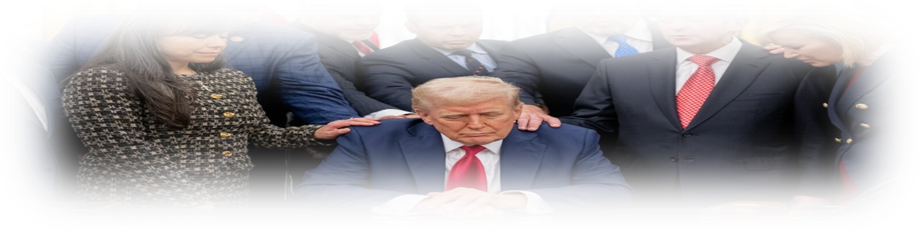
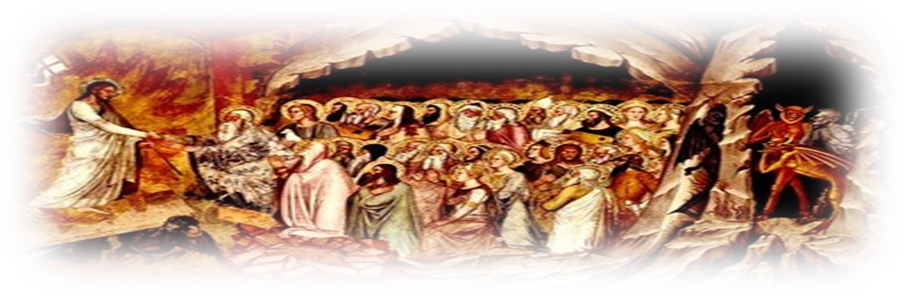





 Guillermo Calvo Mahé