Shadowy Sepulchral Echoes

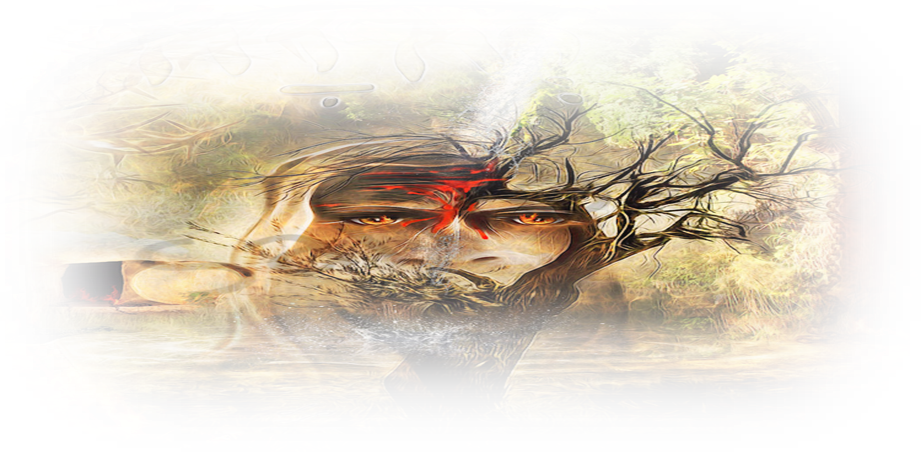
Or perhaps, the title should be “echoing sepulchral shadows”, or “echoes of sepulchral shadows”.  For some reason, a melody with the phrase “lions and tigers and bears, oh my” comes to mind but that was from an allegorical fairy tale translated into film, first black and white and then in color, and this is quite a bit different, and not allegorical at all.  Nor is it metaphorical.  Indeed, at least in parts, it’s clearly historical.  At least in part, it’s inspired by some of my son Alex’s work, although not by his novel The Old Breed: Haxan.  A shameless plug, I admit it.

The place name “Jericho”, apparently originally “Yəriḥo” (although the concept of “originally” is, of course, as suspect as it is relative), is believed to derive from either the Canaanite word “rēḥ” meaning fragrant or from the Canaanite lunar deity Yarikh once worshipped there.  In Jericho, in the land that during more recent millennia has been called Palestine, in the part of Palestine now referred to as the West Bank, within a cavern, there’s a special spot, perhaps ten meters square (although it’s actually sort of round, or perhaps sort of spherical might be more accurate), “sort of” being the operative element.  It’s reputed to be the oldest place continuously inhabited by Homo sapiens on Terra although not necessarily inhabited by the living.  A number of places in Africa, however, would surely dispute the foregoing, as might a number of places in Asia and in the Indian Subcontinent.  Perhaps even in the Americas.

Be that as it may, that special place within the confines of Jericho is deemed sacred not, only to adherents of the three fratricidal branches of the Abrahamic family of religions, but by the shades of what might have been among the first humans to imagine and thus empower proto-deities tasked with protecting us, … mainly from ourselves.  Thus, truths better left untold may well dwell there, … muttering. 

Within that tiny circle resonate the primordial shades of presences who consider themselves a “family” of sorts.  Guardians of beginnings and of endings.  Of many, many beginnings and of many, many endings, although, many of the endings are indistinguishable from beginnings and many of the beginnings seem to meld into earlier endings, kind of like a spiraling Worm Ouroboros.

It’s a comforting spot for the souls of ancient gods and for the spirits of their ancient priests and priestesses and for the ghosts of the select among their ancient followers.  In short, it’s a comfortably haunted spot, haunted by souls and spirits and ghosts who, in some cases, realize that their former hosts have expired while in other cases, they refuse to acknowledge their expiration.  Still, generally, it’s a friendly sort of haunting, more like a cohabitation. 

Dreams there tend to be astounding and hard to forget whether one would want to forget or to remember them.  Lately though, they’ve tended towards hyperbolically apocalyptic themes featuring trumpets blaring and four terrible dark-winged equestrians charging.

Dead gods sometimes corporeally congregate there.  Indeed, all but one of the seventy sons of divine Ēl still meet there in Divine Council from time to time, although sometimes, they merely gather to play and wrestle and gossip.  To gossip about the incomprehensibly irreconcilable doings of their sons and daughters, and of their sons’ and daughters’ sons and daughters and so on, ad infinatum.  And of the course, they gossip about the deranged conduct of their missing sibling and about the echoing conduct of his purported followers.  That particular sibling struck out on his own a bit longer than three millennia ago and, asserting that he is a “jealous god” has done his best to eliminate all echoes of divinity other than his own.  Rumor has it (although with rumors one can never vouch for their accuracy) that the remaining members of Ēl’s Divine Council have taken to heavy metal music although melded with ancient Middle Eastern rhythms.  Could be I guess.

Anyway, “ancient” is a relative term there. 

To many of the elder gods, the most ancient of the primordial echoes we the living sometimes recall are still little more than the yelps of young interlopers.  What the eldest of all gods think, the ones who were hoary long before the advent of divine Ēl, none living elsewhere now know, although there, in that primordial habitation, echoes of their voices still sometimes seem to resonate, to resonate among the darkest shadows.  Dusky shadows from somewhere beyond the realms of time and space. 

Interlopers have always arrived there in waves.  They still do, as though drawn by a primordial gravitational well.  Indeed, for many, many millennia, many interlopers have found themselves trapped there by a strange event horizon and then, have found themselves drawn into tiny but very complete universes, or perhaps multiverses, although the correct term may be more akin to a sole omniverse.  Evidently some sort of spell is involved, or magic, or miracles, or arcane laws of physics.  Those concepts are difficult to distinguish there, primarily differing, like beauty, in the eyes of the one doing the beholding.

Syncretism plays there at times.  Meddlingly melding echoes of personalities long gone into new souls, souls that then scatter to the four winds, left free to find their own mischief, mischief bereft of memories and of guidance.  An amalgam that may explain why we find ourselves where we now seem to be. 

But who knows. 

The “family” does not share its secrets, or its intuitions or its suspicions.  And if any of its members dared to do so, no one would believe them or, perhaps more accurately, very few would believe them and they would probably be considered no more than peculiar conspiracy theorists by their peers.

In Jericho: where the genocidal Hebrew leader Joshua once murdered so many and where mayhem and murder echo still.
_____

© Guillermo Calvo Mahé; Manizales, 2025; all rights reserved.  Please feel free to share with appropriate attribution.

Guillermo (“Bill”) Calvo Mahé (a sometime poet and aspiring empirical philosopher) is a writer, political commentator and academic currently residing in the Republic of Colombia (although he has primarily lived in the United States of America of which he is also a citizen). Until 2017 he chaired the political science, government and international relations programs at the Universidad Autónoma de Manizales. Previously, he chaired the social studies and foreign language departments at the Eastern Military Academy in Huntington, New York. He is currently the publisher of the Inannite Review available at Substack.com; an intermittent commentator on radio and television; and, an occasional contributor to diverse periodicals and publications. He has academic degrees in political science (BA, The Citadel, The Military College of South Carolina), law (JD, St. John’s University, School of Law), international legal studies (LL.M, the Graduate Division of the New York University School of Law) and translation and linguistic studies (GCTS, the University of Florida’s Center for Latin American Studies). However, he is also fascinated by mythology, religion, physics, astronomy and mathematics, especially with matters related to quanta, cosmology and cosmogony. He can be contacted at guillermo.calvo.mahe@gmail.com and much of his writing is available through his blog at https://guillermocalvo.com/.


Reflections on Canaanite Salem

Photo copyright: Michael Ventura / Alamy Stock Photo

Salem: the Jebusite city whose name was debauched and became Jeru-Salem and then, the focus for genocide, animal sacrifice and the mother of blood libels (sacred to the fratricidal sons of Avram).  Divine El, the principal deity of the Canaanites, must surely have cursed them all.  Or, at least, he should have.

I wonder what Canaanite Salem was like before all the hatred and all the blood was shed.  Before patricidal David came.  The Canaanites were apparently a pleasant and generous people but then, Joshua (political heir to Moishe) came to slaughter all their men and women and children and flocks and pets, all in the name of Avram’s unholy god, YHWH, the younger, black sheep son of El. 

Then, the Canaanites were just … no more. 

Sort of how Zionists aspire that the Palestinians will “just be no more” and that everyone will forget what happened.
_____

© Guillermo Calvo Mahé; Manizales, 2025 (photo excluded); all rights reserved.  Please feel free to share with appropriate attribution. Guillermo (“Bill”) Calvo Mahé (a sometime poet) is a writer, political commentator and academic currently residing in the Republic of Colombia (although he has primarily lived in the United States of America of which he is also a citizen). Until 2017 he chaired the political science, government and international relations programs at the Universidad Autónoma de Manizales. Previously, he chaired the social studies and foreign language departments at the Eastern Military Academy in Huntington, New York. He is currently the publisher of the Inannite Review available at Substack.com; an intermittent commentator on radio and television; and, an occasional contributor to diverse periodicals and publications. He has academic degrees in political science (BA, The Citadel, The Military College of South Carolina), law (JD, St. John’s University, School of Law), international legal studies (LL.M, the Graduate Division of the New York University School of Law) and translation and linguistic studies (GCTS, the University of Florida’s Center for Latin American Studies). However, he is also fascinated by mythology, religion, physics, astronomy and mathematics, especially with matters related to quanta, cosmology and cosmogony. He can be contacted at guillermo.calvo.mahe@gmail.com and much of his writing is available through his blog at https://guillermocalvo.com/.

Thoughts on a New Year’s Eve Two Score Years after 1984

1984, now forty years in our past, was a terrible year for me for many reasons but, amazingly, I somehow survived.  Something that did not please the evolving informal collective of unelected bureaucrats which was to eventually be grouped together with the military industrial complex, much of the judiciary, the corporate media and the Democratic Party under the sobriquet “Deep State.

Nineteen-Eighty-Four (perhaps also set forth numerically as 1984) was also a very prescient book published in 1948 (interesting numerical inversion) by Eric Arthur Blair, formerly a student of Aldous Huxley while Blair was at Eton College.  Mr. Blair is better known to us as George Orwell and he also wrote the dystopian novel, Animal Farm.  Both novels were highly charged with what a future anthropologist studying our times might consider “mythic” elements.  Aldous Huxley was, of course, the author of the dystopian novel Brave New World.  I wonder what Joseph Campbell thought of Eric Arthur Blair.  Or of Aldous Huxley for that matter.  Or of Kurt Vonnegut.  The list of dystopian authors during the middle of the twentieth century was quite long.  I also wonder what they thought of Dr. Campbell.

When my sons were in high school I persuaded them to study Latin.  Rather than learning Latin as a language, my goal, they learned a good deal of mythology, something which they enjoyed and at which they excelled in statewide writing contests involving creation of modern myths.  However, their award winning entries did not really deal with myths in the profound philosophical and psychological sense that real myths deserve, but rather, they involved excellent adventure stories, stories that set one of my sons on a literary path specializing in the bizarre and the terrifying.  Something that always fascinated him.  He’s rather good at it although I may be a bit prejudiced.  You can find him on a number of social media sites usually under the “handle” (whatever that is) @alexcalvoishaunted.  Sites include TikTok (assuming it’s still legal in the US), YouTube, etc.  However, I have my own perspective on the nature of myths and their uses which differs from theirs. 

For some reason, recalling my sons’ adventures in Latin Class at Forest High School in Marion County, Florida, brings to mind a segment in the old Rocky and Bullwinkle cartoon series, the segment called “Fractured Fairy Tales”.  I loved it, as did they, and we engaged in fracturing fairy tales (as well as myths) on our own as a form of delightfully immature family entertainment.  It became a family tradition now carried on by my sons with their own children.  I miss Rocky and Bullwinkle and all their fellow conspirators.  Boris Badenov and Natasha come to mind but there were many others.  I guess the segment on fractured fairy tales comes to mind because we tend to do that in a much more serious vein with our ancestral myths and with the myths that we now mass produce.

Popular perception tends to assume that a myth is an inaccurate belief reflected in some sort of generally shared statement but that is inaccurate.  Myths may or may not be partially or even wholly accurate or inaccurate but usually lack generally recognized substantiating evidence.  That is especially true of myths that have existed for long periods of time, whether or not during such time they have experienced mutations.  Nonetheless, myths pack significant psychosocial power.  I believe that myths, like poems, should be perceived as having been inscribed on metaphorical mirrors permitting both believers and doubters to engage in reflective introspection and personal exploration based on the information conveyed in the differing versions of any given myth and thus, generating echoes permitting better understanding.  Understanding of oneself as well as of others.  Of course, myths as well as poems can be abused.  They can be used, as many authors of dystopian novels throughout the past three or four centuries have noticed, as tools to help reinforce prejudices and to facilitate control.  That, of course, is true of all means of communication, especially those focused on purported entertainment.  Like so much else, consider nuclear energy for example, positive things are not all that difficult to pervert, and that is the case with myths.  And that is the path towards perdition on which we seem to be embarked as 2024 becomes 2025.

We humans weave diverse webs, both figuratively and literally, webs that are either constructive or destructive.  And we use them as guides on paths sometimes leading somewhere special.  But, at other times, paths that merely spin us in delusive circles leading us nowhere at all.  Worst of all, all too often, the metaphorical tapestries we weave, or which, more frequently, are woven for us, lead inexorably towards polarizing divisive self-destruction.

The tapestries we weave or which are woven for us are usually based on our myths, both those predicated on ancient sources and those premised on recently created narratives, and they have a profound impact on how we react to our environment and with respect to the diverse contexts in which we find ourselves.  Indeed, they are the bricks and mortar of what we perceive as reality, a phenomenon which all too frequently involves delusion, especially when the weavers involved have been tasked by a privileged few with crafting a world according to their own designs, one meant to keep us artfully enslaved while convincing us that we are free and in control of our own destinies.  Such tapestries all too often tend to be crafted in the Hollywood hills based on scripts ordered in Washington, D.C. and written in New York City, with input from London and Paris and Berlin and Tel Aviv and now, more and more, in Brussels.  Most seem based on a perversion of the mythic Worm Ouroboros cycles, a perversion in which most of us chase our own tails like rabidly confused canines, believing that the cyclic circles we repeat will eventually lead us to a better world and that we’ll get there soon if we only stay the twisted course and increase our pace.

A metaphor comes to mind concerning “the road to hell” and “good intentions”. 

I wonder why.

The reality, of course, is that such endevors only make us dizzy and very effectively confused.  Confused enough to be easily deceived and manipulated.  Thus, to cite an all too relevant example, we believe that Hitler and the Nazis were the epitome of evil because, despite impressive social, civic, educational and technological accomplishments, they engaged in ethnic cleansing in a quest for lebensraum which, during a massive economic wartime blockade against them, led them to consider genocide as a final solution to their problems, both immediate and long term, a consideration they seemingly implemented.  Only a very few individuals doubt that the Nazis engaged in genocide and they are pejoratively labeled as “holocaust deniers” and “white supremacists”.  But very few people dare to look into the context in which the Nazis actions took place.  Indeed, research into the actions of the Nazis that might challenge the established narrative is actually a crime in various countries.  Such restrictions on speculation are attempts to prevent the generation of related myths and involve a recognition of the power of myths.  One related myth, however, is that the Nazis invented genocide and concentration camps as well and that myth is clearly wrong.  Of course, the Nazis did not invent genocide, it has a long and proud history, one shrouded in myths exalted in Abrahamic sacred writing, most of all in the Tanakh, an acronym for the three parts of the Jewish Bible (the Torah also known as the Pentateuch or the “Teaching of Moses”; the Nevi’im, the books of the prophets; and, the Ketuvim, which includes the psalms and wisdom literature).  One also exalted in the Quran and the diverse versions of the Christian Bible.

Given the horrible “current events” that traumatized us during 2024, it seems worthwhile to reflect a bit on the myths associated with “genocide, the collective activity that until recently, at least for a brief while, three quarters of a century or so, we considered the greatest of all evils, and to consider how we’ve twisted the myths with which it has been associated over the past three or so millennia in order to fit our current needs.  And such reflection, as usually occurs, should perhaps start with a bit of historical context.

Sooo.

The greatest mythic genocide of all was the prehistoric deluge, the one where all living creatures were destroyed (except for a select few) in a worldwide flood, a prominent Abrahamic myth but with corollaries in the more ancient Sumerian civilization and in the subsequent Hellenic mythos.  Following that example, one set by diverse divinities, genocide sort of became a “thing”, especially among a group some refer to as “Hebrews”, a “thing” almost always attributable to suggestions, instructions or even orders issued by a divinity.  Take the genocide involving all the firstborn sons of the ancient Egyptians (see the book of Exodus) as an example.  The “beneficiaries” were purported slaves but if so, very wealthy slaves as they left Egypt, not empty handed but well-armed and laden with loot: precious metals, woods, gems, cloth, etc., a part of the myth rarely related although obvious when the related “sacred” writings are actually examined.  After leaving Egypt, treasure laden, the former slaves purportedly traveled in the Sinai for four decades (interestingly, the same period of time which separates us from 1984) led by a certain Moishe, apparently, on a quest for further loot and further victims.  That in turn led them to ancient Jericho where, purportedly, Joshua, the Hebrew successor to the mythic Moishe (not the subsequent King of Judea), had all of that city’s inhabitants, men women and children killed, and perhaps their livestock as well.  That trend went on throughout a land then called Canaan in city after city as the former Egyptian slaves, purportedly under orders from their god, YHWH, sought to cleanse whatever land they passed through of what they considered to be human vermin.  The former slaves had apparently become very clean.

Hebrew genocide was not always direct.  Take for example the genocide which took place in the year 614 of what has come to be known as the Common Era in a city that had once been known as Salem until it was conquered and cleansed by descendants of the Hebrews.  The Hebrews had conquered and ethnically cleaned Salem a millennium or more prior to 614 and, after its conquest, had added the prefix “Jeru” to its name for some reason.  However, by 614 Jerusalem had become populated primarily by a schismatic offshoot sect of Judaism (as the religion of the Hebrews had come to be known), a sect that had taken to calling its members Christians, and the genocide in Jerusalem in 614 was not perpetrated by the Jews of that time themselves but rather by the Sassanid Empire, although perhaps at the suggestion of Jewish leaders, Jewish leaders furious with their brethren who had converted to Christianity and assumed control of the city, a city that had become sacred to both Jews and Christians and would soon become holy to a further Jewish heresy which would come to be known as Islam.  A city still causing serious problems, mayhem, murder, theft and other very unholy things. 

All of the foregoing examples of genocide were, according to related myths, divinely blessed.  Indeed there are Hebrew terms for sacred genocide, e.g., “zavakh” and “cherem” (using the Latin rather than Hebrew alphabet).  But times purportedly change and we humans purportedly progressed ethically and morally.  In modern times, at least since the genocide perpetrated on Armenians by Ottoman Turks at the beginning of the twentieth century, genocide has come to be frowned upon, or at least that’s what we claimed during and after a series of trials held in the German city of Nuremburg and the Japanese city of Tokyo following the end of what is known in the so called “West” as World War II or the Second World War (but known further East as the Great Patriotic War).  In that war, all sides engaged in large scale genocide but only the genocide attributed to the losers was deemed to have been “inappropriate”.  Following the trials in Nuremburg and Tokyo, an international organization was erected by the five principal victors in that Second World War, erected over the metaphorically dead body of the international organization founded at the end of the First World War (originally known as the War to End All Wars).  The old organization, one known as the League of Nations, had to be replaced as it was democratic and the victors wanted one that they could control in perpetuity, one camouflaged as a democracy but in reality, a tightly controlled oligarchic dictatorship.  That second international organization (the United Nations) was tasked with preserving peace and guaranteeing human rights and especially with avoiding further genocide.  Unfortunately, like its predecessor, it has proven an abject failure in its primary mission, or at least in the cover story cited as its primary mission.  The United Nation’s ruling body to which one might reasonably refer as the “Board of Dictators” (five permanent members each with a veto power of a “security” council established by the victors to rule the world using the United Nations as its tool), had an internal falling out shortly after the organization’s foundation (which at that point might more accurately have been referred to as the Disunited Nations) and the Board of Dictators had become divided into two separate opposing camps, each vetoing efforts to enforce the sort of constitution they had forced on all other countries (they referred to it as a “charter”, the Charter of the United Nations in fact), a high sounding set of covenants, as constitutions tend to be but so internally contradictory as to make its enforcement impossible (as also tends to occur with constitutions).  So, talk about myths, myth making and the evolution of myths.  Wars, especially world wars and their aftermaths and the ensuing attempts to justify them are practically cornucopias for myth creation.

But back to myths associated with genocide, a concept once purportedly orchestrated by divine command but then, well, eventually, considered a horrendous sin.  Mythic cycles tend to be incoherent and confusing.  Consider the reality that, after three quarters of a century where genocide was considered unsavory albeit it continued unabated in diverse parts of the world, where genocide had to be undertaken surreptitiously under cover of great propaganda campaigns, it has now come out of the closet, so to speak.  During the past fourteen months and, apparently, for the foreseeable future, genocide has come back into vogue, at least when it is backed by three of the five members of the United Nations’ Board of Dictators and their allies. 

A bit of context again, one as ironic as it is incoherent. Almost immediately after they had organized the United Nations following the Second World War and had purportedly sworn off violence as a means of conflict resolution, three of the members of the United Nation’s Board of Dictators had quickly founded another, purportedly compatible, international organization known as the North Atlantic Treaty Organization (NATO), one which, was incongruently a military alliance. And it has grown and grown and now engages in military activities all over the world, albeit in the name of peace.  Ironically but predictably, NATO has evolved from a purportedly inchoate defensive union into one charged with assisting in the overthrow of any governments elected democratically or selected aristocratically contrary to the wishes of NATO’s principle member, coincidentally the de facto chair-entity of one of the two factions that sit on the United Nation’s Board of Dictators (more politely referred to as the “permanent” members of the United Nations Security Council).  I’ll leave the specific identity of that chair-entity vague for the moment, although it would not surprise me all that much if many readers immediately guessed its identity.

Well, perhaps the change in attitude and related general mythic confusion concerning the morals and ethics associated with genocide is not all that recent and ironically, it sponsored by the United Nations itself in that fateful year, 1948, the year that Eric Arthur Blair wrote his most famous dystopian novel, the one mentioned above.  Ironically, the change in attitude was sponsored by that same second international organization that had been founded following the Second World War in order to prevent further genocide, a phenomenon that Mr. Blair referred to in his novel as “Truth Speak” (which means lies forcibly albeit unartfully imposed).  Based on the “Orwellian” concept of Truth Speak (pursuant to which convenient myths are generated, on demand), genocide is sometimes sacred, other times it is intolerably evil, and now, well it is pragmatic, a final solution of sorts to bothersome consequences involving massive theft and large scale murder, but engaged in by nice people. 

For example, during the past three quarters of a century, starting in 1948, a country was “facilitated” by the United Nations in a region known as Palestine, a region inhabited for millennia by a multiethnic population of Jews, Muslims and Christians.  Jews, Muslims and Christians who collectively called themselves Palestinians.  The beneficiaries of that bounty, a group of Jews supported by many Christians (none of whom lived in Palestine), a group that referred to its members as “Zionists”, immediately decided that Palestine required a bit of housecleaning.  And there was no time like 1948 to get on with the housecleaning, something those “cleansed” have come to refer to as the “Nakba”.  The territory assigned by the United Nations to the former terrorists who had become seemingly respectable and were now referred to, at least by their friends, as the “leaders” of the new nation (sounds a lot like the ancient Egyptian, loot laden slaves discussed earlier doesn’t it), quickly realized that the territory allotted to them was really much too small for the population they hoped to import into Palestine (which they renamed Israel and at times, aspirationally including the entire Middle East, Greater Israel) and thus, unfortunately, they were forced to implement a policy based on a term made popular by an enemy they claimed to hate, one of the major losers of that Second World War to which we previously alluded.  The term was “lebensraum”; i.e., living space.  Something essential to all growing families.  And that, of course, required “some to relinquish so that others could prosper”, and, after all, there was plenty of space in neighboring countries to which the displaced “relinquishers” could be relocated, at least until that space also became required. 

The concept of lebensraum actually involved an older concept known in some places as “Manifest Destiny”.  Manifest Destiny is synonymous with “genocide” but, as in the case of the genocide committed by the ancient Hebrews, is viewed positively, except, of course by its victims and their descendants, but they don’t really count.  For reasons which an alien anthropologist would probably never fathom, as opposed to the genocide purportedly perpetrated by the Nazis against descendants of the ancient Hebrews and others, Manifest Destiny was mythically described as a beneficent and cleansing, divinely ordained task, one related to a similar concept referred to by Europeans during the nineteenth century as the “White Man’s Burden”.  Manifest Destiny involved the ethnic cleansing of North America by European colonists who found themselves in need of “lebensraum” and were thus forced to “suggest” that those already inhabiting the territories into which they were migrating move in order make space for their new neighbors, although perhaps “make space” was not exactly the correct phrase.  The wonderfully brave and enlightened colonists had been forced, against their will, to deal with the intransigence of the indigenous population by pretty much “wiping it clean” (a euphemism for “terminated” or otherwise “ethnically cleansed”).  Pretty much the same occurred with respect to the White Man’s Burden in Africa and parts of Asia where brave and farsighted European colonists likewise found themselves forced to ethnically cleanse areas they just had to have, for one reason or another.

Is it any wonder then that European Zionists found such examples for dealing with the issue of lebensraum perfect for the situation in which they placed themselves in the former Ottoman area known as Palestine?  Indeed, upon reflection, Zionists may need to admit that it was their own ancestors who had first discovered the principle of lebensraum back in their good old Canaan days.  Indeed, the Middle East in which Palestine is located was actually the same land that they had ethnically cleansed millennia before.  Thus, in a sort of summary, myths associated with genocide and lebensraum, etc. are good, indeed divinely inspired when engaged in by Hebrews, their descendants, and by Anglo Saxons and their descendants (as well as by the French) but horrible when engaged in by Germans, the Japanese and, at times, inhabitants of the Italian peninsula. 

The foregoing would seem to be a bit complicated for descendants of the Hebrews for two reasons.  First, those they now seek to ethnically cleanse and exterminate are also descendants of their ancient forbearers, fellow Semites; and, second, those with whom the Zionists are now relying for support are the descendants of those who, for millennia, sought to contain and ethnically cleanse their ancestors under a theory referred to as “antisemitism” (except perhaps in a place called Germany, but that’s another story, definitely for another time).  Ain’t life strange?  One never knows when ancient enemies will become teammates, and visa versa.

It’s good to have understanding friends during trying times.  Friends with shared experiences, shared aspirations and shared values.  Friends who are willing to rearrange attitudes towards diverse myths, as “appropriate” to changing circumstances.  And who cares if there’s a bit of hypocrisy involved.  That’s the way it’s always been.  Just study ancient myths, and modern myths as well.  We’ve actually got a factory for the creation of useful modern myths.  Actually a number of factories.  One group of such factories was founded by a guy named George Creel during the First World War and is headquartered in Southern California, a region located in a State which the descendants of its old inhabitants keep trying to sneak back into, a place the world knows as Hollywood.  A second group is more dispersed, dispersed among universities all over the world and whose primary purpose seems to be to keep rearranging information through purported research, and then disseminating it to vulnerably malleable young minds, and, a third group seems omnipresent, centered in diverse groups collectively referred to as media, each charged with providing us with creative fiction on a daily (make that hourly) basis.  Each of the foregoing groups is charged with manufacturing the new myths which will either replace, modify or supplement older myths, as required, in order to explain just how fortunate we all are to be living in such wonderful times.  Somewhere, I sense Eric Arthur Blair sadly smirking and wonder just how one “sadly smirks”.

Well, wonderful times for some of us although perhaps not so much so for Ukrainians or for Africans or Libyans or for Lebanese or Iraqis or for Afghanis or most recently, for Syrians, and of course, not so pleasant for the Palestinians that are still around, and perhaps, not so pleasant in the near future for the Iranians or the Taiwanese.  Indeed, perhaps only pleasant for a tiny minority of us and highly unpleasant for most of us, but, as someone once purportedly told Humpty Dumpty, “one can’t make omelets without breaking eggs”.

Another very useful myth. 

Remember, myths are not always inaccurate, that’s a serious misperception.  Or if you did not realize that, well, … now you know.  As I indicated at the inception of this sarcasm filled end-of-year diatribe, myths are easy to interpret, easier to misinterpret and not that hard to manipulate, although when properly dealt with, they are windows into our souls.

As I conclude my rant, a complex character comes to mind, a former railroad lawyer (the equivalent at the time of a corporate lawyer today) who became a president of the United States and managed to engage in large scale genocide while maintaining a saintly public image.  He was an avowed racist who is perceived of as the liberator of oppressed races. He is the epitome of an ideal myth maker.  He claimed that although you could “fool some of the people all of the time, and all of the people some of the time, but you cannot fool all of the people all of the time”.  And yet, there he sits his visage atop Mount Rushmore and sitting in a special structure in Washington, D.C., sanctimoniously frowning down on us as though he were the YHWH of Hebrew, Christian and Islamic mythology, sort of proving the opposite of the final part of the quote I just shared.

Thoughts two score years after 1984 ad eight score years after 1864.
_____

© Guillermo Calvo Mahé; Manizales, 2024; all rights reserved.  Please feel free to share with appropriate attribution.

Guillermo (“Bill”) Calvo Mahé (a sometime poet) is a writer, political commentator and academic currently residing in the Republic of Colombia (although he has primarily lived in the United States of America of which he is also a citizen). Until 2017 he chaired the political science, government and international relations programs at the Universidad Autónoma de Manizales. Previously, he chaired the social studies and foreign language departments at the Eastern Military Academy in Huntington, New York. He is currently the publisher of the Inannite Review available at Substack.com; an intermittent commentator on radio and television; and, an occasional contributor to diverse periodicals and publications. He has academic degrees in political science (BA, The Citadel, The Military College of South Carolina), law (JD, St. John’s University, School of Law), international legal studies (LL.M, the Graduate Division of the New York University School of Law) and translation and linguistic studies (GCTS, the University of Florida’s Center for Latin American Studies). However, he is also fascinated by mythology, religion, physics, astronomy and mathematics, especially with matters related to quanta, cosmology and cosmogony. He can be contacted at guillermo.calvo.mahe@gmail.com and much of his writing is available through his blog at https://guillermocalvo.com/.

Winter Solstice

Today marks this year’s Winter Solstice, Summer Solstice in the Southern Hemisphere.  Here in Manizales high in the Central range of the beautiful Colombian Andes, we are on the Southern edge of the Northern Hemisphere.  The Winter Solstice was one of the earlier dates for Christmas prior to Pope Gregory XIII’s calendar changes in 1582 more than a millennia after the holiday had been moved to December 25 by the Roman Christian Church in order to coincide with the birth of the Persian divinity, Mithras, coincidentally born of a virgin and died crucified.

A day for balanced reflection, for endings and new beginnings.

_____

© Guillermo Calvo Mahé; Manizales, 2024; all rights reserved.  Please feel free to share with appropriate attribution.

Guillermo (“Bill”) Calvo Mahé (a sometime poet) is a writer, political commentator and academic currently residing in the Republic of Colombia (although he has primarily lived in the United States of America of which he is also a citizen). Until 2017 he chaired the political science, government and international relations programs at the Universidad Autónoma de Manizales. Previously, he chaired the social studies and foreign language departments at the Eastern Military Academy in Huntington, New York. He is currently the publisher of the Inannite Review available at Substack.com; an intermittent commentator on radio and television; and, an occasional contributor to diverse periodicals and publications. He has academic degrees in political science (BA, The Citadel, The Military College of South Carolina), law (JD, St. John’s University, School of Law), international legal studies (LL.M, the Graduate Division of the New York University School of Law) and translation and linguistic studies (GCTS, the University of Florida’s Center for Latin American Studies). However, he is also fascinated by mythology, religion, physics, astronomy and mathematics, especially with matters related to quanta, cosmology and cosmogony. He can be contacted at guillermo.calvo.mahe@gmail.com and much of his writing is available through his blog at https://guillermocalvo.com/.

Yešu the Nazarene; “They would not listen, they’re not listening still; perhaps they never will”

Of all the beliefs attributed to Yešu the Nazarene, none alienated him more from mainstream Judaism and indeed, from his Roman masters than did his profound belief in equity, equality and justice, beliefs that in the economic sphere are, given the attitudes of his modern followers, especially in the United States, profoundly ironic and indeed, oxymoronic.  And they were not just beliefs but practices, both during his life among his apostles and, after his demise, in the Jerusalem community briefly led by his brother James until the movement was corrupted and perverted into the modern concepts collectively referred to as “Christianity” by Saul of Tarsus, a man who, according to Jewish lore, lore reflected in both the Jerusalem and Babylonian Talmuds but also in the series of alternative gospels known under the collective name of the Toledot Yeshu, was a Jewish mole in the Nazarene movement whose mission it was to separate followers of Yešu from mainstream Judaism, something in which Saul, better known to “Christians” as “Paul”, was eminently successful.

Most people in the United States and Europe who consistently use the term “communism” have no idea what it entails, just as they have no idea what “socialism” or “fascism” entail, believing only that they are evil totalitarian political and economic philosophies.  That they are merely pejoratives to be indiscriminately hurled against those that they oppose, regardless of how incoherent the context.  Their ignorance is not their fault, it has been carefully cultivated by both Jewish leaders and the leaders of “Christianity”, the movement established by Saul of Tarsus which captured and distorted the movement founded by Yešu, the Nazarene.  “Communism” is the direct reflection of Yešu’s teachings to the effect that we should share what we have with those less fortunate and that no one should accumulate more than is needed, especially if doing so deprives others of necessities.  Needles and camels come to mind.  That is also the premise of socialism.  Neither communism nor socialism have anything to do with totalitarianism, or with authoritarianism, or with dictatorship, or with tyranny although, as in the case of capitalism, neoliberalism, globalism, etc., those negative antilibertarian control features have been combined with economic doctrines in order to maintain elites in power.  And Yešu’s economic philosophies had nothing to do with maintaining elites in power.  Rather they urged leveling of the playing field and equality and equity for all, with justice tempered by mercy.  Remember, he preferred the company of sinners to that of hypocrites.

Of course, Yešu’s philosophies were quickly overwhelmed and subsumed by those of Saul of Tarsus, and eventually, by those of numerous Catholic Popes and then, by the philosophies incoherently evolved by followers of Martin Luther and John Calvin in Yešu’s name, e.g., the Protestant ethic and capitalism.  How Yešu must hate that, especially if he is the being who his purported followers believe him to be.  How Yešu must despise neoliberalism and globalism and neoconservatism.  How disappointed he must be that his teachings have, for the most part, been so completely perverted.  How shocked he must be as his purported followers support genocide, and ethnic cleansing and apartheid and eschew tolerance. 

Yešu, ironically given modern perceptions, was a dedicated communist.  I am not a believer in the divinity of Yešu but I profoundly respect and admire what he tried to teach us and regret that as in the song “Vincent” written by Don McLean as a tribute to Vincent van Gogh, “…. They would not listen, they’re not listening still; perhaps they never will”.

_____

© Guillermo Calvo Mahé; Manizales, 2024; all rights reserved.  Please feel free to share with appropriate attribution.

Guillermo (“Bill”) Calvo Mahé (a sometime poet) is a writer, political commentator and academic currently residing in the Republic of Colombia (although he has primarily lived in the United States of America of which he is also a citizen). Until 2017 he chaired the political science, government and international relations programs at the Universidad Autónoma de Manizales. Previously, he chaired the social studies and foreign language departments at the Eastern Military Academy in Huntington, New York. He is currently the publisher of the Inannite Review available at Substack.com; an intermittent commentator on radio and television; and, an occasional contributor to diverse periodicals and publications. He has academic degrees in political science (BA, The Citadel, The Military College of South Carolina), law (JD, St. John’s University, School of Law), international legal studies (LL.M, the Graduate Division of the New York University School of Law) and translation and linguistic studies (GCTS, the University of Florida’s Center for Latin American Studies). However, he is also fascinated by mythology, religion, physics, astronomy and mathematics, especially with matters related to quanta, cosmology and cosmogony. He can be contacted at guillermo.calvo.mahe@gmail.com and much of his writing is available through his blog at https://guillermocalvo.com/.

Reflections on Anthropomorphic Deity Based Divinity

Deity based divinity, especially the anthropomorphic variants, beg the question as to whether such divinity or divinities were the creators, or were, in fact, created by those who worship him, her, it or them.  That he, she, it or they are derivative emanations made manifest and empowered by at least some of us ourselves.

If the latter case, then it seems that they were created through the energy expended by their earliest worshipers amplified through mass rituals and, unfortunately, at least for us, because negative energies like fear and hate and fury and envy are stronger than positive energies such as love, compassion, generosity and empathy, the prevalence of furious, jealous divinities like YHWH, deities who seek to control everything and impose drastic punishments for disobedience makes sense. 

But making sense is not the same as justification.  And perhaps if they are our creations, we can also de-create them, eradicate them by refusing to acknowledge them as our masters and by refusing to obey their commandments, by replacing them with our own morals and ethics, hopefully positive ones, with or without mythic archetypes who require veneration.

Perhaps, rather than a guilt ridden refrain, that’s what occurred to Friedrich Nietzsche when, reflecting Georg Wilhelm Friedrich Hegel, Heinrich Heine, Philipp Mainländer and others he proclaimed: “God is dead. God remains dead. And we have killed him. How shall we, the murderers of all murderers, comfort ourselves?”  I wonder what Mark Twain would make of all of this.

The foregoing seems especially relevant in hypocrisy ridden times like ours when “genocide” is being considered by many as a positive, as a harbinger of the beginning of the end, as sign of an impending apocalypse for which they yearn, perhaps one in the form of a nuclear holocaust.  

Something on which to at least ponder.
_____

© Guillermo Calvo Mahé; Manizales, 2024; all rights reserved.  Please feel free to share with appropriate attribution. Guillermo (“Bill”) Calvo Mahé (a sometime poet) is a writer, political commentator and academic currently residing in the Republic of Colombia (although he has primarily lived in the United States of America of which he is also a citizen). Until 2017 he chaired the political science, government and international relations programs at the Universidad Autónoma de Manizales. Previously, he chaired the social studies and foreign language departments at the Eastern Military Academy in Huntington, New York. He is currently the publisher of the Inannite Review available at Substack.com; an intermittent commentator on radio and television; and, an occasional contributor to diverse periodicals and publications. He has academic degrees in political science (BA, The Citadel, The Military College of South Carolina), law (JD, St. John’s University, School of Law), international legal studies (LL.M, the Graduate Division of the New York University School of Law) and translation and linguistic studies (GCTS, the University of Florida’s Center for Latin American Studies). However, he is also fascinated by mythology, religion, physics, astronomy and mathematics, especially with matters related to quanta, cosmology and cosmogony. He can be contacted at guillermo.calvo.mahe@gmail.com and much of his writing is available through his blog at https://guillermocalvo.com/.

Syncretic Evolutionary Accretion in Human Spirituality

I recently commented on an academic colleague’s article contrasting Christian and Jewish perspectives concerning the disgraced apostle Judas Iscariot, perhaps unfairly criticizing her observations based on the Jewish Toledot Yeshu as shallow[1].  The article described Christian attitudes with respect to Judas as reflecting the most extreme example of evil and betrayal possible, an attitude indeed shared by many, but not one universally shared among more modern Christians, especially in light of twentieth century efforts to rehabilitate Judas and ameliorate the perception of the Jewish role in the arrest, torture and execution of Yešu[2], given the climactic horrors of antisemitism during the Second World War seeking to treat both in a more neutral manner. 

The Jewish attitude towards Judas, as reflected in the Toledot Yeshu (as well as in both the Jerusalem and Babylonian Talmud), predictably regard him as a hero, albeit as a hero without ethical boundaries, and as the savior of Judaism in the face of encroachment by Yešu-inspired heretics (not yet misnamed “Christians” by Saul of Tarsus[3]).  My point in criticizing (too strong a word really) the authors’ description of related Christian perceptions concerning Judas was that, to an increasing number of Christians, rather than an arch-villain, Judas Iscariot is a tragically complex figure who faced irresolvable conflicts of interest between his aspirations seeking a messianic Jewish liberator and the otherworldly idealism attributed to the victim of his betrayal, a conflict complicated by the reality that, at any rate, he was irrevocably bound to the fate decreed for him by the always strange Abrahamic deity which both he and Yešu believed they served. 

For some reason, the forgoing led me to reflect on the accretive nature of Abrahamic religions and then, to reflect on the reality that most if not all religions seem accretive.  A strange leap but that’s my story and I’m sticking to it!

Consider:

The roots of all Abrahamic religions lie in the city of Uruk in ancient Sumer.  They all start with a certain Sumerian, ironically given subsequent beliefs, the son of an idol maker.  That Sumerian’s original name was phonetically Abiramu but has reached us as Abraham.  Based on the foregoing it seems clear that most of the stories in the Hebrew Book of Genesis, e.g., the Garden, the Flood, etc., have Sumerian roots, but as Abiramu and his sister-wife Sarai and their descendants fled though Egypt into Canaan, and Judaism slowly evolved as a religion, cultural borrowing was heavy and included Akhenaton’s monotheism, the Midian religion wholesale, and from Canaan, its divinity, YHWH, one of the seventy sons of the chief Canaanite god, El.  Somewhere along the line however, for reasons unknown, Judaism shed its female deities, the numerous wives of YHWH including Anat-Yahu, Aholah and Aholibah , Asherah, Anatha of the Lions and Ashima of the Doves, not to mention the Shekinah, a process largely rejected for centuries by the common people until Hebrew women were reduced to objects bereft of rights and a religious, civic and social patriarchy, purportedly divinely ordained, was established, history having been reformulated and recorded, as necessary.  Of course, all of the foregoing also forms the predicate for both Christianity and Islam, although Christianity added a number of Hellenic religious and philosophical concepts via Saul of Tarsus (Islam has always been much closer to Orthodox Judaism, ironic given today’s genocidal antipathies).  Wow!!!  What a journey in every sense.

Syncretism is a term used to describe the dialectic process through which accretion leads to religious evolution and it was certainly evident among the religions of the country the ancient Hebrews referred to as “Mizraim” (which we call Egypt) where gods from diverse regions were added to a growing common pantheon where they eventually tended to meld.  The same seems true with respect to divinities and their respective cults in the Indian subcontinent and to the divinities prominent in ancient Greece and Rome.  It may well be true of religions in the Americas as well. 

As a young academic many, many decades ago, I taught a course on comparative religions which I elected to divide into three major segments, the first dealt with primitive spiritual concepts such as animism and totems, the second with mythologies which my students denominated “other peoples’ religions” and finally, to the enormous diaspora of spiritual and religious concepts that have become prevalent during the past three millennia.  Through it all I sensed a fount of religious instincts sprouting from somewhere in central Asia, perhaps somewhere in what is today modern day Mongolia, the place from which, periodically, waves upon waves of refugees turned invaders seemed to erupt, waves that included the Huns, the Mongols and those to whom we refer as Indo-European, Hindus, Achaeans, Aryans, etc.  I visualized the foregoing as a crescendo of peoples and beliefs, perhaps sharing a common origin, then diffracting and subsequently reassembling in differing configurations.  However, all too soon, as tends to occur, the young academic I once was found his academic pursuits deflected into first history, then political science, then law, and my quest for “a unified theory of socio-spiritual evolution” returned to the ether from which it had apparently once sprung, … until recently.  Until when, after semi-retiring to pursue personal interests and research, I returned to old roots exploring the “legends” of Gilgamesh and the origins of YWHW and of the myriad faces of Yešu, which, somehow or other, after reading the article by Ora Limor and Israel Jacob Yuval (“Judas Iscariot: Revealer of the Hidden Truth”), led me back to this introspective reflection concerning the diametrically opposed perspectives concerning both Judas Iscariot and Yešu that have subtlety but profoundly impacted our history during the past two millennia, and that has led me to reflect on how much our socio-religious perspectives are changing as time goes by, as our values change and as our memories evolve. And of how long-held traditional religious beliefs are being considered by some among our new generations as mere myths, a sort of inversion of how the students in my class on comparative religion once considered mythology, while others seem willing to accept and espouse new hypotheses concerning intergalactic aliens as the sources of our civilizations and even, of the possibility that our remote biological ancestors from the Mesozoic Era, the dinosaurs, in fact survived and merely went underground, literally, where they await in their own civilizations for a chance to return to the surface once, in our arrogance, we arrange for our own extinction.

Chaos to me is not a negative but rather, the primal state where once upon a time everything at all was a possibility and contradictions comfortably cohabited as compliments.  Strangely, modern theories of physics involving both minimalist quantic phenomena and omniversal string theories seem filled with echoes of that primordial chaos, the chaos that seems to have existed before the Big Bang or the divine seven days of creation, take your pick. 

Today, as I write, confusion appears to reign, happily enthroned and smiling, as we impatiently seek to untangle the confused webs we’ve woven and somewhere perhaps, echoes from Elphaba Thropp’s refrain at the conclusion of the 1930’s movie, the Wizard of Oz, as she slowly melted, laid low by water, “… what a world, what a world” happily resonate, and perhaps, somewhere outside the bounds of time and space, Yešu and Judas dispassionately debate.

_____

© Guillermo Calvo Mahé; Manizales, 2024; all rights reserved.  Please feel free to share with appropriate attribution.

Guillermo (“Bill”) Calvo Mahé (a sometime poet) is a writer, political commentator and academic currently residing in the Republic of Colombia (although he has primarily lived in the United States of America of which he is also a citizen). Until 2017 he chaired the political science, government and international relations programs at the Universidad Autónoma de Manizales. Previously, he chaired the social studies and foreign language departments at the Eastern Military Academy in Huntington, New York. He is currently the publisher of the Inannite Review available at Substack.com; an intermittent commentator on radio and television; and, an occasional contributor to diverse periodicals and publications. He has academic degrees in political science (BA, The Citadel, The Military College of South Carolina), law (JD, St. John’s University, School of Law), international legal studies (LL.M, the Graduate Division of the New York University School of Law) and translation and linguistic studies (GCTS, the University of Florida’s Center for Latin American Studies). However, he is also fascinated by mythology, religion, physics, astronomy and mathematics, especially with matters related to quanta, cosmology and cosmogony. He can be contacted at guillermo.calvo.mahe@gmail.com and much of his writing is available through his blog at https://guillermocalvo.com/.



[1] Limor, Ora and Israel Jacob Yuval (2011): “Judas Iscariot: Revealer of the Hidden Truth” in Peter Schäfer, Michael Meerson, and Yaacov Deutsch, eds., Toledot Yeshu (The Life Story of Jesus) Revisited: A Princeton Conference; pp. 197-220; Mohr Siebeck, Tübingen available at https://www.academia.edu/43624042/Ora_Limor_and_Israel_Jacob_Yuval_Judas_Iscariot_Revealer_of_the_Hidden_Truth_in_Peter_Sch%C3%A4fer_Michael_Meerson_and_Yaacov_Deutsch_eds_Toledot_Yeshu_The_Life_Story_of_Jesus_Revisited_A_Princeton_Conference_T%C3%BCbingen_Mohr_Siebeck_2011_197_220.

[2] “Yešu” is the correct Aramaic phonetic pronunciation of the Hellenized name of the principle protagonist of the diverse Christian faiths usually referred to as “Jesus”.

[3] According to some versions of the Toledot Yeshu, Saul of Tarsus whose Roman name was Paulus and who is referred to by Christians as St. Paul, was really a Jewish infiltrator into the evolving Yešu heresy whose role it was to sunder the movement from Judaism in order to decelerate and minimize conversion.

Of Mary and Khnum: Mixing Strangely Erotic Fractured Metaphors in an Ancient Sheepfold

Mary, Mary, quite contrary, was wondering how her garden grew when, lo and behold, of a sudden, she thought she spotted a little lamb, one that perhaps might become her own.

Nearby, a certain Miss Muffat sat on her tuffet, eating her curds and weigh, while a friendly if somewhat frightening, somewhat hungry and a bit jealous arachnid (none other than the trickster deity known as Anansi), hanging by a silken thread, curiously passed her way.

As Miss Muffat and Anansi looked on, Mary, Mary, quite contrary, fondled what she thought was her new lamb but the ovis aries, in reality the Egyptian deity Khnum, reacted unexpectedly, at least as far as Mary, Mary, quite contrary, was concerned.  Anansi couldn’t help but giggle, which almost gave the game away.

Khnum, at first seemingly young and small, turned out not to have been either, not at all.  He was in fact very, very ancient really, and in reality, quite a bit larger than a lamb, and he had budding horns and, … well …, reacting to Mary, Mary, quite contrary’s soft caresses, seemed unusually amorous for a lamb, at least as far as little Miss Moffat could tell.

Then, slam bam, thank you mam ….  The lamb turned out to be a ram … and …. not just any ram, but the primordial creator of human bodies and of the life force known as kꜣ (“ka”), and Anansi’s giggles turned into guffaws.

Thus, some months later, to Miss Muffat’s surprise and the spider’s strange delight (it loved irony and was as much a contrarian as Mary), Mary, Mary, quite contrary, indeed had her little lamb. 

Which was not just any little lamb at all.[1]
_____

© Guillermo Calvo Mahé; Manizales, 2024; all rights reserved.  Please feel free to share with appropriate attribution.

Guillermo (“Bill”) Calvo Mahé (a sometime poet) is a writer, political commentator and academic currently residing in the Republic of Colombia (although he has primarily lived in the United States of America of which he is also a citizen). Until 2017 he chaired the political science, government and international relations programs at the Universidad Autónoma de Manizales. Previously, he chaired the social studies and foreign language departments at the Eastern Military Academy in Huntington, New York. He is currently the publisher of the Inannite Review available at Substack.com; an intermittent commentator on radio and television; and, an occasional contributor to diverse periodicals and publications. He has academic degrees in political science (BA, the Citadel, the Military College of South Carolina), law (JD, St. John’s University, School of Law), international legal studies (LL.M, the Graduate Division of the New York University School of Law) and translation and linguistic studies (GCTS, the University of Florida’s Center for Latin American Studies). However, he is also fascinated by mythology, religion, physics, astronomy and mathematics, especially with matters related to quanta, cosmology and cosmogony. He can be contacted at guillermo.calvo.mahe@gmail.com and much of his writing is available through his blog at https://guillermocalvo.com/.


[1] An afterword of sorts.  It is sadly strange that in this puritanical age, puritanical concerning sexual matters but not bothered by genocide at all, I would feel uncomfortable, perhaps even ironically guilty, in having written this satire on the ancient myth of Leda and the Swan.

Immanence, Monism and Divine Introspection

At an intersection just outside of eternity and infinity in the reflections cast by chaos sits a being, or perhaps it is better referred to as everything.  It is sentient in a sense, and self-aware.  It appears to be sitting in what some refer to as the “lotus” position but it has nothing on which to sit, there being nothing but “it”, anywhere.  It’s an “it” because it is either androgynous or asexual, or perhaps it’s omnisexual.  Or perhaps that issue has no relevance.

It is reflecting introspectively wondering with respect to the concepts of immanence and monism, and whether each is inherently schizophrenic.  The inquiry relates to both its own nature and the nature of the twin concepts.  Concepts that may have been begotten, not made, although perhaps neither option is valid.  Or both are.

Immanence and monism” it ponders, “as divine attributes, seem interesting.  Even Fascinating.  Perhaps incomprehensible though.

The being reflects constantly, it reflects about everything but rarely, if ever, reaches conclusions.  That is its nature, immanent and monist, as far as it can tell, being both ephemeral and eternal. 

As far as it can tell.  At least so far.  Before the alpha and after the omega and everything in between. 

But what about betwixt” it wonders.

So, about immanence, and monism” it ponders: “they share the mysterious allure of the incomprehensibly oxymoronic that religions love, no explanation possible thus making faith essential.  In that sense, immanence and monism combine ubiquity with aloofness.  Being inherent while transcendentally apart.  Panentheistic rather than merely pantheistic.” 

Seemingly” it observes “monism must be a part of immanence while immanence is an inherent aspect of monism.” Each aspect of the foregoing observation contradicts the other but, so do most things.

Would being immanent be devastatingly lonely?  Monism certainly is.  Would sanity be possible in their contexts or merely irrelevant?  “What would it be like” it wonders, “to have another with whom to interact, another who is neither subservient nor superior?  Another who is outside the reach of immanence and who existentially rejects monism?”

For some reason, apples and serpents come to mind, but as positive rather than threatening things.

Apples and serpents; serpents and apples”.  It keeps repeating the words although it has no one to whom they can be addressed, repeating them until they meld into a single, compound and complex, all-encompassing sound, “Ooooohhhhhmmmm”.

And it reflects on that sound, wishing there were spheres without that might make a music all their own.

Ooooohhhhhmmmm”.
_______

© Guillermo Calvo Mahé; Manizales, 2024; all rights reserved.  Please feel free to share with appropriate attribution. Guillermo (“Bill”) Calvo Mahé (a sometime poet) is a writer, political commentator and academic currently residing in the Republic of Colombia (although he has primarily lived in the United States of America of which he is also a citizen).  Until 2017 he chaired the political science, government and international relations programs at the Universidad Autónoma de Manizales.  Previously, he chaired the social studies and foreign language departments at the Eastern Military Academy.  He is currently the publisher of the Inannite Review available at Substack.com; an intermittent commentator on radio and television; and, an occasional contributor to diverse periodicals and publications.  He has academic degrees in political science (the Citadel, the Military College of South Carolina), law (St. John’s University, School of Law), international legal studies (the Graduate Division of the New York University School of Law) and translation and linguistic studies (the University of Florida’s Center for Latin American Studies).  However, he is also fascinated by mythology, religion, physics, astronomy and mathematics, especially with matters related to quanta, cosmology and cosmogony.  He can be contacted at guillermo.calvo.mahe@gmail.com and much of his writing is available through his blog at https://guillermocalvo.com/.
Gardening in Eden

“Paradise; … boring???”

Well yes, but, … well, not at first no, but time was strange there, everything seemed endlessly repetitive.  Well, … at least until the end. 

Then boredom ceased being an issue.
_______

© Guillermo Calvo Mahé; Manizales, 2024; all rights reserved.  Please feel free to share with appropriate attribution. Guillermo (“Bill”) Calvo Mahé (a sometime poet) is a writer, political commentator and academic currently residing in the Republic of Colombia (although he has primarily lived in the United States of America of which he is also a citizen).  Until 2017 he chaired the political science, government and international relations programs at the Universidad Autónoma de Manizales.  He is currently the publisher of the Inannite Review, available at Substack.com, a commentator on Radio Guasca FM, and an occasional contributor to the regional magazine, el Observador.  He has academic degrees in political science (the Citadel), law (St. John’s University), international legal studies (New York University) and translation and linguistic studies (the University of Florida’s Center for Latin American Studies).  However, he is also fascinated by mythology, religion, physics, astronomy and mathematics, especially with matters related to quanta and cosmogony.  He can be contacted at guillermo.calvo.mahe@gmail.com and much of his writing is available through his blog at https://guillermocalvo.com/.