
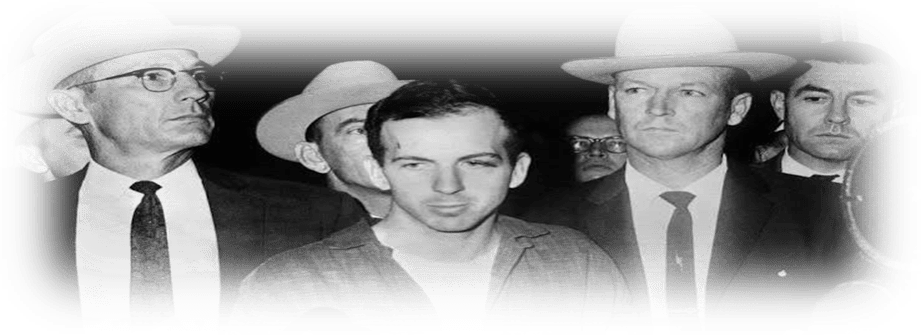
Friday, November 22, 1963, is a day that should have lived in infamy rather than merely in mourning, a day growing more dim every year. It’s a day when a young president of the United States was assassinated and the world he seemingly hoped for was, at best, postponed, if not forever lost. The next day the world changed and not everyone was sorry. And many people were apparently doing all they could to assure that the truth of what had happened and why was artfully hidden. Neither Judas Iscariot nor Benedict Arnold had anything on those that labored so diligently in the days that followed to assure that truth lay as dead as the young president, hopefully forever. But that may not be the case, at least not forever. Apparently, tens, perhaps hundreds of thousands of records full of answers may exist, although carefully classified in order to keep our prying eyes and our vengeance at bay.
I was a high school senior at the time and I was not fond of the president. I didn’t hate him, our world was not as polarized then as it is now, but I was suspicious of him, wondering when his corruption would manifest. After all, his father, Joseph Kennedy, had been a dealer in illegal distilled spirits during prohibition but had nonetheless been appointed by Franklin Delano Roosevelt as the first chairman of the Securities and Exchange Commission. And famous historian Theodore H. White had pointed out in his Pulitzer Prize winning treatise, The Making of a President, 1960, that the election had been “directed” in the young president’s favor by organized crime beholden to his dad, Joe, and to the exuberant civic spirit of the voting dead. Still, I was shocked when, working on cartoons for my high school newspaper, the Guidon, I heard the first reports that the “president had been shot”. My high school was a boarding college preparatory military academy, the Eastern Military Academy in Cold Springs Hills New York, the former summer home of billionaire financier Otto Khan (now OHEKA Castle). I rushed to the school’s public address system and shared the information only to be confronted by a furious Colonel John B. Hoar, a personal friend of the Kennedys, and threatened with expulsion. That quickly changed when the truth was made evident.
Perhaps as a sign of regret at his harsh reaction, I was chosen by the school’s military staff to lead a cadet honor guard at the requiem mass in New York City for the young president, one held at St. Patrick’s Cathedral as I recall. The honor guard was comprised mainly of cadets all of whom, including me, had to learn the complicated, slow motion protocol involved in a van on our way to the “the City” (as we referred to Manhattan). We were supposed to be relieved at intervals by regular army and navy troops but for some reason, only enlisted personnel showed up and I maintained my post as officer in charge throughout the ceremony. The school also had another important indirect role in the ensuing ceremonies, the final ceremonies held on the 25th in Washington, DC, as the saber that was attached to the saddle of the riderless horse that led the coterie of presidential guards accompanying the now former president’s body to its final resting place at the former home of Robert E. Lee, was one that had been gifted to the president by the Eastern Military Academy class of 1963 (the class preceding mine) when the seniors had momentarily visited with the president at the White House during 1962. In another strange coincidence, 1st Lt. Samuel “Sam” Bird, a 1961 graduate of the Citadel, the Military college of South Carolina, the college I was to attend the next year and from which I would graduate in 1968, was the officer in command of the military pallbearers and casket detail during President John F. Kennedy’s funeral procession to Arlington National Cemetery.
I, like so many hundreds of millions of people all over the world recall the 22nd of November, 1963 clearly, it’s etched in our memories. It was a period of profound shock, shock strong enough to bring our people together in much the same way that the destruction of the World Trade Center in New York on September 11, 2001 brought us all together, for a brief period, overwhelming the polarization that now traditionally divides us. But shortly thereafter, our collective mourning turned to suspicion, a suspicion aggravated every year due to all of the unanswered questions relating to what happened, how it happened and why it happened. As with so many mysteries of that nature, the answers we’ve sought for 63 years would seem to lie in examining who most gained from his death. Interesting that in the last sentence, the number 63 echoes the year during the last century when John Fitzgerald Kennedy was assassinated and the word “lies”, in its other sense, reflects the nature of the information we’ve most likely been fed during each of those 63 years. But it was not the only information that has come to light during those sixty-three years. For example: Douglas P. Horne, the former Chief Analyst for Military Records during the 1990s on the congressionally mandated Assassination Records Review Board has publicly stated, including in May 2025 congressional testimony and in his five-volume book “Inside the ARRB”, that intelligence agencies and the military withheld, concealed, or altered substantial records regarding the assassination, including medical evidence and pre-assassination intelligence. Farris Rookstool III, a former FBI analyst who worked directly with the Bureau’s Dallas assassination files, argued following the 2025 document releases that thousands of newly unredacted pages demonstrate that intelligence agencies concealed critical pre-assassination monitoring of Lee Harvey Oswald and misled earlier investigations (one wonders what the redactions would disclose). And Mordechai Vanunu, the former Israeli nuclear technician who exposed Israel’s nuclear weapons program in 1986, upon his release from an Israeli prison in 2004, claimed in an interview with the London-based Arabic newspaper Al-Hayat that Israel was behind the assassination, arguing that Prime Minister David Ben-Gurion ordered the killing because Kennedy was pressuring Israel to halt its secret nuclear reactor project at Dimona. And there are others, too many of them antisemites or white supremacists or kooks, but also intelligent, highly trained and ethical individuals, who believe the evidence clearly points in one direction, albeit not the evidence released by the clearly inept Warren Commission. In a disturbing fashion, the same lack of candor seems to surround the attacks on the New York Trade Center in New York and the Pentagon on September 11 many years later, and more and more, similar operatives have come to be suspected in both instances.
We may not be in a position to prove what happened, how it happened and why it happened, but there are those who still can. And we are definitely in a position to know the identities of those who most benefitted from the assassination. And no, they were not Jack Ruby, or the Russians or the Cubans or the Chinese or Muslims or Republicans, of that we can be sure. Whether those responsible for the assassination were our own intelligence and investigative agencies and those of purported allies and political elites with loyalties to no nation is something we can only suspect. But we do know that November 22, 1963, 63 years ago is a day that the world veered from a path it was seemingly headed for and turned onto the disastrous path for hundreds of millions on which we find ourselves today.
As an almost irrelevant aside, on that date in 2019 I met my current wife, a strange sort of irony for me but perhaps one fate has gifted me to wash away the taste of the terrible day while concurrently making it even more memorable, although ironically and confusingly so.
Still, Friday, November 22, 1963, is a day that should have lived in infamy rather than merely in mourning, a day growing more dim every year. But perhaps not as dim as some hope.
_____
© Guillermo Calvo Mahé; Manizales, 2026; all rights reserved. Please feel free to share with appropriate attribution.
Guillermo (“Bill”) Calvo Mahé (a sometime poet and aspiring empirical philosopher) is a writer, geopolitical commentator and academic currently residing in the Republic of Colombia (although he has primarily lived in the United States of America of which he is also a citizen). Until 2017 he chaired the political science, government and international relations programs at the Universidad Autónoma de Manizales. Previously, he chaired the social studies and foreign language departments at the Eastern Military Academy in Huntington, New York. He is currently the publisher of the Inannite Review available at Substack.com; an intermittent commentator on radio and television in both Colombia and abroad; and, an occasional contributor to diverse periodicals and publications. He has academic degrees in political science (BA, The Citadel, the Military College of South Carolina), law (JD, St. John’s University, School of Law), international legal studies (LL.M, the Graduate Division of the New York University School of Law) and translation and linguistic studies (GCTS, the University of Florida’s Center for Latin American Studies). However, he is also fascinated by mythology, religion, physics, astronomy and mathematics, especially with matters related to quanta, cosmology and cosmogony. He can be contacted at guillermo.calvo.mahe@gmail.com and much of his writing is available through his blog at https://guillermocalvo.com/.

